


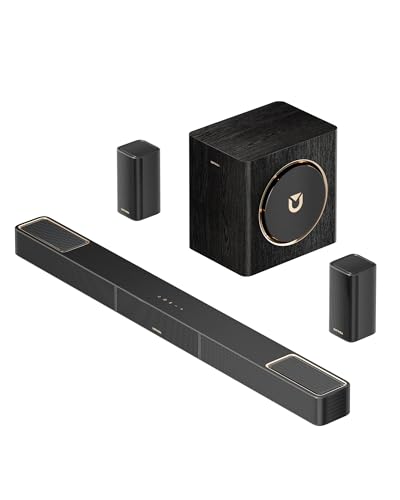




When you're staring at your TV's tinny built-in speakers, wondering why dialogue sounds muffled and explosions feel like weak pops, it's time to consider a soundbar system. But with dozens of options flooding the market, choosing between products that seem similar on paper can feel overwhelming. Today we're diving deep into two ULTIMEA systems that take completely different approaches to solving your audio problems: the Skywave X40 and the Aura A40.
These aren't just minor variations of the same product—they represent fundamentally different philosophies about home theater audio. One prioritizes cutting-edge technology and wireless convenience, while the other focuses on delivering impressive surround sound at a price that won't shock your wallet. Let's break down which approach makes sense for your situation.
Before we jump into comparing these specific models, it's worth understanding what separates different types of soundbar systems. The audio world loves throwing around terms like "5.1.2" and "virtual surround," but these aren't just marketing buzzwords—they describe completely different ways of creating the surround sound experience you're after.
Traditional surround sound uses discrete channels, meaning separate audio signals go to different speakers positioned around your room. When a helicopter flies overhead in a movie, the sound literally travels from speaker to speaker, creating that realistic sense of movement. Virtual surround, on the other hand, uses clever audio processing to trick your brain into hearing directional effects from fewer speakers. It's like audio sleight of hand—impressive when done well, but not quite the same as the real thing.
The numbers matter too. When you see "5.1.2," that breaks down to five main speakers (front left, center, front right, and two surrounds), one subwoofer, and two height channels for overhead effects. The "7.1" designation means seven main speakers plus a subwoofer, but without those crucial height channels that create truly three-dimensional sound.
The ULTIMEA Skywave X40 launched in 2024 as a premium entry into the increasingly competitive Dolby Atmos soundbar market. This timing was strategic—by 2024, streaming services and Ultra HD Blu-rays had made Atmos content widely available, and consumers were finally ready to invest in systems that could properly decode these advanced audio formats.
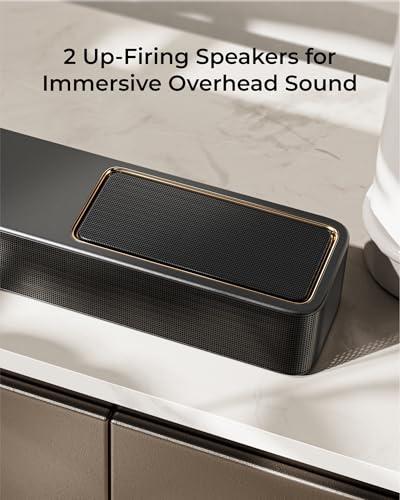
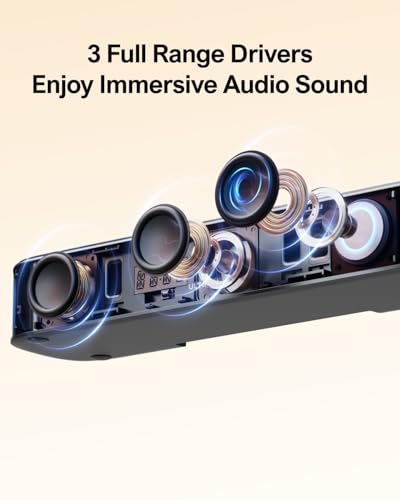
What makes the Skywave X40 special is its commitment to authentic surround sound. It features true 5.1.2 Dolby Atmos processing with physical up-firing drivers built into the main soundbar. These up-firing speakers bounce sound off your ceiling to create genuine overhead effects—when rain falls in a movie scene, you'll hear it coming from above, not just from the sides.
The system's NEURACORE™ processing engine represents a significant leap forward in soundbar technology. This isn't just marketing speak—it's a triple-core DSP (Digital Signal Processor) paired with a dual-core MCU (Microcontroller Unit) that can handle 2,000 MIPS (Million Instructions Per Second) of audio processing. To put that in perspective, this level of computational power allows the system to analyze and optimize 17 different audio channels in real-time, ensuring that every sound element lands exactly where the movie's sound designers intended.
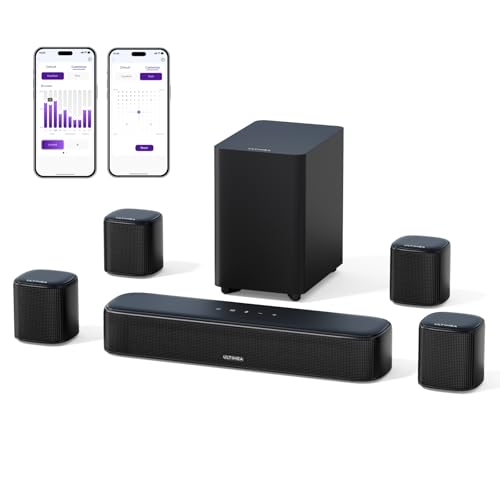
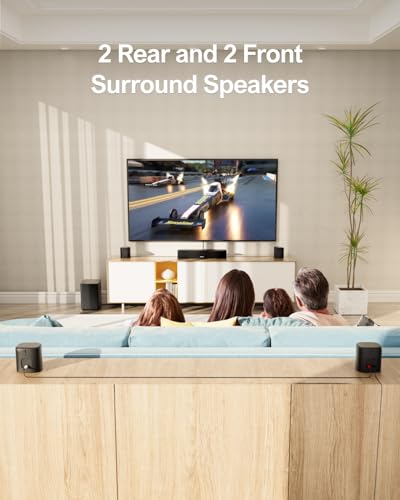
The Aura A40, released earlier in ULTIMEA's product lineup, takes a different approach entirely. Rather than focusing on the latest audio formats, it prioritizes delivering an impressive surround sound experience through virtual processing and strategic speaker placement. The system uses four physical surround speakers—two in front, two in the rear—to create what it calls a "7.1 virtual surround" experience.
Here's where the distinction becomes important: the Aura A40 doesn't actually process seven discrete audio channels. Instead, it takes stereo or 5.1 source material and uses SurroundX technology to distribute and enhance the audio across its eight total speakers. This creates a wider, more enveloping soundstage than you'd get from a basic soundbar, but it's not the same as true multichannel processing.
When manufacturers throw around power figures, it's easy to get caught up in bigger-is-better thinking. The Skywave X40 claims 530W peak power output compared to the Aura A40's 330W, but these numbers only tell part of the story.
What matters more is how efficiently that power gets converted into clean, distortion-free sound. The Skywave X40 uses GaN (Gallium Nitride) amplification technology, which might sound like technical jargon but has real-world benefits. Traditional silicon-based amplifiers waste significant energy as heat—sometimes up to 30-40% of their power output. GaN amplifiers achieve up to 98% efficiency, meaning nearly all that power goes toward driving the speakers rather than heating up your living room.
This efficiency advantage becomes crucial during dynamic movie scenes. When an action sequence demands sudden bursts of power—think car crashes or explosion sequences—the Skywave X40 can maintain clean output without the thermal throttling that affects less efficient designs. You'll hear this as clearer dialogue during intense scenes and bass that stays tight rather than becoming muddy when the action heats up.
The Aura A40, using more conventional amplification, still delivers respectable performance for its price point. At 330W, it provides plenty of volume for small to medium rooms, and our research into user feedback suggests most buyers find the power adequate for typical home environments. However, it won't have the same headroom for larger spaces or particularly demanding content.
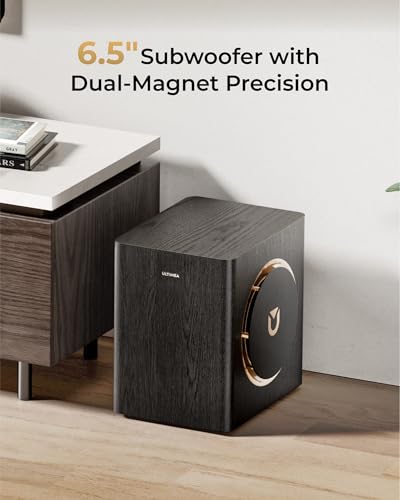
Nothing reveals the difference between these systems quite like their approach to low-frequency reproduction. The Skywave X40 includes a 6.5-inch wireless subwoofer that extends down to 35Hz, while the Aura A40 uses a smaller 4-inch wired subwoofer limited to 65Hz.
That 30Hz difference represents more than just numbers on a spec sheet. Most of the rumbling, visceral bass that makes action movies exciting happens between 20-80Hz. By reaching down to 35Hz, the Skywave X40 can reproduce the deep, chest-thumping effects that smaller subwoofers simply can't handle. The difference becomes immediately apparent when watching films like "Dune" or "Mad Max: Fury Road," where low-frequency effects are integral to the experience.
The Skywave X40's Gravus Ultra-Linear Bass Technology also addresses a common subwoofer problem: distortion at high volumes. Many budget subwoofers sound decent at moderate levels but become boomy and unclear when pushed hard. The dual-magnet design and advanced signal processing in the Skywave X40 maintains clean, controlled bass even during the most demanding scenes.
That said, the Aura A40's 4-inch subwoofer shouldn't be dismissed entirely. BassMX technology optimizes the smaller driver's output, and user reviews consistently praise its performance relative to the system's price point. It won't rattle your walls, but it provides enough low-end support to make movies and music significantly more engaging than TV speakers alone.
One of the most practical differences between these systems lies in their connectivity approach. The Skywave X40 represents the current trend toward wireless home theater systems, using what ULTIMEA calls CineMesh True Wireless technology.
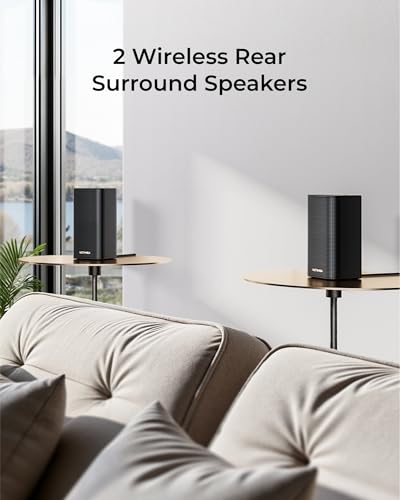
This isn't just standard Bluetooth—it's a dedicated dual 5GHz wireless transmission system designed specifically for multi-channel audio. The advantage is obvious: you can place the rear surround speakers anywhere in your room without running cables across doorways or under carpets. For many homeowners, this wireless freedom makes the difference between actually setting up surround sound and leaving speakers in their boxes because cable management seems too daunting.
The system achieves less than 20ms latency, which is crucial for maintaining lip-sync accuracy and immersive gaming. Anything above 40ms becomes noticeable as a disconnect between what you see and hear, breaking the illusion that makes surround sound effective.
The Aura A40 requires physical cable connections for all its surround speakers. ULTIMEA includes 2-meter cables for the front speakers and a 6-meter cable for the rear surrounds, which should reach most placement scenarios. While this limits flexibility, wired connections eliminate any potential for wireless interference or battery concerns.
From our research into user experiences, the wireless vs wired debate often comes down to room layout and personal tolerance for cable management. Renters who can't run cables through walls strongly prefer the Skywave X40's approach, while homeowners with dedicated media rooms don't mind the wired setup of the Aura A40.
The connectivity differences between these systems reflect their different target audiences and release timing. The Skywave X40 includes HDMI eARC (enhanced Audio Return Channel), which has become the gold standard for connecting soundbars to modern TVs. This single-cable connection can handle the highest-quality audio formats while also supporting 4K HDR video passthrough.
HDMI eARC also enables convenient features like using your TV remote to control the soundbar volume and automatically turning the system on when you start watching content. These might seem like small conveniences, but they significantly improve the daily experience of living with the system.
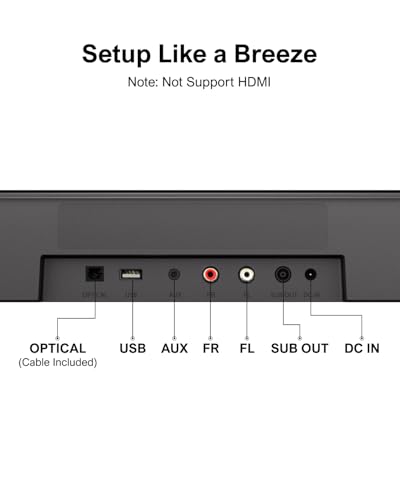
The Aura A40 lacks HDMI entirely, relying instead on optical, auxiliary, and USB connections. Optical audio is perfectly adequate for most content—it can handle 5.1 surround sound from Blu-rays and streaming services without issue. However, it can't carry the advanced audio formats like Dolby TrueHD or DTS-HD that you'll find on Ultra HD Blu-rays, nor can it handle some of the newer streaming formats that premium services are beginning to adopt.
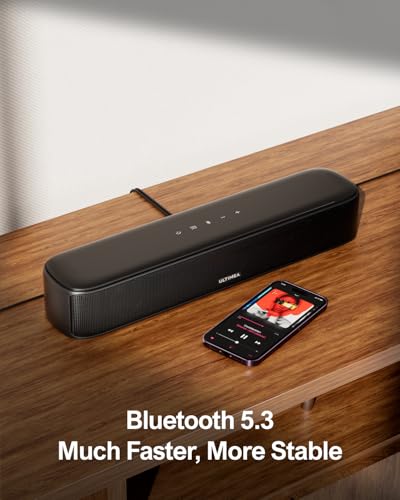
Both systems include modern Bluetooth connectivity (5.4 for the Skywave X40, 5.3 for the Aura A40), allowing easy streaming from phones and tablets. The difference in Bluetooth versions is minimal for most users, though the newer standard offers slightly better power efficiency and connection stability.
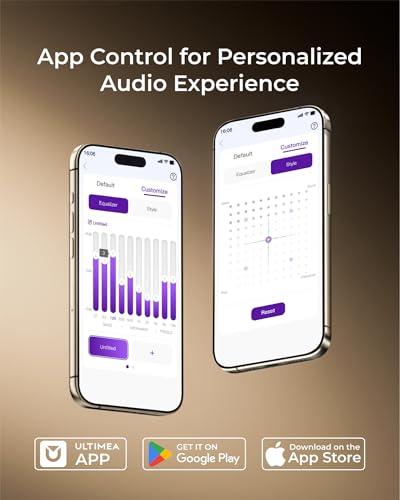
Both systems include the ULTIMEA Smart App, but the implementation reflects their different approaches to the market. The app provides access to 10-band EQ controls and 121 preset sound profiles, allowing surprisingly deep customization for both systems.
Where they differ is in the sophistication of the available adjustments. The Skywave X40's Dolby Atmos processing enables separate control over height channels and surround levels, letting you fine-tune the overhead effects based on your room's acoustics and ceiling height. Users with vaulted ceilings, for instance, can boost the up-firing speaker output to compensate for the increased bounce distance.
The Aura A40's app focuses more on overall sound shaping and the six different surround levels for its virtual processing. While less sophisticated than true Atmos tuning, these controls still provide meaningful customization options that many competing budget systems lack entirely.
Both systems support over-the-air firmware updates, which has become increasingly important as streaming services and source devices continue evolving their audio implementations. A soundbar that worked perfectly with Netflix in 2024 might encounter compatibility issues with new formats by 2026 without ongoing software support.
Based on our analysis of extensive user feedback and professional reviews, the performance differences between these systems become most apparent in specific scenarios. The Skywave X40 excels with content that was specifically mixed for Dolby Atmos—Marvel movies, recent Netflix originals, and video games that support spatial audio all benefit dramatically from the authentic height channels.
Users consistently report that the overhead effects in the Skywave X40 create a more immersive experience than virtual processing can achieve. Rain scenes feel convincing, helicopter flyovers track naturally across the ceiling, and the general sense of being "inside" the movie rather than watching it becomes more pronounced.
The Aura A40, while lacking true height channels, creates an impressively wide soundstage that extends well beyond the physical speakers. Users describe the effect as making their room feel larger and creating better separation between dialogue, music, and sound effects than standard TV audio or basic soundbars.
For gaming, both systems provide advantages over TV speakers, but in different ways. The Skywave X40's low latency and discrete channel processing make it easier to locate enemies in first-person shooters, while the Aura A40's wider soundstage enhances the atmosphere in open-world games.
Music performance varies significantly between the two systems. The Skywave X40's superior frequency response and more powerful amplification deliver better dynamics and cleaner reproduction across all genres. The Aura A40 handles music well for its price point, though the smaller subwoofer limits its ability with bass-heavy tracks like hip-hop or electronic music.
At the time of writing, these systems occupy very different price segments, which fundamentally changes how we evaluate their value. The Aura A40 represents exceptional value in the budget soundbar category—it delivers features and performance typically found in systems costing significantly more. The inclusion of four physical surround speakers at this price point is particularly noteworthy, as most competing budget options rely entirely on virtual processing.
The Skywave X40 commands a premium price that reflects its advanced technology and wireless convenience. Whether this premium is justified depends largely on your priorities and room setup. If you value authentic Dolby Atmos, wireless freedom, and futureproof connectivity, the additional cost makes sense. If you simply want better sound than your TV speakers without spending extensively, the Aura A40 delivers impressive results.
Your decision should start with honestly assessing your room and usage patterns. The Aura A40 works best in smaller to medium-sized rooms where its 330W output provides adequate volume and where running speaker cables isn't problematic. It's ideal for apartment dwellers, college students, or anyone wanting a significant audio upgrade without major investment.
Choose the Skywave X40 if you have a larger room, value wireless convenience, want authentic Dolby Atmos effects, or plan to upgrade your TV and source devices in the coming years. Its advanced connectivity and processing make it more future-proof, while the wireless design eliminates installation headaches that prevent many people from properly setting up surround systems.
Consider your content preferences too. If you primarily watch older movies and TV shows, the Aura A40's virtual surround processing handles legacy content effectively. If you're excited about the latest Marvel releases, premium Netflix content, or modern gaming with spatial audio, the Skywave X40's authentic Atmos processing will provide a noticeably superior experience.
The Skywave X40 also makes more sense if you're building a long-term home theater setup. Its superior connectivity, processing power, and wireless flexibility mean it's likely to remain relevant longer as technology evolves. The Aura A40 serves immediate needs excellently but may feel limited as your expectations and content sources advance.
Both systems succeed at their intended missions, but they're solving different problems. The Aura A40 transforms disappointing TV audio into engaging surround sound without breaking budgets or requiring complex installation. The Skywave X40 delivers a premium home theater experience with cutting-edge technology and wireless convenience.
Your choice ultimately depends on whether you prioritize value and simplicity or performance and future-proofing. Neither approach is inherently better—they serve different audiences with different needs and expectations. The key is choosing the one that aligns with your specific situation, room, and long-term plans.
| ULTIMEA Skywave X40 5.1.2 | Ultimea Aura A40 U2601 |
|---|---|
| Channel Configuration - Determines authenticity of surround sound experience | |
| True 5.1.2 Dolby Atmos with physical up-firing speakers | 7.1 virtual surround sound processing |
| Total Power Output - Affects volume capability and dynamic range | |
| 530W peak (sufficient for large rooms) | 330W peak (adequate for small-medium rooms) |
| Subwoofer Size & Bass Extension - Critical for impactful movie and music experience | |
| 6.5-inch wireless, extends to 35Hz (deep, room-filling bass) | 4-inch wired, limited to 65Hz (decent bass for the price) |
| Surround Speaker Setup - Determines installation complexity and placement flexibility | |
| 2 wireless rear speakers (no cables required) | 4 wired speakers with 2m and 6m cables included |
| Primary Connectivity - Affects compatibility with modern TVs and devices | |
| HDMI eARC with 4K HDR passthrough (future-proof) | Optical, AUX, USB only (no HDMI support) |
| Audio Processing Technology - Determines sound quality and optimization | |
| NEURACORE™ triple-core DSP with 2,000 MIPS processing power | SurroundX virtual processing with BassMX bass enhancement |
| Amplification Type - Affects efficiency and sound clarity at high volumes | |
| GaN (Gallium Nitride) amplifier - 98% efficiency, minimal heat | Conventional amplification |
| Frequency Response Range - Determines audio detail and bass depth | |
| 35Hz - 20kHz (extended range for fuller sound) | 65Hz - 18kHz (standard range, limited deep bass) |
| Wireless Technology - Affects setup convenience and reliability | |
| CineMesh dual 5GHz with <20ms latency | Bluetooth 5.3 for music streaming only |
| Main Soundbar Dimensions - Consider your TV stand and room aesthetics | |
| 43.3" x 3.9" x 2.8" (larger, matches bigger TVs) | 15.8" x 3.5" x 2.8" (compact, fits smaller setups) |
| Smart App Features - Determines customization and control options | |
| 10-band EQ, 121 presets, Atmos-specific controls | 10-band EQ, 121 presets, surround level adjustments |
| Best For - Target user and room type | |
| Premium home theaters, wireless convenience, authentic Atmos | Budget upgrade from TV speakers, smaller rooms, wired setup OK |
The key difference is their approach to surround sound. The ULTIMEA Skywave X40 delivers true 5.1.2 Dolby Atmos with physical up-firing speakers for authentic overhead effects, while the Aura A40 uses 7.1 virtual surround processing to simulate spatial audio. The Skywave X40 also features wireless rear speakers, whereas the Aura A40 requires wired connections for all four surround speakers.
The ULTIMEA Skywave X40 has significantly better bass with its 6.5-inch wireless subwoofer that extends down to 35Hz using Gravus Ultra-Linear Bass Technology. The Aura A40 uses a smaller 4-inch subwoofer limited to 65Hz. This means the Skywave X40 can reproduce deeper, more impactful bass for movies and music.
No cables are required for the ULTIMEA Skywave X40 - it uses wireless technology for both the subwoofer and rear surround speakers. However, the Aura A40 requires wired connections and includes 2-meter and 6-meter cables for connecting its four surround speakers to the main soundbar.
The ULTIMEA Skywave X40 is more powerful with 530W peak output compared to the Aura A40's 330W. The Skywave X40 also uses advanced GaN amplification technology for better efficiency and cleaner sound at high volumes, making it better suited for larger rooms.
The ULTIMEA Skywave X40 offers more modern connectivity including HDMI eARC, 4K HDR passthrough, optical, USB, and Bluetooth 5.4. The Aura A40 has optical, AUX, USB, and Bluetooth 5.3 connections but lacks HDMI support entirely.
The Aura A40 is specifically designed for small to medium rooms (108-270 square feet) and offers excellent value for smaller spaces. While the ULTIMEA Skywave X40 can work in small rooms, its higher power output and premium features are better utilized in larger spaces.
Only the ULTIMEA Skywave X40 supports true Dolby Atmos with physical up-firing speakers for overhead sound effects. The Aura A40 uses virtual surround processing to simulate spatial audio but doesn't process actual Dolby Atmos content.
The ULTIMEA Skywave X40 is easier to set up since it's completely wireless - you only need to plug each component into power outlets. The Aura A40 requires running speaker cables to four different surround speakers, which takes more time and planning for cable management.
Yes, both the ULTIMEA Skywave X40 and Aura A40 work with the ULTIMEA Smart App, offering 10-band EQ controls, 121 preset sound profiles, and various customization options. The Skywave X40 provides additional Atmos-specific controls in the app.
The Aura A40 offers exceptional value for budget-conscious buyers, providing 7.1 virtual surround sound with four physical speakers at a very competitive price point. The ULTIMEA Skywave X40 commands a premium but delivers advanced features like true Dolby Atmos and wireless convenience that justify the higher cost for serious home theater enthusiasts.
The ULTIMEA Skywave X40 delivers superior sound quality with its NEURACORE processing, wider frequency response (35Hz-20kHz), and authentic Dolby Atmos effects. The Aura A40 still provides impressive sound improvement over TV speakers with good dialogue clarity and effective virtual surround, but can't match the technical performance of the Skywave X40.
Choose the ULTIMEA Skywave X40 if you want the best possible home theater experience with authentic Dolby Atmos, wireless convenience, and future-proof connectivity. Select the Aura A40 if you're looking for a significant upgrade from TV speakers on a budget, have a smaller room, and don't mind wired speaker installation.
We've done our best to create useful and informative comparisons to help you decide what product to buy. Our research uses advanced automated methods to create this comparison and perfection is not possible - please contact us for corrections or questions. These are the sites we've researched in the creation of this article: bestbuy.com - shopabunda.com - youtube.com - youtube.com - youtube.com - youtube.com - ultimea.com - walmart.com - youtube.com - hometechnologyreview.com - community.ultimea.com - avsforum.com - youtube.com - youtube.com - youtube.com - bestbuy.com - hometechnologyreview.com - walmart.com - newegg.com - youtube.com - ultimea.com - youtube.com - device.report - ultimea.co - manuals.plus - homestudiobasics.com - youtube.com - bestbuy.com - community.ultimea.com - manuals.plus - eu.ultimea.com - navesapeugeot.com.br - bestbuy.com - images.thdstatic.com - provantage.com - ultimea.com - bestbuy.com

Privacy Policy
Terms and Conditions - Affiliate Policy
Home Security
© Copyright 2008-2026.
11816 Inwood Rd #1211, Dallas, TX 75244