




When your TV's built-in speakers leave you straining to hear dialogue or missing the rumble of explosions, it's time for a soundbar upgrade. But today's market offers two fundamentally different approaches that can leave shoppers confused. Do you go with a traditional setup that physically places speakers around your room, or trust modern processing to create that surround sound experience from a single unit?
The Ultimea Aura A40 and Sony HT-S2000 represent these competing philosophies perfectly. One delivers true 7.1 channel surround with actual speakers positioned around your listening area, while the other uses advanced virtual processing to simulate that same experience from a compact soundbar. Both launched in recent years as manufacturers refined their approaches to home audio, but they couldn't be more different in execution.
The soundbar world has evolved dramatically since the early 2010s when most units were simple two-channel affairs designed to make dialogue clearer. Today's market splits into distinct categories, each with specific advantages depending on your priorities.
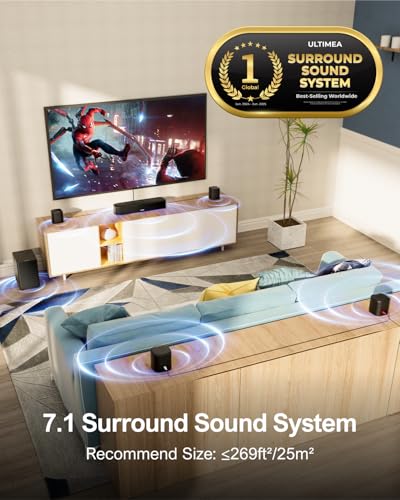
Physical surround systems like the Ultimea Aura A40 include separate speakers that you place around your room. This approach creates genuine surround sound the same way movie theaters do—by actually positioning audio sources where the sound should come from. When a helicopter flies overhead in a movie, you hear it move from speaker to speaker in real space.
Virtual surround soundbars like the Sony HT-S2000 accomplish something that would seem impossible: they create the perception of surround sound using psychoacoustic processing. This technology, refined significantly since 2020, analyzes audio signals and uses precise timing, phase relationships, and frequency manipulation to trick your brain into hearing sounds from locations where no speakers exist.
The main considerations when choosing between these approaches center on performance, convenience, space requirements, and long-term value. Performance includes not just how good something sounds, but how well it handles different types of content and whether it supports modern audio formats. Convenience covers setup complexity and day-to-day usability. Space requirements are obvious but often underestimated—many buyers don't realize how much room proper surround speaker placement actually needs.
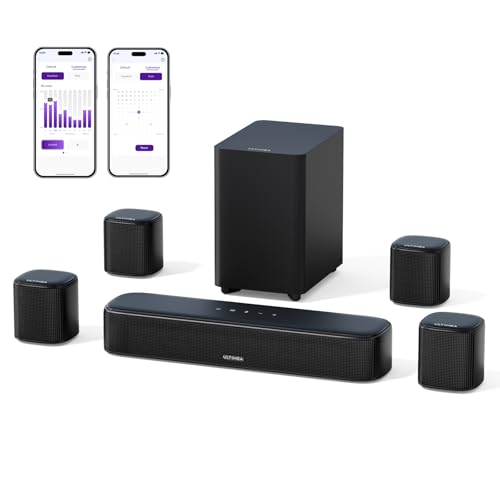
The Ultimea Aura A40 takes the straightforward approach: if you want surround sound, you need surround speakers. This system includes a main soundbar, four separate surround speakers, and a dedicated subwoofer—everything needed for true 7.1 channel audio.
At the time of writing, the Aura A40 represents exceptional value in the physical surround category, typically priced significantly below competing systems that offer similar speaker counts. This aggressive pricing strategy reflects Ultimea's position as a newer brand building market share, but the specifications suggest they haven't cut corners where it matters most.
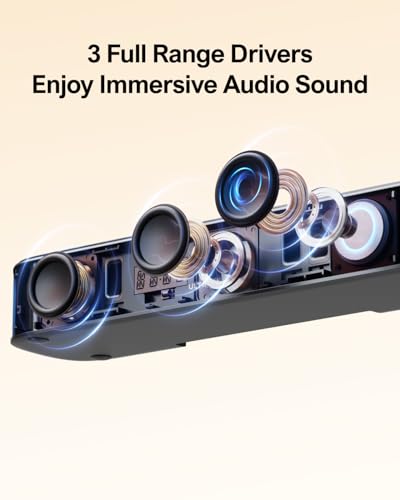
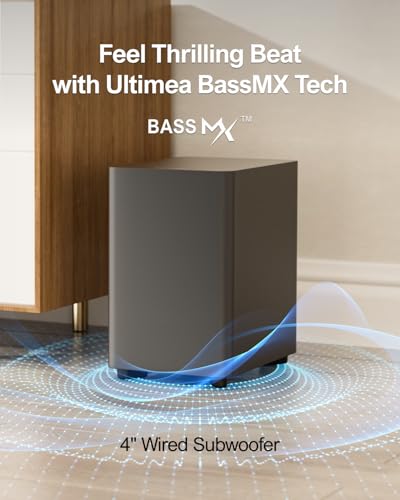
The Ultimea Aura A40 delivers 330 watts of peak power across eight individual speakers. This isn't marketing fluff—having separate amplification for each driver allows the system to create genuinely independent audio channels. The main soundbar handles the front left, center, and right channels using 2-inch drivers, while four additional 2-inch speakers handle the surround duties, and a 4-inch subwoofer provides dedicated bass.
This physical separation creates what audio engineers call "discrete channels"—each speaker can play completely different audio simultaneously. When you watch a movie scene with dialogue happening in front while a car drives past from left to right behind you, the Aura A40 literally plays those sounds from different physical locations. Your brain doesn't need to work to interpret where sounds are coming from because they're actually coming from there.
The system's BassMX technology enhances low-frequency performance through the dedicated subwoofer. Having a separate bass unit means the main speakers can focus on mid and high frequencies without compromising, while the subwoofer can be positioned optimally for room acoustics—usually in a corner or along a wall where bass naturally reinforces.
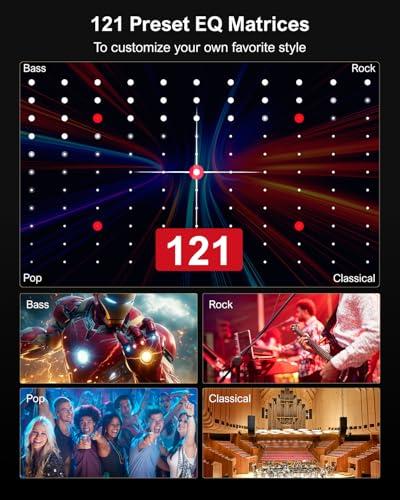
What sets the Ultimea Aura A40 apart from many budget surround systems is its extensive customization options. The system includes 121 preset equalizer matrices across four major genres: Bass, Pop, Classical, and Rock. These aren't just simple bass and treble adjustments—each preset represents a complete frequency response curve optimized for specific music types or listening preferences.
Beyond presets, the system offers a 10-band manual equalizer accessible through the Ultimea Smart App. This level of control typically appears only on much more expensive systems. You can boost dialogue frequencies if you struggle with movie conversations, enhance bass impact for action films, or create custom curves for your specific room acoustics.
The app also provides 13 adjustable surround levels, allowing fine-tuning of how aggressively the rear speakers contribute to the overall sound. This matters more than you might think—in smaller rooms, full surround levels can make dialogue seem to come from behind you, while larger spaces need more aggressive surround processing to maintain immersion.
Regular over-the-air firmware updates keep the system current, and six dedicated listening modes (Movie, Music, Voice, Sport, Game, Night) provide quick optimization for different content types without diving into manual settings.
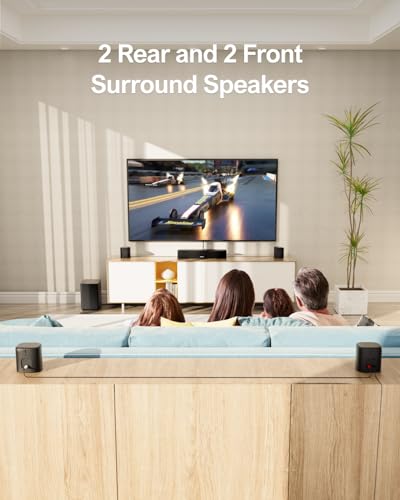
The Aura A40's biggest challenge is installation complexity. True surround sound requires proper speaker placement, which means running cables to four different locations around your listening area. The system includes a 6-meter cable for the main surround connection, plus 2-meter cables for the front surround speakers. One rear speaker connects wirelessly to reduce cable runs, but you still need power outlets for each surround unit.
Optimal performance requires positioning the rear speakers slightly behind and to the sides of your main seating position, elevated 2-3 feet above ear level. The front surround speakers should flank your TV or projector screen. This works well in dedicated home theater rooms but can be challenging in living spaces where furniture placement and aesthetics matter.
Room size recommendations suggest 108-270 square feet for optimal performance, which covers most home theater and living room applications. Smaller spaces risk overwhelming bass response, while larger rooms might need the volume pushed to levels where distortion becomes noticeable.
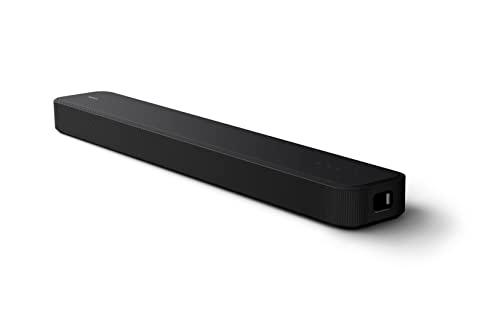
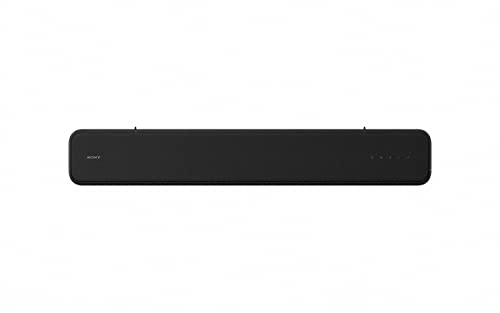
The Sony HT-S2000 represents the opposite philosophy: advanced processing can create immersive audio from a single, elegantly designed unit. Sony released this soundbar as part of their push into spatial audio, incorporating technologies developed for their higher-end home theater products.
At the time of writing, the HT-S2000 typically costs more than the Ultimea system, reflecting both Sony's premium brand positioning and the advanced processing technologies inside. However, pricing has become more competitive as Sony seeks to broaden adoption of their spatial audio ecosystem.
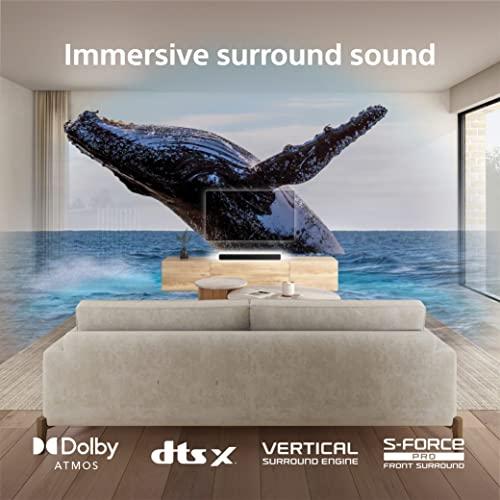
The Sony HT-S2000 supports Dolby Atmos and DTS:X, the current standards for spatial audio. These formats embed positional information directly in the audio stream, allowing compatible devices to place sounds in three-dimensional space rather than just traditional left-right-center channels.
Sony's Vertical Surround Engine analyzes these spatial cues and uses precisely timed reflections off your room's walls and ceiling to create the perception of sound coming from above and around you. This technology has improved dramatically since its introduction around 2020, now capable of creating convincing height effects that earlier virtual processing systems couldn't achieve.
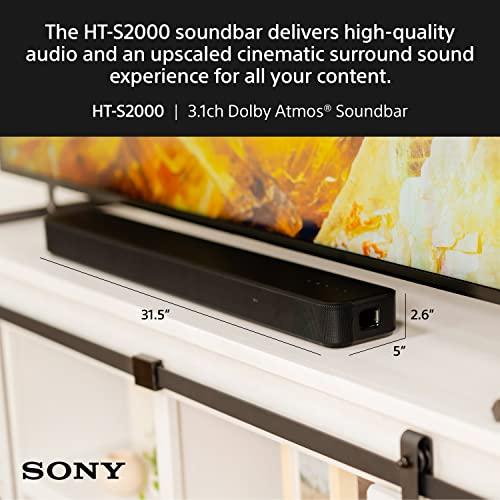
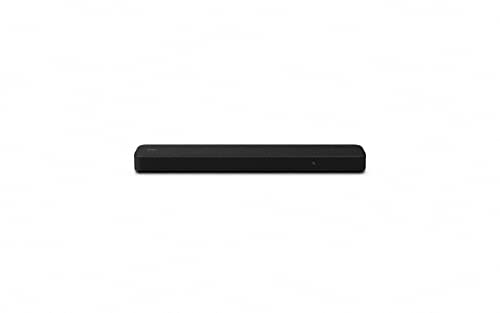
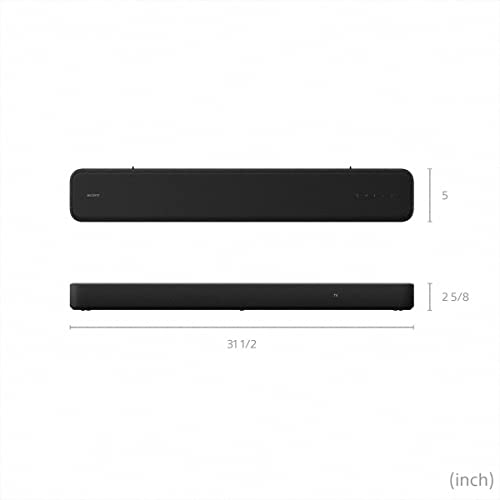
The X-Balanced Speaker Units represent a key hardware innovation. Unlike traditional round drivers, these rectangular speakers maximize diaphragm area within the soundbar's constrained internal space. More diaphragm area means more air movement, which translates to higher sound pressure levels with less distortion. This design allows the HT-S2000 to produce surprisingly powerful sound from its compact 31.5-inch footprint.
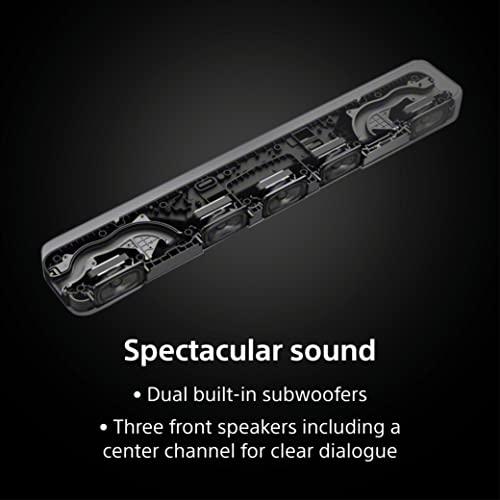
The S-Force PRO Front Surround technology works alongside the Vertical Surround Engine to create width and depth perception. By carefully controlling phase relationships and frequency response between the five internal drivers, Sony creates the illusion that sound extends well beyond the soundbar's physical boundaries.
Rather than including a separate subwoofer, the Sony HT-S2000 incorporates dual bass drivers with side-firing ports for bass extension. This design saves space and eliminates cable runs, but it also means bass response is limited by the soundbar's internal volume.
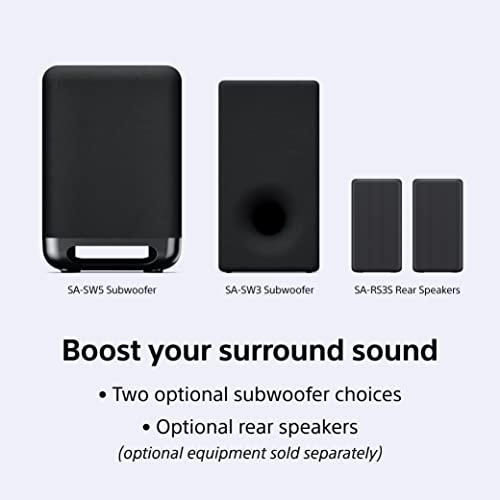
In practice, our research suggests the built-in bass provides adequate low-frequency support for dialogue-heavy content and most music, but action movies with deep bass effects may leave some listeners wanting more impact. Sony addresses this through optional wireless subwoofers (SA-SW3 and SA-SW5) that integrate seamlessly when needed, but these represent additional purchases.
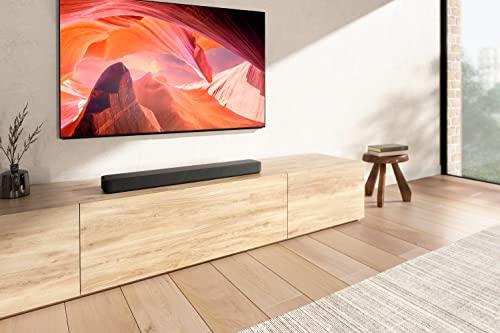
The advantage of integrated bass comes in setup simplicity and aesthetic cleanliness. There's no separate box to position or cable to hide, making the HT-S2000 particularly attractive for wall-mounting installations or entertainment centers with limited space.
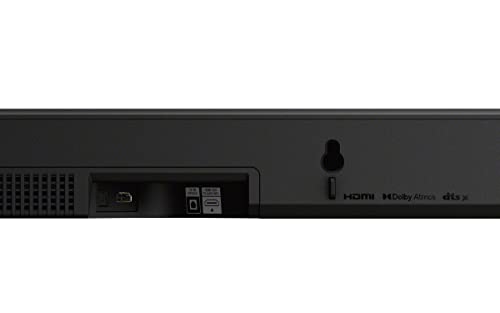
The Sony HT-S2000 includes HDMI eARC/ARC connectivity, which the Ultimea system lacks entirely. This matters more than casual users might realize. HDMI Audio Return Channel allows lossless audio transmission from your TV back to the soundbar, preserving full quality for Dolby Atmos, DTS:X, and high-resolution audio formats.
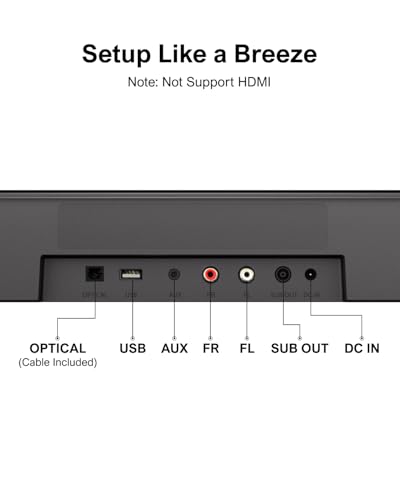
Without HDMI, the Aura A40 is limited to compressed audio formats through optical or Bluetooth connections. While this doesn't affect older content or standard streaming services, it means you can't access the full spatial audio experience from UHD Blu-ray discs or premium streaming tiers that offer Atmos content.
The HT-S2000 also supports high-resolution audio up to 192kHz/24-bit through its LPCM capability, making it compatible with audiophile-quality music sources. Bluetooth 5.2 with AAC codec support provides high-quality wireless streaming from smartphones and tablets.
Clear dialogue reproduction ranks as the most important performance metric for most users—it's usually the main reason people upgrade from TV speakers. Both systems approach this differently but effectively.
The Ultimea Aura A40 uses a dedicated center channel in the main soundbar, combined with processing that can isolate and enhance voice frequencies through its Voice mode. The physical separation of channels means dialogue doesn't compete with sound effects or music coming from the same drivers.
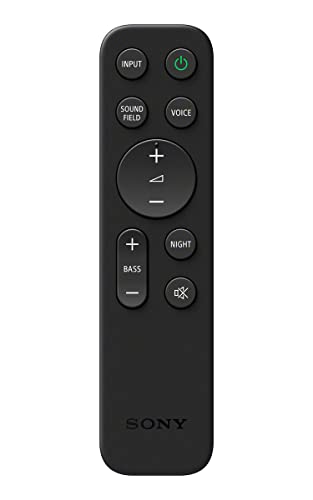
The Sony HT-S2000 also features a dedicated center channel, but adds Sony's X-Balanced driver technology for improved clarity and power handling. The Voice mode specifically boosts dialogue frequencies while compressing background elements, making conversations easier to follow even at lower volumes.
User reviews consistently praise both systems for dialogue improvement over TV speakers, but give slight advantages to the Sony for clarity in complex soundtracks where multiple elements compete for attention.
This represents the fundamental difference between the two approaches. The Ultimea Aura A40 creates true surround immersion by physically placing speakers around your listening position. When properly set up, this provides the most convincing spatial audio experience possible—sounds literally come from the directions they should.
The Sony HT-S2000 relies on psychoacoustic processing to create surround perception. While impressive, this approach works better for some listeners than others, and performance varies significantly based on room acoustics, seating position, and individual hearing characteristics.
For home theater applications where immersion matters most, the Aura A40's physical approach generally provides superior results. The sensation of being surrounded by sound enhances movie watching and gaming experiences in ways that virtual processing, however sophisticated, struggles to match completely.
Bass performance reveals another key difference. The Ultimea system's 4-inch dedicated subwoofer provides physical bass impact that you feel as well as hear. This tactile element enhances action sequences and music with deep low-frequency content.
The Sony HT-S2000's integrated bass system offers convenience and adequate performance for most content, but lacks the physical impact of a larger dedicated subwoofer. The side-firing ports extend response below what the drivers alone could achieve, but physics limits how much bass energy a compact soundbar can produce.
Users seeking maximum bass impact typically prefer systems with larger, separate subwoofers, giving the Aura A40 advantages for action movies and bass-heavy music genres.
For dedicated home theater rooms, the choice becomes clearer. Home theaters benefit from authentic surround sound reproduction, making the Ultimea Aura A40's physical approach more appropriate. Theater rooms also typically accommodate the cable runs and speaker placement requirements more easily than living spaces.
The extensive customization options in the Aura A40 allow fine-tuning for specific room acoustics and content preferences—important in dedicated viewing environments where audio quality takes priority over convenience.
However, the Sony HT-S2000 offers advantages in mixed-use spaces or smaller rooms where speaker placement is impractical. Its support for modern spatial audio formats also ensures compatibility with the latest streaming content and UHD Blu-ray releases.
The decision ultimately depends on your priorities and constraints. Choose the Ultimea Aura A40 if you want maximum immersion at an exceptional value point, don't mind setup complexity, and have space for proper speaker placement. This system delivers authentic surround sound that virtual processing can't fully replicate, especially for gaming and action movies where directional audio matters most.
Choose the Sony HT-S2000 if convenience and modern format support are priorities, you have space constraints, or you're building a system gradually. The compact design, Dolby Atmos support, and future expandability make it ideal for users who want immediate improvement with options for later enhancement.
Both systems represent solid values in their respective categories at the time of writing. The Aura A40 offers complete surround sound at a budget price point, while the HT-S2000 provides premium features and convenience at a competitive cost for its capabilities.
Your choice should align with your space, usage patterns, and performance priorities. There's no universally "better" option—just the right match for your specific needs and preferences.
| Ultimea Aura A40 7.1 Channel Soundbar System | Sony HT-S2000 3.1ch Dolby Atmos Soundbar |
|---|---|
| Channel Configuration - Determines surround sound authenticity | |
| 7.1 physical surround with 4 separate speakers placed around room | 3.1 virtual surround using psychoacoustic processing from single bar |
| Total Power Output - Affects maximum volume and dynamics | |
| 330W peak across 8 speakers (higher power for large rooms) | 250W total (adequate for most spaces, more efficient design) |
| Subwoofer Setup - Critical for bass impact and room flexibility | |
| External 4-inch wired subwoofer with BassMX technology | Dual built-in subwoofers with side-firing ports (space-saving) |
| Audio Format Support - Determines compatibility with modern content | |
| Standard formats only (Dolby Digital, DTS, PCM via optical/Bluetooth) | Full Dolby Atmos, DTS:X, TrueHD, HD Master Audio via HDMI eARC |
| Connectivity Options - Affects setup flexibility and audio quality | |
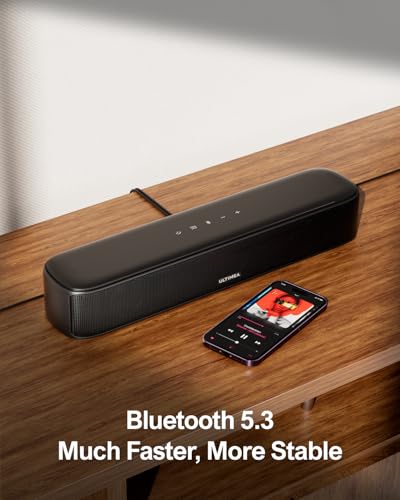
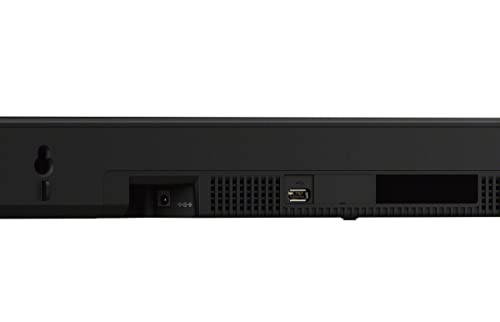
| Optical, AUX, USB, Bluetooth 5.3 (no HDMI limits format support) | HDMI eARC/ARC, Optical, USB, Bluetooth 5.2 (lossless audio capable) |
| Setup Complexity - Time and effort required for installation | |
| Complex: requires positioning/wiring 4 surround speakers around room | Simple: single soundbar with one HDMI cable connection |
| Customization Features - Ability to fine-tune sound to preferences | |
| 121 EQ presets, 10-band manual EQ, 13 surround levels, 6 listening modes | Basic sound modes (3 bass levels, Night/Voice modes, Sound Field on/off) |
| Physical Footprint - Space requirements in your room | |
| Large: soundbar + 4 surround speakers + subwoofer placement needed | Compact: 31.5" soundbar only (expandable with optional wireless components) |
| Smart App Control - Modern features and updates | |
| Ultimea Smart App with extensive EQ control and OTA firmware updates | Sony Home Entertainment Connect app for basic remote functions |
| Expandability - Future upgrade potential | |
| Complete system (no expansion possible or needed) | Modular: add Sony SA-SW3/SW5 subwoofers or SA-RS3S rear speakers later |
| Room Size Recommendation - Optimal performance space | |
| 108-270 sq ft with proper speaker placement flexibility | Compact to medium rooms, excellent for space-constrained setups |
| Brand Ecosystem Integration - Works best with specific TV brands | |
| Universal compatibility via standard connections | Enhanced integration with Sony BRAVIA TVs and ecosystem products |
The Ultimea Aura A40 provides true 7.1 surround sound with four physical speakers placed around your room, creating authentic directional audio. The Sony HT-S2000 uses virtual processing to simulate surround effects from a single soundbar. For genuine surround immersion, the Aura A40 delivers superior spatial accuracy since sounds actually come from different locations around you.
The fundamental difference is approach: the Ultimea Aura A40 includes separate surround speakers for true multi-channel audio, while the Sony HT-S2000 creates virtual surround from one unit using advanced processing. This means the Aura A40 requires more setup and space but provides authentic surround sound, whereas the HT-S2000 offers convenience with impressive but simulated spatial effects.
Only the Sony HT-S2000 supports Dolby Atmos and DTS:X formats through its HDMI eARC connection. The Ultimea Aura A40 doesn't support these modern spatial audio formats, limiting it to standard Dolby Digital and DTS through optical connections. For streaming services and UHD Blu-rays with Atmos content, the Sony HT-S2000 is the clear choice.
The Sony HT-S2000 is much easier to install, requiring only a single HDMI cable connection to your TV. The Ultimea Aura A40 requires positioning and wiring four surround speakers around your room, plus connecting the subwoofer. If you want plug-and-play simplicity, the HT-S2000 wins decisively.
The Ultimea Aura A40 includes a dedicated 4-inch external subwoofer for deep bass impact. The Sony HT-S2000 has dual built-in subwoofers but can be expanded with optional Sony wireless subwoofers for more bass. The Aura A40 provides stronger bass out of the box, while the Sony offers flexibility to add more bass later.
The Sony HT-S2000 is ideal for small spaces since it's a single compact unit that doesn't require additional speaker placement. The Ultimea Aura A40 needs room for four surround speakers and proper positioning to work effectively. In apartments or tight spaces, the HT-S2000 provides excellent performance without space constraints.
Both offer app control, but with different capabilities. The Ultimea Aura A40 includes extensive app features with 121 EQ presets, 10-band equalizer, and surround level adjustments. The Sony HT-S2000 app provides basic remote control functions and simple sound mode selection. The Aura A40 offers much more detailed customization through its app.
The Ultimea Aura A40 excels for gaming due to its physical surround speakers that provide accurate directional audio for locating enemies and environmental sounds. The Sony HT-S2000 offers good gaming performance with lower latency, but virtual processing can't match the spatial accuracy of real surround speakers. For competitive gaming, the Aura A40 provides tactical advantages.
The Sony HT-S2000 includes HDMI eARC/ARC, optical, USB, and Bluetooth connections, enabling lossless audio from modern TVs. The Ultimea Aura A40 has optical, AUX, USB, and Bluetooth but lacks HDMI entirely. The HT-S2000 offers better connectivity for modern devices and higher audio quality potential.
Both handle music well but differently. The Ultimea Aura A40 provides extensive EQ customization with presets for Pop, Classical, Rock, and Bass, plus manual tuning options. The Sony HT-S2000 offers cleaner, more refined sound quality but limited EQ options. Music enthusiasts who like to customize sound will prefer the Aura A40, while those wanting balanced audio will appreciate the Sony.
The Sony HT-S2000 is designed for expansion with optional Sony wireless subwoofers and rear speakers, allowing gradual system building. The Ultimea Aura A40 comes complete and cannot be expanded. If you want to start simple and upgrade over time, the HT-S2000 offers that flexibility.
Value depends on your priorities. The Ultimea Aura A40 typically costs less while including everything needed for complete 7.1 surround sound. The Sony HT-S2000 costs more but provides premium features like Dolby Atmos support and superior build quality. The Aura A40 offers exceptional value for physical surround sound, while the Sony justifies its premium with advanced technology and convenience.
We've done our best to create useful and informative comparisons to help you decide what product to buy. Our research uses advanced automated methods to create this comparison and perfection is not possible - please contact us for corrections or questions. These are the sites we've researched in the creation of this article: youtube.com - walmart.com - youtube.com - ultimea.com - homestudiobasics.com - ultimea.co - youtube.com - eu.ultimea.com - walmart.com - device.report - bestbuy.com - manuals.plus - community.ultimea.com - judge.me - support.ultimea.com - geekmaxi.com - provantage.com - bestbuy.com - youtube.com - uk.whatgeek.com - techradar.com - valueelectronics.com - youtube.com - videoandaudiocenter.com - whathifi.com - hometheaterhifi.com - youtube.com - sony.com - rtings.com - whathifi.com - rtings.com - helpguide.sony.net - electronics.sony.com - sony.com - dolby.com - sony.com - youtube.com - youtube.com

Privacy Policy
Terms and Conditions - Affiliate Policy
Home Security
© Copyright 2008-2026.
11816 Inwood Rd #1211, Dallas, TX 75244