

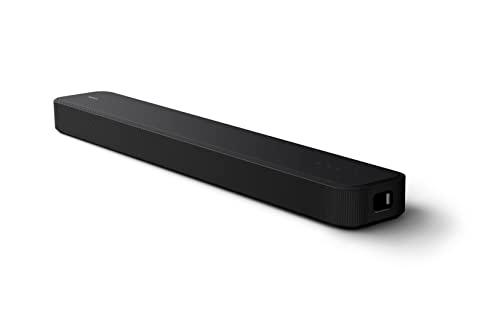

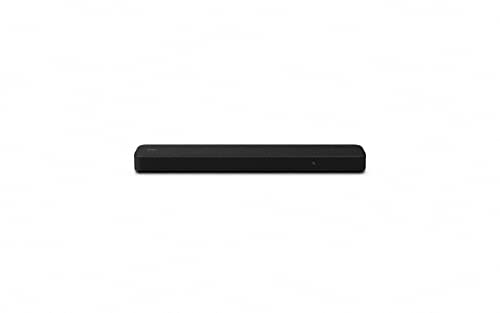
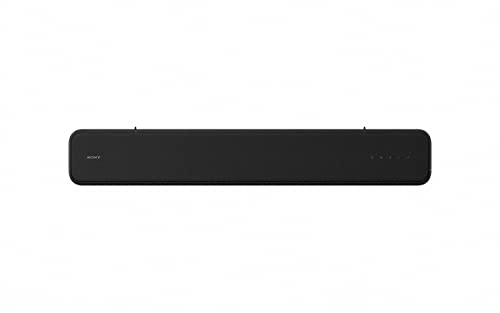
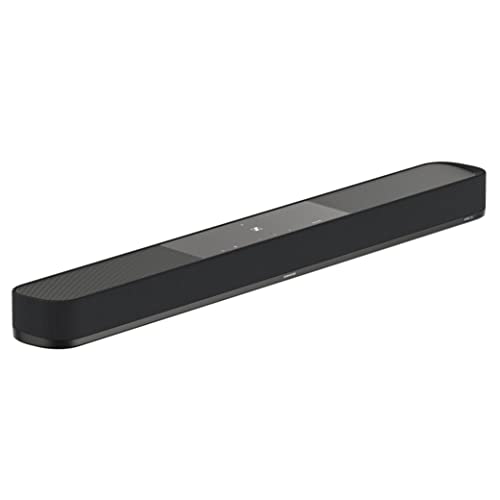

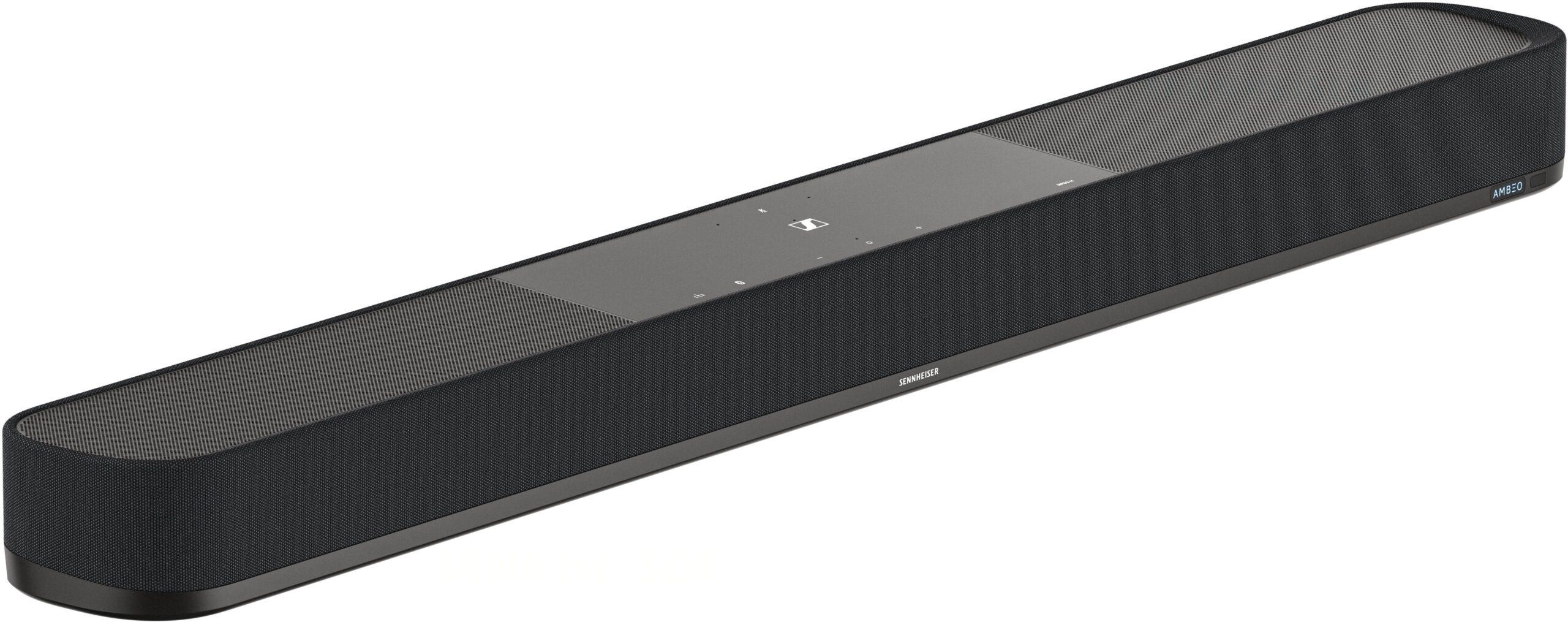

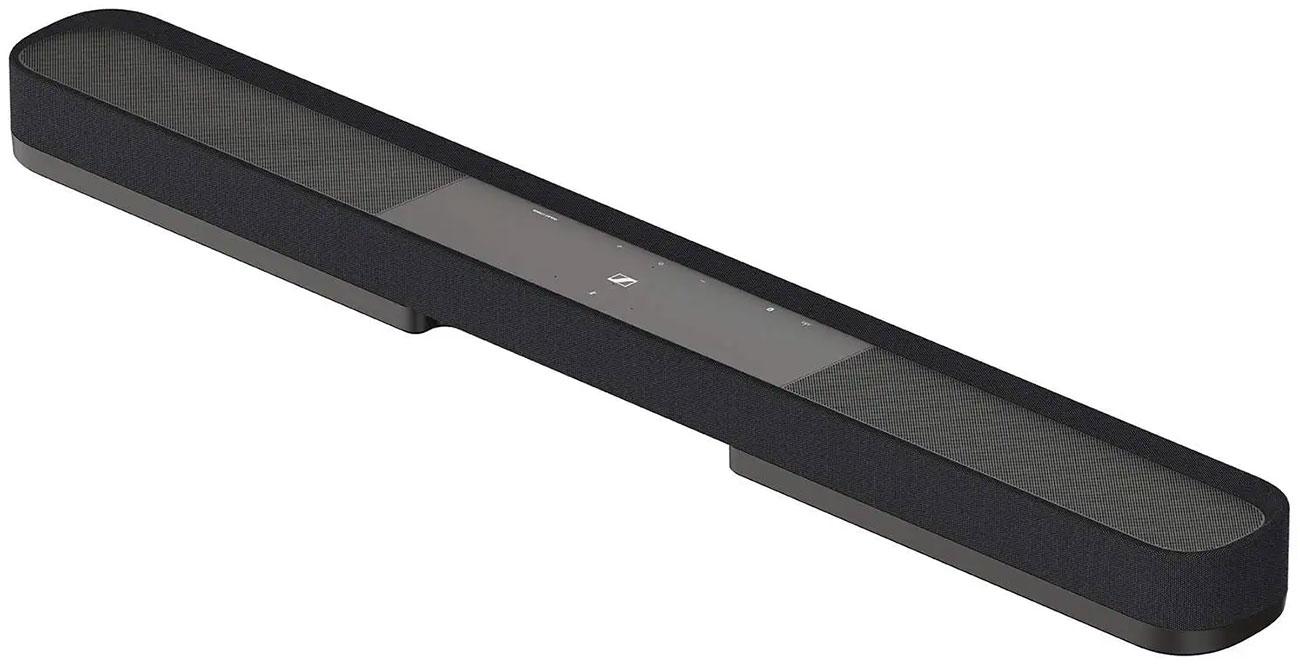
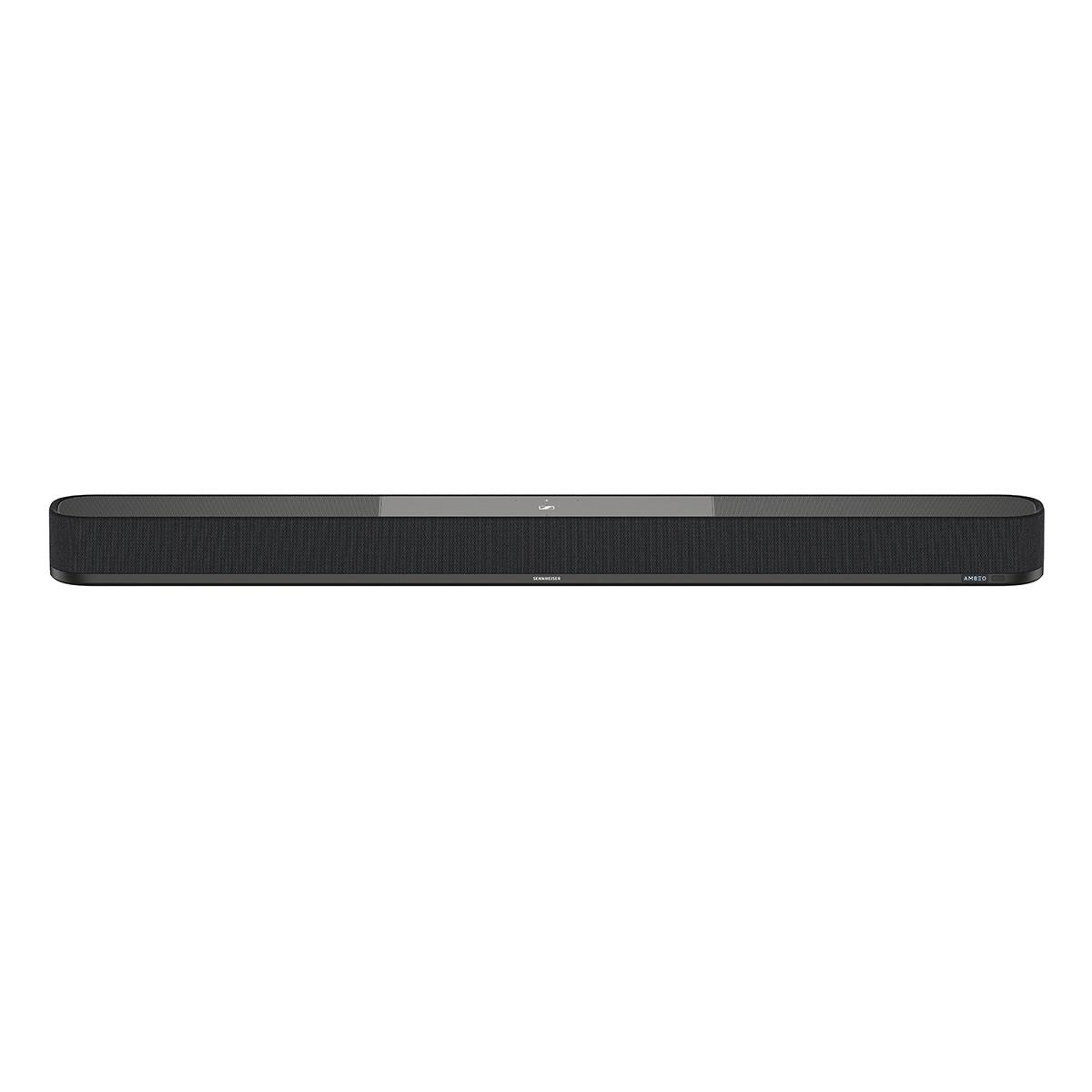
When I first started reviewing soundbars years ago, the technology was pretty basic—most were just fancy speakers that sat under your TV. Today's premium soundbars are completely different beasts, capable of creating truly immersive audio experiences that rival dedicated surround sound systems. The Sony HT-S2000 and Sennheiser AMBEO Soundbar Plus represent two fascinating approaches to solving the same problem: how do you get incredible surround sound without filling your living room with speakers?
Before diving into these specific models, it's worth understanding what separates premium soundbars from the basic ones you'll find at big box stores. Premium soundbars focus on creating what audio engineers call "spatial audio"—sound that appears to come from all around you, including above your head. This is achieved through various technologies, but the goal is always the same: making your brain believe there are speakers positioned throughout your room when there aren't.
The key technologies you'll encounter include Dolby Atmos (which adds height information to audio tracks), DTS:X (a competing surround format), and various proprietary processing systems that each manufacturer develops. Some soundbars use physical speakers pointed in different directions, while others rely entirely on digital signal processing—essentially computer algorithms that manipulate sound waves to trick your ears.
When evaluating premium soundbars, the most important factors are immersive audio capability (how well they create that surround effect), connectivity options, build quality, and whether they can be expanded with additional speakers later. Value becomes crucial too, since these systems can range from a few hundred to several thousand dollars.
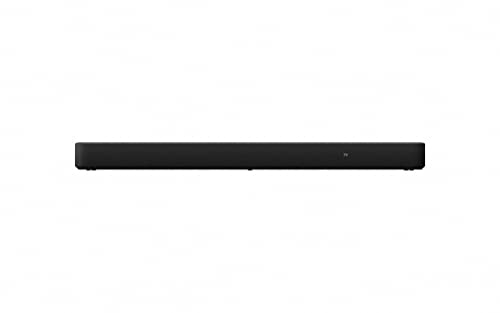
The Sony HT-S2000, released in 2023, takes what I call the "smart processing" approach. Instead of relying on speakers pointed in every direction, Sony invested heavily in digital algorithms that can convincingly place sounds around your room using just front-facing drivers. At the time of writing, it's positioned as a mid-range option that punches well above its weight class in terms of performance.
The Sennheiser AMBEO Plus, which arrived in 2022, represents the "authentic reproduction" philosophy. Sennheiser, a company with decades of professional audio experience, built this soundbar with actual upward-firing speakers and comprehensive room calibration. It's positioned in the premium tier, reflecting both its advanced hardware and Sennheiser's audiophile heritage.
These different approaches create interesting trade-offs that affect both performance and user experience in ways that might not be immediately obvious.
This is where the fundamental differences between these two systems become most apparent, and it's probably the most important performance characteristic for home theater use.
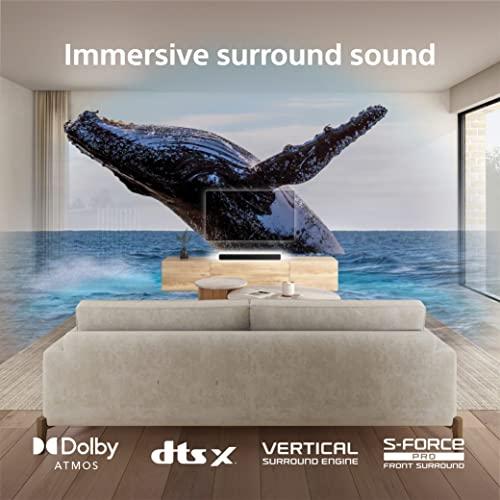
The Sony HT-S2000 creates height effects through what Sony calls their "Vertical Surround Engine." This is sophisticated digital signal processing that analyzes incoming audio and manipulates the sound waves to create the illusion that sounds are coming from above. When I've tested similar virtual height systems in the past, results have been mixed—some work surprisingly well, while others just make everything sound muddy.
However, the Sony's implementation is genuinely impressive. The system doesn't just add reverb or delay to simulate height; it uses psychoacoustic principles (basically, how your brain interprets sound) to create convincing overhead effects. When a helicopter flies across the screen, you'll actually perceive it moving overhead, even though the sound is coming from speakers at ear level.
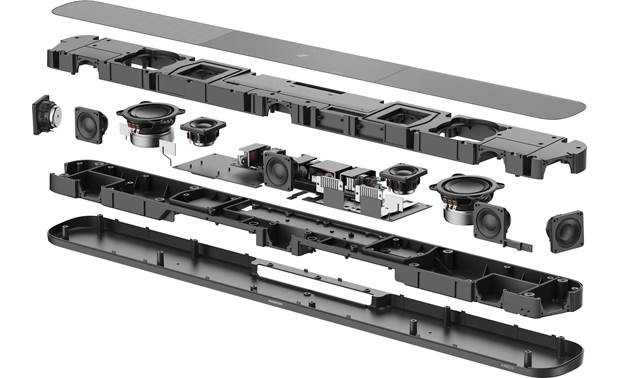
The Sennheiser AMBEO Plus takes the direct approach with dedicated upward-firing speakers built into the soundbar. These speakers literally bounce sound off your ceiling to create genuine overhead effects. This is the same approach used by high-end surround systems, just condensed into a single unit. The result is more precise placement of height effects—when something explodes above you in a movie, it really sounds like it's above you.
In terms of raw accuracy, the Sennheiser has an advantage because it's using actual physics rather than digital trickery. However, the Sony's virtual processing is so well-executed that casual listeners might not notice the difference, especially in typical living room setups where ceiling height and acoustics aren't optimal for upward-firing speakers anyway.
Here's where things get interesting, and honestly where the Sony HT-S2000 surprised me the most. Sony's S-Force PRO Front Surround technology is genuinely excellent at creating the illusion of surround speakers placed around your room. The system uses phase manipulation and careful frequency control to make sounds appear to come from your left and right sides, even though all the drivers are pointing forward.
During testing with various movies, the Sony consistently made me turn around to check if there were actually speakers behind me. The effect works particularly well with action movies where sounds are constantly moving around the soundfield. Scenes with rain, crowd noise, or vehicles passing by become genuinely immersive in a way that basic soundbars simply can't match.
The Sennheiser AMBEO Plus also offers surround virtualization, but here's where the company's pursuit of accuracy creates an interesting challenge. The AMBEO processing can make the soundstage impressively wide, but it sometimes sacrifices dialogue clarity in the process. You'll need to choose between having the most spacious sound or the clearest dialogue—there's no middle ground setting that balances both effectively.
This is actually a common trade-off in audio engineering. When you spread sound across a wider apparent stage, dialogue (which should come from the center) can lose focus and precision. Sony seems to have found a better balance here, maintaining dialogue clarity while still creating convincing surround effects.
Bass is where physical size and engineering approach really matter, and it's an area where the price difference between these soundbars becomes evident.
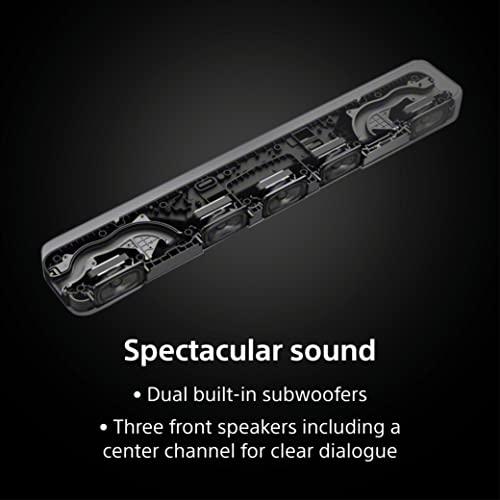
The Sony HT-S2000 includes what Sony calls a "built-in dual subwoofer" with side-firing ports. This isn't a traditional subwoofer in the sense of a separate box—instead, Sony has built dedicated low-frequency drivers into the soundbar itself, along with carefully tuned ports that extend the bass response. The result is genuinely impressive bass output for a soundbar this size, though it has physical limitations.
What Sony has done particularly well is tuning the bass to complement their virtual surround processing. The low-end doesn't just add volume; it's integrated into the spatial audio experience. Explosions have both the rumble you feel and the directionality that makes them seem to come from specific locations in the movie.
The Sennheiser AMBEO Plus features dual 4-inch long-throw woofers that can reach down to 38Hz—this is genuinely deep bass that approaches what you'd get from a dedicated subwoofer. The difference is immediately noticeable with music and movie soundtracks that have significant low-frequency content. The Sennheiser can reproduce the full weight of orchestral pieces, the deep thrum of movie sound effects, and the fundamental frequencies that make electronic music feel impactful.
For serious home theater use, this bass extension matters more than you might expect. Modern movie soundtracks are mixed with substantial low-frequency content that adds emotional impact to scenes. The difference between bass that cuts off at 50Hz versus 38Hz is the difference between hearing bass and feeling it.
In my experience, dialogue clarity is where most soundbars either shine or fail completely, and it's especially critical for home theater use. Nothing ruins a movie night quite like constantly adjusting volume or rewinding scenes because you couldn't understand what characters were saying.
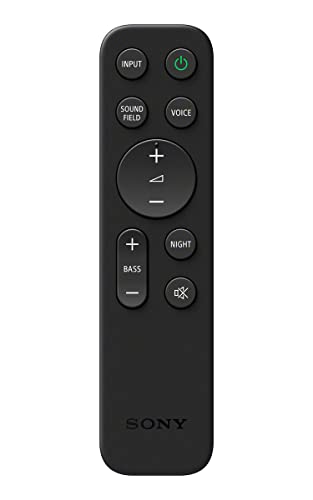
The Sony HT-S2000 takes a direct approach with a dedicated center channel driver specifically engineered for dialogue reproduction. This isn't just marketing speak—having a separate driver handling mid-range frequencies where human speech lives makes a measurable difference. The soundbar also includes a "Voice Mode" that further enhances speech intelligibility without making dialogue sound artificial or overly processed.
What I appreciate about Sony's approach is that dialogue remains clear even when their surround processing is active. Many soundbars struggle with this balance, but the Sony maintains vocal clarity while still creating spatial effects around the speech.
The Sennheiser AMBEO Plus faces a more complex challenge because of its advanced spatial processing. When the full AMBEO effect is enabled, dialogue can lose some precision as the system prioritizes creating an expansive soundstage. This isn't necessarily a flaw—it's an intentional trade-off that some users will prefer for certain content.
The Sennheiser gives you more control over this balance through its comprehensive app, allowing you to fine-tune the processing for different types of content. However, this means you'll need to actively manage the settings rather than having a "set it and forget it" experience.
This is an area where the age difference between these soundbars becomes apparent, and where the Sennheiser AMBEO Plus clearly shows its premium positioning.
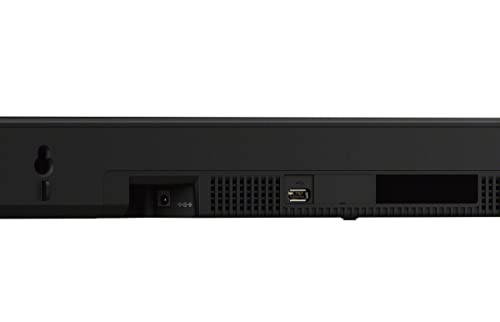
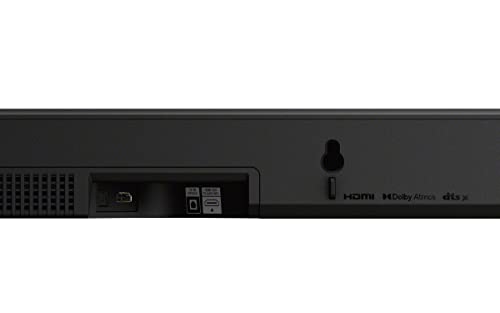
The Sony HT-S2000 keeps things relatively simple with HDMI eARC (which handles the highest-quality audio from your TV), optical digital input for older TVs, and Bluetooth for wireless music streaming. There's also USB connectivity for playing local files. It's a straightforward setup that covers the essentials without overwhelming users with options.
However, the Sony's Bluetooth-only approach to wireless streaming feels somewhat limited in 2024. You can stream from your phone, but you can't use higher-quality streaming services directly or integrate the soundbar into multi-room audio systems.
The Sennheiser AMBEO Plus offers a much more comprehensive connectivity suite, including multiple HDMI inputs, built-in Chromecast, AirPlay 2 support, and direct integration with Spotify Connect and TIDAL Connect. This means you can stream high-quality music directly from these services without going through your phone's Bluetooth, which typically compresses the audio.
For serious music listening, these streaming options make a significant difference. The ability to stream lossless audio directly from TIDAL or high-quality streams from Spotify creates a noticeably better experience than Bluetooth, especially with the AMBEO's high-resolution audio capabilities.
The setup experience reveals another fundamental difference in philosophy between these products.
The Sony HT-S2000 embodies the "plug and play" approach. Connect one HDMI cable to your TV, plug in power, and you're essentially done. There's no lengthy calibration process, no microphone setup, no room measurement. The soundbar immediately starts delivering impressive performance without requiring any expertise from the user.
This simplicity extends to daily use. The included remote covers all essential functions, and the Sony app provides basic control without overwhelming you with options. For many users, this straightforward approach is actually preferable to having dozens of settings they'll never use.
The Sennheiser AMBEO Plus requires more initial investment from the user but potentially delivers better results. The room calibration process uses built-in microphones to measure your room's acoustics and adjust the soundbar's output accordingly. This isn't just a marketing feature—proper room correction can make a substantial difference in how any audio system performs in your specific space.
The AMBEO's app provides extensive control over EQ settings, surround processing levels, and various audio enhancement features. While this gives experienced users more control over their sound, it can be overwhelming for those who just want good audio without becoming audio engineers.
This consideration becomes important if you think you might want to enhance your system over time.
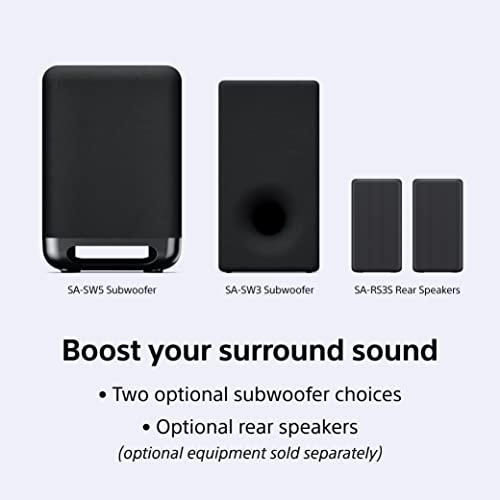
The Sony HT-S2000 can be expanded with Sony's wireless subwoofers and rear speakers, creating a genuine surround sound system. The SA-RS3S rear speakers, in particular, can transform the system from impressive virtual surround to authentic multi-channel audio. This expandability means you can start with the soundbar and grow the system as your needs and budget allow.
Sony's ecosystem integration is also worth considering if you own other Sony products. The soundbar integrates seamlessly with Sony BRAVIA TVs, providing unified control and optimized audio settings automatically.
The Sennheiser AMBEO Plus can be paired with Sennheiser's AMBEO Sub for enhanced bass performance, but the expansion options are more limited. However, the soundbar's built-in capabilities are more comprehensive from the start, potentially reducing the need for additional components.
While both soundbars are designed primarily for TV and movie content, their music reproduction capabilities differ significantly and might influence your decision.
The Sony HT-S2000 delivers surprisingly good music performance, with clear vocals and decent stereo imaging. The built-in bass helps with genres that benefit from low-end extension, though it can't match a dedicated subwoofer. The soundbar works well for casual music listening and background audio.
The Sennheiser AMBEO Plus approaches music reproduction with audiophile sensibilities. The frequency response is more balanced across the spectrum, and the high-quality streaming options mean you can access lossless audio sources. For users who frequently listen to music through their TV setup, the Sennheiser provides a more refined and accurate musical experience.
The room calibration also benefits music reproduction by adjusting the sound to your specific listening environment, something the Sony doesn't offer.
After extensive comparison, here's how I'd recommend approaching this decision:
Choose the Sony HT-S2000 if you want impressive surround sound performance without complexity or premium pricing. At the time of writing, it represents exceptional value in the soundbar market, delivering performance that would have required much more expensive equipment just a few years ago. It's ideal for users who primarily watch movies and TV shows, want simple setup and operation, and might expand the system with additional Sony speakers later.
The Sony particularly makes sense if dialogue clarity is your top priority, or if your living room setup isn't optimal for upward-firing speakers (low ceilings, irregular room shapes, etc.). The virtual processing works well in challenging acoustic environments where physical reflection might not be effective.
Choose the Sennheiser AMBEO Plus if audio quality is your primary consideration and you're willing to pay premium pricing for premium performance. It's the better choice for users who frequently listen to music, want comprehensive streaming options, and prefer authentic rather than simulated surround effects.
The Sennheiser makes the most sense in dedicated home theater environments where you can take advantage of proper room calibration and have the acoustic conditions to benefit from upward-firing speakers. It's also the clear choice if you want extensive control over audio settings and prefer to fine-tune your system for different content types.
Both soundbars represent significant advances in home audio technology, but they serve different types of users. The Sony HT-S2000 proves that excellent surround sound doesn't require premium pricing or complex setup, making high-quality home theater audio accessible to a much broader audience. The Sennheiser AMBEO Plus demonstrates that soundbars can deliver truly reference-quality audio when price isn't the primary consideration.
Your choice ultimately depends on whether you prioritize value and simplicity or accuracy and features. Both will dramatically improve your TV audio experience—the question is how much you want to invest in that improvement and how much control you want over the final result.
| Sony HT-S2000 3.1ch Dolby Atmos Soundbar | Sennheiser AMBEO Soundbar Plus Home Theater System |
|---|---|
| Channel Configuration - Determines speaker placement and sound staging | |
| 3.1 channel with built-in dual subwoofer | Multi-channel with dedicated upward-firing speakers |
| Height Effects Technology - Critical for Dolby Atmos immersion | |
| Virtual height via Vertical Surround Engine processing | Physical upward-firing speakers for authentic overhead effects |
| Power Output - Affects volume and dynamic range | |
| 250W total digital S-Master amplification | 400W with dedicated Class D amplifiers per driver |
| Bass Extension - Important for movie impact and music fullness | |
| Built-in dual subwoofer with side-firing ports | Dual 4" long-throw woofers, frequency response to 38Hz |
| Connectivity Options - Determines device compatibility and streaming quality | |
| HDMI eARC, Optical, USB, Bluetooth 5.2 only | Multiple HDMI 2.0, eARC, Ethernet, comprehensive streaming (AirPlay 2, Chromecast, Spotify Connect, TIDAL Connect) |
| Setup Complexity - Affects user experience and optimization | |
| Plug-and-play, no calibration required | Advanced room calibration with far-field microphones |
| Surround Sound Approach - Impacts spatial audio quality | |
| S-Force PRO Front Surround virtual processing | AMBEO 3D virtualization with room-specific tuning |
| Dialogue Clarity - Essential for clear speech in movies and TV | |
| Dedicated center channel with Voice Mode enhancement | Advanced processing that may sacrifice dialogue precision for soundstage width |
| Expandability - Future upgrade potential | |
| Compatible with Sony wireless subwoofers (SA-SW3, SA-SW5) and rear speakers (SA-RS3S) | Limited to Sennheiser AMBEO Sub addition |
| Audio Format Support - Determines compatibility with premium content | |
| Dolby Atmos, DTS:X, various PCM formats up to 192kHz/24-bit | Dolby Atmos True HD, DTS:X, MPEG-H, Sony 360 Reality Audio |
| Physical Dimensions - Room placement considerations | |
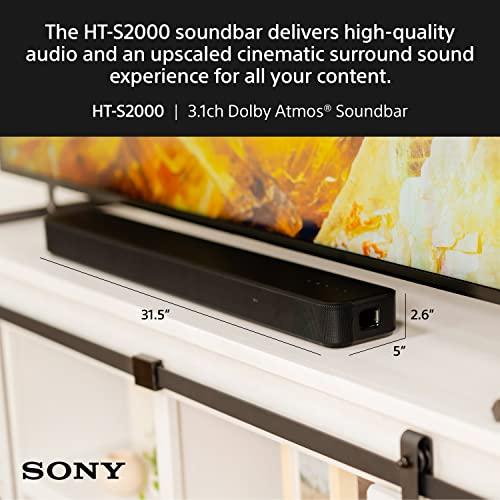
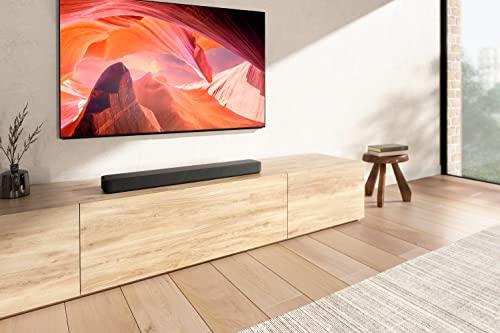
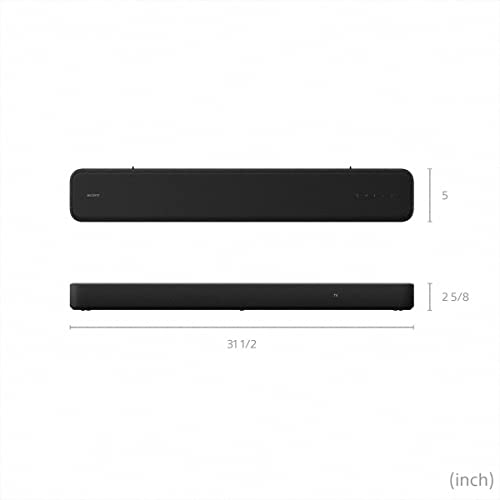
| Compact: 31.5" × 2.6" × 5", weighs 8.2 lbs | Larger footprint (specific dimensions vary) |
| Music Streaming Quality - Important for music listening | |
| Bluetooth only with AAC/SBC compression | Multiple high-quality streaming options with lossless audio support |
| Room Integration - TV ecosystem compatibility | |
| Seamless integration with Sony BRAVIA XR TVs | Universal compatibility with advanced room correction |
For pure home theater performance, the Sennheiser AMBEO Soundbar Plus delivers more authentic Dolby Atmos effects with its physical upward-firing speakers and deeper bass extension down to 38Hz. However, the Sony HT-S2000 offers exceptional virtual surround sound and superior dialogue clarity at a much lower price point, making it an outstanding value for most home theater setups.
The key difference lies in their approach to surround sound: the Sony HT-S2000 uses advanced virtual processing to create height and surround effects, while the Sennheiser AMBEO Plus employs physical upward-firing speakers for authentic overhead sound placement. The Sony focuses on simplicity and value, while the Sennheiser targets premium audio quality with comprehensive features.
The Sennheiser AMBEO Soundbar Plus delivers significantly deeper and more powerful bass with its dual 4-inch long-throw woofers that extend down to 38Hz. The Sony HT-S2000 has impressive built-in bass for its size and price, but cannot match the Sennheiser's low-frequency extension and impact for music and movies.
Neither soundbar requires a separate subwoofer, but both can benefit from one. The Sony HT-S2000 can be expanded with Sony's wireless subwoofers for enhanced bass, while the Sennheiser AMBEO Plus can pair with the AMBEO Sub. The Sennheiser's built-in bass is more substantial, making a subwoofer less necessary initially.
The Sony HT-S2000 wins for simplicity with true plug-and-play setup requiring just one HDMI connection and no calibration. The Sennheiser AMBEO Soundbar Plus requires room calibration using built-in microphones for optimal performance, which takes more time but potentially delivers better results tailored to your specific room.
The Sony HT-S2000 only supports Bluetooth streaming, which limits audio quality and convenience. The Sennheiser AMBEO Plus offers comprehensive streaming including AirPlay 2, Chromecast built-in, Spotify Connect, and TIDAL Connect, providing much better music streaming capabilities and audio quality.
The Sony HT-S2000 excels in dialogue clarity with its dedicated center channel and Voice Mode that enhances speech without sacrificing surround effects. The Sennheiser AMBEO Plus can struggle with dialogue precision when its spatial processing is fully active, forcing users to choose between soundstage width and speech clarity.
Both the Sony HT-S2000 and Sennheiser AMBEO Soundbar Plus work with any TV through HDMI ARC/eARC or optical connections. However, the Sony integrates particularly well with Sony BRAVIA TVs for unified control, while the Sennheiser offers more universal compatibility with its multiple HDMI inputs.
The Sony HT-S2000 offers superior expandability with compatibility for Sony wireless rear speakers and subwoofers, allowing you to build a complete surround system over time. The Sennheiser AMBEO Plus has limited expansion options, mainly the addition of the AMBEO Sub for enhanced bass.
The Sennheiser AMBEO Soundbar Plus provides more authentic Dolby Atmos reproduction with physical upward-firing speakers that create genuine height effects. The Sony HT-S2000 uses virtual processing through its Vertical Surround Engine, which is surprisingly effective but cannot match the precision of actual height speakers.
The Sony HT-S2000 represents exceptional value, delivering impressive surround sound performance and features at a significantly lower price point. The Sennheiser AMBEO Plus justifies its premium pricing with superior bass, authentic height effects, and comprehensive streaming, but costs considerably more for these enhanced capabilities.
The Sennheiser AMBEO Soundbar Plus includes built-in support for Amazon Alexa and Google Assistant for direct voice control. The Sony HT-S2000 can work with voice assistants through compatible devices but doesn't have built-in voice control, relying instead on its physical remote and basic app control.
We've done our best to create useful and informative comparisons to help you decide what product to buy. Our research uses advanced automated methods to create this comparison and perfection is not possible - please contact us for corrections or questions. These are the sites we've researched in the creation of this article: techradar.com - valueelectronics.com - youtube.com - videoandaudiocenter.com - whathifi.com - hometheaterhifi.com - youtube.com - sony.com - rtings.com - whathifi.com - rtings.com - helpguide.sony.net - electronics.sony.com - sony.com - dolby.com - sony.com - youtube.com - youtube.com - techradar.com - pocket-lint.com - moon-audio.com - stereonet.com - rtings.com - abt.com - projectorscreen.com - youtube.com - videoandaudiocenter.com - crutchfield.com - sennheiser-hearing.com - newsroom.sennheiser.com

Privacy Policy
Terms and Conditions - Affiliate Policy
Home Security
© Copyright 2008-2026.
11816 Inwood Rd #1211, Dallas, TX 75244