

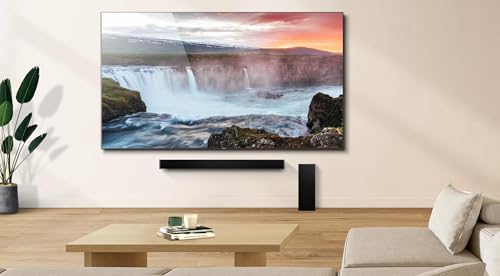



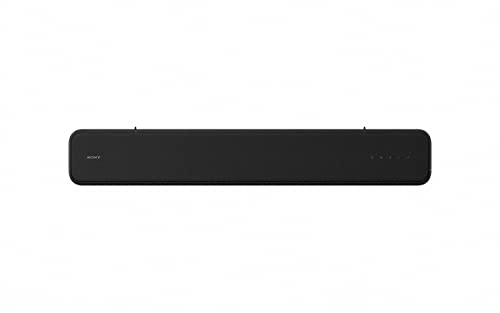
When your TV's built-in speakers sound like they're trapped in a tin can, a soundbar becomes essential. But with dozens of options crowding the budget market, choosing between fundamentally different approaches can feel overwhelming. The Hisense HS2100 and Sony HT-S2000 represent two compelling philosophies for upgrading your audio without breaking the bank.
The budget soundbar category has evolved dramatically since both products launched. The Hisense HS2100 arrived in 2022 following the traditional playbook: pair a compact soundbar with a wireless subwoofer for under $150. Meanwhile, Sony released the HT-S2000 in 2023 as part of their push to bring premium features like Dolby Atmos down to accessible price points—originally at $350, though street prices have dropped significantly since launch.
What makes these soundbars particularly interesting is how they tackle the same problem—terrible TV audio—using completely different strategies. Understanding these approaches helps explain why one might work better for your specific situation.
Modern budget soundbars must solve several challenges simultaneously. First, they need to dramatically improve dialogue clarity, since most TV speakers bury voices under background noise. Second, they should add meaningful bass response without requiring a huge subwoofer that dominates your living room. Third, they need to create a sense of spaciousness that makes movies and shows more engaging than the flat, narrow sound from your TV.
The technical challenge is significant. TV speakers, typically 2-3 inches wide, simply cannot move enough air to produce satisfying sound. Soundbars solve this by using larger drivers (speakers) and dedicated amplification, but they're still constrained by their slim form factor. This is where the two products diverge dramatically in their solutions.
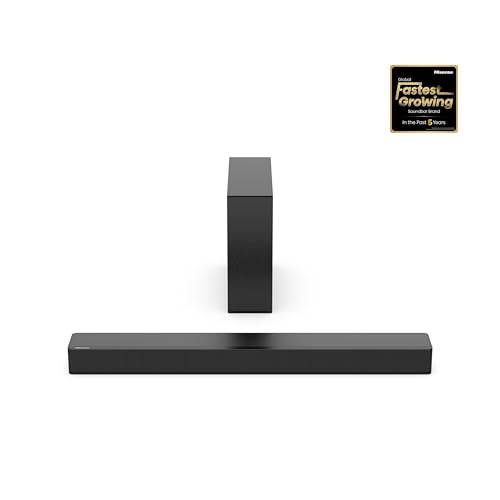
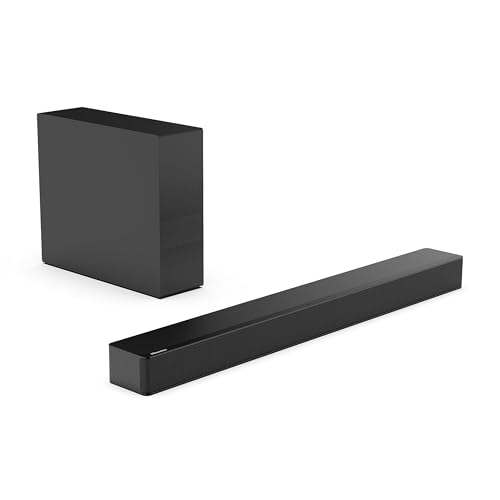
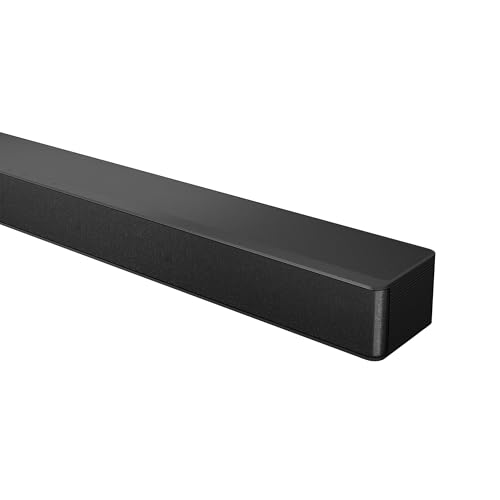
The Hisense HS2100 follows the time-tested 2.1 formula that has dominated budget soundbars for over a decade. The "2.1" designation means two main channels (left and right) plus one subwoofer channel—essentially stereo sound with dedicated bass.
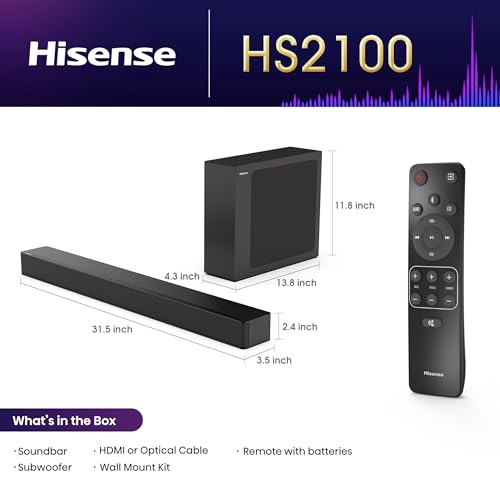
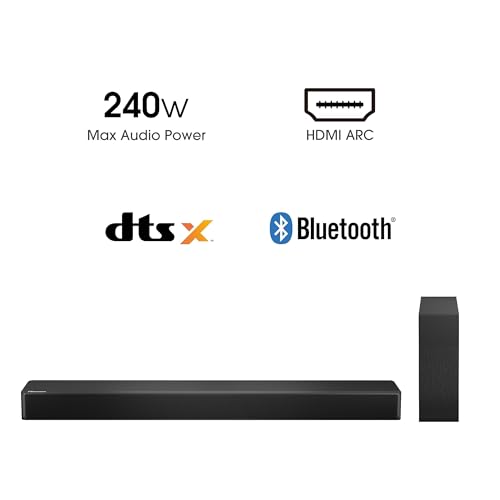
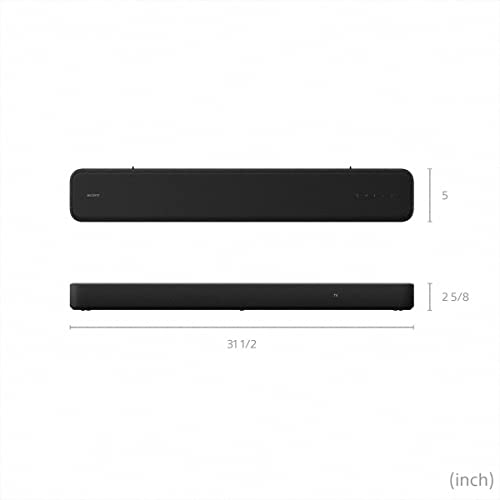
This system includes a compact 31.5-inch soundbar housing two full-range drivers, paired with a separate 5.25-inch wireless subwoofer that handles everything below about 120Hz. The subwoofer connects wirelessly to the main bar, eliminating the need to run cables across your room while providing placement flexibility.
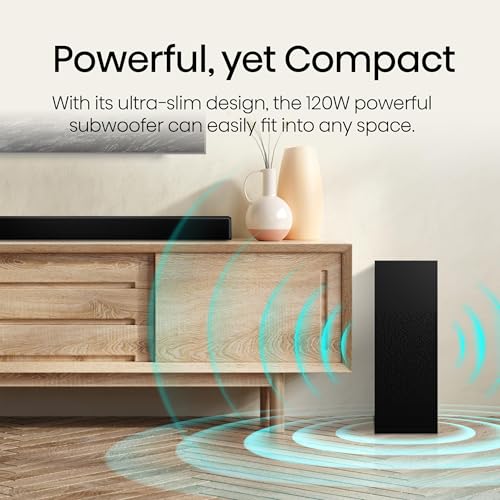
What makes the HS2100 particularly notable is its 120-watt subwoofer—unusually powerful for this price category. Most budget soundbars either skip the subwoofer entirely or include underpowered versions that barely improve upon TV speakers. The dedicated sub means this system can reproduce the deep bass that makes action movies exciting and music feel full-bodied.
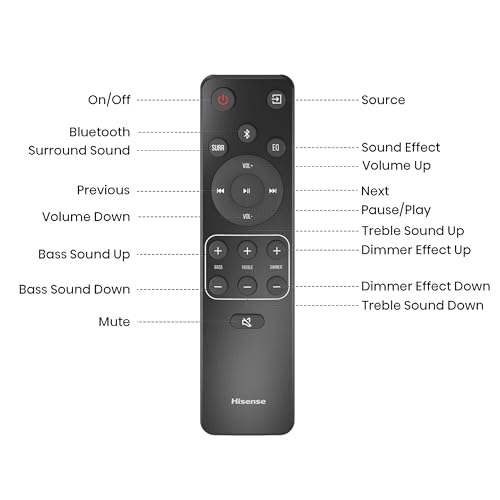
The soundbar itself delivers 60 watts per channel through its two drivers, focusing on midrange frequencies where dialogue lives and high frequencies that add detail and sparkle. Hisense includes six EQ presets (Movie, Music, News, Sport, Game, and Night) that adjust the sound balance for different content types. The Night mode, for example, compresses dynamic range—meaning it reduces the difference between loud explosions and quiet dialogue—so you can watch late-night movies without disturbing neighbors.
DTS Virtual:X processing attempts to expand the soundstage beyond the physical boundaries of the soundbar. This technology analyzes stereo and surround sound content, then uses psychoacoustic tricks to fool your brain into perceiving sound coming from locations where no speakers exist. While not as sophisticated as premium virtual surround systems, it does add some width and depth compared to basic stereo reproduction.
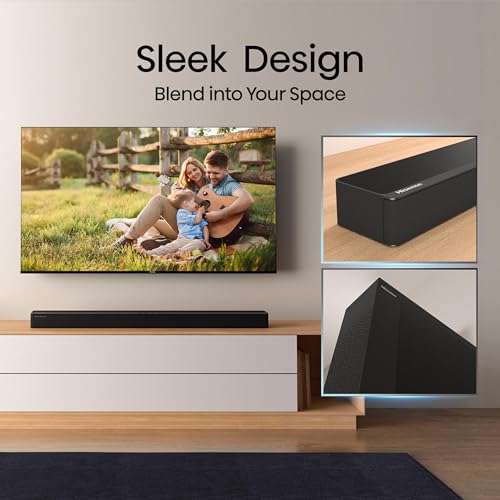
The wireless subwoofer deserves special attention because it's genuinely compact at just 4.3 inches deep. Most budget subwoofers are chunky boxes that dominate floor space, but the HS2100's ultra-slim design fits easily under furniture or against walls. This practical consideration matters enormously in real-world living spaces.
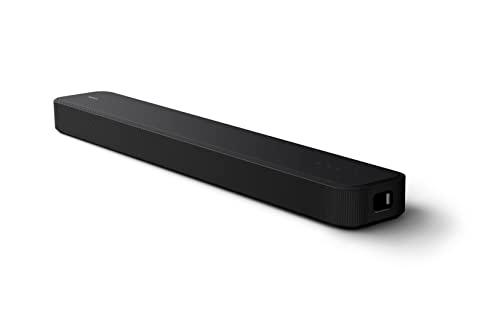
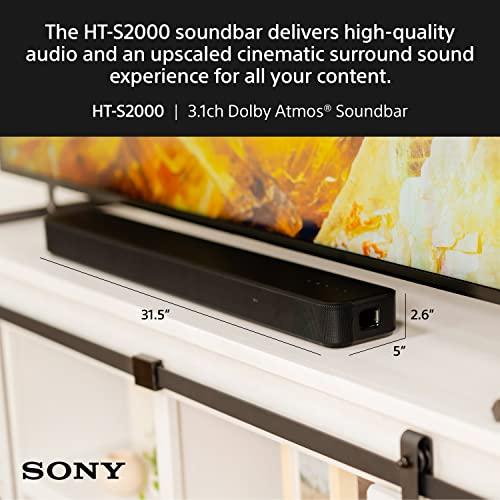
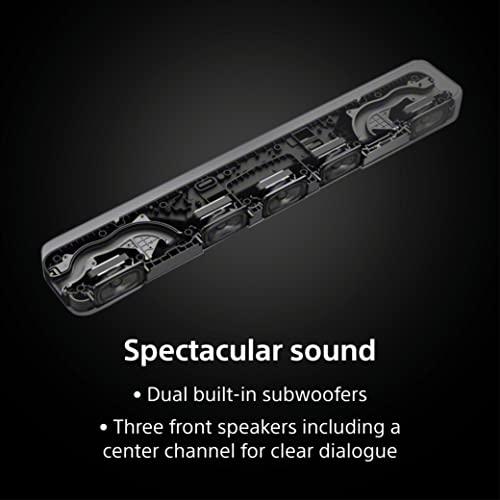
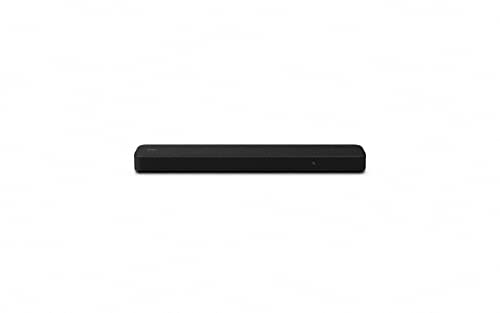
Sony took a radically different approach with the HT-S2000, cramming a complete 3.1-channel system with built-in subwoofers into a single 31.5-inch enclosure. The "3.1" designation adds a dedicated center channel specifically for dialogue reproduction, while dual built-in subwoofers handle bass duties without requiring a separate box.
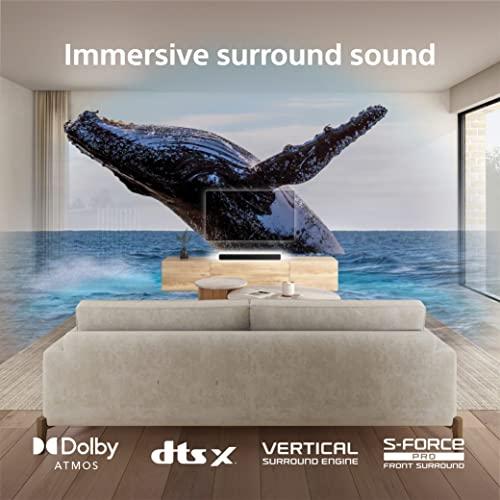
This design philosophy reflects Sony's broader strategy of bringing premium home theater features to mainstream price points. The HT-S2000 includes full Dolby Atmos and DTS:X decoding—spatial audio formats that create three-dimensional soundfields with height effects. Instead of using upward-firing drivers like expensive soundbars, Sony achieves these effects through their Vertical Surround Engine, which uses advanced signal processing to simulate overhead sounds.
The five X-Balanced Speaker Units inside the soundbar represent Sony's latest driver technology. These rectangular speakers maximize cone area within the soundbar's slim profile, theoretically delivering more output with less distortion than traditional round drivers. The dedicated center channel focuses exclusively on dialogue frequencies, while left and right channels handle stereo content and effects.
Sony's S-Master digital amplification provides 250 watts total power across all five drivers plus the dual built-in subwoofers. Digital amplification runs cooler and more efficiently than traditional analog amps, allowing more power in a compact package while reducing heat buildup.
The Vertical Surround Engine deserves deeper explanation because it's central to the HT-S2000's appeal. Traditional Dolby Atmos requires ceiling or upward-firing speakers to create overhead effects—the sound of helicopters flying above or rain falling from the sky. Sony's processing analyzes height information embedded in Atmos content and uses complex algorithms to recreate these effects using only front-firing speakers.
While purists argue this can never match true height speakers, the results are surprisingly convincing for a single-bar solution. Movie scenes with helicopters, thunderstorms, or objects moving overhead gain a dimensionality that basic stereo soundbars simply cannot achieve.
In our research across professional reviews and user feedback, dialogue clarity emerges as the single most important performance characteristic for budget soundbars. If voices aren't clearly intelligible, nothing else matters.
The Sony HT-S2000 demonstrates clear superiority here thanks to its dedicated center channel. Professional audio reviewers consistently praise its "crystal-clear dialogue" and ability to maintain voice intelligibility even during complex soundtracks with music and effects. The center channel operates independently of left and right speakers, allowing it to focus specifically on the frequency range where human voices are most prominent (roughly 300Hz to 3kHz).
The Hisense HS2100 handles dialogue adequately through its stereo configuration, relying on phantom center imaging—a psychoacoustic effect where your brain perceives voices as coming from between the left and right speakers. This works reasonably well when sitting directly in front of the soundbar, but dialogue clarity degrades when listening from off-axis positions or during busy audio passages where multiple sounds compete for attention.
The practical difference becomes apparent during dialogue-heavy TV shows or movies with dense soundtracks. The Sony maintains voice clarity during action sequences where the Hisense might bury voices under explosions and music.
Bass performance reveals the fundamental trade-off between these approaches. The Hisense HS2100's dedicated 5.25-inch subwoofer, powered by 120 watts, delivers more raw bass output and better low-frequency extension. This translates to more satisfying rumble during action movies and fuller-sounding music playback.
However, professional measurements reveal that the HS2100's bass can sound somewhat "boomy"—meaning it emphasizes certain frequencies while lacking precision and tightness. The wireless connection introduces a slight delay that can make bass feel disconnected from the main soundbar's output, though this is subtle during normal viewing.
The Sony HT-S2000's dual built-in subwoofers surprise reviewers with their punchy output despite the compact, integrated design. The bass feels more coherent with the rest of the sound because everything comes from the same enclosure, eliminating timing mismatches. However, the built-in design simply cannot match a dedicated subwoofer's ability to move air and reproduce very low frequencies.
For music listening, especially bass-heavy genres like electronic or hip-hop, the Hisense provides more satisfying low-end impact. For movies and TV where bass serves more as atmospheric enhancement than primary focus, the Sony's integrated approach works remarkably well.
Soundstage—the perceived width, depth, and height of audio reproduction—represents perhaps the most dramatic difference between these systems.
The Sony HT-S2000 creates genuinely impressive spatial effects through its Dolby Atmos and DTS:X processing. Professional reviewers describe "exciting" cinematic performance where sounds appear to come from well beyond the soundbar's physical boundaries. The Vertical Surround Engine adds height effects that, while not matching true Atmos setups with ceiling speakers, provide noticeable dimensionality during appropriately mastered content.
Netflix's growing catalog of Atmos content, including major movies and original series, takes advantage of this processing. Scenes with rain, aircraft, or ambient environmental sounds gain layers of immersion impossible with traditional stereo soundbars.
The Hisense HS2100's DTS Virtual:X processing provides more modest soundstage expansion. While it does widen the perceived sound beyond the physical soundbar, the effect is less dramatic and convincing than Sony's implementation. Professional testing suggests the soundstage roughly matches the soundbar's physical width, with limited height or rear projection.
For content mastered in Dolby Atmos—increasingly common on streaming platforms—the Sony provides a markedly more engaging experience. For standard stereo content, both systems perform similarly, though the Sony's superior dialogue reproduction remains evident.
Both soundbars achieve similar maximum output levels sufficient for typical living rooms, but they handle dynamics differently. Dynamic range refers to the difference between the loudest and quietest sounds a system can reproduce—crucial for maintaining both whisper-quiet dialogue and explosive action sequences.
The Sony HT-S2000 maintains better composure at high volumes, with less compression and distortion when pushed hard. Its digital amplification and optimized driver design allow cleaner reproduction of complex passages where multiple sounds compete for headroom.
The Hisense HS2100 shows more compression artifacts at maximum volume, though this remains acceptable for casual viewing. The separate subwoofer does provide an advantage during bass-heavy content, where it can handle low frequencies without straining the main soundbar's amplifiers.
The Sony HT-S2000 supports a comprehensive array of modern audio formats including Dolby Atmos, DTS:X, Dolby TrueHD, and DTS-HD Master Audio. This extensive codec support ensures compatibility with high-quality Blu-ray content and newer streaming services that offer premium audio.
The Hisense HS2100 handles standard formats like Dolby Digital and DTS adequately but lacks support for spatial audio formats. While this doesn't affect current TV viewing significantly, it may become more limiting as Atmos content becomes standard across streaming platforms.
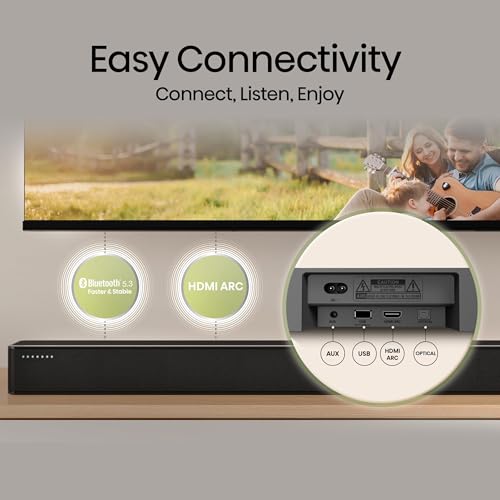
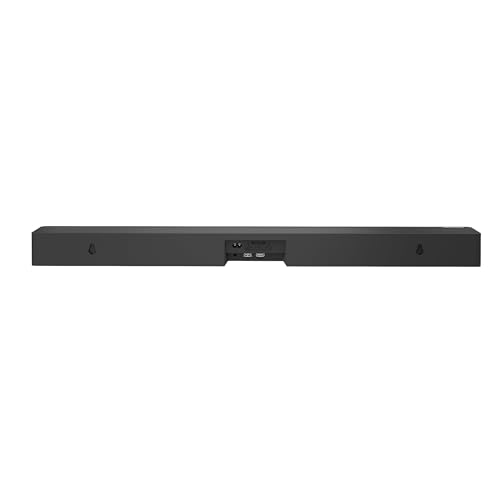
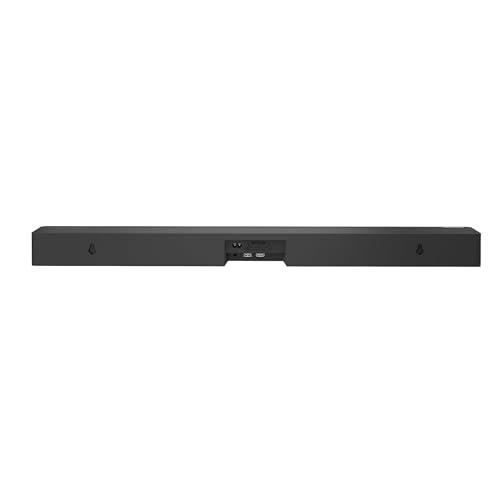
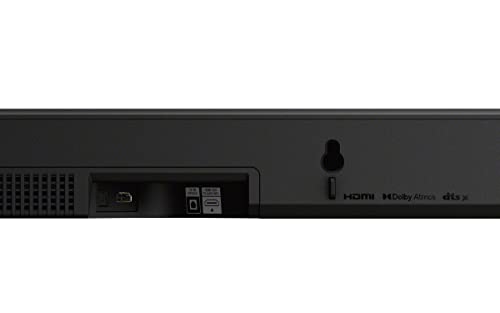
Both soundbars offer HDMI ARC connections for simple TV integration, but the Sony includes the newer eARC standard, which supports higher-bandwidth audio formats. The Hisense provides more diverse input options including 3.5mm analog, which can be valuable for connecting older devices.
Bluetooth connectivity differs significantly between the systems. The Sony includes Bluetooth 5.2 with AAC codec support, providing better wireless audio quality from phones and tablets. The Hisense uses Bluetooth 5.3 but with more basic codec support.
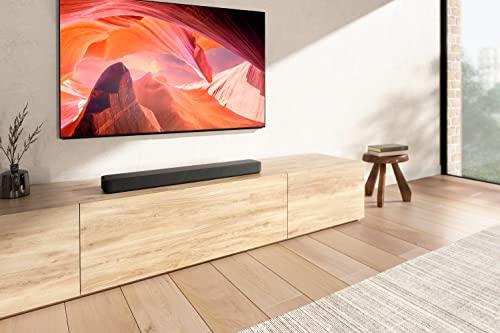
Both soundbars excel in typical apartment and suburban living room settings. The Sony HT-S2000's all-in-one design eliminates subwoofer placement concerns—particularly valuable in smaller spaces where a separate sub might overwhelm the room or create placement challenges.
The Hisense HS2100's wireless subwoofer provides placement flexibility but requires finding appropriate positioning for optimal bass response. Its ultra-slim profile helps, but you still need floor or shelf space.
For dedicated movie watching, the Sony HT-S2000 provides more engaging performance thanks to its Dolby Atmos processing and superior dialogue clarity. The spatial audio effects genuinely enhance well-mastered content, creating a more cinematic experience than traditional stereo soundbars.
The Hisense HS2100 delivers more traditional home theater bass impact but lacks the immersive processing that makes modern movie soundtracks compelling. If you prioritize raw bass output over spatial effects, it remains competitive.
The Hisense HS2100's dedicated subwoofer provides more satisfying bass response for music, especially electronic, rock, and hip-hop genres that rely on low-frequency impact. The separate sub can reproduce bass lines and kick drums with more authority than the Sony's built-in design.
The Sony HT-S2000 offers more balanced midrange reproduction and better stereo imaging for acoustic and vocal-focused music, but bass-heavy tracks may leave you wanting more low-end extension.
You prioritize dialogue clarity above all else. The dedicated center channel makes this soundbar exceptional for TV shows, news, and dialogue-heavy movies. If you frequently struggle to understand what characters are saying, this addresses the problem directly.
You want future-ready features. Dolby Atmos support ensures compatibility with emerging streaming content, while the sophisticated processing provides genuine improvements over basic soundbars.
You prefer clean, minimal setups. The all-in-one design eliminates subwoofer placement concerns while still delivering satisfying bass for most content.
You own or plan to buy Sony/BRAVIA TVs. The integration benefits and shared ecosystem features provide added convenience.
You prioritize bass impact for music and action movies. The dedicated 120-watt subwoofer delivers more low-end authority than any all-in-one design can match.
You prefer proven, straightforward technology. The 2.1 approach is well-understood and reliable, without complex processing that might introduce artifacts or compatibility issues.
You need maximum flexibility. The wireless subwoofer can be positioned optimally for your room, while multiple input types accommodate various source devices.
You want complete value. At typical street prices, the HS2100 includes everything needed for a significant audio upgrade without requiring future purchases.
Both soundbars represent excellent value in the budget category, but they serve different priorities. The Sony HT-S2000 offers more sophisticated technology and genuinely better dialogue reproduction, making it the superior choice for most users focused on TV and movie viewing. Its Dolby Atmos processing provides real benefits that justify choosing it over traditional designs.
However, the Hisense HS2100 remains compelling for users who prioritize bass impact and prefer straightforward, proven technology. If your content skews heavily toward music or you have a larger room where bass output matters more than spatial effects, the dedicated subwoofer approach may better serve your needs.
At current market pricing, both represent exceptional value compared to their original retail prices. The Sony especially benefits from significant price reductions since launch, bringing premium features down to budget territory. For most buyers seeking their first soundbar upgrade, the Sony's superior dialogue clarity and future-ready features make it the safer, more versatile choice.
| Hisense HS2100 2.1 Channel 240W Soundbar System | Sony HT-S2000 3.1ch Dolby Atmos Soundbar |
|---|---|
| Channel Configuration - Affects dialogue clarity and surround capabilities | |
| 2.1 channels (stereo + wireless subwoofer) | 3.1 channels (left/center/right + built-in dual subwoofers) |
| Audio Formats - Determines compatibility with modern streaming content | |
| Dolby Digital, DTS Virtual:X (no Atmos support) | Dolby Atmos, DTS:X, Dolby TrueHD, DTS-HD Master Audio |
| Subwoofer Design - Impacts bass performance and room placement | |
| Dedicated 5.25" wireless subwoofer (120W, ultra-slim design) | Built-in dual subwoofers (no separate unit required) |
| Total Power Output - Affects maximum volume and dynamic range | |
| 240W total (60W × 2 + 120W subwoofer) | 250W total (distributed across 5 drivers + dual subs) |
| Virtual Surround Technology - Creates immersive soundstage from compact design | |
| Basic DTS Virtual:X processing | Advanced Vertical Surround Engine with S-Force PRO Front Surround |
| HDMI Connectivity - Simplifies TV connection and control | |
| HDMI ARC with CEC | HDMI eARC with CEC (higher bandwidth for premium audio) |
| Bluetooth Version - Affects wireless audio quality and stability | |
| Bluetooth 5.3 (standard codecs) | Bluetooth 5.2 with AAC codec support |
| Sound Customization - Allows tuning for different content types | |
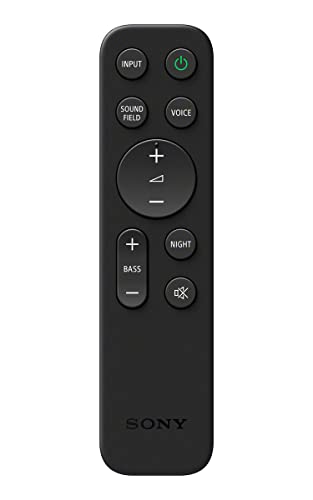
| 6 EQ presets + manual bass/treble adjustment | Sound Field mode, Night mode, Voice mode + 3 bass levels |
| Physical Design - Affects room integration and setup complexity | |
| Soundbar + separate wireless subwoofer placement required | Single all-in-one unit (no subwoofer positioning needed) |
| Expandability - Future upgrade potential | |
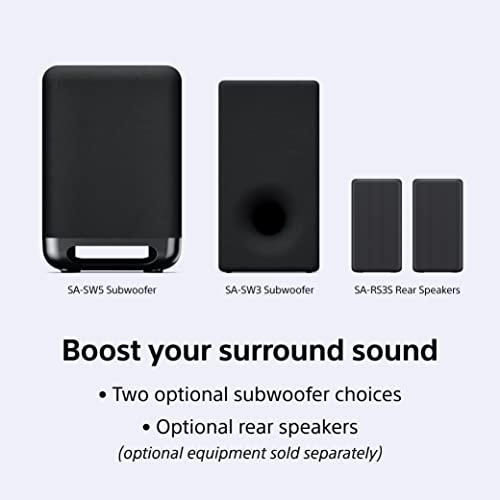
| Complete system (no official expansion options) | Compatible with Sony wireless subwoofers and rear speakers |
| Brand Ecosystem Integration - Enhanced features with matching TVs | |
| Roku TV Ready certification | BRAVIA Sync integration + Sony app control |
The Sony HT-S2000 delivers superior dialogue clarity thanks to its dedicated center channel designed specifically for voice reproduction. Professional reviews consistently praise its crystal-clear vocal performance, making it ideal for TV shows and movies where understanding speech is crucial. The Hisense HS2100 handles dialogue adequately through stereo imaging but lacks the focused clarity of a dedicated center channel.
The Hisense HS2100 includes a wireless 5.25" subwoofer as part of the package, providing strong bass impact for music and movies. The Sony HT-S2000 has built-in dual subwoofers integrated into the soundbar itself, eliminating the need for a separate unit while still delivering satisfying bass response. Both approaches work well, but the Hisense offers more raw bass power.
Only the Sony HT-S2000 supports Dolby Atmos and DTS:X spatial audio formats, using Sony's Vertical Surround Engine to create immersive three-dimensional sound effects. The Hisense HS2100 uses basic DTS Virtual:X processing but doesn't support modern Atmos content from Netflix, Disney+, and other streaming services.
The Hisense HS2100 uses a 2.1 configuration (left, right, plus subwoofer) while the Sony HT-S2000 features 3.1 channels (left, center, right, plus subwoofers). The extra center channel in the Sony significantly improves dialogue clarity and vocal reproduction, making it better for TV viewing and movies with heavy dialogue.
The Sony HT-S2000 offers simpler setup with its all-in-one design—just connect one HDMI cable to your TV. The Hisense HS2100 requires positioning its wireless subwoofer for optimal bass, though the sub connects automatically without additional cables. Both systems offer straightforward installation, but the Sony eliminates subwoofer placement considerations.
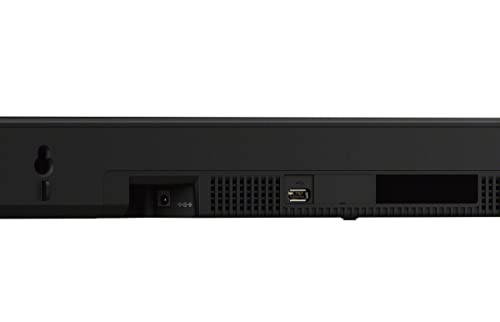
Both the Hisense HS2100 and Sony HT-S2000 include optical audio inputs for connecting to older TVs without HDMI ARC. The Hisense also provides a 3.5mm analog input for additional compatibility with older devices. Both offer Bluetooth connectivity for wireless music streaming from phones and tablets.
The Hisense HS2100 typically performs better for music, especially bass-heavy genres, thanks to its dedicated 120-watt subwoofer that delivers more low-end impact. The Sony HT-S2000 offers more balanced midrange reproduction and better stereo imaging for acoustic music, but may lack the bass extension that music enthusiasts prefer.
Both the Hisense HS2100 and Sony HT-S2000 work well in small to medium-sized living rooms. The Sony's all-in-one design works particularly well in smaller spaces where subwoofer placement might be challenging. The Hisense's wireless subwoofer provides more flexibility for larger rooms where you can position the sub for optimal bass response.
The Sony HT-S2000 supports voice assistant integration when connected to compatible devices and includes app control through Sony's Home Entertainment Connect app. The Hisense HS2100 offers basic smart features with Roku TV Ready certification for simplified remote control but has more limited voice assistant compatibility.
Both soundbars offer excellent value in the budget category. The Sony HT-S2000 provides more advanced features like Dolby Atmos support and superior dialogue clarity, making it better value for most users focused on TV and movie viewing. The Hisense HS2100 delivers strong bass performance and straightforward operation at a competitive price point.
The Sony HT-S2000 supports official expansion with Sony's SA-SW3 or SA-SW5 wireless subwoofers and SA-RS3S rear speakers, allowing you to build a full surround system over time. The Hisense HS2100 is a complete 2.1 system with no official expansion options, though it already includes the wireless subwoofer that many users prioritize.
For dedicated home theater applications, the Sony HT-S2000 provides a more cinematic experience with its Dolby Atmos processing, superior dialogue clarity, and immersive spatial audio effects. The Hisense HS2100 offers more traditional bass impact for action movies but lacks the advanced surround processing that makes modern movie soundtracks truly engaging in a home theater setting.
We've done our best to create useful and informative comparisons to help you decide what product to buy. Our research uses advanced automated methods to create this comparison and perfection is not possible - please contact us for corrections or questions. These are the sites we've researched in the creation of this article: rtings.com - shop.hisense-usa.com - bestbuy.com - content.syndigo.com - bestbuy.com - hisensedealers.co.ke - stuff.co.za - dtc-aus-api.hisense.com - youtube.com - manuals.plus - youtube.com - bestbuy.com - youtube.com - gallifurniture.com - hisense-usa.com - manuals.plus - uk.hisense.com - device.report - youtube.com - costco.ca - elmcreekwsa.com - gallifurniture.com - techradar.com - valueelectronics.com - youtube.com - videoandaudiocenter.com - whathifi.com - hometheaterhifi.com - youtube.com - sony.com - rtings.com - whathifi.com - rtings.com - helpguide.sony.net - electronics.sony.com - sony.com - dolby.com - sony.com - youtube.com - youtube.com

Privacy Policy
Terms and Conditions - Affiliate Policy
Home Security
© Copyright 2008-2026.
11816 Inwood Rd #1211, Dallas, TX 75244