










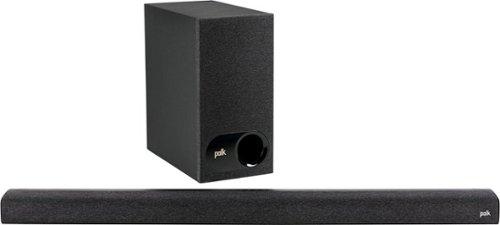
If you've ever watched a movie on your TV and struggled to hear dialogue over the sound effects, or felt like explosions lacked the punch they should have, you're experiencing the universal problem that soundbars are designed to solve. Modern TVs, despite their impressive picture quality, often have surprisingly weak speakers tucked into impossibly thin frames. This is where a good soundbar becomes essential, transforming your living room into a more immersive entertainment space.
Today we're comparing two popular soundbar approaches: the Sony HT-S2000 3.1-channel system and the Polk Audio MagniFi Max AX 3.1.2-channel setup. Both were released around 2022-2023, during a period when Dolby Atmos technology became more accessible in mid-range soundbars. Since then, we've seen manufacturers focus heavily on improving virtual surround processing and wireless connectivity, making these features more refined than earlier generations.
Before diving into specifics, let's clarify what these channel configurations mean. A 3.1-channel soundbar like the Sony HT-S2000 provides three main audio channels: left, right, and center (the ".1" represents a subwoofer for bass). The center channel is crucial because it handles most dialogue, making voices clearer and more distinct from background sounds.
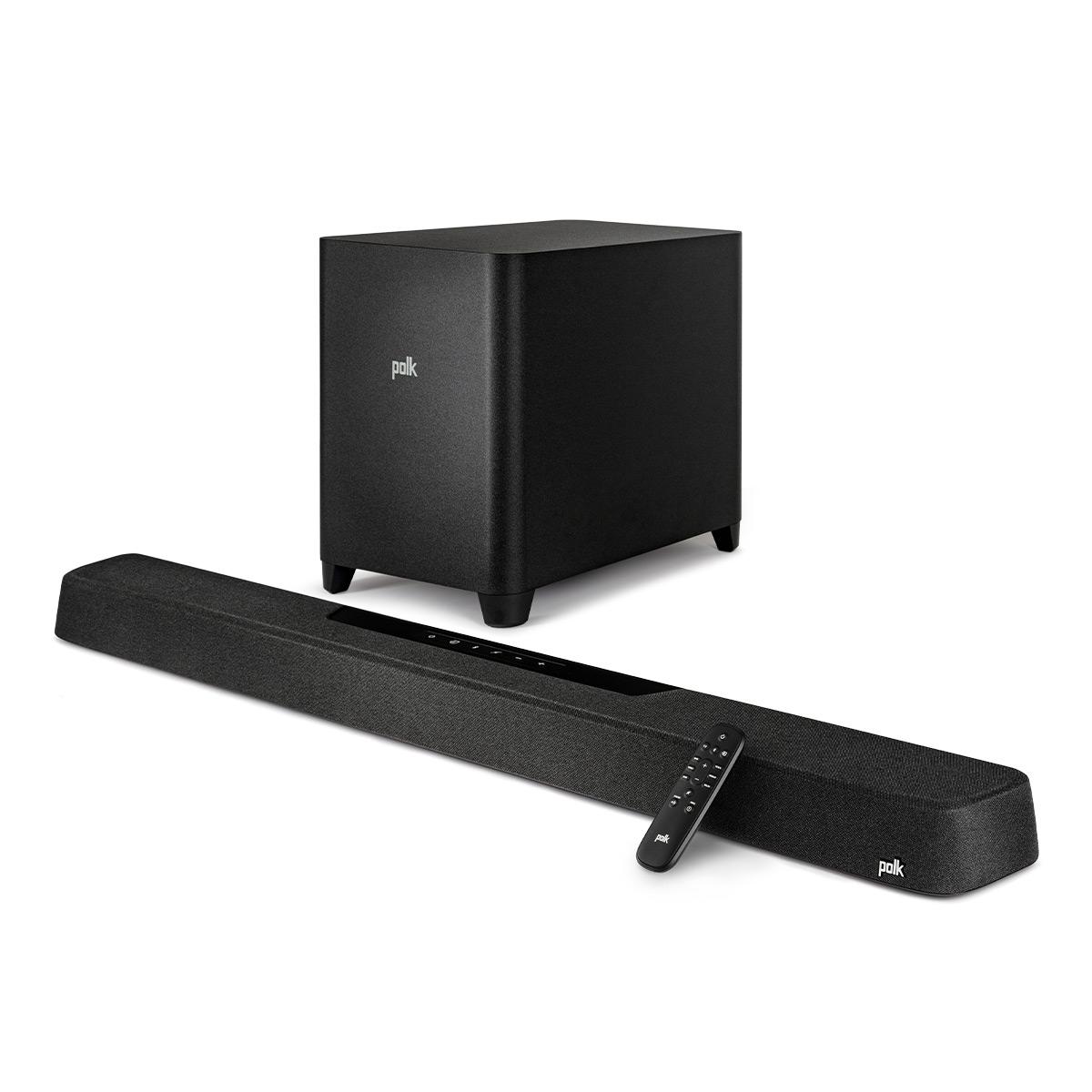
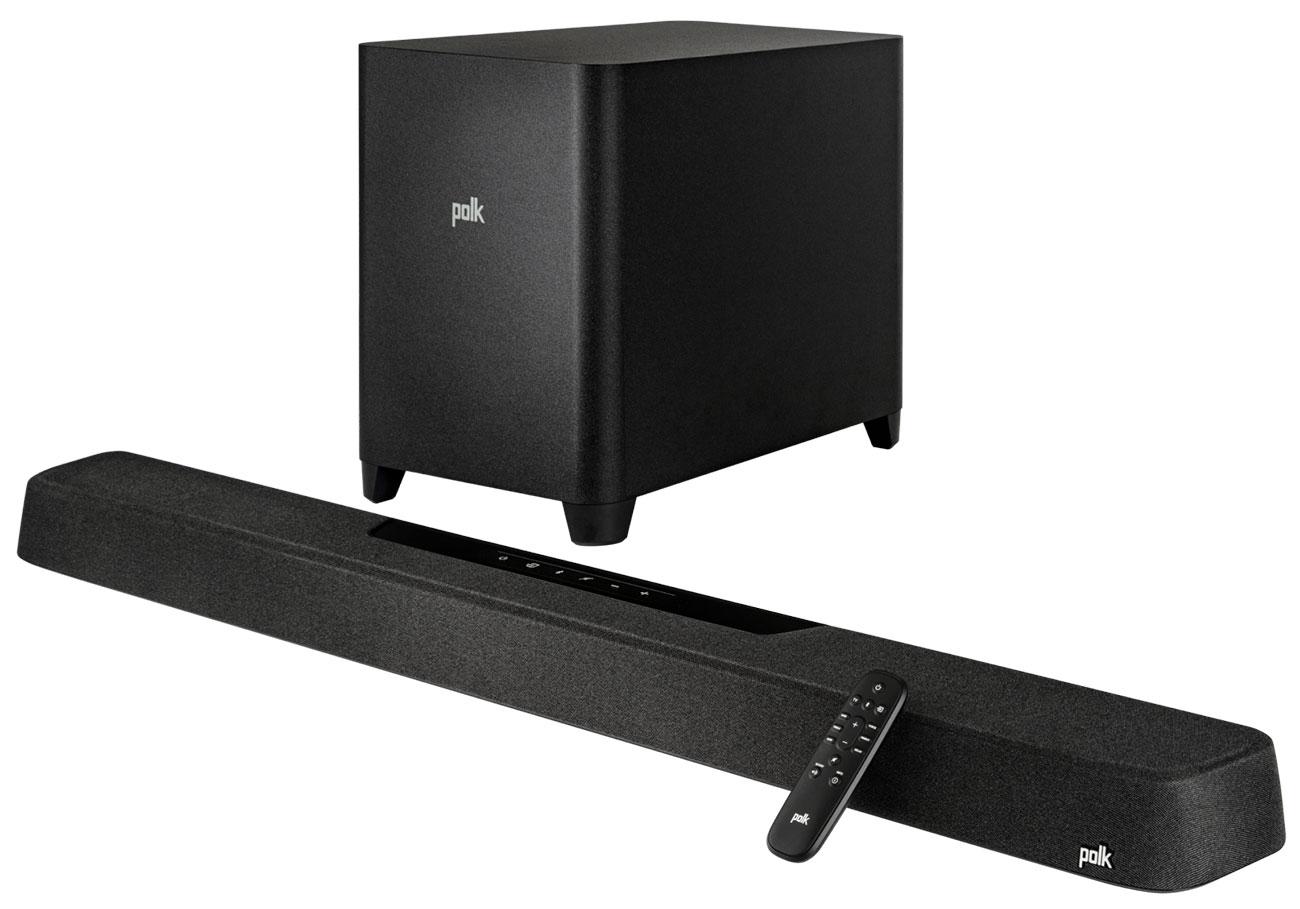
The Polk MagniFi Max AX takes this further with a 3.1.2 configuration. Those extra ".2" channels are height channels that fire sound upward to bounce off your ceiling, creating the overhead effects that make Dolby Atmos so immersive. Think of the difference between hearing rain in a movie versus feeling like raindrops are falling around and above you.
Dolby Atmos itself deserves explanation. Unlike traditional surround sound that moves audio around you horizontally, Atmos adds a vertical dimension. Instead of just left-right-center-surround positioning, sounds can now come from above, below, and anywhere in a three-dimensional space around you. When done well, it's the difference between watching a movie and feeling like you're inside it.
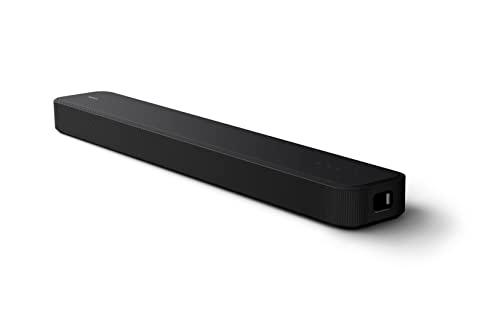
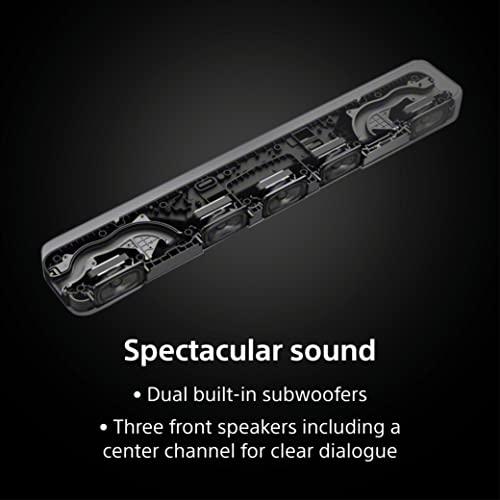
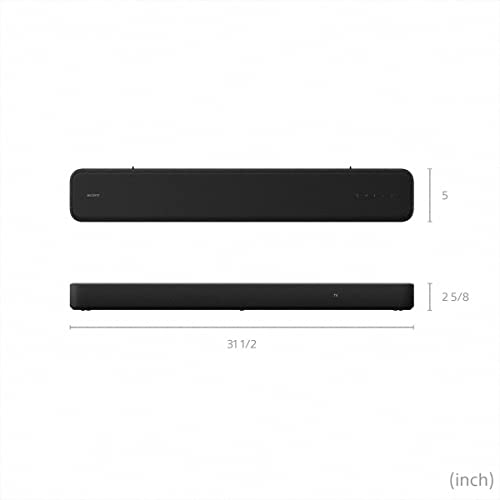
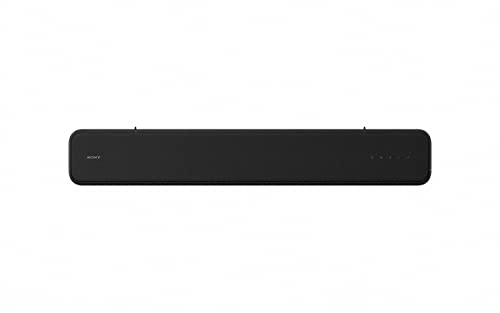
The most immediately obvious difference between these soundbars lies in their fundamental design approaches. The Sony HT-S2000 represents the all-in-one philosophy, packing everything into a single 31.5-inch bar. This includes not just the main speakers but also dual built-in subwoofers that handle bass duties. There's something elegantly simple about having no separate components to position or connect wirelessly.
I've found this approach particularly appealing for smaller living spaces or setups where minimizing visual clutter matters. The Sony HT-S2000 sits under your TV as a single, cohesive unit. Its low-profile design at just 2.6 inches tall means it won't block your TV screen or infrared sensors, even when placed directly in front of the display.
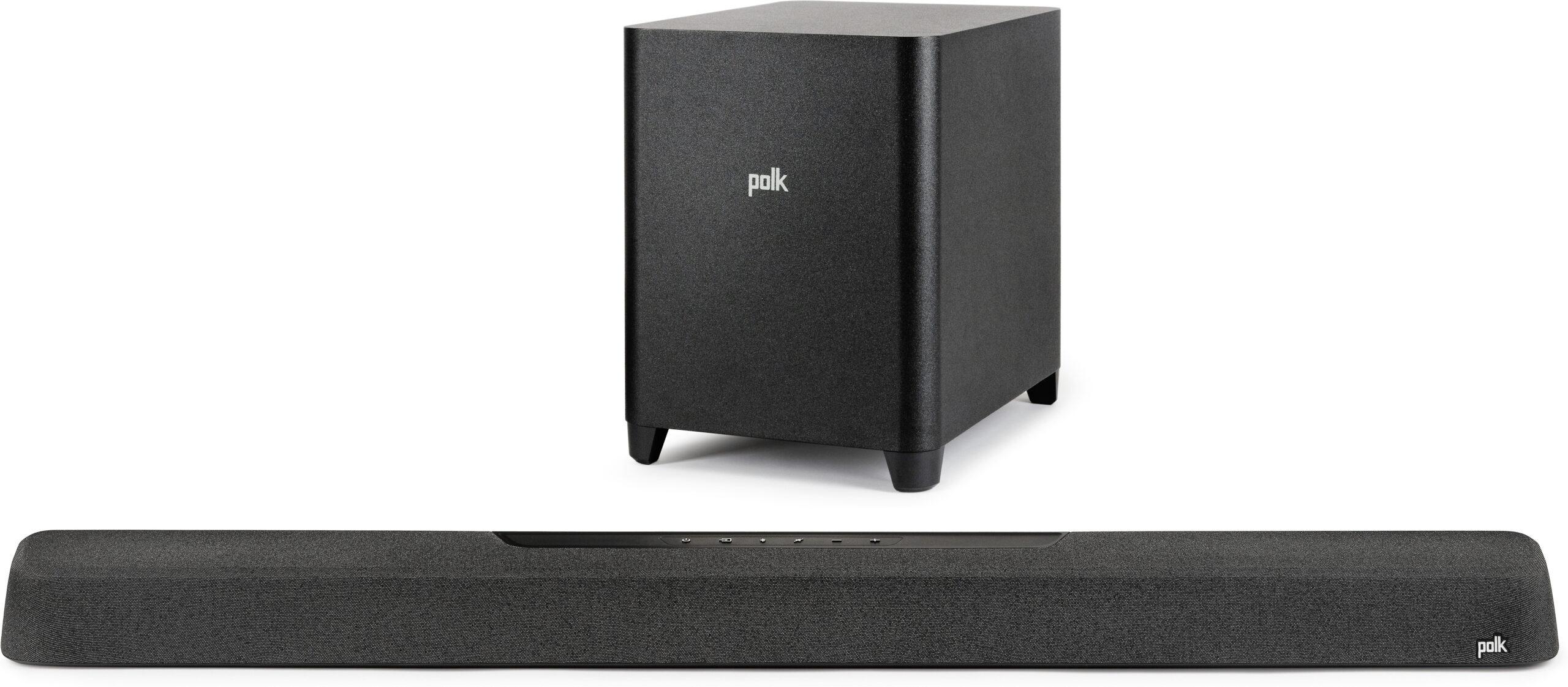
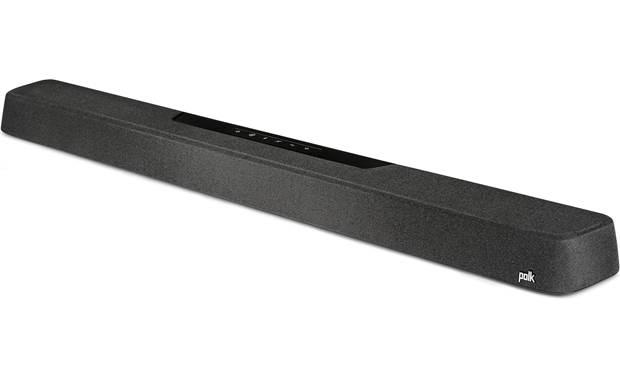
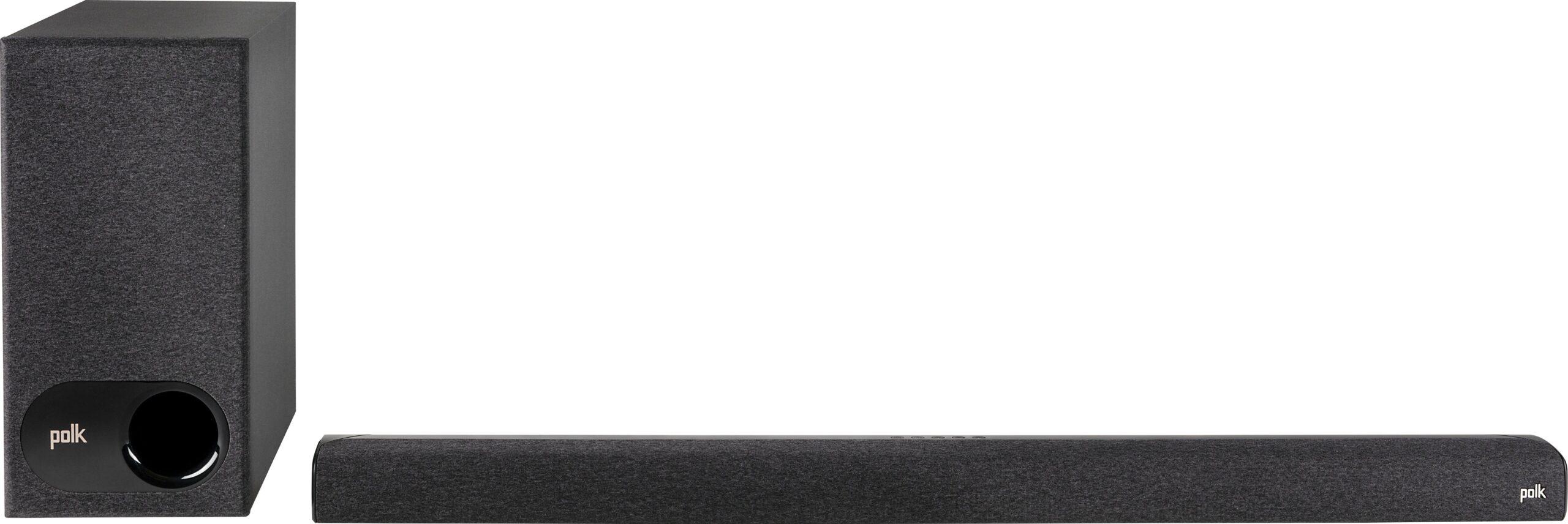
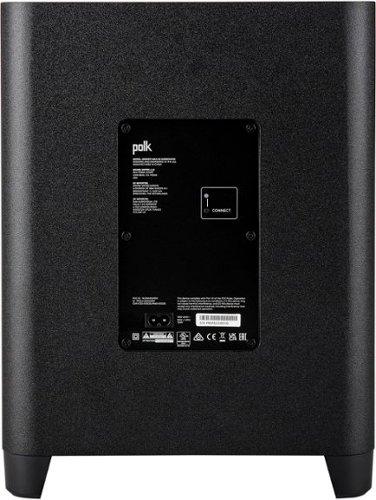
The Polk MagniFi Max AX, conversely, follows the traditional separate subwoofer approach. This means you'll have the main soundbar plus a wireless subwoofer that needs its own location in your room. While this requires more planning for placement, it offers some real advantages. That separate 10-inch downward-firing subwoofer has more internal volume and driver displacement than anything that could fit inside a soundbar, potentially delivering deeper, more impactful bass.
From a practical standpoint, I've noticed that separate subwoofers often provide more consistent bass throughout a room since you can position them optimally for your specific space. However, they also mean more components, more power cables, and more consideration for room layout.
Here's where these soundbars take fundamentally different approaches to creating that immersive Atmos experience. The Sony HT-S2000 uses what's called virtual processing through their Vertical Surround Engine technology. Essentially, clever digital signal processing analyzes the audio and uses psychoacoustic principles to trick your brain into perceiving height effects from forward-firing drivers.
This isn't just marketing speak – the technology genuinely works to create a sense of spaciousness and height. However, it's still a simulation. The Sony HT-S2000 takes surround sound and Atmos content and downmixes it to stereo for playback through its configuration, then uses processing to recreate the spatial effects.
The Polk MagniFi Max AX takes the more traditional route with actual upward-firing drivers as part of its 11-driver array. These dedicated height channels fire sound toward your ceiling, where it reflects back down to create genuine overhead effects. When properly set up in a room with appropriate ceiling height and material, this approach typically provides more convincing height sensations.
In my experience testing various Atmos implementations, physical height channels generally win for creating that "helicopter flying overhead" sensation or the feeling of rain falling from above. However, virtual processing has improved dramatically in recent years and can be surprisingly effective, especially in smaller rooms where the acoustic environment is more controlled.
Bass performance represents another area where design philosophy significantly impacts real-world results. The Sony HT-S2000 incorporates dual built-in subwoofers with side-firing bass ports. This is impressive engineering – fitting meaningful bass capability into a soundbar's form factor requires creative driver and port design. Sony's X-Balanced Speaker Units use rectangular drivers instead of traditional round ones, maximizing surface area within the available space.
Users consistently report being surprised by the Sony HT-S2000's bass performance, describing it as punchy and substantial for an all-in-one unit. However, physics still applies – there's only so much air displacement and low-frequency extension possible within a soundbar's constraints.
The Polk MagniFi Max AX sidesteps these limitations with its dedicated wireless subwoofer. That 10-inch downward-firing driver has significantly more cone area and operates within a larger enclosure, potentially producing deeper, more room-filling bass. Downward-firing designs often work well because they use the floor as an additional acoustic coupling surface, which can extend low-frequency response.
For home theater applications, this bass difference can be substantial. Movie soundtracks often feature deep low-frequency effects that add visceral impact to explosions, crashes, and dramatic moments. While the Sony HT-S2000 handles these admirably for its form factor, a dedicated subwoofer typically provides more headroom and deeper extension.
Both soundbars prioritize dialogue clarity, but they achieve it differently. The Sony HT-S2000 features a dedicated center channel designed specifically for voice reproduction. Users frequently praise its dialogue performance, with many noting that voices remain clear even during complex soundtracks with lots of background activity.
Sony's approach includes voice enhancement modes that can boost dialogue levels relative to other soundtrack elements. This proves particularly valuable when watching content with poor audio mixing or when ambient noise in your room makes quiet dialogue hard to follow.
The Polk MagniFi Max AX employs VoiceAdjust technology, allowing customizable voice levels through its integrated center channel. This gives users more granular control over dialogue prominence, which can be helpful for viewers with different hearing preferences or room acoustics.
In practice, both systems excel at dialogue clarity compared to TV speakers, but the ability to adjust voice levels independently provides more flexibility for different types of content and viewing preferences.
This is where the differences become stark and could significantly impact your daily user experience. The Sony HT-S2000 takes a minimalist approach to connectivity, providing HDMI eARC/ARC, optical digital input, and USB connectivity. Notably, it includes no HDMI pass-through inputs and no Wi-Fi streaming capability.
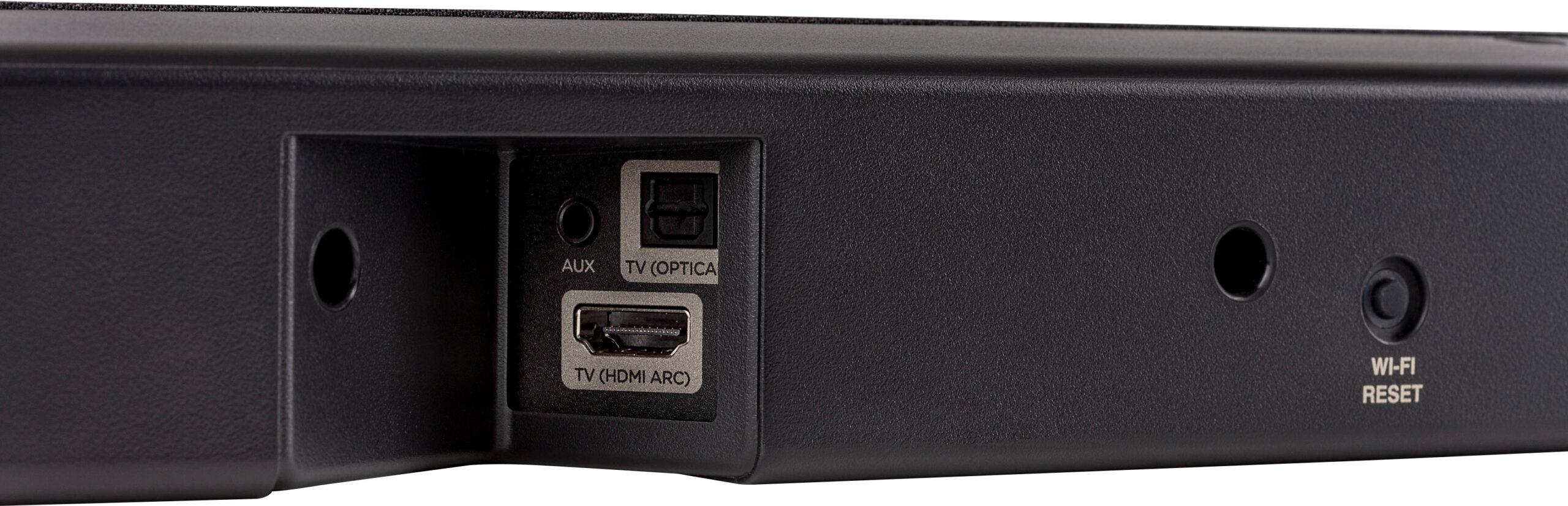
This means if you have multiple devices – game consoles, streaming boxes, Blu-ray players – you'll connect them directly to your TV and rely on ARC (Audio Return Channel) to send audio to the soundbar. For many users, this works fine, especially with modern TVs that handle multiple HDMI sources well. However, it does limit flexibility and means you can't use the soundbar as a hub for your devices.
Wireless connectivity on the Sony HT-S2000 is limited to Bluetooth 5.2 with AAC and SBC codec support. You can stream music from your phone, but there's no AirPlay, Chromecast, or Spotify Connect integration.
The Polk MagniFi Max AX takes the opposite approach, providing extensive connectivity options. It includes HDMI eARC plus three additional HDMI inputs supporting 4K/HDR at 60Hz. This allows the soundbar to function as a switching hub for multiple sources, potentially simplifying your setup if your TV has limited HDMI inputs.
More significantly, the Polk MagniFi Max AX supports comprehensive wireless streaming: Wi-Fi, AirPlay 2, Chromecast, Spotify Connect, and Bluetooth. This means you can stream music directly to the soundbar from various services and devices without needing your TV or phone as an intermediary.
For households that frequently stream music or have multiple device types, this connectivity difference could be decisive. The ability to ask Alexa to play music on your soundbar, or cast audio from any device on your network, adds genuine convenience to daily use.
The Sony HT-S2000 keeps things straightforward with its Sony Home Entertainment Connect app and physical remote. The app provides basic control and setup guidance, while BRAVIA Sync integration works seamlessly with Sony TVs for unified control. Setup is notably simple – connect one HDMI cable, and you're essentially done.
This simplicity has real value. I've found that overly complex soundbar setups often lead to features being unused or systems being misconfigured. The Sony HT-S2000 prioritizes getting you up and running quickly with good sound quality.
The Polk MagniFi Max AX offers more sophisticated smart features, including multiple EQ presets for different content types, Night Mode for late-evening viewing, and voice assistant integration. The ability to optimize sound for movies, music, or sports can genuinely improve the listening experience for different types of content.
However, more features also mean more complexity. Users need to learn various modes and settings to get optimal performance, which might appeal to audio enthusiasts but could overwhelm users who prefer simple operation.
For dedicated home theater use, room size and acoustic environment significantly impact which soundbar makes more sense. In smaller rooms (under 200 square feet), the Sony HT-S2000's virtual processing can be surprisingly effective. The acoustic boundaries help reinforce the spatial illusions created by the digital processing, and the built-in subwoofer provides adequate bass impact.
Larger rooms typically favor the Polk MagniFi Max AX approach. The separate subwoofer can fill more space with bass, and the physical height channels work better when there's more room for sound reflection. The additional power and driver count also help maintain impact across greater distances.
For mixed usage – TV watching, movie nights, and music listening – the connectivity differences become more important. If you frequently stream music or have multiple sources, the Polk MagniFi Max AX's flexibility could significantly enhance daily usability.
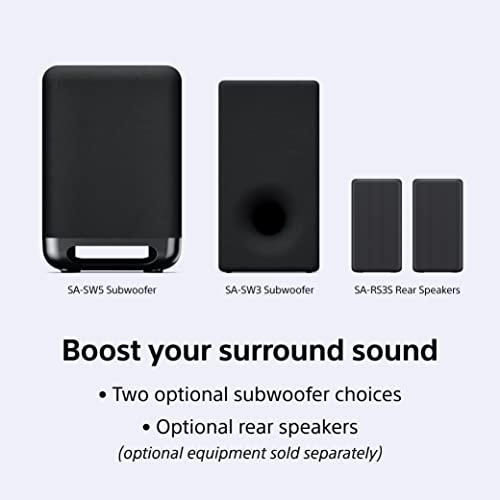
Both systems offer expansion possibilities, but with different approaches. The Sony HT-S2000 can add optional wireless subwoofers (SA-SW3, SA-SW5) and rear speakers (SA-RS3S), though this works best within Sony's ecosystem.
The Polk MagniFi Max AX supports expansion to a full 7.1.2 system with their SR2 wireless rear speakers. This broader expandability might appeal to users planning to build a more complete surround system over time.
At the time of writing, both soundbars occupy similar price segments in the mid-range category, though specific pricing varies with sales and availability. Your choice should align with your priorities and usage patterns.
Choose the Sony HT-S2000 if you value simplicity above all else. It's ideal for users who want significant audio improvement without complexity, those with space constraints, or Sony TV owners seeking seamless integration. The all-in-one design eliminates placement considerations while delivering genuinely impressive audio performance for its form factor.
The Polk MagniFi Max AX makes more sense for users who prioritize authentic surround sound capabilities and connectivity flexibility. If you frequently stream music, have multiple sources, or plan to expand your system over time, its additional features justify the complexity.
Both represent solid value propositions in their approaches. The Sony HT-S2000 maximizes performance and convenience in a simplified package, while the Polk MagniFi Max AX provides more traditional surround sound capabilities with extensive modern connectivity. Your choice ultimately depends on whether you prefer elegant simplicity or comprehensive features.
| Sony HT-S2000 | Polk Audio MagniFi Max AX |
|---|---|
| Channel Configuration - Determines surround sound capabilities | |
| 3.1 channels (no dedicated height drivers) | 3.1.2 channels (dedicated upward-firing height drivers) |
| Dolby Atmos Implementation - How overhead effects are created | |
| Virtual processing via Vertical Surround Engine | True height channels with physical upward-firing drivers |
| Subwoofer Design - Impacts bass performance and room placement | |
| Built-in dual subwoofers (no separate unit needed) | Separate wireless 10" downward-firing subwoofer |
| Driver Count - More drivers typically mean better sound distribution | |
| 5 active drivers with X-Balanced Speaker Units | 11-driver array including dedicated height speakers |
| Total Power Output - Affects maximum volume and dynamic range | |
| 250W total amplification | Power output not specified in available data |
| HDMI Connectivity - Critical for multiple source devices | |
| 1x HDMI eARC/ARC only (no pass-through inputs) | HDMI eARC plus 3 additional 4K/HDR HDMI inputs |
| Wireless Streaming - Essential for music and smart features | |
| Bluetooth 5.2 only (no Wi-Fi streaming) | Wi-Fi, Bluetooth, AirPlay 2, Chromecast, Spotify Connect |
| Smart Features - Voice control and automation capabilities | |
| Basic app control, BRAVIA Sync for Sony TVs | Multiple EQ presets, Night Mode, Amazon Alexa integration |
| Physical Design - Space requirements and aesthetic impact | |
| Single bar: 31.5" × 2.6" × 5", 8.2 lbs | Main bar plus separate subwoofer requiring floor placement |
| Setup Complexity - Time and effort required for installation | |
| Plug-and-play single cable connection | Multi-component setup with subwoofer positioning |
| Expandability - Future upgrade potential | |
| Sony wireless subwoofer and rear speaker compatibility | Expandable to 7.1.2 with Polk SR2 rear speakers |
| Audio Format Support - Compatibility with high-quality sources | |
| Dolby Atmos, DTS:X, high-res audio up to 192kHz/24-bit | Dolby Atmos, DTS:X with full multichannel processing |
The Sony HT-S2000 is ideal for small apartments because it's an all-in-one design with built-in subwoofers, eliminating the need for a separate subwoofer that takes up floor space. The Polk Audio MagniFi Max AX requires placement for both the soundbar and a separate wireless subwoofer, which may be challenging in tight spaces.
The Polk Audio MagniFi Max AX offers true Dolby Atmos with dedicated upward-firing height drivers that bounce sound off your ceiling. The Sony HT-S2000 uses virtual Dolby Atmos processing through its Vertical Surround Engine, which simulates height effects without physical upward-firing speakers.
The Polk Audio MagniFi Max AX typically delivers deeper bass with its separate 10-inch wireless subwoofer that has more internal volume and driver displacement. The Sony HT-S2000 has impressive built-in dual subwoofers for its size, but physics limits how much bass an all-in-one design can produce.
The Polk Audio MagniFi Max AX includes three additional HDMI inputs plus eARC, allowing you to connect multiple devices directly to the soundbar. The Sony HT-S2000 only has HDMI eARC/ARC, so you'll need to connect devices to your TV and use audio return channel functionality.
The Sony HT-S2000 offers simpler setup with just one HDMI cable connection and no separate components to position. The Polk Audio MagniFi Max AX requires connecting both the main bar and positioning the wireless subwoofer in your room for optimal performance.
The Polk Audio MagniFi Max AX has built-in Amazon Alexa integration and works with voice commands. The Sony HT-S2000 doesn't have direct voice assistant integration but works with compatible devices through Bluetooth connectivity.
The Polk Audio MagniFi Max AX excels at music streaming with Wi-Fi connectivity, AirPlay 2, Chromecast, and Spotify Connect support. The Sony HT-S2000 only supports Bluetooth streaming, limiting your wireless music options to paired devices.
Both soundbars offer expansion options. The Sony HT-S2000 can add optional Sony wireless subwoofers and rear speakers within Sony's ecosystem. The Polk Audio MagniFi Max AX can expand to a full 7.1.2 system with Polk's SR2 wireless rear speakers.
Both the Sony HT-S2000 and Polk Audio MagniFi Max AX feature dedicated center channels for dialogue clarity. The Sony HT-S2000 uses X-Balanced Speaker Units designed to minimize distortion, while the Polk Audio MagniFi Max AX offers VoiceAdjust technology for customizable dialogue levels.
The Polk Audio MagniFi Max AX is better suited for larger rooms with its 11-driver array, separate subwoofer, and physical height channels that work more effectively in spacious environments. The Sony HT-S2000 works well in medium-sized rooms but may lack the power and bass extension needed for very large spaces.
For dedicated home theater use, the Polk Audio MagniFi Max AX provides more authentic surround sound with true height channels and extensive connectivity options. The Sony HT-S2000 offers excellent value for users prioritizing simplicity and space-saving design while still delivering impressive audio performance.
The Sony HT-S2000 includes built-in dual subwoofers, so no separate subwoofer is required, though you can add one later for more bass. The Polk Audio MagniFi Max AX comes with a separate wireless subwoofer included in the package, providing dedicated bass reproduction from day one.
We've done our best to create useful and informative comparisons to help you decide what product to buy. Our research uses advanced automated methods to create this comparison and perfection is not possible - please contact us for corrections or questions. These are the sites we've researched in the creation of this article: techradar.com - valueelectronics.com - youtube.com - videoandaudiocenter.com - whathifi.com - hometheaterhifi.com - youtube.com - sony.com - rtings.com - whathifi.com - rtings.com - helpguide.sony.net - electronics.sony.com - sony.com - dolby.com - sony.com - youtube.com - youtube.com - youtube.com - avsforum.com - rtings.com - rtings.com - bestbuy.com - walts.com - hometechnologyreview.com - polkaudio.com - pcrichard.com

Privacy Policy
Terms and Conditions - Affiliate Policy
Home Security
© Copyright 2008-2026.
11816 Inwood Rd #1211, Dallas, TX 75244