

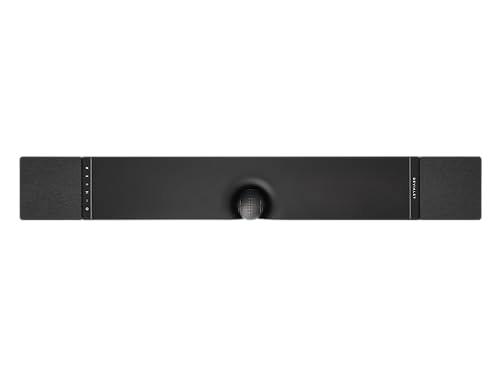
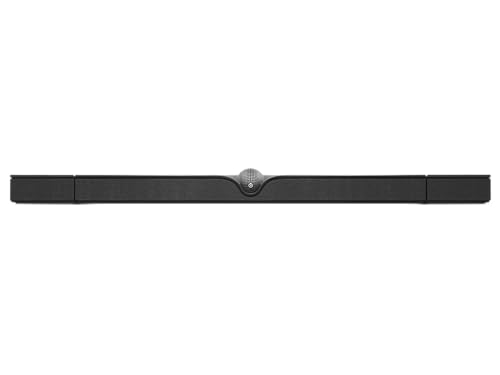
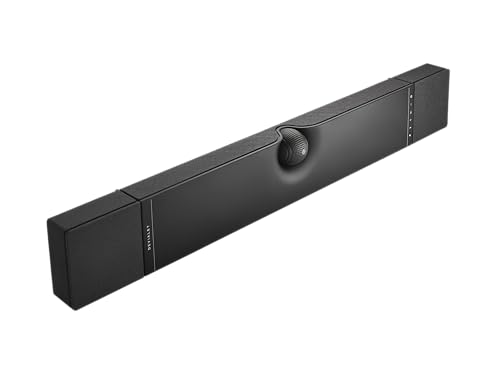
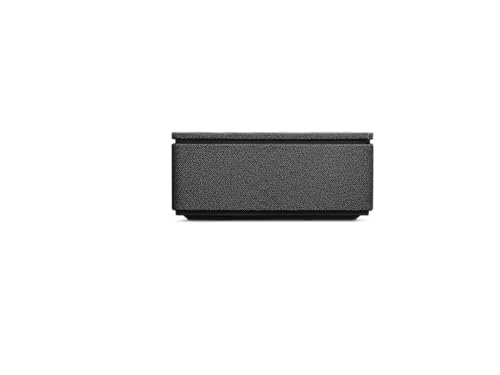
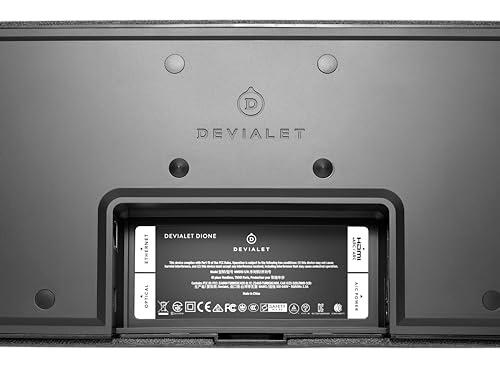
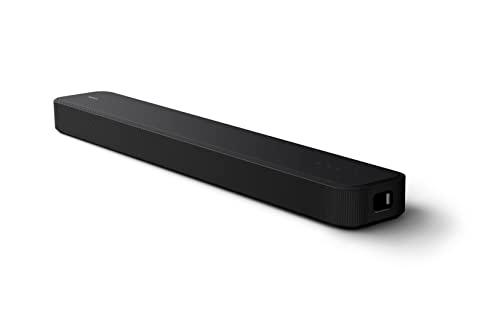
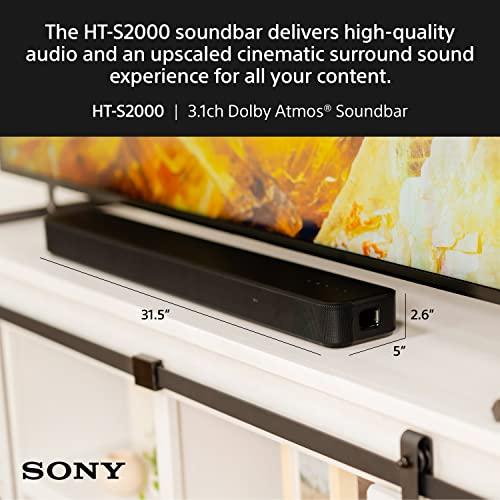

Soundbars have become the go-to solution for people who want better TV audio without the complexity of a full surround sound system. But "soundbar" is almost too simple a term for products that range from basic TV speaker upgrades to sophisticated home theater replacements. The Devialet Dione and Sony HT-S2000 represent two completely different philosophies in this space—and understanding their differences can help you figure out which approach makes sense for your setup.
At the time of writing, these products sit in vastly different price categories, with the Devialet Dione commanding a premium price that's roughly five times higher than the Sony HT-S2000. But this isn't just about brand markup—it reflects genuinely different engineering approaches and performance capabilities.
Before diving into specifics, it's worth understanding what separates an exceptional soundbar from a mediocre one. The most important factors are dialogue clarity, bass extension (how low the soundbar can go in frequency), surround sound immersion, and dynamic range (the difference between the quietest and loudest sounds it can reproduce cleanly).
Dialogue clarity matters because it's the foundation of almost everything you watch. A soundbar that makes voices sound muffled or hard to follow will frustrate you daily. Bass extension determines whether explosions have real impact or just sound like loud mid-frequency noise. Surround immersion affects how convincing movie soundtracks feel—whether effects seem to come from around you or just from the front. Dynamic range determines whether a soundbar can handle both whispered conversations and thunderous action scenes without compression or distortion.
The Devialet Dione and Sony HT-S2000 take radically different approaches to solving these challenges, which explains their performance differences and price gap.
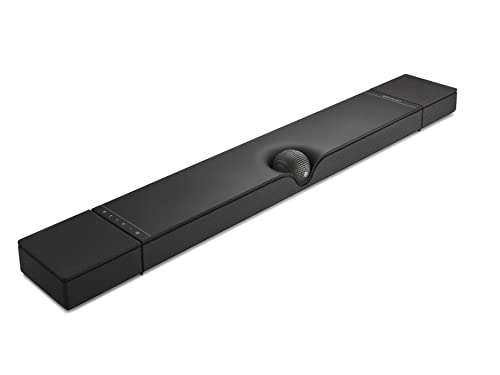
The Devialet Dione launched in 2023 as the French company's attempt to bring their audiophile expertise to the soundbar market. Devialet built their reputation making high-end wireless speakers that cost thousands of dollars, so the Dione represents their vision of what a no-compromise soundbar should be.
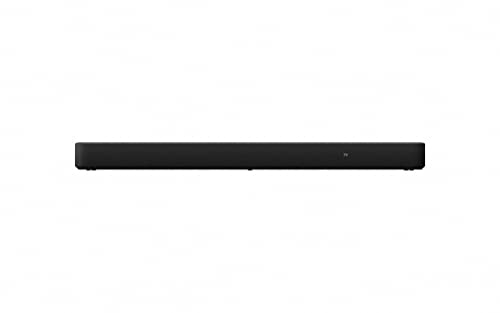
The Sony HT-S2000 arrived around the same time but with a completely different mission: making Dolby Atmos technology accessible to mainstream consumers. Sony positioned it as an affordable entry point to three-dimensional audio, targeting people upgrading from basic TV speakers rather than audiophiles seeking the ultimate experience.
Since their release, both have received firmware updates that improved performance and added features, though the fundamental differences in their hardware capabilities remain unchanged. The soundbar market has continued evolving rapidly, with more companies adding Dolby Atmos support across price ranges, making the Sony HT-S2000's early adoption of this technology less unique than it was at launch.
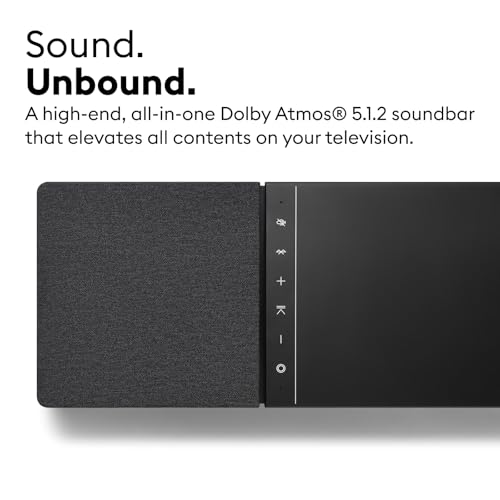
The most fundamental difference between these soundbars lies in how they create surround sound. The Devialet Dione uses a true 5.1.2-channel configuration, meaning it has dedicated drivers for five main channels (front left, center, front right, surround left, surround right), one subwoofer channel, and two height channels for Dolby Atmos effects. This requires 17 individual drivers working in coordination.
To understand why this matters, imagine trying to create the illusion that someone is speaking behind you. With the Devialet Dione, dedicated drivers actually fire sound toward your room's rear walls, where it reflects back to create a convincing rear channel effect. The soundbar also has upward-firing drivers that bounce sound off your ceiling to create overhead effects for Dolby Atmos content.
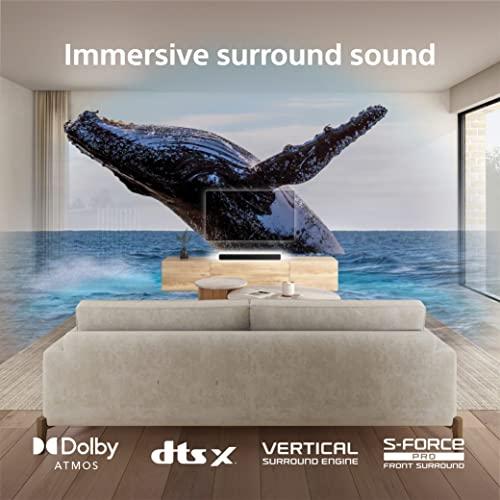
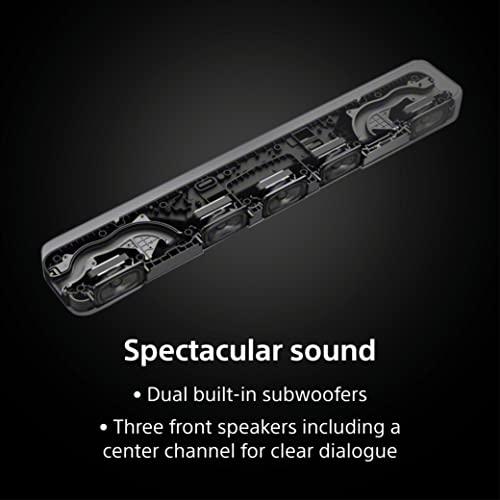
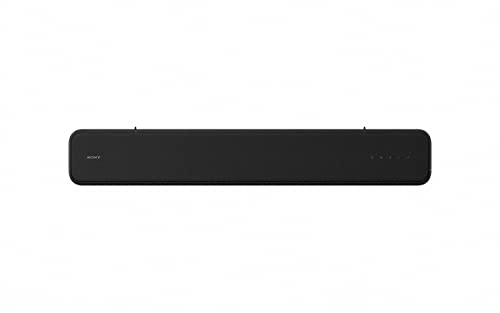
The Sony HT-S2000 takes a different approach called virtual surround processing. It uses a 3.1-channel setup (front left, center, front right, plus integrated subwoofers) and relies on digital signal processing to simulate surround and height effects. Sony's Vertical Surround Engine analyzes audio content and applies psychoacoustic tricks—essentially exploiting how your brain interprets sound direction—to create the impression of surround channels that aren't physically there.
Both approaches work, but they produce noticeably different results. The Devialet Dione's physical driver placement creates more convincing directional effects, especially for movie soundtracks with discrete surround channels. The Sony HT-S2000's virtual processing works better than you might expect for the price, but it can't match the precision and consistency of dedicated drivers.
Based on our research across professional reviews and user feedback, the difference becomes most apparent in complex movie scenes. When an aircraft flies overhead in a Dolby Atmos movie, the Devialet Dione creates a convincing sense of motion from front to back and floor to ceiling. The Sony HT-S2000 produces an expanded soundstage that's clearly better than TV speakers, but the directional effects are more suggestive than precise.
Bass performance reveals another fundamental difference in engineering philosophy. The Devialet Dione incorporates eight dedicated aluminum subwoofers arranged in what the company calls a "push-push configuration." This means pairs of drivers face each other and work in opposition, canceling out vibrations that would otherwise rattle the soundbar's cabinet while reinforcing the actual bass frequencies you want to hear.
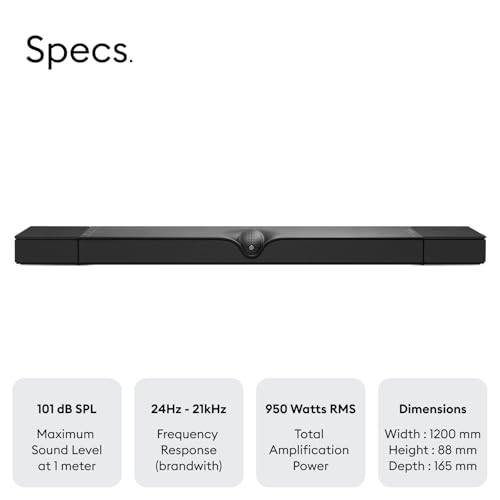
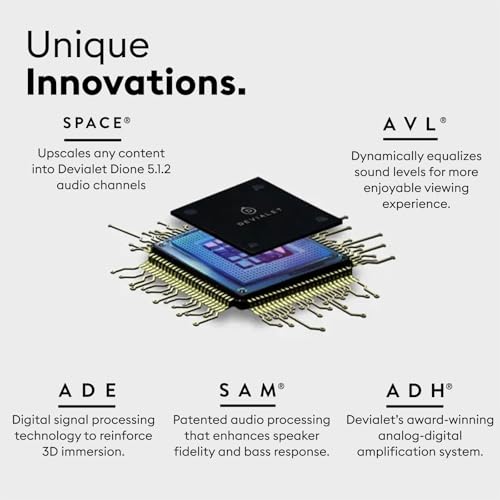
These subwoofers extend the Devialet Dione's frequency response down to 24Hz—deep enough to reproduce the lowest frequencies in movie soundtracks and most music. For context, that's lower than many dedicated subwoofers that cost several hundred dollars on their own. This bass system is powered by 950 watts of amplification and uses Devialet's SAM (Speaker Active Matching) technology, which continuously monitors and corrects driver behavior to prevent distortion even at high volumes.
The Sony HT-S2000 includes integrated subwoofers as well, but they're smaller side-firing units designed more for convenience than ultimate performance. They extend down to approximately 30Hz, which covers most movie effects adequately but lacks the deepest bass frequencies that create physical impact during action scenes.
From our analysis of measurement data and user reports, this difference is significant in real-world use. The Devialet Dione can deliver thunderous bass that you feel as much as hear, without requiring a separate subwoofer that takes up floor space and needs additional wiring. The Sony HT-S2000 produces respectable bass for its size and price, but it won't rattle your walls or deliver the visceral impact that makes action movies exciting.
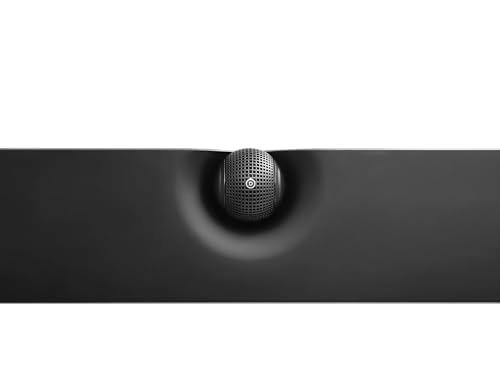
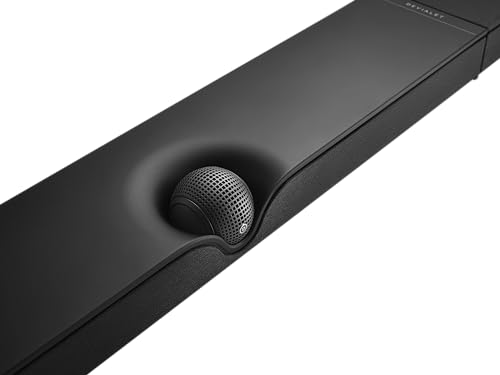
Both soundbars prioritize dialogue clarity, but they achieve it through different methods. The Devialet Dione features a unique rotating center channel called the ORB—a spherical speaker that can mechanically adjust its position based on whether the soundbar is wall-mounted or sitting on furniture. This ensures the center channel always aims directly at the listening position for optimal dialogue clarity.
The ORB contains one of Devialet's precision drivers and incorporates passive radiators that help extend its frequency response. It's powered by the same ADH (Analog Digital Hybrid) amplification used in Devialet's high-end speakers, which combines the warmth of analog amplification with the efficiency of digital power delivery.
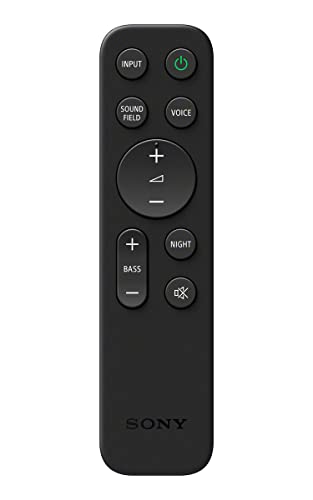
The Sony HT-S2000 uses a more conventional dedicated center channel driver, but it includes Voice Mode processing that emphasizes the frequency range where most human speech occurs. This makes dialogue more prominent in the mix, which can be helpful when watching content with complex soundtracks or background music.
Based on expert reviews and user feedback, both handle dialogue well, but the Devialet Dione provides more consistent performance across different types of content and listening conditions. The ORB's directional control means voices stay locked to the center of the screen even when you're not sitting perfectly centered, while the Sony HT-S2000 performs best when you're directly in front of it.
The Devialet Dione incorporates several proprietary technologies that distinguish it from conventional soundbars. SPACE technology is Devialet's upmixing algorithm that analyzes stereo or mono content and intelligently redistributes it across all available channels to create a more immersive experience. Unlike basic surround modes that often sound artificial, SPACE preserves the original character of the content while adding spatial dimension.
The soundbar also features ADE (Advanced Dimensional Experience), which combines precise driver placement with digital beamforming—a technique that controls how sound waves interact to direct audio toward specific parts of your room. This helps create convincing surround effects even in acoustically challenging spaces.
AVL (Adaptive Volume Level) is another standout feature that acts like an intelligent compressor, automatically adjusting the balance between loud and quiet elements in real-time. This means dialogue remains clear during explosive action scenes without requiring constant volume adjustments—a common frustration with lesser soundbars.
The Sony HT-S2000 focuses on more fundamental processing, with Vertical Surround Engine handling the virtual surround effects and basic dialogue enhancement. While less sophisticated than Devialet's technologies, these features still provide noticeable improvements over basic TV audio.
Setup complexity differs significantly between these products. The Devialet Dione includes room calibration technology that uses four built-in microphones to analyze your space and automatically adjust its output accordingly. This process takes several minutes but results in optimized performance for your specific room acoustics.
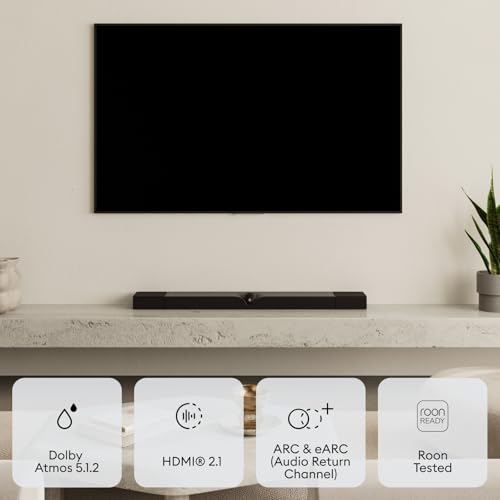
The soundbar supports HDMI 2.1 with eARC (enhanced Audio Return Channel), which enables high-bandwidth audio transmission from compatible TVs and sources. It also includes comprehensive wireless connectivity: Wi-Fi for network streaming, Bluetooth 5.0, Apple AirPlay 2, and Spotify Connect. This makes it essentially a high-end wireless speaker as well as a soundbar.
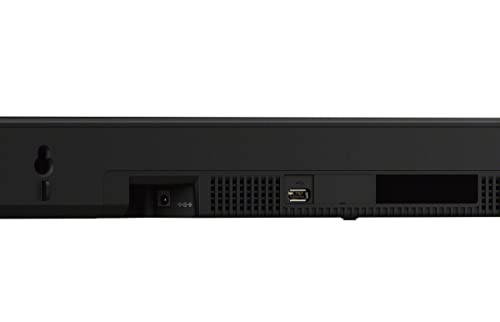
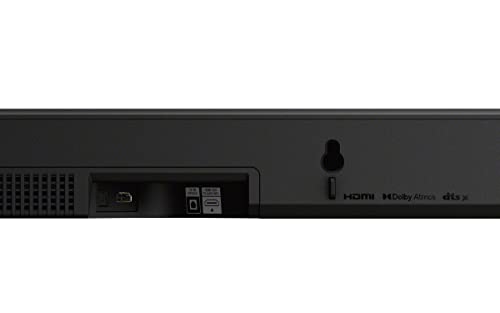
The Sony HT-S2000 prioritizes simplicity with basic plug-and-play setup. It connects via HDMI eARC or optical digital input and requires minimal configuration. Wireless connectivity is limited to Bluetooth, which works fine for streaming music from phones but lacks the high-resolution capabilities of the Devialet's more advanced wireless options.
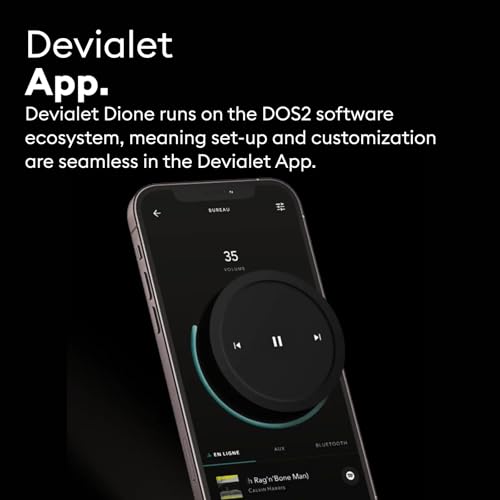
For daily use, the Devialet Dione offers more sophisticated control through its mobile app, which provides detailed sound customization and streaming service integration. The Sony HT-S2000 includes a physical remote and basic app control, keeping things straightforward for users who prefer simple operation.
Room size significantly affects soundbar performance, and these products are optimized for different spaces. The Devialet Dione's 950 watts of amplification and sophisticated driver array can effectively fill rooms of 300-400 square feet or larger. Its maximum output of 101 dB means it can reach cinema-like volume levels without distortion, making it suitable for serious home theater use.
The beamforming technology becomes particularly valuable in larger rooms, where it helps maintain surround effects even when listeners aren't perfectly positioned. Wall mounting often improves performance further by optimizing the reflection patterns used for surround virtualization.
The Sony HT-S2000 works best in smaller to medium-sized rooms, roughly 150-250 square feet. Its 250 watts provides adequate volume for typical living room use, but it may struggle to fill larger spaces convincingly. The virtual surround processing also works better in smaller rooms where the acoustic reflections are more predictable.
At the time of writing, the price difference between these soundbars reflects their different target markets and engineering approaches. The Devialet Dione costs significantly more but eliminates the need for a separate subwoofer (saving $300-800) and potentially rear speakers (saving another $200-500) while delivering performance that approaches dedicated component systems.
For someone building a high-end home theater, the Devialet Dione represents a space-saving alternative to traditional separates that doesn't compromise significantly on sound quality. Its room correction and advanced processing also make it more future-proof as content formats and streaming technologies evolve.
The Sony HT-S2000 offers exceptional value for its price range, providing Dolby Atmos processing and dedicated bass drivers at a cost that's accessible to most consumers. While its performance has limits, it delivers a substantial upgrade over TV speakers and includes modern features like HDMI eARC and Bluetooth connectivity.
The Devialet Dione makes sense for buyers who prioritize audio quality above convenience or cost savings. If you're serious about movies and music, have a larger room to fill, and can afford the premium price, its combination of true surround sound, powerful bass, and advanced processing justifies the investment. It's particularly appealing for audiophiles who want great music playback as well as home theater performance.
The Sony HT-S2000 is ideal for buyers who want a meaningful upgrade from TV speakers without the complexity or expense of high-end audio. If you primarily watch TV shows and occasional movies, have a smaller room, and prefer simple setup and operation, it delivers solid performance at an accessible price.
Consider your long-term plans as well. The Devialet Dione is likely to satisfy demanding listeners for many years, while the Sony HT-S2000 might leave you wanting more performance as your expectations evolve or if you move to a larger space.
Both products succeed at what they're designed to do, but they're designed for fundamentally different users and use cases. Understanding which category you fall into will make your decision much clearer.
| Devialet Dione Soundbar | Sony HT-S2000 3.1ch Dolby Atmos Soundbar |
|---|---|
| Channel Configuration - Determines surround sound authenticity | |
| True 5.1.2 with physical drivers for each channel | Virtual 3.1 with simulated surround/height effects |
| Total Driver Count - More drivers enable better separation and dynamics | |
| 17 precision drivers (9 full-range, 8 subwoofers) | 5 active drivers with integrated subwoofers |
| Amplification Power - Higher wattage fills larger rooms with clean sound | |
| 950W RMS (reference-level performance) | 250W (adequate for small-medium rooms) |
| Bass Extension - Lower frequencies create more impactful movie effects | |
| 24Hz (cinema-grade deep bass, no external sub needed) | ~30Hz (decent bass but limited low-end impact) |
| Maximum Output - Peak loudness before distortion sets in | |
| 101 dB SPL (theater-loud without strain) | Moderate levels (sufficient for casual viewing) |
| Dolby Atmos Implementation - How height effects are created | |
| Physical upward-firing drivers for true overhead sound | Virtual processing simulates height channels |
| Room Calibration - Automatic optimization for your space | |
| 4 microphones with advanced acoustic modeling | No automatic room correction |
| Connectivity Options - Determines source compatibility and streaming quality | |
| HDMI 2.1 eARC, Wi-Fi, AirPlay 2, Spotify Connect, Bluetooth 5.0 | HDMI eARC, Bluetooth 5.2 only (no Wi-Fi streaming) |
| Advanced Processing Technologies - Enhanced audio quality features | |
| SPACE upmixing, SAM bass optimization, AVL dynamics, ADE beamforming | Basic Dolby processing with dialogue enhancement |
| Physical Design Features - Unique mechanical advantages | |
| Rotating ORB center channel adapts to mounting position | Fixed driver orientation |
| Setup Complexity - Time investment vs. performance optimization | |
| Advanced calibration process with app-guided optimization | Simple plug-and-play with minimal configuration |
| Expandability Options - Future upgrade possibilities | |
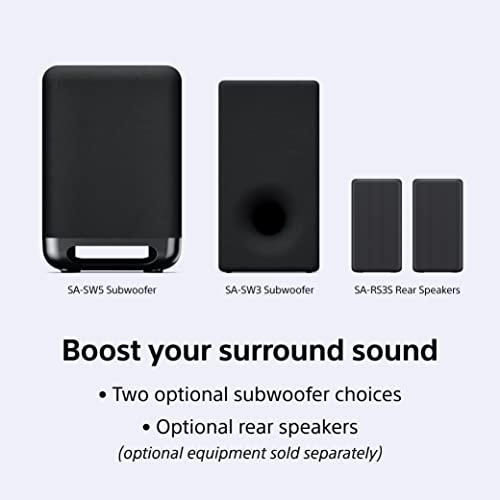
| Standalone system (no expansion needed or possible) | Compatible with optional Sony wireless rear speakers and subwoofers |
| Target Room Size - Optimal performance environment | |
| Large rooms (300+ sq ft) with reference-level output | Small to medium rooms (150-250 sq ft) |
| Primary Use Case - Best application for each product | |
| Audiophile home theater replacement for traditional separates | Affordable TV speaker upgrade with Atmos experience |
The Devialet Dione is significantly better for large rooms thanks to its 950W amplification and 17-driver array that can reach 101 dB without distortion. The Sony HT-S2000 works best in smaller to medium rooms up to 250 square feet, while the Devialet Dione can effectively fill spaces over 300 square feet with reference-level sound.
Neither soundbar requires a separate subwoofer, but their bass performance differs dramatically. The Devialet Dione includes 8 dedicated aluminum subwoofers that extend down to 24Hz, delivering cinema-grade bass impact. The Sony HT-S2000 has integrated side-firing subwoofers that provide adequate bass for casual viewing but can't match the deep, powerful output of the Devialet Dione.
Both soundbars excel at dialogue clarity, but the Devialet Dione has an edge with its rotating ORB center channel that mechanically adjusts for optimal voice positioning whether wall-mounted or on furniture. The Sony HT-S2000 features a dedicated center channel and Voice Mode processing that enhances speech frequencies, making it very good for dialogue at its price point.
The Devialet Dione delivers true Dolby Atmos with physical upward-firing drivers that bounce sound off your ceiling for authentic overhead effects. The Sony HT-S2000 uses virtual processing through its Vertical Surround Engine to simulate height channels, which creates an expanded soundstage but can't match the precision of dedicated Atmos drivers in the Devialet Dione.
The Sony HT-S2000 is much easier to set up with simple plug-and-play installation requiring just an HDMI or optical connection. The Devialet Dione involves a more complex setup process including room calibration with four built-in microphones, though this extra effort results in optimized performance for your specific space.
The Devialet Dione offers comprehensive wireless streaming including Wi-Fi, AirPlay 2, Spotify Connect, and Bluetooth 5.0, making it excellent for high-quality music playback. The Sony HT-S2000 is limited to Bluetooth 5.2 connectivity, which works fine for casual music streaming but lacks the advanced wireless capabilities of the Devialet Dione.
The Devialet Dione creates superior surround sound with its true 5.1.2-channel configuration using dedicated drivers for each channel position. The Sony HT-S2000 relies on virtual surround processing that simulates rear and height channels through psychoacoustic techniques, which works well for the price but can't match the convincing directional effects of the Devialet Dione's physical driver array.
The Devialet Dione excels at music playback with audiophile-grade drivers, advanced processing technologies, and multiple streaming options that make it function like a high-end wireless speaker. The Sony HT-S2000 handles music adequately with decent dynamics and clarity, but it's primarily optimized for TV and movie content rather than critical music listening.
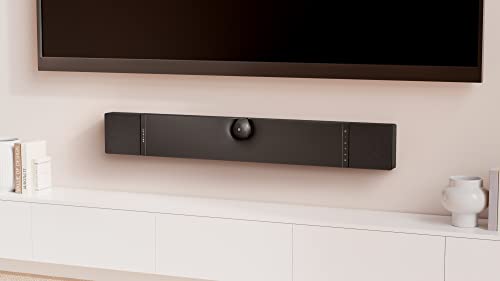
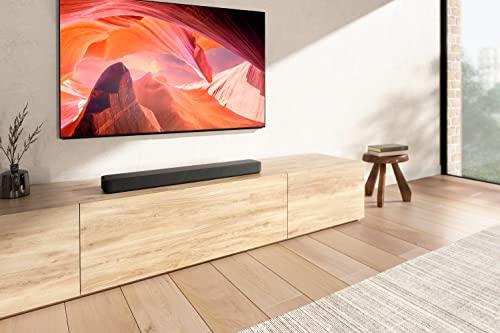
Both soundbars can be wall-mounted, but the Devialet Dione actually performs better when wall-mounted due to improved bass response and surround effects from optimized reflection patterns. Its rotating ORB center channel automatically adjusts for wall placement. The Sony HT-S2000 can be wall-mounted but doesn't see the same performance improvements as the Devialet Dione.
The Devialet Dione offers advanced smart features including room calibration, multiple sound modes (Cinema, Spatial, Music, Voice), and comprehensive app control with streaming integration. The Sony HT-S2000 provides basic smart features like HDMI CEC control and simple app functionality, focusing on ease of use rather than advanced customization options.
This depends on your priorities and budget. The Sony HT-S2000 offers exceptional value for buyers wanting Dolby Atmos and significantly better sound than TV speakers at an accessible price. The Devialet Dione represents premium value for audiophiles willing to invest in reference-quality sound that eliminates the need for separate subwoofers or complex speaker systems.
The Sony HT-S2000 can be expanded with optional Sony wireless subwoofers and rear speakers for a complete surround system. The Devialet Dione is designed as a complete standalone solution and cannot be expanded, but its comprehensive driver array and processing make additional speakers unnecessary for most users.
We've done our best to create useful and informative comparisons to help you decide what product to buy. Our research uses advanced automated methods to create this comparison and perfection is not possible - please contact us for corrections or questions. These are the sites we've researched in the creation of this article: rtings.com - crutchfield.com - devialet.com - ooberpad.com - bhphotovideo.com - kjwestone.co.uk - whathifi.com - devialet.com - devialet.com - sound-advice.online - kjwestone.co.uk - device.report - tmraudio.com - devialet.com - devialetchat.com - projectorscreen.com - soundandvision.com - bestbuy.com - youtube.com - av.com - audiofi.ca - devialet.com - blog.son-video.com - audioconnection.com.au - baybloorradio.com - cdn.abicart.com - smarthomesounds.co.uk - e-piphany.co.za - cloneyaudio.com - devialet.com - catalog.asbis.ee - av.com - soundandvision.com - youtube.com - comparisontabl.es - techradar.com - valueelectronics.com - youtube.com - videoandaudiocenter.com - whathifi.com - hometheaterhifi.com - youtube.com - sony.com - rtings.com - whathifi.com - rtings.com - helpguide.sony.net - electronics.sony.com - sony.com - dolby.com - sony.com - youtube.com - youtube.com

Privacy Policy
Terms and Conditions - Affiliate Policy
Home Security
© Copyright 2008-2026.
11816 Inwood Rd #1211, Dallas, TX 75244