







If you've ever strained to hear dialogue during an action scene or felt like movie explosions lack punch, you know how disappointing built-in TV speakers can be. Modern TVs have gotten thinner, leaving little room for decent speakers, which has made soundbars essential for anyone who cares about audio quality. But choosing between different soundbar approaches can be confusing—do you need physical surround speakers, or can virtual processing deliver the same experience?
The Amazon Fire TV Soundbar Plus 5.1 Channel System and Sony HT-S2000 3.1ch Dolby Atmos Soundbar represent two fundamentally different philosophies for solving your TV's audio problems. At the time of writing, the Amazon system costs significantly more but includes a complete 5.1 speaker setup, while the Sony focuses on delivering superior sound quality from a single unit at a lower price point.
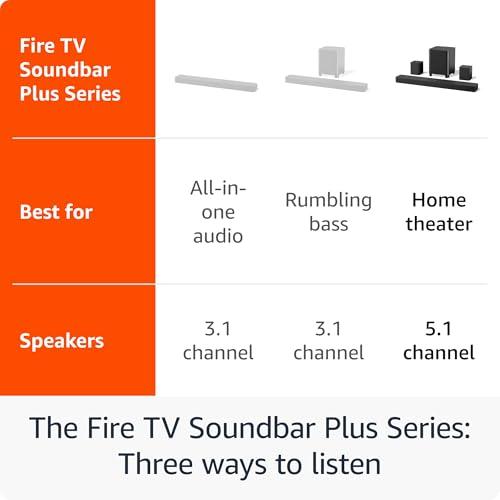
Before diving into these specific models, it helps to understand what you're actually buying. Soundbars use multiple drivers (individual speakers) inside a single housing to create a wider soundstage than your TV can manage. The "channel" count tells you how many discrete audio signals the system can handle—3.1 means left, right, center, plus a subwoofer (.1), while 5.1 adds rear left and right channels.
The key considerations when shopping for soundbars include dialogue clarity (how well you can understand speech), bass response (the low-frequency rumble that makes explosions feel real), spatial audio (how convincingly sounds seem to come from different directions), and connectivity options (how easily it works with your TV and other devices).
Most importantly, there's the question of real versus virtual surround sound. Physical surround systems place actual speakers around your room, while virtual processing uses psychoacoustic tricks—basically fooling your brain—to make sounds seem like they're coming from directions where no speakers exist.
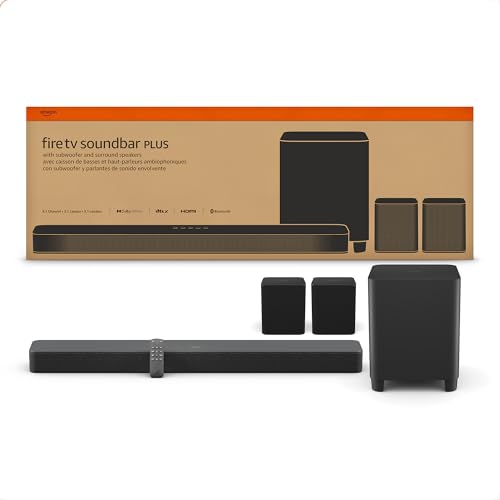
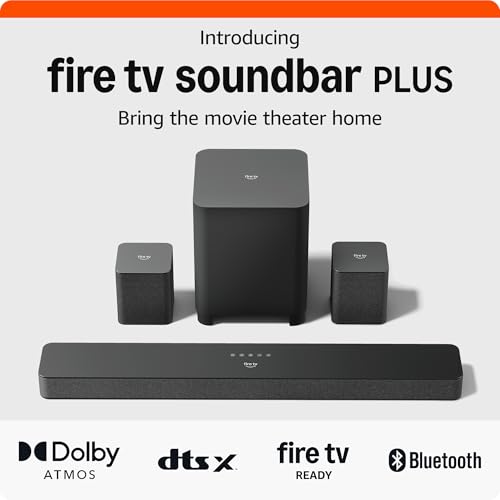
Released in 2023, the Amazon Fire TV Soundbar Plus takes the "more is better" approach. You get a main soundbar, a wireless subwoofer, and two satellite speakers that you place behind your seating area. This creates genuine 5.1-channel surround sound—when a helicopter flies overhead in a movie, you'll hear it move from the front soundbar to the rear speakers.
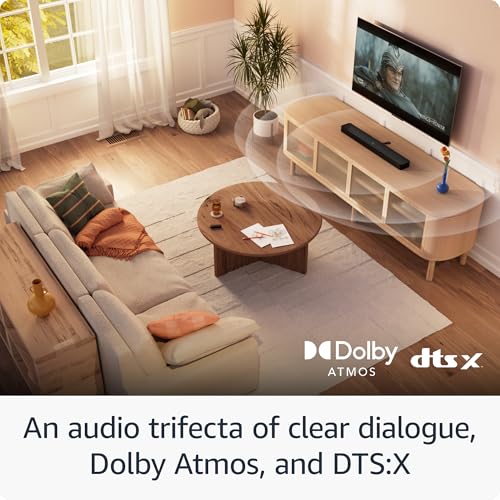
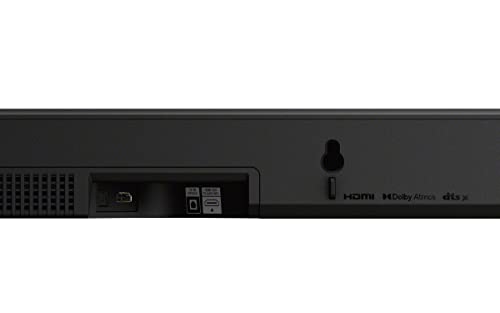
The system supports modern audio formats including Dolby Atmos and DTS:X, though it handles height effects through virtualization since there are no upward-firing drivers (speakers that bounce sound off your ceiling). Think of these formats as sophisticated instructions that tell each speaker exactly what to play and when, creating a more immersive experience than basic stereo.
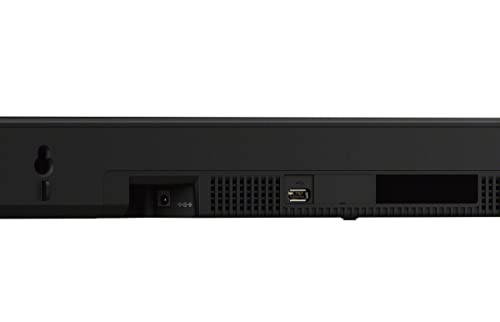
Connection-wise, the Amazon system offers HDMI ARC (Audio Return Channel, which sends audio from your TV back to the soundbar), optical digital input, USB for playing music files, and Bluetooth for streaming from your phone. The integration with Fire TV devices is genuinely useful—if you own a Fire TV, the soundbar appears in your TV's audio settings menu, making control seamless.
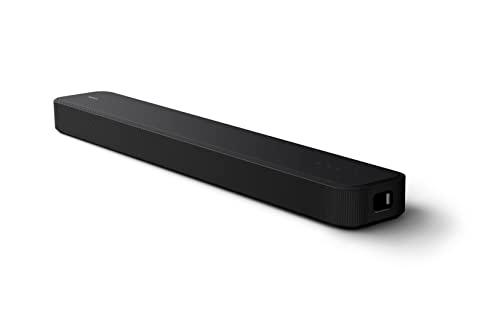
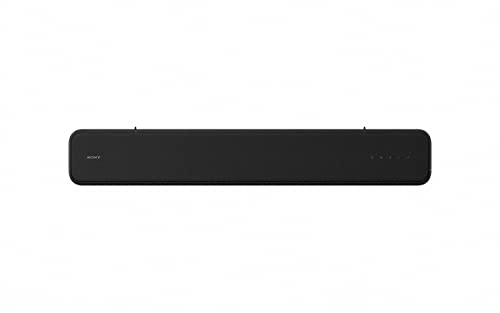
The Sony HT-S2000, also from around 2023, represents the opposite philosophy. Instead of multiple speakers scattered around your room, Sony packed everything into one sleek unit that sits under your TV. It uses what Sony calls their Vertical Surround Engine and S-Force Pro Front Surround—fancy names for sophisticated audio processing that creates the illusion of surround sound.
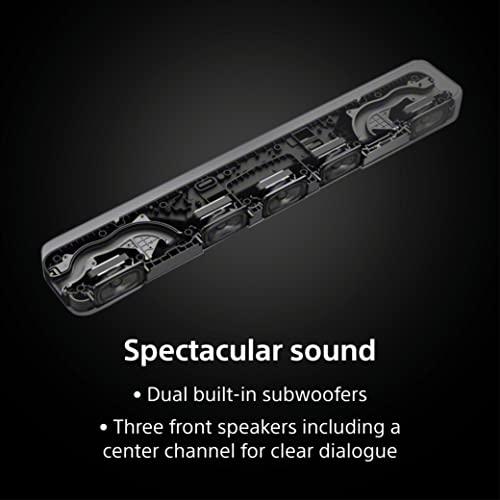
This soundbar features Sony's X-Balanced Speaker Units, which are rectangular rather than round. This unusual shape allows for larger surface area in the same space, theoretically producing more sound with less distortion. The built-in dual subwoofers handle bass duties, while a dedicated center channel ensures dialogue stays crisp and clear.
The Sony supports HDMI eARC (Enhanced Audio Return Channel), which is superior to regular ARC because it can handle higher bandwidth audio formats without compression. It also includes Bluetooth 5.2 with advanced codecs like AAC for better wireless audio quality from your devices.
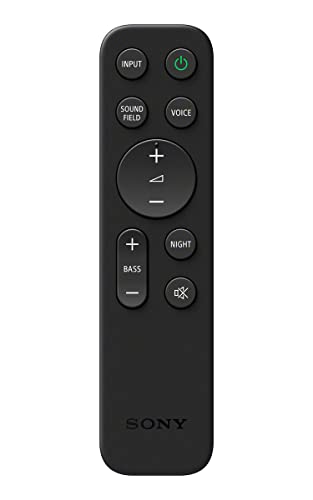
Nothing ruins a movie like constantly reaching for the remote to turn up dialogue, only to get blasted by the next action sequence. Both systems include dedicated center channels specifically for speech, but their execution differs dramatically.
Based on our research across professional reviews and user feedback, the Sony HT-S2000 delivers significantly clearer dialogue. Its balanced frequency response means voices sound natural and present, while its Voice Mode can emphasize speech even further when needed. The system's overall tonal balance ensures that dialogue doesn't compete with muddy bass or harsh treble.
The Amazon Fire TV Soundbar Plus, unfortunately, struggles with fundamental audio quality. Multiple professional reviews describe the sound as having "shrill treble" and "thin bass," which directly impacts dialogue clarity. When the entire frequency spectrum is imbalanced, even a dedicated center channel can't fully compensate.
Bass isn't just about explosions—it adds weight and fullness to music, makes footsteps sound realistic, and provides the foundation that makes audio feel complete. Here's where the comparison gets interesting.
You might assume that the Amazon system's dedicated wireless subwoofer would dominate, but reviews consistently favor the Sony's built-in dual subwoofers. The Sony delivers what reviewers describe as "controlled, musical bass" that integrates seamlessly with the other frequencies. Its side-firing ports extend the low-end response while maintaining clarity.
The Amazon system's external subwoofer, by contrast, produces what multiple reviews characterize as "flappy" bass—loose, poorly controlled low frequencies that can overpower dialogue and lack definition. This is particularly problematic because bass quality affects the entire listening experience, not just action scenes.
This is where the philosophical differences between these systems become most apparent. The Amazon Fire TV Soundbar Plus provides genuine surround sound through its physical rear speakers. When properly positioned, you'll hear effects move convincingly around the room. Aircraft flyovers, cars passing by, and ambient environmental sounds have real directionality that virtual processing can't fully replicate.
However, the Sony HT-S2000 proves that virtual processing has come a long way. Sony's Vertical Surround Engine creates surprisingly convincing height effects, while the S-Force Pro Front Surround widens the soundstage beyond the physical boundaries of the soundbar. The system excels at creating an immersive bubble of sound, particularly in small to medium-sized rooms where wall reflections enhance the effect.
The trade-off comes down to authenticity versus refinement. The Amazon system provides more authentic surround placement, but reviews note "gaps in the stereo soundstage" that make panning effects sound unnatural as they transition between speakers. The Sony creates a more cohesive, refined soundstage, even if it's not technically "true" surround sound.
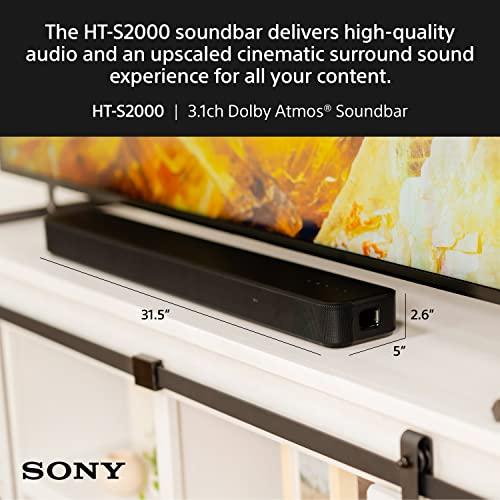
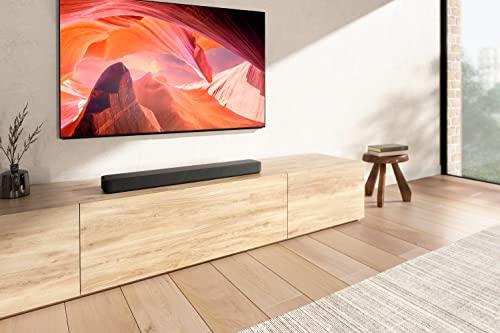
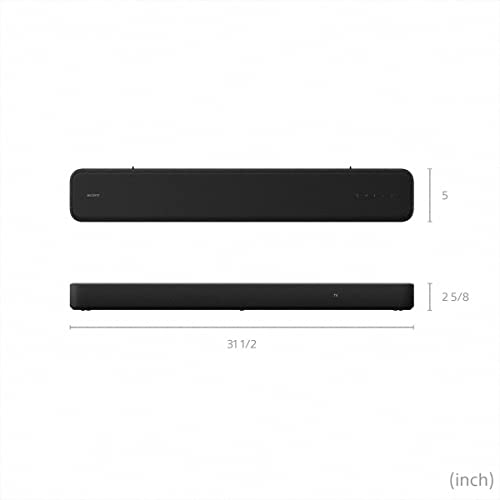
Setting up the Sony HT-S2000 couldn't be simpler—connect one HDMI cable to your TV, plug it in, and you're done. The compact design (about 31 inches wide) fits under most TVs without blocking the screen or IR sensors. The included Sony Home Entertainment Connect app provides additional control options, but it's entirely optional.
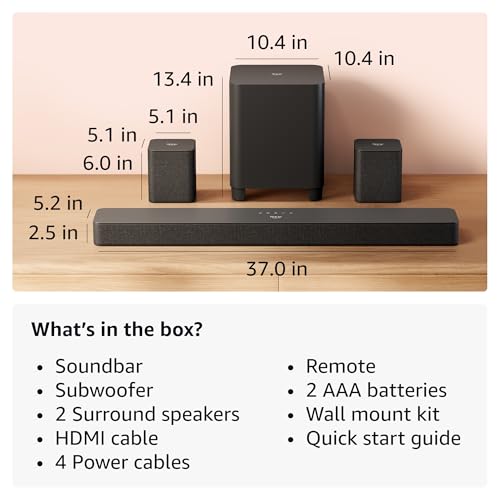
The Amazon Fire TV Soundbar Plus requires more consideration. You'll need to position the wireless subwoofer (which still needs power) somewhere in your room, and find appropriate locations for the rear satellites. While the components are pre-paired out of the box, you'll still need to experiment with placement to achieve the best sound. The main soundbar is quite large and may present placement challenges with some TV stands.
Both systems handle modern connectivity well, but with different strengths. The Sony HT-S2000 includes HDMI eARC, which supports higher bandwidth audio formats like Dolby TrueHD and DTS-HD Master Audio without compression. This matters if you watch a lot of Blu-rays or stream high-quality content from platforms that support these formats.
The Amazon system offers standard HDMI ARC, which handles most common formats but with some compression. However, its Fire TV integration is genuinely useful if you're in Amazon's ecosystem. The soundbar appears in your Fire TV's settings menu, allowing you to adjust audio settings without juggling multiple remotes.
Both systems support Bluetooth for wireless music streaming, though neither offers Wi-Fi-based streaming services like Spotify Connect or Apple AirPlay, which is becoming more common in this price range.
At the time of writing, the Sony HT-S2000 costs significantly less than the Amazon Fire TV Soundbar Plus while delivering superior audio quality across virtually every metric. This represents exceptional value, especially considering that Sony includes high-quality cables and mounting hardware.
The Amazon system theoretically offers more value through its inclusion of multiple speakers, but this advantage is largely negated by the poor fundamental audio quality. Professional reviews consistently note that the system's sound quality issues make it difficult to recommend regardless of price.
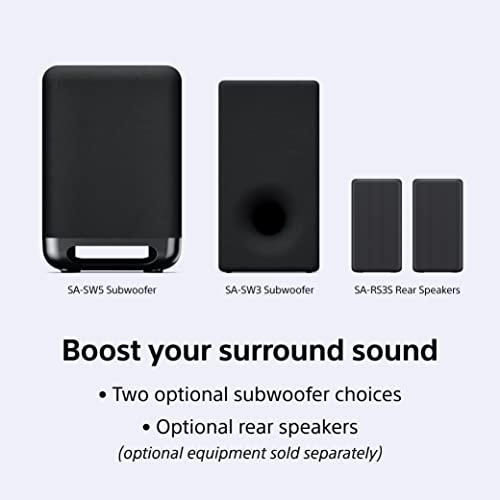
For future expansion, the Sony can be enhanced with optional wireless subwoofers (SA-SW3 or SA-SW5) and rear speakers (SA-RS3S), though these are separate purchases. The Amazon system arrives complete but offers no upgrade path.
You prioritize sound quality above all else. The Sony delivers dramatically better audio performance with cleaner dialogue, controlled bass, and balanced tonality. If you care about how your music and movies actually sound, this is the clear choice.
You want simplicity without sacrificing features. The single-unit design eliminates speaker placement concerns while still providing Dolby Atmos support, multiple connection options, and room for future expansion.
You live in an apartment or smaller space. The compact design and Night Mode make it ideal for space-constrained setups, while the virtual processing works particularly well in rooms under 200 square feet where wall reflections enhance the surround effect.
You watch a lot of dialogue-heavy content. TV shows, news, documentaries, and character-driven films benefit enormously from the Sony's superior dialogue clarity and overall tonal balance.
You absolutely must have physical rear speakers. Despite the sound quality issues, the system does provide genuine surround sound placement that virtual processing can't fully replicate. This matters most in larger rooms where the physical separation between speakers creates a more expansive soundstage.
You have a very large room. Spaces over 300 square feet benefit from the discrete speaker placement, though you'll still be dealing with the fundamental audio quality limitations.
You're heavily invested in the Fire TV ecosystem. The deep integration with Fire TV devices provides convenience that partially offsets the sound quality concerns, assuming you already own compatible Fire TV hardware.
Based on our research across professional reviews and user feedback, the Sony HT-S2000 represents significantly better value despite its lower channel count. The superior sound quality, refined features, and competitive pricing make it the clear choice for most users.
The Amazon Fire TV Soundbar Plus suffers from fundamental audio quality issues that make it difficult to recommend despite its true 5.1 configuration. While the concept of including all surround components at this price point is appealing, the execution falls short of acceptable standards.
For home theater use specifically, dialogue clarity and overall tonal balance matter more than speaker count. The Sony excels in these crucial areas while still providing convincing spatial effects through sophisticated virtual processing. Unless you have a very large room and can overlook significant sound quality compromises, the Sony HT-S2000 offers a more satisfying long-term listening experience.
Remember that soundbar technology continues evolving rapidly. Both systems represent 2023-era approaches to home audio, and we're already seeing improvements in virtual processing, wireless connectivity, and integration with streaming services. Whatever you choose, make sure it fits your current needs while offering enough flexibility to grow with changing technology and viewing habits.
| Amazon Fire TV Soundbar Plus 5.1 Channel System | Sony HT-S2000 3.1ch Dolby Atmos Soundbar |
|---|---|
| Channel Configuration - Determines surround sound authenticity and speaker placement flexibility | |
| True 5.1 with physical rear satellites and external subwoofer | 3.1 with built-in dual subwoofers and virtual surround processing |
| Audio Quality - Most critical factor for overall listening experience | |
| Poor tonal balance with shrill treble and thin bass per reviews | Excellent clarity with balanced sound signature and clean dialogue |
| Total Power Output - Affects maximum volume and dynamic range | |
| Not specified (likely under 200W based on performance) | 250W with S-Master digital amplification |
| HDMI Support - Determines audio format compatibility and TV integration | |
| HDMI ARC (standard bandwidth, some compression) | HDMI eARC (high bandwidth, supports lossless formats) |
| Dolby Atmos Implementation - Creates height effects for immersive audio | |
| Virtualized (no up-firing drivers, basic processing) | Virtualized with advanced Vertical Surround Engine technology |
| Setup Complexity - Time and effort required for optimal performance | |
| Multiple wireless components requiring strategic placement | Single unit plug-and-play with optional app control |
| Room Size Compatibility - Where each system performs best | |
| Better for large rooms (300+ sq ft) due to discrete speakers | Ideal for small to medium rooms (under 200 sq ft) |
| Expandability - Future upgrade options | |
| Complete system out of box, no expansion path | Optional wireless subwoofer and rear speakers available |
| Dialogue Enhancement - Critical for TV shows and movies | |
| Dedicated center channel but hampered by poor overall sound | Excellent center channel with Voice Mode and balanced tonality |
| Bass Performance - Adds impact and fullness to audio | |
| External subwoofer but "flappy" and poorly controlled | Built-in dual subs with controlled, musical bass response |
| Fire TV Integration - Convenience for Amazon ecosystem users | |
| Deep integration with on-screen controls and unified remote | Standard HDMI-CEC compatibility only |
| High-Resolution Audio Support - Important for audiophile content | |
| Dolby TrueHD and DTS-HD support via ARC limitations | Full lossless format support up to 192kHz/24-bit via eARC |
The Sony HT-S2000 delivers significantly better sound quality with balanced tonality, clear dialogue, and controlled bass. Professional reviews consistently praise its audio performance, while the Amazon Fire TV Soundbar Plus suffers from shrill treble and thin bass that makes it difficult to recommend despite having more speakers.
For most users, the Sony HT-S2000's virtual surround processing is excellent and more convenient than physical speakers. However, if you have a very large room (300+ square feet) and prioritize authentic surround placement over sound quality, the Amazon Fire TV Soundbar Plus provides genuine 5.1-channel separation with rear satellites.
The Sony HT-S2000 offers true plug-and-play setup with just one HDMI cable connection to your TV. The Amazon Fire TV Soundbar Plus requires positioning multiple wireless components around your room, including rear speakers and a subwoofer that still needs power outlets.
The Sony HT-S2000 excels at dialogue with its balanced frequency response and dedicated Voice Mode. The Amazon Fire TV Soundbar Plus has a center channel but its poor overall tonal balance actually hurts speech intelligibility, making conversations harder to follow.
The Amazon Fire TV Soundbar Plus offers true 5.1 channels with physical left, right, center, rear left, rear right speakers plus subwoofer. The Sony HT-S2000 has 3.1 channels (left, right, center, plus built-in subwoofer) but uses advanced processing to simulate surround effects without rear speakers.
Surprisingly, the Sony HT-S2000 delivers superior bass despite having built-in subwoofers rather than a separate unit. Reviews describe its bass as controlled and musical, while the Amazon Fire TV Soundbar Plus's external subwoofer produces loose, poorly defined bass that can overpower dialogue.
Yes, both the Sony HT-S2000 and Amazon Fire TV Soundbar Plus support Dolby Atmos, but neither has upward-firing speakers. Both systems create height effects through virtualization, though the Sony uses more sophisticated processing with its Vertical Surround Engine technology.
The Sony HT-S2000 is ideal for small to medium rooms under 200 square feet. Its compact single-unit design fits easily under TVs, and virtual surround processing works particularly well in smaller spaces where wall reflections enhance the spatial effects.
The Sony HT-S2000 can be expanded with optional wireless subwoofers and rear speakers, though these are separate purchases. The Amazon Fire TV Soundbar Plus comes complete with all components but offers no upgrade path for future expansion.
The Sony HT-S2000 includes superior HDMI eARC support for high-bandwidth lossless audio formats, while the Amazon Fire TV Soundbar Plus uses standard HDMI ARC with some compression. However, the Amazon system offers deeper Fire TV integration with on-screen controls.
The Sony HT-S2000 provides exceptional value with superior sound quality at a lower price point. The Amazon Fire TV Soundbar Plus includes more physical speakers but the poor audio quality makes it difficult to justify the higher cost for most buyers.
For home theater, choose the Sony HT-S2000 unless you have a very large room and absolutely need physical rear speakers. Its superior dialogue clarity, balanced sound, and immersive virtual processing make movies and TV shows more enjoyable than the Amazon Fire TV Soundbar Plus's compromised audio quality.
We've done our best to create useful and informative comparisons to help you decide what product to buy. Our research uses advanced automated methods to create this comparison and perfection is not possible - please contact us for corrections or questions. These are the sites we've researched in the creation of this article: rtings.com - cordbusters.co.uk - techradar.com - developer.amazon.com - t3.com - hometechnologyreview.com - youtube.com - hometechnologyreview.com - whathifi.com - hometechnologyreview.com - hometechnologyreview.com - youm.design - hometechnologyreview.com - dolby.com - techradar.com - valueelectronics.com - youtube.com - videoandaudiocenter.com - whathifi.com - hometheaterhifi.com - youtube.com - sony.com - rtings.com - whathifi.com - rtings.com - helpguide.sony.net - electronics.sony.com - sony.com - dolby.com - sony.com - youtube.com - youtube.com

Privacy Policy
Terms and Conditions - Affiliate Policy
Home Security
© Copyright 2008-2026.
11816 Inwood Rd #1211, Dallas, TX 75244