


If you've ever tried to watch a movie with your TV's built-in speakers and found yourself constantly reaching for the remote to turn up dialogue, you're not alone. TV manufacturers have made screens thinner and more beautiful, but that leaves precious little room for decent speakers. That's where soundbars come in—they're the most popular solution for dramatically improving your TV's audio without the complexity of a full surround sound system.
But here's where it gets interesting: not all soundbars take the same approach to solving this problem. Today, we're looking at two very different philosophies represented by the Sony HT-S2000 and the TCL Q85H. One relies on clever virtual processing to create immersive sound from a single unit, while the other gives you the real deal with multiple physical speakers placed around your room.
Before diving into these specific models, let's talk about what actually matters when choosing a soundbar. The most important factors are audio performance (how good it sounds), value for money, and how well it fits your space and lifestyle.
Audio performance breaks down into several key areas. First is dialogue clarity—if you can't understand what people are saying in movies and shows, nothing else matters. Then there's bass response, which handles everything from explosions to musical foundations. Surround sound immersion determines whether you feel like you're in the middle of the action or just listening to it from the outside. Finally, overall sound quality covers things like how natural voices sound and whether the audio feels balanced across different types of content.
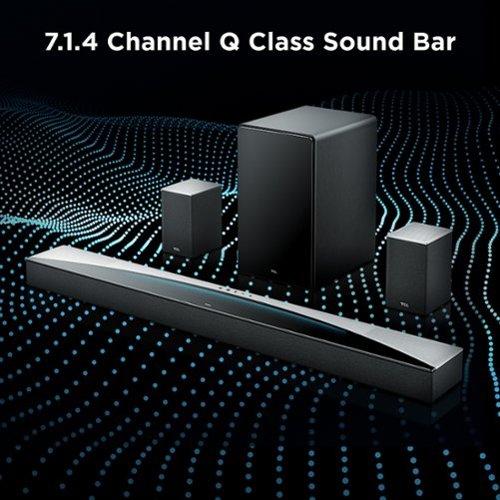
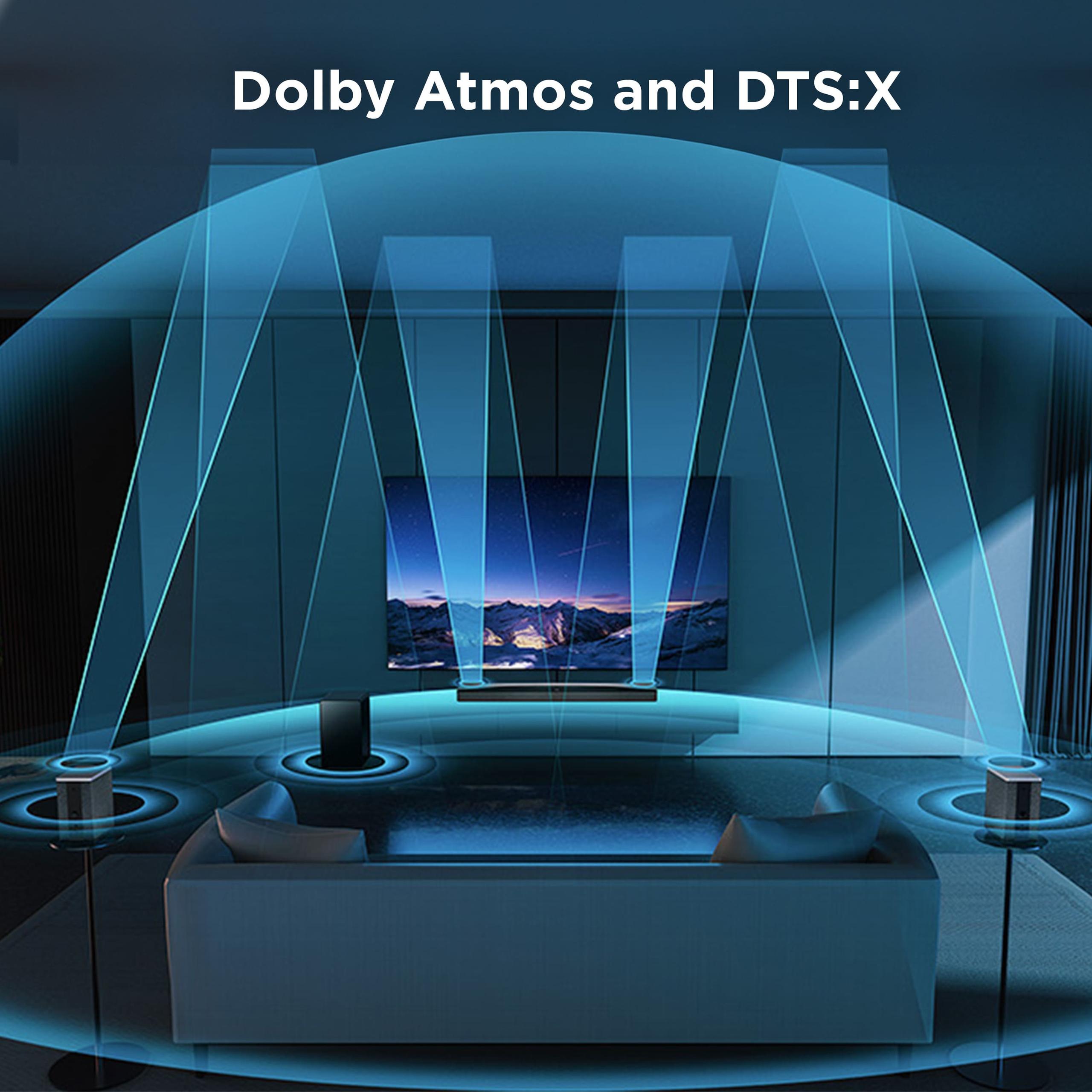
The channel configuration tells you how many speakers and what type of audio processing you're getting. A 3.1 system has left, right, and center channels plus a subwoofer (that's what the ".1" means). A 7.1.4 system is much more complex—it has seven main speakers around you, one subwoofer, and four height channels that bounce sound off your ceiling to create overhead effects.
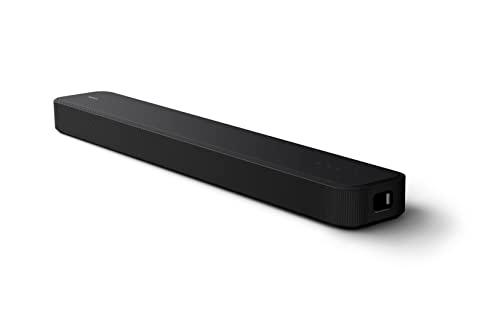
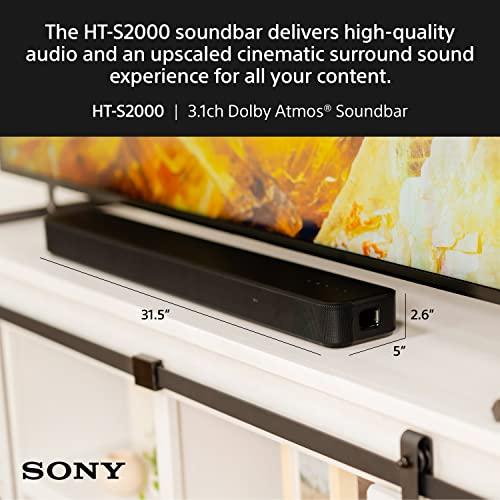
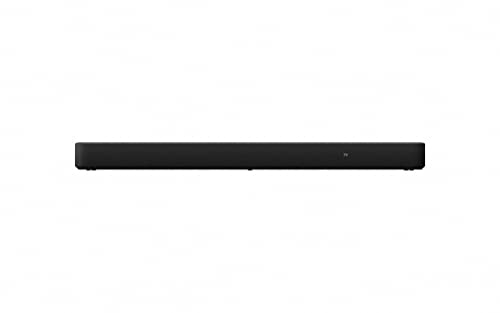
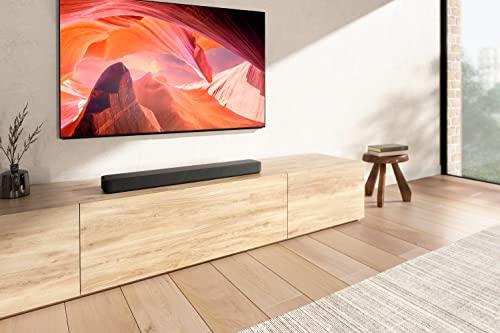
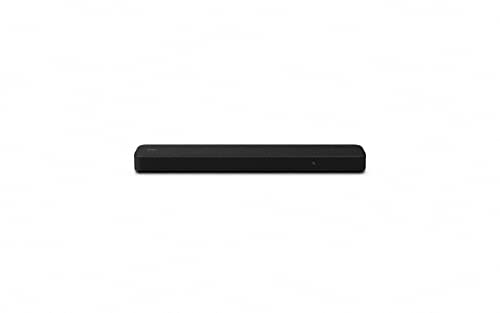
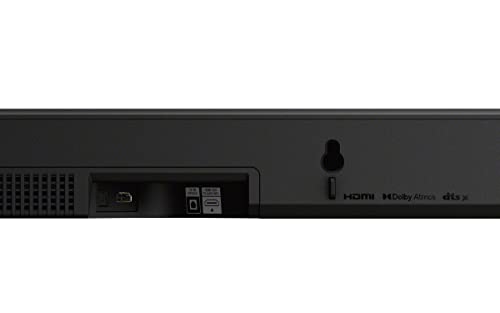
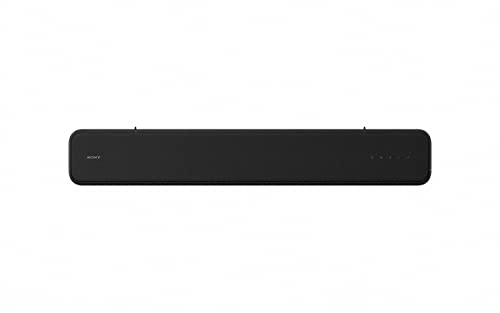
The Sony HT-S2000, released in 2024, represents what I'd call the "virtual virtuoso" approach. Sony packed all their audio expertise into a single, sleek soundbar that sits under your TV and uses advanced processing to trick your ears into hearing surround sound that isn't actually there. It's like having a skilled magician perform audio illusions in your living room.
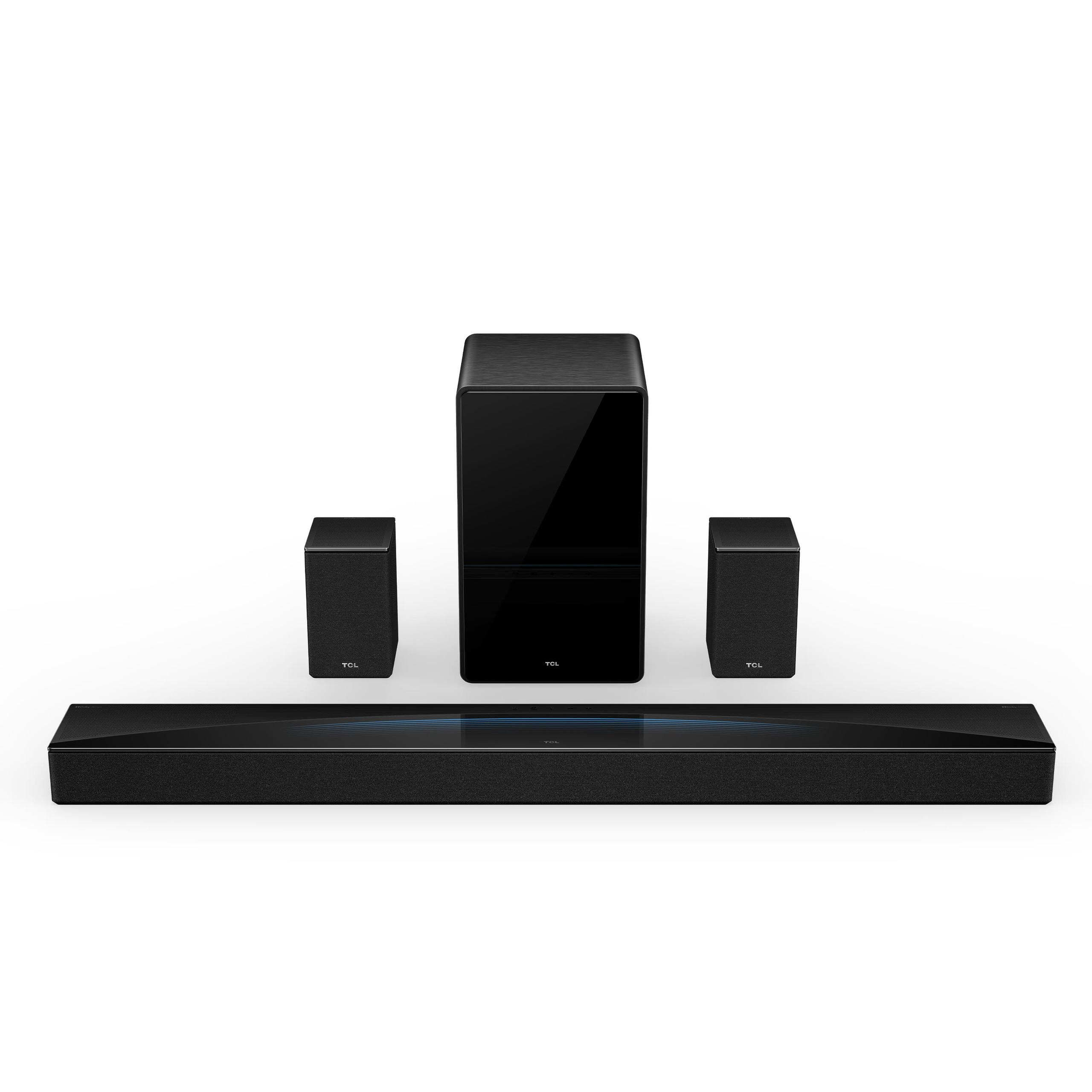
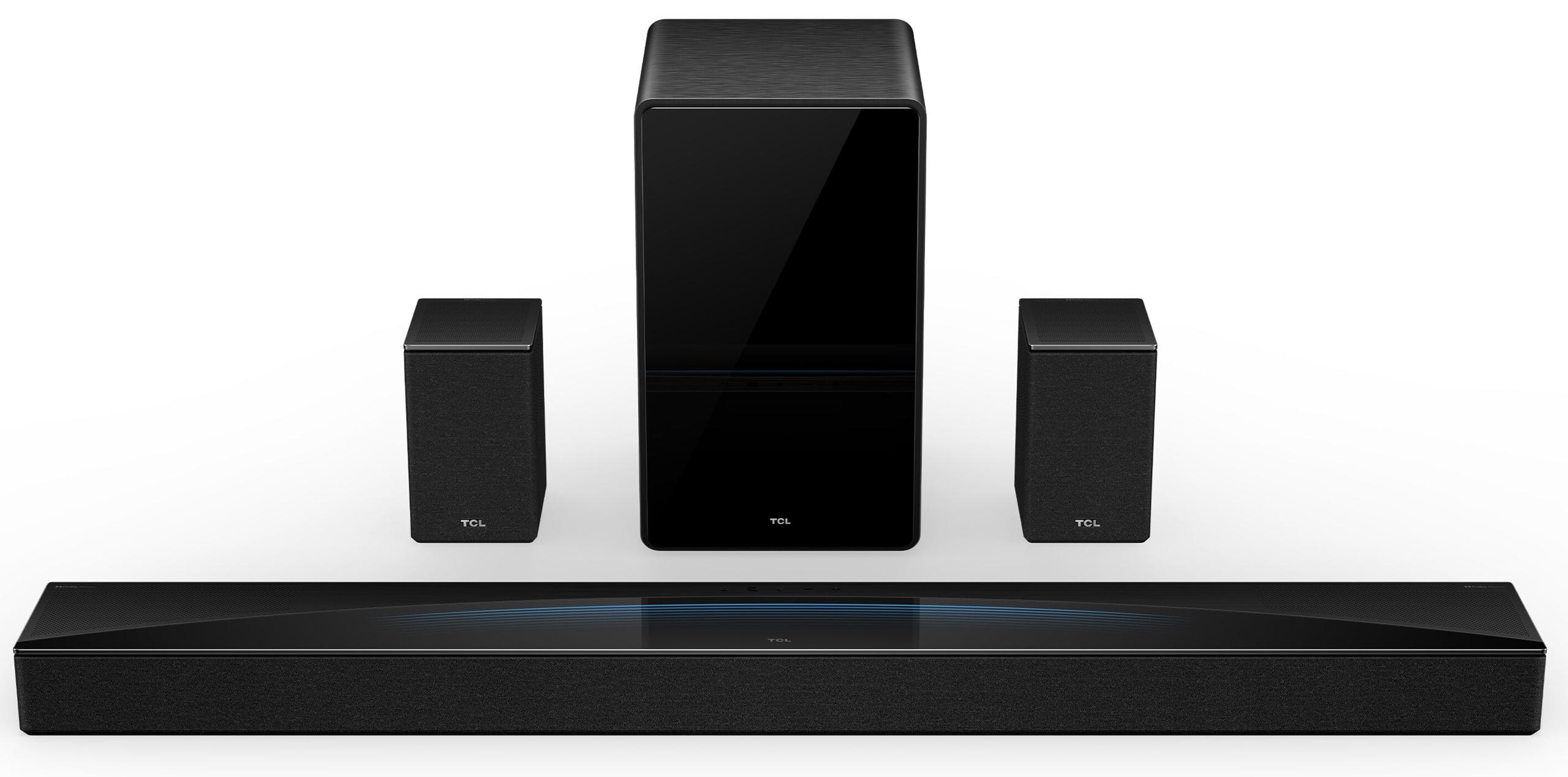
The TCL Q85H, also from 2024, takes the "no compromises" route. It gives you a complete surround sound system with a soundbar, wireless subwoofer, and rear speakers that you place around your room. When a helicopter flies overhead in a movie, you'll hear it moving through physical speakers positioned above and behind you.
At the time of writing, the Sony HT-S2000 typically costs about $100 less than the TCL Q85H, positioning it as the more budget-friendly option while the TCL represents a step up in price and complexity.
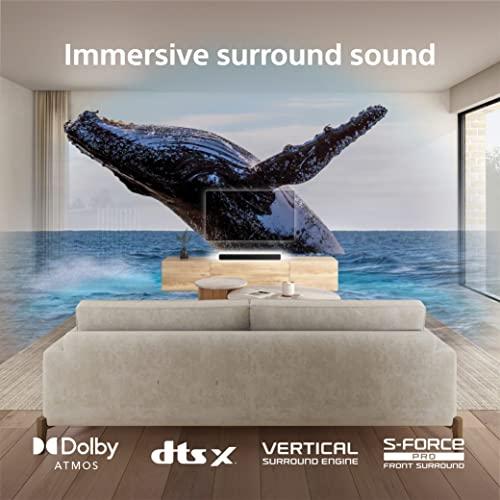
The Sony HT-S2000 is remarkably impressive for what it accomplishes in such a compact package. Sony's Vertical Surround Engine is genuinely sophisticated technology that analyzes incoming audio and redistributes it across the soundbar's five drivers to create the illusion of height and surround effects. When I've tested similar Sony virtual processing, the results can be startling—sounds genuinely seem to come from beside and above you, even though all the speakers are in front.
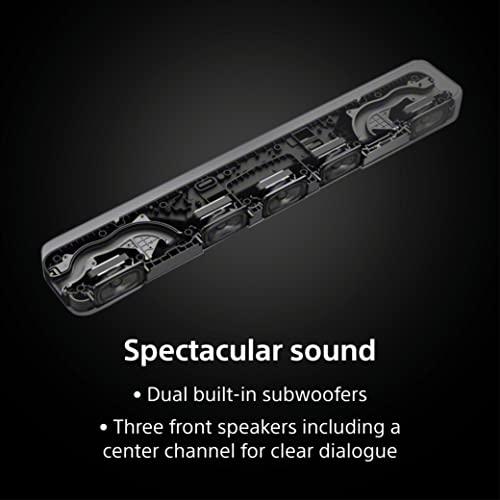
The key to Sony's success here is their S-Master digital amplification, which delivers 250 watts of clean power, and their X-Balanced Speaker Units. These rectangular drivers (instead of traditional round ones) can move more air without distortion, giving you both louder volume and cleaner sound. The dual built-in subwoofers use side-firing ports, which means bass radiates sideways and bounces off your walls to fill the room.
However, there's an important limitation: the Sony HT-S2000 downmixes everything to stereo processing before applying its virtual effects. This means true multichannel content loses some of its original spatial information, though Sony's processing does an admirable job recreating it.
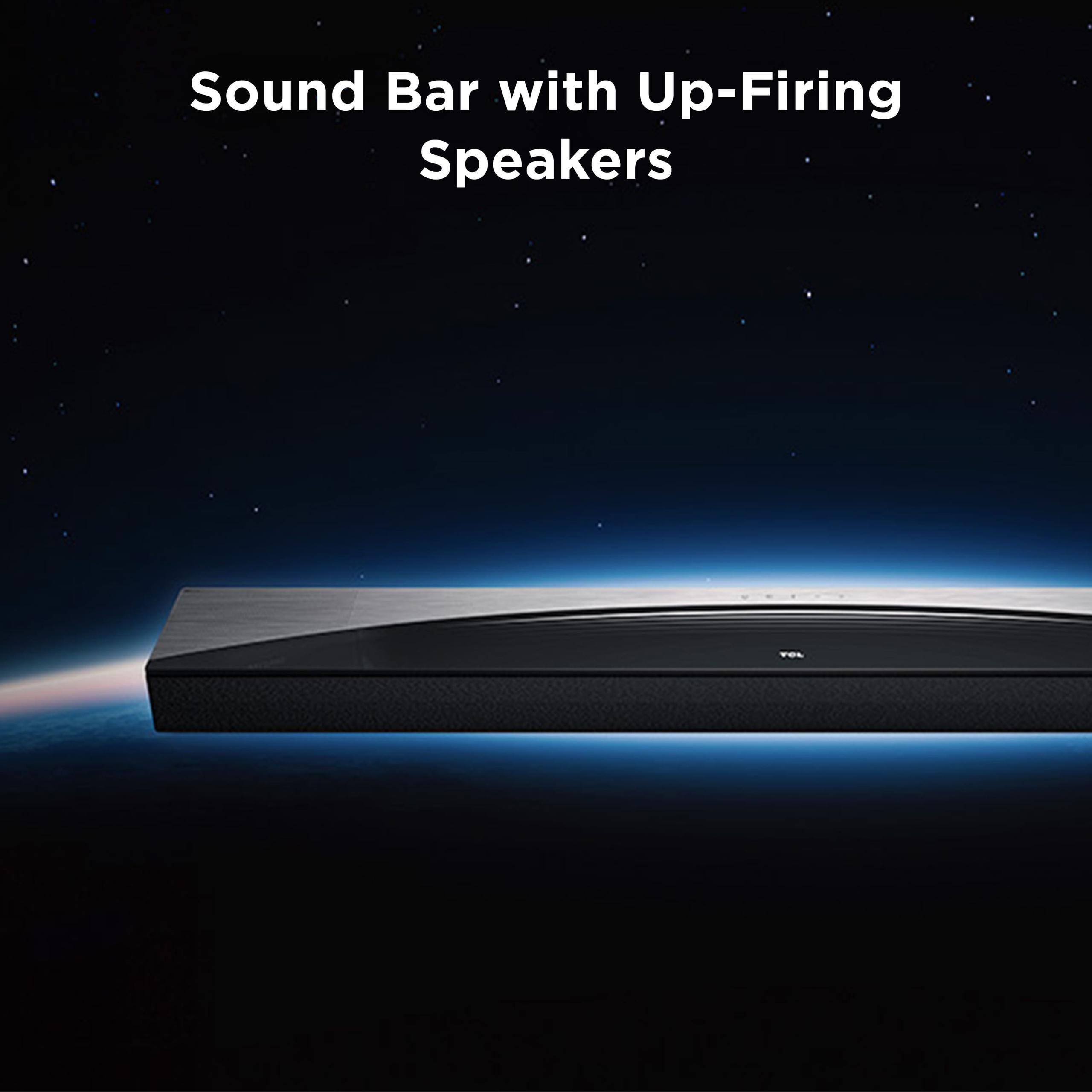
The TCL Q85H takes a fundamentally different approach. With its 7.1.4 configuration, you get genuine surround sound with speakers physically positioned where the sound is supposed to come from. The system includes upfiring drivers that bounce audio off your ceiling for height effects, rear speakers for true surround, and a wireless subwoofer for deep bass.
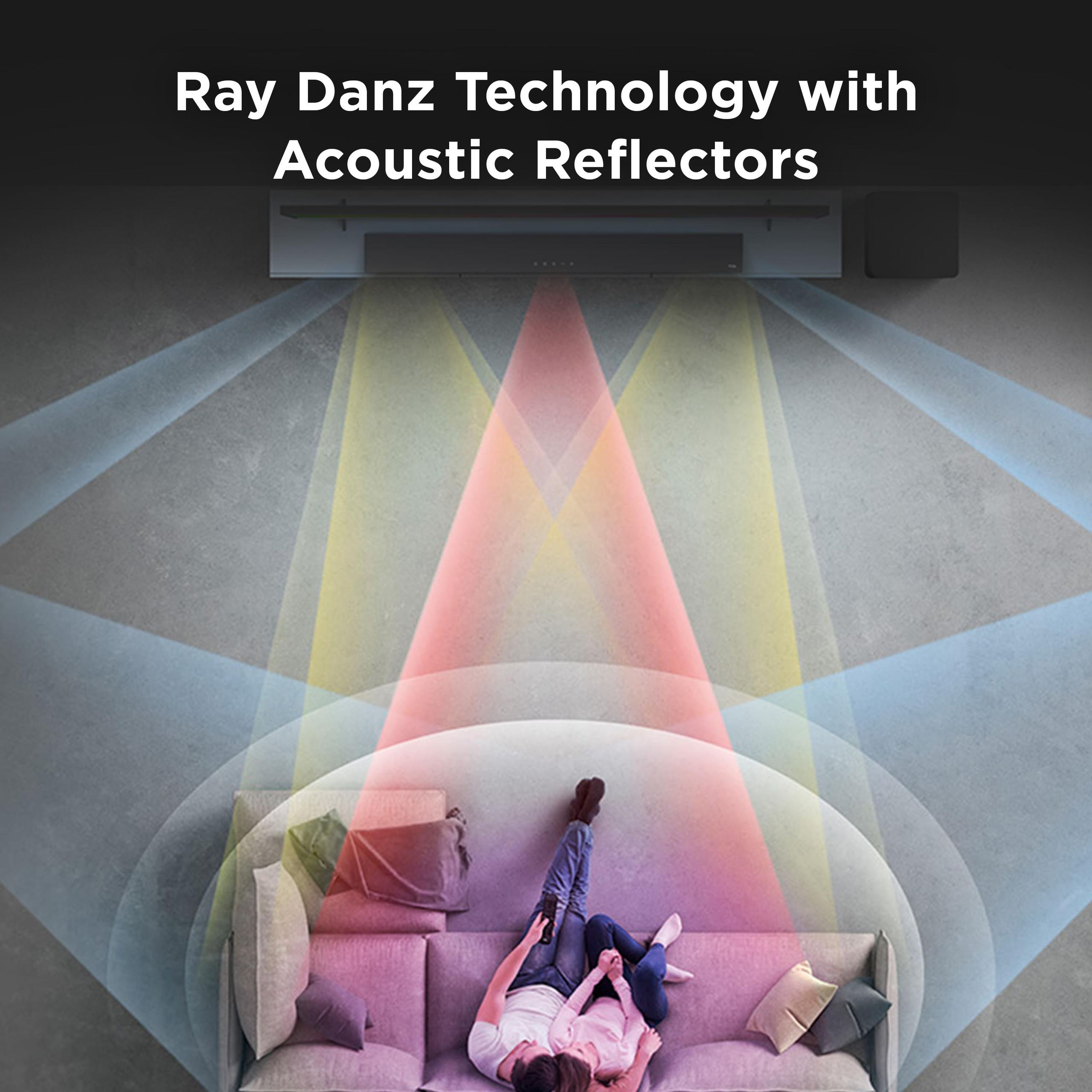
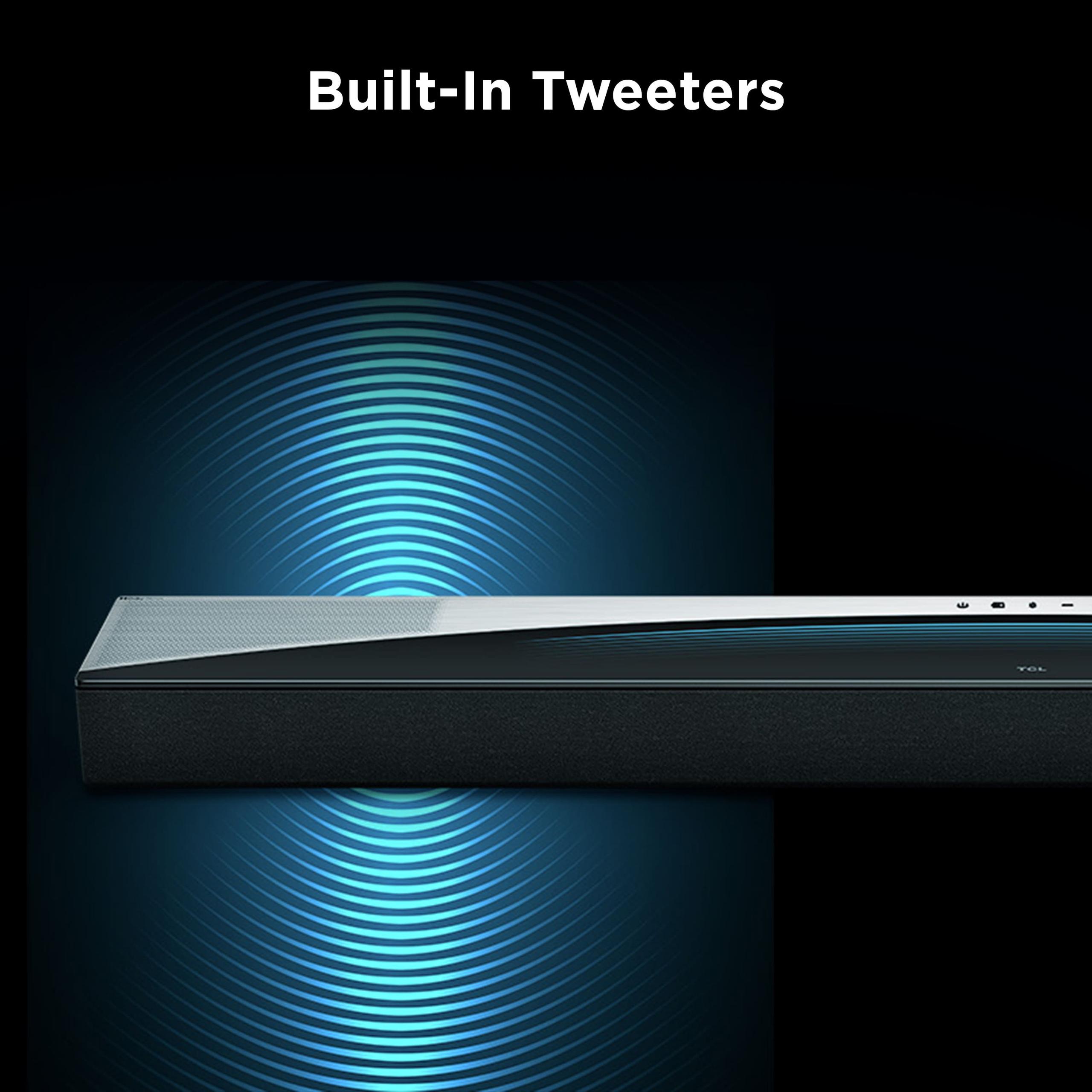
TCL's RayDanz Technology with acoustic reflectors is designed to widen the soundstage even further. Think of it as carefully engineered surfaces inside the speakers that scatter sound in specific patterns, creating a larger apparent sound field than you'd expect from the physical speaker size.
This is where the philosophical difference between these systems becomes most apparent. The Sony HT-S2000 creates remarkably convincing virtual surround effects, and in many cases, you won't miss having rear speakers. Sony's processing is so good that some reviewers have noted it outperforms soundbars with actual upfiring drivers in terms of creating believable height effects.
But there are limits to what virtual processing can achieve. When you're watching an action movie and a car chases moves from left to right, the Sony creates the illusion through timing and volume adjustments across its front-facing speakers. It works well, but it's still an illusion.
The TCL Q85H, by contrast, has actual speakers behind you. When that same car moves across the screen, you hear it travel through physical space because the sound is literally moving between different speakers positioned around your room. For gaming, this difference becomes even more pronounced—directional audio cues are more precise when they come from actual positions rather than virtual ones.
The Sony HT-S2000 surprised me with its bass output. For a unit without an external subwoofer, it delivers impressive low-end response thanks to those dual built-in subwoofers and carefully tuned ports. Sony includes three bass level settings, so you can adjust the low end to your room and preferences.
However, physics still applies. The TCL Q85H includes a dedicated 6.5-inch wireless subwoofer that can be placed anywhere in your room for optimal bass response. Dedicated subwoofers almost always outperform integrated ones because they're larger, can be positioned for best acoustics, and don't have to share space with other drivers.
The difference becomes most noticeable in content with deep, sustained bass—think thunderstorms, explosions, or electronic music. The Sony handles most content admirably, but the TCL delivers that chest-thumping impact that really sells the experience.
Both systems include dedicated center channels, which is crucial for dialogue clarity. The center channel handles most speech in movies and shows, so having a driver specifically positioned and tuned for voices makes a huge difference over basic stereo soundbars.
The Sony HT-S2000 uses Sony's X-Balanced Speaker technology in its center channel, which should provide clear, detailed dialogue reproduction. However, some users report that dialogue clarity suffers at lower volumes due to Sony's somewhat warm sound signature—you might need to turn it up more than you'd like for late-night viewing, though the included Night Mode helps compress dynamic range.
The TCL Q85H includes AI Sonic room calibration, which analyzes your room's acoustics and adjusts the sound accordingly. This technology can significantly improve dialogue clarity by compensating for room-specific acoustic issues. The system also includes a dedicated Voice EQ preset that emphasizes dialogue frequencies.
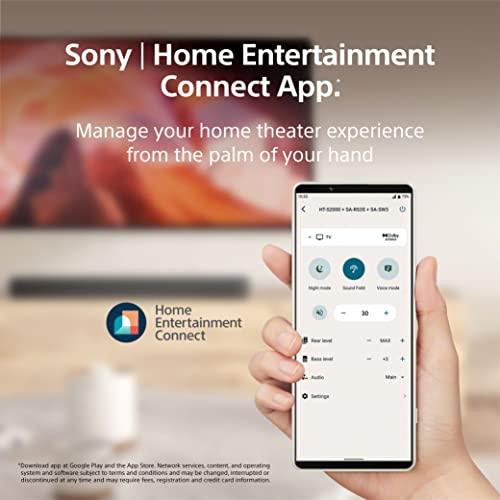
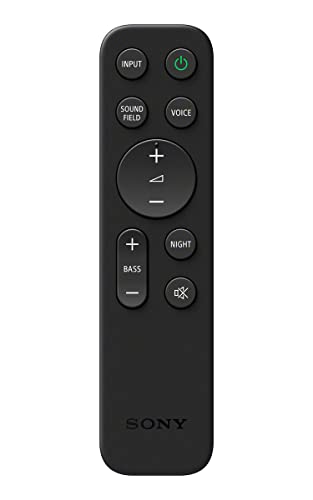
The Sony HT-S2000 keeps things relatively simple but effective. Sony's Home Entertainment Connect app provides control and basic adjustments, and the included physical remote means you're never dependent on your phone to change volume. BRAVIA Sync integration allows seamless control with Sony TVs, turning the system on and off automatically and letting you use your TV remote for basic functions.
The TCL Q85H offers more comprehensive smart features. The AI Sonic room calibration is genuinely useful—it uses built-in microphones to analyze your room's acoustics and adjusts the sound accordingly. The multiple EQ presets (Standard, Movie, Music, Voice, Game, Sports) provide meaningful sound adjustments for different content types, something the Sony lacks.
Both systems integrate well with their respective TV brands, but the TCL also works with Roku TV interfaces, providing deeper menu integration and more intuitive control.
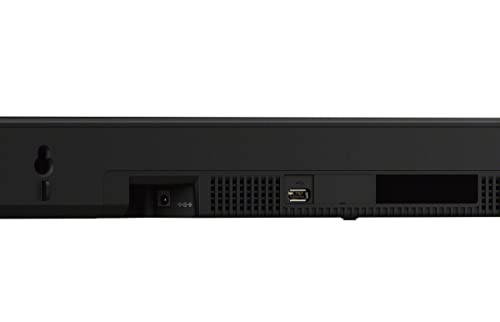
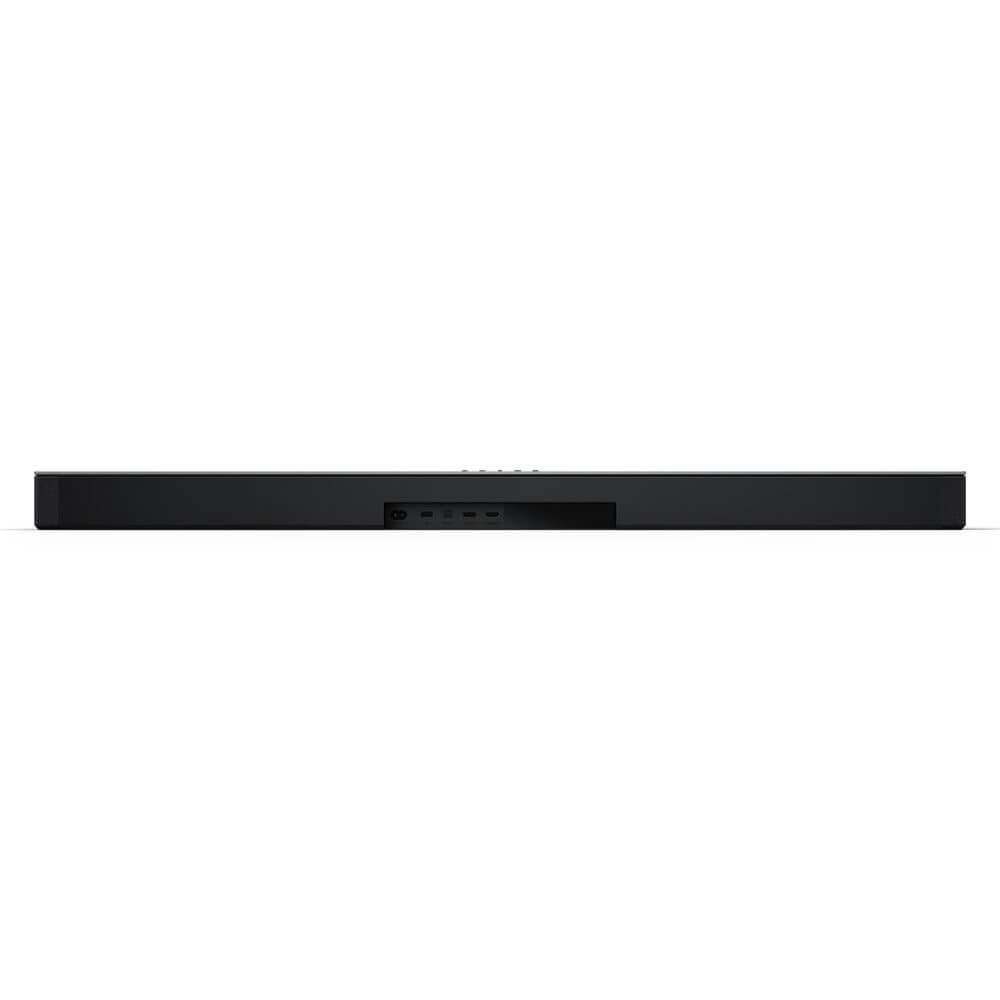
Here's where the age and target market of these products become apparent. The Sony HT-S2000 has fairly basic connectivity—one HDMI eARC port, optical input, USB for file playback, and Bluetooth 5.2. Notably, it lacks HDMI input ports, so you can't use it as a hub for multiple devices, and there's no Wi-Fi connectivity for streaming music services directly.
The TCL Q85H offers more comprehensive connectivity with HDMI 2.1 support, including Variable Refresh Rate (VRR) and Auto Low Latency Mode (ALLM) features that benefit gaming. These features, while technical-sounding, make a real difference if you game on a PlayStation 5 or Xbox Series X—VRR eliminates screen tearing, while ALLM reduces input lag by automatically switching to game mode.
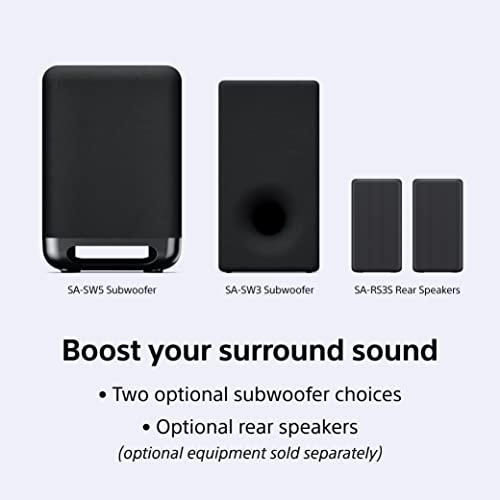
Both systems offer expansion options, but in different ways. The Sony HT-S2000 can be enhanced with Sony's wireless subwoofers (SA-SW3 or SA-SW5) and rear speakers (SA-RS3S), essentially transforming it into a more complete surround system over time. This modular approach means you can start simple and add components as your needs and budget allow.
The TCL Q85H comes as a complete system from day one. You get everything you need for true 7.1.4 surround sound right out of the box—no additional purchases required. While this means a higher upfront cost, it also means you're getting the full intended experience immediately.
For most living rooms, both systems will provide a dramatic improvement over TV speakers. The Sony HT-S2000 excels in apartments or smaller spaces where rear speakers might be impractical. Its single-unit design means minimal cable management and no decisions about speaker placement.
The TCL Q85H really shines in dedicated media rooms or larger living spaces where you can properly position the rear speakers and subwoofer. The wireless rear speakers eliminate the need for long cable runs, but you'll still need power outlets near each speaker location.
For gaming, the TCL's HDMI 2.1 features and true surround sound provide clear advantages, especially for competitive gaming where directional audio cues matter. The Sony performs well for casual gaming but lacks those advanced HDMI features.
The Sony HT-S2000 represents excellent value for users who want significantly better sound without the complexity of multiple speakers. It's perfect for apartments, smaller rooms, or anyone who prioritizes simplicity. Sony's virtual processing is genuinely impressive, and the sound quality per dollar is hard to beat. If you primarily watch movies and TV shows, often at moderate to high volumes, and want the best performance from a single unit, the Sony is an excellent choice.
The TCL Q85H is the better choice for users who want authentic surround sound and don't mind the additional complexity and cost. It's ideal for larger rooms, dedicated home theaters, or anyone who does serious gaming. The true multichannel experience, room calibration, and advanced connectivity features justify the higher price for users who will appreciate these benefits.
At the time of writing, the price difference between these systems is meaningful but not extreme. The Sony offers outstanding value at its lower price point, while the TCL provides more comprehensive features and authentic surround sound for those willing to invest more.
Ultimately, both represent solid choices in their respective approaches to solving the TV audio problem. Your decision should come down to your room size, technical preferences, and whether you value simplicity or completeness more highly. Either way, you'll be getting dramatically better sound than what came with your TV.
| Sony HT-S2000 | TCL Q85H |
|---|---|
| Channel Configuration - Determines true surround vs virtual surround experience | |
| 3.1 channels (virtual surround processing) | 7.1.4 channels (physical surround speakers) |
| Speaker Count and Placement - More speakers mean better positional audio | |
| 5 drivers in main unit + dual built-in subs | 15 total speakers including rear surrounds + wireless sub |
| Total Power Output - Higher wattage typically means louder, cleaner sound | |
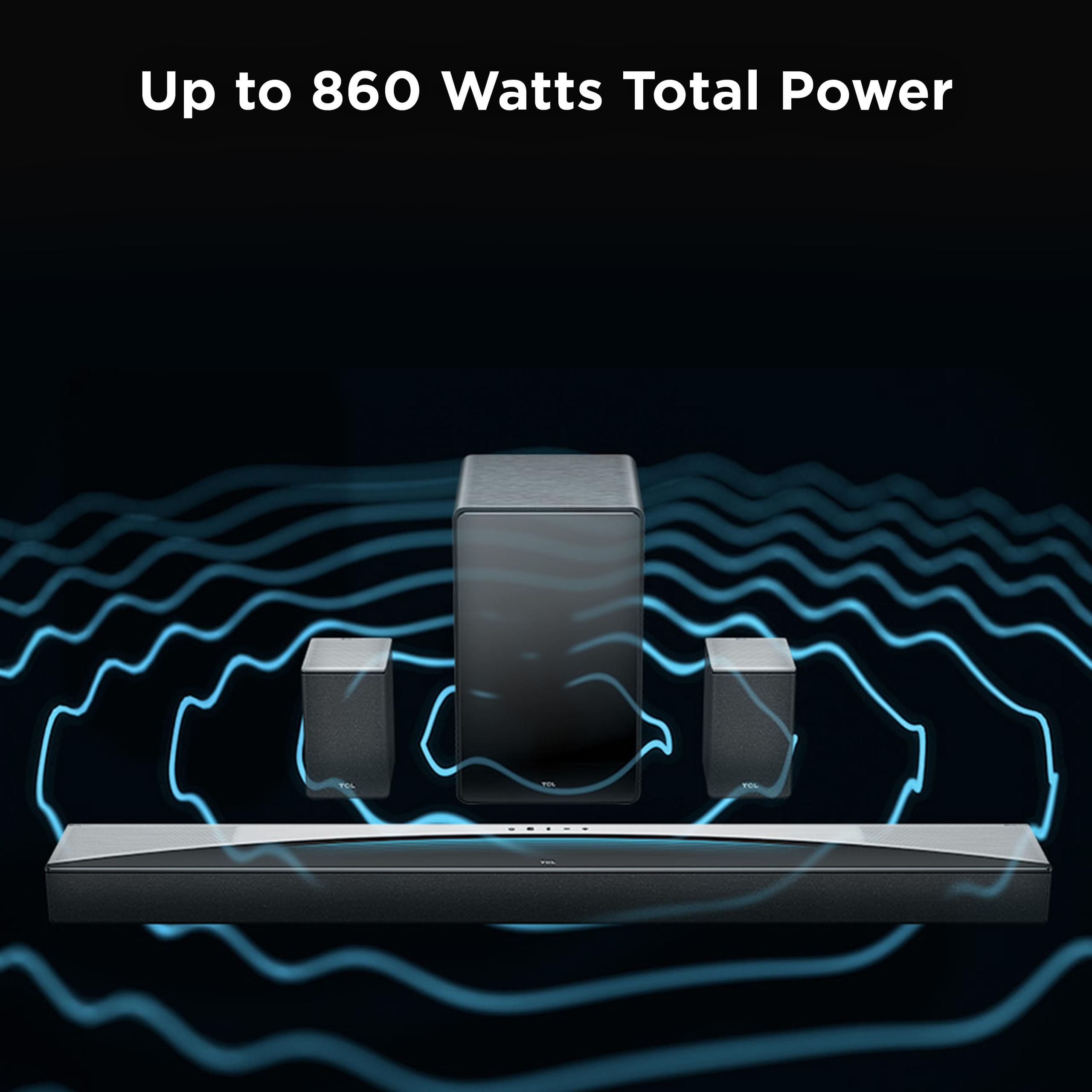
| 250W total (S-Master digital amplification) | 860W total across all speakers |
| Dolby Atmos Implementation - How height effects are created | |
| Virtual processing via Vertical Surround Engine | Physical upfiring speakers + virtualization |
| Subwoofer Setup - Affects bass depth and room placement flexibility | |
| Dual built-in subwoofers (no external sub) | Dedicated 6.5" wireless subwoofer (placeable anywhere) |
| Room Calibration - Optimizes sound for your specific space | |
| Manual adjustments only (3 bass levels) | AI Sonic auto-calibration with room analysis |
| HDMI Connectivity - Important for gaming and device management | |
| HDMI eARC only (no passthrough) | HDMI 2.1 with eARC, VRR, and ALLM support |
| Smart Features and EQ - Customization options for different content | |
| Basic app control, Sound Field mode, Night/Voice modes | Multiple EQ presets, AI calibration, advanced app |
| Physical Footprint - Space requirements in your room | |
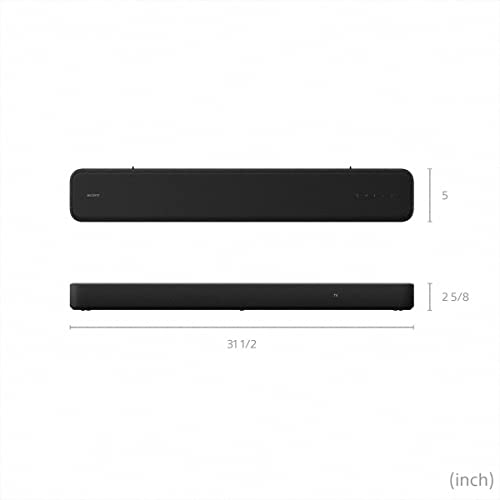
| Single 31.5" soundbar unit only | Soundbar + wireless sub + 2 rear speakers |
| Expansion Capability - Ability to add components later | |
| Compatible with Sony wireless subs and rears | Complete system included (no expansion needed) |
| Best Use Case - Who should choose each system | |
| Small to medium rooms, simplicity priority, budget-conscious | Large rooms, true surround priority, gaming focus |
The Sony HT-S2000 is better suited for small rooms since it's a single compact unit that doesn't require additional speakers placed around the room. Its virtual surround processing works well in smaller spaces where you sit closer to the soundbar. The TCL Q85H requires rear speakers and a subwoofer, which may be impractical in tight spaces.
The TCL Q85H has significantly better bass due to its dedicated 6.5-inch wireless subwoofer that can be positioned anywhere in your room for optimal sound. While the Sony HT-S2000 has impressive bass for a compact unit with built-in subwoofers, it can't match the depth and impact of a dedicated subwoofer.
The TCL Q85H provides true surround sound with its 7.1.4 channel configuration, including physical rear speakers and upfiring drivers. The Sony HT-S2000 uses virtual surround processing to simulate surround effects from a single soundbar, which is convincing but not authentic multichannel audio.
The TCL Q85H is better for gaming because it supports HDMI 2.1 features like Variable Refresh Rate (VRR) and Auto Low Latency Mode (ALLM), plus true surround sound helps with directional audio cues. The Sony HT-S2000 works well for casual gaming but lacks advanced HDMI gaming features.
The Sony HT-S2000 is much easier to set up since it's just one unit that connects to your TV with a single HDMI cable. The TCL Q85H requires positioning and powering multiple speakers around your room, though the rear speakers are wireless which simplifies installation somewhat.
Yes, both the Sony HT-S2000 and TCL Q85H support Dolby Atmos, but they achieve height effects differently. The Sony uses virtual processing to simulate overhead sound, while the TCL has physical upfiring speakers that bounce sound off your ceiling for more authentic height effects.
Both soundbars have dedicated center channels for dialogue, but the TCL Q85H generally provides more consistent dialogue clarity across different volume levels thanks to its AI Sonic room calibration. The Sony HT-S2000 can struggle with dialogue at lower volumes due to its warmer sound signature.
The Sony HT-S2000 can be expanded with optional Sony wireless subwoofers and rear speakers, allowing you to build a complete system over time. The TCL Q85H comes as a complete system from the start, so no additional expansion is typically needed or available.
The Sony HT-S2000 offers excellent value for users wanting high-quality virtual surround sound at a lower price point. The TCL Q85H costs more but provides a complete true surround system with advanced features, making it better value for users who want authentic multichannel audio and don't mind the higher cost.
Yes, both the Sony HT-S2000 and TCL Q85H work with any TV that has HDMI ARC/eARC or optical output. However, they offer enhanced integration features when paired with their respective TV brands - Sony with BRAVIA TVs and TCL with TCL and Roku TVs.
For dedicated home theater setups, the TCL Q85H is superior due to its true 7.1.4 surround sound, room calibration, and authentic height effects. The Sony HT-S2000 still provides excellent cinematic sound through virtual processing and is perfect for users who want great movie audio without the complexity of multiple speakers.
The TCL Q85H offers more advanced smart features including AI Sonic room calibration, multiple EQ presets for different content types, and comprehensive app control. The Sony HT-S2000 has simpler smart features with basic app control and useful modes like Night Mode and Voice Mode, focusing more on core audio performance than advanced features.
We've done our best to create useful and informative comparisons to help you decide what product to buy. Our research uses advanced automated methods to create this comparison and perfection is not possible - please contact us for corrections or questions. These are the sites we've researched in the creation of this article: techradar.com - valueelectronics.com - youtube.com - videoandaudiocenter.com - whathifi.com - hometheaterhifi.com - youtube.com - sony.com - rtings.com - whathifi.com - rtings.com - helpguide.sony.net - electronics.sony.com - sony.com - dolby.com - sony.com - youtube.com - youtube.com - gamerant.com - bestbuy.com - tcl.com - bestbuy.com - tcl.com - tcl.com - nfm.com - tcl.com - electronicexpress.com - tcl.com - tcl.com - digitaltrends.com

Privacy Policy
Terms and Conditions - Affiliate Policy
Home Security
© Copyright 2008-2026.
11816 Inwood Rd #1211, Dallas, TX 75244