



If you've ever sat through a movie night with your TV's built-in speakers delivering dialogue that sounds like it's coming from a tin can, you know exactly why soundbars have become the go-to audio upgrade for most homes. But here's where it gets interesting: not all soundbars take the same approach to fixing your audio problems.
Today's soundbar market offers two fundamentally different philosophies for creating immersive sound. On one side, you have systems like the Ultimea Aura A40 that use multiple physical speakers placed around your room to create genuine surround sound. On the other, premium options like the LG SC9S rely on sophisticated audio processing and upward-firing drivers to simulate spatial effects without cluttering your space with extra speakers.
The soundbar category has exploded over the past decade, driven by TVs getting thinner (and their speakers getting worse) while streaming content has embraced more complex audio formats. When shopping for a soundbar, you're essentially choosing between convenience and authenticity—though the lines have blurred significantly as technology has advanced.
Physical surround systems use multiple speakers strategically placed around your listening area. Think of them as simplified home theater setups that prioritize spatial accuracy over installation complexity. Virtual surround systems achieve similar effects through digital signal processing (DSP)—essentially using mathematical algorithms to manipulate sound waves so they appear to come from directions where no speakers actually exist.
The core trade-off has traditionally been obvious: physical speakers provide more authentic directional audio but require more setup work and space. Virtual systems offer cleaner installations but rely on audio processing that can vary dramatically in effectiveness depending on your room and seating position.
However, modern soundbars have complicated this simple division. Advanced virtual systems now support formats like Dolby Atmos, which adds height information to create truly three-dimensional soundscapes. Meanwhile, budget-friendly physical surround systems have become more accessible and user-friendly than ever before.
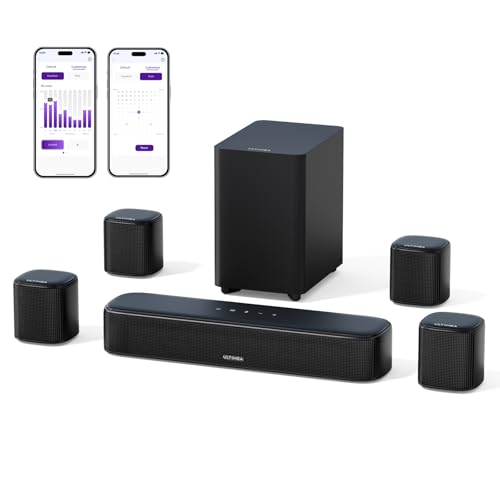
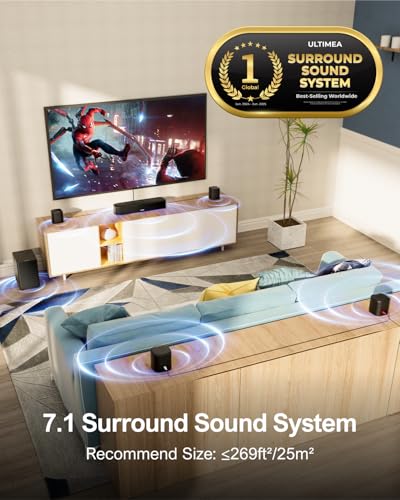
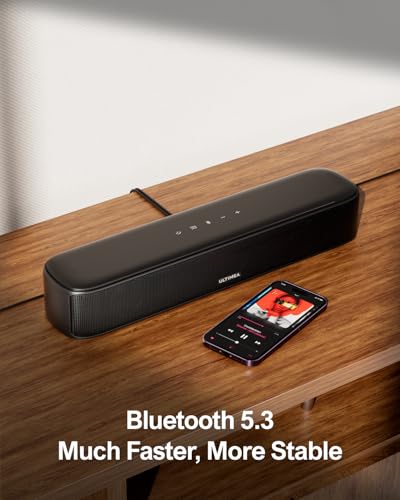
The Ultimea Aura A40, released in 2023, represents the evolution of affordable true surround systems. At roughly $260 at the time of writing, it includes a main soundbar, four separate surround speakers, and a dedicated subwoofer—essentially a complete 7.1 channel home theater system at a fraction of traditional pricing.
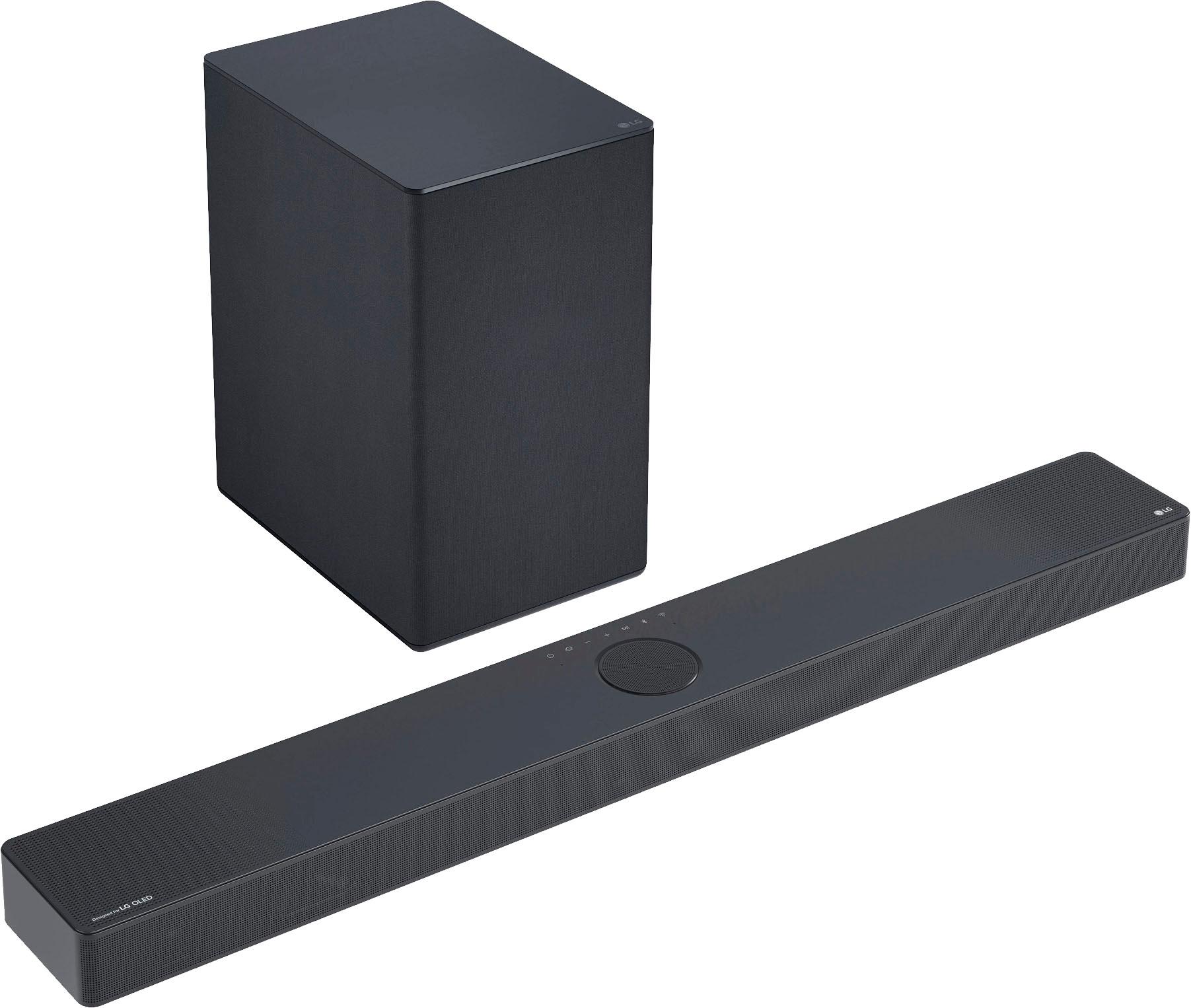
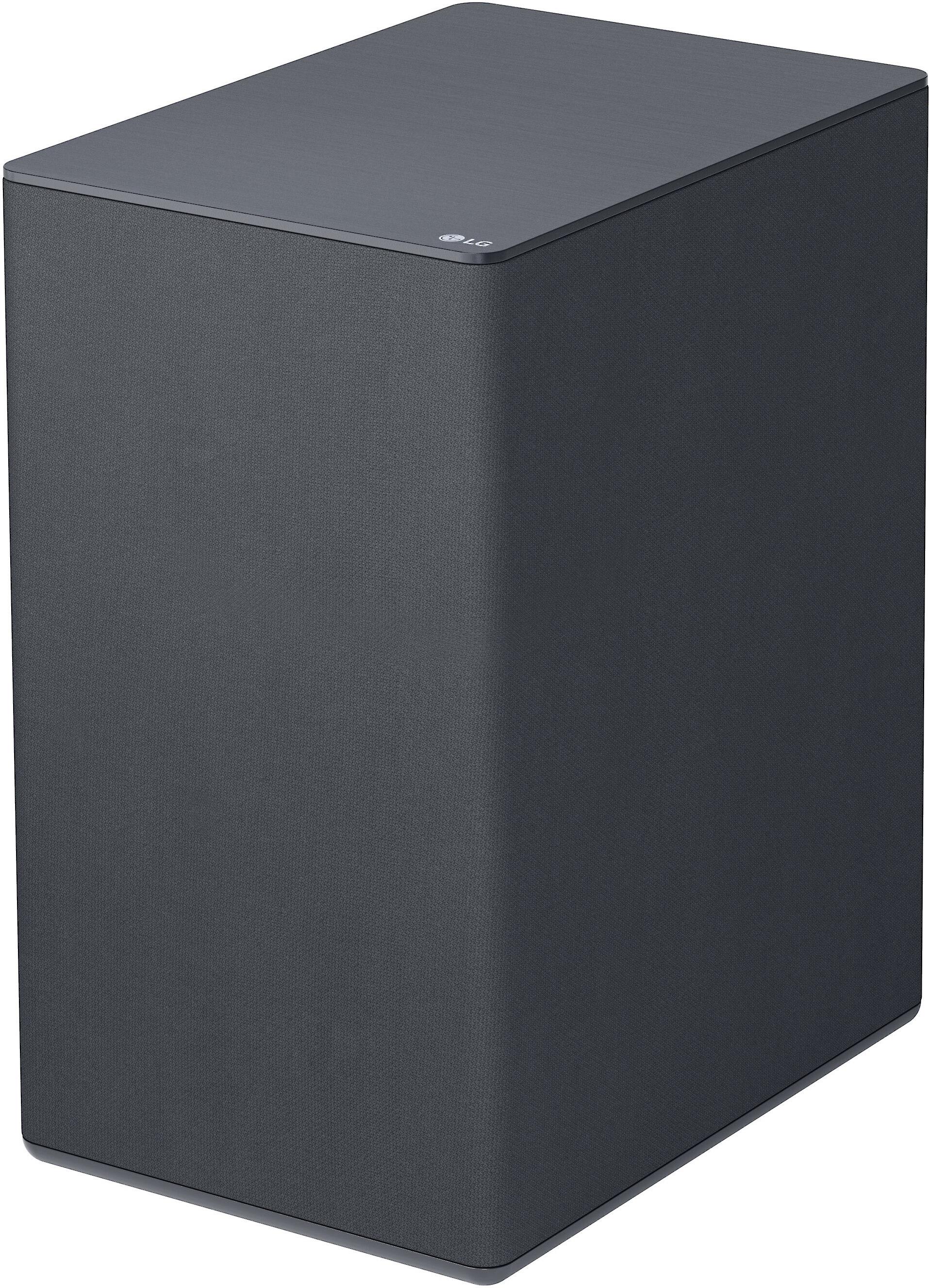
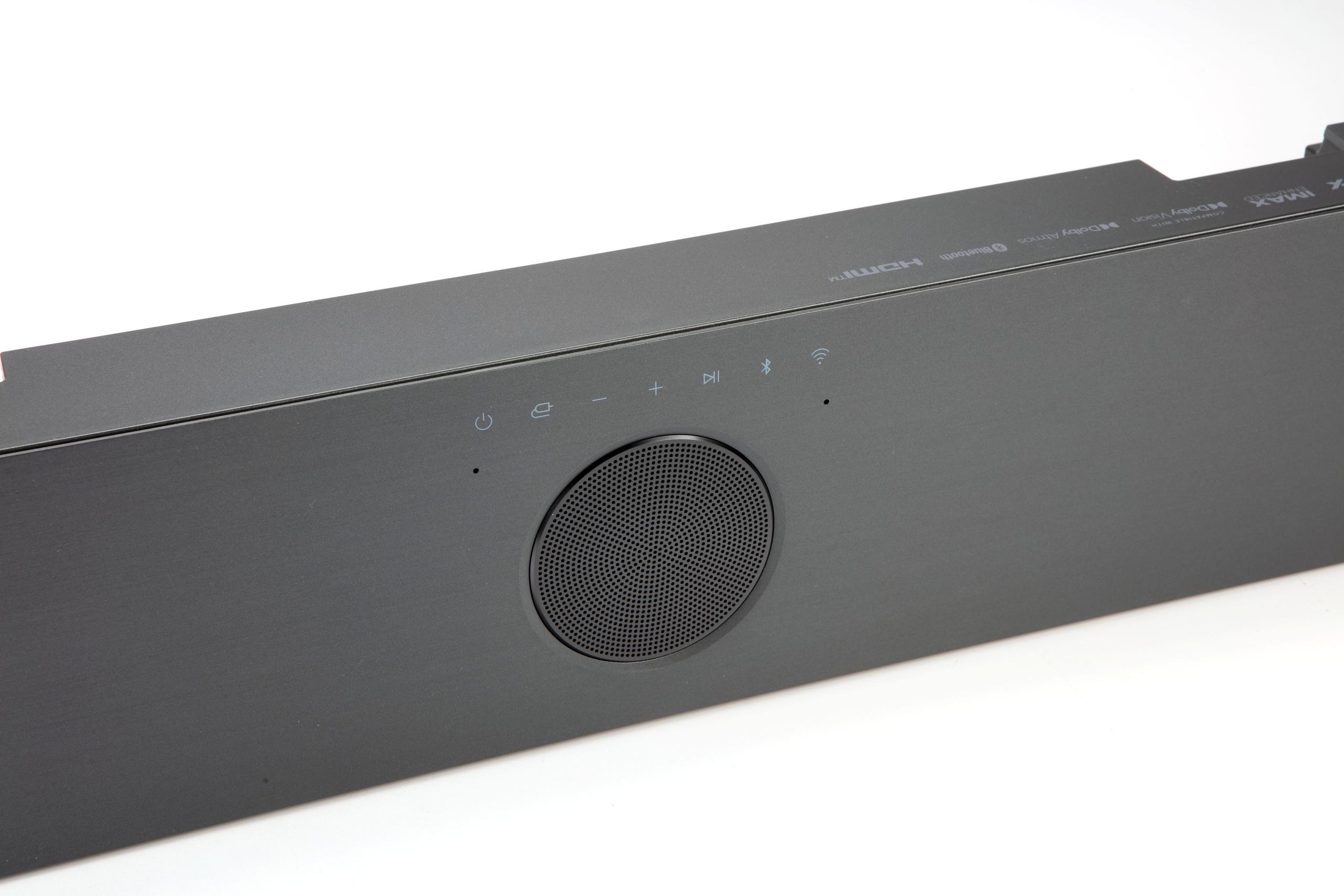
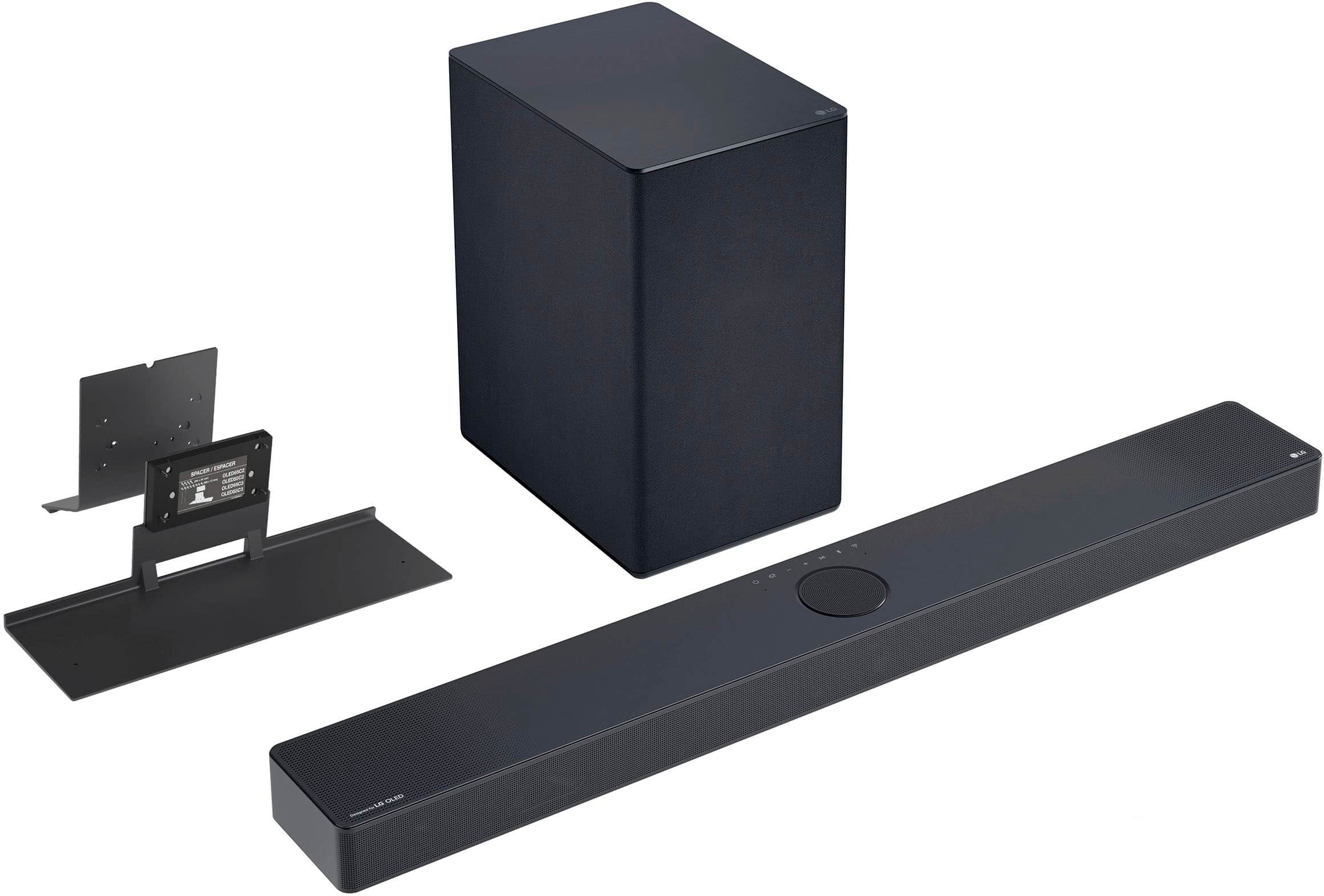
The LG SC9S, also from 2023, takes the premium virtual approach with its 3.1.3 Dolby Atmos configuration. Priced around $660 at the time of writing, it focuses on sophisticated audio processing and upward-firing drivers to create immersive sound without additional speakers scattered around your room.
These products emerged during a particularly interesting period in soundbar development. By 2023, manufacturers had largely solved the reliability issues that plagued early wireless surround systems, while Dolby Atmos content had become mainstream enough to justify dedicated height channels in consumer products.
When evaluating soundbar performance, surround sound capability often matters most for the typical buyer. This is where the philosophical differences between our two systems become most apparent—and where your room setup and preferences will heavily influence which approach works better.
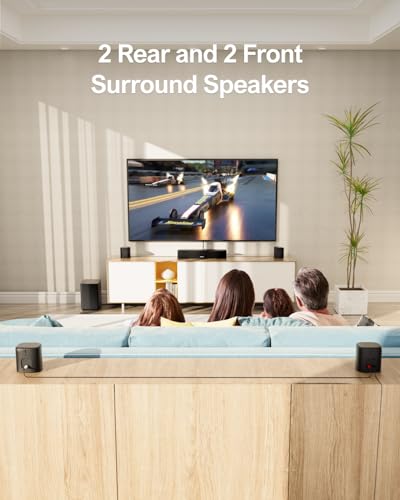
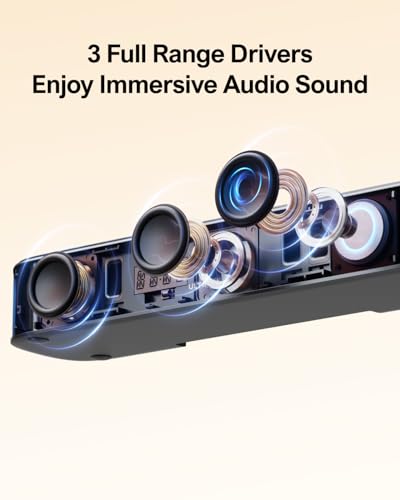
The Ultimea Aura A40 creates its 7.1 channel surround field using eight physical speakers: three drivers in the main bar, four dedicated surround speakers, and a subwoofer. The four surround speakers connect via cables (with a hybrid wired-wireless setup for the rear speakers), creating genuine 360-degree audio positioning.
When a helicopter flies overhead in a movie, you hear it move from your front left speaker to your rear right speaker because there are actually speakers in those positions. This creates what audio engineers call "discrete channel separation"—each audio channel plays from its intended location rather than being processed and mixed with others.
Based on user feedback and professional reviews, this physical approach excels in several scenarios. Gaming represents perhaps the strongest use case, where directional audio provides competitive advantages. Being able to pinpoint enemy footsteps or gunfire location gives players tangible gameplay benefits that virtual processing simply cannot match with the same precision.
The system's SurroundX technology claims 99.99% detail accuracy, which sounds like marketing hyperbole until you consider what it actually means: each speaker reproduces only its intended audio channel without the frequency overlap and processing artifacts that virtual systems sometimes introduce.
The LG SC9S takes an entirely different approach with its 3.1.3 Dolby Atmos configuration. Those numbers tell an important story: 3 main channels (left, center, right), 1 subwoofer channel, and 3 height channels that fire sound upward to bounce off your ceiling and create overhead effects.
Dolby Atmos represents a genuine technological leap in home audio. Unlike traditional surround sound that moves audio around you horizontally, Atmos adds vertical information. When a spaceship flies overhead, you don't just hear it move from front to back—you hear it pass above you. This creates a "sound sphere" rather than a "sound circle."
The LG SC9S includes dedicated upward-firing drivers and sophisticated room correction technology that analyzes your space and adjusts the audio accordingly. Its AI Room Calibration Pro feature uses microphone measurements to optimize sound for your specific room dimensions and acoustic properties.
However, virtual surround effectiveness varies significantly based on room characteristics. Ceiling height, wall materials, furniture placement, and even listener position all affect how well the processed audio recreates spatial effects. Some users report excellent results, while others find the effects subtle or inconsistent.
For gaming enthusiasts, the performance difference between these approaches becomes particularly pronounced. The Ultimea Aura A40's physical speakers provide immediate, accurate directional cues that can improve competitive performance in first-person shooters or battle royale games.
Professional reviews consistently highlight this advantage: when an enemy approaches from behind and to the left, you hear them from behind and to the left because there's literally a speaker in that position. The system's adjustable surround levels (with 13 different settings) let you fine-tune the balance between ambient effects and crucial directional audio.
The LG SC9S offers a different gaming experience focused more on immersion than precision. Its Game mode enhances bass response and emphasizes dramatic effects, creating a more cinematic gaming experience. However, for competitive scenarios where split-second audio cues matter, the virtual processing introduces slight delays and potential positional inaccuracies.
While surround capabilities grab attention, everyday audio quality—dialogue clarity, music reproduction, and overall tonal balance—affects your experience with every piece of content you consume.
Both systems prioritize dialogue clarity, but they achieve it differently. The Ultimea Aura A40 uses dedicated center channel processing within its main soundbar, ensuring voices remain anchored to the screen even during complex action sequences. User reviews consistently praise its ability to maintain clear dialogue even when surrounded by explosive sound effects or dramatic musical scores.
The LG SC9S takes this further with dual center channels—both a traditional forward-firing driver and an upward-firing center channel that enhances vocal reproduction. This creates what LG calls "vocal lifting," where dialogue appears to emanate from actor's mouths on screen rather than from below the TV.
Professional reviews suggest both systems excel at dialogue reproduction, though they achieve clarity through different methods. The Ultimea A40 relies on precise channel separation and frequency tuning, while the LG SC9S uses advanced DSP and dual-channel processing.
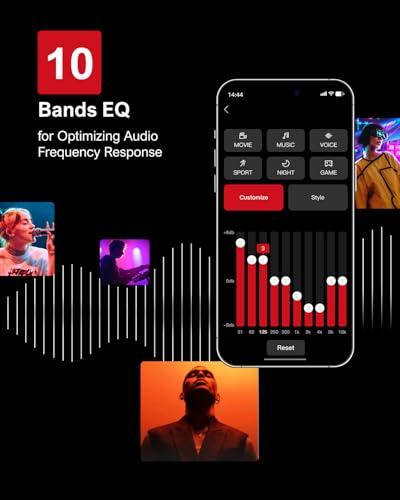
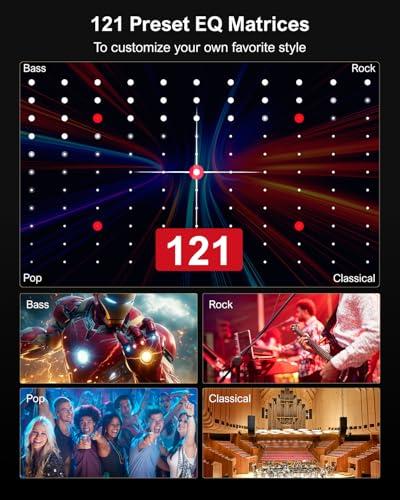
Music performance often reveals the underlying quality differences between audio systems. The Ultimea Aura A40 delivers what reviewers describe as "adequate" music reproduction with good bass impact but some metallic or boxy characteristics in the midrange frequencies. Its 10-band equalizer and 121 preset sound profiles provide extensive customization options to address these limitations.
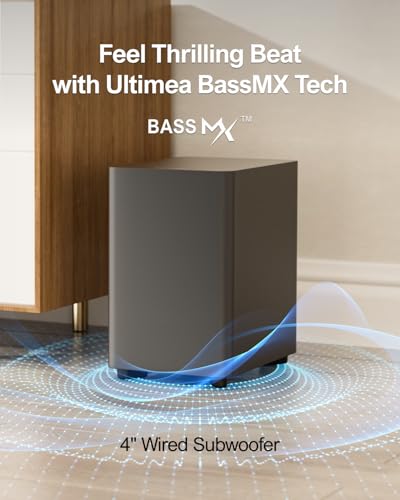
The frequency response specification of 65Hz-18kHz with less than 1% distortion indicates solid technical performance for the price range. The BassMX technology in its 4-inch subwoofer provides punchy low-end response that works well for action movies and bass-heavy music genres.
The LG SC9S offers more refined music reproduction typical of premium soundbars. Its higher-quality drivers and sophisticated DSP processing deliver cleaner midrange reproduction and better overall tonal balance. The wireless subwoofer provides deeper bass extension and more controlled low-frequency response.
For critical music listening, neither system matches dedicated stereo speakers in the same price ranges, but the LG SC9S comes considerably closer to audiophile-grade performance.
Modern soundbars succeed or fail partly on their ability to adapt to different content, rooms, and user preferences. This is where we see some of the most interesting technological developments in recent years.
The Ultimea Aura A40 includes the Ultimea Smart App, which provides remarkably comprehensive control for a budget system. The 10-band equalizer allows precise frequency adjustment, while 121 preset EQ matrices offer optimization for different music genres and content types. You can adjust bass emphasis for action movies, enhance midrange clarity for dialogue-heavy content, or boost treble for music playback.
The system's adjustable surround levels deserve special attention. With 13 different levels of surround speaker volume, you can adapt the system to different room sizes and personal preferences. This addresses one of the major challenges with physical surround systems: balancing ambient effects with clear dialogue and music.
Over-the-air (OTA) firmware updates ensure the system improves over time, adding new features and optimizing performance based on user feedback and technological advances.
The LG SC9S emphasizes intelligent automation over manual control. Its AI Room Calibration Pro analyzes your room's acoustic properties and automatically adjusts EQ, delay timing, and level settings for optimal performance. This represents a significant technological advancement—instead of requiring users to manually adjust dozens of settings, the system does the work automatically.
The AI Sound Pro feature analyzes content in real-time, automatically switching between optimized settings for dialogue, music, action sequences, and other content types. This creates a more seamless experience where the soundbar adapts to what you're watching without requiring manual mode switching.
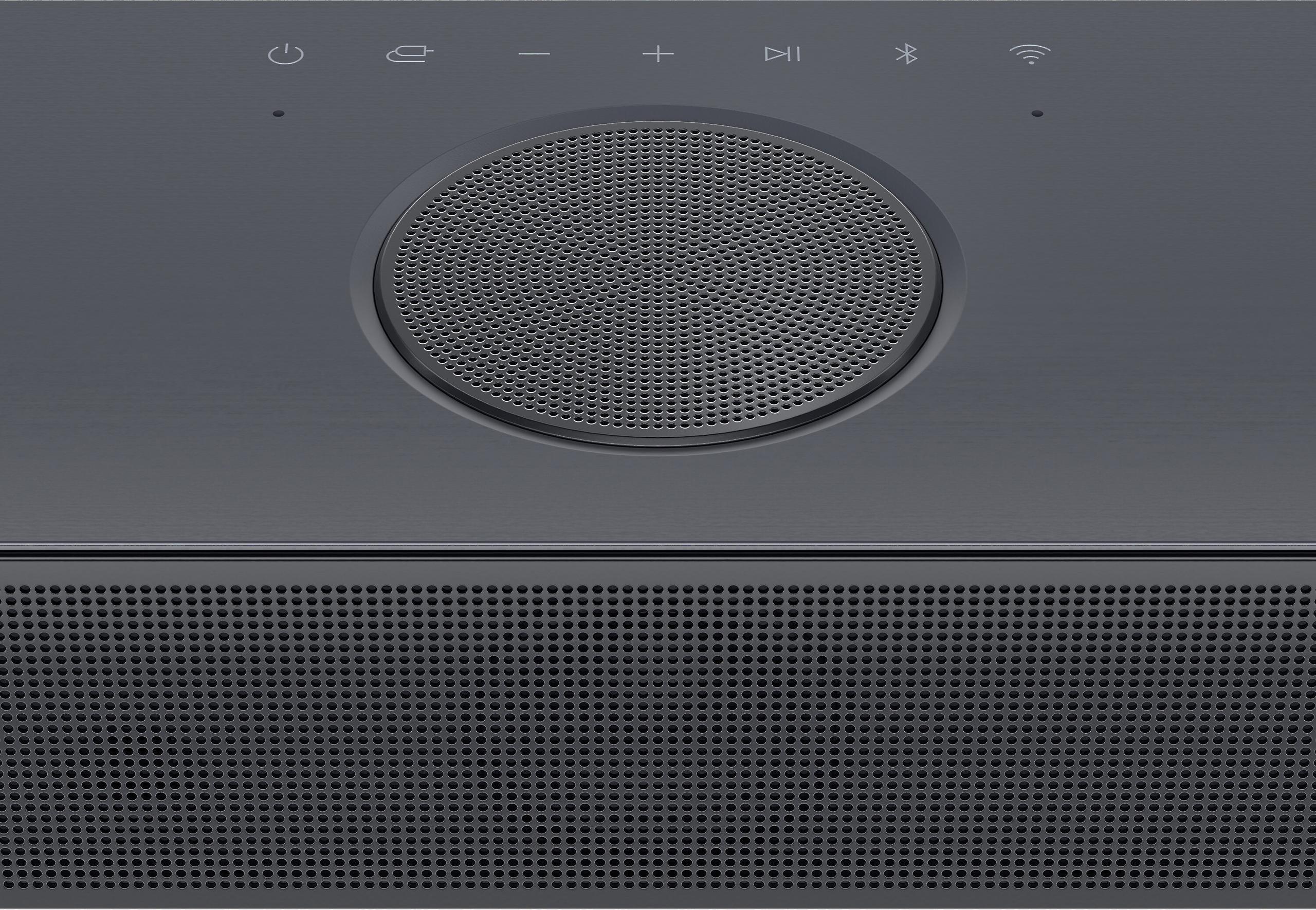
Voice assistant integration with both Google Assistant and Alexa provides hands-free control, while Chromecast and AirPlay 2 support enable wireless streaming from virtually any device.
The practical realities of setup and daily use often matter as much as raw performance, particularly for families or users who prioritize simplicity over tweaking.
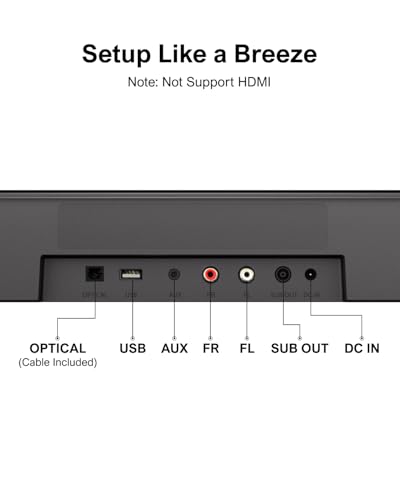
The Ultimea Aura A40 requires more initial setup work due to its four surround speakers. You'll need to run cables to position the front surround speakers near your main seating area, while the rear speakers connect via a 6-meter cable that provides reasonable placement flexibility. The rear right speaker then pairs wirelessly to reduce some cable clutter.
While this setup takes more effort than a single-bar solution, user reviews consistently describe the process as straightforward. The included mounting hardware and clear documentation help minimize installation frustration.
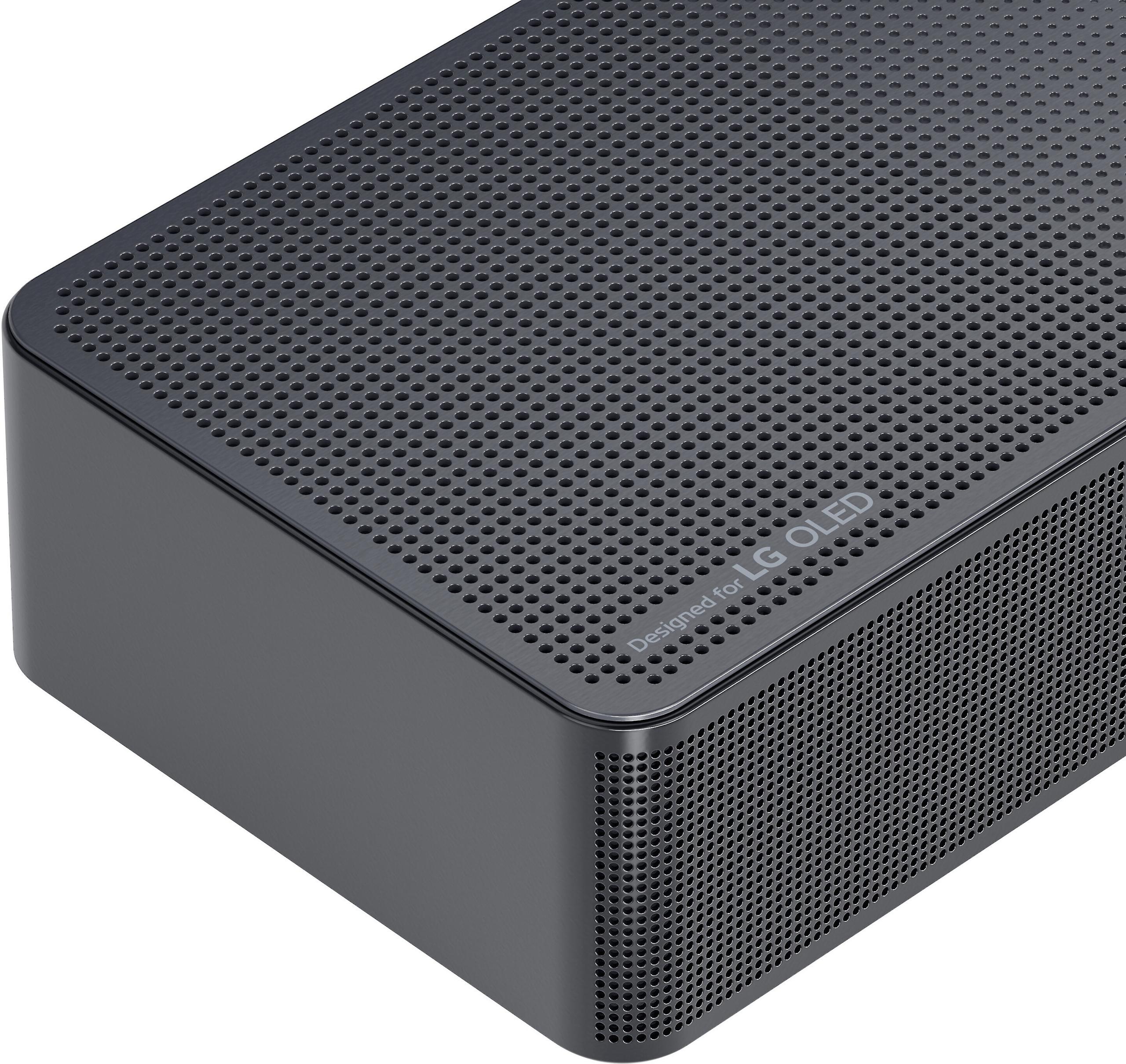
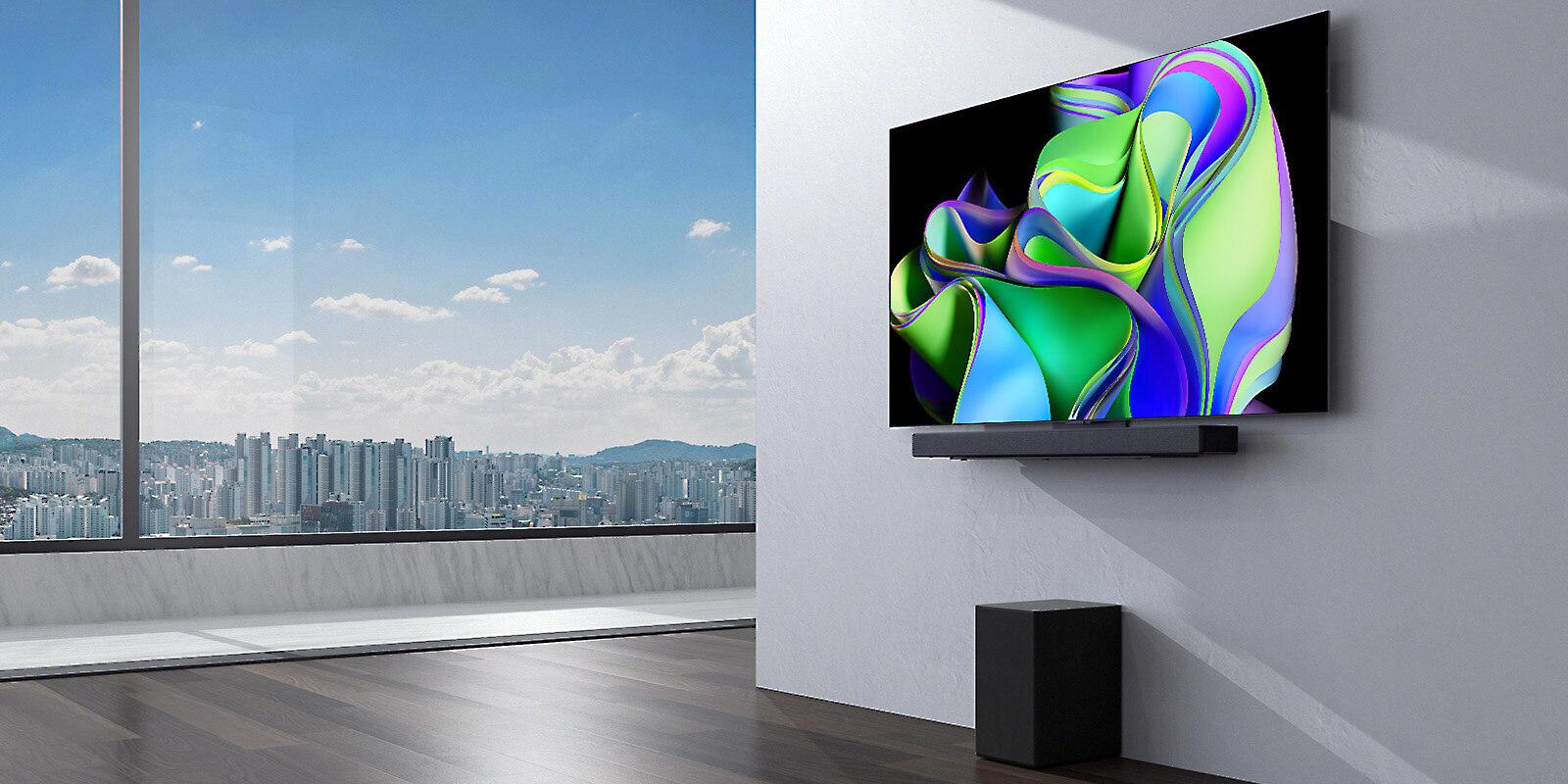
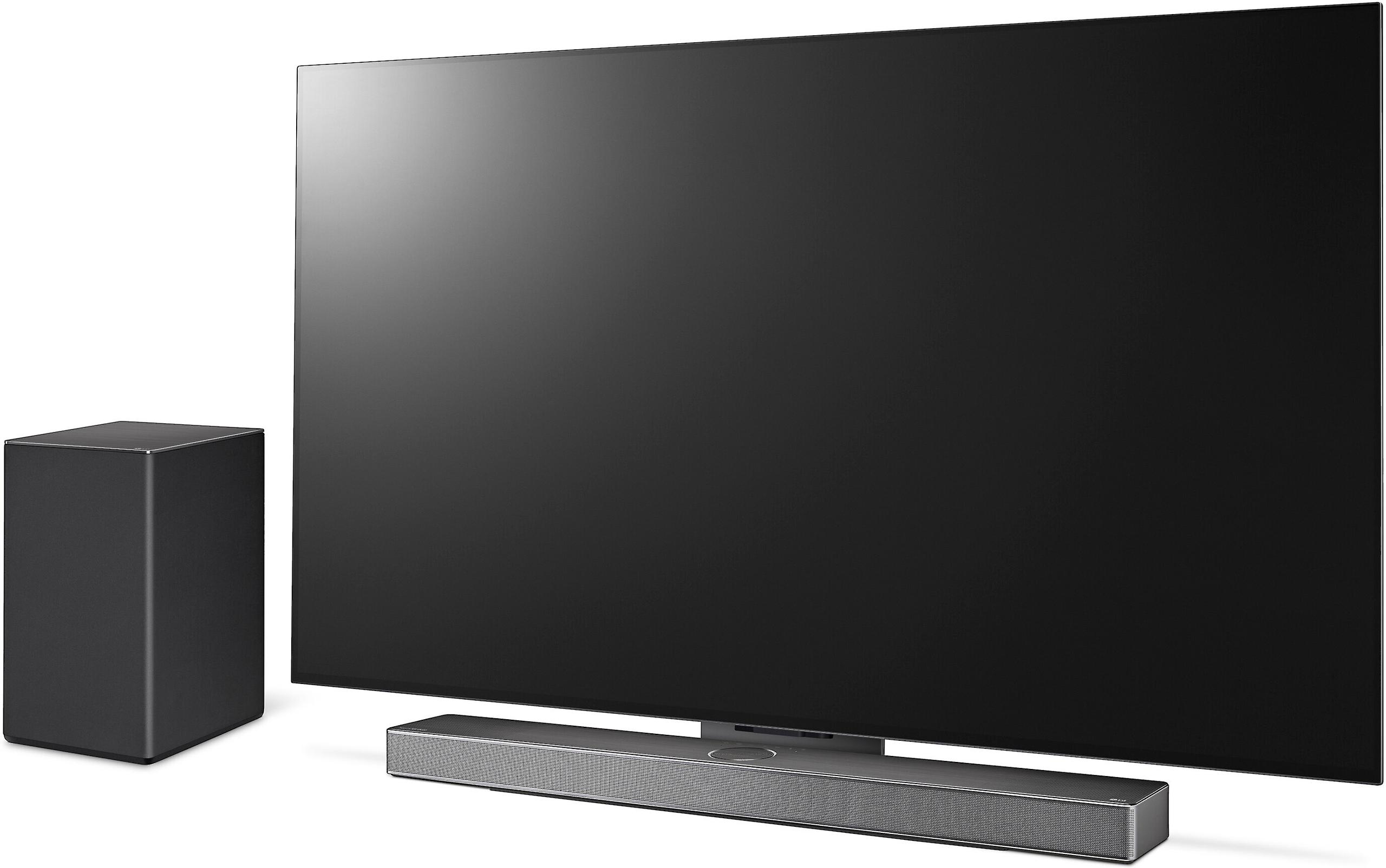
The LG SC9S offers a cleaner installation with just the main soundbar and wireless subwoofer. Its dedicated mounting bracket for LG OLED C-series TVs creates a particularly elegant aesthetic integration. The system can also function as a TV stand, supporting the TV directly on top of the soundbar.
For apartment dwellers or users who frequently rearrange furniture, the LG SC9S's simpler setup provides obvious advantages. However, if you're willing to invest the extra setup time, the Ultimea A40's physical speakers provide performance benefits that processing alone cannot match.
Room compatibility affects both systems differently. The Ultimea Aura A40 works best in small to medium spaces (roughly 108-270 square feet) where the surround speakers can be positioned effectively without overwhelming the room. Its adjustable surround levels help adapt to different room sizes within this range.
The LG SC9S handles larger rooms more effectively due to its higher power output and advanced room correction. The upward-firing Dolby Atmos drivers work best with ceilings between 8-14 feet high and relatively hard ceiling surfaces that reflect sound effectively.
At the time of writing, these systems occupy very different price segments, with the Ultimea Aura A40 costing roughly 2.5 times less than the LG SC9S. This price difference reflects not just feature sets but entirely different market positioning philosophies.
The Ultimea Aura A40 represents exceptional value for users prioritizing surround sound immersion over premium features. Getting eight physical speakers, including four surround channels, at its price point would have been impossible just a few years ago. The comprehensive app control and extensive EQ options typically found only in much more expensive systems further enhance its value proposition.
For gaming enthusiasts, the directional audio accuracy provides competitive advantages that no amount of processing can fully replicate. Movie lovers benefit from genuine 360-degree sound effects that create immersive experiences rivaling much more expensive home theater setups.
The LG SC9S justifies its higher price through build quality, advanced features, and modern format support that future-proof your investment. Dolby Atmos content continues expanding across streaming platforms, and the system's HDMI eARC support ensures compatibility with current and future TV technologies.
The intelligent automation features—AI room calibration, automatic content optimization, and voice control integration—provide a more refined user experience that many buyers find worth the premium.
Your ideal choice depends heavily on your priorities, room setup, and how you consume audio content. Based on our research and analysis of user experiences, here are the scenarios where each system excels.
You're a gamer who values competitive audio advantages and directional accuracy. The physical speakers provide tangible performance benefits that virtual processing cannot match for competitive scenarios.
Budget is a primary concern, but you don't want to compromise on surround sound immersion. The Ultimea A40 delivers genuine 7.1 channel experience at a fraction of traditional pricing.
You enjoy customizing audio settings and have the time to optimize your system. The comprehensive EQ options and adjustable surround levels reward users who like fine-tuning their audio experience.
Your room is small to medium-sized, and you're willing to manage some cable placement for superior surround sound. The system works best when surround speakers can be positioned effectively around your seating area.
You regularly consume Dolby Atmos content and want the full vertical sound experience. The upward-firing height channels provide effects that horizontal-only systems cannot reproduce.
You own or plan to purchase an LG TV and value seamless integration. The special mounting options and WOW Orchestra technology create a more cohesive entertainment system.
Simplicity and automated optimization matter more than manual control. The AI features handle room correction and content optimization without requiring user intervention.
You have a larger room or higher ceilings where Dolby Atmos processing works most effectively. The system's advanced DSP and higher power output handle challenging acoustic environments better.
Both the Ultimea Aura A40 and LG SC9S solve the same fundamental problem—terrible TV audio—but they take distinctly different approaches that appeal to different types of users.
The Ultimea Aura A40 proves that exceptional surround sound doesn't require premium pricing. Its physical speaker approach delivers authentic spatial audio that creates genuinely immersive experiences for movies and provides competitive advantages for gaming. The extensive customization options and impressive value proposition make it an excellent choice for budget-conscious buyers who don't want to compromise on surround sound quality.
The LG SC9S represents the premium approach, using advanced processing and modern audio formats to create sophisticated soundscapes without cluttering your living space. Its Dolby Atmos capabilities, intelligent features, and superior build quality justify the higher investment for users who prioritize convenience and cutting-edge technology.
For most buyers seeking dramatic audio improvement without breaking the bank, the Ultimea Aura A40 delivers extraordinary value. However, if you consume lots of premium streaming content, own compatible LG equipment, or simply want the most advanced features available, the LG SC9S provides a more refined and future-ready experience.
The soundbar market has evolved to offer genuine choice between authentic surround sound at budget prices and premium virtual processing with advanced features. Your decision ultimately comes down to whether you value the spatial accuracy of physical speakers or the convenience and height effects of processed audio—and how much you're willing to spend for those preferences.
| Ultimea Aura A40 7.1 Channel Soundbar System | LG SC9S 3.1.3 Channel Dolby Atmos Soundbar |
|---|---|
| Channel Configuration - Determines surround sound approach and immersion quality | |
| 7.1 virtual surround with 4 physical surround speakers | 3.1.3 Dolby Atmos with upward-firing height channels |
| Speaker Count - More speakers typically mean better directional audio | |
| 8 total speakers (3 in soundbar + 4 surround + 1 subwoofer) | 3 channels plus wireless subwoofer and height drivers |
| Peak Power Output - Higher wattage provides more dynamic range and room-filling capability | |
| 330W total system power | Premium amplification (specific wattage not disclosed) |
| Frequency Response - Wider range captures more audio detail | |
| 65Hz - 18kHz with <1% distortion | Enhanced range with Hi-Res Audio support up to 24-bit/96kHz |
| Audio Format Support - Modern formats provide better sound quality from streaming content | |
| Standard surround formats, no Dolby Atmos | Dolby Atmos, DTS:X, IMAX Enhanced support |
| Connectivity Options - More inputs provide greater device compatibility | |
| Optical, AUX, USB, Bluetooth 5.3 | HDMI eARC, Optical, Wi-Fi, Bluetooth, Chromecast, AirPlay 2 |
| Subwoofer Connection - Wired provides more reliable bass, wireless reduces cable clutter | |
| 4-inch wired subwoofer with BassMX technology | Wireless subwoofer with advanced DSP |
| Room Optimization Features - Automatic calibration saves setup time and optimizes performance | |
| Manual EQ with 121 presets, 13 adjustable surround levels | AI Room Calibration Pro with automatic acoustic optimization |
| Smart Features - App control and updates extend product lifespan | |
| Ultimea Smart App with 10-band EQ, OTA updates | AI Sound Pro, voice assistant integration, smart TV sync |
| Installation Complexity - Affects setup time and living space integration | |
| Requires surround speaker cables (6m included), hybrid wired-wireless setup | Simple soundbar + wireless subwoofer, optional wall mount |
| Ideal Room Size - Determines which system works best for your space | |
| Small to medium rooms (108-270 sq ft) | Medium to large rooms with 8-14 foot ceilings |
| Best Use Cases - Where each system excels most | |
| Gaming, budget home theater, customization enthusiasts | Premium streaming, LG TV integration, automated experience |
For traditional movie watching, the Ultimea Aura A40 excels with its four physical surround speakers that create authentic directional audio effects. You'll hear helicopters, explosions, and ambient sounds coming from their actual screen positions. However, the LG SC9S provides superior performance for modern streaming content with Dolby Atmos movies, delivering overhead sound effects that the Ultimea Aura A40 cannot reproduce.
The Ultimea Aura A40 uses physical surround speakers placed around your room to create true 7.1 channel surround sound, while the LG SC9S relies on advanced audio processing and upward-firing drivers to simulate surround effects. The Ultimea Aura A40 provides more authentic directional audio, but the LG SC9S offers cleaner installation and height effects.
The LG SC9S is significantly easier to install, requiring only the main soundbar and wireless subwoofer placement. The Ultimea Aura A40 requires running cables to four surround speakers, though users report the 6-meter cables and clear instructions make setup manageable for most people.
If you regularly watch Netflix, Disney+, or other streaming services that offer Dolby Atmos content, the LG SC9S provides the full vertical sound experience with overhead effects. The Ultimea Aura A40 doesn't support Dolby Atmos but delivers excellent horizontal surround sound for all content types.
The Ultimea Aura A40 is superior for gaming, especially competitive titles, because its physical surround speakers provide precise directional audio cues. You can accurately locate enemy footsteps or gunfire, giving you tactical advantages. The LG SC9S offers good gaming audio but focuses more on cinematic immersion than competitive precision.
The Ultimea Aura A40 works best in small to medium rooms (108-270 sq ft) where surround speakers can be positioned effectively. The LG SC9S handles larger spaces better and requires 8-14 foot ceilings for optimal Dolby Atmos effects, making it more suitable for bigger home theater rooms.
The Ultimea Aura A40 provides extensive manual control through its app, including a 10-band equalizer, 121 preset sound profiles, and 13 adjustable surround levels. The LG SC9S emphasizes automatic optimization with AI room calibration and content-adaptive processing, requiring less user intervention.
Both systems work with most TVs, but the LG SC9S offers premium connectivity through HDMI eARC and special integration features with LG televisions. The Ultimea Aura A40 uses more universal connections like optical and Bluetooth, ensuring compatibility with virtually any TV or device.
The LG SC9S generally delivers more refined bass with its wireless subwoofer and advanced DSP processing. The Ultimea Aura A40 provides punchy, impactful bass through its 4-inch wired subwoofer with BassMX technology, though it may not extend as deep as the LG SC9S.
Both excel at dialogue reproduction but use different approaches. The Ultimea Aura A40 maintains clear voices through dedicated center channel processing and precise frequency tuning. The LG SC9S uses dual center channels and vocal enhancement technology to make dialogue appear to come directly from actors' mouths on screen.
The Ultimea Aura A40 offers exceptional value, providing true 7.1 surround sound with physical speakers at a budget-friendly price point. The LG SC9S costs significantly more but justifies the premium through advanced features, superior build quality, and modern audio format support like Dolby Atmos.
Choose the Ultimea Aura A40 if you want authentic directional audio and don't mind cable management. Its physical speakers create genuine surround effects that virtual processing cannot fully replicate. Select the LG SC9S if you prioritize clean installation, height effects, and automated optimization over manual surround speaker placement.
We've done our best to create useful and informative comparisons to help you decide what product to buy. Our research uses advanced automated methods to create this comparison and perfection is not possible - please contact us for corrections or questions. These are the sites we've researched in the creation of this article: youtube.com - walmart.com - youtube.com - ultimea.com - homestudiobasics.com - ultimea.co - youtube.com - eu.ultimea.com - walmart.com - device.report - bestbuy.com - manuals.plus - community.ultimea.com - judge.me - support.ultimea.com - geekmaxi.com - provantage.com - bestbuy.com - youtube.com - uk.whatgeek.com - consumerreports.org - valueelectronics.com - youtube.com - bestbuy.com - rtings.com - costco.com - bestbuy.com - walts.com - queencityonline.com - blog.son-video.com - videoandaudiocenter.com - lg.com

Privacy Policy
Terms and Conditions - Affiliate Policy
Home Security
© Copyright 2008-2026.
11816 Inwood Rd #1211, Dallas, TX 75244