



When your TV's built-in speakers make explosions sound like pop rocks and dialogue gets buried under background music, it's time to upgrade to a soundbar. But the soundbar world has split into two fascinating camps: systems that surround you with actual speakers, and advanced single bars that use audio wizardry to trick your brain into hearing sounds from every direction.
Today we're diving deep into this divide by comparing two dramatically different approaches: the Ultimea Aura A40 7.1 Channel Soundbar System and the Sennheiser AMBEO Soundbar Plus Home Theater System. At the time of writing, these represent opposite ends of both the price spectrum and technological philosophy, with the Ultimea costing roughly one-fifth the price of the Sennheiser while taking a completely different approach to creating surround sound.
The soundbar market has evolved dramatically since both products launched. The Ultimea Aura A40 represents the traditional "more speakers equals better surround" school of thought, while the Sennheiser AMBEO Plus, released in 2022, embodies the cutting-edge virtualization approach that's become increasingly sophisticated.
Here's what matters most when choosing between these philosophies: frequency response (how deep the bass goes and how clear the highs are), surround sound implementation (real speakers vs. audio processing magic), format support (whether it can decode modern movie audio), and setup complexity (how much work you'll need to do).
The key technical advancement since 2022 has been improved room calibration algorithms and better virtual surround processing. However, the fundamental trade-off remains: physical speakers give you genuine directional audio but require setup and space, while virtualization offers convenience but depends heavily on your room's acoustics.
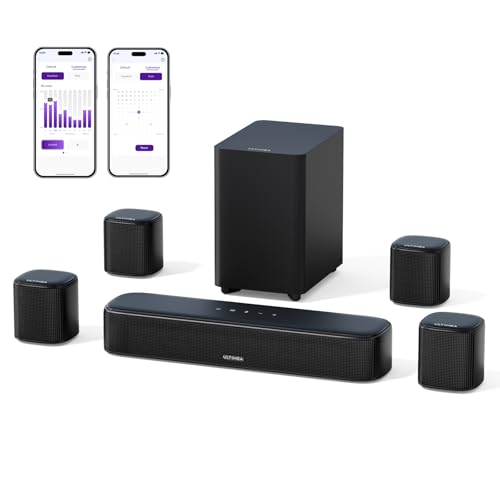
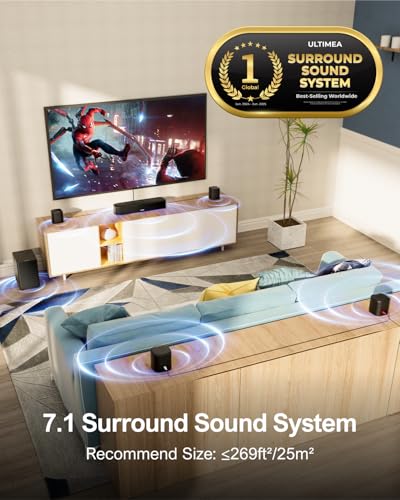
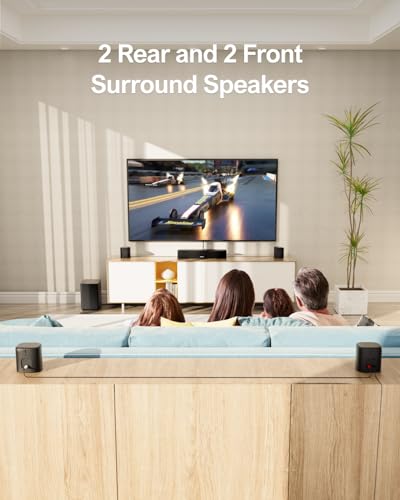
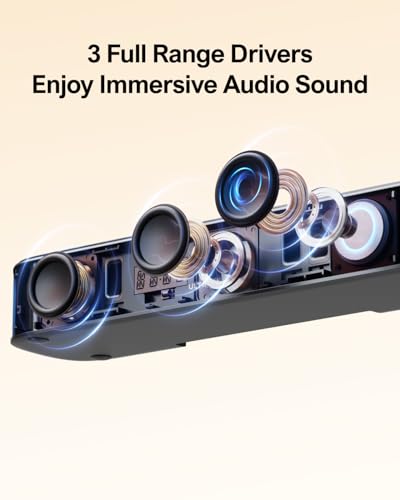
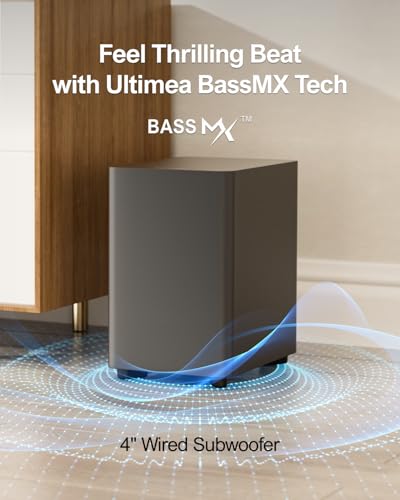
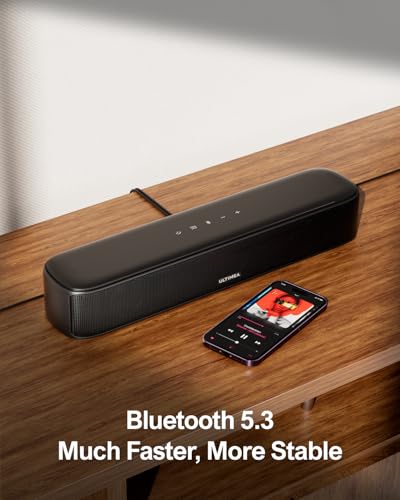
The Ultimea Aura A40 follows the "surround sound should literally surround you" philosophy. This system includes five separate pieces: a main soundbar housing three 2-inch drivers, four individual surround speakers (each with their own 2-inch driver), and a wireless 4-inch subwoofer. When you're watching a helicopter scene, the sound actually comes from speakers positioned around your room – not from audio processing trying to fool your ears.
This approach has a major advantage: authentic positional audio. When a car crashes off-screen to your left, the sound genuinely originates from your left. There's no processing delay, no room acoustic dependency – just real sound from real speakers in real positions. The system uses what Ultimea calls "SurroundX" technology, which coordinates all eight drivers to create what they claim is 99.99% detail accuracy in sound movement.
However, physical surround comes with real-world challenges. You'll spend about 30 minutes running cables (including a 6-meter cable for the rear speakers), positioning five separate units around your room, and fine-tuning wireless pairing between components. One clever design choice: the rear right speaker connects to power but pairs wirelessly to the soundbar, reducing some cable complexity.
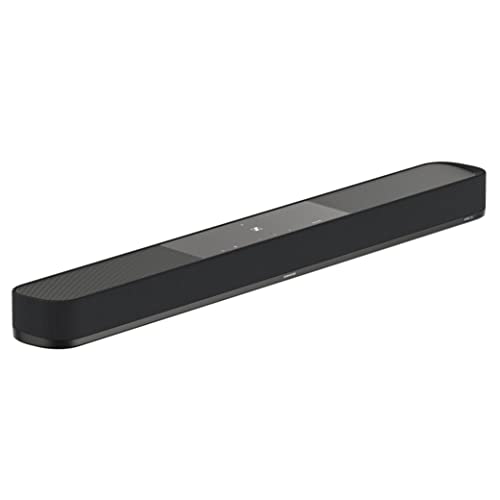
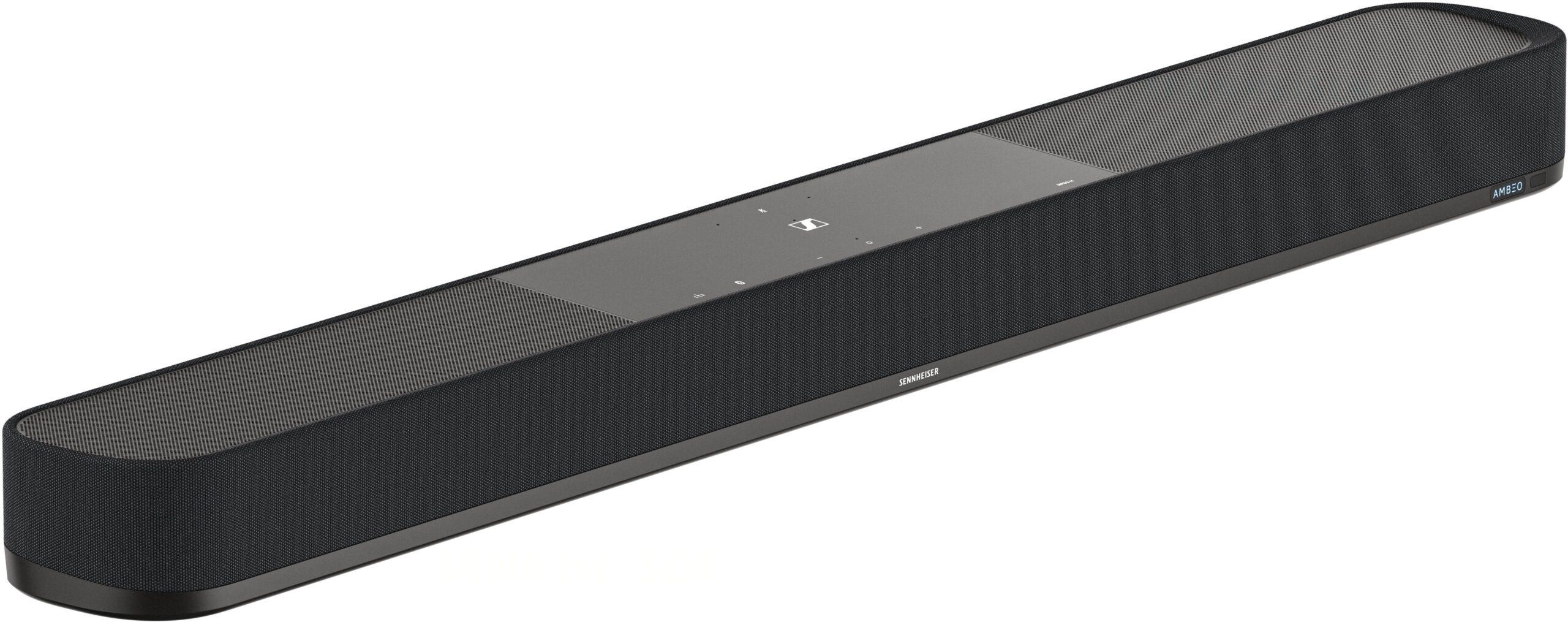
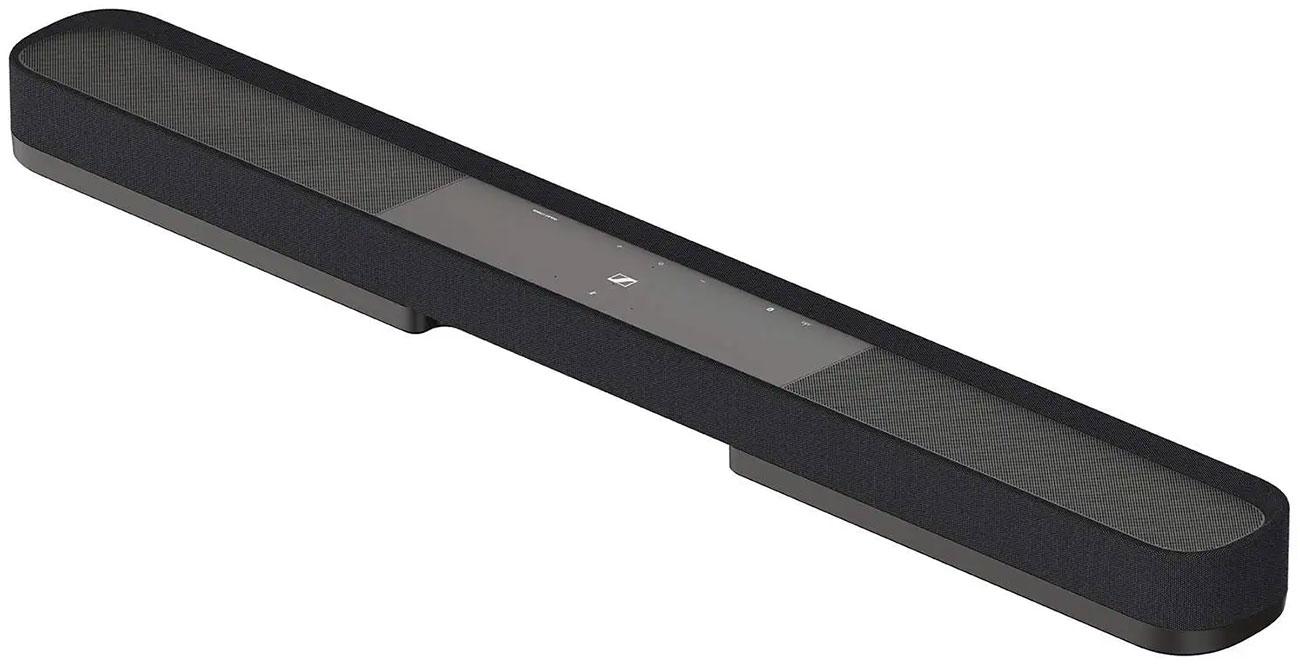
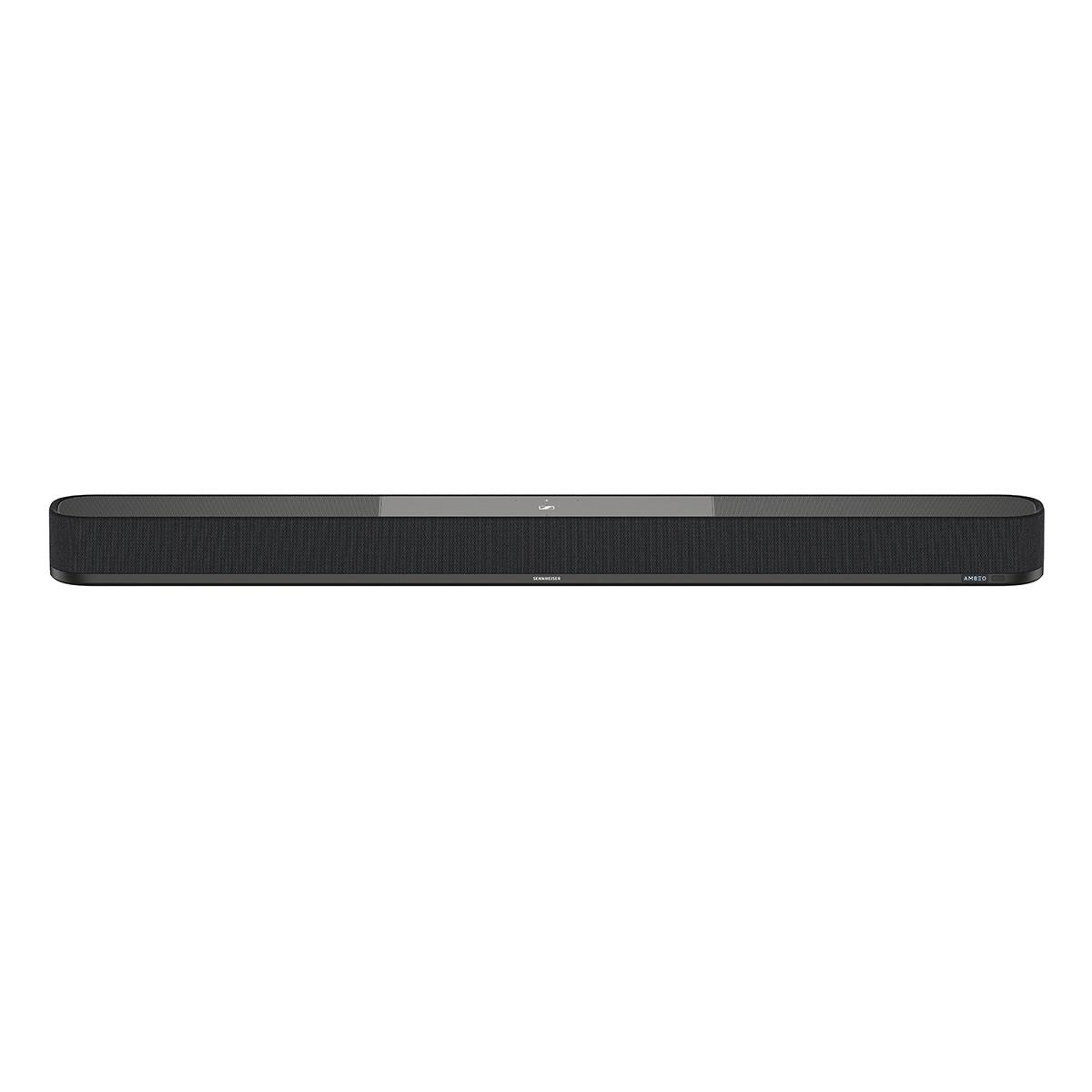
The Sennheiser AMBEO Plus takes the opposite approach: pack everything into one sophisticated bar and let advanced processing create the illusion of surround speakers. This isn't your basic "virtual surround" from cheaper soundbars – this is AMBEO 3D virtualization technology, developed with the Fraunhofer IIS Institute (the same folks who helped create MP3).
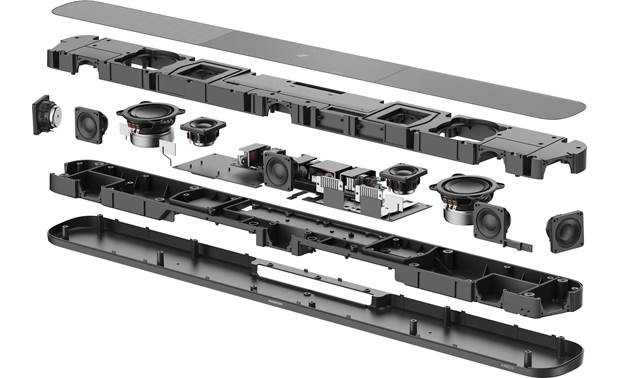
Inside this single bar live nine separate speakers, each powered by its own dedicated Class D amplifier (a type of efficient amplifier that generates less heat). The setup includes seven 2-inch aluminum cone drivers and two 4-inch subwoofers. But here's where it gets interesting: the bar includes up-firing drivers that bounce sound off your ceiling to create height effects, and side-firing drivers that reflect off walls to simulate surround speakers.
The AMBEO system uses four built-in microphones to analyze your room's acoustics during a calibration process, then adjusts its processing to compensate for your specific environment. This room correction technology means the soundbar literally learns your room and optimizes its virtual surround accordingly.
When evaluating any audio system, three metrics matter most: frequency response (the range of sounds it can reproduce), dynamic range (the difference between the quietest and loudest sounds), and distortion levels (how much the system colors or changes the original audio).
The Sennheiser AMBEO Plus dominates these fundamentals. Its frequency response spans 38Hz to 20kHz – meaning it reproduces deep bass rumbles you feel in your chest and crystal-clear high frequencies that add sparkle to music. The aluminum cone drivers deliver what our research into expert reviews consistently describes as "refined" and "detailed" sound reproduction.
By contrast, the Ultimea Aura A40 operates from 65Hz to 18kHz – a narrower range that cuts off meaningful low-end bass and some high-frequency detail. More critically, multiple detailed user reviews describe the Ultimea's sound character as "tinny, boxy, and metallic." One thorough review noted needing to max out both subwoofer and surround levels just to add "much-needed meat" to the sound.
This difference becomes immediately apparent with music. The Sennheiser handles everything from delicate acoustic tracks to thunderous orchestral pieces with grace, while the Ultimea's character works better for dialogue-heavy content where pristine fidelity matters less than basic clarity.
Bass reproduction reveals the clearest performance gap between these systems. The Sennheiser AMBEO Plus includes dual 4-inch subwoofers integrated directly into the soundbar, extending down to 37Hz – deep enough to reproduce the lowest frequencies in most movie soundtracks and music recordings.
The Ultimea Aura A40 relies on a single wireless 4-inch subwoofer that only reaches 65Hz. This 28Hz difference might seem small, but it represents the gap between feeling bass in your chest versus just hearing it. User feedback consistently mentions the Ultimea's bass as "flabby and loose" – meaning it lacks the tight, controlled impact of better subwoofers.
For home theater use, this bass difference matters enormously. Explosions, dinosaur footsteps, and dramatic music all depend on deep, controlled bass to create emotional impact. The Sennheiser delivers this naturally, while the Ultimea requires maxed-out settings to approach adequate bass levels.
Here's where the philosophical differences create interesting trade-offs. The Ultimea Aura A40 creates surround effects through actual speaker placement – when positioned correctly, sounds genuinely originate from around your room. This approach works regardless of your room's shape, ceiling height, or wall materials because the speakers are physically where they should be.
However, the Ultimea operates in a horizontal plane only. It creates left-right and front-back surround effects but no height information – meaning overhead helicopter sounds or rain effects aren't reproduced.
The Sennheiser AMBEO Plus creates a full 7.1.4-channel experience, including height effects that bounce off your ceiling. When calibrated properly in a suitable room, the virtualization can be genuinely impressive – sounds appear to come from positions where no speakers exist. Expert reviews consistently describe being "blown away" by the AMBEO's ability to place sounds in three-dimensional space.
But virtualization has limitations. It works best in rectangular rooms with reflective surfaces and appropriate ceiling height. Oddly shaped rooms, high vaulted ceilings, or heavy sound absorption can reduce effectiveness. The sweet spot for optimal virtualization is also more limited than with physical speakers.
This represents perhaps the most significant functional difference. The Sennheiser AMBEO Plus supports every major modern audio format: Dolby Atmos, DTS:X, and MPEG-H. These formats contain height information and object-based audio that places specific sounds in three-dimensional space around listeners.
When you watch a Dolby Atmos movie, the soundtrack doesn't just have left and right channels – it includes specific instructions for where sounds should appear in space. Rain might fall from above, helicopters circle overhead, or voices might seem to come from specific positions. The Sennheiser can decode and reproduce all this spatial information.
The Ultimea Aura A40 supports none of these advanced formats. It processes standard stereo and 5.1 surround sound, but strips away any height or object-based audio information. For modern streaming content and 4K Blu-rays that increasingly use these advanced formats, this represents a significant limitation.
Connectivity reveals another major philosophical divide. The Sennheiser AMBEO Plus includes comprehensive modern connections: HDMI 2.1 eARC output, two HDMI 2.0a inputs, plus optical and analog inputs. The HDMI connections support Audio Return Channel technology, which allows your TV to send audio back to the soundbar through the same cable that carries video to the TV.
More importantly, the Sennheiser includes WiFi 6, enabling direct streaming from services like Spotify, TIDAL, and Apple Music without requiring your TV or another device. Built-in voice control through Alexa and Google Assistant means you can adjust volume, change inputs, or start music with voice commands.
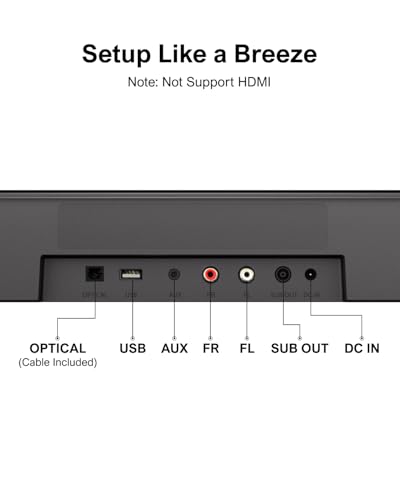
The Ultimea Aura A40 takes a dramatically different approach: no HDMI connections whatsoever. This budget-focused design limits connections to optical digital, 3.5mm analog, USB, and Bluetooth 5.3. While these connections work with most TVs, the lack of HDMI eliminates support for advanced audio formats and requires more complex setup with multiple devices.
This connectivity difference has real-world implications. With the Sennheiser, you can stream music directly from your phone, control the system with your voice, and connect multiple HDMI devices through the soundbar. The Ultimea requires your TV or streaming device to convert advanced audio formats to basic surround before sending them to the soundbar.
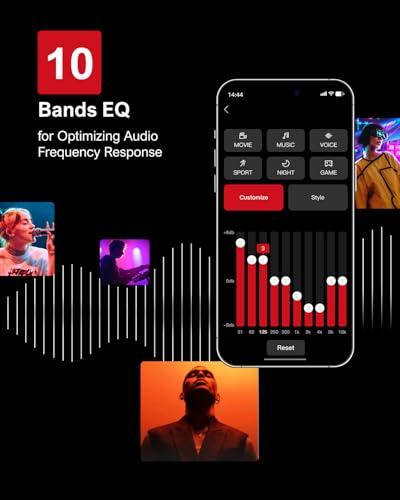
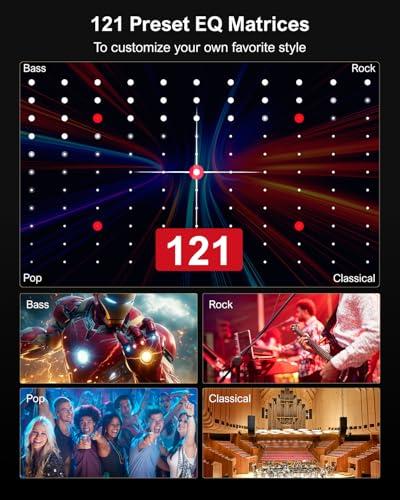
Both systems include smartphone apps, but they serve different purposes. The Ultimea Home app focuses on extensive manual customization – 121 preset EQ matrices across different musical genres, a 10-band equalizer for precise frequency adjustment, and 13 different surround level settings. This granular control appeals to users who enjoy tweaking audio settings to their exact preferences.
The Ultimea Aura A40 also includes six preset listening modes (Movie, Music, Voice, Sport, Game, Night) and receives over-the-air firmware updates that can add new features over time. This customization depth partially compensates for the system's audio limitations by allowing users to tune the sound to their specific room and preferences.
The Sennheiser Smart Control app takes a different approach, focusing on intelligent automation rather than manual adjustment. The room calibration process uses four built-in microphones to analyze your space's acoustics, then automatically optimizes the virtualization processing. Users can adjust virtualization intensity (Light, Standard, or Boost) and access various sound profiles, but the emphasis is on letting the system's algorithms handle optimization.
The Sennheiser app also provides direct access to streaming services, turning the soundbar into a standalone music system that doesn't require a TV or external device.
Setup complexity represents a crucial practical consideration. The Ultimea Aura A40 requires genuine effort: positioning five separate components, running cables (including the lengthy rear surround cable), managing wireless pairing between components, and optimizing speaker placement for your specific room layout.
This process takes about 30 minutes and requires planning your room layout around speaker placement. However, once installed, the system offers flexibility – you can position surround speakers optimally for your seating arrangement and room shape.
The Sennheiser AMBEO Plus installation takes under 10 minutes: place the bar in front of your TV, connect one HDMI cable, plug in power, and run the automated calibration. The simplicity is remarkable, but you're locked into the soundbar's fixed position and dependent on your room's acoustic properties for optimal performance.
At the time of writing, these systems occupy dramatically different value positions. The Ultimea Aura A40 delivers genuine surround speaker placement at an entry-level price point that traditionally couldn't include physical surround speakers. This represents exceptional value for the surround sound experience, despite audio quality compromises.
However, the sound quality limitations are real. Expert reviews consistently describe the audio as adequate for TV watching but unsuitable for critical music listening. The lack of modern connectivity also limits long-term usefulness as content increasingly uses advanced audio formats.
The Sennheiser AMBEO Plus commands a premium price but delivers correspondingly premium performance. The audio quality, format support, and convenience features justify the investment for users prioritizing sound quality and modern features. However, at roughly five times the Ultimea's price, it requires a serious commitment to home theater audio.
For dedicated home theater use, format support becomes crucial. Modern movies, Netflix series, and streaming content increasingly use Dolby Atmos and DTS:X to create immersive audio experiences. The Sennheiser AMBEO Plus reproduces these formats as intended, while the Ultimea Aura A40 strips them down to basic surround sound.
Room size also matters significantly. The Ultimea works well in smaller to medium rooms (roughly 100-270 square feet) where surround speakers can be positioned effectively. The Sennheiser is designed for larger rooms with 55-inch or bigger TVs, where the virtualization has space to work properly.
Both systems benefit from proper room treatment – reducing excessive echo and controlling reflections – but the Ultimea is more forgiving of imperfect acoustics since it relies on physical speaker placement rather than room reflections.
Choose the Ultimea Aura A40 if you're working with a limited budget but want authentic surround sound placement. This system makes sense for casual movie watching, TV series, and gaming where dialogue clarity and basic surround effects matter more than audiophile-grade fidelity. The extensive customization options also appeal to users who enjoy tweaking audio settings.
The Ultimea works best for renters or users with dedicated entertainment rooms where speaker placement won't interfere with daily life. If you can accept sound quality compromises in exchange for genuine surround positioning at an exceptional price, this system delivers remarkable value.
Choose the Sennheiser AMBEO Plus if audio quality and modern features justify the premium investment. This system excels for serious movie watching, music listening, and any content using advanced audio formats. The convenience factor also matters – if you want exceptional sound without speaker placement complexity, the AMBEO's virtualization technology is genuinely impressive.
The Sennheiser makes most sense for homeowners with suitable rooms who prioritize sound quality and convenience over budget considerations. If you're building a long-term home theater setup and want a system that will remain relevant as audio technology evolves, the format support and update capability provide good future-proofing.
The fundamental choice comes down to philosophy: do you want genuine surround speaker placement with acceptable audio quality, or sophisticated virtualization with superior sound reproduction? Both approaches have merit, but they serve different users with different priorities and budgets.
| Ultimea Aura A40 7.1 Channel Soundbar System | Sennheiser AMBEO Soundbar Plus Home Theater System |
|---|---|
| System Configuration - Determines setup complexity and surround authenticity | |
| Physical 7.1 with 4 separate surround speakers + wireless subwoofer | Virtual 7.1.4 from single soundbar with 9 built-in drivers |
| Audio Quality & Frequency Response - Most important for overall sound experience | |
| 65Hz-18kHz, described as "tinny, boxy, metallic" in reviews | 38Hz-20kHz with premium aluminum drivers, refined sound quality |
| Bass Performance - Critical for movie impact and music enjoyment | |
| Single 4" wireless subwoofer, "flabby and loose" bass to 65Hz | Dual integrated 4" subwoofers extending to 37Hz with tight control |
| Premium Audio Format Support - Essential for modern streaming and 4K content | |
| No Dolby Atmos, DTS:X, or height channels supported | Full Dolby Atmos, DTS:X, MPEG-H with overhead height effects |
| HDMI Connectivity - Determines integration ease with modern TVs | |
| No HDMI connections (optical, AUX, USB, Bluetooth only) | 2x HDMI 2.0a inputs + 1x HDMI 2.1 eARC output |
| Room Calibration - Affects how well system adapts to your space | |
| Manual adjustment through app with 13 surround levels | Automated calibration using 4 built-in microphones |
| Smart Features & Voice Control - Convenience and modern integration | |
| Bluetooth only, extensive manual EQ with 121 presets | WiFi 6, AirPlay 2, built-in Alexa, Google Cast, streaming services |
| Setup Time & Complexity - Real-world installation effort | |
| ~30 minutes with cable management and 5-unit placement | <10 minutes with single HDMI connection and auto-calibration |
| Total System Weight - Indicates build quality and ease of handling | |
| 12.6 lbs across 5 separate units | 14.1 lbs in single premium-built soundbar |
| Customization Options - Appeals to users who like to tweak settings | |
| Extensive: 10-band EQ, 121 presets, 6 modes, adjustable surround levels | Streamlined: virtualization levels, sound profiles, automated optimization |
| Room Size Suitability - Determines optimal viewing environment | |
| Best for 100-270 sq ft with flexible speaker placement | Designed for 55"+ TVs in larger rooms with good acoustics |
The Sennheiser AMBEO Soundbar Plus is significantly better for dedicated home theater use. It supports Dolby Atmos and DTS:X formats found in modern movies, delivers superior sound quality with deep bass extending to 37Hz, and includes HDMI connections for seamless integration with TVs and streaming devices. The Ultimea Aura A40 lacks these premium audio formats and HDMI connectivity, making it more suitable for casual TV watching rather than serious home theater experiences.
The Ultimea Aura A40 uses physical surround speakers placed around your room to create genuine directional audio - sounds actually come from speakers positioned behind and beside you. The Sennheiser AMBEO Plus uses advanced audio processing and strategically placed drivers in a single bar to simulate surround speakers through virtualization technology. Physical speakers provide authentic positioning but require setup and cable management, while virtual surround offers convenience but depends on room acoustics for effectiveness.
The Sennheiser AMBEO Plus is dramatically easier to install, requiring only a single HDMI connection and automatic room calibration that takes under 10 minutes. The Ultimea Aura A40 requires approximately 30 minutes to position five separate components, run multiple cables (including a 6-meter rear speaker cable), and configure wireless pairing between units. Choose the Sennheiser if you prioritize simple installation.
No, only the Sennheiser AMBEO Plus supports modern audio formats including Dolby Atmos, DTS:X, and MPEG-H with overhead height effects. The Ultimea Aura A40 does not support any premium audio formats and cannot decode the height channel information found in modern streaming content and 4K movies. This makes the Sennheiser essential for users who want to experience movies and shows as intended by content creators.
The Sennheiser AMBEO Plus delivers significantly better bass with dual integrated 4-inch subwoofers that extend down to 37Hz with tight, controlled response. The Ultimea Aura A40 includes a single wireless 4-inch subwoofer that only reaches 65Hz and has been described in reviews as "flabby and loose." For impactful movie explosions and deep music bass, the Sennheiser is the clear winner.
Only the Sennheiser AMBEO Plus offers HDMI connectivity with two HDMI 2.0a inputs and one HDMI 2.1 eARC output for seamless TV integration. The Ultimea Aura A40 has no HDMI connections whatsoever, limiting you to optical digital, AUX, USB, and Bluetooth connections. The lack of HDMI on the Ultimea significantly limits its compatibility with modern entertainment setups and advanced audio formats.
The Sennheiser AMBEO Plus provides substantially better music reproduction with premium aluminum drivers, extended frequency response (38Hz-20kHz), and refined sound quality that handles everything from acoustic tracks to orchestral pieces. The Ultimea Aura A40 has been described in reviews as having "tinny, boxy, and metallic" sound quality that works adequately for TV dialogue but lacks the detail and refinement needed for critical music listening.
Yes, both include apps but with different focuses. The Ultimea Aura A40 app provides extensive manual customization with 121 EQ presets, 10-band equalizer, and 13 surround level adjustments for users who enjoy tweaking settings. The Sennheiser AMBEO Plus app emphasizes intelligent automation with room calibration, virtualization level adjustment, and direct streaming service access. Choose based on whether you prefer manual control or automated optimization.
This depends on your budget and priorities. The Ultimea Aura A40 offers exceptional value by providing genuine physical surround speakers at an entry-level price point, making it ideal for budget-conscious buyers who want surround positioning despite sound quality compromises. The Sennheiser AMBEO Plus justifies its premium price with superior audio quality, modern format support, and convenience features that appeal to serious home theater enthusiasts willing to invest in long-term performance.
Only the Sennheiser AMBEO Plus supports direct music streaming through built-in WiFi 6, AirPlay 2, Google Cast, and integrated services like Spotify Connect and TIDAL Connect. The Ultimea Aura A40 only offers Bluetooth 5.3 connectivity for wireless audio, requiring your phone or device to be nearby and limiting streaming quality and convenience.
The Ultimea Aura A40 works well in smaller to medium rooms (100-270 square feet) where physical surround speakers can be positioned effectively without overwhelming the space. The Sennheiser AMBEO Plus is designed for larger rooms with 55-inch or bigger TVs, where its virtualization technology has adequate space to create convincing surround effects and the single bar doesn't look undersized relative to the display.
Choose the Ultimea Aura A40 if you want authentic surround positioning at a budget price and don't mind setup complexity or sound quality compromises. Select the Sennheiser AMBEO Plus if you prioritize superior audio quality, modern format support, and installation convenience over budget considerations. The Sennheiser's virtualization technology is sophisticated enough to rival physical speakers when properly calibrated, while offering the advantage of supporting height effects that the Ultimea cannot provide.
We've done our best to create useful and informative comparisons to help you decide what product to buy. Our research uses advanced automated methods to create this comparison and perfection is not possible - please contact us for corrections or questions. These are the sites we've researched in the creation of this article: youtube.com - walmart.com - youtube.com - ultimea.com - homestudiobasics.com - ultimea.co - youtube.com - eu.ultimea.com - walmart.com - device.report - bestbuy.com - manuals.plus - community.ultimea.com - judge.me - support.ultimea.com - geekmaxi.com - provantage.com - bestbuy.com - youtube.com - uk.whatgeek.com - techradar.com - pocket-lint.com - moon-audio.com - stereonet.com - rtings.com - abt.com - projectorscreen.com - youtube.com - videoandaudiocenter.com - crutchfield.com - sennheiser-hearing.com - newsroom.sennheiser.com

Privacy Policy
Terms and Conditions - Affiliate Policy
Home Security
© Copyright 2008-2026.
11816 Inwood Rd #1211, Dallas, TX 75244