

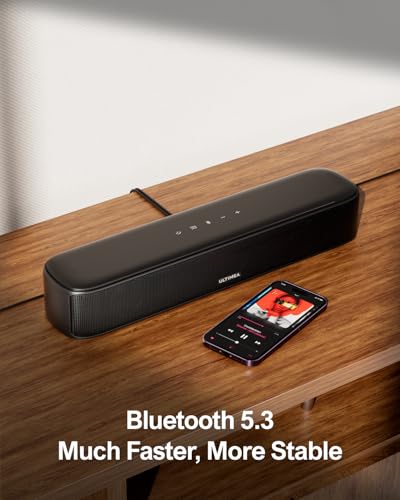
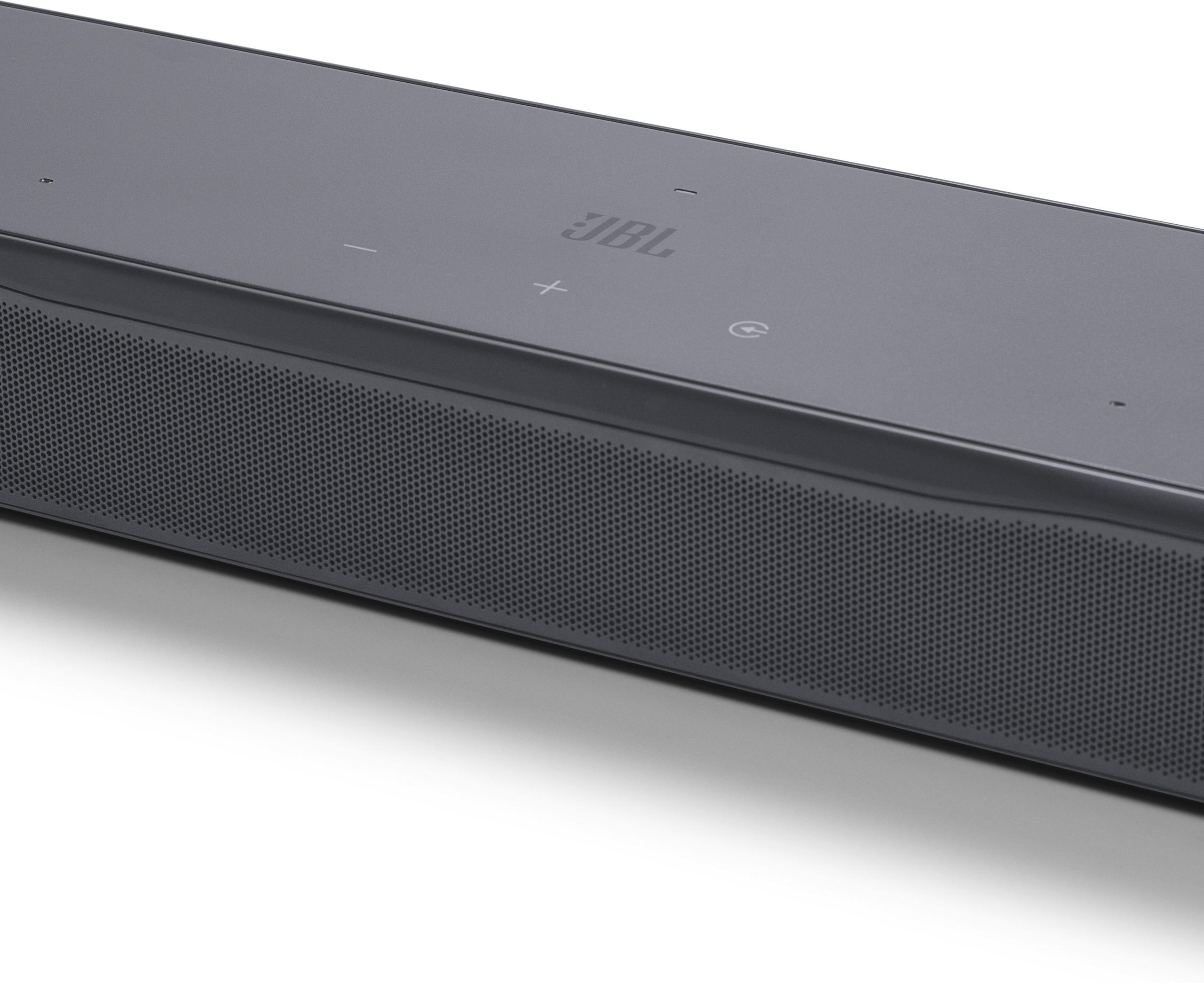
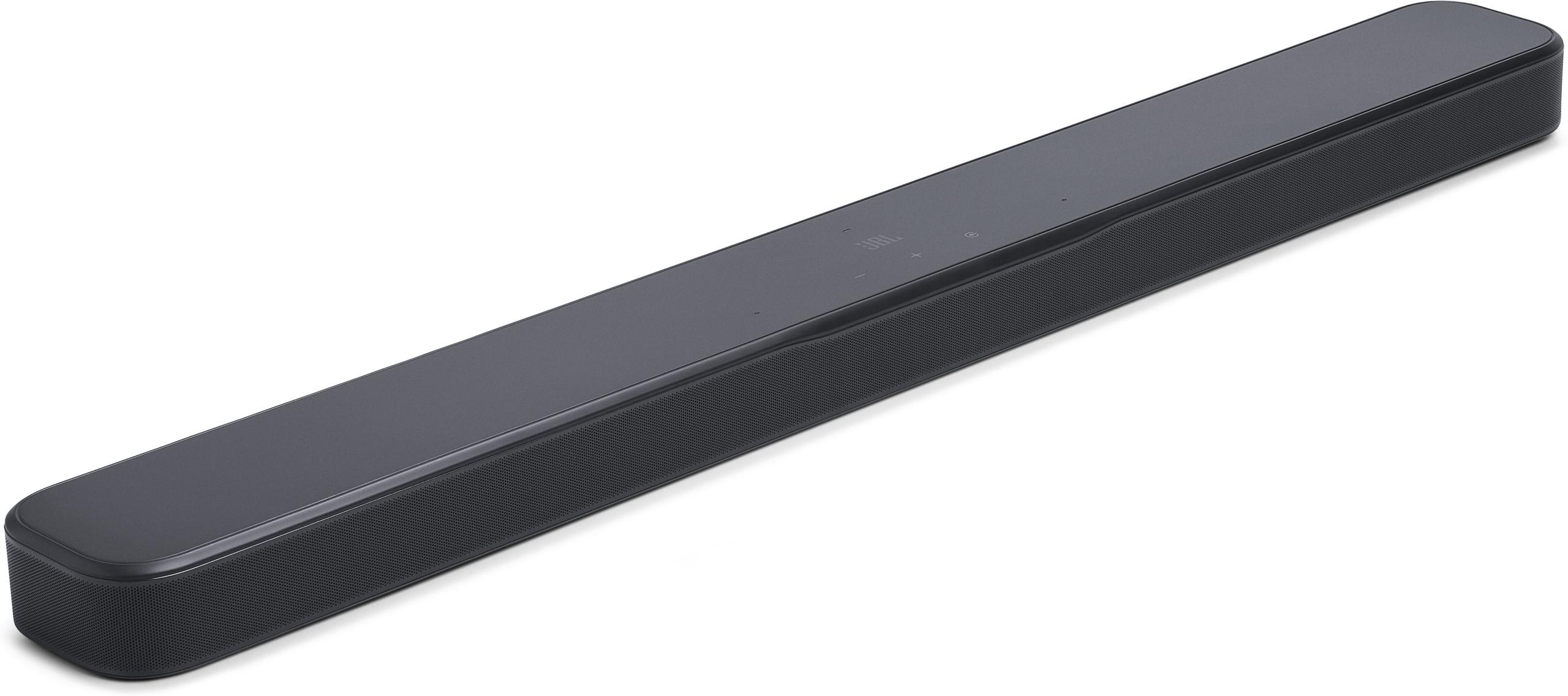

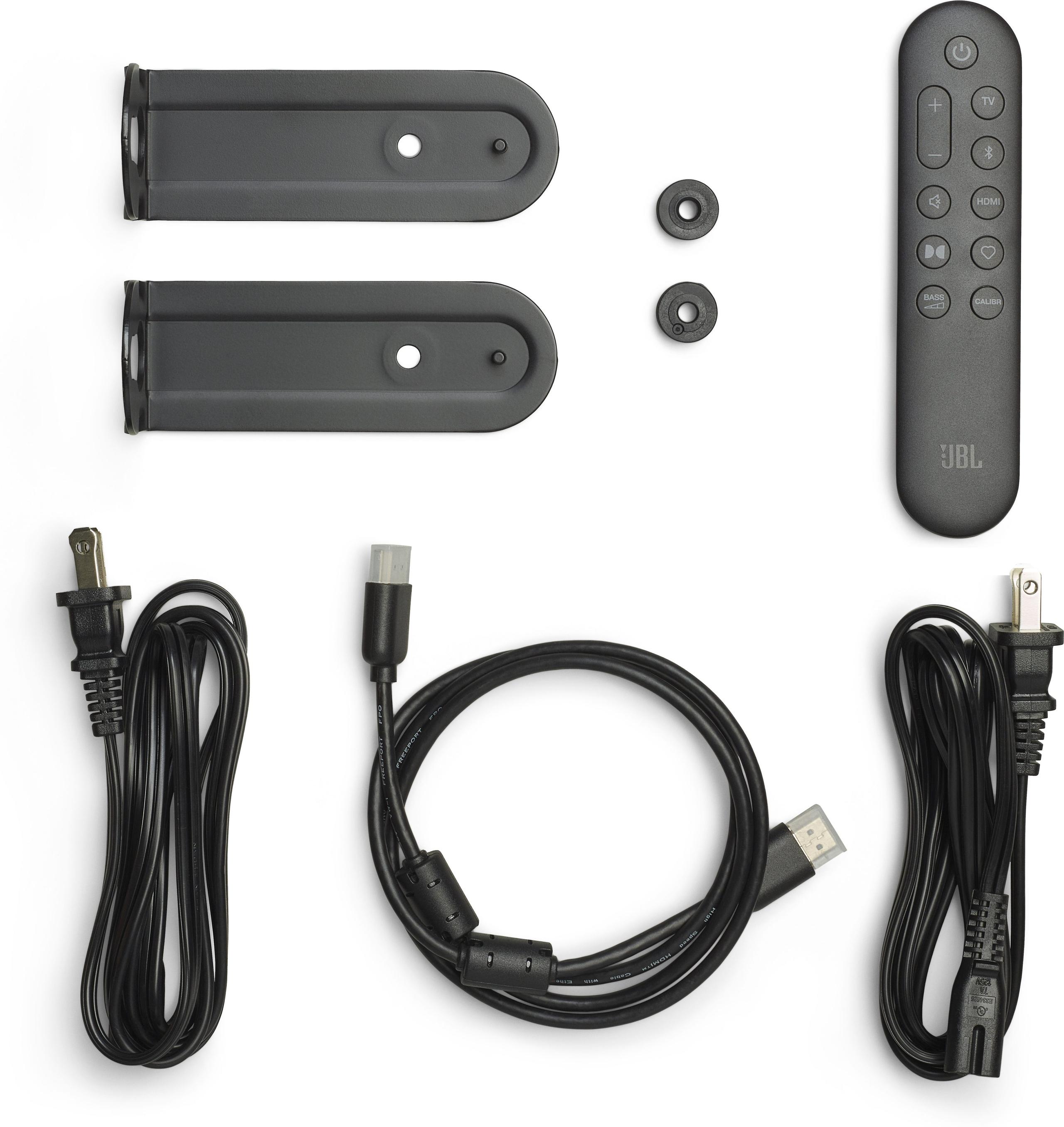

When your TV's built-in speakers make movie dialogue sound like it's coming from inside a tin can, it's time to upgrade. But the soundbar world has split into two fascinating camps: systems that use actual speakers positioned around your room, and incredibly smart single units that create the illusion of surround sound through advanced processing. The Ultimea Aura A40 and JBL Bar 300 MK2 perfectly represent these opposing philosophies.
Released in 2024, both systems target the sweet spot where performance meets affordability, but they take completely different approaches to solving the same problem. Understanding these differences will help you choose the system that matches how you actually live and listen.
Think of soundbars like choosing between a motorcycle and a car for your daily commute. Both get you there, but the experience and trade-offs are entirely different. The Ultimea Aura A40 is like that motorcycle – it requires more setup and attention, but delivers a visceral, authentic experience that can't be replicated any other way. The JBL Bar 300 MK2 is the luxury sedan – sophisticated, refined, and designed to handle everything you throw at it without breaking a sweat.
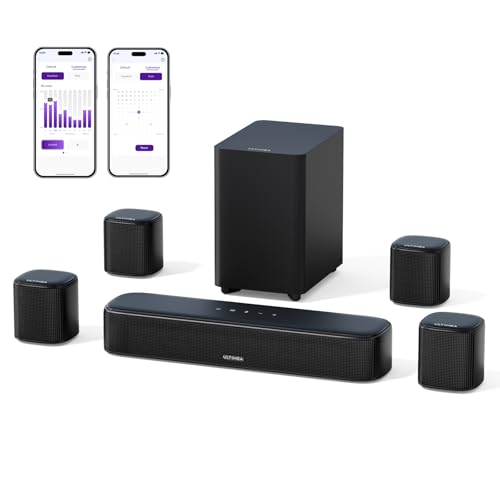
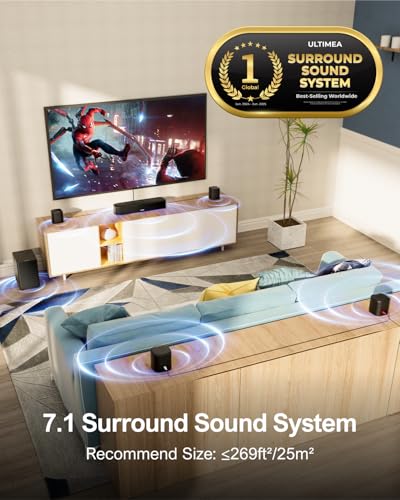
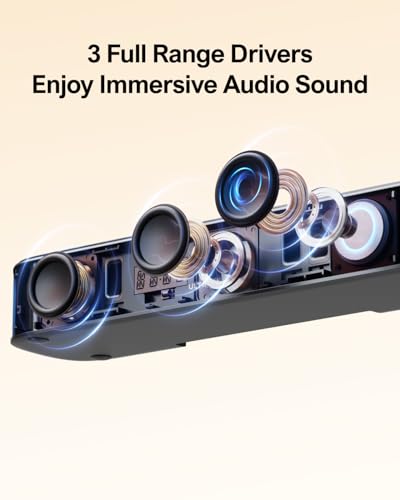
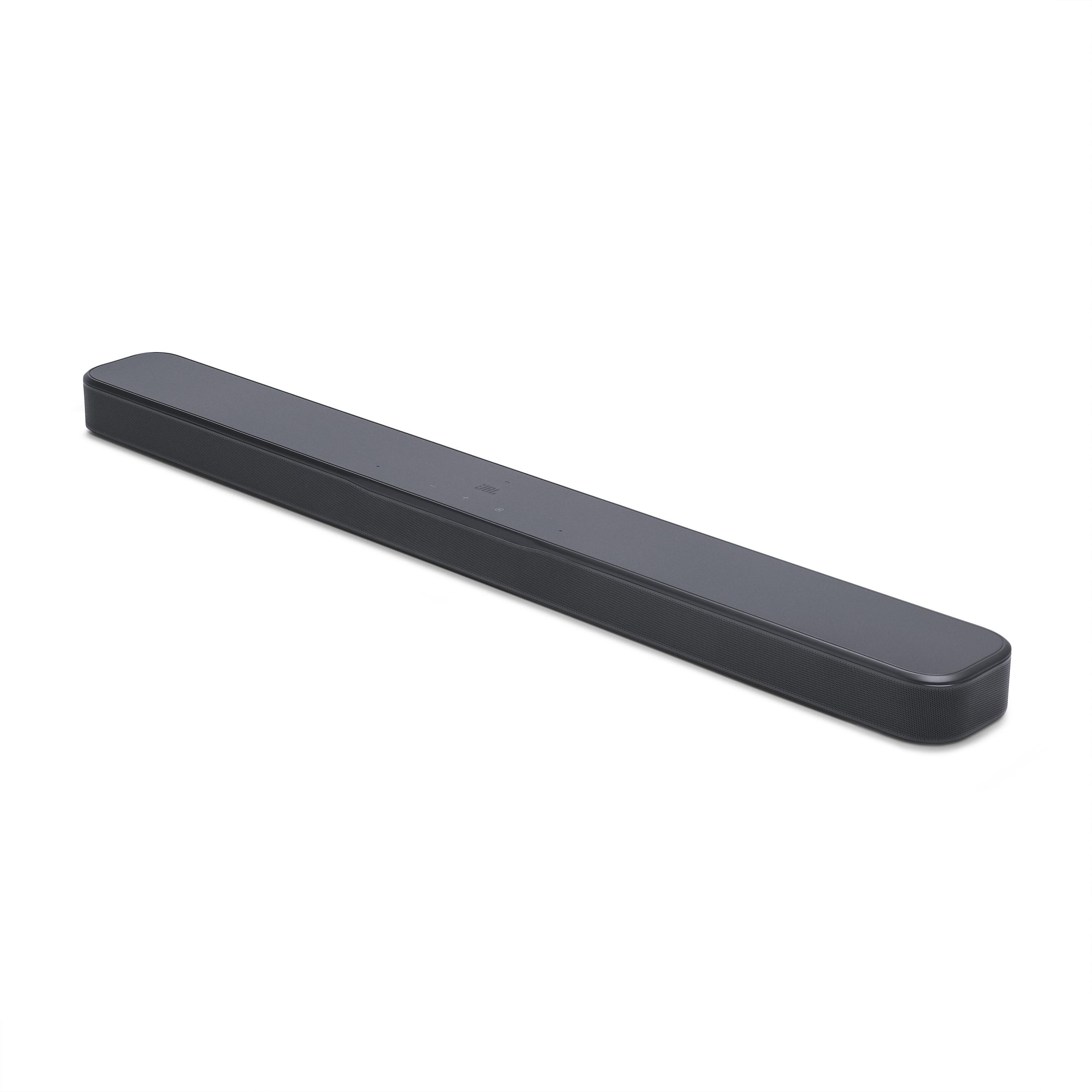
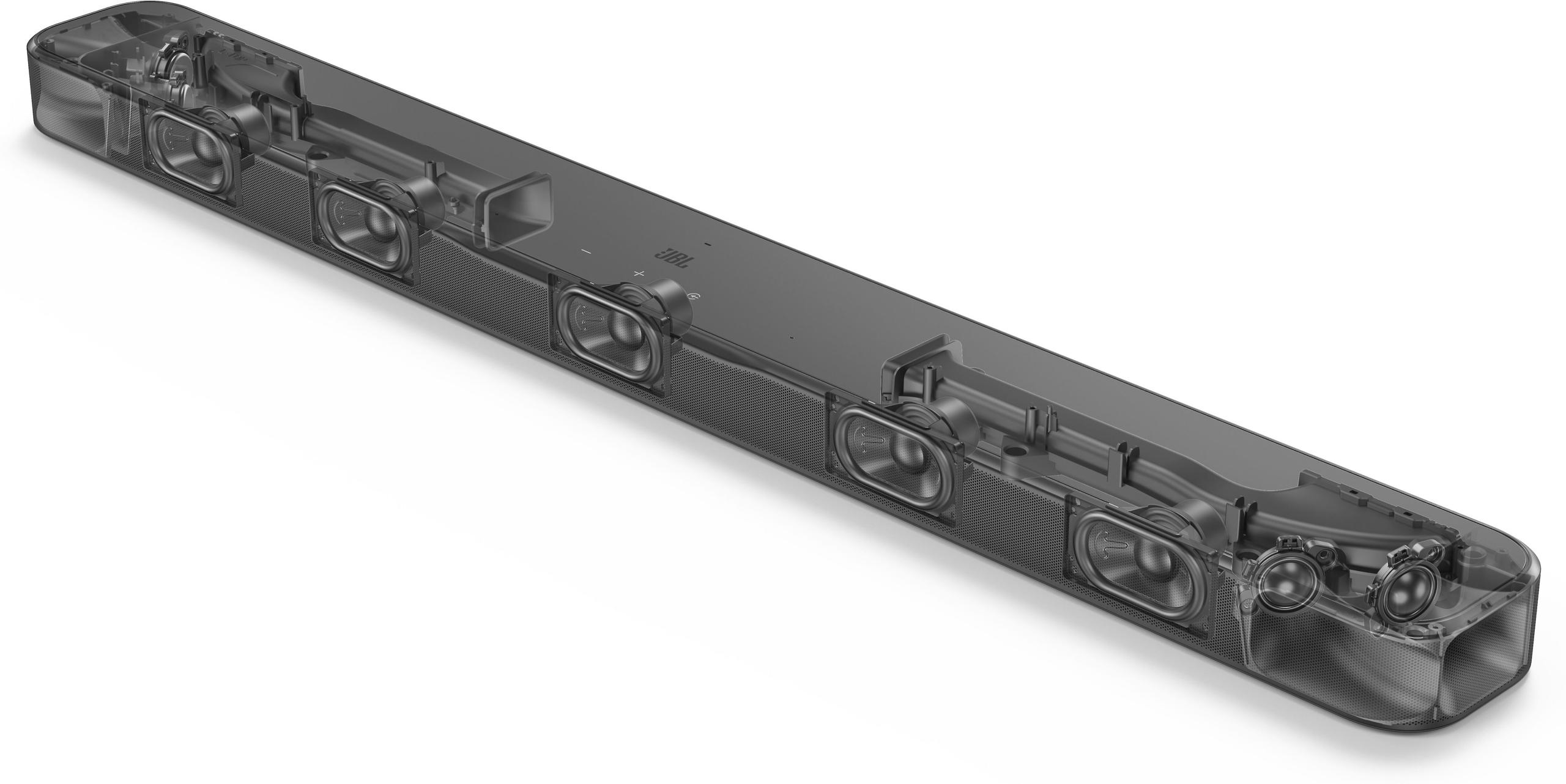
The fundamental difference lies in how they create that wraparound sound experience. The Aura A40 uses eight physical speakers scattered across five separate components: a main soundbar, four surround speakers, and a dedicated subwoofer (the big box that handles deep bass). When a helicopter flies overhead in a movie, you hear it moving from actual speakers positioned around your room. The JBL Bar 300 MK2 achieves similar effects using MultiBeam 3.0 technology – sophisticated digital processing that analyzes audio and bounces sound off your walls to create virtual surround effects from a single sleek unit.
Both approaches have evolved significantly since early soundbar technology emerged in the 2000s. Virtual surround processing, in particular, has made enormous leaps. Modern systems like the Bar 300 MK2 use room calibration algorithms that automatically adjust sound based on your specific space, something that would have seemed like science fiction just a few years ago.
Sound quality often comes down to a brutal truth: you can't cheat physics, but you can get pretty creative with it. The Ultimea Aura A40 delivers genuine 360-degree sound through physical speaker placement, which means when an action scene has bullets whizzing past your left ear, there's actually a speaker there making that happen. However, our research into user feedback reveals a significant caveat – the individual components aren't audiophile-grade. Multiple reviewers describe the sound signature as "tinny" and "metallic," with bass that's present but lacks the tight, controlled response you'd get from higher-end systems.
The frequency response tells part of the story. The Aura A40 handles frequencies from 65Hz to 18kHz, which covers most content adequately but doesn't extend into the deepest bass territory (those earth-shaking explosions that make your neighbor's dog nervous). Users consistently report needing to max out both subwoofer and surround levels to achieve satisfying output, suggesting the system is somewhat underpowered for its ambitious design.
In contrast, the JBL Bar 300 MK2 focuses its 450 watts of power through carefully engineered drivers in a single unit. JBL's decades of speaker expertise shine through in the sound signature – balanced, warm, and surprisingly robust for something you can lift with one hand. The PureVoice 2.0 technology deserves special mention here. This feature uses advanced algorithms to isolate and enhance dialogue frequencies, ensuring you never miss crucial plot points even when Michael Bay decides to blow up half the screen.
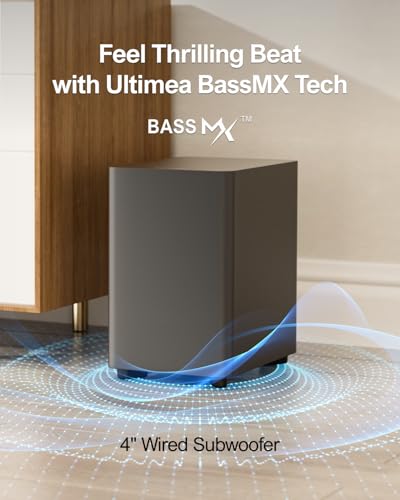
The bass comparison reveals an interesting paradox. The Aura A40 has a dedicated 4-inch subwoofer that should theoretically produce deeper bass, but user reports suggest it's "flabby and loose" – meaning it lacks the tight control that makes bass feel impactful rather than just loud. The Bar 300 MK2 achieves surprisingly punchy bass through integrated bass ports and advanced DSP (digital signal processing), though it can't match the raw output of a dedicated subwoofer when properly implemented.
This is where the fundamental design philosophies create dramatically different experiences. The Aura A40 uses what's called a "discrete" surround system – each channel has its own physical driver. When properly positioned, this creates an authentic three-dimensional soundfield that can pinpoint audio with surgical precision. Gaming enthusiasts particularly appreciate this, as you can genuinely hear footsteps approaching from specific directions.
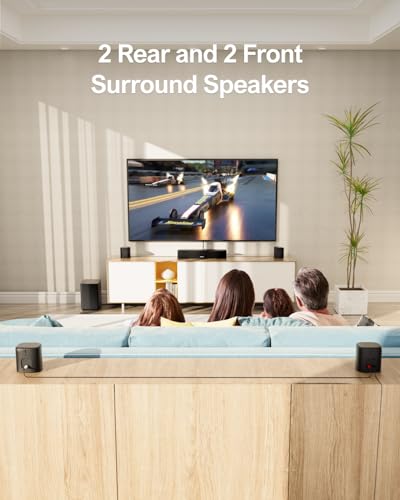
The setup involves running cables to four surround speakers (two front, two rear), with the clever touch of making the rear right speaker connect wirelessly after being powered. This hybrid approach reduces cable clutter while maintaining audio quality, though you'll still need to plan speaker placement carefully to avoid having wires stretched across walkways.
The JBL Bar 300 MK2 accomplishes similar immersion through virtual Dolby Atmos processing. Dolby Atmos, for those unfamiliar, is a technology that treats sounds as objects moving through three-dimensional space rather than fixed channels. The Bar 300 MK2 uses MultiBeam technology to bounce these "sound objects" off your walls and ceiling, creating the illusion that audio is coming from all around you.
The sophistication here is genuinely impressive. The system uses SmartDetails technology to preserve subtle audio nuances – those quiet environmental sounds that add realism to a scene. Combined with automatic room calibration, it adapts its processing to your specific space within seconds of being powered on.
However, physics still matters. Virtual surround can create a wide, enveloping soundstage, but it can't replicate the precise directionality of having an actual speaker behind your right shoulder. The experience is more like being in a well-designed concert hall versus sitting in the exact center of a multi-speaker recording studio.
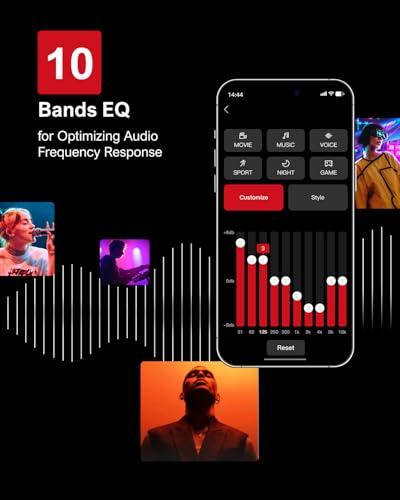
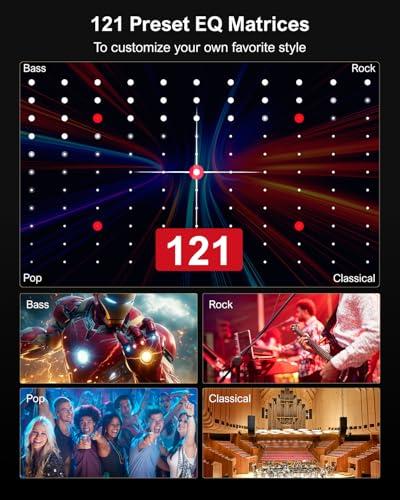
The Ultimea Aura A40 shines in its customization depth through the Ultimea Smart App. This isn't just basic volume control – you get 121 preset equalizer matrices across different genres (Bass, Pop, Classical, Rock), six listening modes optimized for specific content types, and a full 10-band equalizer for granular control. Most impressively, you can adjust surround levels independently for each of the four surround speakers, allowing fine-tuning that matches your room's acoustics perfectly.
This level of control appeals to audio enthusiasts who enjoy tweaking settings, but it also reveals the system's weakness: it often requires extensive adjustment to sound acceptable. Multiple users report needing to maximize both subwoofer and surround settings just to achieve satisfying output.
The JBL Bar 300 MK2 takes the opposite approach through the JBL One app. Instead of overwhelming users with options, it provides professional-grade automatic calibration and streamlined controls. The system's SmartDetails technology and room optimization algorithms handle most of the heavy lifting, delivering excellent sound with minimal user intervention.
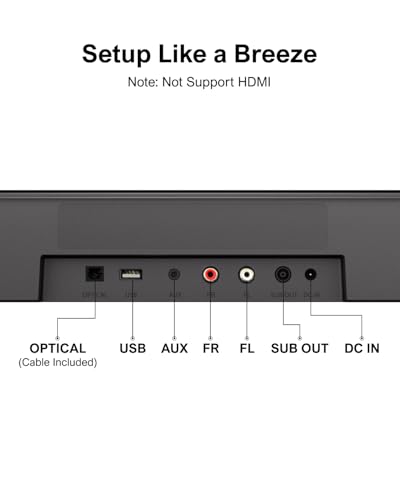
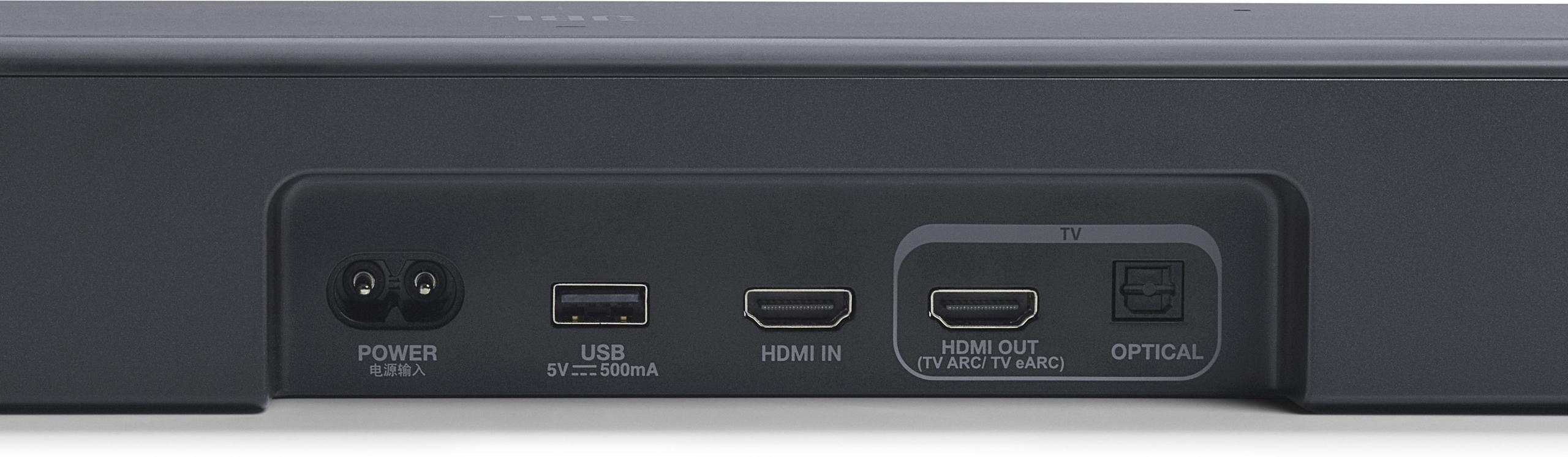
This is where the age difference between design philosophies becomes stark. The Aura A40 relies on traditional connections: optical, AUX, USB, and Bluetooth 5.3. While these cover basic needs, the lack of HDMI connectivity is a significant limitation in 2024. You can't pass through 4K video, can't access advanced audio codecs like Dolby TrueHD, and can't use your TV's advanced audio features like eARC (Enhanced Audio Return Channel, which allows your TV to send high-quality audio back to the soundbar).
The JBL Bar 300 MK2 embraces modern connectivity with HDMI eARC, 4K Dolby Vision passthrough, and comprehensive streaming integration. It works natively with AirPlay, Chromecast, and Alexa Multi-Room Music, connecting to over 300 streaming services directly. The dual-band Wi-Fi enables automatic firmware updates, ensuring the system improves over time.
For home theater enthusiasts, this connectivity difference is crucial. Modern streaming services increasingly offer enhanced audio formats that require HDMI connections to access. The Bar 300 MK2 future-proofs your setup, while the Aura A40 locks you into current-generation audio quality.
For cinematic experiences, both systems have distinct strengths. The Aura A40 excels with action movies where directional effects matter most. When the Death Star explodes or dinosaurs are stalking through the kitchen, having actual speakers positioned around your room creates unmatched immersion. The dialogue clarity remains excellent even during the loudest sequences, thanks to the dedicated center channel in the main soundbar.
The JBL Bar 300 MK2 provides more balanced performance across different movie genres. Its superior overall sound quality makes it better suited for dramas, comedies, and films where dialogue and musical score are as important as explosive effects. The PureVoice 2.0 technology particularly shines with period pieces or foreign films where catching every word matters.
Music reproduction reveals the biggest quality gap between these systems. The Aura A40 handles music adequately but clearly wasn't optimized for critical listening. The "metallic" sound signature that some users report becomes more noticeable with music, where the lack of midrange warmth and bass control becomes apparent.
The Bar 300 MK2 approaches audiophile territory for its category. JBL's acoustic engineering creates a balanced, engaging presentation that works across genres. The extensive streaming integration means you can access high-quality sources directly, bypassing potential quality losses from Bluetooth compression.
Gaming creates unique audio demands, particularly for competitive players who rely on positional audio for tactical advantages. The Aura A40 delivers genuine three-dimensional positioning that can provide competitive advantages in first-person shooters or battle royale games. You'll hear enemy footsteps with pinpoint accuracy, making those crucial split-second reactions more reliable.
The Bar 300 MK2 provides excellent spatial awareness through virtual processing, though it can't match the surgical precision of physical surround speakers. For story-driven games or casual gaming, the superior overall sound quality creates more engaging experiences.
At the time of writing, both systems occupy similar price ranges in the budget-to-mid-range soundbar segment, making the decision more about matching features to your priorities than finding the cheaper option.
You're willing to invest time in proper setup and positioning to achieve authentic surround sound on a budget. The Aura A40 appeals to users who prioritize the genuine surround experience over pristine sound quality. It's particularly compelling for dedicated home theater rooms where you can position speakers optimally and aren't concerned about aesthetic compromises.
Gaming enthusiasts who need precise directional audio for competitive advantages will appreciate the authentic positioning. The extensive customization options also appeal to audio tweakers who enjoy fine-tuning their systems.
However, you should understand the trade-offs: sound quality limitations, complex setup, no HDMI connectivity, and limited upgrade path. This system works best for users who view it as a stepping stone toward more serious home theater systems or who specifically need the positioning accuracy for gaming.
Users who want premium sound quality with minimal complexity. The Bar 300 MK2 delivers sophisticated audio processing and build quality that rivals systems costing significantly more. It's ideal for living spaces where aesthetic integration matters, apartments where running speaker cables isn't practical, or users who want a "set it and forget it" experience.
The comprehensive connectivity and streaming integration make it genuinely future-proof, capable of handling whatever audio formats and services emerge over the next several years. For users who consume varied content – movies, music, gaming, streaming – the Bar 300 MK2 provides the most versatile, highest-quality experience.
Music lovers particularly benefit from the superior sound signature and extensive streaming options, while the automatic calibration ensures optimal performance regardless of room acoustics knowledge.
The choice ultimately depends on your priorities and living situation. The Ultimea Aura A40 delivers an authentic surround experience that can't be replicated through processing alone, but demands compromises in sound quality and convenience. The JBL Bar 300 MK2 provides superior overall performance and integration, but can't match the positional accuracy of physical surround speakers.
For most users, the JBL Bar 300 MK2 represents the better long-term investment. Its combination of sound quality, convenience, and future-proof connectivity creates a more satisfying daily experience. The automatic calibration and professional tuning deliver excellent results immediately, while the comprehensive streaming integration grows more valuable over time.
The Aura A40 makes sense for specific use cases: budget-conscious users who prioritize authentic surround positioning, gaming enthusiasts who need precise directional audio, or home theater hobbyists who enjoy the setup and customization process. Just understand that you're trading overall refinement for specific capabilities.
Both systems represent significant upgrades over TV speakers, but they serve different philosophies about how home audio should work. Choose the Aura A40 if you want to feel every sound effect precisely positioned around you. Choose the Bar 300 MK2 if you want everything to sound better, more convenient, and ready for whatever comes next in home entertainment technology.
| Ultimea Aura A40 7.1 Channel Soundbar System | JBL Bar 300 MK2 Soundbar |
|---|---|
| System Design - Physical speakers vs virtual processing determines immersion quality | |
| True 7.1 channel with 8 physical speakers (mainbar + 4 surround + subwoofer) | 5.0 channel all-in-one unit with virtual Dolby Atmos processing |
| Total Power Output - More power means louder, more dynamic sound | |
| 330W peak power across all speakers | 450W maximum output from premium drivers |
| Surround Sound Implementation - Real positioning vs smart algorithms | |
| Physical surround speakers with SurroundX technology for authentic directional audio | MultiBeam 3.0 virtual surround with automatic room calibration |
| Bass Performance - Deep bass requires either dedicated subwoofer or advanced engineering | |
| Dedicated 4-inch wired subwoofer with BassMX technology (though reported as "loose" by users) | Integrated bass ports in single unit (surprisingly punchy but limited by physics) |
| Connectivity Options - Modern HDMI vs traditional inputs affects compatibility | |
| Optical, AUX, USB, Bluetooth 5.3 (no HDMI limits high-res audio access) | HDMI eARC, Optical, Wi-Fi, Bluetooth 5.0, plus streaming services integration |
| Setup Complexity - More speakers mean better positioning but harder installation | |
| Requires positioning 4 surround speakers with mix of wired/wireless connections | Single unit with automatic calibration - plug and play setup |
| Audio Customization - Control depth vs ease of use | |
| 121 preset EQ matrices, 10-band equalizer, 13 adjustable surround levels via Ultimea app | Streamlined JBL One app with professional auto-tuning and basic EQ controls |
| Sound Quality Character - Authentic positioning vs refined audio engineering | |
| Genuine 360° sound field but "tinny, metallic" signature requiring extensive tuning | Balanced, warm JBL signature with superior midrange and dialogue clarity |
| Streaming and Smart Features - Future-proofing through connected services | |
| Basic Bluetooth streaming only, OTA firmware updates | AirPlay, Chromecast, 300+ streaming services, voice assistant compatibility |
| Ideal Room Size - Physical constraints affect optimal performance | |
| 108-270 sq ft with proper speaker positioning space required | Any size room with automatic acoustic adaptation |
| Best Use Cases - Matching system strengths to your priorities | |
| Gaming, action movies, users wanting authentic surround on budget | All-around performance, music, convenience, future-proof connectivity |
For true home theater immersion, the Ultimea Aura A40 provides authentic 7.1 surround sound with physical speakers positioned around your room, creating genuine directional effects for movies. However, the JBL Bar 300 MK2 offers superior overall sound quality and easier setup with virtual Dolby Atmos processing that's excellent for most home theater applications.
The fundamental difference is system design: the Ultimea Aura A40 uses eight physical speakers across multiple components (mainbar, four surround speakers, and subwoofer) for real surround sound, while the JBL Bar 300 MK2 is an all-in-one unit that creates virtual surround effects through advanced processing and room calibration.
The Ultimea Aura A40 includes a dedicated 4-inch subwoofer that should theoretically provide deeper bass, but user reports indicate it sounds "loose" and requires maximum settings. The JBL Bar 300 MK2 achieves surprisingly punchy bass through integrated design and superior engineering, though it can't match a properly tuned dedicated subwoofer.
Yes, HDMI eARC is increasingly important for modern TVs and streaming services. The JBL Bar 300 MK2 includes HDMI eARC with 4K passthrough, enabling high-quality audio formats and seamless TV integration. The Ultimea Aura A40 lacks HDMI entirely, limiting you to optical and Bluetooth connections.
The JBL Bar 300 MK2 offers true plug-and-play setup with automatic room calibration that optimizes sound instantly. The Ultimea Aura A40 requires positioning four surround speakers around your room and running cables, making setup significantly more complex but potentially more rewarding for dedicated users.
Both support Bluetooth streaming, but the JBL Bar 300 MK2 offers superior connectivity with Wi-Fi, AirPlay, Chromecast, and direct access to over 300 streaming services. The Ultimea Aura A40 is limited to Bluetooth 5.3 streaming and basic USB playback.
The JBL Bar 300 MK2 delivers significantly better music performance with balanced, warm sound signature and superior midrange clarity. The Ultimea Aura A40 handles music adequately but users report a "metallic" sound character that becomes more noticeable with musical content compared to movies.
For competitive gaming requiring precise directional audio, the Ultimea Aura A40 excels with genuine 360-degree positioning that helps locate enemies accurately. The JBL Bar 300 MK2 provides good spatial awareness through virtual processing but can't match the surgical precision of physical surround speakers for gaming advantages.
The JBL Bar 300 MK2 features PureVoice 2.0 technology specifically designed to enhance dialogue intelligibility, ensuring clear speech even during loud action scenes. While the Ultimea Aura A40 also maintains good dialogue clarity through its dedicated center channel, the JBL's processing is more sophisticated.
The Ultimea Aura A40 provides extensive customization with 121 preset EQ matrices, 10-band equalizer, and individual surround level adjustments through its app. The JBL Bar 300 MK2 focuses on automatic optimization with professional-grade room calibration and streamlined controls rather than manual tweaking.
The JBL Bar 300 MK2 is ideal for apartments with its compact single-unit design, no cable runs required, and automatic acoustic adaptation to any space. The Ultimea Aura A40 needs space for four surround speakers and cable management, making it less practical for typical apartment layouts.
The JBL Bar 300 MK2 is more future-proof with HDMI eARC, comprehensive streaming integration, automatic firmware updates, and compatibility with emerging audio formats. The Ultimea Aura A40 lacks modern connectivity standards and relies on traditional inputs that may become obsolete as streaming services advance.
We've done our best to create useful and informative comparisons to help you decide what product to buy. Our research uses advanced automated methods to create this comparison and perfection is not possible - please contact us for corrections or questions. These are the sites we've researched in the creation of this article: youtube.com - walmart.com - youtube.com - ultimea.com - homestudiobasics.com - ultimea.co - youtube.com - eu.ultimea.com - walmart.com - device.report - bestbuy.com - manuals.plus - community.ultimea.com - judge.me - support.ultimea.com - geekmaxi.com - provantage.com - bestbuy.com - youtube.com - uk.whatgeek.com - homecinemachoice.com - retailspecs.com - hometechnologyreview.com - whathifi.com - news.jbl.com - engadget.com - crutchfield.com - harmanaudio.com - techradar.com - bestbuy.com - jbl.com - sweech.co.ke - jbl.com - jbl.com.sg - mm.jbl.com - abcwarehouse.com - harmanaudio.com - sweetwater.com - ro.harmanaudio.com - dell.com - jbl.co.nz

Privacy Policy
Terms and Conditions - Affiliate Policy
Home Security
© Copyright 2008-2026.
11816 Inwood Rd #1211, Dallas, TX 75244