

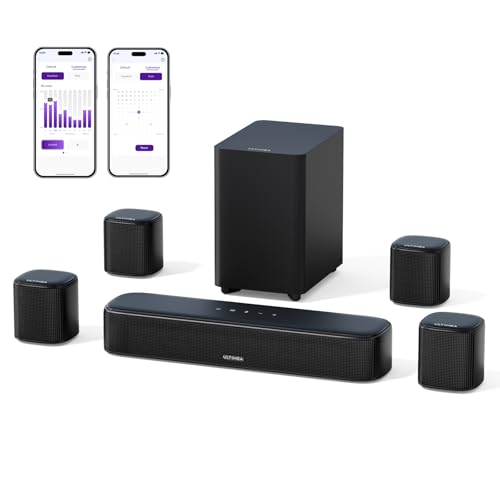
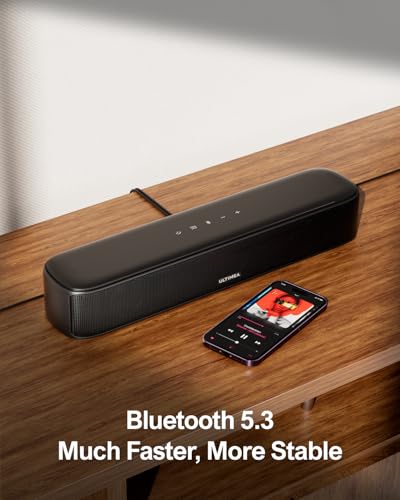
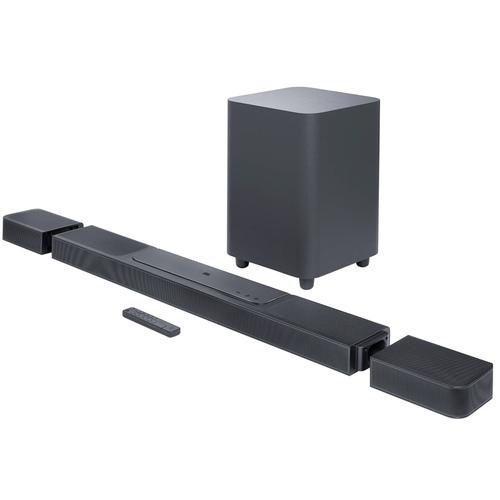
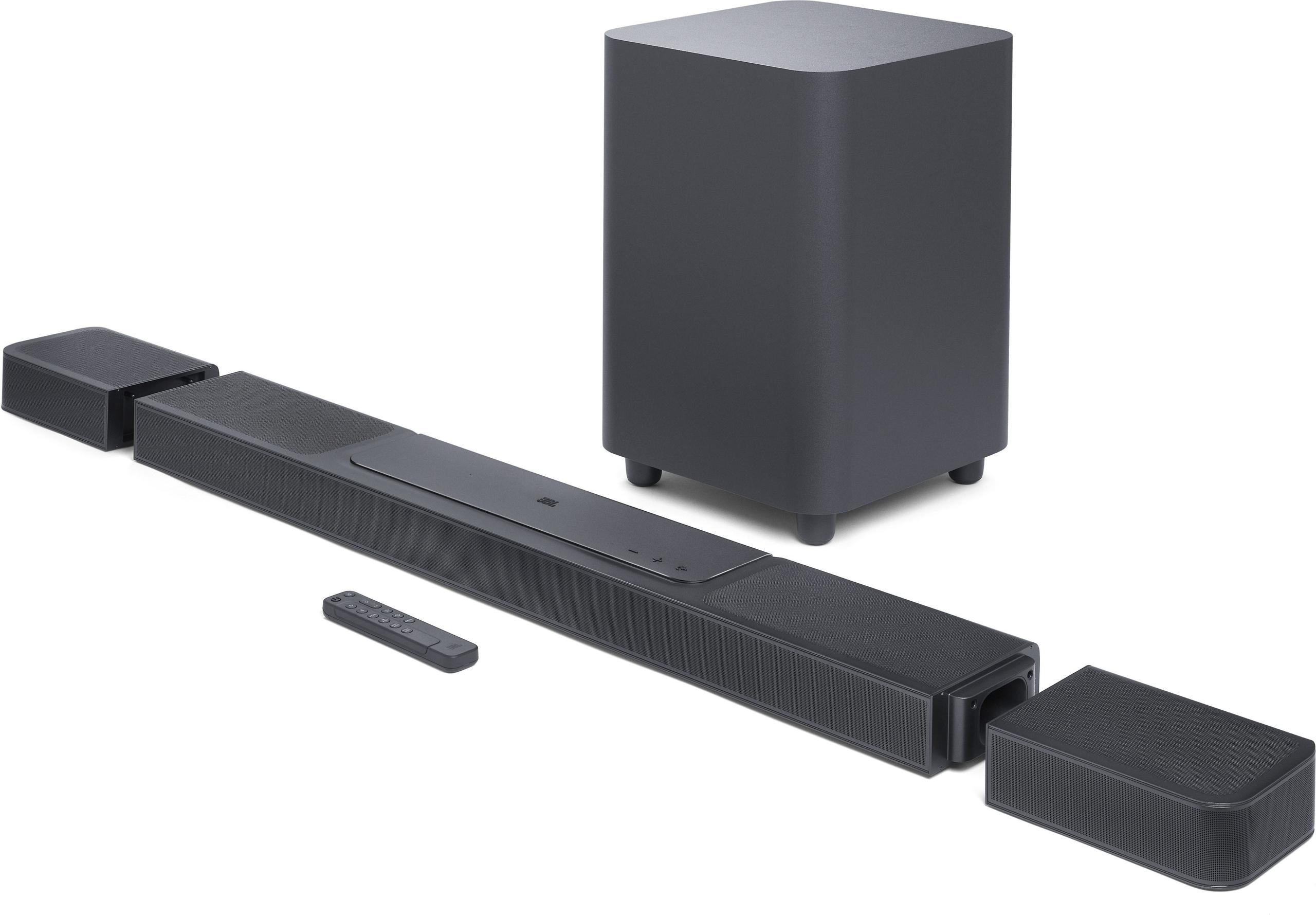
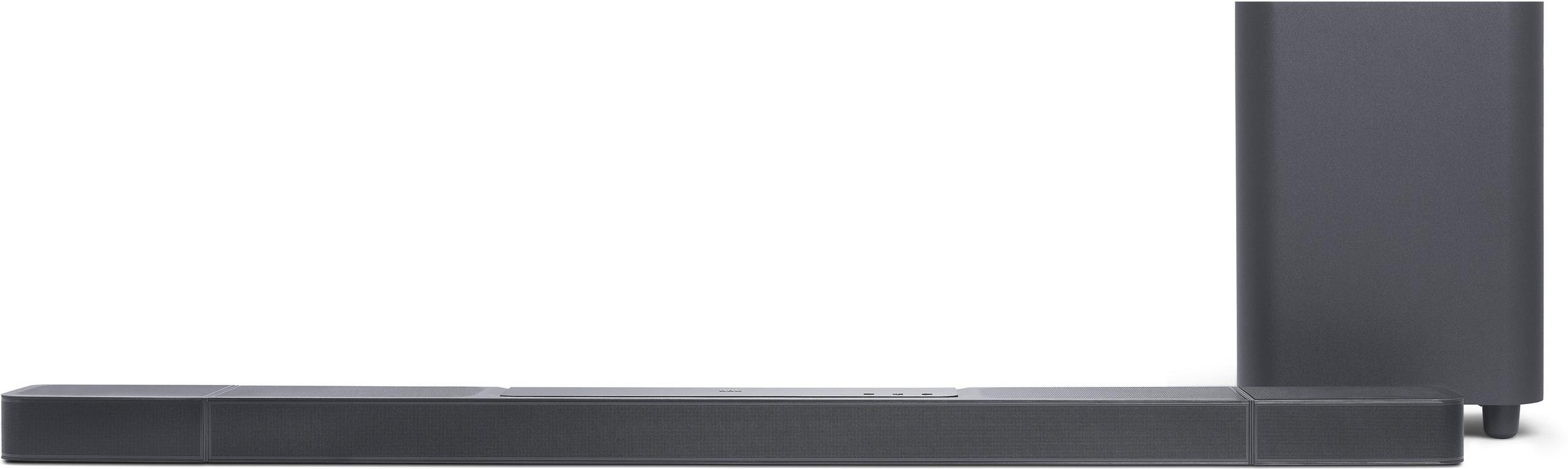



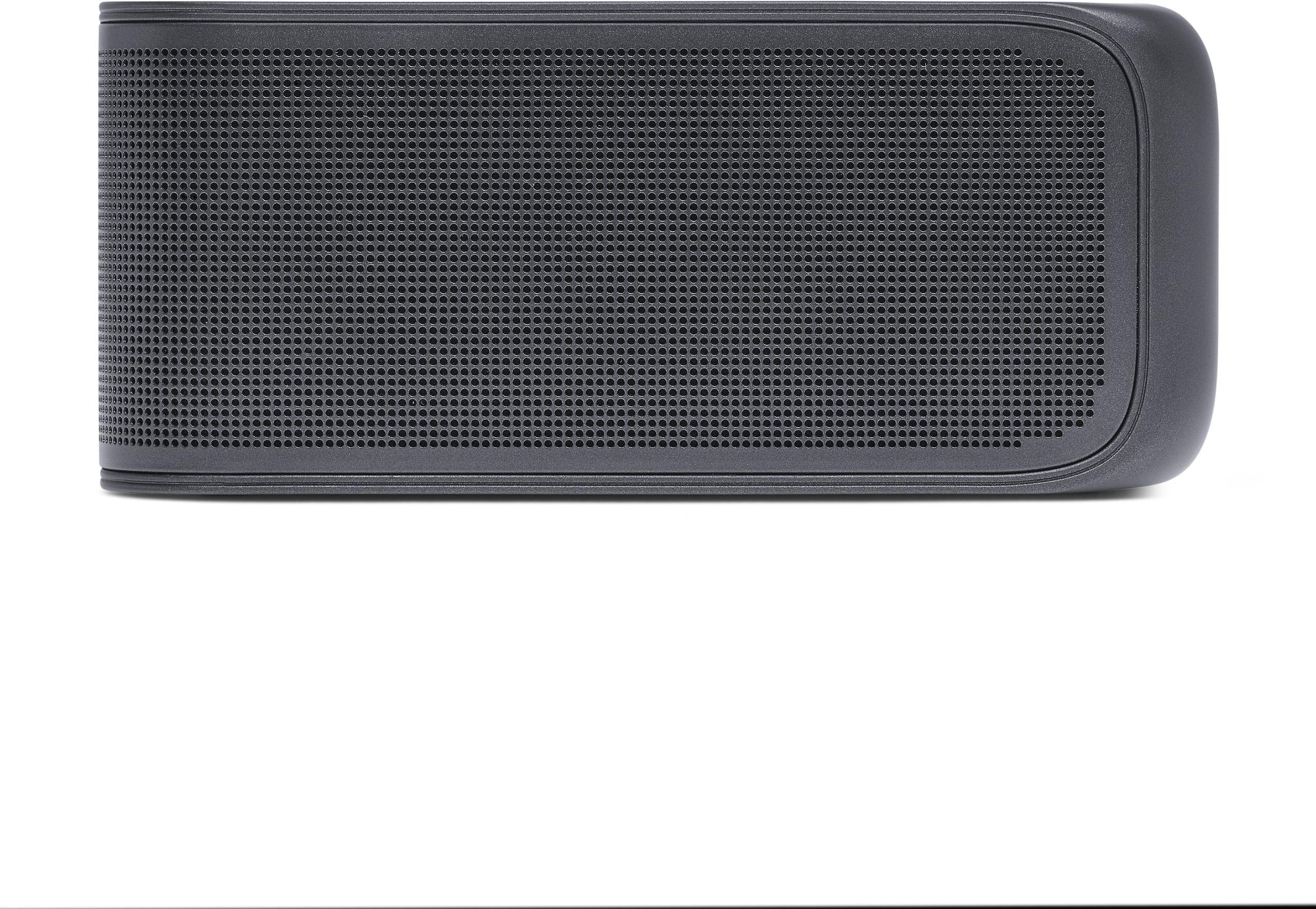
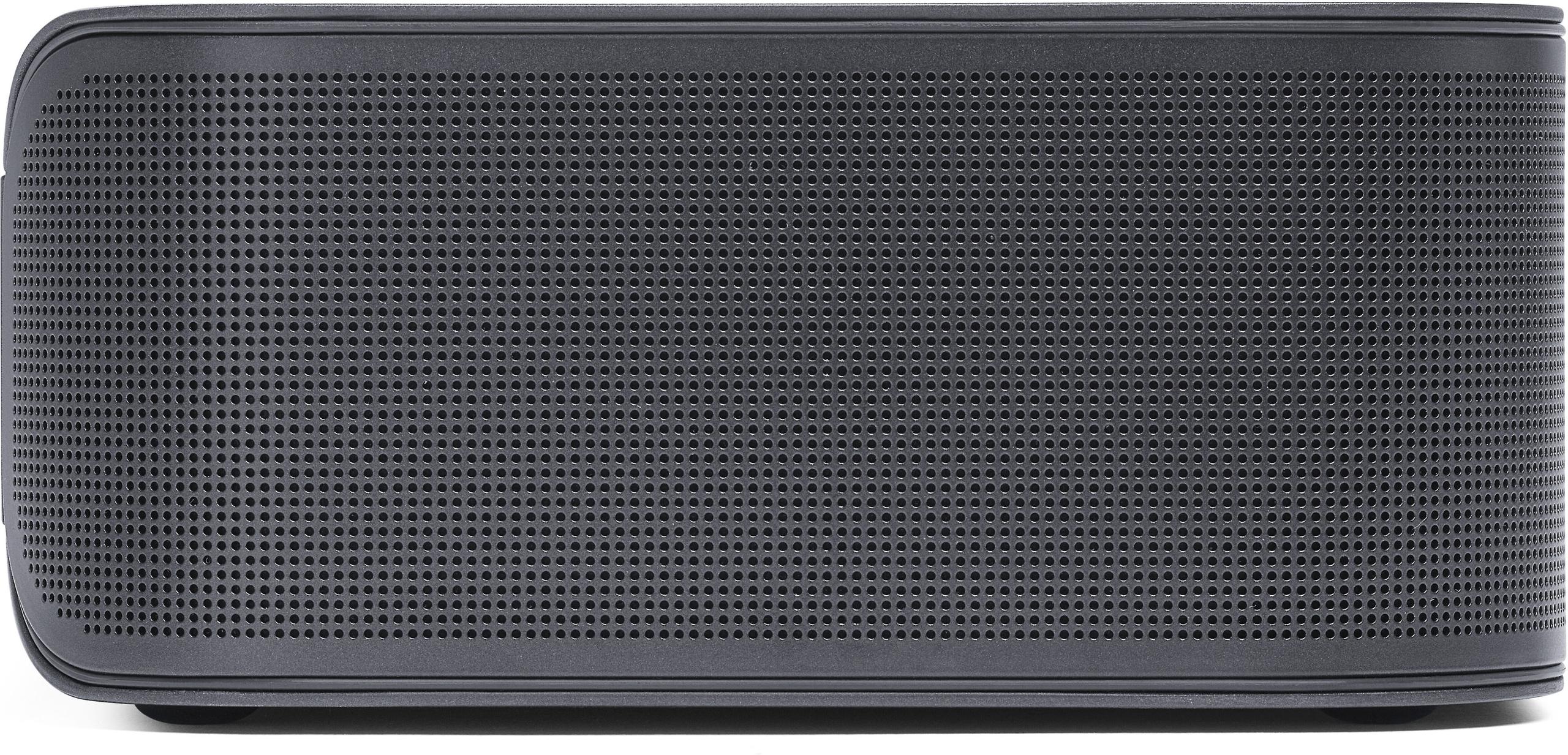
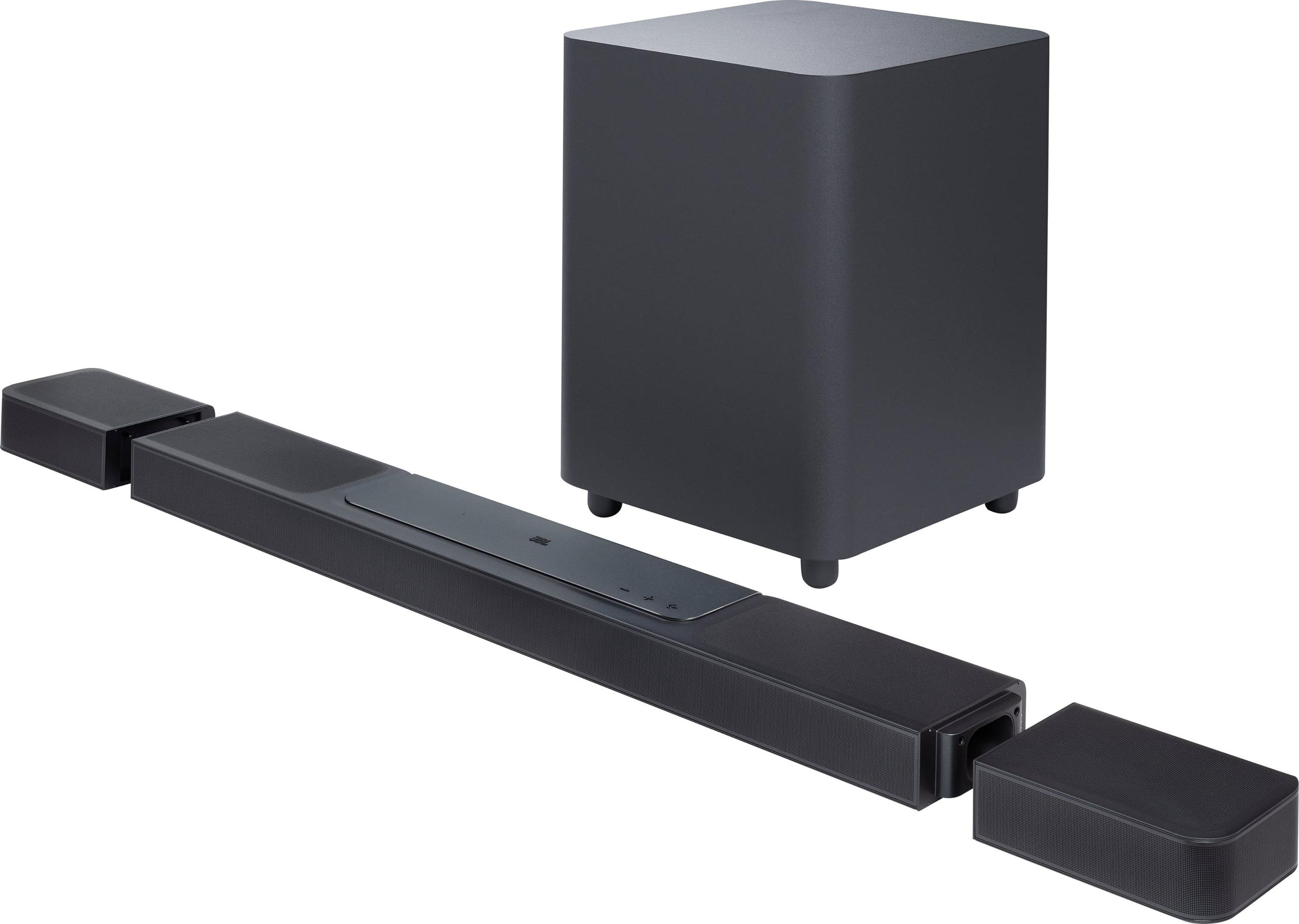
When your TV's built-in speakers leave action scenes feeling flat and dialogue getting lost in the mix, upgrading to a soundbar becomes a priority. But the soundbar market has exploded into dozens of categories and price ranges, making the choice overwhelming. Today we're comparing two fundamentally different approaches: the budget-friendly Ultimea Aura A40 with its physical surround speakers, and the premium JBL Bar 1300X delivering true Dolby Atmos immersion.
Before diving into specifics, it's crucial to understand what separates basic soundbars from advanced home theater systems. The most important factor is channel configuration—essentially how many separate audio streams the system can handle simultaneously. A 2.1 system has left, right, and subwoofer channels. A 7.1 system adds center, side surrounds, and rear surrounds. The newest Atmos systems use configurations like 11.1.4, where the final number represents height channels that fire sound upward to bounce off your ceiling, creating overhead effects.
Virtual surround processing uses digital algorithms to simulate surround sound from fewer physical speakers, while true surround systems use discrete speakers placed around your room. This distinction becomes critical when comparing the Ultimea Aura A40 and JBL Bar 1300X, as they represent opposite philosophies in achieving immersive audio.
The Ultimea Aura A40, released in 2024, takes the physical surround approach at a budget price point. Meanwhile, the JBL Bar 1300X, launched in 2023, represents JBL's flagship technology with true Dolby Atmos processing and wireless innovation that wasn't possible in earlier soundbar generations.
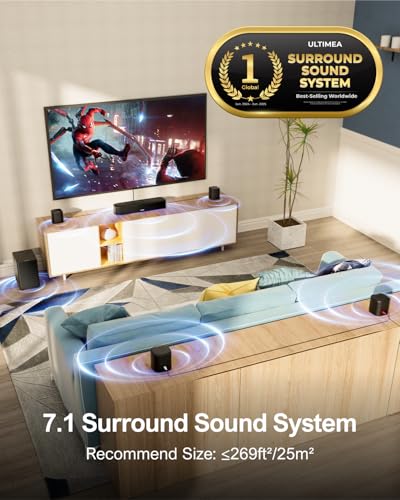
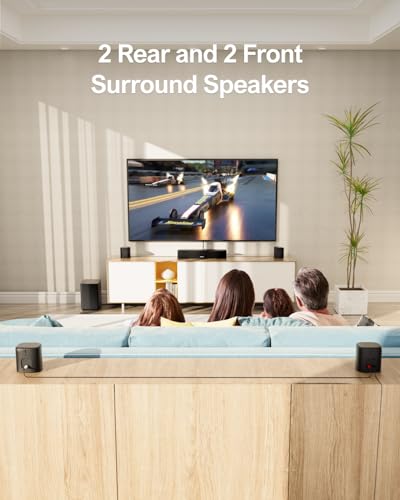
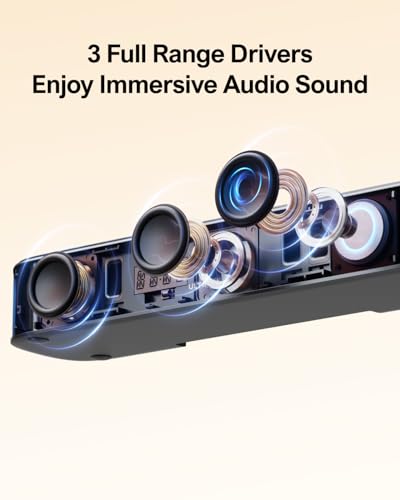
The Ultimea Aura A40 employs a 7.1 channel virtual surround configuration with four physical surround speakers—two positioned at the front of your room and two at the rear. This creates a legitimate surround sound field in the horizontal plane, meaning effects can move left to right and front to back convincingly. The system uses three main channels in the soundbar itself (left, center, right) plus the four surrounds and a subwoofer.
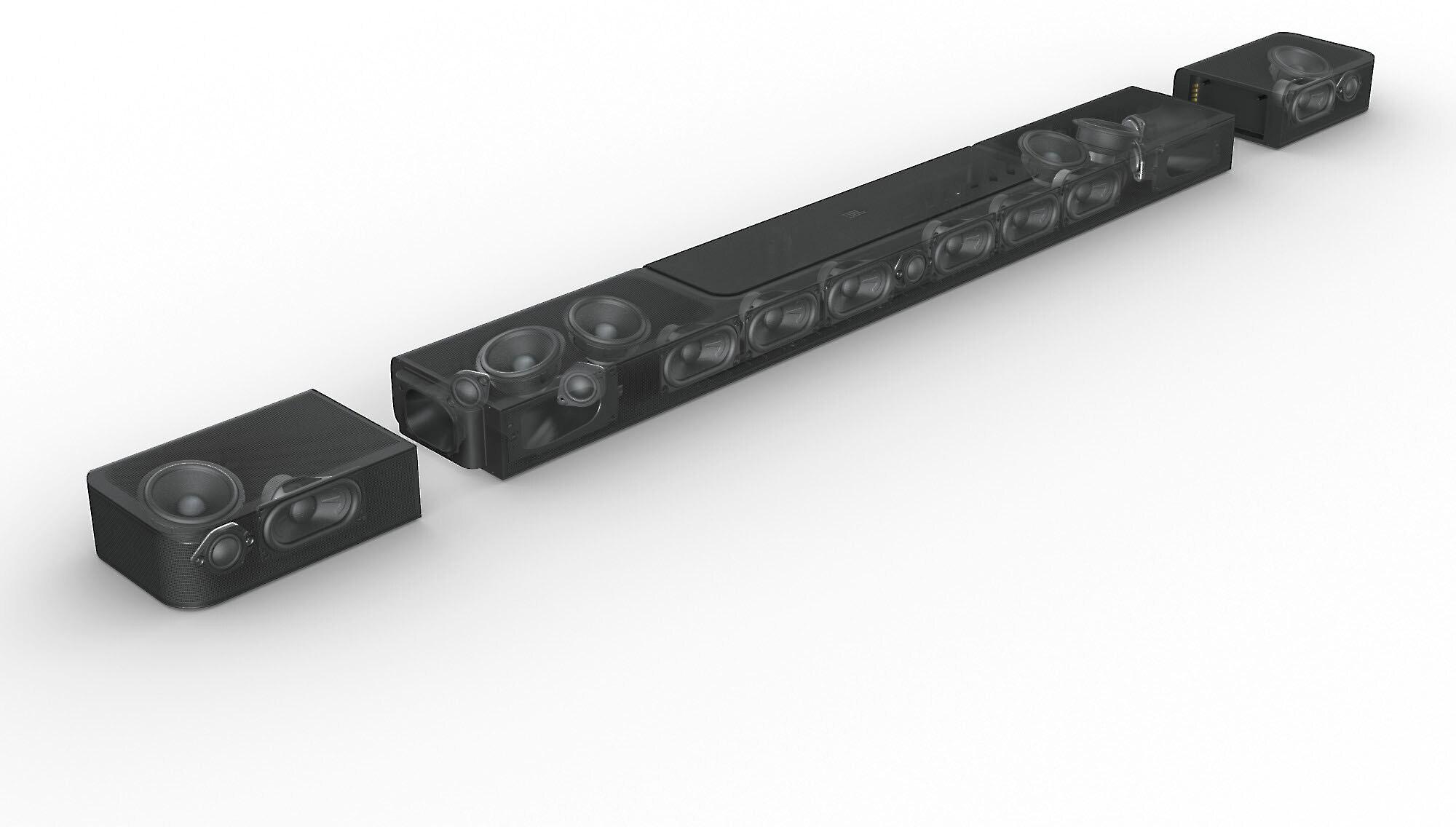
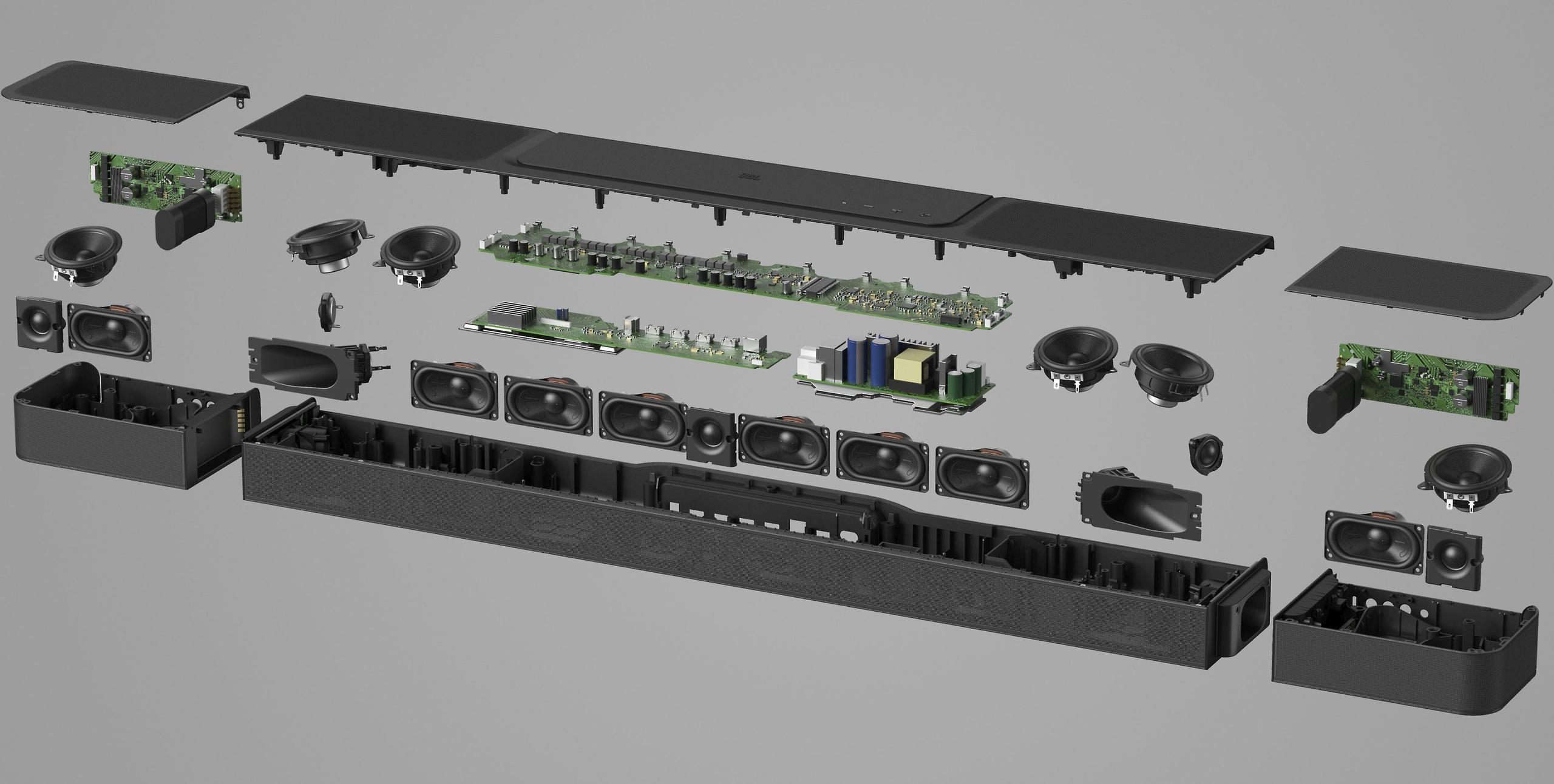
However, the JBL Bar 1300X operates on an entirely different level with its 11.1.4 Dolby Atmos configuration. This means eleven main channels, one subwoofer channel, and four dedicated height channels created by six up-firing drivers—four in the main soundbar and two in the detachable surround speakers. These up-firing drivers bounce sound off your ceiling to create genuine overhead effects, something the Ultimea simply cannot achieve.
The difference becomes apparent when watching action movies. With the Ultimea Aura A40, helicopters move convincingly from front to back, but they stay locked to the horizontal plane. The JBL Bar 1300X can place that helicopter above you, moving it three-dimensionally through space as it would in reality.
Both systems use proprietary processing to enhance their capabilities. The Ultimea Aura A40 employs SurroundX technology, which analyzes incoming audio and distributes it across the four surround speakers to create spatial positioning. This works well for content mixed in surround formats, but it's fundamentally limited by the lack of height information.
The JBL Bar 1300X combines multiple advanced technologies. Its MultiBeam processing uses digital beamforming—essentially steering sound waves in specific directions—to widen the soundstage even from the main bar alone. When combined with true Dolby Atmos and DTS:X processing, which contains actual height channel information recorded during production, the result is far more sophisticated three-dimensional audio.
The power disparity between these systems is substantial and immediately audible. The Ultimea Aura A40 produces 330 watts of peak power distributed across all eight speakers. While this sounds impressive on paper, peak power ratings can be misleading—what matters more is continuous RMS power, which determines how loud the system can play without distortion.
The JBL Bar 1300X generates 1,170 watts of total system power, with 650W RMS dedicated to the soundbar and 300W RMS to the subwoofer alone. This represents more than triple the amplification of the Ultimea, translating directly to higher maximum volumes, better dynamic range, and the ability to fill larger rooms with authoritative sound.
In practical terms, the Ultimea Aura A40 handles moderate listening levels excellently in small to medium rooms. But when you want to feel the rumble of an explosion or experience the full impact of a movie theater-style presentation, the JBL has the headroom to deliver those peaks without compression or distortion.
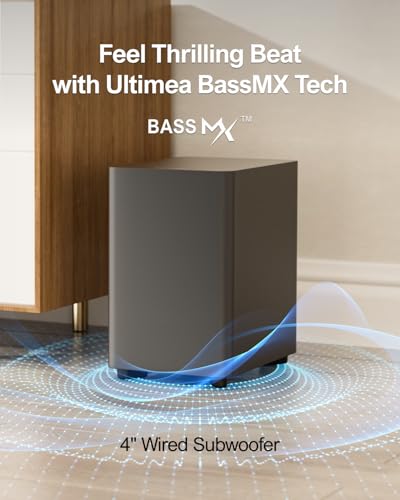
Perhaps nowhere is the difference more apparent than in low-frequency reproduction. The Ultimea Aura A40 includes a 4-inch wired subwoofer that extends down to 65Hz. While this provides noticeable improvement over TV speakers and adds some rumble to action scenes, it misses the deepest bass frequencies that create visceral impact in movies and electronic music.
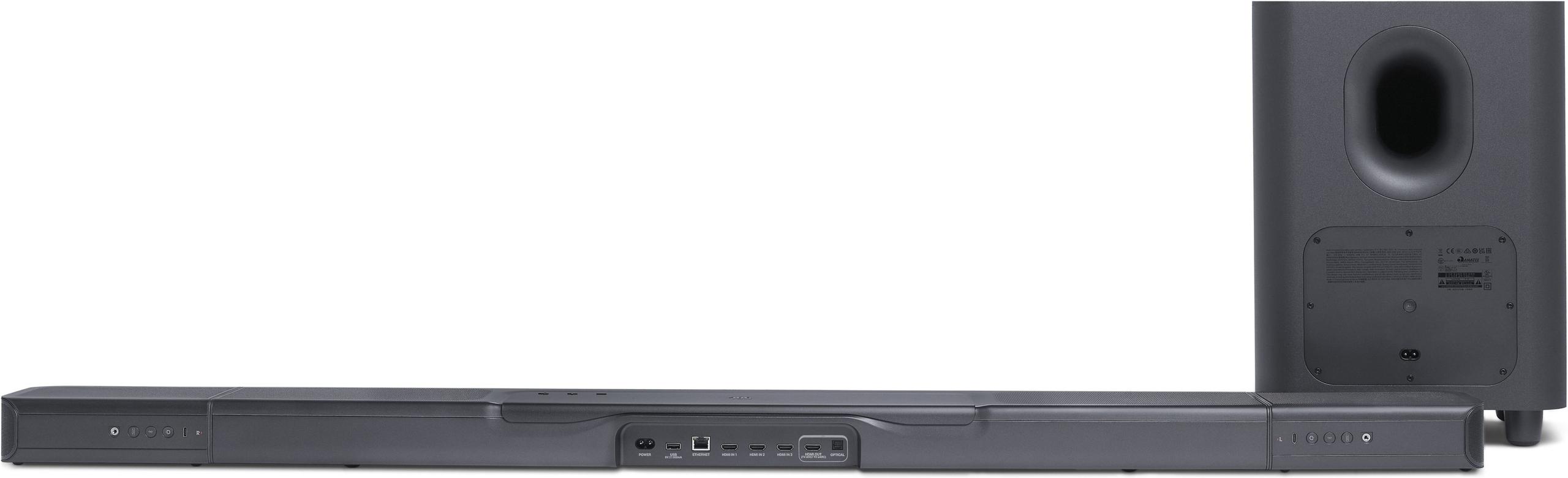
The JBL Bar 1300X features a massive 12-inch wireless subwoofer that reaches down to 33Hz—nearly an octave lower than the Ultimea. This difference is immediately apparent with content like the opening scene of "Blade Runner 2049" or the pod racing sequence in "Star Wars." The JBL reproduces those deep, room-shaking frequencies that you feel in your chest, while the Ultimea provides punch but lacks the true low-end extension.
The wireless connection of the JBL's subwoofer also provides placement flexibility that can dramatically improve bass response in your room. You can position it in corners or along walls where room acoustics naturally reinforce low frequencies.
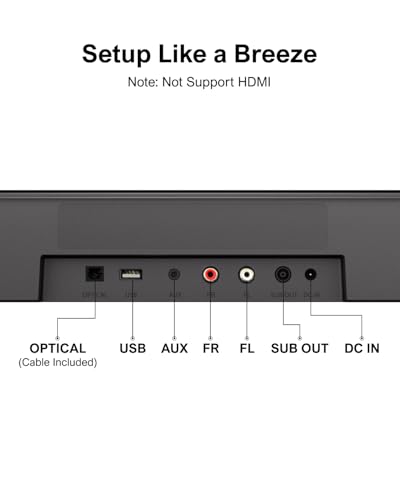
Here's where the Ultimea Aura A40 shows its budget constraints most clearly: it has no HDMI connectivity whatsoever. In 2024, this represents a significant limitation. Modern gaming consoles, streaming devices, and Blu-ray players output their highest quality audio through HDMI. While you can connect these devices to your TV and use the optical output to the soundbar, you'll lose advanced audio formats and may encounter sync issues.
The JBL Bar 1300X includes three HDMI 2.0 inputs plus an HDMI eARC (enhanced Audio Return Channel) output, supporting 4K video passthrough with Dolby Vision HDR. This means you can connect multiple sources directly to the soundbar, which then passes video to your TV while processing the audio internally. The eARC connection enables uncompressed Dolby Atmos from compatible streaming services—something impossible with the Ultimea's optical-only connection.
The connectivity differences extend to wireless capabilities. The Ultimea Aura A40 supports Bluetooth 5.3 for streaming music from your phone or tablet, which covers basic needs adequately. However, it lacks any advanced wireless features or smart home integration.
The JBL Bar 1300X includes built-in Wi-Fi with support for AirPlay 2, Chromecast built-in, and Alexa Multi-Room Music. This provides access to over 300 music streaming services with high-quality wireless transmission that surpasses Bluetooth's limitations. You can also integrate it into multi-room audio systems, streaming synchronized music throughout your home.
The Ultimea Aura A40 uses a hybrid wired approach where the four surround speakers connect via cables, though the rear right speaker can pair wirelessly to the soundbar after receiving power. This creates cable management challenges, especially in larger rooms where you need to run wires from the front to the back of the space.
However, wired connections offer consistency—no battery concerns, no wireless dropouts, no charging schedules to maintain. Once set up, the system provides reliable connectivity indefinitely.
The JBL Bar 1300X takes a radically different approach with its detachable battery-powered surround speakers. These truly wireless speakers can be placed anywhere within the room without cable considerations, offering up to 10 hours of playback on a single charge. When not in use for surround sound, they can be removed and used as portable Bluetooth speakers in other rooms.
This wireless design eliminates the aesthetic and practical challenges of running cables, but introduces battery management responsibilities. You'll need to remember to charge the speakers periodically, and over time, battery capacity will naturally degrade.
From our research into user experiences, the wireless approach of the JBL provides significant advantages for most installations. The ability to quickly reconfigure speaker placement for different seating arrangements or temporarily remove speakers when hosting parties adds versatility that wired systems cannot match.
The Ultimea's wired design works well for permanent installations where speaker placement remains consistent. If you're comfortable with cable management and prefer the simplicity of never worrying about battery levels, the wired approach has merit.
Both systems prioritize dialogue clarity, but through different approaches. The Ultimea Aura A40 dedicates one of its three soundbar drivers to center channel reproduction, ensuring dialogue remains distinct even during complex scenes with background music and effects. User reviews consistently praise the system's ability to maintain dialogue clarity without requiring constant volume adjustments.
The JBL Bar 1300X features a discrete center channel design with PureVoice technology that optimizes vocal frequencies specifically. This processing analyzes the incoming audio signal and enhances the frequency ranges where human speech occurs while reducing competing elements. The result is dialogue that cuts through even the most chaotic action sequences.
For music listening, the differences between these systems become more pronounced. The Ultimea Aura A40 handles music adequately, with the four surround speakers creating an expansive soundstage for stereo content. However, the limited frequency response (65Hz-18kHz) and lower-powered amplification mean it lacks the refinement and dynamic range that music enthusiasts expect.
The JBL Bar 1300X excels with musical content, offering extended frequency response (33Hz-20kHz) that captures both deep bass notes and crisp high-frequency details. The higher power output and premium drivers provide the headroom necessary for dynamic music genres like classical, jazz, and electronic music. The built-in streaming services also support higher bitrate audio than Bluetooth transmission allows.
Gaming represents an interesting use case where both systems offer distinct advantages. The Ultimea Aura A40 provides genuine directional audio that helps with competitive gaming—you can accurately locate footsteps or gunfire based on the discrete surround speakers. This positional accuracy can provide a competitive advantage in multiplayer games.
The JBL Bar 1300X supports advanced gaming audio formats and offers the low-latency connections necessary for serious gaming. The Dolby Atmos processing can enhance games that support object-based audio, creating more immersive experiences in single-player titles. However, the lack of HDMI 2.1 features like 120Hz passthrough at 4K represents a limitation for next-generation gaming consoles.
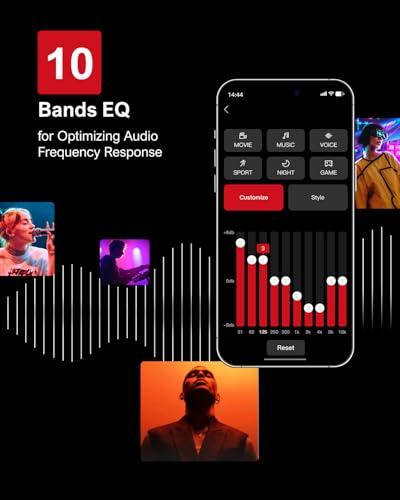
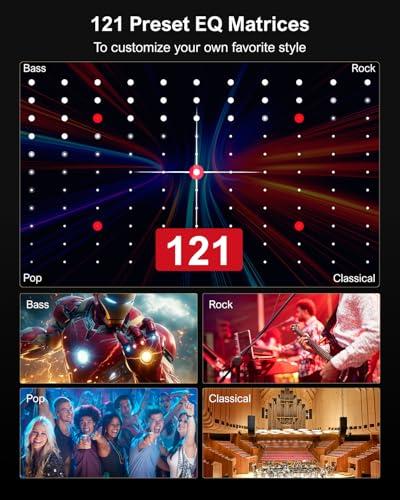
The Ultimea Aura A40 provides extensive customization through its companion app, offering 121 preset EQ matrices covering different musical genres and content types. The 10-band equalizer allows precise frequency adjustment, and six listening modes (Movie, Music, Voice, Sport, Game, Night) optimize the sound for different scenarios. For users who enjoy tweaking audio settings, this level of control is impressive at any price point.
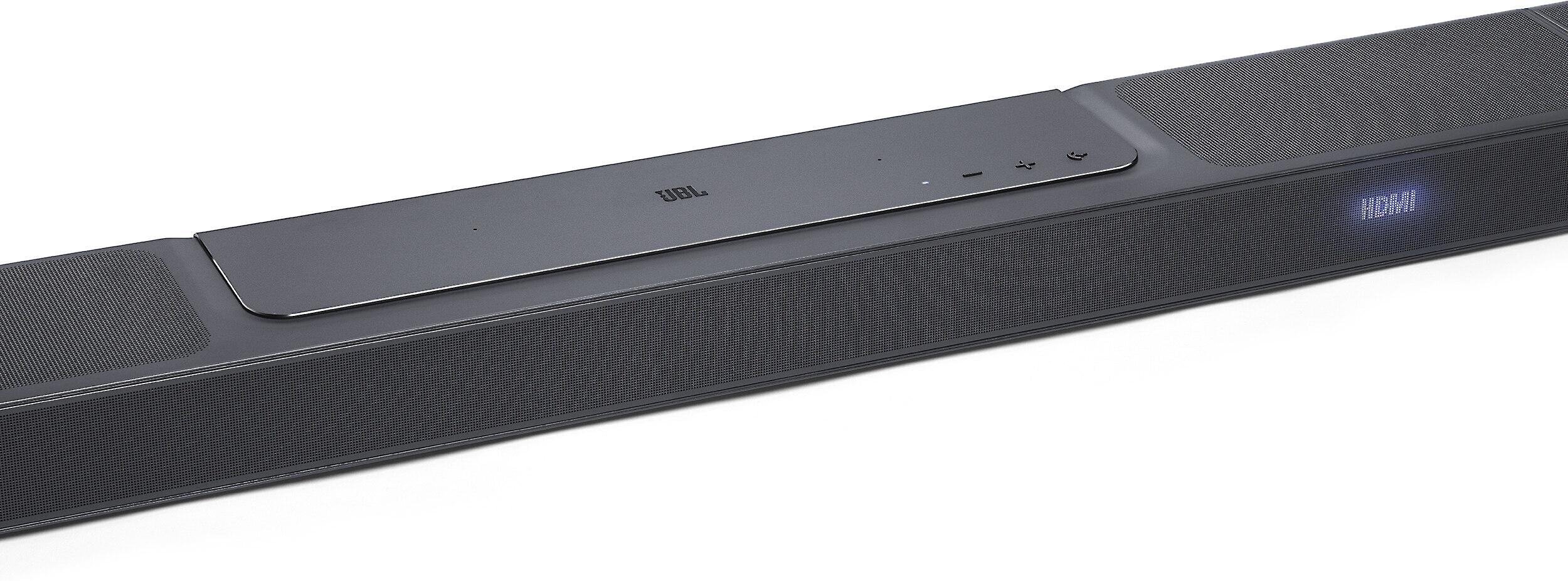
The JBL Bar 1300X takes a more automated approach with room correction technology that analyzes your space and optimizes the sound accordingly. While it offers less manual EQ control (limited to a 3-band graphic EQ), the automatic calibration often produces better results than manual adjustments for most users. The JBL One app provides basic control and access to streaming services, but lacks the detailed customization options of the Ultimea system.
The JBL's room correction represents a significant technological advantage. During setup, the system plays test tones and analyzes how your room affects the sound, then adjusts the output to compensate for acoustic issues. This ensures optimal performance regardless of room size, furniture placement, or architectural features.
The Ultimea Aura A40 relies on manual adjustment through its extensive EQ options and 13 adjustable surround levels. While this provides ultimate control for knowledgeable users, it requires more effort to achieve optimal results and may intimidate those uncomfortable with audio terminology.
At the time of writing, these systems operate in completely different price tiers, with the JBL Bar 1300X costing approximately four times more than the Ultimea Aura A40. This price difference reflects not just feature disparities but fundamental differences in target markets and performance expectations.
The Ultimea Aura A40 represents exceptional value for users seeking genuine surround sound at an accessible price. You're getting four discrete surround speakers, a subwoofer, and extensive customization options for significantly less than most premium soundbars cost without any surround speakers at all.
The JBL Bar 1300X justifies its premium pricing through advanced technologies, superior build quality, and significantly more powerful performance. For audio enthusiasts who prioritize immersive formats and high-fidelity reproduction, the additional cost provides tangible benefits that enhance the viewing and listening experience.
Consider future-proofing when evaluating these systems. The Ultimea Aura A40 lacks HDMI connectivity and height channels, limiting compatibility with emerging audio formats and modern devices. While it serves current needs well, it may become obsolete as streaming services and gaming consoles increasingly utilize advanced audio features.
The JBL Bar 1300X supports current premium formats and includes built-in Wi-Fi for firmware updates, ensuring compatibility with future developments in streaming and gaming audio. The modular design with detachable speakers also provides flexibility for room changes or upgrades.
For dedicated home theater installations, room size becomes a critical factor. The Ultimea Aura A40 works best in small to medium rooms (approximately 100-300 square feet) where its limited power output can provide adequate volume levels. The four surround speakers create an engaging experience in these environments, and the extensive EQ options help compensate for acoustic limitations.
Larger home theaters benefit significantly from the JBL Bar 1300X's higher power output and true Atmos processing. Rooms over 300 square feet require the additional amplification to maintain impact and clarity at typical listening distances. The height channels become more effective in rooms with standard 8-9 foot ceilings, providing the reflective surfaces necessary for overhead effects.
Both systems work as complete solutions, but integration capabilities differ substantially. The Ultimea Aura A40 operates independently with limited connectivity options, making it challenging to incorporate into sophisticated home theater setups with multiple sources.
The JBL Bar 1300X integrates seamlessly into modern home theaters with multiple HDMI inputs, advanced video passthrough, and smart home compatibility. The system can serve as the audio hub for your entire entertainment system while maintaining simplicity for daily use.
Your budget is limited but you want genuine surround sound improvement over TV speakers. The Ultimea Aura A40 excels for users in smaller rooms who primarily watch television shows and occasional movies. If you enjoy customizing audio settings and don't mind cable management, this system provides remarkable value. The lack of HDMI connectivity isn't problematic if you're comfortable using optical connections from your TV.
You're building a premium home theater system and prioritize audio quality above cost considerations. The JBL Bar 1300X suits users with larger rooms who frequently watch Dolby Atmos content and use multiple source devices. If you value convenience features like wireless streaming and automatic room correction, and you want future-proof connectivity, the additional investment provides substantial benefits.
Both systems succeed within their intended markets, but they serve fundamentally different users. The Ultimea Aura A40 democratizes surround sound technology, making discrete surround speakers accessible to budget-conscious consumers. The JBL Bar 1300X delivers reference-quality performance with cutting-edge features for serious audio enthusiasts.
Your decision should align with both your budget and your specific audio priorities. If you're upgrading from TV speakers and want noticeable improvement without major investment, the Ultimea provides excellent value. If you're creating a dedicated entertainment space and want the best possible audio experience, the JBL delivers professional-grade performance that justifies its premium pricing.
Consider your room size, content preferences, and long-term plans when making this decision. Either system will dramatically improve your audio experience compared to TV speakers, but choosing the right one ensures you get maximum satisfaction from your investment.
| Ultimea Aura A40 7.1 Channel Soundbar System | JBL Bar 1300X Soundbar with Wireless Subwoofer |
|---|---|
| Channel Configuration - Determines immersive audio capabilities | |
| 7.1 virtual surround with 4 physical surround speakers | 11.1.4 true Dolby Atmos with dedicated height channels |
| Total System Power - Affects maximum volume and room-filling capability | |
| 330W peak power (adequate for small-medium rooms) | 1,170W total power (650W bar + 300W sub, fills large spaces) |
| Subwoofer Specifications - Critical for bass impact and depth | |
| 4-inch wired subwoofer, 65Hz low frequency | 12-inch wireless subwoofer, 33Hz low frequency |
| Surround Speaker Design - Impacts placement flexibility and setup | |
| 4 wired surround speakers (2 front, 2 rear) | 2 battery-powered wireless detachable speakers (10hr battery) |
| HDMI Connectivity - Essential for modern device compatibility | |
| No HDMI ports (optical, AUX, USB, Bluetooth only) | 3 HDMI inputs + 1 eARC output with 4K Dolby Vision passthrough |
| Immersive Audio Formats - Determines 3D sound capabilities | |
| Virtual surround processing with SurroundX technology | True Dolby Atmos and DTS:X with 6 up-firing drivers |
| Wireless Streaming - Affects music and smart home integration | |
| Bluetooth 5.3 only | Wi-Fi with AirPlay 2, Chromecast, Alexa Multi-Room Music |
| Audio Customization - Important for fine-tuning sound preferences | |
| 121 preset EQ matrices, 10-band EQ, 6 listening modes | Room correction technology, 3-band graphic EQ |
| Frequency Response - Determines audio range and fidelity | |
| 65Hz - 18kHz (misses deepest bass and highest treble) | 33Hz - 20kHz (full-range audio reproduction) |
| Room Size Recommendation - Helps determine suitability for your space | |
| 108-270 sq ft (small to medium rooms) | 300+ sq ft (medium to large rooms with high ceilings) |
| Setup Complexity - Affects installation ease and cable management | |
| Wired speakers require cable runs but no battery maintenance | Wireless speakers eliminate cables but require periodic charging |
| Target Price Range - Value positioning at time of writing | |
| Budget-friendly (under $400) | Premium tier (over $1,000) |
The JBL Bar 1300X is significantly better for movies due to its true Dolby Atmos support with overhead sound effects and 1,170W of power for room-filling audio. The Ultimea Aura A40 provides good surround sound in the horizontal plane but lacks height channels for true cinematic immersion. For serious movie watching, the JBL Bar 1300X delivers the theater-like experience most people want.
Yes, HDMI inputs are essential for modern home theater setups. The JBL Bar 1300X includes three HDMI inputs plus eARC output, allowing direct connection of gaming consoles, streaming devices, and Blu-ray players. The Ultimea Aura A40 has no HDMI connectivity, forcing you to rely on optical connections that limit audio quality and compatibility with newer devices.
The JBL Bar 1300X has dramatically better bass with its 12-inch wireless subwoofer that extends down to 33Hz, delivering room-shaking low frequencies. The Ultimea Aura A40 uses a smaller 4-inch subwoofer that only reaches 65Hz, providing punch but missing the deepest bass frequencies that create visceral impact in movies and music.
Both approaches have advantages. The JBL Bar 1300X uses battery-powered wireless surround speakers that eliminate cable runs and can double as portable Bluetooth speakers, offering superior placement flexibility. The Ultimea Aura A40 uses wired surround speakers that never need charging but require cable management. Wireless is more convenient, while wired is more reliable long-term.
The JBL Bar 1300X is designed for larger spaces with its 1,170W total power output and room correction technology. The Ultimea Aura A40 works best in rooms under 300 square feet due to its limited 330W power output. For rooms larger than medium size, the JBL provides the amplification needed to fill the space effectively.
Yes, but with different capabilities. The Ultimea Aura A40 supports Bluetooth 5.3 for basic music streaming from phones and tablets. The JBL Bar 1300X offers advanced wireless streaming with built-in Wi-Fi, AirPlay 2, Chromecast, and access to over 300 music streaming services with higher quality than Bluetooth allows.
The Ultimea Aura A40 requires running cables to four surround speakers, which can be challenging depending on your room layout. The JBL Bar 1300X offers easier setup with wireless surround speakers and automatic room calibration, though you'll need to manage battery charging. Overall, the JBL provides a simpler installation experience.
Only the JBL Bar 1300X supports true Dolby Atmos with dedicated height channels created by six up-firing drivers. The Ultimea Aura A40 uses virtual surround processing but cannot reproduce overhead sound effects. For genuine Atmos content from Netflix, Disney+, and Blu-ray discs, you need the JBL Bar 1300X.
This depends on your budget and priorities. The Ultimea Aura A40 offers exceptional value for budget-conscious buyers, providing genuine surround sound with physical speakers at an accessible price. The JBL Bar 1300X costs significantly more but delivers premium features, true Atmos, and superior power that justify the investment for serious audio enthusiasts.
Both work well for gaming but differently. The Ultimea Aura A40 provides accurate directional audio that helps locate enemies in competitive games. The JBL Bar 1300X supports advanced gaming audio formats and offers more immersive single-player experiences, though it lacks HDMI 2.1 features like 120Hz passthrough that next-gen consoles support.
The Ultimea Aura A40 provides extensive manual customization with 121 preset EQ settings, 10-band equalizer, and six listening modes through its app. The JBL Bar 1300X takes a more automated approach with room correction technology and limited manual EQ options. The Ultimea suits users who enjoy tweaking settings, while the JBL optimizes automatically.
The JBL Bar 1300X offers better future-proofing with HDMI connectivity, Wi-Fi for firmware updates, and support for current premium audio formats. The Ultimea Aura A40 may become less compatible over time due to its lack of HDMI and limited wireless features. For long-term use, the JBL provides better upgrade path and format support.
We've done our best to create useful and informative comparisons to help you decide what product to buy. Our research uses advanced automated methods to create this comparison and perfection is not possible - please contact us for corrections or questions. These are the sites we've researched in the creation of this article: youtube.com - walmart.com - youtube.com - ultimea.com - homestudiobasics.com - ultimea.co - youtube.com - eu.ultimea.com - walmart.com - device.report - bestbuy.com - manuals.plus - community.ultimea.com - judge.me - support.ultimea.com - geekmaxi.com - provantage.com - bestbuy.com - youtube.com - uk.whatgeek.com - techradar.com - jbl.com - audioadvice.com - youtube.com - rtings.com - jbl.com - greentoe.com - harmanaudio.com - youtube.com - mm.jbl.com - jbl.com

Privacy Policy
Terms and Conditions - Affiliate Policy
Home Security
© Copyright 2008-2026.
11816 Inwood Rd #1211, Dallas, TX 75244