










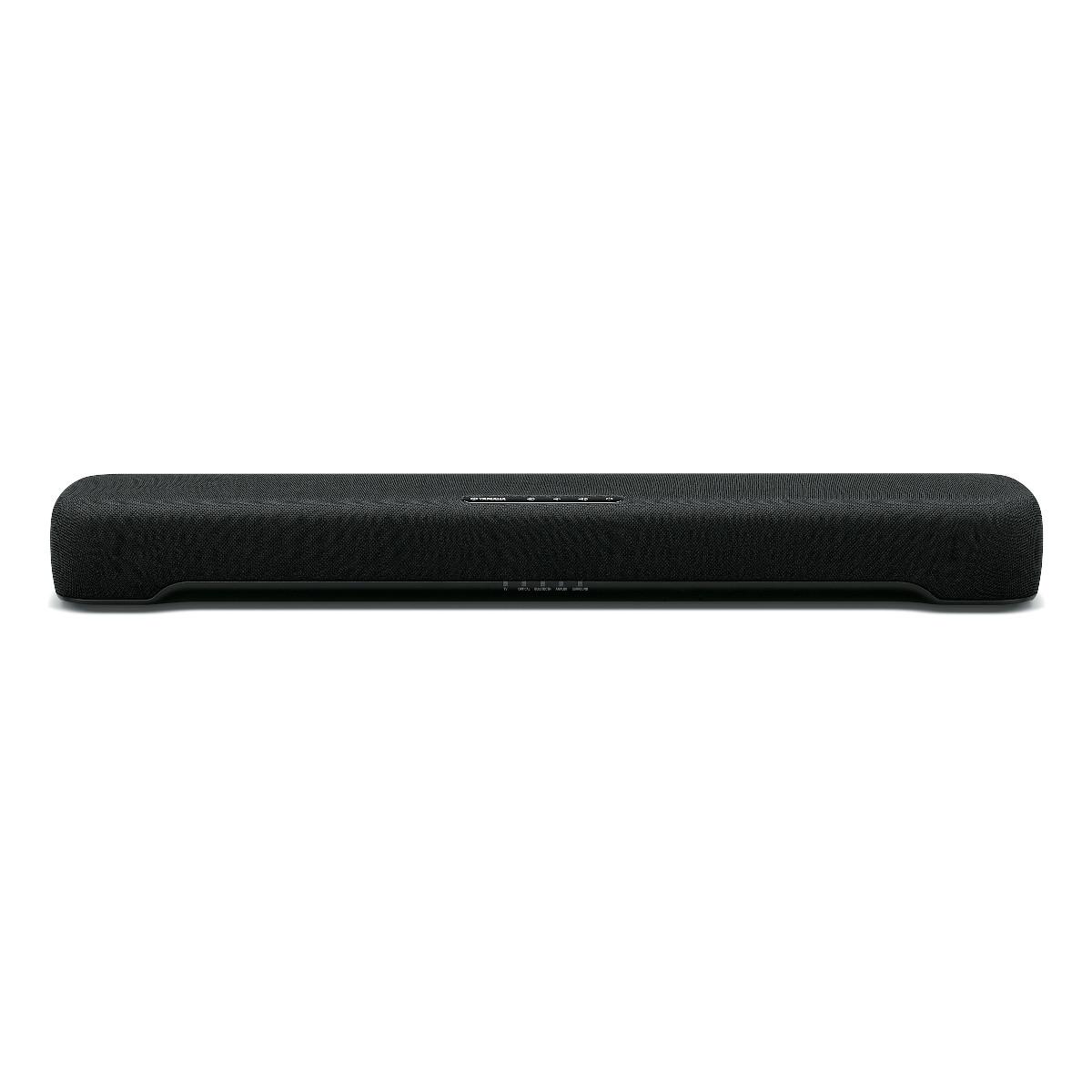
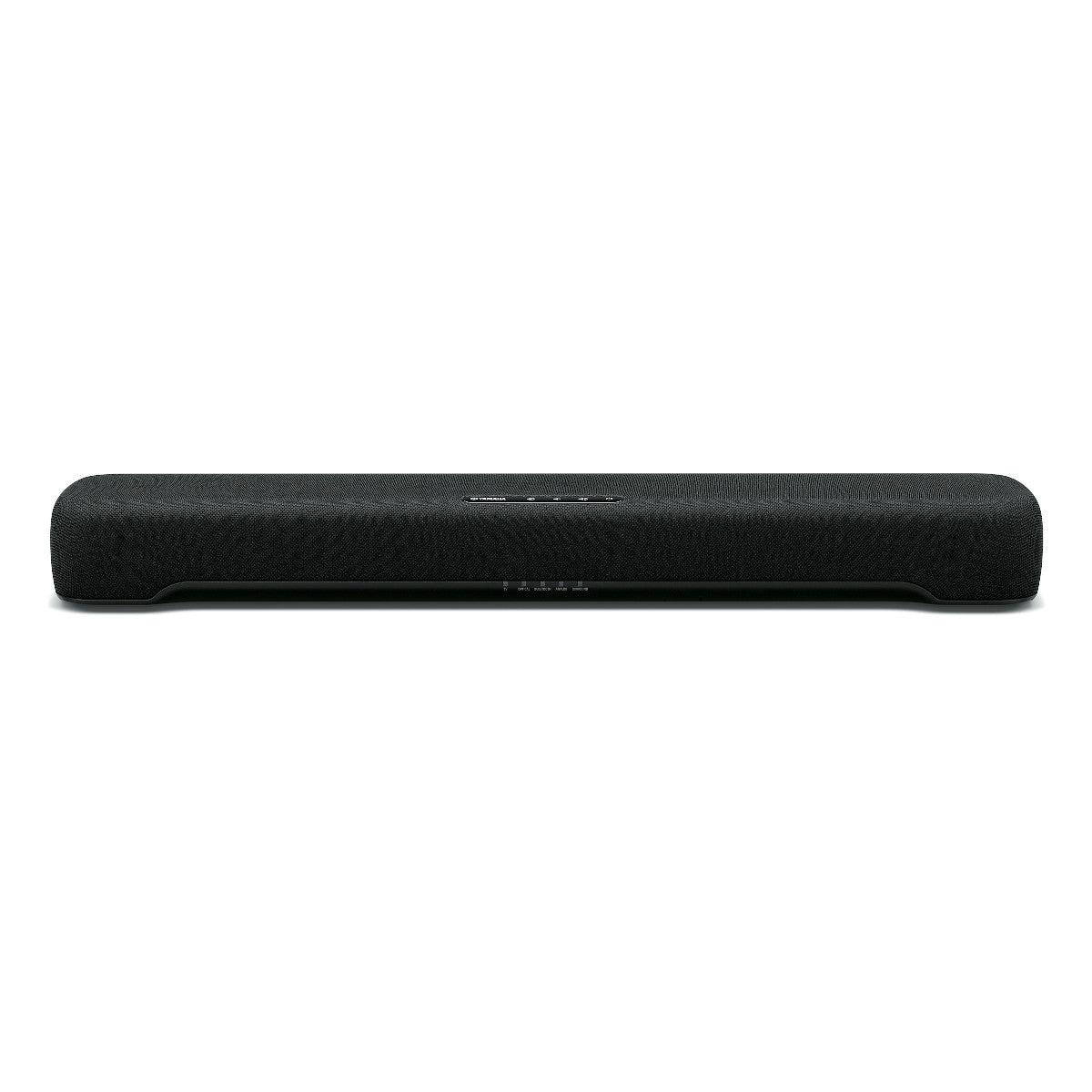
When you're shopping for a soundbar in 2025, you'll encounter two very different philosophies about what makes TV audio better. On one side, you have products like the Ultimea Aura A40 promising "7.1 channel surround sound" with multiple speakers scattered around your room. On the other, established audio companies like Yamaha offer refined all-in-one solutions like the SR-C20A that focus on doing fewer things exceptionally well.
After researching both approaches extensively and analyzing feedback from hundreds of users, I've found that the choice between these products reveals a lot about what you actually value in home audio. The Ultimea Aura A40 delivers on its promise of physical surround sound but makes significant compromises in audio quality. The Yamaha SR-C20A, despite being considerably less expensive at the time of writing, offers superior sound engineering and modern conveniences that most people will appreciate daily.
The soundbar market has evolved dramatically since these products launched—the Yamaha SR-C20A in 2020 and the Ultimea Aura A40 more recently in 2024. What we're seeing is a clear split between companies prioritizing speaker count versus those focusing on acoustic engineering.
Virtual surround sound uses digital signal processing to simulate the effect of multiple speakers from just a few drivers. Think of it like audio Photoshop—the soundbar analyzes incoming audio and applies psychoacoustic tricks to make your brain think sounds are coming from directions where no speakers exist. It's not perfect, but when done well by experienced companies, it can create a surprisingly convincing effect.
True surround sound requires physical speakers positioned around your listening area. When a helicopter flies across the screen, you hear it move from your front-left speaker to rear-right speaker in real time. This creates genuine spatial audio that virtual processing simply cannot replicate.
The question isn't which approach is "better"—it's which trade-offs align with your priorities, room constraints, and expectations.
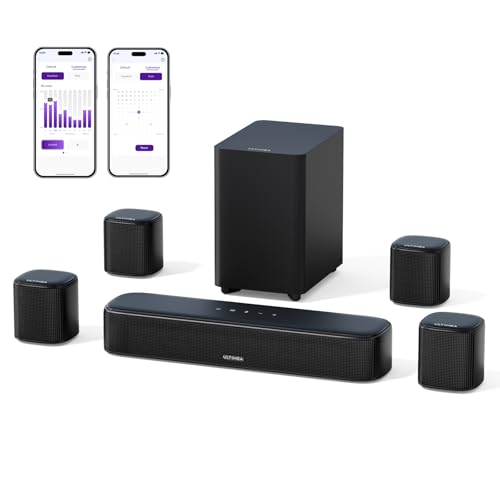
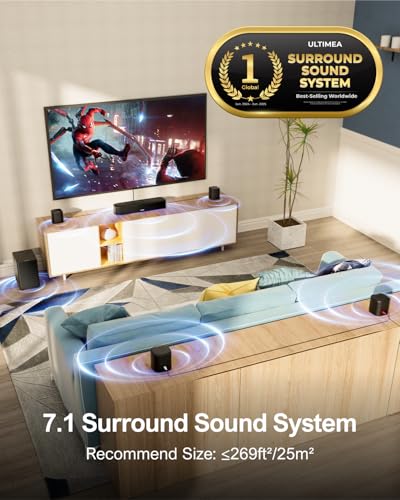
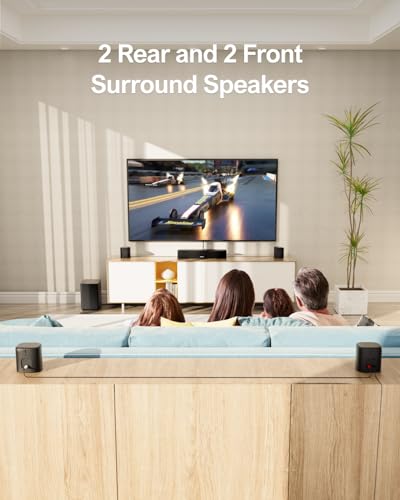
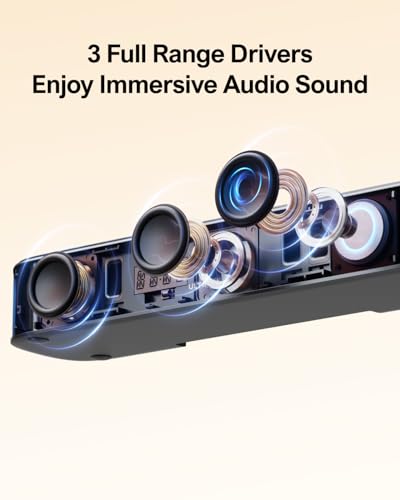
The Ultimea Aura A40 takes the ambitious approach of providing eight physical drivers across five separate units: a main soundbar with three channels (left, center, right), four satellite speakers (two front, two rear), and a dedicated subwoofer. This isn't marketing fluff—you're getting actual speakers that need to be positioned around your room.
SurroundX Technology is Ultimea's proprietary processing system that coordinates all these speakers to create what they claim is "99.99% detail accuracy" for audio positioning. In practice, this means the system uses advanced timing and phase adjustments to ensure that when an explosion happens on screen, all eight speakers work together to place that sound precisely where it should be in your room.
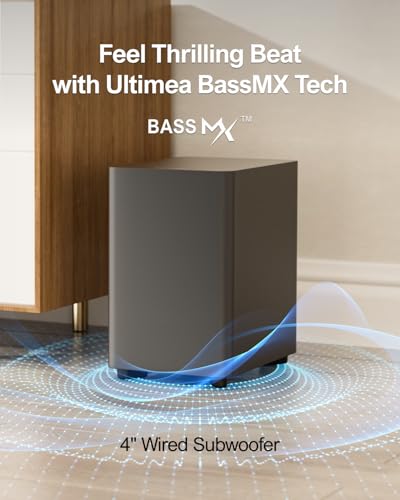
The BassMX subwoofer technology drives a dedicated 4-inch woofer (the speaker cone that produces low frequencies) with 60 watts of power. Subwoofers are crucial because they handle the deep rumbles and impacts that smaller speakers simply cannot produce—think of the T-Rex footsteps in Jurassic Park or the engine growl in Fast & Furious movies.
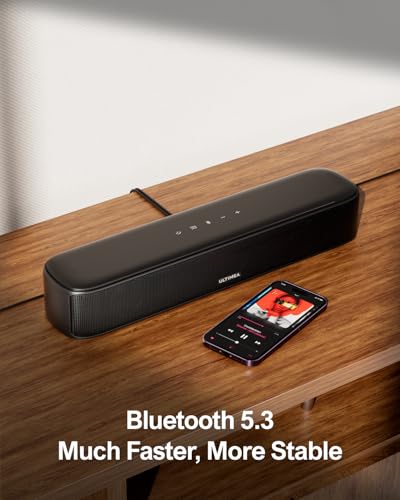
What makes the Ultimea system particularly interesting is its hybrid connectivity approach. The rear speakers connect through a mix of wired and wireless connections, which reduces some cable clutter while maintaining the stability that serious home theater setups require. Bluetooth 5.3 provides the wireless component—this is the latest version of Bluetooth and offers improved range and stability over older versions.
The real strength here emerges during gaming and action movies. Our research into user experiences shows that positional audio genuinely enhances immersion. When playing first-person shooters, you can actually hear enemy footsteps approaching from behind your right shoulder. During movie scenes with helicopters or racing cars, the sound moves convincingly through your room rather than just getting louder or quieter.
However, this multi-speaker approach comes with significant compromises. Multiple reviewers and users consistently describe the Aura A40's sound as "tinny" and "metallic." The individual 2-inch drivers in each satellite speaker are quite small, and when you're spreading 330 watts of total power across eight speakers, each driver doesn't get much power to work with. The result is sound that's spatially impressive but lacks the refinement you'd expect from quality stereo speakers.
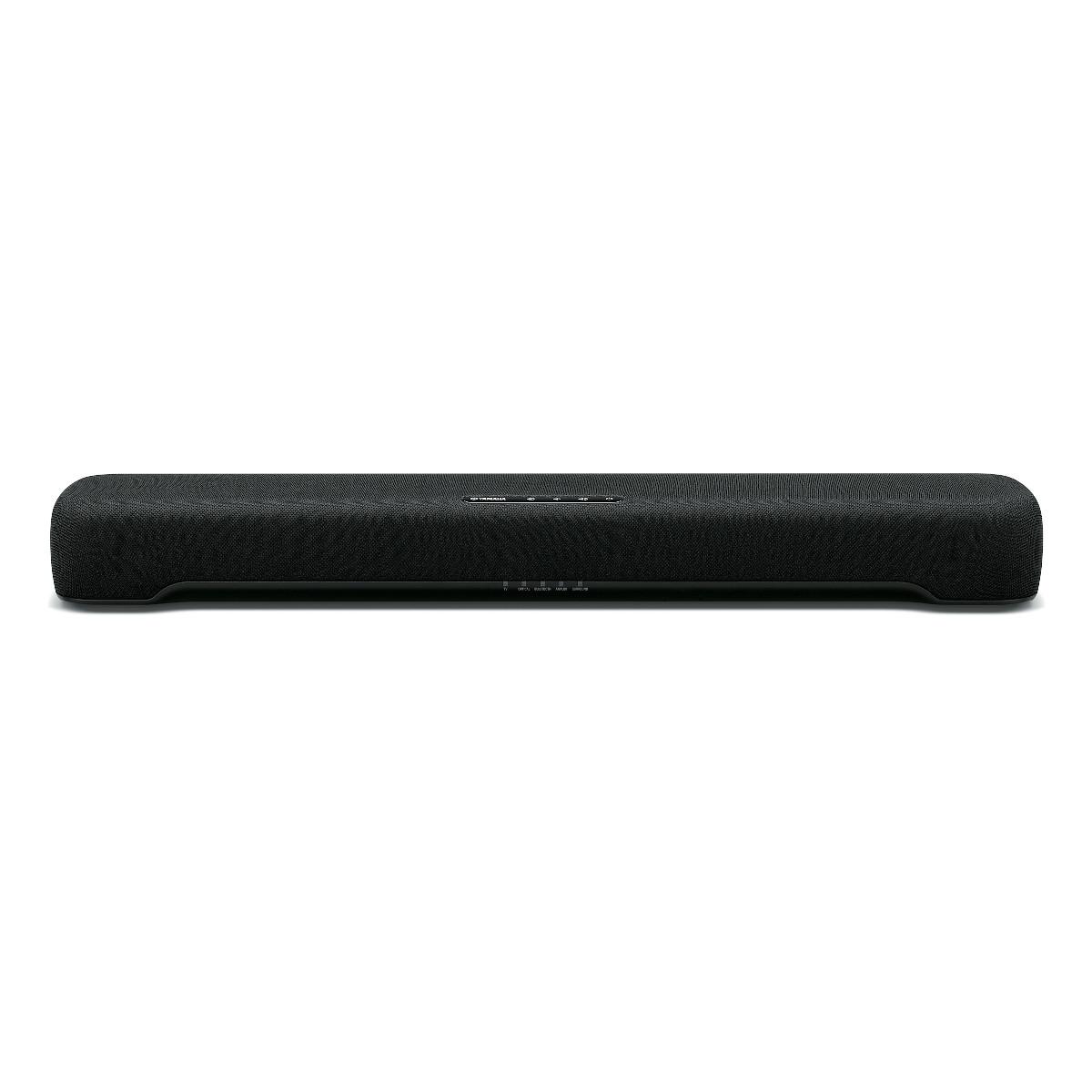
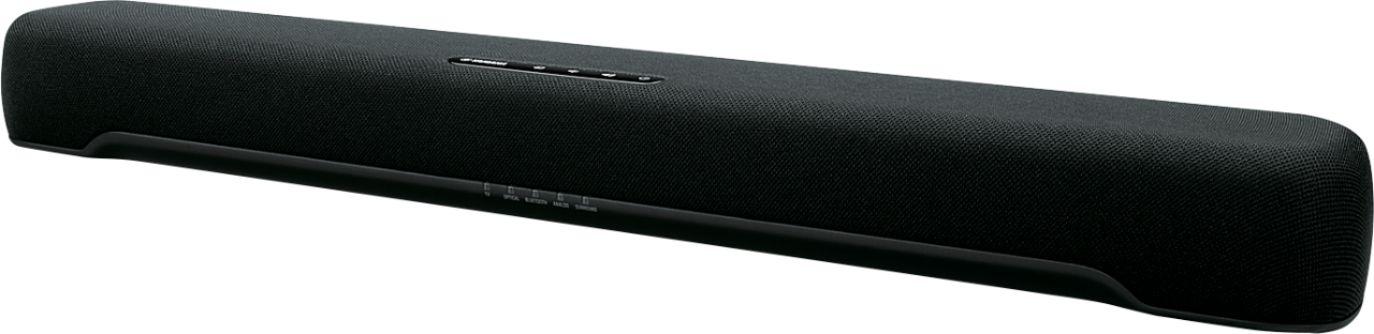
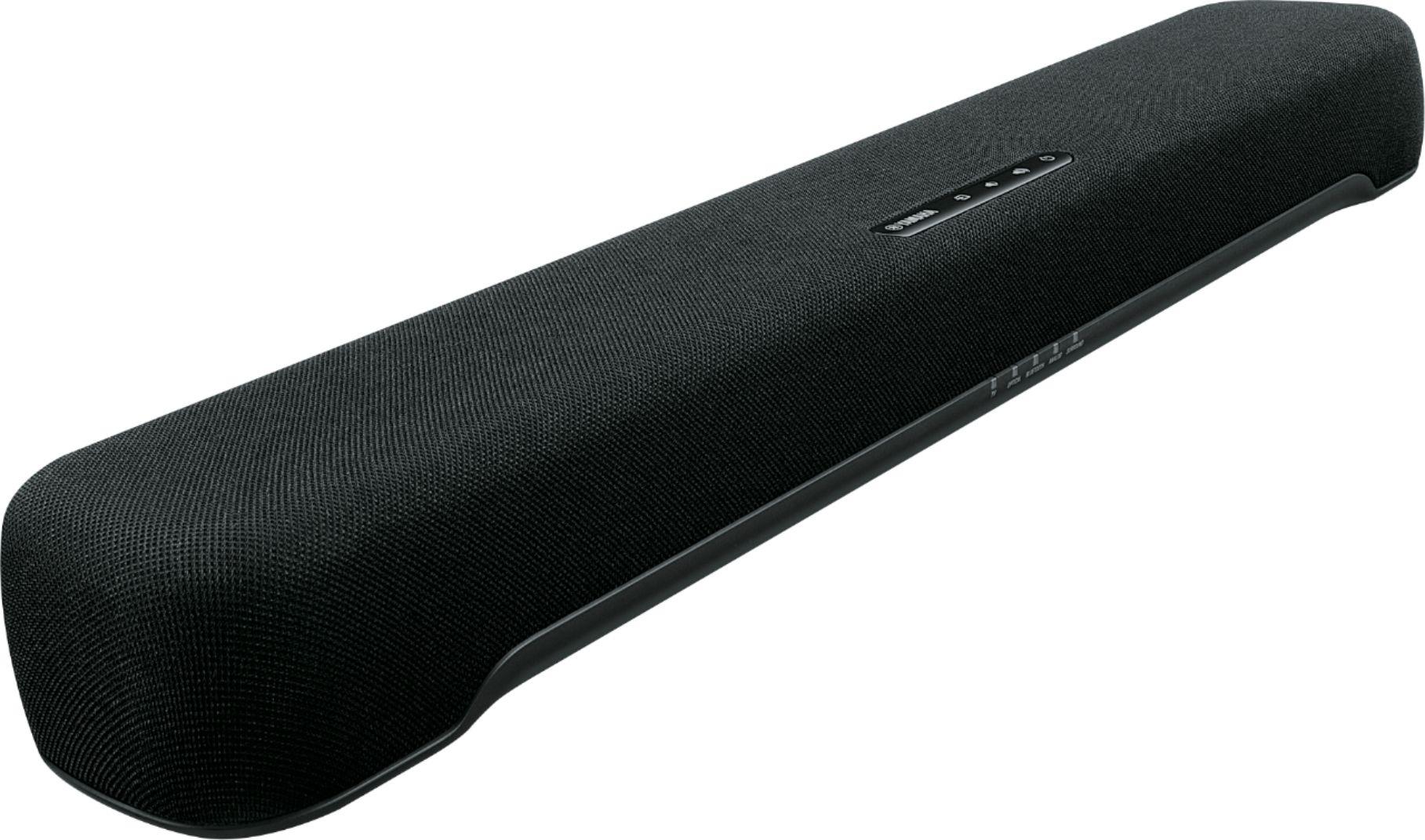
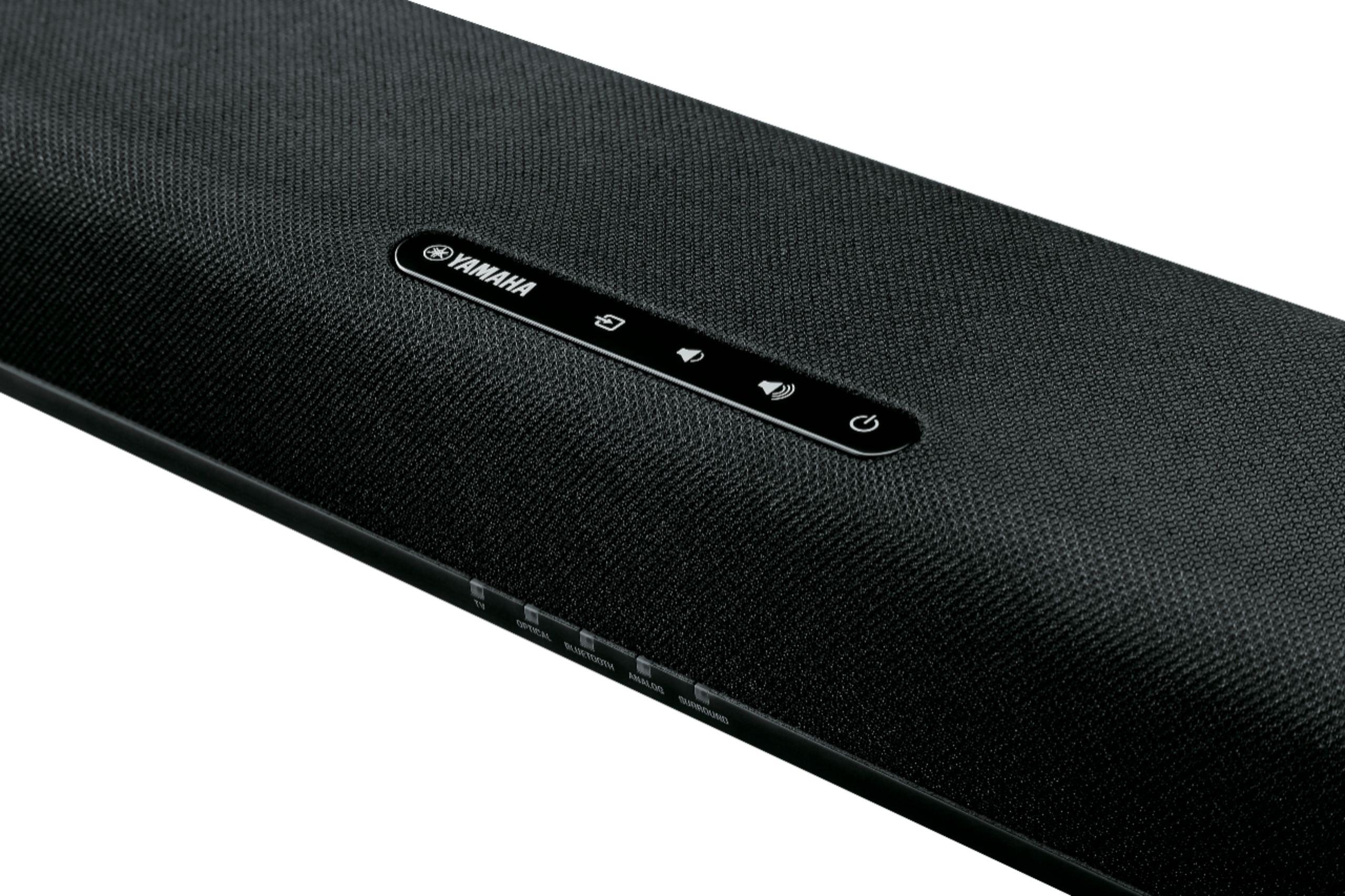
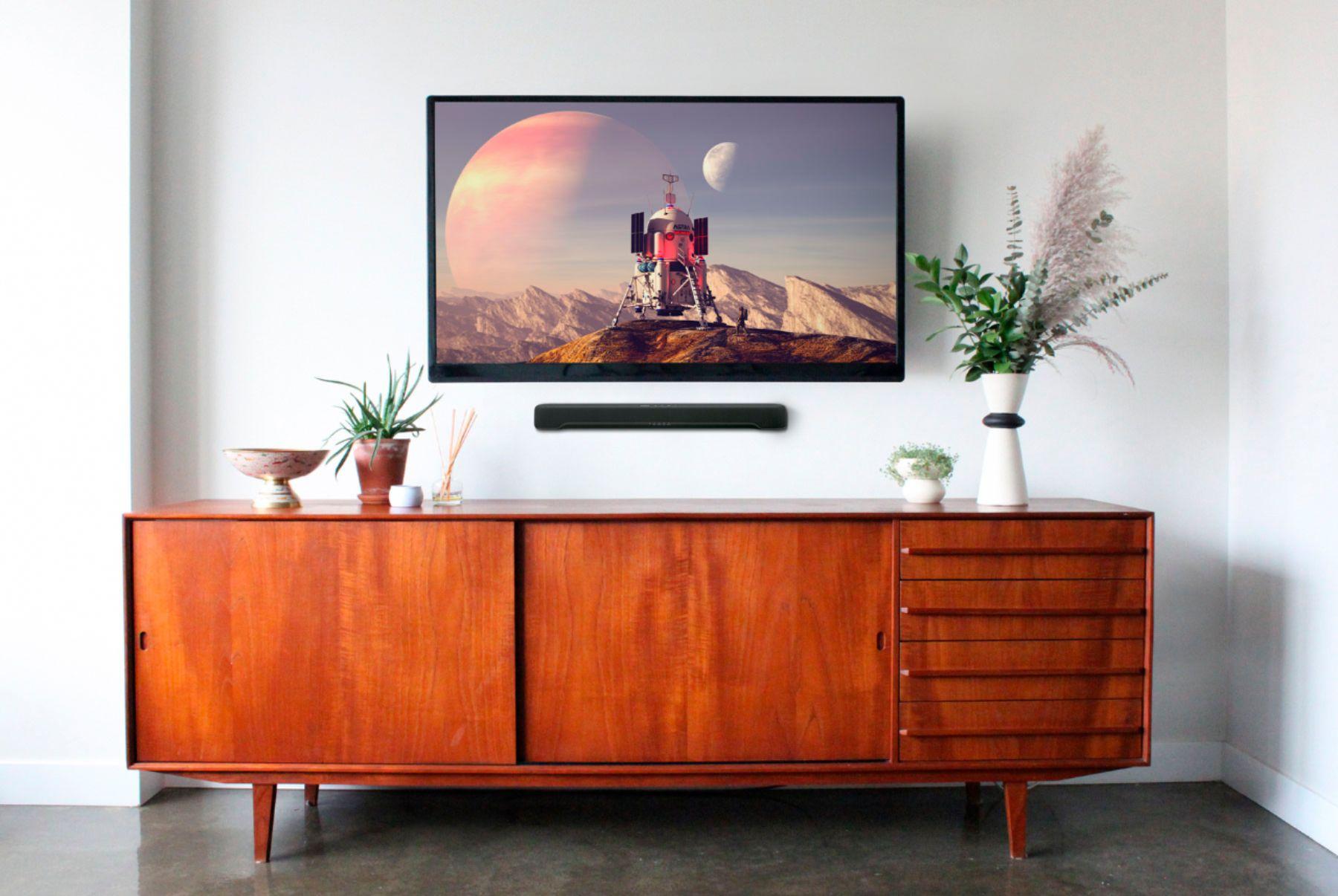
The Yamaha SR-C20A, released in 2020, represents four decades of audio engineering experience compressed into a single, compact unit. At just 23 inches wide and weighing under four pounds, it's designed to disappear under your TV while delivering significantly better sound than built-in TV speakers.
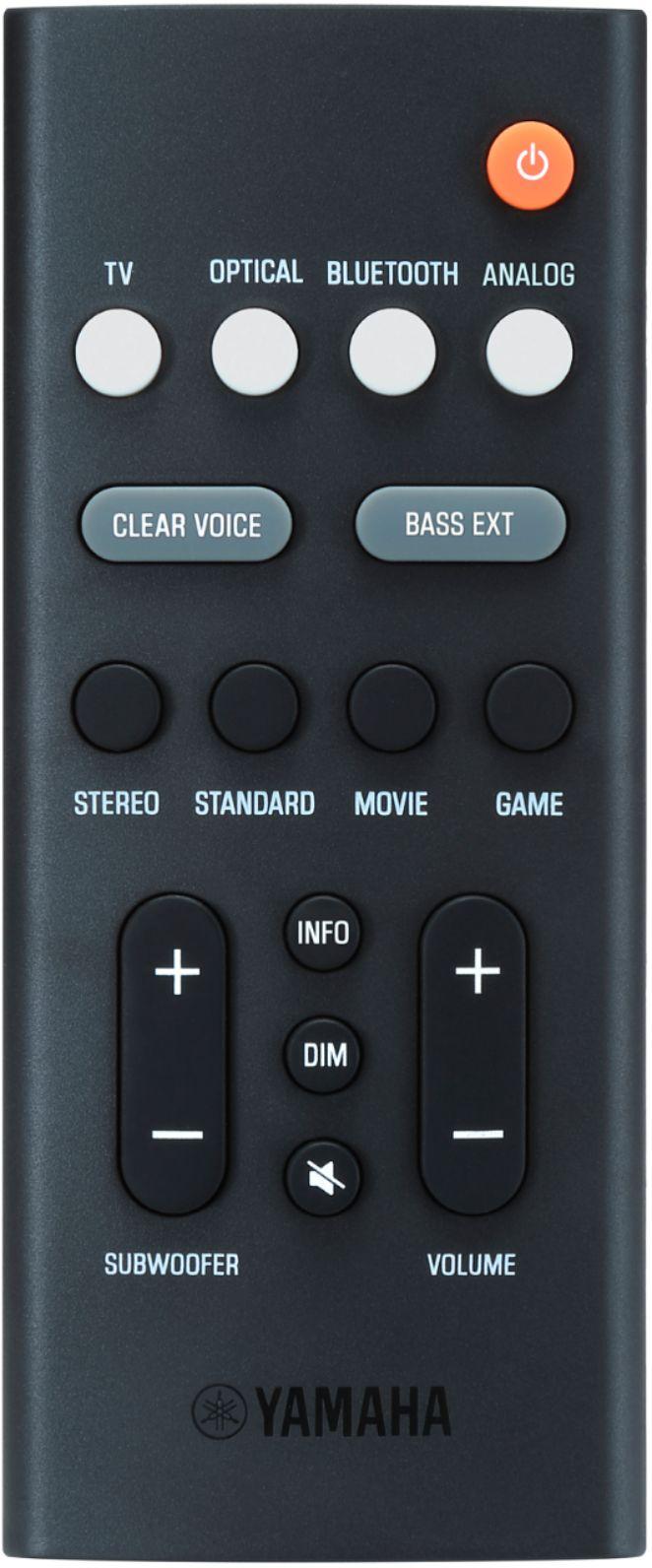
Clear Voice technology is perhaps the most immediately useful feature. This isn't just a simple EQ adjustment—Yamaha uses sophisticated signal processing to identify and enhance human vocal frequencies while leaving music and effects relatively untouched. If you've ever found yourself constantly adjusting volume during movies because dialogue is too quiet but explosions are too loud, Clear Voice directly addresses this problem.
The built-in subwoofer design is particularly clever. Rather than using a separate box, Yamaha integrated a 3-inch subwoofer driver with dual passive radiators inside the main unit. Passive radiators are essentially speakers without magnets—they're driven by air pressure changes from the active subwoofer, effectively making the entire soundbar enclosure work like a much larger subwoofer. This technique allows the SR-C20A to produce surprisingly deep bass from such a compact form factor.
Virtual Surround Technology in the Yamaha uses Dolby Audio processing to create the illusion of surround sound from just two main speakers. While this can't match the genuine directional effects of the Ultimea system, it does create a noticeably wider soundstage than you'd expect from such a small device. The effect works best for movies and TV shows, where it opens up the front soundstage to make dialogue and effects feel less cramped.
What consistently impresses in user feedback is the SR-C20A's ability to maintain clean, distortion-free sound even at high volumes. This comes down to Yamaha's driver engineering and power management—rather than pushing small speakers beyond their limits, they've carefully matched the amplifier power to what the drivers can handle cleanly.
Bass Response and Low-Frequency Performance
The Ultimea Aura A40 has the advantage of a dedicated 4-inch subwoofer, which should theoretically provide better bass than the Yamaha's built-in solution. In reality, our research suggests the results are more complicated. The Ultimea's subwoofer can produce more physical bass impact—you'll feel explosions and bass drops more intensely. However, the frequency response only extends down to about 65Hz, which means true deep bass (the stuff you feel in movie theaters) is still missing.
The Yamaha's built-in subwoofer, despite being smaller, provides what users consistently describe as "tighter" and more "controlled" bass. The integration with the main drivers is seamless, avoiding the phase issues that sometimes make separate subwoofers sound disconnected from the main speakers. For most TV content and music, this more refined approach actually sounds better, even if it doesn't provide the same physical impact during action scenes.
Dialogue Clarity and Mid-Range Performance
This is where the philosophical differences become most apparent. The Ultimea system dedicates its center channel specifically to dialogue reproduction, which should provide excellent voice clarity. However, the small 2-inch driver handling center channel duties lacks the refinement to make voices sound natural and clear. Users frequently mention needing to max out bass levels and adjust EQ settings extensively to achieve acceptable dialogue balance.
The Yamaha SR-C20A approaches dialogue clarity through sophisticated signal processing rather than hardware separation. The Clear Voice technology genuinely works—it's one of the most consistently praised features across user reviews. Voices become more intelligible without sounding artificial or over-processed, which is particularly valuable for older listeners or anyone watching content with complex audio mixes.
Spatial Audio and Immersion
For pure spatial immersion, the Ultimea Aura A40 wins decisively when properly set up. Having actual speakers behind you creates directional effects that virtual processing simply cannot replicate. The experience of hearing a car chase move from front to rear speakers, or bullets whizzing past your left ear in a video game, provides a level of immersion that justifies the system's complexity for dedicated home theater enthusiasts.
The Yamaha's virtual surround creates a convincingly wide front soundstage but cannot provide true rear effects. However, for the majority of TV watching—news, sitcoms, dramas, even many action movies—this front-focused approach actually works better. Most TV content isn't mixed with aggressive surround effects, so the clean, wide stereo presentation often sounds more natural than forcing everything through surround processing.
Sound Quality and Musical Performance
When it comes to pure audio fidelity, the Yamaha SR-C20A demonstrates why brand reputation matters in audio equipment. The frequency balance is more neutral, distortion remains low even at high volumes, and musical details come through clearly. If you plan to stream music through your soundbar regularly, the Yamaha provides a more enjoyable listening experience.
The Ultimea system struggles with musical content. The multiple small drivers and aggressive surround processing that work for movie effects tend to make music sound artificial and spatially confused. Unless you spend significant time optimizing the extensive EQ options through the smartphone app, stereo music often sounds better coming from quality bookshelf speakers or even a good Bluetooth speaker.
Connectivity and Control
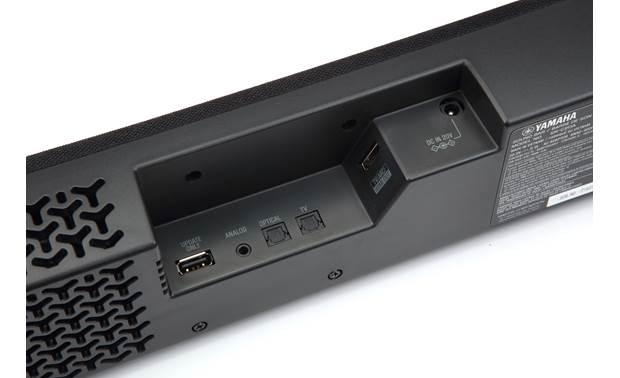
The Yamaha SR-C20A's HDMI ARC (Audio Return Channel) connection represents a significant practical advantage. With a single HDMI cable to your TV, you get automatic power on/off, volume control through your TV remote, and guaranteed compatibility with streaming apps. This might sound like a minor convenience, but it eliminates the daily frustration of managing multiple remotes.
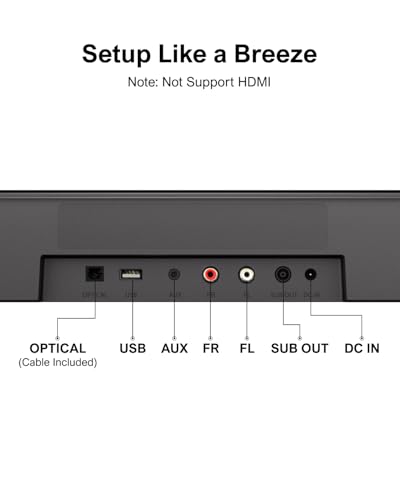
The Ultimea system's lack of HDMI connectivity feels particularly dated for a product launched in 2024. You're limited to optical digital or analog connections, which means separate remote control and potential compatibility issues with newer TVs and streaming devices. The Bluetooth 5.3 wireless connection is excellent for streaming music from phones, but most users primarily want seamless TV integration.
Setup Complexity and Room Requirements
Installing the SR-C20A takes about ten minutes: position it under your TV, connect power and one audio cable, and you're done. The compact size means it fits on virtually any TV stand without overhang, and wall mounting requires just the included hardware.
The Ultimea Aura A40 demands significantly more commitment. You need to position five separate components around your room, run cables (including a 20-foot cable for rear speakers), and likely spend time experimenting with speaker angles and heights. User reports suggest that optimal positioning requires ongoing adjustment—what sounds good for movies might not work for music, and room acoustics play a huge role in the final result.
For renters, families with young children, or anyone living in shared spaces, the cable management alone makes the Ultimea system impractical. The aesthetic impact is also considerable—five black boxes and various cables change your room's entire look.
At the time of writing, the Yamaha SR-C20A costs significantly less than the Ultimea Aura A40 while delivering superior build quality, modern connectivity, and more refined sound. This price difference challenges conventional wisdom about audio equipment—you're literally paying more for the Ultimea to get lower overall audio quality.
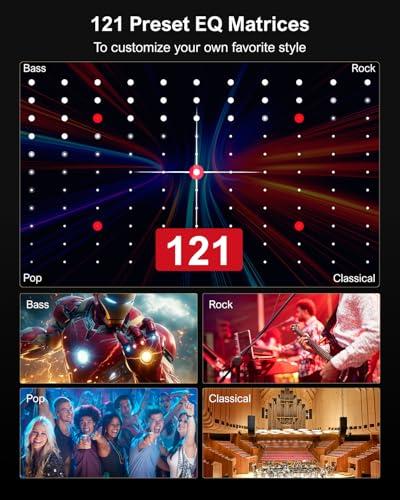
The value proposition of the Ultimea system centers on the genuine surround sound experience and extensive customization options. The smartphone app provides 121 preset EQ settings, 10-band manual equalization, and individual level control for each speaker. For audio enthusiasts who enjoy tweaking and optimizing, these features justify the higher price and setup complexity.
However, our analysis of user feedback reveals that most people never fully utilize these customization options. The default settings often sound poor enough that extensive EQ adjustment becomes necessary rather than optional. When a product requires significant optimization to sound acceptable, it raises questions about the underlying audio engineering.
The Yamaha's approach is more honest: it does fewer things but executes them exceptionally well. The four sound modes (Standard, Movie, Game, Stereo) provide adequate customization without overwhelming users, and the default settings sound good immediately.
Choose the Ultimea Aura A40 if:
You have a dedicated home theater room where speaker placement optimization is feasible and worthwhile. The genuine surround sound effects truly enhance movie and gaming experiences when properly set up. If you're someone who enjoys the process of tweaking audio settings and has the space to accommodate multiple speakers and cables, the immersive experience can be worth the compromises in individual driver quality.
Gaming enthusiasts, particularly those playing first-person shooters or atmospheric games, will appreciate the positional audio advantages. The ability to locate enemies by sound alone provides a competitive edge and enhances immersion in ways that virtual processing cannot match.
Choose the Yamaha SR-C20A if:
You want better TV audio without transforming your living space into a dedicated theater. The compact design, simple setup, and refined sound quality make it ideal for apartments, family rooms, or any situation where aesthetics and convenience matter alongside audio performance.
The Clear Voice technology alone makes it valuable for anyone who struggles with dialogue clarity in modern movies and TV shows. If you watch a lot of streaming content, news, or dialogue-heavy programming, this feature provides daily practical benefits that surround sound effects cannot match.
For music listening, the Yamaha is decidedly superior. If your soundbar will pull double duty for both TV audio and music streaming, the cleaner frequency response and better driver integration make it the obvious choice.
The comparison between these products illustrates a broader trend in consumer electronics: the difference between impressive specifications and actual performance. The Ultimea Aura A40 sounds amazing on paper—7.1 channels, eight speakers, extensive customization—but the execution reveals the challenges of delivering quality audio at this price point across so many drivers.
The Yamaha SR-C20A takes the opposite approach: modest specifications backed by decades of audio engineering expertise. It doesn't promise surround sound miracles, but it delivers meaningful improvements to your daily TV watching experience without requiring acoustic engineering knowledge to set up properly.
For most people, the Yamaha represents better value, superior convenience, and more consistent satisfaction. The genuine surround sound of the Ultimea appeals to a specific subset of users who have both the space and enthusiasm to optimize a multi-speaker system, but it's not the broad upgrade that its marketing suggests.
The soundbar market continues evolving rapidly, with new technologies like spatial audio and object-based surround processing appearing regularly. However, the fundamental choice between these two approaches—sophisticated single-unit engineering versus multiple-speaker spatial effects—will likely persist. Understanding which philosophy aligns with your priorities, room constraints, and usage patterns remains the key to making a satisfying purchase decision.
| Ultimea Aura A40 7.1 Channel Soundbar System | Yamaha SR-C20A Compact Sound Bar with Built-In Subwoofer |
|---|---|
| Channel Configuration - Determines audio immersion and spatial effects | |
| True 7.1 with 4 physical surround speakers | 2.1 with virtual surround processing |
| Total Speaker Count - More drivers don't always mean better sound quality | |
| 8 drivers across 5 separate units | 3 drivers in single compact unit |
| Power Output - Higher wattage enables louder volumes and better dynamics | |
| 330W peak (spread across 8 speakers) | 100W total (60W sub + 40W mains) |
| Subwoofer Type - External subs typically provide deeper bass than built-in | |
| External 4" wired subwoofer with BassMX tech | Built-in 3" subwoofer with dual passive radiators |
| Frequency Response - Lower Hz numbers mean deeper bass extension | |
| 65Hz - 18kHz (limited deep bass) | Not specified (estimated ~70Hz+) |
| HDMI Connectivity - Essential for modern TV integration and single-remote control | |
| None (optical and aux only) | HDMI ARC plus dual optical inputs |
| Bluetooth Version - Newer versions offer better range and stability | |
| 5.3 (latest standard) | 5.0 (slightly older but reliable) |
| Setup Complexity - Consider your space constraints and technical comfort level | |
| Complex: 5 units, multiple cables, room positioning required | Simple: Single unit, one cable connection |
| Dialogue Enhancement - Critical for understanding speech in movies and shows | |
| Basic voice EQ mode | Clear Voice technology with advanced processing |
| Customization Options - More control appeals to audio enthusiasts | |
| 121 EQ presets, 10-band equalizer, 13 surround levels | 4 sound modes, bass/voice controls |
| Physical Dimensions - Important for TV stand fit and room aesthetics | |
| Main bar: 15.7" × 3.5" × 2.8" plus 4 satellites | Single unit: 23.6" × 2.5" × 3.7" |
| Total Weight - Consider installation difficulty and portability | |
| 12.6 lbs across all components | 3.9 lbs single unit |
| Smart App Control - Modern convenience for settings and updates | |
| Ultimea Smart App with OTA updates | Sound Bar Remote app with basic controls |
| Wall Mounting - Space-saving option for clean installation | |
| Soundbar mountable, satellites need separate positioning | Built-in keyholes for easy wall mounting |
| Recommended Room Size - Optimal performance depends on space | |
| 108-270 sq ft (medium rooms) | Small to medium rooms, excellent for apartments |
The Yamaha SR-C20A is significantly better for small apartments. It's a single compact unit that fits easily under most TVs without requiring additional speakers around the room. The Ultimea Aura A40 needs four satellite speakers positioned throughout your space, which isn't practical in most apartment layouts.
No separate subwoofer is needed with either option. The Ultimea Aura A40 includes a dedicated external subwoofer, while the Yamaha SR-C20A has a built-in subwoofer with dual passive radiators. Both provide bass enhancement over standard TV speakers.
The Yamaha SR-C20A provides superior dialogue clarity through its Clear Voice technology, which specifically enhances speech frequencies. While the Ultimea Aura A40 has a dedicated center channel for dialogue, users report it sounds tinny and requires extensive EQ adjustments to achieve clear speech.
The Yamaha SR-C20A takes about 10 minutes to set up with just one cable connection to your TV. The Ultimea Aura A40 requires positioning five separate components around your room, running multiple cables (including a 20-foot rear speaker cable), and ongoing adjustment for optimal sound positioning.
The Ultimea Aura A40 excels for gaming due to its physical surround speakers that provide genuine positional audio. You can actually hear enemy footsteps approaching from behind or locate sounds spatially in games. The Yamaha SR-C20A offers virtual surround but cannot match true directional effects for competitive gaming.
Only the Yamaha SR-C20A supports TV remote control through its HDMI ARC connection. The Ultimea Aura A40 lacks HDMI connectivity entirely, so you'll need to use its dedicated remote or smartphone app for all controls.
The Yamaha SR-C20A delivers significantly better music quality with cleaner, more balanced sound and less distortion. The Ultimea Aura A40 tends to make music sound artificial and spatially confused due to its aggressive surround processing designed primarily for movies.
The Yamaha SR-C20A works with all modern TVs through HDMI ARC, optical, or auxiliary connections. The Ultimea Aura A40 only offers optical and auxiliary connections, which may limit functionality with newer smart TVs that rely on HDMI for advanced features.
The Ultimea Aura A40 provides genuine surround sound with four physical satellite speakers positioned around your room. The Yamaha SR-C20A uses virtual surround processing to simulate multi-channel effects from its two main speakers, which is convincing but not true surround sound.
The Yamaha SR-C20A only requires space under your TV or on a wall mount. The Ultimea Aura A40 needs room for a main soundbar, subwoofer, and four satellite speakers with cable runs, making it suitable only for medium to large dedicated home theater spaces.
The Yamaha SR-C20A provides better overall value with superior build quality, modern connectivity, refined sound, and simpler operation at a lower price point. The Ultimea Aura A40 costs more but sacrifices sound quality for genuine surround effects that many users never properly optimize.
Both work for home theater, but serve different needs. The Ultimea Aura A40 is designed specifically for dedicated home theater rooms where you can properly position all speakers for immersive movie experiences. The Yamaha SR-C20A works well for casual home theater viewing in living rooms where convenience and sound quality matter more than surround effects.
We've done our best to create useful and informative comparisons to help you decide what product to buy. Our research uses advanced automated methods to create this comparison and perfection is not possible - please contact us for corrections or questions. These are the sites we've researched in the creation of this article: youtube.com - walmart.com - youtube.com - ultimea.com - homestudiobasics.com - ultimea.co - youtube.com - eu.ultimea.com - walmart.com - device.report - bestbuy.com - manuals.plus - community.ultimea.com - judge.me - support.ultimea.com - geekmaxi.com - provantage.com - bestbuy.com - youtube.com - uk.whatgeek.com - t3.com - usa.yamaha.com - radiotimes.com - shop.usa.yamaha.com - whathifi.com - hifiheaven.net - usa.yamaha.com - sweetwater.com - hub.yamaha.com - bestbuy.com

Privacy Policy
Terms and Conditions - Affiliate Policy
Home Security
© Copyright 2008-2026.
11816 Inwood Rd #1211, Dallas, TX 75244