




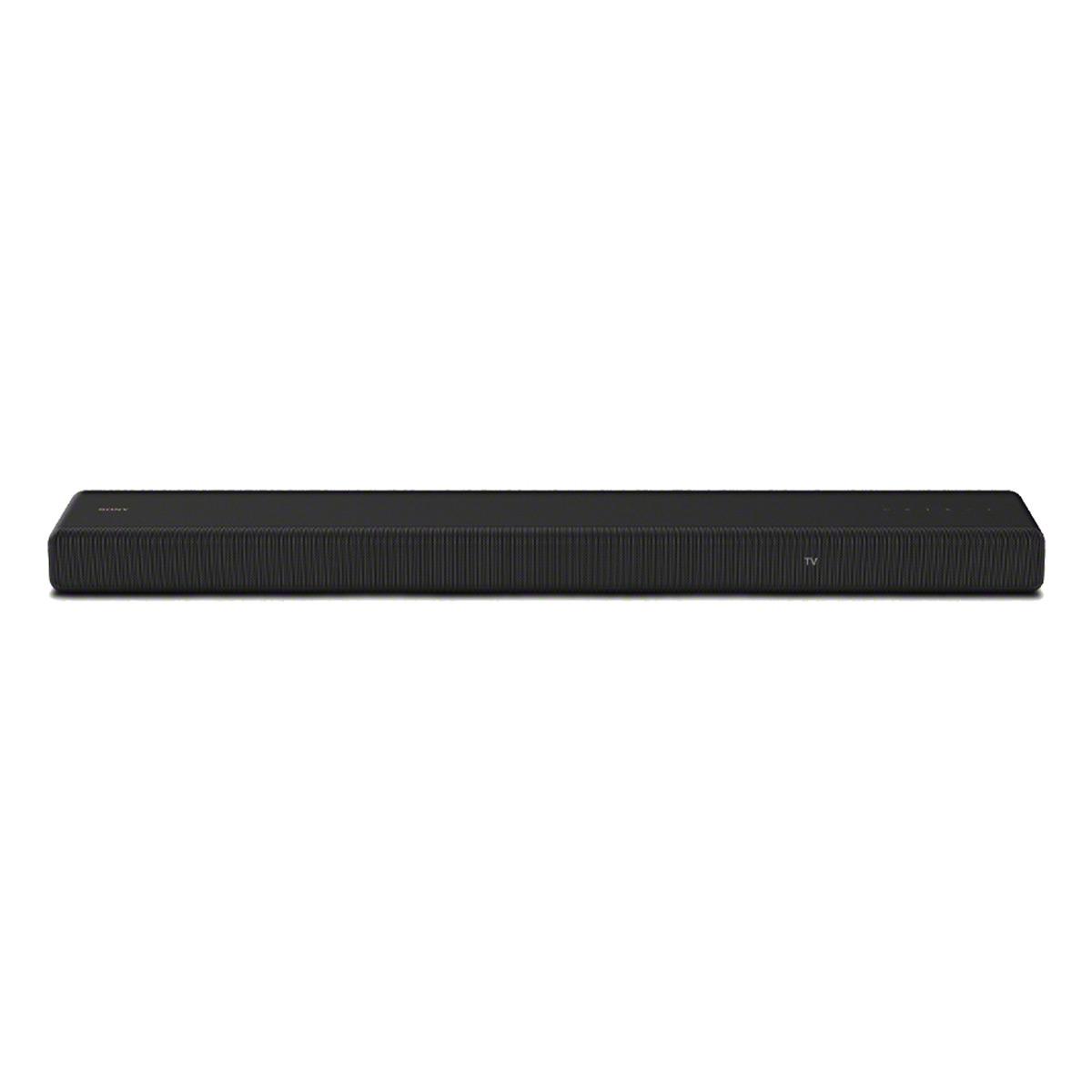
Shopping for a soundbar can feel overwhelming, especially when you're comparing products that take completely different approaches to solving the same problem—making your TV sound dramatically better. Today we're looking at two systems that represent opposite ends of the soundbar spectrum: the Ultimea Aura A40, a budget-friendly system that surrounds you with actual speakers, and the Sony HT-A3000, a premium single-unit soundbar that creates surround effects through sophisticated processing.
Both were released around 2022-2023, during a period when the soundbar market was rapidly evolving. The Sony HT-A3000 arrived as part of Sony's push to bring high-end audio processing to more affordable price points, while the Ultimea Aura A40 represents the growing trend of budget brands offering complete surround systems that would have cost thousands just a few years earlier.
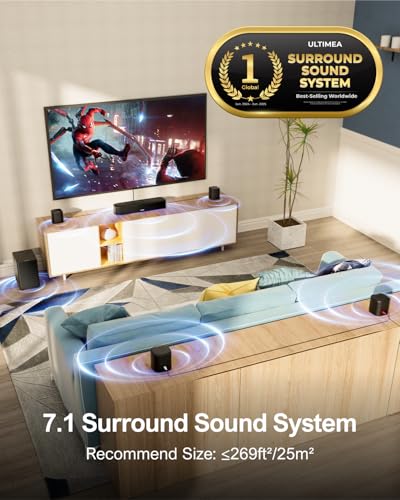
The fundamental difference between these two products comes down to philosophy. The Ultimea Aura A40 believes that authentic surround sound requires actual speakers placed around your room—four of them, to be exact, plus a main soundbar and subwoofer. When a helicopter flies overhead in a movie, you hear it from actual speakers positioned behind and beside you.
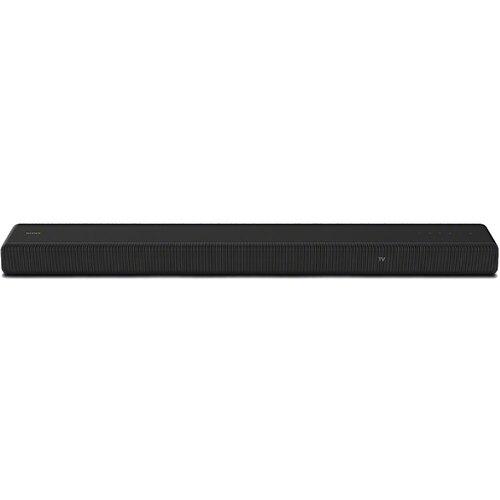
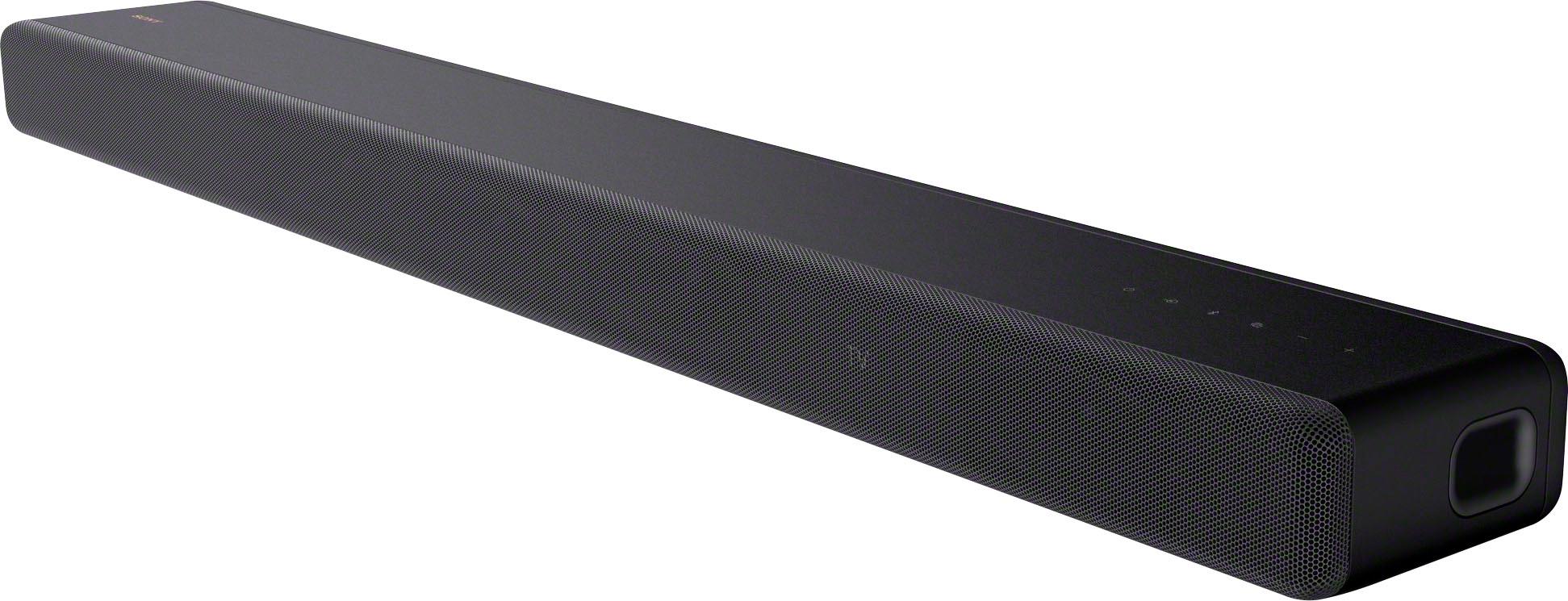
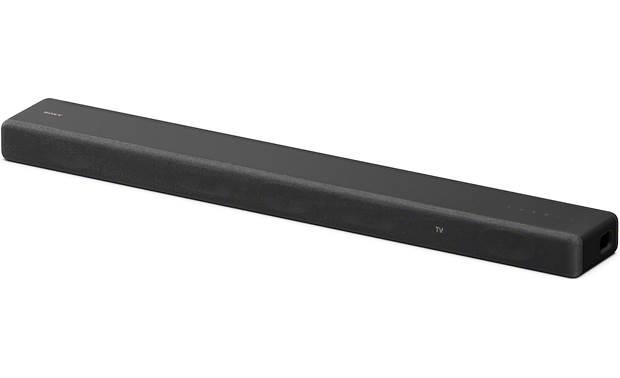
The Sony HT-A3000 takes the opposite approach. It uses advanced digital processing to trick your brain into thinking sounds are coming from all directions, even though all the speakers face forward from a single sleek unit. Sony calls this "Vertical Surround Engine" and "S-Force PRO Front Surround"—basically fancy names for very sophisticated audio wizardry that bounces sound off your walls and ceiling to create the illusion of speakers that aren't there.
At the time of writing, these systems sit in different price brackets, with the Ultimea positioned as a budget option that delivers remarkable value, while the Sony commands a premium for its brand reputation and advanced processing capabilities.
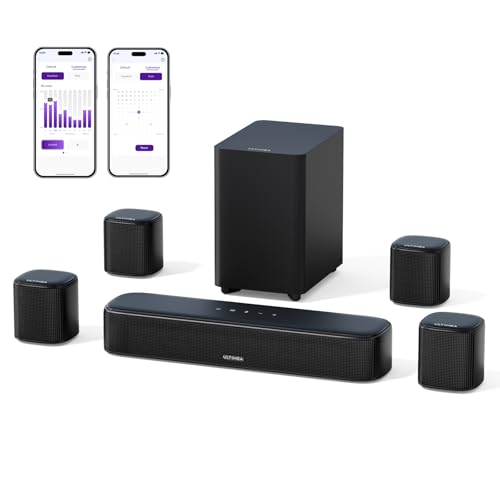
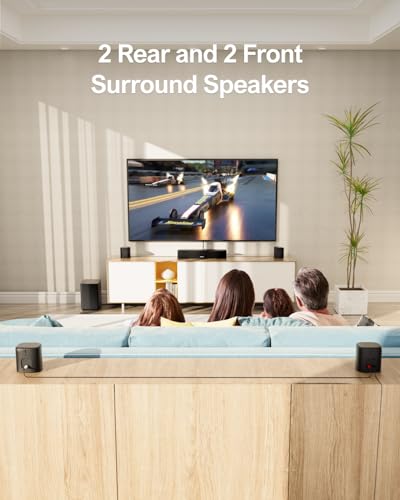
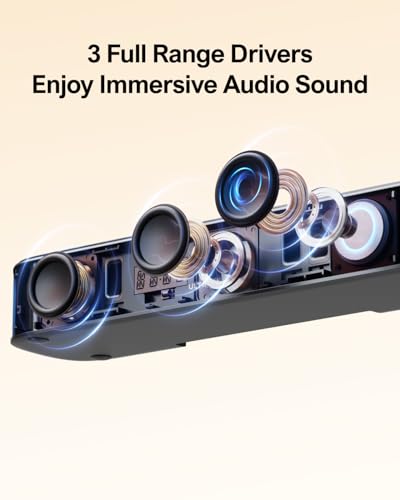
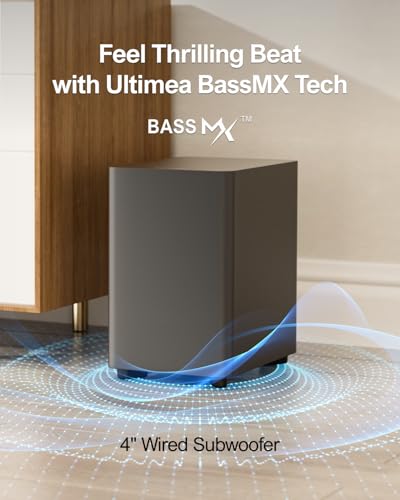
Let's start with what the Ultimea Aura A40 does differently. This system includes eight total speakers: three in the main soundbar, four separate surround speakers (two that go near the front corners of your room, two that go behind your seating area), plus a dedicated 4-inch subwoofer. That's a lot of hardware for the money.
The magic happens through Ultimea's "SurroundX" technology, which coordinates all these speakers to create what they claim is 99.99% accurate sound movement. While that specific percentage is marketing speak, the underlying concept is solid—when you have actual speakers positioned around your room, creating convincing surround effects becomes much easier than trying to fake it from the front.
Setting up the Ultimea system requires some patience and cable management. You'll need to run a 6-meter cable to connect the rear speakers, plus 2-meter cables for the front surrounds. The system does try to simplify things with a hybrid approach—the rear right speaker can pair wirelessly with the soundbar after initial setup, reducing some cable clutter.
The payoff is authentic directional audio. In our research of user experiences, people consistently mention the "wow factor" of hearing footsteps actually move from behind them, or feeling like they're in the middle of a rainstorm. This is something virtual processing struggles to replicate convincingly.
The Ultimea's 330W peak power rating spread across all those speakers provides substantial headroom. Peak power ratings can be misleading (they represent maximum bursts rather than sustained output), but the system does get impressively loud without obvious distortion. The frequency response extends from 65Hz to 18kHz, which is respectable for a budget system, though it won't deliver the deep sub-bass that home theater enthusiasts crave.
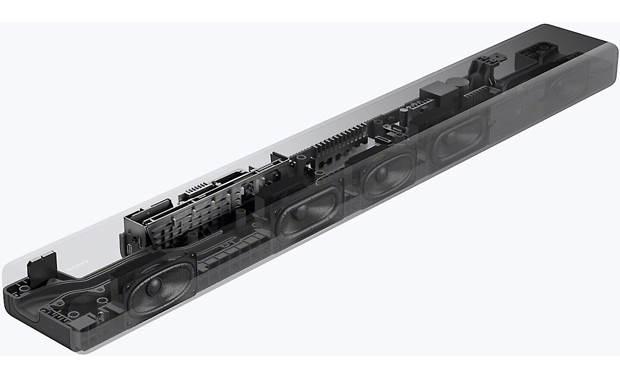
The Sony HT-A3000 represents a completely different philosophy. Instead of surrounding you with speakers, it uses computational audio processing to create spatial effects from just five drivers built into a single soundbar. This might sound like a compromise, but Sony's execution is surprisingly sophisticated.
The key technologies here are Sony's "Vertical Surround Engine" and "S-Force PRO Front Surround." The Vertical Surround Engine specifically targets height effects—making helicopters sound like they're flying overhead or rain sound like it's falling from above. It does this by carefully controlling how sound reflects off your ceiling. S-Force PRO Front Surround handles the left-right surround effects, using psychoacoustic principles (basically, exploiting how your brain interprets sound) to create the impression of rear speakers.
What makes the Sony particularly impressive is its support for Dolby Atmos and DTS:X—premium audio formats that the Ultimea simply can't handle. Dolby Atmos is what's called "object-based audio," meaning sound engineers can place specific sounds anywhere in 3D space, not just in traditional left-right-center channels. When you're watching a movie mixed in Atmos, sounds can literally move through the air above you.
The Sony's X-Balanced speaker drivers are worth understanding too. Traditional speaker drivers are round, but Sony's are more oval-shaped, which allows them to fit larger diaphragms (the part that actually moves air) into the same space. Larger diaphragms generally mean better bass response and less distortion at high volumes.
The built-in dual subwoofers in the Sony measure about 4.4 inches by 1.8 inches each. While smaller than the Ultimea's dedicated 4-inch subwoofer, they're integrated more seamlessly and don't require additional floor space.
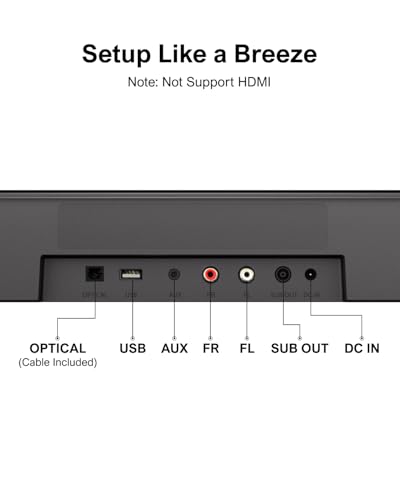
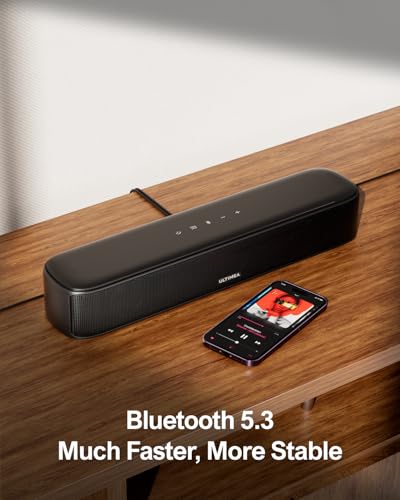
Here's where the differences become stark. The Ultimea Aura A40 offers basic connectivity: optical digital input, 3.5mm aux, USB for music playback, and Bluetooth 5.3. What it notably lacks is HDMI input or output, which is a significant limitation in 2024.
HDMI eARC (enhanced Audio Return Channel) has become the standard for connecting soundbars to modern TVs because it can carry high-bandwidth audio formats like Dolby Atmos without compression. Without HDMI, the Ultimea is limited to older, more compressed audio formats, regardless of what your TV or streaming device is capable of sending.
The Sony HT-A3000 includes HDMI 2.1 eARC, which future-proofs it for whatever audio formats come next. It also includes Wi-Fi for direct streaming, AirPlay 2 for Apple devices, Chromecast built-in for Android devices, and Bluetooth with Sony's LDAC codec—a high-quality wireless audio standard that can stream much better quality than standard Bluetooth.
The connectivity difference matters more than you might think. If you're using a modern gaming console, 4K Apple TV, or high-end streaming device, you want that HDMI connection to ensure you're getting the best possible audio quality.
Based on extensive review analysis, both systems have distinct sonic personalities that suit different preferences and use cases.
The Ultimea Aura A40 excels at creating an immersive, spacious soundfield for movies and TV shows. The physical surround speakers provide genuine rear-channel effects that virtual processing can't quite match. Dialog clarity is solid thanks to the discrete center channel, and the dedicated subwoofer provides satisfying bass impact for action scenes.
However, multiple reviewers note that the Ultimea can sound somewhat "metallic" or "boxy" with music, particularly compared to more refined audio systems. This isn't unusual for budget surround systems—they're optimized for movie soundtrack impact rather than musical accuracy.
The Sony HT-A3000 takes a more refined approach. Its sound signature is cleaner and more balanced, making it notably better for music listening. The virtual surround processing, while not matching the authenticity of physical rear speakers, is convincing enough for most content. Where it really shines is with Dolby Atmos content—the height effects can be genuinely impressive, making you forget there are no ceiling speakers.
The Sony's dialogue enhancement features are particularly noteworthy. Beyond just having a center channel, it includes intelligent processing that can dynamically boost speech frequencies when needed, making it excellent for late-night viewing when you need to keep volume low but still understand every word.
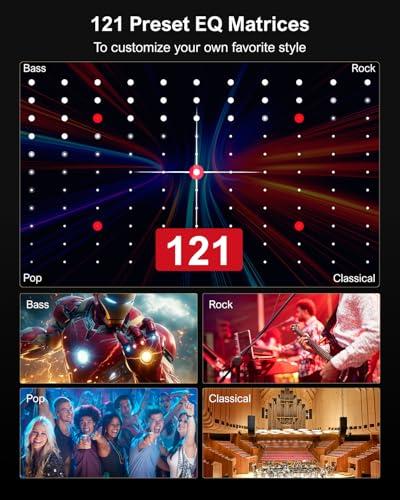
Both systems offer companion smartphone apps, but they serve different purposes. The Ultimea app focuses heavily on audio customization. You get access to a 10-band equalizer, 121 preset sound profiles across different genres (Bass, Pop, Classical, Rock), and the ability to adjust surround speaker levels independently. For audio enthusiasts who enjoy tweaking settings, this level of control is impressive at this price point.
The app also provides six different listening modes (Movie, Music, Voice, Sport, Game, Night), each optimized for different content types. This granular control helps compensate for the system's more basic processing capabilities.
The Sony app takes a different approach, focusing more on convenience and automatic optimization. The "Sound Field Optimization" feature uses the soundbar's built-in microphones to analyze your room and automatically adjust settings. It's less hands-on than the Ultimea's approach, but more sophisticated in its execution.
In a dedicated home theater setup, these systems serve different needs. The Ultimea Aura A40 is better suited for medium-sized rooms where you can properly position the surround speakers. The recommended room size is roughly 108-270 square feet, which covers most living rooms and smaller dedicated theater spaces.
The physical surround speakers really shine in this environment. For action movies, horror films, and gaming, having sounds actually come from behind you creates immersion that virtual processing struggles to match. The discrete subwoofer also provides the kind of bass impact that makes explosion scenes feel visceral.
However, the Ultimea's lack of premium format support means you're not getting the full benefit of modern movie soundtracks mixed in Dolby Atmos. This is increasingly important as streaming services and 4K Blu-rays predominantly use these advanced formats.
The Sony HT-A3000 is better suited for modern home theaters where aesthetics matter and where you're primarily consuming current content. Its sleek design won't dominate your entertainment center, and its format support ensures compatibility with whatever audio formats become standard over the next few years.
The virtual height effects work best in rooms with reflective ceilings at appropriate heights (8-10 feet typically works well). In rooms with very high or heavily textured ceilings, the effect diminishes considerably.
For gaming, the Ultimea Aura A40's physical surround speakers provide a significant advantage in competitive scenarios. Being able to accurately locate footsteps or gunfire behind you isn't just immersive—it can be the difference between winning and losing in first-person shooters or battle royale games.
The Sony HT-A3000 handles gaming well too, particularly for single-player narrative games where immersion matters more than competitive precision. Its lower input latency (the delay between controller input and audio response) also makes it suitable for rhythm games or any application where audio-visual sync is critical.
The Ultimea Aura A40 makes sense if you want authentic surround sound at a budget price point and don't mind the setup complexity. It's ideal for people who primarily watch movies and TV shows, enjoy customizing audio settings, and have the space for multiple speakers. The lack of modern connectivity might not matter if you're using older devices or are happy with compressed audio formats.
The Sony HT-A3000 is the better choice for most modern users, despite its higher cost at the time of writing. Its combination of sleek design, advanced processing, and comprehensive connectivity makes it more versatile and future-proof. It's particularly well-suited for users who value aesthetics, want compatibility with modern devices, and appreciate the convenience of a single-unit solution.
These systems represent two valid but very different approaches to home audio. The Ultimea Aura A40 offers remarkable value by providing genuine surround sound at a budget price, but comes with setup complexity and limited connectivity. The Sony HT-A3000 costs more but delivers refined processing, modern features, and elegant design.
Your choice ultimately depends on your priorities: authentic surround effects and budget consciousness point toward the Ultimea, while modern convenience and processing sophistication favor the Sony. Both will dramatically improve your TV's audio—just through very different means.
| Ultimea Aura A40 7.1 Channel Soundbar System | Sony HT-A3000 3.1ch Dolby Atmos Soundbar |
|---|---|
| Channel Configuration - Determines surround sound authenticity | |
| True 7.1 with 4 physical surround speakers + subwoofer | 3.1 with virtual surround processing |
| Total Speakers - More drivers can mean fuller sound | |
| 8 speakers (3 soundbar + 4 surround + 1 subwoofer) | 5 speakers (all built into main unit) |
| Power Output - Affects maximum volume and headroom | |
| 330W peak power across all speakers | 250W RMS (more conservative but accurate rating) |
| Premium Audio Format Support - Essential for modern content | |
| None (limited to basic digital formats) | Dolby Atmos, DTS:X, 360 Reality Audio |
| HDMI Connectivity - Critical for modern devices and TV compatibility | |
| None (major limitation for current setups) | HDMI 2.1 eARC output |
| Subwoofer Type - Affects bass quality and room placement flexibility | |
| External 4-inch wired subwoofer | Built-in dual subwoofers (space-saving) |
| Wireless Connectivity - Impacts streaming and device compatibility | |
| Bluetooth 5.3 only | Wi-Fi, AirPlay 2, Chromecast, Bluetooth with LDAC |
| Setup Complexity - Time and effort required for installation | |
| Requires cable runs to 4 surround speakers | Single unit plug-and-play setup |
| App Control Features - Customization and optimization options | |
| Extensive EQ control (10-band, 121 presets, surround levels) | Automatic room optimization with basic manual controls |
| Design Philosophy - Space requirements and aesthetics | |
| Multi-component system requires speaker placement around room | Sleek single soundbar (950mm wide) |
| Voice Control Integration - Smart home compatibility | |
| Not supported | Alexa and Google Assistant compatible |
| Expandability - Future upgrade options | |
| Fixed system (all components included) | Optional rear speakers and subwoofer available separately |
The Ultimea Aura A40 provides authentic surround sound with four physical speakers placed around your room, creating genuine directional audio effects. The Sony HT-A3000 uses advanced virtual surround processing to simulate spatial effects from a single unit. For true surround immersion, the Ultimea has the advantage, while the Sony offers more refined audio processing and premium format support.
Yes, HDMI connectivity is crucial for modern setups. The Sony HT-A3000 includes HDMI eARC which supports high-quality audio formats like Dolby Atmos directly from your TV. The Ultimea Aura A40 lacks HDMI entirely, limiting you to optical and Bluetooth connections, which can't carry premium audio formats and may not work optimally with newer TVs and streaming devices.
The Sony HT-A3000 is significantly easier to install - just connect one HDMI cable to your TV and plug it in. The Ultimea Aura A40 requires running cables to four surround speakers around your room, including a 6-meter cable for rear speakers. While the Ultimea provides more immersive sound, setup complexity is considerably higher.
The Ultimea Aura A40 is a true 7.1 system with seven discrete audio channels plus a subwoofer, using actual speakers placed around your room. The Sony HT-A3000 is a 3.1 system with left, right, center channels plus subwoofer, creating virtual surround effects through processing. More channels typically mean better surround immersion, but the Sony compensates with sophisticated Dolby Atmos processing.
Only the Sony HT-A3000 supports Dolby Atmos and DTS:X premium audio formats, which provide three-dimensional sound with height effects. The Ultimea Aura A40 doesn't support these modern formats, limiting it to basic stereo and digital surround formats. For the latest movies and streaming content, Dolby Atmos support is increasingly important.
The Sony HT-A3000 is a single sleek unit measuring 950mm wide that sits under your TV. The Ultimea Aura A40 requires significantly more space with four surround speakers that need placement around your room, plus an external subwoofer. The Sony is ideal for minimalist setups, while the Ultimea works best when you have dedicated space for multiple speakers.
For competitive gaming, the Ultimea Aura A40 has an advantage because its physical rear speakers provide accurate directional audio for locating enemies. The Sony HT-A3000 also handles gaming well with lower input latency and better overall audio refinement. Choose the Ultimea for competitive advantage or the Sony for immersive single-player experiences.
The Ultimea Aura A40 works better with older TVs since it uses optical and analog connections that most TVs have. The Sony HT-A3000 relies primarily on HDMI eARC, which requires a relatively recent TV. Both systems have optical inputs, but you'll miss premium features on the Sony without HDMI eARC support.
Both systems provide good bass but through different approaches. The Ultimea Aura A40 includes a dedicated 4-inch external subwoofer that can be positioned optimally in your room. The Sony HT-A3000 uses built-in dual subwoofers that save space but may not extend as deep. For maximum bass impact, the Ultimea's external subwoofer typically performs better.
The Sony HT-A3000 excels here with built-in Wi-Fi, Chromecast, AirPlay 2, and direct streaming service integration. The Ultimea Aura A40 relies on Bluetooth 5.3 for wireless streaming, which works but doesn't support high-quality audio codecs. For seamless streaming from phones and tablets, the Sony provides superior connectivity options.
The Ultimea Aura A40 provides extensive manual customization through its app, including 10-band equalizer, 121 preset sound profiles, and adjustable surround levels. The Sony HT-A3000 focuses more on automatic optimization with room calibration features. Audio enthusiasts who enjoy tweaking settings will prefer the Ultimea, while users wanting automatic optimization should choose the Sony.
This depends on your priorities. The Ultimea Aura A40 offers exceptional value by including a complete 7.1 surround system with subwoofer and all speakers at a budget-friendly price. The Sony HT-A3000 costs more but provides premium processing, modern connectivity, and sleek design. Choose the Ultimea for maximum hardware at low cost, or the Sony for refined features and future-proofing.
We've done our best to create useful and informative comparisons to help you decide what product to buy. Our research uses advanced automated methods to create this comparison and perfection is not possible - please contact us for corrections or questions. These are the sites we've researched in the creation of this article: youtube.com - walmart.com - youtube.com - ultimea.com - homestudiobasics.com - ultimea.co - youtube.com - eu.ultimea.com - walmart.com - device.report - bestbuy.com - manuals.plus - community.ultimea.com - judge.me - support.ultimea.com - geekmaxi.com - provantage.com - bestbuy.com - youtube.com - uk.whatgeek.com - rtings.com - electronics.sony.com - crutchfield.com - store.sony.com.au - digitaltrends.com - videoandaudiocenter.com - abt.com - sony.com - merlinstv.com - crutchfield.com - youtube.com

Privacy Policy
Terms and Conditions - Affiliate Policy
Home Security
© Copyright 2008-2026.
11816 Inwood Rd #1211, Dallas, TX 75244