

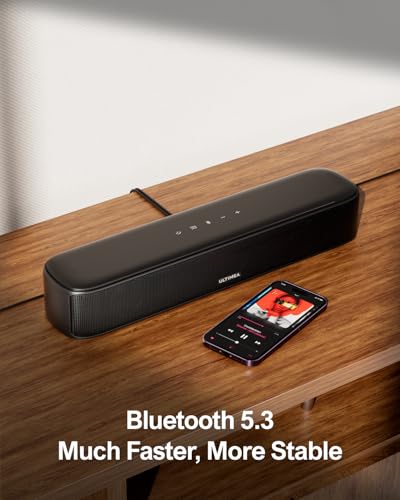
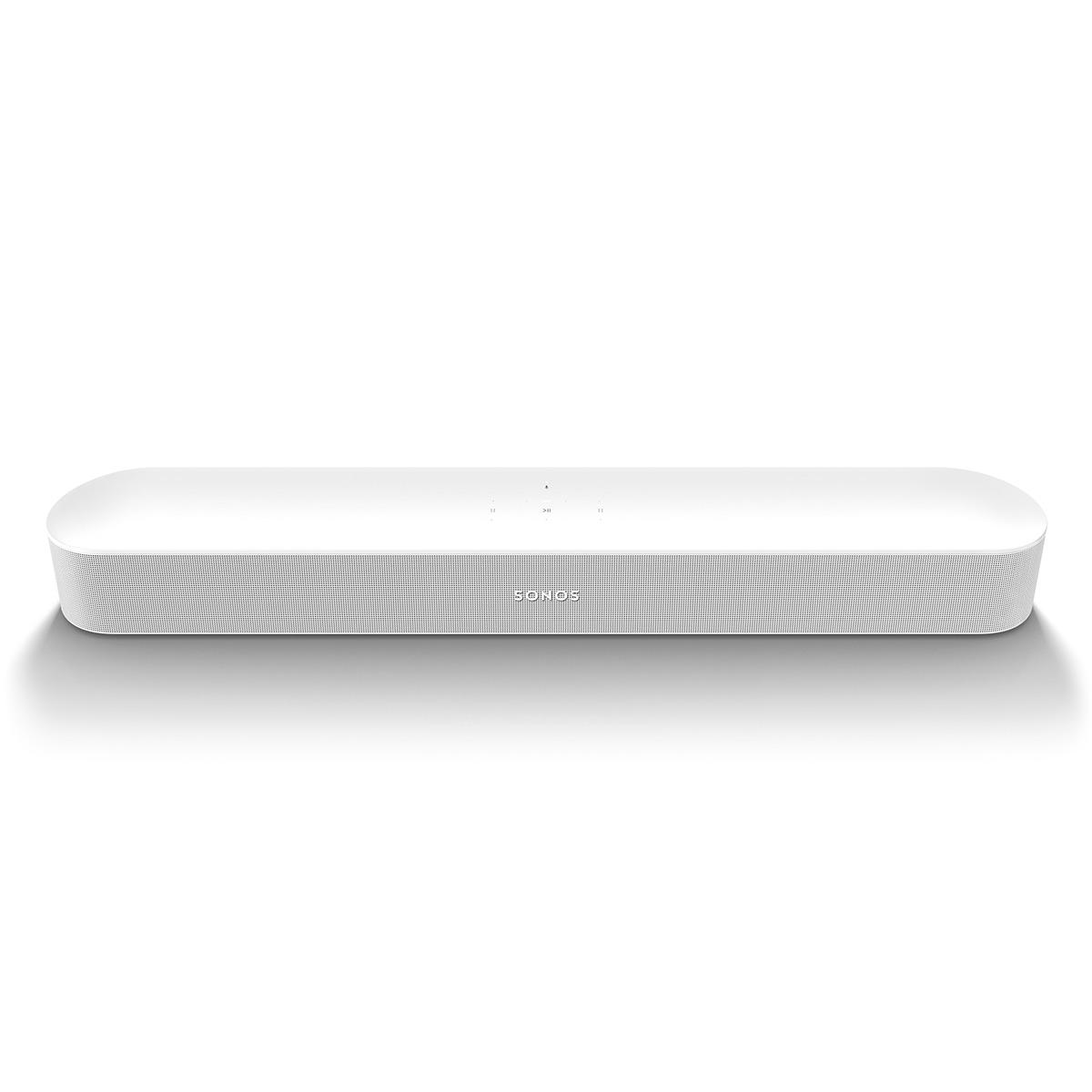
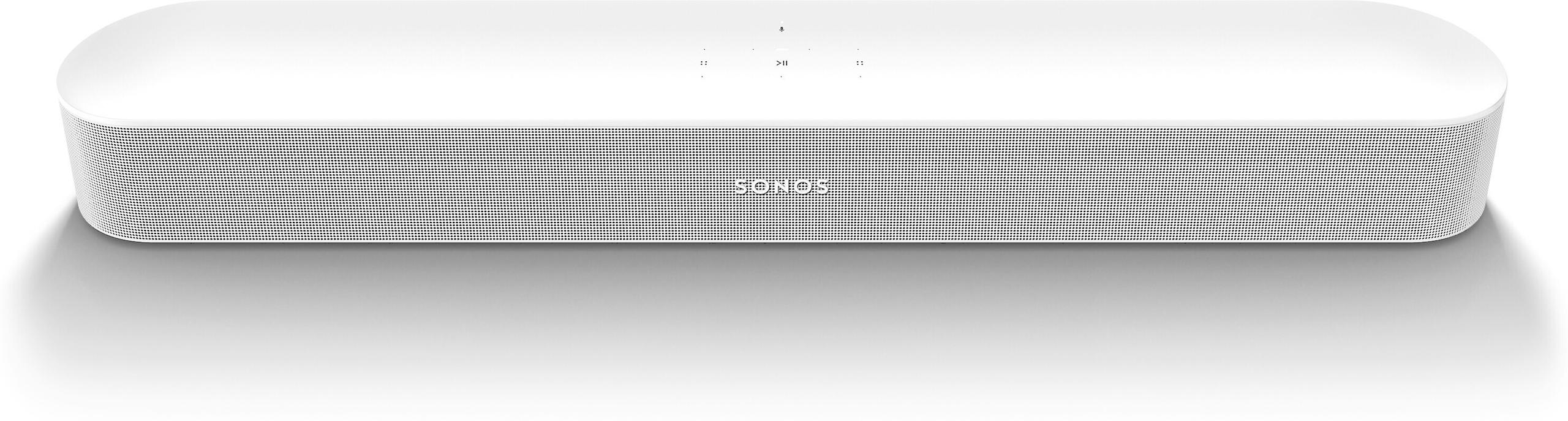




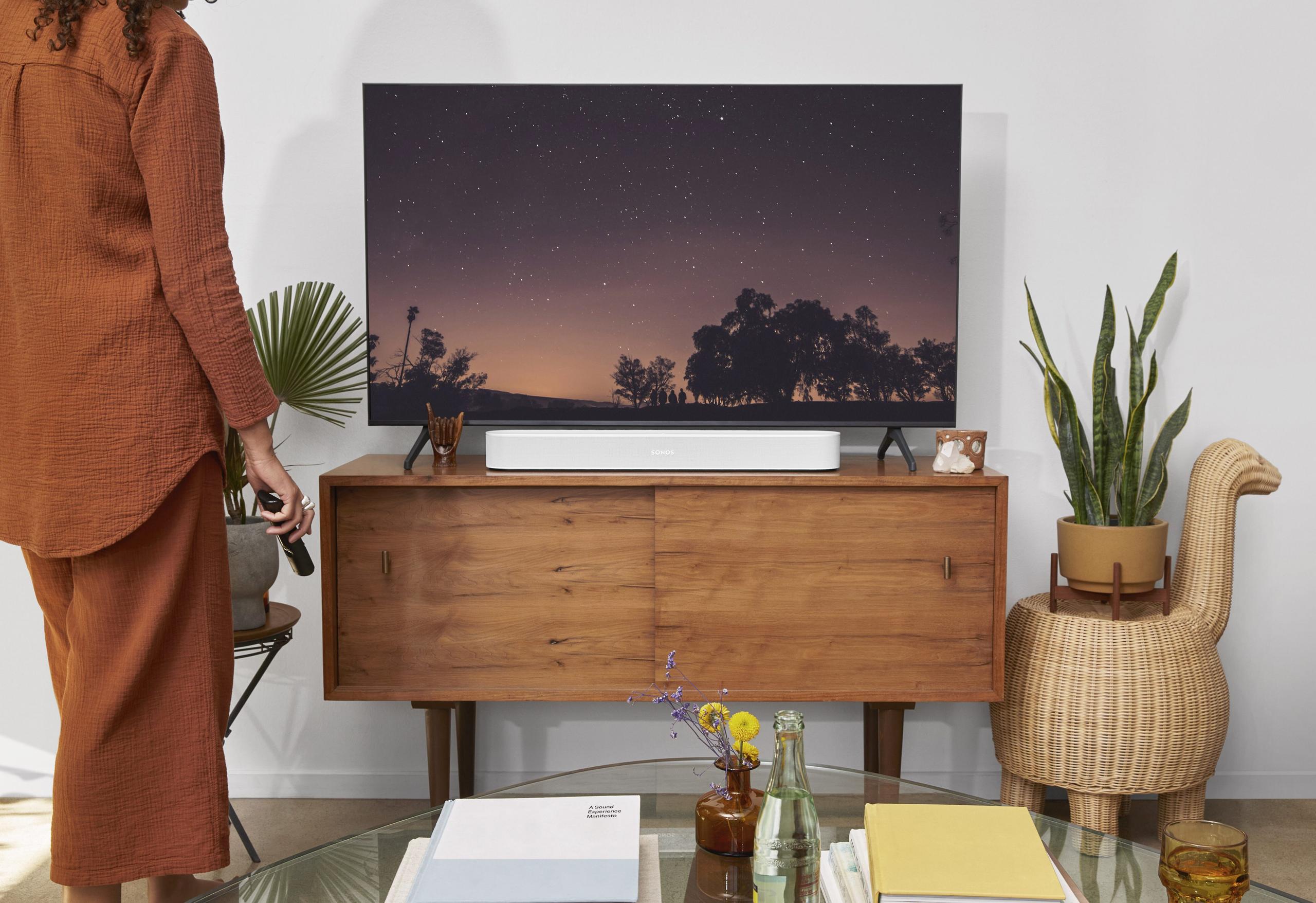
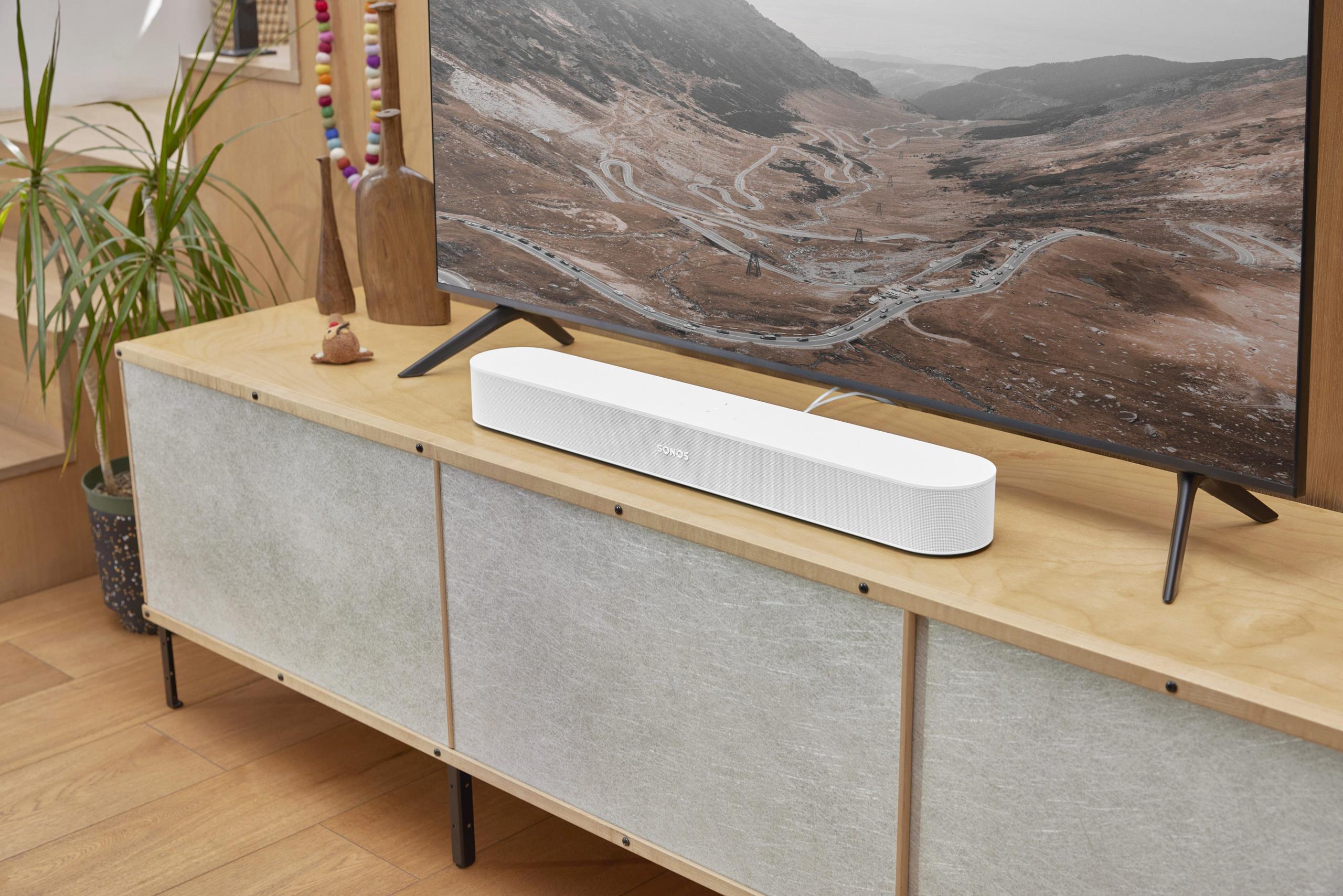
When your TV's built-in speakers sound like they're coming from inside a tin can, it's time to upgrade. But the soundbar market in 2025 offers two fundamentally different philosophies, and choosing between them can make or break your home theater experience. The Ultimea Aura A40 7.1 Channel Soundbar System and Sonos Beam Gen 2 Soundbar represent these opposing approaches perfectly: one gives you a complete physical surround sound setup at a budget price, while the other delivers premium virtual surround processing in a single sleek package.
Understanding which approach works better for your situation requires looking beyond the marketing claims to understand how each system actually produces sound in your living room.
The soundbar category has evolved dramatically since streaming became mainstream around 2020. Early soundbars were essentially wide speakers that made dialogue clearer—nothing more. Today's systems attempt to recreate full home theater experiences, but they take radically different paths to get there.
Physical surround systems like the Aura A40 follow the traditional home theater playbook: put speakers around your room where the sound is supposed to come from. When a helicopter flies overhead in a movie, you hear it move from the front speakers to the rear ones because there are actually speakers positioned behind you. This approach makes intuitive sense—if you want surround sound, use surround speakers.
Virtual surround systems like the Sonos Beam Gen 2 take a completely different approach. They use advanced digital processing called psychoacoustics—essentially tricks that exploit how your brain interprets sound—to create the illusion of audio coming from directions where no speakers exist. When implemented well, virtual surround can be surprisingly convincing, making you swear you hear sounds coming from behind you even though all the drivers are in front of your TV.
The choice between these approaches isn't just about sound quality—it fundamentally changes how you'll live with the system day-to-day.
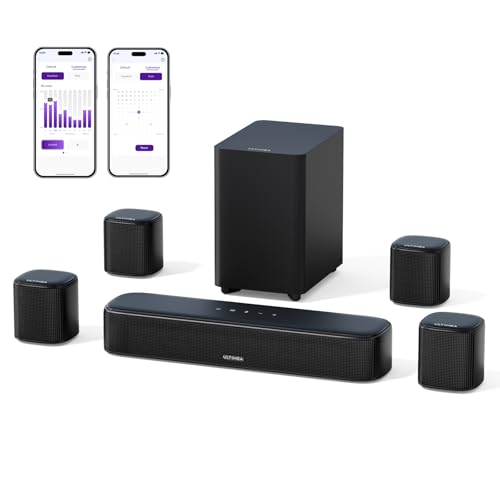
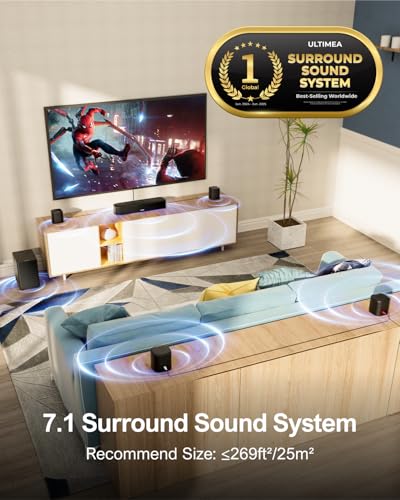
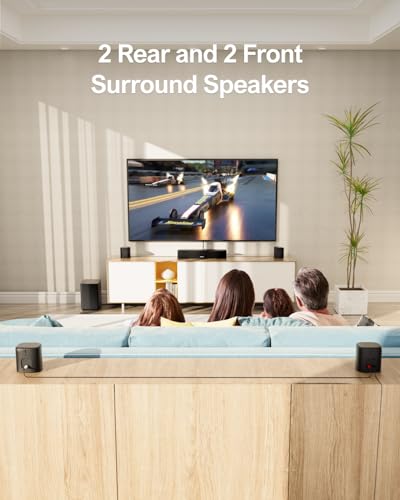
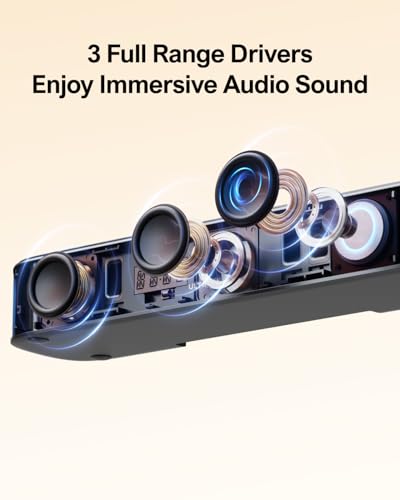
The Ultimea Aura A40, released in 2024, includes eight separate speakers working together: three drivers in the main soundbar, four dedicated surround speakers (two for the front channels, two for the rear), and a 4-inch subwoofer. This creates what's called a "true" 7.1 channel system, meaning seven main channels plus one dedicated low-frequency effects channel (the ".1" refers to the subwoofer).
The system's SurroundX technology coordinates all these speakers to move sound around your room with 99.99% accuracy according to the manufacturer—though real-world performance depends heavily on speaker placement. The front surround speakers connect via 2-meter cables, while the rear speakers use a 6-meter cable, with the rear right speaker capable of wireless pairing to reduce cable clutter somewhat.
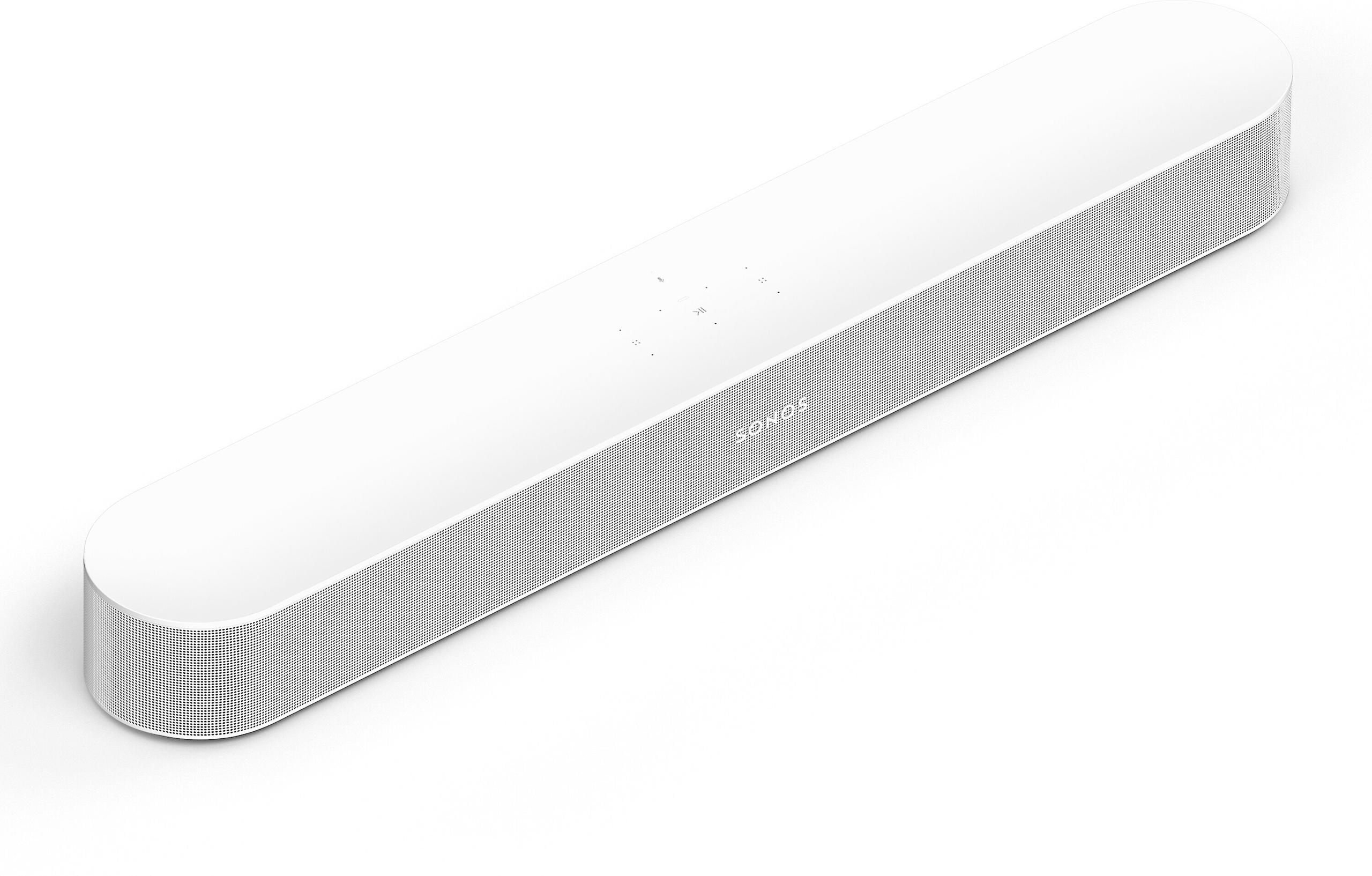
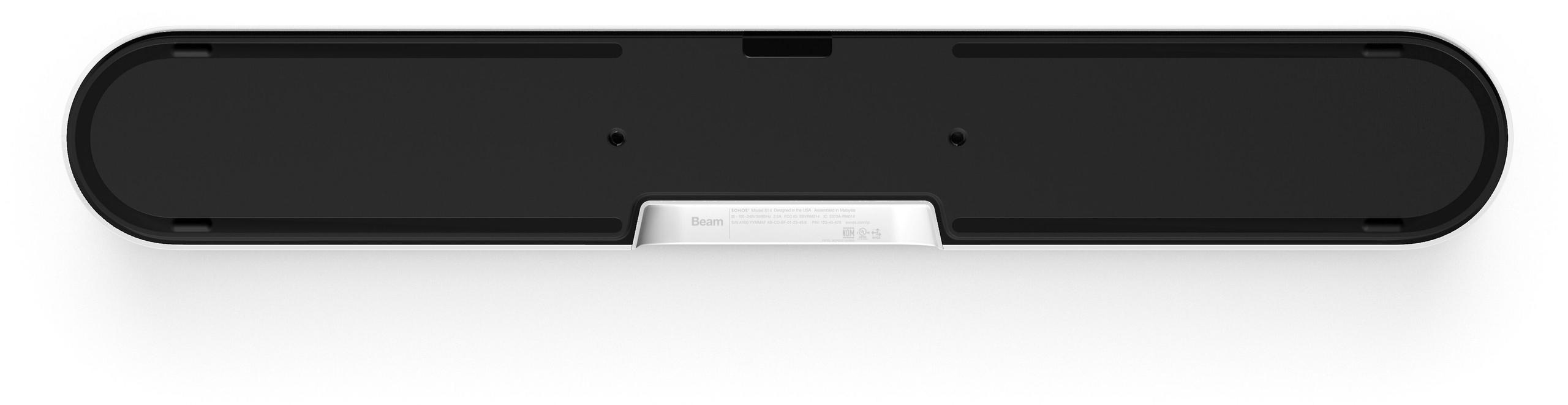
The Sonos Beam Gen 2, launched in 2021 as an upgrade to the original Beam, packs five drivers into a single 25.6-inch enclosure: four woofers and one tweeter, plus three passive radiators that help extend bass response. Its Dolby Atmos processing analyzes incoming audio and uses phase manipulation, timing delays, and frequency filtering to bounce sound off your ceiling and walls, creating the perception of height and surround effects.
This virtual processing has improved dramatically since 2021, with regular software updates enhancing the psychoacoustic algorithms. The key limitation is that it requires decent room acoustics to work—hard surfaces to reflect sound and a reasonably sized space where the reflections can develop properly.
Based on extensive research into professional reviews and user experiences, these systems deliver very different audio signatures, and understanding these differences is crucial for making the right choice.
The Sonos Beam Gen 2 consistently receives praise for its clean, balanced audio reproduction. Professional reviewers from What Hi-Fi? and TechRadar highlight its ability to handle complex soundtracks without becoming harsh or fatiguing. The dialogue clarity is exceptional—a critical factor since poor dialogue intelligibility ruins the movie-watching experience. The system's center tweeter specifically handles high frequencies and vocal ranges, ensuring conversations cut through even during loud action sequences.
The Aura A40, however, faces significant challenges in pure audio quality. Multiple reviews describe the sound as "tinny, boxy, and metallic," with a harsh quality that becomes more apparent during music playback. This isn't uncommon at the budget end of the market—achieving truly refined sound reproduction requires more expensive components and sophisticated tuning that would push the price beyond the system's value proposition.
For context, the frequency response tells part of the story. The Aura A40 operates from 65Hz to 18kHz, which is actually quite limited in the bass region. Most quality soundbars extend down to at least 50Hz, and premium systems often reach 35Hz or lower. This means the Aura A40's included subwoofer needs to work harder to produce adequate bass, contributing to what reviewers describe as "loose" or "flabby" low-end performance.
Here's where the philosophical differences become most apparent. The Aura A40 creates genuine surround sound by physically placing speakers around your listening area. When positioned correctly—and this requires some experimentation—the effect can be genuinely immersive. Helicopter flyovers track smoothly from front to rear, and ambient effects like rain or crowd noise envelop you naturally.
The catch is that "positioned correctly" part. Reviews consistently mention the need for careful speaker placement, with some users spending hours adjusting positions and angles to achieve optimal results. The rear speakers work best when angled in a triangle configuration rather than pointing directly at the listening position, and the front surround speakers need precise positioning to avoid interfering with the main soundbar's output.
The Sonos Beam Gen 2 delivers surprisingly effective virtual surround for a single unit. Its Dolby Atmos processing creates convincing height effects—the sensation of sound coming from above—and does a respectable job with side surround effects. However, it cannot replicate the precision of dedicated rear speakers. Sounds that should come from directly behind you tend to appear more from the sides or as diffuse ambient effects.
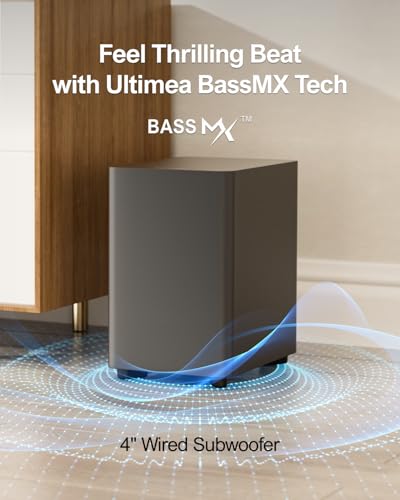
Bass performance represents another fundamental trade-off between these systems. The Aura A40 includes a dedicated 4-inch subwoofer that produces tangible, physical bass impact. During action movies, explosions and crashes have real weight that you can feel in your chest. However, the bass quality leaves room for improvement—it's more about impact than accuracy or musicality.
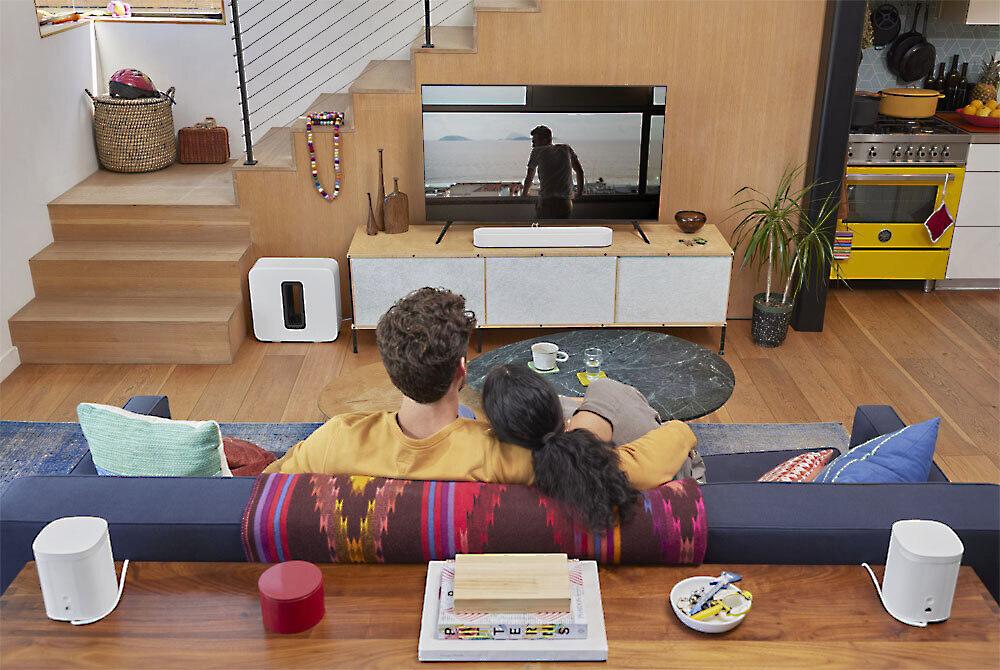
The Sonos Beam Gen 2 relies entirely on its internal drivers for low-frequency reproduction. While this produces tighter, more controlled bass, it simply cannot match the physical impact of a dedicated subwoofer. For users who want the Beam's refinement with more substantial bass, adding a Sonos Sub Mini represents a significant additional investment but transforms the system's low-end performance.
The Aura A40 excels in medium to large rooms where its 330W peak power output and distributed speakers can shine. The system is specifically designed for rooms between 108-270 square feet, and within that range, it can deliver impressive volume levels without significant distortion.
The Beam Gen 2 is optimized for smaller to medium-sized spaces where its virtual processing can work most effectively. In very large or acoustically challenging rooms—those with high ceilings, lots of soft furnishings, or irregular shapes—the virtual surround effects may not develop properly, leaving you with essentially a very good stereo soundbar rather than a surround sound system.
Modern soundbar connectivity extends far beyond just "plugging it in," and the differences between these systems reveal important philosophical divides about user experience and future-proofing.
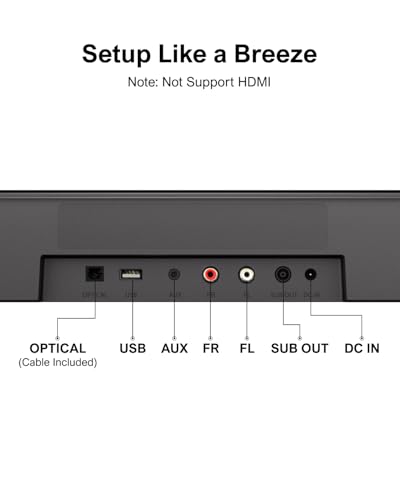
The Aura A40 offers Optical, AUX, USB, and Bluetooth 5.3 connections but notably lacks HDMI input—a significant limitation in 2025. HDMI has become the standard for high-quality audio transmission because it supports advanced audio codecs like Dolby Atmos, DTS:X, and uncompressed PCM audio that optical connections cannot handle. More importantly, HDMI eARC (enhanced Audio Return Channel) enables seamless integration with your TV's remote control and automatic input switching.
Without HDMI, Aura A40 users must rely on optical connection, which limits audio quality to compressed formats and requires managing multiple remotes. This feels increasingly dated as TV manufacturers have standardized on HDMI for premium audio features.
The Sonos Beam Gen 2 prioritizes HDMI eARC connectivity, enabling full integration with modern smart TVs. This means one remote controls both TV and soundbar volume, automatic input switching works seamlessly, and you gain access to the highest quality audio formats your TV can output. The system also includes optical as a backup for older TVs, but HDMI represents the primary connection method.
Beyond physical connections, the Beam Gen 2 integrates with WiFi networks for direct streaming from services like Spotify and Apple Music, plus voice control through Alexa or Google Assistant. This transforms the soundbar from a TV accessory into a standalone music system.
The installation experience reveals another crucial difference that affects long-term satisfaction. The Aura A40 requires significant setup investment—positioning four satellite speakers, running multiple cables, and finding power outlets for both the subwoofer and rear speakers. Reviews consistently mention the trial-and-error process of finding optimal speaker positions, with some users taking several sessions to achieve satisfactory results.
Cable management becomes a real consideration. While the rear right speaker can pair wirelessly after initial setup, you're still dealing with power cables for four separate devices plus audio cables for the front speakers. In living rooms where aesthetics matter, this can be challenging to manage cleanly.
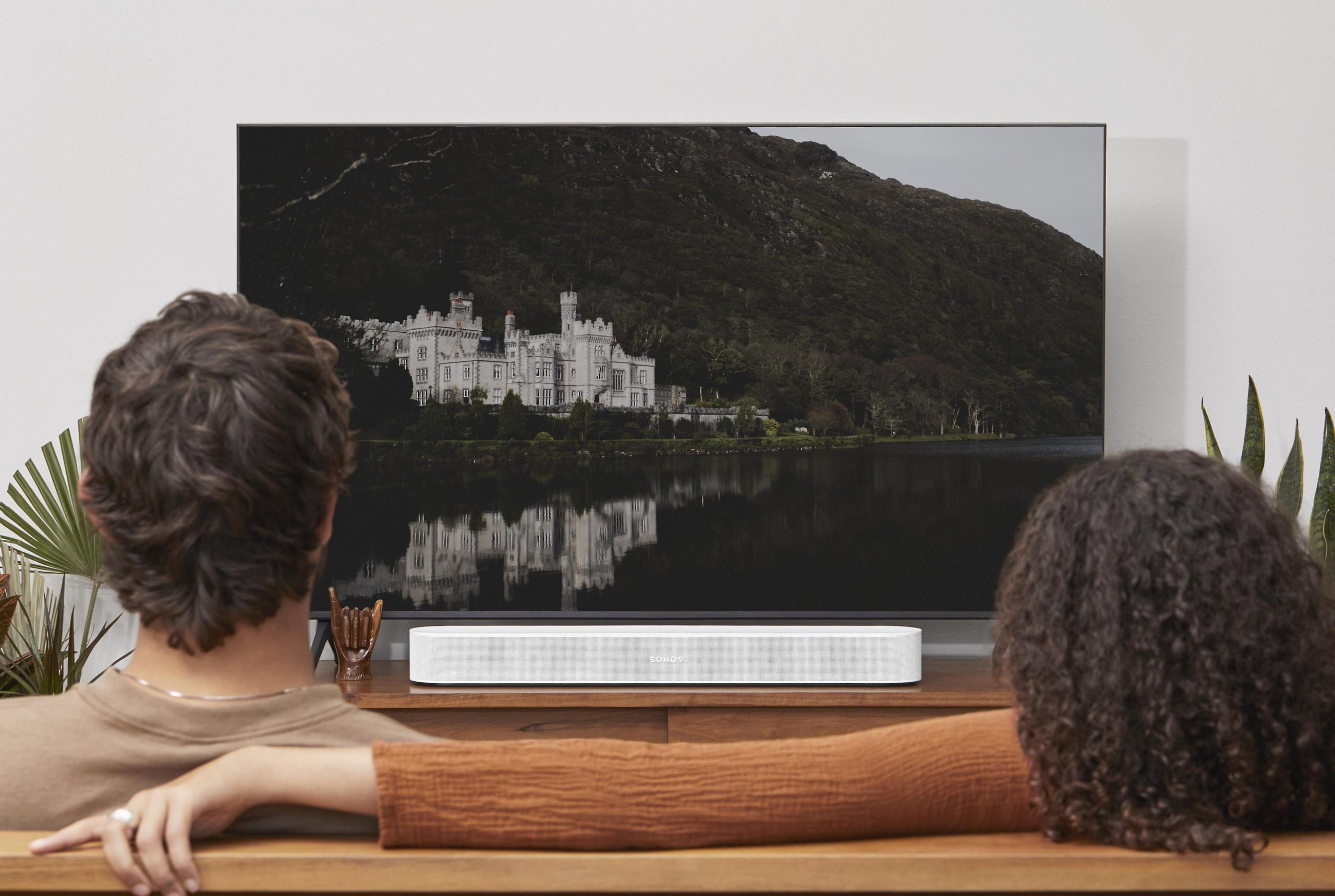
The Sonos Beam Gen 2 offers genuine plug-and-play simplicity. Connect one HDMI cable, place the soundbar on your TV stand or mount it on the wall, and you're essentially done. The Trueplay room calibration feature (available on iOS devices) automatically analyzes your room's acoustics and optimizes the sound accordingly—no manual positioning required.
For users who value convenience and clean aesthetics, this difference cannot be overstated. The Beam Gen 2 disappears into your entertainment setup, while the Aura A40 becomes a prominent part of your room's layout.
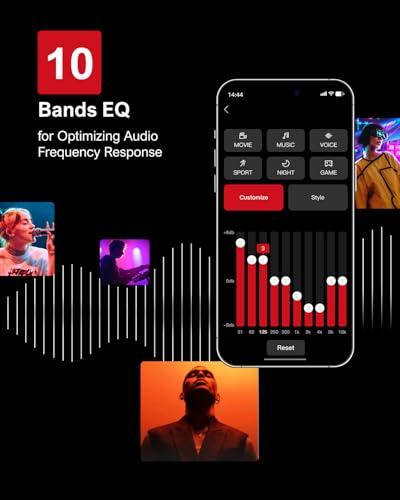
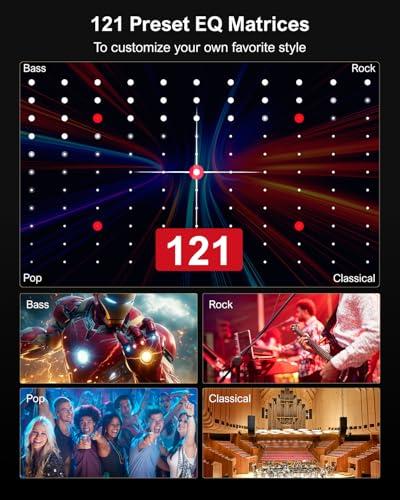
The Aura A40 compensates for its audio quality limitations with extensive customization options through the Ultimea Smart App. The system offers 121 preset EQ matrices covering different musical genres (Bass, Pop, Classical, Rock), plus a 10-band manual equalizer for precise tuning. Users can adjust surround levels across 13 different settings and switch between six quick EQ modes (Movie, Music, Voice, Sport, Game, Night) optimized for different content types.
This level of customization is genuinely impressive and can help compensate for the system's inherent sonic limitations. Power users who enjoy tweaking settings will appreciate the flexibility, and the regular over-the-air firmware updates suggest ongoing feature development.
The Sonos Beam Gen 2 takes a more streamlined approach, focusing on simplicity over granular control. The Sonos app provides basic bass and treble adjustments, along with Speech Enhancement and Night Sound modes for dialogue clarity and dynamic range compression. While less comprehensive than the Aura A40's options, these controls address the most common user needs without overwhelming casual users.
More significantly, the Beam Gen 2 integrates with the broader Sonos ecosystem, enabling multi-room audio throughout your home and direct access to streaming services. Voice control through built-in assistants allows hands-free operation, and the system receives regular software updates that add new features and streaming service support.
At the time of writing, the pricing difference between these systems reflects their different market positions. The Aura A40 represents exceptional value for a complete surround sound package, including everything needed for 7.1 channel audio. Comparing against other complete surround systems or even standalone soundbars from established brands, the price point is genuinely impressive.
However, the Sonos Beam Gen 2 commands a premium price that reflects its superior components, processing capabilities, and ecosystem integration. For users who want bass impact matching the Aura A40, adding a Sonos Sub Mini significantly increases the total investment.
The value equation depends entirely on your priorities. If maximum surround immersion at the lowest price point matters most, the Aura A40 delivers genuine value despite its audio quality compromises. If you prioritize sound refinement, ease of use, and long-term ecosystem expandability, the Beam Gen 2 justifies its premium positioning.
Consider also the longevity factor: Sonos has a track record of supporting products with software updates for many years, while newer brands like Ultimea have less established support histories. For a device you'll likely keep for 5-7 years, ongoing software support becomes increasingly important.
After researching both systems extensively, clear usage patterns emerge for when each system excels.
Choose the Ultimea Aura A40 if you have a dedicated home theater room or living space where you can properly position multiple speakers. If you primarily watch action movies, play immersive games, and want genuine surround sound effects at an affordable price, the system delivers on its core promise despite audio quality limitations. The extensive customization options help optimize performance for your specific room and preferences.
The system works best for users who enjoy the setup process and don't mind spending time positioning speakers for optimal results. If you can accept some audio quality compromises in exchange for true surround immersion and exceptional value, the Aura A40 provides a complete home theater experience that would cost significantly more from established brands.
Choose the Sonos Beam Gen 2 if you value audio refinement, simplicity, and integration with modern smart home systems. The system excels for users in smaller to medium-sized living spaces who want great sound without complex installation or ongoing tweaking. If you listen to music regularly through your TV setup, the superior audio quality becomes immediately apparent.
The Beam Gen 2 also makes sense for users who plan to expand their audio system over time, as the Sonos ecosystem enables seamless multi-room audio and easy integration with additional speakers or subwoofers.
These systems represent fundamentally different philosophies about home audio, and both succeed within their respective approaches. The Ultimea Aura A40 delivers genuine surround sound immersion at an exceptional price point, accepting audio quality compromises in exchange for true multi-channel performance. The Sonos Beam Gen 2 prioritizes sound quality and user experience, using sophisticated virtual processing to create impressive results from a single, elegant unit.
Your choice should align with your living situation, technical comfort level, and audio priorities. For maximum immersion on a budget in a dedicated home theater space, the Aura A40 provides unmatched value. For superior sound quality and effortless integration in modern living spaces, the Beam Gen 2 justifies its premium positioning.
Either system represents a massive upgrade over TV speakers, but understanding their different strengths ensures you'll be happy with your choice for years to come.
| Ultimea Aura A40 7.1 Channel Soundbar System | Sonos Beam Gen 2 Soundbar |
|---|---|
| System Architecture - Determines sound immersion and setup complexity | |
| Complete 7.1 system: soundbar + 4 surround speakers + subwoofer (8 total speakers) | Single soundbar with 5 internal drivers using virtual Dolby Atmos |
| Audio Quality - Most important for daily listening satisfaction | |
| 330W peak power, described as "tinny and metallic" in reviews | Refined, balanced sound with exceptional dialogue clarity |
| Surround Sound Type - Affects realism of movie and gaming experience | |
| True physical surround with dedicated rear speakers | Virtual surround using psychoacoustic processing |
| Bass Performance - Critical for action movies and music | |
| Dedicated 4-inch subwoofer with physical impact but "loose" quality | Internal drivers only, tight control but limited extension |
| Connectivity - Determines compatibility with modern TVs and devices | |
| Optical, AUX, USB, Bluetooth 5.3 (no HDMI - major limitation in 2025) | HDMI eARC primary, optical backup, WiFi streaming |
| Setup Complexity - Affects long-term satisfaction and aesthetics | |
| Complex: 4 satellite speakers, multiple cables, power outlets required | Simple: single HDMI cable, optional wall mount |
| Customization Options - Important for optimizing sound to your preferences | |
| Extensive: 121 EQ presets, 10-band equalizer, 13 surround levels | Basic: bass/treble controls, Trueplay auto-calibration |
| Room Size Compatibility - Determines if system will work in your space | |
| Medium to large rooms (108-270 sq ft) where speakers can be positioned | Small to medium rooms where virtual processing reflects properly |
| Smart Features - Affects convenience and future expandability | |
| Ultimea app control, OTA updates, 6 EQ modes | Sonos ecosystem, voice control, multi-room audio, streaming services |
| Frequency Response - Shows audio range capabilities | |
| 65Hz-18kHz (limited bass extension requires maxed subwoofer settings) | Not specified, but reviews praise extended and balanced range |
| Release Timeline - Indicates technology generation and support expectations | |
| 2024 release, newer brand with limited long-term support history | 2021 release, established brand with proven long-term software support |
The Ultimea Aura A40 7.1 Channel Soundbar System provides better movie immersion with its true 7.1 surround sound system, including four physical surround speakers and a dedicated subwoofer. You'll hear helicopter flyovers move from front to back and feel explosions with real bass impact. The Sonos Beam Gen 2 Soundbar offers superior dialogue clarity and more refined audio quality, but its virtual surround can't match the spatial accuracy of dedicated rear speakers for action movies.
The Ultimea Aura A40 uses physical surround sound with actual speakers positioned around your room, creating genuine directional audio effects. The Sonos Beam Gen 2 uses virtual surround processing that tricks your brain into hearing sounds from different directions using just one soundbar. Physical surround provides more precise positioning but requires complex setup, while virtual surround offers convenience with somewhat less immersion.
The Sonos Beam Gen 2 Soundbar is much easier to install - just connect one HDMI cable and you're done. The Ultimea Aura A40 7.1 Channel Soundbar System requires positioning four separate surround speakers, running multiple cables throughout your room, and finding power outlets for the subwoofer and rear speakers. Setup can take hours and requires ongoing adjustment for optimal performance.
The Ultimea Aura A40 includes a 4-inch subwoofer in the package, providing immediate bass impact without additional purchases. The Sonos Beam Gen 2 relies on internal drivers for bass and may need a separate Sonos subwoofer for comparable low-frequency performance, which significantly increases the total cost.
The Sonos Beam Gen 2 Soundbar excels in smaller spaces where its virtual surround processing can effectively bounce sound off walls and ceilings. The Ultimea Aura A40 may overwhelm small rooms and requires adequate space to properly position four surround speakers. For apartments or compact living rooms, the Beam Gen 2 is the better choice.
The Sonos Beam Gen 2 features modern HDMI eARC connectivity for the best audio quality and TV integration, plus WiFi for streaming services directly. The Ultimea Aura A40 7.1 Channel Soundbar System lacks HDMI input, offering only optical, AUX, USB, and Bluetooth connections - a significant limitation for 2025 TV compatibility.
The Sonos Beam Gen 2 Soundbar delivers superior music reproduction with refined, balanced audio that avoids the harsh or metallic qualities found in budget systems. The Ultimea Aura A40 provides extensive EQ customization with 121 presets but suffers from inherent audio quality limitations that become apparent during music playback.
The Sonos Beam Gen 2 integrates seamlessly with your TV remote through HDMI eARC, allowing single-remote control for both TV and soundbar volume. The Ultimea Aura A40 7.1 Channel Soundbar System requires its own remote since it lacks HDMI connectivity, meaning you'll need to manage multiple remotes during daily use.
The Ultimea Aura A40 provides extensive customization through its mobile app, including 121 EQ presets, 10-band manual equalizer, 13 adjustable surround levels, and six quick EQ modes for different content types. The Sonos Beam Gen 2 Soundbar offers basic bass and treble controls with automatic Trueplay room calibration, focusing on simplicity over granular adjustment.
The Ultimea Aura A40 7.1 Channel Soundbar System excels for gaming with its physical surround speakers providing accurate directional audio for enemy positioning and environmental awareness. The Sonos Beam Gen 2 offers lower audio latency through HDMI connection and cleaner sound reproduction, but virtual surround may be less precise for competitive gaming scenarios.
The Ultimea Aura A40 handles large rooms better with its 330W peak power output and distributed speaker placement designed for spaces up to 270 square feet. The Sonos Beam Gen 2 Soundbar may struggle to fill very large rooms effectively since its virtual surround processing works best in smaller to medium-sized spaces.
The Ultimea Aura A40 7.1 Channel Soundbar System offers exceptional upfront value as a complete surround system but comes from a newer brand with limited long-term support history. The Sonos Beam Gen 2 Soundbar costs more initially but provides proven long-term software support, regular updates, and ecosystem expandability that maintains value over many years of ownership.
We've done our best to create useful and informative comparisons to help you decide what product to buy. Our research uses advanced automated methods to create this comparison and perfection is not possible - please contact us for corrections or questions. These are the sites we've researched in the creation of this article: youtube.com - walmart.com - youtube.com - ultimea.com - homestudiobasics.com - ultimea.co - youtube.com - eu.ultimea.com - walmart.com - device.report - bestbuy.com - manuals.plus - community.ultimea.com - judge.me - support.ultimea.com - geekmaxi.com - provantage.com - bestbuy.com - youtube.com - uk.whatgeek.com - whathifi.com - en.community.sonos.com - techradar.com - youtube.com - consumerreports.org - bestbuy.com - youtube.com - sonos.com - wave-electronics.com - en.community.sonos.com - epicsystems.tech - tomsguide.com - bestbuy.com

Privacy Policy
Terms and Conditions - Affiliate Policy
Home Security
© Copyright 2008-2026.
11816 Inwood Rd #1211, Dallas, TX 75244