

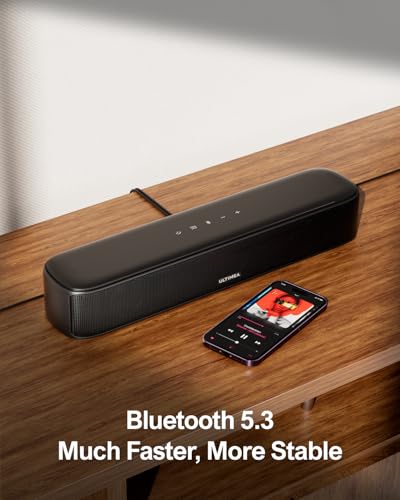
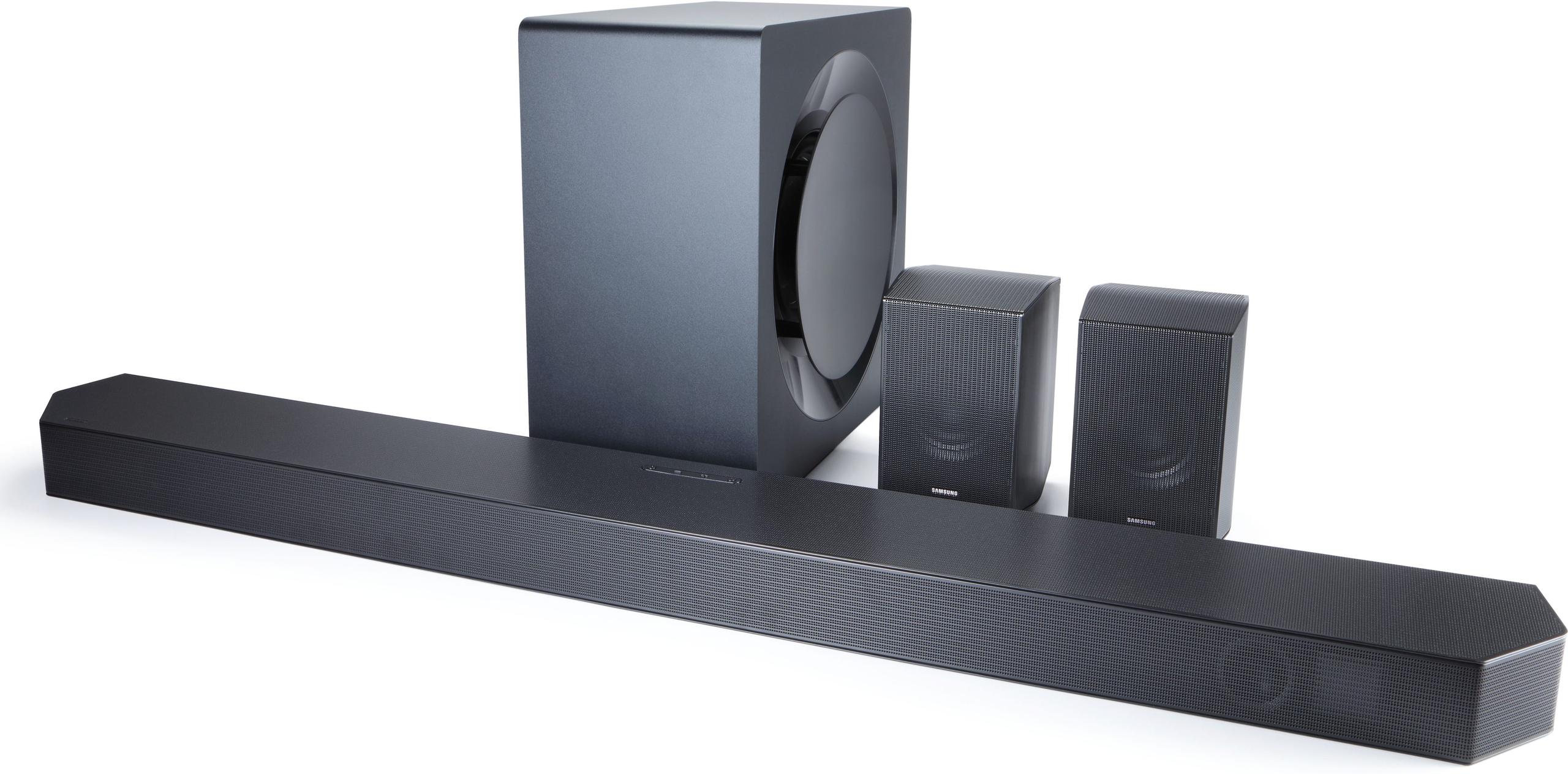
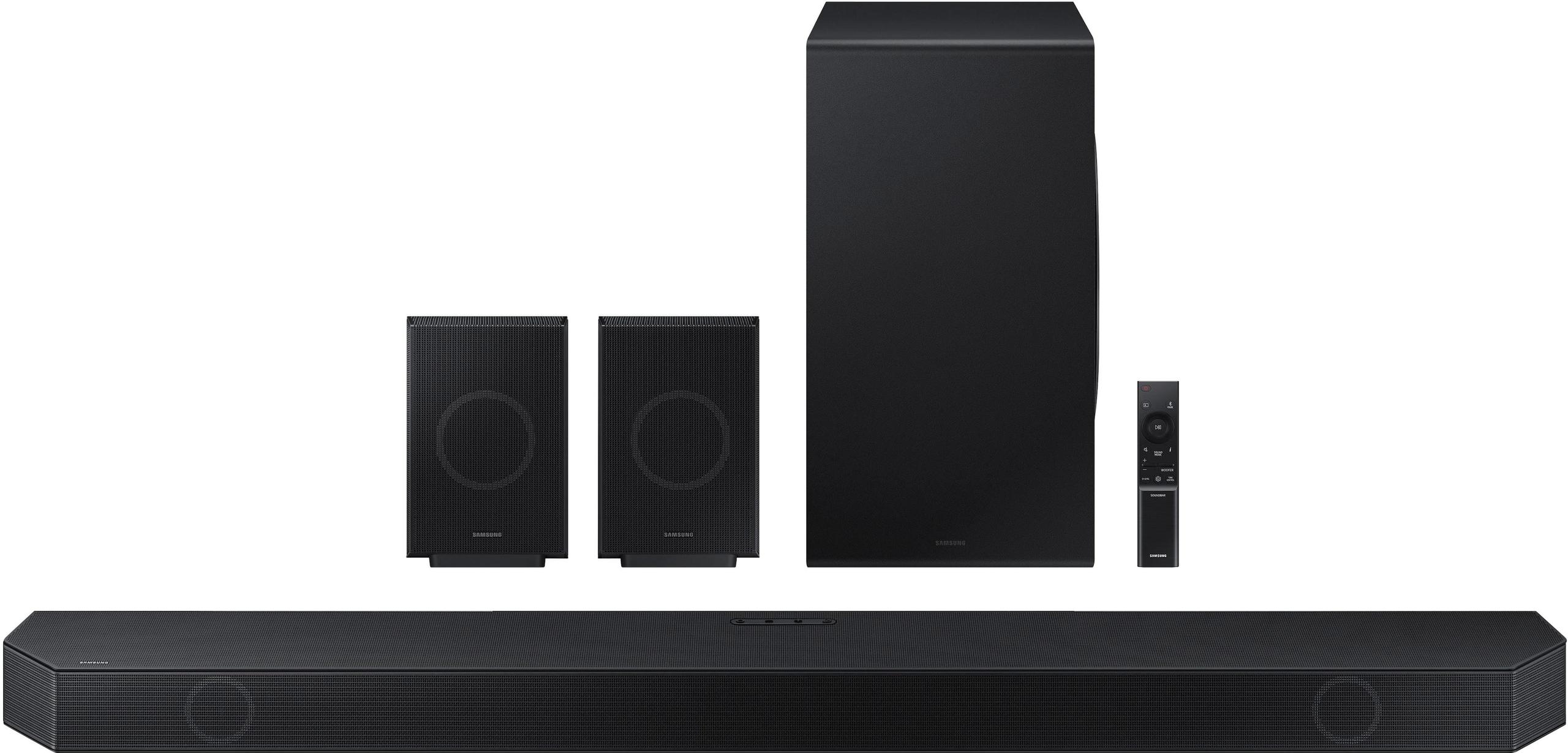
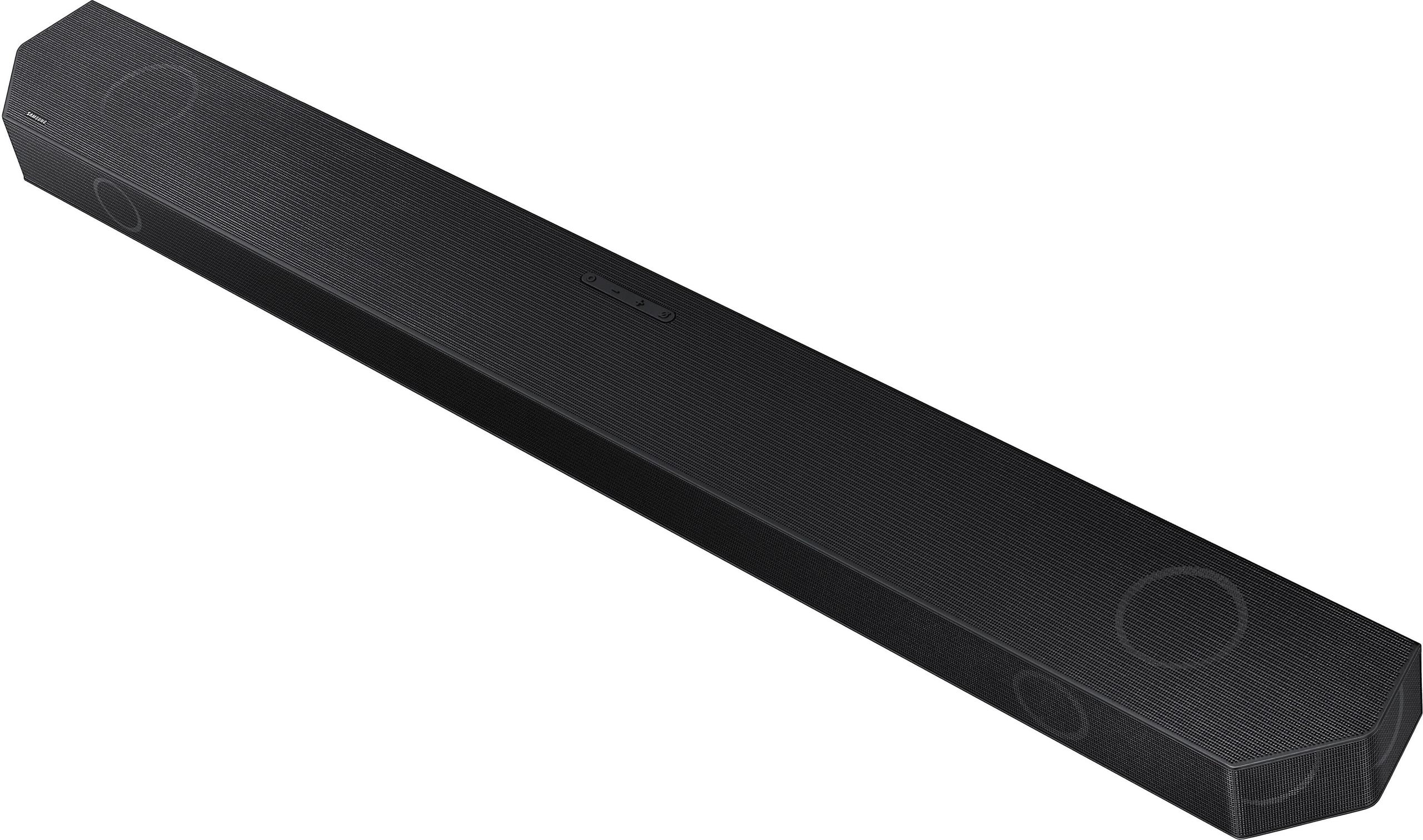
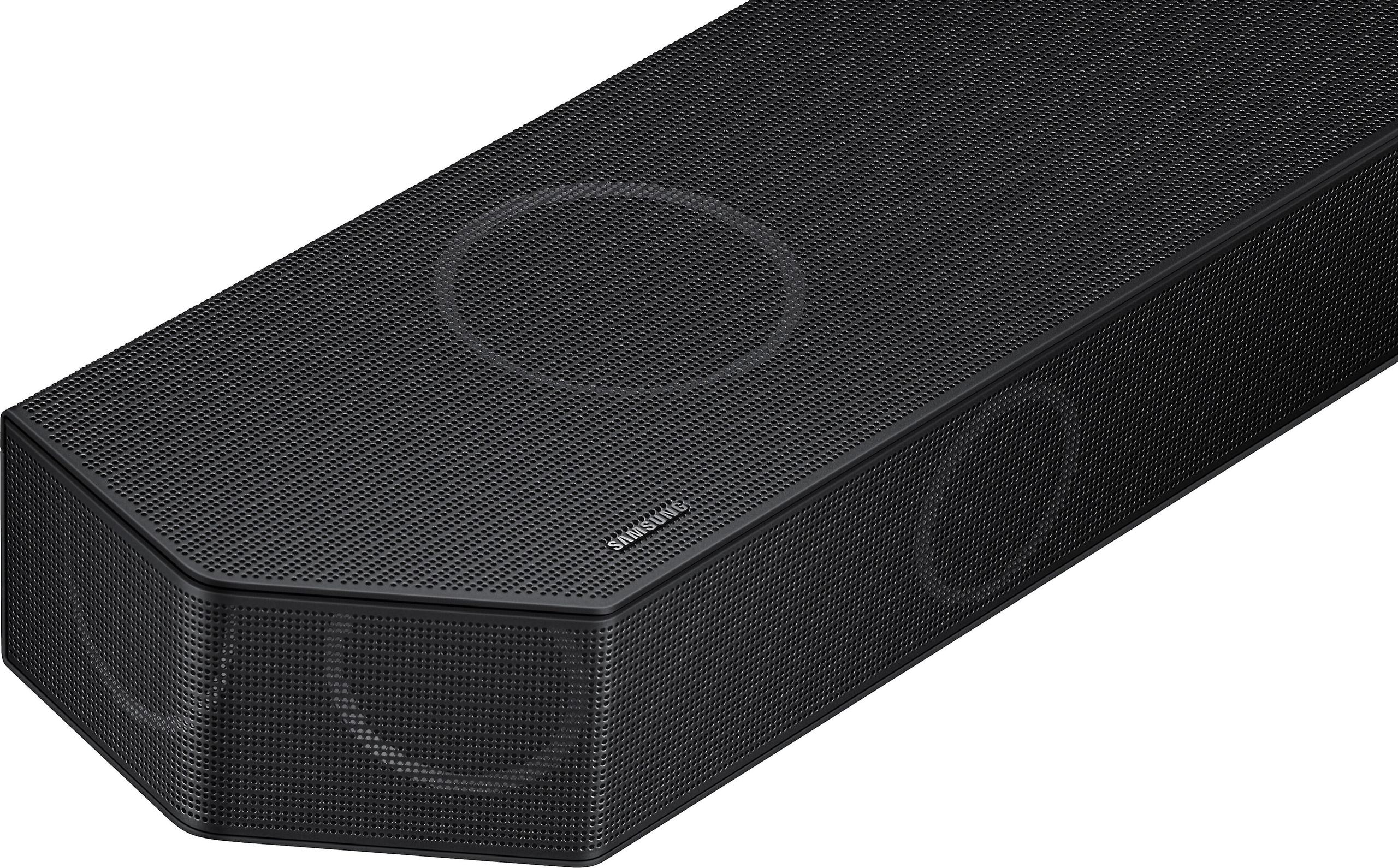


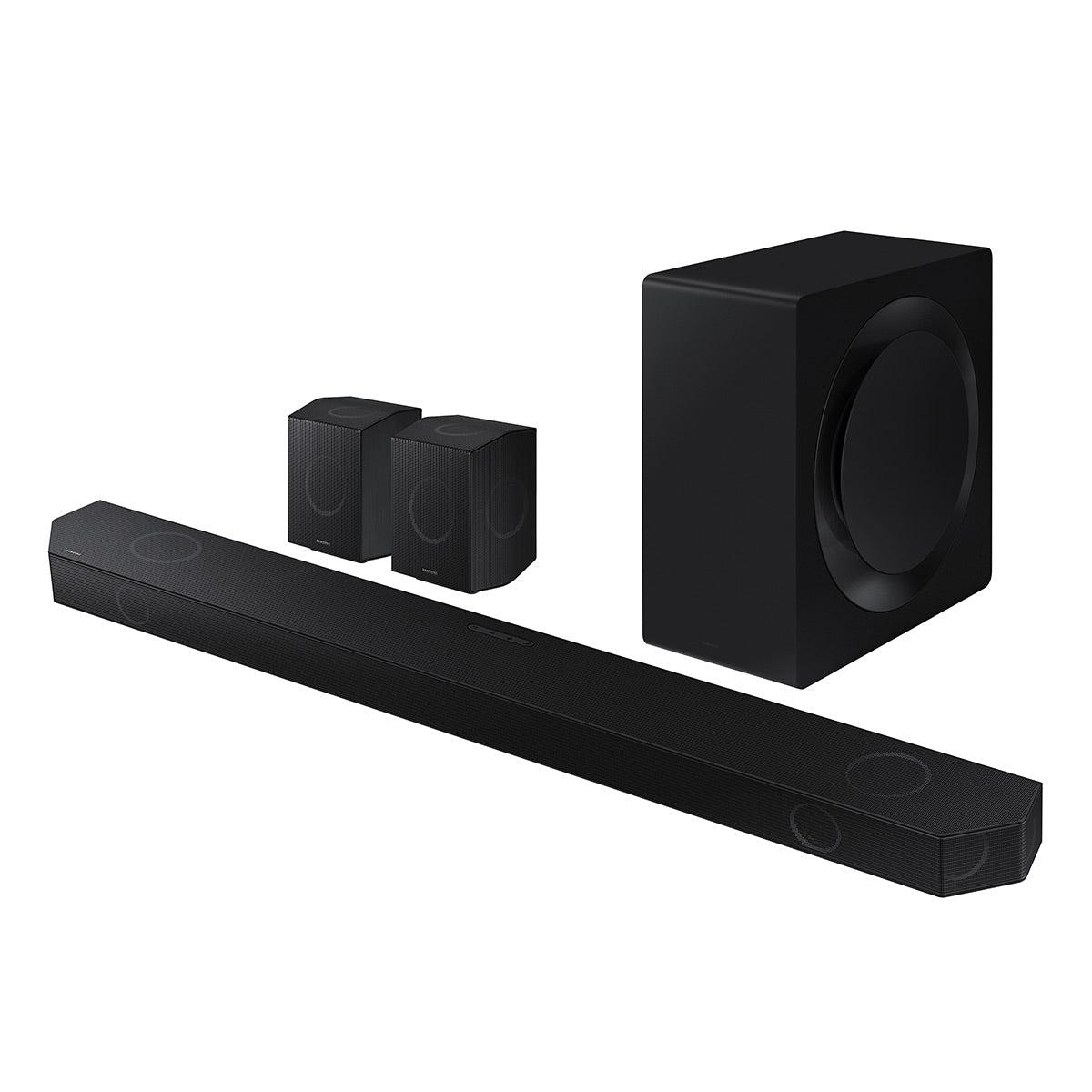
When you're tired of mumbling actors and explosions that sound like wet paper bags, a soundbar upgrade can transform your TV watching experience. But the soundbar market spans an enormous range—from basic stereo units under $100 to premium systems costing well over $1,000. Today we're comparing two products that sit at opposite ends of this spectrum: the budget-focused Ultimea Aura A40 and the premium Samsung HW-Q990D.
At the time of writing, these products represent a fascinating study in value versus performance, with a price gap of several hundred dollars between them. The Ultimea Aura A40 positions itself as an affordable entry into multi-speaker surround sound, while the Samsung HW-Q990D delivers flagship-level immersive audio with all the premium features you'd expect from a top-tier system.
Before diving into specifics, it's worth understanding what makes a soundbar system tick. Traditional home theater setups required multiple speakers placed around your room, each connected by cables to a central receiver. Soundbars simplified this by packing multiple speakers into a single bar-shaped unit, often adding a separate subwoofer for bass and sometimes including satellite speakers for true surround sound.
The key specifications you'll see thrown around are channel configurations like "7.1" or "11.1.4." The first number represents main channels (left, right, center, and surround speakers), the second is dedicated subwoofers, and the third (when present) indicates height channels that fire sound upward to bounce off your ceiling. More channels generally mean more precise audio placement, but the implementation matters enormously.
Virtual surround processing uses clever audio algorithms to simulate the effect of multiple speakers using fewer actual drivers. This can work surprisingly well but can't match the precision of discrete speakers placed around your room. Object-based audio formats like Dolby Atmos take this further by treating sounds as individual objects that can be placed anywhere in three-dimensional space, creating truly immersive experiences when implemented properly.
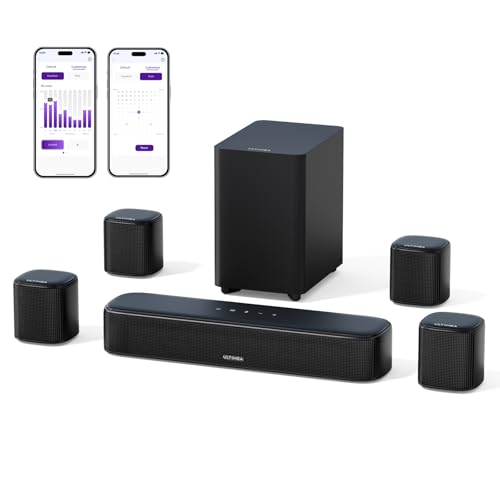
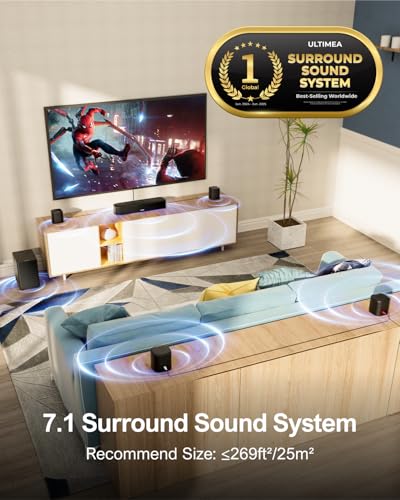
The Ultimea Aura A40, released in recent years, represents the "more speakers for less money" philosophy. It's a 7.1 virtual surround system that includes four separate surround speakers along with the main soundbar and subwoofer—giving you eight total speakers for a price that traditionally bought basic stereo soundbars.
The Samsung HW-Q990D, launched in 2024 as Samsung's flagship model, takes the opposite approach. It's an 11.1.4 channel system with true Dolby Atmos support, premium build quality, and comprehensive connectivity options. Samsung has since released newer models in 2025, but the Q990D remains a reference point for premium soundbar performance.
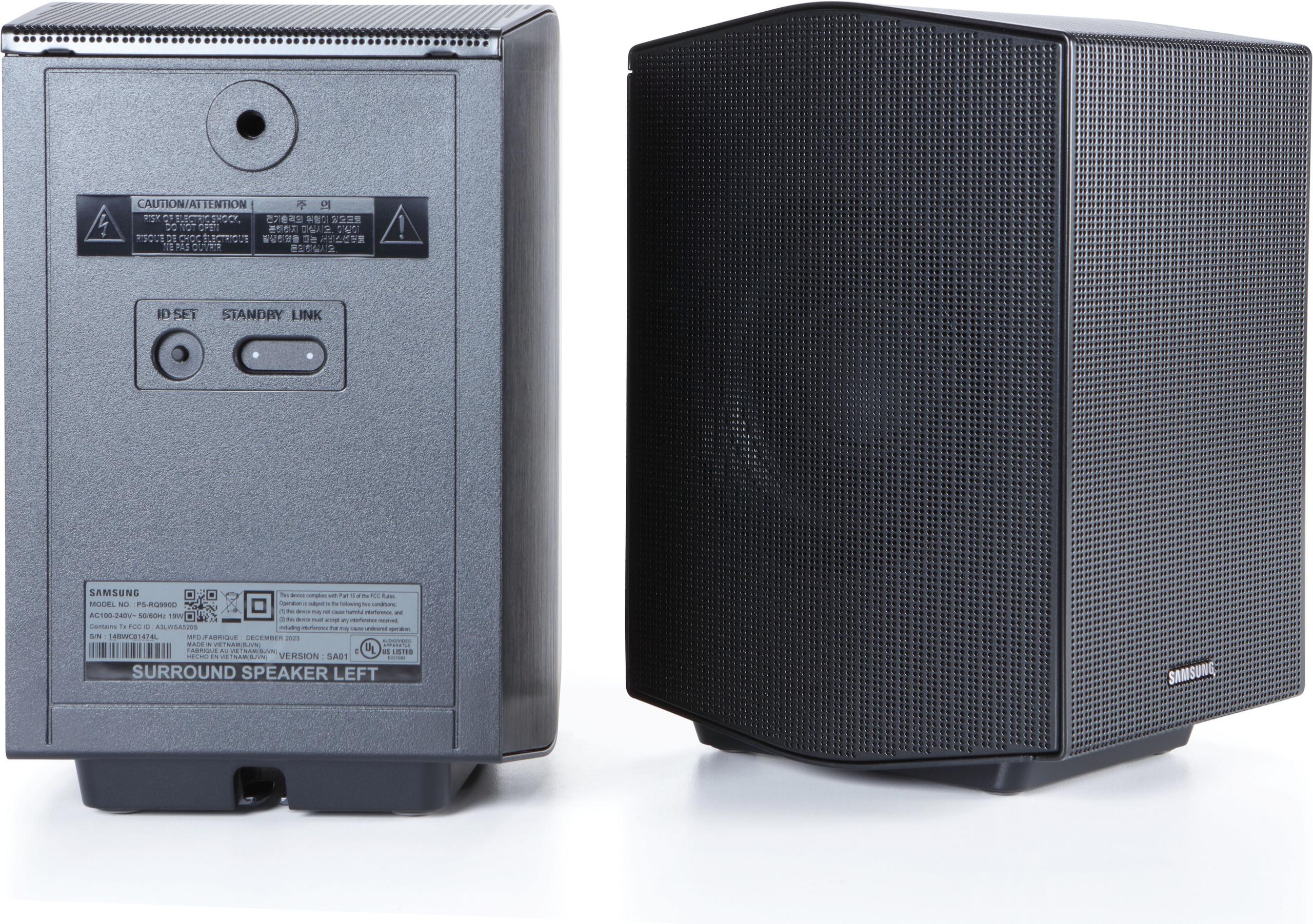
The differences in audio architecture between these systems are stark. The Samsung HW-Q990D delivers genuine 11.1.4 discrete channel processing using over 15 drivers in the main soundbar alone, plus dedicated satellite speakers. Each satellite features three strategically positioned drivers—forward-firing for dialogue and music, side-firing for ambient effects, and upfiring for height channels that bounce sound off your ceiling.
This configuration creates what audio engineers call a "hemispherical soundstage"—imagine a dome of sound surrounding your seating area. When a helicopter flies overhead in a movie, you hear it move convincingly through the space above you. When rain falls in a forest scene, it creates the subtle sense of being surrounded by the environment.
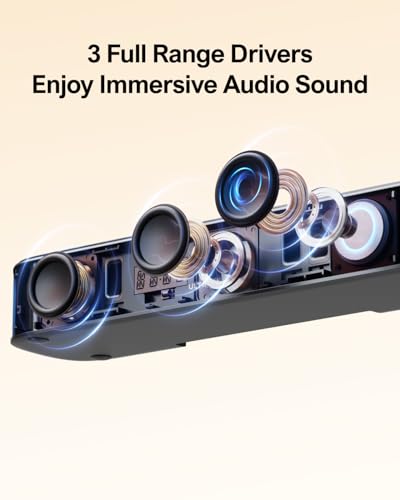
The Ultimea Aura A40 takes a more pragmatic approach with its 7.1 virtual surround setup. It uses eight total speakers: three 2-inch drivers in the main bar, four 2-inch surround speakers, and a single 4-inch subwoofer. The system relies heavily on SurroundX technology—Ultimea's proprietary audio processing that uses algorithms and AI to create virtual surround effects.
While virtual surround can expand the perceived soundstage beyond simple stereo, it can't replicate the precise spatial placement that discrete speakers provide. Think of it like the difference between watching a 3D movie with glasses versus seeing a very convincing 2D image—one creates actual depth, while the other tricks your brain into perceiving it.
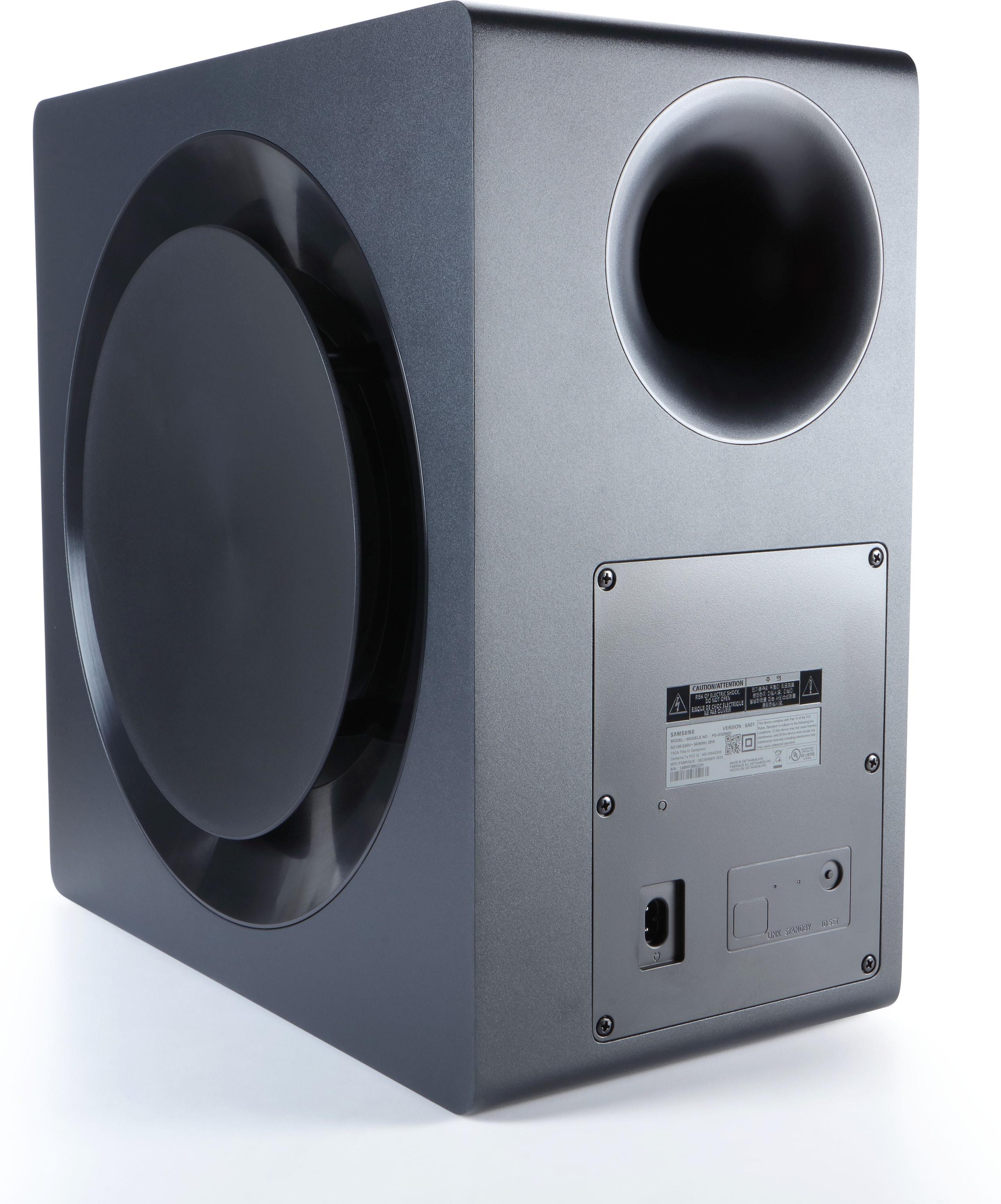
Bass response reveals another fundamental difference between these approaches. The Samsung HW-Q990D features dual 8-inch opposing drivers in its subwoofer, delivering 300 watts of dedicated bass power. More importantly, its frequency response extends down to 32Hz—low enough to reproduce the deepest movie sound effects and the fundamental notes of pipe organs or synthesizer bass lines.
The opposing driver design is particularly clever: two drivers face each other inside the cabinet, canceling out vibration while doubling the acoustic output. This prevents the "woofer walk" problem where powerful subwoofers literally shake themselves across the floor during action scenes.
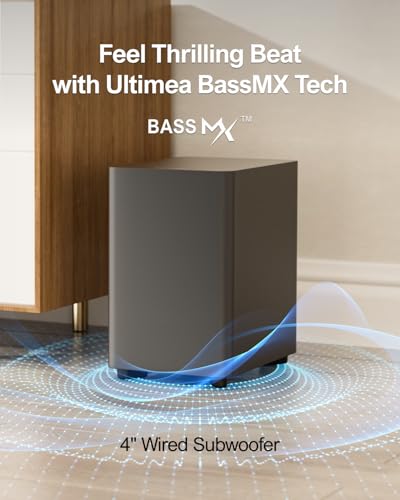
The Ultimea Aura A40 includes a more modest 4-inch wired subwoofer using BassMX technology. Its frequency response starts at 65Hz, which covers most dialogue and music but can't reproduce the rumbling depths that make explosions feel visceral. The smaller driver and lower power output mean adequate bass for casual viewing, but you won't feel the floor-shaking impact that transforms action sequences.
This frequency difference matters more than the numbers suggest. The gap between 32Hz and 65Hz includes the fundamental frequencies that make bass guitars sound full rather than thin, and movie sound effects feel physically present rather than just audible. If you primarily watch dialogue-heavy shows, this difference is minimal. If you love action movies or bass-heavy music, it's transformative.
Perhaps the biggest performance gap lies in immersive audio capabilities. The Samsung HW-Q990D fully supports Dolby Atmos and DTS:X—object-based audio formats that treat individual sounds as objects positioned anywhere in three-dimensional space. When implemented with proper height channels, these formats create convincing overhead effects. Raindrops seem to fall from above, aircraft move realistically through the space around you, and subtle ambient effects place you inside the scene.
Our research into expert reviews consistently highlights the Samsung's ability to create what audiophiles call "phantom images"—sounds that appear to come from locations where no speakers exist. The upfiring drivers bounce sound off your ceiling to create height effects, while the side-firing drivers expand the soundstage beyond the physical width of the soundbar.
The Ultimea Aura A40 cannot decode Dolby Atmos or DTS:X formats. Instead, it uses proprietary SurroundX processing with AI optimization to create virtual surround effects from standard stereo or 5.1 content. This processing can effectively widen the soundstage and create a more engaging experience than basic stereo soundbars, but it fundamentally works with the limitations of the source material rather than unlocking additional spatial information.
Dynamic range—the difference between the quietest whispers and loudest explosions—separates premium systems from budget alternatives. The Samsung HW-Q990D exhibits exceptional dynamic range with minimal compression even at high volumes. This means dialogue remains clear during quiet dramatic moments, while action sequences deliver full impact without distortion or strain.
Professional reviews consistently note the Samsung's ability to "get loud cleanly"—maintaining audio quality even when pushed to room-filling volumes. The system can handle the explosive dynamics of movie soundtracks while preserving the subtle details that make dialogue intelligible and music engaging.
The Ultimea Aura A40 delivers 330 watts of peak power across all its drivers, which sounds impressive until you realize it's distributed among eight speakers. In practical terms, this means adequate performance at moderate volumes in smaller rooms, but potential compression during demanding passages or when pushed to high levels. The system works well for casual viewing but may struggle with the dynamic demands of big-budget action movies.
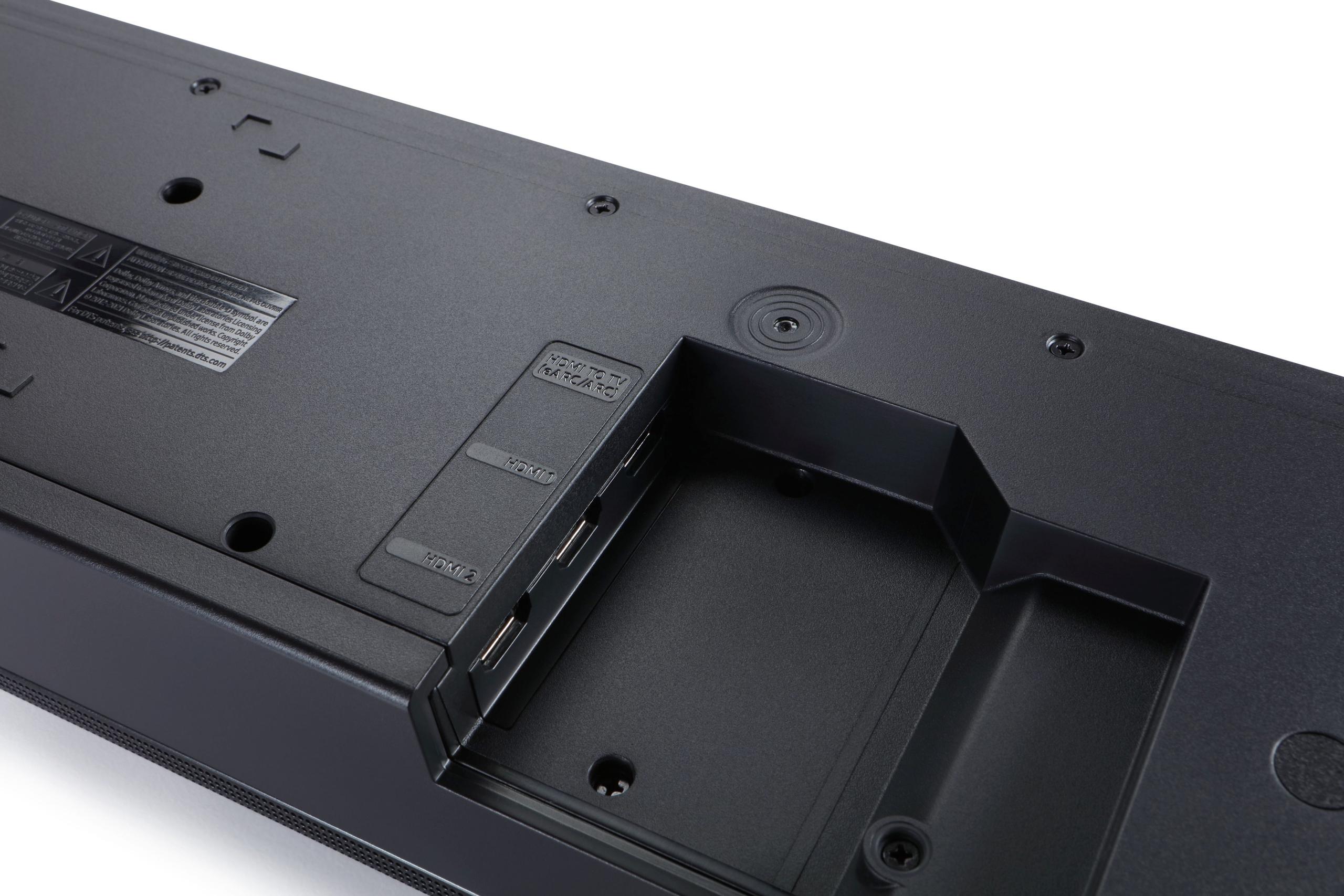
Modern connectivity reveals another crucial difference between these systems. The Samsung HW-Q990D features two HDMI 2.1 inputs plus eARC (Enhanced Audio Return Channel) support. This seemingly technical specification unlocks significant real-world benefits.
HDMI 2.1 enables 4K video at 120Hz with Variable Refresh Rate (VRR) and Auto Low Latency Mode (ALLM)—features that gaming enthusiasts consider essential. VRR eliminates screen tearing by synchronizing the display's refresh rate with your console's frame rate, while ALLM automatically switches your TV to its lowest-latency mode for responsive gaming. The Samsung can pass these signals through while extracting high-quality audio, essentially acting as a premium HDMI switcher.
The eARC connection allows lossless audio formats like Dolby TrueHD and DTS-HD Master Audio to flow from your TV back to the soundbar. This matters when using smart TV apps or external streaming devices connected directly to your TV—the soundbar receives full-quality audio rather than compressed versions.
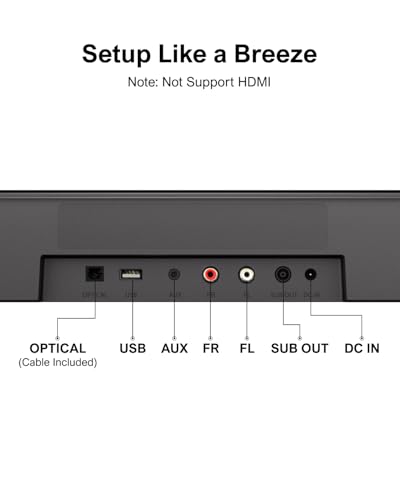
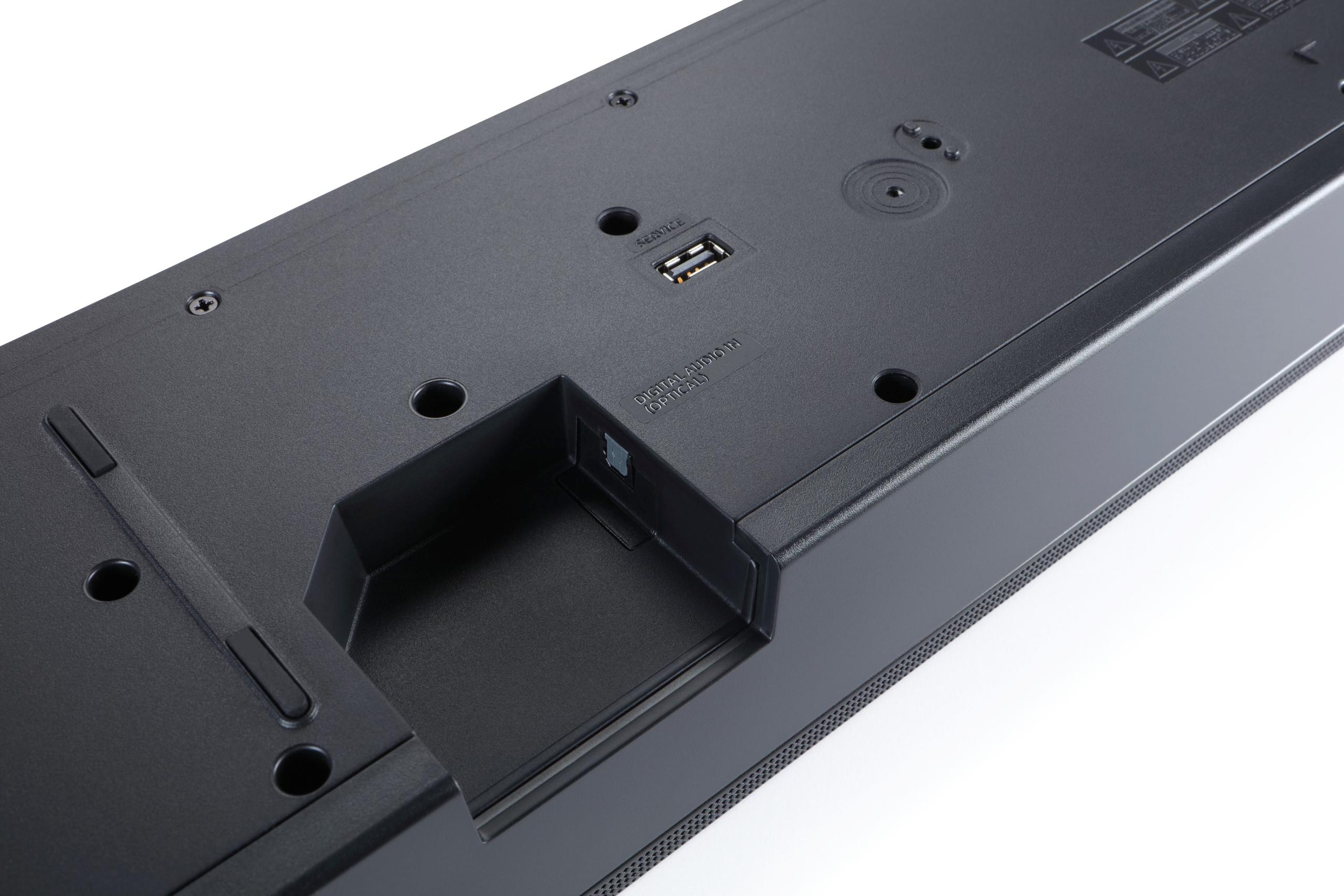
The Ultimea Aura A40 includes zero HDMI connectivity. You're limited to optical audio, AUX input, USB, and Bluetooth 5.3. This means no lossless audio formats, no video passthrough capabilities, and no ability to act as an HDMI hub. You'll connect the system to your TV via optical cable and route all video sources through your TV directly.
This limitation isn't necessarily problematic—optical audio handles standard Dolby Digital and DTS formats perfectly well. But it does restrict your audio quality to compressed formats and eliminates the convenience of having your soundbar manage multiple HDMI sources.
The Samsung HW-Q990D integrates seamlessly into modern smart home ecosystems with Chromecast built-in, Spotify Connect, and compatibility with major voice assistants. When paired with Samsung TVs, Q Symphony technology allows the TV's speakers to work alongside the soundbar, expanding the front soundstage using both sets of drivers simultaneously.
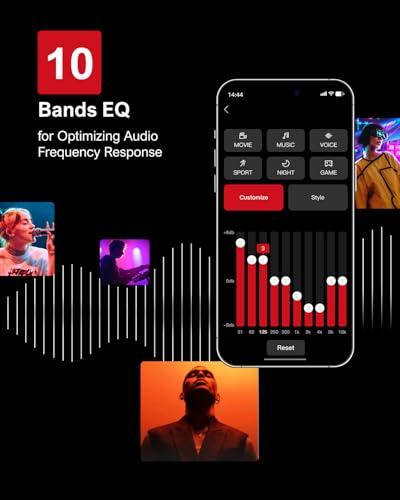
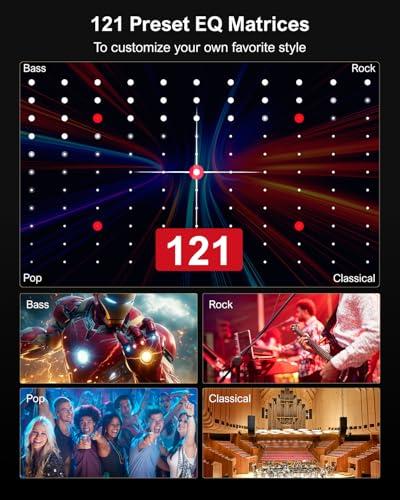
The Ultimea Aura A40 takes a different approach to smart features, emphasizing user control through the Ultimea Home app. This app provides remarkable customization depth with six preset EQ modes (Movie, Music, Voice, Sport, Game, Night), a 10-band parametric equalizer, and 121 preset sound matrices covering different music genres and content types.
The app also enables over-the-air firmware updates—a feature that ensures your system improves over time as Ultimea refines its algorithms and adds new capabilities. You can adjust individual surround speaker levels, fine-tune frequency response, and create custom sound profiles for different content types.
From a purely functional standpoint, the Ultimea Aura A40's app offers more hands-on control over your audio experience, while the Samsung HW-Q990D focuses on seamless integration and automatic optimization.
The Samsung HW-Q990D demands substantial space and careful positioning. The main soundbar measures over 50 inches wide, the subwoofer requires floor placement with clearance around its port, and the satellite speakers need positioning behind your seating area with access to power outlets. This isn't a system you casually place on a shelf—it requires committed installation and room layout consideration.
However, this complexity pays dividends in performance. The discrete satellite speakers create genuine surround effects that virtual processing simply cannot match. The wireless connectivity between components (after initial pairing) eliminates most cable runs, though the satellites still require power connections.
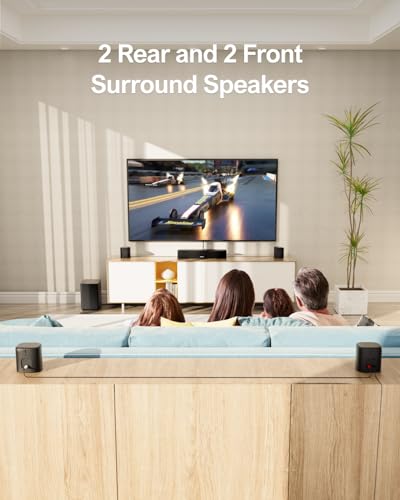
The Ultimea Aura A40 was designed with practical installation in mind. The main bar measures roughly 16 inches wide, and the total system weight of 12.6 pounds makes it manageable for most users. The four surround speakers connect via included cables—two 6.5-foot cables for the front speakers and one 20-foot cable for the rear connection, with one rear speaker connecting wirelessly to reduce cable clutter.
This hybrid wired/wireless approach strikes a practical balance between performance reliability and installation convenience. The system is specifically designed for rooms between 108-270 square feet, making it appropriate for most living rooms and bedrooms.
Both systems take different approaches to living room integration. The Samsung HW-Q990D makes no apologies for its premium presence—it's a statement piece that announces its flagship status through substantial build quality and sophisticated materials. If you're investing in a dedicated home theater space, this fits the aesthetic perfectly.
The Ultimea Aura A40 prioritizes discretion with compact components that blend into typical living spaces without dominating them. The smaller footprint and lighter weight make it suitable for temporary installations or spaces where the audio system shouldn't visually compete with other elements.
At the time of writing, the Ultimea Aura A40 offers exceptional value for its price category. Getting eight discrete speakers including four surround units typically required spending significantly more, making this system a standout for budget-conscious buyers who still want multi-speaker surround sound.
The extensive app-based customization adds considerable value for users who enjoy tweaking their audio setup. The 121 preset EQ matrices, 10-band equalizer, and adjustable surround levels provide control typically found only in much more expensive systems or dedicated AV receivers.
However, this value comes with clear limitations. The lack of HDMI connectivity, absence of premium audio format support, and restricted frequency range define the boundaries of what this system can accomplish. Within those boundaries, it performs admirably, but it cannot transcend its fundamental technical constraints.
The Samsung HW-Q990D commands premium pricing that reflects its flagship positioning and comprehensive feature set. The price includes authentic Dolby Atmos processing, HDMI 2.1 connectivity, premium build quality, and performance capabilities that justify the investment for serious home theater enthusiasts.
This pricing reflects the engineering complexity required for true 11.1.4 discrete channel processing, the development costs for advanced room calibration algorithms, and the premium components needed for high dynamic range performance. You're paying for capabilities the Ultimea Aura A40 simply cannot provide, regardless of price.
Technology evolution affects these systems differently. The Samsung HW-Q990D's HDMI 2.1 connectivity and Dolby Atmos support position it well for future content and gaming developments. As more movies and games utilize object-based audio, this system will continue delivering cutting-edge experiences.
The Ultimea Aura A40's over-the-air update capability provides some future-proofing through improved algorithms and new features. However, its fundamental hardware limitations—particularly the lack of HDMI and height channel support—mean it cannot adapt to new audio formats or connectivity standards without replacement.
Your budget constrains you to the lower price tier, but you still want genuine multi-speaker surround sound. This system delivers remarkable value by including four discrete surround speakers and extensive customization capabilities typically unavailable at this price point.
You primarily watch dialogue-heavy content like news, sitcoms, or dramas where the system's clear center channel and adequate frequency range shine. The virtual surround processing effectively enhances the viewing experience for this type of content.
Your room is smaller (under 270 square feet) where the system's power output and speaker configuration provide adequate coverage without overwhelming the space. The compact components integrate well into typical apartments or smaller homes.
You enjoy customizing your audio experience and appreciate having granular control over EQ settings and surround levels. The Ultimea app provides more hands-on control than most systems at any price point.
Your TV setup relies primarily on smart TV apps or a single source device, making the lack of HDMI switching irrelevant. The optical connection handles standard audio formats perfectly well for this use case.
You want authentic Dolby Atmos and immersive audio experiences with true height channel effects. This system delivers the spatial audio precision that makes modern movie soundtracks and premium streaming content genuinely captivating.
Gaming is important to your entertainment setup, particularly if you own current-generation consoles that benefit from HDMI 2.1 features like 4K/120Hz, VRR, and ALLM. The Samsung's gaming-optimized connectivity eliminates compromises.
You have the budget for premium home theater equipment and want flagship-level performance that will remain relevant as content and technology evolve. This represents a long-term investment in audio quality.
Your room is larger and can accommodate the system's substantial physical requirements, including proper satellite speaker placement behind your seating area.
Deep, impactful bass is essential for your enjoyment of action movies, concerts, or bass-heavy music genres. The Samsung's frequency extension and power delivery create visceral experiences the Ultimea cannot match.
You own a Samsung TV and want seamless integration through Q Symphony technology, which leverages both your TV's speakers and the soundbar for expanded front soundstage performance.
These systems represent different philosophies rather than simple good-versus-better comparisons. The Ultimea Aura A40 maximizes value by delivering multi-speaker surround sound with extensive customization at a remarkably affordable price. It succeeds within its technical constraints and provides genuine improvement over basic stereo soundbars.
The Samsung HW-Q990D justifies premium pricing through flagship performance, comprehensive connectivity, and capabilities that budget systems simply cannot provide. It delivers the authentic immersive audio experience that modern premium content was designed to showcase.
Choose based on your priorities, budget, and performance expectations. Both systems excel within their respective categories, but they serve fundamentally different needs and use cases. The price difference reflects genuine capability differences rather than just brand positioning, making either choice potentially correct depending on your specific situation and requirements.
| Ultimea Aura A40 7.1 Channel Soundbar System | Samsung HW-Q990D 11.1.4 Channel Sound Bar |
|---|---|
| Channel Configuration - Determines surround sound accuracy and immersion | |
| 7.1 virtual surround with 8 total speakers | True 11.1.4 discrete channels with 15+ drivers |
| Dolby Atmos Support - Essential for modern movie immersion and overhead effects | |
| No Dolby Atmos (uses SurroundX virtual processing) | Full Dolby Atmos and DTS:X with dedicated height channels |
| Bass Performance - Critical for action movies and music impact | |
| Single 4-inch subwoofer, 65Hz-18kHz range | Dual 8-inch opposing drivers, extends to 32Hz |
| HDMI Connectivity - Needed for gaming and lossless audio formats | |
| No HDMI (optical, AUX, USB, Bluetooth only) | 2x HDMI 2.1 inputs + eARC with 4K/120Hz gaming support |
| Satellite Speakers - Creates authentic surround vs virtual effects | |
| 4 wired surround speakers (hybrid wireless rear connection) | 2 discrete wireless satellites with 3 drivers each |
| App Control and Customization - Allows fine-tuning for room and preferences | |
| Extensive: 10-band EQ, 121 presets, adjustable surround levels | Basic integration with Samsung TVs, limited customization |
| Room Size Compatibility - Ensures adequate power and coverage | |
| Small to medium rooms (108-270 sq ft) | Large rooms with proper satellite placement space |
| Smart Features - Streaming and voice control integration | |
| OTA updates via Ultimea app, basic Bluetooth | Chromecast, Spotify Connect, Q Symphony with Samsung TVs |
| Physical Footprint - Installation flexibility and space requirements | |
| Compact: 16" soundbar, 12.6 lbs total weight | Large: 51" soundbar, substantial subwoofer and satellites |
| Gaming Optimization - Performance with consoles and PC gaming | |
| Basic audio only, no video passthrough | HDMI 2.1 with VRR, ALLM, and Game Mode Pro |
| Frequency Response - Affects music clarity and movie impact | |
| 65Hz-18kHz (misses deepest bass frequencies) | 32Hz and up (reproduces full cinematic range) |
| Value Proposition - Performance relative to investment level | |
| Exceptional multi-speaker value for budget buyers | Premium flagship performance justifying higher cost |
The Samsung HW-Q990D is significantly better for home theater use. It supports true Dolby Atmos with dedicated height channels that create overhead sound effects, making explosions and ambient sounds feel realistic. The Samsung HW-Q990D also has deeper bass extension down to 32Hz for impactful action scenes. The Ultimea Aura A40 offers virtual surround sound that's decent for casual movie watching but can't match the immersive experience of true Dolby Atmos processing.
The biggest difference is immersive audio capability. The Samsung HW-Q990D delivers true 11.1.4 channel Dolby Atmos with discrete speakers and height channels, while the Ultimea Aura A40 uses virtual 7.1 surround processing. The Samsung also includes HDMI 2.1 connectivity for gaming and lossless audio, whereas the Ultimea Aura A40 relies on optical and Bluetooth connections without HDMI support.
The Ultimea Aura A40 provides exceptional value by including four physical surround speakers and extensive app-based customization at a budget-friendly price point. However, the Samsung HW-Q990D offers better long-term value if you want premium features like Dolby Atmos, gaming connectivity, and flagship performance that will remain relevant as content evolves.
The Samsung HW-Q990D is specifically designed for modern gaming with HDMI 2.1 support, 4K/120Hz passthrough, Variable Refresh Rate (VRR), and Auto Low Latency Mode (ALLM). The Ultimea Aura A40 provides basic gaming audio through optical or Bluetooth connections but lacks the advanced gaming features and video passthrough capabilities of the Samsung HW-Q990D.
The Samsung HW-Q990D delivers superior bass with dual 8-inch opposing drivers that extend down to 32Hz, providing deep, room-filling low frequencies for action movies and music. The Ultimea Aura A40 includes a single 4-inch subwoofer with 65Hz extension, which is adequate for dialogue and casual listening but can't match the depth and impact of the Samsung's bass system.
The Samsung HW-Q990D features true 11.1.4 discrete channels with over 15 drivers in the main bar plus dedicated satellite speakers with upfiring drivers for height effects. The Ultimea Aura A40 uses 8 total speakers in a 7.1 virtual configuration—three in the main bar, four surround speakers, and one subwoofer. The Samsung HW-Q990D provides more precise sound placement and authentic surround effects.
The Ultimea Aura A40 is easier to install due to its compact size, lighter weight, and hybrid wired/wireless surround speaker setup. The Samsung HW-Q990D requires more planning with its large soundbar, substantial subwoofer, and satellite speakers that need proper positioning and power connections throughout your room.
The Samsung HW-Q990D includes two HDMI 2.1 inputs plus eARC, optical, and wireless connectivity options like Chromecast and Spotify Connect. The Ultimea Aura A40 offers optical audio, AUX, USB, and Bluetooth 5.3 connections but no HDMI capability. The Samsung HW-Q990D can act as an HDMI switcher while the Ultimea Aura A40 requires direct TV connection.
The Ultimea Aura A40 is specifically designed for smaller spaces (108-270 square feet) with appropriate power output and compact components. The Samsung HW-Q990D is built for larger rooms and may overpower small spaces, though its room calibration features can help adapt the sound. For apartments and smaller living rooms, the Ultimea Aura A40 is the more practical choice.
The Samsung HW-Q990D includes built-in support for Alexa, Google Assistant, and Bixby voice controls. The Ultimea Aura A40 doesn't have built-in voice assistant support but can connect via Bluetooth to devices with voice assistants. The Samsung HW-Q990D offers more comprehensive smart home integration and voice control capabilities.
Both soundbars handle music well but differently. The Samsung HW-Q990D provides more refined audio with better frequency response and dynamic range for critical music listening. The Ultimea Aura A40 offers extensive EQ customization through its app with 121 preset matrices and 10-band adjustment, allowing you to fine-tune the sound for different music genres and personal preferences.
The Ultimea Aura A40 lacks HDMI connectivity, Dolby Atmos support, and deep bass extension, limiting its compatibility with premium audio formats and gaming features. The Samsung HW-Q990D requires significant space, costs considerably more, and offers less hands-on customization compared to the Ultimea Aura A40's extensive app controls. Choose based on whether you prioritize budget value or premium performance.
We've done our best to create useful and informative comparisons to help you decide what product to buy. Our research uses advanced automated methods to create this comparison and perfection is not possible - please contact us for corrections or questions. These are the sites we've researched in the creation of this article: youtube.com - walmart.com - youtube.com - ultimea.com - homestudiobasics.com - ultimea.co - youtube.com - eu.ultimea.com - walmart.com - device.report - bestbuy.com - manuals.plus - community.ultimea.com - judge.me - support.ultimea.com - geekmaxi.com - provantage.com - bestbuy.com - youtube.com - uk.whatgeek.com - techradar.com - avsforum.com - valueelectronics.com - samsung.com - rtings.com - samsung.com - avsforum.com - samsung.com - cdwg.com - youtube.com - whathifi.com

Privacy Policy
Terms and Conditions - Affiliate Policy
Home Security
© Copyright 2008-2026.
11816 Inwood Rd #1211, Dallas, TX 75244