



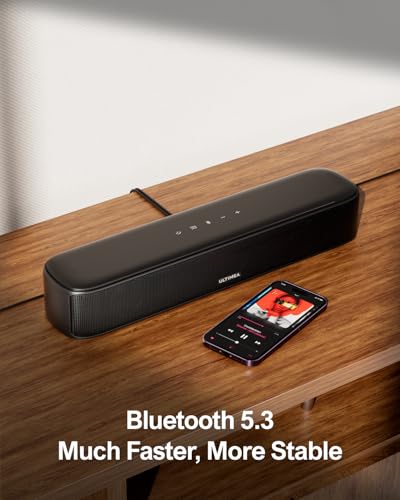
If you're tired of your TV's tinny speakers but don't want to commit to a full home theater setup, soundbars offer the perfect middle ground. But choosing between different soundbar approaches can feel overwhelming, especially when comparing systems as different as the Hisense HS2100 and Ultimea Aura A40. These two represent completely different philosophies in soundbar design—one prioritizing simplicity and refinement, the other maximizing immersive surround sound on a budget.
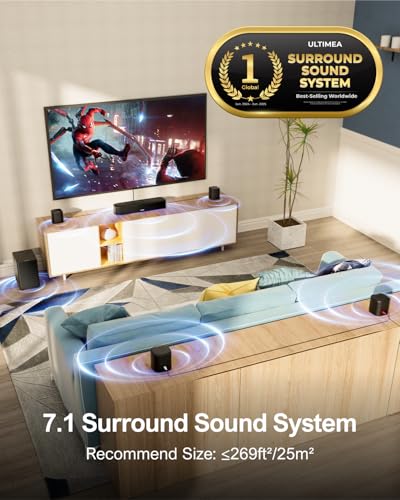
Before diving into specifics, let's clarify what channel configurations actually mean for your listening experience. The Hisense HS2100 uses a 2.1 setup, meaning two main channels (left and right) plus one subwoofer channel (the ".1") for bass. This is essentially enhanced stereo sound. The Ultimea Aura A40, meanwhile, delivers 7.1 channels—seven discrete audio channels plus a subwoofer, creating a full surround sound field.
Channel count directly impacts immersion. When you watch a movie with a helicopter flying overhead, a 2.1 system can only simulate that movement using psychoacoustic tricks (essentially fooling your brain through clever audio processing). A true 7.1 system can actually place that helicopter sound in physical speakers around your room, creating genuine spatial audio where effects move convincingly from front to back and side to side.
Both soundbars were released in recent years, with the Hisense HS2100 arriving as part of Hisense's push into affordable home audio around 2023, while the Ultimea Aura A40 represents the newer wave of budget surround systems that emerged as manufacturing costs dropped for multi-speaker setups. Since their releases, we've seen significant improvements in virtual surround processing and smartphone app integration, technologies both systems leverage to different degrees.
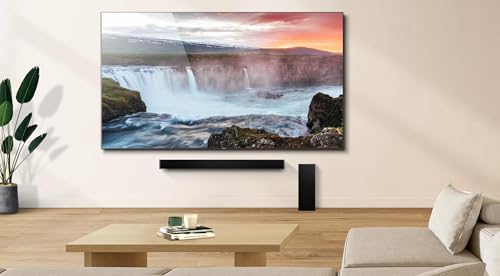
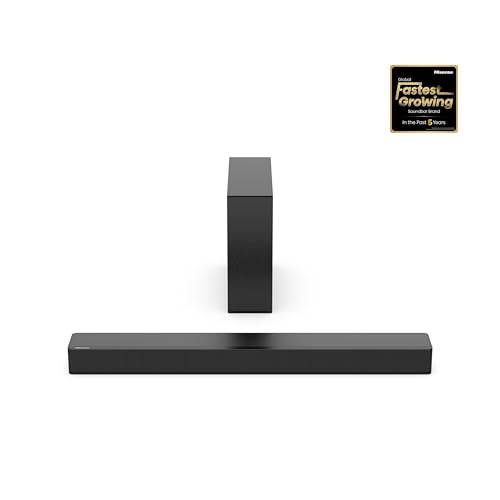
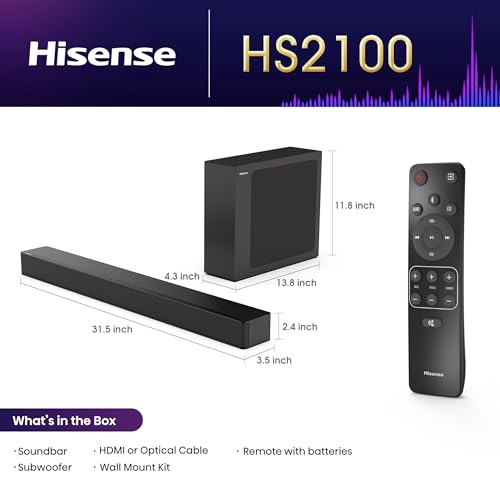
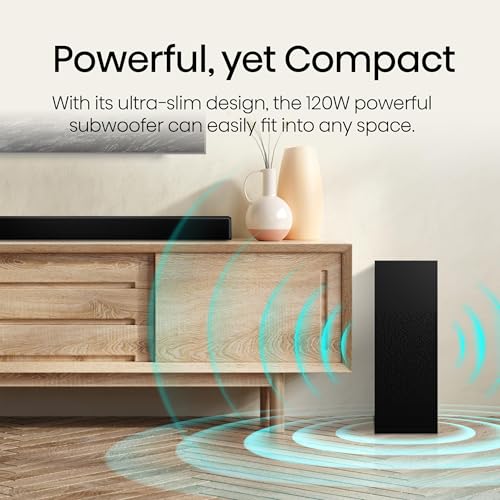
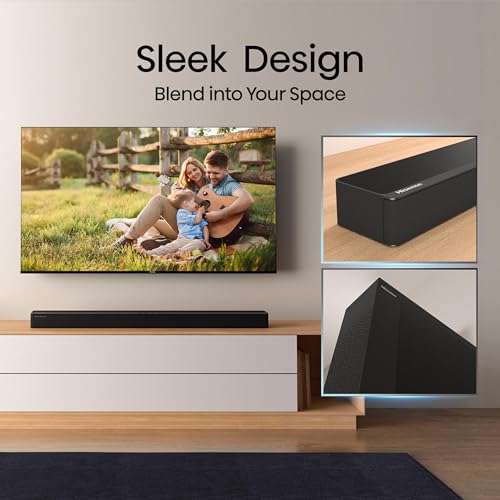
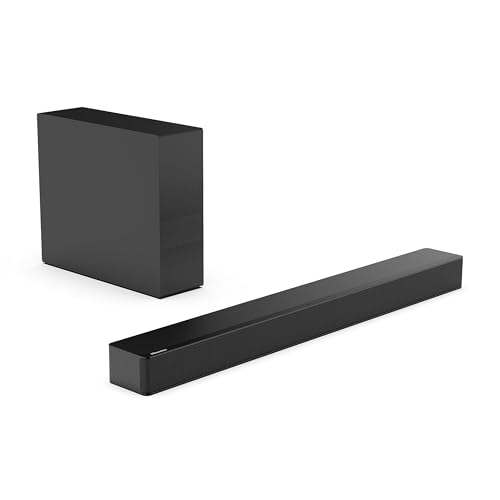
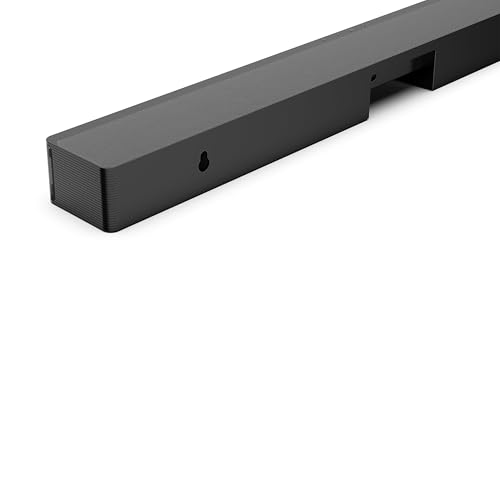
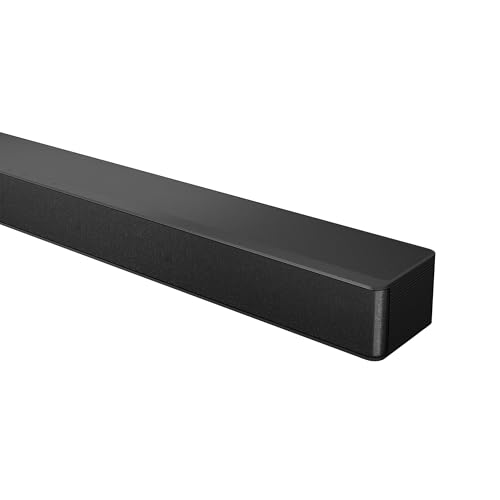
The Hisense HS2100 takes the "less is more" approach, and there's genuine appeal to this philosophy. At just over 31 inches wide and barely 2.4 inches tall, this soundbar disappears beneath most TVs while delivering a substantial audio upgrade. The wireless subwoofer—meaning it connects to the soundbar without cables, only needing power—gives you flexibility in bass placement that many users find invaluable.
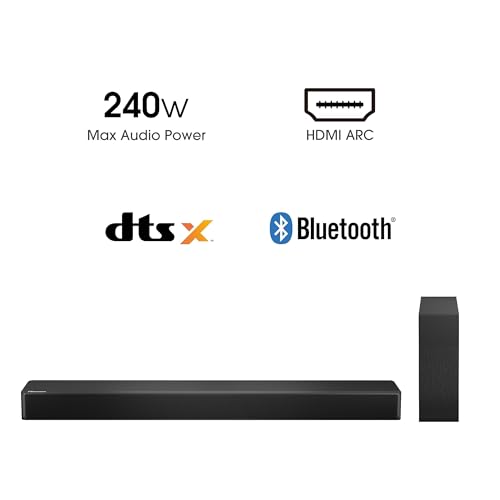
What makes the HS2100 particularly compelling is its DTS Virtual:X technology. This isn't marketing fluff—it's a sophisticated audio processing system that analyzes incoming audio and creates height and surround effects through precisely timed delays and phase shifts. While it can't match discrete surround speakers for accuracy, Virtual:X creates a surprisingly convincing sense of spaciousness from just two speakers and a subwoofer.
The system's 240-watt power output breaks down to 120 watts for the main bar and 120 watts for the subwoofer. In practical terms, this means you get clean, distortion-free sound at conversation levels with enough headroom for action movie peaks. The frequency response extends from 45Hz to 20kHz, which translates to bass that reaches low enough for most movie soundtracks (though not the deepest sub-bass territory that makes your walls shake).
One standout feature is Roku TV Ready compatibility. This isn't just convenient—it fundamentally changes how you interact with your entertainment system. Instead of juggling multiple remotes, your Roku TV remote controls both TV and soundbar volume, switching, and power. It's the kind of seamless integration that makes technology feel invisible, which is exactly what many users want from their audio upgrade.
Based on our research into user experiences and expert reviews, the HS2100 consistently delivers what reviewers describe as "warm" sound—meaning slightly emphasized bass and smooth treble that's forgiving of poor source material. This tuning works beautifully for music streaming and TV shows, though some users find they need to adjust the bass and treble controls for optimal movie performance.
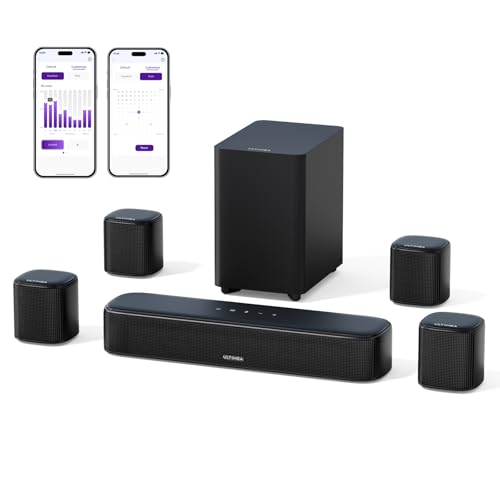
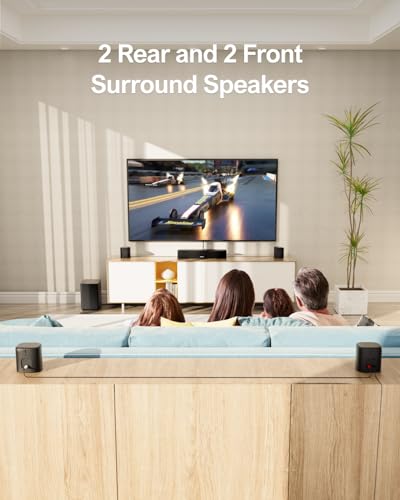
The Ultimea Aura A40 takes a radically different approach by including four separate surround speakers—two for the front left and right positions, and two for rear surround duties. This isn't virtual surround; it's the real deal. When configured properly, you get authentic 360-degree sound placement that can genuinely fool your brain into thinking you're in a movie theater.
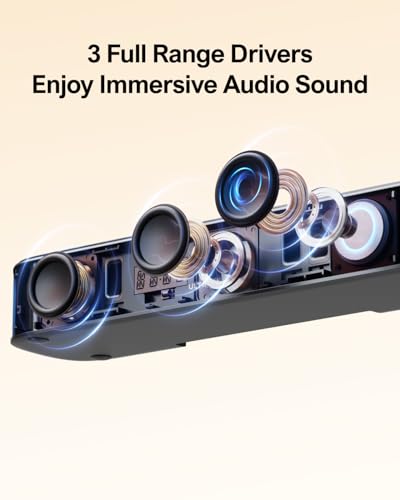
The system's 330-watt peak power output is distributed across eight total drivers: three in the main soundbar, four in the surround speakers, and one 4-inch driver in the subwoofer. This power distribution matters because it allows each speaker to specialize. The surround speakers handle ambient effects and rear-channel information, while the main bar focuses on dialogue and front-stage effects.
SurroundX technology, Ultimea's proprietary processing system, claims 99.99% detail accuracy in sound positioning. While that specific number is marketing speak, the underlying technology does create impressively precise audio imaging when properly set up. Users consistently report being able to pinpoint exactly where sounds originate in movies and games—something that's simply impossible with traditional 2.1 systems.
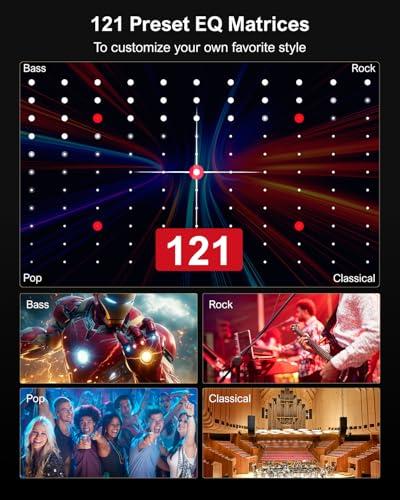
Where the Aura A40 truly shines is customization. The Ultimea Smart App provides access to 121 preset EQ matrices tailored for different music genres and content types, plus a 10-band equalizer for manual tuning. This level of control is unprecedented in budget soundbars and allows users to fine-tune their audio experience far beyond simple bass and treble adjustments.
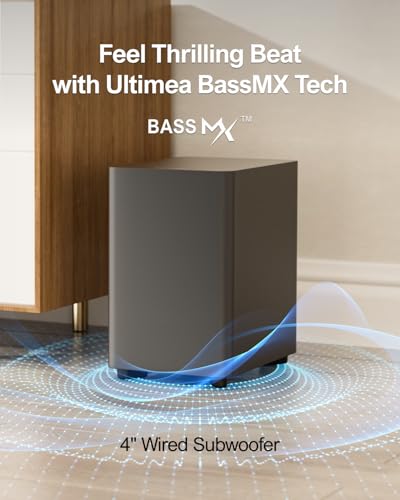
The system's BassMX technology deserves special mention. Rather than just boosting low frequencies (which often creates muddy, boomy bass), BassMX appears to use dynamic range compression and harmonic enhancement to create the perception of deeper bass without actual extension. It's not audiophile-grade, but it delivers satisfying impact for movies and music within the system's 65Hz lower limit.
However, our research reveals some important caveats. Multiple reviews describe the Aura A40's sound as somewhat "metallic" or "boxy" for music listening, particularly compared to the HS2100's more balanced tonal signature. This suggests the Ultimea prioritizes surround effects and impact over tonal refinement—a reasonable trade-off given its budget positioning and target audience.
The Hisense HS2100 approaches audio quality like a traditional hi-fi component, emphasizing tonal balance and natural sound reproduction. Expert reviews consistently praise its midrange clarity, which translates to excellent dialogue intelligibility—arguably the most important characteristic for TV and movie watching. The system's warm signature makes poorly mastered content more listenable, though audiophiles might find this coloration less than ideal for critical music listening.
Conversely, the Ultimea Aura A40 prioritizes impact and immersion over strict accuracy. Its multi-driver configuration creates impressive dynamics and soundstage width, but the tonal balance leans toward excitement rather than neutrality. For action movies and gaming, this tuning works brilliantly. For acoustic music or dialogue-heavy dramas, the HS2100's approach proves more refined.
This is where the fundamental differences between these systems become most apparent. The HS2100's DTS Virtual:X processing can create a surprisingly convincing sense of height and width from its 2.1 configuration, but it's ultimately an illusion. Sound effects might seem to come from beside or slightly behind you, but they're actually originating from the front soundbar through psychoacoustic manipulation.
The Aura A40 doesn't need tricks—it places actual speakers around your listening position. When properly positioned (which requires more setup effort), users report genuinely immersive surround effects where helicopters pan convincingly from front to back, ambient sounds envelope the listening position, and directional audio cues in games provide competitive advantages.
Both systems include dedicated subwoofers, but their approaches differ significantly. The HS2100's wireless 5.25-inch subwoofer prioritizes convenience and room integration. Its 45Hz lower extension handles most movie soundtracks adequately, though it won't reproduce the deepest organ notes or the most earth-shaking explosions.
The Aura A40's wired 4-inch subwoofer reaches down to 65Hz—actually less extension than the Hisense—but compensates with BassMX processing that creates the perception of deeper bass through psychoacoustic enhancement. In practice, many users find the Ultimea's bass more impactful for movies, even if it doesn't extend as deep on paper.
The HS2100's 240-watt output proves adequate for small to medium rooms, reaching maximum sound pressure levels around 90dB—loud enough for most living room applications but not reference theater levels. The system maintains composure at moderate volumes but shows some compression during explosive movie scenes.
The Aura A40's 330-watt rating and eight-driver configuration provide superior dynamic range and higher maximum output (>98dB SPL). This translates to better performance in larger rooms and more convincing reproduction of movie soundtracks' wide dynamic range—the difference between whispered dialogue and gunshot explosions.
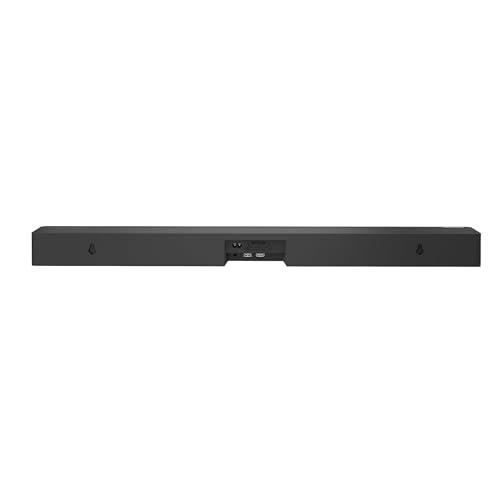
The Hisense HS2100 exemplifies plug-and-play simplicity. Connect one cable to your TV (preferably HDMI ARC for full functionality), plug in the soundbar and subwoofer, and you're essentially done. The wireless subwoofer pairs automatically and can be placed anywhere within reasonable range—behind furniture, in corners, or wherever it sounds best and looks acceptable.
The Ultimea Aura A40 demands more commitment. Those four surround speakers need thoughtful placement, and while the system includes 6-meter cables for the rear speakers, you'll need to route them around your room somehow. The front surround speakers connect directly to the soundbar, while the rear speakers require cable management that some users find challenging in rental properties or rooms where running cables isn't practical.
This setup complexity isn't just inconvenience—it's the difference between a 15-minute installation and a weekend project. However, users who complete the full Aura A40 setup consistently report that the immersive surround experience justifies the effort, particularly for movie watching and gaming.
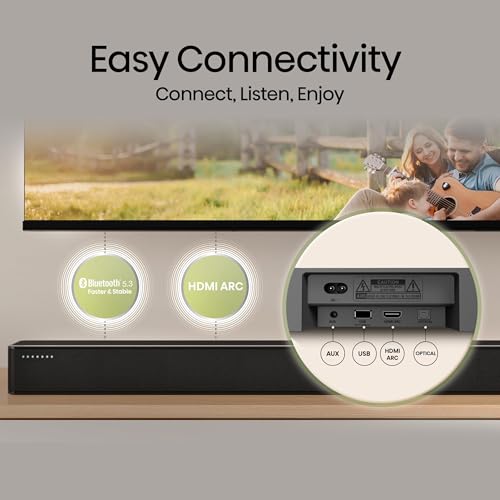
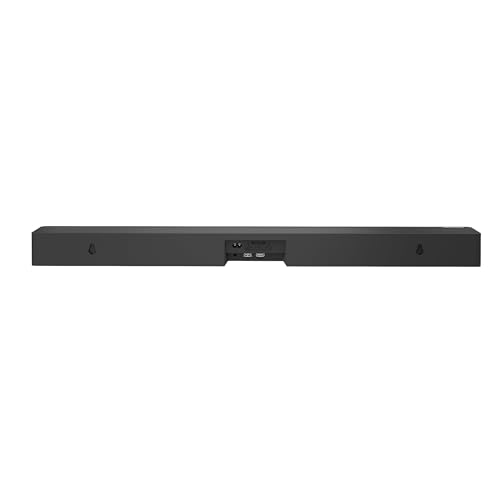
Both systems support modern connectivity standards, but their approaches differ meaningfully. The HS2100's HDMI ARC connection enables bidirectional communication with your TV, allowing volume control through your TV remote and automatic power switching. For users with Roku TVs, this integration becomes even more seamless through Roku TV Ready certification.
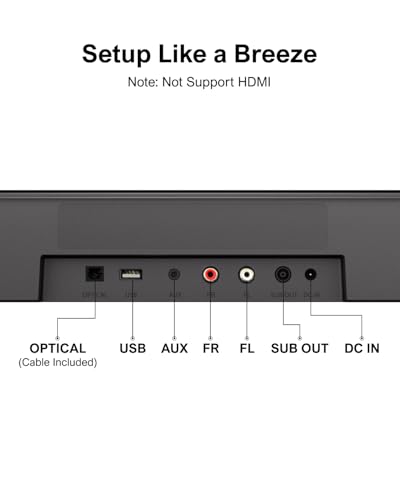
The Aura A40 notably lacks HDMI connectivity entirely, relying on optical, analog, and Bluetooth connections. This isn't necessarily problematic—optical connections carry Dolby Digital and other surround formats perfectly well—but it does mean losing some convenience features like automatic power switching and TV remote control.
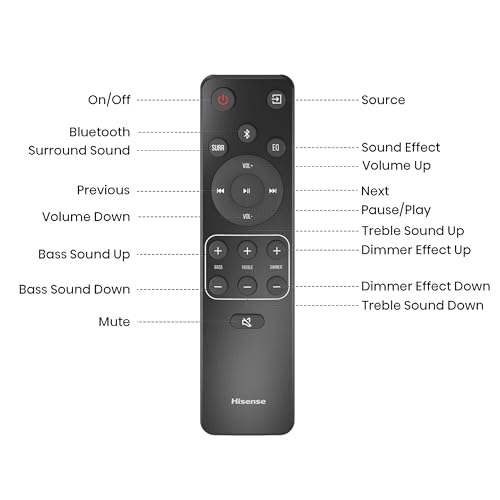
Where the Ultimea compensates is through its smartphone app, which provides far more control than the HS2100's basic remote. The ability to fine-tune surround levels, access genre-specific EQ presets, and adjust 10-band equalization appeals to users who enjoy tweaking their audio setup.
At the time of writing, both systems occupy the budget-friendly segment of the soundbar market, but their value propositions differ dramatically. The HS2100 represents refinement and convenience at a reasonable price—you're paying for build quality, tonal balance, and seamless integration rather than raw feature count.
The Aura A40 delivers exceptional value measured purely by hardware and features per dollar. Getting four surround speakers, a subwoofer, and extensive app-based customization at its price point is genuinely impressive, even if some compromises in sound quality and build materials are evident.
Choose the Hisense HS2100 if you value simplicity above all else, want refined sound quality for music and TV shows, own a Roku TV, or live in a space where running surround speaker cables isn't practical. It's also the better choice if you prioritize tonal accuracy over excitement, prefer wireless subwoofer flexibility, or want a "set it and forget it" experience.
The Ultimea Aura A40 makes sense for movie and gaming enthusiasts who want genuine surround immersion, users comfortable with more complex setups, and anyone who enjoys customizing their audio experience through smartphone apps. It's also ideal for larger rooms requiring more power and for budget-conscious buyers who want maximum features and performance per dollar.
Based on extensive research into user experiences and expert opinions, the HS2100 consistently satisfies users seeking a refined TV audio upgrade, while the Aura A40 impresses those prioritizing immersive surround sound and customization flexibility. Neither is objectively superior—they simply excel in different use cases and reflect different priorities in soundbar design philosophy.
The decision ultimately comes down to whether you want elegant simplicity or maximum immersion at a budget price point. Both deliver on their respective promises, making either a solid choice depending on your specific needs and room constraints.
| Hisense HS2100 2.1 Channel 240W Soundbar System | Ultimea Aura A40 7.1 Channel Soundbar System |
|---|---|
| Channel Configuration - Determines surround sound capability and immersion level | |
| 2.1 channels (stereo + subwoofer, virtual surround) | 7.1 channels (true surround with 4 separate speakers) |
| Total Power Output - Affects maximum volume and room-filling capability | |
| 240W (soundbar 120W, subwoofer 120W) | 330W peak across 8 drivers |
| Surround Speaker Setup - Real vs simulated surround sound experience | |
| Virtual surround via DTS Virtual:X processing | Physical surround speakers (2 front, 2 rear wired) |
| Subwoofer Type - Installation flexibility vs performance | |
| Wireless 5.25" subwoofer (flexible placement) | Wired 4" subwoofer (fixed placement, no pairing issues) |
| Frequency Response - How deep the bass goes and treble clarity | |
| 45Hz - 20kHz (deeper bass extension) | 65Hz - 18kHz (less deep bass, slightly reduced treble) |
| Connectivity Options - Compatibility with TVs and devices | |
| HDMI ARC, Optical, AUX, USB, Bluetooth 5.3 | Optical, AUX, USB, Bluetooth 5.3 (no HDMI) |
| Smart Integration Features - Convenience and control options | |
| Roku TV Ready (single remote control) | Ultimea Smart App (advanced EQ and customization) |
| Audio Customization - How much you can tailor the sound | |
| 6 preset modes, basic bass/treble adjustment | 121 EQ presets, 10-band equalizer, 13 surround levels |
| Installation Complexity - Setup time and cable management required | |
| Simple: soundbar + wireless sub (15 minutes) | Complex: 4 wired speakers + cable routing (2+ hours) |
| Soundbar Dimensions - Physical footprint under your TV | |
| 31.5" × 2.4" × 3.5" (fits most TV stands) | 15.75" × 2.76" × 3.54" (more compact main unit) |
| Best Use Cases - Where each system excels most | |
| TV shows, music, simple movie enhancement | Movies, gaming, immersive surround content |
The Ultimea Aura A40 is significantly better for movies due to its true 7.1 surround sound with four physical speakers that create genuine directional audio effects. The Hisense HS2100 only offers virtual surround through DTS Virtual:X processing, which can't match the immersive experience of actual surround speakers positioned around your room.
The Hisense HS2100 uses 2.1 channels (left, right, and subwoofer) with virtual surround processing, while the Ultimea Aura A40 provides true 7.1 channels with four separate surround speakers. This means the Aura A40 can place sounds all around you physically, while the HS2100 simulates surround effects from just the front soundbar.
The Hisense HS2100 is much easier to install, requiring only the main soundbar and a wireless subwoofer that pairs automatically. The Ultimea Aura A40 requires positioning and wiring four separate surround speakers around your room, making installation significantly more complex and time-consuming.
Both soundbars work with any TV, but the Hisense HS2100 offers special integration with Roku TVs through its "Roku TV Ready" feature for single-remote control. The Ultimea Aura A40 lacks HDMI connectivity and relies on optical, AUX, or Bluetooth connections, which may limit some advanced TV integration features.
The Hisense HS2100 has deeper bass extension down to 45Hz compared to the Ultimea Aura A40's 65Hz limit. However, the Aura A40 uses BassMX technology to create more impactful-feeling bass for movies. For pure bass depth, the HS2100 wins, but for movie impact, many users prefer the Aura A40.
Only the Ultimea Aura A40 offers comprehensive smartphone app control through the Ultimea Smart App, providing access to 121 EQ presets, 10-band equalizer, and surround level adjustments. The Hisense HS2100 relies on its included remote and doesn't have a dedicated smartphone app for control.
The Hisense HS2100 is generally better for music due to its more balanced, warm sound signature that works well across different genres. The Ultimea Aura A40 is optimized more for movies and can sound somewhat "metallic" or artificial when playing music, though it offers extensive EQ customization to improve music performance.
The Ultimea Aura A40 delivers 330W peak power across its eight speakers, while the Hisense HS2100 provides 240W total power. The higher power output of the Aura A40 makes it better suited for larger rooms and higher volume levels without distortion.
Neither the Hisense HS2100 nor the Ultimea Aura A40 supports Dolby Atmos. The HS2100 uses DTS Virtual:X for height effects, while the Aura A40 relies on its SurroundX technology and physical speaker placement for immersive sound without overhead audio channels.
The Ultimea Aura A40 offers significantly more customization with 121 preset EQ matrices, a 10-band equalizer, and 13 adjustable surround levels through its smartphone app. The Hisense HS2100 provides basic customization with six sound modes and simple bass/treble adjustment via the remote control.
The Hisense HS2100 includes HDMI ARC connectivity for advanced TV integration, plus optical, AUX, USB, and Bluetooth 5.3. The Ultimea Aura A40 lacks HDMI entirely, offering only optical, AUX, USB, and Bluetooth 5.3 connections, which may limit some TV control features.
The Ultimea Aura A40 typically offers better value, providing true 7.1 surround sound with four speakers, higher power output, and extensive customization features at a competitive price point. The Hisense HS2100 costs more but delivers superior build quality, easier setup, and better sound balance for users who prioritize simplicity over maximum features.
We've done our best to create useful and informative comparisons to help you decide what product to buy. Our research uses advanced automated methods to create this comparison and perfection is not possible - please contact us for corrections or questions. These are the sites we've researched in the creation of this article: rtings.com - shop.hisense-usa.com - bestbuy.com - content.syndigo.com - bestbuy.com - hisensedealers.co.ke - stuff.co.za - dtc-aus-api.hisense.com - youtube.com - manuals.plus - youtube.com - bestbuy.com - youtube.com - gallifurniture.com - hisense-usa.com - manuals.plus - uk.hisense.com - device.report - youtube.com - costco.ca - elmcreekwsa.com - gallifurniture.com - youtube.com - walmart.com - youtube.com - ultimea.com - homestudiobasics.com - ultimea.co - youtube.com - eu.ultimea.com - walmart.com - device.report - bestbuy.com - manuals.plus - community.ultimea.com - judge.me - support.ultimea.com - geekmaxi.com - provantage.com - bestbuy.com - youtube.com - uk.whatgeek.com

Privacy Policy
Terms and Conditions - Affiliate Policy
Home Security
© Copyright 2008-2026.
11816 Inwood Rd #1211, Dallas, TX 75244