







When upgrading your TV's audio, you'll quickly discover that soundbars range from budget-friendly options under $300 to premium units costing several thousand dollars. The question isn't just about how much you want to spend—it's about understanding what you're getting for your money and which approach works best for your space and preferences.
Today we're comparing two soundbars that represent opposite ends of the spectrum: the Ultimea Aura A40, a budget-focused system that includes physical surround speakers, and the KEF XIO, a premium single-unit soundbar packed with audiophile-grade technology. At the time of writing, these products are separated by roughly a 10x price difference, making this comparison particularly interesting for understanding what extra money actually buys you in home theater audio.
The soundbar market has evolved dramatically since the early 2010s, when these devices were simple TV audio upgrades. Today's soundbars fall into two main categories: physical surround systems that use multiple speakers placed around your room, and virtual surround systems that create spatial effects through advanced digital processing from a single unit.
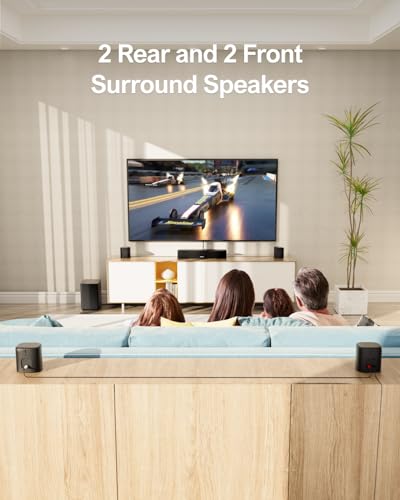
Physical surround systems like the Ultimea Aura A40 work exactly like traditional home theaters—they place actual speakers behind and beside you to create directional sound effects. When a helicopter flies overhead in a movie, you hear it moving through actual speakers positioned around your room.
Virtual surround systems like the KEF XIO use sophisticated digital signal processing (DSP) to trick your brain into perceiving sounds coming from directions where no speakers exist. This technology has improved significantly since 2020, with formats like Dolby Atmos adding height information that can create convincing overhead effects from speakers sitting in front of you.
Both approaches have merit, but they solve different problems and work better in different situations.
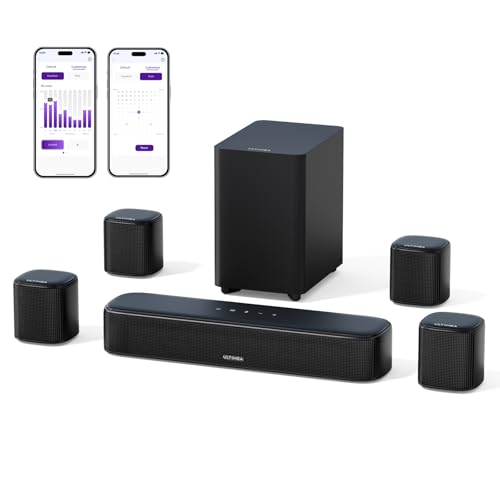
The Ultimea Aura A40, released in 2024, takes the traditional approach of actually placing speakers around your room. For around $250-300 at the time of writing, you get a complete 7.1 system comprising a main soundbar, four separate surround speakers, and a dedicated subwoofer—six total components that create authentic directional audio.
This physical approach has obvious advantages. When a sound effect is supposed to come from behind you, it actually does. There's no digital trickery involved—the rear speakers physically produce those sounds. This creates what audio enthusiasts call "discrete surround," meaning each channel has its own dedicated driver producing distinct audio.
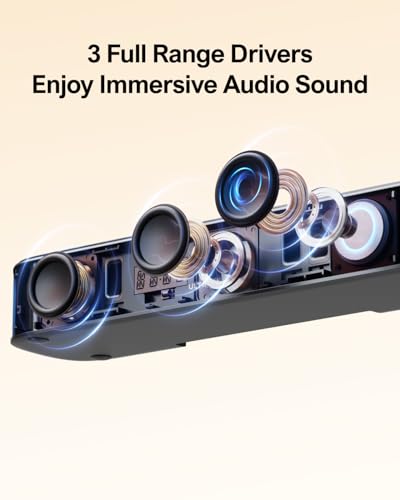
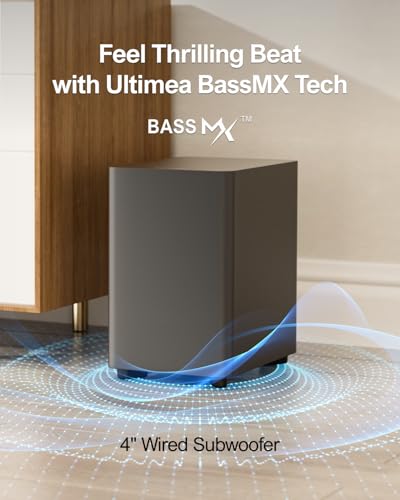
The Aura A40's main soundbar houses three 2-inch drivers handling the front left, center, and right channels. The center channel is crucial for dialogue clarity—it ensures voices stay anchored to the screen rather than wandering left or right. Four additional 2-inch drivers in the separate surround speakers handle side and rear effects, while a 4-inch subwoofer manages bass frequencies below about 80Hz (the point where most speakers start struggling with low-end reproduction).
BassMX and SurroundX Technologies: Ultimea has developed proprietary processing called BassMX for the subwoofer and SurroundX for spatial effects. While the technical details aren't extensively documented, these appear to be DSP algorithms that optimize the timing and frequency response across all speakers to create cohesive surround effects.
The system's total power output reaches 330 watts peak, which provides adequate headroom for most rooms. More importantly, the Aura A40 offers extensive customization through its smartphone app—121 preset EQ matrices covering different music genres, six listening modes optimized for various content types, and a 10-band equalizer for fine-tuning. This level of user control is impressive at any price point, let alone the budget category.
However, physical surround comes with trade-offs. You need space for six separate components, cable management becomes complex, and the effectiveness depends heavily on proper speaker placement. The Aura A40's bass only extends down to 65Hz, missing the deepest movie sound effects, and build quality necessarily reflects the budget pricing with plastic construction throughout.
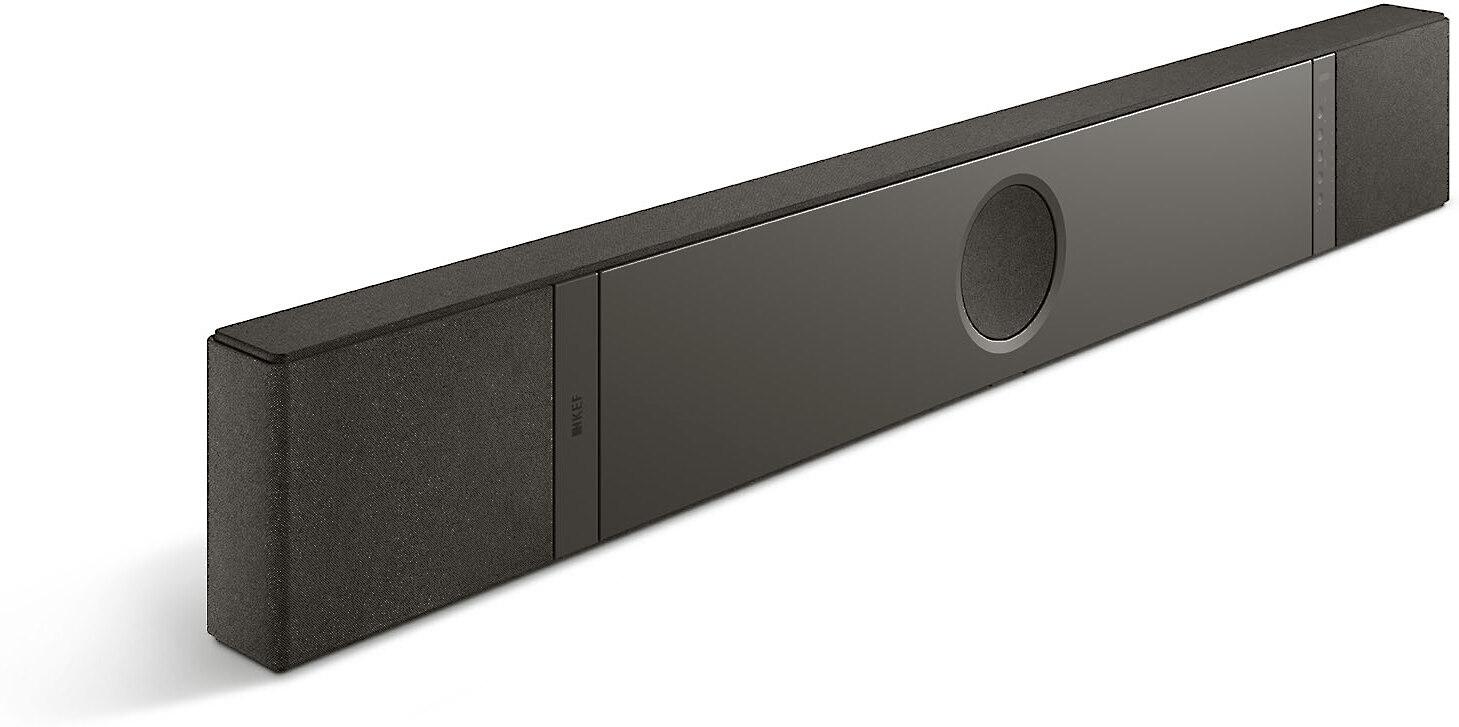
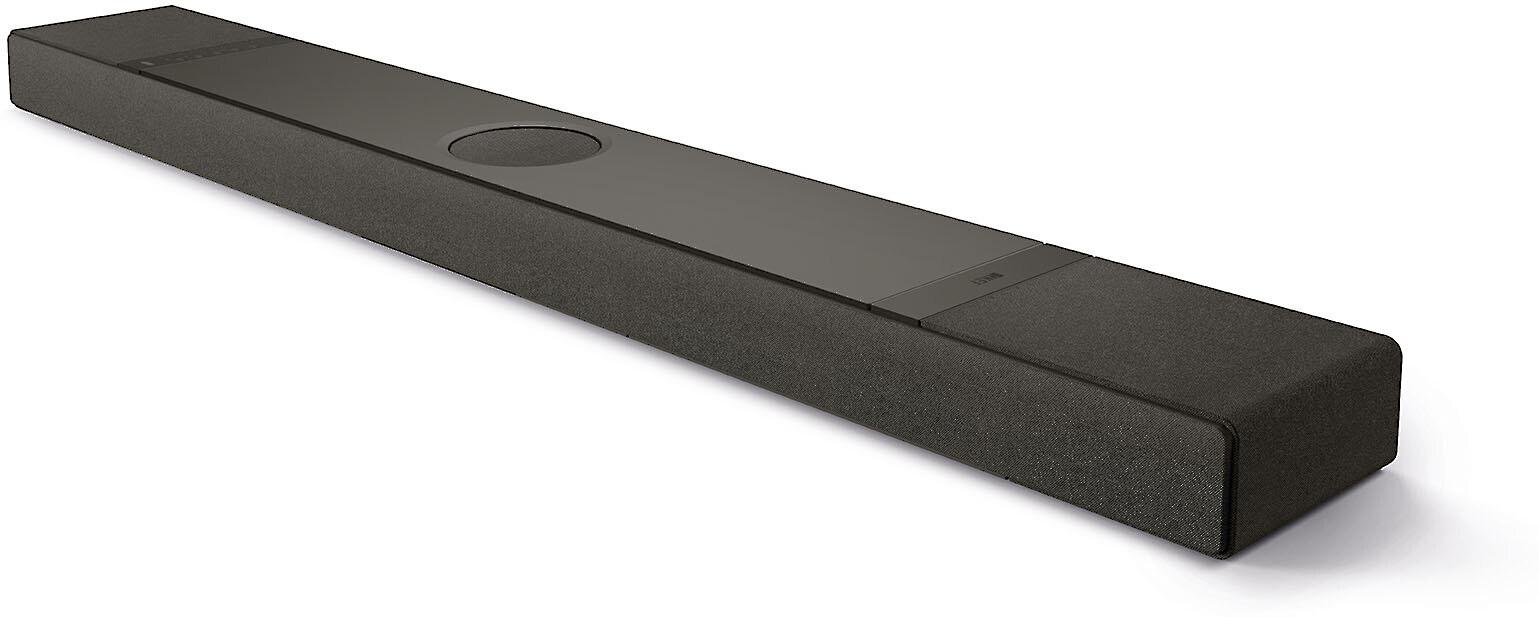
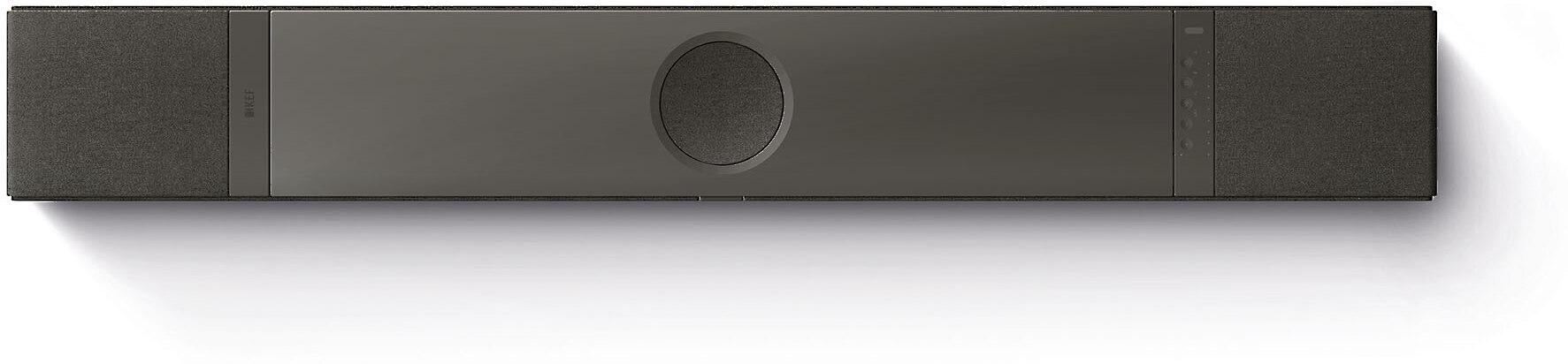
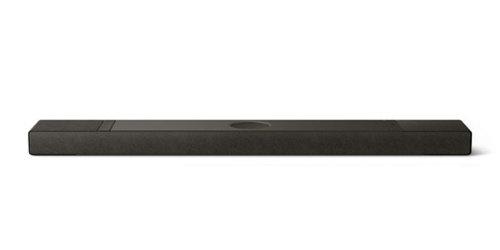
The KEF XIO, launched in 2025 as KEF's first-ever soundbar, represents a completely different philosophy. This British company has spent decades perfecting high-end speakers, and they've packed that expertise into a single 48-inch soundbar costing around $2,500 at the time of writing.
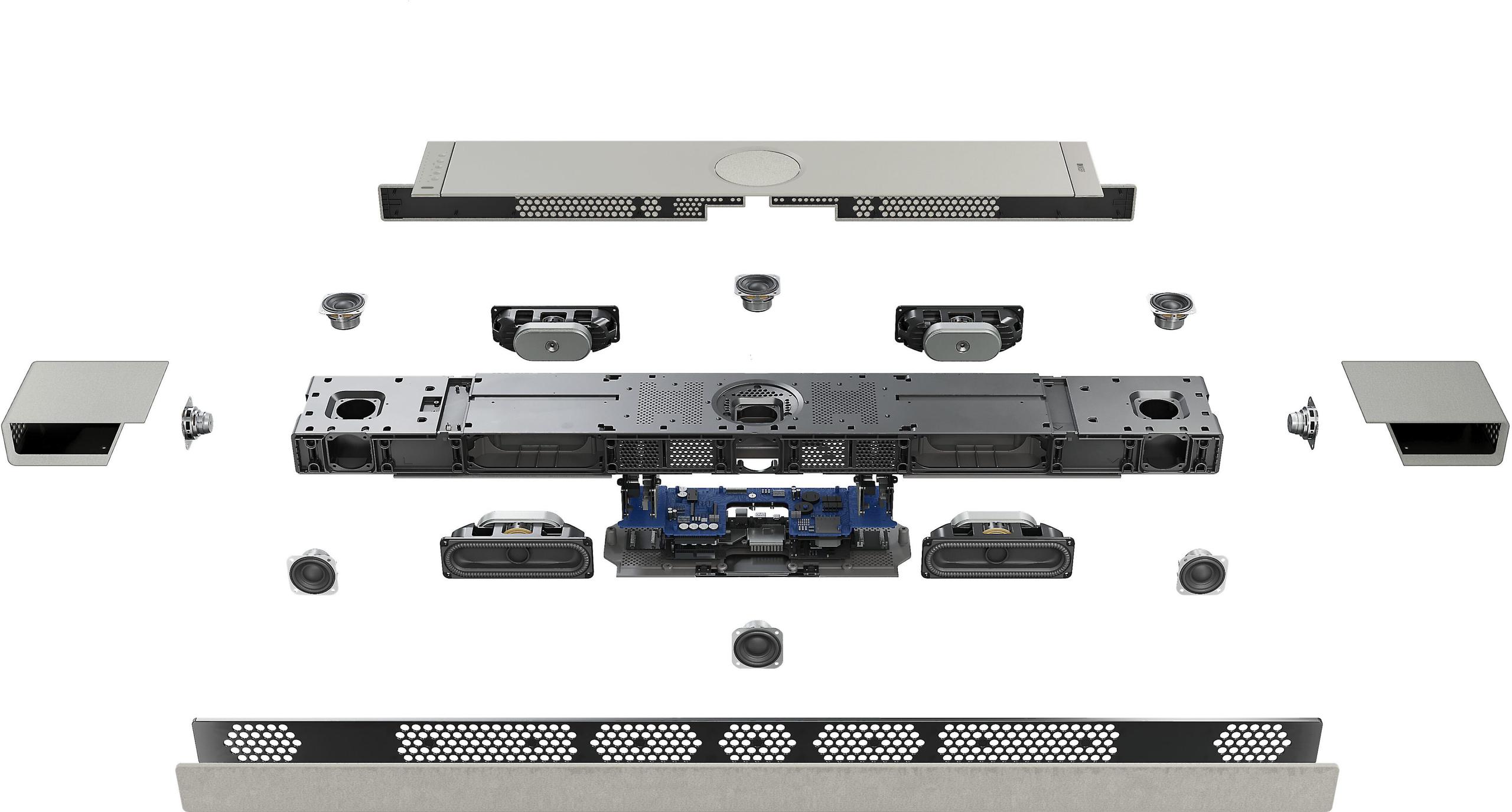
Instead of multiple physical speakers, the XIO uses twelve discrete drivers powered by twelve separate amplifiers, delivering 820 watts of total power. This isn't just about raw wattage—it's about precision control. Each driver has its own dedicated amplifier, allowing for exact timing and frequency management that creates the illusion of sounds coming from all around you.
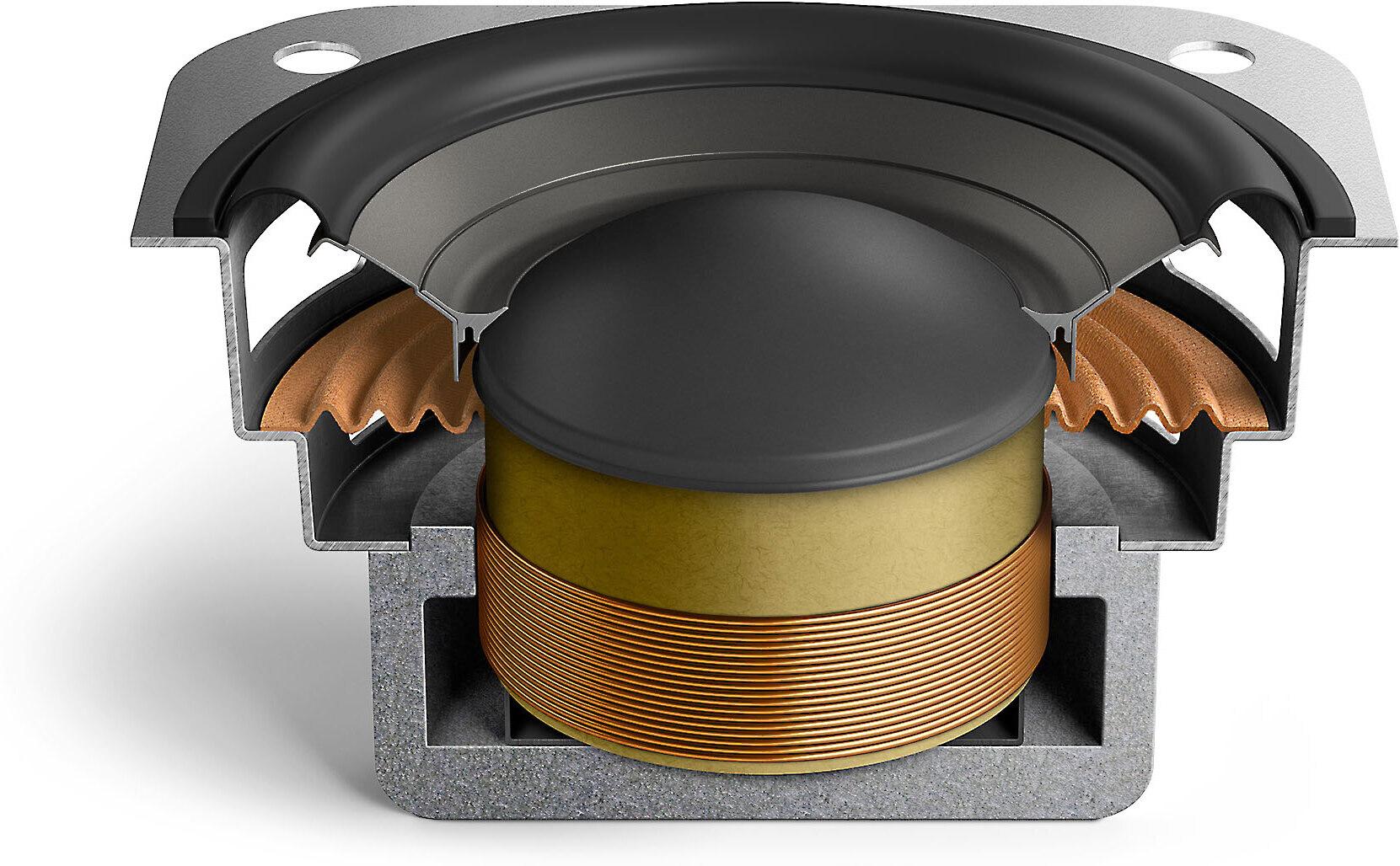
Uni-Q MX Driver Technology: The XIO's secret weapon is six Uni-Q MX drivers—miniaturized versions of KEF's famous concentric driver design. In traditional speakers, the tweeter (high-frequency driver) and midrange driver sit side by side, creating timing issues as sound waves arrive at your ears at slightly different times. KEF's Uni-Q technology places the tweeter concentrically within the midrange cone, so both frequencies emanate from the exact same point in space.
This design creates remarkably wide dispersion—meaning the sound quality remains consistent whether you're sitting directly in front of the soundbar or off to the side. Most soundbars have a "sweet spot" directly in front, but the XIO maintains clarity and imaging across a much wider listening area.
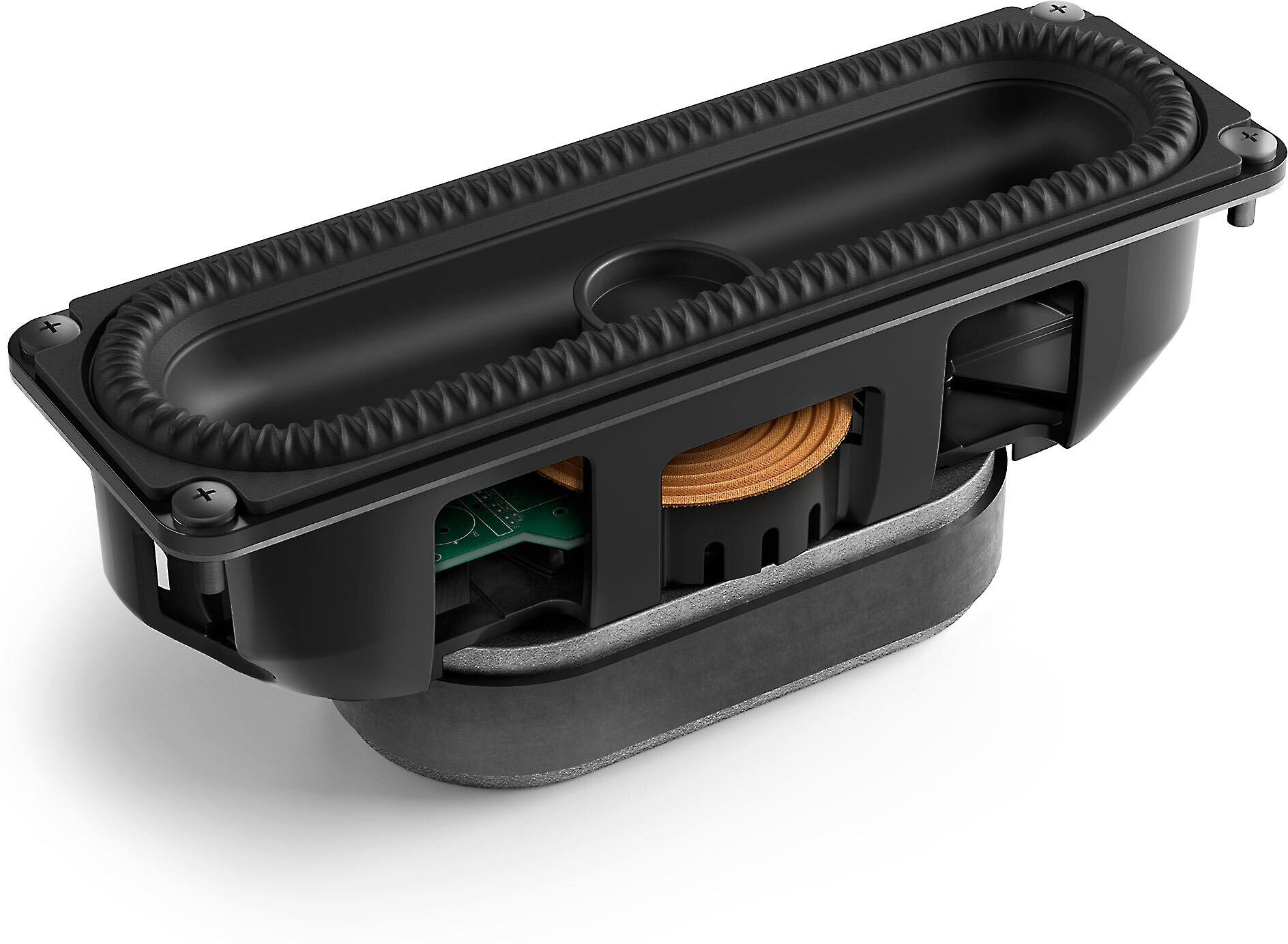
P185 Racetrack Woofers with Advanced Bass Control: For bass, the XIO employs four racetrack-shaped drivers (called P185s) arranged in a force-canceling configuration. Traditional round woofers can create cabinet vibrations that color the sound, but these oval drivers work in opposing pairs to cancel unwanted resonances.
More impressive is the VECO (Velocity Control Technology) system borrowed from KEF's award-winning subwoofers. VECO uses accelerometers to monitor cone movement in real-time, applying corrective signals to reduce distortion by up to 28dB (that's a 99.8% reduction). This allows the XIO to produce clean bass down to 34Hz—deeper than many standalone subwoofers—without the bloating or distortion typical of soundbar bass.
Music Integrity Engine for Cinema: The XIO's digital processing, called Music Integrity Engine (MIE), handles spatial processing, adaptive EQ, digital crossovers, and dynamic range control. Unlike simple virtual surround algorithms, MIE creates a three-dimensional soundstage with convincing height effects for Dolby Atmos content.
The system supports not just Dolby Atmos but also DTS:X and Sony 360 Reality Audio, providing flexibility across streaming services and disc formats. Intelligent Placement Technology uses built-in microphones to analyze your room acoustics and automatically adjust the audio output—whether the soundbar is wall-mounted, shelf-placed, or dealing with nearby objects that might affect sound reflection.
This is where the fundamental philosophies diverge most dramatically. The Aura A40 creates surround effects through actual speaker placement—when properly positioned, rear speakers genuinely produce sounds behind your listening position. This physical approach works reliably regardless of room acoustics or seating position, but it requires commitment to speaker placement and cable management.
The XIO achieves spatial effects through computational audio processing that has improved dramatically since 2020. Our research into professional reviews reveals that the XIO creates convincing height effects and width expansion that extends "far beyond the physical limits of the bar." Users report perceivable overhead effects during Atmos content, with helicopters and rain effects convincingly positioned above the listening area.
However, virtual surround effectiveness varies with room acoustics, seating position, and individual hearing characteristics. Some listeners immediately perceive the height effects, while others find them subtle. The XIO partially addresses this through its room correction technology, but physics still limits what's possible from a single position.
Winner: Depends on priorities—Aura A40 for guaranteed directional effects from actual speakers; XIO for sophisticated spatial processing without multiple components.
This category shows the clearest performance gap. The Aura A40's 4-inch subwoofer provides adequate bass for dialogue and most music, but its 65Hz lower limit means you'll miss the deepest movie sound effects—the rumbling explosions and earthquake-like impacts that create visceral home theater experiences.
The XIO extends down to 34Hz, covering most of the audible bass spectrum without requiring a separate subwoofer. Professional reviewers noted "furniture-shaking bass" capable of energizing large rooms. The VECO distortion control means this bass stays clean and controlled even at high volumes, avoiding the bloated or muddy low-end common in soundbars attempting deep bass.
For perspective, most full-size tower speakers struggle to reach below 40Hz cleanly. The XIO's ability to hit 34Hz from racetrack drivers represents genuine engineering achievement.
Winner: KEF XIO—significantly deeper, cleaner bass performance.
Both systems prioritize dialogue clarity, but through different methods. The Aura A40 uses a dedicated center channel driver for anchoring voices to the screen. This traditional approach works well, keeping dialogue clear during complex scenes with multiple sound layers.
The XIO combines dedicated dialogue enhancement mode with its sophisticated crossover design. The Uni-Q drivers' point-source design creates precise imaging that locks voices to the screen position, while dialogue mode boosts speech frequencies and applies dynamic range compression to ensure voices cut through background noise.
Professional reviews consistently praised both systems for dialogue performance, with the XIO receiving particular praise for maintaining vocal clarity across wide listening areas thanks to its driver technology.
Winner: Slight edge to KEF XIO for imaging precision and room-wide consistency.
This category reveals the most significant difference in design philosophy. The Aura A40 focuses on home theater performance, with music playback as a secondary consideration. Some reviewers noted "tinny, boxy, metallic" characteristics when playing music, suggesting the tuning prioritizes movie dialog and effects over musical accuracy.
The XIO approaches music reproduction with audiophile standards. Professional reviews from What Hi-Fi? awarded it perfect scores partly because it works "as an excellent sound system for music alone." The Telegraph called it "the most musical sounding soundbar" they'd encountered. This musical capability reflects KEF's heritage in high-end speaker design—the same technologies that make their $10,000+ speakers sound natural apply to the XIO.
Winner: KEF XIO—exceptional musicality rare in soundbars.
The Aura A40 excels in user customization despite its budget positioning. The smartphone app provides 121 preset EQ matrices covering Bass, Pop, Classical, and Rock preferences, plus six listening modes (Movie, Music, Voice, Sport, Game, Night) and 13 adjustable surround levels. This depth of control surpasses many premium competitors and allows extensive fine-tuning for personal preferences or room acoustics.
The XIO takes a more restrained approach with six carefully tuned presets. KEF's philosophy emphasizes getting the acoustics right through engineering rather than extensive user adjustment. While this limits customization, it reflects confidence in the factory tuning—and professional reviews suggest this confidence is justified.
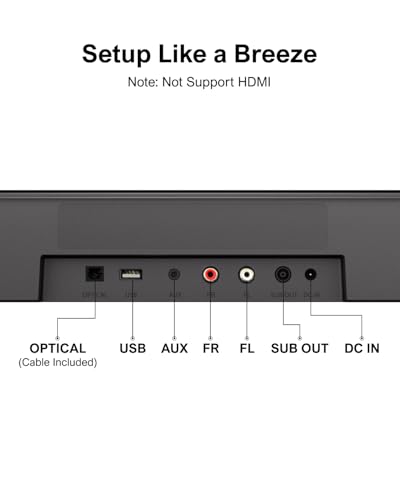
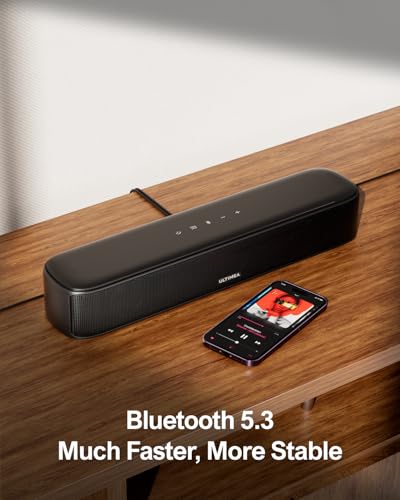
For connectivity, the Aura A40 covers essentials with optical, auxiliary, USB, and Bluetooth 5.3 inputs. The XIO adds HDMI 2.1 eARC, Wi-Fi streaming, AirPlay 2, Chromecast, and integrated streaming services (Spotify Connect, Tidal, Amazon Music, Qobuz). However, it notably lacks multiple HDMI inputs, requiring users to connect sources directly to their TV.
The Aura A40 requires significant commitment to speaker placement. You'll need to position four surround speakers around your room, run cables (some wirelessly connected after initial pairing), and find appropriate placement for the subwoofer. This complexity is offset by the authentic surround effects, but it's not suitable for minimalist setups or rental properties where permanent installation isn't feasible.
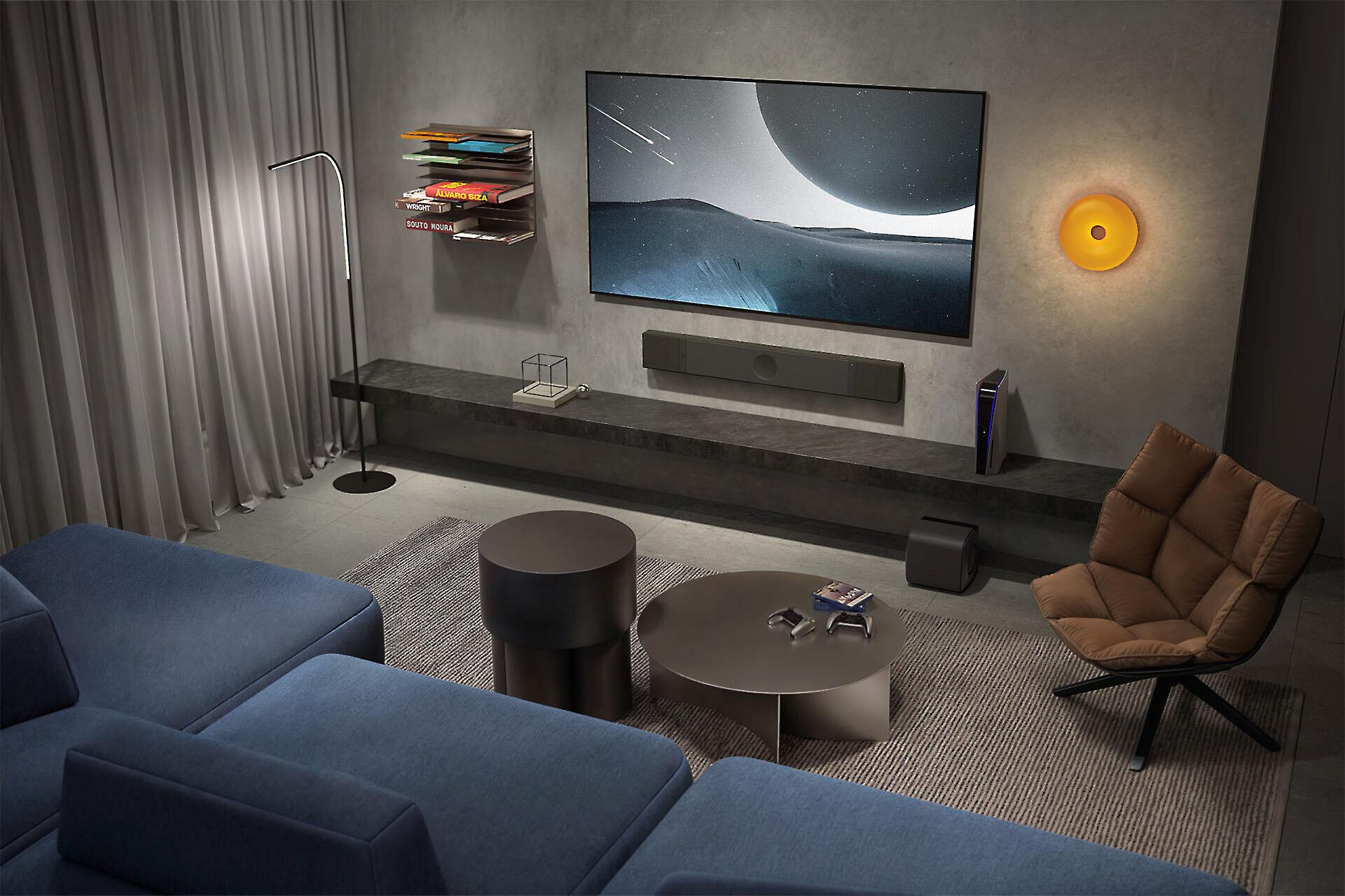
The XIO offers single-unit convenience with sophisticated room adaptation. Its Intelligent Placement Technology automatically adjusts for wall-mounting versus shelf placement and compensates for nearby objects. At 48 inches wide, it pairs best with 65-inch or larger TVs—it can look oversized with smaller displays.
At the time of writing, the pricing difference is substantial—the Aura A40 costs roughly one-tenth the price of the XIO. This isn't just about brand premium; it reflects fundamentally different engineering approaches and component quality.
The Aura A40 delivers exceptional value by providing physical surround sound, dedicated subwoofer, extensive customization, and app control at budget pricing. The trade-offs include limited bass extension, basic build quality, and dependence on proper speaker placement.
The XIO justifies its premium through advanced driver technology, sophisticated DSP, audiophile-grade components, and comprehensive streaming integration. It's expensive, but it delivers performance that approaches high-end component systems in a single, elegant package.
Choose the Ultimea Aura A40 if you:
Choose the KEF XIO if you:
The fundamental question isn't whether the XIO sounds better—it clearly does. The question is whether that improvement justifies the substantial price premium for your specific needs and budget. Both products succeed in their respective markets, but they're solving different problems for different users.
For most people upgrading from TV speakers, the Aura A40 provides a dramatic improvement at an accessible price. For audio enthusiasts who understand what they're gaining from premium engineering, the XIO delivers an uncompromising solution that bridges the gap between soundbar convenience and audiophile performance.
| Ultimea Aura A40 | KEF XIO |
|---|---|
| Channel Configuration - Determines surround sound capability and immersion | |
| Physical 7.1 with separate speakers + subwoofer | Virtual 5.1.2 Dolby Atmos in single unit |
| Driver Count and Power - More drivers can mean better sound distribution | |
| 8 drivers total, 330W peak power | 12 drivers total, 820W with individual amplifiers |
| Bass Extension - Lower numbers mean deeper, more impactful bass | |
| 65Hz (separate 4" subwoofer) | 34Hz (built-in racetrack woofers with VECO) |
| Spatial Audio Support - Essential for modern movie formats | |
| Virtual surround with SurroundX technology | Dolby Atmos, DTS:X, Sony 360 Reality Audio |
| Physical Setup Requirements - Consider your room and lifestyle | |
| 6 components: soundbar + 4 surround speakers + subwoofer | Single 48" soundbar unit |
| Audio Customization - Important for fine-tuning to your preferences | |
| 121 EQ presets, 10-band EQ, 13 surround levels | 6 refined presets with limited manual adjustment |
| Connectivity Options - Affects compatibility with your devices | |
| Optical, AUX, USB, Bluetooth 5.3 | HDMI 2.1 eARC, optical, USB, Bluetooth 5.3, Wi-Fi streaming |
| Smart Features - Modern conveniences and streaming capability | |
| Basic app control, OTA updates | Full streaming services, AirPlay 2, Chromecast, room calibration |
| Build Quality and Materials - Affects durability and aesthetics | |
| Plastic construction, basic finish | Premium aluminum chassis with splash-proof fabric |
| Room Size Compatibility - Ensures optimal performance in your space | |
| 10-25m² (108-270 ft²) recommended | Effective in rooms up to 60m²+ with auto-calibration |
| Music Performance - Important if you listen to music frequently | |
| Adequate for casual listening, some metallic coloration | Audiophile-grade musicality, natural tonal balance |
| Installation Complexity - Consider your technical comfort and space | |
| Complex: requires speaker placement and cable management | Simple: single unit with automatic room adaptation |
The Ultimea Aura A40 uses physical surround speakers placed around your room to create 7.1 channel audio, while the KEF XIO creates virtual surround sound and Dolby Atmos effects from a single premium soundbar unit using advanced digital processing.
The KEF XIO is better for small rooms since it's a single unit that doesn't require multiple speakers and cables throughout your space. The Ultimea Aura A40 needs room for four separate surround speakers plus a subwoofer, making it more suitable for larger spaces where you can properly position all components.
The Ultimea Aura A40 includes a dedicated 4-inch subwoofer as part of the system. The KEF XIO has built-in bass drivers that extend down to 34Hz, so no separate subwoofer is required, though you can add one if desired for even deeper bass.
Only the KEF XIO supports Dolby Atmos, along with DTS:X and Sony 360 Reality Audio formats. The Ultimea Aura A40 uses its own SurroundX technology for spatial effects but doesn't support these modern audio formats.
The Ultimea Aura A40 has 8 speakers total across 6 separate components: 3 in the main bar, 4 in the surround speakers, and 1 in the subwoofer. The KEF XIO contains 12 high-quality drivers within its single soundbar unit.
The KEF XIO is much easier to install since it's just one soundbar that can be placed on a shelf or wall-mounted. The Ultimea Aura A40 requires positioning four separate surround speakers around your room and managing multiple cables, making installation more complex.
Both can play music, but the KEF XIO excels at music reproduction with audiophile-grade sound quality that works well for critical listening. The Ultimea Aura A40 is adequate for casual music listening but is primarily optimized for home theater use.
The KEF XIO provides superior bass performance, extending down to 34Hz with advanced VECO distortion control technology. The Ultimea Aura A40 includes a separate subwoofer but only reaches down to 65Hz, missing some of the deepest movie sound effects.
The KEF XIO offers more modern connectivity including HDMI 2.1 eARC, Wi-Fi streaming, AirPlay 2, and integrated streaming services. The Ultimea Aura A40 provides basic connectivity with optical, AUX, USB, and Bluetooth connections.
The Ultimea Aura A40 offers exceptional value by providing physical surround sound with extensive customization options at a budget-friendly price. The KEF XIO costs significantly more but delivers premium build quality, advanced audio technology, and superior sound performance.
Yes, both soundbars have smartphone apps. The Ultimea Aura A40 offers extensive app control with 121 EQ presets and detailed customization options. The KEF XIO uses the KEF Connect app for streaming control and basic adjustments.
Choose the Ultimea Aura A40 if you want authentic physical surround sound at a budget price and have space for multiple speakers. Select the KEF XIO if you prioritize premium audio quality, want Dolby Atmos support, prefer single-unit convenience, and are willing to invest in high-end performance.
We've done our best to create useful and informative comparisons to help you decide what product to buy. Our research uses advanced automated methods to create this comparison and perfection is not possible - please contact us for corrections or questions. These are the sites we've researched in the creation of this article: youtube.com - walmart.com - youtube.com - ultimea.com - homestudiobasics.com - ultimea.co - youtube.com - eu.ultimea.com - walmart.com - device.report - bestbuy.com - manuals.plus - community.ultimea.com - judge.me - support.ultimea.com - geekmaxi.com - provantage.com - bestbuy.com - youtube.com - uk.whatgeek.com - blog.son-video.com - residentialsystems.com - whathifi.com - audioadvice.com - crutchfield.com - homecrux.com - techradar.com - youtube.com - us.kef.com - gramophone.com - cepro.com - audioxpress.com - musicdirect.com - gramophone.com - us.kef.com - crutchfield.com - hifipig.com - bestbuy.com - listenup.com - bestbuy.com - bestbuy.com - listenup.com

Privacy Policy
Terms and Conditions - Affiliate Policy
Home Security
© Copyright 2008-2026.
11816 Inwood Rd #1211, Dallas, TX 75244