





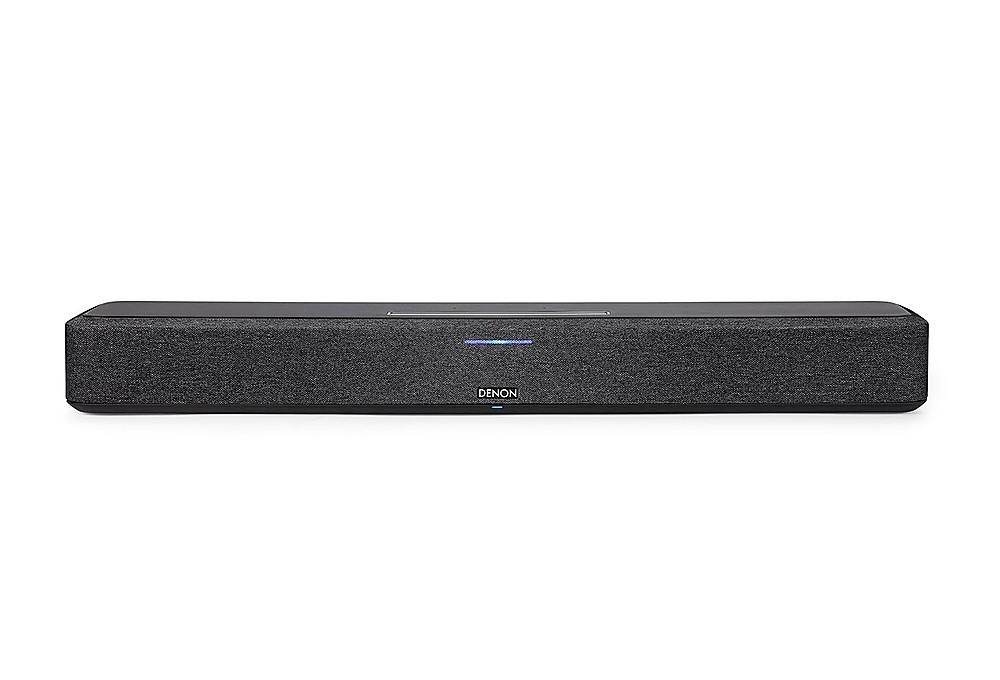
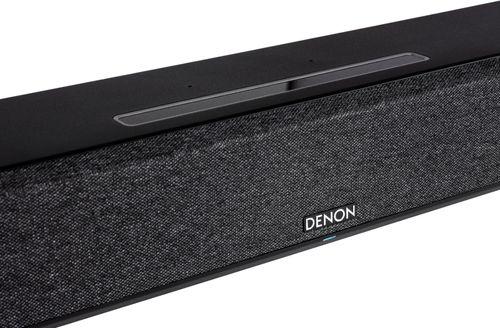

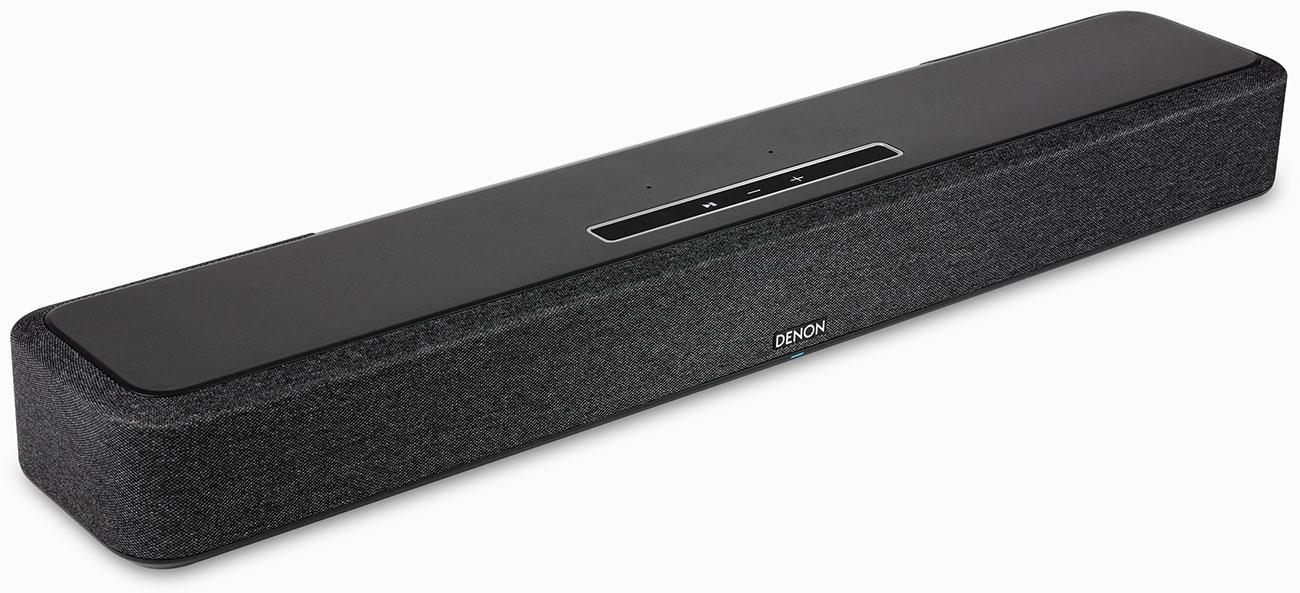
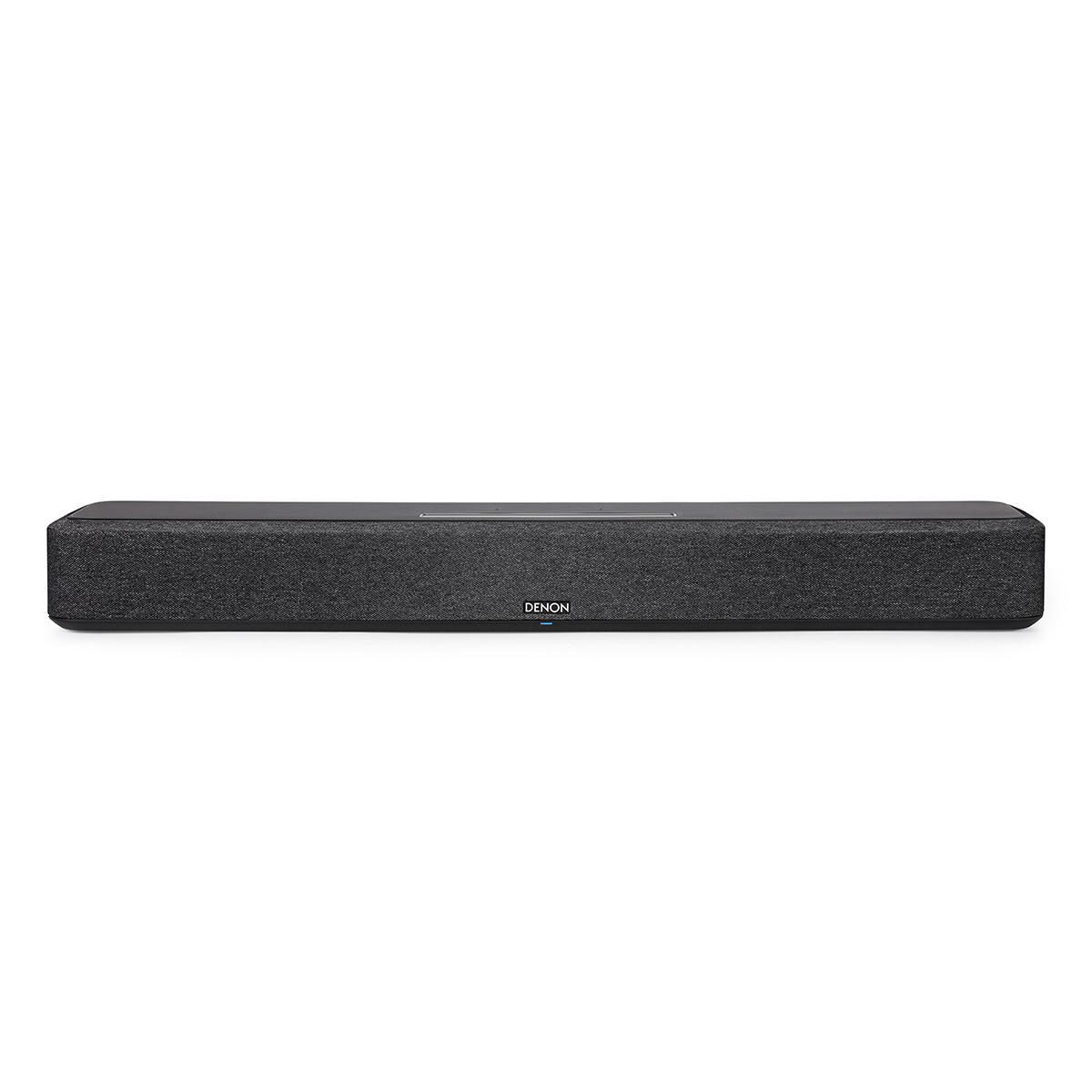
Finding the right soundbar can transform your living room from a place where you constantly ask "what did they just say?" into a proper entertainment hub. Today's soundbars range from simple TV speakers replacements to sophisticated home theater systems that can rival dedicated component setups. We're comparing two very different approaches: the Ultimea Aura A40 7.1 Channel Soundbar System, which takes the "more speakers, more better" route, and the Denon Home Sound Bar 550, which focuses on premium processing and smart home integration.
Both products emerged around 2021-2022, during a period when soundbar technology was rapidly advancing. The pandemic had everyone upgrading their home entertainment setups, and manufacturers responded with more sophisticated virtual surround processing, better wireless connectivity, and smarter integration features. The Ultimea Aura A40 represents the budget-conscious approach to this evolution—giving you actual surround speakers instead of relying purely on audio trickery. The Denon Home Sound Bar 550, meanwhile, embodies the premium single-unit philosophy that became popular as living spaces got smaller and cleaner aesthetics became more important.
Before diving into specifics, it's worth understanding what we're really talking about when we say "soundbar performance." The most important metrics aren't necessarily the flashy numbers manufacturers love to highlight—like peak wattage, which can be misleading—but rather how well a system handles dialogue clarity, bass response, and spatial imaging.
Dialogue clarity matters because if you can't understand what characters are saying, nothing else matters. This depends on the quality of center channel reproduction and whether the system has dedicated dialogue enhancement features.
Bass response isn't just about how loud the low-end gets—it's about control, extension (how deep it goes), and integration with the rest of the frequency spectrum. A boomy, one-note bass can actually make dialogue harder to understand.
Spatial imaging refers to how well a system creates the illusion of sounds coming from different locations around you. This is where the fundamental difference between our two contenders becomes clear: physical speakers versus virtual processing.
The Ultimea Aura A40 uses what's called a "discrete" approach—it literally places speakers around your room to create surround effects. The Denon Home Sound Bar 550 uses "virtual surround processing," which manipulates audio signals to trick your brain into perceiving sounds coming from locations where there aren't actually speakers.
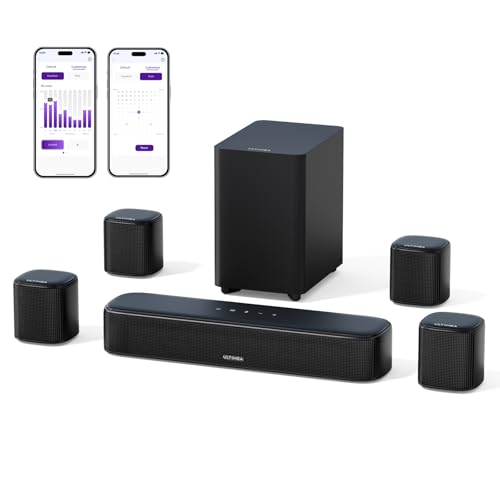
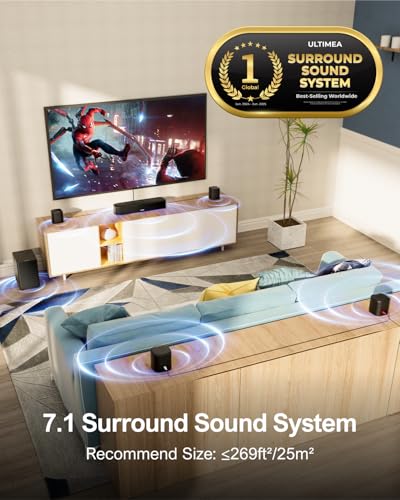
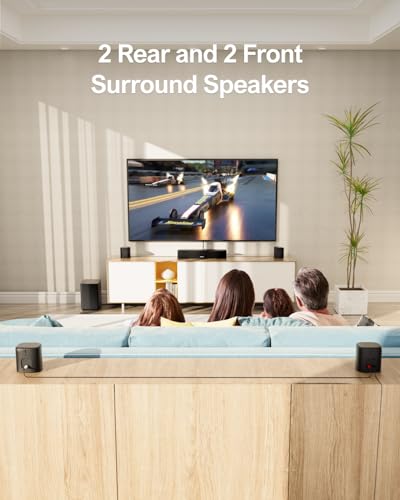
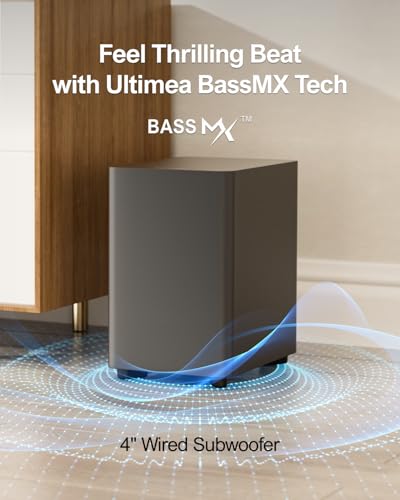
When you unbox the Ultimea Aura A40, you're not just getting a soundbar—you're getting an entire 7.1 channel system. That means a main soundbar with three 2-inch drivers, four separate surround speakers (also with 2-inch drivers), and a dedicated 4-inch subwoofer. At the time of writing, this complete package costs roughly half what you'd pay for the Denon alone, making it one of the most compelling value propositions in the soundbar market.
The system's SurroundX technology claims "99.99% detail accuracy," which is marketing speak, but the underlying concept is sound. When you have actual speakers behind and beside you, creating convincing surround effects becomes much easier than trying to bounce sound off walls or manipulate phase relationships to fool your ears.
What makes the Ultimea Aura A40 particularly interesting is its hybrid wired/wireless approach to the surround speakers. The front surround speakers connect via traditional speaker wire, but the rear right speaker can pair wirelessly with the main unit after initial setup. This reduces cable clutter while maintaining the stability of wired connections where it matters most.
The BassMX technology in the subwoofer is essentially digital signal processing (DSP) designed to optimize low-frequency response without distortion. While the 4-inch driver isn't huge by subwoofer standards, the dedicated enclosure and processing can deliver surprisingly impactful bass—the kind that makes movie explosions feel physical rather than just loud.
Where the Ultimea Aura A40 really shines is in its Ultimea Smart App, which offers genuinely useful customization options. The 121 preset EQ matrices aren't just marketing fluff—they represent different tuning profiles for various content types and listening preferences. More importantly, you can adjust individual surround speaker levels, which is crucial for optimizing performance in your specific room.
This level of customization typically requires expensive AV receivers. Being able to fine-tune how loud each surround speaker plays relative to the others means you can compensate for room acoustics, furniture placement, and seating position. It's the difference between surround sound that works "okay" and surround sound that truly immerses you in the experience.
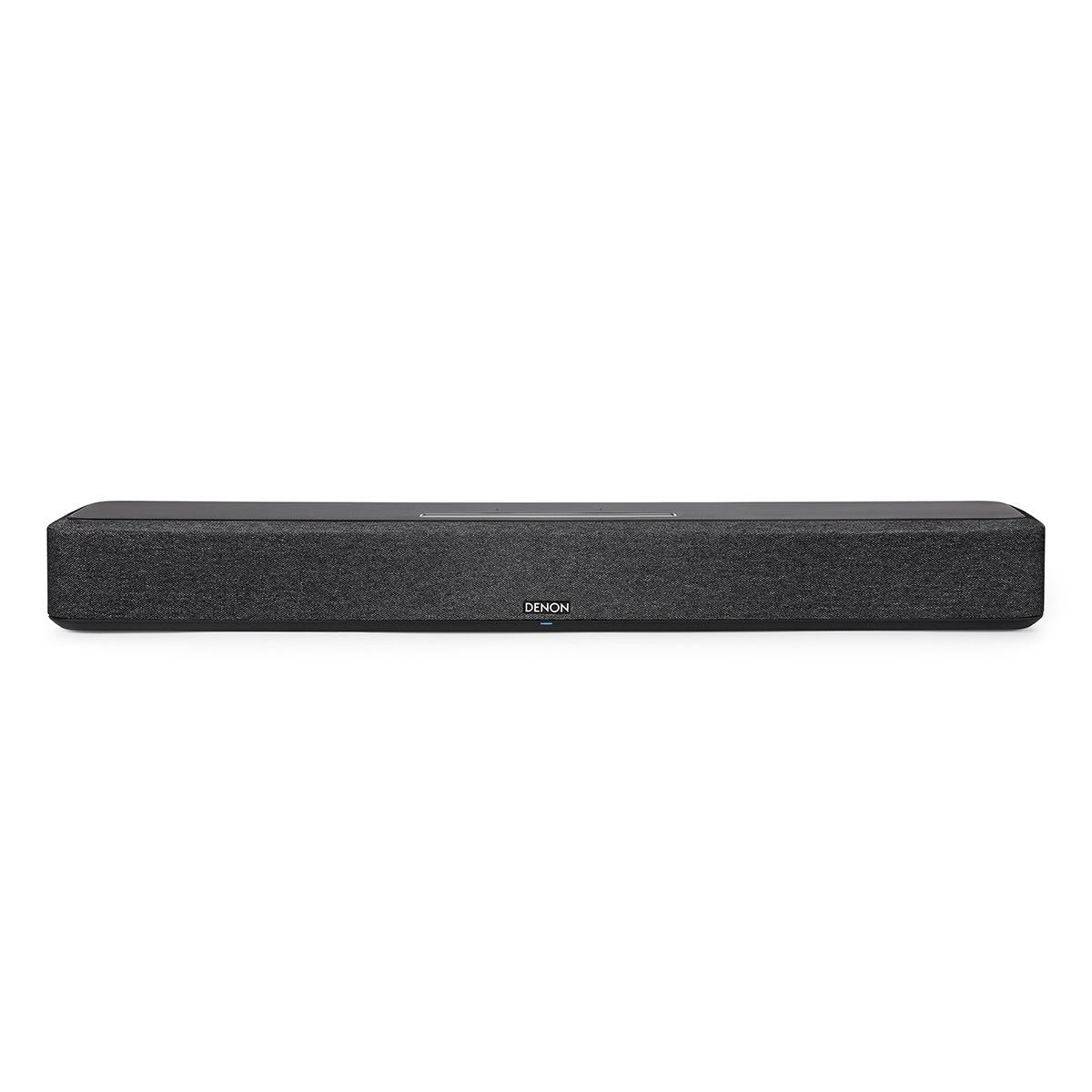
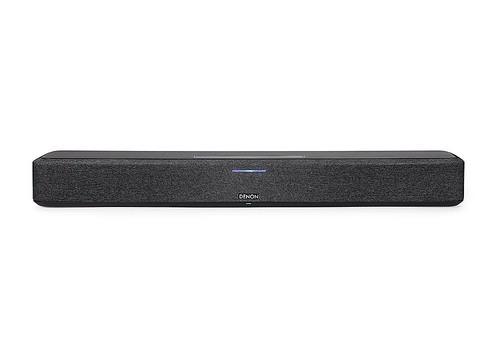
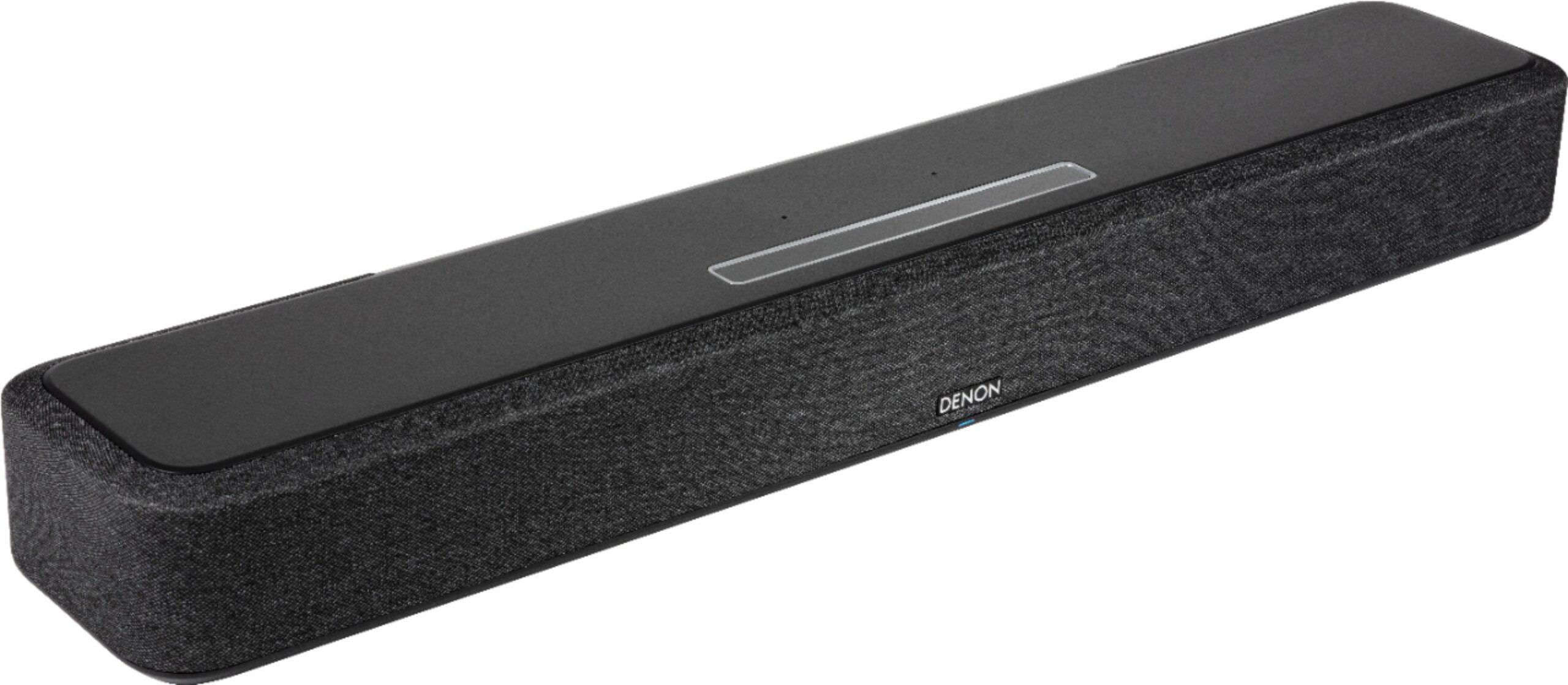
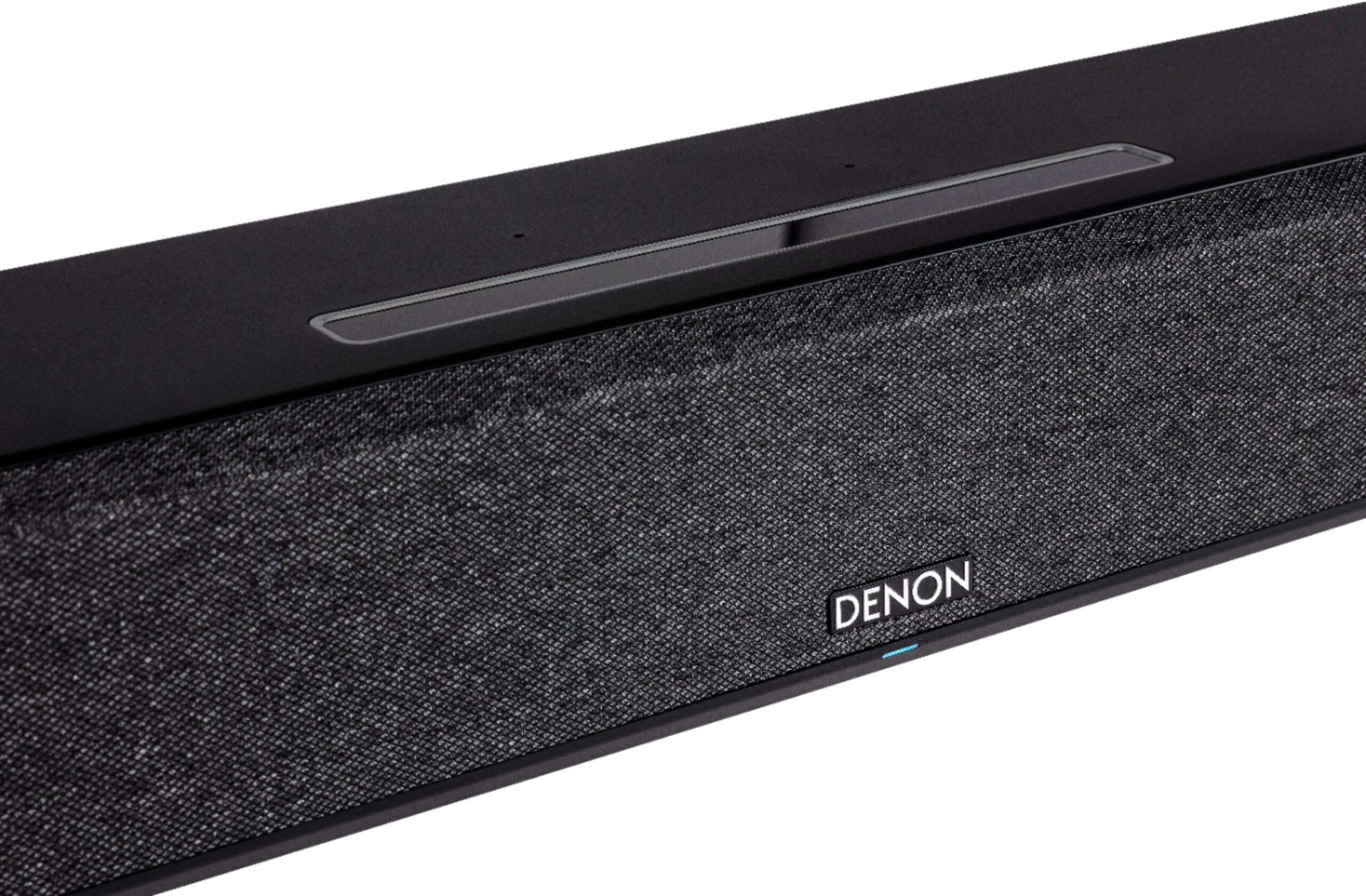
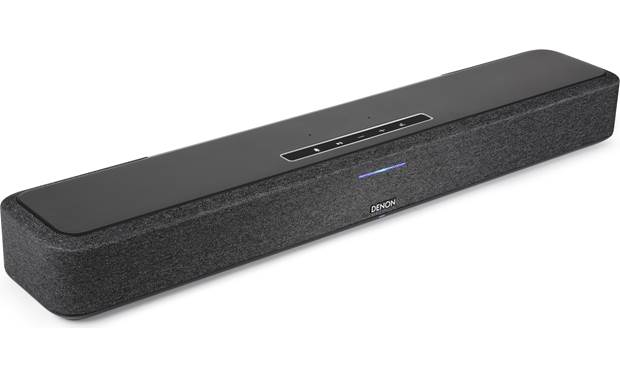
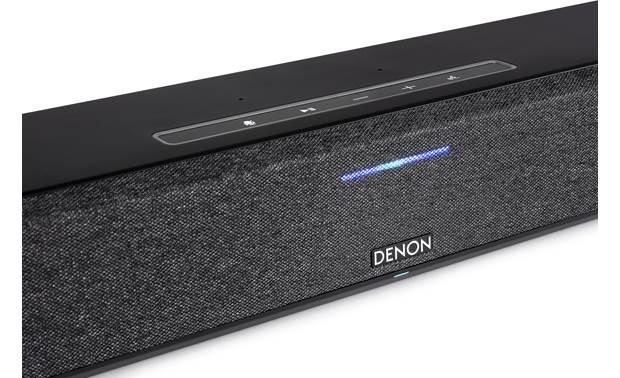
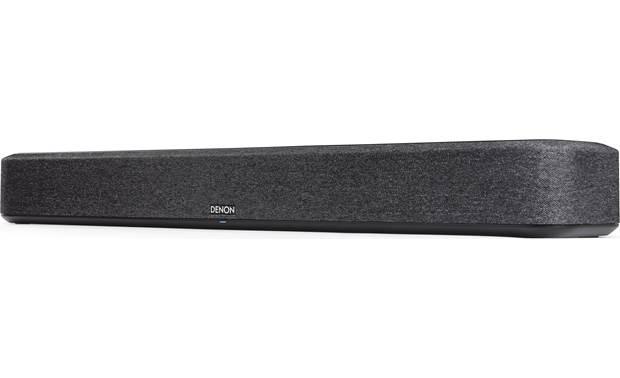
The Denon Home Sound Bar 550 takes a completely different approach. Instead of surrounding you with speakers, it uses sophisticated processing to create virtual surround effects from a single, elegantly designed unit. This soundbar supports both Dolby Atmos and DTS:X—the latest object-based surround formats that can position sounds anywhere in three-dimensional space, including overhead.
The key technology here is Dolby Height Virtualization, which uses psychoacoustic processing to create the illusion of height speakers without actually having any. It works by manipulating the timing, frequency response, and phase relationships of audio signals to exploit how your brain processes directional hearing cues.
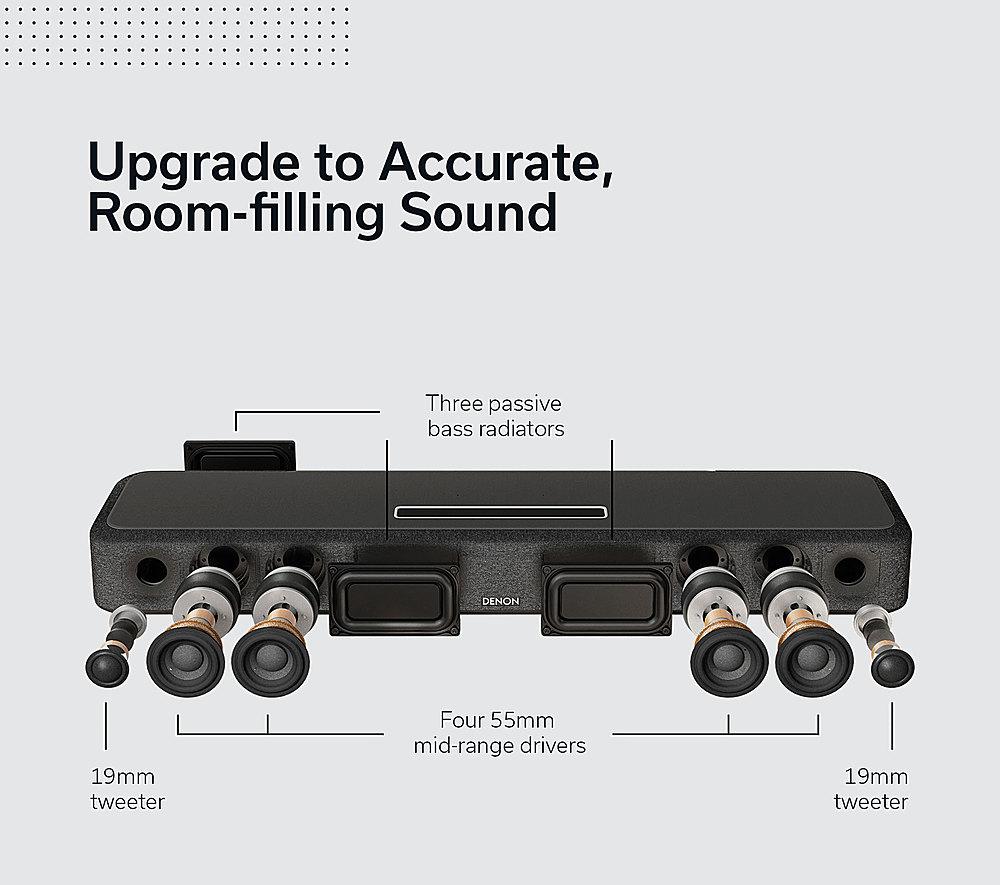
Denon's driver configuration reveals the premium approach: soft-dome tweeters handle high frequencies with more detail and less harshness than typical soundbar drivers, while the full-range drivers are larger and more capable than what you'll find in budget options. The three passive radiators (speakers without magnets that move in response to air pressure from the active drivers) help extend bass response without the bulk of a separate subwoofer.
The Denon Home Sound Bar 550 integrates with Denon's HEOS multiroom system, which has been around long enough to work reliably—unlike some newer smart audio platforms that still feel beta. Amazon Alexa is built-in, not just supported, meaning you can control volume, inputs, and playback with voice commands without needing additional devices.
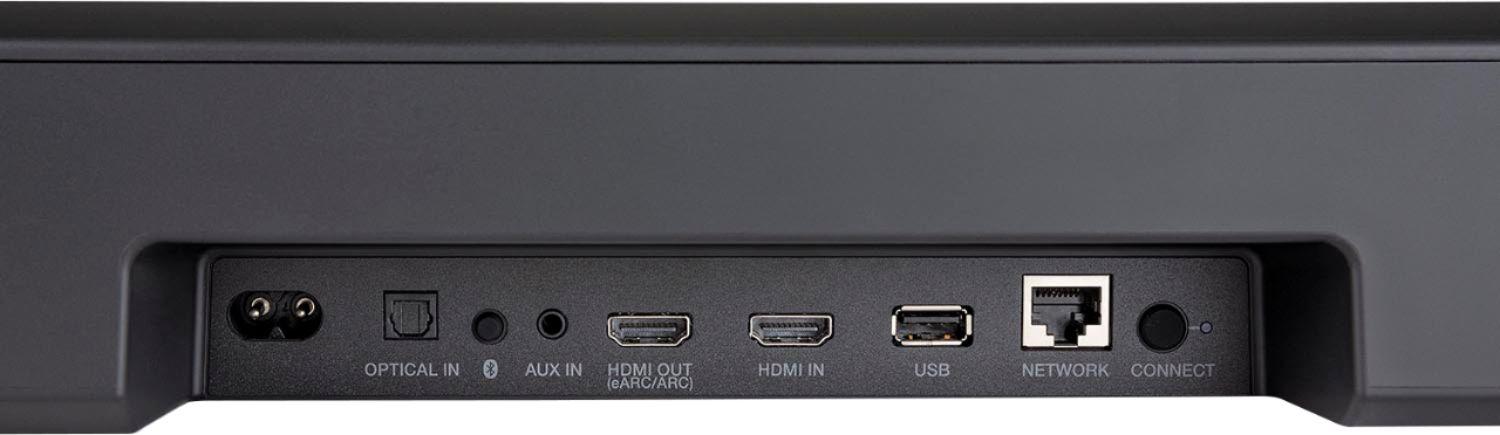
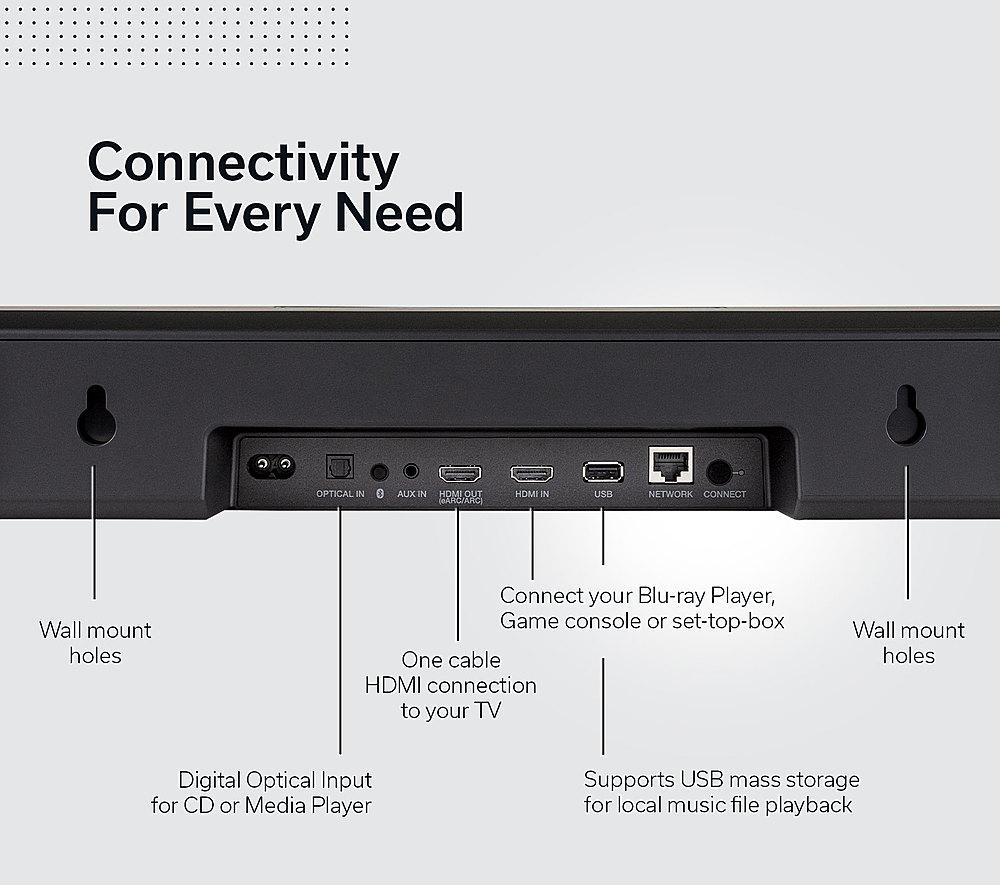
The HDMI eARC (enhanced Audio Return Channel) connection is crucial for modern TV integration. Unlike optical connections, which are limited to compressed surround formats, eARC can handle full-resolution Dolby TrueHD and DTS-HD Master Audio soundtracks. It also allows the soundbar to turn on automatically with your TV and control volume through your TV remote—small conveniences that become important in daily use.
For movie watching, the fundamental question is whether virtual surround can compete with actual surround speakers. Based on user reviews and professional assessments, the answer depends heavily on your room and expectations.
The Ultimea Aura A40 excels when you have proper speaker placement. Those rear surround speakers can reproduce discrete audio elements—footsteps behind you, helicopters panning overhead, ambient forest sounds—with convincing directionality. The dedicated subwoofer adds the kind of tactile bass response that makes action sequences genuinely exciting.
However, the Denon Home Sound Bar 550 offers more sophisticated dialogue processing. Its virtual center channel and dialogue enhancement features consistently deliver clearer speech, even when explosions or music threaten to overwhelm the mix. For TV watching, where dialogue clarity often matters more than surround effects, this can be the deciding factor.
The Denon's Dolby Atmos processing is genuinely impressive for a single soundbar. While it can't truly place sounds overhead like ceiling-mounted speakers would, it creates a convincing sense of height and space that surpasses traditional soundbar limitations.
This is where the approaches diverge most dramatically. The Ultimea Aura A40 is designed primarily for surround sound content, and its music performance reflects those priorities. While the 10-band equalizer and multiple presets help optimize for different genres, the fundamental tuning emphasizes impact and spatial effects over tonal accuracy.
The Denon Home Sound Bar 550 approaches music reproduction with audiophile sensibilities. The premium drivers and careful tuning deliver more natural frequency balance, better instrument separation, and superior detail retrieval. If you frequently stream music through your soundbar, the Denon's refined presentation becomes significant.
Competitive gamers often prioritize directional audio accuracy above all else—knowing exactly where footsteps or gunfire originated can mean the difference between victory and defeat. The Ultimea Aura A40's physical surround speakers provide unambiguous directional cues that virtual processing simply cannot match.
However, the Denon Home Sound Bar 550's lower latency through its HDMI connection can be crucial for gaming. Audio delay—where sound effects don't sync perfectly with on-screen action—becomes more noticeable and distracting in interactive content than in movies.
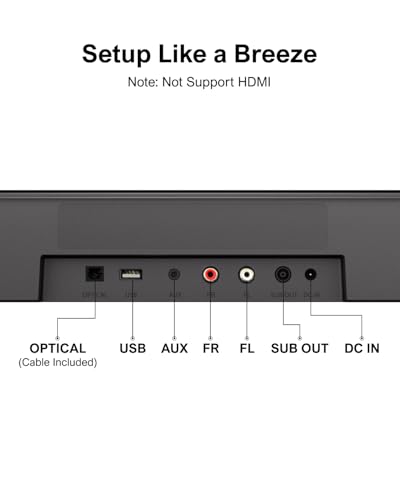
Here's where many buyers make a critical oversight: the Ultimea Aura A40 lacks HDMI inputs entirely, relying instead on optical, analog, and Bluetooth connections. While optical can handle surround sound, it's limited to compressed formats and doesn't support the automatic switching and volume control integration that HDMI provides.
Modern TVs increasingly rely on HDMI ARC/eARC for optimal soundbar integration. If your TV has limited optical output options or you want seamless operation, the Denon Home Sound Bar 550's HDMI connectivity becomes essential rather than optional.
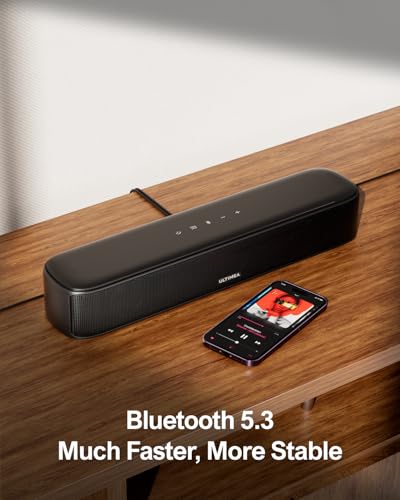
The Denon also supports Apple AirPlay 2, which provides higher-quality wireless streaming than Bluetooth and integrates with Apple's ecosystem for multi-room audio. While the Ultimea offers Bluetooth 5.3 (newer than Denon's 4.1 standard), AirPlay 2's superior audio quality and integration make it more useful for serious music listening.
The Ultimea Aura A40 works best in medium-sized rooms (roughly 150-250 square feet) where you can properly position the surround speakers. Smaller rooms don't benefit from the surround separation, while larger spaces may reveal the system's power limitations. You'll also need to run speaker cables, which some users find unacceptable in modern living spaces.
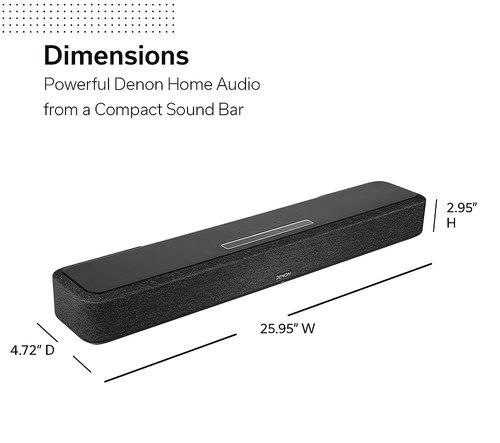
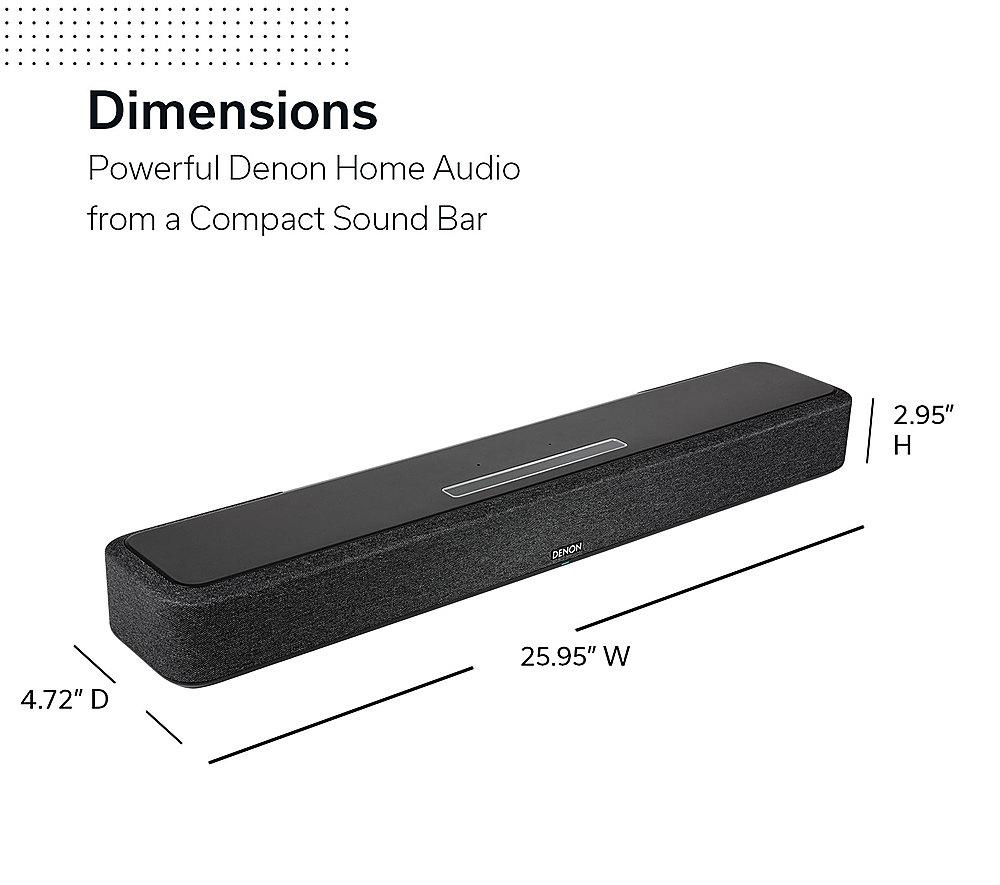
The Denon Home Sound Bar 550 adapts more easily to different room sizes and layouts. Its compact design fits under most TVs without overwhelming smaller spaces, and the virtual processing can create impressive spatial effects even when optimal speaker placement isn't possible.
After researching extensive user feedback and professional reviews, clear usage patterns emerge for each system.
Choose the Ultimea Aura A40 if you prioritize immersive movie and gaming experiences above all else. The authentic surround sound separation creates genuine excitement during action sequences and provides competitive gaming advantages that virtual processing cannot match. At its price point—roughly half the Denon's cost at time of writing—it represents exceptional value for buyers who can accommodate the surround speakers and don't require HDMI connectivity.
The system excels in dedicated home theater setups where movie watching is the primary use case. If you're building a entertainment-focused room where running speaker cables isn't problematic, the Ultimea delivers performance that would cost significantly more from traditional audio brands.
Choose the Denon Home Sound Bar 550 if you value refinement, convenience, and smart home integration over raw surround impact. Its sophisticated processing, premium components, and seamless TV integration create a more polished daily-use experience. The higher price reflects genuine engineering advantages: better drivers, more advanced processing, and proven smart home compatibility.
The Denon makes sense for users who want their audio system to disappear into their living space while still providing noticeably better sound than TV speakers. It's particularly appropriate for apartments or homes where aesthetic considerations and space constraints make traditional surround speakers impractical.
The choice ultimately depends on your priorities and constraints. If your TV setup can accommodate surround speakers and you primarily watch movies or play games, the Ultimea Aura A40's true surround experience provides more entertainment value per dollar spent. The physical separation of audio elements creates immersion that virtual processing, regardless of sophistication, cannot fully replicate.
However, if you need HDMI connectivity for proper TV integration, prioritize music performance, or value the convenience of a single-unit installation, the Denon Home Sound Bar 550 justifies its premium pricing through superior components, processing, and integration features.
Neither system represents a compromise—they're optimized for different use cases. The Ultimea maximizes entertainment impact at its price point, while the Denon provides refined performance and convenience for users willing to pay for premium execution. Understanding which benefits matter most to your specific situation will guide you to the right choice.
| Ultimea Aura A40 7.1 Channel Soundbar System | Denon Home Sound Bar 550 Soundbar |
|---|---|
| Channel Configuration - Determines surround sound authenticity | |
| True 7.1 with 4 physical surround speakers + subwoofer | 4.0 virtual surround with Dolby Atmos processing |
| Total Speaker Count - More drivers can mean better sound separation | |
| 8 speakers: 3 in soundbar, 4 surround, 1 subwoofer | 6 drivers: 4 full-range, 2 tweeters in single unit |
| Peak Power Output - Affects maximum volume and dynamic range | |
| 330W total system power across all speakers | Lower wattage but premium driver quality |
| HDMI Connectivity - Essential for modern TV integration | |
| No HDMI (Optical, AUX, USB, Bluetooth only) | HDMI eARC input/output with 4K HDR passthrough |
| Subwoofer Configuration - Critical for bass impact | |
| Dedicated 4-inch wired subwoofer with BassMX technology | 3 passive radiators integrated into main unit |
| Smart Features - Convenience and ecosystem integration | |
| Ultimea Smart App with 121 EQ presets, 10-band equalizer | Built-in Alexa, HEOS multiroom, Apple AirPlay 2 |
| Installation Requirements - Space and setup complexity | |
| Requires surround speaker placement and cable management | Single soundbar unit, wall-mountable |
| Wireless Streaming Quality - Music playback capability | |
| Bluetooth 5.3 only | Bluetooth 4.1 + Apple AirPlay 2 (higher quality) |
| Audio Format Support - Compatibility with premium content | |
| Dolby Digital, DTS via optical (compressed only) | Dolby Atmos, DTS:X, TrueHD via HDMI (uncompressed) |
| Recommended Room Size - Performance optimization | |
| Medium rooms (108-270 sq ft) for proper surround placement | Adaptable to small/medium spaces, compact design |
| Dialogue Enhancement - TV and movie clarity | |
| Basic voice mode in EQ presets | Dedicated dialogue enhancement processing |
| Value Proposition - Performance per dollar at time of writing | |
| Complete 7.1 system at budget soundbar pricing | Premium single-unit with audiophile components |
The Ultimea Aura A40 7.1 Channel Soundbar System provides superior surround sound immersion with four physical surround speakers that create authentic directional audio. The Denon Home Sound Bar 550 Soundbar uses advanced virtual processing with Dolby Atmos, which sounds impressive but cannot match the spatial separation of actual surround speakers placed around your room.
Yes, HDMI connectivity is essential for modern TV integration. The Denon Home Sound Bar 550 Soundbar includes HDMI eARC for seamless volume control and automatic switching, while the Ultimea Aura A40 lacks HDMI entirely, relying only on optical and Bluetooth connections which limits compatibility with newer TVs.
For dedicated home theater use, the Ultimea Aura A40 7.1 Channel Soundbar System excels with its physical surround speakers and dedicated subwoofer that deliver room-filling bass and precise directional effects. However, the Denon Home Sound Bar 550 offers superior dialogue clarity and works better in spaces where surround speaker placement isn't practical.
The Ultimea Aura A40 uses physical surround speakers placed around your room for authentic audio positioning, while the Denon Home Sound Bar 550 Soundbar creates virtual surround effects through audio processing from a single unit. Physical surround provides more convincing directional audio, but virtual surround offers greater convenience and cleaner installation.
The Ultimea Aura A40 7.1 Channel Soundbar System includes a dedicated 4-inch subwoofer that delivers more impactful, room-shaking bass for action movies and music. The Denon Home Sound Bar 550 relies on passive radiators for bass extension, providing tighter but less powerful low-end response without an optional subwoofer.
The Ultimea Aura A40 features an advanced app with 121 EQ presets and individual surround speaker level adjustments, offering extensive customization typically found in expensive receivers. The Denon Home Sound Bar 550 Soundbar integrates with the HEOS app for multiroom control but focuses more on smart home features than audio tweaking.
The Denon Home Sound Bar 550 Soundbar provides superior music reproduction with premium drivers, refined tuning, and Apple AirPlay 2 support for high-quality wireless streaming. The Ultimea Aura A40 prioritizes surround effects over music fidelity, though its 10-band equalizer allows some optimization for different genres.
The Denon Home Sound Bar 550 has built-in Amazon Alexa for voice control of volume, inputs, and playback. The Ultimea Aura A40 7.1 Channel Soundbar System doesn't include voice assistant integration, requiring manual control through its remote or mobile app.
The Denon Home Sound Bar 550 Soundbar offers simpler installation as a single unit that connects via HDMI, while the Ultimea Aura A40 requires positioning four surround speakers and running cables throughout your room. The Denon is ideal for renters or those wanting minimal visual impact.
The Ultimea Aura A40 7.1 Channel Soundbar System excels for competitive gaming with precise directional audio from physical surround speakers, helping locate enemies and environmental cues. The Denon Home Sound Bar 550 offers lower latency through HDMI connection but cannot match the positional accuracy of discrete surround speakers.
The Ultimea Aura A40 provides exceptional value as a complete 7.1 surround system typically costing much more from traditional brands. The Denon Home Sound Bar 550 Soundbar commands a premium price but justifies it through superior build quality, smart features, and refined audio processing for users prioritizing convenience and music performance.
The Ultimea Aura A40 7.1 Channel Soundbar System performs optimally in medium-sized rooms where surround speakers can be properly positioned, while the Denon Home Sound Bar 550 adapts to various room sizes and works particularly well in smaller spaces or apartments where physical surround speakers aren't practical.
We've done our best to create useful and informative comparisons to help you decide what product to buy. Our research uses advanced automated methods to create this comparison and perfection is not possible - please contact us for corrections or questions. These are the sites we've researched in the creation of this article: youtube.com - walmart.com - youtube.com - ultimea.com - homestudiobasics.com - ultimea.co - youtube.com - eu.ultimea.com - walmart.com - device.report - bestbuy.com - manuals.plus - community.ultimea.com - judge.me - support.ultimea.com - geekmaxi.com - provantage.com - bestbuy.com - youtube.com - uk.whatgeek.com - consumerreports.org - soundandvision.com - crutchfield.com - rtings.com - crutchfield.com - gzhls.at - denon.com - walmart.com - youtube.com - whathifi.com - bestbuy.com

Privacy Policy
Terms and Conditions - Affiliate Policy
Home Security
© Copyright 2008-2026.
11816 Inwood Rd #1211, Dallas, TX 75244