




The soundbar market has evolved dramatically over the past decade, splitting into two distinct philosophies: systems that use multiple physical speakers for true surround sound, and premium units that rely on advanced digital processing to simulate immersive audio. This fundamental difference shapes everything from pricing to performance, and it's exactly what we see when comparing the Ultimea Aura A40 against the Samsung HW-S700D.
At the time of writing, these two soundbars represent vastly different approaches to solving the same problem—how to get great surround sound without the complexity of a full home theater system. The Ultimea Aura A40 takes the physical approach with four discrete surround speakers, while the Samsung HW-S700D relies on sophisticated virtual processing and smart automation. Understanding which approach works better for your situation requires diving deep into how each system actually works.
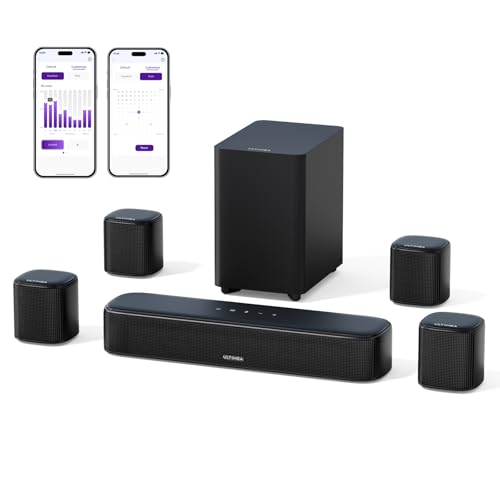
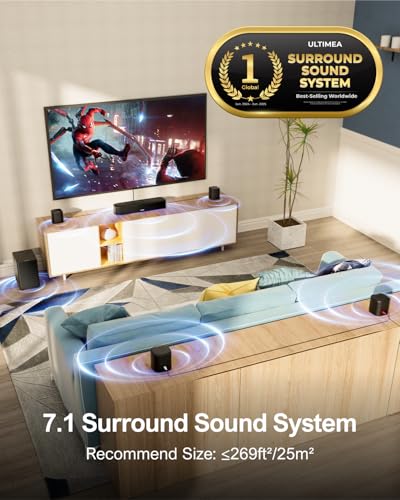
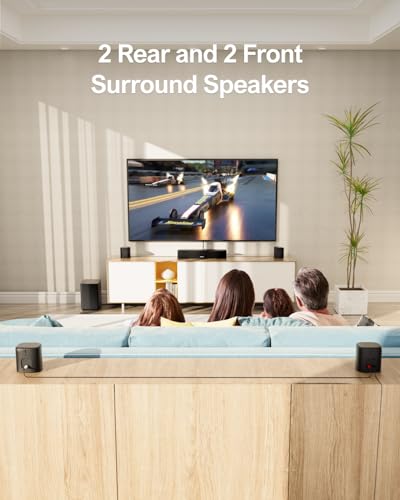
The biggest difference between these systems lies in how they create surround sound. The Ultimea Aura A40, released in 2024, uses what's called a "7.1 virtual surround" configuration—but don't let the "virtual" part fool you. This system includes four physical surround speakers that you place around your room, creating genuine directional audio. When a helicopter flies overhead in a movie, you'll hear it move from speaker to speaker in real space.
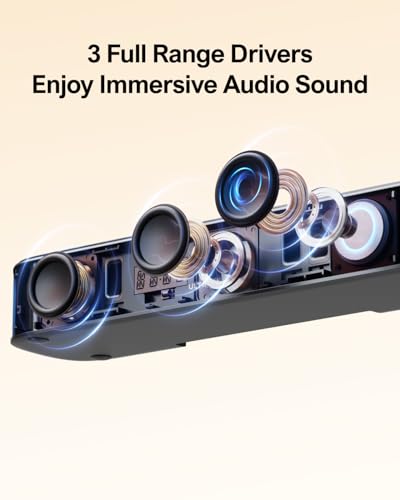
The system's SurroundX technology works by coordinating all eight speakers (three in the main soundbar, four surround speakers, and one subwoofer) to create what Ultimea claims is 99.99% audio detail accuracy. While that specific number is marketing speak, the underlying concept is solid—physical speakers positioned around your listening area will always create more convincing directional effects than virtual processing.
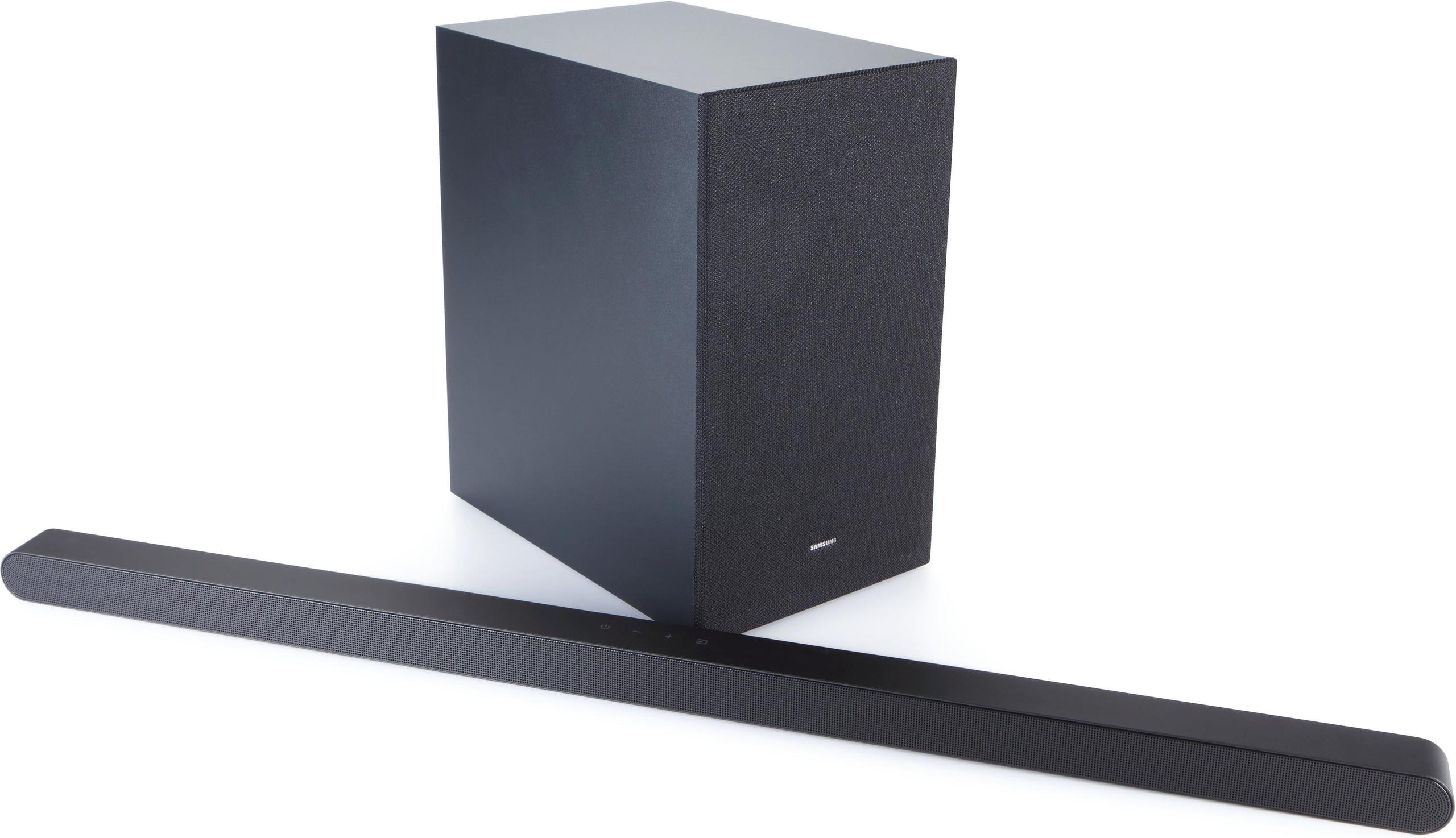
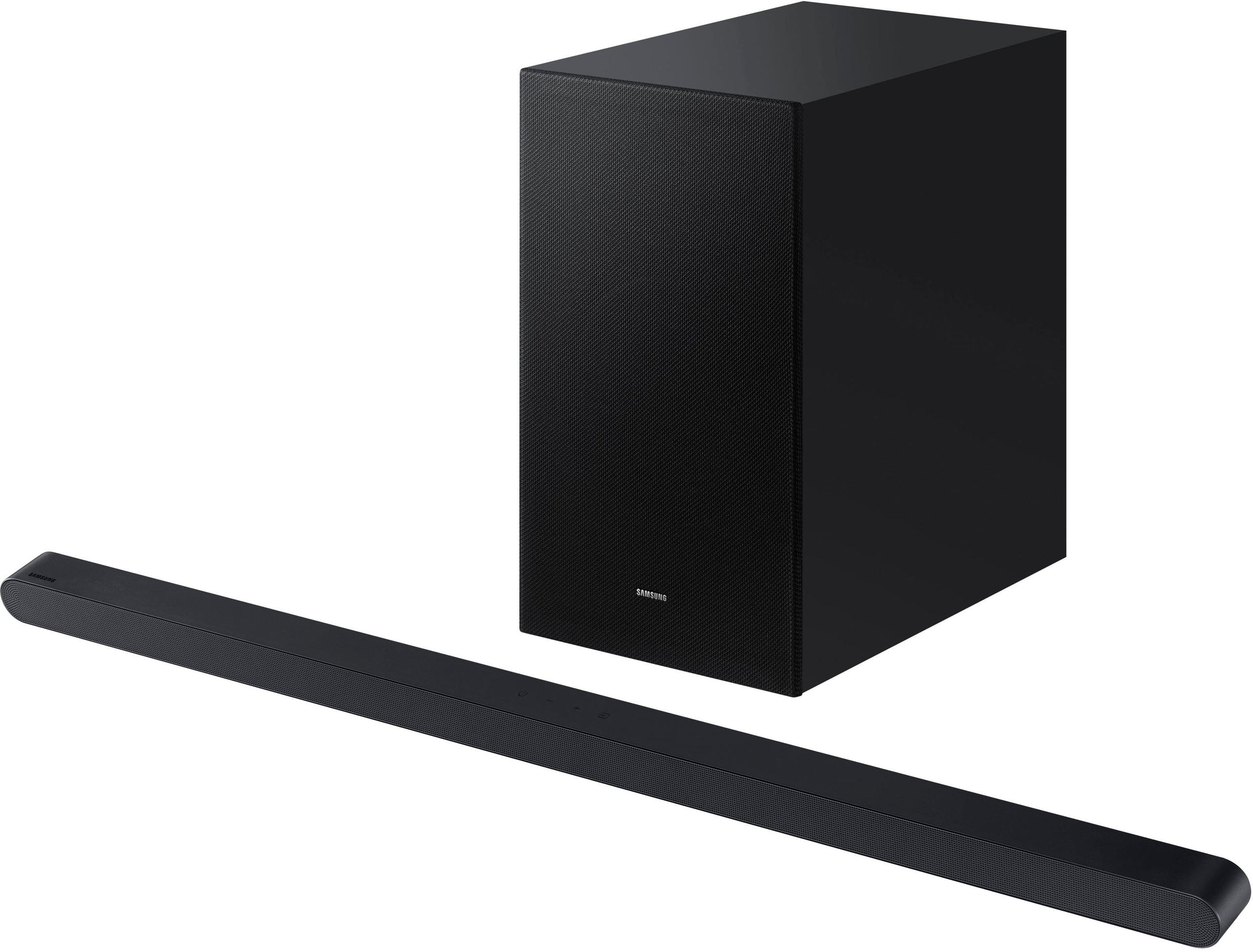
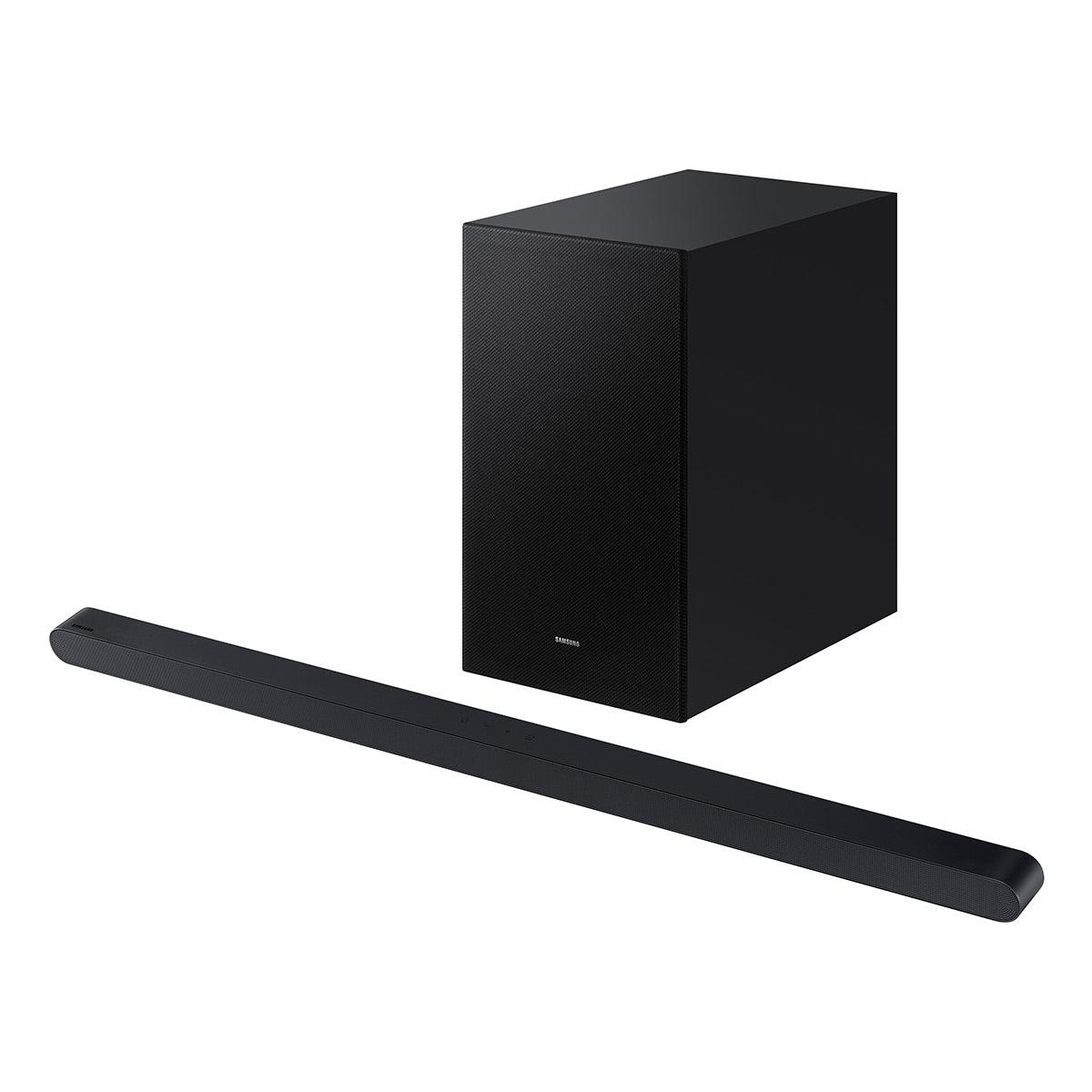
In contrast, the Samsung HW-S700D, also from 2024, uses a 3.1 channel setup with sophisticated digital signal processing (DSP) to simulate surround effects. DSP is essentially computer software that manipulates audio signals to trick your brain into perceiving sounds coming from directions where no speakers exist. Samsung's implementation includes Dolby Atmos processing, which adds height information to audio tracks, and DTS Virtual:X, which creates the illusion of sounds moving around and above you.
The Samsung's approach has evolved significantly since early virtual surround systems from the 2010s. Modern processors can analyze room acoustics in real-time and adjust their algorithms accordingly, making virtual surround much more convincing than it used to be. Samsung's SpaceFit Sound technology exemplifies this evolution—it uses built-in microphones to analyze your room's acoustic properties and automatically optimizes the audio output.
When it comes to creating that "you're in the movie" feeling, the Ultimea Aura A40 has a fundamental advantage through physics. Having actual speakers behind and beside you means sound genuinely comes from those directions. In our research of user reviews, this translates to notably better performance in action movies and gaming scenarios where directional audio cues matter.
The system's 330W peak power rating, while not directly comparable to RMS ratings, suggests plenty of headroom for dynamic content. Peak power represents the maximum instantaneous power output, which matters for those explosive movie moments that really test a system's capabilities. The frequency response of 65Hz to 18kHz covers most audible content well, though it won't reproduce the deepest bass frequencies that some music genres demand.
The Samsung HW-S700D, however, excels in different ways. Its dedicated center channel—a single speaker optimized specifically for dialogue reproduction—consistently delivers clearer speech than the Ultimea's approach of using the main soundbar's drivers for center channel duties. This matters more than you might think: dialogue clarity is often the difference between following a movie effortlessly and constantly reaching for the remote to adjust volume.
Samsung's 250W RMS power rating is more conservative but represents sustained, continuous power delivery rather than peak output. RMS (Root Mean Square) power gives you a better sense of how loud a system can play consistently without distortion, making it more useful for comparing real-world performance.
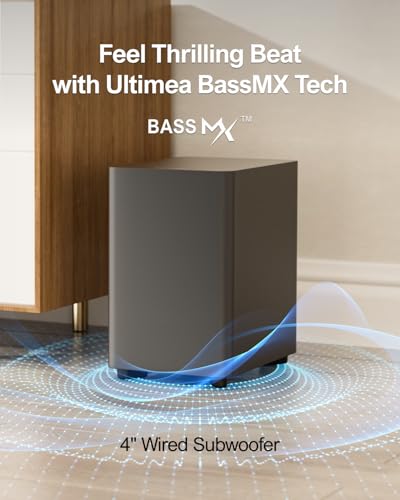
Both systems include subwoofers, but they take different approaches. The Ultimea Aura A40 uses a wired 4-inch subwoofer with BassMX technology, Ultimea's proprietary bass enhancement processing. The wired connection ensures consistent performance without the potential interference issues that can plague wireless subwoofers in crowded wireless environments.
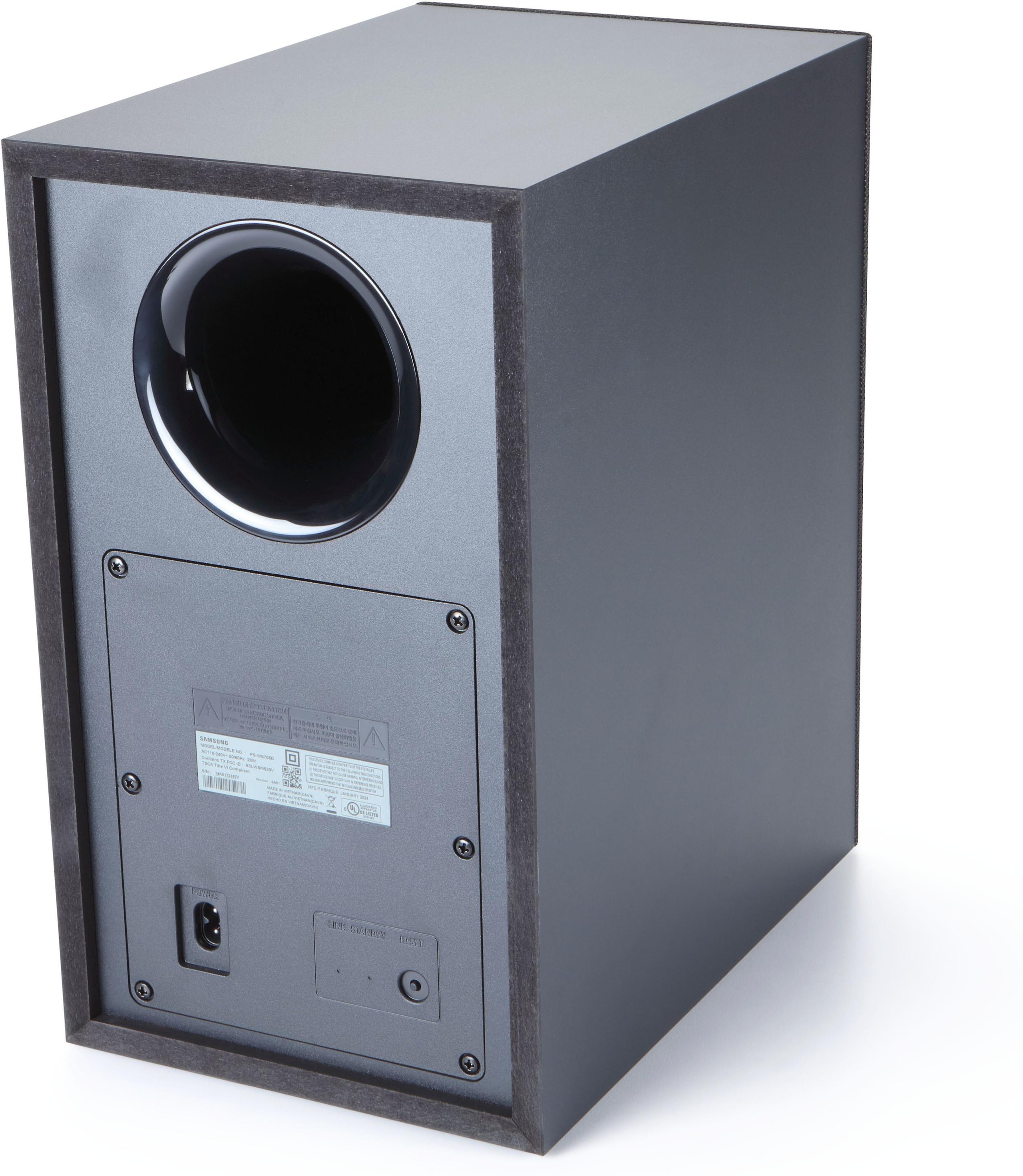
The Samsung HW-S700D features a larger 6-inch wireless subwoofer that connects automatically to the main soundbar. Larger drivers generally move more air and can reproduce lower frequencies more effectively, which explains why reviews consistently praise the Samsung's bass response. The wireless design also offers more placement flexibility—you can position the subwoofer wherever it sounds best in your room without worrying about cable routing.
Based on specifications and user feedback, the Samsung likely extends deeper into bass frequencies, though both systems should handle typical movie and music content adequately. The choice between wired and wireless connection often comes down to your specific room layout and how much you value setup simplicity versus guaranteed connectivity.
This is where the Samsung HW-S700D shows its premium positioning most clearly. Its dedicated center channel speaker is specifically engineered for human voice reproduction, with driver characteristics optimized for the frequency range where speech occurs. Combined with Samsung's Active Voice Amplifier technology, which automatically boosts dialogue during loud scenes, this creates notably clearer speech reproduction.
The Ultimea Aura A40 handles center channel duties through its main soundbar speakers, using processing to direct dialogue to the appropriate drivers. While this works adequately, it can't match the focused performance of hardware designed specifically for the task. However, the Ultimea's extensive EQ capabilities do allow you to boost midrange frequencies manually to improve dialogue clarity if needed.
For anyone who frequently watches content with complex soundtracks—think Christopher Nolan films or action movies with constant background music—this difference becomes significant. The Samsung's approach makes it easier to follow conversations without constantly adjusting volume levels.
The Samsung HW-S700D represents the modern smart home approach to audio. Its SpaceFit Sound technology automatically analyzes your room and adjusts audio output accordingly, removing the guesswork from optimization. This matters because room acoustics dramatically affect how any audio system sounds—hard surfaces create reflections, soft furnishings absorb high frequencies, and room size affects how bass builds up.
Samsung's integration with their SmartThings ecosystem means the soundbar can communicate with other Samsung devices, coordinate with compatible Samsung TVs through Q-Symphony (where the TV's speakers work alongside the soundbar), and accept voice commands through built-in Alexa or optional Google Assistant. The system also supports modern streaming standards like AirPlay 2 and Chromecast, making it easy to play music directly from your phone or tablet.
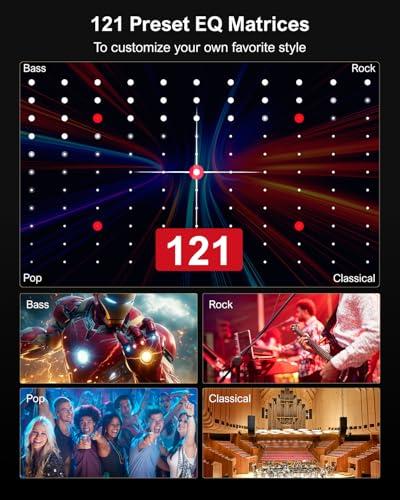
The Ultimea Aura A40 takes the opposite approach with extensive manual control. Its companion app provides 121 preset EQ matrices (pre-configured sound profiles for different music genres), a 10-band equalizer for precise frequency adjustment, and independent control over all speaker channels. This level of customization appeals to audio enthusiasts who want to fine-tune their system's sound signature.
The Ultimea also supports over-the-air (OTA) updates, meaning new features and improvements can be added after purchase. This extends the useful life of the system and shows the manufacturer's commitment to ongoing development.
Setting up the Ultimea Aura A40 requires more planning than most soundbars. You'll need to position four surround speakers around your listening area, run cables (though the rear-right speaker can connect wirelessly to reduce cable clutter), and potentially mount speakers on walls or find appropriate shelf space. The system works best in medium-sized rooms (roughly 10-25 square meters) where you have flexibility in speaker placement.
The reward for this extra effort is authentic surround sound that scales well with room size. Larger rooms that might overwhelm a single-soundbar system can benefit from the Ultimea's distributed speaker approach, as each surround speaker contributes to overall coverage.
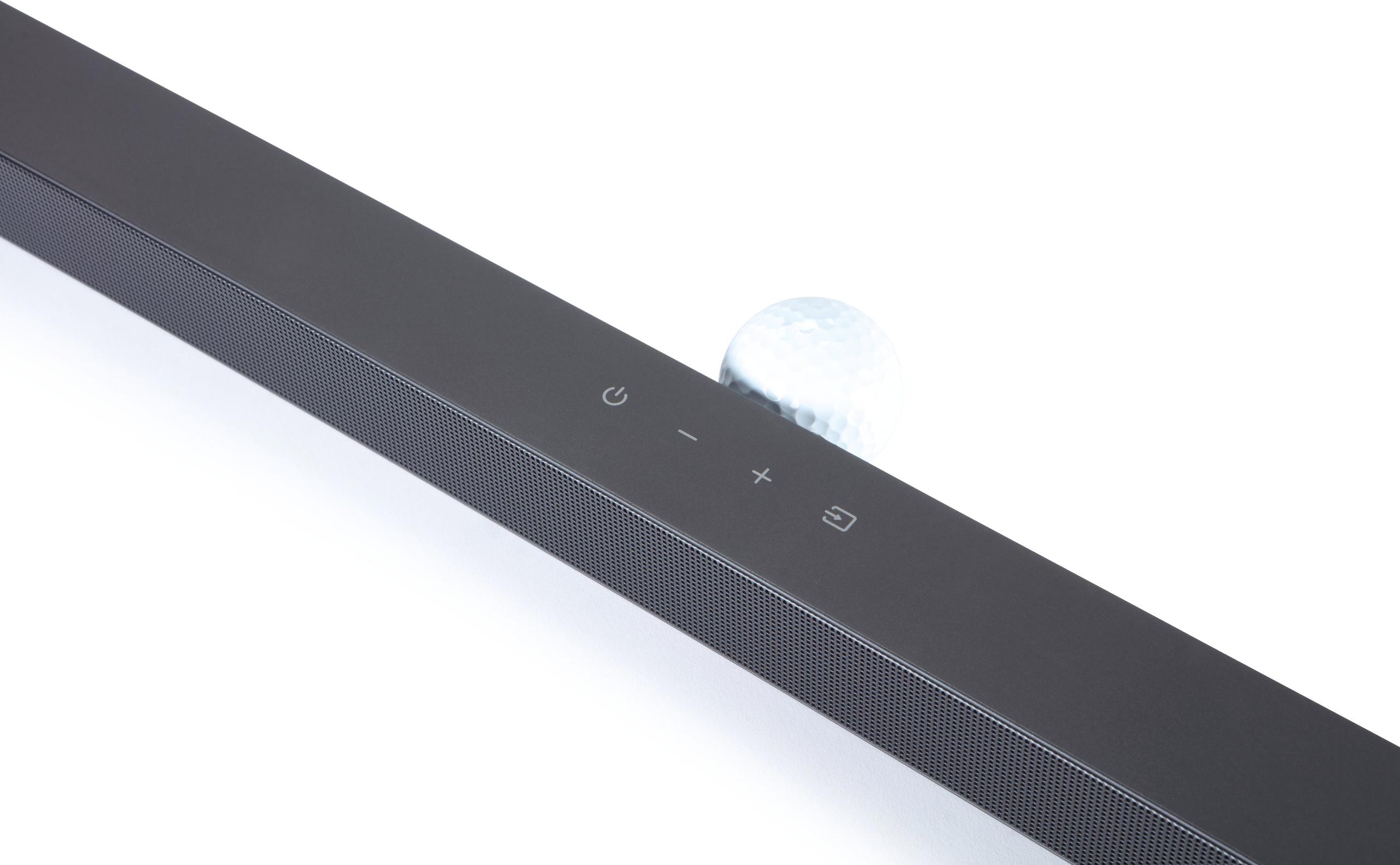
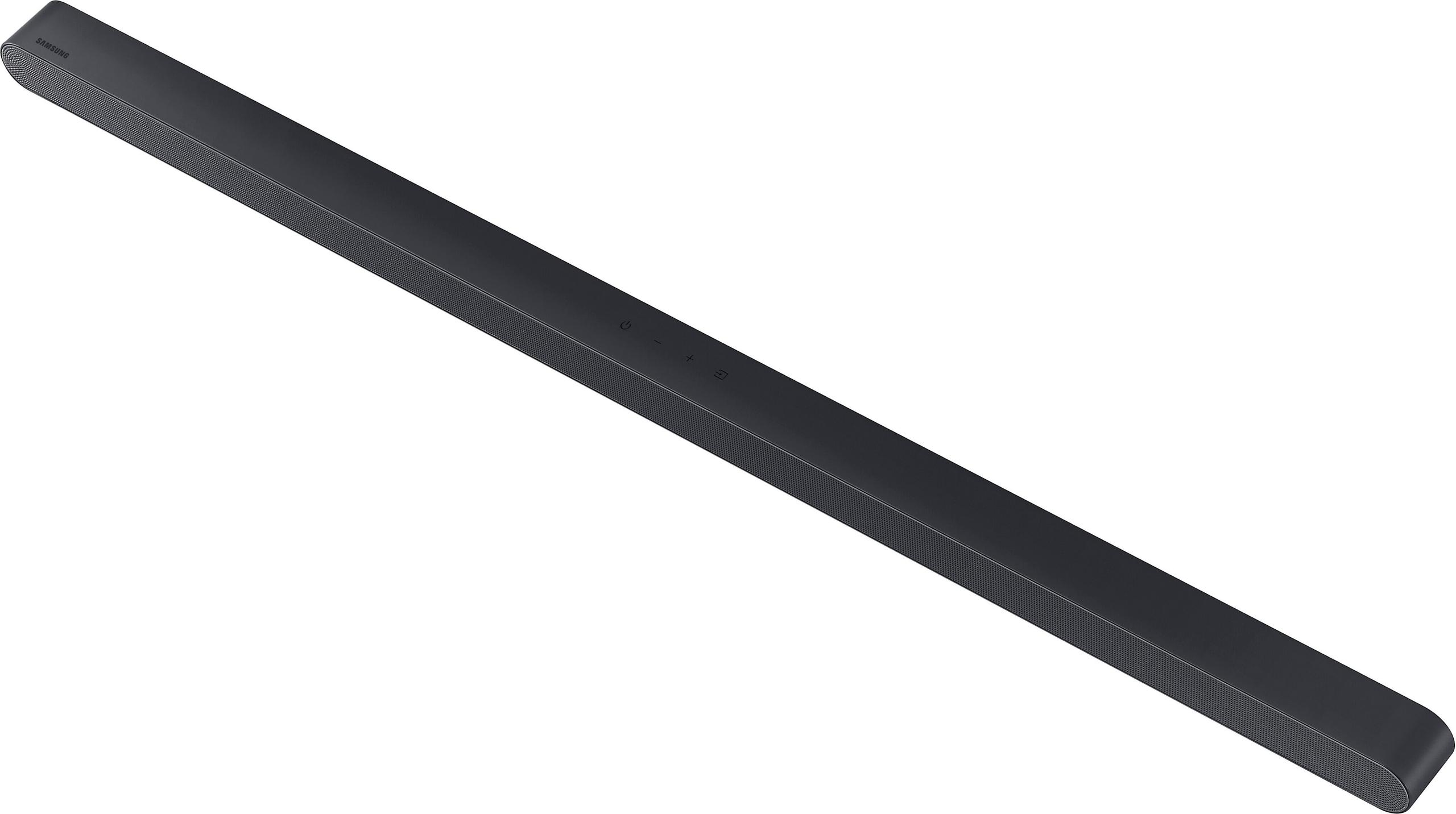
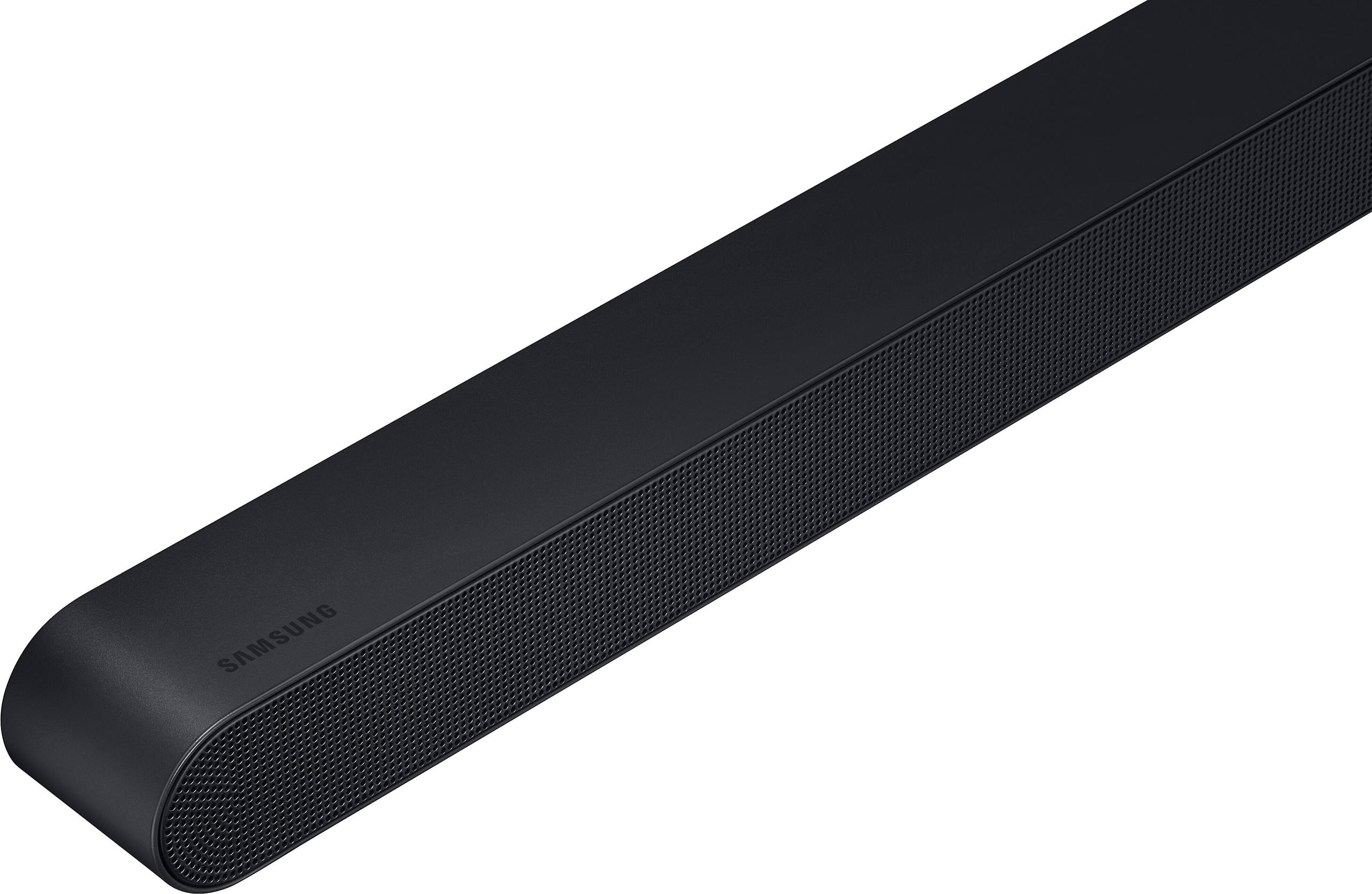
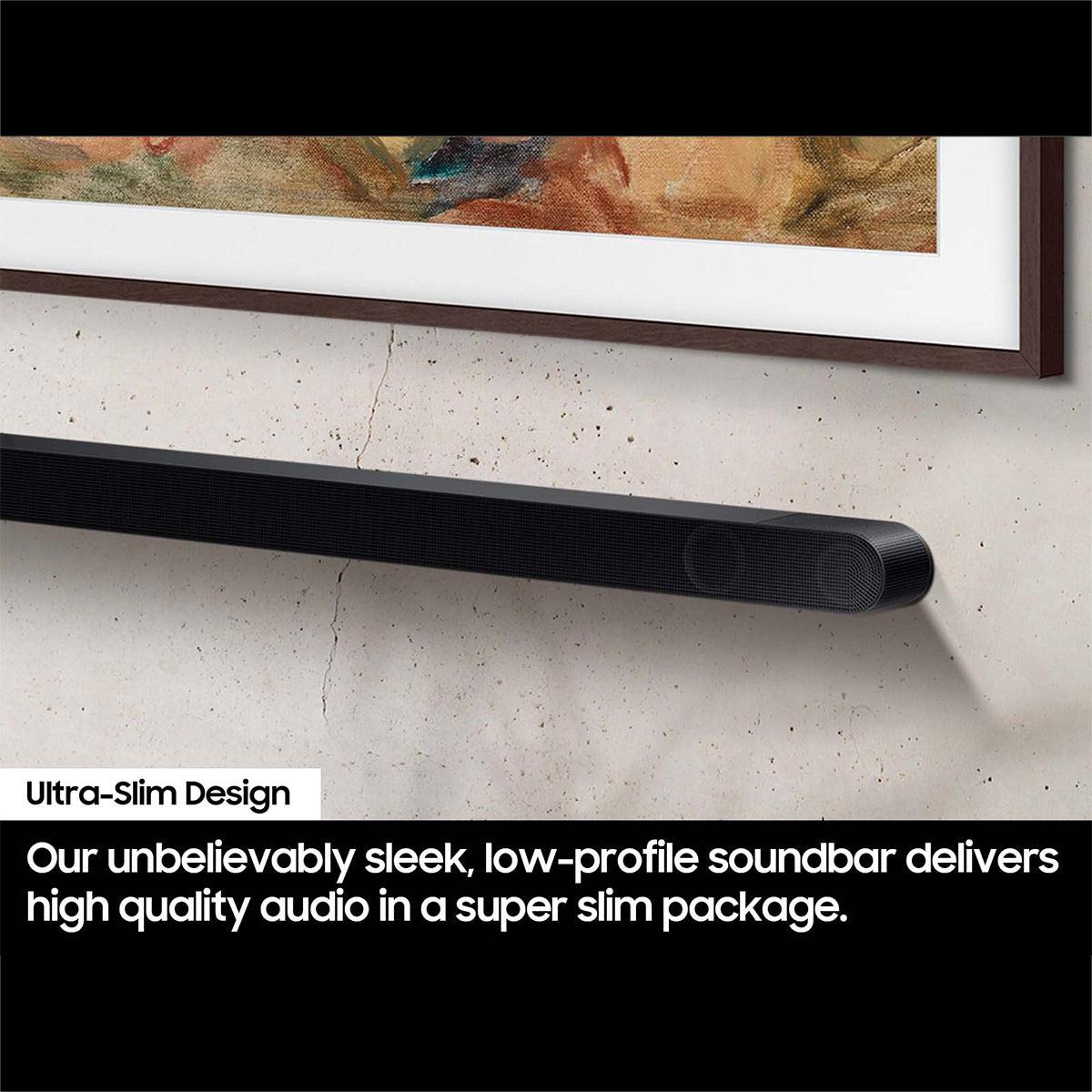
The Samsung HW-S700D prioritizes simplicity with its ultra-slim design—just 1.4 inches tall—that fits seamlessly under wall-mounted TVs without blocking sensors or dominating your entertainment center. Setup involves connecting a single HDMI cable to your TV and placing the wireless subwoofer somewhere in the room. Samsung's SpaceFit Sound then handles room optimization automatically.
This simplicity comes with trade-offs. The Samsung works best in smaller to medium-sized rooms where its virtual processing can effectively create surround effects. In very large spaces, the lack of physical rear speakers becomes more noticeable.
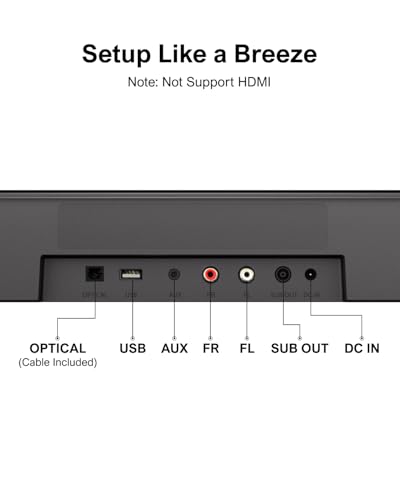
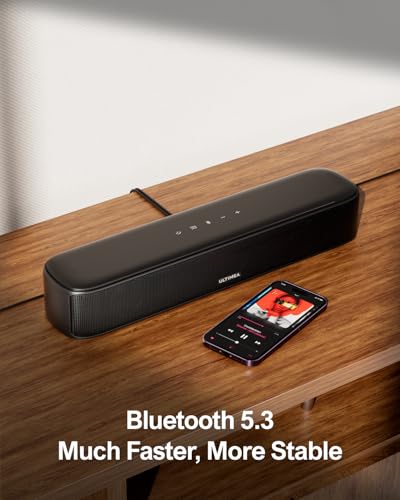
Both systems have connectivity limitations that potential buyers should understand. The Ultimea Aura A40 lacks HDMI connectivity entirely, relying on optical digital audio, analog AUX, USB, and Bluetooth connections. This means you can't pass 4K video through the soundbar, and you're limited to compressed audio formats that optical connections support.
For many users, this isn't a dealbreaker—most modern TVs can pass audio from their built-in streaming apps through optical output. However, if you have multiple HDMI sources (game consoles, streaming devices, Blu-ray players), you'll need to connect them directly to your TV and rely on the TV to pass audio to the soundbar.
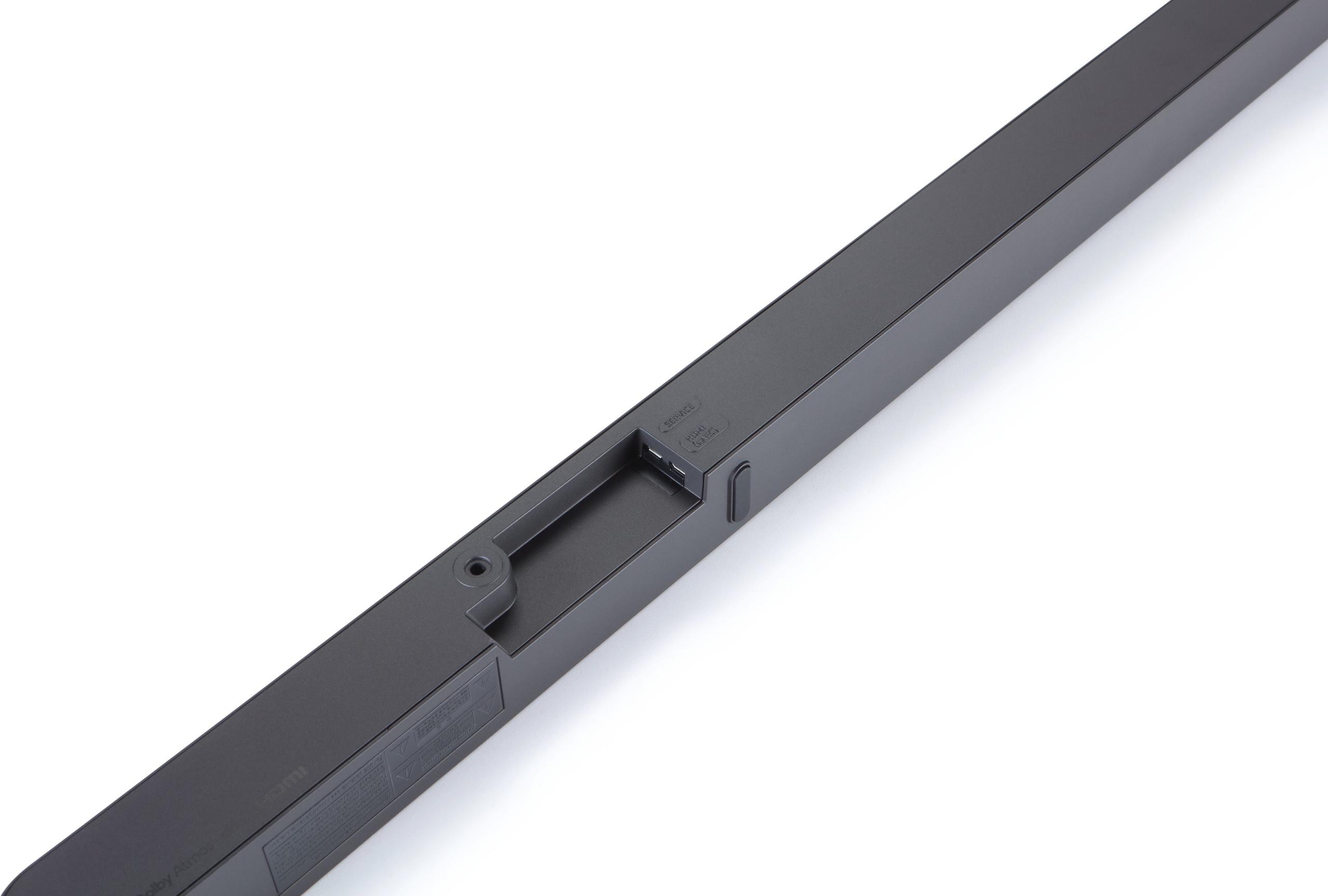
The Samsung HW-S700D includes HDMI eARC (enhanced Audio Return Channel), which supports higher-bandwidth audio formats and enables control integration with your TV's remote. However, Samsung made the puzzling decision to include only one HDMI port configured as an output, with no HDMI inputs for source devices. They also eliminated optical digital input, which could create compatibility issues with older TVs or devices.
This means the Samsung works best as part of a TV-centric setup where all your sources connect to the TV, and the TV passes audio to the soundbar. While this matches most people's usage patterns, it's less flexible than soundbars with multiple HDMI inputs.
For gaming enthusiasts, the Ultimea Aura A40's physical surround speakers provide genuine advantages. In competitive games, being able to precisely locate enemies through audio cues can improve your performance. The system's dedicated Game EQ mode and adjustable surround levels let you fine-tune directional audio to your preferences.
The Samsung HW-S700D includes Game Pro mode, which Samsung claims optimizes processing for gaming scenarios. However, virtual surround processing, while impressive, can't match the precise directional cues that physical speakers provide. For casual gaming, the difference might not matter, but competitive players often prefer the accuracy of discrete channels.
Both systems handle movie watching well, but in different ways. The Ultimea creates more convincing spatial effects for action sequences, while the Samsung delivers clearer dialogue and more refined overall sound balance. Your preference likely depends on whether you prioritize immersion or clarity.
At the time of writing, the Ultimea Aura A40 represents exceptional value for physical surround sound. Getting four discrete surround speakers, a subwoofer, and extensive customization options at this price point would have been impossible just a few years ago. The system's OTA update capability suggests Ultimea intends to support it long-term, potentially adding features and improvements over time.
The Samsung HW-S700D commands a premium price but delivers premium features. Its automatic room calibration, superior dialogue reproduction, and smart home integration justify the higher cost for users who value convenience and integration over raw performance per dollar.
Consider the total cost of ownership as well. The Samsung's wireless design and automated setup mean lower installation costs if you'd otherwise hire someone for setup. The Ultimea's multiple speakers and cables might require professional installation in some scenarios, adding to the total investment.
Choose the Ultimea Aura A40 if you're an audio enthusiast who enjoys customization, has a room layout that accommodates four speakers, and prioritizes surround sound immersion over convenience. This system particularly appeals to gamers, action movie fans, and anyone who wants maximum performance per dollar. The extensive EQ options and manual controls make it ideal for users who enjoy fine-tuning their audio experience.
The Samsung HW-S700D better serves users who want premium sound quality with minimal effort, prioritize dialogue clarity, or need a system that integrates seamlessly with modern smart home setups. Samsung TV owners get additional benefits through Q-Symphony and wireless Dolby Atmos support, making this system particularly attractive within Samsung's ecosystem.
Both soundbars represent significant improvements over TV speakers and offer genuine value in their respective market segments. The choice ultimately depends on whether you prefer the hands-on approach of physical surround sound or the automated sophistication of premium virtual processing. Understanding these fundamental differences helps ensure you'll be happy with your decision years down the road.
| Ultimea Aura A40 7.1 Channel Soundbar System | Samsung HW-S700D 3.1 Channel Slim Soundbar |
|---|---|
| Channel Configuration - Determines surround sound authenticity and immersion | |
| 7.1 virtual with 4 physical surround speakers | 3.1 with virtual surround processing |
| Power Output - Affects maximum volume and dynamic range | |
| 330W peak power across all speakers | 250W RMS (more conservative but sustained rating) |
| Subwoofer Design - Controls bass depth and placement flexibility | |
| 4-inch wired subwoofer with BassMX technology | 6-inch wireless subwoofer (larger driver, flexible placement) |
| Smart Features - Modern convenience vs manual control | |
| Extensive manual EQ with 121 presets, 10-band equalizer, OTA updates | SpaceFit Sound auto-calibration, voice control, streaming integration |
| Connectivity Options - Determines compatibility with your devices | |
| Optical, AUX, USB, Bluetooth 5.3 (no HDMI) | HDMI eARC only (no inputs, no optical) |
| Physical Design - Installation complexity and aesthetic impact | |
| 4 surround speakers require room placement and cables | Ultra-slim 1.4" height, single soundbar with wireless sub |
| Dialogue Enhancement - Critical for following conversations in movies | |
| Voice EQ mode with manual center channel adjustment | Dedicated center speaker with Active Voice Amplifier |
| Room Calibration - Automatic vs manual sound optimization | |
| Manual tuning through extensive app controls | Automatic SpaceFit Sound using built-in microphones |
| Gaming Performance - Directional audio accuracy for competitive advantage | |
| Physical rear speakers provide true directional cues | Game Pro mode with virtual processing |
| Streaming and Voice Control - Smart home integration capabilities | |
| Basic Bluetooth connectivity only | AirPlay 2, Chromecast, Alexa, Google Assistant support |
| Setup Complexity - Time and effort required for installation | |
| Multi-speaker placement with cable management | Plug-and-play with automatic wireless pairing |
| Value Proposition - Performance per dollar and target audience | |
| Maximum surround immersion at budget price point | Premium features and convenience at higher cost |
The Ultimea Aura A40 provides superior surround sound immersion through four physical surround speakers that create genuine directional audio. The Samsung HW-S700D relies on virtual surround processing, which is convenient but cannot match the authentic spatial positioning of actual speakers placed around your room.
The Ultimea Aura A40 uses a 7.1 virtual configuration with physical surround speakers, while the Samsung HW-S700D features a 3.1 setup with left, right, center, and subwoofer channels. The 7.1 system creates more immersive surround effects, but the 3.1 system offers clearer dialogue through its dedicated center channel.
The Samsung HW-S700D is much easier to install with its single soundbar design and wireless subwoofer that pairs automatically. The Ultimea Aura A40 requires positioning four surround speakers around your room and managing multiple cables, making setup more complex but offering greater customization potential.
Both systems offer gaming benefits, but differently. The Ultimea Aura A40 excels for competitive gaming with physical rear speakers providing accurate directional audio cues. The Samsung HW-S700D includes Game Pro mode for optimized virtual processing, which works well for casual gaming but lacks the precision of discrete speakers.
The Samsung HW-S700D delivers superior dialogue clarity through its dedicated center channel speaker and Active Voice Amplifier technology. While the Ultimea Aura A40 offers manual EQ adjustments to improve speech, it cannot match the focused dialogue performance of a purpose-built center channel.
The Ultimea Aura A40 includes optical, AUX, USB, and Bluetooth connections but lacks HDMI entirely. The Samsung HW-S700D features HDMI eARC for high-quality audio and TV remote integration, plus built-in Wi-Fi for streaming, but eliminates optical and analog inputs.
The Samsung HW-S700D is ideal for small rooms with its ultra-slim design and automatic SpaceFit Sound calibration. The Ultimea Aura A40 requires adequate space for four speaker placement and works best in medium-sized rooms where you can properly position all components.
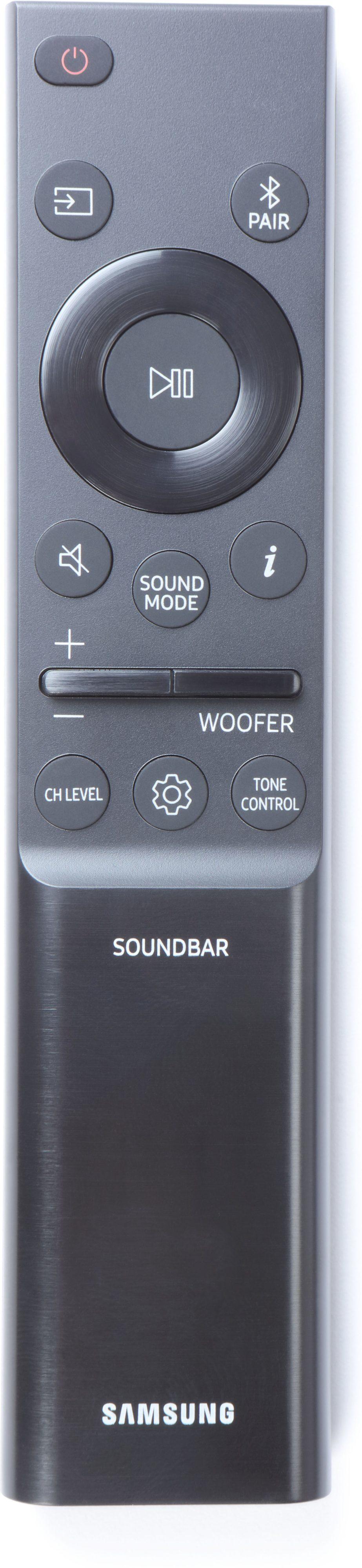
Only the Samsung HW-S700D supports TV remote control through its HDMI eARC connection, allowing seamless integration with your television. The Ultimea Aura A40 requires its own remote control or smartphone app for operation.
The Ultimea Aura A40 provides extensive customization with 121 preset EQ matrices, a 10-band equalizer, and independent control over all speaker channels. The Samsung HW-S700D focuses on automated optimization rather than manual control, offering fewer but more intelligent adjustment options.
The Samsung HW-S700D features a larger 6-inch wireless subwoofer that typically produces deeper bass and offers flexible placement. The Ultimea Aura A40 includes a 4-inch wired subwoofer with BassMX technology that ensures consistent connection but may not extend as deep into low frequencies.
For pure immersion in action movies, the Ultimea Aura A40 excels with authentic surround sound placement. For dialogue-heavy content and overall convenience, the Samsung HW-S700D performs better with its dedicated center channel and automatic audio optimization features.
The choice comes down to authentic surround sound versus premium convenience. The Ultimea Aura A40 delivers genuine multichannel immersion at a lower cost but requires more setup effort. The Samsung HW-S700D offers sophisticated virtual processing, smart features, and elegant design at a premium price point.
We've done our best to create useful and informative comparisons to help you decide what product to buy. Our research uses advanced automated methods to create this comparison and perfection is not possible - please contact us for corrections or questions. These are the sites we've researched in the creation of this article: youtube.com - walmart.com - youtube.com - ultimea.com - homestudiobasics.com - ultimea.co - youtube.com - eu.ultimea.com - walmart.com - device.report - bestbuy.com - manuals.plus - community.ultimea.com - judge.me - support.ultimea.com - geekmaxi.com - provantage.com - bestbuy.com - youtube.com - uk.whatgeek.com - crutchfield.com - samsung.com - bestbuy.com - avsforum.com - walts.com - samsung.com - samsung.com - videoandaudiocenter.com - samsung.com - samsung.com - samsung.com - pcrichard.com

Privacy Policy
Terms and Conditions - Affiliate Policy
Home Security
© Copyright 2008-2026.
11816 Inwood Rd #1211, Dallas, TX 75244