






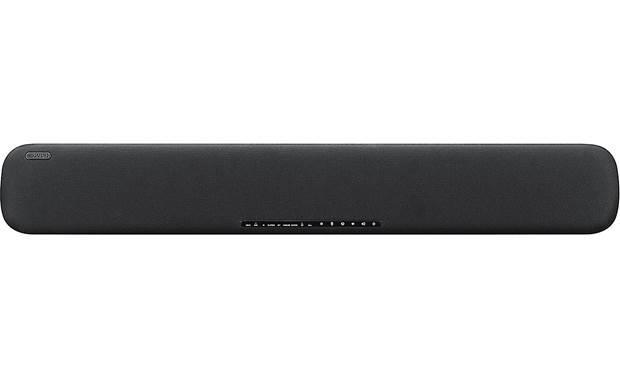

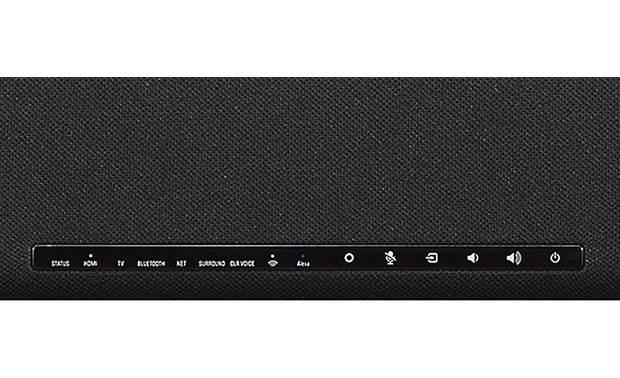
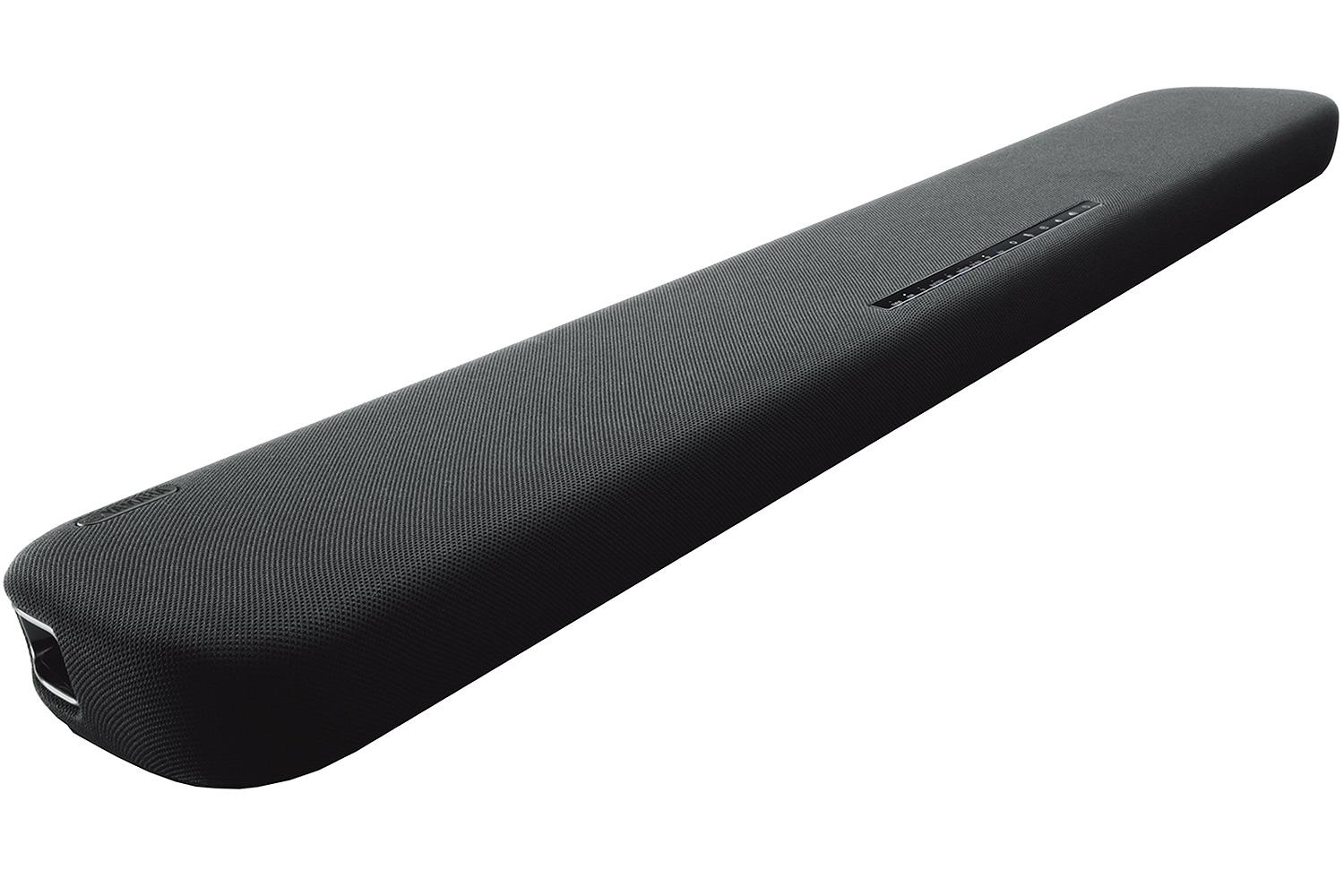
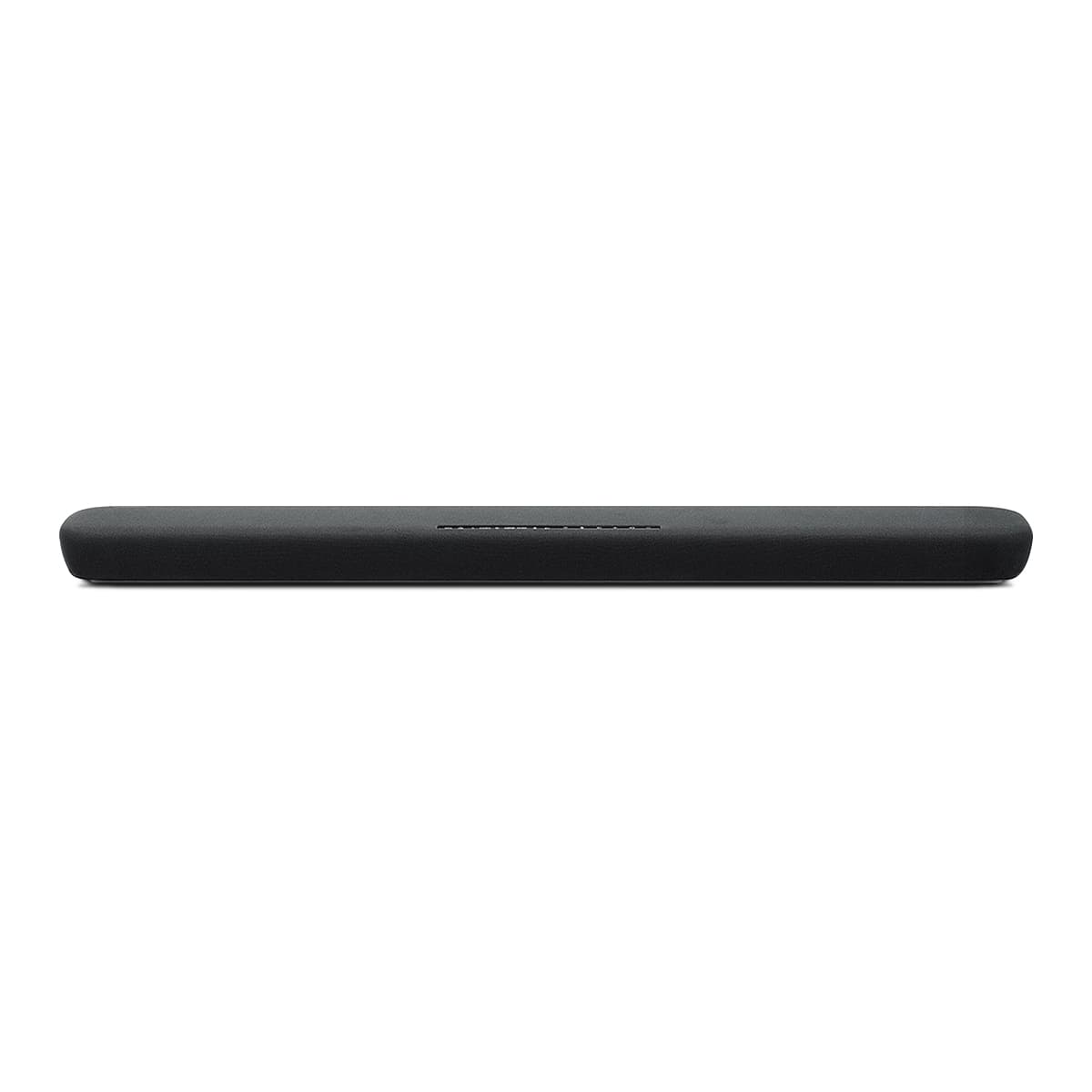
When your TV's built-in speakers make dialogue sound like it's coming from a tin can, you know it's time to upgrade. But the soundbar market can feel overwhelming, especially when you're comparing products that take completely different approaches to solving the same problem. Today we're diving deep into two soundbars that represent opposite philosophies: the Ultimea Aura A40 7.1 Channel Soundbar System, which uses eight physical speakers to create authentic surround sound, and the Yamaha YAS-109 Sound Bar with Built-in Subwoofers and Alexa, which keeps things simple with smart features packed into a single sleek unit.
These aren't just different models—they're fundamentally different solutions to home audio. Understanding which approach fits your lifestyle, space, and priorities will save you from buyer's remorse and ensure you get the audio experience you actually want.
Before we dive into specifics, let's talk about what soundbars are trying to accomplish. Your TV's speakers are terrible by design—they're paper-thin, firing downward or backward, and trying to reproduce everything from whispered dialogue to explosive action sequences with drivers smaller than what you'd find in most headphones. Soundbars solve this by providing dedicated drivers, proper amplification, and strategic positioning.
The category splits into two main camps. Single-bar systems like the Yamaha YAS-109 use digital signal processing (DSP)—basically computer algorithms that manipulate the audio signal—to create the illusion of surround sound from a single enclosure. Multi-speaker systems like the Ultimea Aura A40 take the traditional approach of placing actual speakers around your room to create genuine directional audio.
Both approaches have merit, but they excel in different scenarios and appeal to different types of users. The key is understanding what you're giving up and gaining with each philosophy.
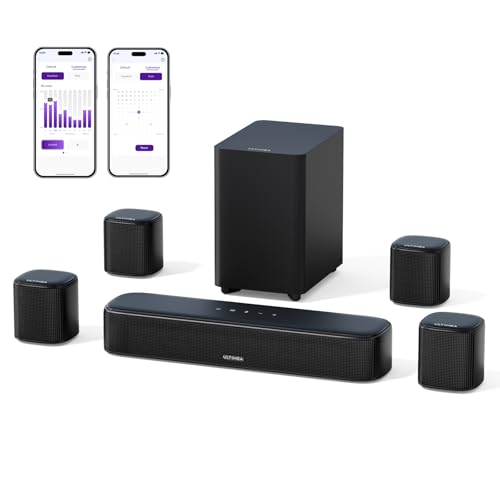
Released in 2024, the Ultimea Aura A40 represents the budget end of true multi-speaker home theater systems. At its heart, this isn't just a soundbar—it's a complete 7.1 channel surround system that happens to include a soundbar as the center component.
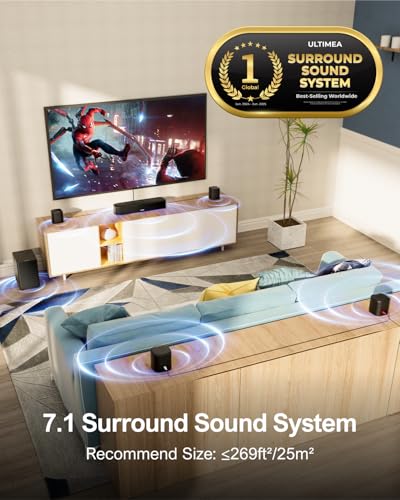
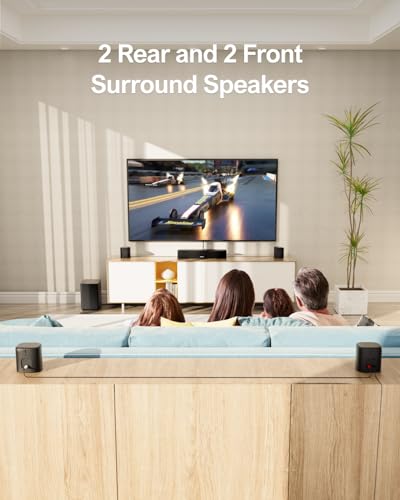
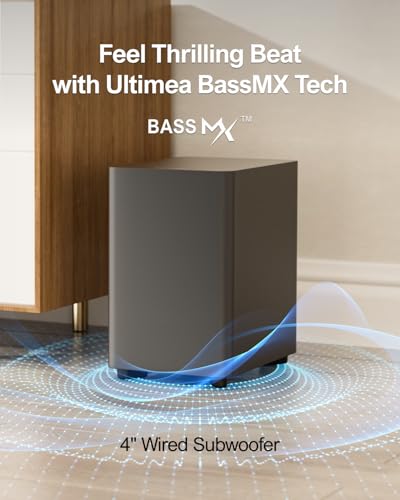
The system includes eight physical speakers: three drivers in the main soundbar handle your left, center, and right channels, four separate surround speakers create your 360-degree sound field, and a dedicated 4-inch subwoofer handles the low-frequency effects. This physical speaker arrangement means sound actually comes from different directions, not just the illusion of directional audio.
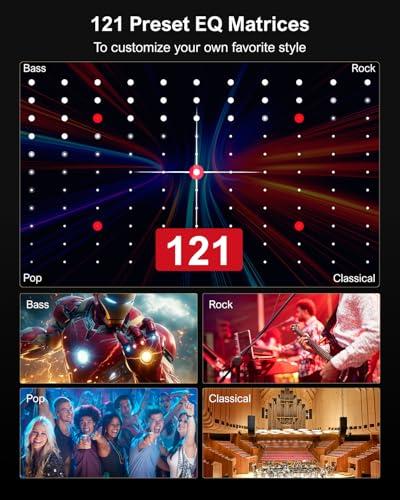
What makes the Aura A40 interesting is its focus on customization. The included app provides 121 preset EQ matrices—pre-configured sound profiles for different types of music and content—plus a full 10-band equalizer for granular tuning. You can adjust surround levels independently, meaning if your rear speakers are too close to your couch, you can dial them back without affecting the front channels.
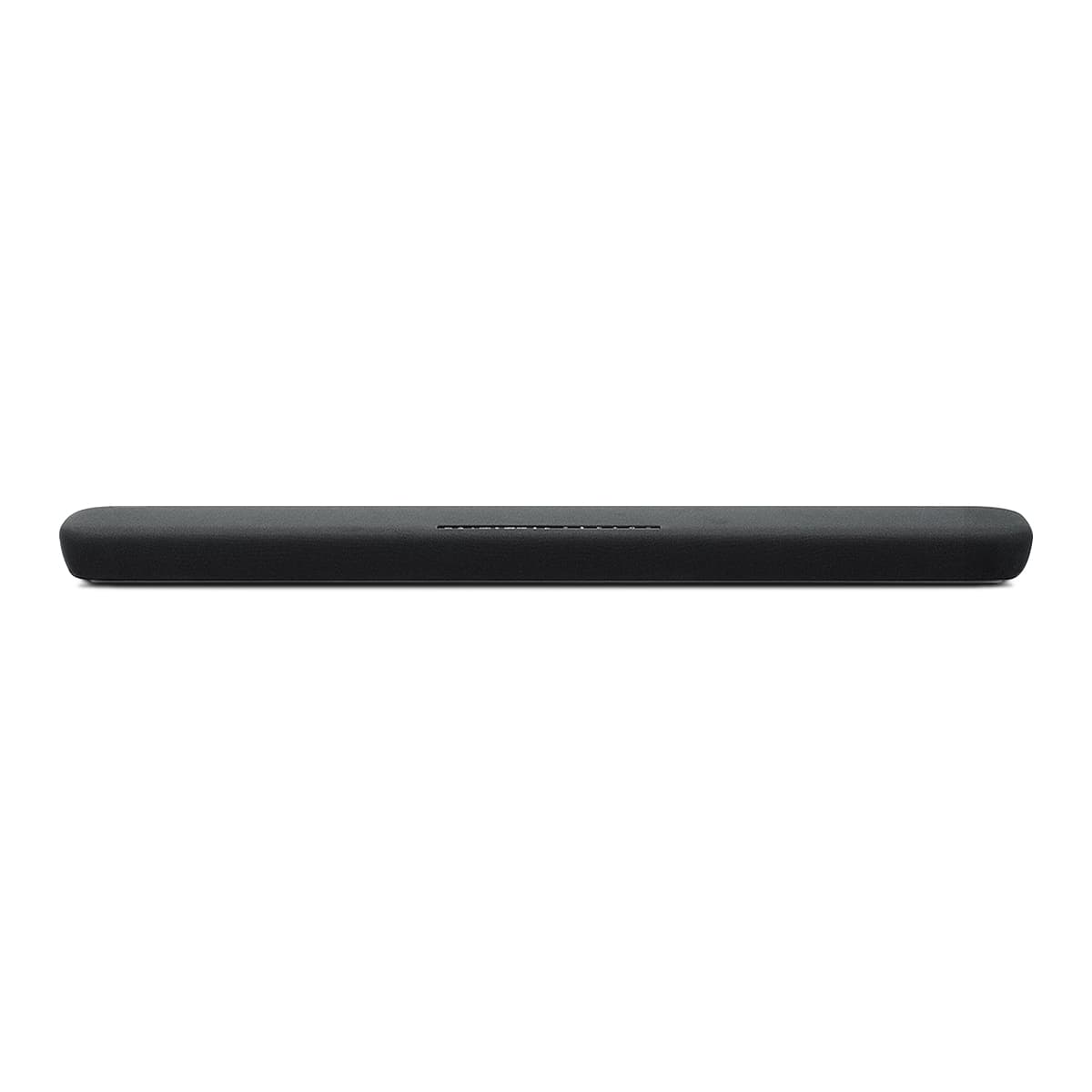
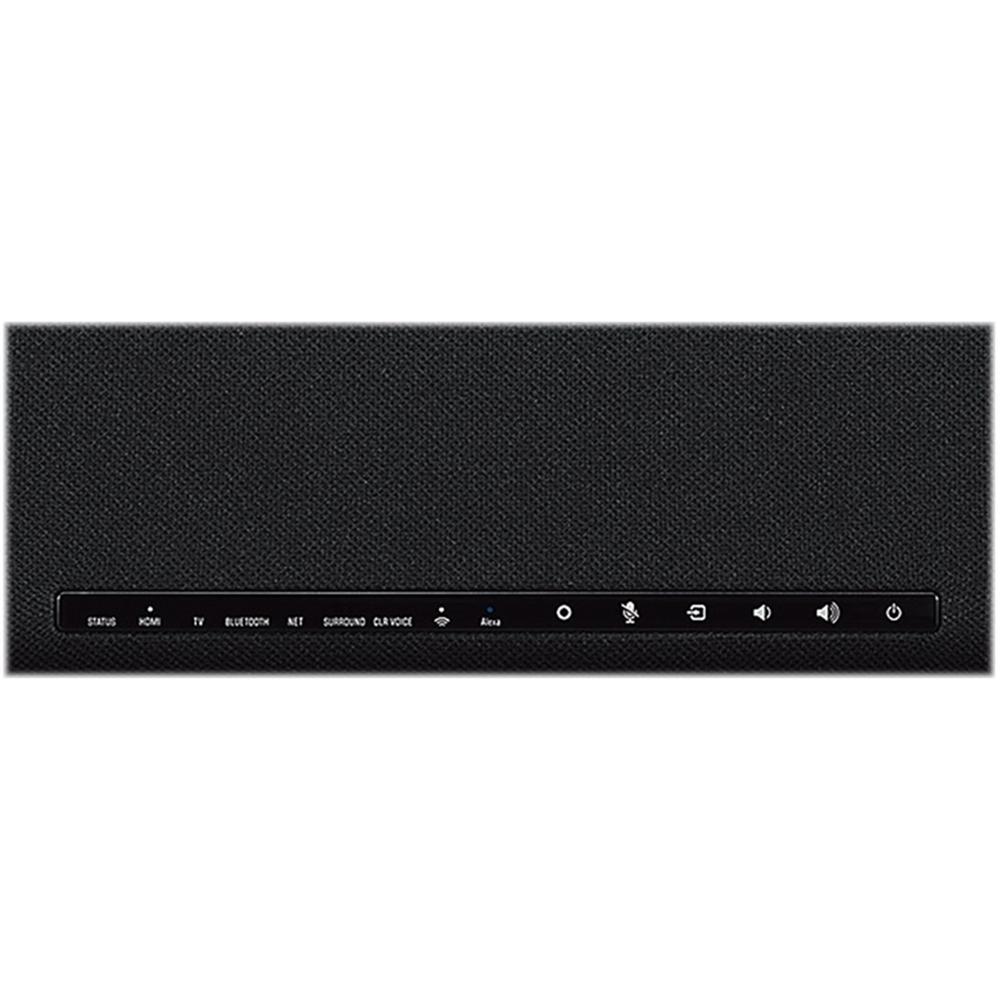
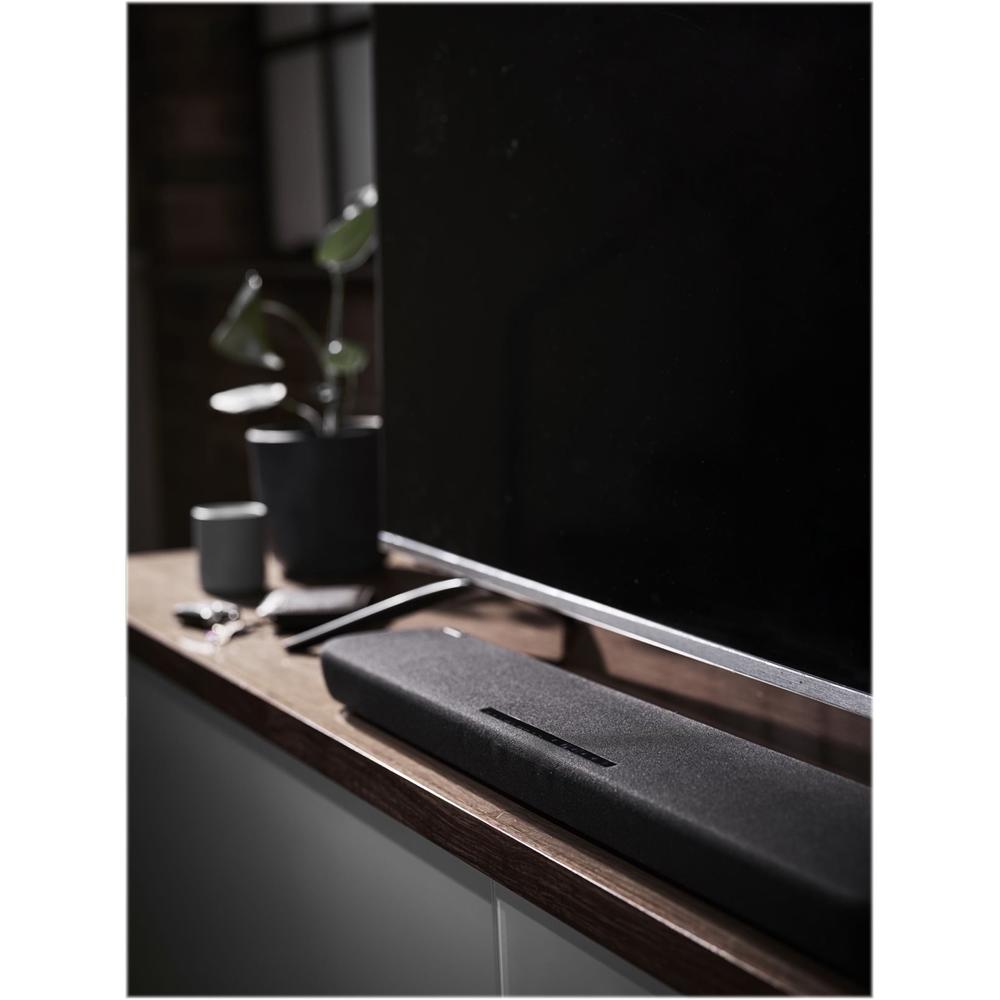
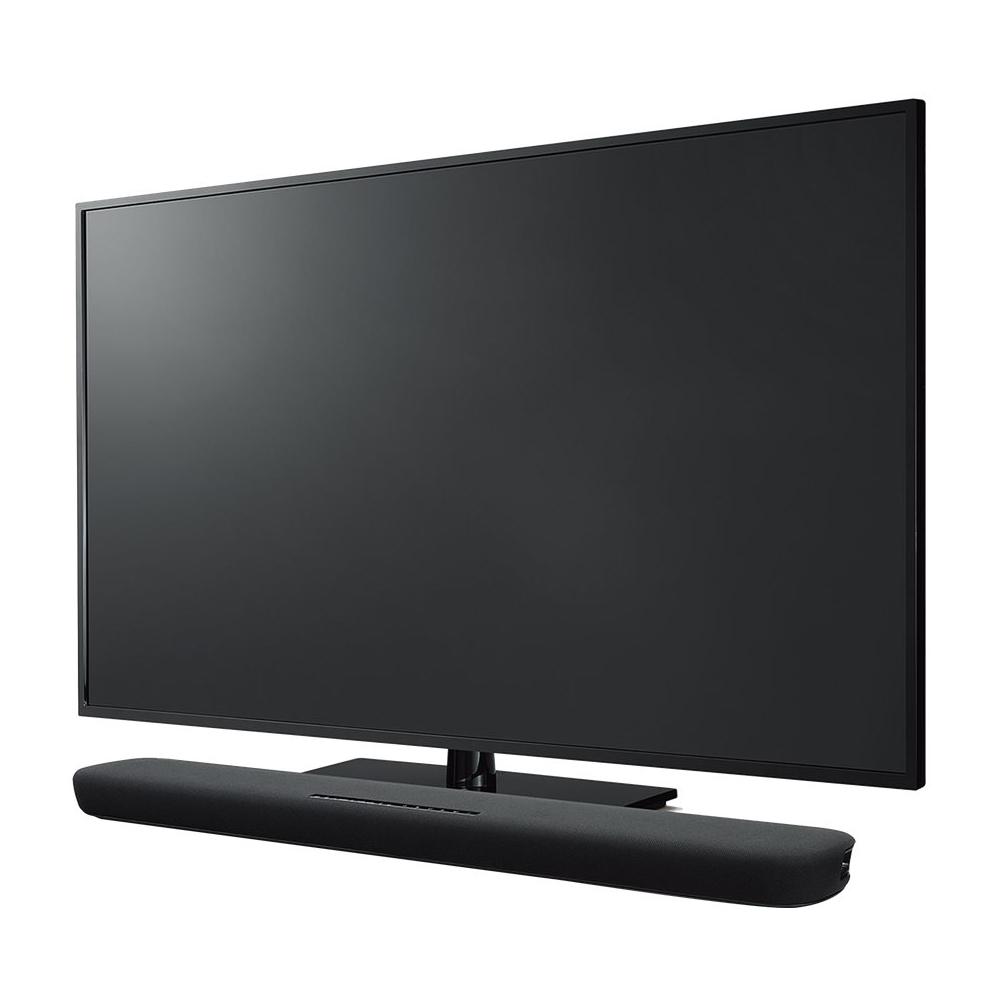
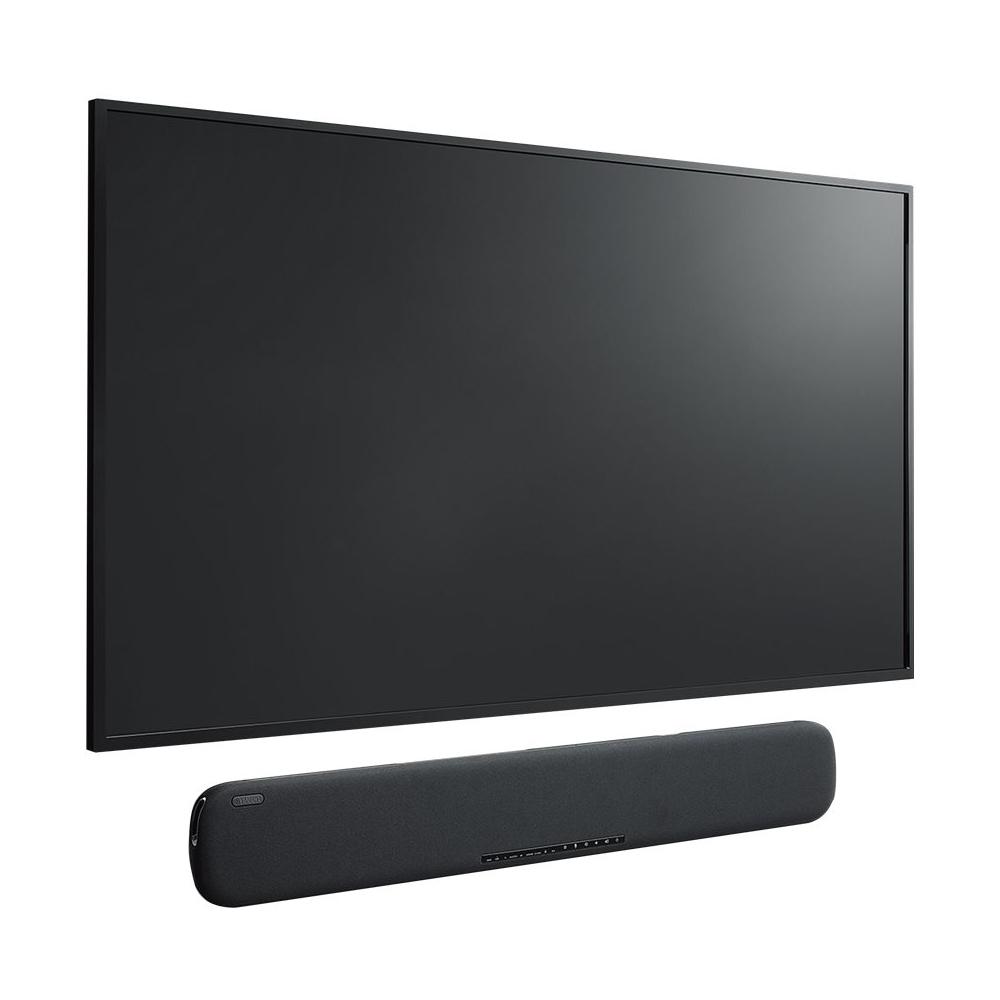
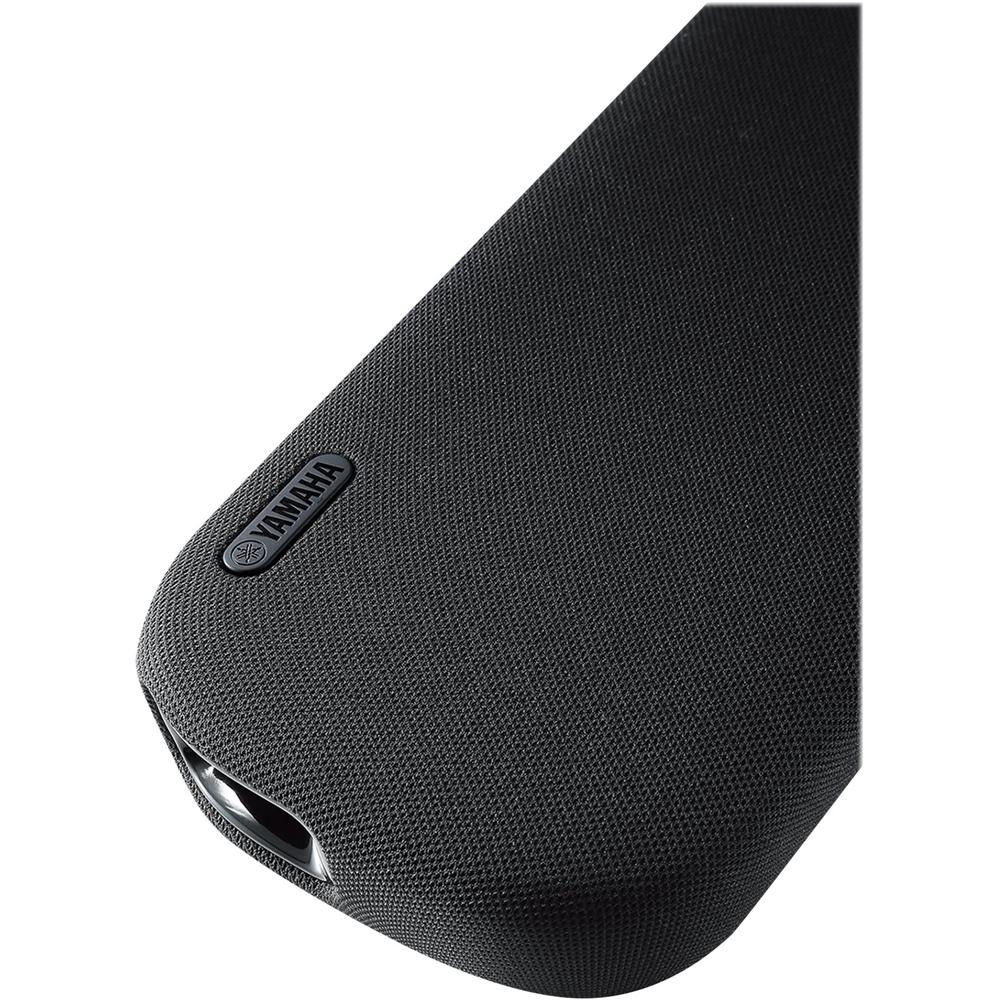
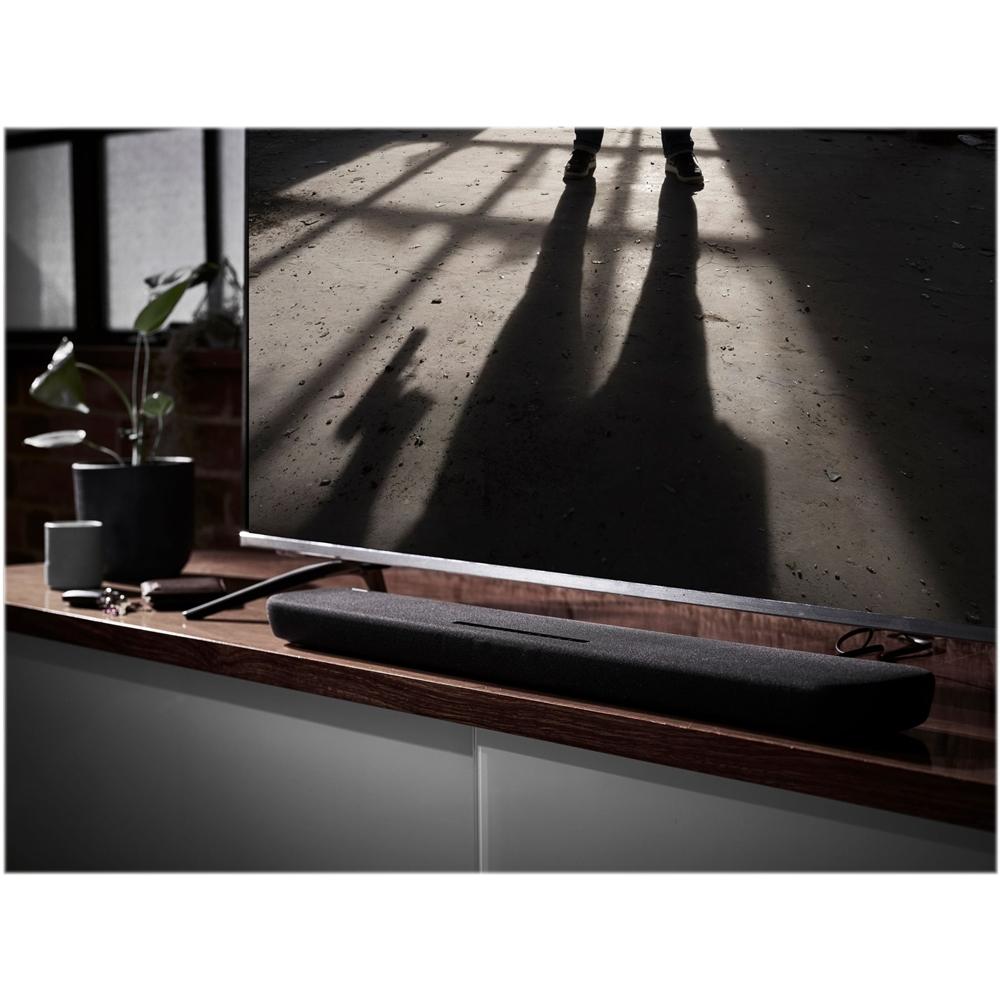
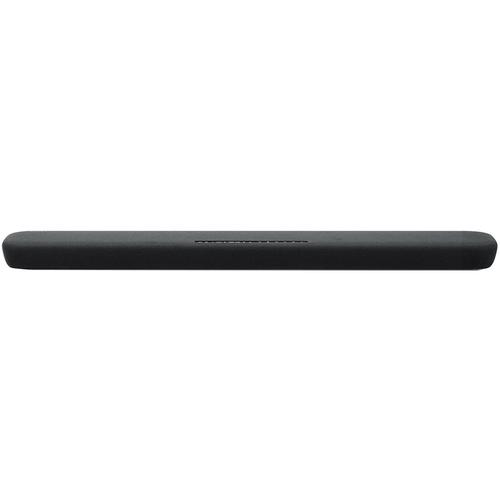
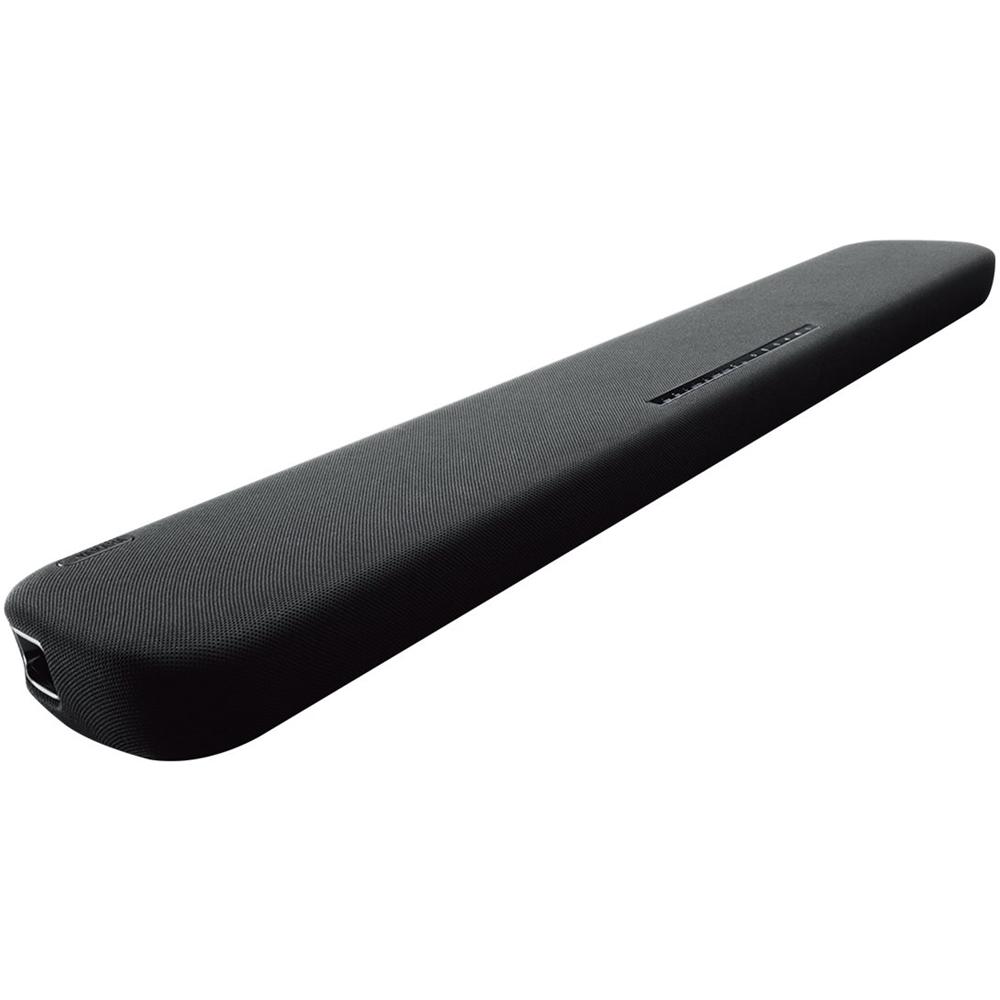
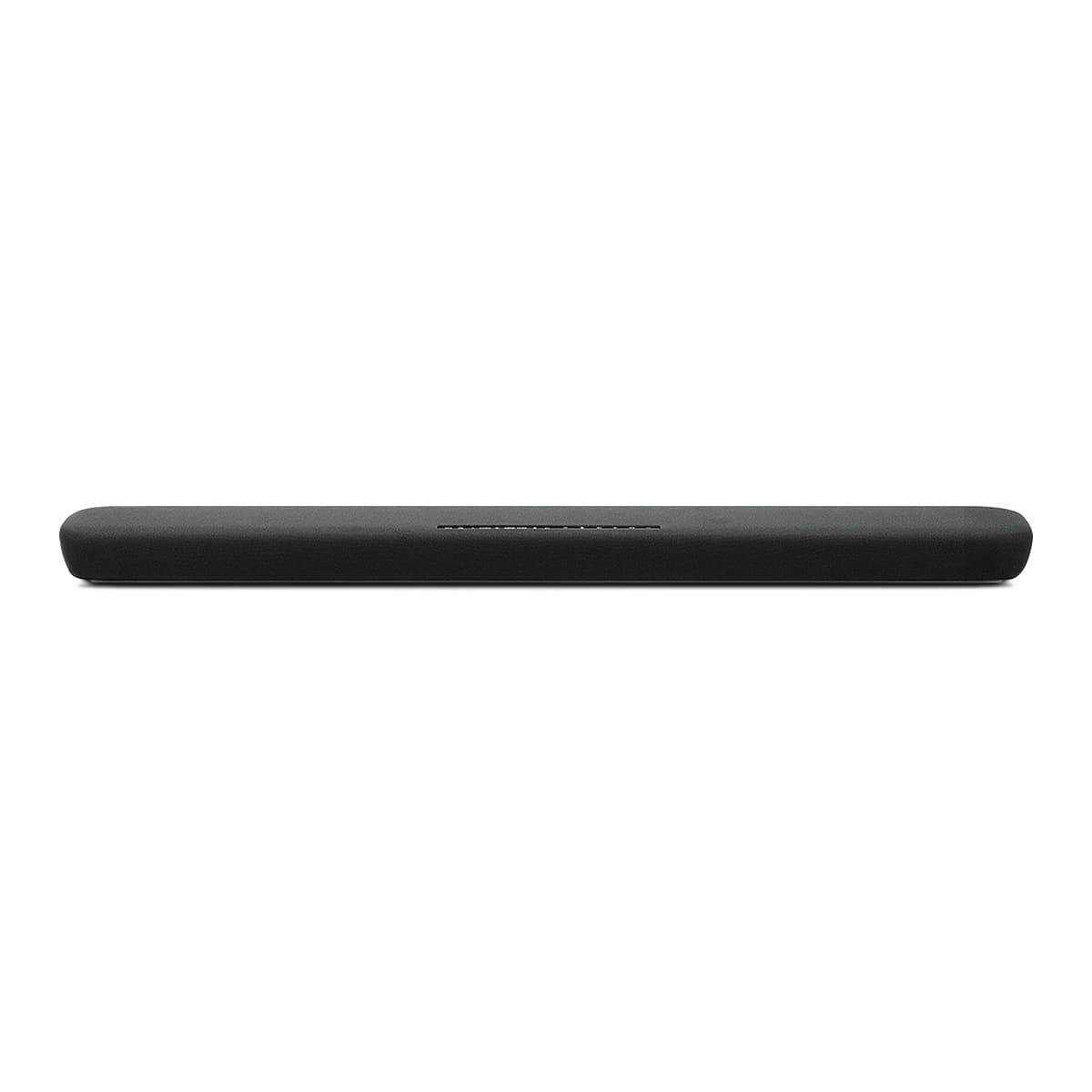
The Yamaha YAS-109, released in 2020, takes the opposite approach. This 2.1 channel system packs everything into a single soundbar: two main drivers for left and right channels, two tweeters for high frequencies, and two built-in subwoofers for bass. Instead of physical surround speakers, it uses DTS Virtual:X processing to simulate the effect of sound coming from different directions and even from above.
Where the YAS-109 really shines is integration. Built-in Alexa means you can control volume, skip tracks, or even manage your smart home devices with voice commands. HDMI ARC (Audio Return Channel) allows single-cable connection to your TV while supporting 4K HDR passthrough, meaning your streaming device can connect to the soundbar and still deliver full-quality video to your TV.
Since 2020, soundbar technology has evolved significantly. Newer models often include more advanced room correction, better wireless protocols, and support for newer audio formats like Dolby Atmos. However, the core approaches these products represent—true surround versus virtual processing—remain the fundamental choice most buyers face.
Audio quality is where these products reveal their different priorities most clearly. The Yamaha YAS-109 benefits from Yamaha's decades of audio engineering experience. Our research into professional reviews consistently highlights its smooth frequency response and balanced sound signature. When listening to dialogue-heavy content, the YAS-109's midrange presentation keeps voices clear and natural without the harsh peaks that make extended listening fatiguing.
However, the built-in subwoofers, while convenient, can't match a dedicated unit for bass extension. The system's low-frequency response rolls off around 170Hz, which means you'll miss the deepest rumbles in action movies or the full body of bass-heavy music genres. This isn't necessarily a dealbreaker—most dialogue and music content doesn't require earth-shaking bass—but it does limit the system's impact during explosive movie scenes.
The Ultimea Aura A40 presents a more complex audio story. Its dedicated 4-inch subwoofer extends down to 65Hz, providing significantly more low-end presence than the Yamaha. However, professional audio reviews and user feedback consistently point to sound quality issues with the mid and high frequencies. The sound is often described as "tinny" or "metallic," lacking the smooth refinement you'd expect from a quality audio system.
This quality difference becomes most apparent when listening to music. While both systems can handle the dynamic range and frequency content of most musical genres, the YAS-109 maintains better tonal balance and listening comfort over extended sessions. The Aura A40 requires significant EQ adjustment to achieve acceptable musical reproduction.
This is where the fundamental philosophy difference becomes crucial. The Aura A40's four physical surround speakers create genuine spatial audio. When a helicopter flies overhead in a movie, sound actually moves from the rear speakers to the front speakers. When gaming, footsteps and gunshots come from their actual directions in the virtual space.
Our analysis of user experiences reveals that this physical surround placement creates a level of immersion that virtual processing simply cannot match. The sensation of being "inside" the action, rather than listening to it from in front of you, transforms how you experience movies and games. Racing games become more engaging when engine sounds properly surround you, and horror movies gain genuine jump-scare potential when sounds can sneak up from behind.
The Yamaha YAS-109's DTS Virtual:X processing is sophisticated, using psychoacoustic principles—how your brain interprets sound cues to determine direction—to create the illusion of surround sound. The system analyzes the audio signal and uses phase shifts, timing delays, and frequency manipulation to trick your ears into perceiving directional audio from a single source point.
While this works reasonably well for creating a wider soundstage than basic stereo, it cannot replicate the precise directional audio that physical speakers provide. The effect is more like enhanced stereo than true surround sound. For casual viewing, this virtual surround provides adequate immersion without the complexity of multiple speakers.
Bass performance reveals another key trade-off between these approaches. The Aura A40's dedicated subwoofer provides meaningful low-frequency extension, reaching into the 65Hz range where movie sound effects and music fundamentals live. This means explosions have genuine rumble, music has proper foundation, and the overall listening experience has more physical impact.
However, reviews consistently note that this bass lacks precision and control. The subwoofer tends to sound "loose" or "boomy," meaning it adds quantity over quality. You get more bass, but it's not particularly tight or accurate bass. For action movies, this might not matter—you want that chest-thumping impact. For music listening, the imprecise bass can muddy the overall presentation.
The YAS-109's built-in dual subwoofers take a different approach. While they can't reach as deep as a dedicated unit, they integrate seamlessly with the main drivers. This means bass transitions smoothly into midrange frequencies without obvious gaps or overlaps. The result is more balanced overall, even if it lacks the raw impact for explosive content.
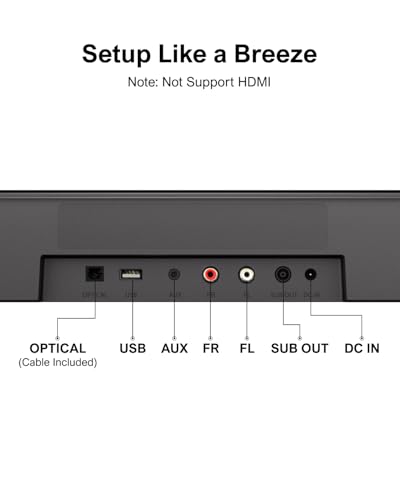
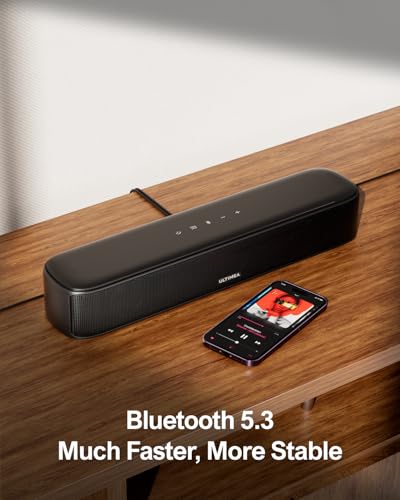
This comparison highlights how soundbar expectations have evolved over recent years. The Ultimea Aura A40 focuses entirely on audio performance, offering only optical, AUX, and USB inputs plus Bluetooth 5.3 for wireless connection. Notably absent is HDMI connectivity, which has become standard on modern TVs and streaming devices.
This limitation creates real usability issues. Many newer TVs have reduced analog outputs, and streaming devices increasingly rely on HDMI for both audio and video. Without HDMI ARC, you can't take advantage of your TV's built-in streaming apps for audio, and you'll need to run separate audio cables for each connected device.
The YAS-109 demonstrates why HDMI ARC has become essential. Single-cable connection to your TV handles both audio from the TV's apps and passthrough for connected devices. 4K HDR support means your streaming quality doesn't suffer, and CEC (Consumer Electronics Control) allows your TV remote to control soundbar volume and basic functions.
Built-in Alexa adds genuine convenience beyond just audio control. Setting timers while cooking, checking weather during morning news, or controlling smart home devices without reaching for your phone creates a more integrated smart home experience. While not essential for audio quality, these features reflect how entertainment systems have become part of broader connected home ecosystems.
Installation differences between these systems cannot be overstated. The Yamaha YAS-109 represents plug-and-play simplicity. Connect one HDMI cable to your TV, plug in power, and you're essentially done. The system automatically detects your TV's capabilities and configures appropriate audio settings. Most users can complete installation in under 15 minutes.
The Aura A40 requires significant time investment and planning. You'll need to run a 6-meter cable to your rear surround speakers, plus 2-meter cables for the front surrounds. The subwoofer needs positioning for optimal bass response without overpowering the room. Each surround speaker requires power and proper placement relative to your seating position.
Beyond physical installation, the Aura A40 demands configuration time. The extensive EQ options and surround level adjustments mean you'll spend hours fine-tuning the system for your room and preferences. While this customization potential is valuable for enthusiasts, it can overwhelm users who just want better TV audio without becoming audio engineers.
If you have a dedicated media room and prioritize authentic surround immersion above all else, the Aura A40 delivers experiences that virtual processing cannot match. The physical separation of sound sources creates genuine spatial audio that transforms movie watching and gaming into truly immersive experiences.
However, this comes with significant caveats. You need space for optimal speaker placement, tolerance for complex setup procedures, and acceptance that music listening will require substantial EQ adjustment. The system works best for users who consume primarily movies and games, where the surround advantage outweighs the audio quality limitations.
For most users, the YAS-109 represents a more balanced solution. It provides substantial improvement over TV speakers without overwhelming complexity or space requirements. The smart features integrate naturally into modern entertainment systems, and the balanced audio quality handles diverse content types competently.
This approach works particularly well in apartments, smaller spaces, or any situation where rear speaker placement is impractical. The virtual surround processing provides adequate spatial enhancement for casual viewing, while the built-in Alexa adds convenience that extends beyond audio control.
At the time of writing, both systems occupy similar price ranges in the budget soundbar category, though the Aura A40 typically commands a slight premium for its multi-speaker configuration. However, comparing prices alone misses the fundamental value proposition differences.
With the Aura A40, you're purchasing authentic surround sound capability and extensive customization options. The value lies in the immersive experience for movie and gaming content, plus the satisfaction of tweaking the system to your exact preferences. You're accepting compromised audio quality and setup complexity in exchange for spatial audio that virtual systems cannot replicate.
The YAS-109 represents investment in integration and long-term usability. You're buying simplicity, proven audio engineering, and features that enhance your overall entertainment system. The value comes from consistent performance across varied content types and smart features that remain relevant as technology evolves.
After extensive research and analysis, our recommendation comes down to honest self-assessment of your priorities and usage patterns.
Choose the Ultimea Aura A40 if you're primarily a movie watcher or gamer who has dedicated space for a proper surround setup. The authentic spatial audio creates genuinely immersive experiences that justify the setup complexity and audio quality trade-offs. You'll need patience for configuration and acceptance that this system excels in specific scenarios rather than being a great all-around performer.
Choose the Yamaha YAS-109 if you want meaningful audio improvement without transforming your living space into a home theater. The combination of balanced sound quality, smart features, and simple installation creates a more versatile solution that enhances all your entertainment content. While it can't match the spatial immersion of physical surround speakers, it provides better overall value for most users' actual viewing habits.
The decision ultimately reflects whether you're willing to embrace complexity for maximum immersion, or prefer elegant simplicity that integrates seamlessly into your existing lifestyle. Both approaches have merit—the key is choosing the one that matches your actual usage patterns rather than aspirational audio goals you may never pursue.
| Ultimea Aura A40 7.1 Channel Soundbar System | Yamaha YAS-109 Sound Bar with Built-in Subwoofers and Alexa |
|---|---|
| Audio Configuration - Determines surround sound authenticity | |
| True 7.1 channel with 8 physical speakers (3 soundbar + 4 surround + 1 subwoofer) | 2.1 channel with 6 drivers in single soundbar (virtual surround via DTS Virtual:X) |
| Total Power Output - Affects volume capabilities and dynamic range | |
| 330W peak power (substantially more headroom) | 120W total power (adequate for most rooms) |
| Bass Extension - Critical for movie impact and music fullness | |
| Dedicated 4" subwoofer extends to 65Hz (true low-frequency content) | Built-in dual 3" subwoofers limited to 170Hz (missing deep bass) |
| Setup Complexity - Time investment and technical skill required | |
| Complex: 4 surround speakers, multiple cables, extensive room tuning needed | Simple: Single HDMI cable connection, 15-minute setup |
| HDMI Connectivity - Essential for modern device compatibility | |
| None (optical, AUX, USB only - major limitation with newer devices) | HDMI ARC with 4K HDR passthrough (connects easily to all modern TVs) |
| Smart Features - Voice control and streaming capabilities | |
| Ultimea Aura A40: Advanced app with 121 EQ presets, 10-band equalizer | Yamaha YAS-109: Built-in Alexa, Wi-Fi streaming, Spotify Connect |
| Bluetooth Version - Wireless connection stability and range | |
| Bluetooth 5.3 (latest standard, better stability) | Bluetooth 4.2 (older but proven reliable) |
| Audio Quality for Music - Sound refinement and tonal balance | |
| Described as "tinny" and "metallic" - requires heavy EQ adjustment | Smooth, balanced sound praised by reviewers for overall fidelity |
| Surround Sound Immersion - Spatial audio effectiveness | |
| Authentic 360-degree surround with genuine directional audio from physical speakers | Virtual surround simulation - wider soundstage but cannot match true surround |
| Room Size Compatibility - Optimal performance space requirements | |
| Best for dedicated media rooms with space for rear speaker placement | Ideal for apartments, living rooms, and spaces where rear speakers impractical |
| Frequency Response Range - Audio spectrum coverage | |
| 65Hz - 18kHz (better bass extension, limited high-frequency) | 170Hz - 23kHz (extended highs, limited bass) |
| Release Year - Technology generation and future support | |
| 2024 (current generation with modern app features) | 2020 (proven design but older smart home integration) |
The Ultimea Aura A40 7.1 Channel Soundbar System is significantly better for home theater use. It features four physical surround speakers that create authentic 360-degree sound, making helicopter flyovers and explosions feel genuinely immersive. The Yamaha YAS-109 uses virtual surround processing, which provides a wider soundstage but cannot match the directional accuracy of real surround speakers for movie watching.
This depends on your priorities and space. The Ultimea Aura A40 requires rear speaker placement but delivers true surround sound that transforms movie and gaming experiences. The Yamaha YAS-109 Sound Bar with Built-in Subwoofers and Alexa keeps everything in one unit, making it perfect for apartments or rooms where rear speakers aren't practical, though you'll sacrifice some immersion.
The Ultimea Aura A40 has deeper bass with its dedicated 4-inch subwoofer extending down to 65Hz, providing more impact for action movies and bass-heavy music. The Yamaha YAS-109 has built-in dual subwoofers that integrate smoothly but only reach 170Hz, missing the deepest bass frequencies that create that chest-thumping movie theater feel.
The Yamaha YAS-109 offers plug-and-play simplicity with just one HDMI cable to your TV and 15-minute setup. The Ultimea Aura A40 7.1 Channel Soundbar System requires running cables to four surround speakers, careful placement, and hours of app-based tuning to optimize performance for your room.
The Yamaha YAS-109 excels here with HDMI ARC supporting 4K HDR passthrough and single-cable connection to your TV. The Ultimea Aura A40 lacks HDMI entirely, relying only on optical and AUX connections, which can limit compatibility with newer devices and TV streaming apps.
Only the Yamaha YAS-109 Sound Bar with Built-in Subwoofers and Alexa has built-in voice control through Alexa, letting you adjust volume, play music, and control smart home devices hands-free. The Ultimea Aura A40 requires manual control through its app or remote, though it offers extensive customization options once configured.
The Yamaha YAS-109 provides better music quality with smoother, more balanced sound that's comfortable for extended listening. The Ultimea Aura A40 7.1 Channel Soundbar System often sounds "tinny" or "metallic" for music and requires significant equalizer adjustments to achieve acceptable musical reproduction.
The Yamaha YAS-109 needs only space for a single soundbar under your TV. The Ultimea Aura A40 requires room for four additional surround speakers around your seating area, plus optimal subwoofer placement, making it best suited for dedicated media rooms rather than multi-purpose living spaces.
The Ultimea Aura A40 7.1 Channel Soundbar System provides extensive customization with 121 preset EQ matrices, 10-band equalizer, and individual surround speaker level adjustments through its smartphone app. The Yamaha YAS-109 offers basic sound modes but focuses more on simplicity and automatic optimization rather than manual tweaking.
The Ultimea Aura A40 excels for gaming with its physical surround speakers providing accurate directional audio for footsteps and gunfire positioning. The Yamaha YAS-109 Sound Bar with Built-in Subwoofers and Alexa offers adequate gaming audio with virtual surround but cannot match the competitive advantage of true positional audio that the multi-speaker system provides.
The Yamaha YAS-109 benefits from Yamaha's established reputation and simpler single-unit design with fewer components that can fail or disconnect. The Ultimea Aura A40 7.1 Channel Soundbar System has more complexity with multiple speakers and wireless connections that may require occasional troubleshooting, though it does receive firmware updates through its app.
The core choice is authentic surround immersion versus simplicity and integration. The Ultimea Aura A40 delivers genuine multi-directional audio that transforms movie watching but requires complex setup and room dedication. The Yamaha YAS-109 provides refined sound quality, smart features, and easy installation but cannot match the spatial audio experience of physical surround speakers.
We've done our best to create useful and informative comparisons to help you decide what product to buy. Our research uses advanced automated methods to create this comparison and perfection is not possible - please contact us for corrections or questions. These are the sites we've researched in the creation of this article: youtube.com - walmart.com - youtube.com - ultimea.com - homestudiobasics.com - ultimea.co - youtube.com - eu.ultimea.com - walmart.com - device.report - bestbuy.com - manuals.plus - community.ultimea.com - judge.me - support.ultimea.com - geekmaxi.com - provantage.com - bestbuy.com - youtube.com - uk.whatgeek.com - rtings.com - crutchfield.com - usa.yamaha.com - digitaltrends.com - tomsguide.com - listenup.com - youtube.com - usa.yamaha.com - hub.yamaha.com - youtube.com - hub.yamaha.com

Privacy Policy
Terms and Conditions - Affiliate Policy
Home Security
© Copyright 2008-2026.
11816 Inwood Rd #1211, Dallas, TX 75244