






When your TV's built-in speakers make dialogue sound like it's coming from inside a tin can, it's time for an upgrade. But the soundbar market can feel overwhelming, with options ranging from basic stereo units to complex multi-speaker systems that promise movie theater experiences in your living room.
Today we're comparing two fundamentally different approaches to better TV audio: the Ultimea Aura A40, a complete 7.1 virtual surround system released in 2023, and the Sonos Ray, a premium stereo soundbar that launched in 2022. At the time of writing, both products sit in similar price ranges, but they couldn't be more different in their philosophy and execution.
Before diving into specifics, let's talk about what matters most when choosing a soundbar. The primary goal is simple: make your TV sound significantly better than it currently does. This means clearer dialogue, better bass response, and an overall more engaging audio experience.
The key considerations break down into several categories. Sound quality and clarity top the list—especially dialogue enhancement, since that's where most TV speakers fail miserably. Spatial audio capabilities come next, ranging from basic stereo widening to true surround sound with multiple speakers. Room size and acoustics play a crucial role in determining what type of system will work best in your space. Connectivity options like HDMI ARC (Audio Return Channel—a single cable solution that lets your TV control the soundbar's volume), optical connections, and wireless streaming matter for day-to-day usability.
Finally, there's the balance between simplicity and features. Some people want plug-and-play convenience, while others enjoy tweaking equalizer settings and fine-tuning their audio experience.
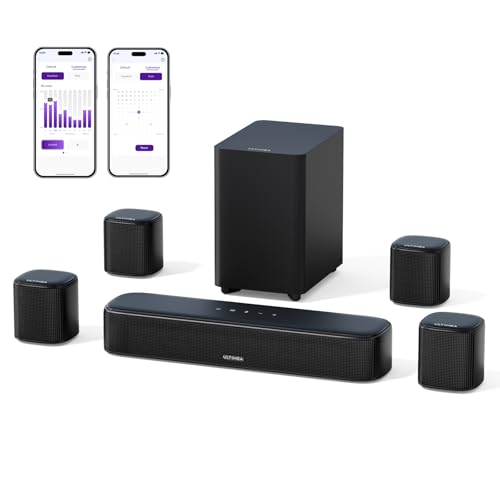
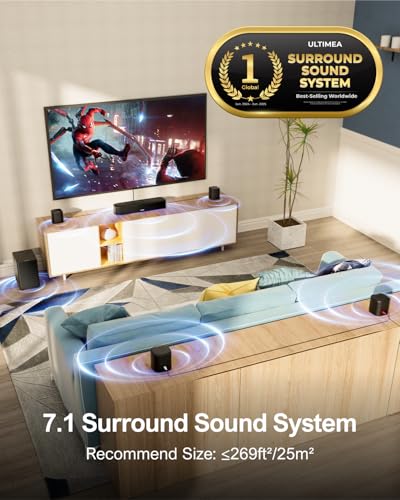
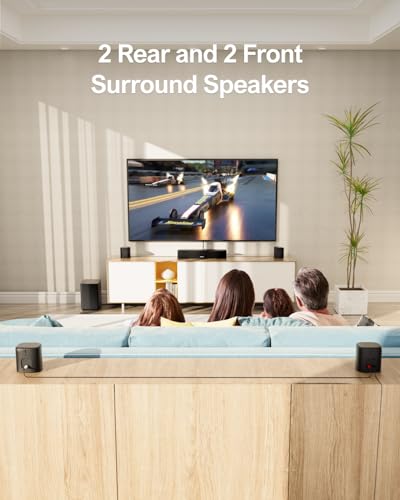
The Ultimea Aura A40 takes the "more is more" approach. It's a complete surround sound system that includes a main soundbar, four separate surround speakers, and a dedicated subwoofer. The idea is to physically place speakers around your room to create genuine surround sound effects—when a helicopter flies overhead in a movie, you'll hear it move from speaker to speaker around the room.
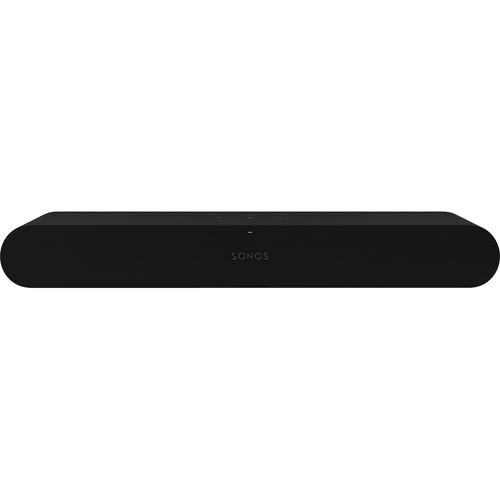
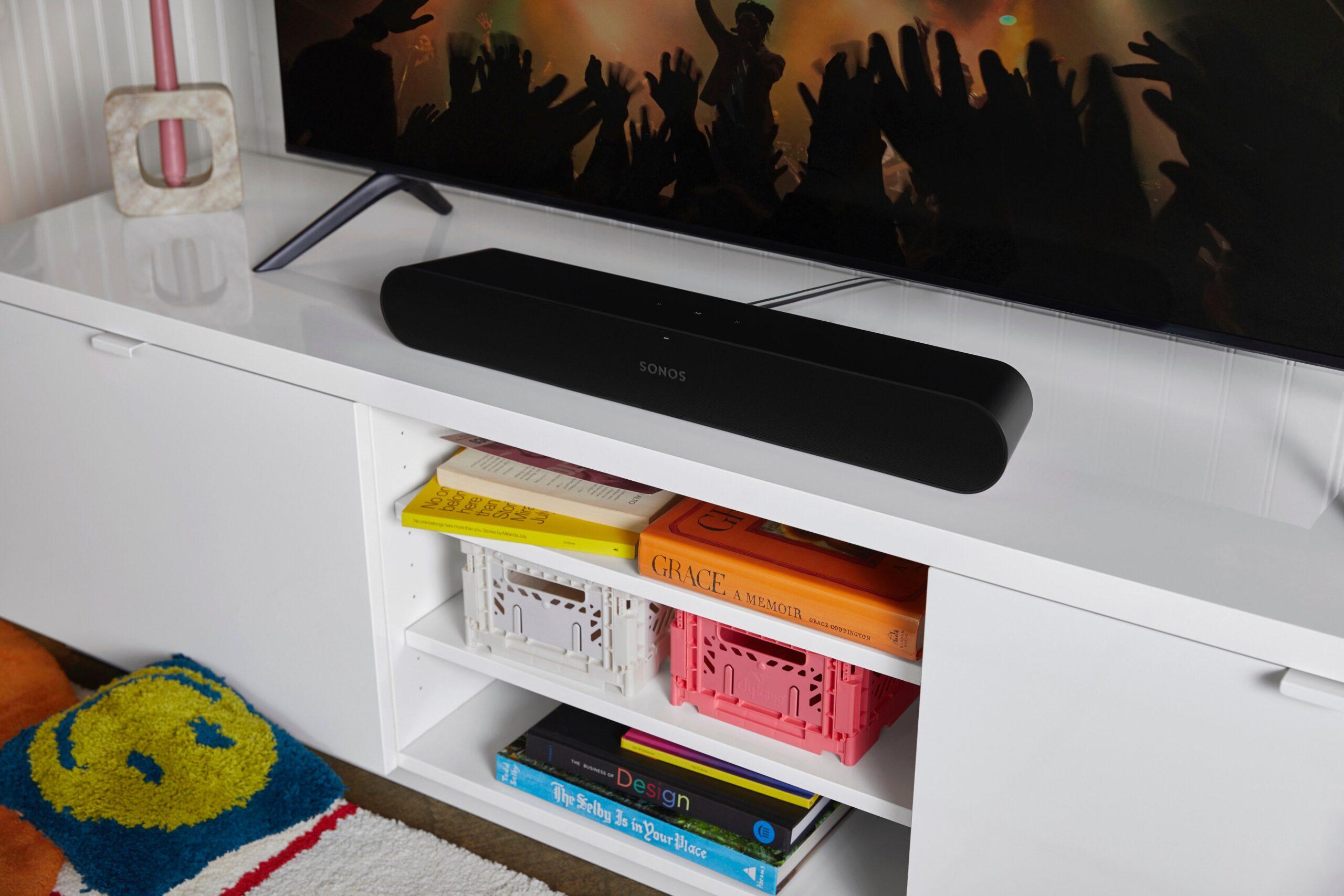
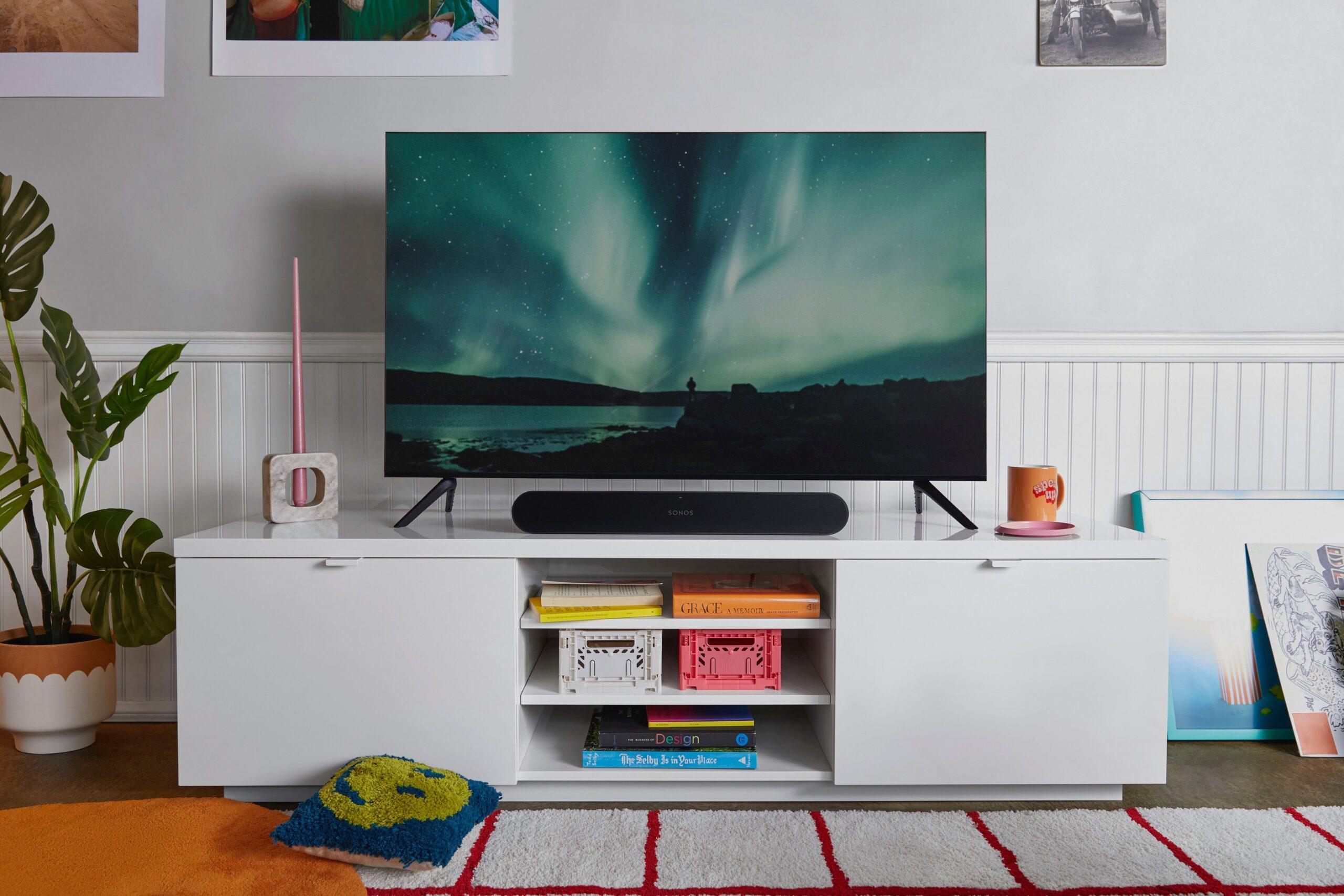
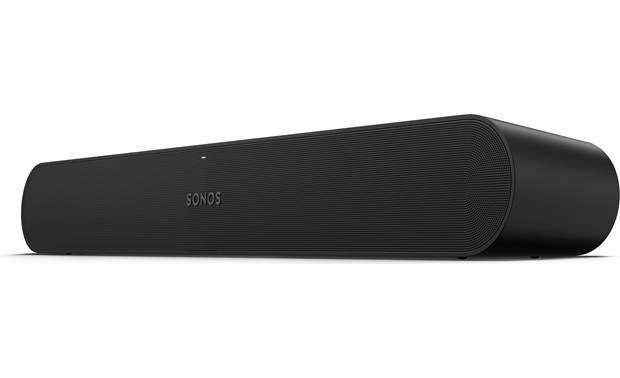
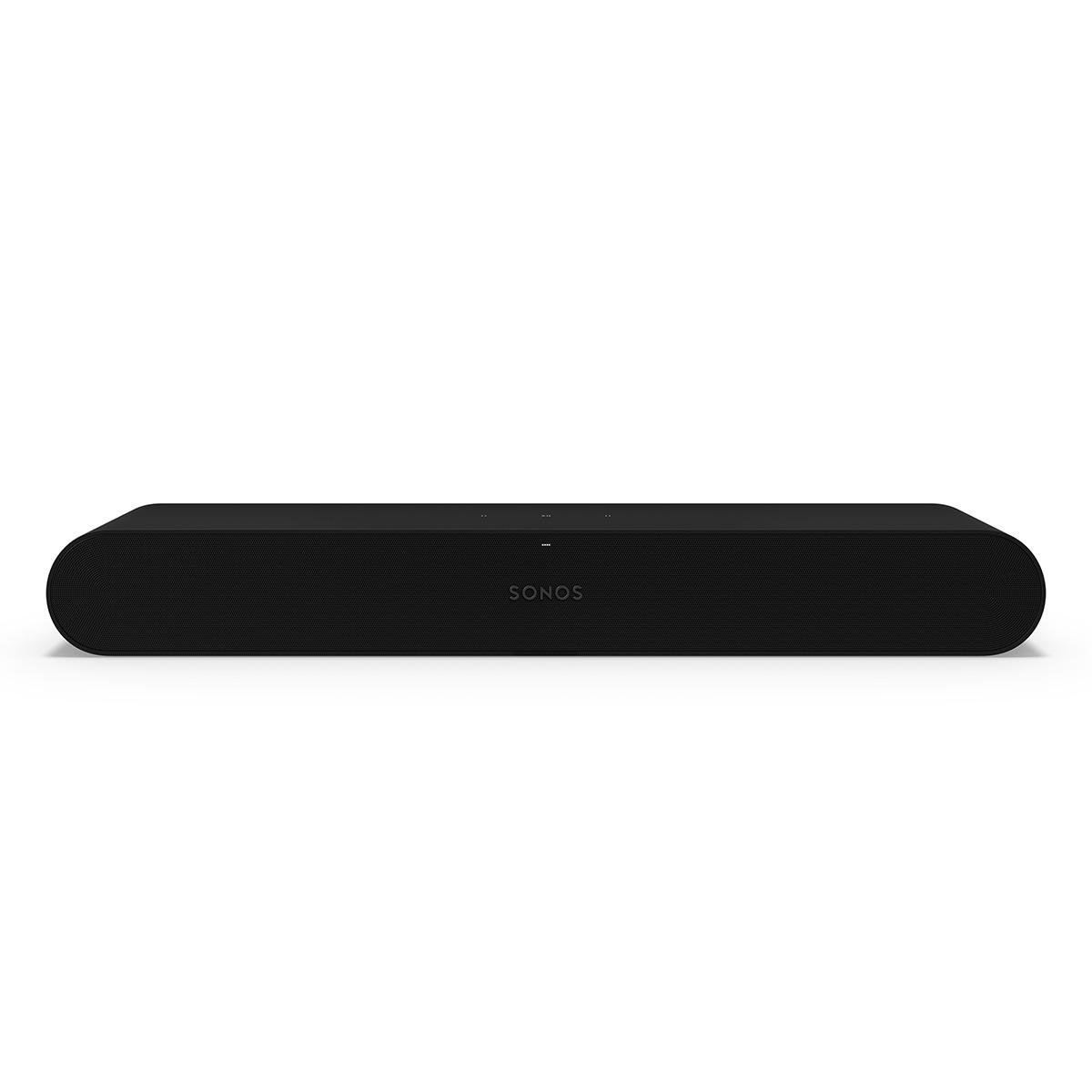
The Sonos Ray, by contrast, embodies the "less is more" philosophy. It's a single, elegantly designed unit that uses advanced audio processing to create the illusion of wider, more spacious sound from just one box. Sonos has been refining this approach since the company's founding in 2002, and the Ray represents their most affordable entry point into their acclaimed ecosystem.
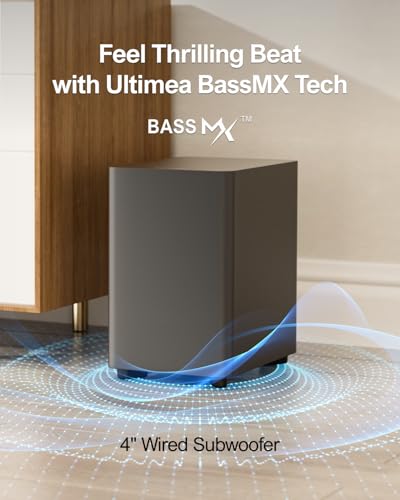
Here's where things get interesting from a technical standpoint. The Aura A40 is a true 7.1 channel system, meaning it has seven main audio channels plus a dedicated low-frequency effects channel for the subwoofer. The main soundbar houses three 2-inch drivers, while four additional 2-inch speakers spread around your room handle the surround channels. A 4-inch subwoofer dedicated to bass frequencies rounds out the setup, delivering a total peak power output of 330 watts.
This physical speaker placement creates what's called "discrete surround sound"—each speaker plays different audio content, allowing for precise positioning of sound effects. When properly set up, you can pinpoint exactly where sounds are coming from in three-dimensional space.
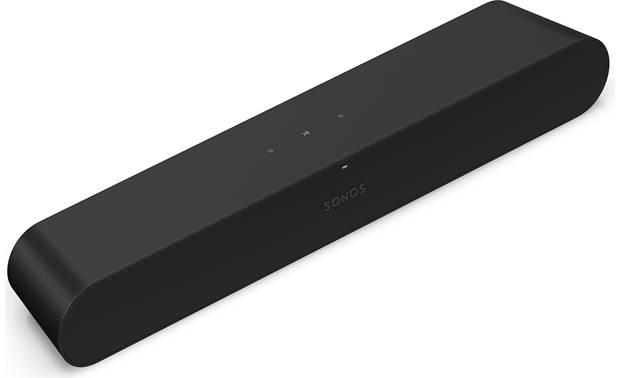
The Sonos Ray takes a completely different approach with its stereo configuration. It uses four carefully engineered drivers in a single cabinet: two precision tweeters (small speakers optimized for high frequencies) and two full-range drivers that handle mid and low frequencies. Instead of physically surrounding you with speakers, the Ray uses psychoacoustic processing—essentially tricking your brain into perceiving a wider soundstage than what two speakers should theoretically produce.
Based on extensive research into professional reviews and user feedback, these two approaches yield very different results. The Aura A40 excels at creating that "wow factor" surround experience. When watching action movies or playing games, the ability to hear footsteps behind you or explosions moving across the room is genuinely impressive for the price point.
However, there's a catch. Multiple reviews describe the overall sound signature as somewhat "tinny and metallic," particularly when listening to music. The frequency response only extends down to 65Hz, which means the subwoofer has to work overtime to fill in the low-end gaps. Many users report needing to max out the bass settings and boost the surround levels significantly to achieve a balanced sound.
The Sonos Ray, meanwhile, prioritizes overall sound quality over surround effects. Despite having no dedicated center channel (the speaker typically responsible for dialogue), it delivers exceptional vocal clarity. This is achieved through sophisticated digital signal processing that emphasizes voice frequencies while maintaining balance across the entire frequency spectrum.
The Ray's bass response is more controlled and refined, though obviously limited by its compact size and lack of a dedicated subwoofer. Where it really shines is in music reproduction—the sound signature is balanced and natural, without the harshness that can plague budget multi-speaker systems.
Room acoustics play a huge role in how any audio system performs, and this is where the differences between these two approaches become particularly apparent.
The Aura A40 is designed for medium to larger rooms, with Ultimea recommending spaces between 108-270 square feet. The multiple speakers need room to breathe, and proper placement is crucial for optimal performance. The rear speakers connect via a 6-meter cable, giving you flexibility in positioning, but you'll need to think carefully about wire management and speaker placement.
One particularly clever feature is the system's 13 adjustable surround levels, allowing you to fine-tune how prominent each surround channel is based on your room's layout and acoustics. This level of customization is typically found in much more expensive home theater systems.
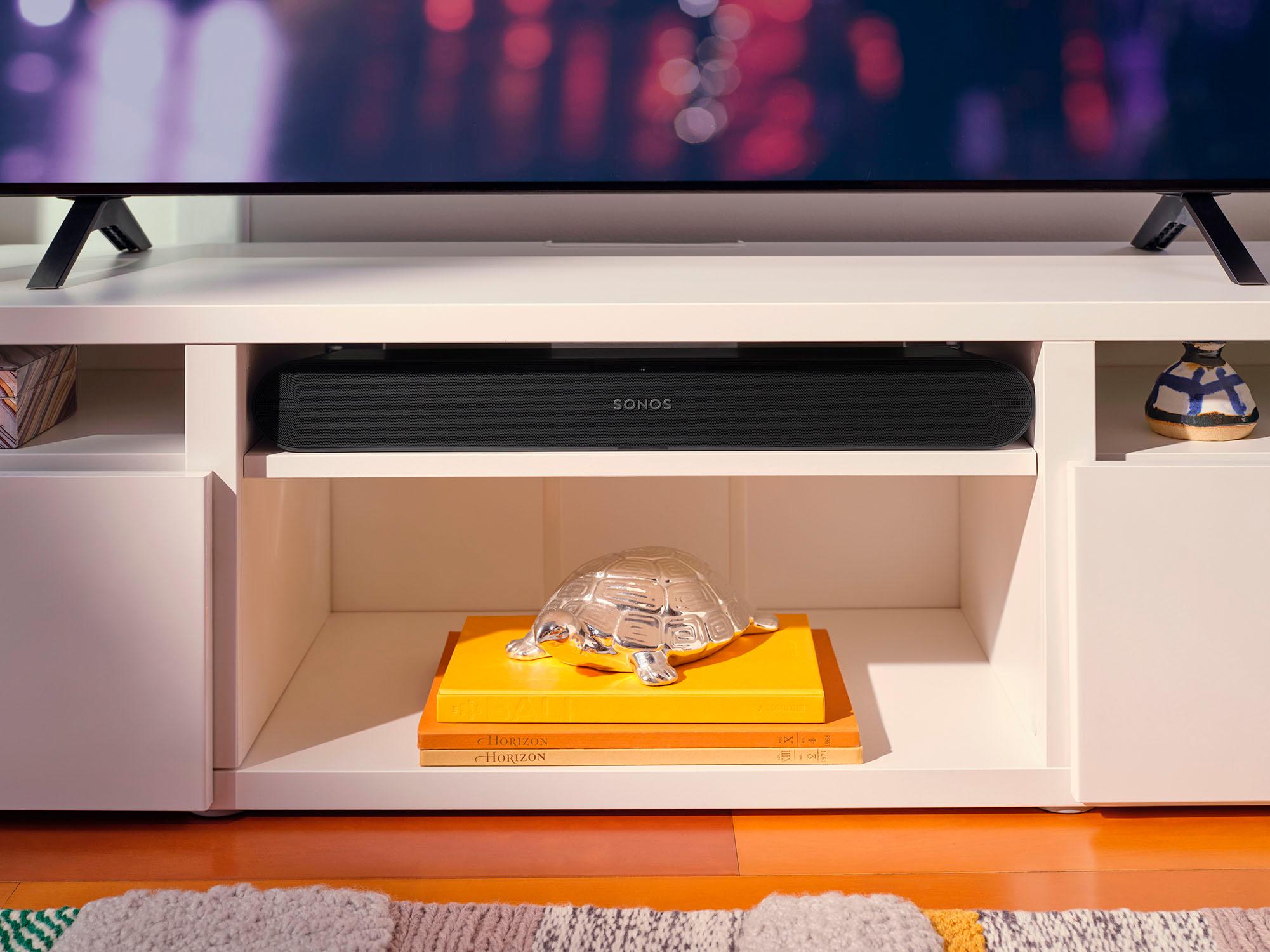
The Sonos Ray is optimized for smaller spaces and offers remarkable placement flexibility. Uniquely among soundbars, it can actually be placed inside a cabinet or credenza and still perform well, though it sounds slightly better in open air. This makes it perfect for apartments, bedrooms, or any space where aesthetics and space constraints are important considerations.
The Ray also includes Trueplay room correction technology (available for iPhone users), which uses your phone's microphone to analyze your room's acoustics and automatically adjusts the sound accordingly. This kind of automatic optimization removes a lot of the guesswork from setup.
Both soundbars reflect different priorities when it comes to connectivity and smart features, which can significantly impact your daily experience.
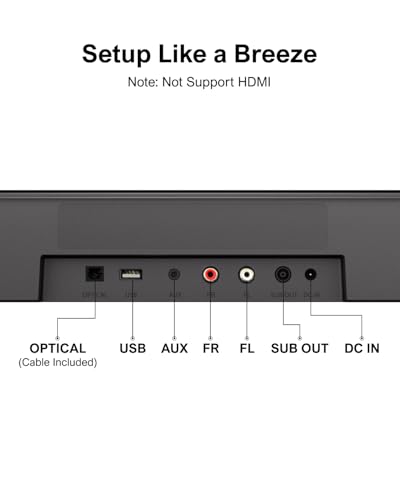
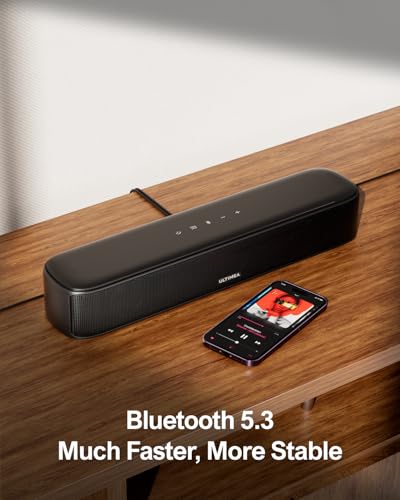
The Aura A40 offers multiple connection options including optical, auxiliary, USB, and Bluetooth 5.3, but notably lacks HDMI connectivity entirely. This means you can't take advantage of HDMI ARC features like single-cable connection and TV remote control integration. However, the system more than makes up for this with its extensive customization options.
The included Ultimea Smart App is genuinely impressive for a budget system. It provides access to 121 preset equalizer matrices tailored for different music genres and content types, plus a full 10-band equalizer for manual adjustment. Six listening modes (Movie, Music, Voice, Sport, Game, Night) offer quick optimization for different content, and the app promises regular over-the-air updates to add new features and improvements.
The Sonos Ray takes a more streamlined approach to connectivity, offering only optical input—no HDMI ARC support, which means no Dolby Atmos capability. However, what it lacks in physical connections, it makes up for in wireless sophistication. Built-in Wi-Fi enables Apple AirPlay 2 streaming, and integration with the Sonos ecosystem opens up possibilities for whole-home audio that few competitors can match.
The Ray also features intuitive touch controls on the top panel and responds to IR remote commands, making it compatible with most TV remotes out of the box.
When evaluating soundbars, certain technical specifications matter more than others. Peak wattage numbers are often misleading—what matters more is how cleanly that power is delivered and how well the speakers handle dynamic range (the difference between quiet dialogue and loud explosions).
The Aura A40's 330-watt peak power output is impressive on paper, and in practice, it can fill larger rooms with sound. The frequency response of 65Hz-18kHz covers most of the audible spectrum, though the 65Hz low-end cutoff means you're missing some of the deepest bass frequencies found in modern movie soundtracks.
More importantly, the system's signal-to-noise ratio of ≥75dB and distortion rating of <1% are respectable for this price category, though not exceptional. In practical terms, this means you'll get clean sound at moderate volumes, but pushing the system to its limits may introduce some audible strain.
The Sonos Ray doesn't publish detailed power specifications, following Sonos's philosophy that raw numbers don't tell the whole story. Instead, the company focuses on optimizing every aspect of the audio chain, from driver design to digital processing algorithms. The result is sound that often seems more powerful and refined than the specifications might suggest.
For dedicated home theater enthusiasts, the expandability question becomes crucial. The Aura A40 is essentially a complete system out of the box—what you buy is what you get. While this provides excellent value upfront, there's no upgrade path beyond firmware updates through the mobile app.
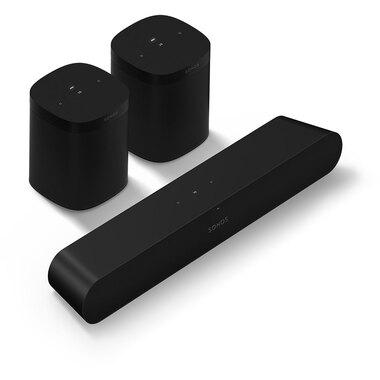
The Sonos Ray, despite being the company's entry-level soundbar, opens the door to a much larger ecosystem. You can add a Sonos Sub for deeper bass response, though it's a significant additional investment. Rear surround speakers are also possible by adding other Sonos or compatible IKEA Symfonisk speakers, effectively creating a full surround system over time.
This modularity means you can start with the Ray and expand your system as your needs and budget allow, rather than committing to a complete setup upfront.
After extensive research into professional reviews and user feedback, clear use cases emerge for each system.
Choose the Ultimea Aura A40 if you prioritize the surround sound experience above all else. It's ideal for movie and gaming enthusiasts who want to feel immersed in their content and have the space for a multi-speaker setup. The extensive customization options will appeal to tweakers who enjoy fine-tuning their audio experience, and the value proposition is hard to beat if you're specifically seeking surround sound on a budget.
However, be prepared for some compromises in overall sound refinement, particularly for music listening. The setup process is more involved, and the aesthetic impact of multiple speakers around your room may not suit everyone's preferences.
The Sonos Ray is the better choice for users who prioritize sound quality, simplicity, and flexibility. It's perfect for smaller spaces, apartments, or any situation where clean aesthetics matter. If you listen to a lot of music in addition to watching movies and TV, the Ray's balanced sound signature will serve you better in the long run.
The Ray also makes sense if you're interested in potentially expanding your audio system over time or integrating with other smart home devices. While you'll give up the surround sound experience initially, the upgrade path through the Sonos ecosystem is more sophisticated.
At the time of writing, both soundbars offer compelling value propositions in similar price ranges, but they serve fundamentally different needs. The Ultimea Aura A40 delivers an impressive amount of hardware and surround sound capability for the money, making it an excellent choice for budget-conscious buyers who want the full surround experience and don't mind some sound quality compromises.
The Sonos Ray costs slightly more but delivers significantly better sound quality, build construction, and long-term flexibility. It's the smarter investment if you value refinement over raw features and prefer a system that will grow with your needs.
Your decision ultimately comes down to priorities: immersive surround effects with some quality trade-offs, or refined stereo sound with room to expand. Both approaches have merit, and both represent solid value in their respective categories.
| Ultimea Aura A40 7.1 Channel Soundbar System | Sonos Ray Soundbar |
|---|---|
| Audio Configuration - Determines surround sound capability and speaker placement | |
| 7.1 virtual surround with 8 physical speakers (soundbar + 4 surround speakers + subwoofer) | 2.0 stereo with 4 drivers in single soundbar unit |
| Total Power Output - Affects volume levels and room filling capability | |
| 330W peak power across all speakers | Not specified (Sonos focuses on efficiency over raw power) |
| Physical Setup Complexity - Time and effort required for installation | |
| Complex: requires positioning 4 surround speakers with up to 6m cables | Simple: single unit placement with minimal wiring |
| Sound Quality Character - Overall audio signature and refinement | |
| Immersive surround but described as "tinny and metallic" for music | Balanced, refined stereo with exceptional dialogue clarity |
| Bass Response - Low-end impact for movies and music | |
| Dedicated 4-inch subwoofer with BassMX technology (65Hz-18kHz) | Built-in bass reflex system, no separate subwoofer |
| Connectivity Options - Available inputs for different devices | |
| Optical, AUX, USB, Bluetooth 5.3 (no HDMI) | Optical input only, Wi-Fi, Apple AirPlay 2 (no HDMI ARC) |
| Customization Features - Ability to tailor sound to preferences | |
| Extensive: 121 EQ presets, 10-band equalizer, 6 listening modes, 13 surround levels | Basic: Speech Enhancement, Night Sound, Trueplay room correction (iPhone only) |
| Smart Features and App Control - Modern convenience and updates | |
| Ultimea Smart App with OTA updates and deep customization | Sonos S2 app with multi-room audio and ecosystem integration |
| Room Size Suitability - Optimal space requirements | |
| Medium to large rooms (108-270 sq ft) with space for surround speakers | Small to medium rooms, can be placed inside cabinets |
| Expandability - Future upgrade options | |
| Fixed system with no upgrade path beyond firmware updates | Expandable with Sonos Sub, rear speakers, and multi-room system |
| Best Use Cases - Primary scenarios where each excels | |
| Movies, gaming, large rooms, budget surround sound prioritization | Music, small spaces, dialogue clarity, long-term ecosystem investment |
The Ultimea Aura A40 is significantly better for movies due to its true 7.1 surround sound system with four physical surround speakers and a dedicated subwoofer. This creates an immersive cinema-like experience where you can hear helicopters flying overhead and explosions moving around the room. The Sonos Ray only offers stereo sound, which is great for dialogue clarity but lacks the spatial audio effects that make action movies exciting.
The Ultimea Aura A40 comes with four physical surround speakers that are essential to its design and must be placed around your room for the full 7.1 experience. The Sonos Ray doesn't include surround speakers and is designed as a single-unit stereo soundbar, though you can add Sonos rear speakers later as an upgrade.
The Sonos Ray delivers superior music quality with a balanced, refined sound signature that handles all genres well. Multiple reviews praise its natural sound reproduction. The Ultimea Aura A40, while impressive for surround effects, has been described as "tinny and metallic" for music listening, making the Sonos Ray the clear winner for musical content.
The Sonos Ray is much easier to set up as it's a single unit that only requires one optical cable connection. The Ultimea Aura A40 requires positioning four surround speakers around your room, running cables up to 6 meters long, and configuring multiple wireless connections, making it significantly more complex to install.
The Sonos Ray is specifically designed for smaller spaces and can even be placed inside cabinets while still performing well. The Ultimea Aura A40 is recommended for medium to large rooms (108-270 square feet) and needs space for proper surround speaker placement, making the Sonos Ray the better choice for apartments or smaller living rooms.
The Sonos Ray offers excellent expandability within the Sonos ecosystem - you can add a Sonos Sub for deeper bass and rear speakers for surround sound. The Ultimea Aura A40 is a complete system with no official upgrade path beyond firmware updates through the mobile app.
Both soundbars excel at dialogue clarity, but in different ways. The Sonos Ray uses advanced Speech Enhancement technology and achieves exceptional vocal clarity despite having no dedicated center channel. The Ultimea Aura A40 also delivers clear dialogue through its center channel speakers, remaining distinct even during loud action scenes.
Neither the Ultimea Aura A40 nor the Sonos Ray includes HDMI connectivity. The Ultimea Aura A40 offers optical, AUX, USB, and Bluetooth connections, while the Sonos Ray primarily uses optical input plus Wi-Fi and Apple AirPlay 2 for wireless streaming.
The Ultimea Aura A40 includes a dedicated 4-inch subwoofer with BassMX technology, providing much deeper bass response than the Sonos Ray. The Sonos Ray has built-in bass enhancement but cannot match the low-end impact of a dedicated subwoofer, making the Ultimea Aura A40 the winner for bass-heavy content.
Yes, both offer app control but with different focuses. The Ultimea Aura A40 includes the Ultimea Smart App with extensive customization options including 121 EQ presets, 10-band equalizer, and multiple listening modes. The Sonos Ray uses the acclaimed Sonos S2 app, which prioritizes ease of use and multi-room audio integration over deep audio customization.
This depends on your priorities. The Ultimea Aura A40 offers exceptional value if you want a complete surround sound system with multiple speakers and a subwoofer. The Sonos Ray provides better long-term value through superior build quality, refined sound, and expandability within the Sonos ecosystem, though at a higher initial cost per component.
The Ultimea Aura A40 is superior for gaming due to its directional surround sound capabilities, allowing you to pinpoint enemy locations and experience immersive environmental effects. The system includes a dedicated Game mode for optimized audio processing. The Sonos Ray, while offering good stereo imaging, cannot match the competitive advantage and immersion that true surround sound provides for gaming.
We've done our best to create useful and informative comparisons to help you decide what product to buy. Our research uses advanced automated methods to create this comparison and perfection is not possible - please contact us for corrections or questions. These are the sites we've researched in the creation of this article: youtube.com - walmart.com - youtube.com - ultimea.com - homestudiobasics.com - ultimea.co - youtube.com - eu.ultimea.com - walmart.com - device.report - bestbuy.com - manuals.plus - community.ultimea.com - judge.me - support.ultimea.com - geekmaxi.com - provantage.com - bestbuy.com - youtube.com - uk.whatgeek.com - techradar.com - soundandvision.com - youtube.com - appleinsider.com - youtube.com - sonos.com - cnet.com - howtogeek.com - pcrichard.com - en.community.sonos.com - epicsystems.tech - en.community.sonos.com - cepro.com - videoandaudiocenter.com

Privacy Policy
Terms and Conditions - Affiliate Policy
Home Security
© Copyright 2008-2026.
11816 Inwood Rd #1211, Dallas, TX 75244