

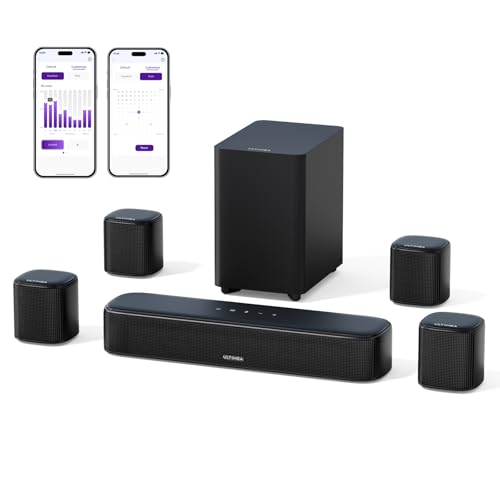
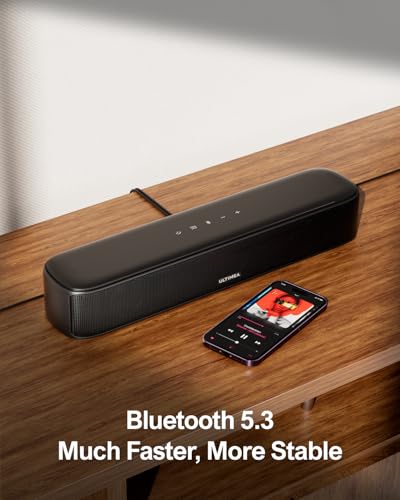
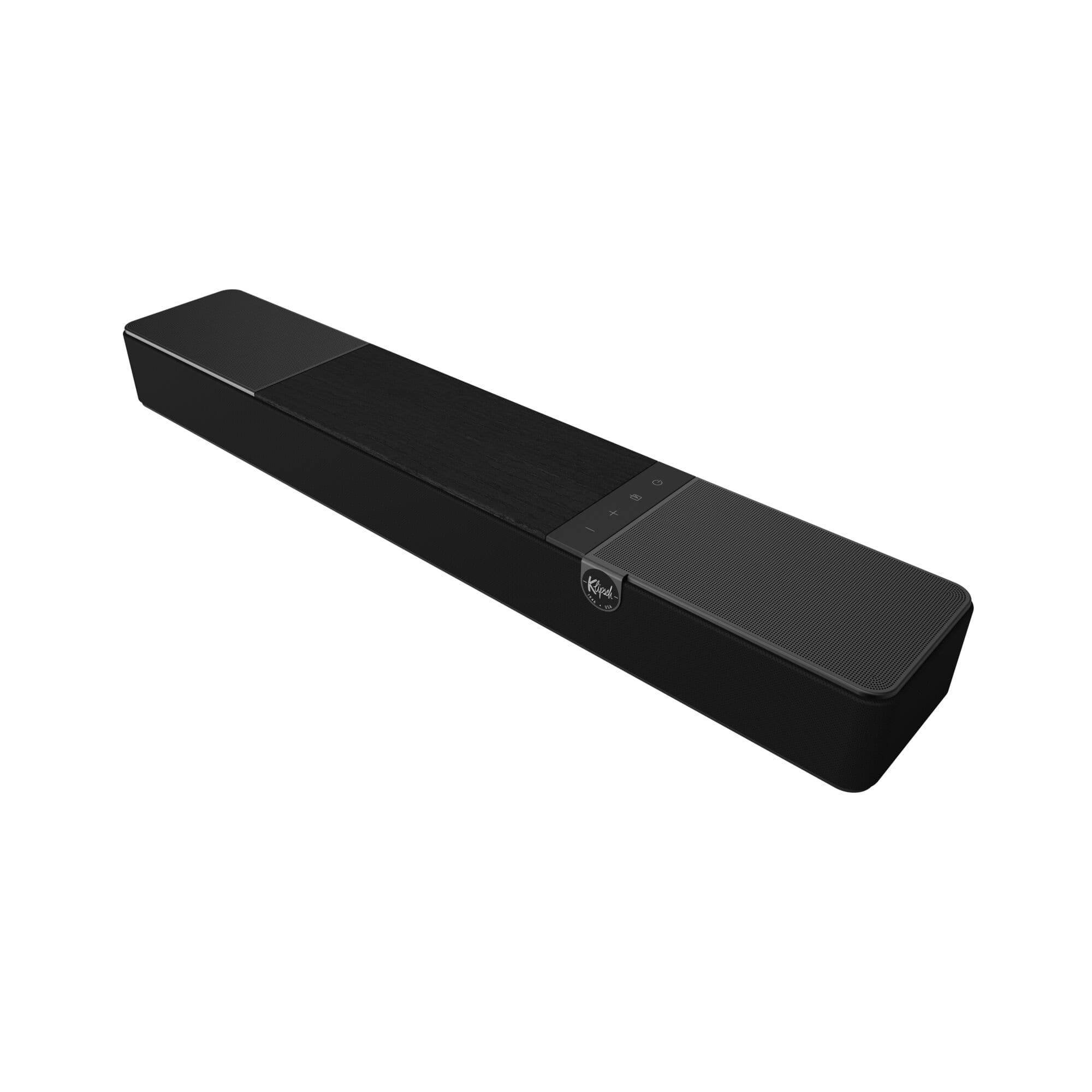

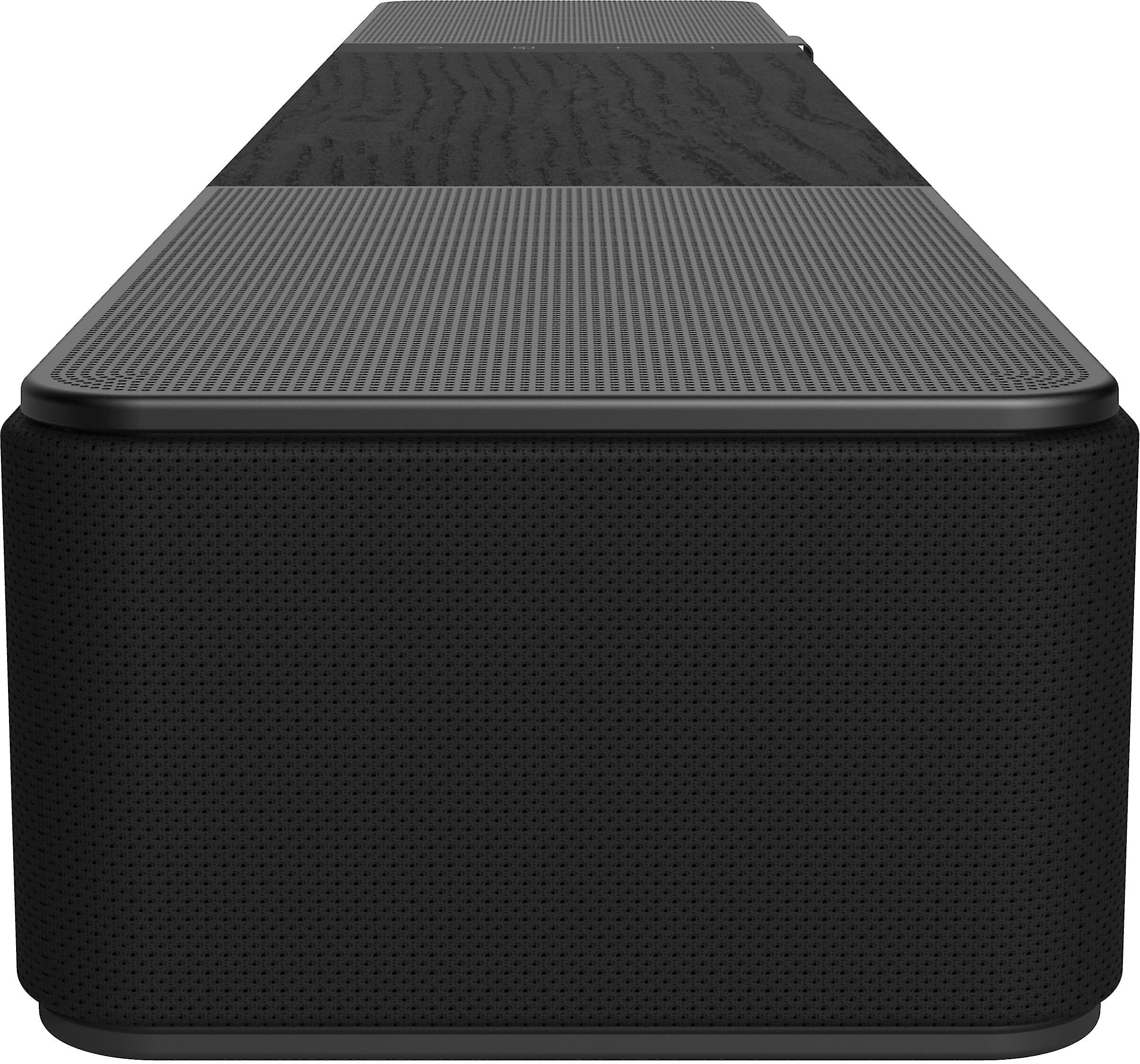
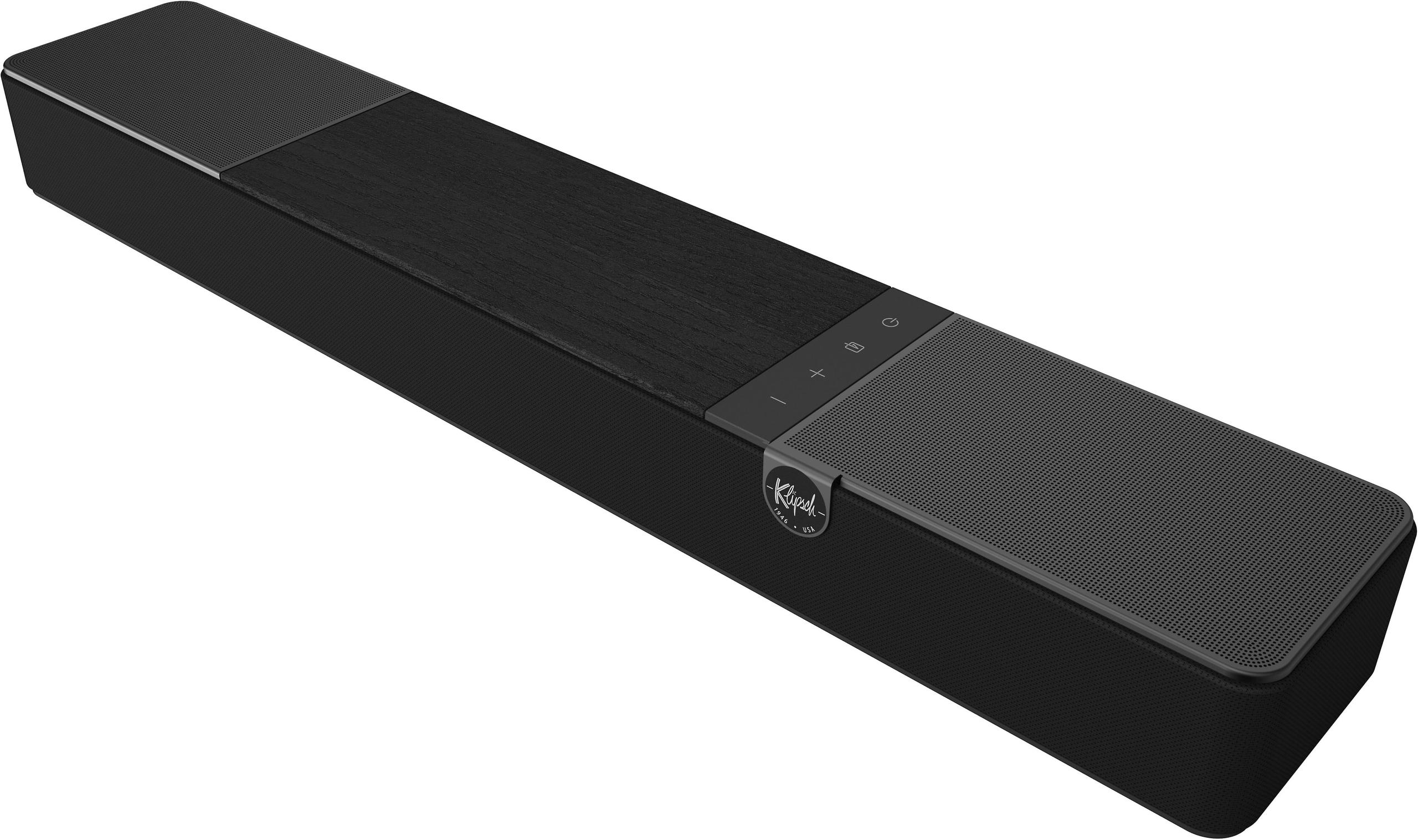





When your TV's built-in speakers sound like they're trapped in a tin can, it's time for an upgrade. The soundbar market has exploded over the past few years, giving us everything from basic stereo bars to complex multi-speaker systems that can rival traditional home theater setups. Today, we're diving deep into two fascinating approaches to this problem: the Ultimea Aura A40, which throws eight physical speakers at your ears, and the Klipsch Flexus Core 100, which relies on premium engineering and smart processing to do more with less.
Before we get into the nitty-gritty, let's talk about what makes these products tick. A soundbar's job is simple: make your movies, games, and music sound dramatically better than your TV's pathetic built-in speakers. But the execution? That's where things get interesting.
The core challenge is physics. Sound needs space to develop properly, but modern TVs are essentially giant screens with no room for decent speakers. Traditional home theater systems solved this with multiple speakers placed around your room, but most people don't want five or seven boxes cluttering their living space. Enter the soundbar: a compromise that tries to pack theater-quality sound into a sleek bar that sits under your TV.
But here's where our two contenders diverge completely. The Ultimea Aura A40 says "forget compromises" and gives you eight physical speakers spread around your room. The Klipsch Flexus Core 100 takes the opposite approach, using advanced audio processing and premium components to create immersive sound from a single, elegant bar.
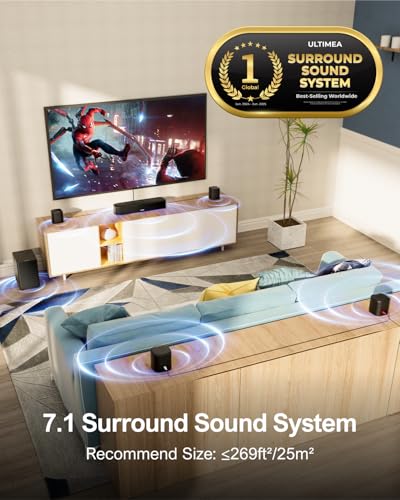
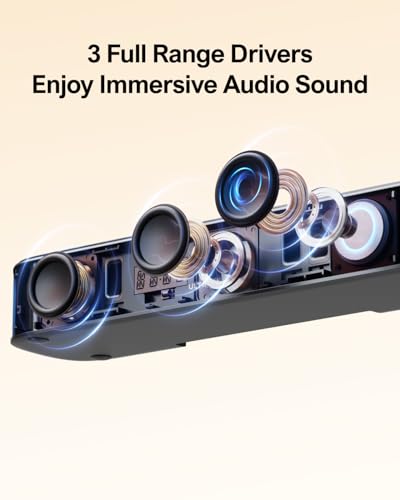
Released in 2024, both systems represent the latest thinking in home audio, but they couldn't be more different in execution. The Aura A40 is Ultimea's answer to the age-old question: "Why settle for virtual surround when you can have the real thing?" It's a complete 7.1 channel system that includes four separate surround speakers, a dedicated subwoofer, and a main soundbar. Think of it as a traditional home theater system that's been simplified and optimized for easy setup.
The Flexus Core 100, meanwhile, represents a collaboration between American speaker legends Klipsch and Japanese electronics masters Onkyo. This partnership brings together Klipsch's 75+ years of speaker design expertise with Onkyo's advanced digital processing. The result is a soundbar that punches way above its weight class while maintaining the clean aesthetics that modern homes demand.
Let's start with the specs that actually matter. The Aura A40 boasts 330 watts of peak power spread across its eight speakers. That's impressive on paper, but peak power is essentially a marketing number—it tells you how loud the system can get for brief moments, not how it performs during normal listening.
More telling is the frequency response: the Aura A40 handles frequencies from 65Hz to 18kHz, while the Flexus Core 100 digs deeper (45Hz) and reaches higher (20kHz) with its 100 watts of RMS power. RMS (Root Mean Square) power is the continuous, sustainable power output—a more honest measure of what you'll actually hear during a two-hour movie.
This difference reveals each system's approach. The Aura A40 uses sheer speaker count to create impact, while the Flexus Core 100 relies on precision engineering to extract maximum performance from fewer, higher-quality components.
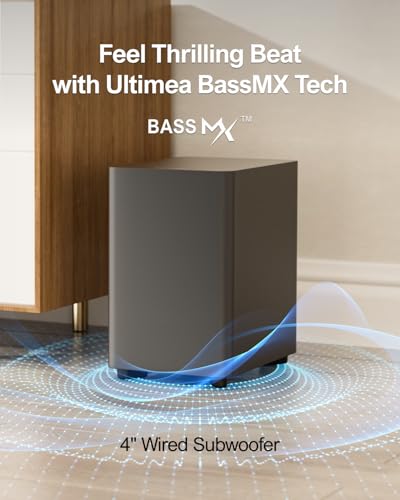
Bass response separates mediocre soundbars from great ones, and here's where both systems show their personality. The Aura A40 includes a dedicated 4-inch subwoofer using what Ultimea calls "BassMX technology." This separate box gives you flexibility in placement—you can tuck it beside your couch or behind a chair to get the bass response dialed in perfectly.
However, our research into user feedback suggests the bass, while present and punchy, can sometimes feel loose or uncontrolled compared to higher-end systems. The 65Hz low-frequency limit means you're missing the deepest rumbles that make action movies truly visceral.
The Flexus Core 100 takes a different route with dual 4-inch drivers integrated directly into the soundbar. These aren't afterthoughts—they're properly designed subwoofers using high-quality paper cone construction. The result is bass that extends down to 45Hz with better control and integration. You lose some of the placement flexibility, but you gain a cleaner, more cohesive sound.
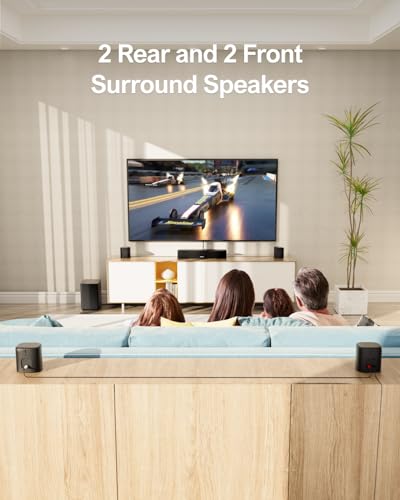
This is where the fundamental difference between these systems becomes crystal clear. The Aura A40 gives you actual surround speakers—four of them. Two connect to the front of your soundbar via cables, while two rear speakers use a hybrid wired/wireless connection system. When a helicopter flies overhead in a movie, you hear it move from the front speakers, through the main bar, and out through the rear speakers behind you. It's the real deal.
The system uses what Ultimea calls "SurroundX technology," which coordinates all eight speakers to create what they claim is 99.99% accurate sound movement. While that specific number feels like marketing hyperbole, the basic principle is sound: more speakers in more locations equals more convincing surround effects.
The Flexus Core 100 relies on Dolby Atmos processing to create virtual surround sound from its single bar. Dolby Atmos is sophisticated technology that analyzes audio signals and uses advanced algorithms to bounce sound off your ceiling and walls, creating the illusion of speakers all around you. When implemented well, it's surprisingly convincing—you'll swear there are speakers behind you even though there aren't.
The catch? Virtual surround works best in rooms with the right acoustic properties. High ceilings, hard surfaces, and proper positioning all matter. Physical speakers, like those in the Aura A40, work regardless of your room's quirks.
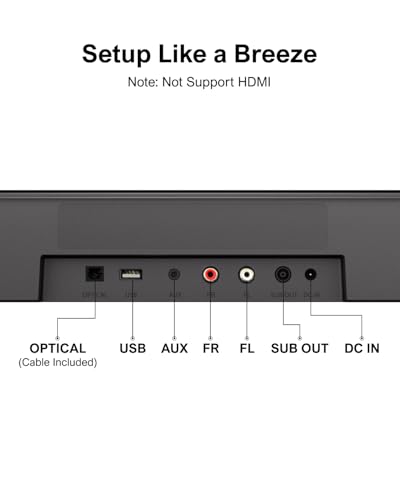
Here's where things get frustrating with the Aura A40. In 2024, it ships without any HDMI connectivity. None. Zero. This isn't just an inconvenience—it's a fundamental limitation that affects how the system integrates with modern TVs and devices.
HDMI eARC (enhanced Audio Return Channel) has become the standard for high-quality audio connections. It allows your TV to send lossless audio formats back to your soundbar, enables your TV remote to control the soundbar's volume, and supports the latest surround sound formats. Without it, you're stuck using optical connections, which compress the audio and can't carry the full range of modern audio formats.
The Flexus Core 100 includes HDMI eARC as a standard feature, along with optical, USB-C, and Bluetooth connections. This means seamless integration with your TV, support for the latest audio formats, and the convenience of controlling everything with one remote.
This connectivity difference might seem technical, but it has real-world implications. If you're building a modern home theater setup, HDMI connectivity isn't optional—it's essential.
The Aura A40 requires commitment. You're not just mounting a soundbar—you're installing a multi-speaker system. The four surround speakers need strategic placement around your room, and while the system includes long cables and wireless connectivity for some speakers, you'll still have wires to manage.
Our research suggests that when everything works, the setup process is straightforward. But there's a "when" there. The wireless pairing for the rear right speaker can be temperamental, sometimes requiring manual intervention to establish a connection. Once paired, it generally stays connected, but it's the kind of quirk that could frustrate less technical users.
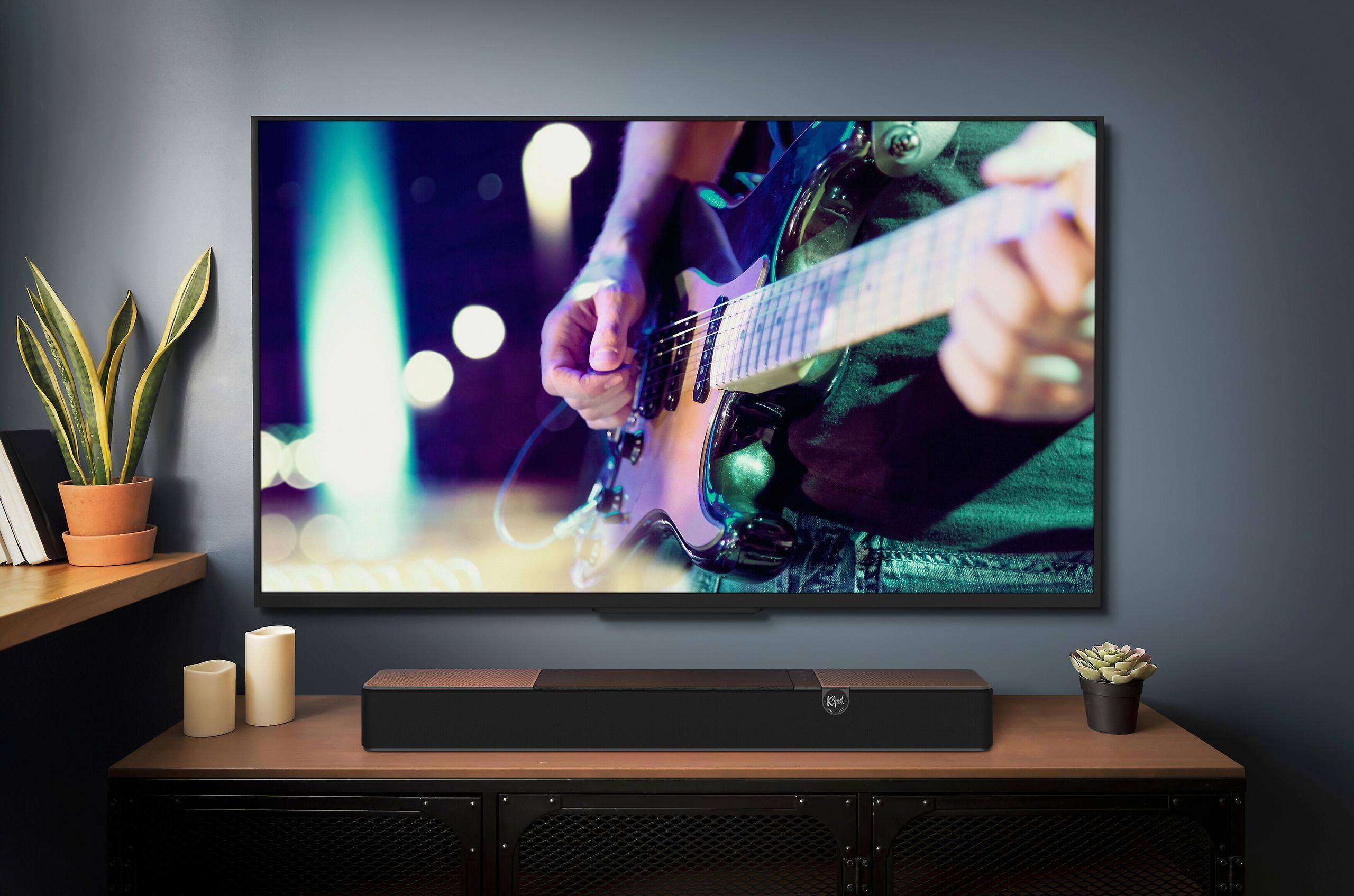
The Flexus Core 100 offers the opposite experience: mount the bar, plug in power and HDMI, and you're done. The clean, single-bar aesthetic appeals to anyone who wants great sound without the visual clutter of multiple speakers.
But here's the thing—both approaches have merit depending on your situation. If you have a dedicated media room where you can place speakers properly, the Aura A40 delivers an authentic surround experience that virtual processing can't match. If you're working with an open floor plan or want to maintain clean sightlines in your living space, the Flexus Core 100 makes more sense.
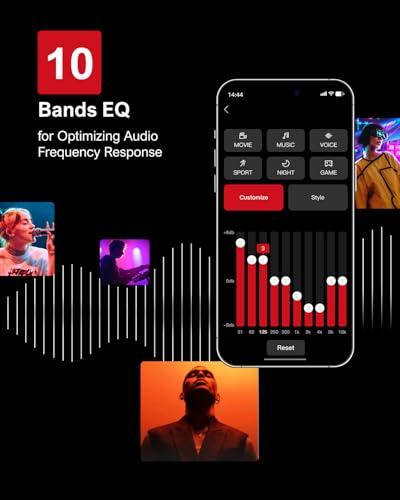
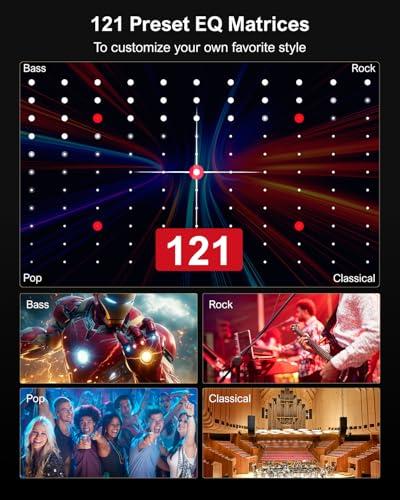
The Aura A40 shines when it comes to sound tuning. The Ultimea Home app provides an almost overwhelming level of customization: 121 preset EQ matrices tailored for different music genres, six listening modes for various content types, and a 10-band manual equalizer for precise tuning. You can adjust surround levels independently, fine-tune bass response, and even receive over-the-air firmware updates.
This level of control appeals to audio enthusiasts who enjoy tweaking their systems. Want more bass for action movies but cleaner mids for dialogue? There's a setting for that. Prefer a different surround balance for gaming versus streaming? You can save custom profiles.
The Klipsch Connect Plus app takes a more streamlined approach with four primary sound modes and basic EQ adjustment. It's less overwhelming but also less flexible. Klipsch's philosophy seems to be "we've engineered this properly from the start," which works well if you trust their acoustic tuning.
Here's a crucial difference that affects long-term value. The Aura A40 is what you get—a complete, fixed system. There's no upgrade path, no way to add more speakers or swap out the subwoofer. You buy it, set it up, and that's your system for its entire lifespan.
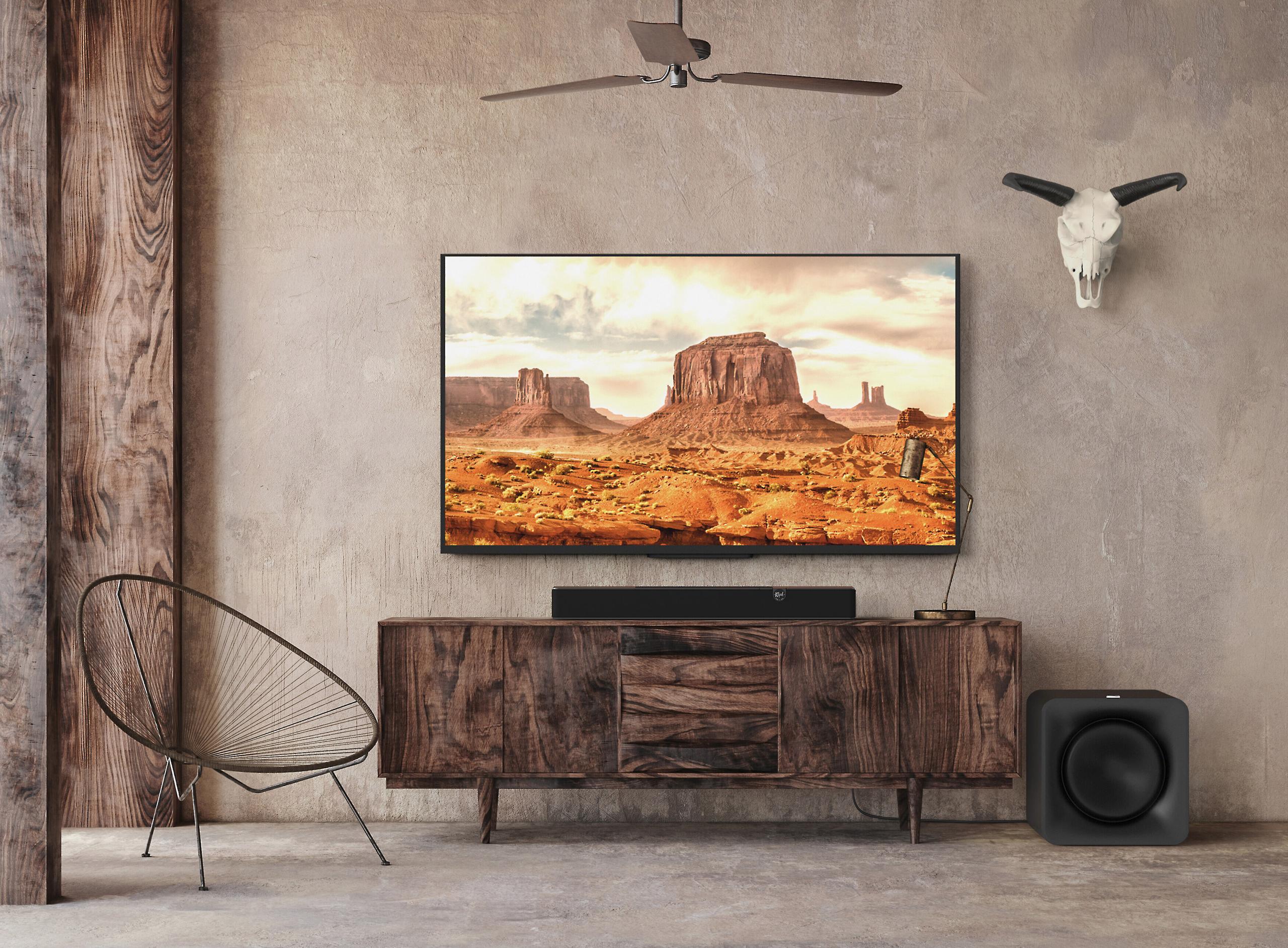
The Flexus Core 100 is designed as the foundation of an expandable ecosystem. You can add wireless Flexus surround speakers to create true rear-channel effects, or integrate one or two Flexus subwoofers for deeper bass impact. This modular approach lets you start with a basic setup and expand as your budget and needs grow.
For someone just starting their home theater journey, this expandability provides a clear upgrade path. You might begin with just the soundbar, add a subwoofer next year, and complete the surround setup the year after that.
Based on extensive research into user and professional reviews, these systems deliver distinctly different listening experiences. The Aura A40 excels at creating an immersive, theater-like experience for movies and games. The physical surround speakers provide authentic directional audio that helps with gaming—you can actually hear enemies approaching from behind—and makes action movies more engaging.
However, multiple reviewers note that the system sounds somewhat "metallic" or "tinny" when playing music, particularly compared to dedicated stereo systems. The individual drivers, while adequate for their price point, lack the refinement you'd find in higher-end speakers. It's a system optimized for impact rather than nuance.
The Flexus Core 100 brings Klipsch's acoustic heritage to bear on the problem. The aluminum cone drivers deliver crisp, detailed sound that works well across different content types. Music playback is notably more refined, with better instrument separation and more natural tonal balance. The integrated subwoofers provide controlled, musical bass rather than just boom.
Professional reviews consistently praise the Flexus Core 100's build quality and driver materials. This is where the Klipsch partnership with Onkyo shows—you're getting genuinely premium components in a competitive package.
If you're building a dedicated home theater, both systems have merits, but they suit different approaches. The Aura A40 works best in smaller, dedicated media rooms where you can position the surround speakers optimally. Ultimea recommends rooms up to 270 square feet, which covers most apartment living rooms or smaller family rooms perfectly.
The system's strength in this environment is its ability to create an authentic surround field regardless of your room's acoustic properties. Carpet, furniture, and wall treatments that might interfere with virtual surround processing don't affect physical speakers nearly as much.
For larger rooms or open floor plans, the Flexus Core 100 often makes more sense. Its virtual surround processing works better with more space to develop, and the single-bar format doesn't require strategic speaker placement around the room. Plus, the expansion options let you add physical surrounds later if you decide you want them.
At the time of writing, both systems compete in the sub-$300 market, but they offer different value propositions. The Aura A40 gives you a complete multi-speaker system immediately. You're getting eight physical speakers, extensive customization options, and authentic surround sound for less than many single soundbars cost.
The Flexus Core 100 costs slightly less upfront but represents a different kind of value. You're paying for premium components, established brand heritage, and modern connectivity features. The expansion options mean your initial investment can grow into a more sophisticated system over time.
Choose the Aura A40 if you want immediate surround immersion and don't mind the complexity of a multi-speaker setup. It's perfect for dedicated media rooms, gaming setups, or anyone who prioritizes authentic surround effects over audio refinement. The extensive EQ options appeal to tweakers who enjoy customizing their sound.
However, be prepared for the limitations. The lack of HDMI connectivity is genuinely problematic in 2024, and the overall audio quality, while adequate, doesn't match what you'd get from premium single-bar solutions.
The Flexus Core 100 suits anyone prioritizing audio quality, modern connectivity, and clean aesthetics. It's the better choice for open living spaces, users who want TV remote integration, and anyone planning to expand their system over time. The Dolby Atmos processing provides convincing virtual surround for most content, and the build quality suggests better long-term reliability.
Your room size, aesthetic preferences, and long-term plans should drive your decision. Both systems represent solid value in their respective approaches—you just need to decide whether you want the immediate gratification of physical surround or the refinement and expandability of a premium single-bar solution.
The soundbar market continues evolving rapidly, with manufacturers pushing the boundaries of what's possible from compact systems. Both the Aura A40 and Flexus Core 100 showcase different aspects of this innovation, proving there's no single "right" way to solve the home audio puzzle.
| Ultimea Aura A40 7.1 Channel Soundbar System | Klipsch Flexus Core 100 Soundbar |
|---|---|
| Speaker Configuration - Determines surround sound authenticity | |
| 8 physical speakers: 3 in soundbar + 4 separate surrounds + subwoofer | 4 speakers in single bar: 2 full-range drivers + 2 integrated subwoofers |
| Channel Configuration - Affects immersion level | |
| True 7.1 with physical rear speakers | 2.1 with virtual surround via Dolby Atmos processing |
| Power Output - Impacts volume and dynamics | |
| 330W peak power across all speakers | 100W RMS continuous power (more honest rating) |
| Frequency Response - Determines bass depth and treble extension | |
| 65Hz - 18kHz (limited low-end extension) | 45Hz - 20kHz (deeper bass, extended highs) |
| HDMI Connectivity - Essential for modern TV integration | |
| None (major limitation for 2024) | HDMI eARC with TV remote control support |
| Setup Complexity - Affects installation time and room aesthetics | |
| 4 surround speakers to position + cables to manage | Single soundbar mount, clean installation |
| Customization Options - Controls sound tuning flexibility | |
| 121 EQ presets + 10-band EQ + 6 listening modes | 4 sound modes with basic EQ adjustment |
| Expandability - Future upgrade potential | |
| Fixed system, no upgrade path | Modular: add wireless surrounds and subwoofers |
| Audio Processing - Determines surround sound quality | |
| SurroundX technology with physical speaker placement | Dolby Atmos virtual surround with height effects |
| Recommended Room Size - Space requirements | |
| Up to 270 sq ft (small to medium rooms) | Better for larger rooms, especially when expanded |
| Connectivity Options - Device compatibility | |
| Optical, AUX, USB-A, Bluetooth 5.3 | HDMI eARC, Optical, USB-C, Bluetooth |
| Build Quality - Long-term reliability and sound refinement | |
| Adequate components optimized for surround impact | Premium aluminum drivers with Klipsch acoustic heritage |
The Ultimea Aura A40 provides superior surround sound with eight physical speakers including four separate surround speakers that create authentic directional audio. The Klipsch Flexus Core 100 uses virtual surround through Dolby Atmos processing from a single bar, which is convincing but not as immersive as physical speakers placed around your room.
The Klipsch Flexus Core 100 includes HDMI eARC connectivity for seamless integration with modern TVs and full remote control functionality. The Ultimea Aura A40 lacks HDMI connectivity entirely, requiring optical or Bluetooth connections which limits audio quality and TV integration features.
Both systems handle bass differently. The Ultimea Aura A40 includes a separate 4-inch subwoofer that can be placed anywhere for optimal bass response. The Klipsch Flexus Core 100 features dual integrated 4-inch subwoofers that extend deeper (45Hz vs 65Hz) with tighter, more controlled bass performance.
The Klipsch Flexus Core 100 offers simple installation with just one soundbar to mount and connect. The Ultimea Aura A40 requires positioning four surround speakers around your room, running cables, and wireless pairing for rear speakers, making it significantly more complex to set up properly.
The Klipsch Flexus Core 100 is designed for expansion with optional wireless surround speakers and additional subwoofers available separately. The Ultimea Aura A40 is a complete fixed system with no upgrade options - what you buy is your final configuration.
The Klipsch Flexus Core 100 delivers superior music performance with premium aluminum cone drivers and refined sound quality typical of the Klipsch brand. The Ultimea Aura A40 is optimized for movies and gaming but can sound metallic or tinny when playing music according to user reviews.
The Ultimea Aura A40 excels in customization with 121 preset EQ settings, a 10-band equalizer, and six listening modes through its mobile app. The Klipsch Flexus Core 100 offers four basic sound modes with limited EQ adjustment, taking a simpler approach to sound tuning.
The Ultimea Aura A40 is specifically designed for smaller spaces up to 270 square feet and works well regardless of room acoustics due to its physical speakers. The Klipsch Flexus Core 100 performs better in larger rooms where its virtual surround processing has more space to develop properly.
Only the Klipsch Flexus Core 100 features Dolby Atmos processing for virtual height effects and immersive audio. The Ultimea Aura A40 uses its own SurroundX technology instead of standard surround formats, which may limit compatibility with some content.
The Klipsch Flexus Core 100 provides better long-term value through its expandable design, premium build quality, and modern connectivity features. While the Ultimea Aura A40 gives you a complete surround system immediately, its lack of HDMI and fixed configuration may become limiting over time.
The Ultimea Aura A40 claims 330W peak power across all eight speakers, while the Klipsch Flexus Core 100 provides 100W RMS continuous power. RMS ratings are more reliable indicators of actual performance, and the Klipsch Flexus Core 100 focuses on clean, controlled output rather than maximum volume.
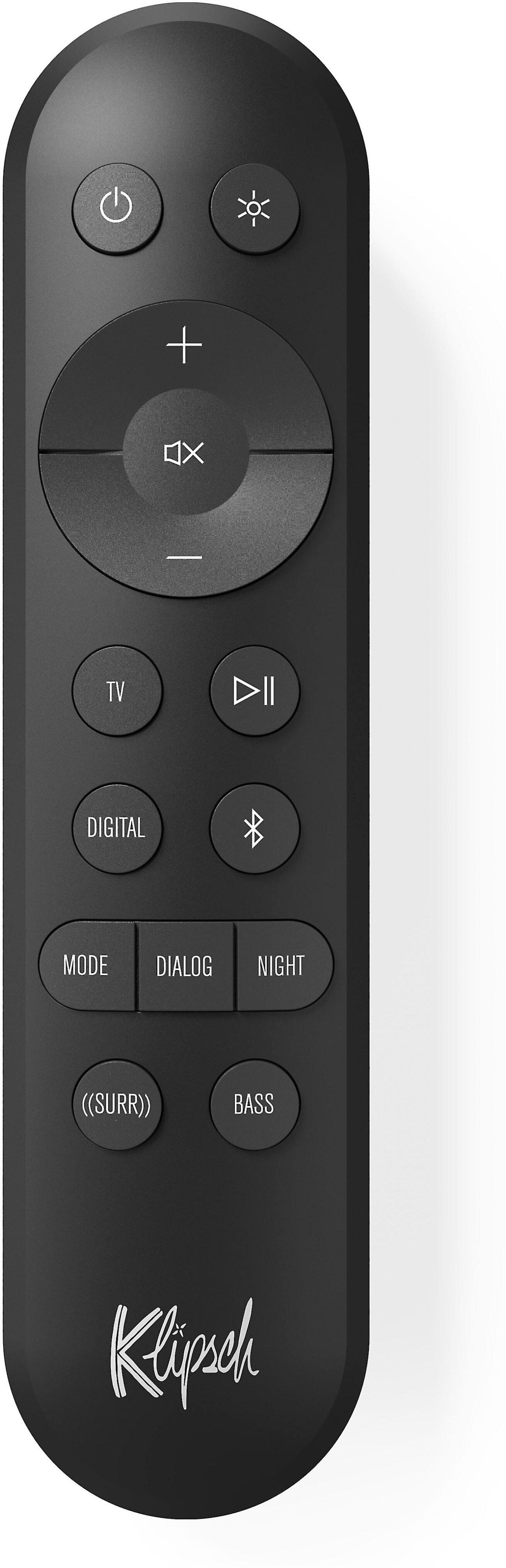
The Klipsch Flexus Core 100 offers a cleaner living experience with its single-bar design, HDMI integration for one-remote control, and professional appearance. The Ultimea Aura A40 requires managing multiple speakers around your room and separate remote control, but rewards you with authentic surround sound immersion for dedicated home theater setups.
We've done our best to create useful and informative comparisons to help you decide what product to buy. Our research uses advanced automated methods to create this comparison and perfection is not possible - please contact us for corrections or questions. These are the sites we've researched in the creation of this article: youtube.com - walmart.com - youtube.com - ultimea.com - homestudiobasics.com - ultimea.co - youtube.com - eu.ultimea.com - walmart.com - device.report - bestbuy.com - manuals.plus - community.ultimea.com - judge.me - support.ultimea.com - geekmaxi.com - provantage.com - bestbuy.com - youtube.com - uk.whatgeek.com - cnet.com - klipsch.com - klipsch.com - bestbuy.com - sweetwater.com - assets.onkyo-av.com - youtube.com - worldwidestereo.com - avnirvana.com - target.com

Privacy Policy
Terms and Conditions - Affiliate Policy
Home Security
© Copyright 2008-2026.
11816 Inwood Rd #1211, Dallas, TX 75244