


Setting up a home theater that actually sounds good can be tricky. Your TV's built-in speakers probably sound thin and lifeless, but a full 7.1 speaker system with wires running everywhere feels like overkill for most living rooms. That's where modern soundbar systems come in—they promise cinema-quality sound without turning your living room into a recording studio.
But here's where it gets confusing: some soundbars create "virtual" surround sound using clever audio processing, while others use actual physical speakers placed around your room. Both the Ultimea Aura A40 and Amazon Fire TV Soundbar Plus take different approaches to solving this problem, and understanding these differences is crucial to picking the right system for your space and budget.
Before diving into specific products, let's clarify what we're dealing with. Traditional surround sound uses discrete speakers—meaning separate physical speakers—placed strategically around your listening area. Each speaker handles specific audio channels: front left, front right, center (dialogue), surround left, surround right, and often height channels for overhead effects.
Modern soundbars achieve surround effects through two main approaches. Virtual surround uses digital signal processing (DSP) to manipulate audio timing and frequency response, tricking your brain into perceiving sounds coming from directions where no speakers actually exist. True surround systems include actual satellite speakers positioned around your room, creating genuine directional audio.
The channel count tells you how many distinct audio streams the system can handle. A 5.1 system processes six channels: five main speakers plus one subwoofer (the ".1" refers to the dedicated low-frequency channel). A 7.1 system adds two more channels, typically rear surround speakers, for even more precise audio placement.
Both systems we're examining launched in recent years—the Ultimea Aura A40 represents the newer wave of customizable, app-controlled soundbars, while the Amazon Fire TV Soundbar Plus arrived in 2024 as Amazon's answer to growing demand for simple, high-quality home theater audio.
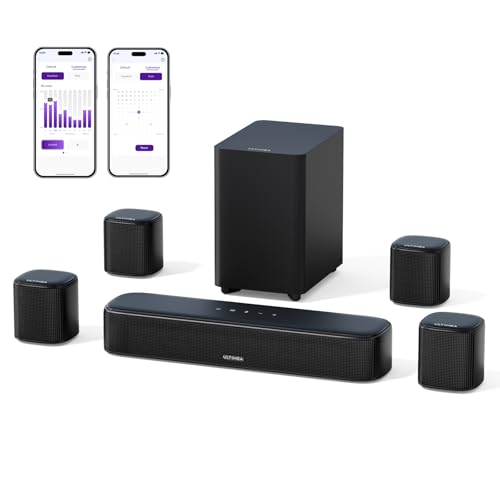
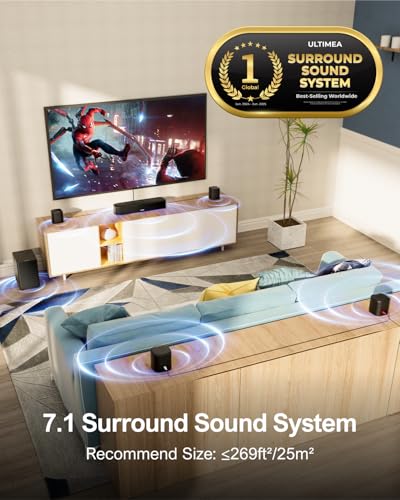
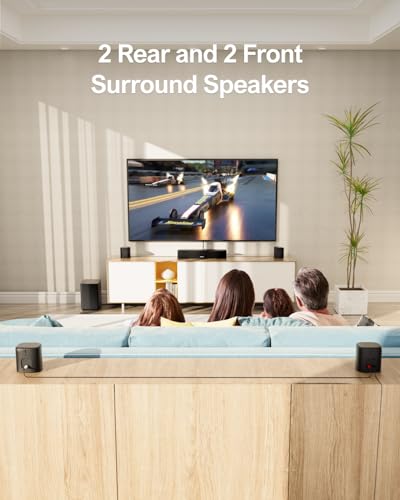
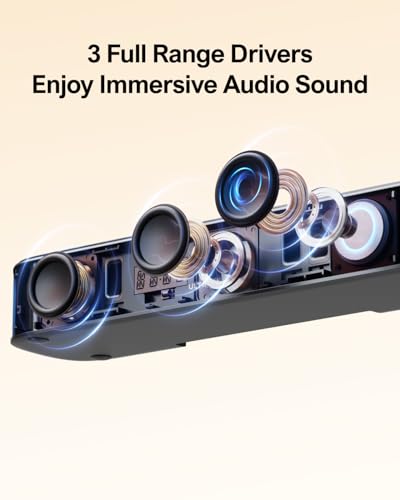
The Ultimea Aura A40 takes the "more is better" approach with eight total speakers creating a 7.1 virtual surround experience. This includes three drivers in the main soundbar, four separate 2-inch surround speakers, and a 4-inch wired subwoofer. What makes this system unique is its hybrid connection approach—the front surround speakers connect via cables for reliability, while the rear right speaker pairs wirelessly to reduce cable clutter.
The real standout feature is Ultimea's SurroundX technology, which the company claims achieves 99.99% detail accuracy in audio placement. Whether that specific number means anything measurable is debatable, but the underlying concept is solid: using multiple physical speakers and sophisticated processing to create precise directional audio.
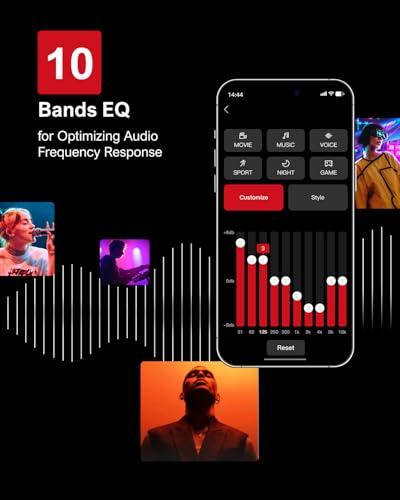
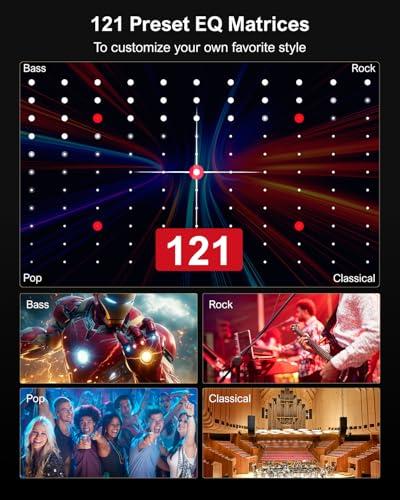
The Aura A40's secret weapon is its companion app, offering an almost overwhelming level of customization. We're talking 121 preset EQ matrices across four sonic preferences, plus a full 10-band manual equalizer. You can adjust surround levels independently for each speaker position, fine-tune bass response, and even receive over-the-air firmware updates. It's like having a professional audio engineer's toolkit in your smartphone.
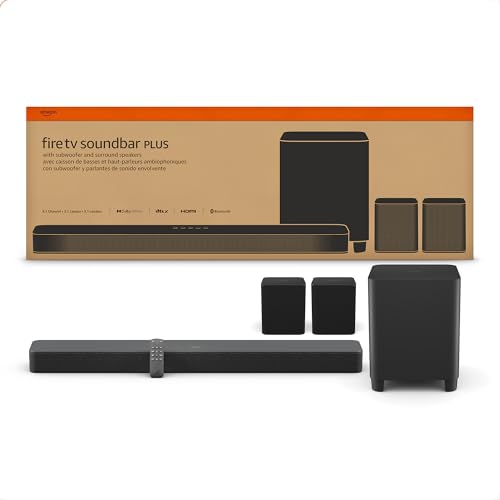
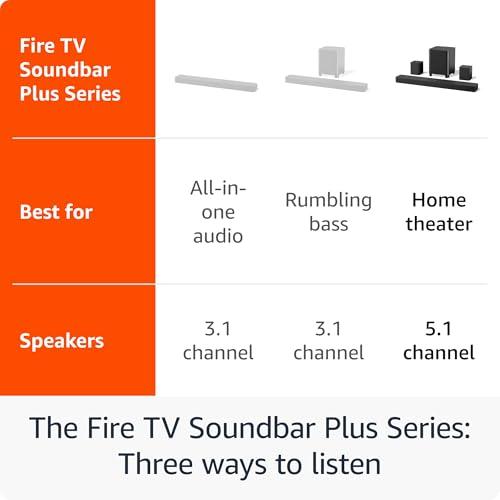
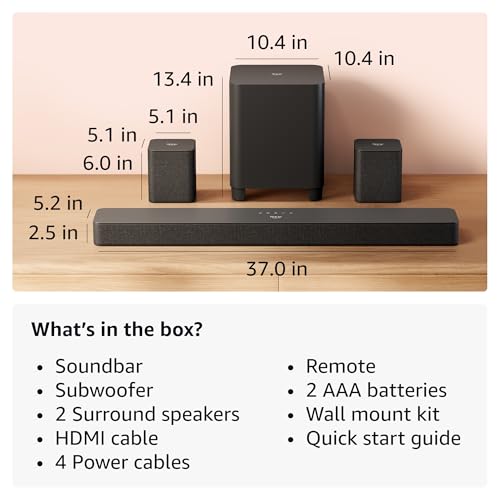
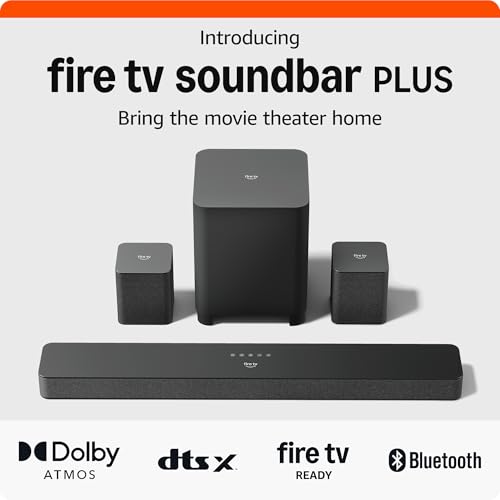
The Amazon Fire TV Soundbar Plus takes a completely different approach with true 5.1 discrete channels. Instead of relying primarily on virtual processing, it uses actual separate components: a larger main soundbar handling left, center, and right channels, plus a wireless subwoofer and two wireless satellite speakers for genuine surround effects.
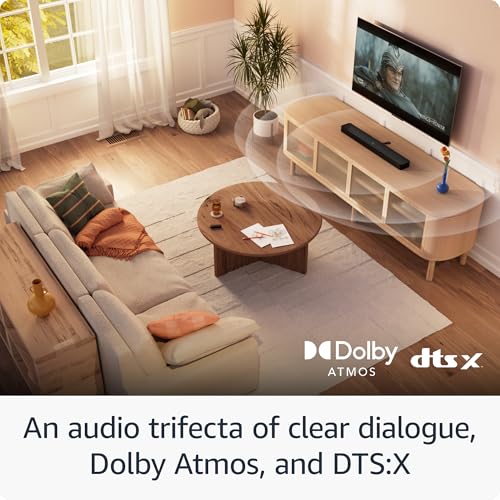
Amazon focused heavily on format support, including Dolby Atmos and DTS:X object-based audio. These formats don't just assign sounds to specific speakers—they treat audio as objects that can move freely through three-dimensional space. However, since the Fire TV system lacks discrete upward-firing drivers, height effects are virtualized rather than physically projected above your head.
The integration with Fire TV devices is seamless when it works. Connect the soundbar to a compatible Fire TV via HDMI, and you can control everything through your TV's interface. No separate remote needed for basic functions, no additional setup menus to navigate.
Based on our research into user and expert reviews, these systems create notably different surround experiences. The Ultimea A40 excels at creating that "helicopter flying overhead" effect that makes action movies feel visceral. With four dedicated surround speakers positioned around your listening area, sounds genuinely appear to move through space in ways that pure virtual processing can't match.
The system's ability to adjust surround levels independently for each speaker position is genuinely useful. If your rear left speaker is closer to a wall than your rear right, you can compensate through the app rather than physically relocating speakers. This flexibility matters in real-world living rooms where optimal speaker placement isn't always possible.
However, the Amazon Fire TV system's approach has its own strengths. The dedicated center channel—a separate driver specifically handling dialogue—creates noticeably clearer speech reproduction. This is crucial for TV shows and dialogue-heavy films where understanding every word matters more than feeling explosions shake the room.
The Fire TV's Dolby Atmos support, even though it's virtualized, does add a layer of sophistication to compatible content. Netflix's action films and Apple TV+'s high-production content that's mixed in Atmos will sound more spacious and dynamic than standard 5.1 mixes, though you won't get the full overhead effect that true Atmos systems with height speakers provide.
When it comes to pure sound quality, these systems reveal their different design philosophies. The Ultimea A40 offers impressive technical specifications: frequency response from 65Hz to 18kHz, signal-to-noise ratio above 75dB, and distortion below 1%. These numbers suggest clean, detailed audio reproduction across the audible spectrum.
But specifications only tell part of the story. Based on reviewer consensus, the A40's sound signature can vary dramatically depending on your EQ settings. Out of the box, some users find it thin or metallic for music listening, but the extensive customization options let you dial in a sound profile that works for your content and preferences. The 121 preset matrices aren't just marketing fluff—they represent genuinely different tuning approaches for various music genres and content types.
The Amazon Fire TV system, conversely, aims for a more natural, balanced sound right out of the box. The larger drivers in the main soundbar and the dedicated center channel create fuller, more authoritative sound than many compact alternatives. However, customization is limited to basic bass and treble adjustments plus a handful of presets.
For music listening, the differences become more apparent. The Ultimea system can be tuned extensively for different genres—the Classical preset emphasizes midrange clarity and natural dynamics, while the Bass preset pumps up low-frequency impact for hip-hop and electronic music. The Fire TV system maintains a more consistent character across content types, which some users prefer for its predictability but others find limiting.
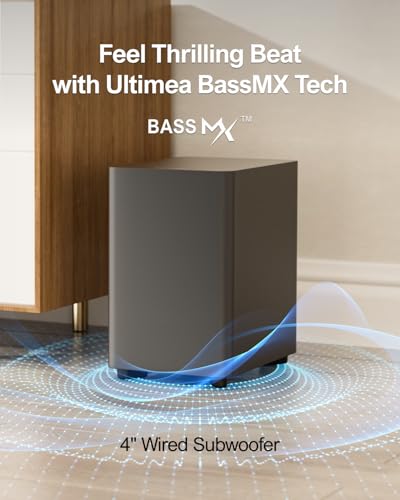
Both systems include dedicated subwoofers, but they handle low frequencies differently. The Ultimea A40's 4-inch wired subwoofer uses BassMX technology, which appears to be Ultimea's proprietary approach to reducing distortion at higher output levels. The wired connection ensures reliable, consistent bass without the potential for wireless dropouts.
Based on user feedback, the A40's bass is punchy and well-controlled when properly adjusted through the app. The ability to fine-tune bass response through multiple EQ bands means you can optimize for your room's acoustics—crucial since bass response varies dramatically with room size and layout.
The Fire TV system's wireless subwoofer is notably larger and more powerful. User reports suggest it delivers deeper, more authoritative bass that can fill larger rooms without strain. However, the lack of detailed bass adjustment options means you're somewhat at the mercy of the system's default tuning and your room's natural characteristics.
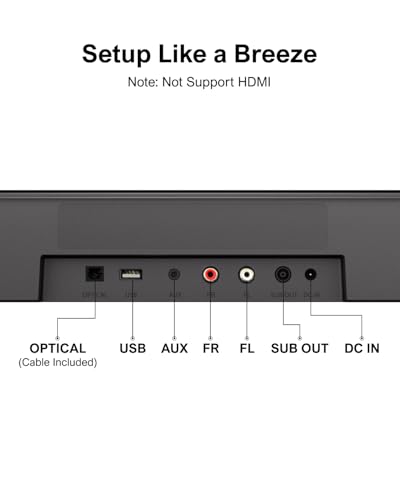
Here's where the philosophical differences between these systems become most apparent. The Ultimea A40 surprisingly lacks HDMI connectivity entirely, relying instead on optical, auxiliary, USB, and Bluetooth connections. This feels like a significant oversight in 2024, when HDMI ARC (Audio Return Channel) has become the standard for soundbar integration.
Without HDMI, you lose access to high-bandwidth audio formats, automatic power synchronization with your TV, and the convenience of single-remote control. You also can't take advantage of newer features like eARC (Enhanced Audio Return Channel), which supports lossless audio formats and reduces audio delay issues.
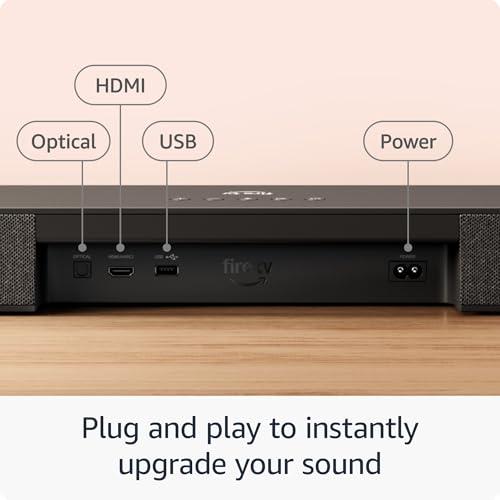
The Amazon Fire TV Soundbar Plus includes HDMI eARC and even provides an HDMI cable in the box—a nice touch that many competitors skip. This enables seamless integration with modern TVs, automatic power control, and support for high-quality audio formats like Dolby TrueHD and DTS-HD Master Audio.
The Fire TV integration, when connected to compatible Amazon devices, is genuinely convenient. Settings appear directly in your TV's menu system, eliminating the need to juggle multiple remotes for basic adjustments. However, this integration is limited to Amazon's ecosystem—connect the soundbar to a Samsung or LG TV, and you lose these streamlined controls.
At the time of writing, the Ultimea A40 represents exceptional value in the budget-to-midrange soundbar category. Getting eight physical speakers with extensive app-based customization at this price point is remarkable. The system punches well above its weight class in terms of surround immersion and flexibility.
However, that value comes with caveats. The lack of HDMI connectivity will frustrate users with modern TVs who expect seamless integration. The extensive customization options can overwhelm casual users who just want better sound without becoming audio engineers. And the build quality, while adequate, doesn't match more expensive alternatives.
The Amazon Fire TV Soundbar Plus commands a higher price but delivers a more refined, user-friendly experience. The wireless components, modern connectivity, and simplified operation justify the premium for users who prioritize convenience over maximum customization. However, some reviews suggest the build quality could be better for the price point, and the limited adjustment options may disappoint audio enthusiasts.
For dedicated home theater use, both systems have distinct advantages. The Ultimea A40 excels with action films and gaming where surround immersion matters most. The four discrete surround speakers create convincing directional effects for helicopter chases, racing games, and horror films where sounds moving through space enhance the experience.
The extensive EQ customization becomes valuable for home theater use because different content types benefit from different tuning. Movie mode might emphasize dialogue clarity and dynamic range, while Game mode could boost directional cues and reduce bass to prevent disturbing neighbors during late-night sessions.
The Amazon Fire TV system's dedicated center channel gives it an edge for dialogue-heavy content—crucial for complex dramas or foreign films with subtitles where every word matters. The Dolby Atmos support, even though virtualized, adds sophistication to compatible streaming content from Netflix, Disney+, and other services increasingly offering object-based audio.
For larger rooms, the Fire TV system's more powerful drivers and wireless subwoofer may provide better room-filling capability, while the Ultimea A40 might struggle to pressurize bigger spaces despite its multiple speakers.
After extensive research into professional reviews and user feedback, clear usage patterns emerge for each system.
Choose the Ultimea Aura A40 if you're an audio enthusiast who enjoys tweaking settings to perfect your sound. The system rewards users willing to spend time with the app, experimenting with different EQ presets and fine-tuning surround levels. It's ideal for gaming and action movies where surround immersion matters more than absolute fidelity, and perfect for users on tighter budgets who still want genuine multi-speaker surround sound.
The A40 also makes sense for users with older TVs or unique connection requirements, since its multiple input options provide flexibility that HDMI-only systems can't match. If you enjoy the process of audio customization and don't mind the setup complexity, the Ultimea system offers remarkable capability for its price point.
Choose the Amazon Fire TV Soundbar Plus if you want high-quality sound with minimal fuss. The system excels for users who primarily watch TV shows, movies, and streaming content where dialogue clarity is paramount. The wireless components and simplified setup make it ideal for users who want better sound without dedicating significant time to configuration.
The Fire TV system particularly makes sense for users already invested in Amazon's ecosystem, where the integration features provide genuine daily-use benefits. If you value build quality, modern connectivity, and don't need extensive customization options, the additional cost delivers meaningful improvements in convenience and performance.
Neither system is perfect—the Ultimea A40 needs HDMI connectivity to feel truly modern, while the Amazon Fire TV Soundbar Plus needs more customization options to satisfy audio enthusiasts. But both represent thoughtful approaches to the fundamental challenge of delivering immersive home theater sound without the complexity of traditional surround systems.
The key is honestly assessing your priorities: maximum customization and value, or convenience and integration. Both systems will dramatically improve your TV's audio, but they'll do it in distinctly different ways that suit different types of users.
| Ultimea Aura A40 7.1 Channel Soundbar System | Amazon Fire TV Soundbar Plus 5.1 Channel System |
|---|---|
| Channel Configuration - Determines surround immersion and audio placement accuracy | |
| 7.1 virtual surround with 8 physical speakers (4 dedicated surround speakers) | True 5.1 discrete channels with wireless subwoofer and satellite speakers |
| Surround Speaker Setup - Critical for achieving genuine directional audio | |
| 4 wired surround speakers (2 front, 2 rear) with hybrid wireless connection | 2 wireless satellite speakers for rear surround effects |
| Audio Format Support - Determines compatibility with modern streaming content | |
| Standard stereo and surround formats, no Atmos or DTS:X support | Dolby Atmos, DTS:X, Dolby TrueHD, DTS-HD Master Audio (virtualized height) |
| Connectivity Options - Essential for integration with modern TVs and devices | |
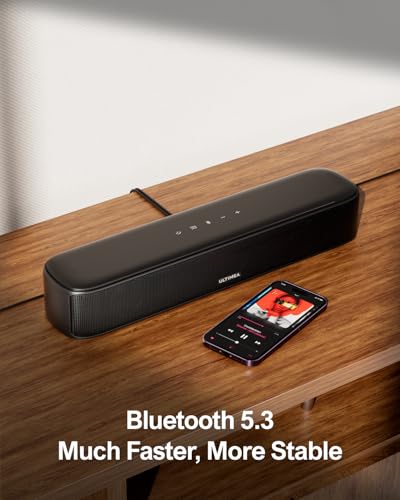
| Optical, AUX, USB, Bluetooth 5.3 (no HDMI connectivity) | HDMI eARC, Optical, USB-A, Bluetooth 5.0 (includes HDMI cable) |
| Customization and Control - Impacts daily usability and sound optimization | |
| Ultimea Smart App with 121 EQ presets, 10-band equalizer, adjustable surround levels | Basic remote control with 4 EQ modes, bass/treble adjustment, no app support |
| Subwoofer Connection - Affects reliability and placement flexibility | |
| 4-inch wired subwoofer with BassMX technology | Wireless subwoofer (10.4" x 10.4" x 13.4") for flexible placement |
| Main Soundbar Size - Determines compatibility with TV setups and room aesthetics | |
| Compact: 15.7" W × 3.5" D × 2.75" H (fits smaller TVs and tight spaces) | Large: 37" W × 5.2" H × 2.5" D (requires substantial TV stand space) |
| Smart Features and Integration - Convenience for daily operation | |
| OTA firmware updates via app, extensive manual customization | Fire TV integration with on-screen controls, plug-and-play wireless setup |
| Frequency Response - Indicates audio range and bass extension capability | |
| 65Hz – 18kHz with <1% distortion, 330W peak power | Not specified, but larger drivers suggest fuller frequency response |
| Target User Experience - Who each system serves best | |
| Audio enthusiasts wanting maximum customization and surround speaker count | Mainstream users prioritizing convenience, dialogue clarity, and modern format support |
The Amazon Fire TV Soundbar Plus 5.1 Channel System is better for most movies and TV shows due to its dedicated center channel that provides crystal-clear dialogue reproduction. It also supports Dolby Atmos and DTS:X formats found in modern streaming content. The Ultimea Aura A40 7.1 Channel Soundbar System excels more with action movies and gaming where its four surround speakers create superior directional audio effects.
The Ultimea Aura A40 offers 7.1 virtual surround with more audio channels and four physical surround speakers for enhanced directional effects. The Amazon Fire TV Soundbar Plus uses true 5.1 discrete channels with separate components. While 7.1 sounds more impressive on paper, the Fire TV's approach with actual discrete speakers often provides more authentic surround sound for most content.
The Amazon Fire TV Soundbar Plus is much easier to set up with pre-paired wireless components and plug-and-play operation. It also integrates seamlessly with Fire TV devices for single-remote control. The Ultimea Aura A40 requires more complex setup with multiple wired speakers and extensive app configuration, making it better suited for users who enjoy customizing their audio experience.
Only the Amazon Fire TV Soundbar Plus supports modern audio formats including Dolby Atmos, DTS:X, and lossless codecs like Dolby TrueHD. The Ultimea Aura A40 lacks support for these advanced formats, which limits its compatibility with high-quality streaming content from Netflix, Disney+, and 4K Blu-rays.
Both systems include subwoofers, but they handle bass differently. The Amazon Fire TV Soundbar Plus features a larger wireless subwoofer that delivers deeper, more powerful bass for larger rooms. The Ultimea Aura A40 uses a 4-inch wired subwoofer with BassMX technology that provides more controlled, customizable bass through extensive app-based EQ settings.
The Amazon Fire TV Soundbar Plus offers excellent TV remote integration, especially with Fire TV devices, allowing control through your TV's interface. The Ultimea Aura A40 lacks HDMI connectivity, so TV remote control is limited. However, it compensates with a comprehensive smartphone app that provides far more detailed control options than traditional remotes.
The Ultimea Aura A40 offers exceptional value with eight physical speakers and extensive customization features at a lower price point. The Amazon Fire TV Soundbar Plus costs more but justifies the premium with wireless components, modern format support, HDMI connectivity, and superior build quality. Value depends on whether you prioritize speaker count and customization or convenience and integration.
The Amazon Fire TV Soundbar Plus includes modern HDMI eARC connectivity plus optical and Bluetooth options, making it compatible with virtually any TV setup. The Ultimea Aura A40 surprisingly lacks HDMI entirely, offering only optical, AUX, USB, and Bluetooth connections. This connectivity limitation is the Ultimea's biggest weakness for modern home theater setups.
The Ultimea Aura A40 is superior for gaming due to its four discrete surround speakers that create precise directional audio cues essential for competitive gaming and immersive single-player experiences. The system's extensive EQ customization also allows gamers to optimize settings for different game types. The Amazon Fire TV Soundbar Plus works well for gaming but doesn't provide the same level of positional accuracy.
The Ultimea Aura A40 offers extensive customization with 121 EQ presets, 10-band manual equalizer, and adjustable surround levels through its smartphone app. The Amazon Fire TV Soundbar Plus provides only basic customization with four EQ modes and simple bass/treble adjustments via the included remote. Audio enthusiasts will strongly prefer the Ultimea's customization depth.
The Amazon Fire TV Soundbar Plus typically performs better in larger spaces due to its bigger drivers, more powerful amplification, and larger wireless subwoofer. The Ultimea Aura A40 is optimized for small to medium rooms (10-25 square meters) and may struggle to fill larger spaces with adequate volume and bass impact, despite having more speakers.
The Ultimea Aura A40's biggest limitation is the lack of HDMI connectivity, which restricts integration with modern TVs and prevents access to high-quality audio formats. The Amazon Fire TV Soundbar Plus is limited by minimal customization options and the large soundbar size that may not fit smaller TV setups. Consider these limitations carefully based on your specific setup and preferences.
We've done our best to create useful and informative comparisons to help you decide what product to buy. Our research uses advanced automated methods to create this comparison and perfection is not possible - please contact us for corrections or questions. These are the sites we've researched in the creation of this article: youtube.com - walmart.com - youtube.com - ultimea.com - homestudiobasics.com - ultimea.co - youtube.com - eu.ultimea.com - walmart.com - device.report - bestbuy.com - manuals.plus - community.ultimea.com - judge.me - support.ultimea.com - geekmaxi.com - provantage.com - bestbuy.com - youtube.com - uk.whatgeek.com - rtings.com - cordbusters.co.uk - techradar.com - developer.amazon.com - t3.com - hometechnologyreview.com - youtube.com - hometechnologyreview.com - whathifi.com - hometechnologyreview.com - hometechnologyreview.com - youm.design - hometechnologyreview.com - dolby.com

Privacy Policy
Terms and Conditions - Affiliate Policy
Home Security
© Copyright 2008-2026.
11816 Inwood Rd #1211, Dallas, TX 75244