



When your TV's built-in speakers leave you straining to hear dialog or missing the rumble of movie explosions, a soundbar becomes essential. But with options ranging from under $100 to over $1000, choosing the right one requires understanding what you're actually getting for your money. Today we're comparing two very different approaches: the Hisense AX5140Q, a premium Dolby Atmos system, and the Ultimea Aura A40, a budget-focused traditional surround sound setup.
Released in 2023, both soundbars represent their manufacturers' current thinking on home audio. The Hisense AX5140Q arrived during the height of Dolby Atmos adoption, when streaming services and gaming consoles began supporting height-channel audio in earnest. The Ultimea Aura A40 launched as a direct response to consumers wanting "real" surround sound without premium pricing. Since their release, software updates have improved both systems, but their core philosophies remain distinct.
The soundbar category has evolved dramatically from the simple "TV speaker replacement" boxes of the early 2010s. Today's systems attempt to recreate movie theater experiences in your living room, but they take radically different approaches to achieve immersion.
Traditional surround sound works by placing speakers around your seating area—think of the classic 5.1 setup with speakers to your left, right, center, and behind you, plus a subwoofer for bass. Height channels, introduced with Dolby Atmos in 2012, add overhead speakers that make sounds appear to come from above. This creates what audio engineers call "object-based audio," where individual sounds (a helicopter, rainfall, footsteps) can move freely in three-dimensional space rather than being locked to specific speaker channels.
The key consideration when evaluating any soundbar is whether it uses physical speakers to create these effects or relies on digital processing to simulate them. Physical speakers provide authentic directional audio, while virtual processing uses psychoacoustic tricks to fool your brain into perceiving sounds from directions where no speakers exist.
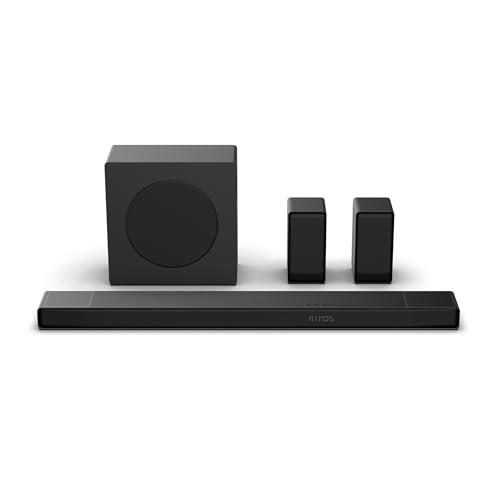
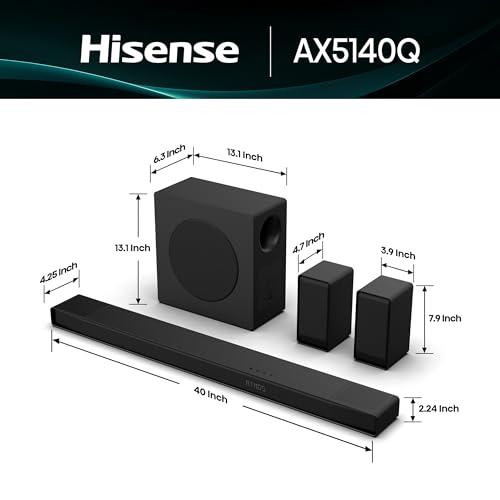
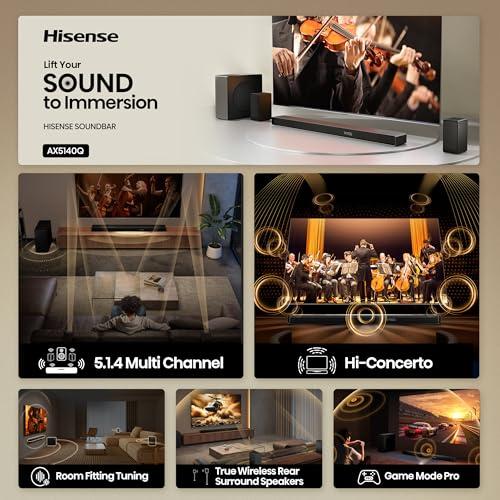
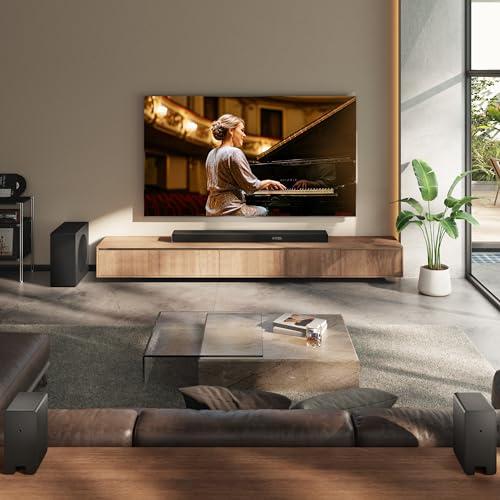
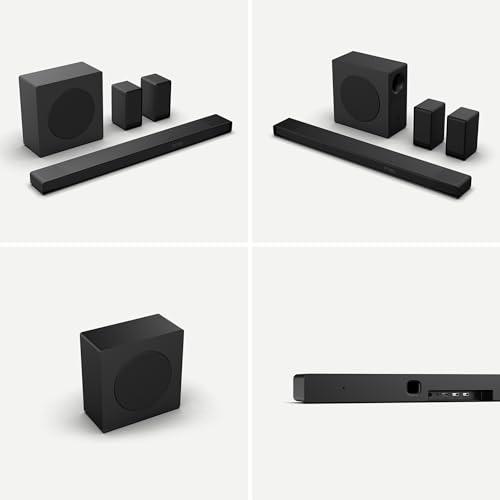
The Hisense AX5140Q represents Hisense's flagship soundbar technology, featuring what the company calls "true 5.1.4 Dolby Atmos." This means it has 5 main speakers (left, center, right, and two surrounds), 1 subwoofer, and 4 height channels created by upfiring drivers—physical speakers that point toward your ceiling to bounce sound back down.
At the time of writing, the Hisense AX5140Q typically costs around $350, positioning it in the premium mainstream category. For this investment, you get 600 watts of total power, which translates to substantially more headroom for loud scenes and better bass impact than budget alternatives.
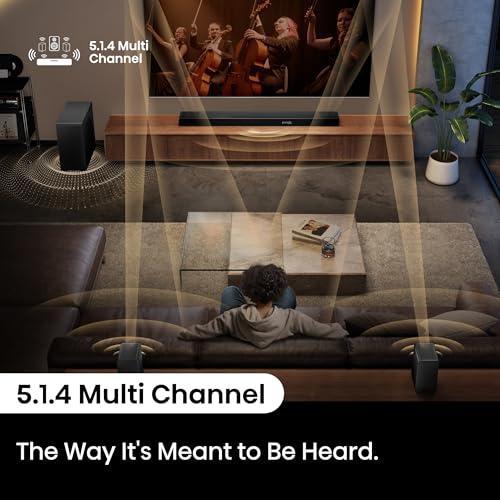
The Hisense AX5140Q's standout feature is authentic Dolby Atmos processing. Unlike soundbars that simply badge themselves as "Atmos-compatible," this system includes four dedicated upfiring speakers—two in the main bar and two in the wireless rear speakers. These drivers fire sound toward your ceiling, which reflects back to create the illusion of overhead speakers.
This matters because properly encoded Atmos content includes specific height information. When a movie shows an airplane flying overhead or rain beginning to fall, the audio track tells those upfiring speakers exactly when and how loud to play specific sounds. The result is genuinely three-dimensional audio that places effects above, around, and behind you.
From our research into user experiences, the height effect works best in rooms with standard 8-9 foot ceilings and relatively flat, reflective surfaces above. Vaulted or heavily textured ceilings can diminish the effect, though most users still report improved immersion compared to traditional soundbars.
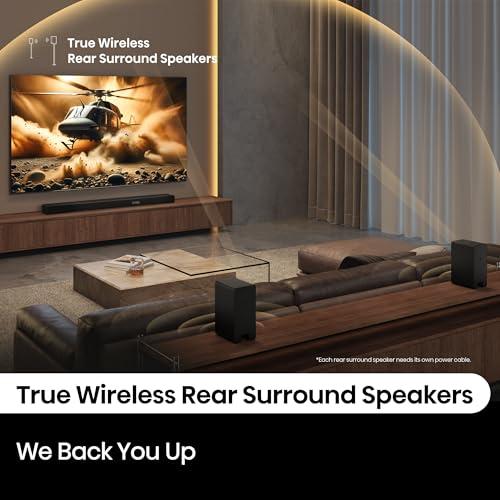
The Hisense AX5140Q takes a fully wireless approach to surround sound. Both the 6.5-inch subwoofer and rear speakers connect to the main bar without cables, requiring only power outlets near their placement locations. This eliminates the cable-running challenges that have historically made surround sound systems impractical for many living rooms.
The wireless subwoofer deserves particular attention. With a frequency response extending down to 40Hz, it provides the deep bass necessary for movie soundtracks and modern music. Bass extension below 50Hz is where you feel explosions in your chest rather than just hearing them, and the Hisense AX5140Q delivers this impact effectively.
According to user reports we've analyzed, the wireless connection remains stable even in crowded Wi-Fi environments, though initial setup occasionally requires re-pairing if speakers aren't positioned within reasonable range of the main bar.
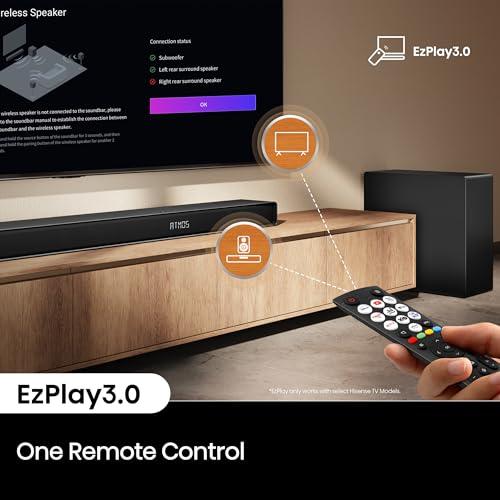
Perhaps the Hisense AX5140Q's most unique feature is Hi-Concerto, Hisense's proprietary ecosystem that deeply integrates the soundbar with Hisense televisions. When paired with a compatible Hisense TV, the entire system behaves as a unified audio platform rather than separate components.
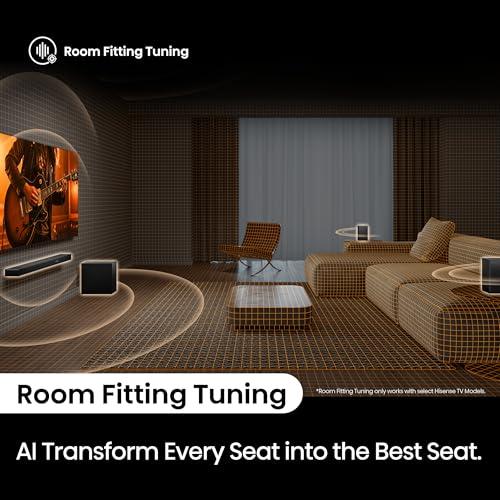
This integration provides several practical benefits. Your TV remote controls soundbar volume and modes directly. The TV displays soundbar status information on-screen, showing which speakers are connected and active. Most importantly, the system can automatically calibrate itself to your room's acoustics using test tones and the TV's processing power.
While the Hisense AX5140Q works with any TV that has HDMI eARC or optical output, the Hi-Concerto features only activate with Hisense televisions. This makes the soundbar particularly attractive if you're already in the Hisense ecosystem or planning to upgrade your TV.
The Ultimea Aura A40 takes an entirely different approach, focusing on traditional surround sound at an exceptional price point. At the time of writing, it typically costs under $100—roughly one-fourth the price of the Hisense AX5140Q—while still providing genuine multichannel audio.
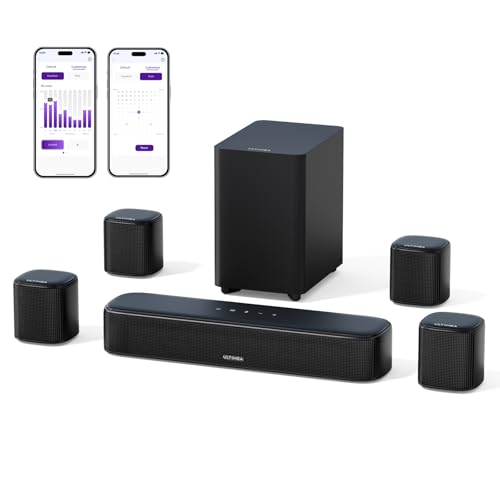
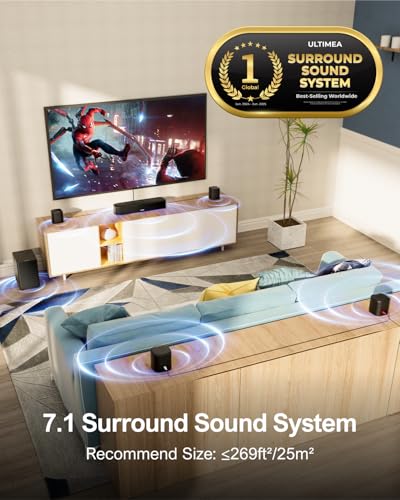
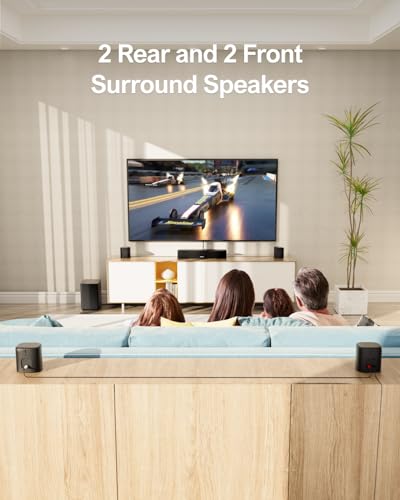
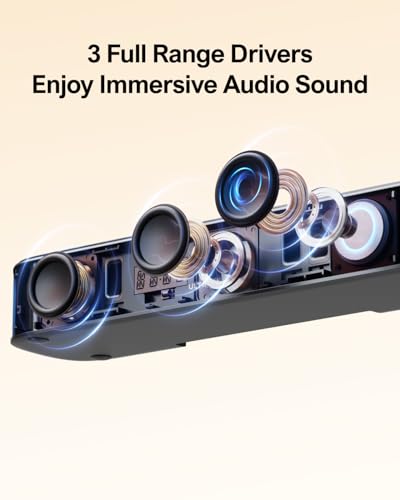
Rather than height channels, the Ultimea Aura A40 implements a 7.1 configuration with four dedicated surround speakers: two that sit near your TV (front left and right surrounds) and two that position behind your seating area (rear surrounds). This creates authentic left-to-right and front-to-back sound movement, the foundation of convincing surround sound.
The Ultimea Aura A40 uses what's called "virtual surround processing" to create its 7.1 effect. While it physically includes 8 speakers total, the "7.1" designation refers to the digital processing that takes standard 5.1 or stereo content and redistributes it across all speakers to simulate additional channels.
This approach has both advantages and limitations. The physical surround speakers provide authentic directional audio—when something moves from left to right on screen, you hear it travel between the actual speakers. However, without dedicated height channels, overhead effects remain limited to what digital processing can simulate.
From user feedback we've evaluated, the Ultimea Aura A40 creates convincing surround immersion for movies and TV shows, though it can't match the three-dimensional soundstage of true Atmos systems like the Hisense AX5140Q.
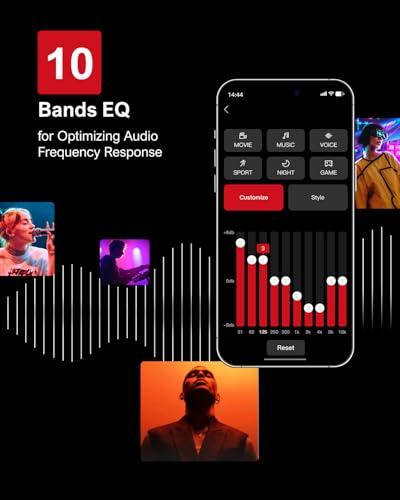
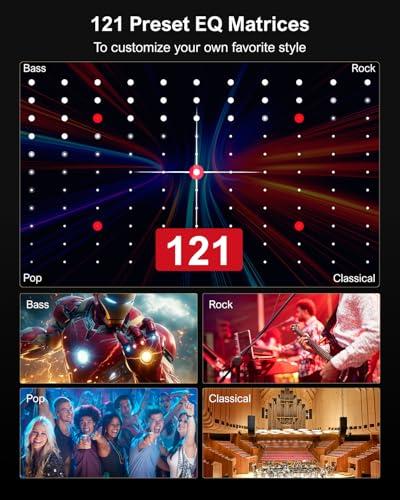
Where the Ultimea Aura A40 truly shines is customization. The Ultimea Smart App provides control depth rarely seen in budget audio equipment. Users can access 121 preset EQ matrices tailored for specific music genres (pop, classical, rock, bass-heavy), six main listening modes (movie, music, voice, sport, game, night), and a full 10-band equalizer for manual frequency adjustment.
Perhaps most importantly, the app allows fine-tuning of individual surround speaker levels across 13 different settings. This addresses one of the biggest challenges with budget surround systems: ensuring all speakers blend properly in your specific room. Poor surround balance can make rear speakers either inaudible or overpowering, but the Ultimea Aura A40's granular controls allow precise adjustment.
The system also receives over-the-air firmware updates through the app, ensuring continued improvement and bug fixes—a feature typically reserved for much more expensive audio equipment.
The Ultimea Aura A40 uses primarily wired connections between speakers, which ensures reliable signal transmission without potential wireless interference or dropout issues. However, it includes a clever hybrid approach: if the rear right speaker can't be easily wired, it can pair wirelessly to the main bar as a backup option.
This design acknowledges that not every room layout accommodates speaker cables running to rear positions. In apartments or rooms where cable management is challenging, the wireless backup ensures you can still achieve some surround effect, even if not optimal.
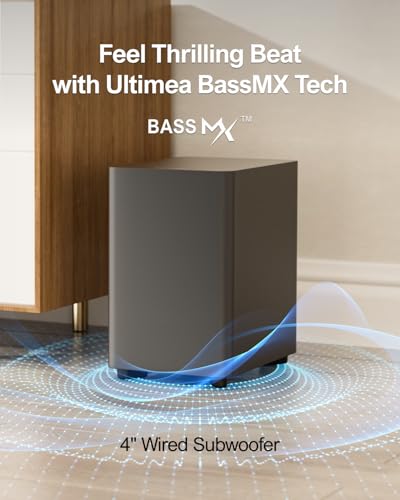
The 4-inch wired subwoofer connects directly to the main bar and provides bass support down to 65Hz. While this doesn't match the Hisense AX5140Q's deeper extension, it's adequate for dialog clarity and moderate music enjoyment.
The performance gap between these systems becomes apparent when playing different types of content. With properly encoded Dolby Atmos movies—think Marvel films, recent action blockbusters, or nature documentaries—the Hisense AX5140Q provides noticeably superior immersion. The height channels place sounds above your head convincingly, creating what audio enthusiasts describe as a "dome" of sound.
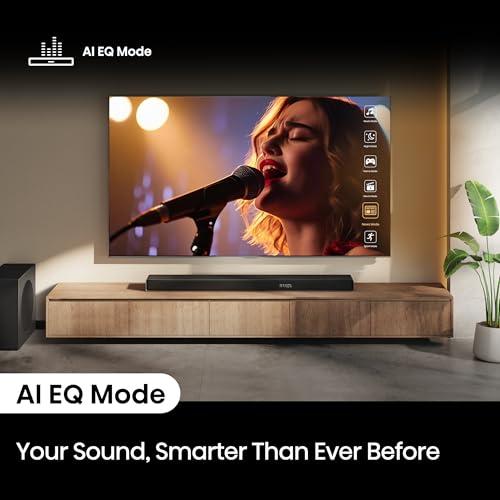
For traditional content like TV shows, news, or older movies, the difference narrows considerably. Both systems handle dialog well, with the Ultimea Aura A40's voice mode providing clear speech even during complex scenes. The Hisense AX5140Q's AI EQ automatically adjusts for content type, but the Ultimea Aura A40's manual controls allow more precise tuning if you're willing to experiment.
Music performance reveals each system's philosophy. The Hisense AX5140Q tends toward a more dynamic, cinema-oriented sound that emphasizes impact and spaciousness. The Ultimea Aura A40, with its extensive EQ options, can be tuned for more neutral music reproduction, though its smaller drivers and limited power don't match the Hisense AX5140Q's authority with complex orchestral pieces or bass-heavy genres.
Bass performance represents the most significant objective difference between these systems. The Hisense AX5140Q's 6.5-inch wireless subwoofer, powered by the system's 600-watt amplification, provides substantially deeper and more impactful low-frequency reproduction.
Bass extension—how low in frequency a system can reproduce sound—directly impacts your perception of power and immersion. The Hisense AX5140Q's 40Hz extension reaches into the range where you feel bass rather than just hearing it, crucial for movie explosions and modern music production. The Ultimea Aura A40's 65Hz floor, while adequate for dialog clarity, lacks this physical impact.
This difference becomes particularly apparent during action sequences or when listening to genres like electronic music or hip-hop, where sub-bass content below 60Hz provides much of the emotional impact.
Both systems offer dedicated gaming modes, but they optimize for different aspects of game audio. The Hisense AX5140Q's Game Pro mode emphasizes dynamic range and spatial awareness, helping players locate enemies and environmental cues in three-dimensional space. The height channels prove particularly effective in games that support Atmos, such as recent Xbox and PlayStation exclusives.
The Ultimea Aura A40's gaming mode focuses on clarity and response time, sharpening transient effects like footsteps and gunfire. While it can't provide overhead audio cues, its four surround speakers create convincing horizontal directional audio for competitive gaming.
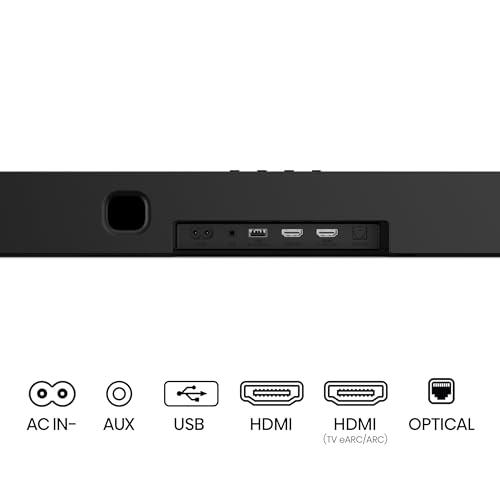
The connectivity philosophy difference between these systems reflects their target markets. The Hisense AX5140Q emphasizes modern HDMI eARC connectivity, which carries lossless multichannel audio and enables CEC control (where your TV remote can control the soundbar automatically).
HDMI eARC represents the current standard for home theater connectivity, supporting the full bandwidth necessary for uncompressed Dolby Atmos and DTS:X audio. This connection type ensures you're getting the maximum audio quality from streaming services and gaming consoles that support these formats.
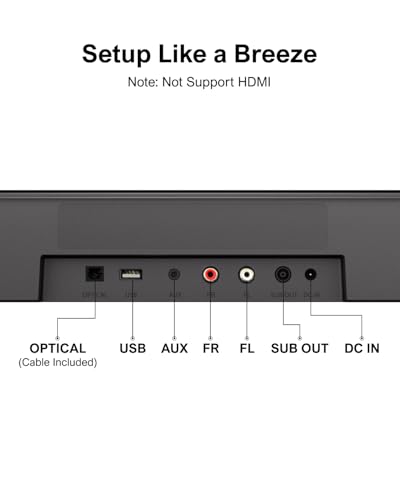
The Ultimea Aura A40 completely lacks HDMI input, instead relying on optical digital, analog auxiliary, and Bluetooth connections. While optical can carry compressed surround sound formats, it cannot transmit the full data rate of lossless Atmos audio. This limitation means the Ultimea Aura A40 cannot access the highest quality audio tracks from modern sources.
However, this simplified connectivity approach has advantages for older TVs or users who primarily stream content through TV apps rather than external devices. Most streaming services compress their Atmos tracks for bandwidth efficiency anyway, so the quality difference may be minimal for typical viewing.
The Hisense AX5140Q's integration with Hisense TVs extends to smart home functionality through the ConnectLife app ecosystem. Users can control the soundbar through their phone, receive notifications about system status, and coordinate with other Hisense smart devices.
The Ultimea Aura A40's app-based control provides more granular audio adjustment but lacks broader smart home integration. For users who prioritize audio customization over ecosystem connectivity, this focused approach can actually be preferable.
The Hisense AX5140Q's fully wireless design eliminates the cable-running challenge that has historically made surround sound impractical for many homes. You simply place the rear speakers behind your seating area and the subwoofer wherever it sounds best—typically a corner or along a wall—without worrying about connecting wires.
This convenience comes with potential reliability trade-offs. Wireless audio transmission can suffer interference from other devices, and battery-powered speakers require periodic charging (though the Hisense AX5140Q uses AC-powered wireless speakers, avoiding this particular issue).
The Ultimea Aura A40's primarily wired approach ensures consistent connectivity but requires planning cable routes. In many living rooms, this means running speaker wire along baseboards or under rugs to reach rear speaker positions. The hybrid wireless option for the rear right speaker provides some flexibility, though optimal performance still requires wired connections when possible.
Room size significantly impacts both systems' performance, but in different ways. The Hisense AX5140Q's height channels require adequate ceiling reflective surface and reasonable room proportions to work effectively. Very large rooms may diminish the overhead effect, while extremely small spaces might make the system feel overwhelming.
The Ultimea Aura A40 officially supports rooms from 108-270 square feet, making it well-suited for apartments and smaller living spaces. Its lower power output and smaller subwoofer actually work to its advantage in constrained spaces where the Hisense AX5140Q might produce too much bass or overwhelm nearfield listening.
The Hisense AX5140Q makes the most sense for users who prioritize cutting-edge audio technology and have the budget to support it. If you're already invested in the Hisense TV ecosystem, the deep integration features provide additional value that can justify the premium pricing.
This system particularly suits movie enthusiasts who regularly watch Dolby Atmos content from streaming services, UHD Blu-rays, or gaming consoles. The height channels provide genuine added immersion for supported content, making it worthwhile for users who prioritize the latest audio formats.
The wireless convenience also appeals to users in challenging room layouts where running speaker cables would be difficult or impossible. If you're planning a clean, modern installation without visible wires, the Hisense AX5140Q delivers professional-looking results.
The Ultimea Aura A40 represents exceptional value for users who want legitimate surround sound without premium pricing. It particularly suits budget-conscious buyers who understand they're trading cutting-edge features for cost savings but still want meaningful audio improvement over TV speakers.
This system works well for users who primarily watch traditional TV content, news, and older movies that don't include height-channel information. The extensive EQ customization options appeal to users who enjoy tweaking audio settings and prefer manual control over automatic processing.
The Ultimea Aura A40 also makes sense as a temporary upgrade for users planning eventual investment in higher-end audio equipment. It provides immediate surround sound gratification while allowing time to save for premium systems.
At the time of writing, these systems represent the broader tension in consumer audio between advancing technology and price accessibility. The Hisense AX5140Q embodies the industry's push toward three-dimensional audio and smart home integration, while the Ultimea Aura A40 focuses on delivering traditional surround sound fundamentals at exceptional value.
Neither approach is inherently superior—they serve different user priorities and budgets. The Hisense AX5140Q provides future-proof technology and premium convenience for users willing to invest appropriately. The Ultimea Aura A40 delivers remarkable audio improvement for its price point, though with some technological compromises.
The decision ultimately depends on your content preferences, room requirements, budget constraints, and how much value you place on the latest audio technologies versus traditional surround sound fundamentals. Both systems successfully address their target markets, making the choice more about matching features to your specific needs than identifying a clear winner.
| Hisense AX5140Q | Ultimea Aura A40 |
|---|---|
| Channel Configuration - Determines surround sound immersion and overhead effects | |
| 5.1.4 channels with true Dolby Atmos height speakers | 7.1 virtual surround (no physical height channels) |
| Total Power Output - Impacts volume headroom and bass authority | |
| 600W (substantially more dynamic range) | 330W (adequate for small-medium rooms) |
| Subwoofer Type and Size - Critical for bass depth and movie impact | |
| Wireless 6.5" subwoofer (deeper bass, easier placement) | Wired 4" subwoofer (limited bass extension, requires cable) |
| Audio Technology Support - Determines compatibility with premium content | |
| Dolby Atmos, DTS:X, Dolby TrueHD (lossless formats) | Virtual surround processing only (no object-based audio) |
| HDMI Connectivity - Essential for modern devices and highest audio quality | |
| HDMI eARC + passthrough (full bandwidth audio) | No HDMI (limited to optical/analog connections) |
| Surround Speaker Setup - Affects installation complexity and reliability | |
| Wireless rear speakers (no cable runs required) | Wired surrounds with wireless backup option |
| Frequency Response - Shows bass extension and treble reach | |
| 40Hz-20kHz (deep bass you can feel) | 65Hz-18kHz (adequate but limited low-end impact) |
| Smart Integration - Convenience and ecosystem benefits | |
| Hi-Concerto with Hisense TVs, AI room calibration | Ultimea app with 121 EQ presets, manual control |
| Room Calibration - Automatic vs manual audio optimization | |
| AI-powered room fitting and EQ adaptation | Manual 10-band EQ and surround level adjustment |
| Price Category - Value proposition at time of writing | |
| Premium tier ($300-400 range) | Budget tier (under $100) |
The Hisense AX5140Q is significantly better for movies, especially those with Dolby Atmos soundtracks. Its true 5.1.4 channel setup with physical height speakers creates genuine overhead effects for aircraft, rain, and atmospheric sounds. The Ultimea Aura A40 provides good traditional surround sound but cannot match the three-dimensional immersion of the Hisense AX5140Q for cinematic content.
The key difference is audio technology approach. The Hisense AX5140Q uses authentic Dolby Atmos with physical up-firing speakers to create height channels, while the Ultimea Aura A40 uses virtual processing to simulate 7.1 surround sound. The Hisense AX5140Q also offers wireless components and HDMI connectivity, whereas the Ultimea Aura A40 relies primarily on wired connections and optical/analog inputs.
The Hisense AX5140Q delivers significantly deeper and more powerful bass with its 6.5-inch wireless subwoofer that extends down to 40Hz. The Ultimea Aura A40's 4-inch wired subwoofer only reaches 65Hz, providing adequate bass for dialogue and light music but lacking the deep impact needed for action movies and bass-heavy music genres.
Both soundbars work with any TV, but the Hisense AX5140Q offers special integration features when paired with Hisense televisions through Hi-Concerto technology. The Ultimea Aura A40 connects universally via optical, AUX, or Bluetooth. However, the Hisense AX5140Q requires HDMI eARC for best performance, while the Ultimea Aura A40 works well with older TVs lacking modern connectivity.
The Hisense AX5140Q is generally easier to install because its wireless subwoofer and rear speakers only need power connections—no cable runs across your room. The Ultimea Aura A40 requires running speaker cables to rear positions, though it includes a wireless backup option for challenging installations. Both systems include mounting hardware and setup guides.
The Hisense AX5140Q works best in medium to large rooms where its 600W power and wireless speakers can create proper surround immersion. The Ultimea Aura A40 is designed for smaller spaces (108-270 square feet) and won't overwhelm compact living rooms or apartments with excessive power or bass output.
This depends on your budget and priorities. The Ultimea Aura A40 provides exceptional value for traditional surround sound at its price point, offering genuine multichannel audio and extensive customization options. The Hisense AX5140Q justifies its higher cost with advanced Dolby Atmos technology, wireless convenience, and superior bass performance for users wanting premium home theater features.
Both work for music, but with different strengths. The Ultimea Aura A40 offers 121 EQ presets and manual controls that allow fine-tuning for different music genres. The Hisense AX5140Q provides more powerful, dynamic sound with better bass extension, making it superior for complex music and high-volume listening, though it's optimized more for movies than critical music playback.
The Hisense AX5140Q excels for modern games that support Dolby Atmos, providing three-dimensional audio cues that help locate enemies and environmental sounds. Its Game Pro mode optimizes for spatial awareness and impact. The Ultimea Aura A40 offers good directional audio for competitive gaming through its four surround speakers, though it cannot provide overhead audio information.
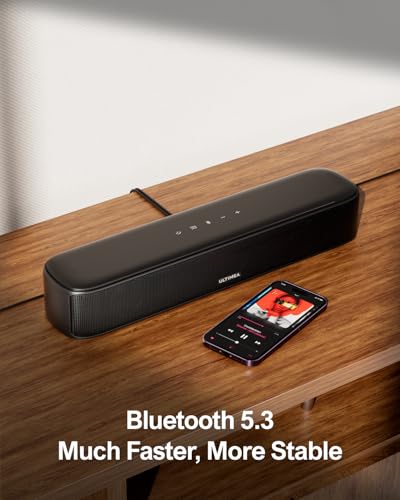
The Hisense AX5140Q features Bluetooth 5.3 for music streaming and uses wireless connections for its subwoofer and rear speakers. The Ultimea Aura A40 also includes Bluetooth 5.3 for device pairing and offers wireless pairing as a backup for its rear right speaker, though it primarily uses wired connections for reliability.
Both systems prioritize clear speech, but they achieve it differently. The Hisense AX5140Q uses AI EQ that automatically adjusts for content type and includes dedicated center channel processing. The Ultimea Aura A40 offers manual voice mode optimization and precise EQ control through its app, allowing users to fine-tune dialogue clarity to their preferences.
The Hisense AX5140Q includes HDMI eARC (essential for lossless audio), HDMI input with 4K passthrough, optical, AUX, USB, and Bluetooth 5.3. The Ultimea Aura A40 offers optical, AUX, USB for music playback, and Bluetooth 5.3, but lacks HDMI connectivity entirely. The Hisense AX5140Q better supports modern devices, while the Ultimea Aura A40 accommodates older equipment well.
We've done our best to create useful and informative comparisons to help you decide what product to buy. Our research uses advanced automated methods to create this comparison and perfection is not possible - please contact us for corrections or questions. These are the sites we've researched in the creation of this article: shop.hisense-usa.com - manuals.plus - dolby.com - youtube.com - gzhls.at - rtings.com - youtube.com - bestbuy.com - manuals.plus - bestbuy.com - hisense-usa.com - youtube.com - device.report - manuals.plus - youtube.com - device.report - manuals.plus - youtube.com - youtube.com - walmart.com - youtube.com - ultimea.com - homestudiobasics.com - ultimea.co - youtube.com - eu.ultimea.com - walmart.com - device.report - bestbuy.com - manuals.plus - community.ultimea.com - judge.me - support.ultimea.com - geekmaxi.com - provantage.com - bestbuy.com - youtube.com - uk.whatgeek.com

Privacy Policy
Terms and Conditions - Affiliate Policy
Home Security
© Copyright 2008-2026.
11816 Inwood Rd #1211, Dallas, TX 75244