





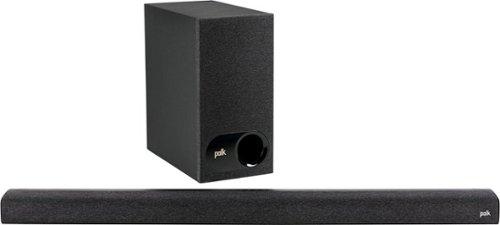
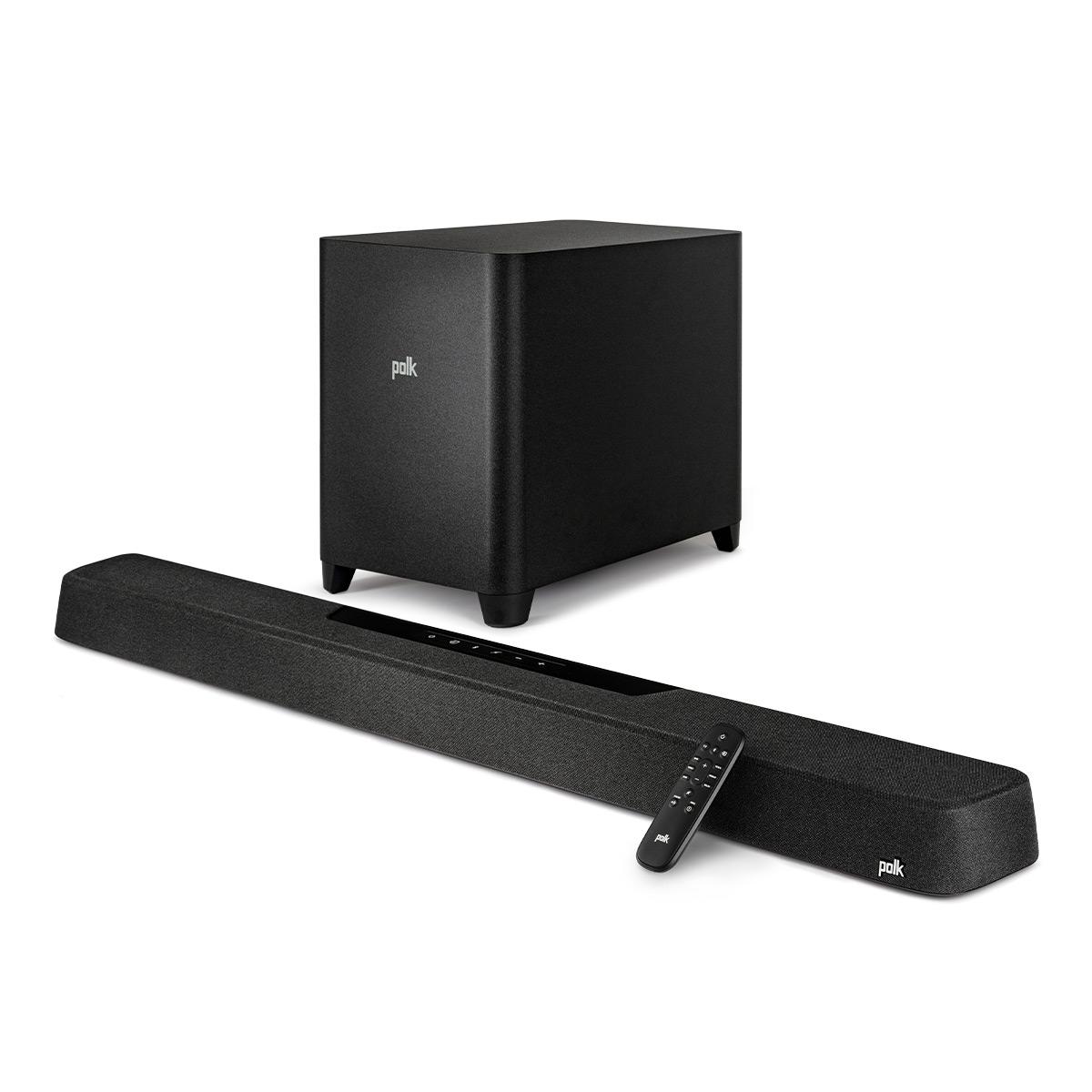
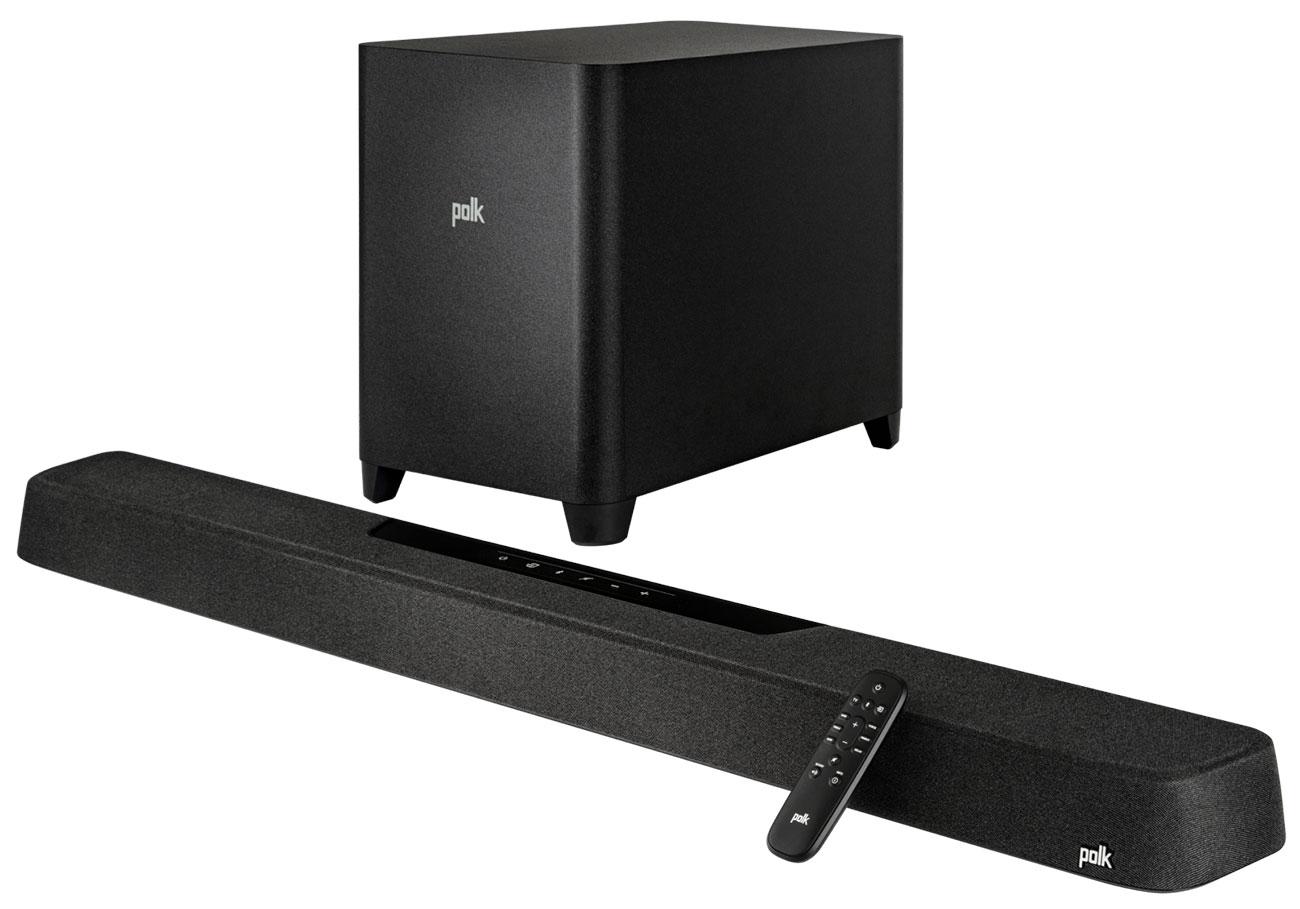
When your TV's built-in speakers make action movies sound like they're playing through a tin can, it's time to upgrade. But the soundbar market can feel overwhelming, especially when you're comparing systems that take completely different approaches to solving the same problem. Today we're diving deep into two fascinating options: the budget-friendly Ultimea Aura A40 with its army of physical surround speakers, and the premium Polk Audio MagniFi Max AX with its overhead height channels.
These aren't just different price points—they represent fundamentally different philosophies about how to create immersive home theater audio. One floods your room with speakers, while the other bounces sound off your ceiling. Understanding which approach works better for your space and preferences could save you from buyer's remorse down the road.
Before we pit these systems against each other, let's establish what makes a great soundbar in 2025. The days of simple left-right stereo bars are long gone. Modern soundbars are essentially compact home theater systems, trying to replicate the experience of having speakers positioned all around your room.
The magic happens through a combination of physical speakers and digital processing. Virtual surround sound uses algorithms to trick your brain into thinking sounds are coming from directions where no speakers exist. Physical surround places actual speakers in those locations. Height channels bounce sound off your ceiling to create overhead effects, making you feel like that helicopter is actually flying above your head.
Audio formats have evolved too. Dolby Atmos and DTS:X are object-based formats—instead of just sending audio to specific channels, they tell your system exactly where each sound should appear in three-dimensional space. Your soundbar then figures out how to create that illusion using its available speakers.
The Ultimea Aura A40, released in 2023, represents the "more speakers everywhere" approach. The Polk Audio MagniFi Max AX, launched in 2022, embraces the "fewer but smarter speakers" philosophy with dedicated height channels. Since their releases, we've seen the market increasingly favor Atmos-enabled systems, but physical surround setups remain popular among budget-conscious buyers who want that wraparound effect without paying premium prices.
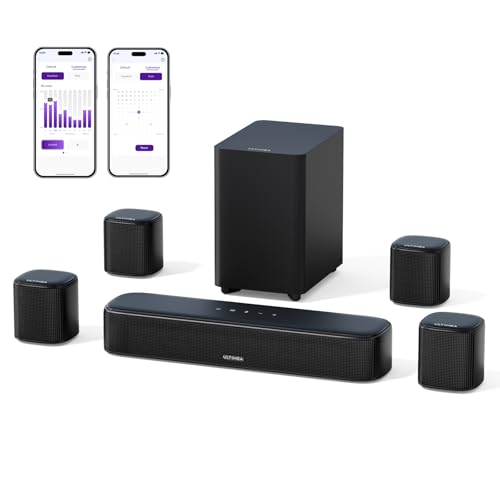
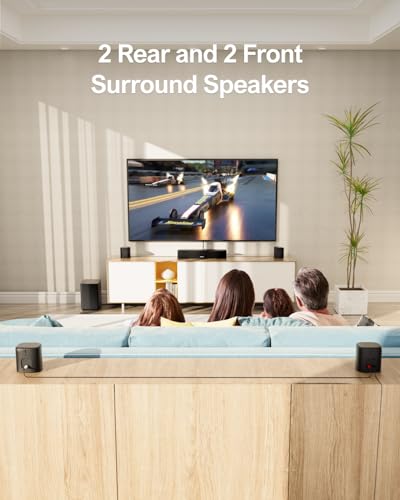
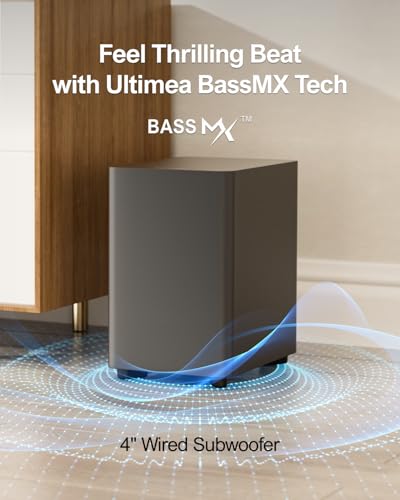
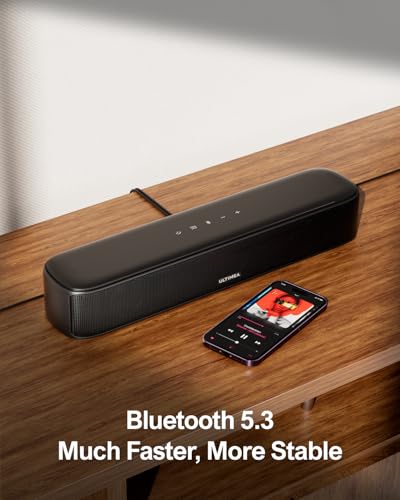
The Ultimea Aura A40 doesn't mess around—it gives you eight speakers spread across five physical components. The main soundbar houses three 2-inch drivers handling left, center, and right channels. Four additional 2-inch speakers serve as dedicated surrounds—two positioned near your TV for front surround effects, and two meant for the rear of your room. A separate 4-inch subwoofer handles the low-end grunt.
This setup creates what audio engineers call "discrete surround channels"—each speaker receives its own unique audio signal rather than sharing processed versions of the same content. When a helicopter flies across the screen in an action movie, you hear it move from the front-left surround speaker to the rear-left speaker in real time. It's surprisingly effective, especially for gaming where directional audio helps you locate enemy footsteps or gunfire.
The Aura A40 processes all incoming audio through its proprietary SurroundX technology, which analyzes stereo or 5.1 content and redistributes it across all eight speakers to create a 7.1 virtual experience. Think of it as taking a regular movie soundtrack and stretching it to fill more speakers, creating a wider and more enveloping sound field.
But here's where things get interesting technically. The system includes 13 adjustable surround levels, letting you fine-tune how aggressive the surround effect feels. In smaller rooms, you might dial this back to avoid overwhelming the main soundbar. In larger spaces, you can crank it up to ensure those rear speakers contribute meaningfully to the experience.
The Ultimea Home app deserves special mention—it offers 121 preset equalizer matrices tailored for different music genres and content types. The 10-band manual equalizer lets you adjust specific frequency ranges if you find the sound too bright or lacking bass. This level of customization is unusual at this price point and addresses one of the system's main weaknesses: its tendency toward thin, metallic sound that benefits from careful tuning.
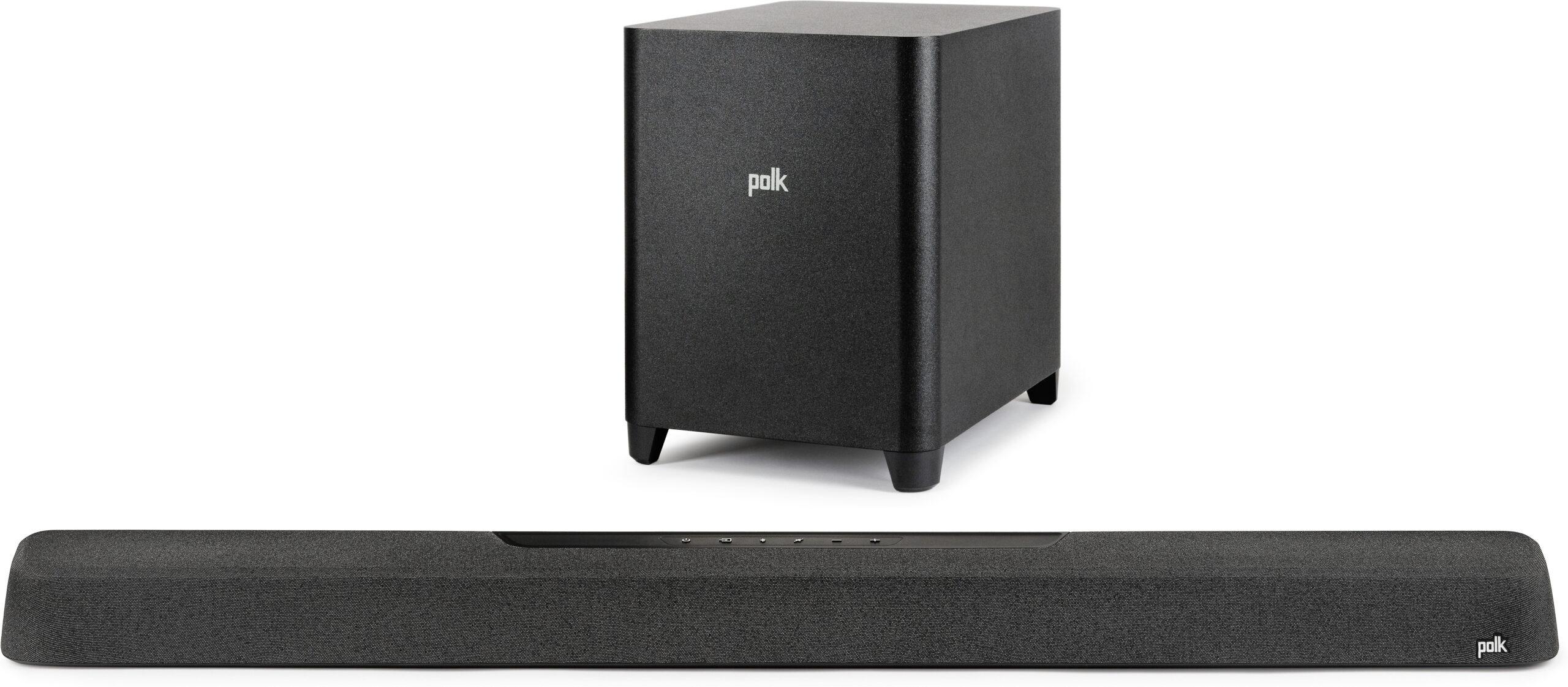
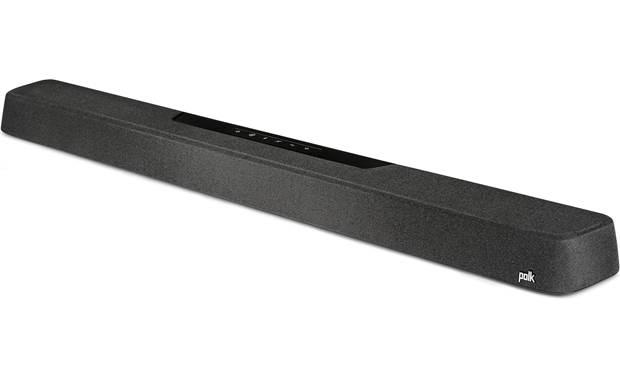
The Polk Audio MagniFi Max AX takes a radically different approach. Instead of surrounding you horizontally with speakers, it focuses on creating a three-dimensional bubble of sound using upward-firing drivers. The soundbar contains eleven speakers total, including two dedicated height channels that fire sound toward your ceiling.
This isn't just a gimmick—it's how modern movie soundtracks are actually mixed. When sound engineers create Dolby Atmos content for Netflix or Disney+, they place individual sound objects in 3D space. Rain might fall from above, a plane could fly overhead from left to right, or debris might tumble down from the upper corners of the frame. The MagniFi Max AX receives these positioning instructions and recreates them using reflected sound.
The psychoacoustics behind this are fascinating. Your brain determines sound direction partly through timing differences—sounds from your left reach your left ear slightly before your right ear. By bouncing audio off your ceiling at precise angles, the Polk can make your brain perceive sounds as coming from above and behind, even though the speakers are in front of you.
Polk's VoiceAdjust technology deserves attention too. It analyzes incoming audio to identify dialogue frequencies and can boost them independently from background music and effects. This addresses one of the most common complaints about soundbars—that movie dialogue gets buried under loud action sequences. The dedicated center channel in the soundbar works with this processing to keep voices clear and intelligible.
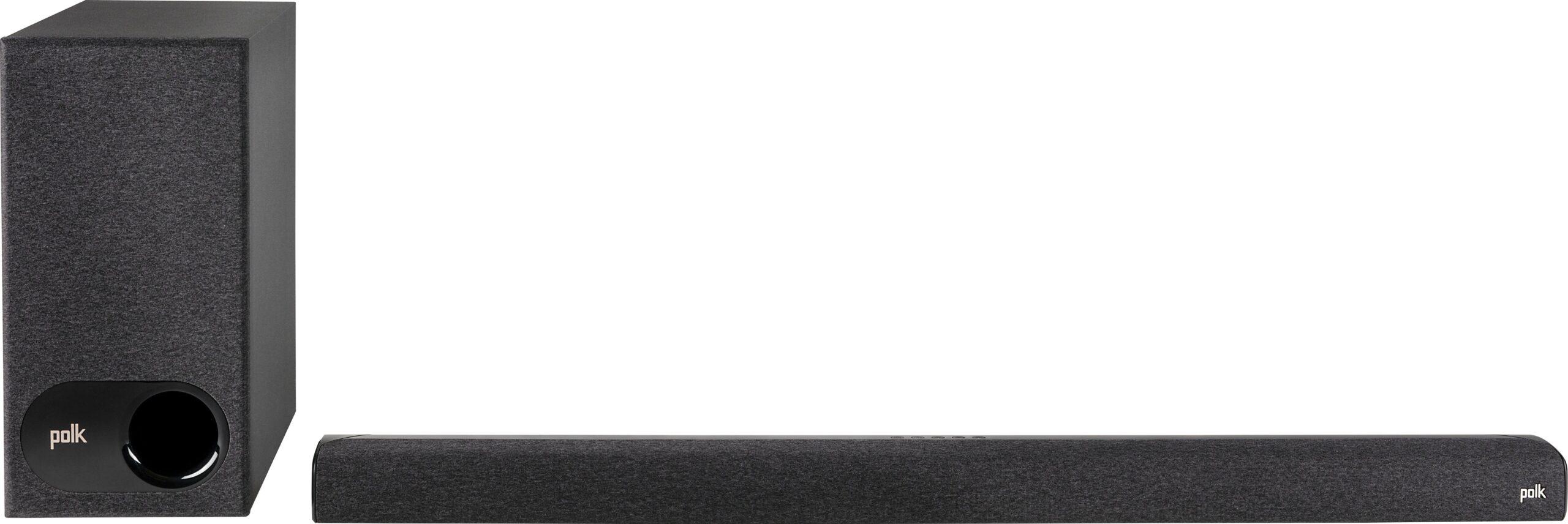
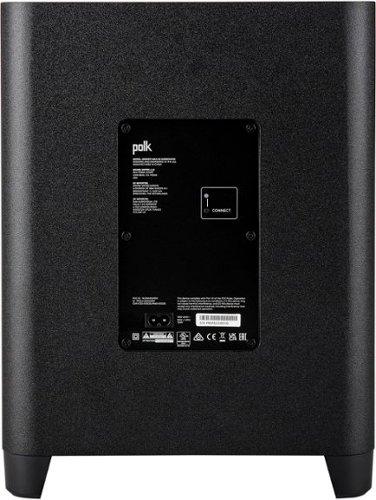
The wireless 10-inch subwoofer brings serious bass authority that the Ultimea simply can't match. With 160 watts of dedicated power and a larger driver, it produces deeper, more controlled low frequencies. The difference becomes obvious during action scenes with explosions or when listening to bass-heavy music.
Here's where we need to get honest about performance differences, because the gap is significant. Our research into professional reviews and user feedback reveals a clear hierarchy in audio refinement.
The Polk MagniFi Max AX delivers what reviewers consistently describe as "superior dialogue clarity" and "outstanding" sound quality with properly encoded content. The 11-speaker array in the soundbar alone provides detailed stereo imaging—the ability to precisely locate sounds within the stereo field. When Dolby Atmos kicks in, users report that "the speakers come alive" with effects moving convincingly through 3D space.
The frequency response tells part of the story. While specific measurements aren't always published, the Polk clearly extends deeper in the bass (thanks to that 10-inch sub) and maintains better composure at higher volumes. Professional reviewers note good stereo THD (Total Harmonic Distortion) performance, meaning the audio stays clean even when pushed loud.
The Ultimea Aura A40, unfortunately, struggles with fundamental audio quality. Multiple reviews describe the sound as "tinny, boxy, and metallic," with bass that only reaches down to 65Hz—missing the deepest bass frequencies that make action movies truly impactful. The included subwoofer, while functional, produces what reviewers call "flabby and loose" bass that lacks the tight control of better systems.
However, this isn't necessarily a dealbreaker. With careful EQ adjustment through the app—specifically maxing out both subwoofer and surround levels—the Aura A40 becomes much more listenable. The surround effect genuinely works when speakers are positioned correctly, creating that wraparound sensation that makes movies and games more engaging.
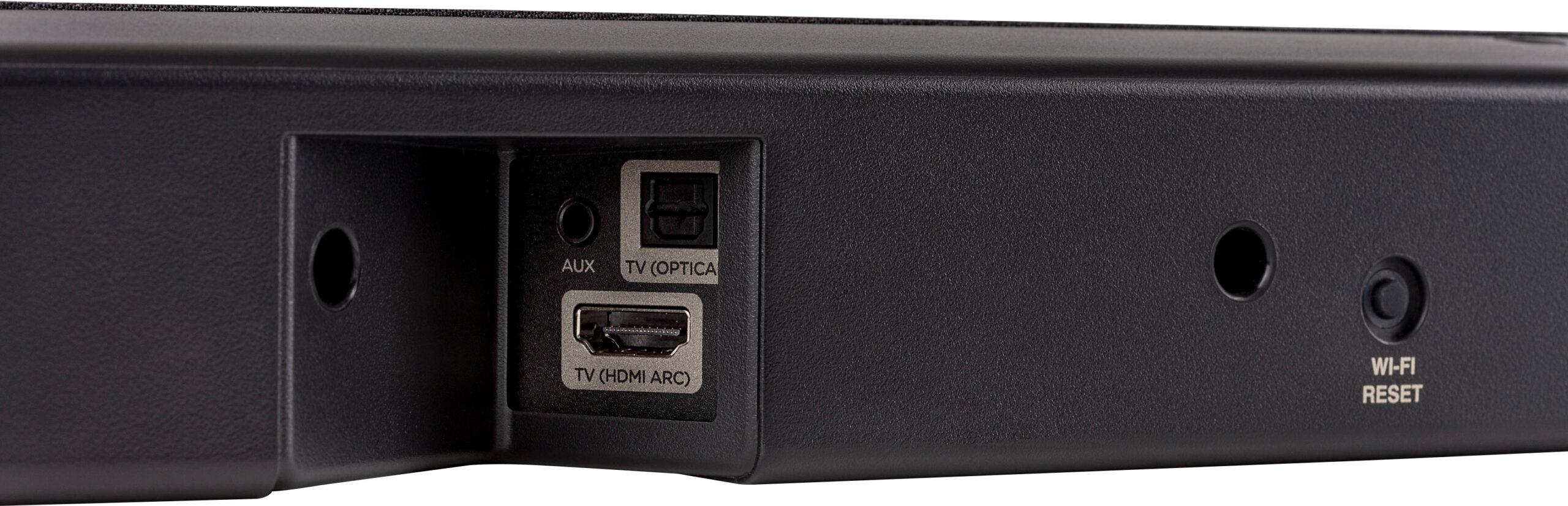
This is where the price difference becomes most apparent. The Polk MagniFi Max AX includes HDMI eARC (Enhanced Audio Return Channel), which allows full-bandwidth, uncompressed audio transmission from your TV. This means when you're streaming a Dolby Atmos movie on Netflix, every audio object gets transmitted perfectly to the soundbar. The system also includes three additional HDMI inputs with 4K/HDR passthrough, essentially functioning as a mini AV receiver.
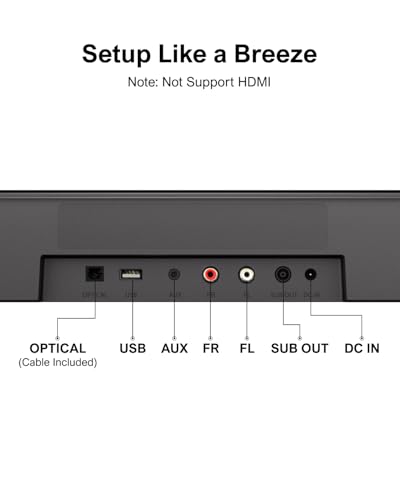
The Ultimea Aura A40 lacks HDMI entirely, limiting you to optical digital, analog auxiliary, or Bluetooth connections. Optical can handle basic surround sound but compresses the audio and can't carry advanced formats like Dolby Atmos. This isn't just about technical specifications—it affects real-world performance. When you're watching the latest Marvel movie on Disney+, the Polk receives and processes the full Atmos soundtrack, while the Ultimea gets a compressed version that its processing tries to expand across those eight speakers.
Bluetooth quality differs too. The Polk supports higher-quality codecs for wireless streaming, while the Ultimea's Bluetooth 5.3 connection, though stable, doesn't offer the same audio fidelity for music listening.
The Ultimea Aura A40 requires more involved setup. You'll need to run the included 6-meter cable from the soundbar to the rear right surround speaker, then position all four surround speakers appropriately around your room. The rear right speaker pairs wirelessly to the soundbar, but this connection can occasionally drop and require manual re-pairing using button combinations.
Cable management becomes a real consideration. While the system includes the necessary cables, you'll need to route them neatly around your room unless you want surround cables snaking across your floor. The payoff is genuine surround sound, but it's definitely more complex than a traditional soundbar setup.
The Polk MagniFi Max AX offers the classic soundbar experience—place the bar under your TV, position the wireless subwoofer somewhere in your room, connect one HDMI cable, and you're done. The upward-firing speakers work with most standard ceiling heights (8-10 feet) and room sizes, though extremely high ceilings or irregular shapes can affect the height channel performance.
For movie watching, the Polk excels with modern streaming content. Netflix, Disney+, Amazon Prime, and Apple TV+ increasingly offer Dolby Atmos soundtracks, and the difference is immediately noticeable. Action sequences gain vertical dimension, while subtle atmospheric effects create genuine immersion.
The Ultimea shines with gaming and older content. Video games often have excellent positional audio that translates well to the discrete surround speakers. You'll hear enemies approaching from specific directions, making competitive gaming more engaging. For regular TV shows and older movies without advanced audio formats, the surround processing creates a wider, more enveloping soundstage than typical soundbars.
Music listening reveals the biggest performance gap. The Polk handles musical content with better tonal balance and detail, making it suitable for dedicated music listening sessions. The Ultimea works for casual music listening but lacks the refinement for critical listening. The metallic coloration becomes more apparent with familiar songs, and the limited bass extension affects genres like hip-hop or electronic music.
The Ultimea Aura A40 officially supports rooms from 108-270 square feet, which covers most living rooms and bedrooms. However, our evaluation of user feedback suggests it works best in smaller to medium spaces where the surround speakers can be positioned appropriately without being too far from the main soundbar.
The Polk MagniFi Max AX handles larger rooms more effectively due to its higher power output and the nature of reflected sound. The 45-inch soundbar width means you need adequate TV stand space, but the acoustic performance scales better in bigger environments.
Ceiling height matters more for the Polk. Standard 8-9 foot ceilings work perfectly, but very high or vaulted ceilings can scatter the reflected height effects. The Ultimea is less dependent on room acoustics since the surround speakers create direct sound rather than reflections.
At the time of writing, the Ultimea Aura A40 costs roughly half what you'd pay for the Polk MagniFi Max AX. This price difference reflects genuine capability gaps, not just brand premium.
The Ultimea delivers legitimate surround sound at an entry-level price, but requires patience for setup and EQ adjustment. If you're upgrading from TV speakers and want that wraparound effect without spending premium money, it accomplishes that goal. The extensive customization options mean you can tune it to your preferences over time.
The Polk costs significantly more but delivers a more refined, modern experience. The audio quality is simply better, the setup is simpler, and the Dolby Atmos support ensures compatibility with current and future content. For home theater enthusiasts who watch a lot of streaming content and want something that just works well out of the box, the premium feels justified.
Choose the Ultimea Aura A40 if you have a tighter budget but want genuine surround sound effects. It works particularly well for gaming, and the physical surround speakers create convincing directional audio that virtual processing can't match. You'll need to invest time in setup and tuning, but the result is impressive for the price. This system makes sense if you primarily watch cable TV, use gaming consoles, or stream through your TV's built-in apps.
Go with the Polk Audio MagniFi Max AX if audio quality matters more than cost savings. The Dolby Atmos support alone justifies the premium for anyone who regularly watches modern movies and shows. The simpler setup, better build quality, and refined sound processing make it the clear choice for a primary home theater system. If you value the "plug and play" experience and want something that will remain relevant as content continues evolving toward object-based audio, this is the better long-term investment.
The fundamental question isn't whether one system is objectively better—it's whether the Polk's advantages justify roughly double the cost for your specific needs and room. Both systems will dramatically improve on your TV's built-in speakers, but they'll do so in very different ways that appeal to different priorities and budgets.
| Ultimea Aura A40 7.1 Channel Soundbar System | Polk Audio MagniFi Max AX 3.1.2 Soundbar |
|---|---|
| Audio Format Support - Determines compatibility with modern streaming content | |
| Virtual 7.1 surround only (no Dolby Atmos/DTS:X) | Native Dolby Atmos and DTS:X decoding |
| Channel Configuration - How sound is distributed around your room | |
| 7.1 virtual with 4 physical surround speakers | 5.1.2 with dedicated height channels |
| Total Speakers - More speakers can mean better sound placement | |
| 8 speakers (3 soundbar + 4 surround + 1 subwoofer) | 12 speakers (11 soundbar + 1 subwoofer) |
| Subwoofer Specifications - Critical for bass impact in movies and music | |
| 4-inch wired subwoofer, 65Hz-18kHz range | 10-inch wireless subwoofer, 160W dedicated power |
| Connectivity Options - Affects audio quality and TV integration | |
| Optical, AUX, Bluetooth 5.3, USB (no HDMI) | HDMI eARC/ARC, 3x HDMI inputs, Optical, WiFi, Bluetooth |
| Setup Complexity - Time and effort required for installation | |
| Complex: 4 surround speakers with cables, wireless pairing | Simple: Soundbar + wireless subwoofer, one HDMI cable |
| Customization Features - Ability to fine-tune sound to your preferences | |
| Extensive: 121 EQ presets, 10-band equalizer, 13 surround levels | Basic: Movie/Music/TV modes, bass/treble, voice adjust |
| Soundbar Dimensions - Space requirements for your TV stand | |
| 400mm × 90mm × 70mm (compact design) | 45 inches wide (requires substantial TV stand space) |
| Room Size Compatibility - Optimal performance area | |
| 108-270 sq ft (small to medium rooms) | Better for larger rooms due to higher power output |
| Voice Enhancement Technology - Dialogue clarity during loud scenes | |
| Basic voice EQ mode available | Advanced VoiceAdjust technology with dedicated center channel |
| Wireless Features - Reduces cable clutter and setup complexity | |
| Rear surround speakers pair wirelessly (can drop connection) | Subwoofer fully wireless, stable connection |
The Polk Audio MagniFi Max AX is significantly better for movies and TV shows because it supports Dolby Atmos and DTS:X formats used by Netflix, Disney+, and other streaming services. Its dedicated height channels create genuine overhead sound effects, while the VoiceAdjust technology ensures dialogue stays clear during loud action scenes. The Ultimea Aura A40 provides good surround effects but can't decode modern audio formats and has weaker dialogue clarity.
Physical surround speakers, like those included with the Ultimea Aura A40, provide more convincing directional audio for gaming and create a genuine 360-degree sound field. However, they require more setup and cable management. Virtual surround from the Polk Audio MagniFi Max AX is simpler to install and works better with modern movie content, especially when combined with its height channels for 3D audio effects.
The Polk Audio MagniFi Max AX is much easier to install - just place the soundbar under your TV, position the wireless subwoofer anywhere in your room, and connect one HDMI cable. The Ultimea Aura A40 requires positioning four surround speakers around your room, running cables, and wireless pairing that can occasionally fail and need re-setup.
The Polk Audio MagniFi Max AX has superior bass with its 10-inch wireless subwoofer delivering 160W of power and deeper frequency extension. The Ultimea Aura A40 includes a smaller 4-inch wired subwoofer that only reaches down to 65Hz and has been described as "flabby" in reviews, though it can be improved with EQ adjustments through the app.
The Ultimea Aura A40 excels for gaming due to its four physical surround speakers that create precise directional audio for locating enemy footsteps and gunfire. The discrete surround channels provide better positional accuracy than virtual processing. However, the Polk Audio MagniFi Max AX offers higher overall audio quality and works well for cinematic single-player games with Dolby Atmos support.
The Polk Audio MagniFi Max AX delivers significantly better sound quality with refined audio processing, clear dialogue, and balanced frequency response. Professional reviews praise its "outstanding" sound with proper content. The Ultimea Aura A40 has been criticized for "tinny, metallic" sound that requires extensive EQ adjustment to become listenable, though it improves considerably with proper tuning.
The Polk Audio MagniFi Max AX provides modern connectivity with HDMI eARC for full-quality audio, three additional HDMI inputs with 4K passthrough, WiFi, and higher-quality Bluetooth codecs. The Ultimea Aura A40 lacks HDMI entirely, limiting you to optical, AUX, and basic Bluetooth connections that compress audio quality and prevent advanced format support.
The Ultimea Aura A40 offers extensive customization through its app with 121 preset EQ matrices, 10-band manual equalizer, six listening modes, and 13 adjustable surround levels. The Polk Audio MagniFi Max AX takes a simpler approach with basic Movie/Music/TV modes, bass/treble controls, and voice enhancement, focusing on working well out of the box rather than deep customization.
The Ultimea Aura A40 is designed for rooms between 108-270 square feet and works well in smaller spaces where surround speakers can be positioned effectively. The Polk Audio MagniFi Max AX handles larger rooms better due to its higher power output and 45-inch soundbar width, though it requires adequate TV stand space and works best with standard 8-10 foot ceiling heights.
Only the Polk Audio MagniFi Max AX supports Dolby Atmos and DTS:X with dedicated upward-firing height channels that create genuine 3D audio effects. The Ultimea Aura A40 doesn't support any advanced audio codecs and processes everything as virtual 7.1 surround, missing out on the overhead sound effects that make modern movies more immersive.
The Ultimea Aura A40 offers excellent value if you want physical surround speakers and extensive customization at a budget price, despite requiring patience for setup and tuning. The Polk Audio MagniFi Max AX costs significantly more but delivers superior audio quality, modern format support, and simpler operation that justifies the premium for serious home theater use.
The Ultimea Aura A40 is a complete system that cannot be expanded further. The Polk Audio MagniFi Max AX can be upgraded with optional SR2 wireless surround speakers (sold separately) to create a full 7.1.2 system, making it more future-proof if you want to add physical rear speakers to complement the existing height channels.
We've done our best to create useful and informative comparisons to help you decide what product to buy. Our research uses advanced automated methods to create this comparison and perfection is not possible - please contact us for corrections or questions. These are the sites we've researched in the creation of this article: youtube.com - walmart.com - youtube.com - ultimea.com - homestudiobasics.com - ultimea.co - youtube.com - eu.ultimea.com - walmart.com - device.report - bestbuy.com - manuals.plus - community.ultimea.com - judge.me - support.ultimea.com - geekmaxi.com - provantage.com - bestbuy.com - youtube.com - uk.whatgeek.com - youtube.com - avsforum.com - rtings.com - rtings.com - bestbuy.com - walts.com - hometechnologyreview.com - polkaudio.com - pcrichard.com

Privacy Policy
Terms and Conditions - Affiliate Policy
Home Security
© Copyright 2008-2026.
11816 Inwood Rd #1211, Dallas, TX 75244