





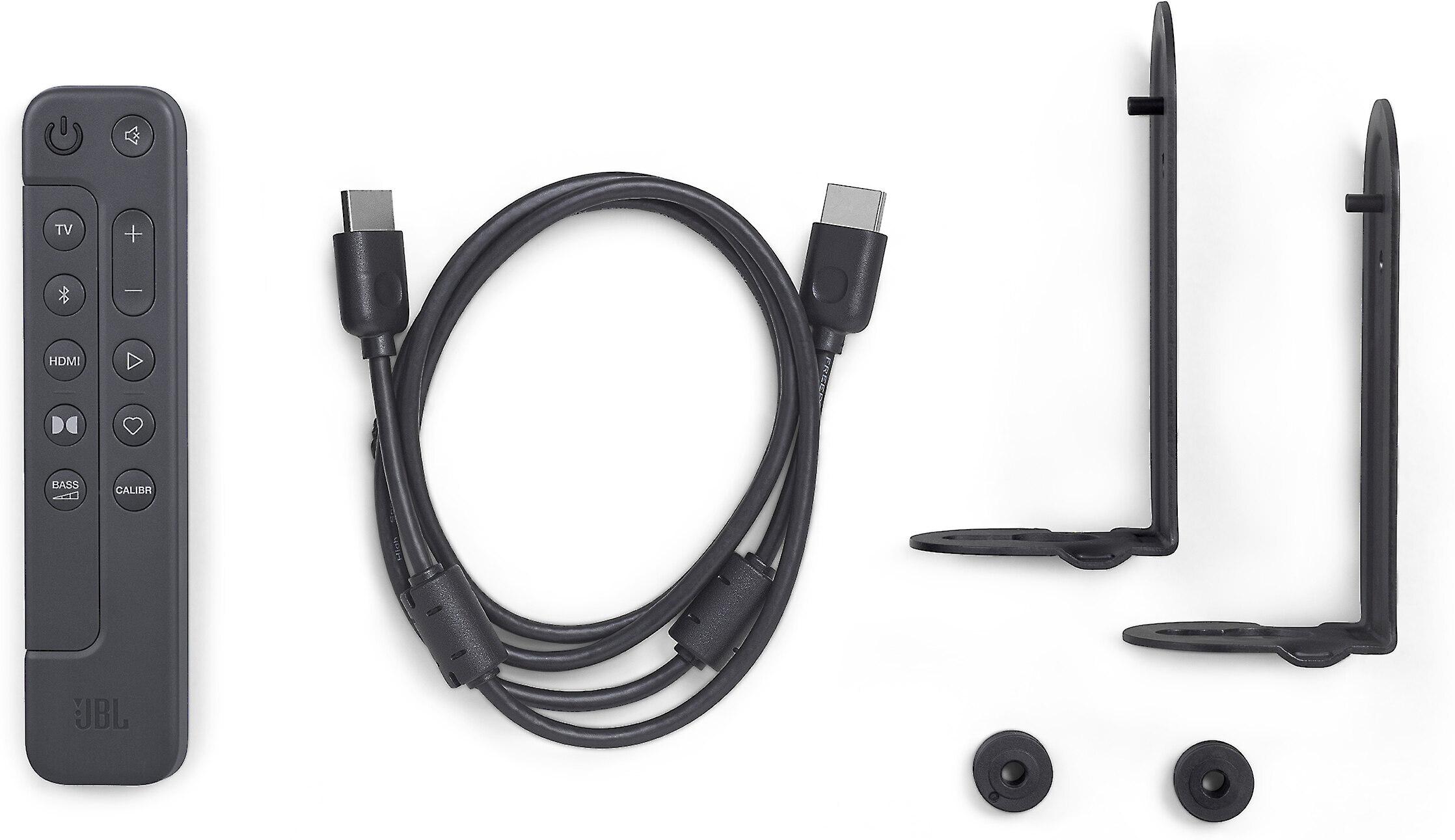

When your TV's tinny speakers leave you straining to hear dialogue during explosive action scenes, a quality soundbar becomes essential. But the soundbar market has evolved dramatically, splitting into two distinct philosophies: systems that use multiple physical speakers for authentic surround sound, versus sophisticated single-unit designs that create virtual surround effects through advanced processing.
The Ultimea Aura A40 and JBL Bar 300 represent these competing approaches perfectly. Released around 2024, both systems target the crucial mid-range market where most buyers make their soundbar decisions, though they couldn't be more different in execution.
Before diving into specifics, it's worth understanding what these systems are trying to achieve. Traditional home theater setups require five to seven separate speakers positioned around your room, plus a subwoofer for bass—a setup that's impractical for most living spaces. Soundbars solve this problem by either packing multiple drivers into strategic configurations or using clever audio processing to simulate the effect of speakers you don't actually have.
The key technical terms you'll encounter are "channels" (separate audio tracks for different speakers) and "drivers" (the individual speaker components that produce sound). A 7.1 system has seven main channels plus one subwoofer channel, while 5.0 means five channels with no dedicated subwoofer.
Virtual surround sound uses psychoacoustic principles—essentially tricking your brain into perceiving sounds coming from directions where no speakers exist. This works through precisely timed audio delays, phase manipulation, and strategic use of wall reflections. Physical surround sound simply places actual speakers where the sound should come from.
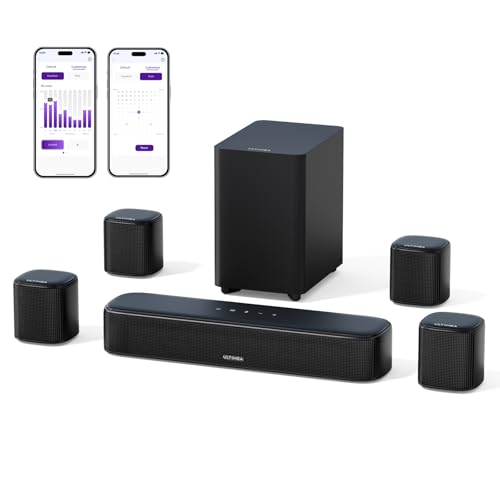
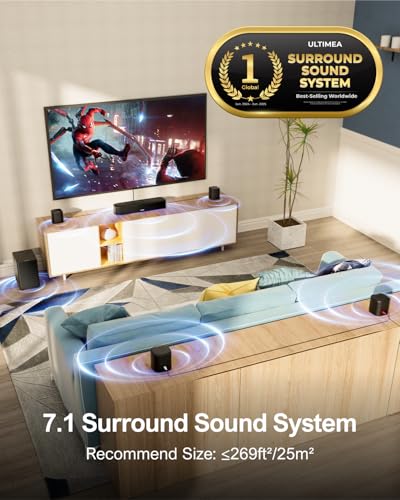
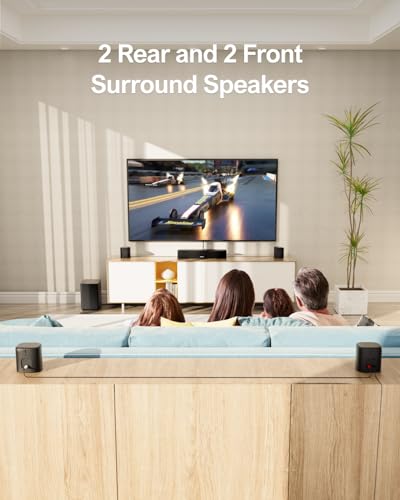
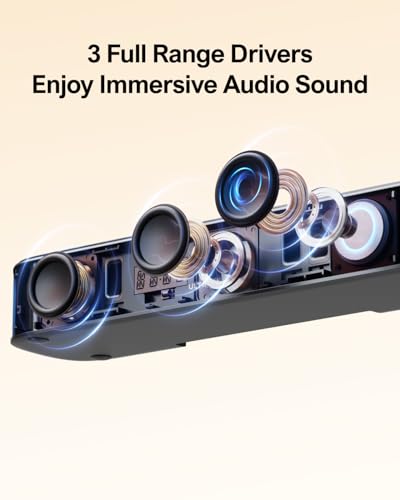
The Ultimea Aura A40 takes the "more is more" approach, giving you eight individual speakers for under $300 at the time of writing. This includes a main soundbar with three drivers, four separate surround speakers, and a dedicated subwoofer. It's genuine 7.1-channel audio—you're getting speakers that physically sit behind and beside your listening position.
Having spent years listening to various audio setups, there's something undeniably convincing about sounds actually coming from behind you. When a helicopter flies overhead in a movie, or footsteps approach from the rear in a game, your brain doesn't need to work to interpret the effect—it's simply there. The Aura A40's SurroundX technology leverages this by providing genuine spatial separation that virtual systems struggle to match.
The system's hybrid wired/wireless approach is particularly clever. The front surround speakers connect via 2-meter cables, while the rear speakers use a 6-meter cable, with the rear-right speaker capable of wireless connection to reduce cable clutter. This flexibility matters enormously in real-world setups where running cables across doorways or around furniture becomes challenging.
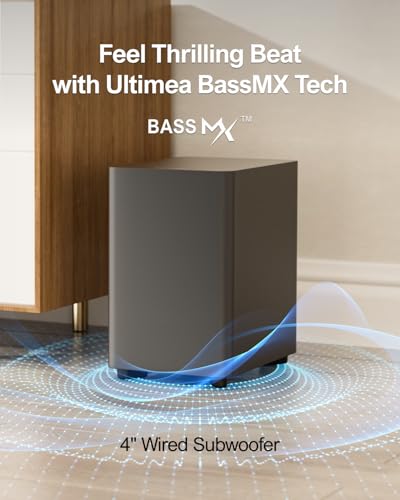
The dedicated 4-inch subwoofer with BassMX technology represents perhaps the Aura A40's greatest advantage. Bass isn't just about hearing low frequencies—it's about feeling them. When explosions rumble through action scenes or kick drums thump in your favorite tracks, a proper subwoofer creates physical presence that built-in bass ports simply cannot match.
The subwoofer's separate enclosure allows for proper acoustic design with ported tuning, extending usable bass response down to 65Hz. More importantly, its dedicated amplification means bass doesn't compete with midrange and treble frequencies for power, preventing the dynamic compression that plagues all-in-one designs during demanding passages.
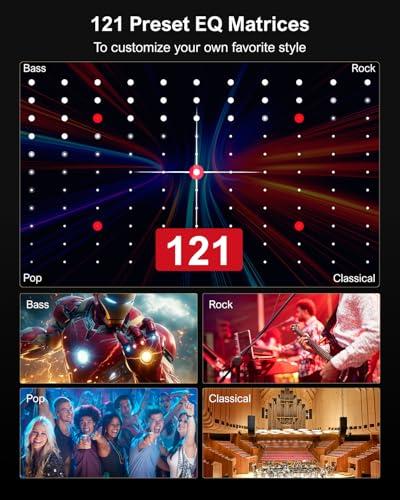
Where the Aura A40 truly shines is customization. The Ultimea app provides 121 preset EQ matrices tailored for different music genres and listening preferences, plus a full 10-band equalizer for manual tuning. Having this level of control matters because every room sounds different—what works in a carpeted bedroom won't work in a hardwood-floored living room.
The app also allows fine-tuning of surround levels across 13 different settings, letting you balance the rear speakers for your specific seating arrangement. This granular control transforms a good system into one that's perfectly matched to your space.
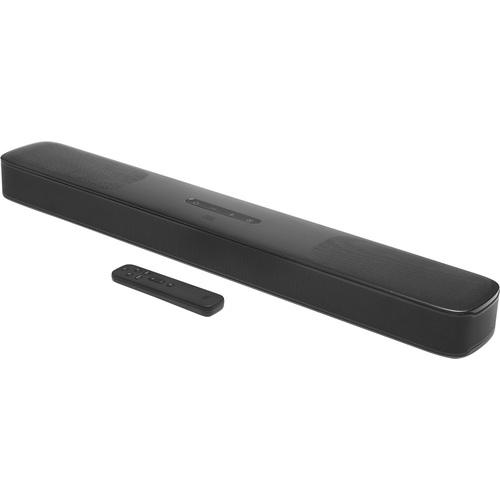
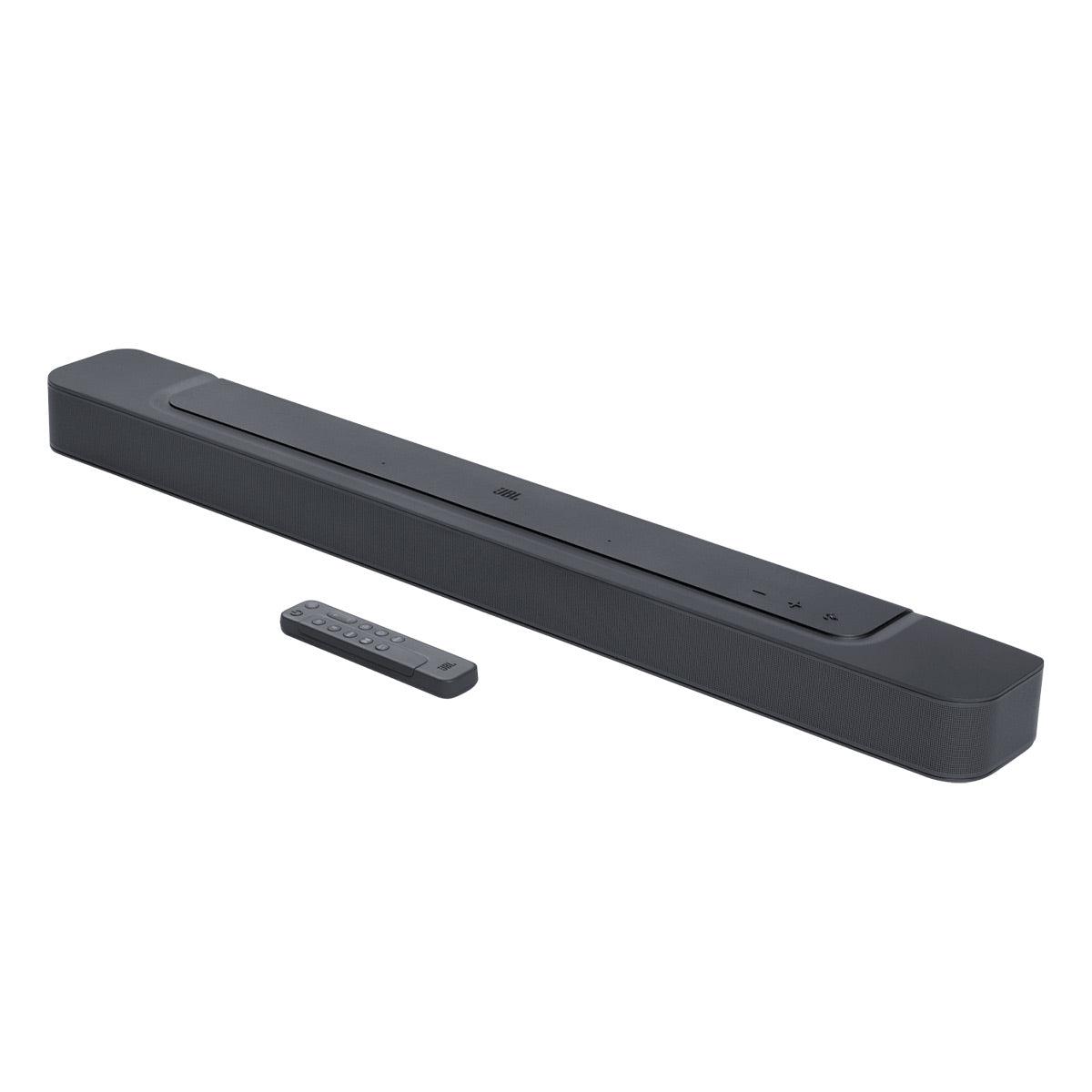
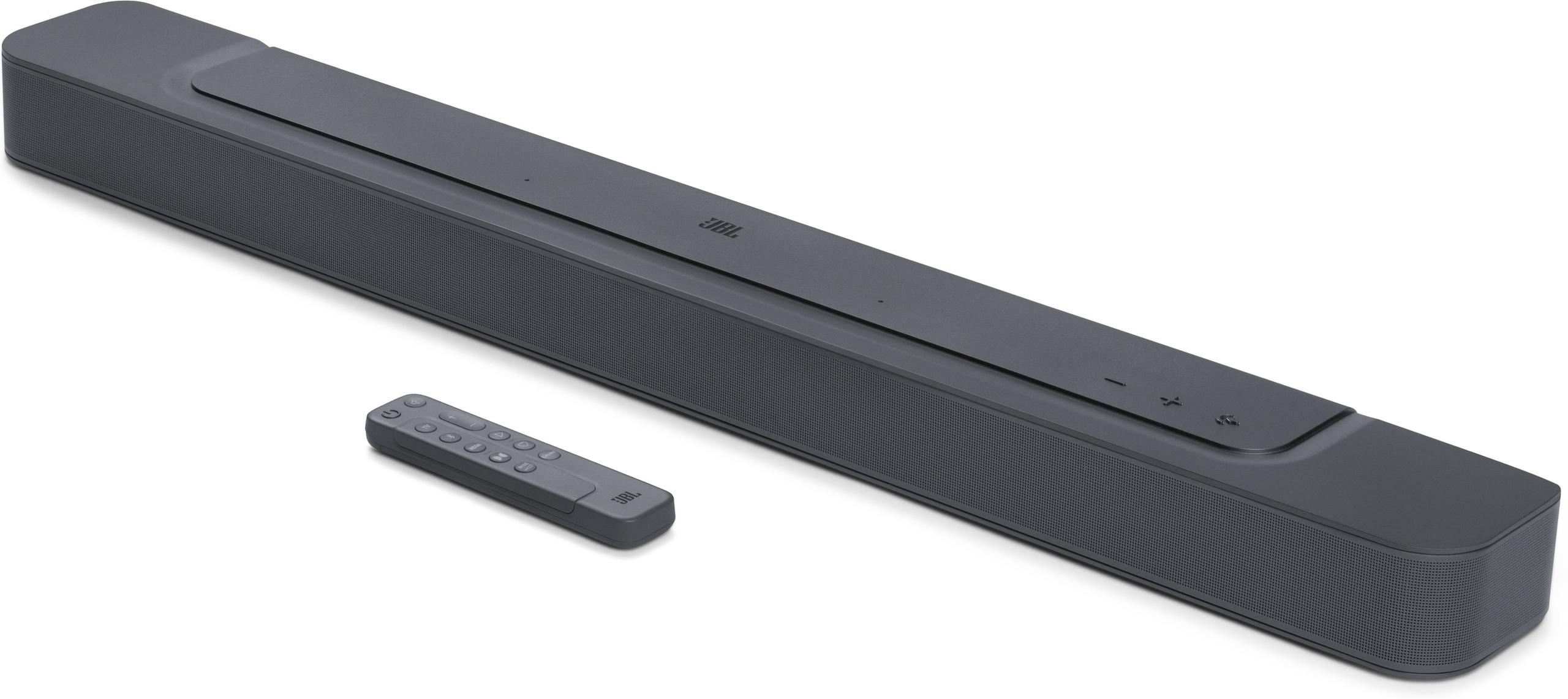
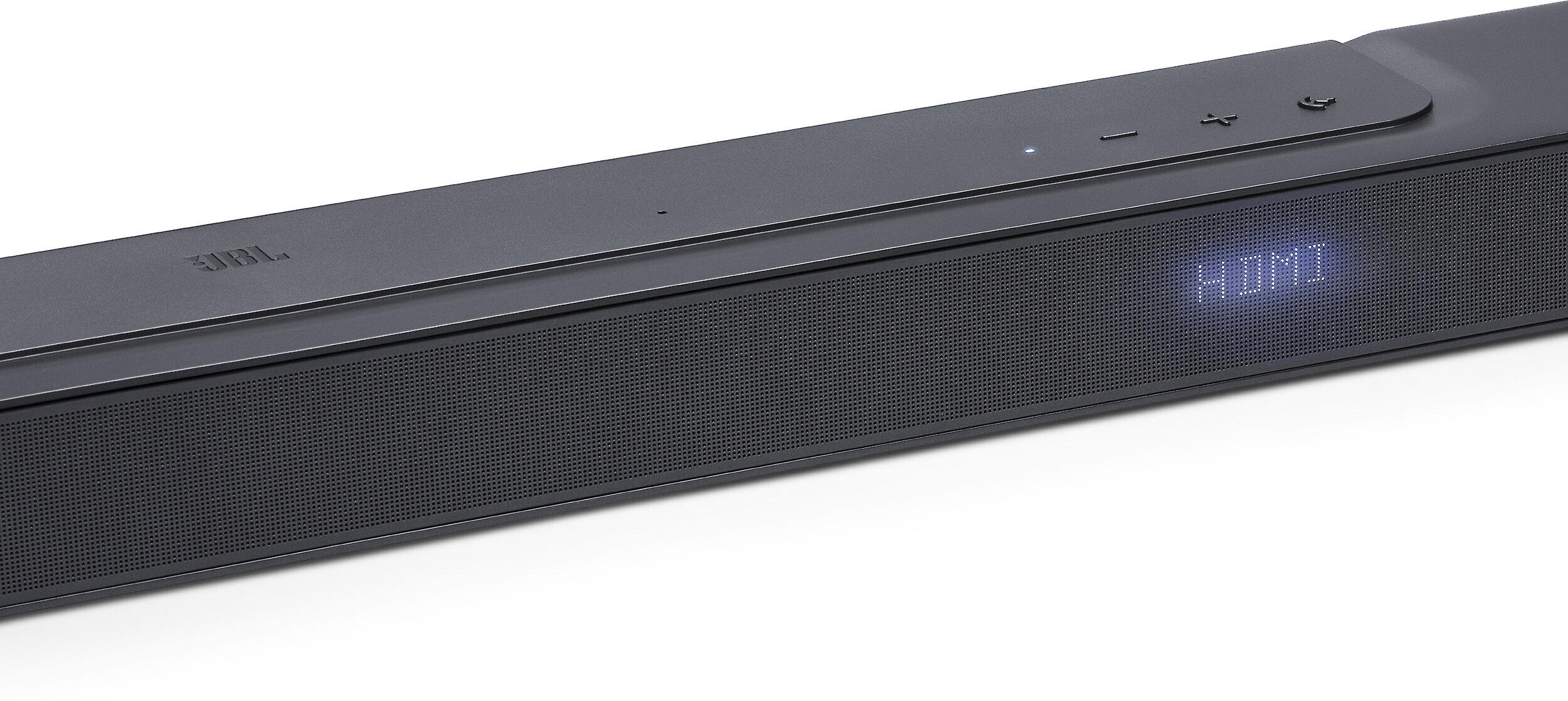
JBL's approach with the Bar 300 represents modern audio engineering at its finest. Rather than adding more speakers, they've focused on making each driver work smarter through advanced processing and strategic positioning.
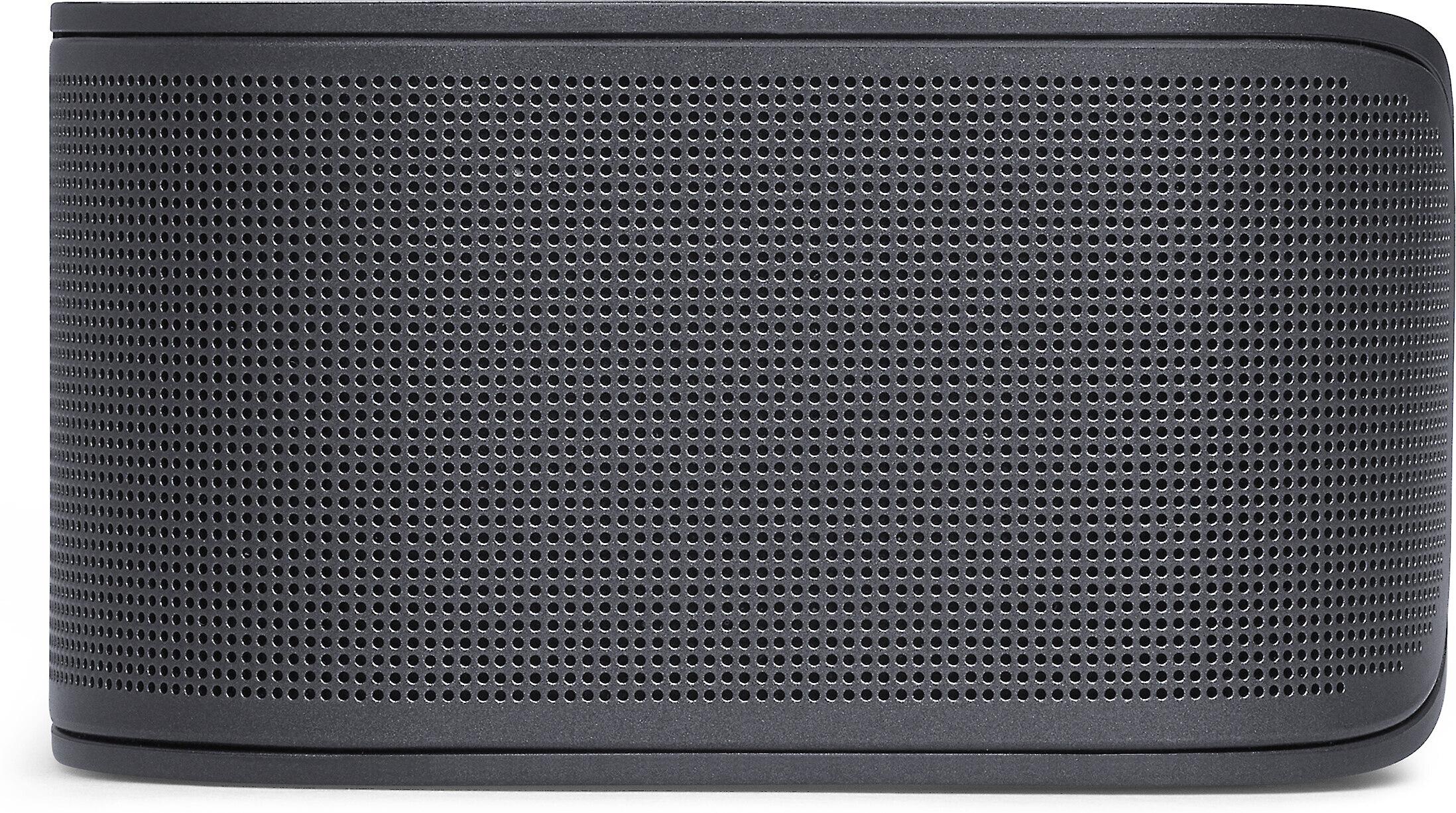
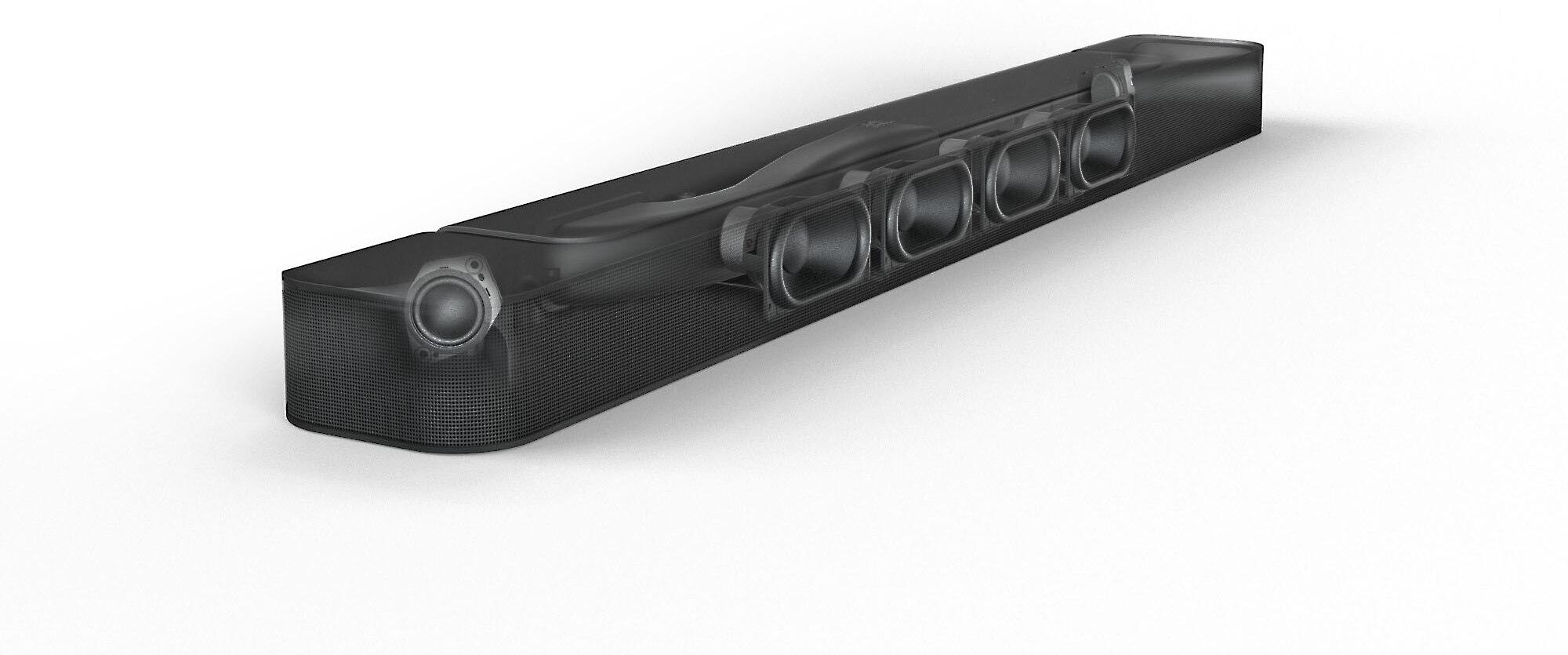
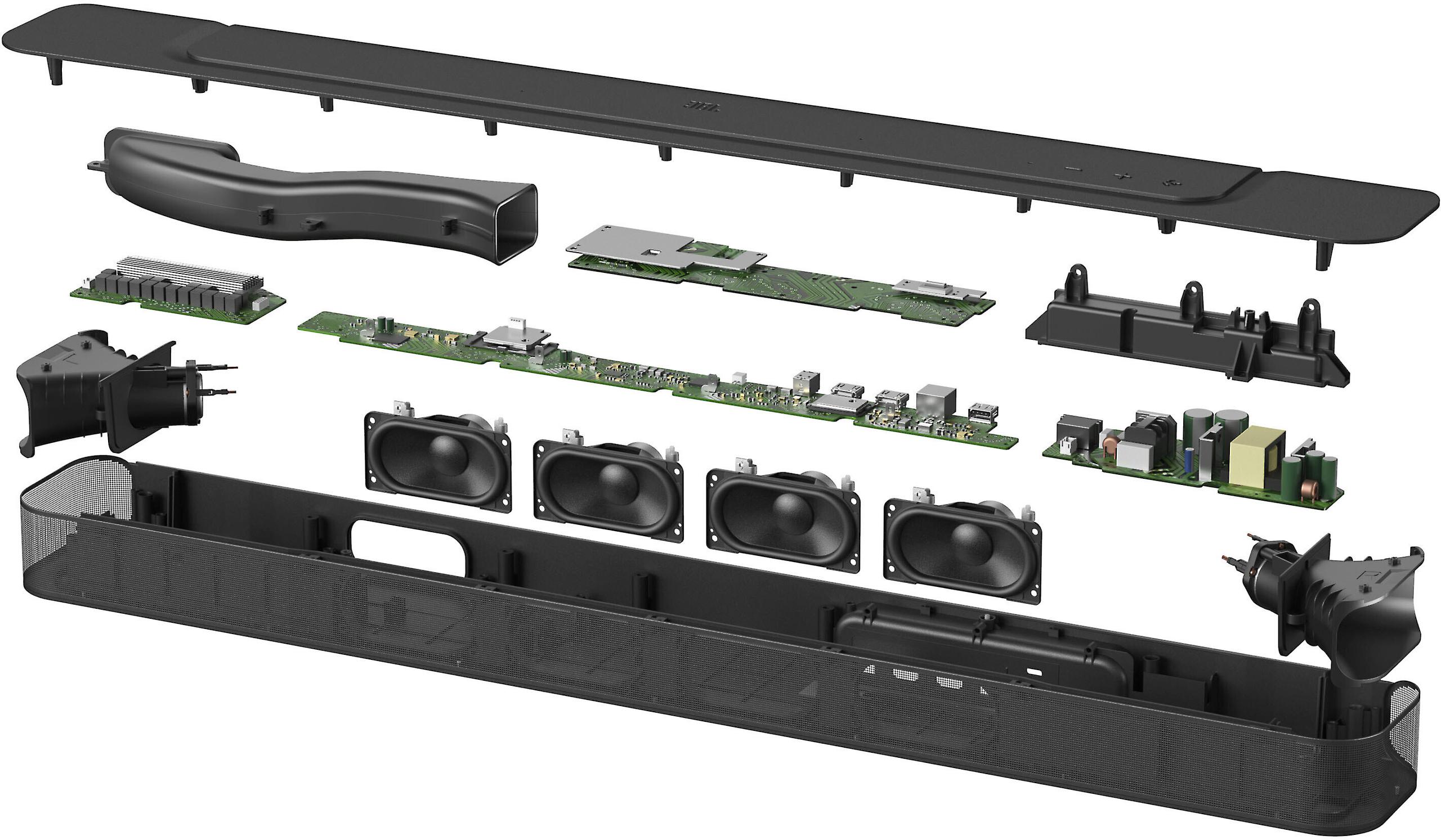
The Bar 300's MultiBeam 3.0 technology uses six precisely angled drivers—four racetrack-shaped woofers and two tweeters—to bounce sound off your room's walls and ceiling. This creates what acousticians call "phantom imaging," where your brain perceives sounds coming from locations where no speakers exist.
The effectiveness of this approach depends heavily on room acoustics. In spaces with appropriate reflective surfaces positioned at the right angles, the effect can be remarkably convincing. The system includes automatic room calibration that analyzes your space and adjusts processing accordingly—a sophisticated feature that would have been unthinkable in budget soundbars just a few years ago.
Perhaps the Bar 300's most significant advantage is Dolby Atmos support, which adds height channels for overhead sound effects. This format has become standard in modern movie soundtracks, creating three-dimensional soundscapes that traditional surround systems can't reproduce. When rain falls or aircraft fly overhead, Atmos-enabled systems can precisely position these sounds above your listening position.
The Aura A40 lacks Atmos support, which feels like a notable omission given how prevalent the format has become since its widespread adoption around 2020.
One of the most common complaints about modern movies and TV shows is mumbly, unintelligible dialogue. The Bar 300's PureVoice 2.0 technology addresses this through dedicated algorithms that boost speech frequencies while maintaining natural tonal balance.
This feature proves invaluable during complex soundtracks where dialogue competes with music and effects. Rather than simply boosting midrange frequencies—which can make voices sound harsh—PureVoice uses dynamic processing to enhance intelligibility without sacrificing overall sound quality.
In bass performance, physics matters more than processing. The Aura A40's dedicated subwoofer simply produces more impactful low-frequency energy than the Bar 300's built-in bass ports. During action movies with deep rumbles or music with substantial low-end content, this difference becomes immediately apparent.
However, the Bar 300 compensates through more controlled bass response. While it can't match the physical impact of a dedicated subwoofer, its integrated approach prevents the boomy, one-note bass that sometimes plagues poorly positioned subwoofers.
For pure surround sound effectiveness, the Aura A40 has the fundamental advantage of placing actual speakers behind your listening position. This creates discrete channel separation that virtual systems can approximate but not replicate.
The Bar 300's MultiBeam technology works impressively well in ideal conditions—rooms with appropriate wall placement and reflective surfaces. But in challenging acoustic environments, such as open floor plans or rooms with irregular shapes, the virtual surround effect diminishes significantly.
Dialogue clarity represents an area where sophisticated processing can compete with hardware. The Bar 300's PureVoice technology consistently delivers clearer speech than the Aura A40's basic Voice EQ mode, particularly during complex soundtracks.
This advantage stems from decades of JBL's acoustic research. The company's experience in professional audio translates to better understanding of how human hearing processes speech frequencies, resulting in more effective dialogue enhancement.
The JBL Bar 300 dominates in connectivity and smart features. Its HDMI eARC connection supports uncompressed audio formats while simplifying setup to a single cable. The built-in Wi-Fi enables streaming service integration, voice assistant compatibility, and automatic firmware updates—features that make the system feel genuinely modern.
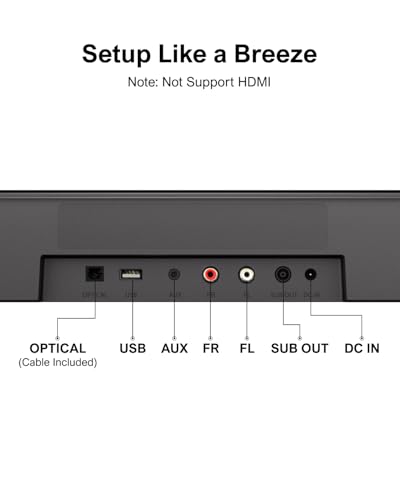
The Aura A40 relies on optical, auxiliary, and Bluetooth connections, which limits audio format support and requires multiple cables for full functionality. While these connections work perfectly well, they feel outdated compared to HDMI's single-cable simplicity.
The Aura A40 requires genuine commitment to setup. You're positioning five separate components, running cables across your room, and managing wireless pairing procedures. The process takes 30-45 minutes and requires careful planning for optimal speaker placement.
The Bar 300 connects with one HDMI cable and powers up ready to go. Setup takes minutes, with automatic calibration handling acoustic optimization. For users who want immediate improvement without installation complexity, this simplicity proves invaluable.
Living with the Aura A40 means managing multiple components and occasionally re-pairing wireless connections. The payoff is authentic surround sound that works consistently regardless of room acoustics.
The Bar 300 provides a more appliance-like experience—it works reliably without user intervention, though performance depends on maintaining optimal positioning and room acoustics.
At the time of writing, both systems occupy similar price ranges, making value comparison straightforward. The Aura A40 provides exceptional hardware value—eight speakers including a dedicated subwoofer for under $300 represents remarkable component density.
The Bar 300 justifies its price through advanced features and processing. Dolby Atmos support, HDMI eARC, Wi-Fi connectivity, and smart integration would typically cost significantly more in competing products.
Want authentic surround sound with physical rear speakers positioned behind your seating. The system excels in dedicated home theater spaces where you can properly position all components and run necessary cables. It's ideal for users who prioritize bass impact and genuine spatial effects over convenience.
The Aura A40 also suits buyers who enjoy audio customization through extensive EQ options and don't mind more complex setup procedures. If your priority is getting the most hardware for your money and you have space for multiple components, this system delivers exceptional value.
Prioritize simplicity and modern features over ultimate audio performance. The system works brilliantly in small to medium rooms where virtual surround can function effectively, particularly spaces with good wall reflectivity for MultiBeam processing.
The Bar 300 suits users who want dialogue clarity, Dolby Atmos support, and seamless integration with modern TVs and streaming services. It's perfect for apartments or condos where space constraints make multi-component systems impractical.
These systems represent fundamentally different approaches to home audio improvement. The Ultimea Aura A40 delivers authentic multi-channel surround through hardware placement, while the JBL Bar 300 uses sophisticated processing to create immersive effects from a single elegant unit.
For dedicated home theater spaces where setup complexity isn't a concern, the Aura A40's combination of physical surround speakers and dedicated subwoofer provides more convincing spatial effects and superior bass impact. Its extensive customization options allow fine-tuning that virtual systems can't match.
In modern living spaces where simplicity and aesthetics matter, the Bar 300's advanced processing, Dolby Atmos support, and seamless connectivity provide a more refined experience. While it can't match the physical presence of dedicated components, its sophisticated features and effortless setup make it genuinely appealing for daily use.
Both systems represent excellent value in their respective approaches. The choice ultimately depends on your priorities: hardware authenticity and maximum impact per dollar with the Aura A40, or technological sophistication and convenience with the Bar 300. Either way, you'll achieve dramatically better audio than your TV's built-in speakers—and isn't that really the point?
| Ultimea Aura A40 7.1 Channel Soundbar System | JBL Bar 300 5.0 Soundbar |
|---|---|
| Channel Configuration - Determines surround sound authenticity | |
| True 7.1 channels with 8 physical speakers (3 soundbar, 4 surround, 1 subwoofer) | Virtual 5.0 channels with 6 drivers in single soundbar unit |
| Subwoofer - Critical for bass impact in movies and music | |
| Dedicated 4-inch wired subwoofer with BassMX technology | No separate subwoofer, relies on built-in bass ports |
| Power Output - Affects volume and dynamic range | |
| 330W peak power distributed across multiple speakers | 260W RMS power from consolidated drivers |
| Surround Speaker Setup - Determines installation complexity | |
| 4 physical surround speakers (2 front wired, 2 rear with hybrid wired/wireless) | No separate speakers, uses MultiBeam wall-bouncing technology |
| Dolby Atmos Support - Essential for modern movie soundtracks | |
| Not supported | Full Dolby Atmos with height channel processing |
| HDMI Connectivity - Simplifies setup and supports advanced audio formats | |
| No HDMI (optical, aux, USB, Bluetooth only) | HDMI eARC input/output with 4K HDR passthrough |
| Smart Features - Streaming and voice control integration | |
| Basic app control with extensive EQ customization (121 presets) | Wi-Fi 6, AirPlay 2, Chromecast, Alexa/Google Assistant compatible |
| Dialogue Enhancement - Improves speech clarity during complex scenes | |
| Voice EQ mode with manual adjustment | PureVoice 2.0 dedicated dialogue processing technology |
| Setup Complexity - Time and effort required for installation | |
| Multi-component setup with cable management and speaker positioning | Single-unit installation with automatic room calibration |
| Frequency Response - Range of audio reproduction | |
| 65Hz - 18kHz (limited by lack of Atmos processing) | 50Hz - 20kHz (impressive for no dedicated sub) |
| Room Size Optimization - Effective coverage area | |
| Medium to large rooms (distributed speakers provide flexibility) | Small to medium rooms (virtual surround depends on wall reflections) |
| Total Weight - Installation and portability considerations | |
| 12.6 lbs across 5 separate components | 5.5 lbs single unit |
| EQ Customization - Sound tuning capabilities | |
| 10-band equalizer with 121 preset matrices and 13 surround levels | App-based EQ with automated room correction |
The Ultimea Aura A40 delivers authentic 7.1 surround sound using four physical surround speakers positioned around your room, creating genuine directional audio effects. The JBL Bar 300 uses advanced MultiBeam technology to create virtual 5.0 surround sound by bouncing audio off walls. For true surround sound authenticity, the Aura A40 has the advantage with real speakers behind your seating position.
The Ultimea Aura A40 includes a dedicated 4-inch wired subwoofer that provides deep, room-filling bass for movies and music. The JBL Bar 300 has no separate subwoofer and relies on built-in bass ports, which limits low-frequency impact. If powerful bass is important for your home theater experience, the Aura A40 offers significantly better performance.
The JBL Bar 300 is much simpler to install, requiring only one HDMI cable connection and automatic room calibration. The Ultimea Aura A40 requires positioning five separate components, running cables to surround speakers, and wireless pairing procedures. For plug-and-play convenience, the Bar 300 is the clear winner.
Only the JBL Bar 300 supports Dolby Atmos, which adds overhead sound effects for modern movie soundtracks. The Ultimea Aura A40 does not support Dolby Atmos but focuses on traditional 7.1 surround sound instead. If you want the latest audio formats for streaming services and 4K movies, the Bar 300 is the better choice.
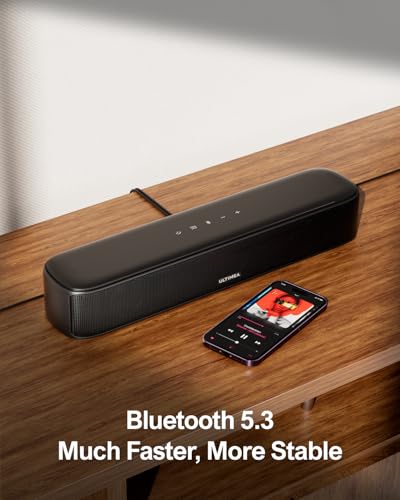
The JBL Bar 300 offers HDMI eARC connection for single-cable setup with advanced audio format support, plus optical and Bluetooth options. The Ultimea Aura A40 connects via optical digital, 3.5mm aux, USB, or Bluetooth 5.3 but has no HDMI inputs. For modern TV compatibility and simplified connections, the Bar 300 is more versatile.
The JBL Bar 300 features PureVoice 2.0 technology that uses dedicated algorithms to enhance speech clarity during complex soundtracks. The Ultimea Aura A40 offers a Voice EQ mode but lacks specialized dialogue processing. For watching TV shows and movies with challenging audio mixes, the Bar 300 provides superior voice clarity.
The JBL Bar 300 includes built-in Wi-Fi 6, AirPlay 2, and Chromecast for direct streaming from music services and voice assistant integration. The Ultimea Aura A40 supports Bluetooth 5.3 for wireless audio but has no Wi-Fi or smart streaming features. For modern streaming capabilities, the Bar 300 offers much more flexibility.
The Ultimea Aura A40 performs better in larger spaces due to its distributed 330W power across multiple physical speakers and dedicated subwoofer. The JBL Bar 300 works best in small to medium rooms where its MultiBeam technology can effectively use wall reflections. For spacious home theaters, the Aura A40 provides better coverage and impact.
The Ultimea Aura A40 provides extensive customization through its app, including 121 preset EQ matrices, 10-band equalizer, and 13 adjustable surround levels. The JBL Bar 300 offers app-based EQ control with automatic room correction but fewer manual adjustment options. For audio enthusiasts who want detailed sound tuning, the Aura A40 offers more control.
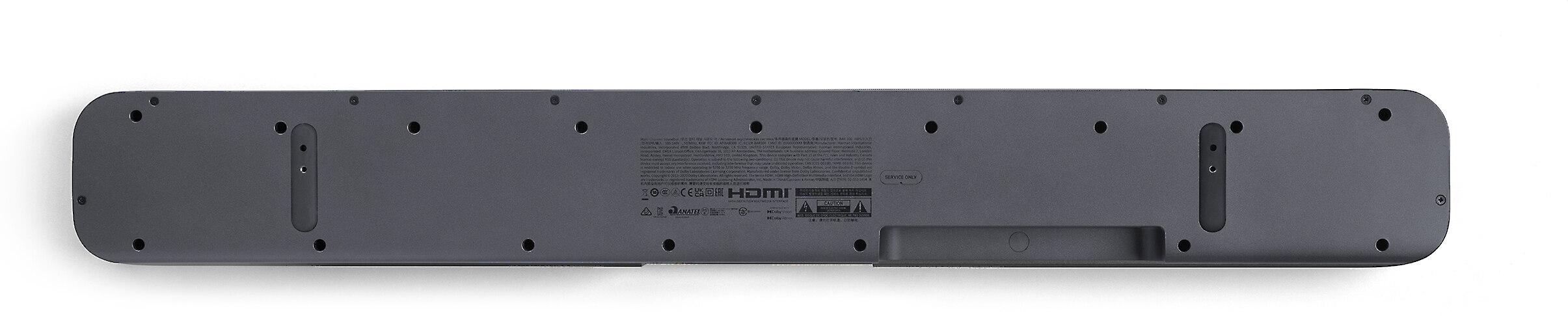
The JBL Bar 300 is a single 32-inch unit weighing 5.5 pounds that fits on most TV stands. The Ultimea Aura A40 requires space for five separate components totaling 12.6 pounds, including surround speaker placement around your room. For minimal visual impact and space efficiency, the Bar 300 is the compact solution.
The Ultimea Aura A40 provides exceptional hardware value with eight physical speakers including a dedicated subwoofer at its price point. The JBL Bar 300 justifies its cost through premium features like Dolby Atmos, HDMI eARC, and smart connectivity. Your best value depends on whether you prioritize hardware quantity (Aura A40) or advanced features (Bar 300).
Both soundbars enhance gaming audio significantly. The Ultimea Aura A40 excels at directional audio for competitive gaming, with physical rear speakers helping locate enemies and environmental sounds. The JBL Bar 300 offers lower latency through its HDMI connection and works well with gaming consoles. For immersive single-player games, the Aura A40 provides better spatial effects, while the Bar 300 offers more convenient console connectivity.
We've done our best to create useful and informative comparisons to help you decide what product to buy. Our research uses advanced automated methods to create this comparison and perfection is not possible - please contact us for corrections or questions. These are the sites we've researched in the creation of this article: youtube.com - walmart.com - youtube.com - ultimea.com - homestudiobasics.com - ultimea.co - youtube.com - eu.ultimea.com - walmart.com - device.report - bestbuy.com - manuals.plus - community.ultimea.com - judge.me - support.ultimea.com - geekmaxi.com - provantage.com - bestbuy.com - youtube.com - uk.whatgeek.com - whathifi.com - safeandsoundhq.com - youtube.com - cnet.com - mm.jbl.com - jbl.com - bestbuy.com - support.jbl.com - dell.com - walmart.com

Privacy Policy
Terms and Conditions - Affiliate Policy
Home Security
© Copyright 2008-2026.
11816 Inwood Rd #1211, Dallas, TX 75244