

Home theater audio has come a long way from the simple TV speakers most of us grew up with. Today's market offers everything from basic soundbars to complex multi-speaker systems that can make your living room feel like a movie theater. But navigating this landscape can be confusing, especially when products with similar names take completely different approaches to solving the same problem: how to get great surround sound without the complexity of a traditional receiver-based system.
The Hisense HT Saturn and Ultimea Aura A40 represent two fundamentally different philosophies in modern home theater design. One is a premium wireless system that prioritizes authentic surround sound technology, while the other focuses on delivering impressive features at a budget-friendly price point. Understanding these differences is crucial for making the right choice for your home.
Before diving into the specifics, it's important to understand what these systems are trying to accomplish. Traditional soundbars place all speakers in a single enclosure under your TV, using digital processing to simulate surround sound effects. This approach works reasonably well but has physical limitations—it's hard to create convincing rear surround effects when all the speakers are in front of you.
Multi-speaker systems like both the HT Saturn and Aura A40 solve this by placing actual speakers around your room. This creates genuine surround sound rather than just simulated effects. However, the way they implement this concept differs dramatically, which explains their vastly different price points and performance characteristics.
The key technical concepts to understand are discrete channels versus virtual processing. Discrete channels mean each surround sound channel (left, right, center, rear left, rear right, etc.) has its own dedicated speaker. Virtual processing uses fewer speakers but employs digital signal processing to trick your brain into hearing sounds from directions where no speakers exist. Both approaches have merit, but they deliver distinctly different experiences.
Released in early 2025, the Hisense HT Saturn represents the cutting edge of wireless home theater technology. This isn't just another soundbar with a few extra speakers—it's a complete reimagining of how surround sound should work in modern homes.
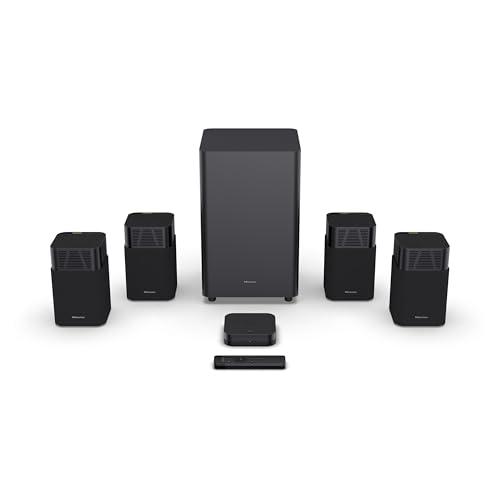
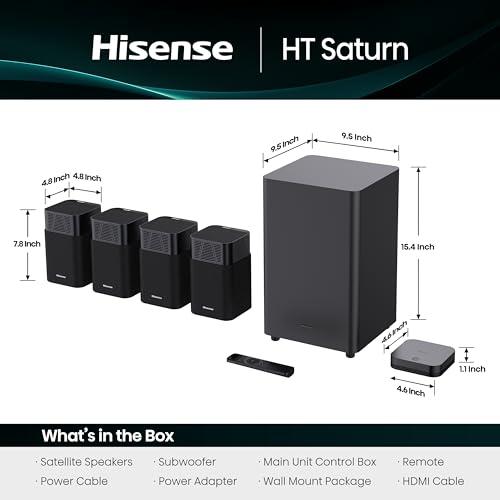
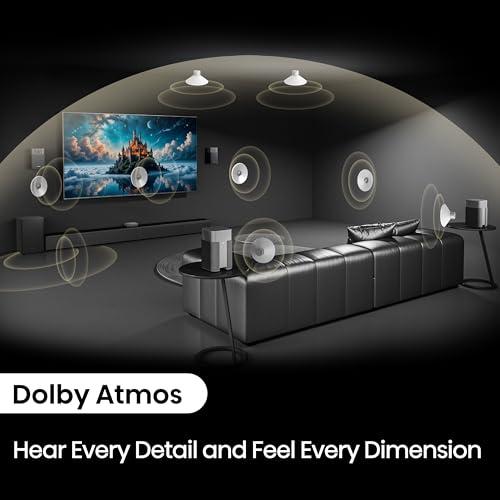
The Saturn's most impressive feature is its 4.1.2 channel configuration with true Dolby Atmos and DTS:X support. Let me break this down: the "4.1.2" means four main speakers (front left, front right, rear left, rear right), one subwoofer (the ".1"), and two height channels (the ".2") that bounce sound off your ceiling to create overhead effects. This is authentic three-dimensional audio, not a simulation.
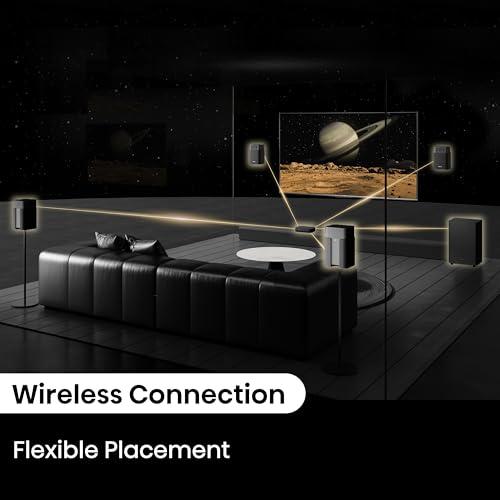
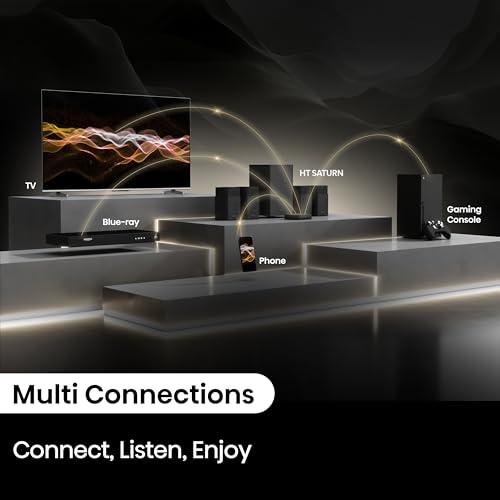
What makes this system special is its completely wireless implementation. Each of the four satellite speakers connects to the central control unit using three different wireless frequency bands (2.4GHz, 5.2GHz, and 5.8GHz). This tri-band approach is crucial because it prevents interference from your Wi-Fi network, Bluetooth devices, and other wireless equipment in your home. The result is stable, synchronized audio across all channels without the hassle of running speaker wires throughout your room.
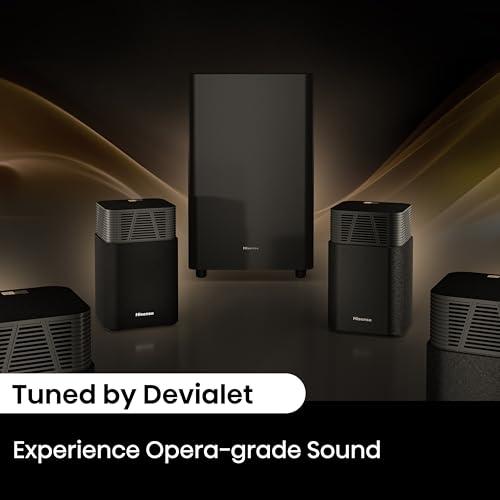
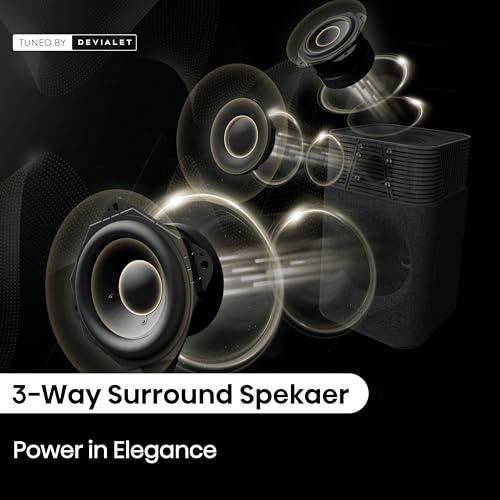
The acoustic engineering here is particularly impressive. Each satellite speaker uses a 3-way design with two full-range drivers plus a dedicated tweeter. This allows each speaker to handle bass, midrange, and treble frequencies independently, creating much cleaner sound than typical single-driver satellite speakers. The system includes 13 total speakers across all components, and they're professionally tuned by Devialet, a French company known for high-end audio equipment.
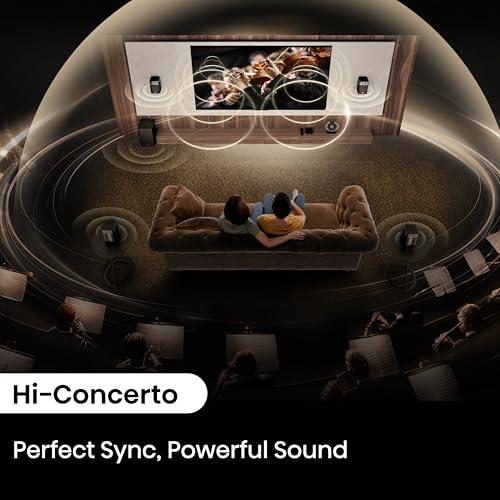
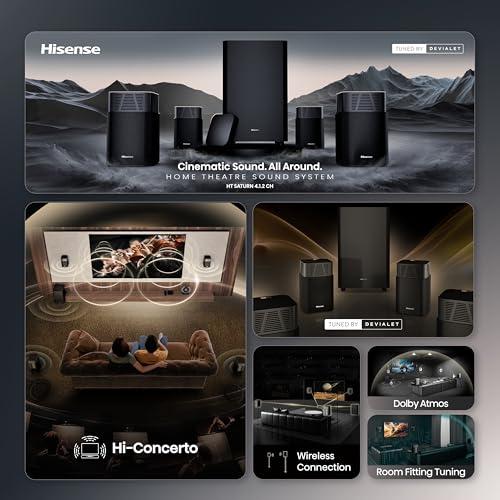
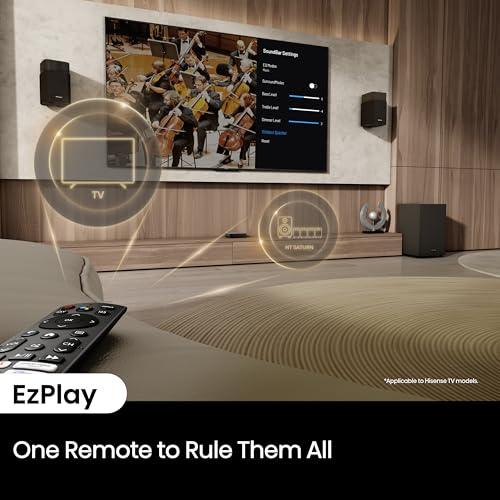
One of the Saturn's most innovative features is Hi-Concerto technology, which works when paired with compatible Hisense TVs. This system actually uses your TV's built-in speakers as additional channels, working in harmony with the Saturn to create an even wider soundstage. It's a clever approach that maximizes the audio equipment you already own.
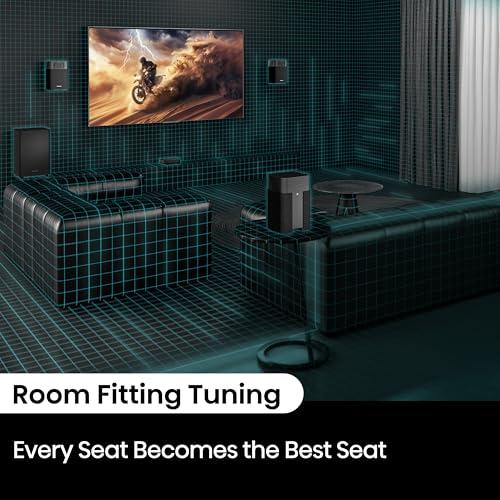
The HT Saturn also includes Room Fitting Tuning, which automatically calibrates the system to your room's acoustics. This addresses one of the biggest challenges in home audio: every room sounds different due to size, furniture placement, and wall materials. The Saturn measures your room's response and adjusts timing, levels, and equalization accordingly.
The Ultimea Aura A40, available since 2024, takes a completely different approach to the same problem. Rather than focusing on premium wireless technology and authentic surround formats, it prioritizes customization, value, and getting as close as possible to true surround sound at a fraction of the cost.
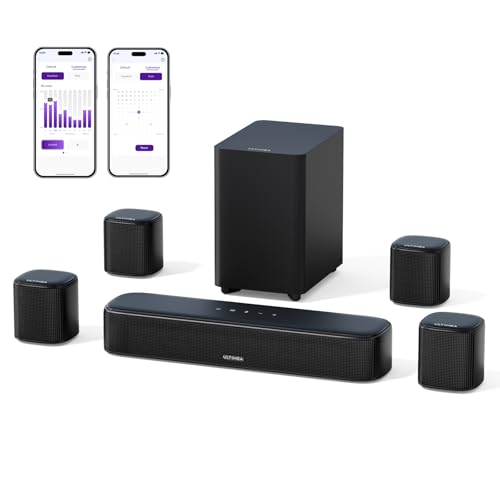
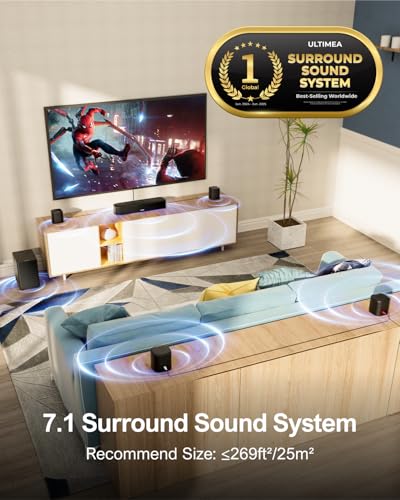
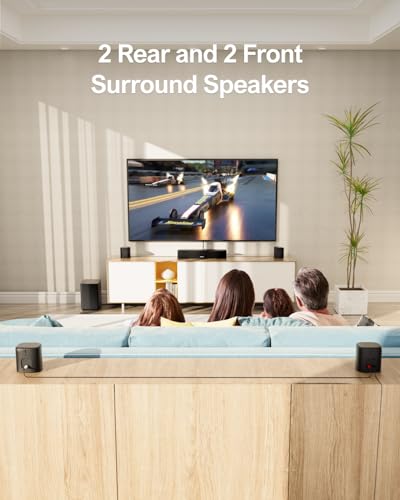
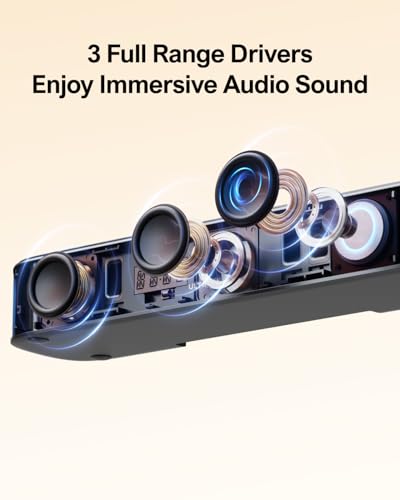
The Aura A40's 7.1 channel designation is somewhat misleading—it doesn't actually have seven discrete channels like a traditional 7.1 system. Instead, it uses SurroundX virtual processing to simulate 7.1 surround from its eight total speakers. This includes three drivers in the main soundbar, four separate surround speakers, and one subwoofer.
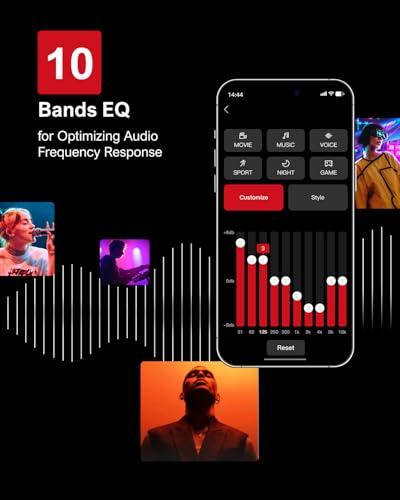
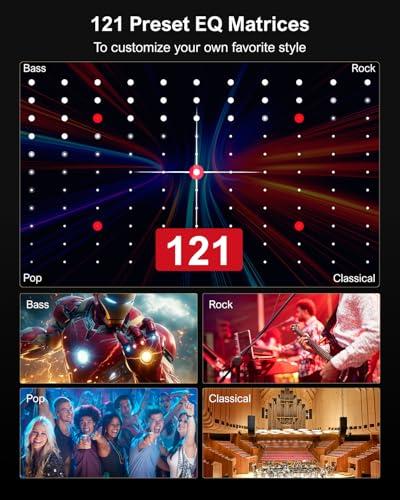
Where the Aura A40 truly shines is in its customization options. The Ultimea Smart App provides an almost overwhelming level of control, with 121 preset EQ matrices covering everything from bass-heavy settings to classical music optimization. You get a full 10-band equalizer for manual tuning, plus the ability to adjust surround levels across 13 different settings. This level of customization is rare even in much more expensive systems.
The app also supports over-the-air (OTA) firmware updates, meaning Ultimea can add new features and improve performance long after you've purchased the system. This is becoming increasingly important as audio processing algorithms improve and new audio formats emerge.
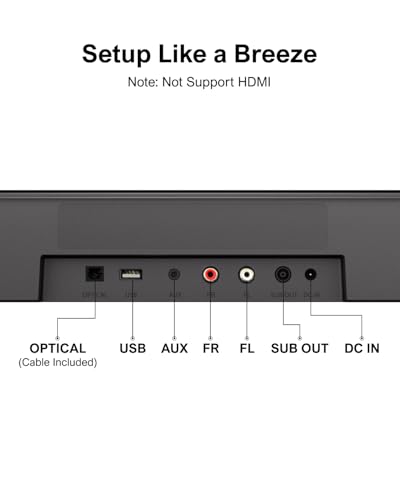
However, the Aura A40 makes significant compromises to hit its budget price point. Most notably, it completely lacks HDMI connectivity, relying instead on optical, AUX, and Bluetooth connections. This limits its compatibility with modern TVs and prevents access to lossless audio formats that require HDMI's higher bandwidth.
The performance gap between these systems is substantial, and it's important to understand why. The HT Saturn delivers what audiophiles call "discrete channel separation"—each surround channel is handled by its own dedicated speaker with its own amplification. When a helicopter flies overhead in a movie, you hear it through actual speakers positioned around and above you.
The Aura A40, despite its "7.1" marketing, uses what's called "virtual surround processing." This means it takes the surround sound information and uses digital algorithms to create the illusion of sounds coming from directions where no speakers exist. It's impressive technology, but it's fundamentally different from having actual speakers in those positions.
In practical terms, this manifests in several ways. The Saturn creates more convincing overhead effects because its upward-firing drivers physically bounce sound off your ceiling. The Aura A40 can simulate height effects through processing, but they're not as convincing or precisely located.
Dialogue clarity is another area where the approaches differ significantly. The HT Saturn creates what's called a "phantom center channel"—even though it doesn't have a dedicated center speaker, it uses precise timing and level matching between its front left and right speakers to create the illusion of a center speaker. This Devialet-tuned implementation is reportedly so good that dialogue appears to come directly from your TV screen, just like systems with dedicated center channels.
The Aura A40 handles dialogue through digital processing and its voice-focused EQ modes. While effective, it doesn't achieve the same level of natural center imaging as the Saturn's phantom center approach.
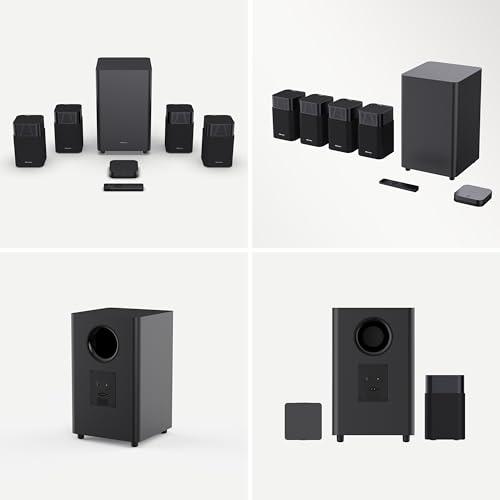
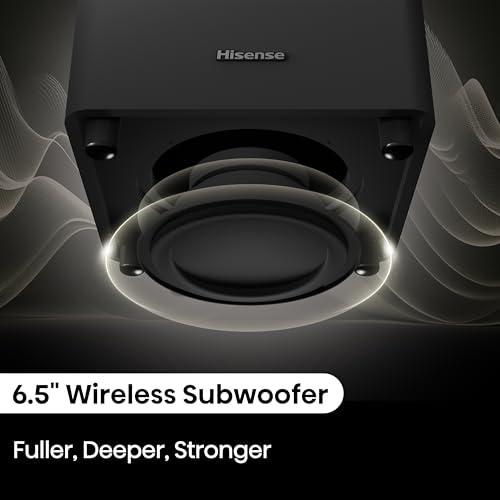
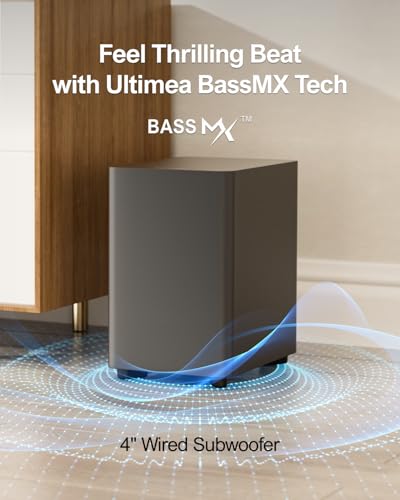
Bass performance shows another clear distinction. The Saturn's 6.5-inch wireless subwoofer extends down to 40Hz, providing the kind of deep, room-shaking bass that makes action movies feel physical. The Aura A40's 4-inch wired subwoofer only reaches down to 65Hz—still adequate for most content, but lacking the deep rumble that makes explosions and music feel truly impactful.
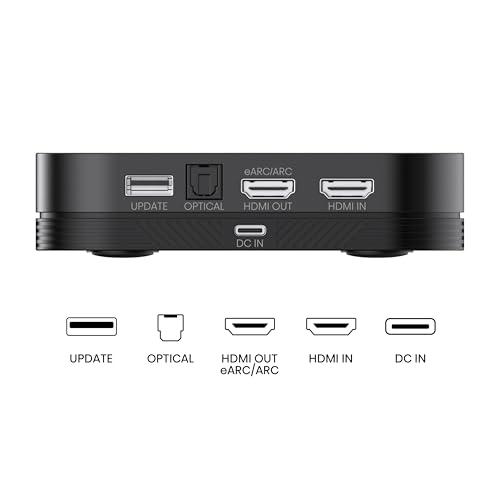
Here's where the philosophical differences between these systems become most apparent. The HT Saturn is designed for modern AV setups with its HDMI eARC support and 4K 60Hz pass-through. This means it can handle the highest quality audio formats from your TV, gaming console, or streaming device while simultaneously passing through 4K video without any quality loss.
The eARC (enhanced Audio Return Channel) connection is particularly important because it supports lossless audio formats like Dolby TrueHD and DTS-HD Master Audio. These formats contain more audio information than their compressed counterparts, resulting in cleaner, more detailed sound. They're commonly found on 4K Blu-ray discs and high-end streaming content.
The Aura A40's lack of HDMI connectivity is its biggest limitation. You're restricted to optical, AUX, and Bluetooth connections, which means you can't access lossless audio formats and may need additional cables or adapters depending on your setup. For many modern TVs, this also means you can't control the soundbar volume with your TV remote, a convenience feature most people don't realize they want until they don't have it.
However, the Aura A40 compensates with its comprehensive app control. The Ultimea Smart App provides deeper customization than most premium systems offer. You can create custom EQ curves for different types of content, adjust the virtual surround processing to match your room, and even update the system's firmware when improvements become available.
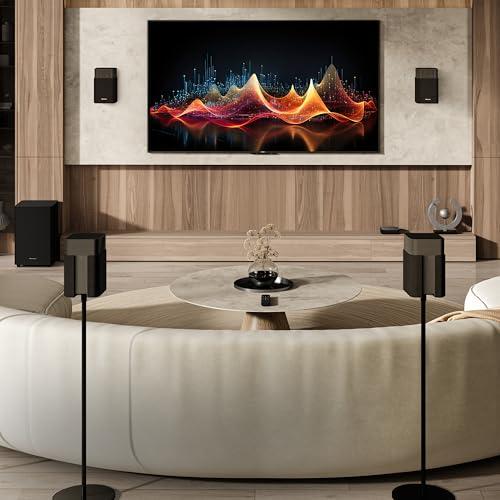
Setting up the HT Saturn is remarkably straightforward for such an advanced system. The wireless satellites automatically pair with the control unit when powered on, and the tri-band wireless technology maintains stable connections without interference. You only need to find power outlets for each speaker—no speaker wire running is required.
The Room Fitting Tuning feature, available when paired with compatible Hisense TVs, automatically optimizes the system for your space. This is particularly valuable because most people don't have the knowledge or equipment to properly calibrate a surround sound system manually.
The Aura A40 requires more hands-on setup but offers more control over the final result. Three of the four surround speakers require wire connections, which means planning cable routes and potentially drilling holes or using cable conduits. However, this wired approach also means you don't have to worry about wireless interference or battery maintenance.
The extensive app customization means you can fine-tune the system exactly to your preferences, but it also means you need to invest time in understanding and adjusting various settings. Some users love this level of control, while others find it overwhelming.
The decision between these systems ultimately comes down to your priorities, budget, and existing equipment.
Choose the Hisense HT Saturn if you want the most authentic surround sound experience available in a wireless system. It's particularly compelling if you already own or are planning to buy a large Hisense TV, as the Hi-Concerto integration creates an even more immersive experience. The Saturn is also the clear choice if you frequently watch Dolby Atmos content from 4K Blu-rays, high-end streaming services, or modern gaming consoles.
The Saturn makes sense in medium to large rooms where its wireless flexibility and substantial power output can shine. If you're building a dedicated home theater space or upgrading a primary family room, the investment in authentic surround sound technology pays off in long-term enjoyment.
The Ultimea Aura A40 is ideal for budget-conscious buyers who still want a significant audio upgrade over TV speakers. It's particularly appealing if you enjoy tweaking audio settings and don't mind the setup complexity of running some speaker wires. The Aura A40 also makes sense if your TV lacks eARC support or if you primarily stream content that doesn't require the highest-end audio formats.
Consider the Aura A40 for smaller to medium-sized rooms where its 4-inch subwoofer and virtual processing can still create an engaging surround experience. It's also a good choice for secondary rooms or apartments where budget and complexity are bigger concerns than absolute performance.
At the time of writing, the price difference between these systems is substantial—the Saturn costs roughly ten times more than the Aura A40. This price gap reflects genuine technology differences rather than just brand premium. The Saturn's wireless implementation, Devialet tuning, and authentic surround formats justify the higher cost for users who prioritize performance over value.
Both systems succeed at their intended goals, but they're targeting different user needs entirely. The HT Saturn delivers premium performance with cutting-edge wireless technology and professional audio tuning. It's a system for enthusiasts who want the best possible surround sound experience without the complexity of traditional receivers and wired speakers.
The Aura A40 provides impressive value by delivering convincing surround effects and extensive customization at a budget-friendly price. While it can't match the Saturn's authentic discrete channels or premium build quality, it offers a substantial upgrade over TV speakers and more features than many systems costing several times more.
Your choice should align with your expectations and usage patterns. If you're serious about home theater and have the budget for premium technology, the Saturn's authentic surround sound and wireless convenience make it a compelling long-term investment. If you want good surround sound without breaking the bank and don't mind some setup complexity, the Aura A40 delivers impressive performance for its price point.
Either way, both systems represent the evolution of home audio beyond basic soundbars toward true surround sound experiences that can transform how you enjoy movies, music, and games at home.
| Hisense HT Saturn HTSATURN 4.1.2Ch Sound Bar System | Ultimea Aura A40 7.1 Channel Soundbar System |
|---|---|
| Audio Technology - Determines authentic vs simulated surround sound | |
| True discrete 4.1.2 channels with Dolby Atmos/DTS:X support | Virtual 7.1 processing (SurroundX technology, no true discrete channels) |
| Height Channels - Critical for 3D overhead effects | |
| Physical upward-firing drivers for authentic Atmos overhead effects | Virtual height simulation through processing only |
| Speaker Configuration - More speakers generally mean better sound positioning | |
| 13 total speakers: 4 wireless satellites (3-way design), 1 wireless subwoofer | 8 total speakers: 3 in soundbar, 4 wired surrounds, 1 wired subwoofer |
| Total Power Output - Affects volume and dynamic range | |
| 720W RMS (500W max output) across all channels | 330W peak power (not RMS rated) |
| Subwoofer Performance - Determines bass depth and impact | |
| 6.5" wireless subwoofer, 40Hz-20kHz frequency response | 4" wired subwoofer, 65Hz-18kHz frequency response (limited bass extension) |
| Professional Tuning - Affects overall sound quality and balance | |
| Tuned by Devialet (premium French audio company) | Standard consumer tuning with AI optimization |
| HDMI Connectivity - Essential for modern TV integration | |
| HDMI eARC input/output with 4K 60Hz pass-through | No HDMI connectivity (optical, AUX, Bluetooth only) |
| Wireless Technology - Affects setup convenience and reliability | |
| Tri-band wireless (2.4G/5.2G/5.8G) for all satellites and subwoofer | Mixed: mostly wired surrounds, only rear right speaker wireless |
| TV Integration Features - Enhanced functionality with compatible TVs | |
| Hi-Concerto (uses Hisense TV speakers as additional channels), Room Fitting Tuning | Ultimea Smart App with 121 EQ presets, 10-band equalizer, OTA updates |
| Audio Format Support - Determines compatibility with high-quality content | |
| Dolby Atmos, DTS:X, Dolby TrueHD, DTS-HD Master Audio (lossless formats) | Basic audio codecs only (FLAC, MP3, AAC - no Atmos/DTS:X) |
| Setup Complexity - Time and effort required for installation | |
| Wireless setup with automatic pairing and room calibration | Mixed wired/wireless requiring cable routing for 3 of 4 surround speakers |
| Customization Options - Ability to fine-tune sound preferences | |
| Standard EQ modes with automatic room optimization | Extensive app control: 121 presets, 13 surround levels, 10-band EQ |
| Release Timeline - Indicates how current the technology is | |
| Released 2025 with latest wireless and Atmos technologies | Released 2024 with focus on budget-friendly virtual surround |
| Best Use Case - Who should choose this system | |
| Premium home theaters, Hisense TV owners, Atmos enthusiasts | Budget-conscious buyers wanting surround upgrade from TV speakers |
The Hisense HT Saturn is a premium wireless system with true Dolby Atmos support and 4.1.2 discrete channels, while the Ultimea Aura A40 is a budget-friendly system that uses virtual processing to simulate 7.1 surround sound. The Saturn offers authentic 3D audio with physical height channels, whereas the Aura A40 creates surround effects through digital processing.
The Hisense HT Saturn delivers superior bass with its 6.5-inch wireless subwoofer that extends down to 40Hz, providing deep, room-filling low frequencies. The Ultimea Aura A40 uses a smaller 4-inch wired subwoofer with a 65Hz cutoff, which is adequate for most content but lacks the deep bass impact of the Saturn.
Only the Hisense HT Saturn supports true Dolby Atmos and DTS:X with physical upward-firing drivers that create authentic overhead effects. The Ultimea Aura A40 does not support Dolby Atmos or DTS:X formats and relies on virtual processing to simulate height effects.
The Hisense HT Saturn is easier to install since all speakers connect wirelessly—you only need power outlets for each satellite speaker. The Ultimea Aura A40 requires running wires to three of its four surround speakers, though it offers a wireless option for the rear right speaker.
The Ultimea Aura A40 works with any TV through optical, AUX, or Bluetooth connections. The Hisense HT Saturn works with all TVs via HDMI eARC or optical, but offers enhanced features like Hi-Concerto technology and room calibration when paired with compatible Hisense TVs.
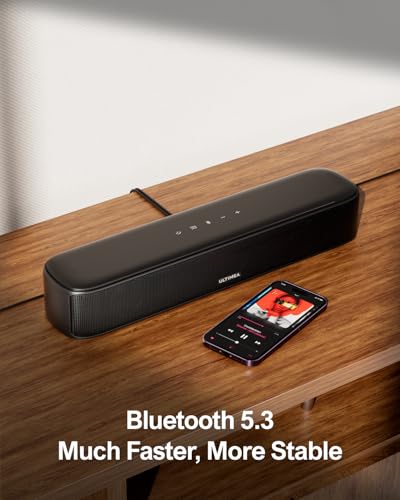
The Hisense HT Saturn provides superior connectivity with HDMI eARC, optical input, and Bluetooth 5.3, supporting 4K pass-through and lossless audio formats. The Ultimea Aura A40 lacks HDMI connectivity entirely, limiting it to optical, 3.5mm AUX, and Bluetooth connections.
The Hisense HT Saturn includes 13 total speakers across four wireless satellites (each with 3-way design), plus a wireless subwoofer. The Ultimea Aura A40 has 8 speakers total: 3 in the main soundbar, 4 separate surround speakers, and 1 subwoofer.
For dedicated home theater setups, the Hisense HT Saturn is superior due to its authentic Dolby Atmos support, discrete channel separation, and professional Devialet tuning. The Ultimea Aura A40 can enhance home theater experience over TV speakers but cannot match the Saturn's authentic surround sound performance.
The Ultimea Aura A40 relies heavily on its Smart App for extensive EQ customization, featuring 121 preset matrices and a 10-band equalizer. The Hisense HT Saturn can be controlled via included remote or integrated into compatible Hisense TV menus, with less reliance on smartphone apps.
The Ultimea Aura A40 offers excellent value for budget-conscious buyers, providing surround sound effects and extensive customization at a fraction of premium system costs. The Hisense HT Saturn justifies its higher price with authentic Dolby Atmos, wireless convenience, and professional audio tuning for those prioritizing performance over cost.
Neither the Hisense HT Saturn nor Ultimea Aura A40 officially supports adding extra speakers beyond their included configurations. The Saturn's wireless satellite system is designed as a complete 4.1.2 setup, while the Aura A40's mixed wired/wireless design limits expansion options.
The Hisense HT Saturn is better suited for large rooms due to its higher power output (720W RMS), wireless speaker flexibility, and deeper bass extension. The Ultimea Aura A40 works best in small to medium rooms where its 330W peak power and 4-inch subwoofer can provide adequate coverage without being overwhelmed by the space.
We've done our best to create useful and informative comparisons to help you decide what product to buy. Our research uses advanced automated methods to create this comparison and perfection is not possible - please contact us for corrections or questions. These are the sites we've researched in the creation of this article: bestbuy.com - youtube.com - blog.son-video.com - youtube.com - youtube.com - techradar.com - ecoustics.com - jbhifi.com.au - shop.hisense-usa.com - bhphotovideo.com - bestbuy.com - digitalreviews.net - hisense-usa.com - projectorscreenstore.com - valueelectronics.com - dolby.com - giftpack.ai - youtube.com - walmart.com - youtube.com - ultimea.com - homestudiobasics.com - ultimea.co - youtube.com - eu.ultimea.com - walmart.com - device.report - bestbuy.com - manuals.plus - community.ultimea.com - judge.me - support.ultimea.com - geekmaxi.com - provantage.com - bestbuy.com - youtube.com - uk.whatgeek.com

Privacy Policy
Terms and Conditions - Affiliate Policy
Home Security
© Copyright 2008-2026.
11816 Inwood Rd #1211, Dallas, TX 75244