








When you're tired of straining to hear dialogue over TV speakers or missing the impact of movie explosions, a soundbar upgrade becomes essential. But the soundbar market has evolved dramatically from simple audio boosts to sophisticated surround sound systems that can transform your living room into a home theater. The challenge? Choosing between budget systems that promise the world and premium options that cost significantly more.
We've spent considerable time evaluating two soundbars that represent opposite ends of the value spectrum: the Ultimea Aura A40 virtual surround system and the LG S90TR true multichannel soundbar. Released in 2024, both systems showcase how modern soundbar technology has advanced, but they take fundamentally different approaches to creating immersive audio experiences.
Before diving into specifics, it's crucial to understand what makes today's soundbars different from the basic models of five years ago. The biggest advancement has been in surround sound processing—the ability to create the illusion that sound is coming from all around you, not just from a bar sitting below your TV.
There are two main approaches to surround sound in soundbars. Virtual surround uses digital signal processing (DSP) to manipulate audio signals, making your brain think sounds are coming from directions where there are no actual speakers. Think of it like audio sleight-of-hand—clever engineering tricks your perception. True surround, on the other hand, uses multiple physical speakers placed around your room to create genuine directional audio where helicopter sounds actually move overhead and footsteps circle behind you.
The channel numbers you see (like 7.1 or 7.1.3) describe how many discrete audio channels the system can handle. The first number represents main channels (front left, center, front right, plus surround speakers), the second number indicates subwoofers, and the third number (when present) shows height channels for overhead effects. More channels generally mean more precise sound placement and a more convincing surround experience.
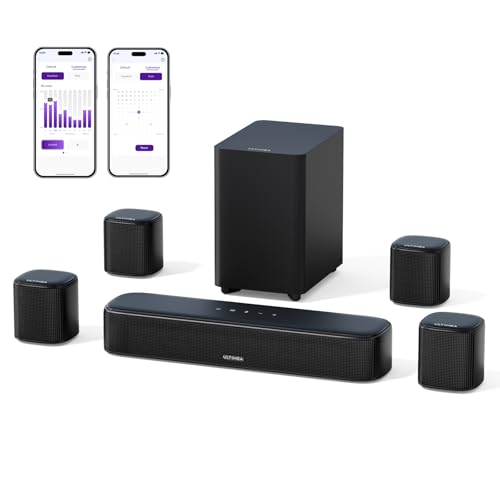
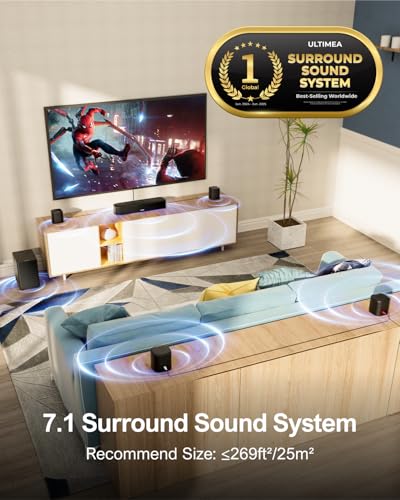
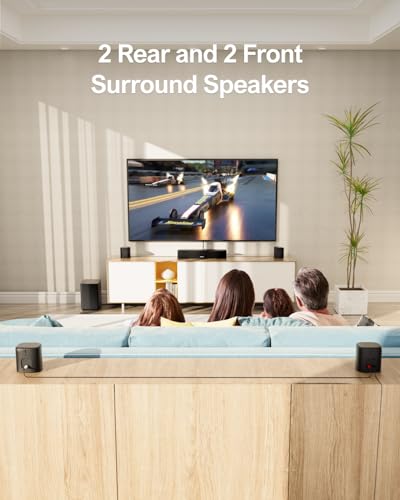
The Ultimea Aura A40 embodies the "maximum features for minimum cost" philosophy. Released in 2024, this 7.1 virtual surround system includes four physical surround speakers, a wired subwoofer, and extensive smartphone app control—all at a price point that was unimaginable just a few years ago. The system uses what Ultimea calls SurroundX technology, which coordinates all eight speakers to simulate accurate sound movement through AI optimization.
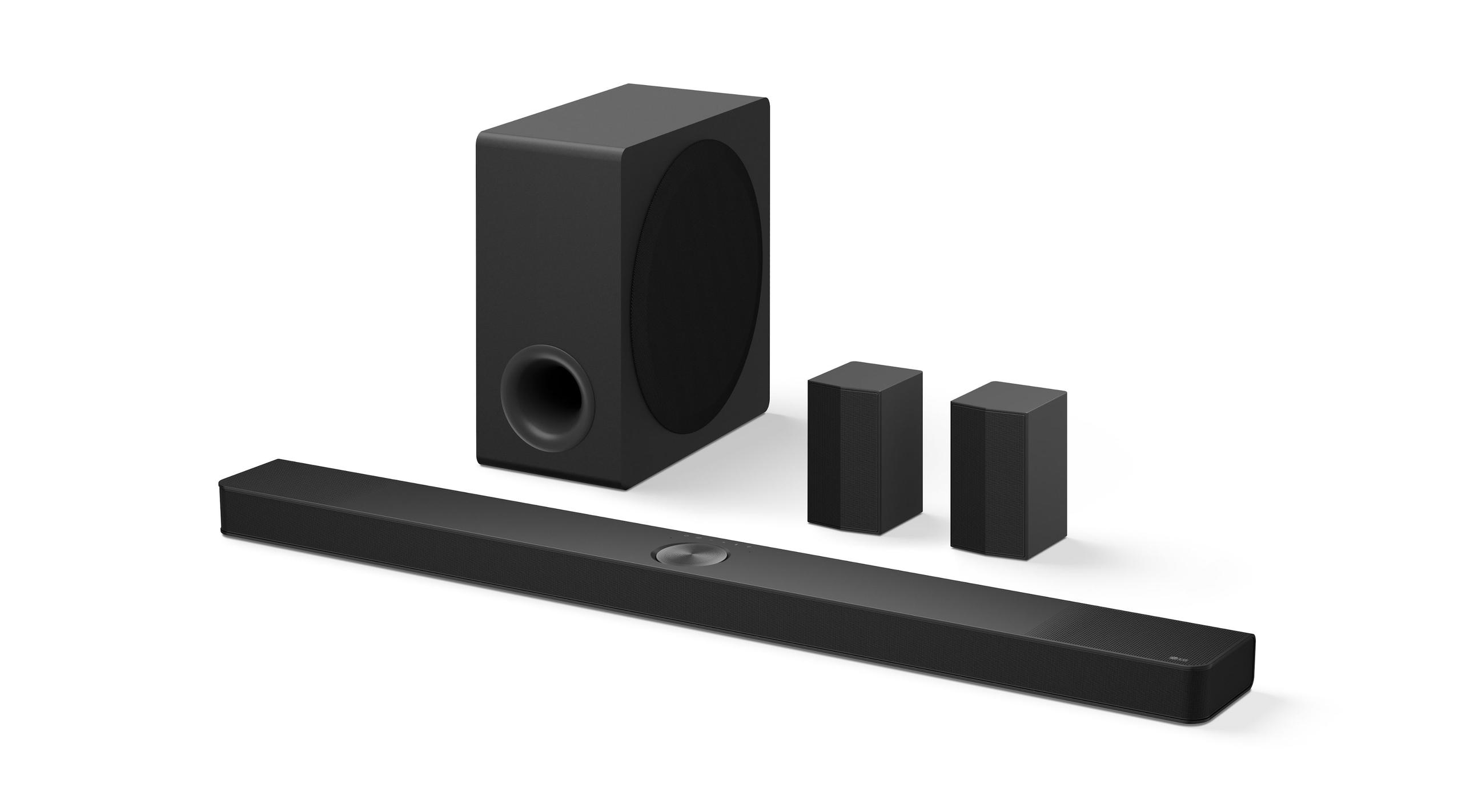
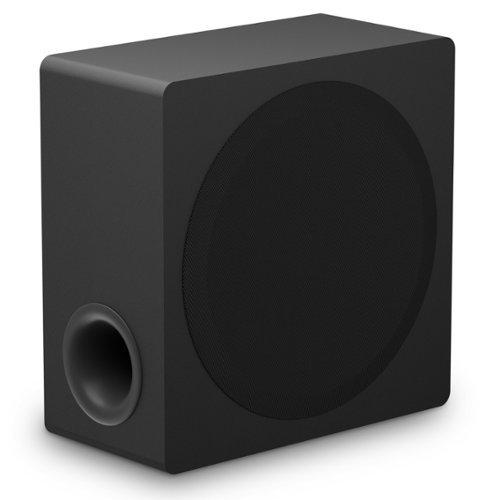
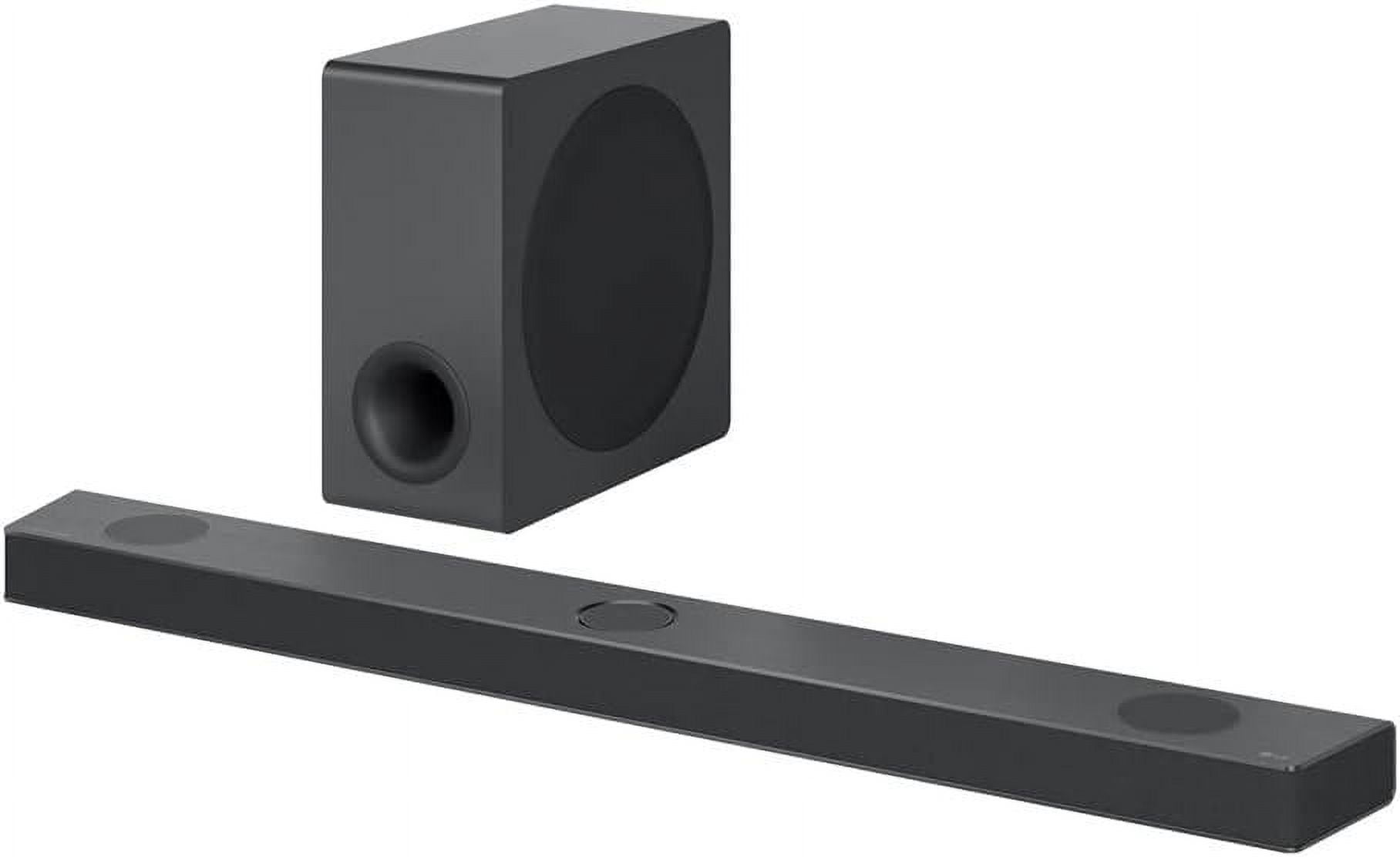
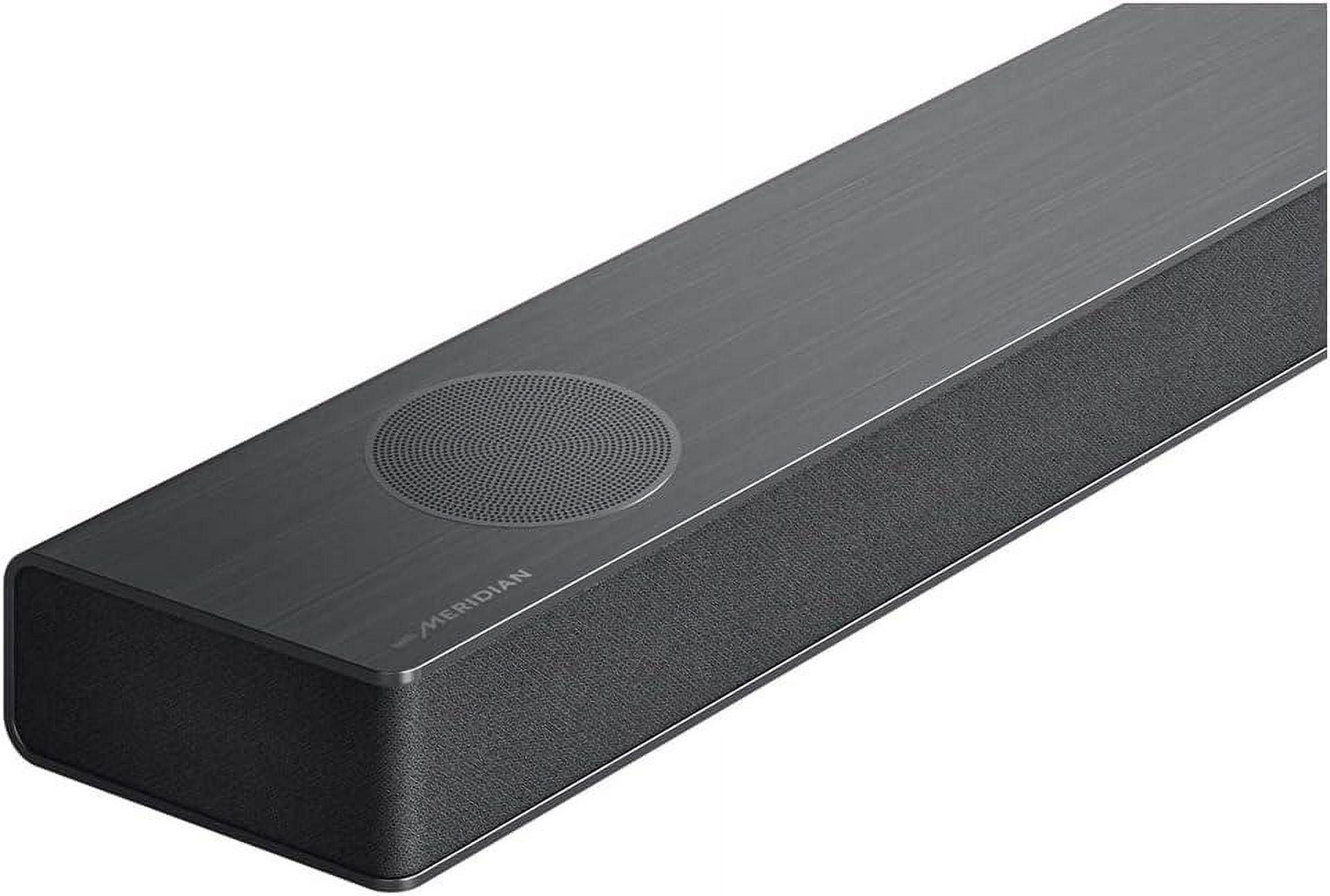
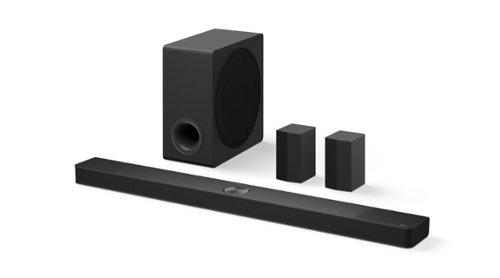
On the premium side, the LG S90TR represents the "no compromises" approach to home theater audio. This 7.1.3 channel system launched in 2024 with 13 individual speakers, including fully wireless rear speakers and three height channels for Dolby Atmos effects—the premium audio format that adds overhead sound dimensions to movies and shows. At roughly three times the cost of the Ultimea, the LG targets serious home theater enthusiasts who want genuine multichannel separation.
For movie watching, the differences between these systems become immediately apparent. The Ultimea Aura A40 creates impressive surround effects considering its virtual approach. When watching action sequences, the four physical surround speakers do produce convincing directional audio—gunshots seem to come from the sides, and ambient forest sounds feel more spacious than standard soundbars achieve. However, there's always a subtle artificial quality to the positioning. Your brain knows the rear effects are coming from speakers in front of you, even if the processing tricks work reasonably well.
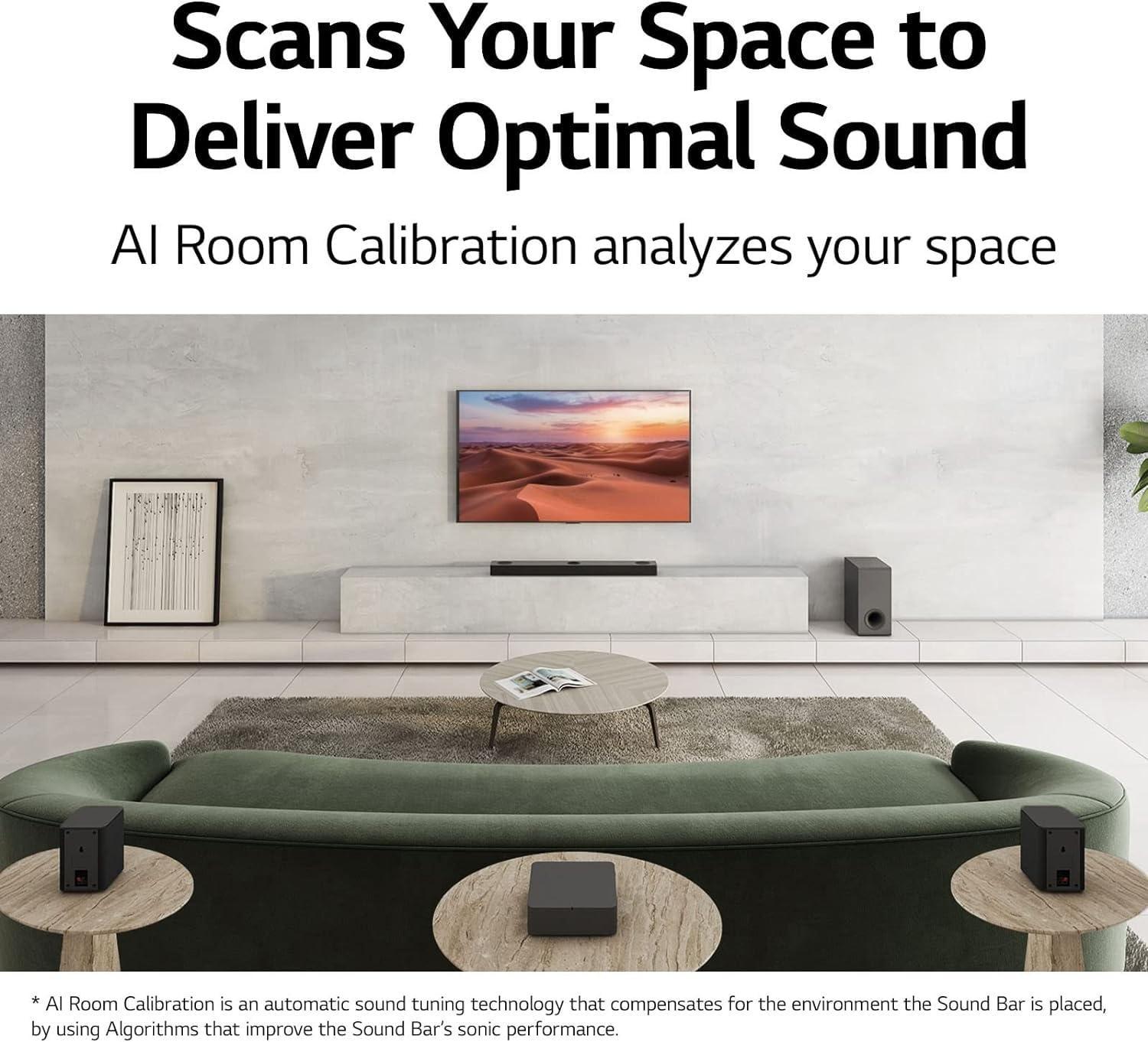
The LG S90TR operates in a different league entirely. The wireless rear speakers, when properly positioned behind your seating, create genuine behind-you audio that virtual processing simply cannot match. Helicopter flyovers actually move overhead and behind, dialogue from off-screen characters has realistic spatial placement, and ambient effects like rain or crowd noise surround you convincingly. The AI Room Calibration feature—where the soundbar plays test tones and automatically adjusts its frequency response based on how your room's surfaces reflect sound—ensures optimal performance regardless of whether you have hardwood floors, thick carpets, or challenging room layouts.
However, the LG S90TR has a notable limitation for a premium system: the rear satellite speakers lack up-firing drivers. This means when Dolby Atmos effects move to the edges of the room—like aircraft passing overhead toward the sides—the height effect becomes less convincing. It's a cost-saving measure that prevents the LG from matching truly flagship soundbars, though most users won't notice this limitation unless they're specifically listening for it.
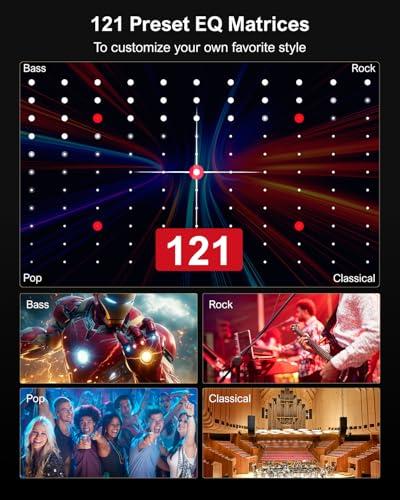
Music reproduction reveals the philosophical differences between these systems clearly. The Ultimea Aura A40 shines through its extensive customization options. The smartphone app provides 121 preset equalizer matrices tailored for different music genres (Bass, Pop, Classical, Rock), plus a 10-band manual equalizer that lets you fine-tune frequency response with precision typically found in professional audio equipment. If you're someone who enjoys tweaking audio settings and has specific preferences for how your music should sound, this level of control is remarkable at any price point.
The LG S90TR takes the opposite approach with AI Room Calibration handling most optimization automatically. The system analyzes your room's acoustic signature and adjusts frequency response to compensate for challenging acoustics—something that typically requires expensive acoustic treatment or professional calibration. The result is balanced, natural-sounding music that reveals details in recordings you might not have noticed before. However, the limited manual EQ options may frustrate users who prefer hands-on control over their audio signature.
Based on our research into user experiences and professional reviews, the LG produces more accurate, detailed music reproduction overall, while the Ultimea offers better personalization for individual preferences.
For gaming performance, the connectivity differences become crucial. The Ultimea Aura A40 lacks HDMI input, limiting it to optical or Bluetooth connections from gaming consoles. This means no access to uncompressed gaming audio or advanced features like 3D positional audio that modern consoles provide through HDMI. The surround effects work reasonably well for locating enemies or environmental audio cues, but you're missing the full audio experience developers intended.
The LG S90TR includes HDMI 2.1 with Variable Refresh Rate (VRR) and Auto Low Latency Mode (ALLM)—features essential for serious gaming on PlayStation 5 or Xbox Series X. VRR eliminates screen tearing by matching the display refresh rate to the console's output, while ALLM reduces input lag for more responsive controls. The true surround separation provides significant competitive advantages in games where audio positioning matters, and the support for uncompressed gaming audio delivers clearer communication and more impactful sound effects.
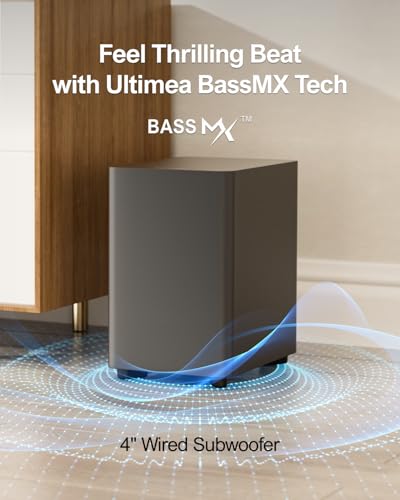
Room compatibility represents another major difference. The Ultimea Aura A40 delivers 330W of total power optimized for spaces ranging from 108 to 270 square feet—typical apartment living rooms or smaller family rooms. The 4-inch subwoofer provides adequate bass reinforcement for these environments, though it lacks the extension and impact needed for larger spaces or truly deep bass reproduction.
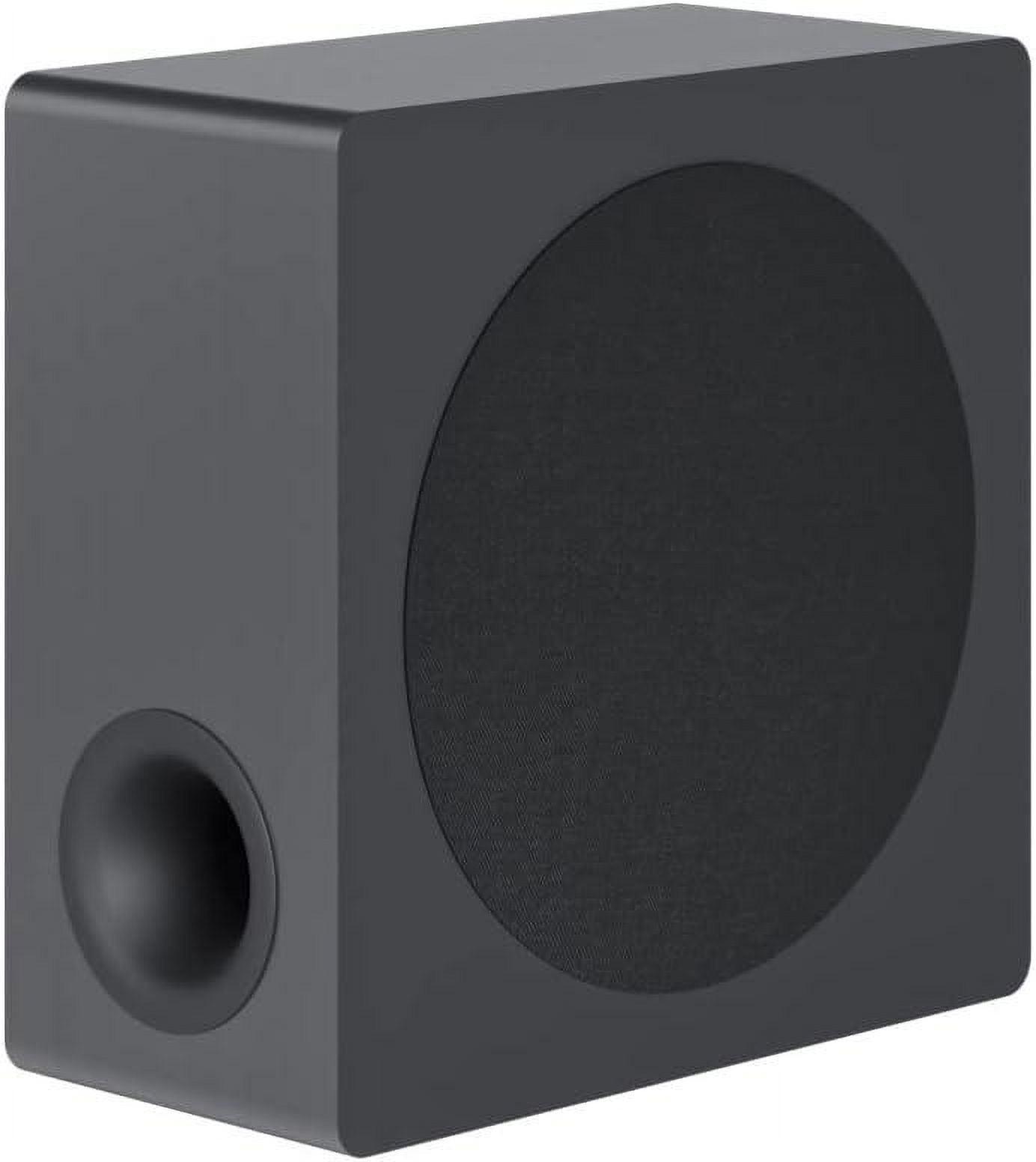
The LG S90TR produces 670W across its 13 speakers and handles rooms exceeding 300 square feet effectively. The larger wireless subwoofer delivers room-filling bass with significantly more impact and extension. Professional reviews consistently note that the LG maintains clarity and dynamics at high volumes, while the Ultimea begins to compress and lose detail when pushed hard in larger rooms.
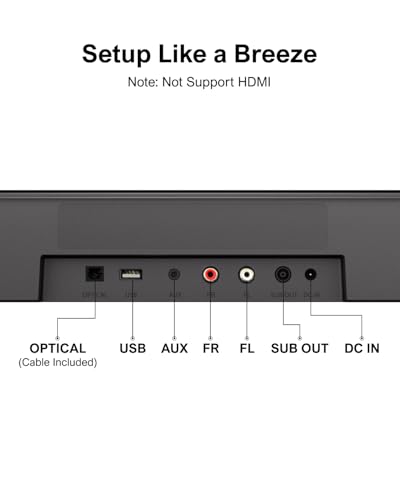
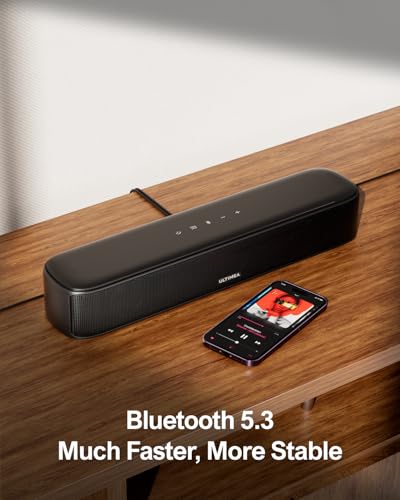
The connectivity differences between these systems reflect their target audiences clearly. The Ultimea Aura A40 focuses on essential connections: optical digital input for TVs, 3.5mm auxiliary for older devices, USB for music files, and Bluetooth 5.3 for wireless streaming. This covers most basic use cases but excludes HDMI entirely, which means no support for Dolby Atmos, DTS:X, or 4K video passthrough.
The LG S90TR includes comprehensive modern connectivity with HDMI 2.1, supporting 4K/120Hz passthrough for gaming, Dolby Vision and HDR10 for enhanced video, and full Dolby Atmos and DTS:X decoding for immersive audio. The eARC (Enhanced Audio Return Channel) support ensures compatibility with the latest TV audio formats, while Wi-Fi connectivity enables streaming services and over-the-air updates.
These systems represent opposite approaches to audio optimization. The Ultimea Aura A40 puts extensive manual control in users' hands through its smartphone app. Beyond the 121 preset matrices, users can adjust individual frequency bands, fine-tune surround levels across 13 different settings, and switch between six dedicated EQ modes for different content types. Over-the-air firmware updates continue adding features and improvements.
The LG S90TR emphasizes automatic optimization through AI Room Calibration, which handles most acoustic tuning without user intervention. While this produces excellent results with minimal effort, it offers limited manual EQ control compared to the Ultimea's extensive options. The system includes basic presets and bass/treble adjustment but lacks a graphic equalizer for detailed frequency shaping.
Setting up the Ultimea Aura A40 requires running cables between the main soundbar and four surround speakers—two front speakers connect with 2-meter cables, while the rear speakers use a 6-meter cable included in the package. The rear right speaker pairs wirelessly to reduce some cable clutter, but you'll still need to plan cable routing carefully. Wall-mounting hardware is included, and most users complete setup within 30 minutes.
The LG S90TR offers more elegant installation with fully wireless rear speakers that only need power outlets behind your seating position. The AI Room Calibration adds a 5-minute automated setup process where the system plays test tones and optimizes itself for your specific room. While initially more complex due to speaker placement considerations, the end result is cleaner and more flexible.
Daily operation reveals more philosophical differences. The Ultimea Aura A40 requires more active management—switching between EQ presets for movies versus music, adjusting surround levels for different content, and fine-tuning settings through the app. This appeals to enthusiasts who enjoy optimizing their audio experience but may overwhelm users who prefer simplicity.
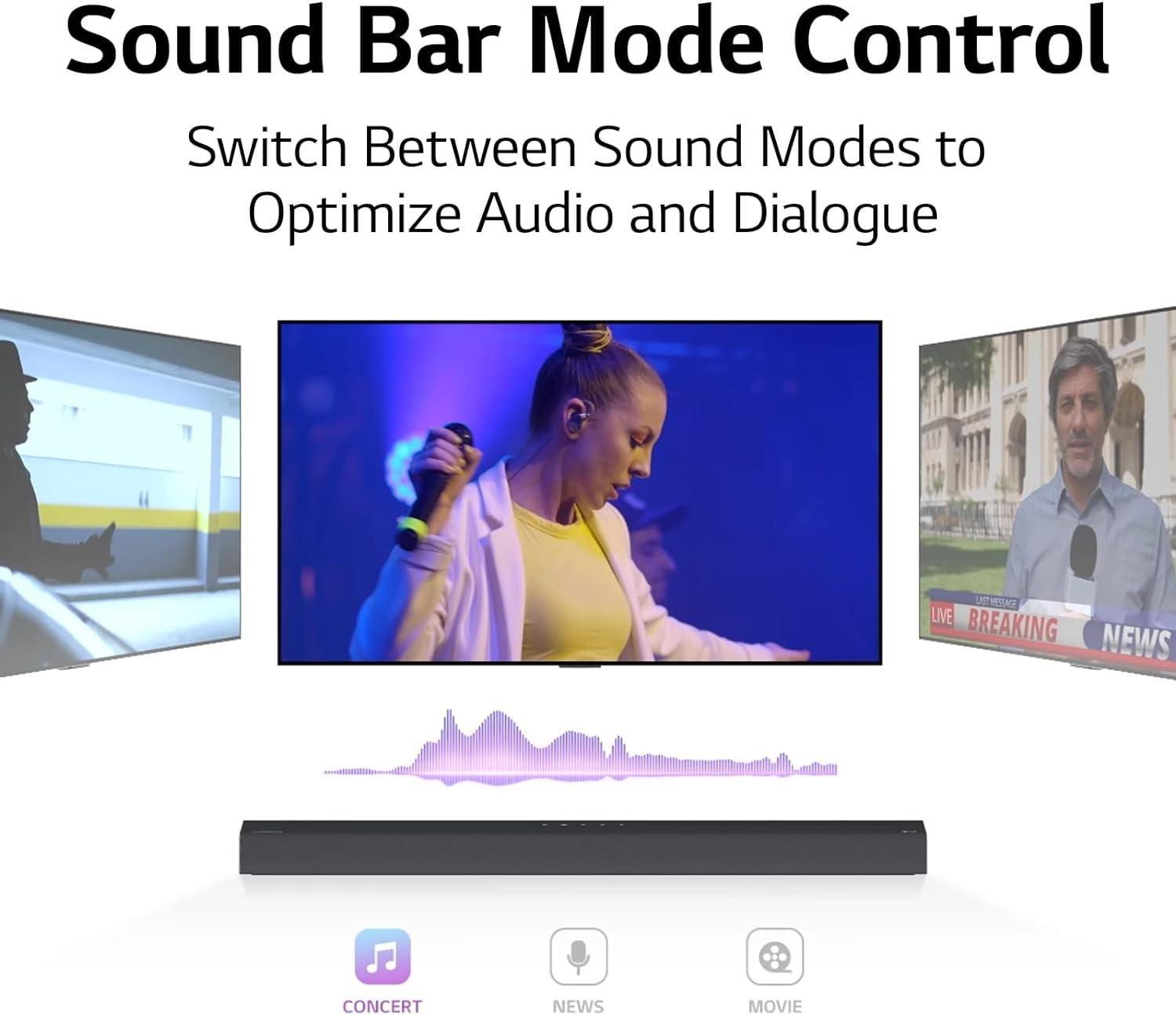
The LG S90TR operates more transparently, automatically detecting content types and adjusting accordingly. The WOW Orchestra feature, when paired with compatible LG TVs, creates an even more immersive experience by using both the TV speakers and soundbar together. This "set and forget" approach suits users who want excellent results without ongoing maintenance.
At the time of writing, the Ultimea Aura A40 costs roughly one-third the price of the LG S90TR, making value comparison complex. The Ultimea delivers genuinely impressive features for its price point—four physical surround speakers, extensive app control, and adequate performance for smaller rooms represent exceptional value. You're getting 80% of the surround sound experience at 33% of the cost.
However, the LG S90TR justifies its premium pricing through superior performance, convenience features, and modern connectivity. The wireless rear speakers, AI room calibration, and support for premium audio formats create a substantially more immersive experience. For dedicated home theater rooms or larger spaces, the performance difference becomes more pronounced and worthwhile.
The key insight from our research: both systems deliver good value within their intended use cases, but they serve different audiences with distinct priorities and budgets.
You're working with a tighter budget but still want genuine surround sound improvement over TV speakers. This system excels in apartments, smaller living rooms, or secondary viewing areas where space and budget constraints matter. The extensive app control appeals to audio enthusiasts who enjoy tweaking settings, and the adequate performance handles most casual viewing scenarios effectively.
The Ultimea makes particular sense for renters who need easy setup and removal, or for anyone upgrading from basic TV audio for the first time. If you primarily watch standard TV programming and streaming content without premium audio formats, the lack of HDMI connectivity won't limit your experience significantly.
You have a dedicated home theater room or large living space where the premium features justify the higher cost. This system targets serious movie enthusiasts who subscribe to streaming services offering Dolby Atmos content, gamers using modern consoles, or anyone who wants the convenience of automatic room optimization.
The LG particularly excels when paired with large TVs (65 inches or larger) and works best in rooms where you can properly position the wireless rear speakers. If you own an LG OLED TV, the WOW Orchestra integration creates an even more compelling experience.
The wireless convenience, modern connectivity, and superior power output make this system future-proof for evolving home theater needs.
After extensive research into professional reviews and user experiences, both soundbars succeed within their intended markets. The Ultimea Aura A40 democratizes surround sound technology, making features previously reserved for premium systems accessible at budget pricing. The LG S90TR delivers genuine premium performance with wireless convenience and automatic optimization.
The fundamental question isn't which system is better overall, but which better matches your specific needs, room size, budget, and preferences. The Ultimea maximizes features per dollar through clever engineering and extensive customization. The LG invests in superior hardware, wireless convenience, and automatic optimization for users who prioritize performance and simplicity.
For most users upgrading from TV speakers, either system will provide a transformative improvement. The choice ultimately comes down to whether you value manual control and maximum features (Ultimea) or premium performance and convenience (LG). Both represent the current state of soundbar technology in 2024, just aimed at different segments of the market.
In our opinion, the Ultimea Aura A40 offers exceptional value for budget-conscious users in smaller spaces, while the LG S90TR justifies its premium pricing for dedicated home theater enthusiasts with larger rooms and modern source equipment. Choose based on your specific situation rather than absolute performance metrics, and either system will significantly enhance your home entertainment experience.
| Ultimea Aura A40 7.1 Channel Soundbar System | LG S90TR 7.1.3 Channel Soundbar with Wireless Subwoofer and Rear Speakers |
|---|---|
| Channel Configuration - Determines how realistic surround effects sound | |
| 7.1 virtual surround with 8 total speakers (4 surround speakers create directional effects through processing) | 7.1.3 true surround with 13 speakers (physical rear speakers + 3 height channels for genuine Dolby Atmos) |
| Total Power Output - Affects volume levels and room coverage | |
| 330W peak (adequate for small to medium rooms up to 270 sq ft) | 670W total (handles large rooms 300+ sq ft with authority) |
| Rear Speaker Setup - Critical for surround immersion quality | |
| 4 wired surround speakers (2 front, 2 rear with hybrid wireless connection) | Fully wireless rear speakers (true behind-listener placement without cable runs) |
| Subwoofer Design - Impacts bass depth and room-filling capability | |
| 4-inch wired subwoofer with BassMX technology (compact, adequate bass for smaller spaces) | Large wireless subwoofer (deeper extension, more impactful bass for home theaters) |
| Audio Format Support - Determines compatibility with premium streaming content | |
| Basic surround formats only (no Dolby Atmos or DTS:X support due to optical-only connectivity) | Full Dolby Atmos, DTS:X, and Hi-Res Audio up to 24bit/96kHz |
| HDMI Connectivity - Essential for gaming and premium audio formats | |
| No HDMI (optical, AUX, USB, Bluetooth 5.3 only) | HDMI 2.1 with eARC, 4K/120Hz passthrough, VRR, ALLM for gaming |
| Audio Customization - Control over sound tuning and personalization | |
| Extensive: 121 EQ presets, 10-band manual EQ, 13 surround levels, 6 listening modes via Ultimea app | Limited: AI Room Calibration with basic presets, minimal manual EQ control |
| Room Calibration Technology - Optimizes sound for your specific space | |
| Manual tuning through smartphone app with extensive preset options | AI Room Calibration automatically analyzes and optimizes for room acoustics |
| Gaming Performance - Important for console users | |
| Basic gaming audio via optical/Bluetooth (no advanced console features) | Optimized for PS5/Xbox Series X with HDMI 2.1, uncompressed gaming audio, low latency |
| Setup Complexity - Installation and daily use considerations | |
| Wired connections to surround speakers, manual EQ switching, 30-minute setup | Wireless rear placement, automatic optimization, more complex initial positioning |
| Smart TV Integration - Enhanced experience with compatible TVs | |
| Universal compatibility with any TV via optical connection | WOW Orchestra technology with LG TVs for expanded soundstage |
The Ultimea Aura A40 provides exceptional value for budget-conscious buyers, offering four physical surround speakers and extensive app customization at roughly one-third the cost of premium alternatives. The LG S90TR justifies its higher price through wireless convenience, true multichannel separation, and advanced features like AI room calibration and Dolby Atmos support.
The Ultimea Aura A40 uses virtual 7.1 surround, which processes audio through four speakers to simulate directional effects around you. The LG S90TR creates true 7.1.3 surround with 13 individual speakers, including wireless rear speakers that provide genuine behind-listener audio placement that virtual processing cannot match.
The Ultimea Aura A40 excels in smaller spaces up to 270 square feet, with its 330W power output optimized for apartments and compact living rooms. The LG S90TR is designed for larger rooms over 300 square feet and may be overpowered for small apartments, though its wireless setup reduces cable clutter.
The Ultimea Aura A40 connects via optical, AUX, and Bluetooth without HDMI, which limits access to premium audio formats like Dolby Atmos but works fine for basic TV and streaming. The LG S90TR includes HDMI 2.1 with eARC, essential for gaming consoles, 4K passthrough, and accessing advanced audio codecs from modern streaming services.
The LG S90TR features a larger wireless subwoofer with deeper bass extension and more powerful low-frequency output, ideal for action movies and music with heavy bass. The Ultimea Aura A40 includes a compact 4-inch wired subwoofer that provides adequate bass for smaller rooms but lacks the impact needed for larger spaces.
The Ultimea Aura A40 requires running cables to four surround speakers but typically completes setup in 30 minutes with included mounting hardware. The LG S90TR offers easier installation with fully wireless rear speakers, though proper positioning and AI room calibration add complexity to initial setup.
The LG S90TR clearly wins for gaming with HDMI 2.1 support, Variable Refresh Rate, Auto Low Latency Mode, and uncompressed gaming audio optimized for PlayStation 5 and Xbox Series X. The Ultimea Aura A40 lacks HDMI connectivity, limiting gaming audio quality and missing modern console features.
The Ultimea Aura A40 offers extensive customization through its smartphone app with 121 EQ presets, 10-band manual equalizer, and adjustable surround levels. The LG S90TR focuses on automatic AI Room Calibration with limited manual EQ options, prioritizing convenience over detailed user control.
Both excel differently: the Ultimea Aura A40 provides superior customization for personal music preferences through its comprehensive EQ controls and genre-specific presets. The LG S90TR delivers more accurate, balanced music reproduction through AI room calibration and higher-quality drivers, though with less personalization control.
The Ultimea Aura A40 performs optimally in rooms between 108-270 square feet, making it ideal for apartments and medium living rooms. The LG S90TR handles larger spaces over 300 square feet effectively and maintains clarity at high volumes needed for dedicated home theater rooms.
Only the LG S90TR supports Dolby Atmos and DTS:X through its HDMI connectivity and three height channels that bounce audio off ceilings for overhead effects. The Ultimea Aura A40 cannot decode Dolby Atmos due to its optical-only connectivity, limiting it to basic surround formats.
The LG S90TR operates with minimal ongoing maintenance through automatic content detection and AI room optimization that adapts to different audio sources. The Ultimea Aura A40 requires more active management, with users switching between EQ presets and adjusting settings through the app for optimal performance with different content types.
We've done our best to create useful and informative comparisons to help you decide what product to buy. Our research uses advanced automated methods to create this comparison and perfection is not possible - please contact us for corrections or questions. These are the sites we've researched in the creation of this article: youtube.com - walmart.com - youtube.com - ultimea.com - homestudiobasics.com - ultimea.co - youtube.com - eu.ultimea.com - walmart.com - device.report - bestbuy.com - manuals.plus - community.ultimea.com - judge.me - support.ultimea.com - geekmaxi.com - provantage.com - bestbuy.com - youtube.com - uk.whatgeek.com - rtings.com - abt.com - youtube.com - bestbuy.com - microcenter.com - buydig.com - bestbuy.com - videoandaudiocenter.com - oceanstateappliance.com - youtube.com - avsforum.com - lg.com

Privacy Policy
Terms and Conditions - Affiliate Policy
Home Security
© Copyright 2008-2026.
11816 Inwood Rd #1211, Dallas, TX 75244