



When you're ready to upgrade from your TV's tinny built-in speakers, you'll quickly discover that the home theater audio world has split into two distinct camps. On one side, there are traditional soundbars that pack everything into a single sleek unit. On the other, newer systems are breaking apart that concept entirely, spreading multiple wireless speakers around your room for true surround sound.
This fundamental difference becomes crystal clear when comparing the Hisense HT Saturn against the Bose Smart Ultra Soundbar. These two systems represent completely different philosophies about how to bring cinema-quality audio to your living room, and understanding their approaches will help you make the right choice for your space and priorities.
The home theater audio category has undergone massive changes over the past few years. Traditional soundbars emerged as a compromise—better than TV speakers but simpler than full surround sound systems with wires running everywhere. However, as wireless technology improved and processors became more powerful, manufacturers began exploring new possibilities.
The Hisense HT Saturn, launched in 2025, represents the latest thinking: why simulate surround sound when you can create the real thing wirelessly? Meanwhile, the Bose Smart Ultra, released in 2023, perfects the single-unit approach with sophisticated processing that can fool your ears into hearing sounds that aren't really there.
Your choice between these approaches depends on several key factors: how much space you have, whether you prioritize authentic versus convenient sound, your comfort level with placing multiple speakers, and how your room is laid out. Let's break down exactly what each system brings to the table.
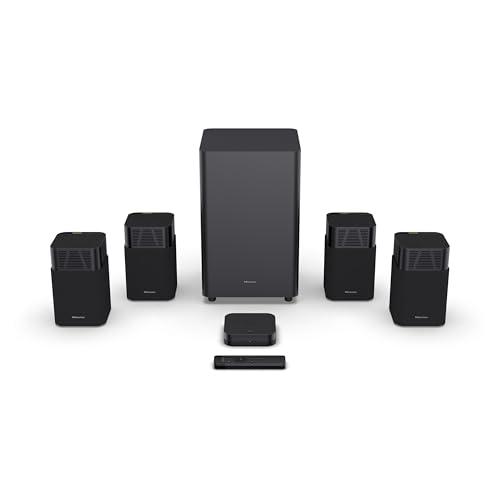
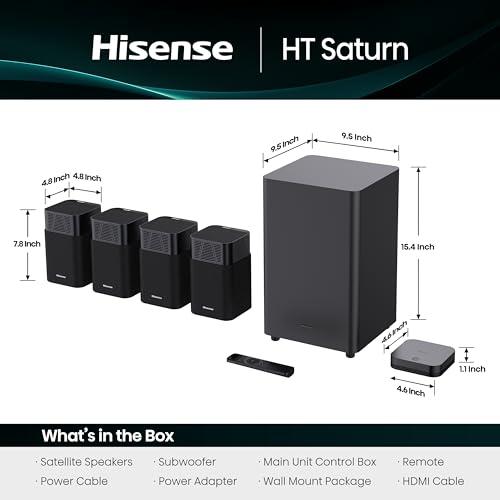
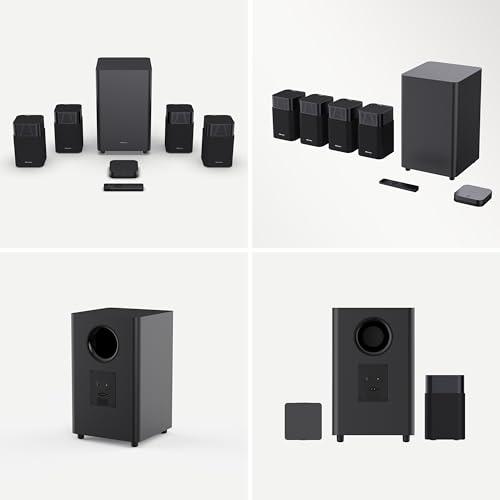
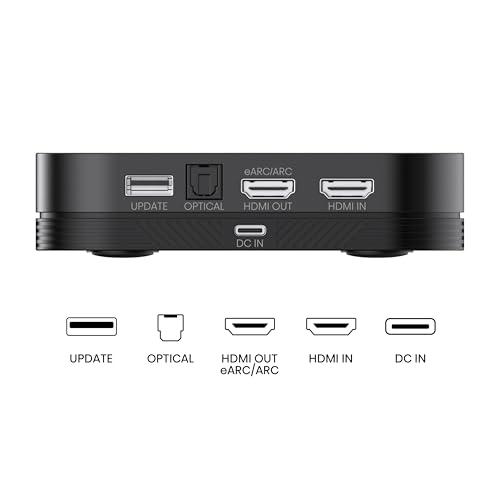
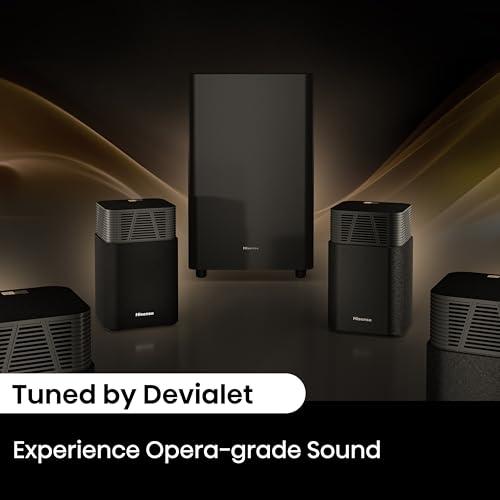
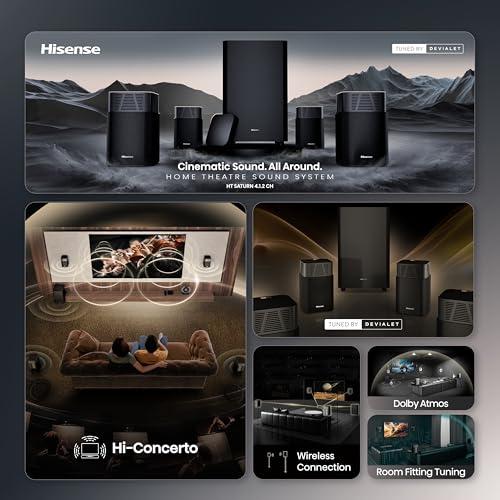
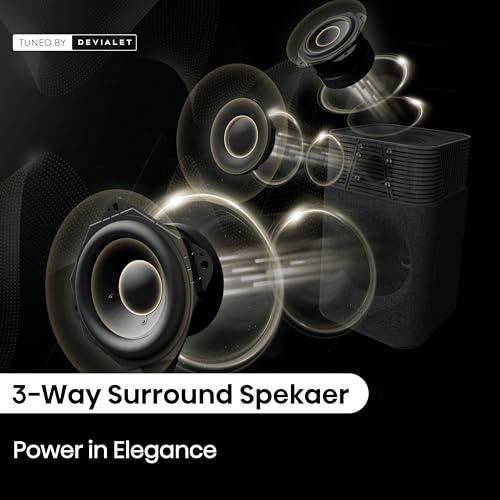
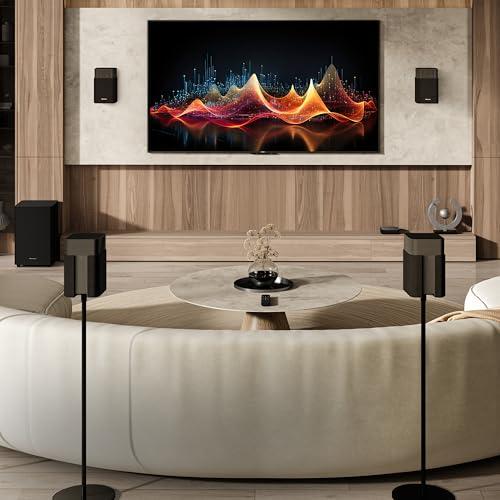
The Hisense HT Saturn throws the traditional soundbar playbook out the window. Instead of cramming everything into one long bar, it gives you a compact control hub plus four separate wireless satellite speakers and a wireless subwoofer. Each satellite contains a sophisticated 3-way speaker design—that means separate drivers for bass, midrange, and treble frequencies, just like high-end bookshelf speakers.
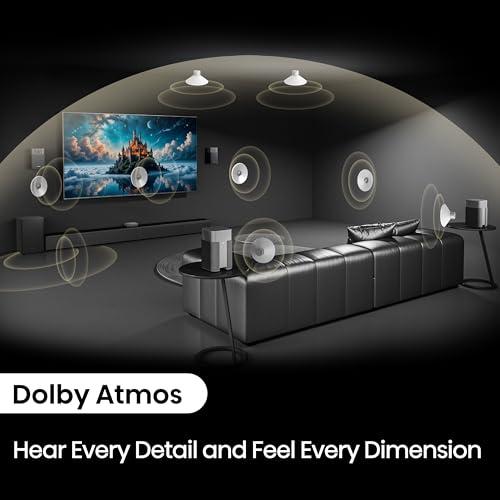
This setup creates what's called a true 4.1.2 channel configuration. The "4" represents four main speakers (front left, front right, rear left, rear right), the "1" is the subwoofer for deep bass, and the "2" refers to height channels that bounce sound off your ceiling for Dolby Atmos effects. When you hear a helicopter in a movie, it doesn't just move across your screen—it actually travels from speaker to speaker around your room.
The satellite speakers themselves are surprisingly compact at under 8 inches tall, but they pack serious technology. Each one contains two full-range drivers plus a precision tweeter, and the front speakers also include upward-firing elements for those overhead Atmos effects. The system's total of 13 individual speakers working together creates what reviewers consistently describe as a "theater-like experience" that genuinely surrounds you with sound.
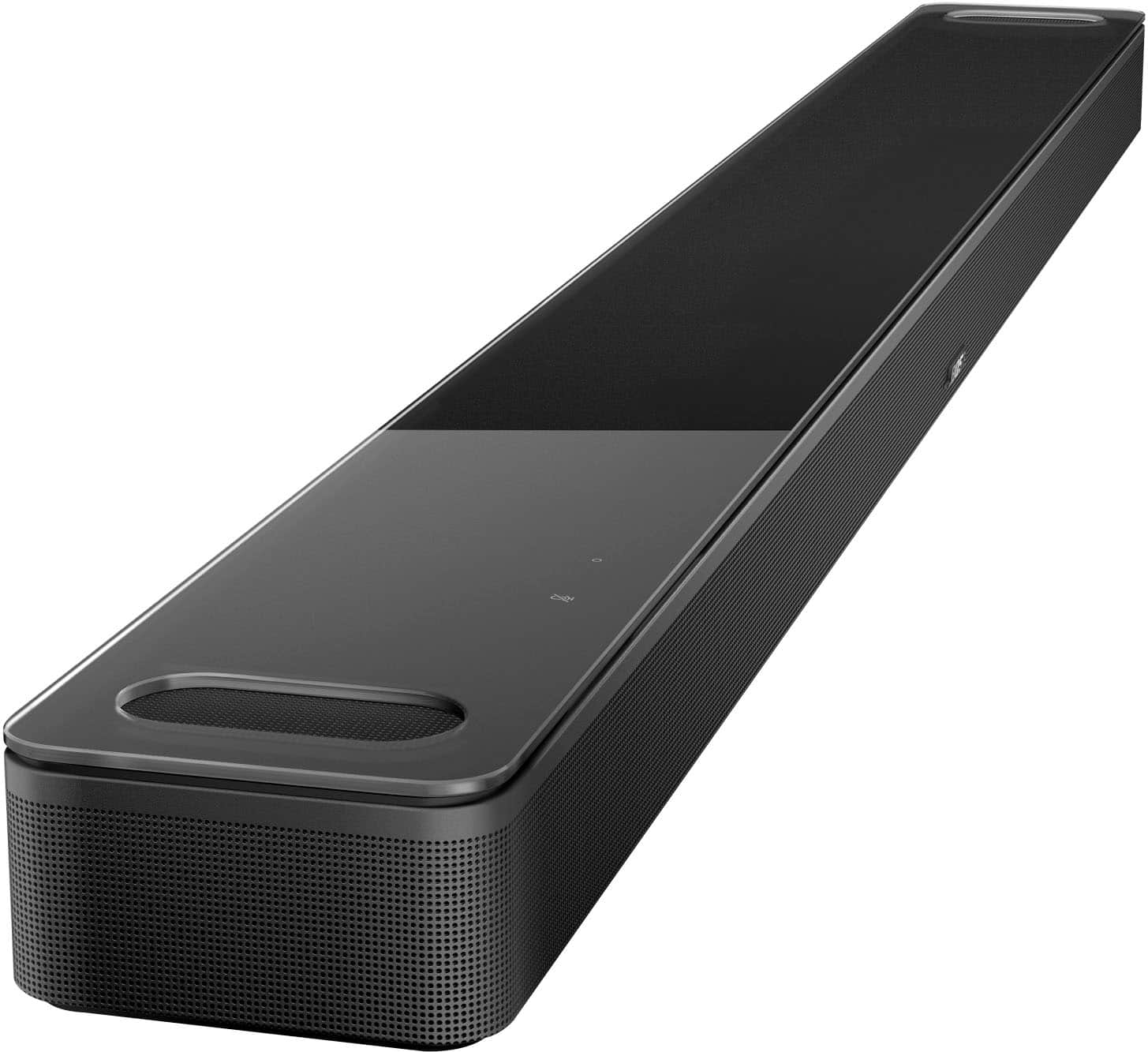
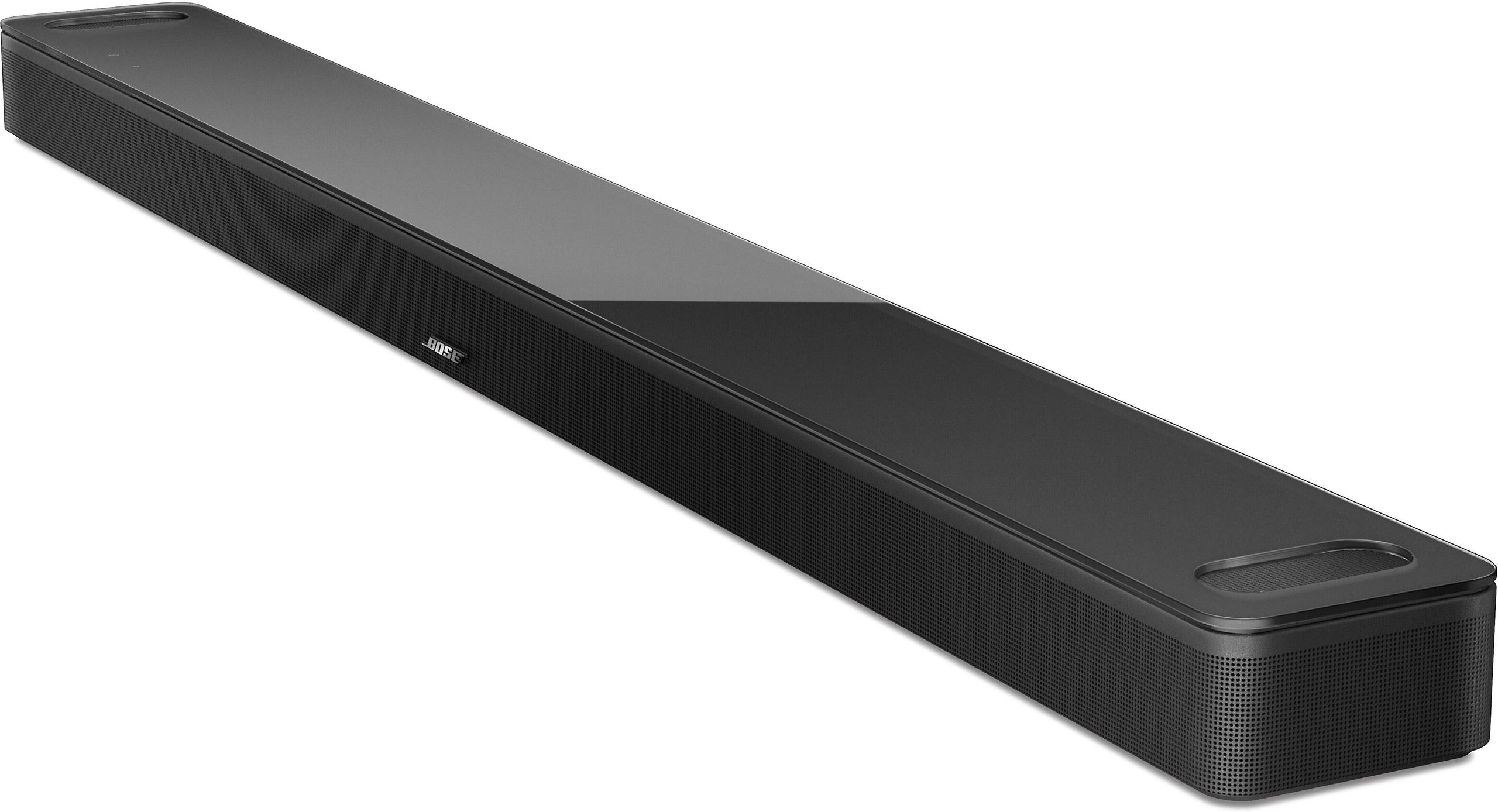
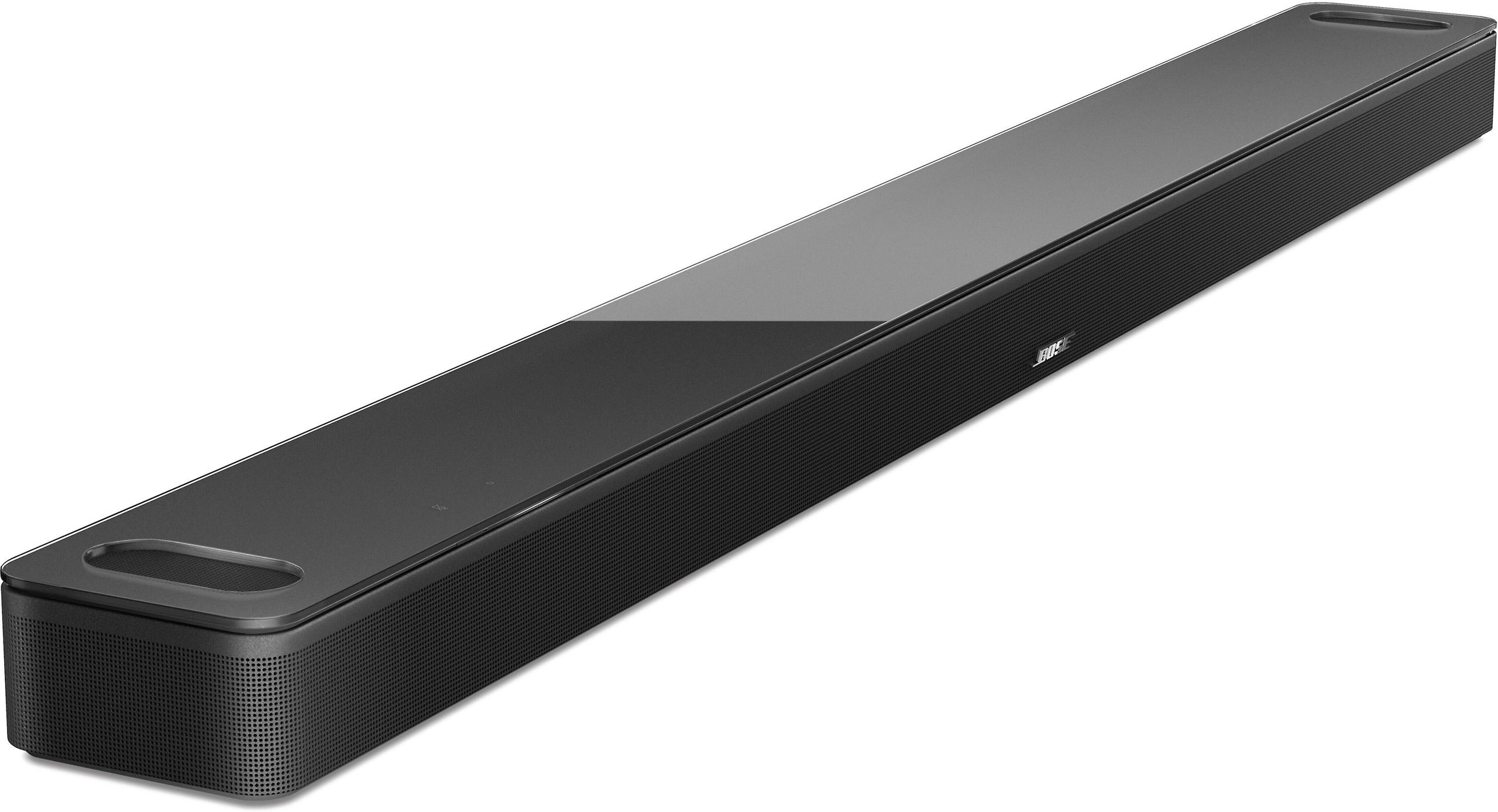
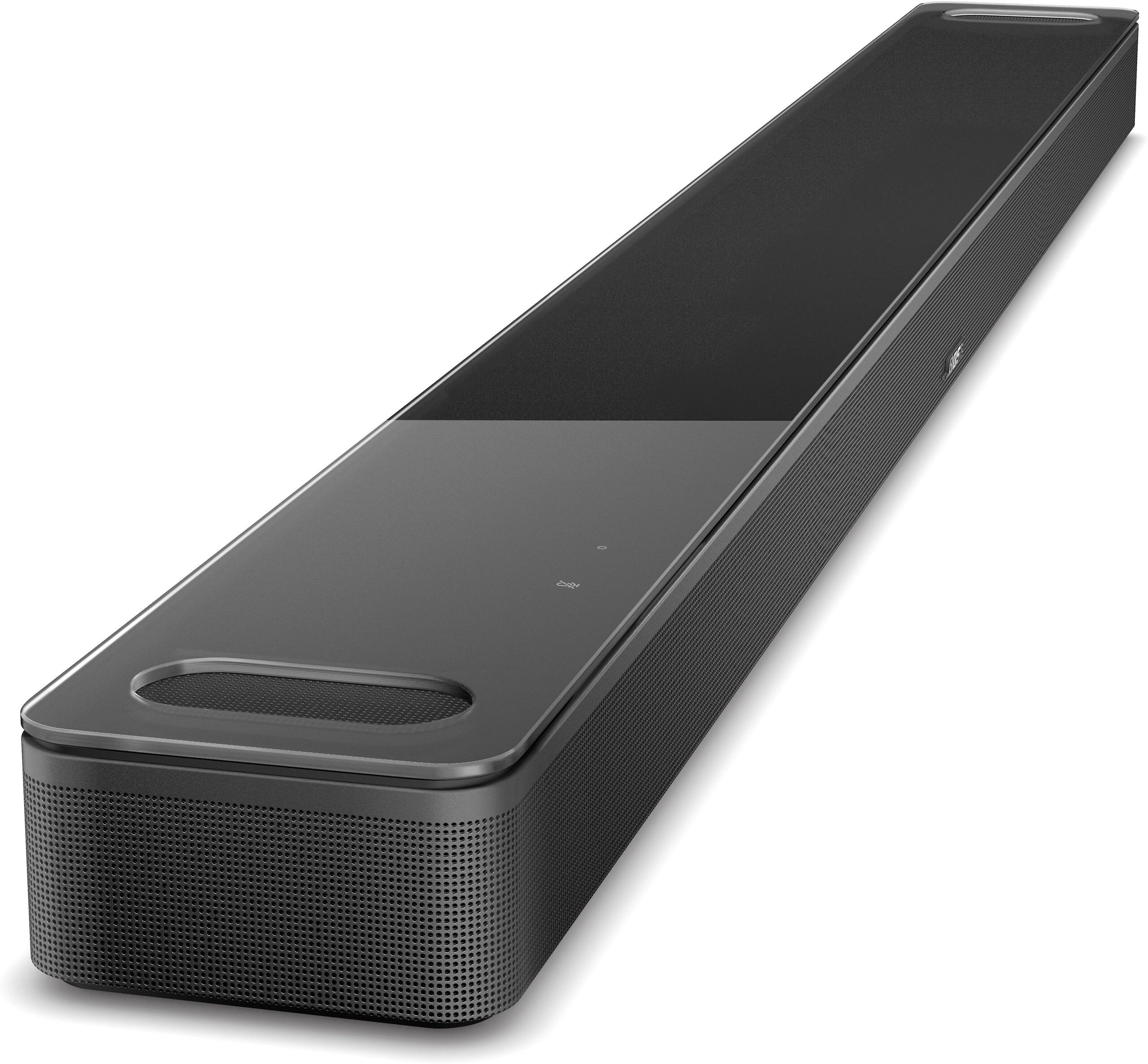
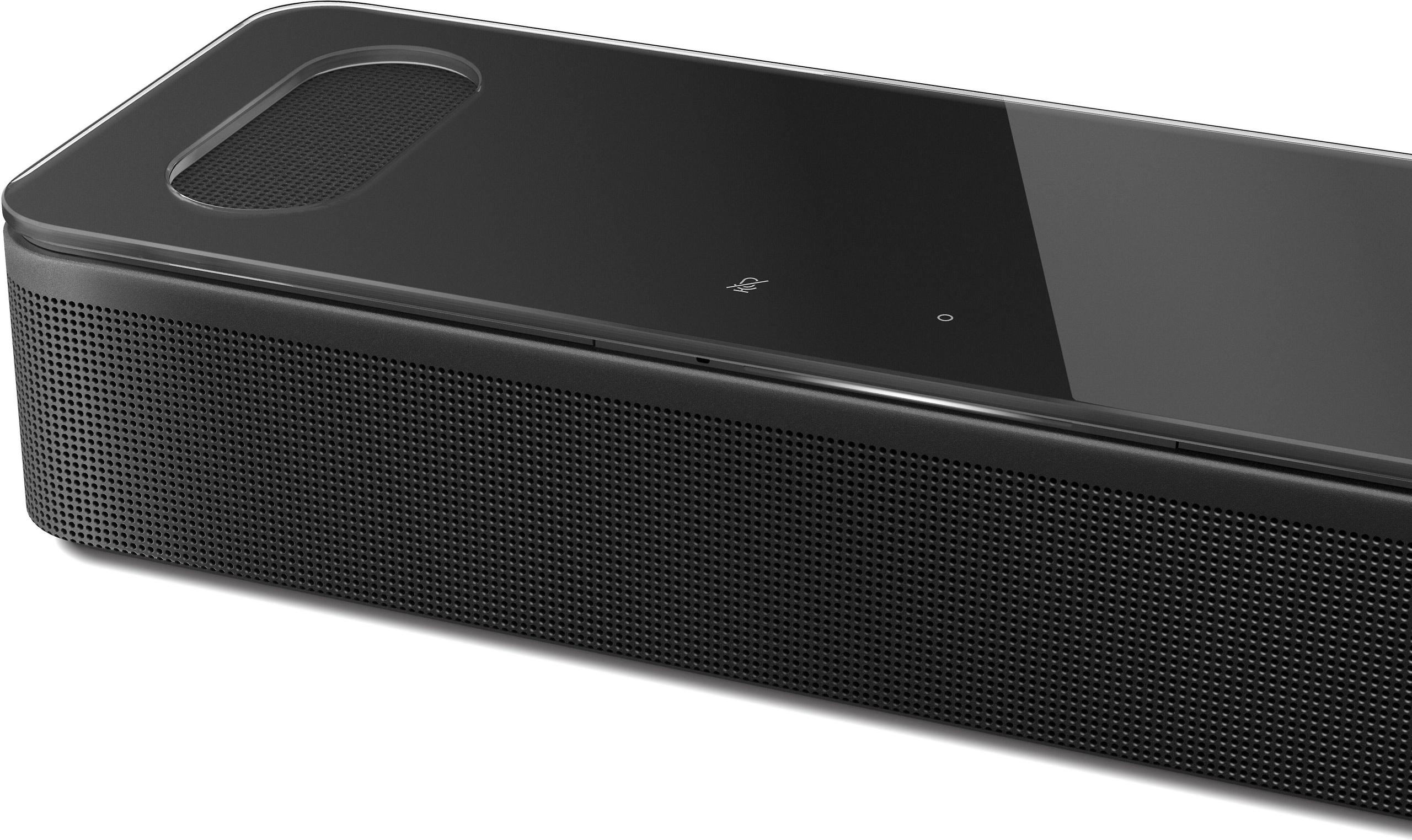
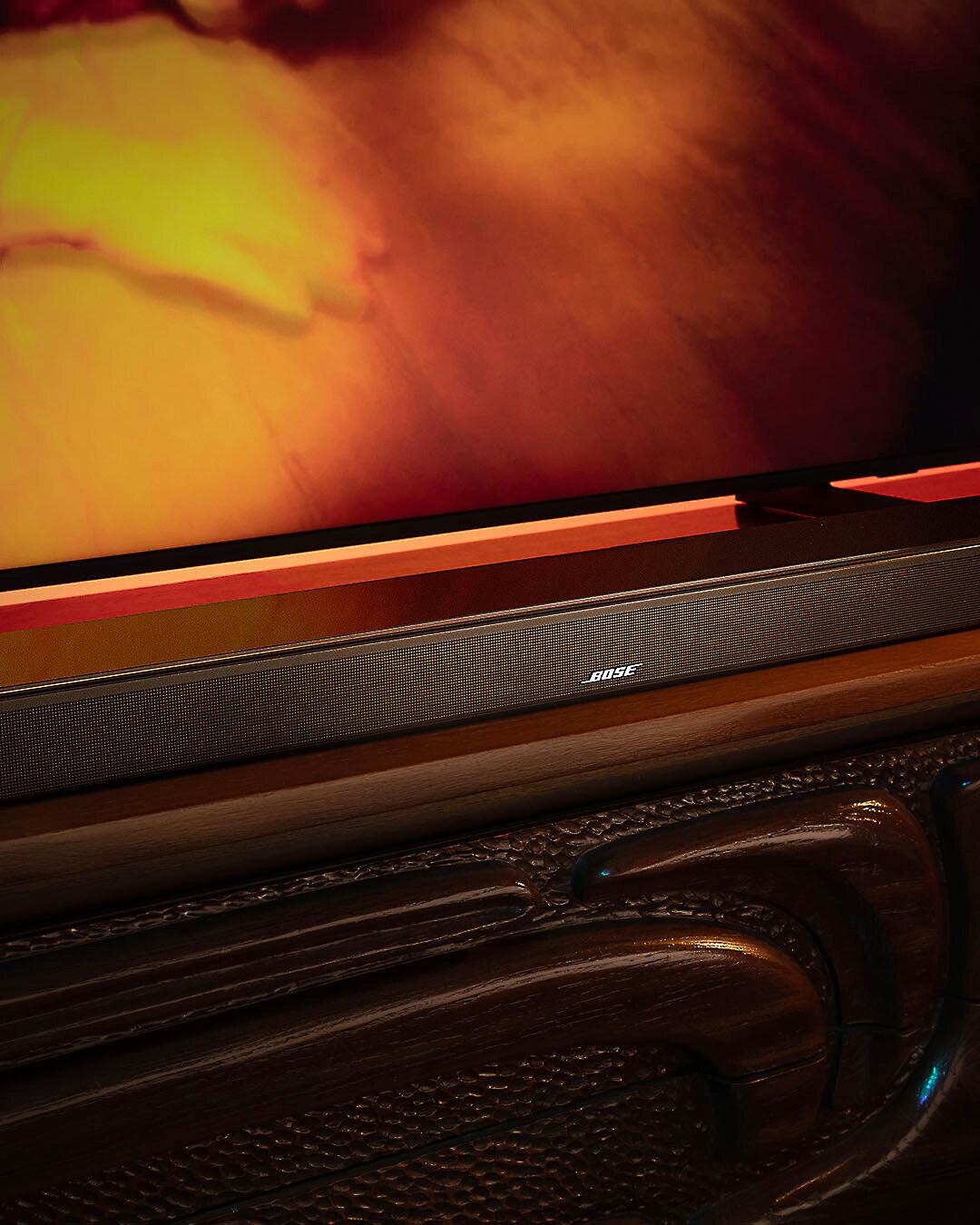
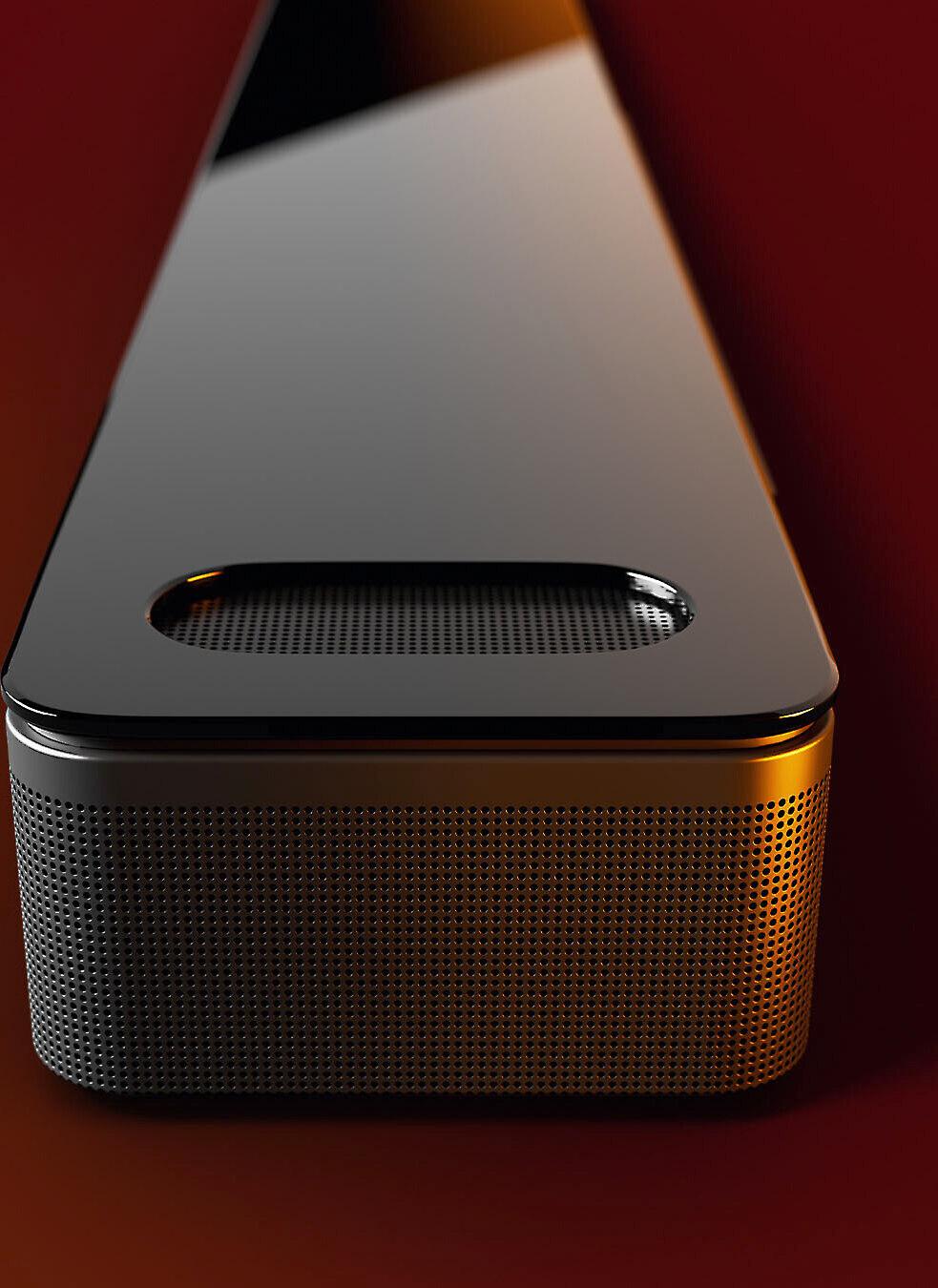
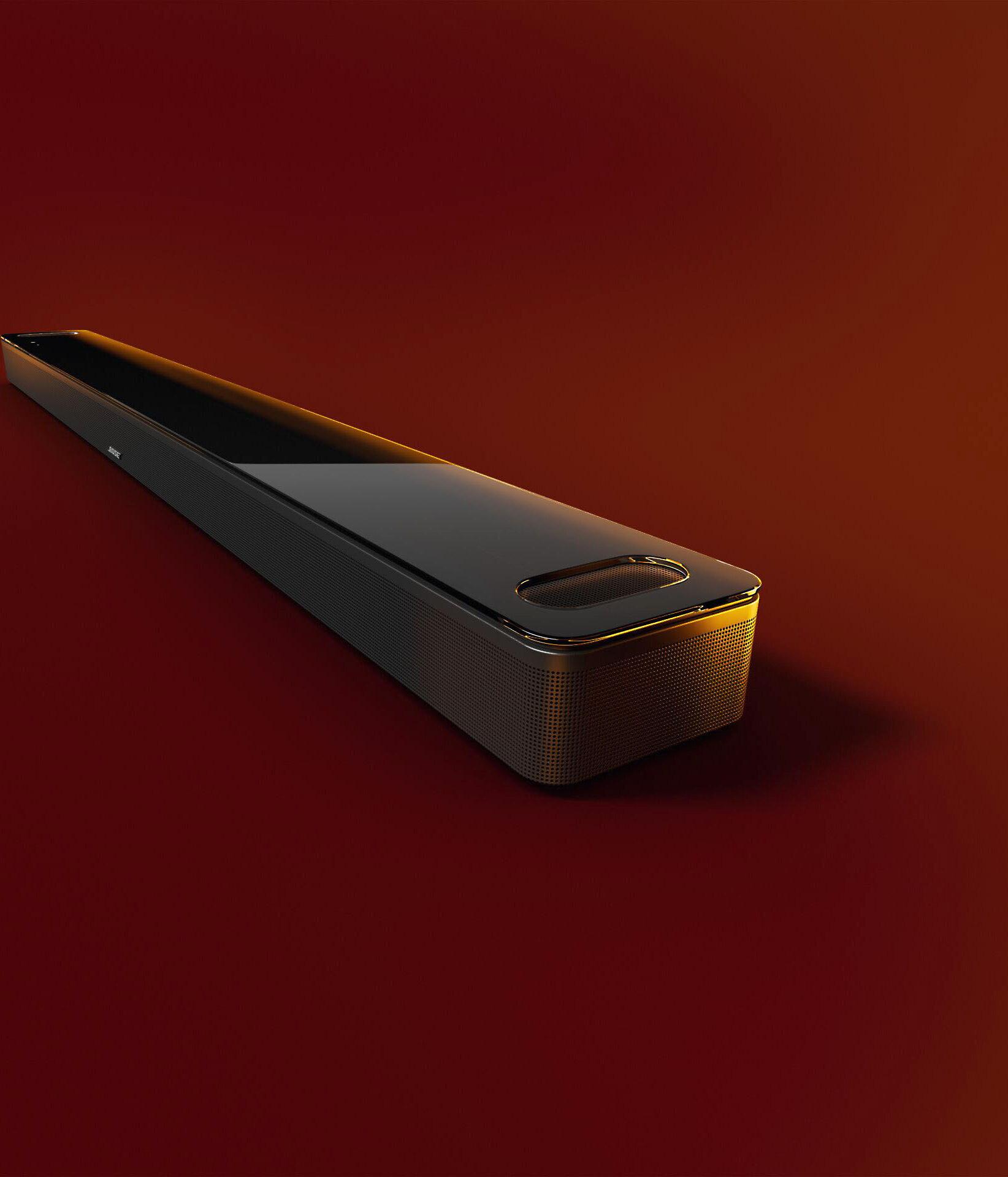
The Bose Smart Ultra takes the opposite approach, packing all its technology into one elegantly designed soundbar. This isn't just about convenience—Bose has invested heavily in psychoacoustic processing, which is the science of how your brain interprets sound. Their PhaseGuide technology fires sound in precise directions to bounce off your walls and ceiling, creating the illusion that audio is coming from places where there are no speakers.
This virtual approach has real advantages. You get premium sound without worrying about speaker placement, and the system works consistently regardless of where you sit. Bose's A.I. Dialogue Mode represents another technological leap—it uses machine learning trained on millions of audio clips to automatically balance dialogue and sound effects, ensuring you never miss important conversation during action scenes.
The Bose Smart Ultra also includes what they call TrueSpace technology, which can take regular stereo or 5.1 content and remix it to create height effects even when the original content wasn't designed for Dolby Atmos. This means you get enhanced audio from everything you watch, not just the latest blockbuster movies.
Here's where the fundamental difference between these systems becomes most apparent. The Hisense HT Saturn creates genuine 360-degree surround sound because it actually has speakers behind you. When a car races past in an action movie, you hear it move from your front speakers to your rear speakers in a completely natural way. The physical separation of the drivers means sounds can be placed with pinpoint accuracy anywhere in your room.
Our research into user and expert reviews consistently shows that the HT Saturn delivers what many describe as a "convincing 3D soundscape" that genuinely immerses you in the action. The system's phantom center channel—created by carefully balancing the left and right front speakers—produces dialogue that sounds like it's coming directly from your TV screen, even though there's no physical center speaker.
The Bose Smart Ultra, while impressive for a single-unit design, relies on reflected sound and processing tricks. This works remarkably well for creating a wide soundstage in front of you, but it can't truly replicate the sensation of sound coming from behind. What it does excel at is creating consistent audio quality regardless of where you sit—something that can be challenging with multiple-speaker systems if they're not positioned perfectly.
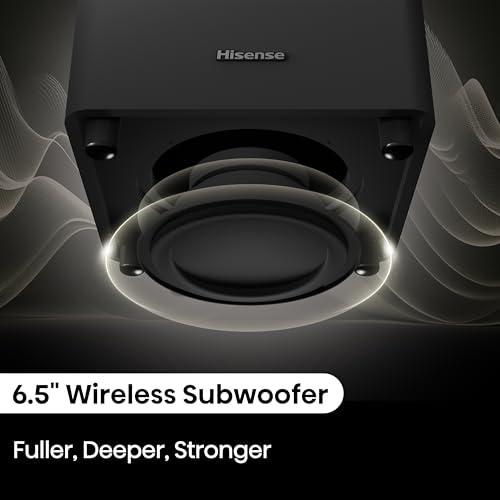
Bass performance reveals another key difference between these approaches. The HT Saturn includes a dedicated 6.5-inch wireless subwoofer that can extend down to 40Hz—that's the deep rumble you feel during explosions and action sequences. Because it's a separate unit, you can position it wherever it sounds best in your room, typically in a corner where room boundaries reinforce the low frequencies.
Reviews consistently praise the HT Saturn's bass as "generous" and "dynamic," providing the kind of visceral impact that makes movies exciting. The system's total power output of around 720W (though marketing power numbers should always be taken with a grain of salt) provides plenty of headroom for those peak moments when dinosaurs roar or spaceships take off.
The Bose Smart Ultra, constrained by its single-unit design, simply cannot match this level of bass extension. Multiple reviews note that while it delivers well-balanced sound overall, it "lacks some weight" in the low frequencies. This doesn't mean it sounds bad—Bose has engineered the system to sound full and rich within its physical limitations—but if deep, room-shaking bass is a priority, a dedicated subwoofer makes a significant difference.
Both systems excel at dialogue clarity, but they achieve it through different methods. The HT Saturn uses what's called a phantom center approach, where the left and right front speakers work together to create the illusion of a center channel speaker. This has been tuned by Devialet, a French company known for high-end audio engineering, resulting in what reviewers describe as "precise voice positioning" that rivals systems with dedicated center speakers.
The Bose Smart Ultra takes a more automated approach with its A.I. Dialogue Mode. This feature continuously analyzes the audio stream and automatically adjusts the tonal balance to make voices more prominent when needed. It's particularly effective because it adapts in real-time—no need to manually switch modes when going from quiet dialogue scenes to explosive action sequences.
In practice, both systems deliver clear, intelligible dialogue, but the Bose system requires less user intervention to maintain consistency across different types of content.
Dolby Atmos and DTS:X represent the latest evolution in surround sound, adding a height dimension to create truly three-dimensional audio. The HT Saturn achieves this through dedicated upward-firing drivers in the front satellite speakers. These bounce sound off your ceiling to create the sensation of audio coming from above—helicopters overhead, rain falling, or debris flying through the air.
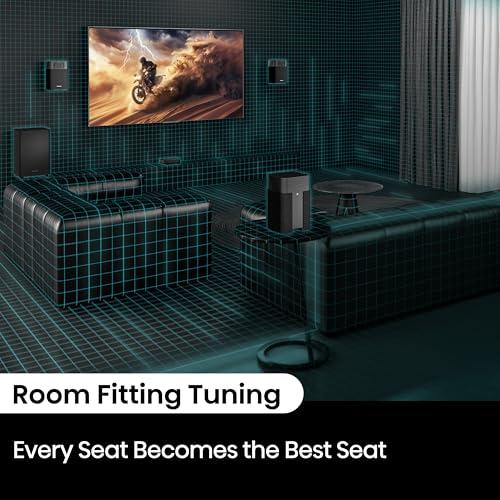
The effectiveness of these height channels depends significantly on your room's characteristics. Ceilings between 8-12 feet with relatively flat surfaces work best, and the system includes room calibration to optimize the reflection patterns for your specific space. When conditions are right, users report that overhead effects feel "realistic and spatially accurate."
The Bose Smart Ultra creates virtual height effects through processing alone. While this is impressive technology, reviews note a "curtailed sensation of audio height" compared to systems with physical upward-firing drivers. The virtual approach works, but it doesn't quite match the convincing overhead effects that properly positioned physical drivers can create.
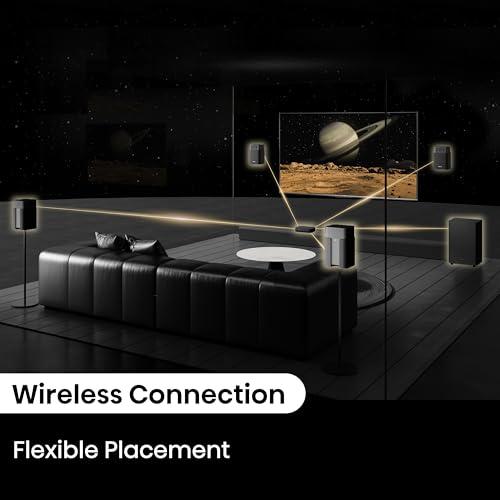
Installing the HT Saturn requires more planning than a traditional soundbar, but it's not as complex as old-school wired surround systems. You'll need to position four satellite speakers around your room—the front ones typically go on either side of your TV, while the rear speakers need to be placed behind or to the sides of your seating area.
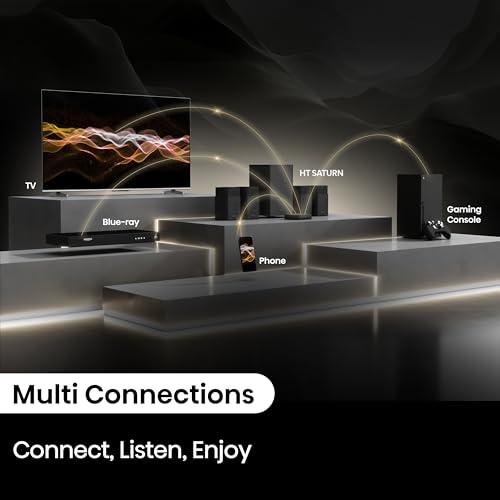
The system uses three wireless frequency bands (2.4GHz, 5.2GHz, and 5.8GHz) to maintain stable connections between all components, which helps avoid the interference issues that plagued earlier wireless audio systems. Once positioned, the speakers auto-pair when powered on, and wall mounting hardware is included if you prefer not to use stands or shelves.
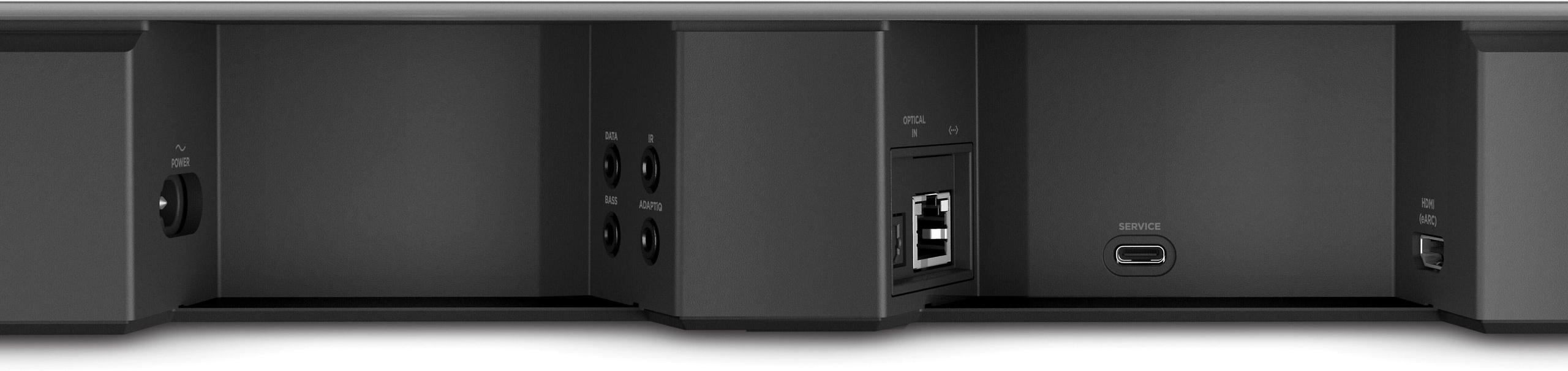
The Bose Smart Ultra offers the simplicity that many people prefer—one sleek unit that sits under your TV with a single HDMI connection. The included ADAPTiQ calibration system uses a special headset with microphones to measure your room's acoustics and automatically adjust the sound, though this process takes just a few minutes and only needs to be done once.
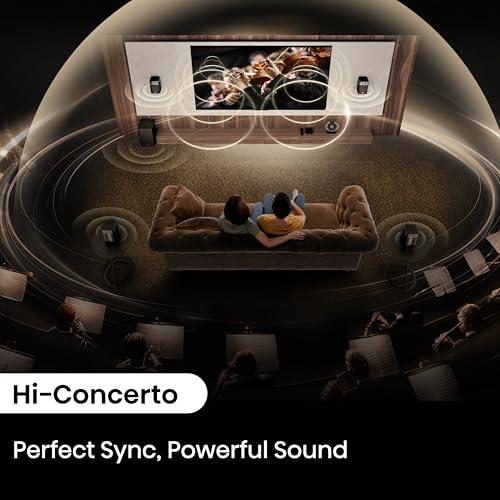
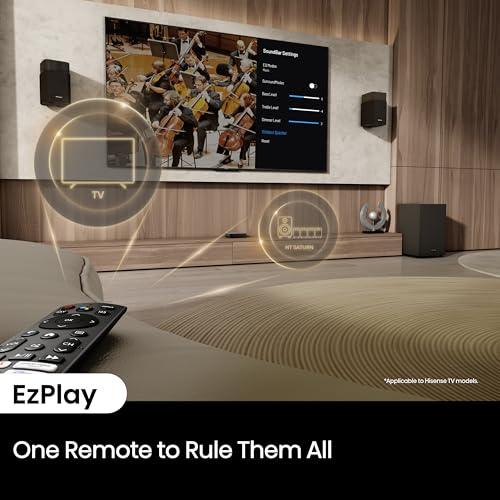
Both systems embrace the modern connected home, but with different emphases. The HT Saturn integrates deeply with Hisense TVs through their Hi-Concerto technology, which allows the TV's built-in speakers to work alongside the surround system for an even wider soundstage. The EzPlay feature lets you control the sound system directly from your TV's remote and on-screen menus.
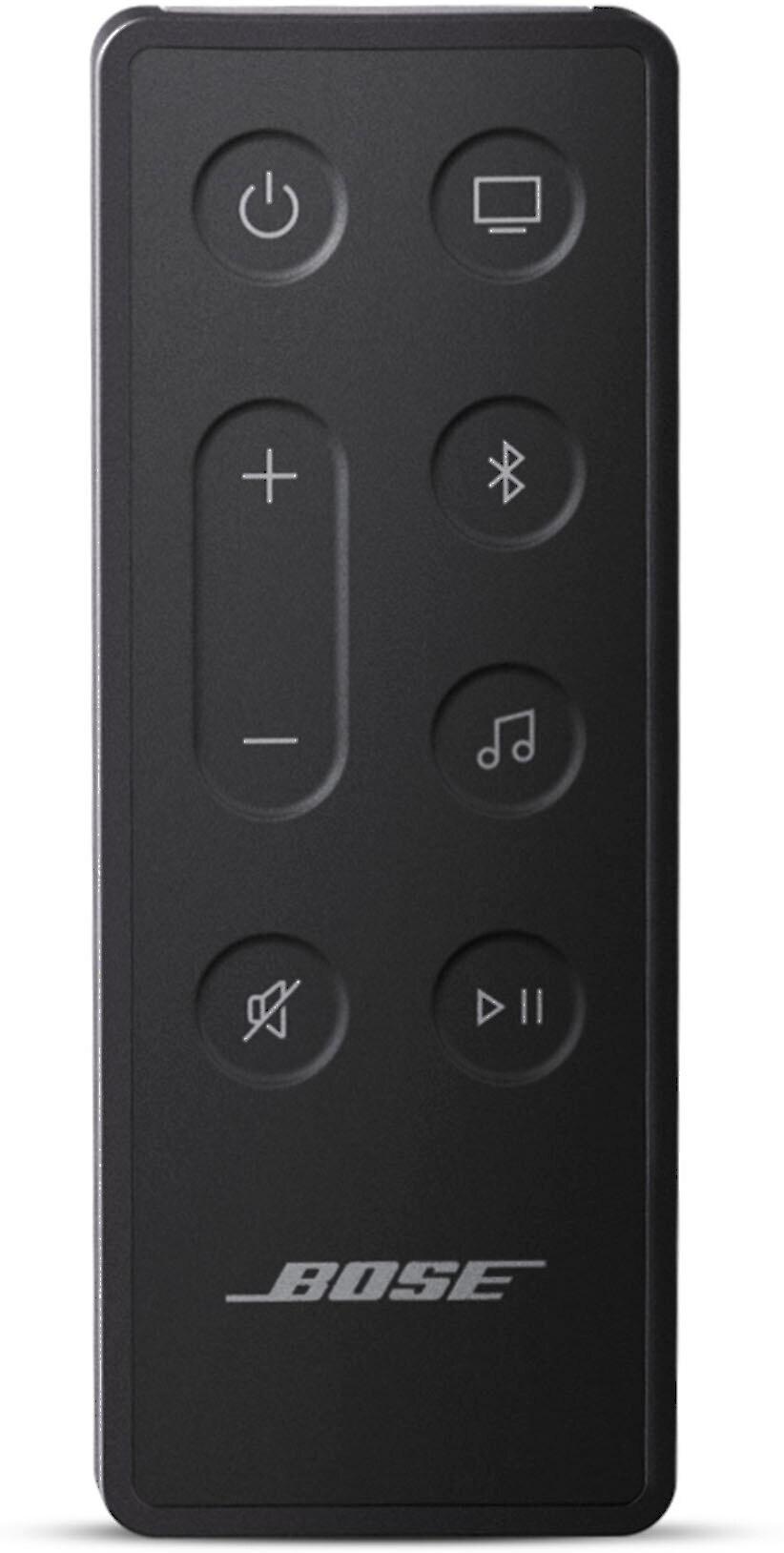
The Bose Smart Ultra takes a more universal approach with built-in voice assistants (Alexa and Google Assistant) and comprehensive app control. Features like Voice4Video can actually turn your TV on and switch to specific channels using voice commands, while AirPlay 2 and Spotify Connect provide seamless music streaming from your devices.
At the time of writing, these systems occupy different price tiers that reflect their different approaches. The HT Saturn costs roughly twice as much as the Bose Smart Ultra, which raises important value questions.
The HT Saturn's higher price gets you genuine multi-speaker surround sound that would typically require a much more expensive AV receiver-based system. When you break down the cost per speaker (13 individual drivers total), the hardware value becomes more apparent. The Devialet tuning also brings premium audio engineering typically found in much more expensive systems.
The Bose Smart Ultra represents excellent value for users who want premium sound processing and brand reliability without the complexity of multiple speakers. Bose's reputation for consistent performance and customer support adds value that's hard to quantify but matters for long-term satisfaction.
Consider also that the HT Saturn's newer 2025 technology leaves room for future software improvements and enhancements, while the Bose represents a more mature platform with proven ecosystem compatibility.
The choice between these systems ultimately depends on your priorities and living situation.
Choose the Hisense HT Saturn if you have a dedicated media room or living space where you can properly position multiple speakers. This system is ideal for movie enthusiasts who want the most immersive audio experience possible and don't mind the additional complexity. It's particularly compelling if you own or plan to purchase a large Hisense TV, where the integration features provide additional value. The authentic surround sound and dedicated subwoofer make it the clear choice for serious home theater applications.
Choose the Bose Smart Ultra if you live in an apartment, have limited space, or simply prefer elegant simplicity. This system excels when you want premium sound quality without the placement considerations and multiple components. It's perfect for users who value smart home integration, voice control, and the flexibility to easily reconfigure their setup. The sophisticated processing ensures good performance regardless of your room's layout or your seating position.
From a purely performance standpoint, the HT Saturn delivers superior spatial audio and bass response when properly set up. However, the Bose Smart Ultra provides more consistent results across different rooms and usage scenarios, with less user intervention required.
The decision often comes down to whether you view audio as a hobby where you enjoy optimizing performance, or as a convenience where you want great sound with minimal fuss. Both approaches have merit, and both systems represent the best of their respective philosophies. Your choice should align with how you actually live and use your entertainment space, not just your audio aspirations.
| Hisense HT Saturn HTSATURN 4.1.2Ch Sound Bar System | Bose Smart Ultra Soundbar with Dolby Atmos |
|---|---|
| System Configuration - Determines setup complexity and true surround capabilities | |
| Complete wireless home theater with 4 satellite speakers + subwoofer | Single premium soundbar unit |
| Speaker Count - More speakers generally mean better spatial audio | |
| 13 total speakers: 8 full-range drivers, 4 tweeters, 1 subwoofer | Integrated drivers in single unit (exact count not specified) |
| Surround Sound Type - Physical speakers vs virtual processing | |
| True 4.1.2 channels with physical rear speakers | Virtual surround using psychoacoustic processing |
| Bass Response - Critical for movie impact and music fullness | |
| Dedicated wireless 6.5" subwoofer (extends to 40Hz) | Built-in bass drivers (limited by single-unit design) |
| Total Power Output - Affects maximum volume and dynamics | |
| 720W PMPO / ~180W RMS across all components | Lower power (exact specs not disclosed by Bose) |
| Dolby Atmos Implementation - Height effects quality | |
| Physical up-firing drivers in front satellites | Virtual height processing via TrueSpace technology |
| Setup Requirements - Time and space needed for installation | |
| Requires positioning 5 separate components around room | Single unit placement under TV with HDMI connection |
| Room Calibration - Optimizes sound for your specific space | |
| Room Fitting Tuning via compatible Hisense TV | ADAPTiQ headset-based automatic calibration |
| TV Integration - Brand-specific features and compatibility | |
| Deep Hisense TV integration with Hi-Concerto technology | Universal TV compatibility with HDMI eARC |
| Voice Control - Smart home integration | |
| EzPlay control via Hisense TV remote | Built-in Alexa and Google Assistant |
| Wireless Connectivity - Streaming and device pairing | |
| Bluetooth 5.3 with multi-codec support | Bluetooth, AirPlay 2, Spotify Connect |
| Release Year - Indicates technology generation | |
| 2025 (latest wireless surround technology) | 2023 (mature single-unit processing) |
| Ideal Use Case - Who should choose this system | |
| Dedicated media rooms with space for multiple speakers | Apartments, simple setups, consistent performance needs |
The Hisense HT Saturn delivers superior surround sound because it uses four physical satellite speakers placed around your room, creating true 4.1.2 channel audio. The Bose Smart Ultra uses virtual surround processing from a single unit, which sounds good but can't match the authentic directional effects of actual rear speakers.
The Hisense HT Saturn is actually a complete wireless home theater system with separate satellite speakers and a subwoofer, while the Bose Smart Ultra is a traditional single-unit soundbar. This means the HT Saturn requires placing multiple speakers around your room, but provides genuine surround sound in return.
The Bose Smart Ultra is much simpler to install - just place it under your TV and connect one HDMI cable. The Hisense HT Saturn requires positioning four satellite speakers and a subwoofer around your room, though all connections are wireless once you've found power outlets for each component.
Yes, both support Dolby Atmos but differently. The Hisense HT Saturn uses physical up-firing drivers in its front speakers to bounce sound off your ceiling for true height effects. The Bose Smart Ultra creates virtual height effects through advanced processing, which works well but isn't quite as convincing as physical drivers.
The Hisense HT Saturn has significantly better bass thanks to its dedicated wireless 6.5-inch subwoofer that extends down to 40Hz. The Bose Smart Ultra is limited by its single-unit design and can't match the deep, room-filling bass that a separate subwoofer provides.
The Bose Smart Ultra only needs space under your TV, making it perfect for apartments or smaller rooms. The Hisense HT Saturn requires space for four satellite speakers around your seating area plus the subwoofer, making it better suited for dedicated media rooms or larger living spaces.
The Bose Smart Ultra works universally with any TV through HDMI eARC and includes broad smart home integration. The Hisense HT Saturn works with all TVs but offers special Hi-Concerto integration features when paired with Hisense TVs, allowing the TV speakers to work alongside the sound system.
Both excel at dialogue clarity but achieve it differently. The Hisense HT Saturn uses a phantom center channel created by its front speakers, tuned by premium audio company Devialet. The Bose Smart Ultra features A.I. Dialogue Mode that automatically adjusts voice balance using machine learning.
Neither system allows adding additional speakers. The Hisense HT Saturn is a complete 13-speaker system that can't be expanded, while the Bose Smart Ultra is designed as a standalone unit. Both represent complete audio solutions in their respective categories.
The Hisense HT Saturn generally provides better music performance due to its multiple 3-way satellite speakers and dedicated subwoofer, creating a wider soundstage and fuller frequency response. The Bose Smart Ultra delivers Bose's signature sound quality but from a more constrained single-unit design.
The Bose Smart Ultra offers more comprehensive smart features with built-in Alexa and Google Assistant, plus AirPlay 2 and Spotify Connect streaming. The Hisense HT Saturn focuses on TV integration with EzPlay control and Bluetooth 5.3 connectivity, but lacks built-in voice assistants.
This depends on your priorities. The Bose Smart Ultra offers excellent value for users wanting premium single-unit convenience with sophisticated processing. The Hisense HT Saturn costs more but delivers genuine multi-speaker surround sound that would typically require a much more expensive traditional home theater setup.
We've done our best to create useful and informative comparisons to help you decide what product to buy. Our research uses advanced automated methods to create this comparison and perfection is not possible - please contact us for corrections or questions. These are the sites we've researched in the creation of this article: bestbuy.com - youtube.com - blog.son-video.com - youtube.com - youtube.com - techradar.com - ecoustics.com - jbhifi.com.au - shop.hisense-usa.com - bhphotovideo.com - bestbuy.com - digitalreviews.net - hisense-usa.com - projectorscreenstore.com - valueelectronics.com - dolby.com - giftpack.ai - techradar.com - bose.com - bestbuy.com - tomsguide.com - pcrichard.com - rtings.com - bose.com - boselatam.com - avsforum.com - bose.com

Privacy Policy
Terms and Conditions - Affiliate Policy
Home Security
© Copyright 2008-2026.
11816 Inwood Rd #1211, Dallas, TX 75244