



The home theater world has gotten pretty exciting lately. Gone are the days when your only choices were tinny TV speakers or a massive receiver with wires snaking across your living room. Today's premium soundbars and wireless speaker systems can deliver genuine surround sound that rivals traditional setups, but they do it in completely different ways.
We're looking at two fascinating products that represent opposite ends of this evolution: the Hisense HT Saturn and the Samsung HW-Q990D. Both launched in 2024, but they couldn't be more different in their approach to solving the same problem—how to get amazing surround sound without the complexity of a traditional home theater setup.
When shopping for premium home audio, you're essentially choosing between two philosophies. The traditional route involves a large soundbar that uses clever processing to create virtual surround effects, plus maybe some wireless rear speakers. The revolutionary approach breaks that mold entirely, spreading individual speakers around your room like a real surround system but without the wires.
The Samsung HW-Q990D represents the pinnacle of the traditional soundbar evolution. At the time of writing, it's positioned as Samsung's flagship model with a premium price tag that reflects its extensive feature set. Meanwhile, the Hisense HT Saturn takes a completely different path at a more accessible price point, essentially asking "what if we just got rid of the soundbar entirely?"
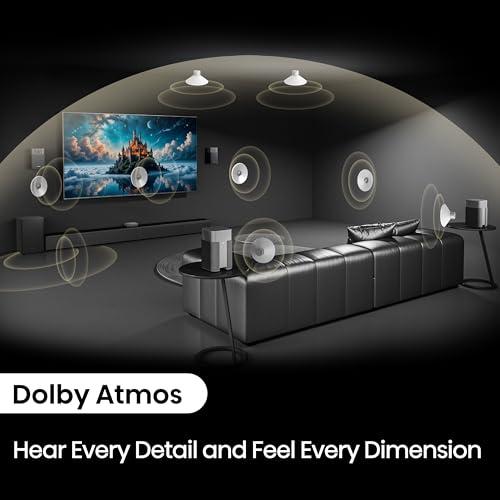
Both systems support Dolby Atmos and DTS:X—the latest surround sound formats that add height information to create truly three-dimensional audio. Think of regular surround sound as happening around you in a circle, while Atmos adds a dome above your head where sounds can move and position themselves. When done right, you'll hear rain falling from above or a helicopter flying overhead with startling realism.
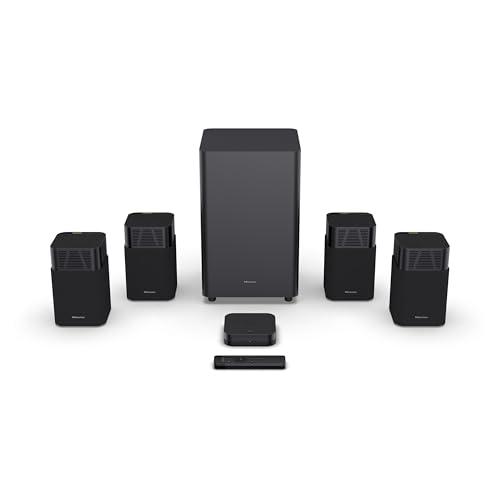
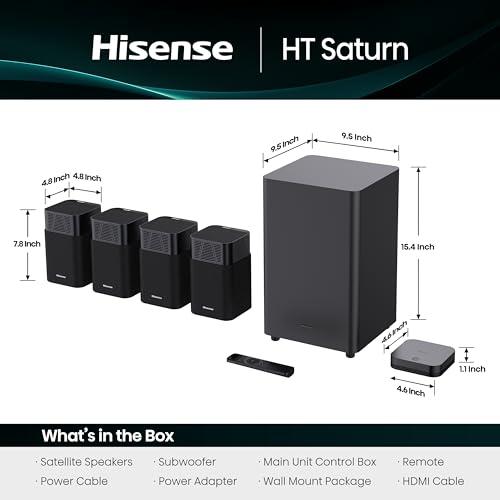
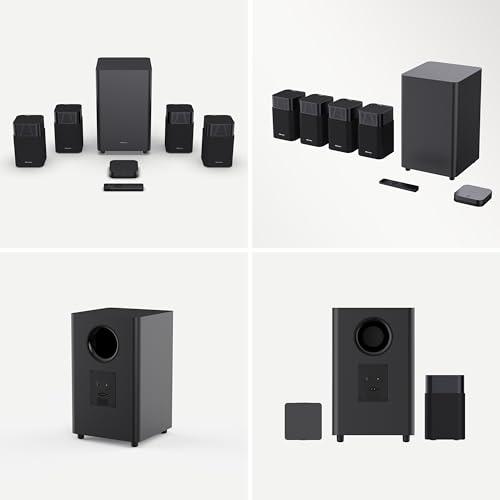
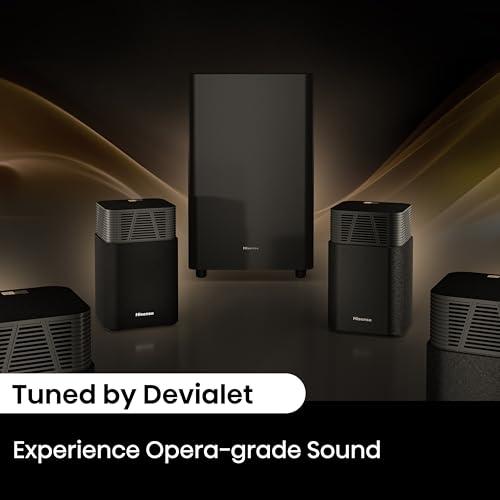
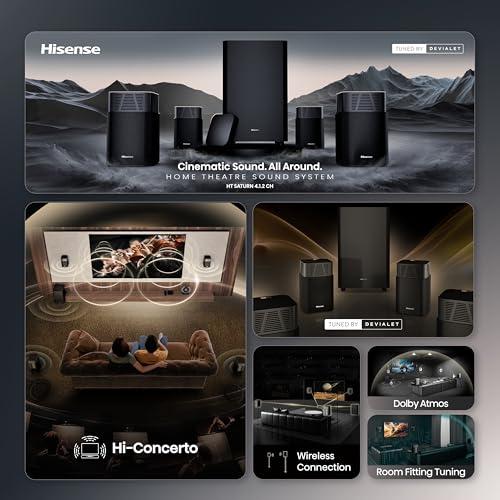
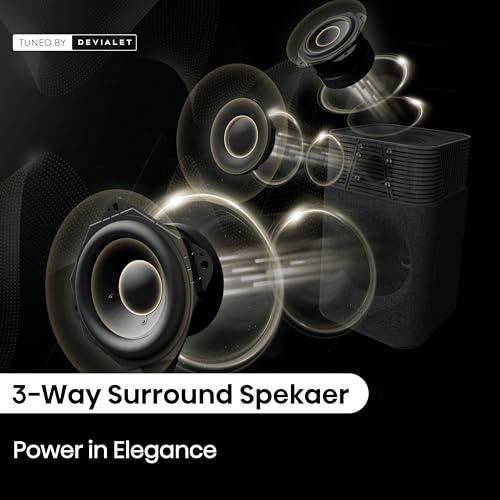
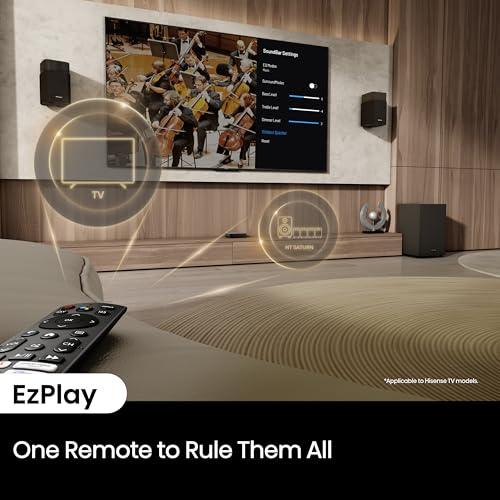
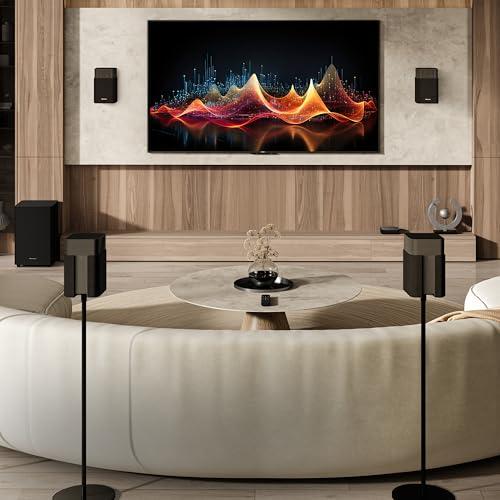
The Hisense HT Saturn throws conventional wisdom out the window. Instead of a soundbar, you get four separate satellite speakers, each about the size of a small bookshelf speaker, plus a wireless subwoofer and a compact control hub. Each satellite contains three drivers—two main speakers and a precision tweeter—creating what's called a 3-way design. This separation allows each frequency range (bass, midrange, treble) to be handled by a specialized driver, resulting in cleaner, more detailed sound.
What makes this system remarkable is how it creates a phantom center channel. In traditional surround setups, dialogue comes from a dedicated center speaker below your TV. The HT Saturn uses precise timing and level matching between the front left and right speakers to create the illusion of a center channel that's exactly where it should be. Based on our research into user experiences, this phantom center actually works better than many people expect—dialogue appears to come directly from the TV screen with impressive stability.
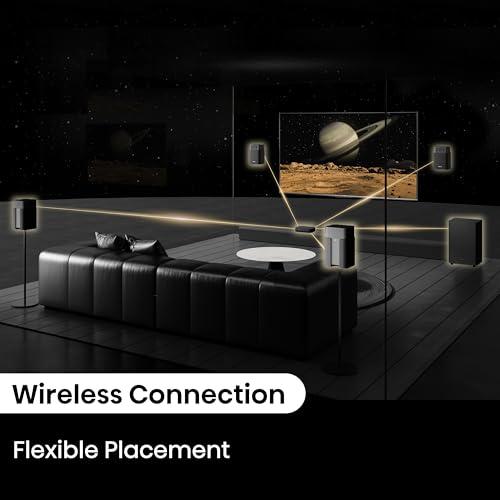
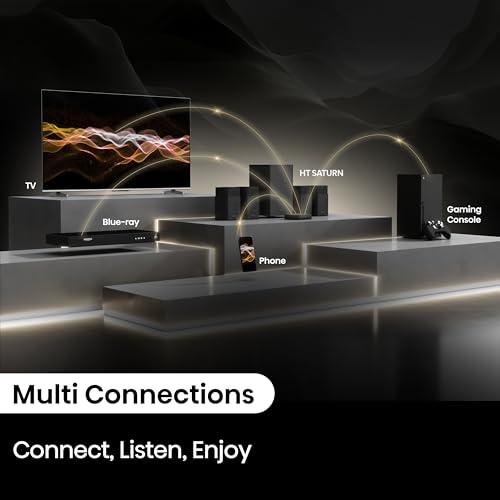
The whole system connects wirelessly using three different frequency bands (2.4 GHz, 5.2 GHz, and 5.8 GHz). This tri-band approach helps avoid interference from your Wi-Fi network and other devices, maintaining the precise timing needed for proper surround sound imaging.
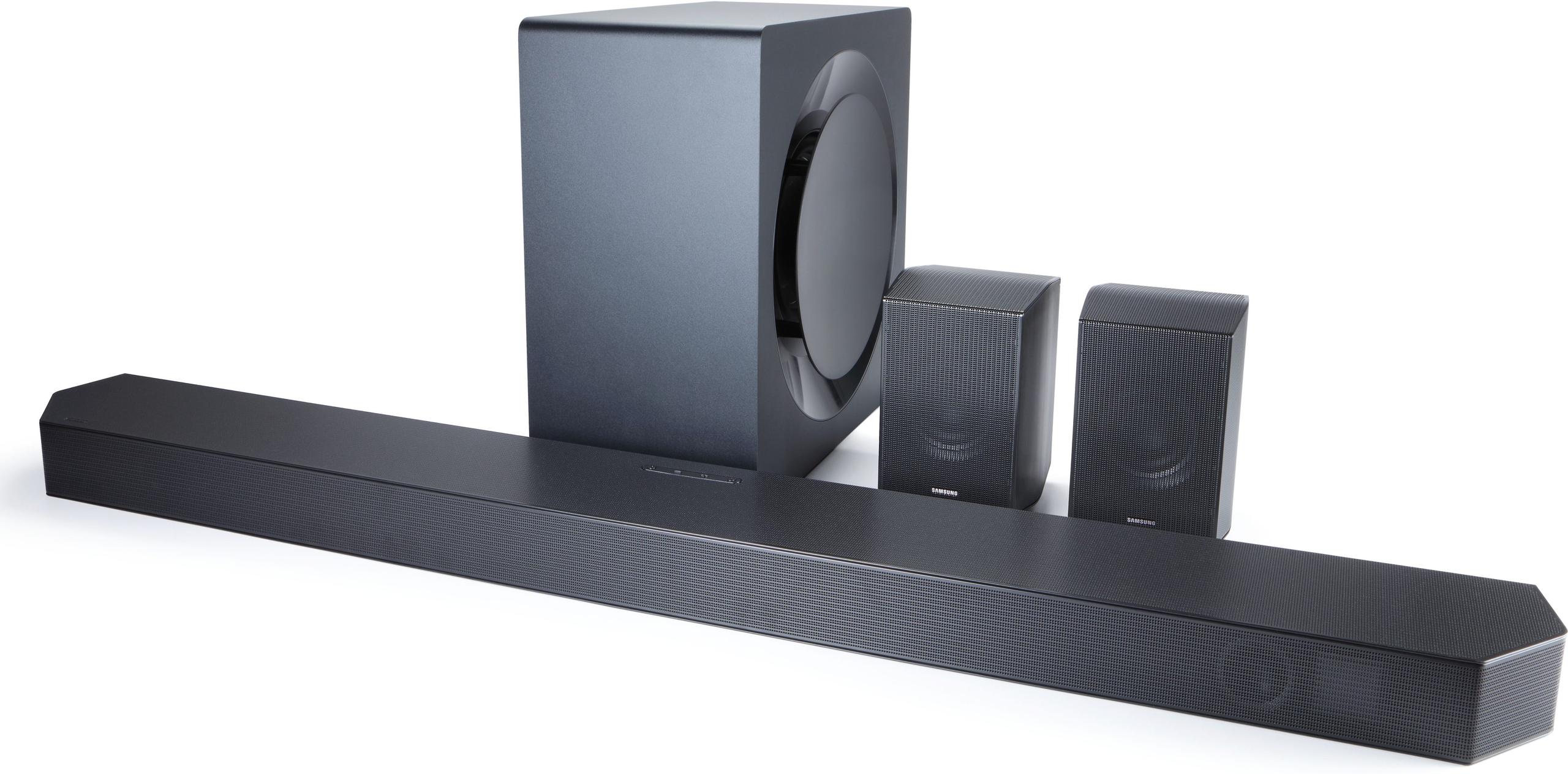
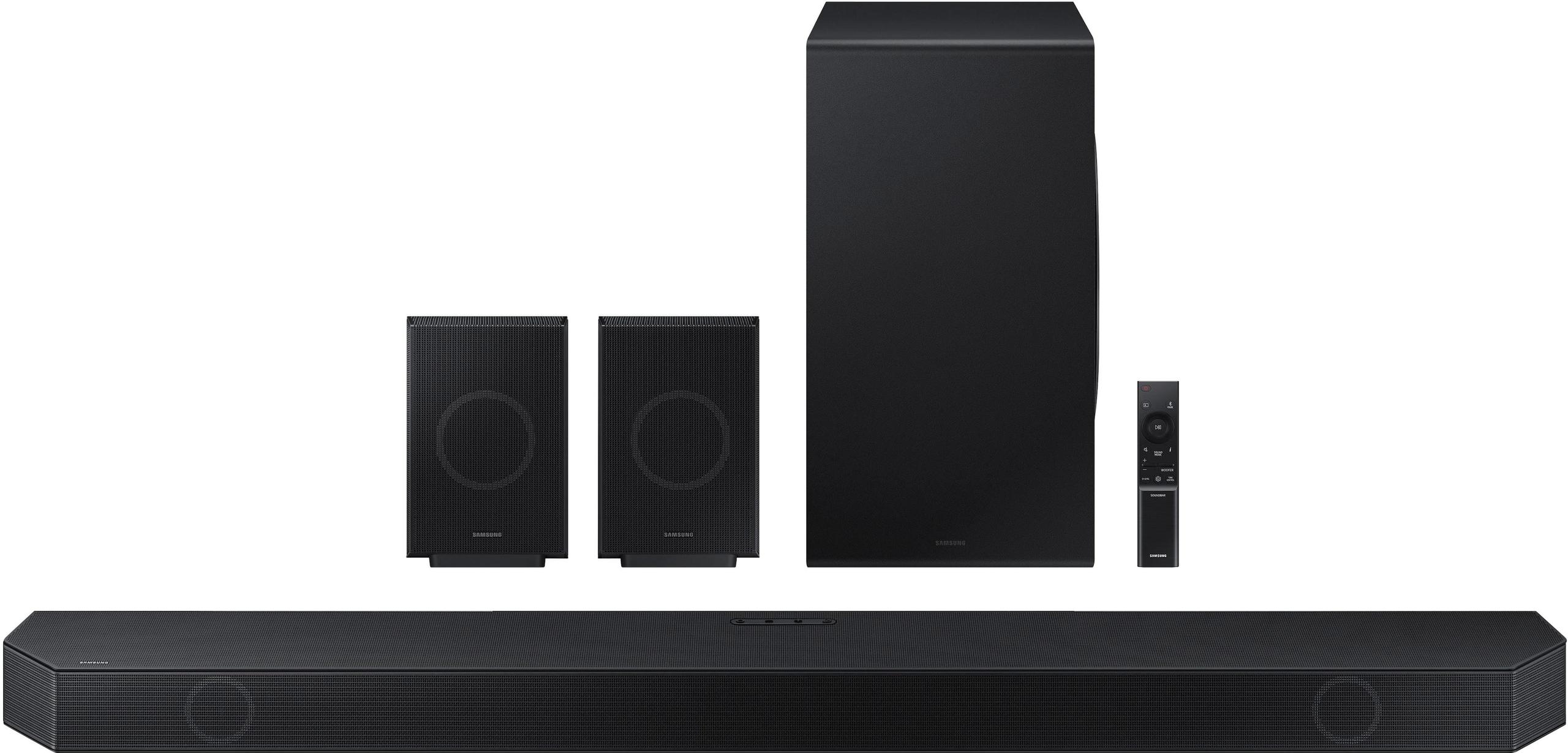
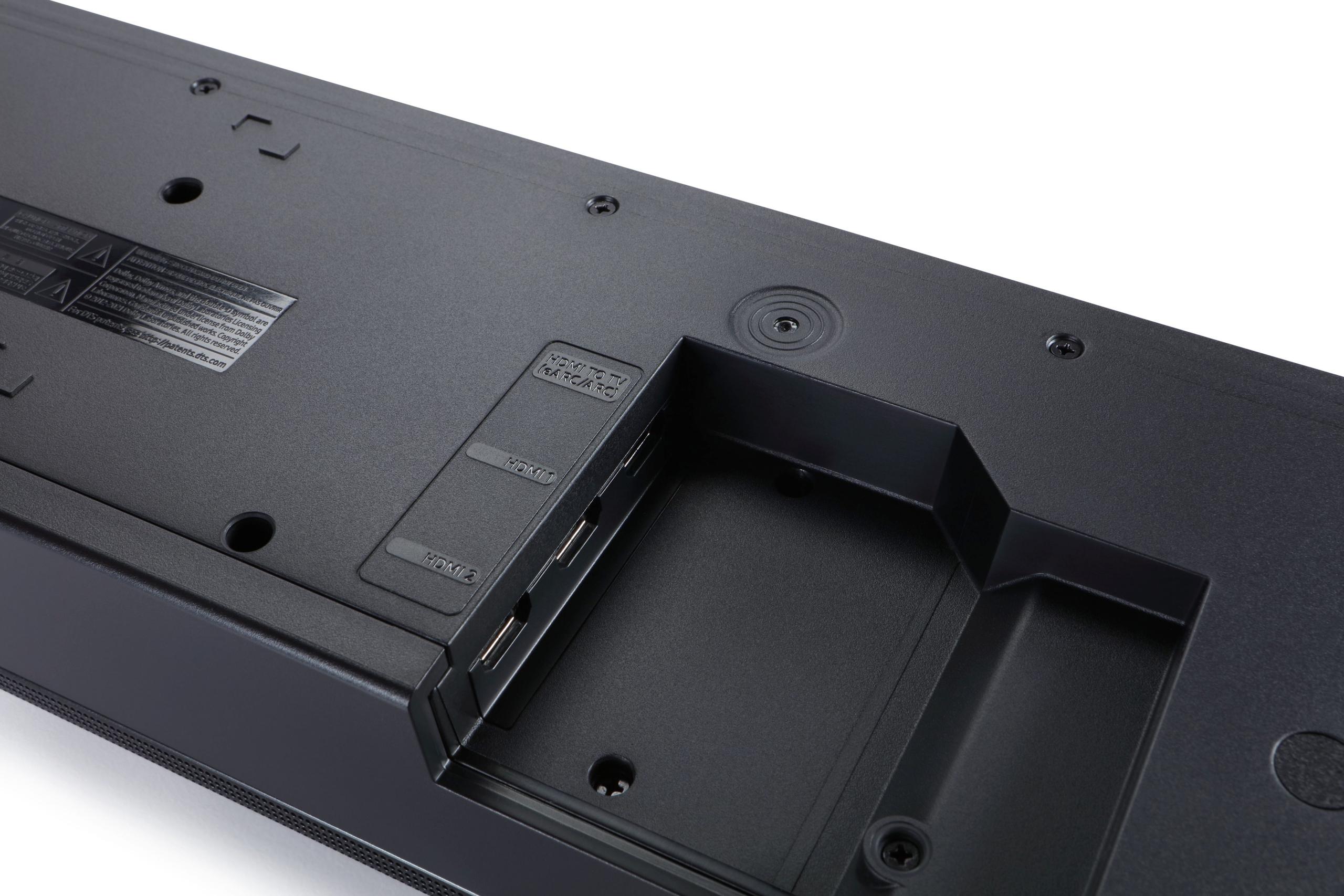
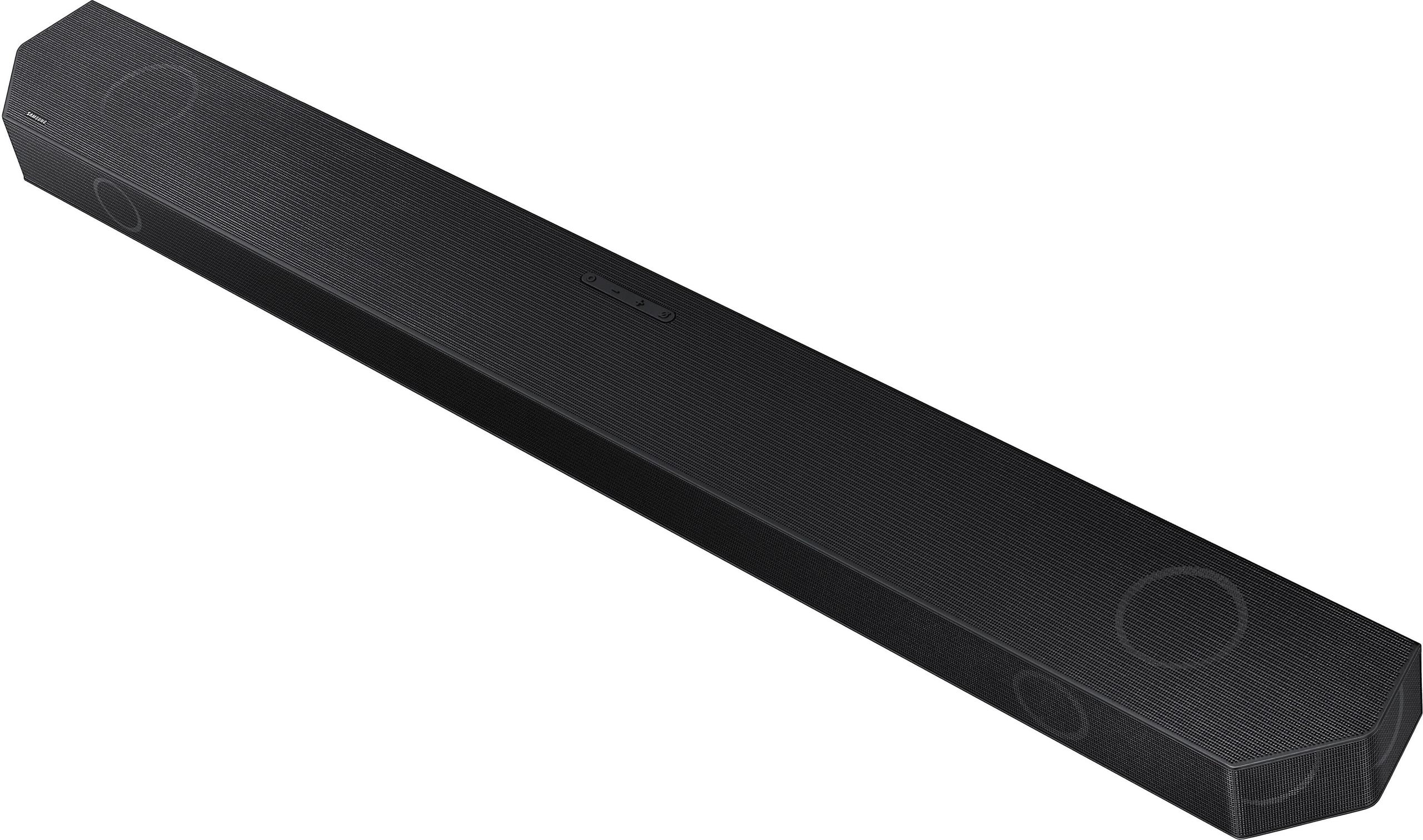
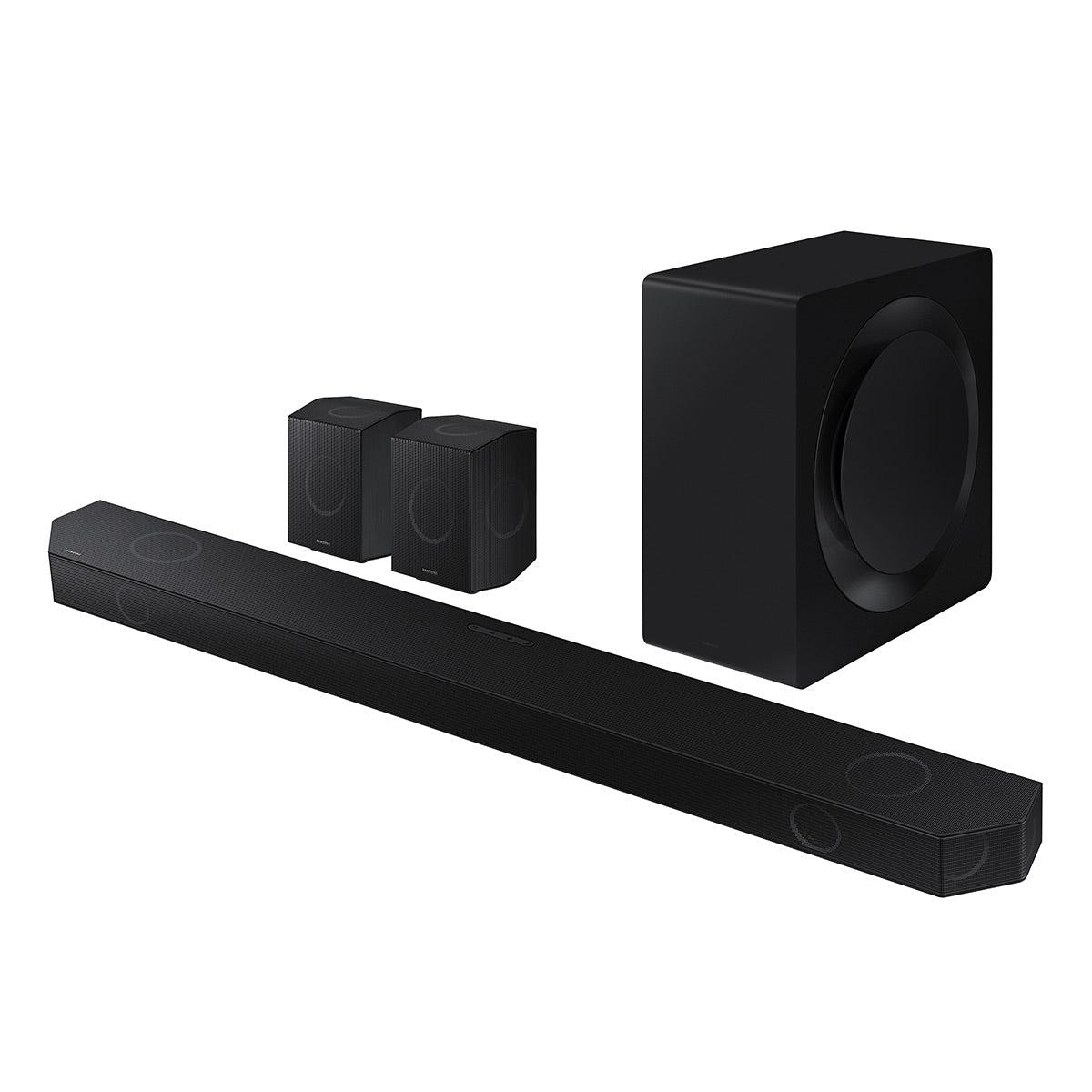
The Samsung HW-Q990D, by contrast, doubles down on the soundbar concept but takes it to its logical extreme. This is an 11.1.4 channel system, which means 11 main channels, one subwoofer, and 4 height channels. Breaking that down: you get front left, center, and right speakers in the main bar, side-firing speakers for width, up-firing speakers for height, discrete rear speakers, and that dedicated subwoofer. It's like fitting an entire home theater's worth of speakers into three main components.
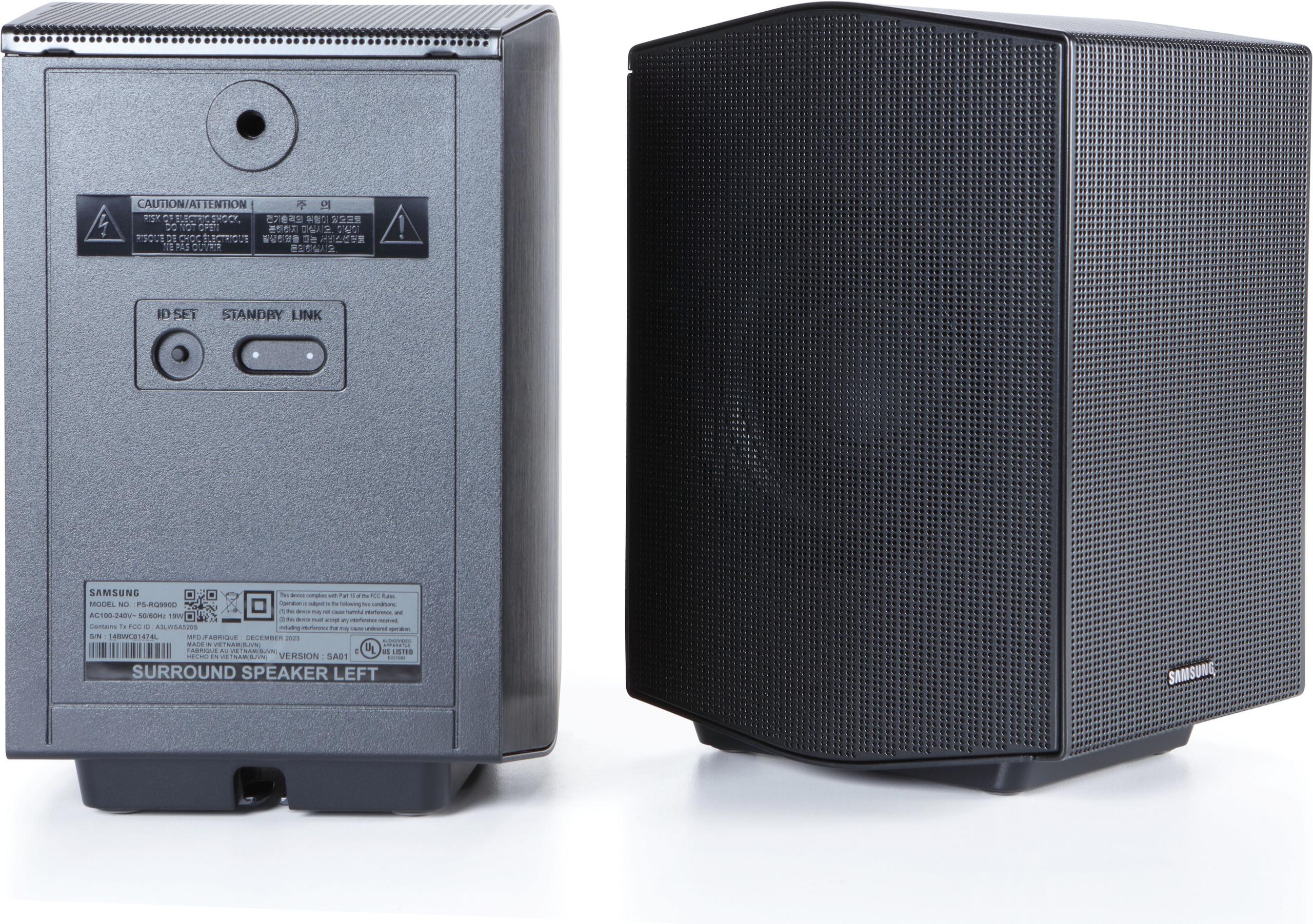
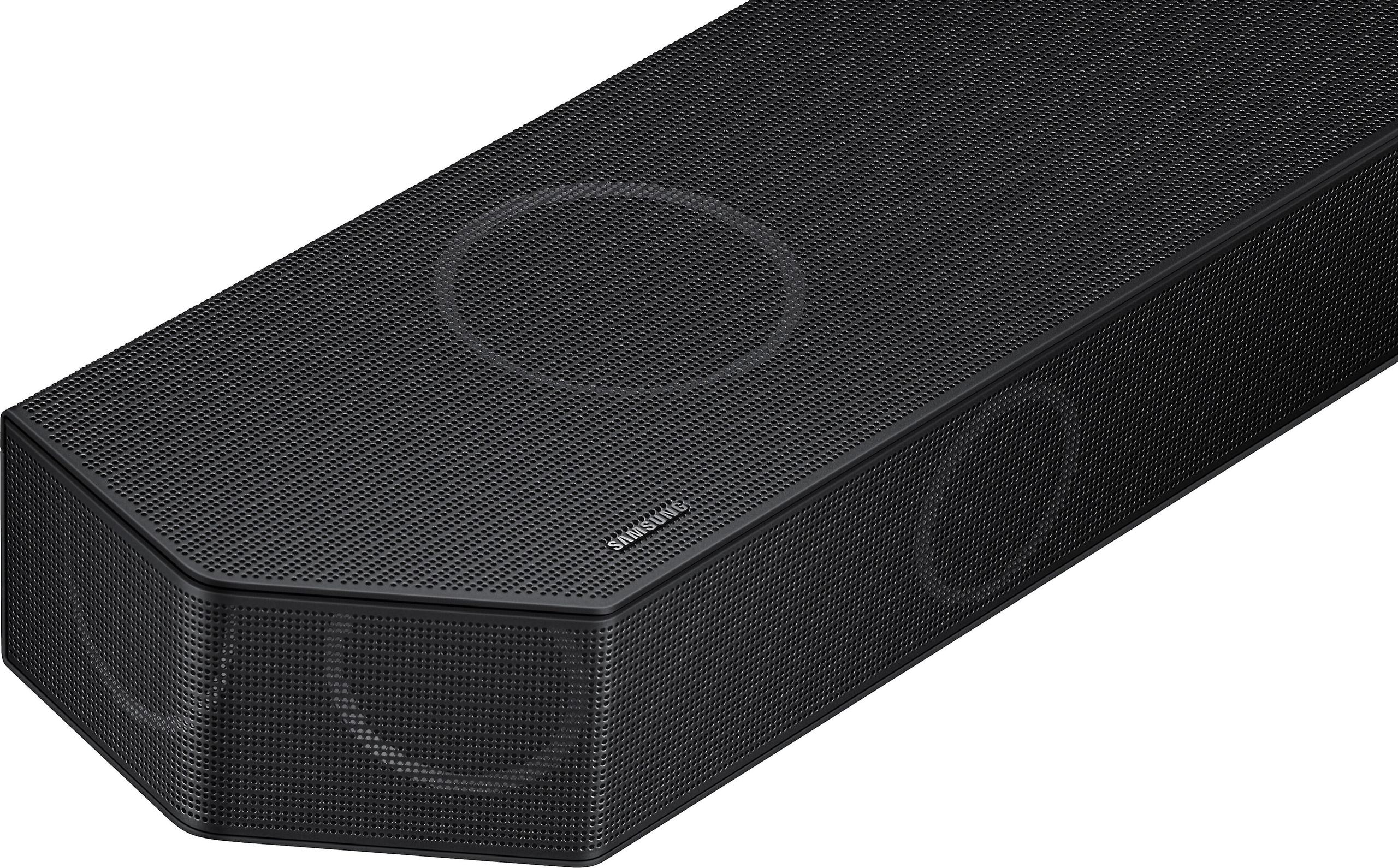
The main soundbar alone contains 13 drivers—six elliptical midrange speakers, three tweeters firing forward, four side-firing speakers for width, and two up-firing drivers for height effects. Each rear speaker adds three more drivers (forward, side, and up-firing), bringing the total to 22 drivers across the entire system.
Samsung's SpaceFit Sound Pro technology uses built-in microphones to constantly analyze your room's acoustics and adjust the sound accordingly. Unlike older room correction systems that required annoying test tones, this happens automatically and continuously. The system literally listens to how sound bounces around your space and compensates for things like hard surfaces, furniture placement, and room size.
This is where the fundamental differences between these systems become most apparent. The Hisense HT Saturn creates what reviewers consistently describe as a genuine "surround bubble"—that feeling of being completely enveloped in sound that you get in a good movie theater.
Because you can position the four satellites optimally around your room, sounds can truly come from their intended directions. When a helicopter flies from front to back in a movie, you hear it move through real space rather than processed virtual space. The height effects from the up-firing drivers reflect off your ceiling to create overhead sounds, and having four separate positions for these reflections creates a more convincing dome of sound than what's possible from a single soundbar.
The Samsung HW-Q990D takes a different but equally valid approach. With 11.1.4 channels and 22 drivers, it has more discrete audio channels to work with, allowing for finer placement of sounds within the mix. The multiple up-firing drivers in both the main bar and rear speakers create more reflection points for height effects, and the sophisticated processing can steer sounds with remarkable precision.
Expert reviews consistently praise both systems for their immersive capabilities, but they achieve this immersion differently. The HT Saturn relies on physical positioning and genuine surround placement, while the HW-Q990D uses processing sophistication and sheer driver count to create its soundfield.
Nothing ruins a movie night faster than having to constantly adjust the volume because you can't understand what people are saying. Both systems excel here, but again through different means.
The Hisense HT Saturn benefits from its Devialet tuning—a collaboration with the French audio company known for extremely high-end speakers. Devialet's expertise in driver design and crossover engineering shows in how naturally voices sound. The phantom center channel implementation is particularly impressive; despite having no physical center speaker, dialogue appears locked to the screen with remarkable stability.
Samsung's approach with the HW-Q990D involves Active Voice Amplifier Pro, which actively analyzes the audio stream and enhances dialogue frequencies in real-time. This is especially helpful in content with wide dynamic ranges—those action movies where explosions are thunderous but whispered conversations become inaudible. The system can detect when dialogue is present and subtly boost those frequencies without affecting the overall mix balance.
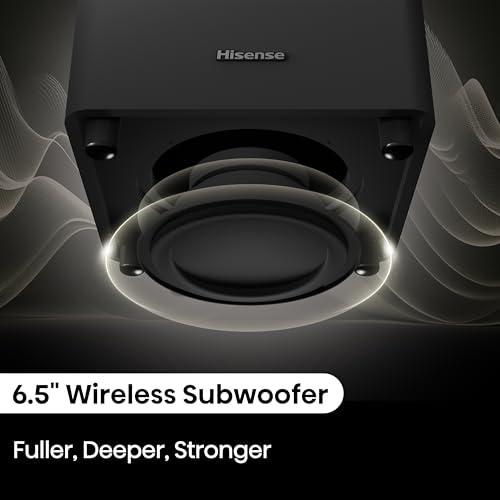
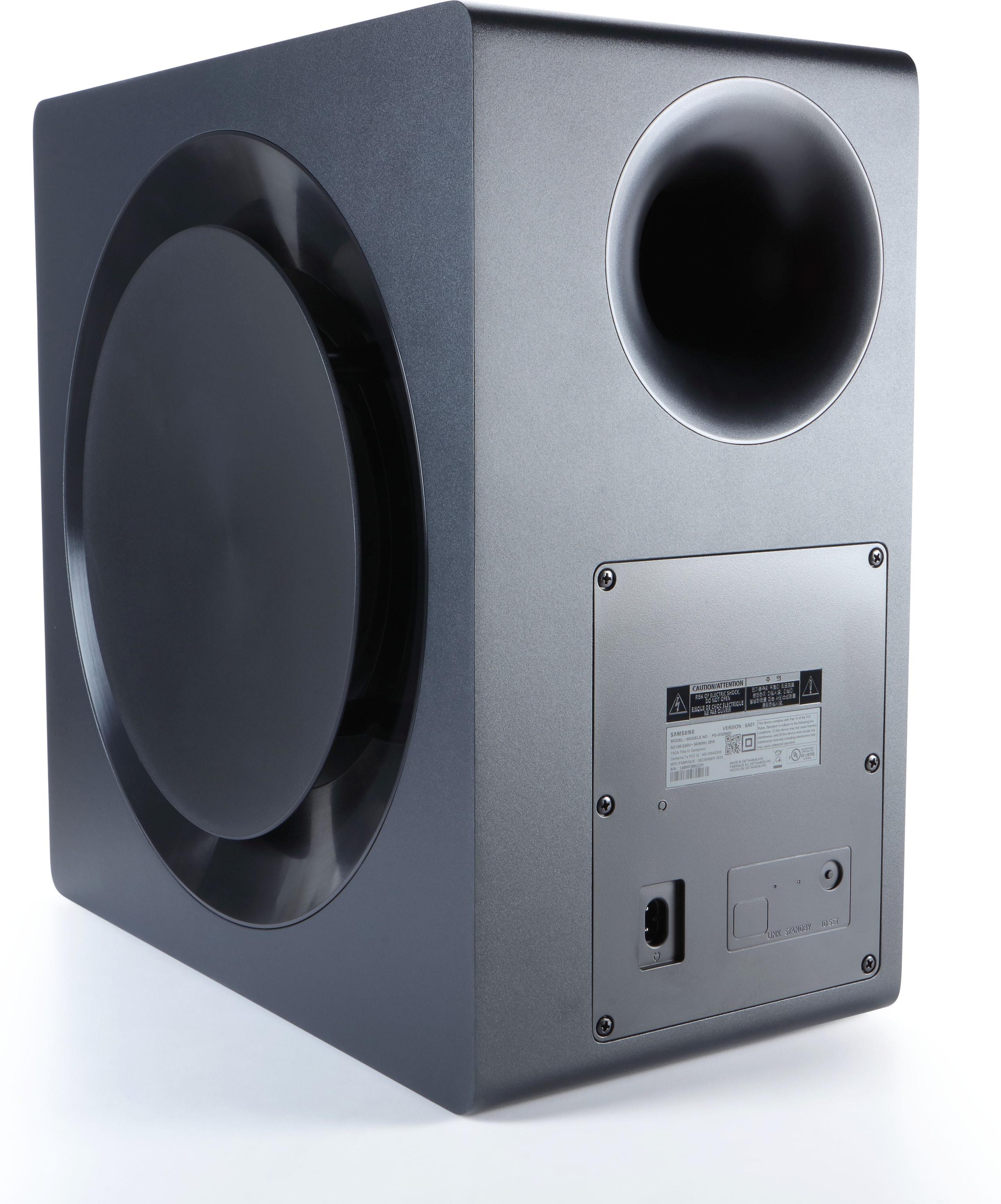
Both systems include wireless subwoofers, but they're quite different beasts. The HT Saturn uses a 6.5-inch down-firing driver that's tuned to integrate seamlessly with the satellite speakers. The smaller driver size might suggest less bass impact, but the tuning is focused on quality over quantity. Users report tight, controlled bass that adds weight to explosions and music without becoming boomy or overwhelming dialogue.
The Samsung HW-Q990D sports a larger 8-inch subwoofer with more advanced DSP (Digital Signal Processing) to manage bass distribution across all 11.1 channels. This larger driver can move more air and reach deeper frequencies, providing more visceral impact for action scenes and electronic music.
What's particularly clever about the Samsung system is how it manages bass across multiple channels. Instead of just sending all low frequencies to the subwoofer, it can distribute bass information across the main bar and rear speakers, creating a more enveloping low-frequency experience.
Gaming has become a crucial consideration for premium audio systems, especially with the latest PlayStation and Xbox consoles supporting 4K at 120Hz and advanced audio processing. Both systems handle gaming well but with different strengths.
The Hisense HT Saturn excels at positional audio—those subtle cues that help you locate enemies in competitive games. Having four discrete speakers around your room means footsteps, gunshots, and other effects can be precisely placed in 3D space. The system supports 4K 60Hz pass-through, which covers most current gaming scenarios.
The Samsung HW-Q990D goes further with full 4K 120Hz support and Variable Refresh Rate (VRR) pass-through. Its Game Mode Pro actually adjusts the sound profile based on what type of game you're playing, optimizing for different genres. The Auto Low Latency Mode (ALLM) minimizes audio delay, crucial for competitive gaming where every millisecond matters.
This is where you need to think carefully about your room and lifestyle. The Hisense HT Saturn requires space for four satellite speakers around your room. Each speaker is compact—about the size of a hardcover book—but they need to be positioned properly for optimal surround effects. The wireless connection means you only need power outlets near each speaker, but you'll need furniture, shelves, or wall mounts to place them.
The Samsung HW-Q990D is more traditional in its requirements: space for a large soundbar (over 4 feet wide), placement for a subwoofer, and rear speakers that need to go behind your seating area. If your TV is on a stand rather than wall-mounted, make sure it can accommodate the substantial width and depth of the main unit.
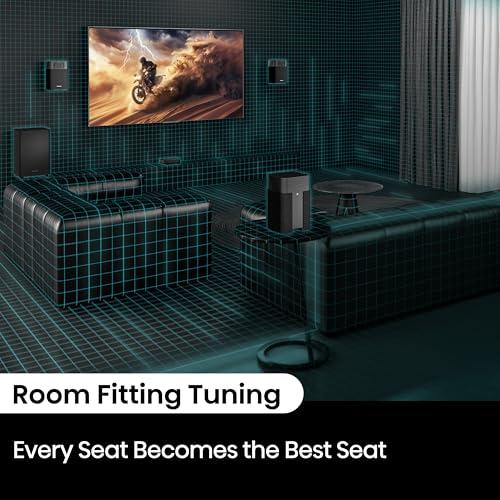
Living with the HT Saturn means embracing a more distributed approach to audio. The auto-pairing wireless connection works reliably based on user reports, with all speakers automatically connecting when you power on the system. The Room Fitting Tuning feature, when used with compatible Hisense TVs, optimizes the sound for your specific space without requiring manual adjustments.
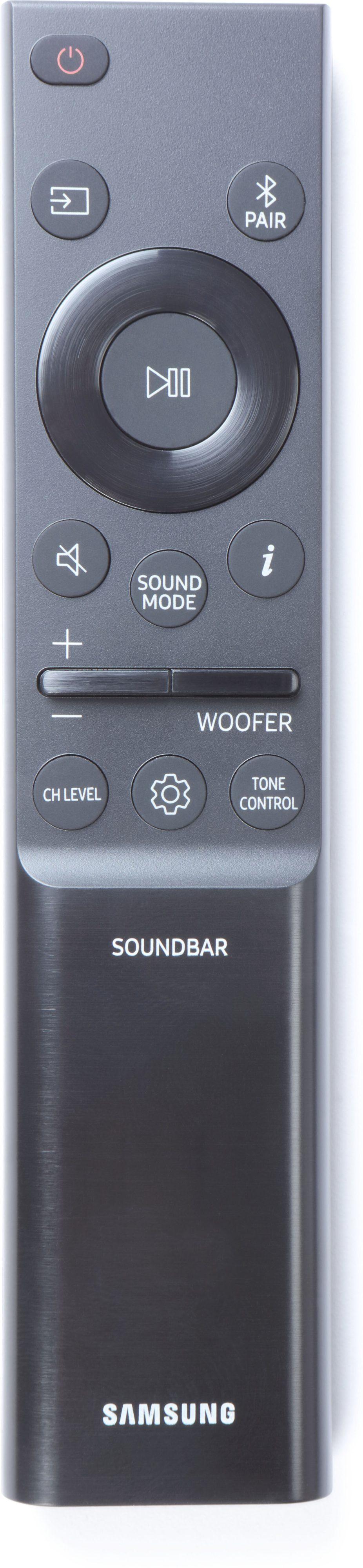
The Samsung HW-Q990D offers a more automated experience overall. The SpaceFit Sound Pro continuously adjusts for your room without any input from you. The built-in voice assistants (Alexa, Bixby, and Google Assistant) add smart home integration that the Hisense system lacks.
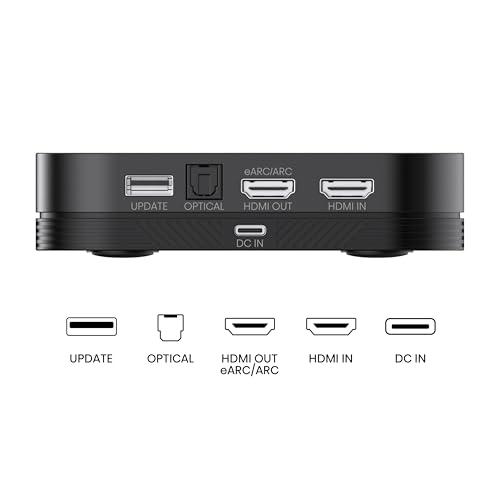
Both systems support the current standards, but with different emphases. The HT Saturn focuses on essential connections: HDMI eARC for lossless audio from your TV, HDMI input for devices, optical input for older equipment, and Bluetooth 5.3 for streaming from phones and tablets.
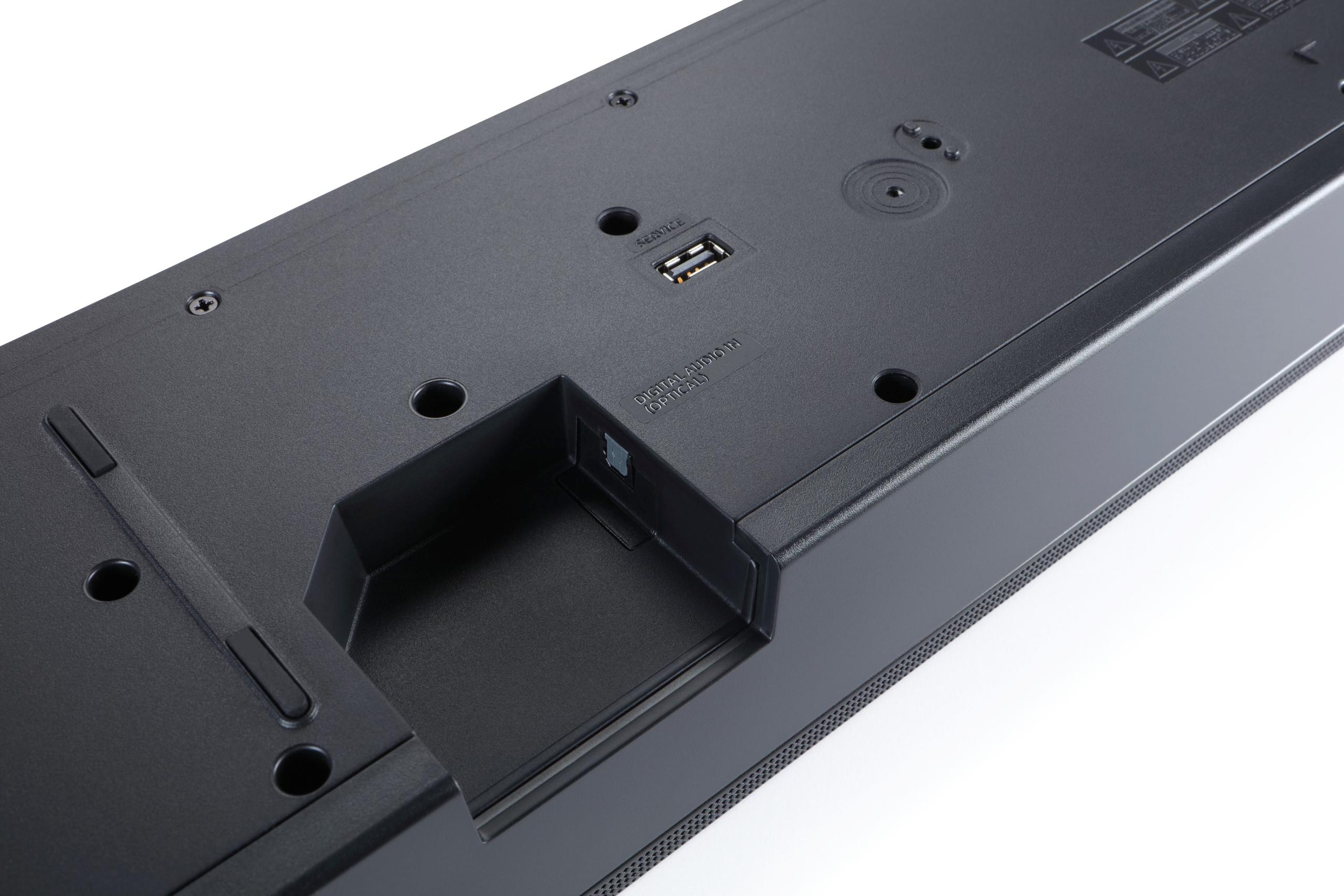
The Samsung HW-Q990D casts a wider net with Wi-Fi connectivity, built-in streaming service support, AirPlay 2, and Chromecast. This makes it more versatile for users who want to stream music directly to the soundbar without going through their TV or other devices.
At the time of writing, these systems occupy different price tiers, which significantly affects their value propositions. The Hisense HT Saturn delivers genuinely premium audio through its Devialet tuning and innovative distributed approach at a more accessible price point. You're essentially getting a complete wireless surround system that challenges the soundbar paradigm without the flagship premium pricing.
The Samsung HW-Q990D commands a substantial premium but justifies it with flagship features, more sophisticated processing, and extensive connectivity. You're paying for Samsung's most advanced audio technology and the convenience of a more automated, integrated experience.
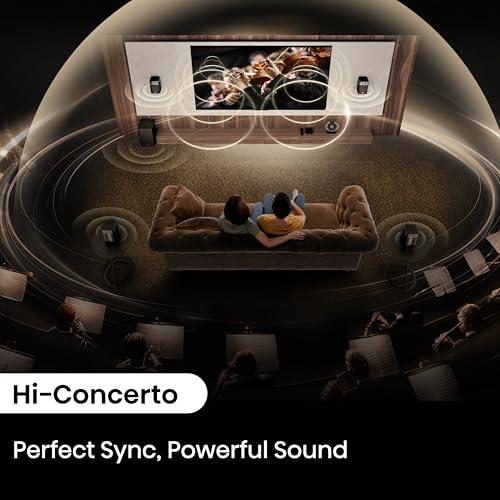
The Hisense HT Saturn makes most sense if you want authentic surround sound placement and have the room layout to accommodate four speakers. It's ideal for dedicated movie watching spaces where you can optimize speaker placement, and especially compelling for Hisense TV owners who can take advantage of the Hi-Concerto integration. The Devialet tuning brings genuine high-end audio expertise to a more accessible price point.
The Samsung HW-Q990D is the better choice if you want maximum convenience with flagship performance. It's ideal for Samsung ecosystem users, those who need extensive smart home integration, and anyone who prioritizes the latest gaming features. The more sophisticated AI processing also makes it better suited for users who want a "set it and forget it" experience.
These systems represent two valid but very different approaches to premium home audio. The Hisense HT Saturn challenges conventional thinking about what a "soundbar" should be, delivering authentic surround sound through physical speaker placement at a compelling value. The Samsung HW-Q990D represents the evolution of the traditional soundbar concept to its logical extreme, with flagship features and processing that justify its premium positioning.
Your choice ultimately depends on your room, budget, and priorities. If you want to experience what genuine distributed surround sound can do and you have the space for proper speaker placement, the HT Saturn offers something truly unique. If you prefer maximum features, convenience, and integration with the latest technology standards, the Samsung HW-Q990D represents the current pinnacle of soundbar engineering.
Both systems will dramatically improve your audio experience over TV speakers or basic soundbars. The question is whether you want to embrace a revolutionary approach to home audio or stick with a highly evolved traditional one.
| Hisense HT Saturn | Samsung HW-Q990D |
|---|---|
| System Configuration - Fundamentally different approaches to surround sound | |
| 4.1.2 channels with 4 wireless satellite speakers + subwoofer + control hub (13 total drivers) | 11.1.4 channels with main soundbar + rear speakers + subwoofer (22 total drivers) |
| Physical Design - How the system fits in your room | |
| Four separate satellite speakers (4.8" x 7.8" x 4.8" each) require placement around room | Large 51.3" soundbar with wireless rear speakers - more traditional setup |
| Audio Processing - Advanced features that enhance sound quality | |
| Devialet tuning, Room Fitting Tuning, Hi-Concerto (with Hisense TVs) | AI SpaceFit Sound Pro, Active Voice Amplifier Pro, Q Symphony (with Samsung TVs) |
| Dolby Atmos Implementation - How overhead effects are created | |
| Up-firing drivers in satellites reflect off ceiling from 4 positions | Multiple up-firing drivers in main bar and rear speakers |
| Subwoofer - Bass impact and room integration | |
| 6.5" wireless subwoofer, 40Hz frequency response | 8" wireless subwoofer with advanced DSP bass management |
| Gaming Features - Support for latest consoles and competitive gaming | |
| 4K 60Hz pass-through, dedicated Game mode, low-latency wireless | 4K 120Hz, VRR, ALLM, Game Mode Pro with genre optimization |
| Connectivity - How it connects to your devices | |
| HDMI eARC, HDMI in, Optical, Bluetooth 5.3, tri-band wireless for speakers | HDMI eARC, 2x HDMI 2.1, Optical, Wi-Fi, Bluetooth 5.2, AirPlay 2, Chromecast |
| Smart Features - Built-in streaming and voice control | |
| EzPlay TV integration, basic remote control | Built-in Alexa/Bixby/Google Assistant, streaming apps, smart home integration |
| Setup Complexity - Installation and calibration requirements | |
| Requires positioning 4 speakers around room, auto room tuning with Hisense TVs | Automatic room calibration with built-in microphones, fewer components to place |
| Best For - Ideal user scenarios | |
| Dedicated movie rooms, authentic surround placement, Hisense TV owners, budget-conscious audiophiles | Samsung ecosystem users, maximum convenience, latest gaming features, smart home integration |
The Samsung HW-Q990D offers more channels (11.1.4 vs 4.1.2) and sophisticated processing, making it better for users who want maximum features and convenience. However, the Hisense HT Saturn creates more authentic surround sound by physically placing speakers around your room, which many home theater enthusiasts prefer for genuine spatial audio.
The Hisense HT Saturn uses four separate wireless satellite speakers placed around your room instead of a traditional soundbar, while the Samsung HW-Q990D follows the conventional soundbar design with a large main unit, rear speakers, and subwoofer. This makes them fundamentally different approaches to achieving surround sound.
Yes, both the Hisense HT Saturn and Samsung HW-Q990D support Dolby Atmos. The Samsung HW-Q990D has more up-firing drivers and sophisticated processing, while the Hisense HT Saturn creates height effects from four different positions around your room for more realistic overhead audio.
The Samsung HW-Q990D is easier to install with fewer components to position and automatic room calibration. The Hisense HT Saturn requires placing four satellite speakers around your room optimally, though all connections are wireless requiring only power outlets at each speaker location.
The Samsung HW-Q990D has a larger 8-inch subwoofer with more advanced bass management across its 11.1 channels. The Hisense HT Saturn uses a 6.5-inch subwoofer that's well-tuned for integration with its satellite speakers, providing quality bass that doesn't overwhelm dialogue.
The Samsung HW-Q990D is better for gaming with 4K 120Hz support, Variable Refresh Rate (VRR), Auto Low Latency Mode (ALLM), and Game Mode Pro that adjusts sound by game genre. The Hisense HT Saturn supports 4K 60Hz and offers excellent positional audio for locating enemies in games.
Both systems work with any TV brand through HDMI eARC or optical connections. However, the Samsung HW-Q990D offers broader compatibility features, while the Hisense HT Saturn gets additional features like Hi-Concerto room expansion when paired with Hisense TVs.
The Hisense HT Saturn typically offers better value with Devialet-tuned audio and innovative wireless surround design at a more accessible price point. The Samsung HW-Q990D costs significantly more but justifies it with flagship features, more channels, and extensive smart home integration.
The Samsung HW-Q990D includes Wi-Fi, built-in voice assistants (Alexa, Bixby, Google Assistant), AirPlay 2, and Chromecast for direct streaming. The Hisense HT Saturn focuses on audio performance with Bluetooth 5.3 streaming and EzPlay TV integration rather than extensive smart features.
The Hisense HT Saturn has 13 total speakers across four 3-way satellite speakers and one subwoofer. The Samsung HW-Q990D contains 22 speakers distributed across the main soundbar, two rear speakers, and subwoofer, providing more discrete audio channels.
Both systems excel at music, but the Hisense HT Saturn benefits from Devialet's acoustic tuning and 3-way satellite speaker design for detailed, balanced sound. The Samsung HW-Q990D offers more streaming options and AI-enhanced processing that adapts to different music genres automatically.
The Samsung HW-Q990D works well in most room sizes thanks to automatic calibration and powerful drivers. The Hisense HT Saturn needs adequate space to properly position four satellite speakers around your seating area and performs best in dedicated home theater rooms where optimal placement is possible.
We've done our best to create useful and informative comparisons to help you decide what product to buy. Our research uses advanced automated methods to create this comparison and perfection is not possible - please contact us for corrections or questions. These are the sites we've researched in the creation of this article: bestbuy.com - youtube.com - blog.son-video.com - youtube.com - youtube.com - techradar.com - ecoustics.com - jbhifi.com.au - shop.hisense-usa.com - bhphotovideo.com - bestbuy.com - digitalreviews.net - hisense-usa.com - projectorscreenstore.com - valueelectronics.com - dolby.com - giftpack.ai - techradar.com - avsforum.com - valueelectronics.com - samsung.com - rtings.com - samsung.com - avsforum.com - samsung.com - cdwg.com - youtube.com - whathifi.com

Privacy Policy
Terms and Conditions - Affiliate Policy
Home Security
© Copyright 2008-2026.
11816 Inwood Rd #1211, Dallas, TX 75244