

If you've ever been frustrated by your TV's tinny speakers or wondered why movie dialogue sounds muffled while explosions blow out your eardrums, you're not alone. The solution lies in understanding a rapidly evolving category of home audio: multi-speaker home theater systems that go far beyond traditional soundbars.
Both the Hisense HT Saturn and Ultimea Aura A40 represent this new approach, but they target completely different audiences and price points. Released in 2025, these systems showcase how far home theater technology has advanced, yet they take fundamentally different approaches to solving the same problem: creating immersive surround sound in your living room.
Traditional soundbars try to create surround sound using psychoacoustic processing – basically tricking your brain into thinking sounds are coming from places they're not. While this works to some degree, it's like watching a 3D movie with one eye closed. You get the general idea, but you're missing crucial spatial information.
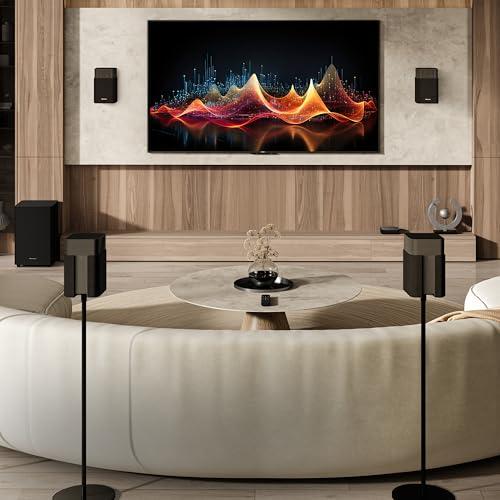
Multi-speaker systems take a different approach. Instead of one long bar sitting under your TV, they use multiple speakers positioned around your room. Think of it like having a mini movie theater setup, but without the complexity of running speaker wires through your walls or dealing with a massive AV receiver that requires an engineering degree to operate.
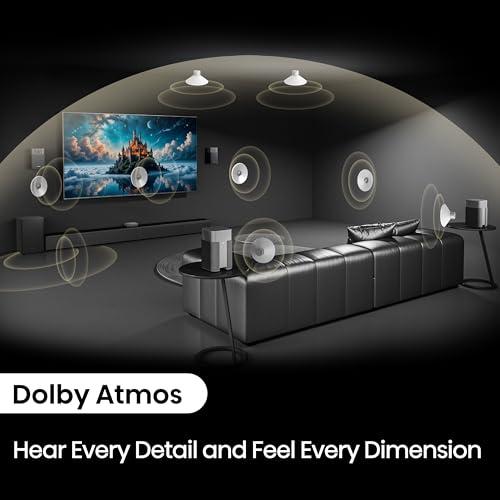
The key consideration in this category is audio format support. Modern streaming services like Netflix and Disney+ now offer Dolby Atmos content – this is object-based audio that can place sounds not just around you, but above you too. Imagine hearing a helicopter fly overhead in a movie scene, and actually feeling like it's passing over your head rather than just coming from your left or right speaker. That's the power of height channels and why they matter.
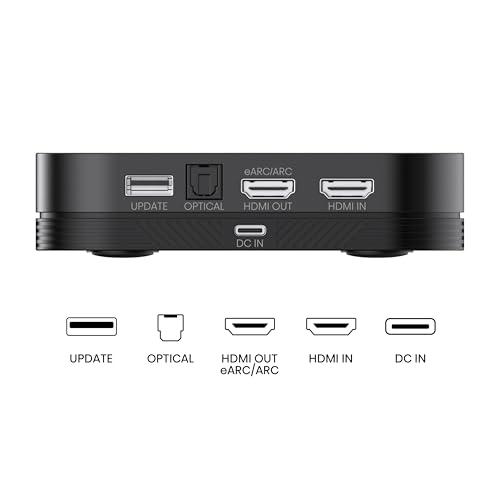
Connectivity has become crucial as well. HDMI eARC (enhanced Audio Return Channel) is the gold standard because it can carry these high-quality, uncompressed audio formats from your TV to your sound system. Older connections like optical cables create a bottleneck that forces these rich audio formats to be compressed, losing much of their spatial information.
The Hisense HT Saturn represents what happens when a major TV manufacturer decides to create a no-compromise home theater system. At well over $1,000 at the time of writing, it's positioned as a premium product that aims to deliver authentic spatial audio without the complexity of traditional surround sound setups.
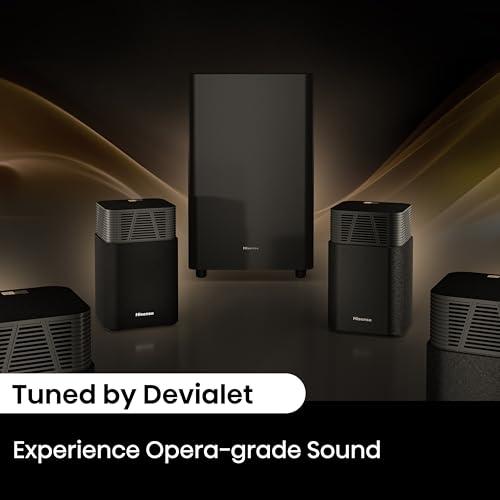
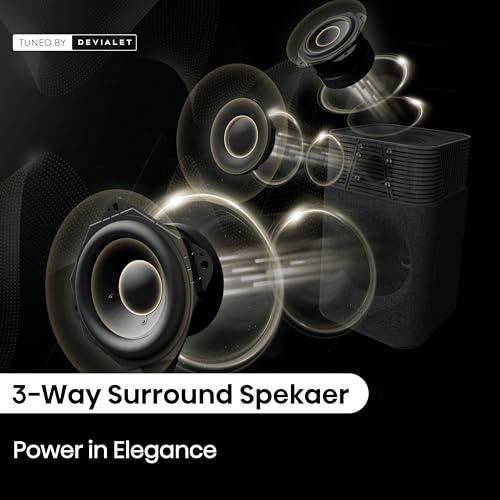
What makes this system unique is its partnership with Devialet, a French audio company known for creating speakers that cost more than most people's cars. Devialet specializes in what they call "opera-grade" sound engineering – precise, balanced audio reproduction that can handle everything from whispered dialogue to thunderous orchestral crescendos without breaking a sweat.
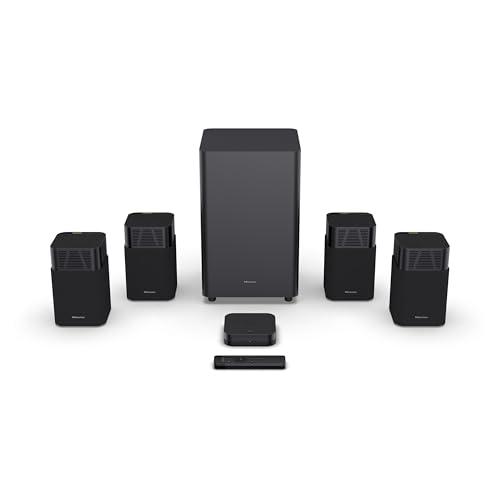
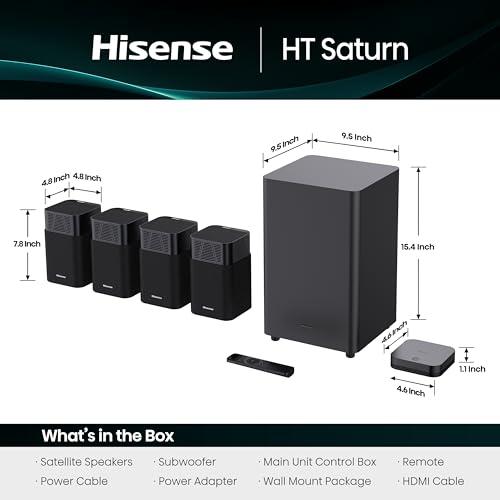
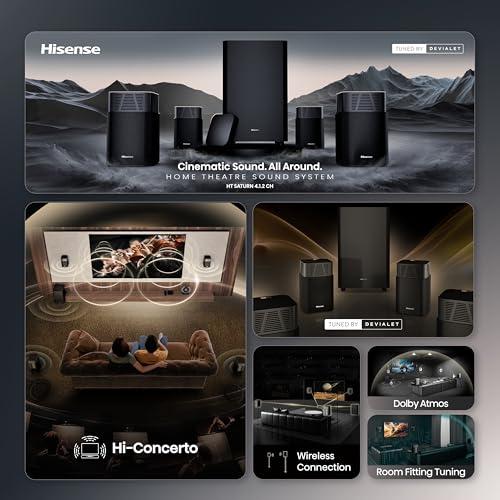
The Saturn uses a 4.1.2 channel configuration, which might sound like technical gibberish, but it's actually quite logical. The "4" represents four main speakers positioned around your room, the "1" is a dedicated subwoofer for deep bass, and the "2" refers to height channels that bounce sound off your ceiling to create overhead effects. This totals 13 individual speakers working together – that's more drivers than many people have in their entire car audio system.
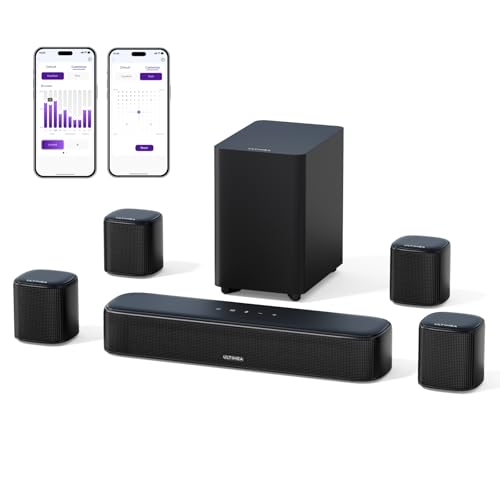
The Ultimea Aura A40, priced under $150 at launch, takes a completely different approach. Rather than focusing on premium audio formats and wireless convenience, it maximizes the number of speakers you get for your dollar while providing extensive customization options through a smartphone app.
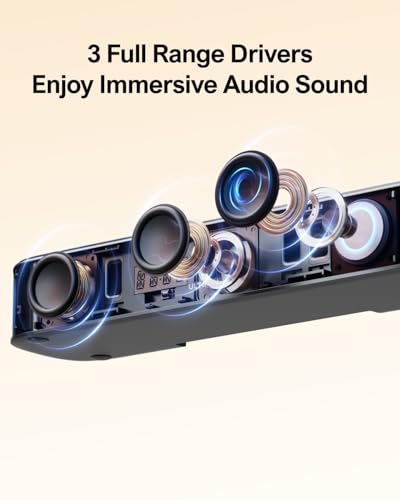
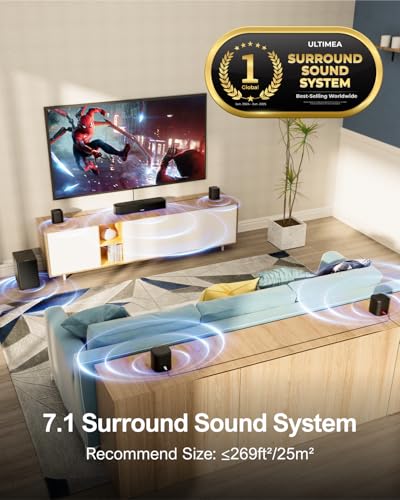
This system uses what's called virtual 7.1 surround processing. While it has multiple physical speakers positioned around your room (which is still better than a single soundbar), it doesn't support the advanced audio formats that create true 3D sound. Instead, it uses proprietary technologies called SurroundX and BassMX to coordinate its speakers and optimize bass response.
The trade-off here is significant: you get discrete surround speakers and impressive customization capabilities, but you're limited by older connection standards and missing out on the spatial audio revolution happening in modern entertainment.
The most fundamental difference between these systems lies in how they create immersion. The Hisense HT Saturn delivers what audio engineers call "true spatial audio." When you're watching a scene in Dune where ornithopters fly overhead, the sound actually comes from above you, reflected off your ceiling by dedicated up-firing drivers. This isn't simulation – it's genuine three-dimensional audio placement.
Our research into user and professional reviews consistently shows that this height dimension transforms the viewing experience. Reviewers describe feeling "enveloped" by the sound rather than simply hearing it from the sides. The Devialet tuning ensures that these effects don't come at the expense of dialogue clarity – voices remain anchored and natural even during complex action sequences.
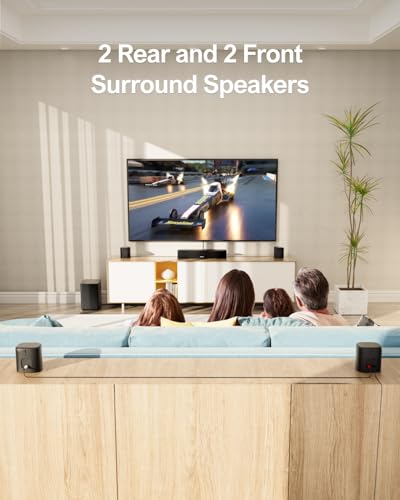
The Ultimea Aura A40 takes a different approach. Its four satellite speakers create what's essentially a very wide stereo soundstage with some rear ambiance. The SurroundX processing coordinates these speakers to create the impression of surround sound, and it does this quite well for the price point. However, without height channels, you're missing that crucial vertical dimension that modern movie soundtracks are designed to utilize.
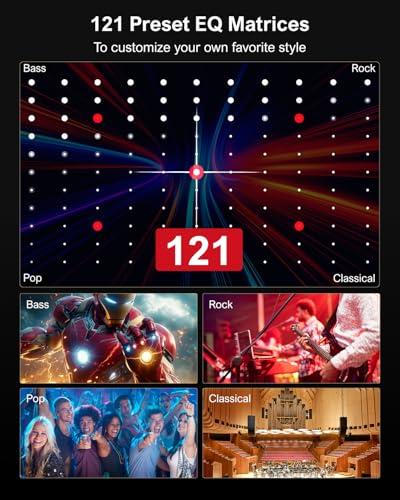
What's interesting about the Ultimea system is its extensive customization capability. The smartphone app provides access to 121 preset equalizer settings and a 10-band manual equalizer. This means you can fine-tune the sound signature for different content types or personal preferences in ways that many premium systems don't allow. If you're the type of person who likes to tinker with audio settings, this level of control is genuinely impressive at this price point.
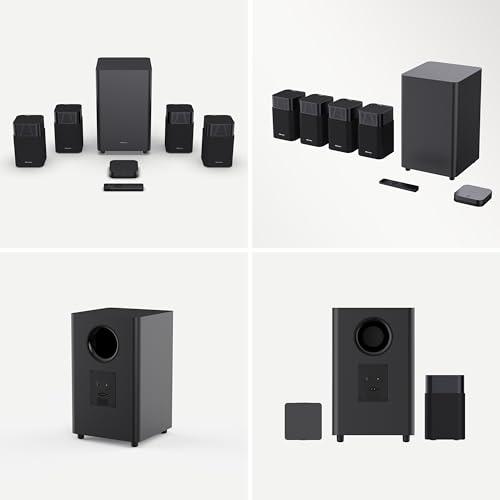
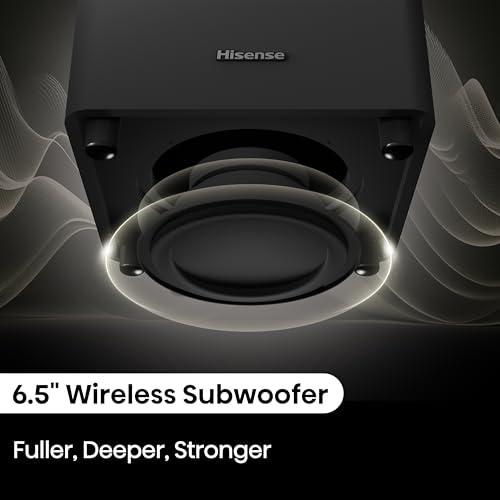
Bass reproduction reveals another clear distinction between these approaches. The Hisense HT Saturn includes a 6.5-inch wireless subwoofer that can reproduce frequencies down to 40Hz – that's getting into the range where you feel bass as much as you hear it. The wireless connection means you can position this subwoofer anywhere in your room for optimal bass response, which is crucial because bass frequencies interact heavily with room dimensions and furniture placement.
Professional reviews consistently praise the Saturn's bass integration. The subwoofer doesn't just add boom – it extends the full-range speakers' capabilities downward seamlessly. When watching action movies, explosions have weight and impact without overwhelming dialogue or creating the "one-note" bass response that plagues many consumer audio systems.
The Ultimea Aura A40 uses a 4-inch subwoofer that, while adequate for smaller rooms, shows its limitations in larger spaces or at higher volume levels. Several user reviews mention bass becoming "loose" or "flabby" when pushed hard. The BassMX processing helps optimize what's available, but physics ultimately limits what a smaller driver can achieve.
However, the Ultimea system's bass tuning is impressive given its constraints. The app-based controls allow you to adjust bass response for your room size and preferences, which can help compensate for the smaller driver's limitations.
Nothing ruins a movie night like having to constantly adjust the volume because you can't understand what actors are saying. This is where the engineering differences between these systems become most apparent to everyday users.
The Hisense HT Saturn creates what audio engineers call a "phantom center channel." Even though there's no dedicated center speaker, the left and right front channels are so precisely coordinated that voices appear to come from the center of your screen. Our research shows that users consistently describe dialogue as "anchored" and "natural," even during complex soundtracks with heavy background music or sound effects.
This phantom center technique works because of the Devialet tuning and the system's high-quality amplification. Each speaker receives exactly the right signal timing and level to create this illusion convincingly.
The Ultimea Aura A40 handles dialogue reasonably well, but some users report needing to boost midrange frequencies through the app to achieve optimal clarity. The system includes a dedicated Voice EQ mode, which helps, but it's more of a band-aid solution than the engineered approach used in the Hisense system.
Modern gaming has become surprisingly sophisticated in its audio design, and these systems handle gaming scenarios quite differently.
The Hisense HT Saturn excels with games that support Dolby Atmos, particularly single-player experiences where immersion matters more than competitive precision. When playing atmospheric games like Hellblade or Ghost of Tsushima, the height channels add genuine environmental immersion – rain sounds like it's falling from above, not just around you.
The Ultimea Aura A40 actually has advantages for competitive gaming. Its discrete surround speakers provide precise directional audio cues that can give you an edge in multiplayer games. When someone's sneaking up behind you in Call of Duty, you'll hear exactly where they are. The app's adjustable surround levels let you fine-tune this positional accuracy for your specific setup and gaming preferences.
Here's where the fundamental difference in target markets becomes crystal clear. The Hisense HT Saturn was designed for modern home theater setups. Its HDMI eARC connection can handle the full bandwidth of uncompressed Dolby Atmos and DTS:X audio formats. When you're streaming Top Gun: Maverick in Dolby Atmos from Apple TV or playing a game on PlayStation 5, you're getting every bit of spatial audio information the content creators intended.
The system also includes 4K video passthrough, meaning you can connect source devices directly to the soundbar and still get full 4K 60Hz video to your TV. This simplifies setup and ensures you're not creating any video quality bottlenecks.
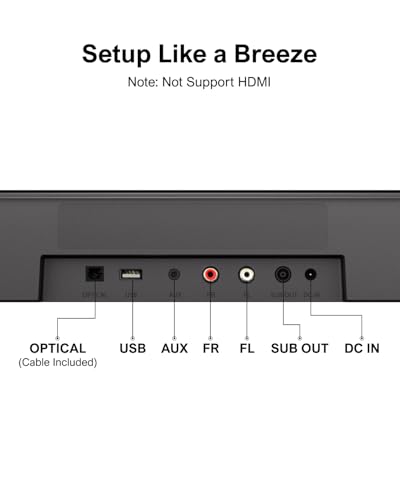
The Ultimea Aura A40 connects via optical audio or analog inputs – connections that were standard five years ago but are increasingly limiting today. Optical cables can't carry the bandwidth needed for lossless Dolby Atmos, so even if the system could process these formats (which it can't), the connection itself creates a bottleneck.
This isn't necessarily a deal-breaker if you're using an older TV or primarily watching cable television, but it does limit your system's compatibility with modern streaming devices and gaming consoles.
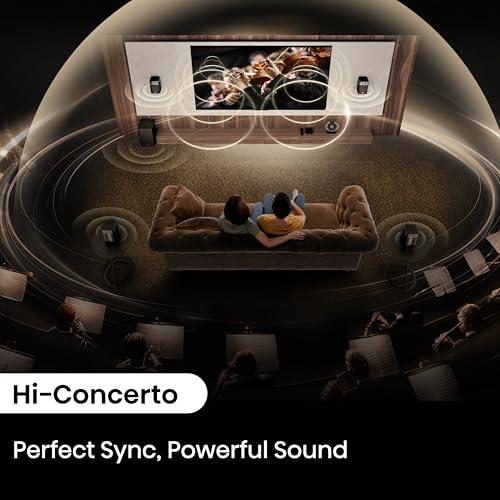
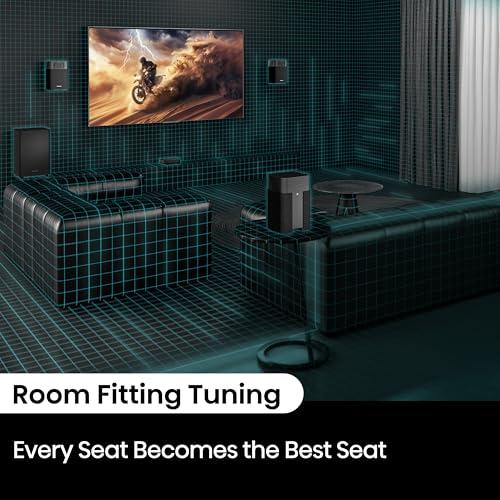
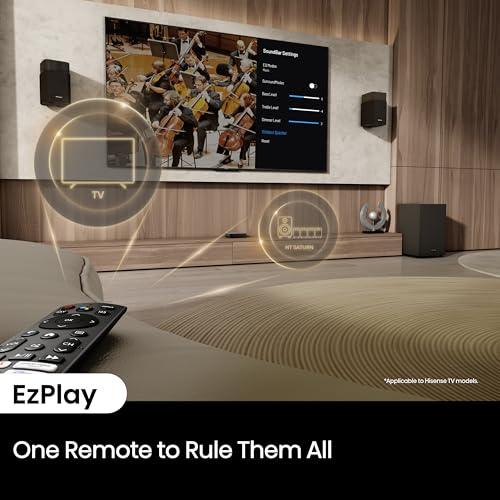
Both systems include smart features, but they serve different philosophies. The Hisense HT Saturn focuses on intelligent automation. Its Room Fitting Tuning technology can automatically calibrate the system for your space's acoustics when paired with compatible Hisense TVs. The Hi-Concerto feature can actually coordinate the soundbar system with your TV's built-in speakers to create an even wider soundstage.
These features represent a "set it and forget it" approach – the system uses advanced processing to optimize performance without requiring user intervention.
The Ultimea Aura A40 takes the opposite approach, giving users extensive manual control through its smartphone app. You can create custom EQ profiles for different content types, adjust surround speaker levels independently, and even receive over-the-air firmware updates that add new features over time.
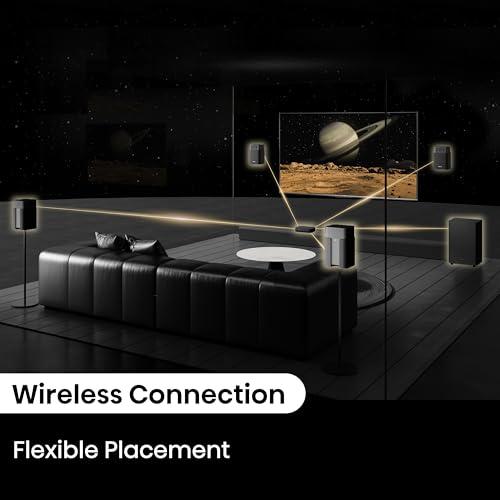
Setup complexity varies significantly between these systems. The Hisense HT Saturn's wireless design eliminates the need for speaker cables, but this creates its own challenges. All speakers need power outlets, and the wireless connection requires careful positioning to avoid interference. The system uses three different wireless frequency bands (2.4GHz, 5.2GHz, and 5.8GHz) to maintain stable connections, but your room's layout and existing wireless devices can still impact performance.
The benefit is aesthetic – no speaker wires running across your room or along baseboards. For modern living spaces where clean lines matter, this is a significant advantage.
The Ultimea Aura A40 requires more planning for cable management, but the included cables are generous (6 meters for rear speakers, 2 meters for front). The wired connections ensure reliable audio without wireless interference concerns, and the smaller satellite speakers are easier to position on shelves or mount on walls.
Based on our analysis of user feedback and professional reviews, the choice between these systems depends heavily on your priorities and existing setup.
Choose the Hisense HT Saturn if you have a modern TV with HDMI eARC and regularly consume content that includes Dolby Atmos soundtracks. This includes most Netflix originals, Disney+ movies, many Amazon Prime Video titles, and virtually all new video games. The premium price reflects genuine technological advantages that enhance these experiences significantly.
This system also makes sense if you value acoustic engineering over customization options. The Devialet tuning provides a more "reference" sound signature that works well across different content types without requiring manual adjustment.
Choose the Ultimea Aura A40 if you want discrete surround speakers but don't need cutting-edge audio format support. This system excels for users who enjoy customizing their audio experience and don't mind spending time fine-tuning settings through the app.
The Ultimea also makes practical sense if you're using an older TV that lacks HDMI eARC, or if you primarily watch cable television and standard streaming content rather than premium movie experiences.
These systems represent fundamentally different approaches to home theater audio. The Hisense HT Saturn prioritizes format compatibility, acoustic engineering, and future-proofing at a premium price point. It's designed for users who want to experience content exactly as sound engineers intended, with minimal setup complexity.
The Ultimea Aura A40 maximizes value by providing discrete surround speakers and extensive customization at a budget-friendly price. It's perfect for users who want better-than-soundbar performance without premium format support or wireless convenience.
Neither approach is inherently better – they're optimized for different user needs and budgets. The key is matching the system's strengths to your specific setup, content preferences, and long-term plans. At the time of writing, the significant price difference between these systems reflects genuine technological gaps that matter for modern content consumption, but both deliver meaningful improvements over basic TV speakers or entry-level soundbars.
| Hisense HT Saturn HTSATURN | Ultimea Aura A40 U2601 |
|---|---|
| Audio Format Support - Critical for modern streaming content | |
| Dolby Atmos, DTS:X with height channels for true 3D audio | Virtual 7.1 surround only, no Atmos/DTS:X support |
| Channel Configuration - Determines spatial audio accuracy | |
| True 4.1.2 channels with 13 discrete speakers | Virtual 7.1 channels with 8 total speakers |
| HDMI Connectivity - Essential for modern devices | |
| HDMI eARC with 4K 60Hz passthrough | No HDMI support (major limitation) |
| Wireless Design - Impacts setup complexity and aesthetics | |
| Fully wireless satellites and subwoofer | Wired surround speakers require cable management |
| Subwoofer Size - Directly affects bass depth and impact | |
| 6.5" wireless subwoofer (40Hz response) | 4" wired subwoofer (65Hz response) |
| Total System Power - Indicates maximum volume and dynamics | |
| 720W total system power | 330W total system power |
| Audio Tuning - Affects overall sound quality | |
| Devialet-tuned "opera-grade" acoustics | BassMX/SurroundX processing with 121 EQ presets |
| Smart Features - Convenience and integration capabilities | |
| Room Fitting Tuning, Hi-Concerto TV integration | Comprehensive smartphone app with 10-band EQ |
| Connectivity Options - Determines device compatibility | |
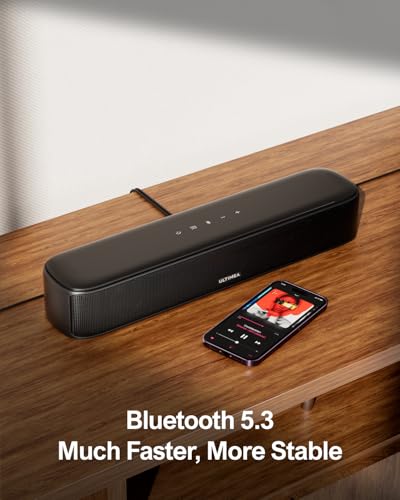
| HDMI eARC, Optical, Bluetooth 5.3 | Optical, AUX, USB, Bluetooth 5.3 |
| Recommended Room Size - Optimal performance area | |
| Medium to large rooms (wireless flexibility) | 108-270 ft² (10-25 m²) small to medium rooms |
| Warranty Coverage - Long-term protection | |
| 1-year warranty | 2-year warranty |
The Hisense HT Saturn is significantly better for movies and TV shows because it supports Dolby Atmos and DTS:X with true height channels, creating authentic 3D audio effects. When watching movies on Netflix or Disney+, you'll hear helicopters flying overhead and rain falling from above. The Ultimea Aura A40 provides good surround sound but relies on virtual processing without height effects, making it less immersive for cinematic content.
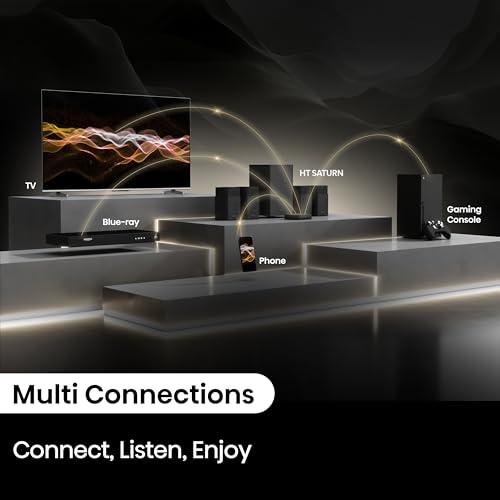
The Hisense HT Saturn connects via HDMI eARC and supports all modern streaming devices, gaming consoles, and 4K TVs with full audio format compatibility. The Ultimea Aura A40 lacks HDMI connectivity entirely, requiring optical or AUX connections that limit audio quality and compatibility with newer devices. This is a major consideration if you have a modern TV or plan to upgrade in the future.
The Hisense HT Saturn delivers superior bass with its 6.5-inch wireless subwoofer that reaches down to 40Hz, providing deep, controlled low-frequency response for action movies and music. The Ultimea Aura A40 uses a smaller 4-inch subwoofer with 65Hz response, which is adequate for smaller rooms but lacks the depth and impact of the larger driver in the Hisense system.
The Hisense HT Saturn is fully wireless with all satellite speakers and the subwoofer connecting wirelessly to the main unit, eliminating cable clutter but requiring power outlets for each speaker. The Ultimea Aura A40 uses wired connections for its surround speakers, requiring cable management but ensuring reliable audio connections without wireless interference concerns.
Both systems are relatively easy to set up, but in different ways. The Hisense HT Saturn requires no speaker cables but needs strategic wireless positioning and power outlets for each component. The Ultimea Aura A40 requires running the included speaker cables but offers more predictable setup with wired connections. Setup time is similar, around 30-45 minutes for either system.
The Ultimea Aura A40 offers extensive customization through its smartphone app with 121 EQ presets, 10-band manual equalizer, and adjustable surround levels. The Hisense HT Saturn focuses more on optimized presets and automatic room tuning rather than manual adjustment, though it includes basic EQ modes and Devialet's professional acoustic tuning.
For competitive gaming, the Ultimea Aura A40 provides precise directional audio cues with its discrete surround speakers, helping you locate enemies and environmental sounds. For immersive single-player gaming, the Hisense HT Saturn excels with Dolby Atmos support that creates genuine overhead effects and environmental immersion in supported games on PlayStation 5, Xbox Series X, and PC.
The Hisense HT Saturn uses a true 4.1.2 channel setup with 13 total speakers including dedicated height channels for overhead sound. The Ultimea Aura A40 provides virtual 7.1 surround using 8 speakers total but without physical height channels, relying on processing to simulate surround effects rather than true discrete channel separation.
The Ultimea Aura A40 is optimized for rooms between 108-270 square feet and may struggle in larger spaces due to its smaller drivers and lower power output. The Hisense HT Saturn handles both small and large rooms effectively thanks to its wireless flexibility, higher power output, and room calibration features that adapt to different space sizes.
The key difference is that the Hisense HT Saturn delivers true spatial audio with Devialet tuning for reference-quality sound reproduction, while the Ultimea Aura A40 provides enhanced stereo with simulated surround effects. The Hisense system reproduces audio exactly as content creators intended, while the Ultimea system offers good sound improvement over TV speakers at a much lower price point.
The Ultimea Aura A40 connects easily to older TVs using optical or AUX inputs, making it compatible with virtually any television from the past 15 years. The Hisense HT Saturn includes optical input as well, but you'll miss out on its advanced Dolby Atmos capabilities without HDMI eARC, making the premium features less worthwhile with older TV models.
The Hisense HT Saturn provides better long-term value if you consume modern streaming content and plan to keep the system for many years, as it supports current and future audio formats. The Ultimea Aura A40 offers excellent immediate value for budget-conscious buyers who want discrete surround speakers without premium format support, though it may become limited as streaming services expand their Atmos content libraries.
We've done our best to create useful and informative comparisons to help you decide what product to buy. Our research uses advanced automated methods to create this comparison and perfection is not possible - please contact us for corrections or questions. These are the sites we've researched in the creation of this article: bestbuy.com - youtube.com - blog.son-video.com - youtube.com - youtube.com - techradar.com - ecoustics.com - jbhifi.com.au - shop.hisense-usa.com - bhphotovideo.com - bestbuy.com - digitalreviews.net - hisense-usa.com - projectorscreenstore.com - valueelectronics.com - dolby.com - giftpack.ai - walmart.com - newegg.com - youtube.com - ultimea.com - youtube.com - device.report - ultimea.co - manuals.plus - homestudiobasics.com - youtube.com - bestbuy.com - community.ultimea.com - manuals.plus - eu.ultimea.com - navesapeugeot.com.br - bestbuy.com - images.thdstatic.com - provantage.com - ultimea.com - bestbuy.com

Privacy Policy
Terms and Conditions - Affiliate Policy
Home Security
© Copyright 2008-2026.
11816 Inwood Rd #1211, Dallas, TX 75244