



The home theater audio landscape changed dramatically in recent years, moving beyond simple soundbars to sophisticated systems that can fill your living room with three-dimensional sound. Two systems represent fascinating but very different approaches to premium home audio: the Hisense HT Saturn, which takes the bold step of completely wireless satellite speakers, and the LG SC9S, which packs advanced technology into a sleek, TV-integrated design.
Understanding these systems requires grasping what modern home theater audio aims to achieve. Gone are the days when a basic soundbar improvement over TV speakers was enough. Today's premium systems create height effects that make helicopters fly overhead, side-to-side movement that tracks action across the screen, and bass that you feel in your chest. The question isn't whether these systems sound better than your TV's built-in speakers—they absolutely do—but which approach gives you the most immersive experience for your specific situation.
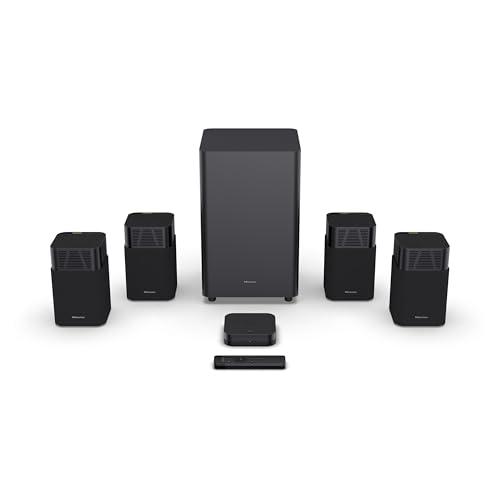
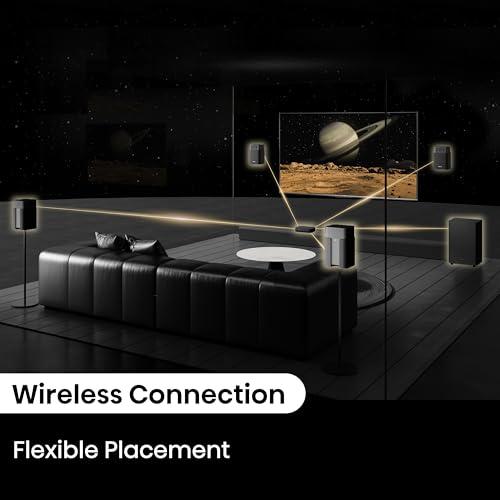
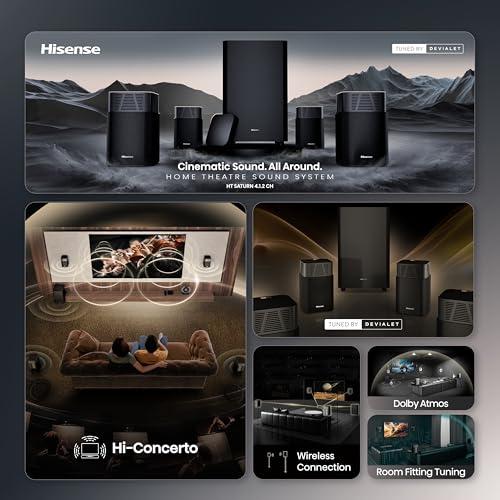
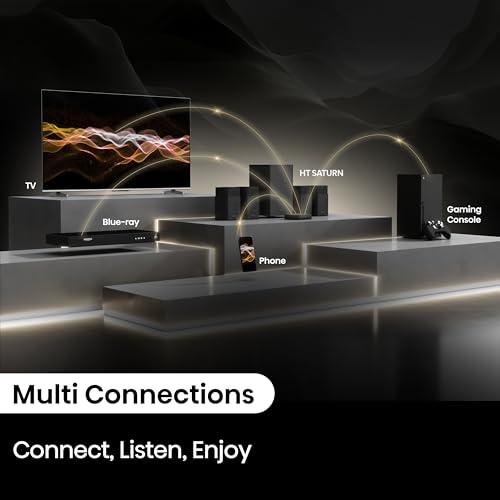
The Hisense HT Saturn launched in 2024 (debuting at CES 2025) represents something genuinely different in home audio. Instead of cramming all speakers into a single bar, Hisense went wireless—completely wireless. You get four separate satellite speakers that communicate with a central hub using three different wireless frequency bands (2.4GHz, 5.2GHz, and 5.8GHz). This tri-band approach matters because it prevents the audio dropouts that plagued earlier wireless audio systems when your Wi-Fi network got busy.
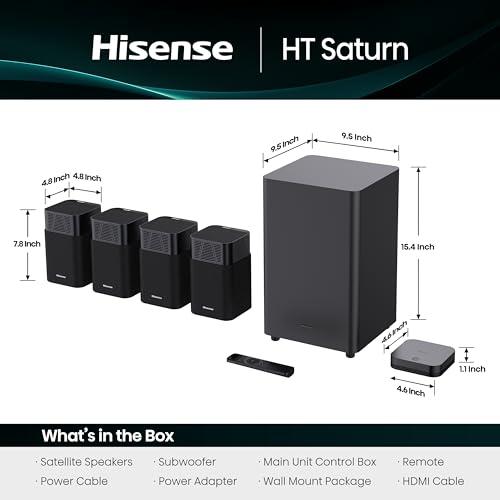
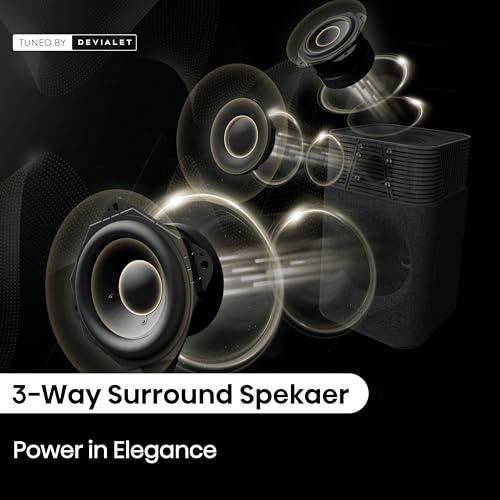
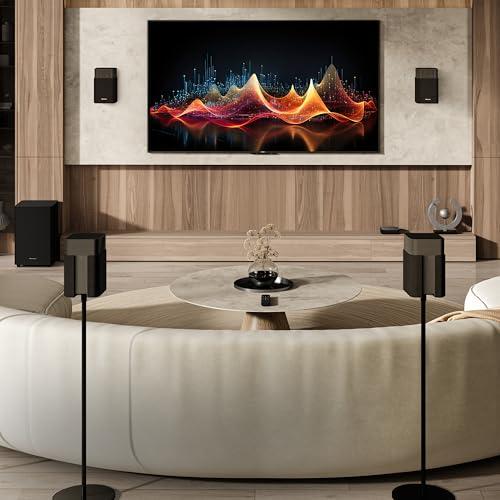
Each satellite speaker is surprisingly sophisticated. They're 3-way designs, meaning each one contains three different types of drivers: a tweeter for high frequencies, a mid-range driver for voices and most instruments, and a woofer for bass. More importantly, these aren't just pointing forward—they fire sound in multiple directions, including upward to bounce off your ceiling for Dolby Atmos height effects. It's like having a mini surround sound system in each compact 3.4-pound box.
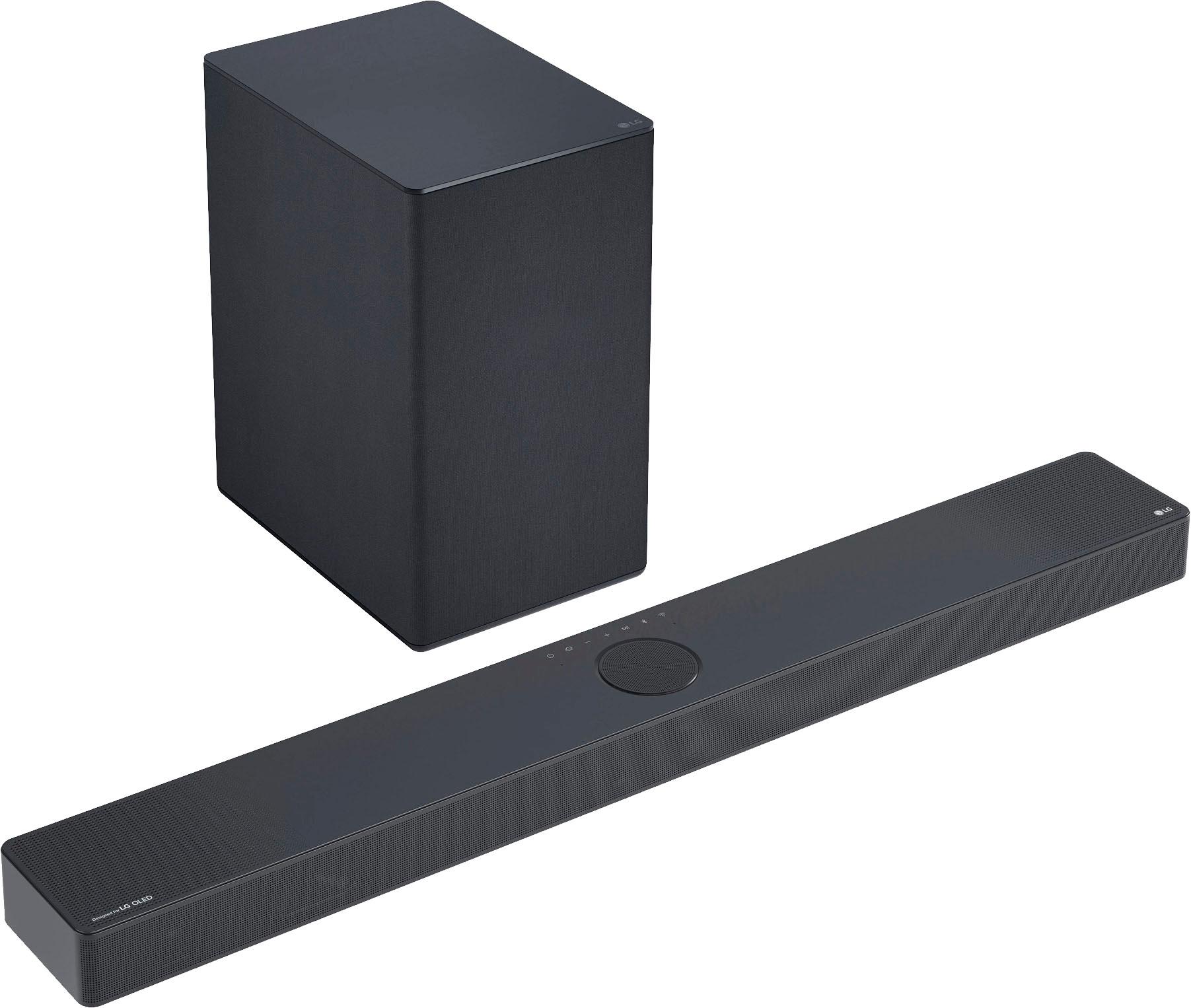
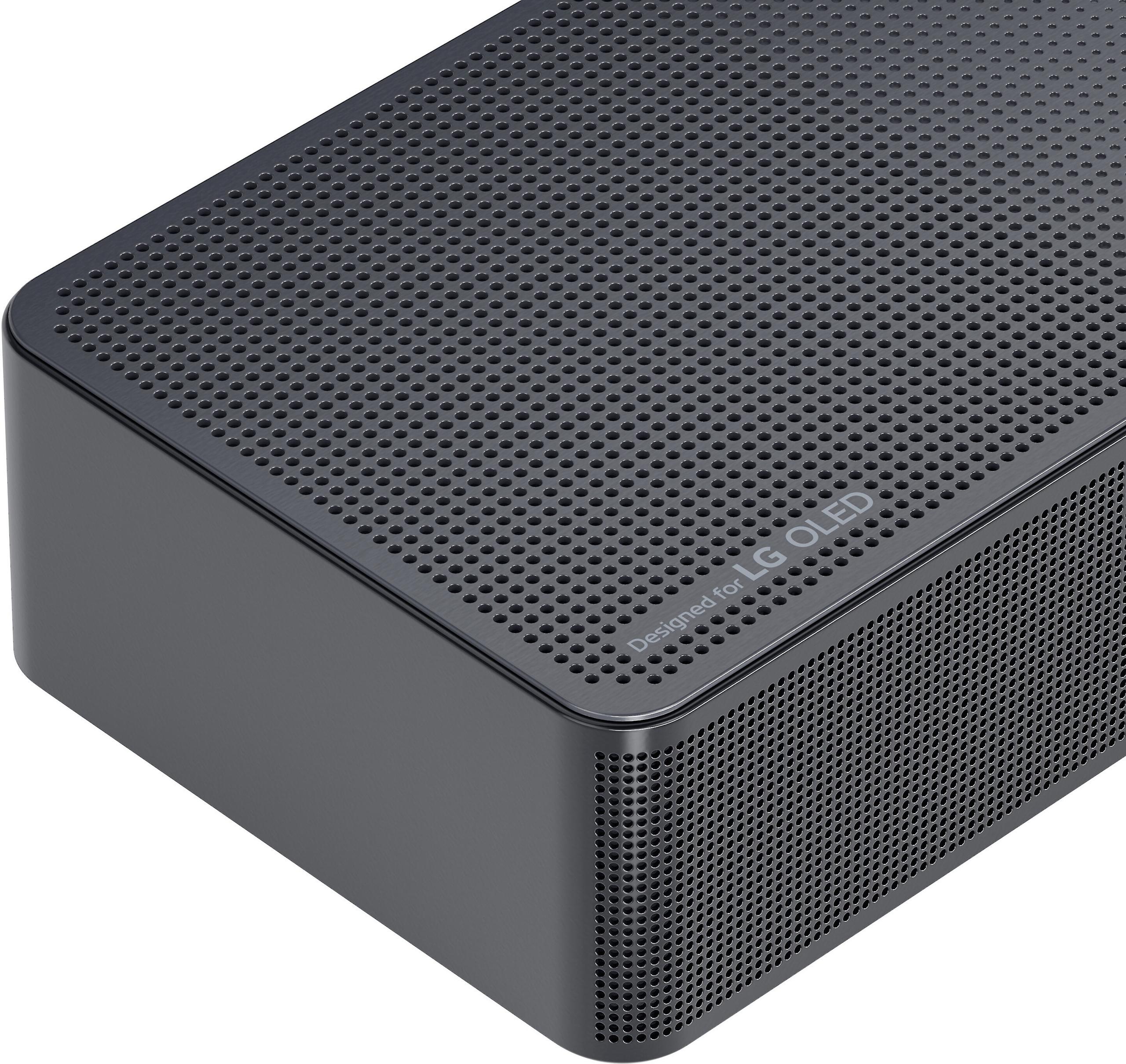
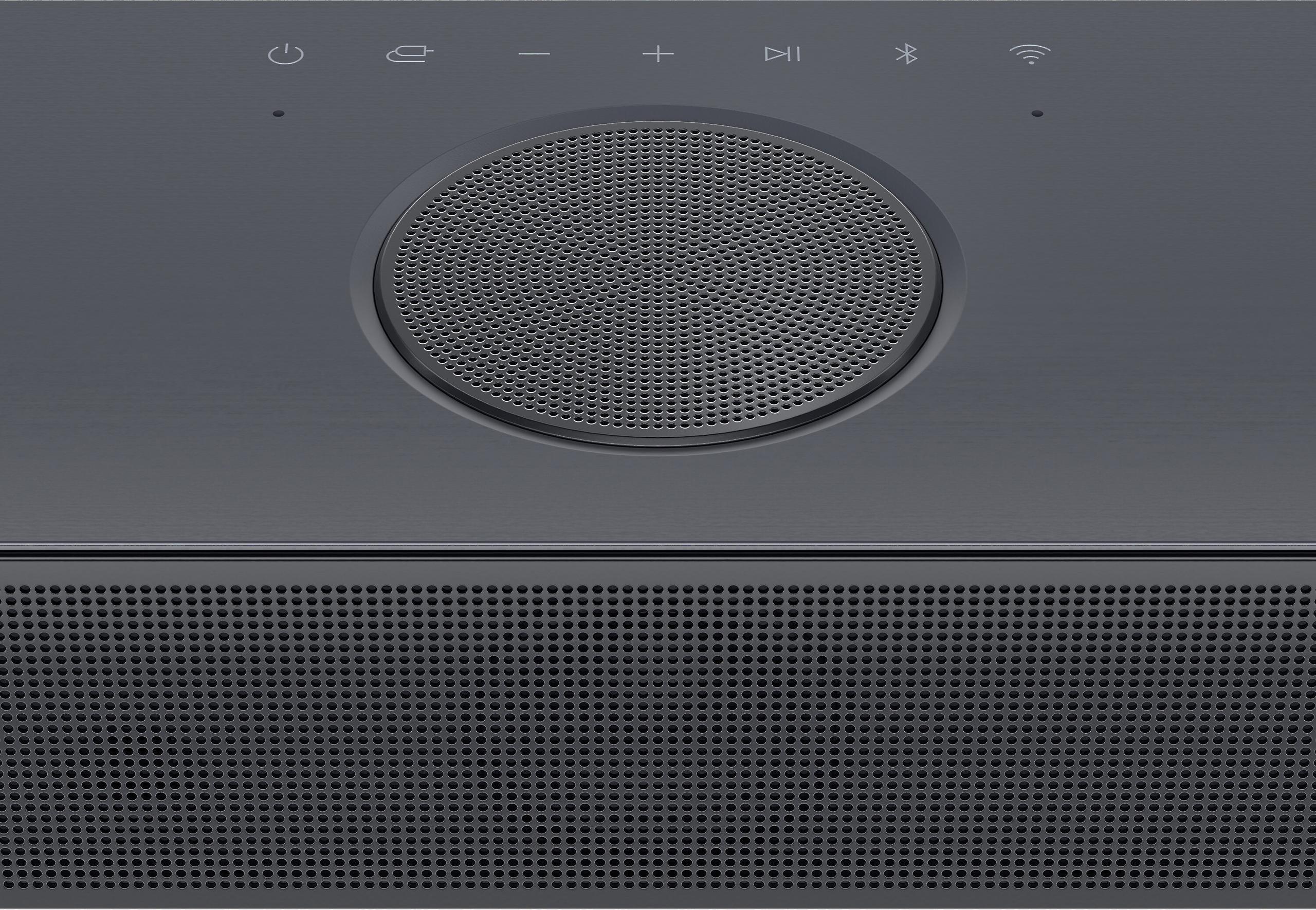
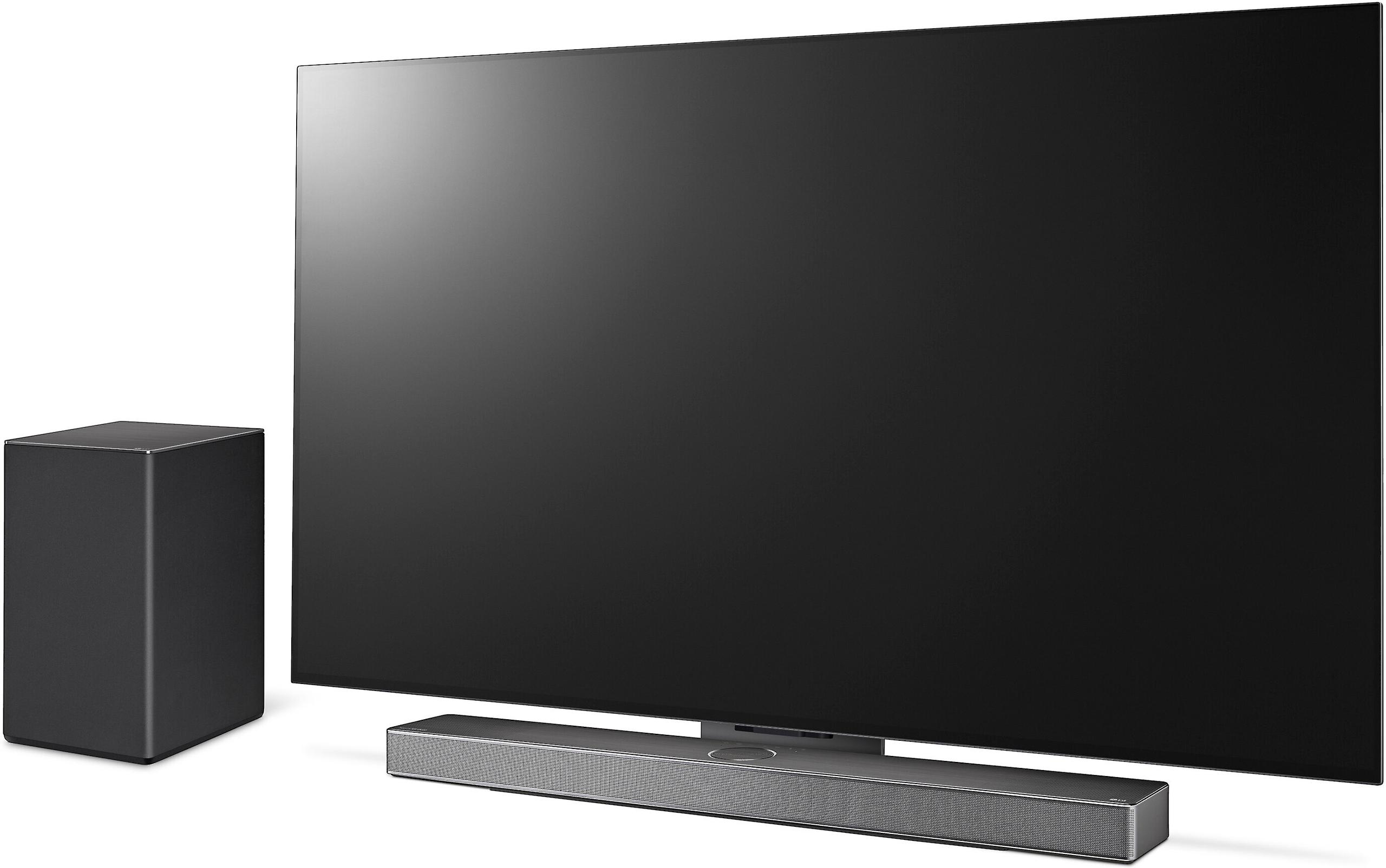
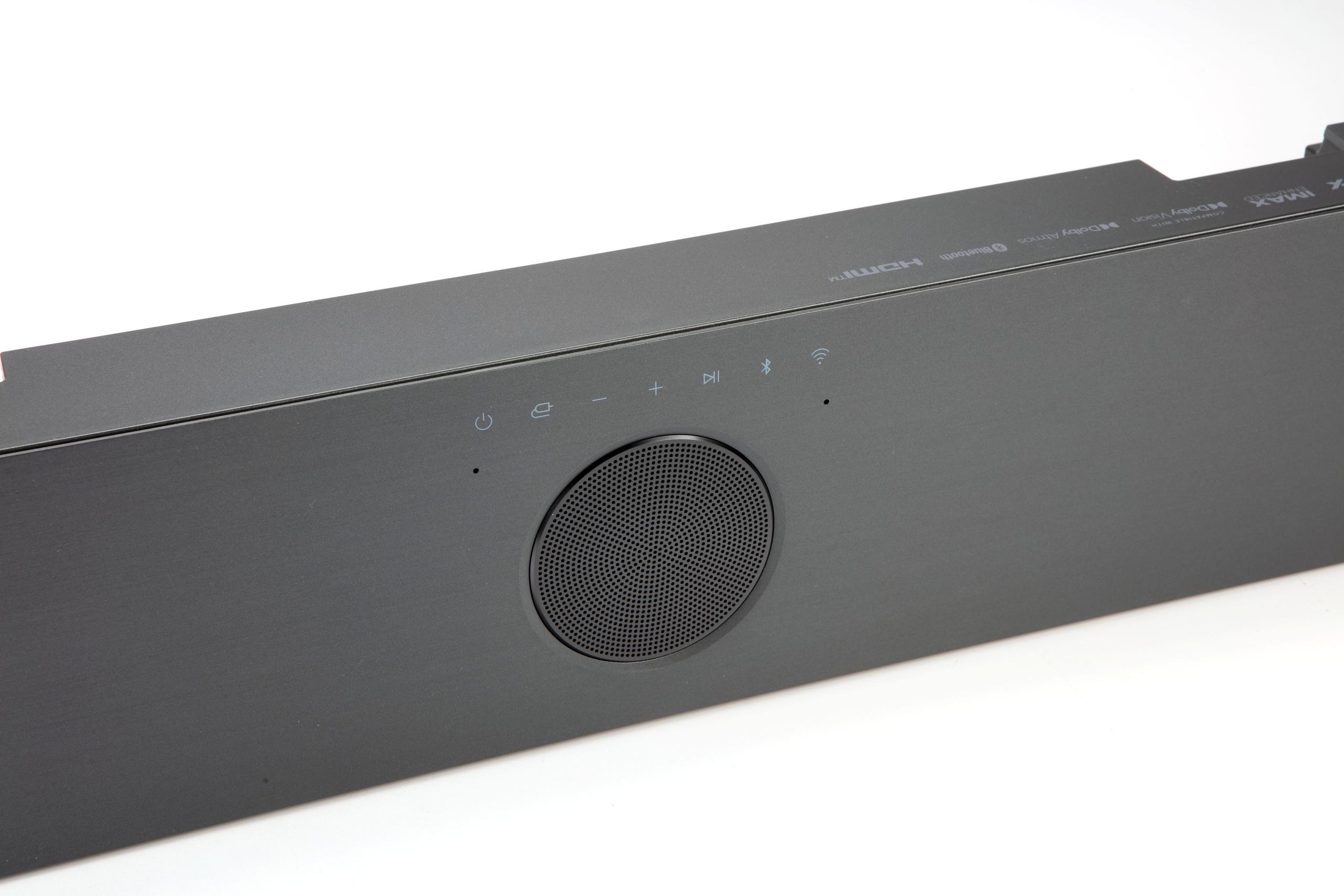
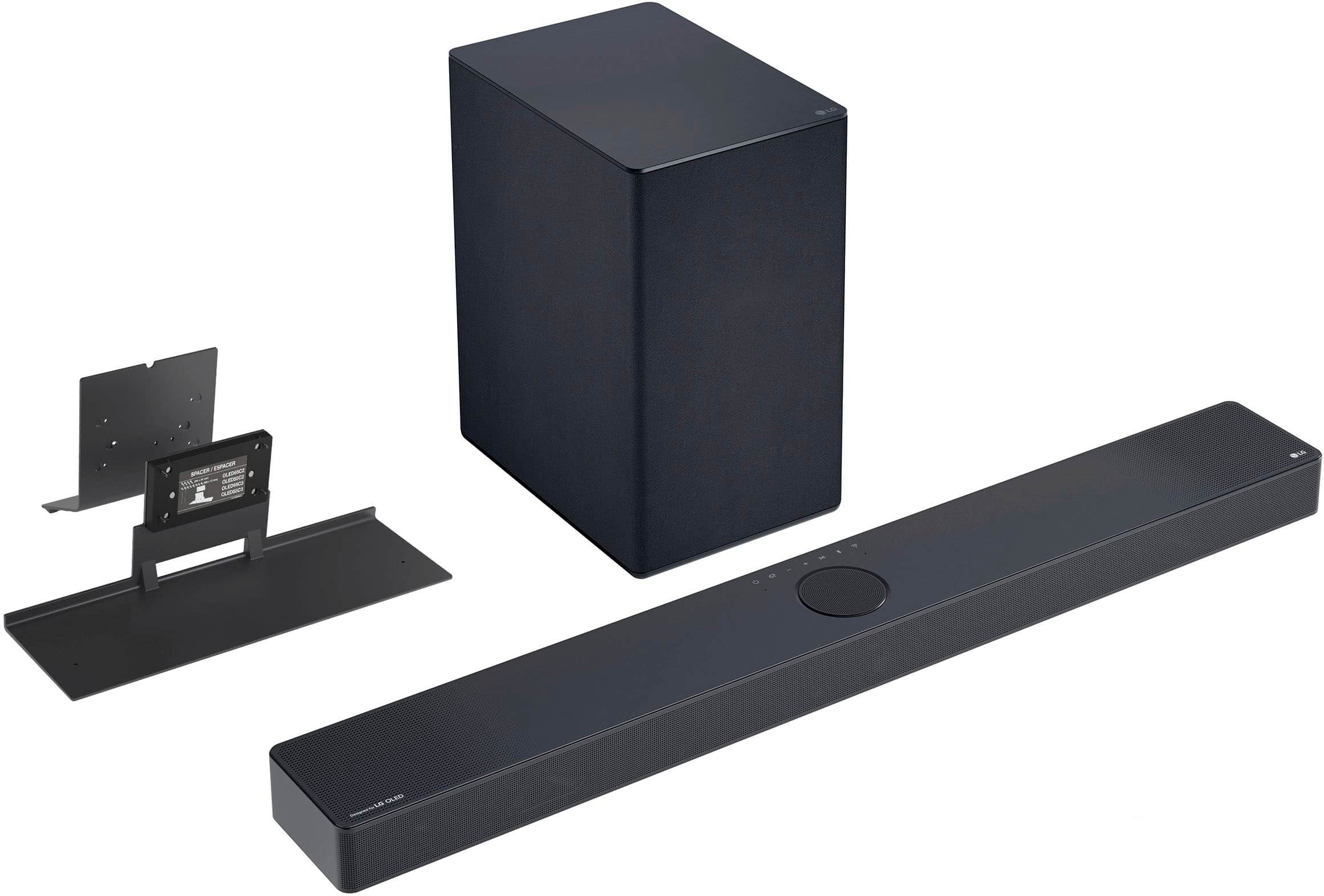
The LG SC9S, released in 2023, took a completely different path. LG's engineers asked: what if we could make a single soundbar that does everything a multi-speaker system can do, but better? Their answer was the 3.1.3 channel configuration—a term that needs some explanation. The "3" means three front channels (left, center, right), the "1" is the subwoofer, and the final "3" represents three up-firing channels that bounce sound off your ceiling. Most soundbars have two up-firing channels at most, but LG added a third one dedicated specifically to making dialogue sound like it's coming from the center of your TV screen.
This is where the fundamental difference between these systems becomes crystal clear. The Hisense HT Saturn creates genuine surround sound because it has actual speakers behind and beside you. When a car drives from left to right across a movie scene, you hear it moving through physical space because there are real speakers positioned around your room. The system uses 13 total drivers across all components, and the wireless connection is so stable that our research into user reviews shows virtually no complaints about audio dropouts or synchronization issues.
The LG SC9S accomplishes surround sound through acoustic engineering tricks—very sophisticated tricks, but tricks nonetheless. It uses psychoacoustic processing (basically, exploiting how your brain interprets sound) to create the illusion that sound is coming from places where there aren't actually speakers. For height effects, it bounces sound off your ceiling. For side effects, it uses timing delays and frequency adjustments to fool your ears.
Here's the crucial point: both approaches work, but they work differently depending on your room and listening position. The Hisense system gives you more consistent surround effects regardless of where you sit, while the LG system can create incredibly convincing effects when everything aligns properly—good ceiling height, appropriate room dimensions, and optimal seating position.
This is where the LG SC9S shines brightest. Its dual center channel approach—a traditional center channel plus an up-firing center channel—creates remarkably stable dialogue reproduction. Professional reviews consistently praise this system for dialogue clarity, and it makes sense when you understand the engineering. Human speech occupies a specific frequency range, and having dedicated drivers optimized for those frequencies, positioned to aim sound directly at your listening position, provides consistent voice reproduction.
The Hisense HT Saturn takes a different approach called phantom center channel imaging. It uses precise timing and level matching between the left and right front speakers to create the illusion of a center channel. The Devialet tuning (more on this shortly) optimizes this phantom imaging, and user reviews suggest it works surprisingly well. However, physics is physics—a phantom center depends more on your exact seating position than real center channels do.
For dialogue-heavy content—think prestige TV dramas or news programs—the LG system provides more reliable performance. For action movies where dialogue is mixed with complex soundtracks, both systems handle the challenge well, but through different methods.
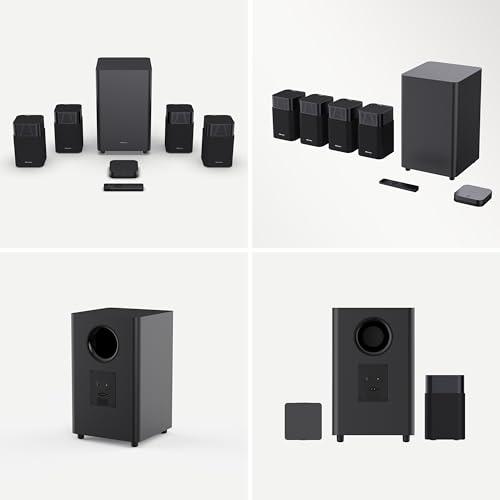
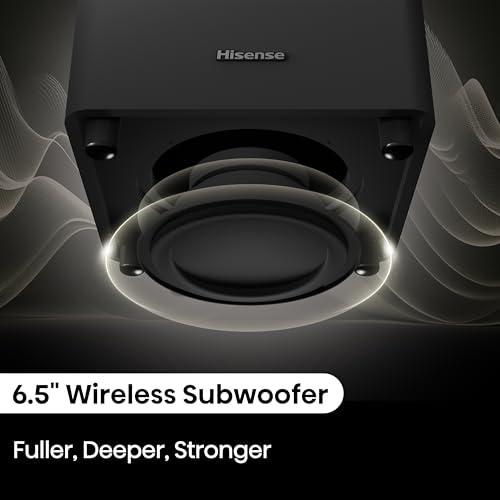
The Hisense HT Saturn includes a 6.5-inch wireless subwoofer that extends down to 40Hz—that's deep enough to reproduce the fundamental frequencies of most movie sound effects and music. More importantly, because it's wireless, you can position it anywhere in your room for optimal bass response. Bass is highly room-dependent; sometimes a corner placement boosts output, sometimes it creates boominess. The flexibility to experiment with placement is valuable.
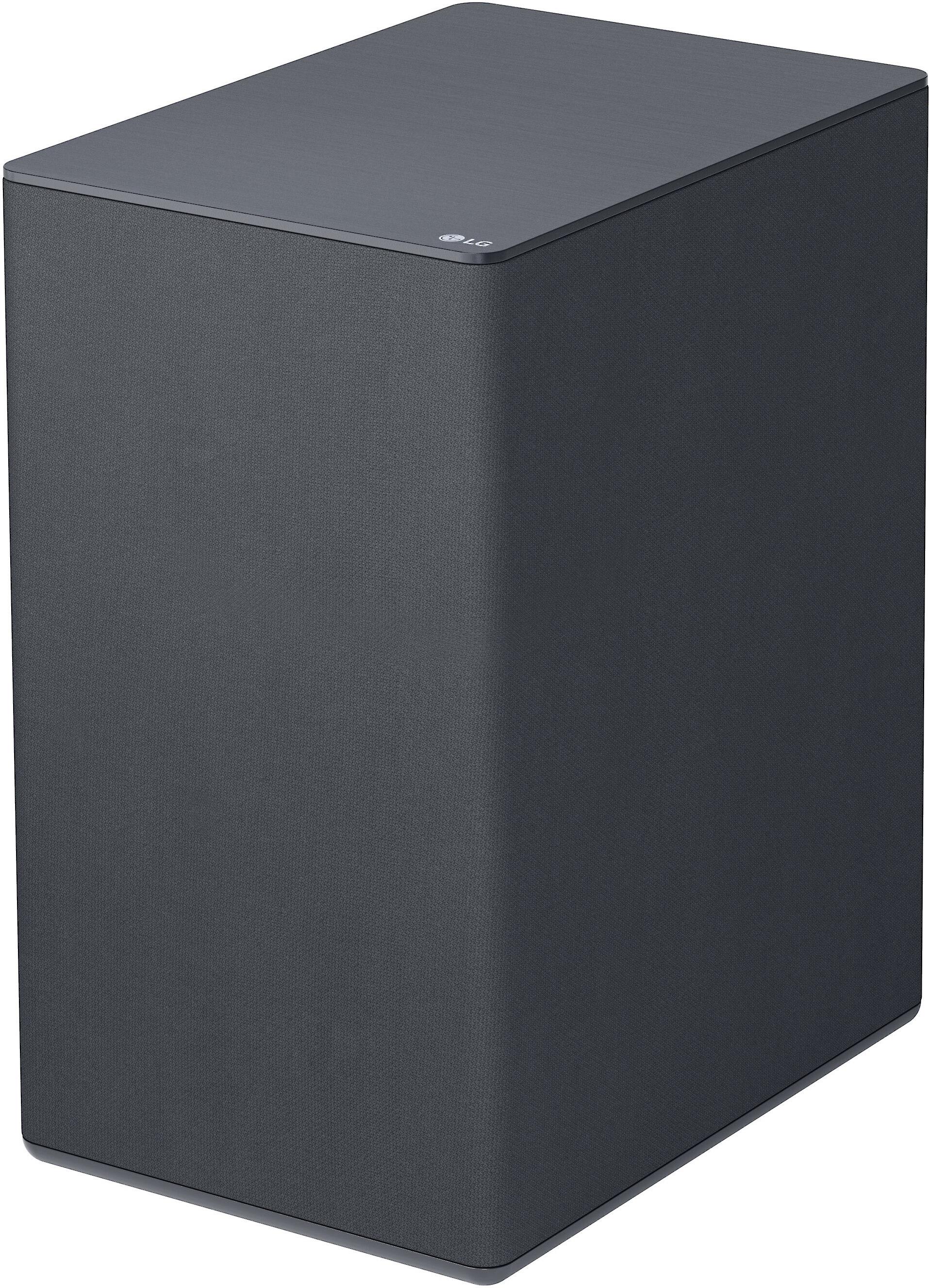
The LG SC9S includes a wireless subwoofer too, but specific driver size and frequency response specifications aren't as prominently featured in the technical documentation. User reviews suggest good bass impact that's well-integrated with the main soundbar, though some reviewers noted wanting more deep bass extension for large action movies.
The positioning flexibility of the Hisense system becomes important in challenging room layouts. If your room has an open floor plan or unusual dimensions, being able to move the subwoofer to find the sweet spot for bass response can make the difference between boomy, one-note bass and tight, impactful low frequencies.
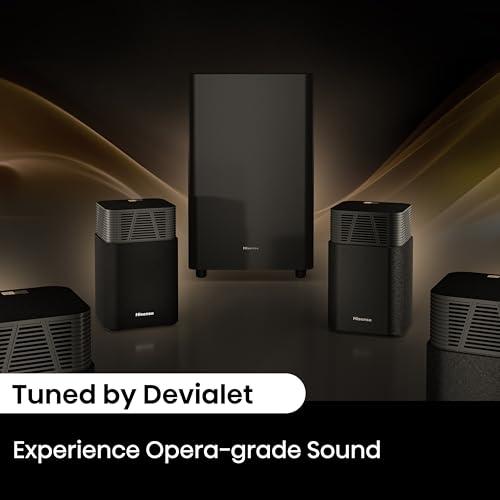
The Hisense HT Saturn carries a significant credential: it's "Tuned by Devialet." Devialet is a French audio company known for extremely high-end speakers and amplification technology. Their involvement isn't just marketing—they applied their acoustic expertise to the frequency response curves, crossover points, and driver integration of the Hisense system.
This tuning focuses on what Devialet calls "opera-grade" sound reproduction. In practical terms, this means the system avoids the common pitfalls of consumer audio: excessive bass that muddles dialogue, harsh treble that causes listening fatigue, and uneven midrange that makes music sound artificial. User reviews consistently mention the balanced, refined sound signature that differs from more aggressive consumer tuning approaches.
The LG SC9S takes a high-tech approach to room optimization with AI Room Calibration Pro. This system uses the soundbar's built-in microphones to measure your room's acoustic characteristics, then automatically adjusts the audio output to compensate for room reflections, absorption, and resonances.
This matters more than you might think. Every room has acoustic quirks—hard surfaces that create reflections, soft furnishings that absorb certain frequencies, room dimensions that emphasize or cancel specific bass notes. The LG system's AI calibration attempts to flatten these irregularities automatically. While it can't perform miracles, reviews suggest it makes a noticeable improvement, particularly in challenging acoustic environments.
Setting up the Hisense HT Saturn requires more planning than traditional soundbars. You need to position four satellite speakers around your room, each requiring a power outlet. However, the payoff is significant—no speaker wire runs across your floor or around your room's perimeter. The system includes wall mounting hardware, and each satellite speaker weighs only 3.4 pounds, making wall mounting straightforward.
The tri-band wireless communication deserves emphasis. Earlier wireless speaker systems often suffered from dropouts, especially when competing with Wi-Fi networks, Bluetooth devices, and other wireless signals. The Hisense system's use of three different frequency bands provides redundancy and reduces interference. User reports suggest reliable operation even in crowded wireless environments.
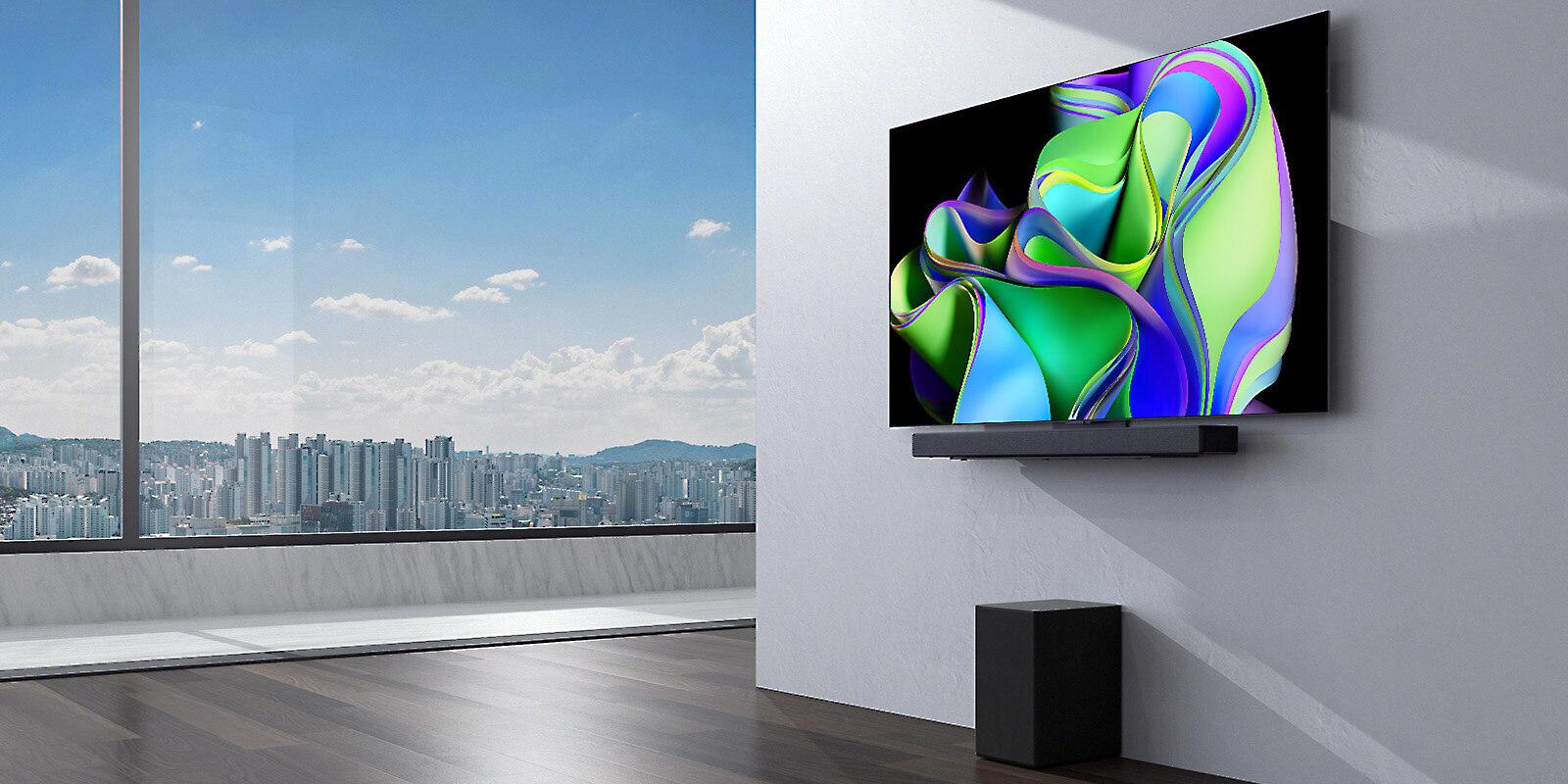
The LG SC9S was purpose-built for LG OLED C-series TVs, and this integration shows. The included Synergy Bracket allows the soundbar to mount directly under compatible LG TVs, creating a seamless appearance where the soundbar looks like part of the TV itself. More importantly, LG's WOWCAST technology enables completely wireless connection to compatible TVs—no HDMI cable required for audio.
This wireless TV connection eliminates one of the common frustrations with soundbar setup: running cables and dealing with HDMI-CEC compatibility issues. When it works (and reviews suggest it works reliably with compatible LG TVs), it's elegant and convenient.
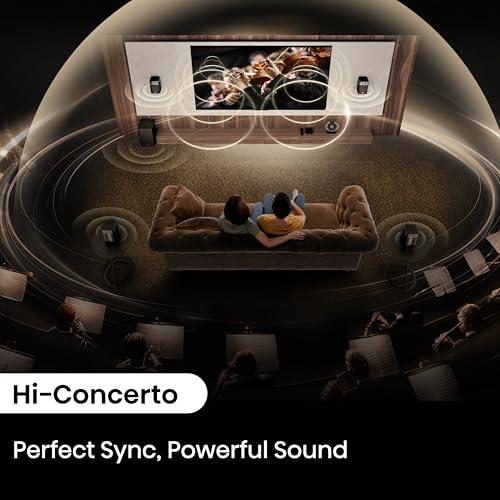
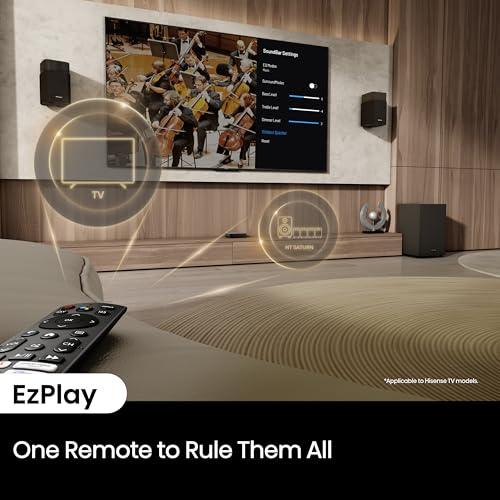
The Hisense HT Saturn offers similar TV integration features, but they're optimized for Hisense TVs. The Hi-Concerto feature can actually use your Hisense TV's built-in speakers simultaneously with the HT Saturn, creating an even larger array of sound sources. EZPlay allows you to control soundbar functions directly from your TV's remote and menu system.
The LG SC9S includes 4K/120Hz HDMI passthrough, which matters for serious gamers using PlayStation 5 or Xbox Series X consoles. This feature allows the soundbar to pass through high-frame-rate gaming signals without introducing lag or reducing visual quality. The system also supports IMAX Enhanced certification, which optimizes audio for content mastered in IMAX format.
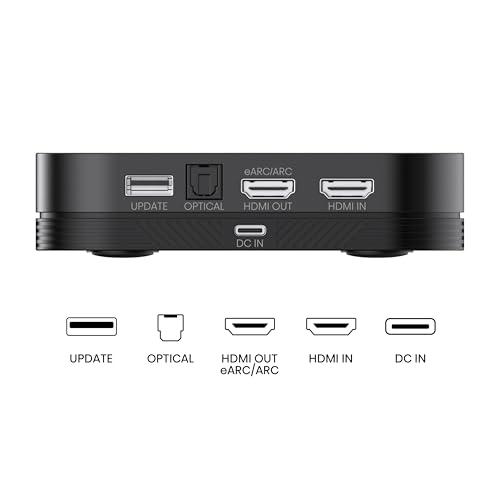
The Hisense HT Saturn supports 4K/60Hz passthrough, which handles most content well but doesn't match the LG system's gaming-focused specifications. However, it includes support for high-resolution audio formats (up to 24-bit/96kHz) and more comprehensive Bluetooth codec support (Bluetooth 5.3 with advanced codec support).
Modern soundbars increasingly function as streaming hubs, and the LG SC9S excels here. Built-in Chromecast and AirPlay 2 support mean you can stream music directly to the soundbar from phones, tablets, or computers without using your TV. The system also supports multi-room audio through Google's ecosystem.
The Hisense HT Saturn focuses more on traditional connection methods—HDMI, optical, and Bluetooth—without built-in streaming platforms. This approach has advantages (fewer components to become obsolete) and disadvantages (less convenience for music streaming).
For home theaters with 75-inch or larger TVs and generous seating distances, the Hisense HT Saturn provides more scalable performance. The ability to position satellite speakers at optimal distances and angles becomes increasingly important as room size grows. The system's 500-720W total power output (specifications vary between sources, but all suggest substantial amplification) can fill large spaces without strain.
The LG SC9S, despite its sophisticated engineering, is fundamentally limited by its single-unit design for very large spaces. Its 400W output and integrated driver configuration work well for typical living room installations but may struggle to provide immersive effects in home theater rooms designed around 85-inch or larger displays.
The LG SC9S offers significant advantages in space-constrained environments. Its single-unit design eliminates the need to position multiple speakers, and its intelligent room calibration can adapt to challenging acoustic environments like rooms with hard surfaces or irregular layouts.
The Night Mode features on both systems compress dynamic range (reducing the difference between loud and quiet sounds), making late-night movie watching more neighbor-friendly. However, the LG system's integration with TV controls makes it easier to quickly adjust these settings.
At the time of writing, the Hisense HT Saturn commands a significant premium—roughly double the price of the LG SC9S. This price difference reflects the complexity of the wireless multi-speaker design, the Devialet tuning contribution, and the included mounting hardware for all components.
However, value calculation depends heavily on your priorities. If you want the most immersive surround sound experience possible without running speaker wires, the Hisense system delivers capabilities that traditional soundbars simply cannot match. If you prioritize dialogue clarity, streaming convenience, and seamless TV integration at a more accessible price point, the LG system provides exceptional value.
The Hisense HT Saturn offers more long-term flexibility. Its wireless satellite design makes room rearrangement straightforward, and the system works well with TVs from any manufacturer. If you upgrade your TV in the future, the audio system remains fully functional.
The LG SC9S is more tightly integrated with LG's TV ecosystem. While it works with any TV through HDMI or optical connections, you lose some advanced features and the seamless integration when used with non-LG displays.
You have a large room (accommodating 75-inch or larger TVs) where you can position satellite speakers appropriately. The system truly shines when you can place the rear speakers behind or beside your seating position. If you're building a dedicated home theater space, the flexibility and genuine surround sound capabilities justify the higher investment.
You prioritize long-term flexibility over immediate convenience. The wireless satellite design adapts to room changes, and the system provides future-proof performance that isn't tied to a specific TV brand.
You're an audio enthusiast who appreciates the Devialet tuning and sophisticated acoustic engineering. The refined sound signature and balanced frequency response appeal to listeners who prefer accuracy over aggressive consumer tuning.
You own or plan to purchase an LG OLED C-series TV. The integration benefits—wireless connection, seamless control, Synergy Bracket mounting—create a premium experience that justifies the system choice.
You prioritize dialogue clarity above all other factors. The dual center channel design provides consistently excellent voice reproduction that works well for TV shows, movies, and streaming content.
You want premium features at a more accessible price point. The system delivers Dolby Atmos, IMAX Enhanced, advanced streaming, and sophisticated room calibration at roughly half the price of the Hisense system.
You prefer simpler installation and don't want to position multiple speakers around your room. The single-unit design eliminates placement complexity while still providing height and surround effects.
Both systems represent significant steps forward from basic soundbars, but they solve different problems. The Hisense HT Saturn provides the most immersive surround sound experience possible without permanent speaker installation, while the LG SC9S delivers sophisticated audio processing and seamless TV integration at an attractive price point.
Your choice should align with your room size, TV brand, budget, and priorities. For dedicated home theater spaces with large displays, the Hisense system's genuine surround sound capabilities justify its premium pricing. For living room installations prioritizing convenience and value, the LG system provides exceptional performance with simpler setup and operation.
Neither choice is wrong—they're different solutions to the challenge of bringing cinematic audio to your home. The key is understanding which approach better matches your specific situation and listening priorities.
| Hisense HT Saturn HTSATURN 4.1.2Ch Sound Bar System | LG SC9S 3.1.3 Channel Dolby Atmos Soundbar |
|---|---|
| Channel Configuration - Determines surround sound approach and immersion level | |
| 4.1.2 channels with four separate wireless satellite speakers | 3.1.3 channels in single soundbar with triple up-firing design |
| Total Speaker Count - More drivers typically mean better sound distribution | |
| 13 speakers (8 full-range + 4 tweeters + 1 subwoofer driver) | Not specified, but contained within single bar + subwoofer |
| Power Output - Affects volume and dynamic range capabilities | |
| 500-720W total system power | 400W total system power |
| Subwoofer Size - Larger drivers produce deeper bass extension | |
| 6.5" wireless subwoofer (40Hz frequency response) | Wireless subwoofer (size not specified) |
| Audio Tuning - Professional calibration improves sound quality | |
| Devialet-tuned "opera-grade" acoustic engineering | AI Room Calibration Pro with LG's acoustic optimization |
| Physical Design - Impacts placement flexibility and room integration | |
| Four wireless satellites (3.4 lbs each) + control hub + subwoofer | Single integrated soundbar + wireless subwoofer |
| TV Integration Features - Simplifies control and enhances compatibility | |
| Hi-Concerto (works with TV speakers), EZPlay control via Hisense TVs | WOWCAST wireless connection, WOW Orchestra, Synergy Bracket for LG OLEDs |
| HDMI Gaming Support - Important for console gaming performance | |
| 4K/60Hz passthrough with eARC support | 4K/120Hz passthrough with eARC support |
| Streaming Capabilities - Affects music playback convenience | |
| Bluetooth 5.3 only | Built-in Chromecast, AirPlay 2, Bluetooth |
| Room Calibration - Optimizes sound for your specific space | |
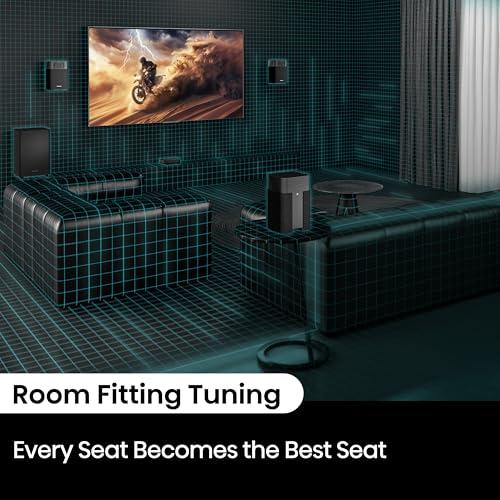
| Room Fitting Tuning via compatible Hisense TV | AI Room Calibration Pro built into soundbar |
| Setup Complexity - Balance between performance and convenience | |
| Requires positioning 4 satellites around room (wireless audio) | Single bar placement with automatic room optimization |
| Best TV Compatibility - Maximum feature access and integration | |
| Optimized for Hisense TVs 85"+ with full feature access | Purpose-built for LG OLED C-series (C2, C3, C4, C5) |
The Hisense HT Saturn provides superior surround sound immersion because it uses four separate wireless satellite speakers positioned around your room, creating genuine 360-degree audio. The LG SC9S relies on a single soundbar with up-firing speakers that bounce sound off your ceiling, which works well but can't match the spatial accuracy of physical rear speakers.
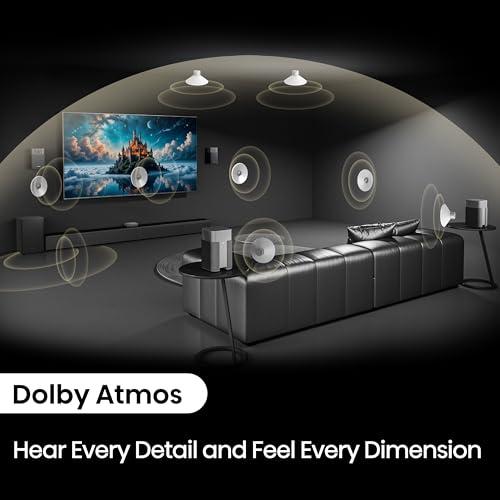
The Hisense HT Saturn's 4.1.2 setup includes four main channels (front left/right, rear left/right), one subwoofer, and two height channels for Dolby Atmos effects. The LG SC9S's 3.1.3 configuration has three front channels (left, center, right), one subwoofer, and three up-firing height channels, including a unique up-firing center channel for enhanced dialogue.
The LG SC9S is significantly easier to install since it's a single soundbar that sits under your TV, while the Hisense HT Saturn requires positioning four satellite speakers around your room. However, the Hisense system uses wireless connections between speakers, so you only need power outlets at each location.
Both systems work with any TV through HDMI or optical connections, but each performs best with its matching brand. The LG SC9S offers advanced features like WOWCAST wireless connection and Synergy Bracket mounting with LG OLED TVs, while the Hisense HT Saturn provides Hi-Concerto integration with Hisense TVs.
The LG SC9S excels at dialogue reproduction thanks to its dual center channel design, including a traditional center channel and an up-firing center channel. The Hisense HT Saturn uses phantom center channel technology that works well but depends more on your exact seating position for optimal voice clarity.
The Hisense HT Saturn includes a larger 6.5-inch wireless subwoofer with 40Hz frequency response and flexible room placement for optimal bass. The LG SC9S also has a wireless subwoofer, but the Hisense system's larger driver and placement flexibility typically provide deeper, more impactful bass performance.
The LG SC9S offers superior streaming capabilities with built-in Chromecast, AirPlay 2, and Bluetooth connectivity for direct music streaming from phones and tablets. The Hisense HT Saturn relies primarily on Bluetooth 5.3 for wireless music streaming, focusing more on traditional audio connections.
Both systems offer automatic room optimization, but through different approaches. The LG SC9S uses AI Room Calibration Pro built into the soundbar to analyze and adjust for your room's acoustics. The Hisense HT Saturn provides Room Fitting Tuning that works with compatible Hisense TVs to optimize the entire wireless speaker array.
The LG SC9S has an advantage for serious gaming with 4K/120Hz HDMI passthrough support for PlayStation 5 and Xbox Series X consoles. The Hisense HT Saturn supports 4K/60Hz passthrough, which handles most gaming well but doesn't match the LG system's high-frame-rate gaming capabilities.
The Hisense HT Saturn delivers 500-720W total system power across its wireless speaker array, while the LG SC9S provides 400W total output. The higher power of the Hisense system typically translates to better performance in larger rooms and higher volume capabilities without distortion.
The LG SC9S provides exceptional value with premium features like IMAX Enhanced, advanced streaming, and sophisticated room calibration at a more accessible price point. The Hisense HT Saturn costs significantly more but delivers genuine wireless surround sound that traditional soundbars cannot match.
Both systems support Dolby Atmos and DTS:X, but implement height effects differently. The Hisense HT Saturn uses up-firing drivers in its satellite speakers combined with room reflection for overhead effects. The LG SC9S features three dedicated up-firing channels that bounce sound off your ceiling, creating convincing height effects when room conditions are optimal.
We've done our best to create useful and informative comparisons to help you decide what product to buy. Our research uses advanced automated methods to create this comparison and perfection is not possible - please contact us for corrections or questions. These are the sites we've researched in the creation of this article: bestbuy.com - youtube.com - blog.son-video.com - youtube.com - youtube.com - techradar.com - ecoustics.com - jbhifi.com.au - shop.hisense-usa.com - bhphotovideo.com - bestbuy.com - digitalreviews.net - hisense-usa.com - projectorscreenstore.com - valueelectronics.com - dolby.com - giftpack.ai - consumerreports.org - valueelectronics.com - youtube.com - bestbuy.com - rtings.com - costco.com - bestbuy.com - walts.com - queencityonline.com - blog.son-video.com - videoandaudiocenter.com - lg.com

Privacy Policy
Terms and Conditions - Affiliate Policy
Home Security
© Copyright 2008-2026.
11816 Inwood Rd #1211, Dallas, TX 75244