




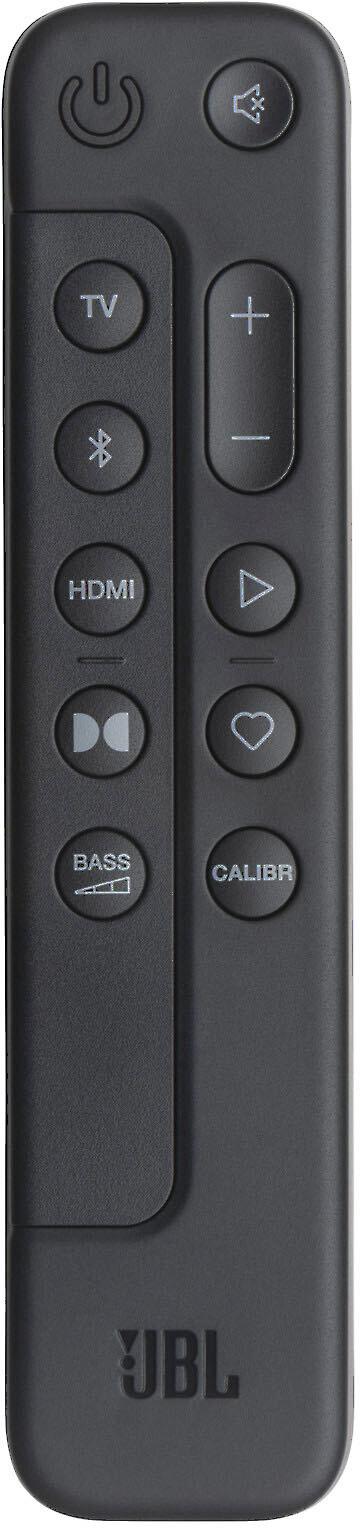
When your TV's built-in speakers make dialogue sound like it's coming from inside a tin can, it's time for an audio upgrade. But the soundbar world has evolved dramatically in recent years, splitting into two distinct camps: traditional single-unit soundbars that use clever processing tricks to simulate surround sound, and newer wireless multi-speaker systems that create the real deal with actual speakers placed around your room.
The Hisense HT Saturn and JBL Bar 300 represent these two fundamentally different approaches to home audio. Released in 2025 and 2024 respectively, they showcase how the industry has moved beyond basic "TV speakers but louder" solutions toward sophisticated audio experiences that can genuinely compete with traditional home theater setups.
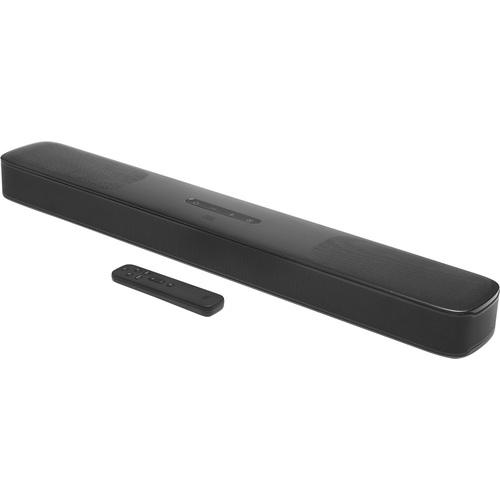
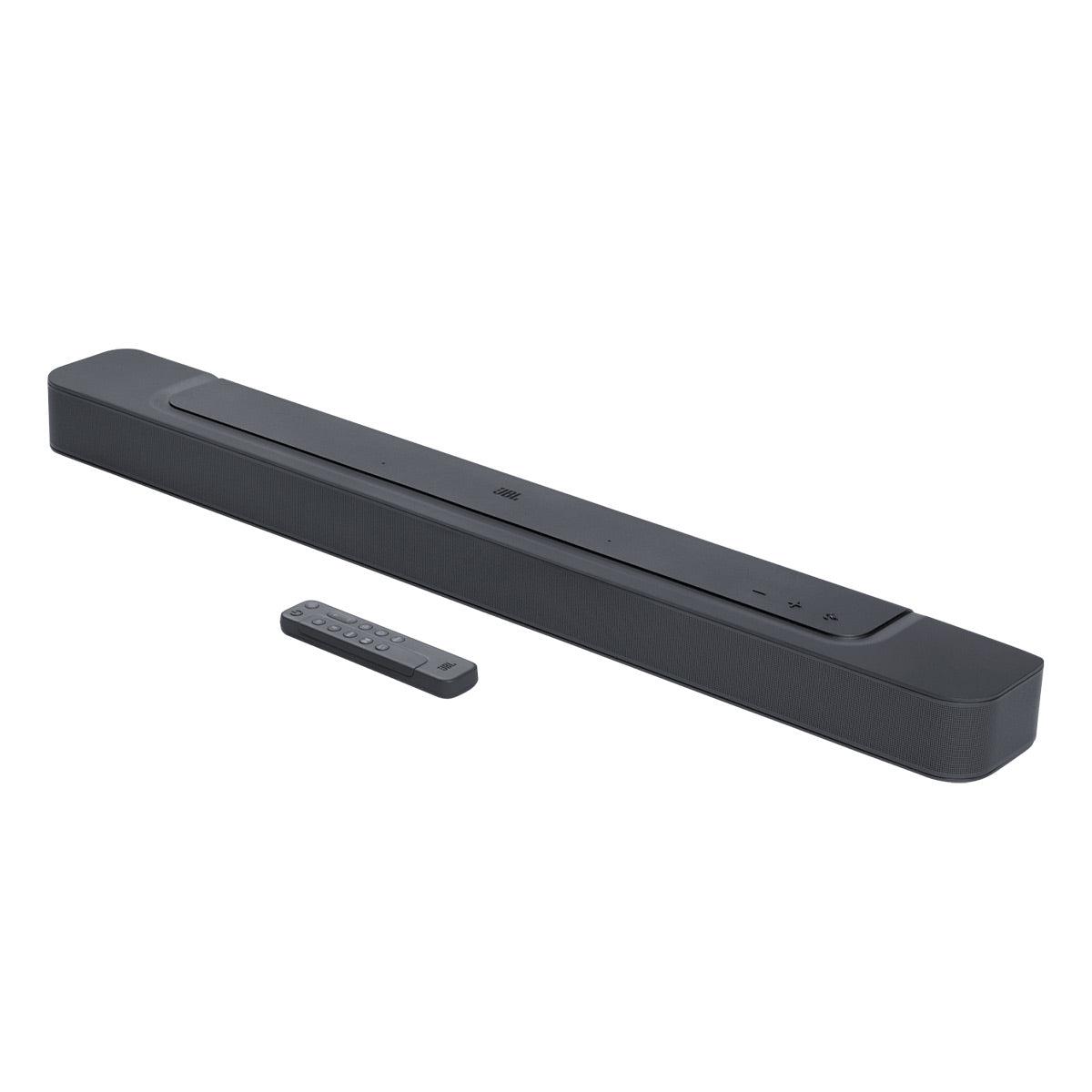
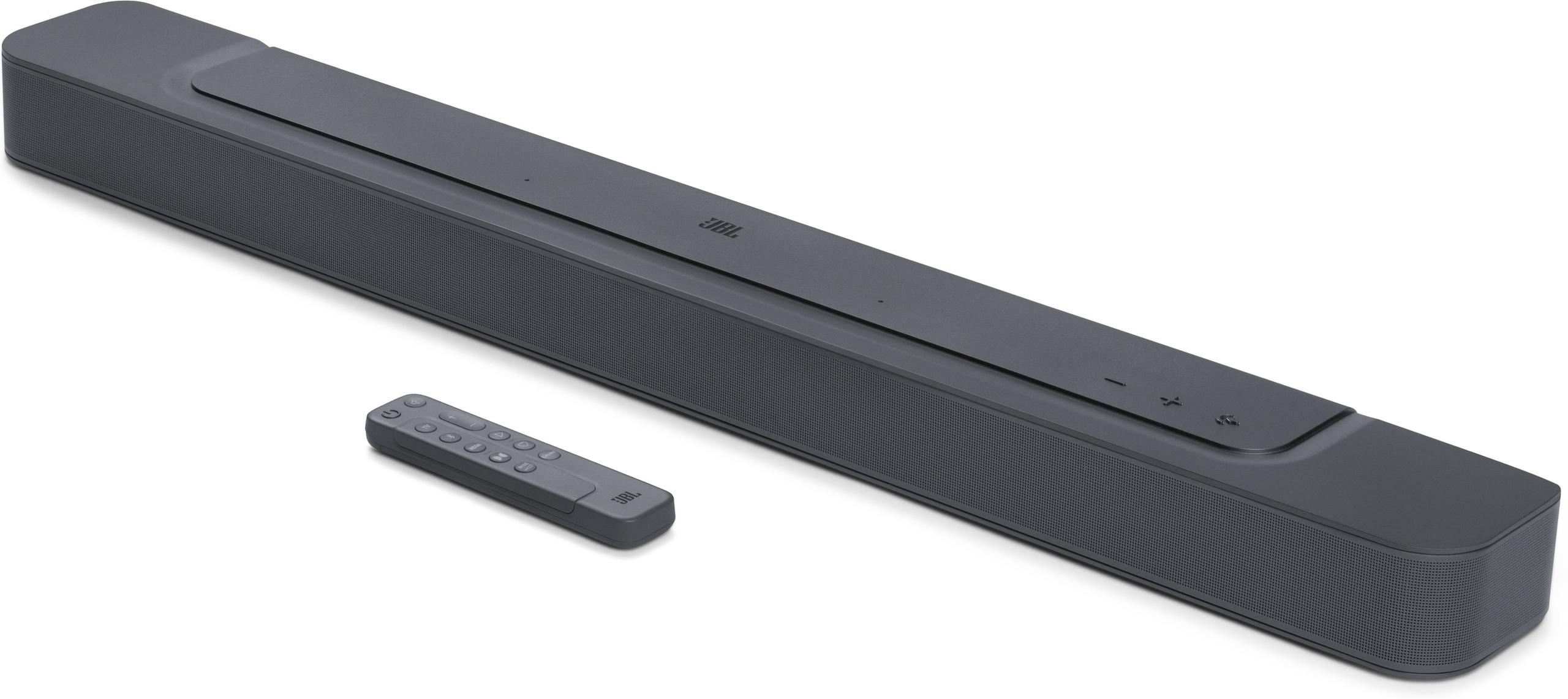
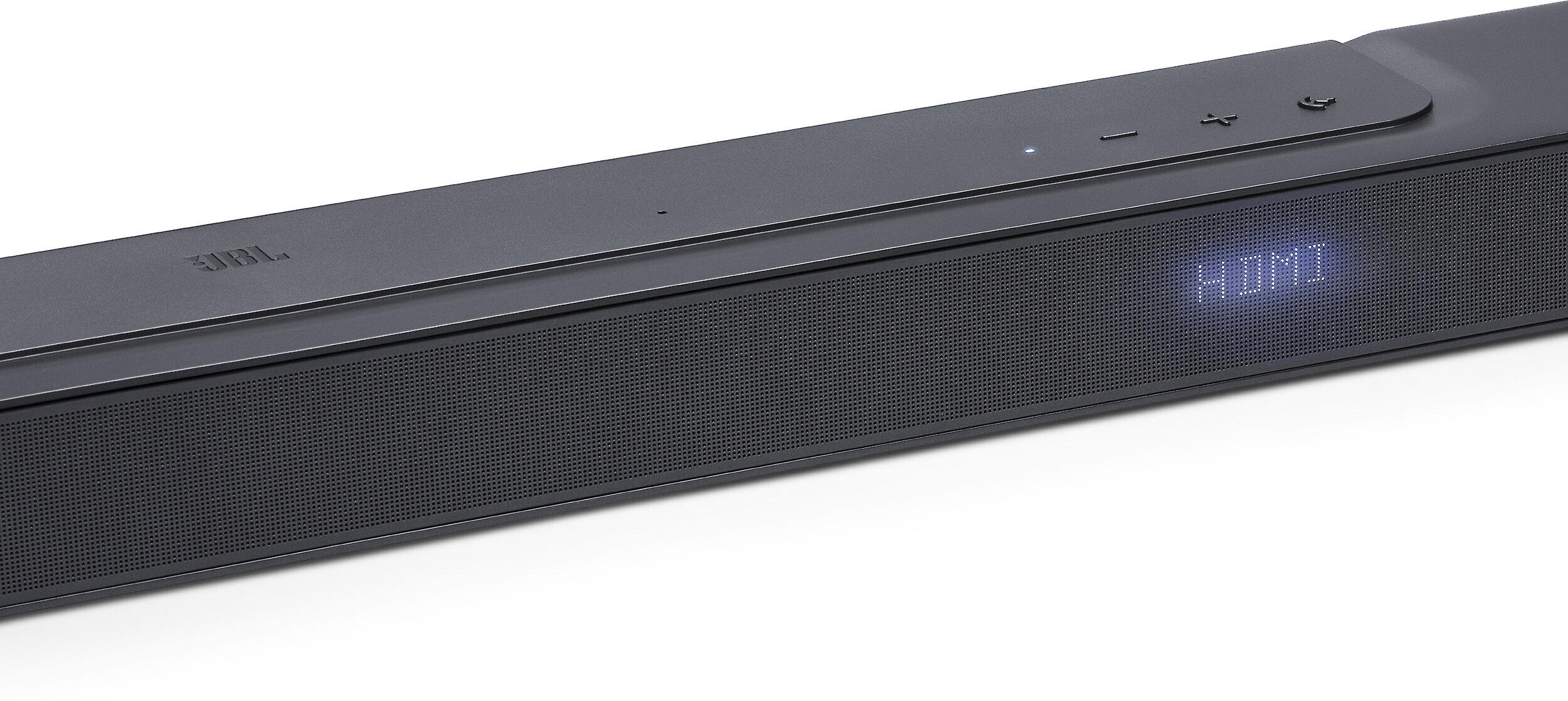
The difference between these systems isn't just about features or price—it's about philosophy. The JBL Bar 300 follows the traditional soundbar playbook: pack everything into a single sleek unit that sits under your TV and uses digital wizardry to create the illusion of surround sound. It's like having a really smart audio magician that tricks your ears into hearing sounds from places where there aren't actually speakers.
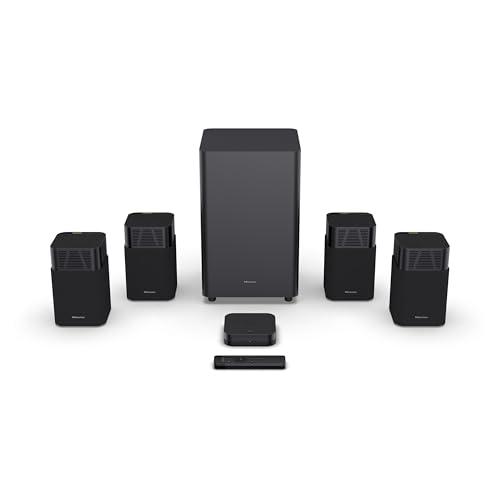
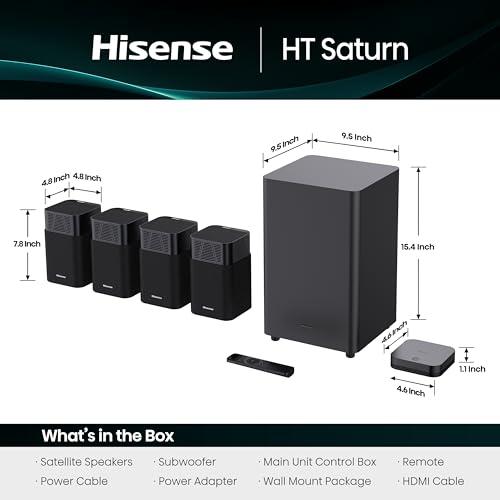
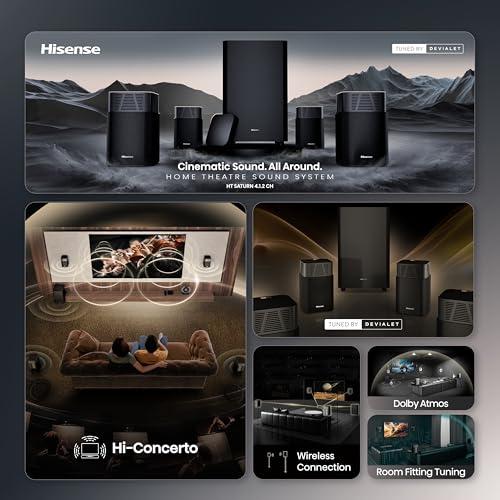
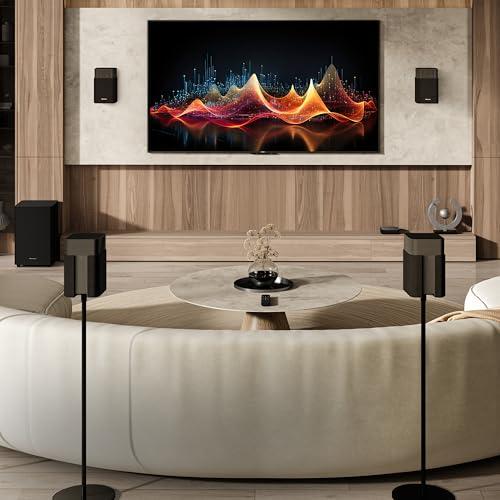
The Hisense HT Saturn, on the other hand, throws out the soundbar concept entirely. Instead of one long bar, you get four compact satellite speakers that you place around your room, plus a wireless subwoofer (a dedicated speaker for bass frequencies below about 120Hz). This creates what's called a "4.1.2 system"—four main speakers, one subwoofer, and two upward-firing drivers that bounce sound off your ceiling to create height effects.
Think of it this way: if the JBL Bar 300 is like watching a 3D movie on a regular screen with special glasses, the Hisense HT Saturn is like actually being in a 3D environment. Both can create impressive experiences, but they work in completely different ways.
When you're comparing audio systems, power output matters—but not in the way most people think. It's not just about how loud something can get; it's about how cleanly it can reproduce sound at the volumes you actually listen to. The Hisense HT Saturn delivers a substantial 720W of total power across its multiple speakers, while the JBL Bar 300 provides 260W from its single unit.
That nearly 3x power difference isn't just numbers on a spec sheet. More power means better dynamic range (the difference between the quietest whispers and loudest explosions), less distortion at normal listening volumes, and the ability to fill larger rooms with sound. If you've ever noticed how your TV has to be turned way up for dialogue but then action scenes blast you out of your seat, that's a dynamic range problem that more powerful speakers can solve.
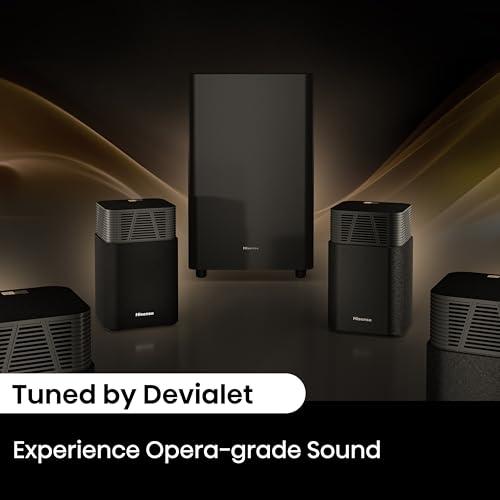
The Hisense HT Saturn also benefits from what's called Devialet tuning—essentially, the high-end French audio company Devialet helped fine-tune how the speakers sound. Devialet is known for making speakers that cost more than most people's cars, so having their acoustic expertise in a consumer system is like getting a Formula 1 engineer to tune your everyday car.
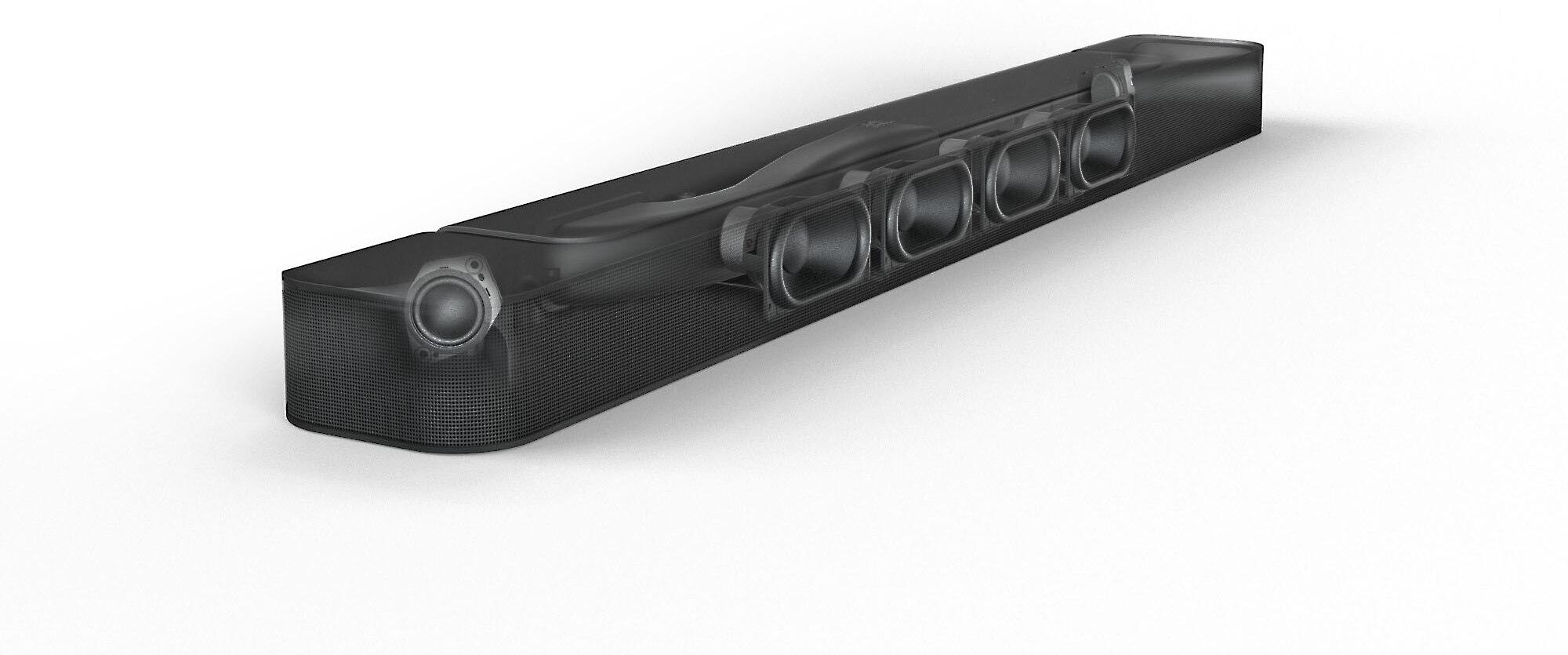
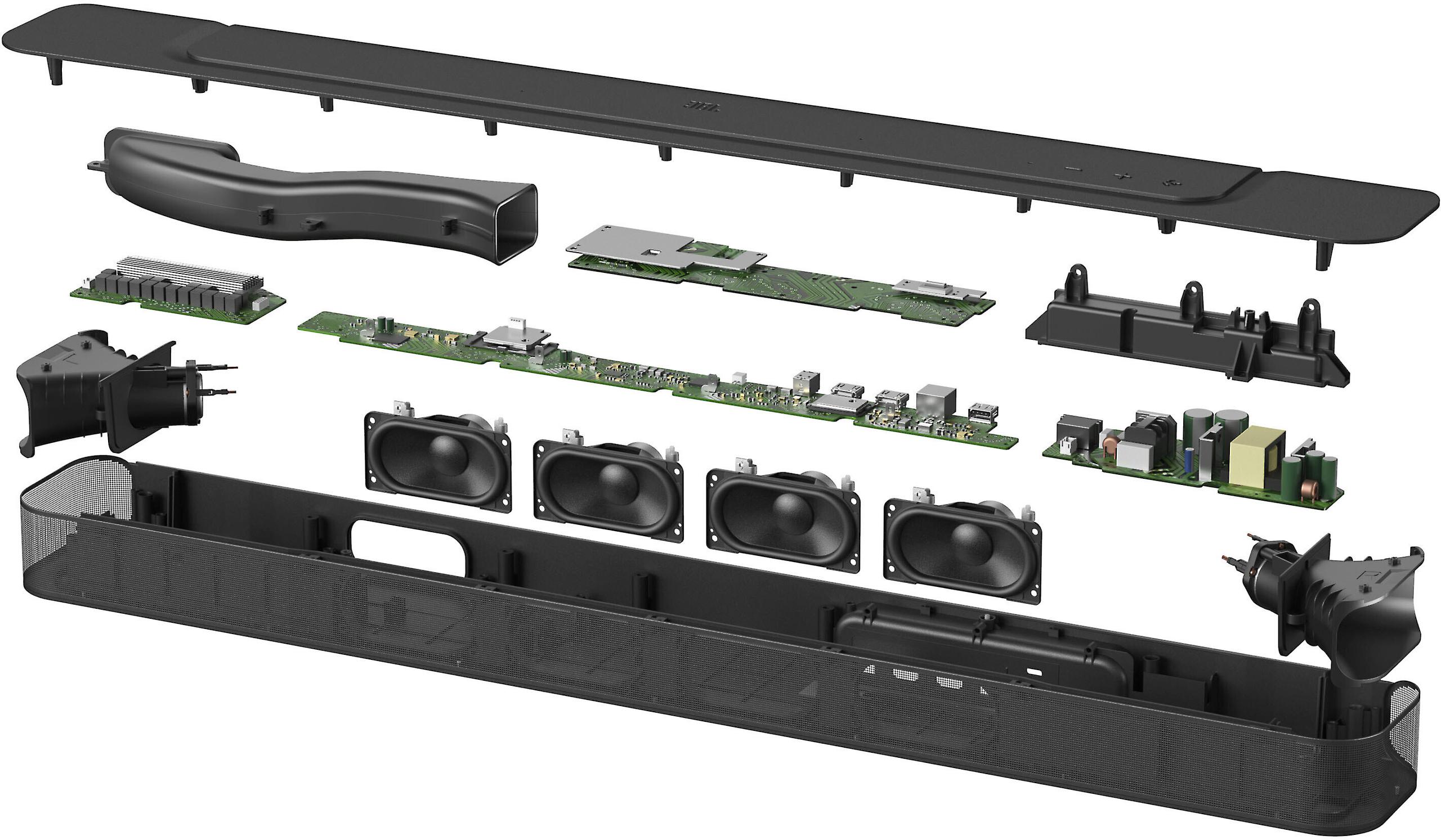
Here's where things get really interesting. The JBL Bar 300 uses something called MultiBeam technology, which is essentially sophisticated digital processing that analyzes incoming audio and redirects specific sounds to different parts of the soundbar. The idea is to create "virtual" surround channels by bouncing sounds off your room's walls and using psychoacoustic principles (how your brain interprets sound) to fool you into thinking sounds are coming from beside and behind you.
This works surprisingly well in many situations. For TV shows and movies with good surround sound mixing, the JBL Bar 300 can create a convincingly wide soundstage that makes dialogue feel centered while ambient sounds spread across your room. The system also includes something called PureVoice technology, which uses algorithms to enhance dialogue clarity—particularly useful since modern movie mixing often buries conversations under music and effects.
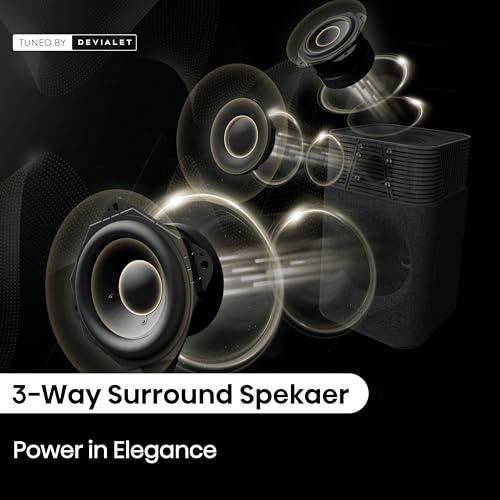
The Hisense HT Saturn takes a completely different approach. Instead of virtual processing, it gives you actual speakers placed around your listening area. Each of the four satellite speakers contains multiple drivers: a main driver for mid-range frequencies (where most music and dialogue live), a tweeter for high frequencies (cymbals, dialogue clarity, ambient details), and an upward-firing driver that bounces sound off your ceiling to create height effects.
This physical approach to surround sound means when a helicopter flies overhead in a movie, you're hearing actual sound moving from speaker to speaker around your room, not a clever digital approximation. The difference is immediately apparent in action movies and video games, where precise sound localization can make you feel like you're actually in the scene rather than just watching it.
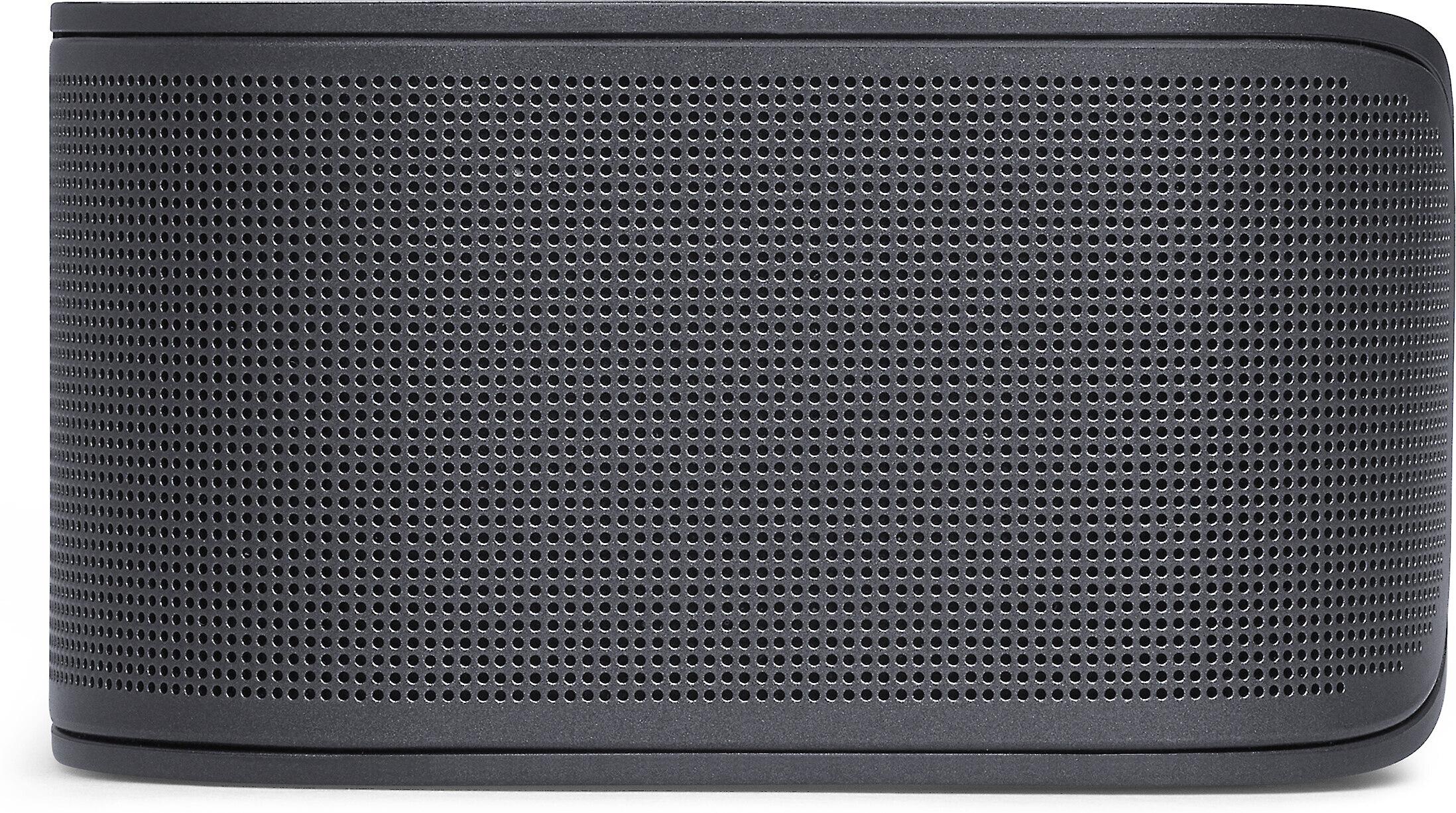
Bass performance might be the biggest differentiator between these systems. The JBL Bar 300 relies on built-in bass ports—essentially carefully tuned openings that enhance lower frequencies using the speaker cabinet itself. This works reasonably well for dialogue and music, providing enough low-end to add warmth and presence without overwhelming your room.
But when the Hulk starts smashing through buildings or you're playing a game with explosions, the limitations become apparent. The JBL Bar 300's frequency response starts rolling off around 50Hz, which means the deepest movie effects and music fundamentals get lost. It's like watching a movie through sunglasses—you get the idea, but you're missing some of the impact.
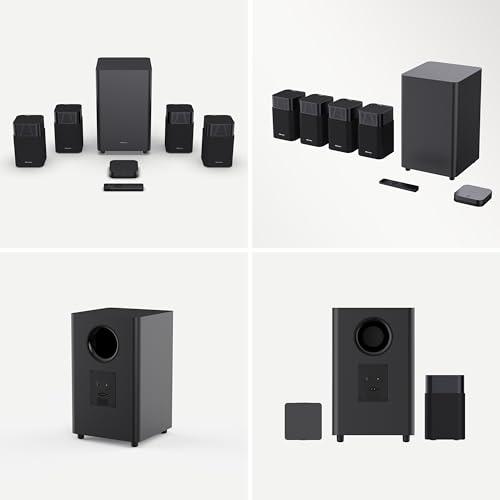
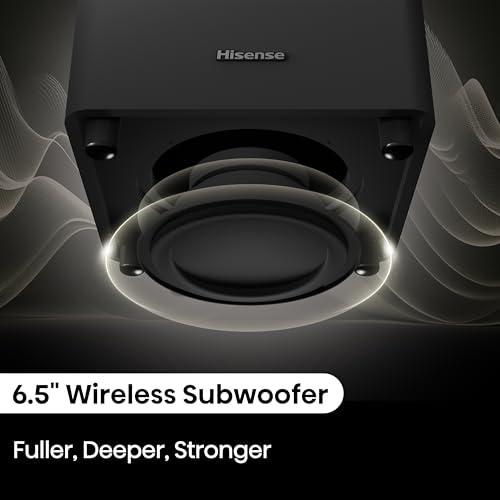
The Hisense HT Saturn includes a dedicated 6.5-inch wireless subwoofer that extends bass response down to 40Hz. That might not sound like much of a difference, but those extra 10Hz capture the difference between feeling bass and just hearing it. When properly positioned (subwoofers work best in corners or along walls where room boundaries reinforce their output), this dedicated bass speaker can deliver the kind of impact that makes action scenes truly visceral.
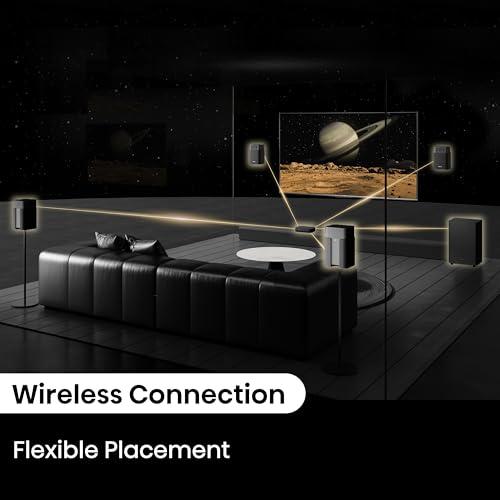
The wireless aspect is crucial here—you can place the subwoofer wherever it sounds best in your room, not wherever the cable reaches. This flexibility often makes the difference between adequate bass and bass that genuinely enhances your viewing experience.
Modern soundbars are increasingly becoming entertainment hubs, not just audio upgrades. The JBL Bar 300 embraces this trend fully, with built-in Wi-Fi that connects to your home network and provides direct access to over 300 streaming services. It supports AirPlay (for Apple devices), Chromecast (for Android and Google services), and Alexa Multi-Room Music, essentially turning your soundbar into a smart speaker that happens to also improve your TV's audio.
This integration is genuinely useful in daily life. You can ask Alexa to play Spotify through your soundbar, cast YouTube Music from your phone, or have the system automatically turn on when your Apple TV starts playing content. The JBL One app provides a clean interface for controlling everything, and automatic software updates mean your soundbar gains new features over time.
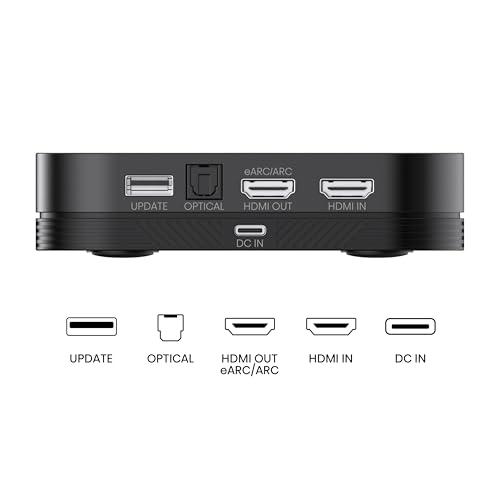
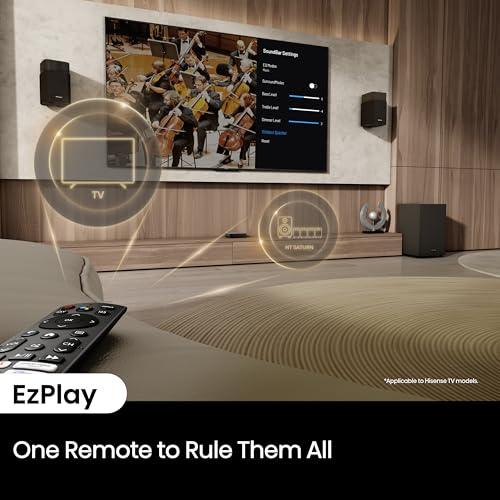
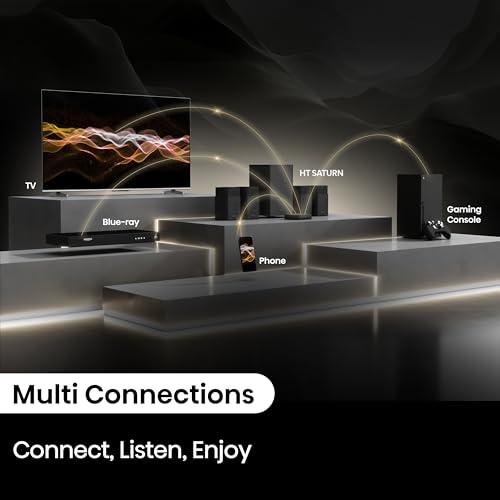
The Hisense HT Saturn takes a more focused approach. Instead of trying to be a smart speaker, it concentrates on being an exceptional audio system. It includes HDMI eARC (Enhanced Audio Return Channel, which carries lossless audio from your TV), Bluetooth 5.3 for device connectivity, and something called EZPlay integration that works particularly well with Hisense TVs to simplify control.
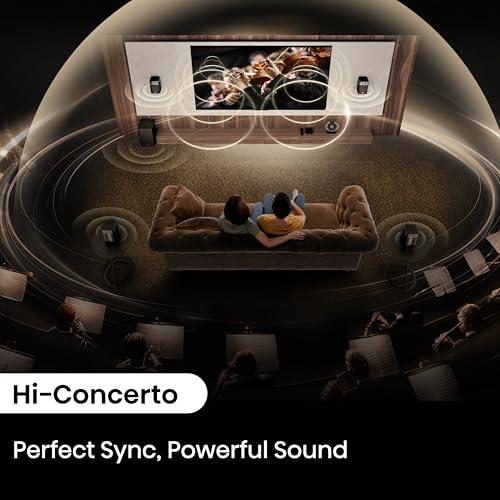
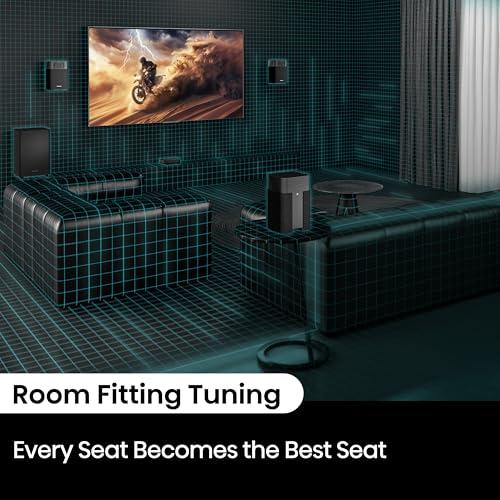
More importantly, the HT Saturn supports Room Fitting Tuning when paired with compatible Hisense TVs. This feature uses your TV's processing power to analyze your room's acoustics and automatically adjust the speaker settings for optimal performance. It's similar to the room correction systems found in high-end AV receivers, helping compensate for challenging room acoustics.
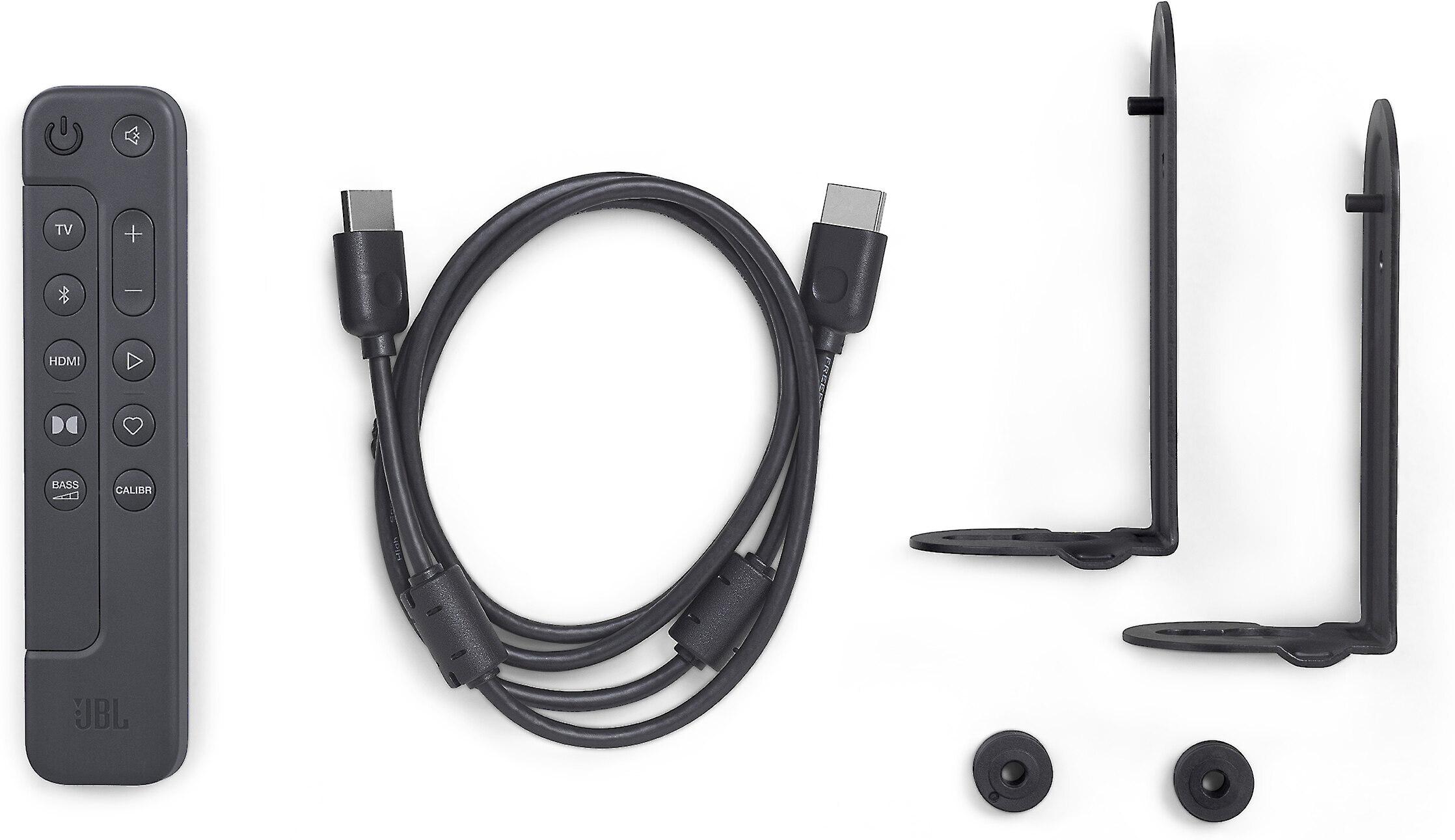
Let's be honest about what you're getting into with each system. The JBL Bar 300 is essentially plug-and-play: unbox it, place it under your TV, connect one HDMI cable, and you're done. The built-in calibration microphone does a quick room analysis, and within minutes you have significantly better audio than your TV speakers.
The Hisense HT Saturn requires more consideration. You need to position four satellite speakers around your room—ideally with the front pair flanking your TV and the rear pair behind or to the sides of your seating area. Each speaker needs power (though the wireless connection means no audio cables), and optimal placement might require speaker stands or wall mounts.
However, this setup complexity pays dividends in performance. When properly positioned, the HT Saturn creates what reviewers consistently describe as a "sound bubble" that envelops your listening position. The difference between virtual and real surround sound becomes immediately apparent when you hear rain falling overhead in a movie or footsteps circling around you in a game.
Your content consumption habits should heavily influence this decision. If you primarily watch news, talk shows, sitcoms, and streaming series—content that's mostly dialogue-focused—the JBL Bar 300's PureVoice technology and streaming integration might be more valuable than the HT Saturn's surround capabilities.
But if you're into Marvel movies, nature documentaries, concert films, or gaming, the Hisense HT Saturn's authentic surround sound creates a fundamentally different experience. Action sequences gain spatial depth, nature sounds become immersive environments, and games provide positional audio cues that can actually affect gameplay.
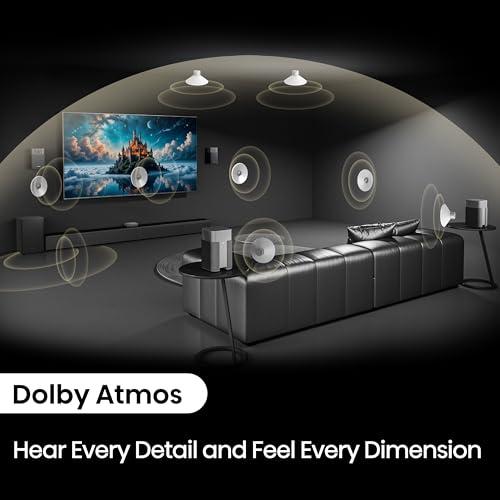
The HT Saturn also supports both Dolby Atmos and DTS:X, the two competing formats for object-based 3D audio. The JBL Bar 300 only supports Dolby Atmos, which covers most streaming content but might limit you with certain Blu-ray discs or gaming content that uses DTS formats.
Your physical space plays a huge role in determining which system will work better. The JBL Bar 300 works well in apartments, smaller living rooms, and spaces where you can't or don't want to position multiple speakers. Its virtual surround processing actually works better in certain room types—particularly spaces with good wall surfaces for sound reflection and minimal acoustic treatment.
The Hisense HT Saturn really shines in medium to larger rooms where its power and physical speaker separation can create a truly enveloping sound field. If your seating position is more than 12-15 feet from your TV, the HT Saturn's additional power and authentic surround positioning become much more noticeable advantages.
At the time of writing, these systems occupy very different price brackets, with the JBL Bar 300 positioned as a premium budget option and the HT Saturn as a mid-range home theater solution. The price difference reflects their different approaches: you're paying significantly more for the HT Saturn's multiple speakers, wireless subwoofer, and Devialet tuning.
From a pure features-per-dollar standpoint, the JBL Bar 300 offers remarkable value. Dolby Atmos support, built-in streaming, and solid audio performance at its price point represent one of the better audio upgrade values available.
However, the Hisense HT Saturn provides something the JBL simply cannot: authentic surround sound. If you value audio quality and want a system that will satisfy long-term, the additional investment often proves worthwhile. Many users who start with virtual surround soundbars eventually upgrade to real surround systems anyway, making the HT Saturn potentially more economical in the long run.
Choose the JBL Bar 300 if you want immediate, dramatic improvement over TV speakers with minimal fuss. Its streaming integration, dialogue enhancement, and virtual surround processing provide excellent value for mixed content consumption. It's perfect for apartments, smaller rooms, or situations where simplicity and convenience outweigh ultimate audio performance.
Choose the Hisense HT Saturn if you're building a dedicated entertainment space and value authentic audio experiences. Its true surround sound, powerful bass, and room-filling presence create the kind of immersive environment that makes movies and games genuinely more engaging. It's the choice for anyone who wants their living room to feel more like a real theater.
The decision ultimately comes down to your priorities: convenience and smart features versus audio authenticity and immersive performance. Both systems will dramatically improve your TV watching experience, but they'll do it in fundamentally different ways that appeal to different types of users and usage patterns.
| Hisense HT Saturn HTSATURN 4.1.2Ch Sound Bar System | JBL Bar 300 5.0 Soundbar |
|---|---|
| System Architecture - Determines authenticity of surround sound experience | |
| True 4.1.2 system with 4 physical satellite speakers + wireless subwoofer | Single soundbar unit with virtual surround processing |
| Total Power Output - Affects volume capability and dynamic range | |
| 720W total power (room-filling performance for larger spaces) | 260W total power (adequate for small to medium rooms) |
| Speaker Configuration - Impacts sound quality and positioning accuracy | |
| 13 total speakers: 8 full-range drivers, 4 tweeters, 1 subwoofer driver | 6 total drivers: 4 racetrack drivers, 2 tweeters in single unit |
| Bass Performance - Critical for movie impact and music depth | |
| Dedicated wireless 6.5" subwoofer, 40Hz frequency response | Built-in bass ports only, 50Hz frequency response |
| Surround Sound Formats - Determines compatibility with premium content | |
| Dolby Atmos, DTS:X, DTS-HD Master Audio, Dolby TrueHD | Dolby Atmos only (no DTS format support) |
| Audio Tuning - Affects overall sound quality and balance | |
| Devialet-tuned with Hi-Concerto room optimization | PureVoice dialogue enhancement with MultiBeam processing |
| Streaming Integration - Convenience for daily music listening | |
| No built-in Wi-Fi (Bluetooth 5.3 only) | Built-in Wi-Fi with AirPlay, Chromecast, 300+ streaming services |
| Setup Complexity - Time and effort required for installation | |
| Requires positioning 4 satellite speakers + subwoofer around room | Single unit placement under TV with automatic calibration |
| HDMI Connectivity - Video passthrough and audio return capabilities | |
| HDMI eARC with 4K 60Hz passthrough | HDMI eARC with 4K Dolby Vision passthrough |
| Room Size Suitability - Optimal performance based on space dimensions | |
| Best for medium to large rooms (15+ feet viewing distance) | Ideal for small to medium rooms (under 15 feet viewing distance) |
| Smart Home Integration - Voice control and ecosystem compatibility | |
| EZPlay with Hisense TVs, basic remote control | Alexa, Google Assistant, Siri compatibility with JBL One app |
The Hisense HT Saturn is a true wireless surround sound system with four separate satellite speakers and a wireless subwoofer that you place around your room. The JBL Bar 300 is a traditional single-unit soundbar that uses virtual processing to simulate surround sound from one device under your TV.
The Hisense HT Saturn provides a superior home theater experience with authentic surround sound, dedicated subwoofer, and support for both Dolby Atmos and DTS:X formats. The physical rear speakers create genuine 360-degree sound that's especially noticeable in action movies and immersive content.
Yes, the JBL Bar 300 is much simpler to install—just place it under your TV and connect one HDMI cable. The Hisense HT Saturn requires positioning four satellite speakers around your room, though all connections are wireless except for power cables.
The Hisense HT Saturn has significantly better bass with its dedicated wireless 6.5-inch subwoofer that reaches down to 40Hz. The JBL Bar 300 relies on built-in bass ports with a 50Hz frequency response, which is adequate for dialogue but lacks deep movie impact.
The JBL Bar 300 has built-in Wi-Fi with access to over 300 streaming services, plus AirPlay and Chromecast support. The Hisense HT Saturn only offers Bluetooth 5.3 connectivity for music streaming from your devices.
The JBL Bar 300 is better suited for apartments and smaller spaces due to its compact single-unit design, controlled bass output, and virtual surround processing that doesn't require multiple speaker placements around the room.
Yes, both the Hisense HT Saturn and JBL Bar 300 support Dolby Atmos. However, the HT Saturn also supports DTS:X and other premium audio formats, while the JBL Bar 300 is limited to Dolby formats only.
The Hisense HT Saturn delivers 720W of total power compared to the JBL Bar 300's 260W. This nearly 3x power difference means the HT Saturn can fill larger rooms with sound and handle more dynamic content without distortion.
The JBL Bar 300 works with Alexa, Google Assistant, and Siri for voice control and smart home integration. The Hisense HT Saturn doesn't have built-in voice assistant support but integrates well with Hisense TVs through EZPlay technology.
The JBL Bar 300 offers excellent value as a feature-rich soundbar with Dolby Atmos and streaming capabilities at its price point. The Hisense HT Saturn costs significantly more but provides authentic surround sound that single-unit soundbars cannot match.
Both systems excel at dialogue but in different ways. The JBL Bar 300 uses PureVoice technology specifically designed to enhance speech clarity. The Hisense HT Saturn creates better dialogue positioning through its physical speaker separation and Devialet tuning.
The Hisense HT Saturn is superior for gaming due to its authentic surround sound positioning, which provides accurate directional audio cues that can improve gameplay. The physical rear speakers create immersive gaming environments that the JBL Bar 300's virtual processing cannot fully replicate.
We've done our best to create useful and informative comparisons to help you decide what product to buy. Our research uses advanced automated methods to create this comparison and perfection is not possible - please contact us for corrections or questions. These are the sites we've researched in the creation of this article: bestbuy.com - youtube.com - blog.son-video.com - youtube.com - youtube.com - techradar.com - ecoustics.com - jbhifi.com.au - shop.hisense-usa.com - bhphotovideo.com - bestbuy.com - digitalreviews.net - hisense-usa.com - projectorscreenstore.com - valueelectronics.com - dolby.com - giftpack.ai - whathifi.com - safeandsoundhq.com - youtube.com - cnet.com - mm.jbl.com - jbl.com - bestbuy.com - support.jbl.com - dell.com - walmart.com

Privacy Policy
Terms and Conditions - Affiliate Policy
Home Security
© Copyright 2008-2026.
11816 Inwood Rd #1211, Dallas, TX 75244