


When your TV's built-in speakers make dialogue sound like it's coming from underwater and action scenes feel about as exciting as watching paint dry, you know it's time for an audio upgrade. But the world of TV sound enhancement can be overwhelming, with options ranging from basic soundbars to full-blown home theater systems that could rival your local cinema.
Today we're comparing two products that represent completely different philosophies in TV audio: the Hisense HT Saturn, a cutting-edge wireless home theater system from 2025, and the Bose TV Speaker, a straightforward soundbar that's been helping people hear their shows clearly for several years. At the time of writing, these products sit at opposite ends of both the price spectrum and complexity scale—the Hisense system costs roughly six times more than the Bose soundbar, but the question isn't just about money. It's about understanding what you actually need and want from your TV audio experience.
Before diving into specifics, let's establish what we're really talking about when we discuss TV audio upgrades. Most modern TVs, despite their impressive picture quality, have terrible speakers. They're thin, rear-facing, and designed more to check a box than to actually sound good. This creates a massive opportunity for improvement, but also presents buyers with a bewildering array of choices.
The fundamental trade-off in TV audio is complexity versus performance. Simple solutions like basic soundbars offer dramatic improvement over TV speakers with minimal fuss—you plug them in, and immediately your shows sound clearer and fuller. More complex systems with multiple speakers can create truly immersive experiences that transform your living room into a personal theater, but they require more setup, more space, and more money.
There's also the question of content matching. If you primarily watch the news, talk shows, and sitcoms, your needs are very different from someone who loves action movies and plays video games with complex soundtracks. The Bose TV Speaker was designed with the first group in mind, while the Hisense HT Saturn targets the second.
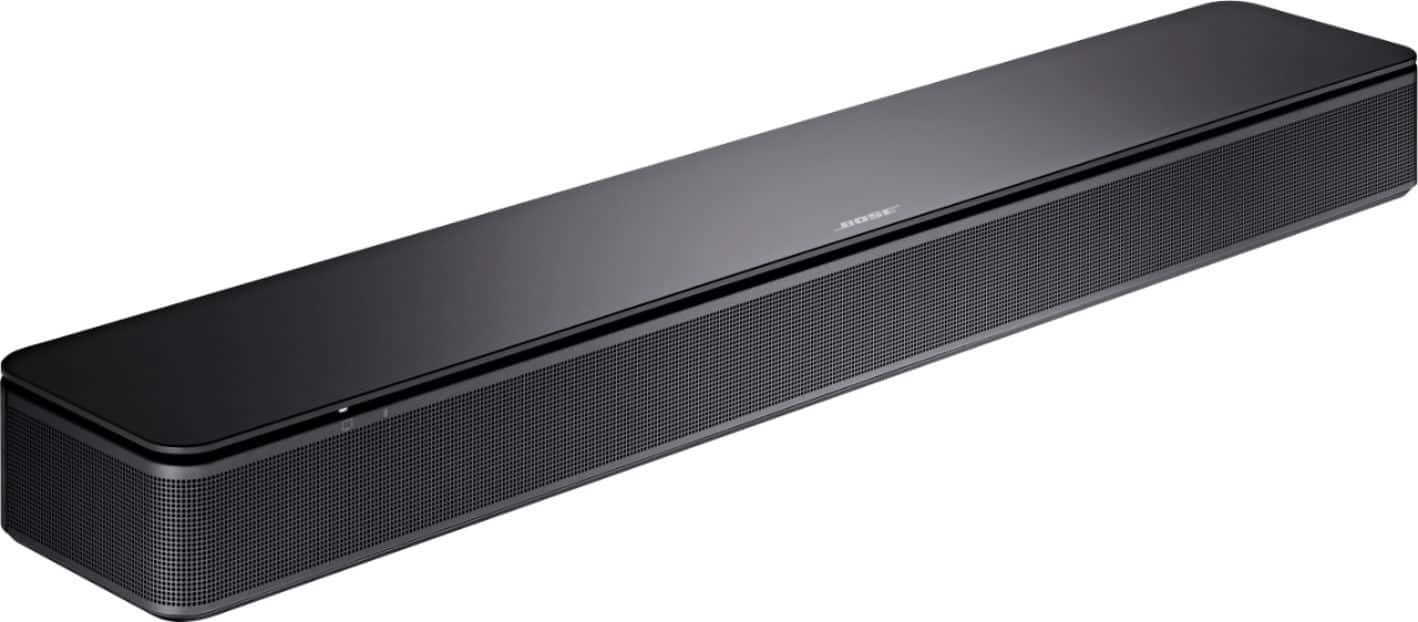
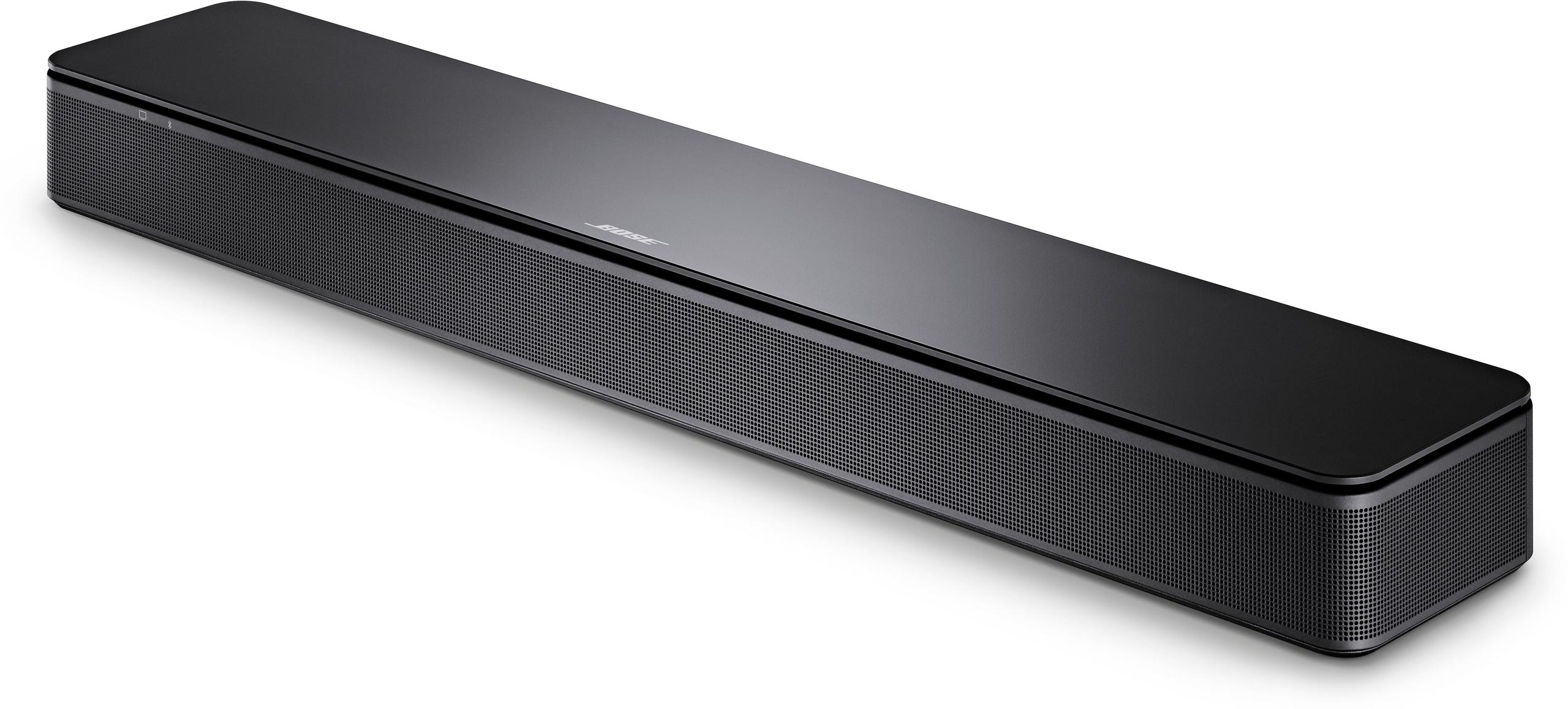
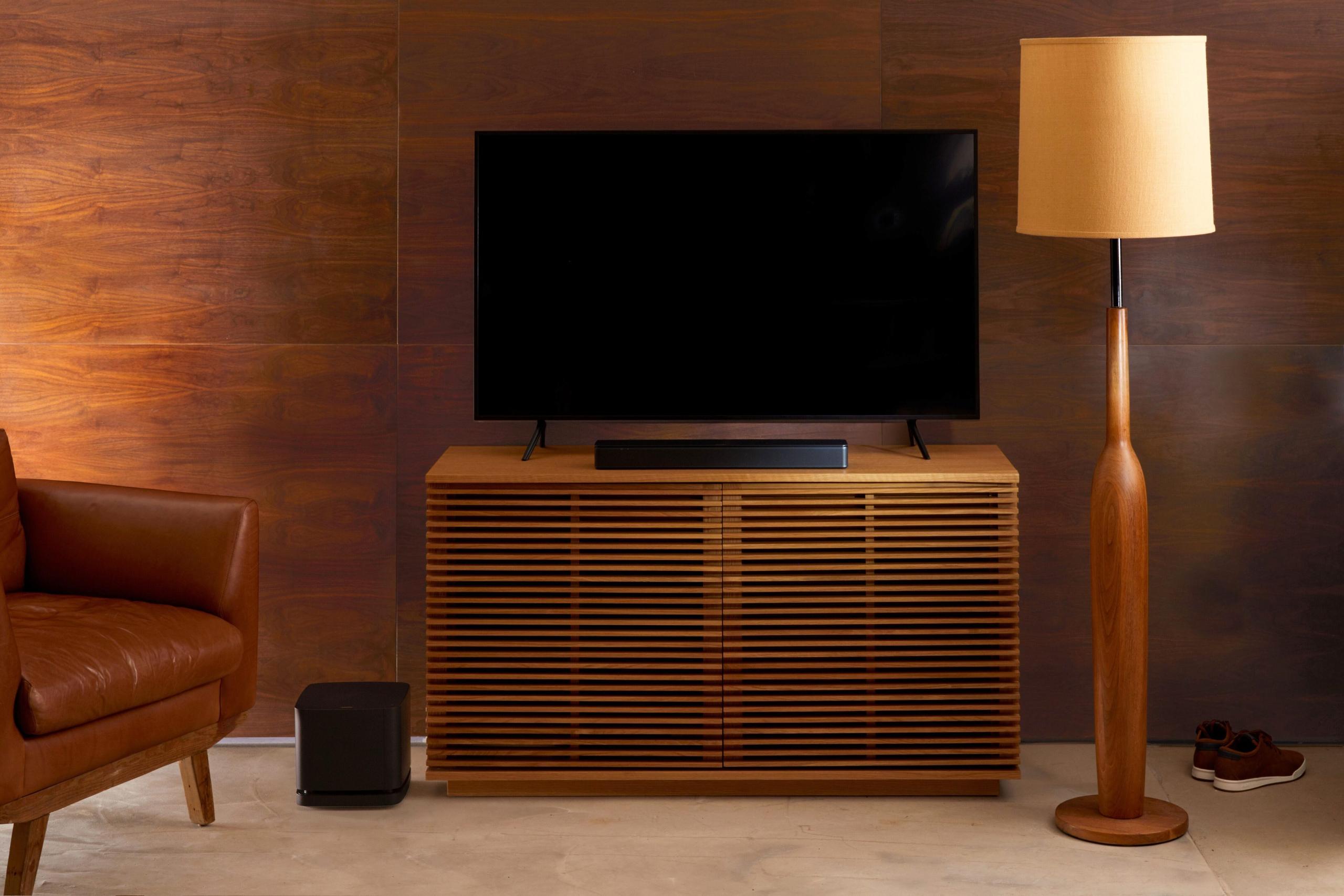
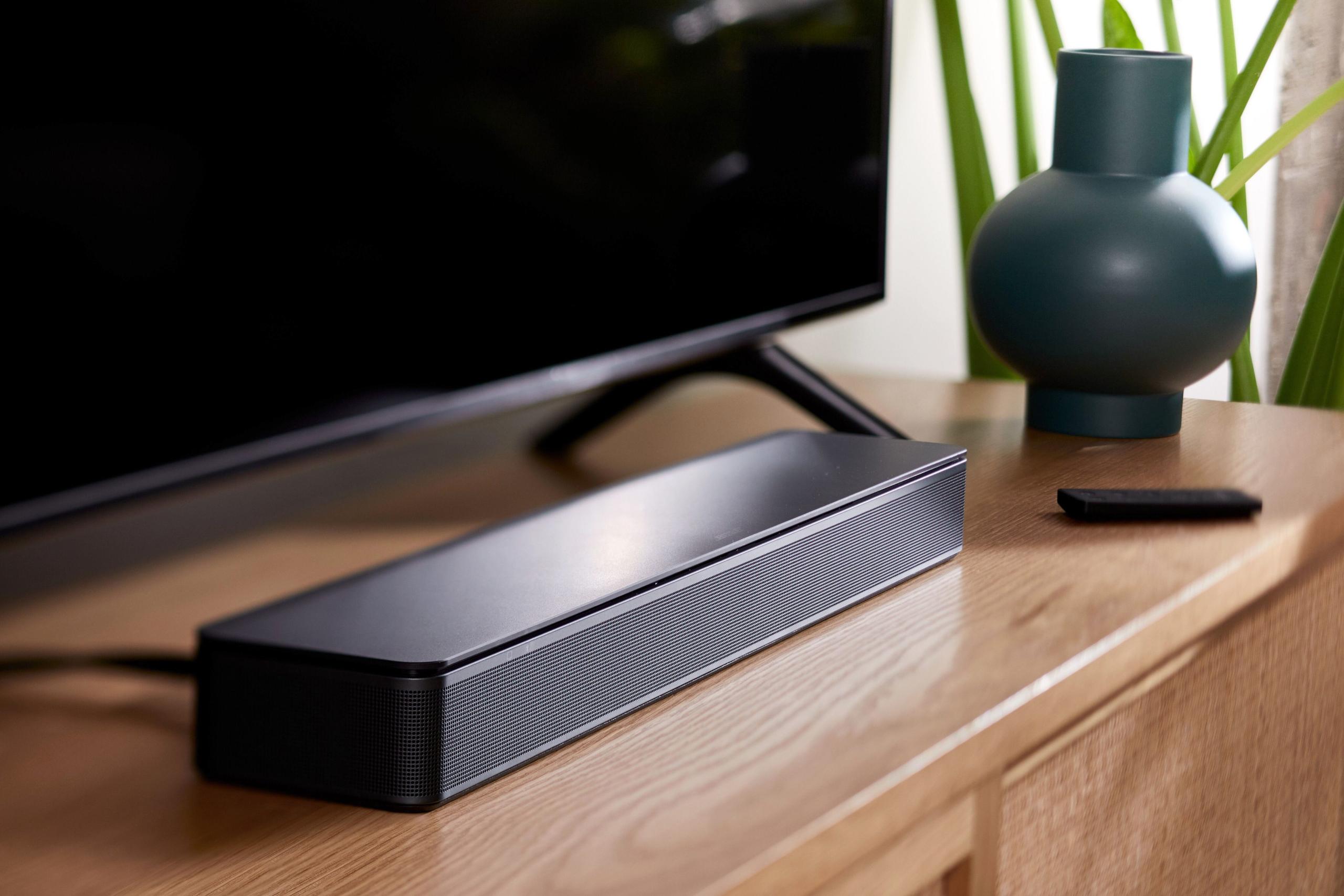
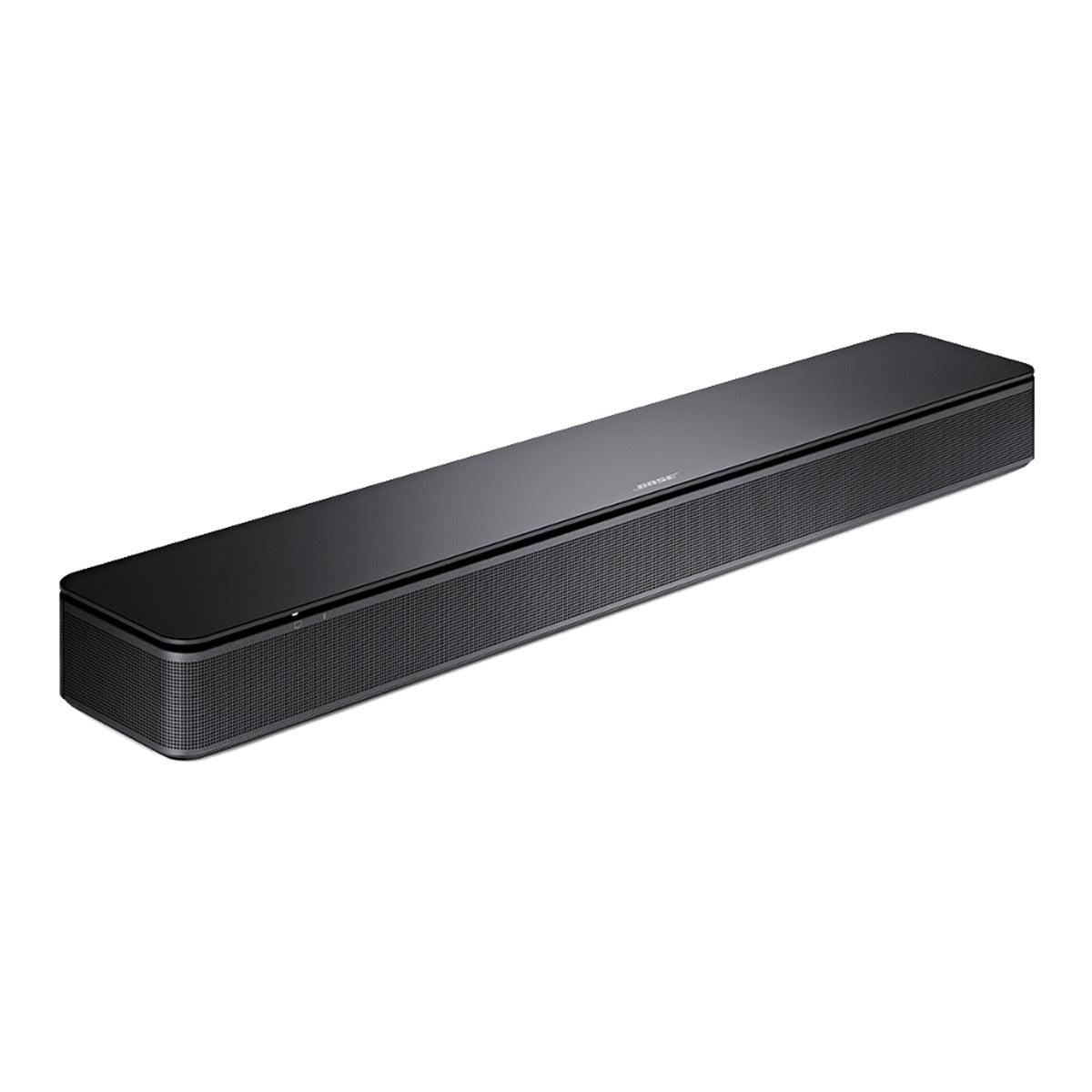
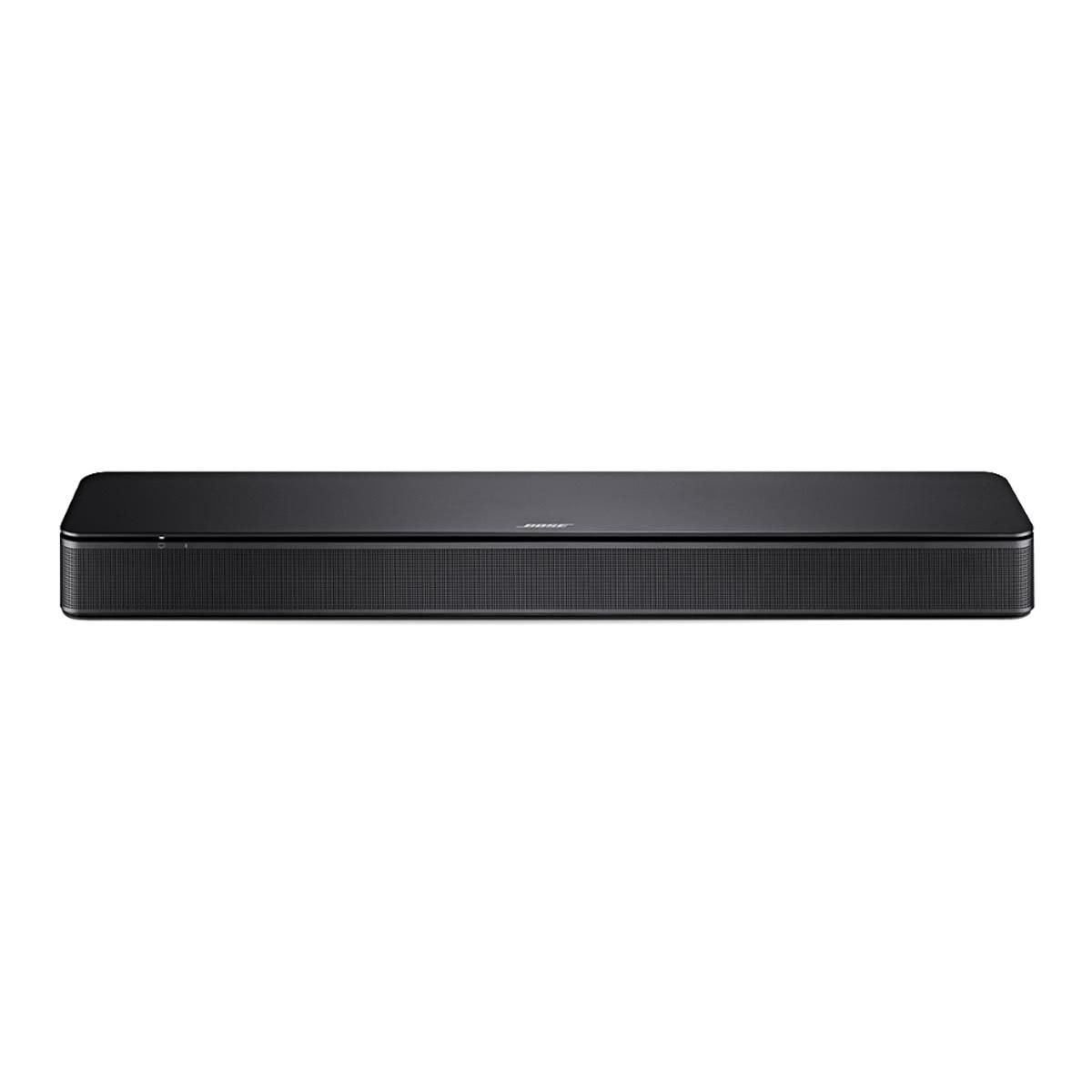
The Bose TV Speaker represents the "keep it simple" philosophy taken to its logical conclusion. It's a single compact unit that sits under your TV and focuses on doing one thing extremely well: making dialogue clearer and more natural than your TV's built-in speakers. Bose has always excelled at extracting impressive sound from small enclosures, and this soundbar continues that tradition.
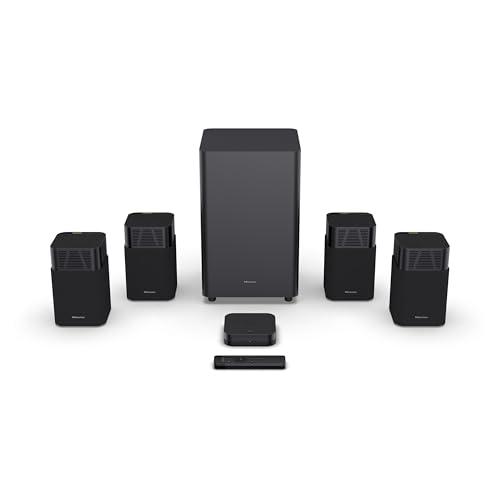
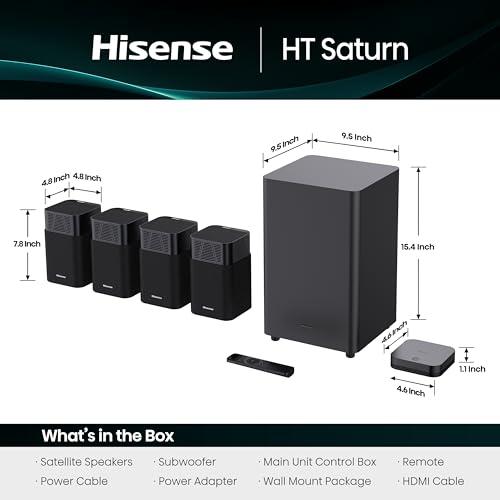
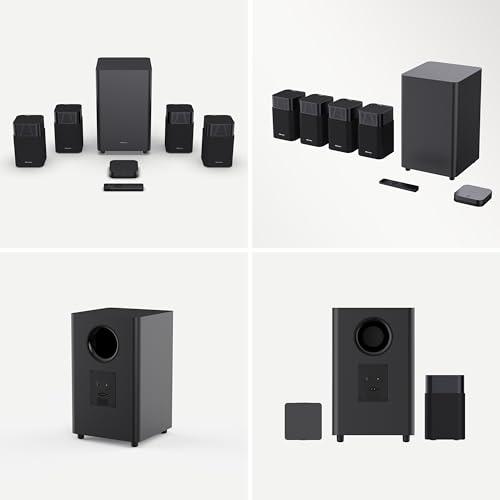
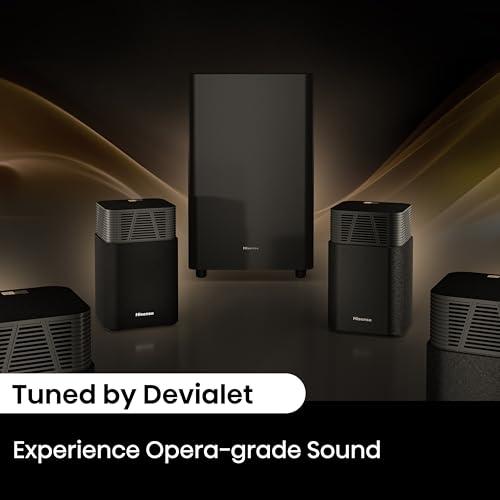
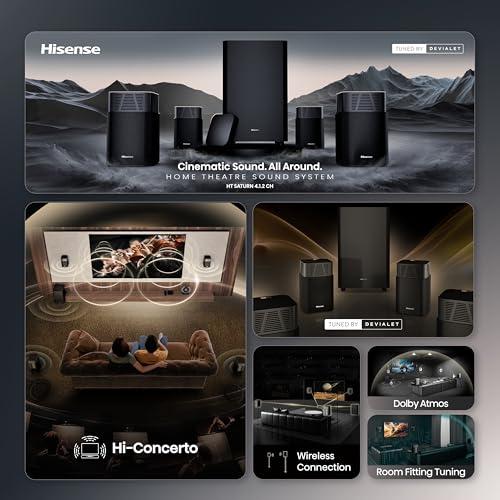
The Hisense HT Saturn, on the other hand, is what happens when you ask, "What if we could recreate a movie theater experience using wireless technology?" Released in 2025 as Hisense's flagship audio product, it represents a collaboration with Devialet, a French company known for extremely high-end audio equipment. Instead of a single soundbar, you get a complete ecosystem: four wireless satellite speakers, a wireless subwoofer, and a central control unit that orchestrates everything.
This fundamental difference in approach affects everything else about these products, from setup complexity to performance capabilities to who should consider buying them.
When evaluating audio performance, we need to consider several key metrics: frequency response (how well the system reproduces different pitches), soundstage (how wide and enveloping the audio feels), dynamic range (the difference between the quietest and loudest sounds), and spatial accuracy (how well effects are positioned in 3D space).
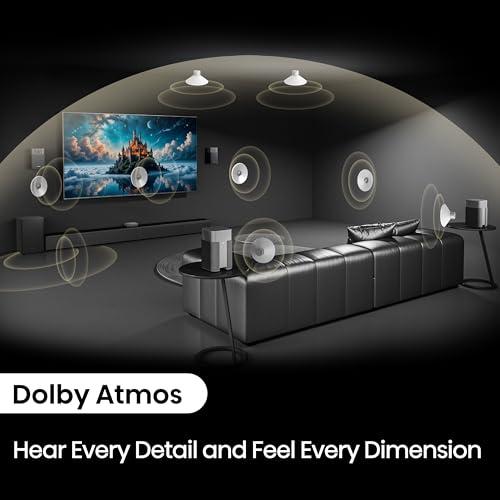
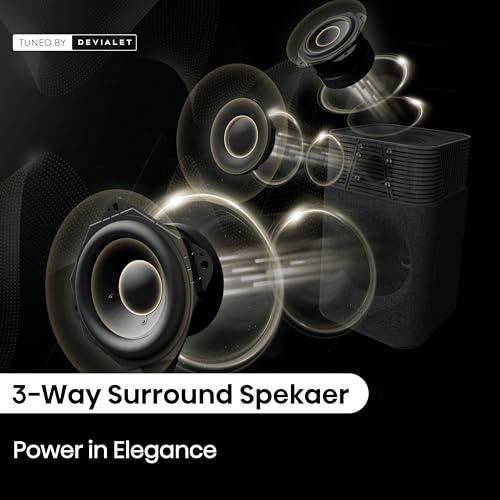
The Hisense HT Saturn excels in all these areas because of its physical advantages. With four separate satellite speakers positioned around your room, it creates what's called a "true surround sound" experience. When a helicopter flies overhead in a movie, the sound actually moves from speaker to speaker above and around you. This is possible because the system includes up-firing speakers—drivers that point toward your ceiling to bounce sound downward, creating the illusion of height.
This system supports Dolby Atmos and DTS:X, which are advanced audio formats that include specific information about where sounds should be positioned in three-dimensional space. Think of them as GPS coordinates for audio—instead of just left and right channels, these formats can place a raindrop anywhere in a virtual sphere around your head. The HT Saturn has the physical speakers to actually reproduce these effects accurately.
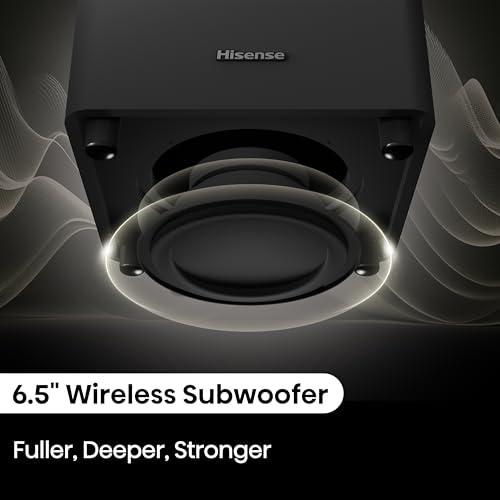
The frequency response is impressive too, extending down to 40Hz thanks to the dedicated 6.5-inch wireless subwoofer. To put that in perspective, that's low enough to reproduce the rumble of thunder, the growl of a T-Rex, or the deep bass lines in your favorite music with real physical impact.
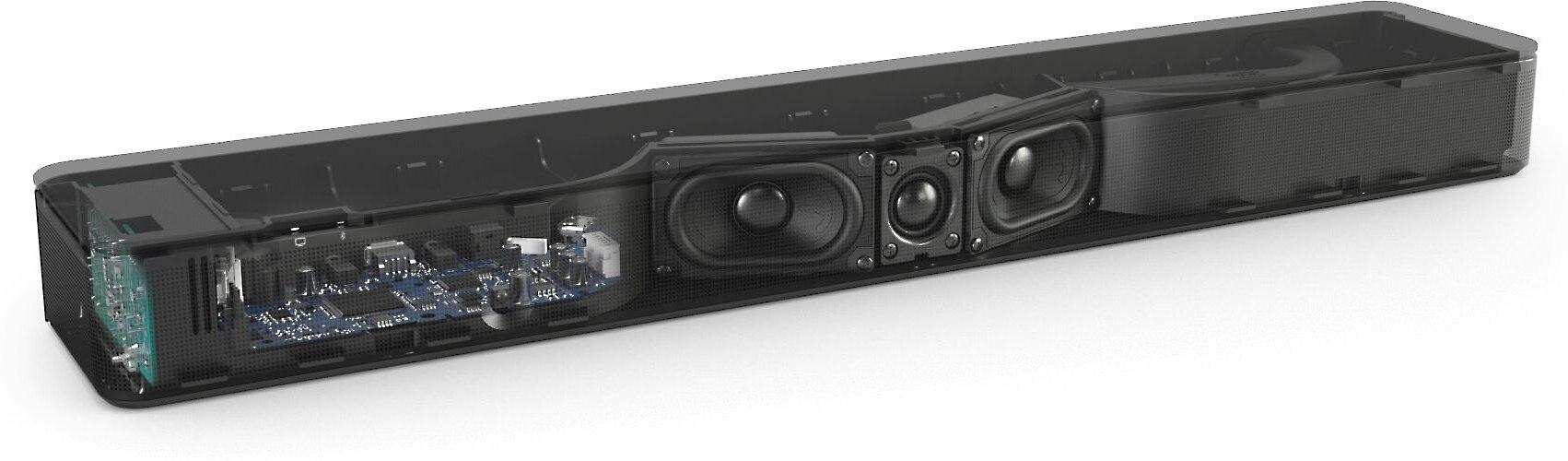
The Bose TV Speaker, working within the constraints of a single-unit design, takes a different approach. It focuses on what Bose calls "wide, spatial sound" using two full-range drivers angled outward and a center tweeter dedicated to speech clarity. While it can't create true surround effects, it does make dialogue noticeably clearer and gives stereo content more width and presence than TV speakers.
Bose's strength here is in signal processing—the digital algorithms that enhance and optimize the audio signal. Their dialogue mode analyzes incoming audio in real-time to boost speech frequencies and reduce background noise, making it easier to follow conversations even during complex scenes.
Bass response deserves special attention because it's where these products differ most dramatically. The Hisense system includes a dedicated wireless subwoofer—a speaker designed specifically for low frequencies. This means explosions have real weight, music has proper foundation, and action scenes feel physically engaging rather than just loud.
The Bose TV Speaker has no dedicated subwoofer, which might seem like a major limitation. However, Bose has engineered the soundbar to produce surprisingly robust bass for its size. It won't shake your couch during action scenes, but it provides enough low-end warmth to make music and dialogue sound natural rather than thin.
For the Bose soundbar, this limitation is actually intentional. The target audience includes people who live in apartments, watch TV late at night, or simply don't want bass that travels through walls. The HT Saturn is designed for people who want to feel every explosion and musical climax.
Regardless of what content you watch, dialogue clarity matters enormously. Modern movie and TV mixes often bury dialogue beneath music and sound effects, making it difficult to follow along without subtitles.
The Bose TV Speaker was designed specifically to solve this problem. Its dedicated center tweeter and dialogue mode work together to lift speech out of complex mixes. In our research of user reviews, this consistently emerges as the soundbar's strongest attribute—people who couldn't understand their shows suddenly can, even at moderate volume levels.
The Hisense HT Saturn takes a more sophisticated approach. Despite having no dedicated center channel speaker, it uses advanced signal processing to create what's called a "phantom center image." This means dialogue appears to come from the center of your TV screen, even though it's actually being produced by the front left and right satellite speakers working together. User reviews suggest this works surprisingly well, though it requires proper speaker positioning to be most effective.
The setup experience reveals the philosophical divide between these products most clearly.
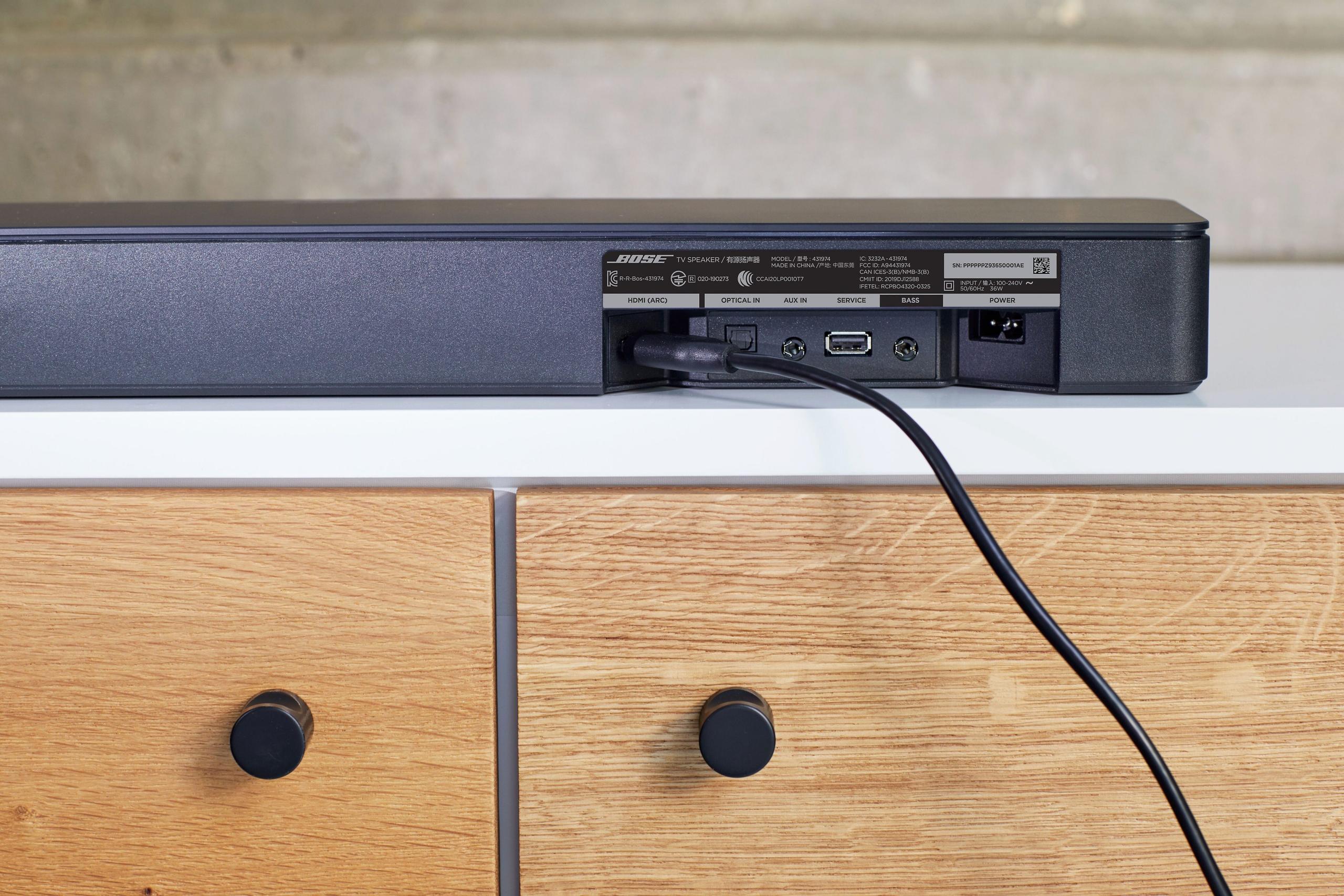
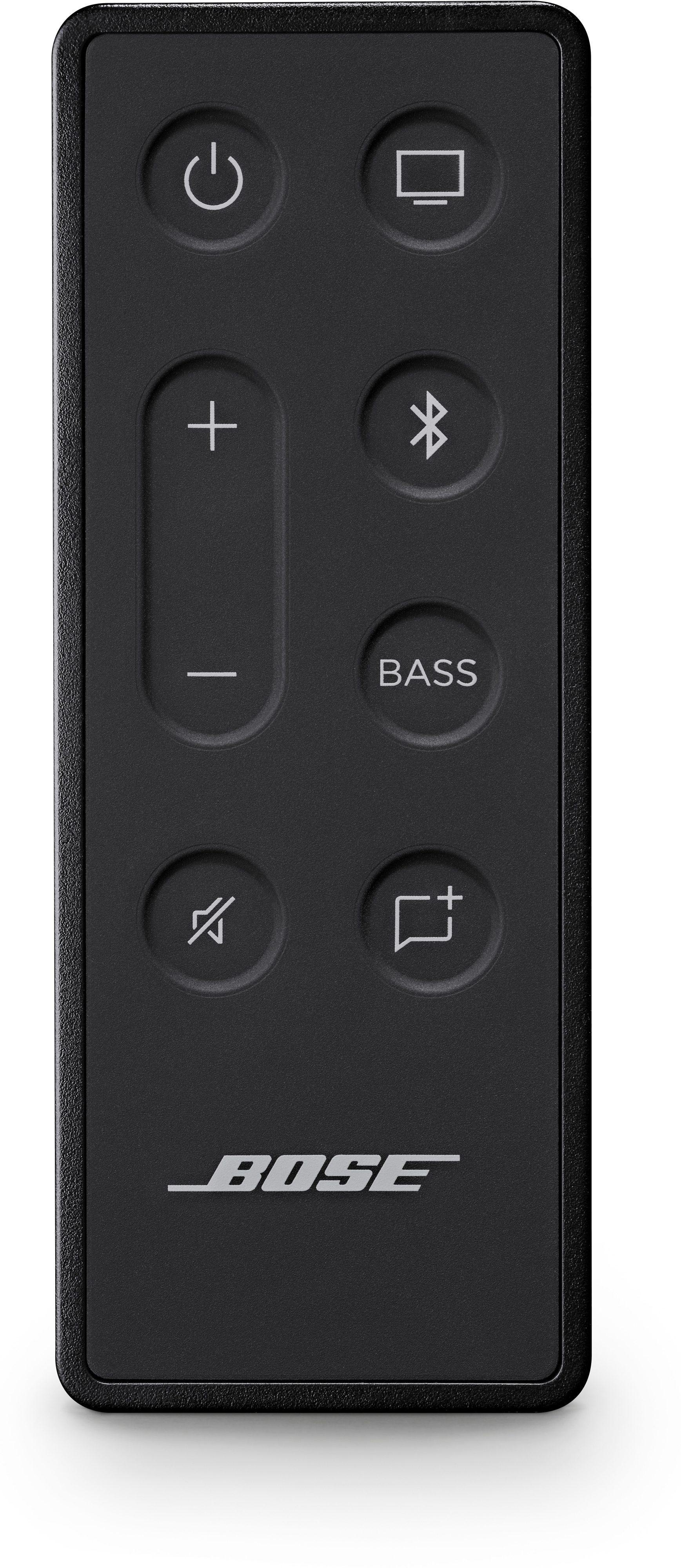
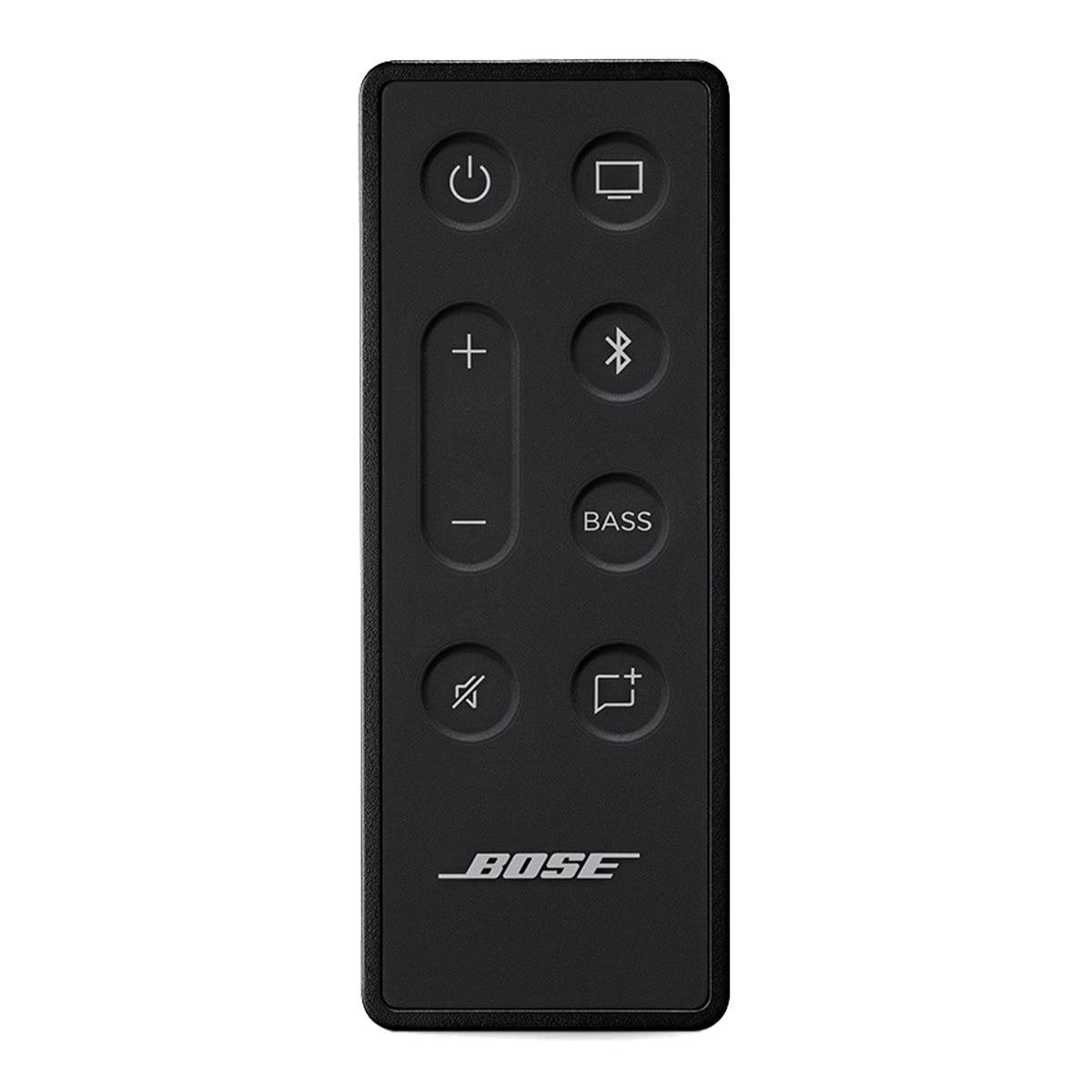
With the Bose TV Speaker, you literally connect one cable (optical audio or HDMI) between your TV and the soundbar, plug it into power, and you're done. The soundbar is designed to work well in its default configuration, though you can adjust bass levels and enable dialogue mode using the included remote. This simplicity is the entire point—Bose wanted to eliminate any barriers between you and better TV sound.
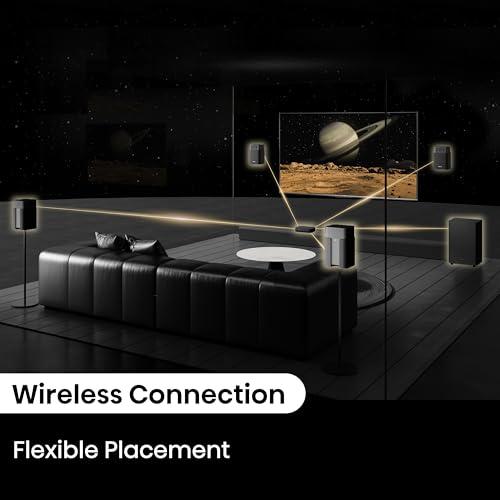
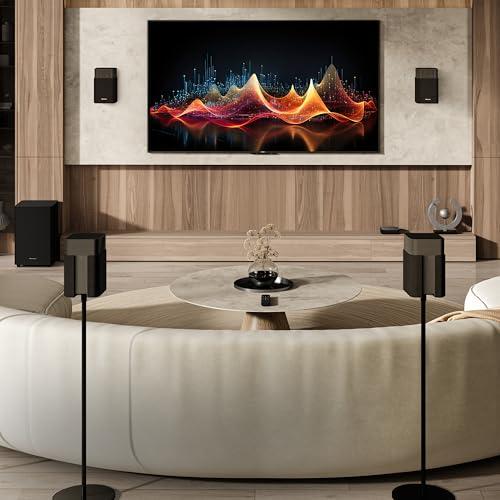
The HT Saturn requires significantly more involvement. You need to find positions for four satellite speakers around your room, each requiring a power outlet. The wireless subwoofer needs placement where it can deliver optimal bass response, typically in a corner or along a wall. Once everything is positioned and powered on, the satellites automatically pair with the central control unit using a tri-band wireless system (2.4GHz, 5.2GHz, and 5.8GHz) designed to avoid interference from your Wi-Fi network and other devices.
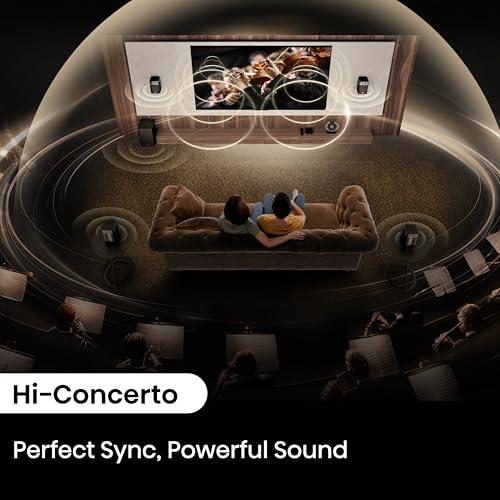
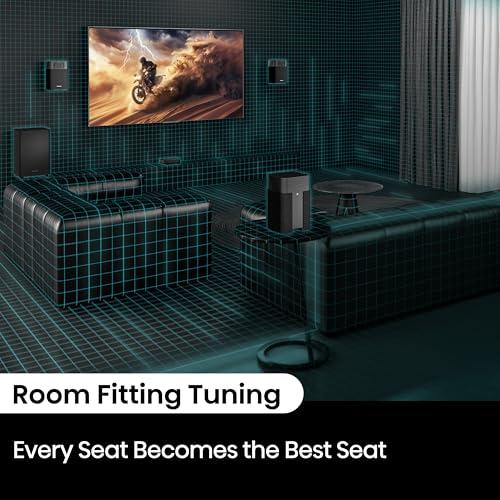
But here's where the Hisense system becomes genuinely impressive: it includes Room Fitting Tuning, an automated calibration process that measures your room's acoustics and adjusts the system accordingly. When paired with a compatible Hisense TV, it can even incorporate the TV's own speakers into the audio mix using Hi-Concerto technology, effectively turning your TV into an additional center channel.
This calibration process matters more than you might expect. Every room has different acoustic properties—carpet absorbs sound differently than hardwood, vaulted ceilings create different reflections than flat ones, and furniture placement affects how sound travels. The HT Saturn's ability to adapt to these variables means you can achieve excellent results even in challenging spaces.
Both products reflect their different target markets in their connectivity options.
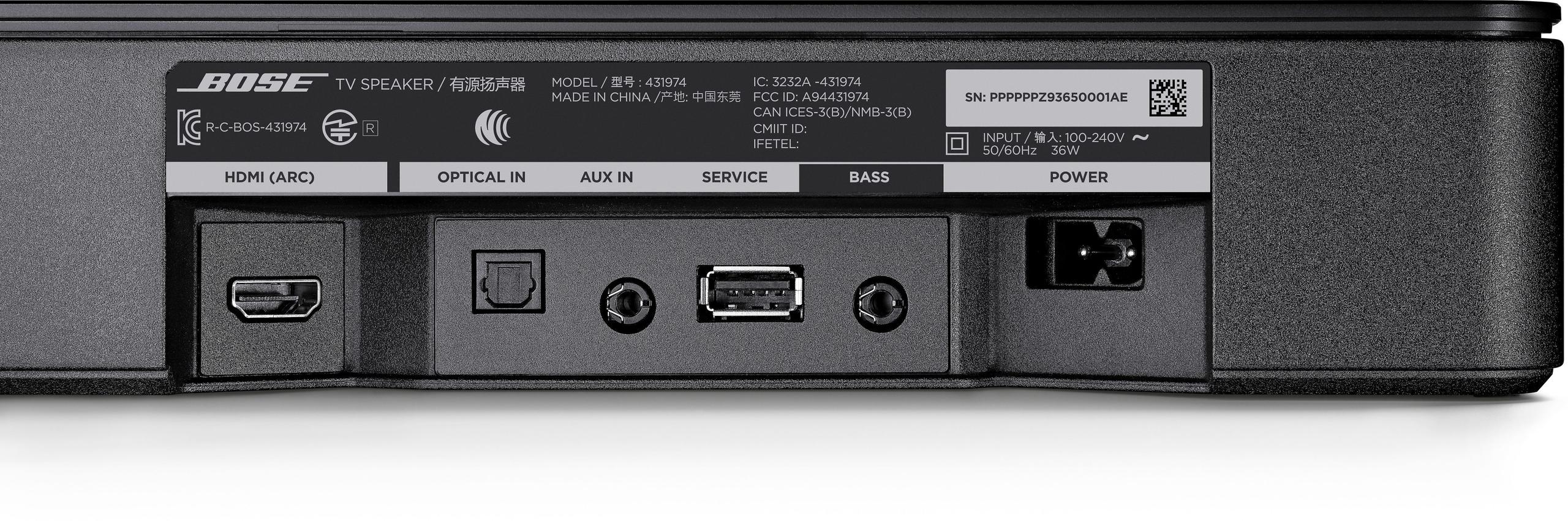
The Bose TV Speaker keeps things basic: HDMI ARC (Audio Return Channel), optical digital input, and 3.5mm analog input cover the vast majority of use cases. HDMI ARC allows your TV to send audio back to the soundbar while also letting you control the soundbar's volume with your TV remote—a simple but important convenience feature.
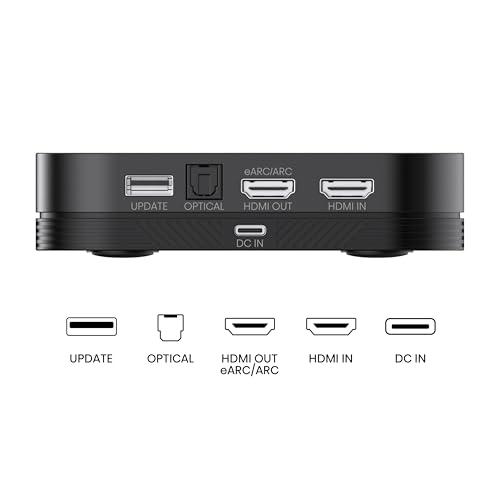
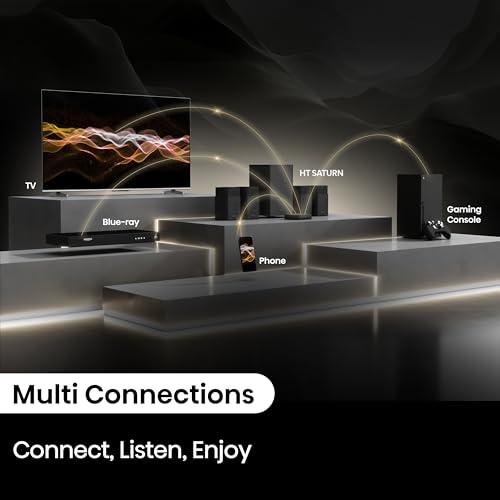
The HT Saturn includes HDMI eARC (enhanced Audio Return Channel), which supports higher-bandwidth audio formats like uncompressed Dolby Atmos. It also offers HDMI pass-through with 4K 60Hz support, meaning you can connect sources directly to the soundbar and pass video through to your TV while extracting the audio for processing.
Both products include Bluetooth for wireless music streaming, though the HT Saturn uses the newer Bluetooth 5.3 standard for improved range and audio quality compared to the Bose soundbar's Bluetooth 4.2 implementation.
The type of content you watch significantly influences which product will serve you better.
For dialogue-heavy content—news, documentaries, sitcoms, and drama series—the Bose TV Speaker excels. Its dialogue mode and speech-focused tuning make it easier to follow conversations, even at lower volume levels that won't disturb others. This makes it particularly appealing for late-night viewing or apartment living.
Action movies and cinematic content heavily favor the HT Saturn. The physical surround sound capabilities mean you'll hear helicopters moving overhead, bullets whizzing past, and environmental effects positioned accurately around you. The dedicated subwoofer adds genuine impact to explosions, crashes, and musical climaxes.
Gaming represents an interesting middle ground. The Bose soundbar provides cleaner audio than TV speakers, which helps with dialogue and ambient sounds. However, the HT Saturn offers true spatial audio that can provide competitive advantages in games where positional audio matters—you might hear an enemy approaching from behind or locate teammates more accurately.
Music listening showcases both products' strengths and weaknesses. The Bose TV Speaker delivers clean, balanced stereo reproduction that's pleasant for casual listening. The HT Saturn can create a more engaging, room-filling experience, especially for music mixed in surround formats, though its room-correction features help optimize stereo content as well.
At the time of writing, these products occupy very different value propositions. The Bose TV Speaker represents exceptional value for money if your primary goal is dramatically improving dialogue clarity and overall TV sound quality with minimal complexity. Dollar for dollar, it's hard to find a simpler path from terrible TV speakers to genuinely enjoyable audio.
The HT Saturn costs significantly more but provides a fundamentally different experience. When evaluating its value, you need to consider what it would cost to achieve similar performance through traditional means. A comparable home theater setup using separate components—AV receiver, four satellite speakers, and subwoofer—would likely cost as much or more, while requiring complex wiring and setup.
The wireless nature of the Hisense system shouldn't be underestimated. Running speaker wire to four locations in most rooms involves either unsightly cables or expensive in-wall installation. The fact that these satellites only need power connections makes the system far more practical for most living situations.
Looking forward, both products should remain relevant for different reasons. The Bose TV Speaker does its core job so well that evolving standards are less relevant—dialogue clarity doesn't become obsolete. The HT Saturn includes modern connectivity standards like HDMI 2.1 and supports current advanced audio formats, suggesting it can handle whatever content creators develop next.
The decision between these products ultimately comes down to understanding your priorities, space, and viewing habits.
Choose the Bose TV Speaker if you want immediate, dramatic improvement over TV speakers without any complexity. It's perfect for people who primarily watch TV shows and news, live in smaller spaces, or simply don't want multiple components in their living room. At its price point, it delivers exceptional value for dialogue clarity and general sound quality improvement.
The HT Saturn makes sense if you're serious about creating a cinematic experience at home. You need space for multiple speakers, the budget for a premium system, and content that benefits from true surround sound. It's ideal for movie enthusiasts, gamers, and anyone who wants their home audio to genuinely compete with commercial theaters.
There's also the question of future expansion. The Bose soundbar is what it is—you can add a subwoofer via a cable connection, but it remains fundamentally a stereo system. The HT Saturn represents a complete solution that's already maximized for its intended purpose.
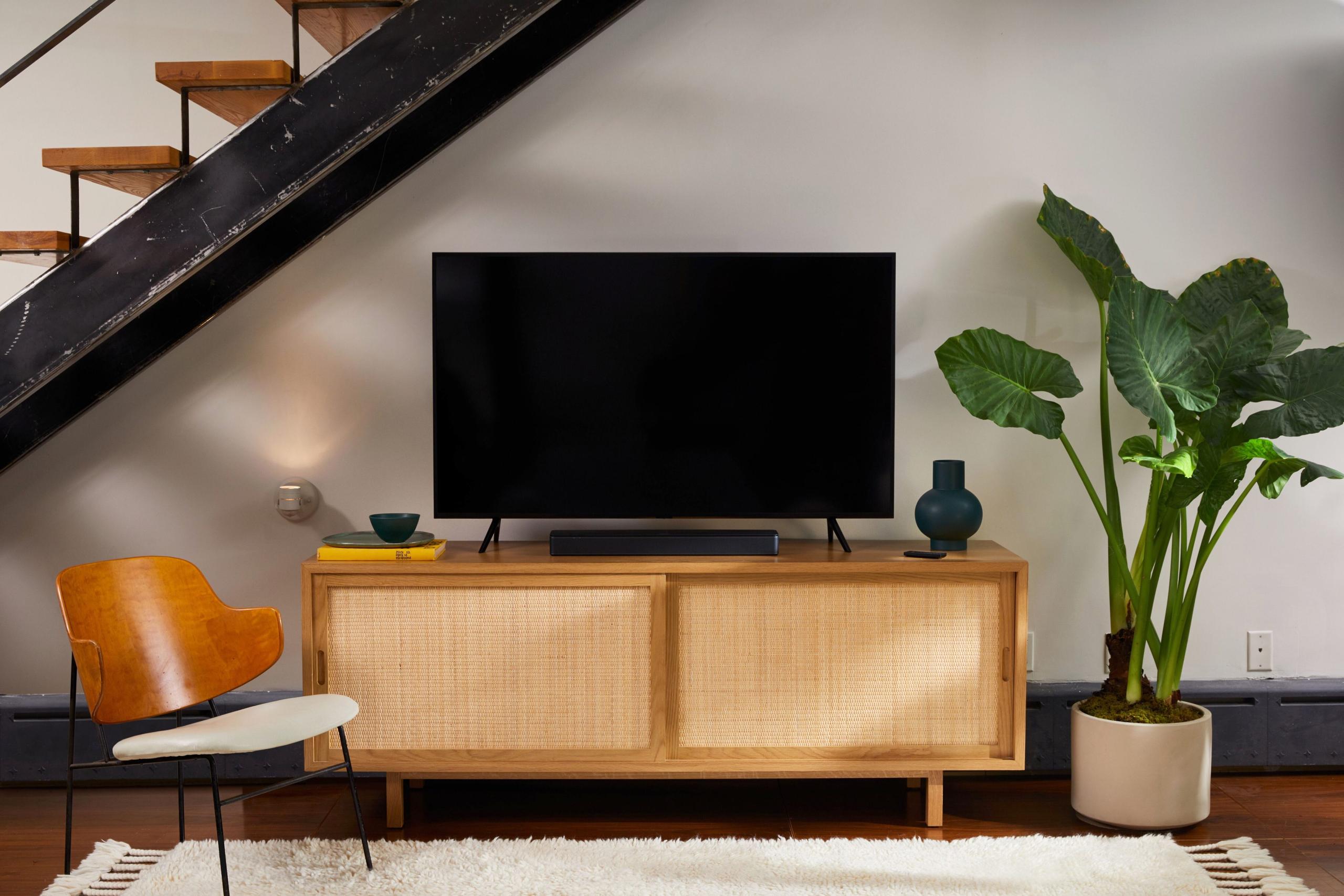
Consider your living space carefully. The Bose TV Speaker works in any room configuration, while the HT Saturn needs strategic speaker placement to perform optimally. If you rent your home or move frequently, the simple setup of the Bose soundbar might be more practical.
Finally, think about your household's viewing habits. If multiple people with different preferences use the same TV, the Bose soundbar's universal improvement in dialogue clarity benefits everyone. If you're the primary user and prioritize immersive entertainment, the HT Saturn's advanced capabilities justify the additional investment and complexity.
Both products successfully solve the problem of poor TV audio, but they do so in fundamentally different ways for different types of users. The key is honest self-assessment about what you actually need versus what sounds exciting in theory.
| Hisense HT Saturn HTSATURN 4.1.2Ch Sound Bar System | Bose TV Speaker Soundbar |
|---|---|
| System Configuration - Determines sound quality and immersion level | |
| 4.1.2 channel with 4 wireless satellites + subwoofer (13 total speakers) | 2.0 channel stereo soundbar (single unit with 3 drivers) |
| Audio Format Support - Essential for modern movies and streaming | |
| Dolby Atmos, DTS:X, DTS Virtual:X with physical height channels | Dolby Digital only, virtualized surround processing |
| Bass Performance - Critical for movies, music, and gaming | |
| Dedicated 6.5" wireless subwoofer (40Hz-20kHz response) | Built-in bass drivers only (limited low-frequency extension) |
| Setup Complexity - Affects daily usability and WAF (Wife Acceptance Factor) | |
| Multi-room setup with 4 satellites + subwoofer placement required | Single cable connection, immediate plug-and-play operation |
| Room Calibration - Optimizes performance for your specific space | |
| Advanced Room Fitting Tuning with automatic acoustic adjustment | Fixed sound profile, manual bass adjustment only |
| Connectivity Options - Future-proofing and source flexibility | |
| HDMI eARC, HDMI input, optical, Bluetooth 5.3, 4K 60Hz pass-through | HDMI ARC, optical, 3.5mm analog, Bluetooth 4.2 |
| Smart TV Integration - Convenience and control simplification | |
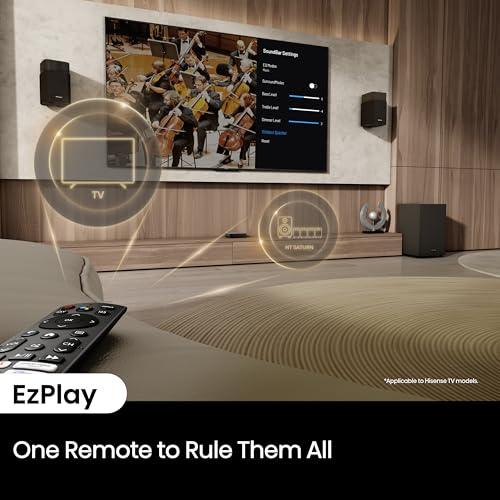
| Hi-Concerto (uses TV speakers as additional channels), EzPlay control | Basic HDMI-CEC volume control, universal TV compatibility |
| Physical Footprint - Impact on room aesthetics and placement flexibility | |
| Requires space for 4 satellites around room plus subwoofer | Compact 23.4" x 2.2" x 4" bar fits under most TVs |
| Wireless Technology - Reliability and interference resistance | |
| Tri-band wireless (2.4G/5.2G/5.8G) for stable multi-speaker sync | Bluetooth-only for music streaming, wired TV connection |
| Target Content Performance - What each system does best | |
| Excels with movies, gaming, music; good dialogue via phantom center | Optimized specifically for TV dialogue and news content |
| Power and Scale - Maximum output capabilities | |
| 500W total system power across all components | Compact drivers optimized for near-field listening |
| Expandability - Future upgrade potential | |
| Complete system as-shipped, no expansion options | Optional wired Bass Module 500/700 subwoofer compatibility |
| Value Proposition - Cost vs. performance consideration | |
| Premium home theater experience at significantly higher investment | Maximum dialogue improvement per dollar with minimal complexity |
The Bose TV Speaker is specifically designed for dialogue clarity and excels in this area with its dedicated center tweeter and dialogue mode that analyzes audio to boost speech frequencies. While the Hisense HT Saturn delivers clear dialogue through its phantom center processing, the Bose TV Speaker is the clear winner for anyone prioritizing speech intelligibility above all else.
The fundamental difference is system architecture: the Hisense HT Saturn is a complete 4.1.2 wireless home theater system with four satellite speakers and a subwoofer, while the Bose TV Speaker is a simple stereo soundbar in a single unit. This means the HT Saturn provides true surround sound and Dolby Atmos, while the Bose soundbar focuses on improving TV audio with minimal complexity.
The Bose TV Speaker wins on simplicity with its single-cable connection and plug-and-play operation. You can go from unboxing to watching in minutes. The Hisense HT Saturn requires positioning four satellite speakers around your room, connecting power to each, and running through calibration, making it significantly more complex but ultimately more rewarding for serious home theater use.
The Bose TV Speaker requires minimal space—just room under your TV for a 23.4-inch soundbar. The Hisense HT Saturn needs considerably more space since you must position four satellite speakers around your room plus find a spot for the wireless subwoofer. If space is limited, the Bose TV Speaker is the practical choice.
The Hisense HT Saturn is significantly better for movies and gaming due to its true Dolby Atmos support, surround sound capabilities, and dedicated subwoofer that provides real bass impact. The multi-speaker setup creates immersive 3D audio where you can hear effects moving around and above you. The Bose TV Speaker improves movie audio over TV speakers but can't match the cinematic experience of the HT Saturn.
Yes, both systems work with any TV brand. However, the Hisense HT Saturn offers special integration features like Hi-Concerto technology when paired with compatible Hisense TVs, which uses the TV's speakers as additional channels. The Bose TV Speaker provides universal compatibility with consistent performance regardless of your TV brand.
The Hisense HT Saturn has significantly better bass with its dedicated 6.5-inch wireless subwoofer that extends down to 40Hz, providing real impact for explosions and music. The Bose TV Speaker produces impressive bass for its compact size but cannot match the depth and power of a dedicated subwoofer. For bass-heavy content, the HT Saturn is the clear winner.
The Hisense HT Saturn offers more advanced connectivity with HDMI eARC, HDMI input with 4K pass-through, optical input, and Bluetooth 5.3. The Bose TV Speaker provides HDMI ARC, optical, 3.5mm analog input, and Bluetooth 4.2. The HT Saturn supports higher-quality audio formats and newer wireless standards, making it more future-proof.
This depends on your needs and budget. The Bose TV Speaker offers exceptional value if you want dramatic improvement over TV speakers with minimal investment and complexity. The Hisense HT Saturn costs significantly more but provides a complete home theater experience that would cost similar amounts using separate components. For basic TV improvement, choose Bose; for cinematic experience, the HT Saturn justifies its premium.
The Bose TV Speaker can be expanded with compatible Bose Bass Modules (500 or 700) via wired connection for additional bass. The Hisense HT Saturn comes as a complete system with no expansion options, but it's already designed as a full home theater setup. If you want to start small and grow, the Bose system offers more flexibility.
The Bose TV Speaker is better suited for apartment living due to its compact size, simple setup, and neighbor-friendly audio output that focuses on dialogue clarity rather than room-shaking bass. The Hisense HT Saturn with its powerful subwoofer and surround sound might disturb neighbors and requires more space than most apartments can accommodate.
Both systems handle music well but differently. The Bose TV Speaker delivers clean, balanced stereo sound that's pleasant for casual music listening. The Hisense HT Saturn creates a more immersive, room-filling musical experience with its multi-speaker array and subwoofer, especially for music with surround sound mixing. For serious music enjoyment, the HT Saturn provides a more engaging experience.
We've done our best to create useful and informative comparisons to help you decide what product to buy. Our research uses advanced automated methods to create this comparison and perfection is not possible - please contact us for corrections or questions. These are the sites we've researched in the creation of this article: bestbuy.com - youtube.com - blog.son-video.com - youtube.com - youtube.com - techradar.com - ecoustics.com - jbhifi.com.au - shop.hisense-usa.com - bhphotovideo.com - bestbuy.com - digitalreviews.net - hisense-usa.com - projectorscreenstore.com - valueelectronics.com - dolby.com - giftpack.ai - bestbuy.com - projectorscreen.com - forums.audioholics.com - digitaltrends.com - abt.com - crutchfield.com - staples.com - bestbuy.com - pcrichard.com - visions.ca - bose.com - assets.bose.com

Privacy Policy
Terms and Conditions - Affiliate Policy
Home Security
© Copyright 2008-2026.
11816 Inwood Rd #1211, Dallas, TX 75244