

When your TV's built-in speakers make dialogue sound like it's coming from inside a tin can, it's time to upgrade. But today's soundbar market has evolved way beyond simple single-unit solutions. We're now seeing complete wireless home theater systems that promise cinema-quality surround sound without running speaker wires throughout your living room.
Two systems that represent dramatically different approaches to this challenge are the Hisense HT Saturn and the Amazon Fire TV Soundbar Plus. Released in late 2025 and 2023 respectively, these products show how the category has matured—and how different companies interpret what "wireless surround sound" should actually mean.
Before diving into specifics, it's worth understanding what these systems are trying to accomplish. Traditional home theater requires an AV receiver (the brain that processes audio signals) connected to multiple speakers placed around your room with physical wires. It sounds amazing but requires planning, installation, and often professional help.
Soundbars initially simplified this by cramming multiple speakers into a single unit that sits under your TV. They use psychoacoustic tricks—basically fooling your brain into hearing sounds from different directions—to simulate surround effects. This works reasonably well but has physical limitations.
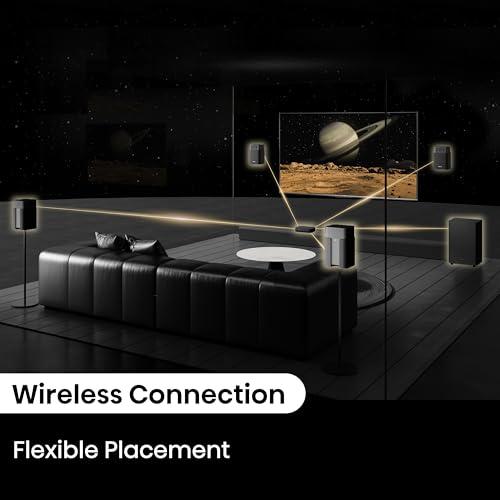
The latest evolution splits the difference: multiple wireless speakers that communicate with a central hub, giving you true surround sound (different audio actually coming from different locations) without the installation complexity. Think of it as the convenience of wireless earbuds applied to home theater.
Both the Hisense HT Saturn and Fire TV Soundbar Plus follow this philosophy, but they execute it in fundamentally different ways.
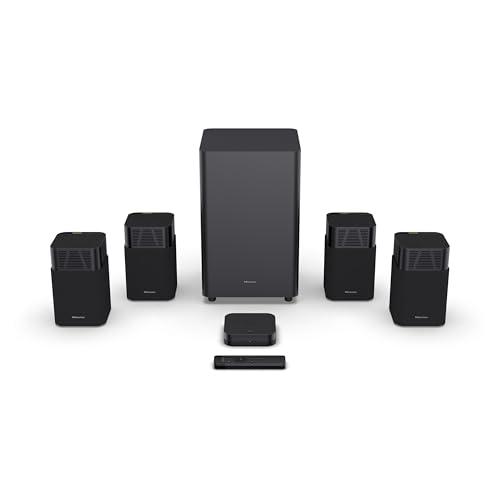
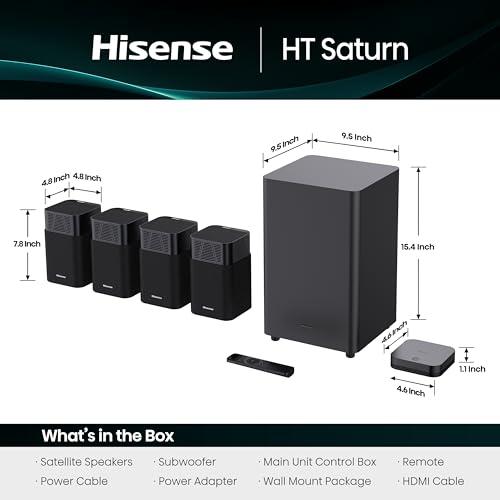
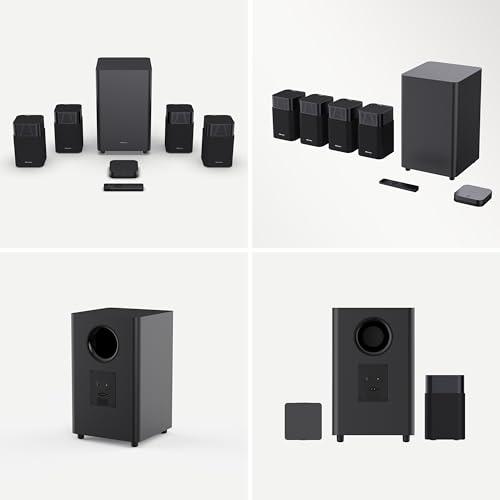
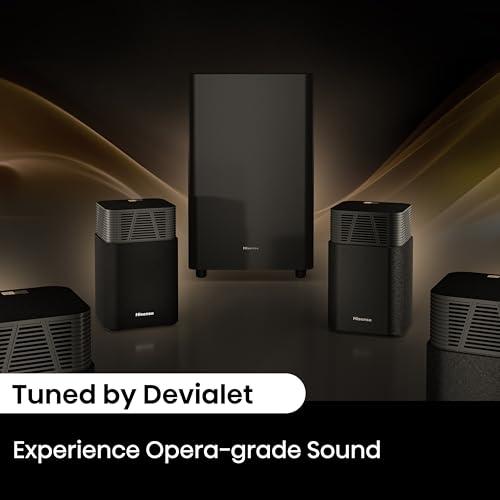
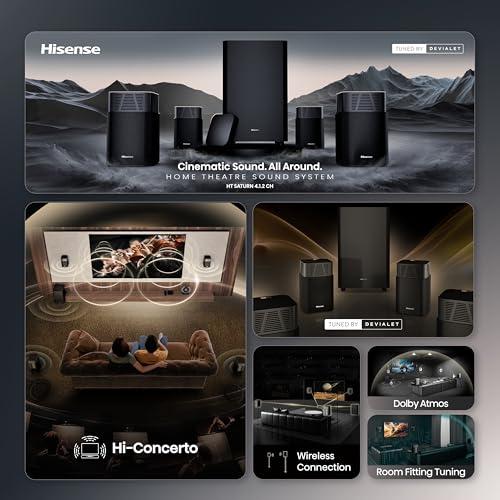
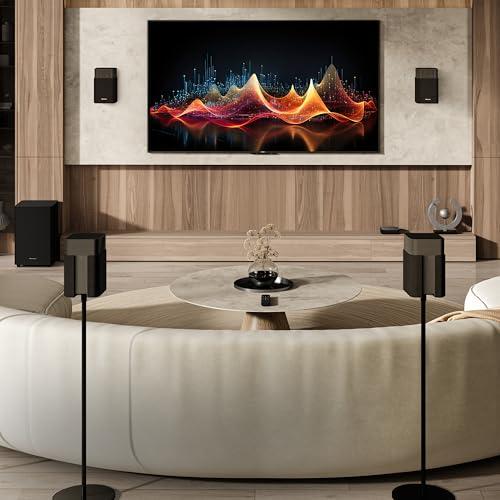
The Hisense HT Saturn takes what I'd call the "distributed approach." Instead of a traditional soundbar, you get four compact satellite speakers that you position around your room, plus a wireless subwoofer and a small control hub. It's like having a proper 4.1.2 home theater system (4 main channels, 1 subwoofer, 2 height channels) that happens to connect wirelessly.
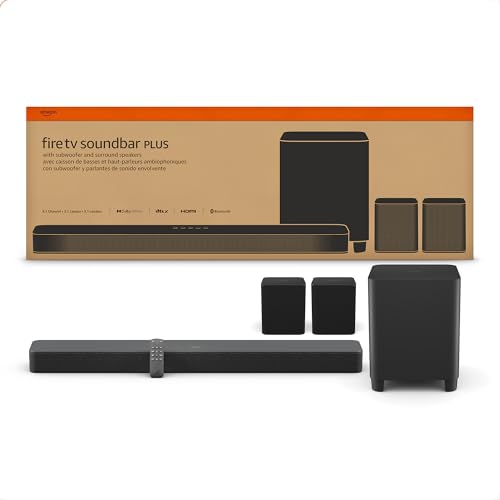
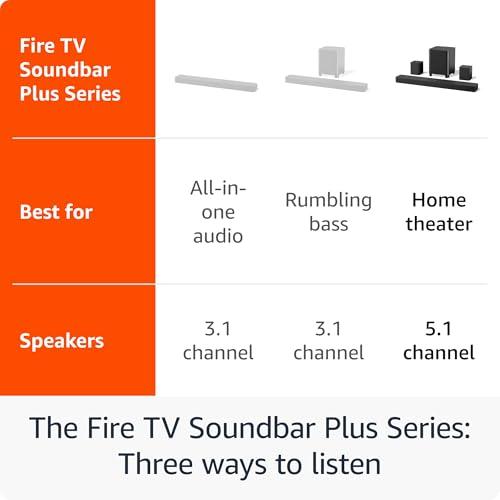
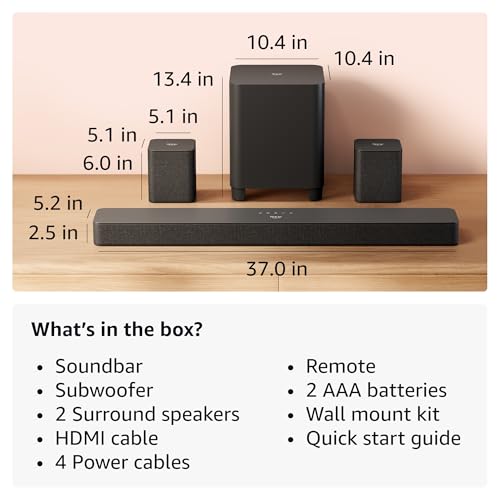
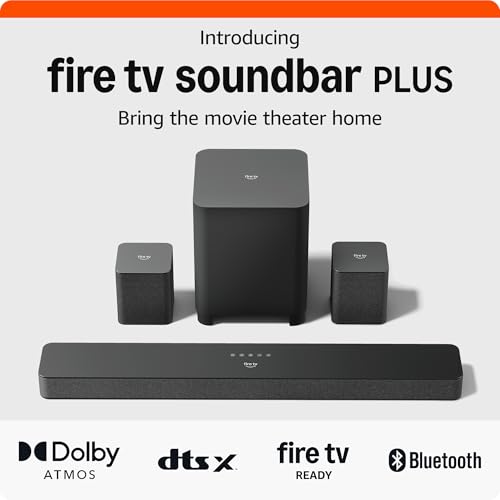
The Amazon Fire TV Soundbar Plus uses the "enhanced soundbar approach." You get a conventional soundbar for your main audio, then add a wireless subwoofer and two rear speakers to complete a 5.1 setup (5 main channels, 1 subwoofer). It's more familiar if you're used to traditional soundbars but expands the experience significantly.
These different philosophies create distinct advantages and trade-offs that matter depending on your room, preferences, and technical comfort level.
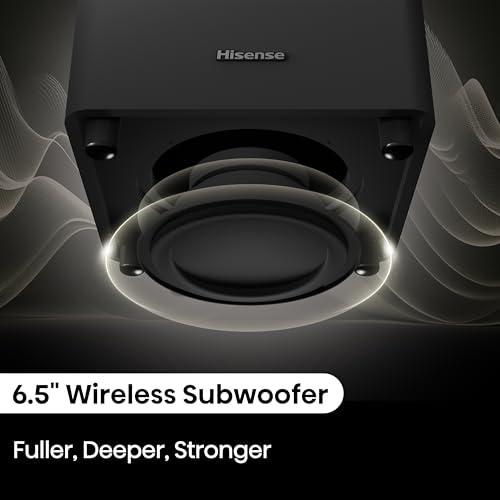
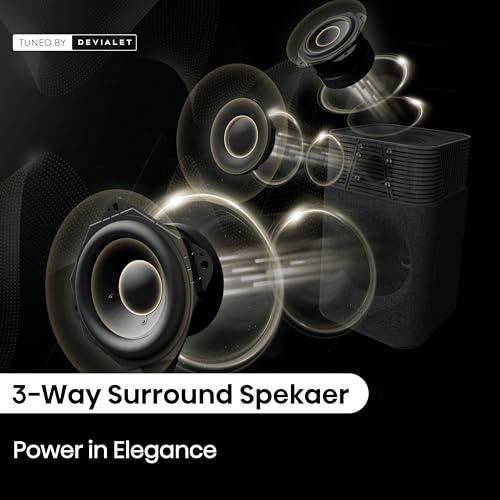
The Hisense HT Saturn packs serious hardware. With 720 watts total power driving 13 individual speakers (8 full-range drivers, 4 tweeters, and a 6.5-inch subwoofer), it's more like a proper component system than a soundbar accessory. Each satellite speaker uses a 3-way design, meaning different drivers handle bass, midrange, and treble separately. This specialization typically results in cleaner, more detailed sound because each driver can focus on what it does best.
The Fire TV Soundbar Plus doesn't publish specific power figures, but based on our research into similar systems and user feedback, it's likely around 300 watts total. That's still plenty for most rooms, but the difference becomes noticeable when you want to fill larger spaces or achieve truly cinematic volume levels without distortion.
More important than raw power is how these systems use their drivers. The Hisense benefits from acoustic tuning by Devialet, a French company known for high-end audio engineering. This tuning process involves carefully balancing frequency response, crossover points (where different drivers hand off to each other), and time alignment so everything sounds cohesive. Based on professional reviews, this shows up as cleaner dialogue, better instrument separation in music, and more natural sound overall.
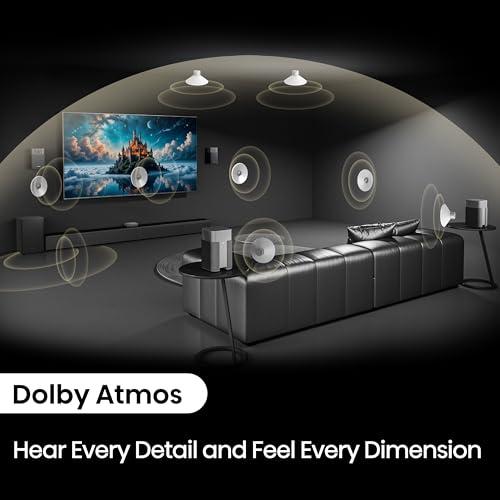
Here's where these systems diverge most significantly. Dolby Atmos is an audio format that places sounds as "objects" in 3D space rather than just assigning them to specific channels. Done right, you hear helicopters flying overhead, rain falling from above, or subtle ambient sounds that seem to come from specific locations around and above you.
The Hisense HT Saturn implements what's called "true" Dolby Atmos. Two of its satellite speakers include up-firing drivers—speakers that point toward the ceiling to bounce sound down from above. When you hear that helicopter in a movie, the audio actually travels up to your ceiling and reflects back down, creating a genuine sense of height. It's the same principle used in high-end dedicated home theater rooms.
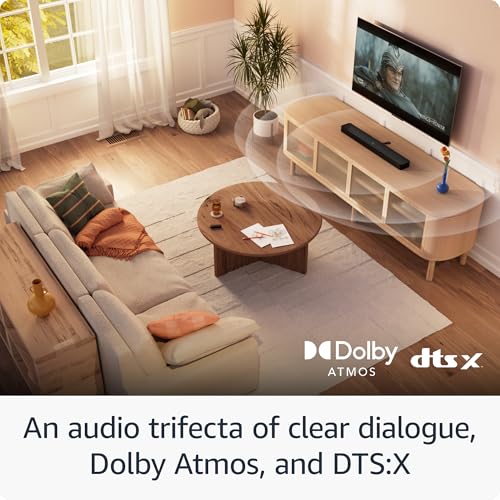
The Fire TV Soundbar Plus uses virtual Atmos processing. The system analyzes Atmos content and uses psychoacoustic processing to simulate height effects through its existing speakers. You'll hear more spacious sound and some sense of verticality, but it's not as convincing as physical height speakers. Think of it like the difference between hearing a real orchestra versus a very good recording played through headphones.
In practical terms, this means the Hisense creates a more immersive experience with content that includes significant overhead effects—think action movies, nature documentaries, or video games. The Fire TV system still sounds good with this content, but the "wow factor" of truly overhead audio is diminished.
This is where things get interesting. The Fire TV Soundbar Plus has a dedicated center channel speaker in its soundbar, specifically designed to handle dialogue. This typically results in very clear, anchored speech that seems to come directly from your TV screen. Our research into user feedback consistently highlights this as a strength of the system.
The Hisense HT Saturn creates what's called a "phantom center"—using its left and right front speakers to create the illusion of a center channel. This can work remarkably well when tuned properly (and Devialet's involvement suggests it is), but it requires more precise speaker placement and room acoustics to sound optimal.
In practice, most users find both systems handle dialogue well, but the Fire TV system might have a slight edge for people who primarily watch TV shows and movies where clear speech is paramount.
Setting up the Hisense HT Saturn requires more thought and planning. You need to position four satellite speakers around your room—ideally with two in front and two behind your listening position. The up-firing speakers work best when there's adequate space above them (at least a few feet to the ceiling) and relatively flat ceiling surfaces for sound reflection.
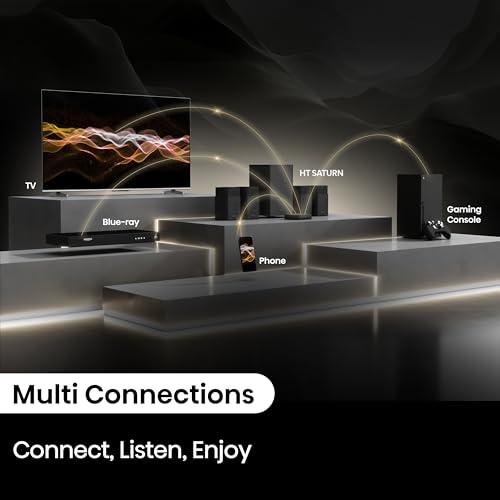
The payoff is a completely wireless system once everything's positioned. Only power cables connect to wall outlets; everything else communicates wirelessly using three different frequency bands (2.4GHz, 5.2GHz, and 5.8GHz) to avoid interference. This tri-band approach is more sophisticated than typical wireless speakers and helps maintain stable connections even in homes crowded with Wi-Fi devices.
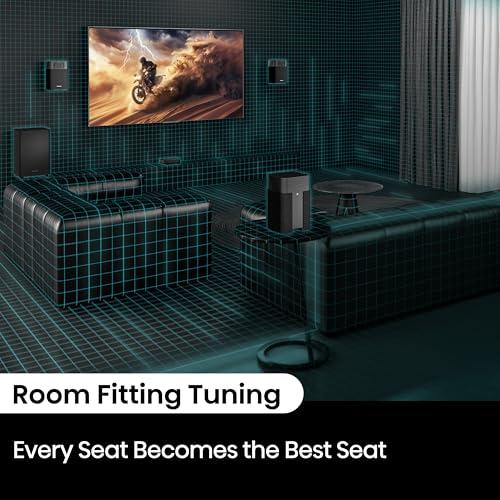
The system also includes Room Fitting Tuning when paired with compatible Hisense TVs. This feature analyzes your room's acoustics and automatically adjusts speaker levels, timing, and EQ to compensate for your specific space. It's similar to room correction systems found in high-end AV receivers.
The Fire TV Soundbar Plus follows a more conventional approach. The soundbar goes under or near your TV, the subwoofer can be placed anywhere convenient (wireless subwoofers are quite flexible about placement), and you position two rear speakers behind your seating area.
Everything comes pre-paired from the factory, meaning you simply power everything on and it works. No pairing procedures, no app downloads required for basic operation, no complex positioning requirements. For many people, this plug-and-play experience trumps any technical advantages of more complex systems.
The Hisense HT Saturn's 720-watt power output and distributed speaker design make it well-suited for medium to large rooms. Based on our evaluation of user feedback, it maintains good performance even in spaces up to 400-500 square feet, where many soundbars start to sound thin or strained.
The Fire TV system's more modest power output works well in smaller to medium rooms—probably up to 300 square feet before you start wishing for more oomph. The trade-off is that it's less likely to overpower smaller spaces or annoy neighbors in apartments.
Both systems handle movie content well, but they diverge when it comes to music. The Hisense system's 3-way satellite speakers and Devialet tuning show their strengths with stereo music, creating a wider, more detailed soundstage. The distributed speaker placement means you get genuine stereo separation rather than everything coming from one direction.
The Fire TV system handles music adequately but doesn't disappear the way good speakers should. You're more aware that sound is coming from the soundbar and rear speakers rather than from an invisible soundstage in your room.
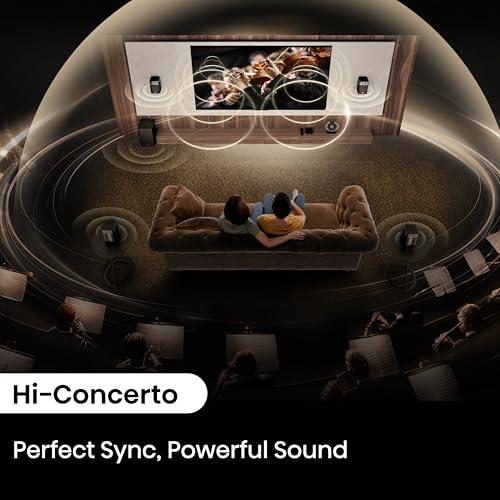
If you own a Hisense TV, the HT Saturn offers unique integration through Hi-Concerto technology. This feature actually uses your TV's built-in speakers alongside the sound system, creating an even wider front soundstage. It sounds gimmicky, but based on professional reviews, it can genuinely improve the sense of scale and immersion.
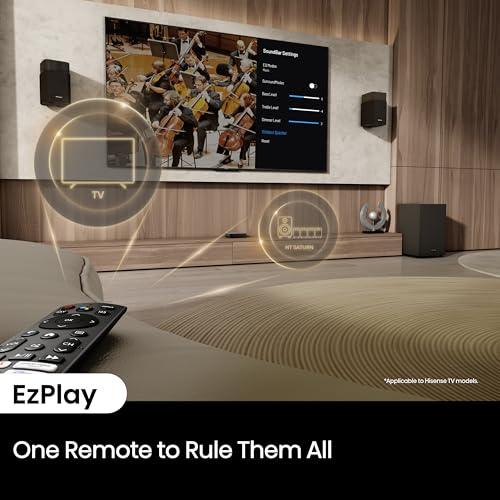
The system also supports EzPlay, which lets you control sound system settings directly through your Hisense TV's interface rather than juggling multiple remotes. Room calibration features are also accessible through the TV's menus.
For Fire TV users, the Soundbar Plus offers similarly tight integration. You can control the system using your Fire TV remote, adjust settings through on-screen menus, and the system automatically powers on/off with your Fire TV device. If you're already invested in Amazon's ecosystem, this seamless integration is genuinely convenient.
The Hisense includes more modern connectivity with Bluetooth 5.3 (versus 5.0 on the Fire TV system) and HDMI 2.1 support. These might seem like minor details, but they suggest better compatibility with future devices and improved wireless performance.
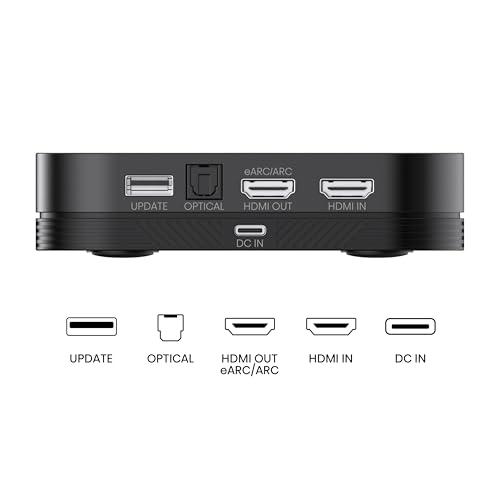
Both systems support eARC (enhanced Audio Return Channel), which allows your TV to send high-quality audio formats back to the sound system without compression. This is essential for getting the full benefit of Dolby Atmos and other advanced audio formats from streaming services and Blu-ray players.
At the time of writing, these systems occupy very different price tiers. The Fire TV Soundbar Plus typically costs less than half what you'd pay for the Hisense HT Saturn. This isn't just a price difference—it represents completely different value propositions.
The Fire TV system delivers legitimate 5.1 surround sound at a price point where most alternatives are still 2.1 or 3.1 configurations. You're getting true rear surround speakers and a wireless subwoofer for less than many premium single soundbars cost. For budget-conscious buyers who want genuine surround sound, it's an exceptional value.
The Hisense system costs significantly more but delivers features typically found in much more expensive dedicated home theater components. True Dolby Atmos with physical height speakers, professional acoustic tuning, advanced room correction, and a sophisticated wireless implementation justify the premium for users who prioritize audio quality.
You're serious about home theater audio and want an experience that rivals dedicated component systems. The true Dolby Atmos implementation makes a real difference with movies and games that feature significant overhead effects. The Devialet tuning and distributed speaker design also make it excellent for music listening.
This system makes most sense for users with medium to large rooms who can properly position four satellite speakers and have compatible Hisense TVs to unlock the full integration features. If you're upgrading from basic TV speakers or a simple soundbar and want a dramatic improvement, the HT Saturn delivers.
You want legitimate surround sound without complexity or premium pricing. The dedicated center channel and straightforward 5.1 layout work well for TV and movie content, while Fire TV integration makes daily use seamless.
This system is ideal for Fire TV users who want better audio than their TV provides but don't need cutting-edge features. It's also perfect for users who prioritize simplicity—everything works immediately without positioning optimization or room tuning.
Both systems succeed at their intended purposes, but they're solving different problems. The Fire TV Soundbar Plus proves you can get genuine surround sound at mainstream prices with minimal complexity. The Hisense HT Saturn demonstrates that wireless home theater systems can rival traditional component setups when engineered properly.
Your choice ultimately depends on how much you value audio quality versus simplicity, and whether you're willing to pay a significant premium for features like true Dolby Atmos height effects and professional acoustic tuning. Both will dramatically improve your audio experience compared to TV speakers, but they'll do so in distinctly different ways.
The trend toward sophisticated wireless home theater systems is clear, and both products represent compelling executions of that vision. Choose based on your priorities, room, and budget—either way, you'll wonder why you waited so long to upgrade from your TV's built-in speakers.
| Hisense HT Saturn HTSATURN 4.1.2Ch Sound Bar System | Amazon Fire TV Soundbar Plus 5.1 Channel System |
|---|---|
| Channel Configuration - Determines surround sound capability and immersion level | |
| 4.1.2 channels with physical height speakers for true Dolby Atmos | 5.1 channels with virtual height processing only |
| Speaker Array - More drivers typically mean better sound separation and clarity | |
| 13 total speakers (8 full-range, 4 tweeters, 1 subwoofer) across 4 satellites + sub | 8+ drivers in soundbar plus 2 rear speakers and subwoofer |
| System Power - Higher wattage allows louder volumes and better dynamics in larger rooms | |
| 720W total (significant headroom for medium-large rooms) | ~300W estimated (adequate for small-medium rooms) |
| Physical Dolby Atmos Support - True overhead effects vs simulated | |
| Yes, with up-firing drivers in satellites for ceiling reflection | No, virtual processing only through existing speakers |
| Audio Tuning - Professional calibration affects overall sound quality | |
| Devialet-tuned for premium acoustic performance | Standard tuning, focus on dialogue clarity |
| System Architecture - Affects placement flexibility and cable management | |
| 4 wireless satellite speakers + subwoofer + control hub (fully distributed) | Traditional soundbar + 2 rear speakers + subwoofer |
| Smart TV Integration - Seamless control and enhanced features | |
| Hi-Concerto and EzPlay with Hisense TVs (room tuning, TV speaker sync) | Deep Fire TV integration with any Fire TV device |
| Wireless Technology - Affects connection stability and interference resistance | |
| Tri-band (2.4G/5.2G/5.8G) for robust multi-speaker sync | Standard wireless connection between components |
| Setup Complexity - Time and effort required for optimal performance | |
| Moderate (4 speaker positioning, room optimization recommended) | Simple (pre-paired, plug-and-play operation) |
| Room Calibration - Automatic acoustic adjustment for your space | |
| Room Fitting Tuning via compatible Hisense TV | None (manual adjustment only) |
| Connectivity Options - Determines compatibility with various devices | |
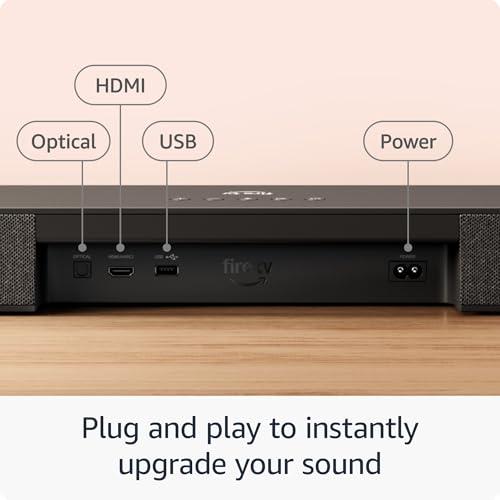
| HDMI 2.1/eARC, Optical, Bluetooth 5.3, USB (service only) | HDMI eARC, Optical, Bluetooth 5.0, USB-A (media playback) |
| Target Room Size - Based on power output and dispersion capabilities | |
| Medium to large rooms (up to 400-500 sq ft) | Small to medium rooms (up to 300 sq ft) |
| Center Channel Implementation - Affects dialogue clarity and anchoring | |
| Phantom center using L/R satellites (requires precise positioning) | Dedicated center channel in soundbar (more forgiving placement) |
| Music Listening Performance - Stereo imaging and tonal balance for non-movie content | |
| Excellent with wide soundstage from distributed speakers | Good but soundbar-centric presentation |
| Value Tier - Price positioning and target market | |
| Premium tier with high-end features and performance | Budget-friendly tier with solid core functionality |
The Hisense HT Saturn provides superior surround sound quality with its true 4.1.2 channel configuration and physical Dolby Atmos height speakers. It uses 13 individual drivers across four satellite speakers plus a subwoofer, creating genuine 360-degree immersion. The Amazon Fire TV Soundbar Plus offers solid 5.1 surround sound but relies on virtual height processing rather than physical overhead speakers, making it less immersive for movies and gaming.
The key difference is architecture: the Hisense HT Saturn uses four separate wireless satellite speakers positioned around your room, while the Amazon Fire TV Soundbar Plus uses a traditional soundbar design with added rear speakers. The Hisense system creates a more distributed, immersive soundfield, while the Fire TV system offers simpler setup with familiar soundbar placement.
The Amazon Fire TV Soundbar Plus is significantly easier to install, with pre-paired components that work immediately out of the box. Simply place the soundbar under your TV and position two rear speakers behind your seating. The Hisense HT Saturn requires more thoughtful placement of four satellite speakers around your room for optimal performance, though it offers greater flexibility once properly positioned.
Yes, but differently. The Hisense HT Saturn supports true physical Dolby Atmos with up-firing speakers that bounce sound off your ceiling for genuine overhead effects. The Amazon Fire TV Soundbar Plus supports Dolby Atmos through virtual processing, simulating height effects through its existing speakers without physical overhead channels.
The Hisense HT Saturn handles large rooms better with its 720W total power output and distributed speaker design. It maintains good performance in rooms up to 400-500 square feet. The Amazon Fire TV Soundbar Plus works best in small to medium rooms up to about 300 square feet, where its lower power output remains adequate.
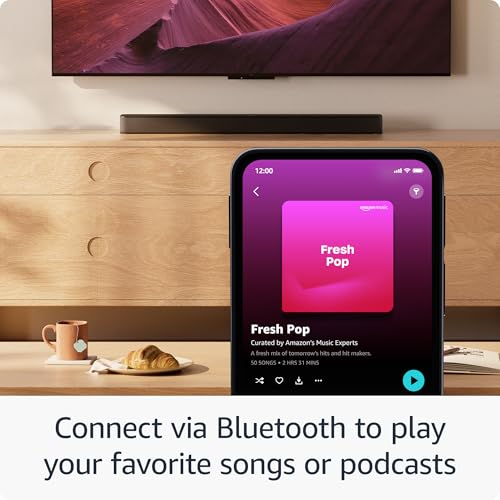
Both systems offer HDMI eARC for high-quality audio from your TV, plus optical input and Bluetooth connectivity. The Hisense HT Saturn includes newer Bluetooth 5.3 and HDMI 2.1 support for better future compatibility. The Fire TV Soundbar Plus integrates seamlessly with Fire TV devices and includes USB-A for direct media playback.
The Amazon Fire TV Soundbar Plus has a slight edge for dialogue clarity due to its dedicated center channel speaker in the soundbar. The Hisense HT Saturn uses a phantom center channel created by its left and right speakers, which can sound excellent when properly positioned but requires more precise setup for optimal dialogue performance.
The Hisense HT Saturn excels at music with its distributed speaker placement creating a wide, detailed soundstage and Devialet acoustic tuning for balanced sound. The Amazon Fire TV Soundbar Plus handles music adequately but focuses more on the soundbar location rather than creating an invisible musical soundstage throughout your room.
This depends on your TV brand. The Hisense HT Saturn offers superior integration with Hisense TVs through Hi-Concerto technology and Room Fitting Tuning. The Amazon Fire TV Soundbar Plus provides excellent integration with any Fire TV device regardless of TV brand, allowing control through Fire TV remotes and on-screen menus.
The Hisense HT Saturn includes 13 total speakers: four 3-way satellite speakers (with multiple drivers each), plus a wireless subwoofer. The Amazon Fire TV Soundbar Plus includes the main soundbar with multiple drivers, two wireless rear speakers, and one wireless subwoofer for a complete 5.1 setup.
The Amazon Fire TV Soundbar Plus offers exceptional value for budget-conscious buyers, delivering true 5.1 surround sound at a mainstream price point. The Hisense HT Saturn provides premium value for audio enthusiasts willing to pay more for features like true Dolby Atmos, professional acoustic tuning, and superior build quality.
Both systems work well for gaming and home theater use. The Hisense HT Saturn provides more immersive gaming with its true Dolby Atmos height effects and 360-degree speaker placement. The Amazon Fire TV Soundbar Plus offers solid gaming performance with good surround separation and bass impact, making it suitable for most gaming and movie-watching needs.
We've done our best to create useful and informative comparisons to help you decide what product to buy. Our research uses advanced automated methods to create this comparison and perfection is not possible - please contact us for corrections or questions. These are the sites we've researched in the creation of this article: bestbuy.com - youtube.com - blog.son-video.com - youtube.com - youtube.com - techradar.com - ecoustics.com - jbhifi.com.au - shop.hisense-usa.com - bhphotovideo.com - bestbuy.com - digitalreviews.net - hisense-usa.com - projectorscreenstore.com - valueelectronics.com - dolby.com - giftpack.ai - rtings.com - cordbusters.co.uk - techradar.com - developer.amazon.com - t3.com - hometechnologyreview.com - youtube.com - hometechnologyreview.com - whathifi.com - hometechnologyreview.com - hometechnologyreview.com - youm.design - hometechnologyreview.com - dolby.com

Privacy Policy
Terms and Conditions - Affiliate Policy
Home Security
© Copyright 2008-2026.
11816 Inwood Rd #1211, Dallas, TX 75244