


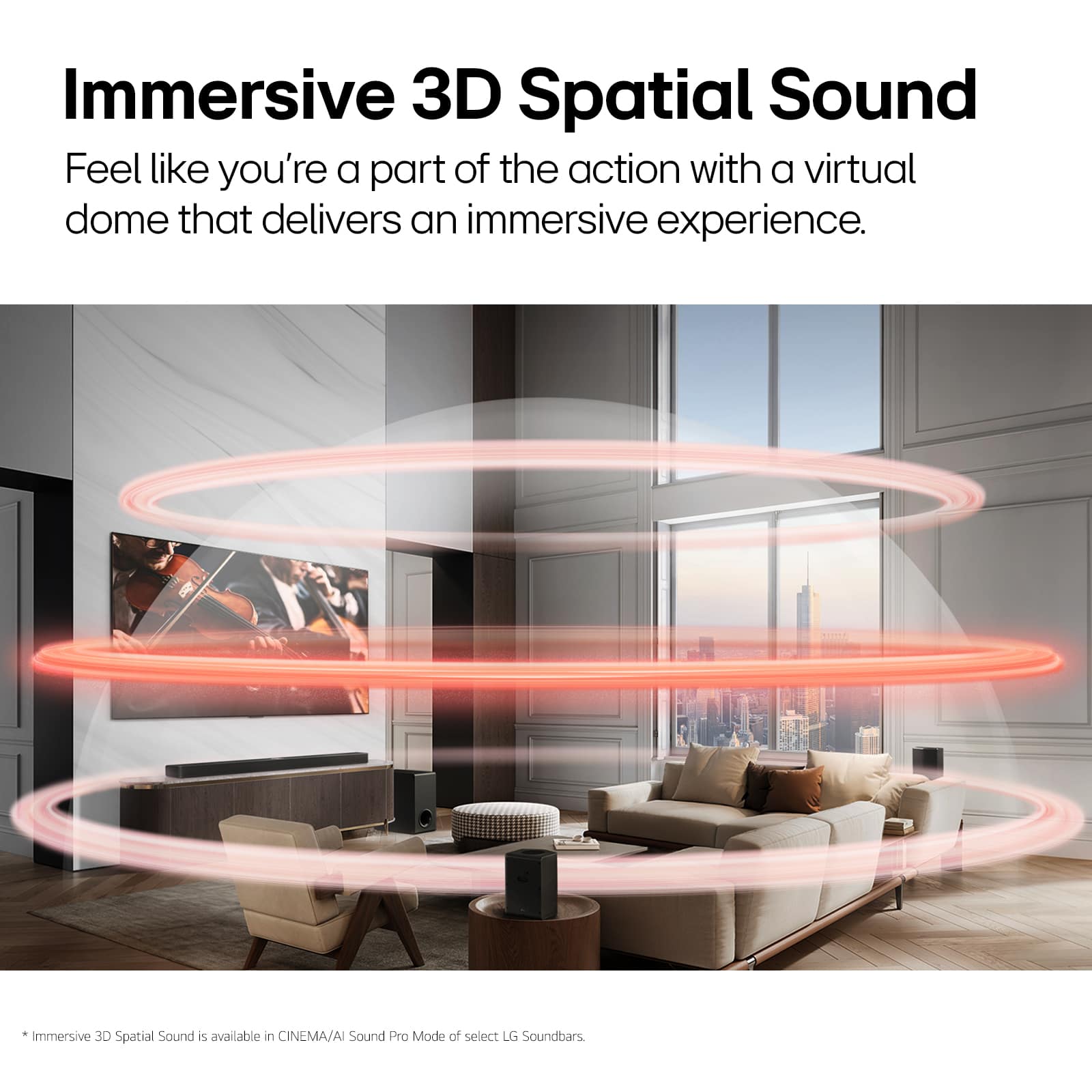
The home theater landscape shifted dramatically in 2024 and 2025, with manufacturers abandoning the "wider soundbar" approach in favor of true wireless multi-speaker systems. This evolution addresses a fundamental limitation: even the most sophisticated single soundbar can't create genuine surround sound—it can only simulate it through clever audio processing. Today's comparison pits two very different philosophies against each other: the Hisense HT Saturn, a premium wireless speaker constellation that ditches the soundbar entirely, versus the LG S70TR, a refined traditional soundbar that maximizes value while incorporating modern wireless elements.
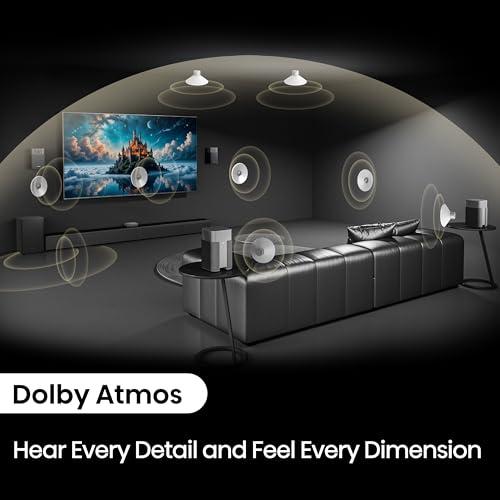
Understanding these systems requires grasping some key audio concepts. Dolby Atmos creates a three-dimensional "dome" of sound by encoding height information that reflects off your ceiling, while DTS:X uses object-based audio to place specific sounds anywhere in 3D space. The channel numbers (like 5.1.1 or 4.1.2) tell you exactly how many speakers handle different frequency ranges: the first number indicates main surround channels, the second represents subwoofer channels for bass, and the third shows height channels for overhead effects.
Traditional soundbars have dominated home audio for over a decade because they solve real problems: they're simple to install, significantly better than TV speakers, and don't require the complexity of full surround sound systems. However, physics imposes harsh limits on what any single bar can achieve. No matter how many drivers you cram into a soundbar, it can't replicate the experience of having actual speakers beside and behind you.
The breakthrough came when manufacturers realized wireless technology had matured enough to eliminate most cables while maintaining rock-solid connections. This opened the door to "distributed" systems that place real speakers around your room without the traditional mess of speaker wires. The question now isn't whether to upgrade from TV speakers—it's whether to choose an evolved soundbar or embrace the wireless multi-speaker revolution.
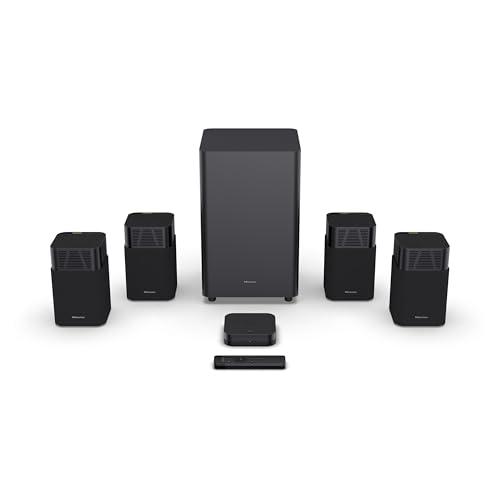
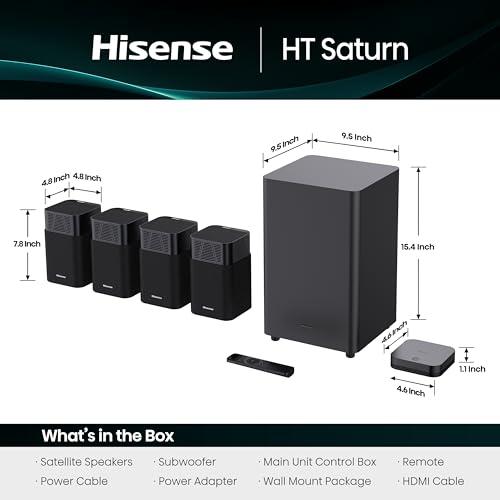
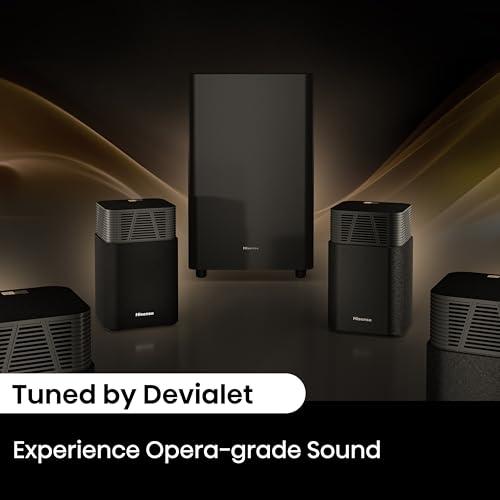
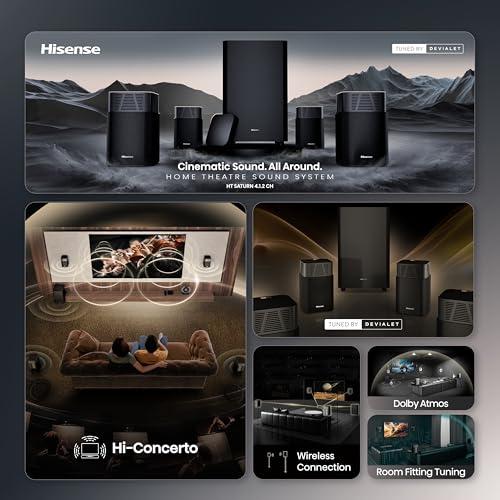
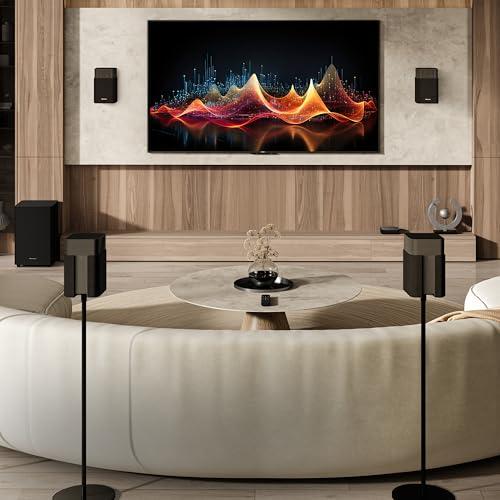
The Hisense HT Saturn, launched in early 2025, represents the most ambitious attempt yet to kill the traditional soundbar. Instead of one long bar under your TV, you get four compact wireless satellite speakers, each about the size of a small bookshelf speaker, plus a wireless subwoofer. This system was "Tuned by Devialet," the French audio company famous for making speakers that cost more than most cars. At launch, the HT Saturn positioned itself firmly in premium territory, reflecting its sophisticated wireless technology and high-end acoustic engineering.
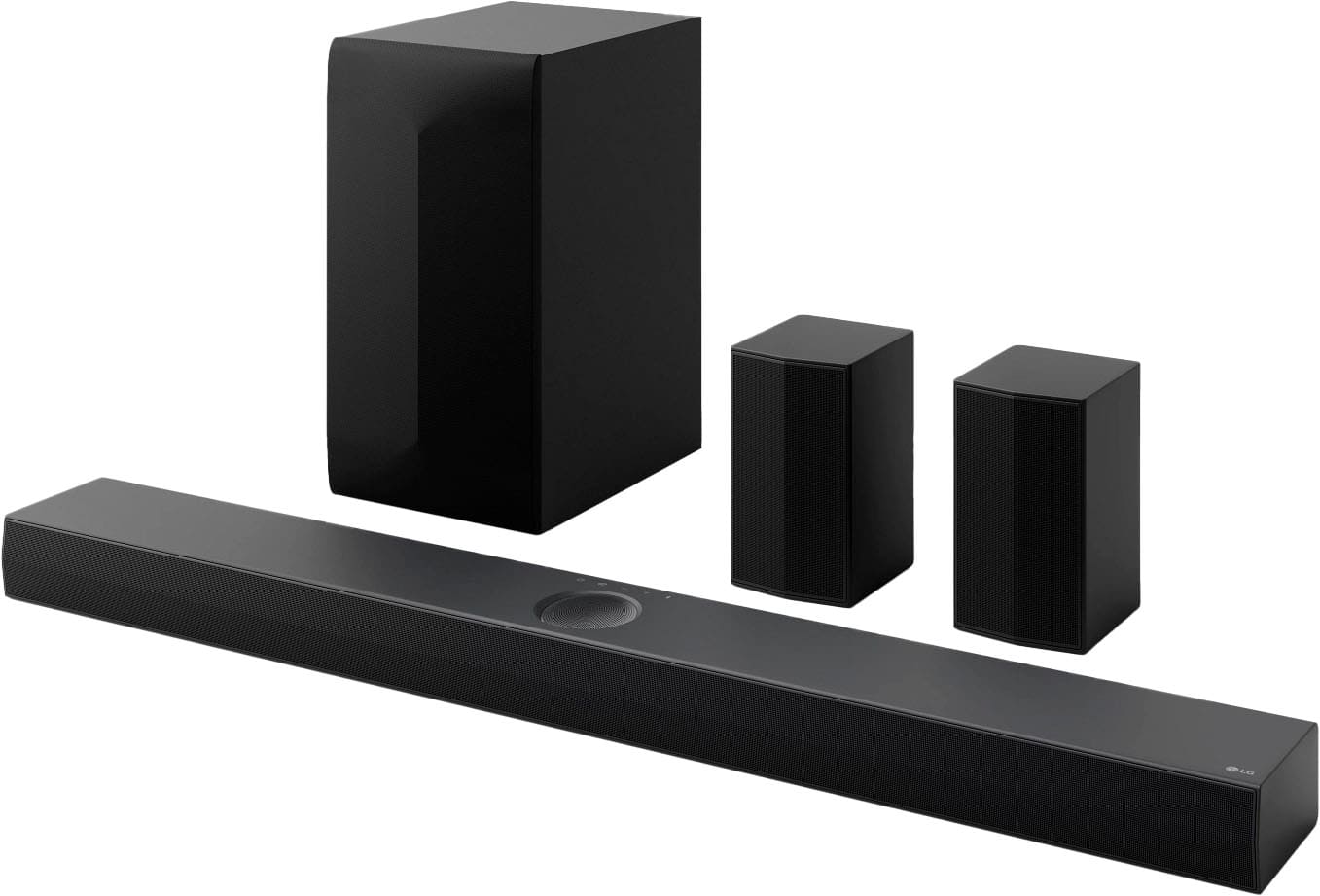
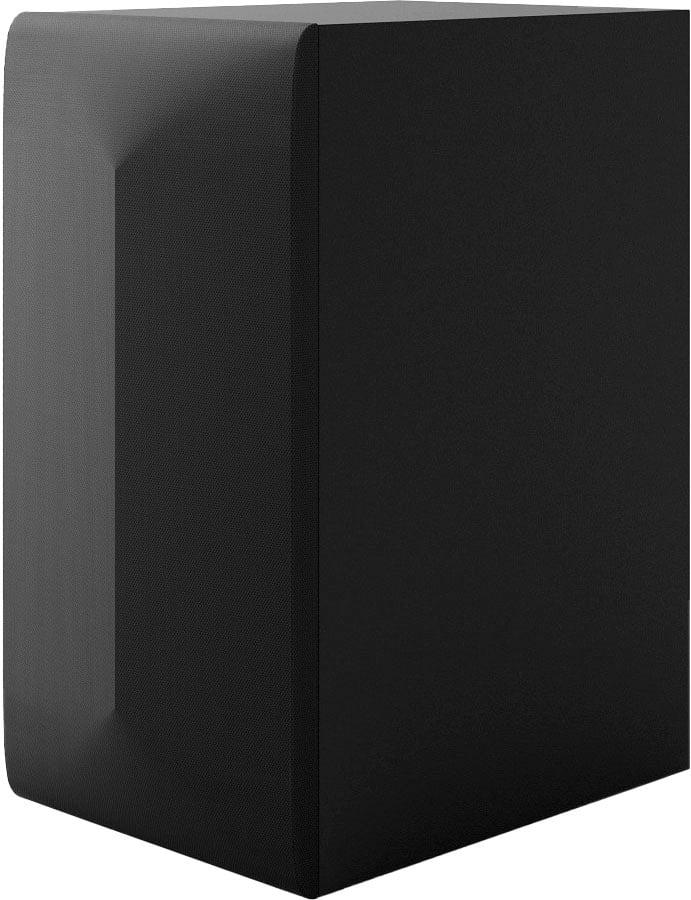
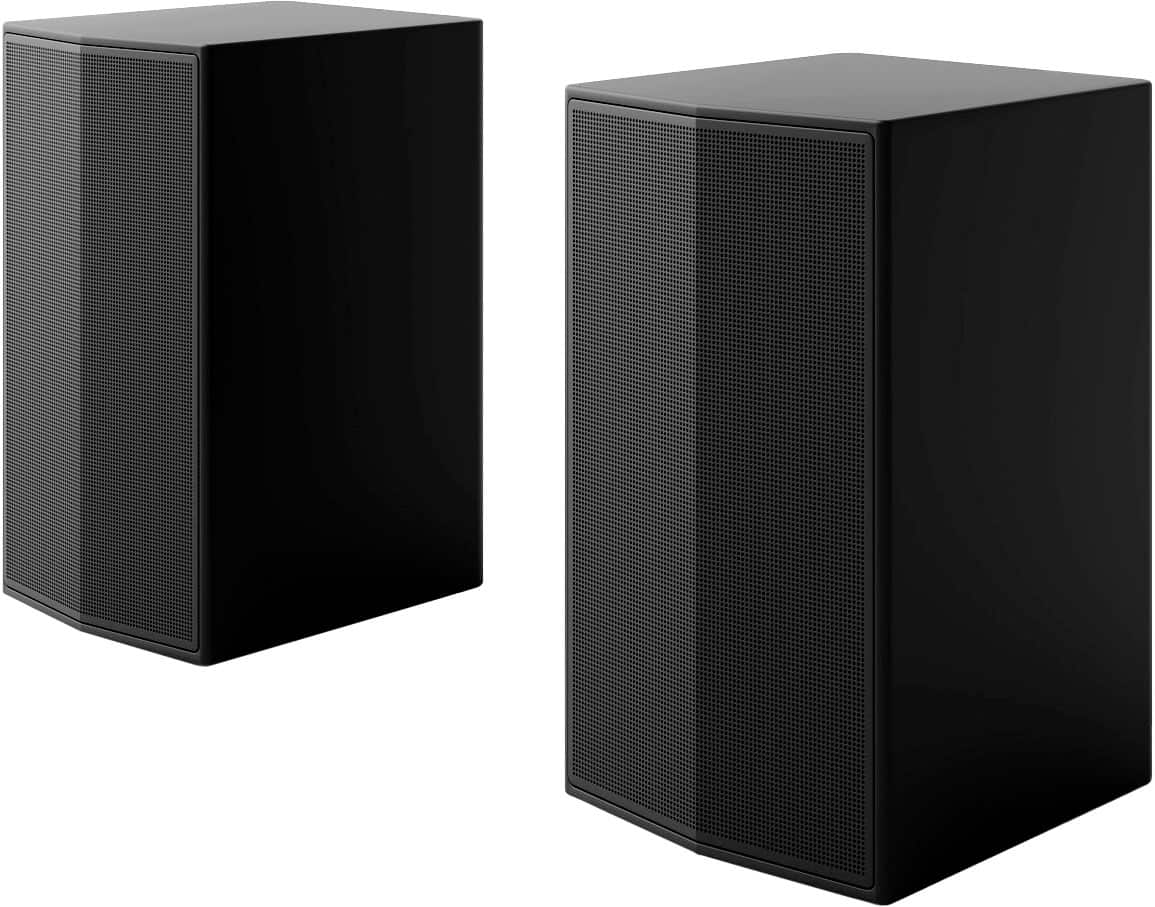
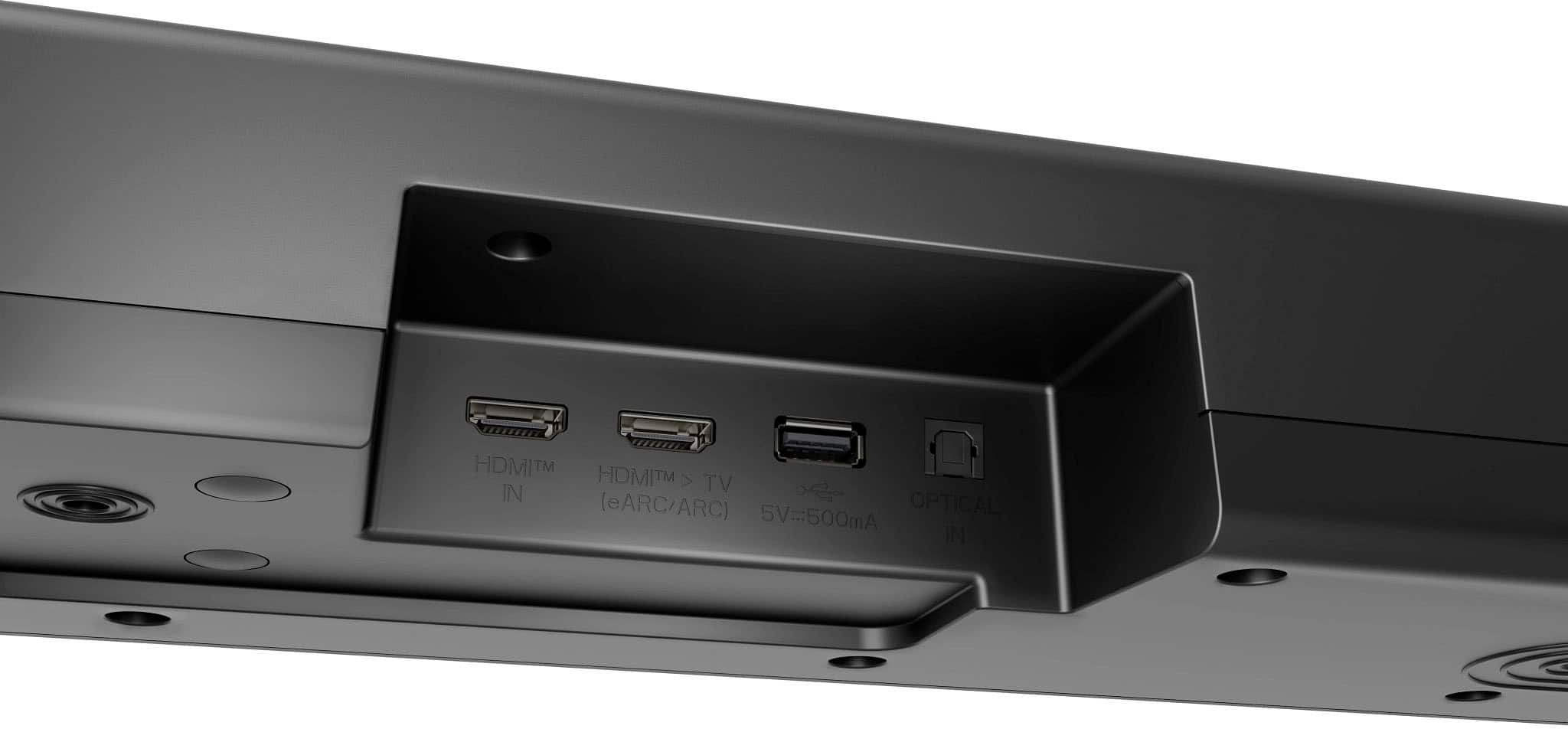
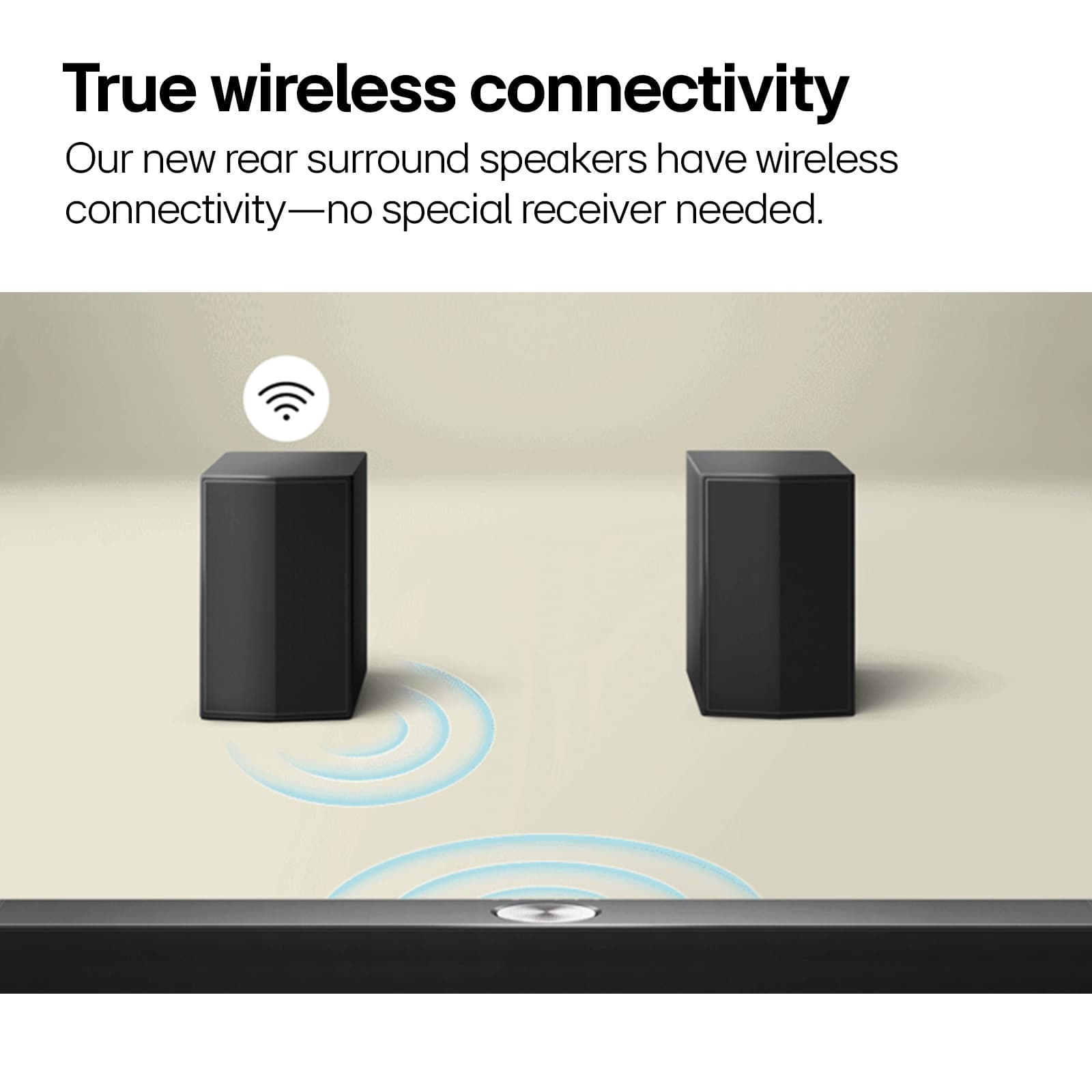
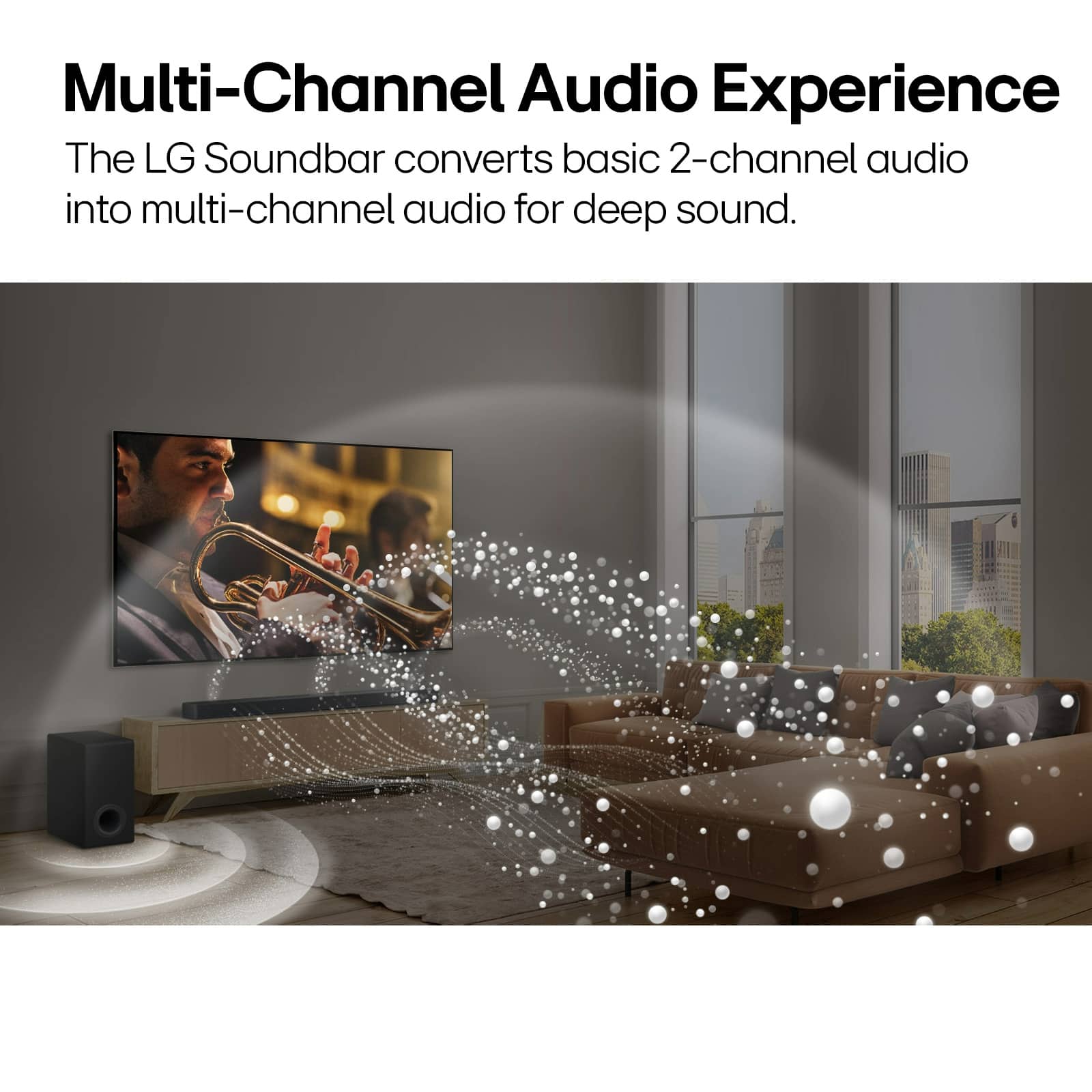
The LG S70TR, released in late 2024, takes a more conservative approach. It's fundamentally still a soundbar, but one enhanced with wireless rear speakers and a wireless subwoofer to create true 5.1.1 surround sound. LG positioned this as exceptional value, delivering Dolby Atmos and advanced features at a price point that makes it accessible to most households upgrading from TV speakers.
The price difference between these systems was substantial at launch—the Hisense cost nearly four times what LG charged for the S70TR. This isn't just premium pricing; it reflects fundamentally different engineering approaches and target markets.
The most dramatic difference between these systems becomes apparent the moment you start watching an action movie. The Hisense HT Saturn creates what reviewers consistently describe as a "360-degree bubble" of sound. Because you have actual speakers positioned around your room, sounds truly come from where they're supposed to be. When a helicopter flies overhead in a movie, the sound genuinely moves through space above and around you.
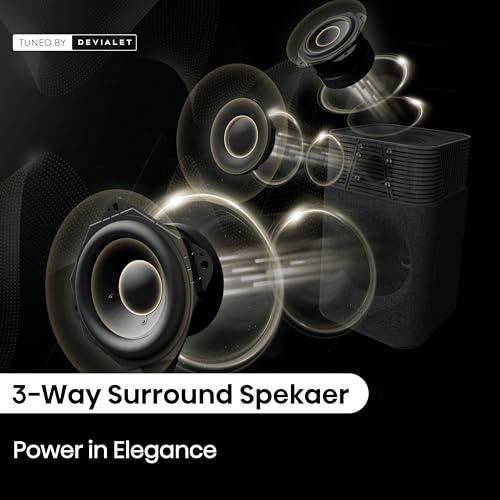
This spatial accuracy stems from the HT Saturn's 4.1.2 configuration: four main speakers (front left/right, rear left/right), one subwoofer, and two height channels that bounce sound off your ceiling. Each of the four satellites contains multiple drivers—full-range drivers for most frequencies plus dedicated tweeters for crisp high frequencies. This three-way design in each speaker means every frequency range gets optimized attention, something impossible in a cramped soundbar.
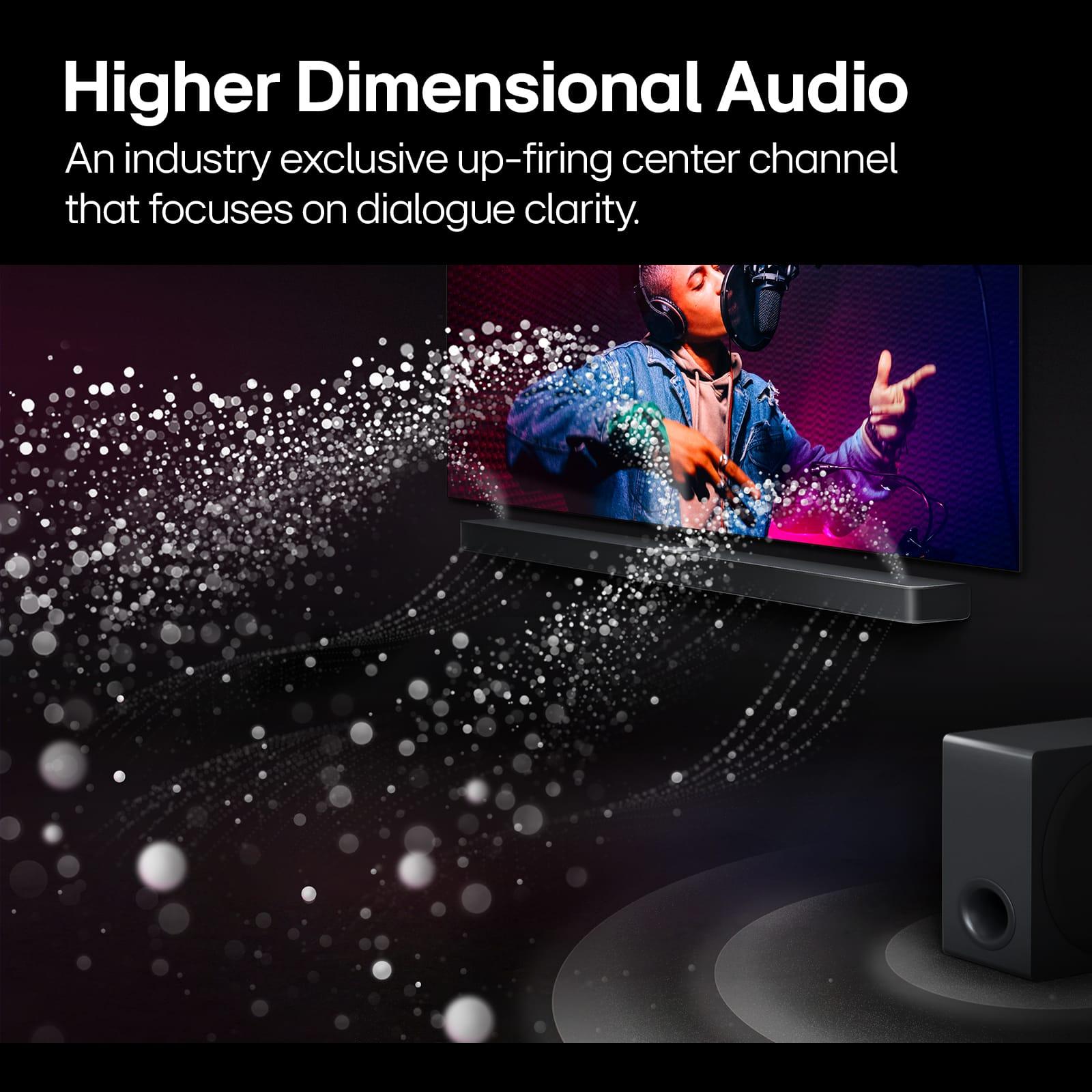
The LG S70TR, despite being constrained by its soundbar form factor, punches well above its weight in creating immersive sound. Its 5.1.1 setup includes the traditional five main channels (left, center, right, left surround, right surround) plus a dedicated up-firing speaker for height effects. The key advantage here is a real center channel speaker optimized specifically for dialogue—something the Hisense notably lacks.
In practice, the Hisense creates a wider, more enveloping soundstage that truly surrounds you. The LG delivers excellent surround effects for a soundbar-based system, but the illusion breaks down when you move around the room or listen from off-center positions.
Here's where things get interesting. Despite lacking a dedicated center channel, the Hisense HT Saturn creates remarkably stable dialogue through what's called a "phantom center." By carefully balancing the left and right front speakers, it tricks your brain into hearing voices as coming from the center of the screen. Devialet's tuning expertise shines here—reviewers consistently note how stable and natural voices sound, even during complex action sequences.
The LG S70TR takes a more traditional approach with its dedicated up-firing center channel, specifically engineered for speech clarity. LG's "Clear Voice Plus" technology analyzes the audio signal in real-time and boosts specific frequencies where human speech naturally occurs. During dialogue-heavy scenes, this system automatically reduces bass frequencies that might mask voices—a clever touch that ensures you never miss whispered conversations or mumbled dialogue.
In our research, both systems handle dialogue well, but through different approaches. The Hisense relies on premium acoustic engineering to create natural voice reproduction, while the LG uses smart processing to optimize for speech intelligibility.
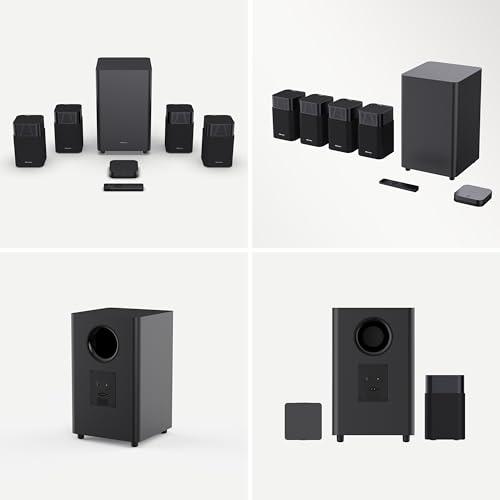
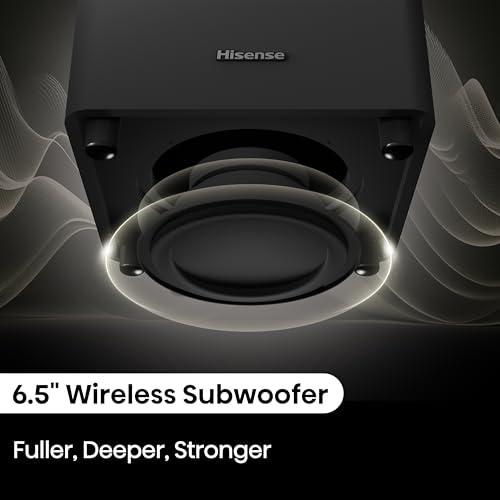
Both systems include wireless subwoofers, but their approaches differ significantly. The Hisense HT Saturn's 6.5-inch subwoofer extends down to 40Hz and integrates seamlessly with the satellite speakers thanks to Devialet's careful tuning. The wireless design means you can position it anywhere in your room for optimal bass response—crucial because subwoofer placement dramatically affects how bass sounds in your space.
The LG S70TR features a larger 7-inch subwoofer with front-firing driver and rear port design. This configuration typically produces more obvious bass impact, which appeals to users who want to feel explosions and rumbles. LG's "Bass Blast+" mode emphasizes low frequencies for action content, though this can sometimes overwhelm dialogue if not carefully managed.
In terms of integration, the Hisense achieves more natural bass blending—you hear the effect rather than noticing the subwoofer itself. The LG produces more dramatic bass presence, which some users prefer for action movies and gaming.
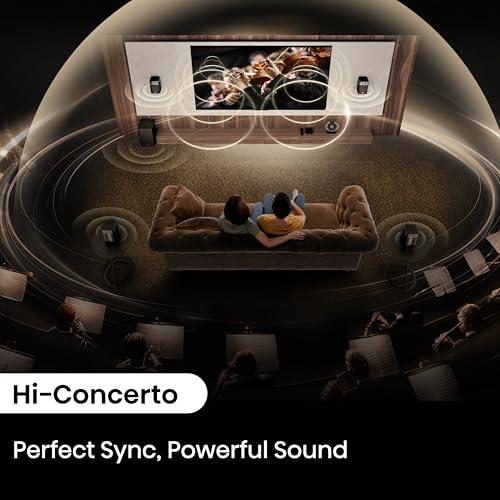
Both systems excel when paired with their respective TV brands, but through different technologies. The Hisense HT Saturn features "Hi-Concerto" technology that essentially turns your compatible Hisense TV into part of the audio system. When activated, the TV's built-in speakers work together with the satellite speakers to create an even wider soundstage. This expanded "wall of sound" effect can make dialogue seem more anchored to the screen while maintaining surround effects from the satellites.
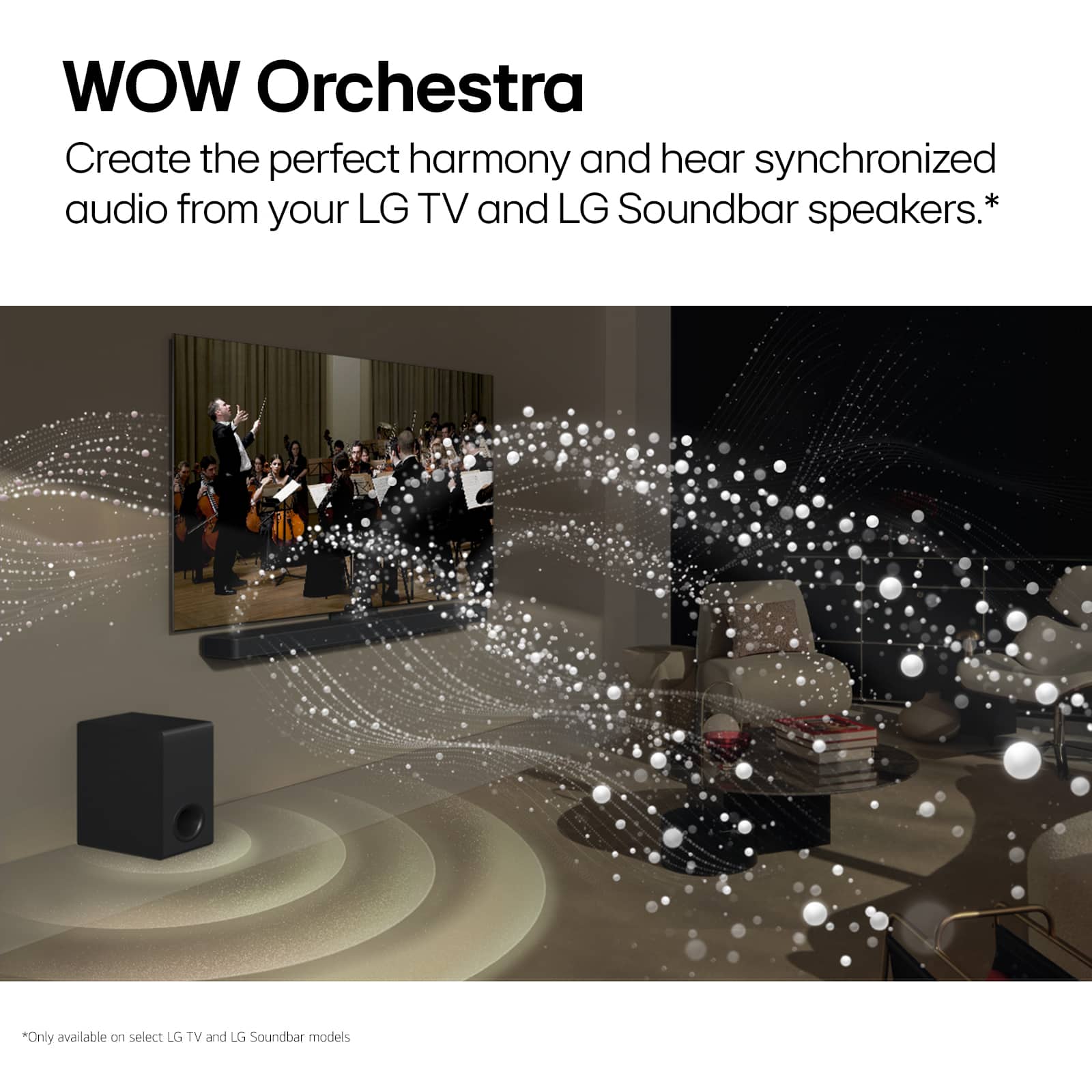
The LG S70TR offers "WOW Orchestra" integration with LG QNED TVs. Similar to Hi-Concerto, this feature uses both the TV speakers and soundbar simultaneously, but LG's implementation focuses more on expanding the front soundstage while the rear speakers handle surround duties.
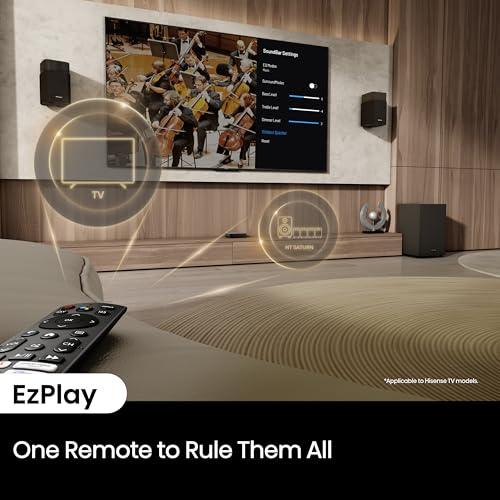
Both systems also offer convenient single-remote control when paired with their brand TVs, eliminating the need to juggle multiple remotes for basic volume and input control.
The LG S70TR clearly wins for gaming applications. It supports Variable Refresh Rate (VRR) and Auto Low Latency Mode (ALLM)—features that reduce input lag and ensure smooth gaming at refresh rates up to 120Hz. For serious gamers using PlayStation 5 or Xbox Series X consoles, these features can make a noticeable difference in competitive gaming scenarios.
The Hisense HT Saturn supports 4K 60Hz passthrough but lacks the gaming-specific optimizations. However, it does include Bluetooth 5.3 (versus the LG's 5.1), which provides better wireless audio streaming stability and energy efficiency for music listening from phones and tablets.
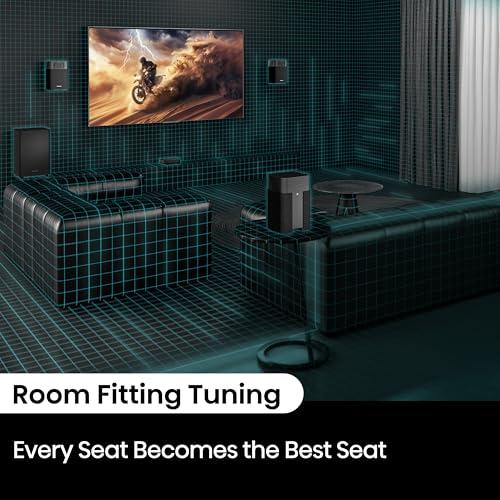
The Hisense includes sophisticated "Room Fitting Tuning" that works with compatible TVs to analyze your room's acoustics and automatically optimize the sound. This calibration adjusts timing, levels, and EQ to account for room size, furniture, and speaker placement—similar to the room correction found in expensive AV receivers.
The LG relies on its "AI Sound Pro" technology, which analyzes content in real-time rather than calibrating to your room. While not as comprehensive as room correction, this adaptive processing automatically adjusts the sound balance based on what you're watching or listening to.
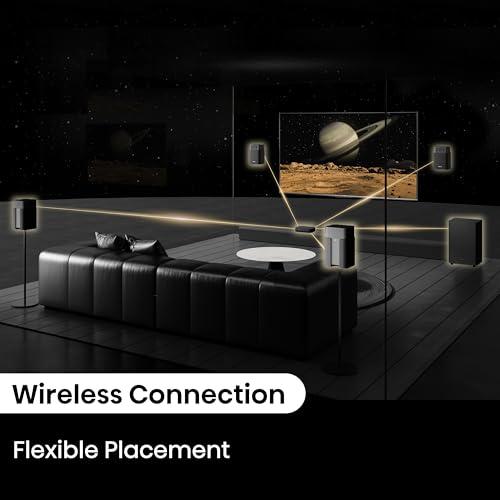
The Hisense HT Saturn's biggest selling point—complete wireless operation—also represents its biggest installation consideration. While you don't need to run speaker wires, you do need power outlets near each of the four satellite speaker locations. In many rooms, this means extension cords or strategic furniture placement around existing outlets.
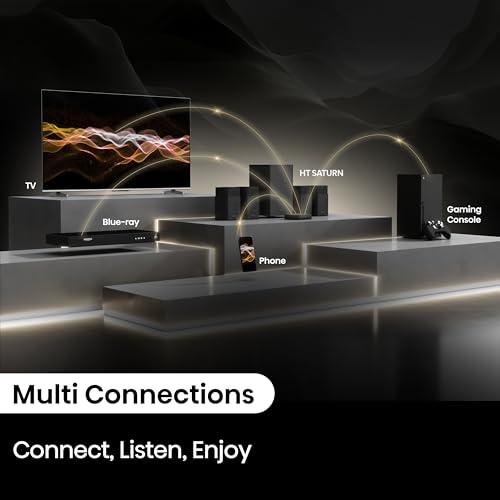
Once powered on, the wireless synchronization reportedly works flawlessly. All speakers auto-pair with the central control unit, and reviewers note stable connections even in environments crowded with Wi-Fi devices. The system uses three different wireless frequencies (2.4GHz, 5.2GHz, and 5.8GHz) to avoid interference—a sophisticated approach that maintains low-latency audio across all channels.
The LG S70TR requires fewer power outlets since the rear speakers connect to each other via wire, with only one needing AC power. This "semi-wireless" approach actually simplifies installation in many rooms while still eliminating the long speaker wires that typically need to be routed around doorways and under furniture.
Both systems offer mobile apps for detailed customization, but their approaches differ. The Hisense provides access to comprehensive EQ settings and room optimization features through compatible TV menus, making adjustments feel integrated with your viewing experience.
The LG offers more granular real-time control through its app, including separate EQ adjustment for the rear speakers and various sound mode selections optimized for different content types.
The Hisense HT Saturn makes most sense for users with large rooms (400+ square feet), high ceilings, and 75-inch or larger TVs. Its premium positioning reflects genuine engineering advantages: Devialet tuning, true wireless operation, and exceptional spatial audio performance. However, these benefits become most apparent in spacious environments where the satellite speakers can be positioned optimally.
This system particularly appeals to home theater enthusiasts who want reference-quality audio without the complexity of separate AV receivers and multiple cable runs. The completely wireless design suits modern open-plan living spaces where traditional speaker wire routing would be problematic or unsightly.
The LG S70TR represents exceptional value for users seeking a significant upgrade from TV speakers without breaking the bank. Its gaming features make it particularly attractive to console gamers, while its proven dialogue clarity suits households where TV watching is the primary use case.
This system works best in medium-sized rooms (200-400 square feet) with 55-75 inch TVs. The traditional soundbar form factor integrates easily with existing entertainment centers, and the price point makes it accessible for most upgrade scenarios.
At the time of writing, these systems serve distinctly different markets despite both offering Dolby Atmos and wireless subwoofers. The Hisense HT Saturn targets audio enthusiasts willing to pay premium prices for reference-quality wireless surround sound. Its Devialet tuning, true wireless operation, and exceptional spatial audio justify the higher cost for users with appropriate rooms and expectations.
The LG S70TR maximizes value, delivering impressive modern features at an accessible price point. Its gaming optimizations, reliable dialogue clarity, and proven performance make it an easy recommendation for most users upgrading from basic TV audio.
Consider your room size, TV size, primary use cases, and budget tolerance. If you have a large room with a big TV and prioritize audio quality above all else, the Hisense delivers a genuinely premium experience. If you want excellent performance with modern features at a reasonable price, the LG represents outstanding value in the traditional soundbar category.
Both systems successfully address the fundamental weakness of TV speakers, but through fundamentally different approaches that serve different users and scenarios. Choose based on your priorities: wireless luxury and reference audio, or proven value with gaming-friendly features.
| Hisense HT Saturn HTSATURN | LG S70TR |
|---|---|
| Channel Configuration - Determines surround sound accuracy and immersion | |
| 4.1.2 with 13 total speakers (4 wireless satellites + subwoofer + 2 height channels) | 5.1.1 with 9 total speakers (soundbar + wireless sub + rear speakers + 1 height channel) |
| Speaker Design Philosophy - Affects installation flexibility and sound quality | |
| True wireless satellite system - no inter-component cables, requires 4 power outlets | Traditional soundbar with wireless sub and semi-wireless rears (one wire between rear speakers) |
| Audio Tuning - Premium engineering vs mass market optimization | |
| Tuned by Devialet (French high-end audio brand) for reference-quality sound | AI Sound Pro with real-time content analysis and automatic adjustments |
| Total System Power - Impacts maximum volume and dynamic range | |
| 500W total (estimated ~180W RMS across all components) | 360W RMS / 420W total system power |
| Subwoofer Specifications - Critical for bass impact and room filling | |
| 6.5" wireless subwoofer, 40Hz low-frequency extension, flexible placement | 7" front-firing wireless subwoofer with rear port, 220W dedicated amplifier |
| TV Brand Integration - Enhanced features when paired with matching TV | |
| Hi-Concerto technology (Hisense TVs) - combines TV speakers with soundbar system | WOW Orchestra (LG QNED TVs) - synchronized TV and soundbar operation |
| Gaming Features - Important for console gamers seeking competitive advantages | |
| 4K 60Hz passthrough, no specific gaming optimizations | VRR and ALLM support up to 120Hz, optimized for PS5/Xbox Series X |
| Room Calibration - Automatic optimization for your specific space | |
| Room Fitting Tuning via compatible TV - analyzes acoustics and auto-calibrates | AI Sound Pro analyzes content but no dedicated room correction |
| Bluetooth Connectivity - Affects wireless music streaming quality | |
| Bluetooth 5.3 with modern codec support and improved stability | Bluetooth 5.1 with standard codec support |
| Physical Footprint - Consider your room layout and TV setup | |
| Four compact satellites (4.8" x 7.8" x 4.8" each) plus subwoofer, flexible placement | Single 37.4" soundbar plus subwoofer and rear speakers, traditional setup |
| Target Market Positioning - Reflects engineering priorities and expected buyers | |
| Premium wireless home theater for large rooms (75"+ TVs), audiophile-focused | Value-oriented upgrade from TV speakers, gaming-friendly features |
The Hisense HT Saturn is specifically designed for large rooms with 75-inch or bigger TVs. Its four wireless satellite speakers can be positioned around the room to create true surround sound, making it ideal for spacious home theaters. The LG S70TR works best in medium-sized rooms up to 400 square feet and is optimized for 55-75 inch TVs.
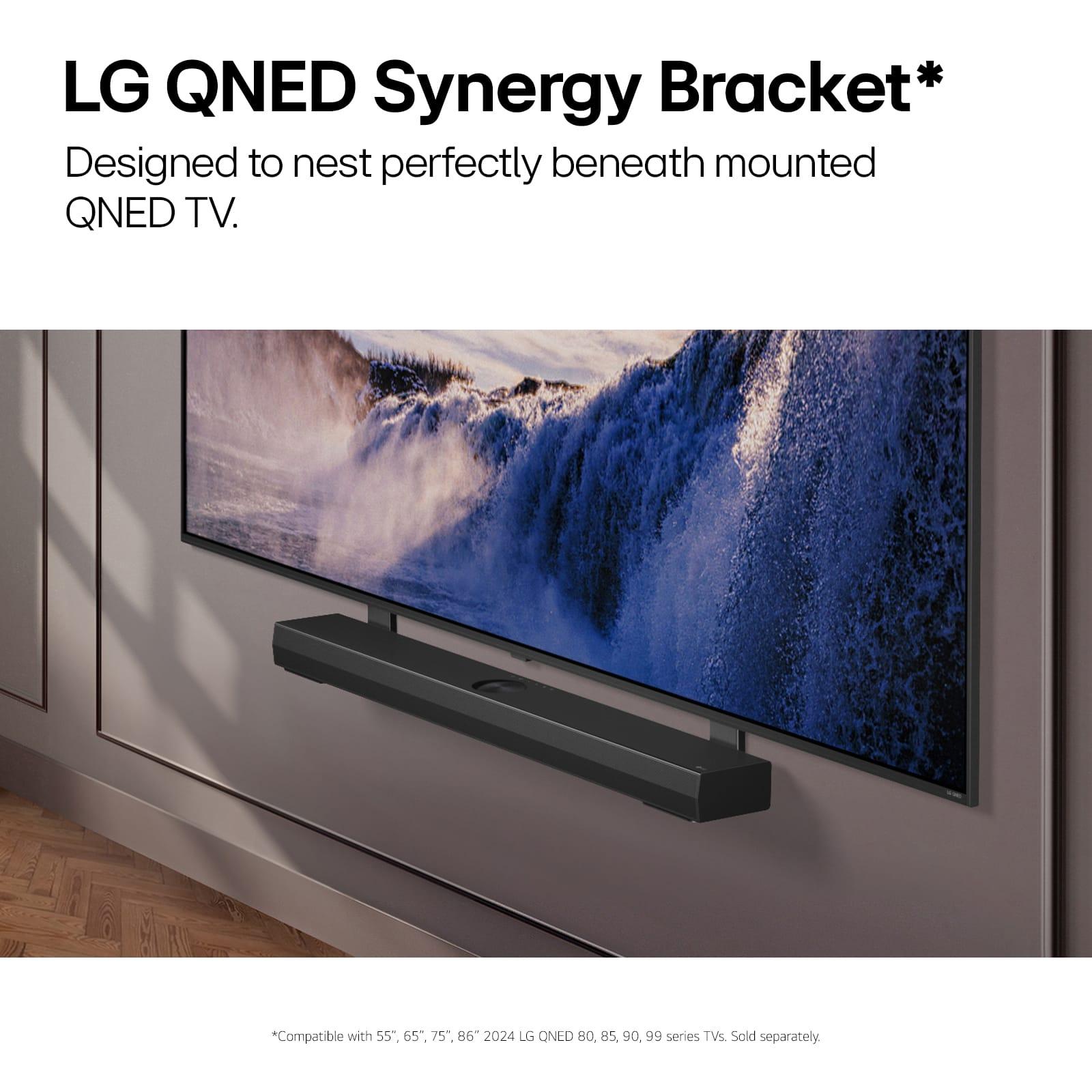
Both soundbars work with any TV brand, but offer enhanced features with their matching brands. The Hisense HT Saturn includes Hi-Concerto technology that combines your Hisense TV speakers with the soundbar for expanded sound. The LG S70TR features WOW Orchestra that synchronizes with LG QNED TVs for a wider soundstage.
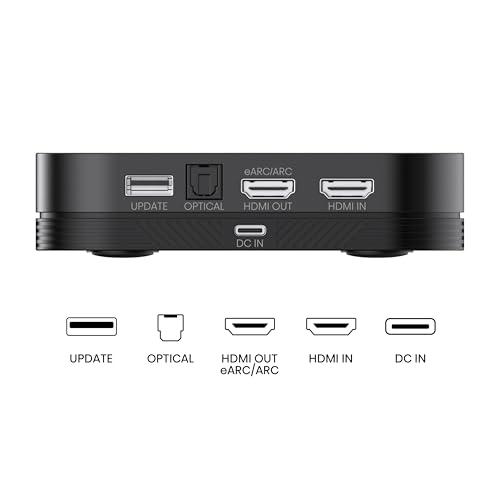
The Hisense HT Saturn is completely wireless between all components - you only need power outlets for each of the four satellite speakers and subwoofer. The LG S70TR is semi-wireless, with the subwoofer connecting wirelessly but the rear speakers requiring one wire between them.
The LG S70TR is superior for gaming with Variable Refresh Rate (VRR) and Auto Low Latency Mode (ALLM) support up to 120Hz, making it perfect for PlayStation 5 and Xbox Series X. The Hisense HT Saturn supports 4K 60Hz passthrough but lacks gaming-specific optimizations.
The Hisense HT Saturn contains 13 total speakers across four wireless satellites plus a subwoofer, creating a 4.1.2 channel configuration. The LG S70TR has 9 speakers total in a 5.1.1 setup, including a dedicated center channel for dialogue and wireless rear speakers.
Both excel at dialogue but use different approaches. The LG S70TR has a dedicated up-firing center channel specifically for speech, plus Clear Voice Plus technology that automatically adjusts for better voice clarity. The Hisense HT Saturn creates a "phantom center" through precise left/right speaker balancing, tuned by Devialet for natural voice reproduction.
Yes, both the Hisense HT Saturn and LG S70TR support Dolby Atmos for overhead sound effects. The Hisense also includes full DTS:X decoding, while the LG focuses on Dolby formats with AI Sound Pro for automatic optimization.
The LG S70TR is easier to set up with its traditional soundbar design and included wall mount brackets. The Hisense HT Saturn requires more planning since you need power outlets near each of the four satellite speaker positions, though all speakers auto-pair wirelessly once powered on.
Both systems offer single-remote control when paired with their respective TV brands. The Hisense HT Saturn includes EzPlay for seamless control with Hisense TVs, while the LG S70TR provides unified remote operation with LG TVs through WOW Orchestra integration.
The LG S70TR delivers exceptional value with Dolby Atmos, gaming features, and wireless components at an accessible price point. The Hisense HT Saturn targets the premium market with Devialet tuning and true wireless operation, justified for users wanting reference-quality home theater audio.
The Hisense HT Saturn features a 6.5-inch wireless subwoofer that extends down to 40Hz with seamless integration thanks to Devialet tuning. The LG S70TR includes a larger 7-inch front-firing subwoofer with 220W amplification and Bass Blast+ mode for more dramatic low-frequency impact.
For dedicated home theater use, the Hisense HT Saturn provides superior immersion with its distributed four-speaker design creating a genuine 360-degree sound bubble around your seating area. The LG S70TR offers excellent movie performance for traditional living room setups, with strong dialogue clarity and effective surround sound processing.
We've done our best to create useful and informative comparisons to help you decide what product to buy. Our research uses advanced automated methods to create this comparison and perfection is not possible - please contact us for corrections or questions. These are the sites we've researched in the creation of this article: bestbuy.com - youtube.com - blog.son-video.com - youtube.com - youtube.com - techradar.com - ecoustics.com - jbhifi.com.au - shop.hisense-usa.com - bhphotovideo.com - bestbuy.com - digitalreviews.net - hisense-usa.com - projectorscreenstore.com - valueelectronics.com - dolby.com - giftpack.ai - bestbuy.com - mynavyexchange.com - rixaudiovideoappliance.com - rtings.com - youtube.com - bestbuy.com - howards.siteontimedev.com - bestbuy.com - appliancestogousa.us

Privacy Policy
Terms and Conditions - Affiliate Policy
Home Security
© Copyright 2008-2026.
11816 Inwood Rd #1211, Dallas, TX 75244