



When your TV's built-in speakers fall flat during an epic movie scene or make dialogue sound like it's coming through a tin can, you know it's time for an audio upgrade. The soundbar market has exploded with options, but two fundamentally different approaches have emerged that represent opposite ends of the convenience-versus-performance spectrum.
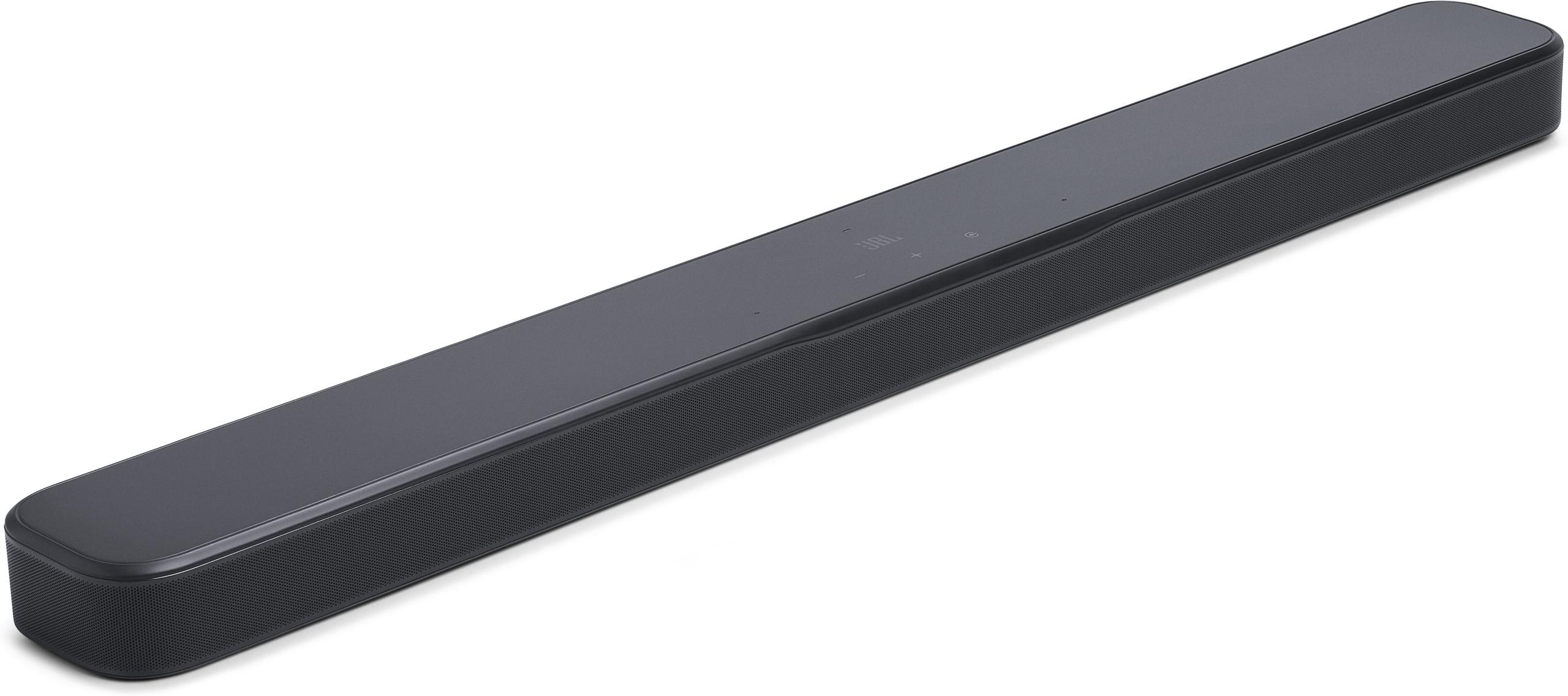
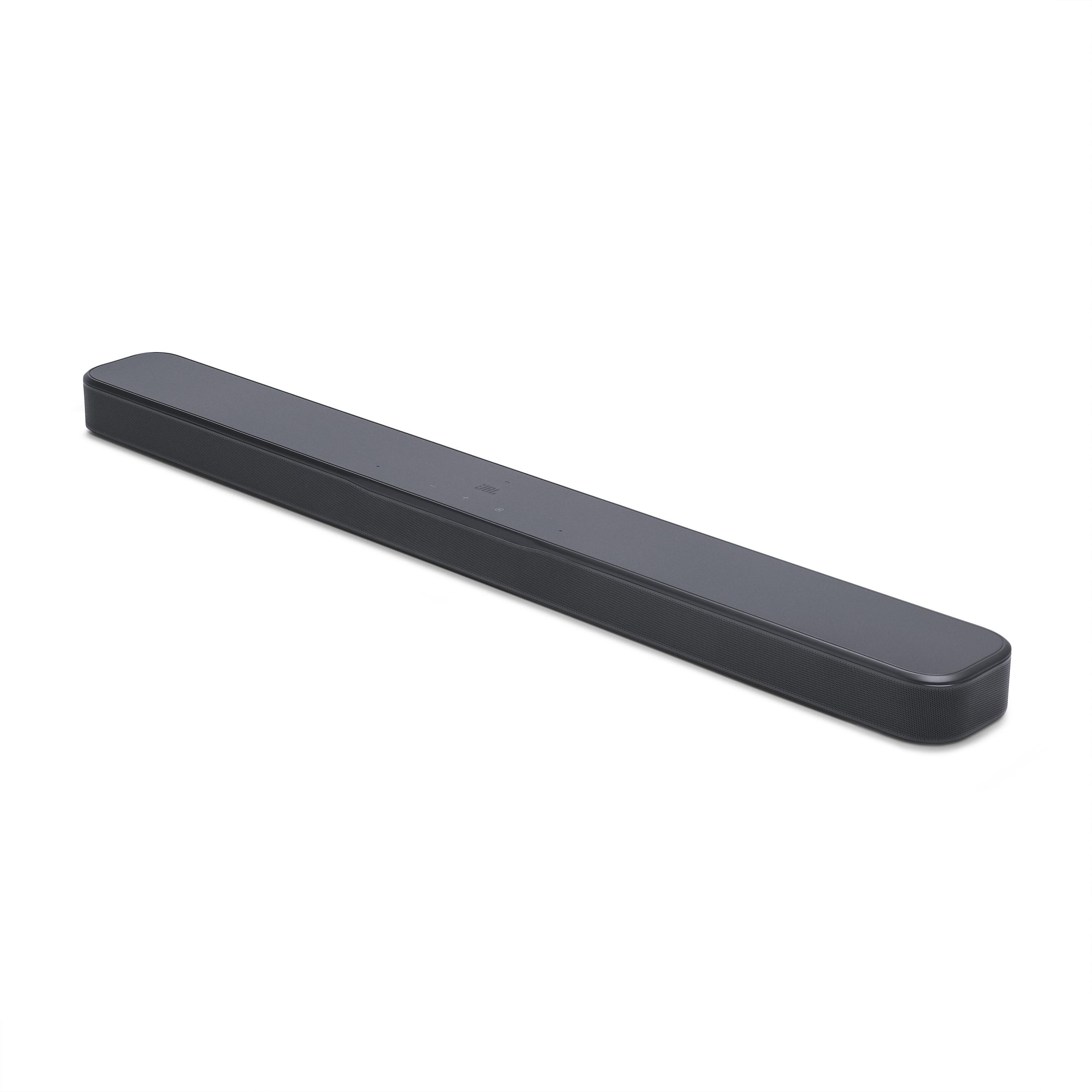
The Hisense HT Saturn HTSATURN, launched in 2025, isn't really a traditional soundbar at all—it's a complete wireless home theater system that happens to replace your need for a receiver and wired speakers. Meanwhile, the JBL Bar 300 MK2, also released in 2025, represents the evolution of the all-in-one soundbar concept, packing impressive technology into a single sleek unit that sits beneath your TV.
Understanding which approach works better for your situation requires diving into what these systems actually do differently and why those differences matter for your entertainment experience.
The soundbar category has evolved dramatically since those early models that were basically wider versions of computer speakers. Today's systems use sophisticated audio processing to create the illusion of surround sound, but they accomplish this through vastly different methods.
Virtual surround processing takes a stereo or multi-channel audio signal and uses digital algorithms to manipulate timing, phase, and frequency response to trick your brain into hearing sounds from directions where no speakers exist. Think of it as audio sleight-of-hand—your ears hear the delayed and filtered sound reflections off your room's walls and ceiling, creating the sensation that helicopters are flying overhead or footsteps are approaching from behind.
True surround sound places actual speakers in different locations around your room, so when that helicopter flies from front to back in a movie, discrete audio channels send those sounds to physical speakers positioned where you'd naturally expect to hear them.
The JBL Bar 300 MK2 exemplifies the virtual approach, while the Hisense HT Saturn delivers genuine multi-speaker surround. Both have their place, but the experience differs significantly.
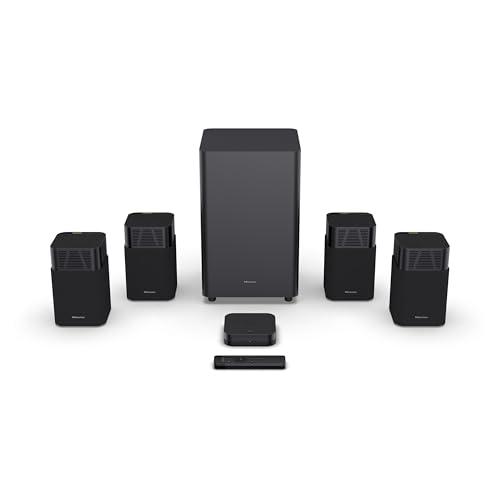
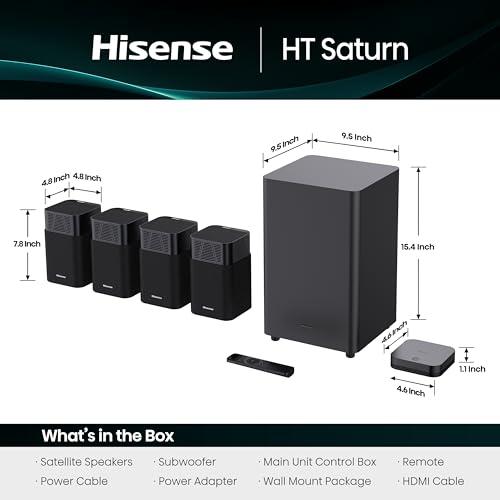
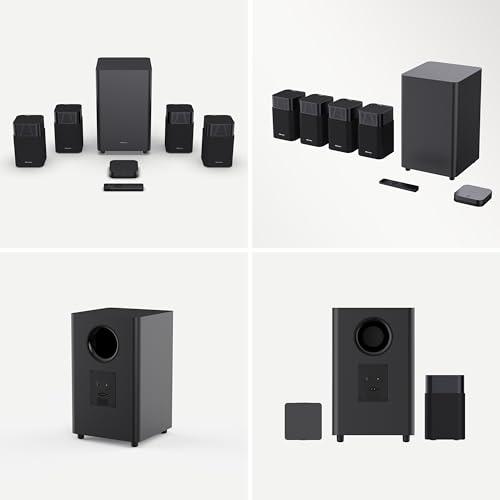
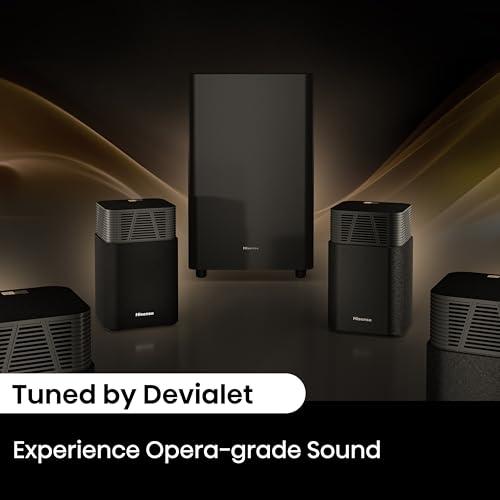
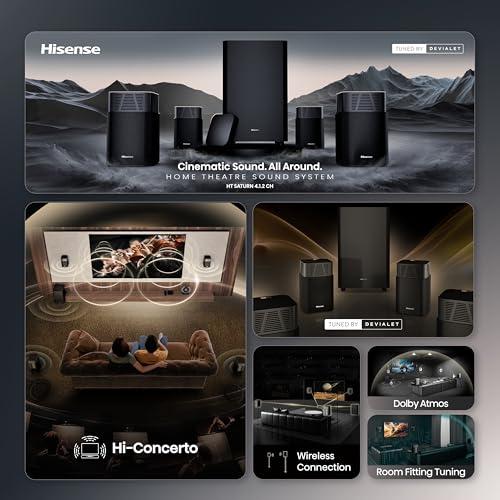
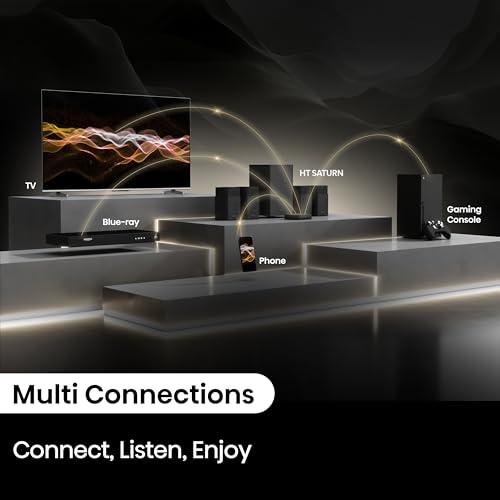
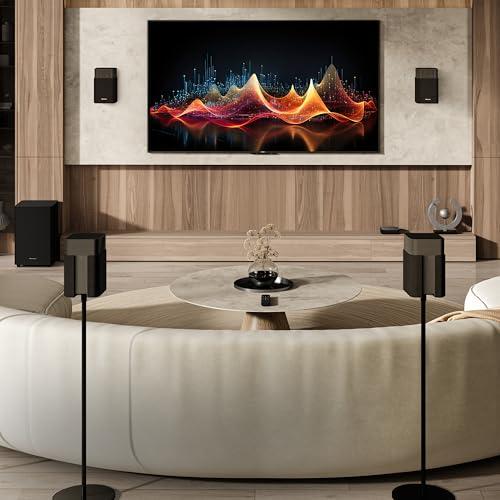
The Hisense HT Saturn takes what sounds like a simple concept—wireless speakers that replace a traditional home theater setup—and executes it with surprising sophistication. Instead of a single soundbar, you get five separate components: a compact control hub, four wireless satellite speakers, and a dedicated subwoofer.
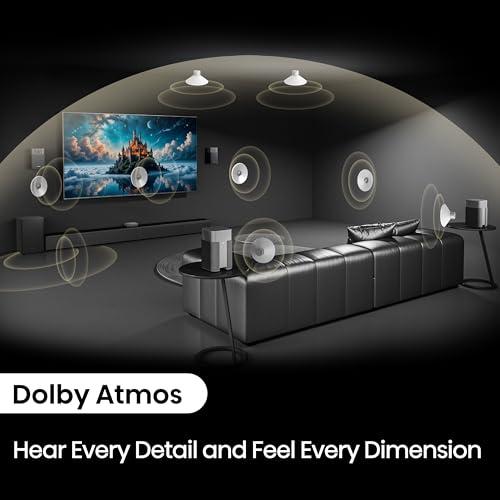
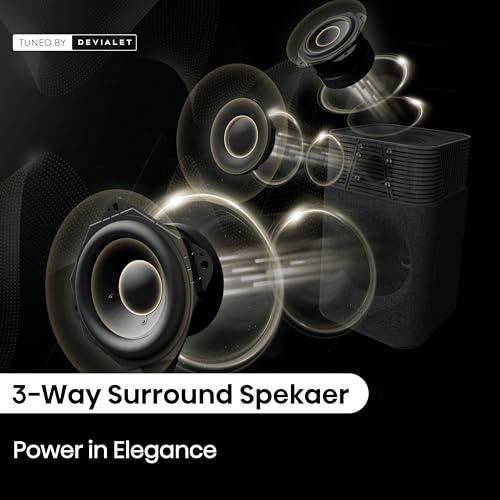
What makes this interesting isn't just the wireless aspect (plenty of systems offer that), but how Hisense implemented it. Each satellite speaker contains multiple drivers—the individual speaker units that produce sound—including specialized racetrack-shaped drivers for mid-range and bass, precision tweeters for high frequencies, and crucially, upward-firing drivers that bounce sound off your ceiling to create height effects.
This 4.1.2 channel configuration means four main speakers (front left/right, rear left/right), one subwoofer for deep bass (the ".1"), and two height channels (the ".2") that fire upward. When you're watching a scene with rain, those height channels make it sound like drops are actually falling from above rather than just coming from speakers at ear level.
The system's Devialet tuning represents a significant technical partnership. Devialet, a French company known for extremely high-end audio equipment costing tens of thousands of dollars, contributed their acoustic expertise to the Hisense HT Saturn's sound signature. This isn't just marketing—Devialet's engineers actually calibrated the frequency response, crossover points (where different drivers hand off frequencies to each other), and time alignment between all the speakers.
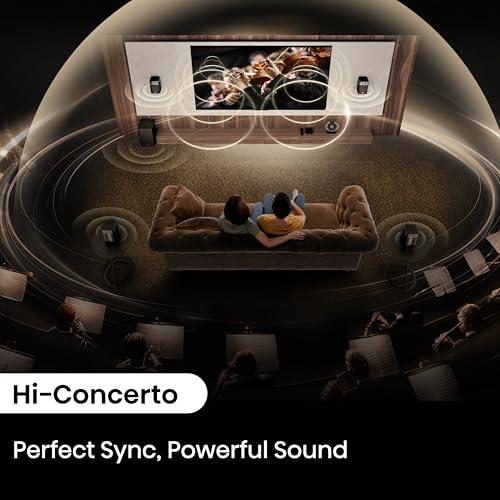
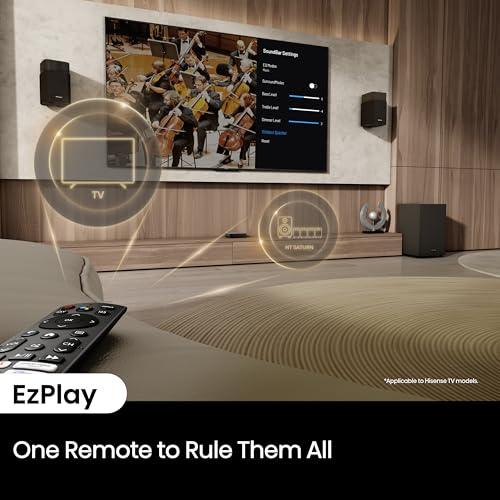
Hi-Concerto technology adds another layer of sophistication when paired with compatible Hisense TVs. The system can actually use your TV's built-in speakers as additional channels, effectively turning a 4.1.2 system into something closer to a 7.1.2 setup. The TV speakers handle center channel duties and expand the front soundstage, while the satellites manage surround and height effects.
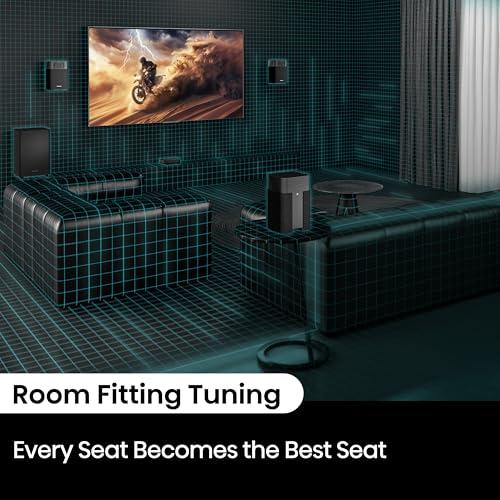
The Room Fitting Tuning feature automatically analyzes your room's acoustics and adjusts the system's output accordingly. Different rooms have wildly different acoustic properties—a room with hardwood floors and bare walls will sound completely different from one with carpet and heavy curtains. The system measures these characteristics and compensates, ensuring optimal performance regardless of your space.
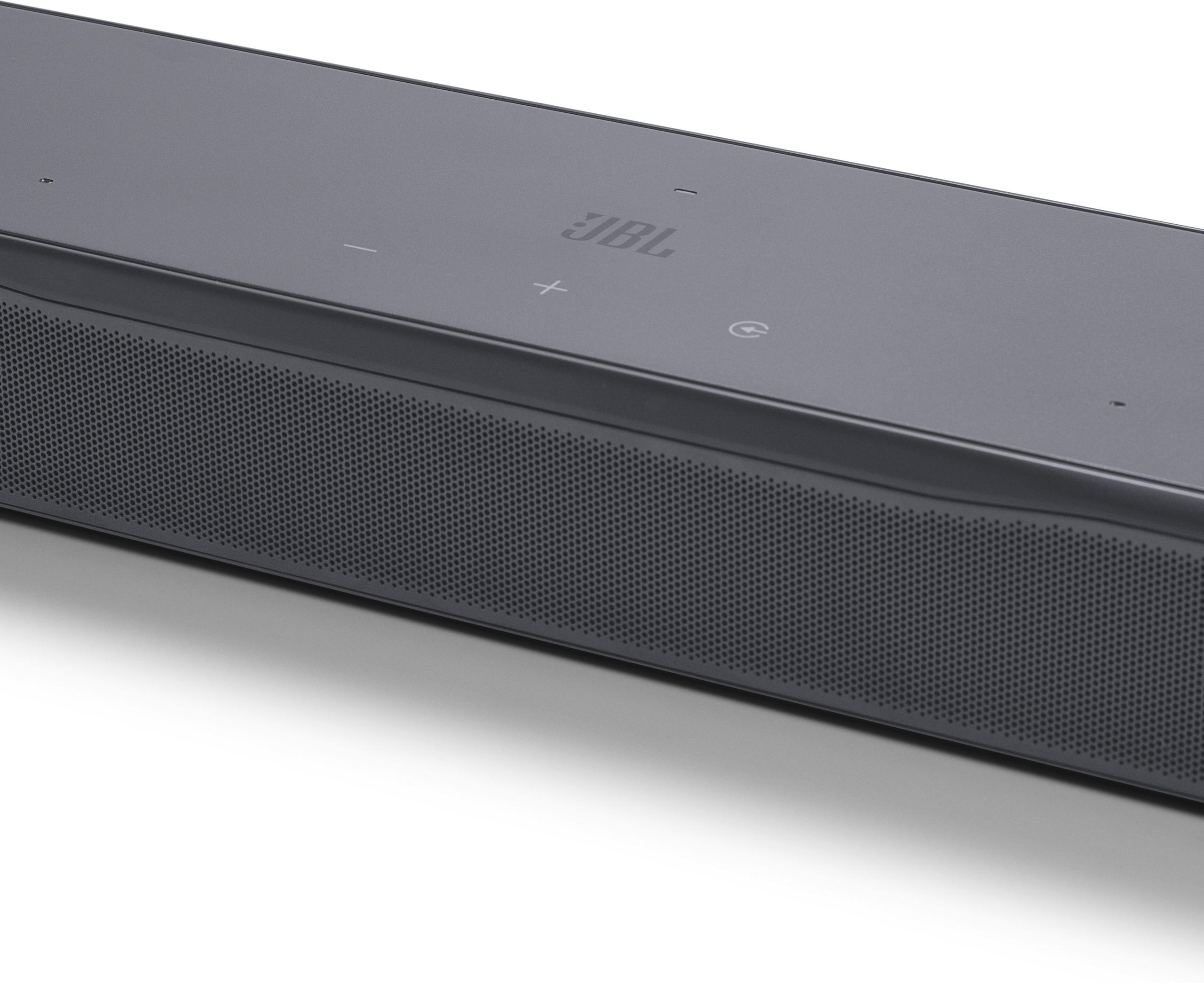
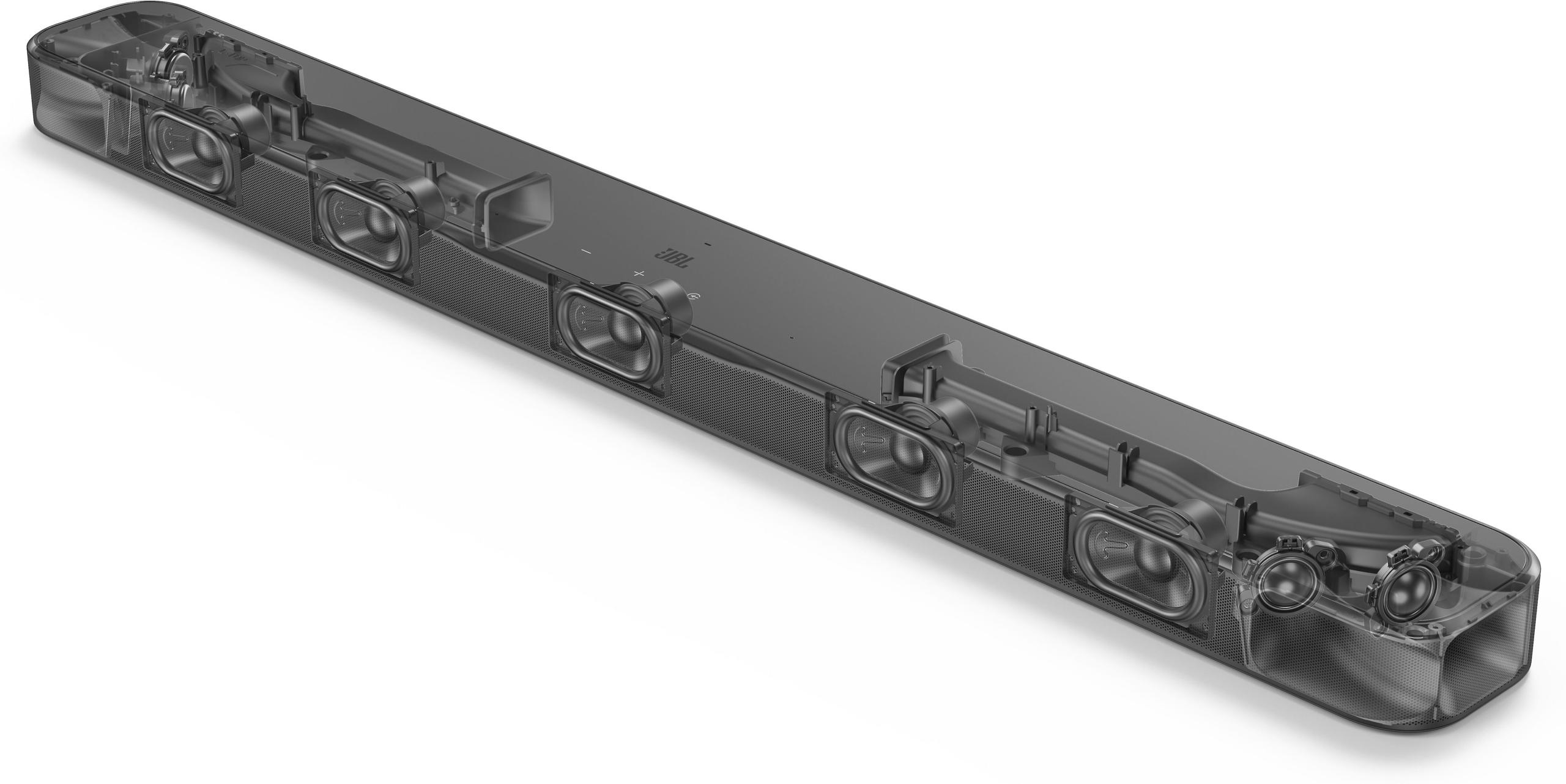
The JBL Bar 300 MK2 represents JBL's 2025 refinement of the single-unit soundbar concept, incorporating lessons learned from years of virtual surround development. At 37 inches wide, it's designed to complement most TV sizes without overwhelming your entertainment center.
MultiBeam 3.0 technology is JBL's latest approach to virtual surround sound. Rather than simply bouncing sound off walls randomly, it uses carefully controlled beam-forming to direct specific frequencies and timing patterns toward different surfaces in your room. The soundbar contains nine individual drivers arranged to create these controlled reflections, essentially turning your entire room into part of the speaker system.
PureVoice 2.0 addresses one of the most common complaints about home audio: dialogue that gets lost during action scenes. This technology analyzes incoming audio in real-time, identifying speech frequencies and boosting them while simultaneously managing how background music and effects interact with vocal ranges. It's not just an EQ adjustment—it's dynamic processing that adapts moment-by-moment to keep voices clear and centered.
The JBL Bar 300 MK2's virtual Dolby Atmos processing deserves special attention because it's genuinely impressive for what it accomplishes with a single unit. While it can't match the precision of physical height speakers like those in the Hisense HT Saturn, the psychoacoustic effects (how your brain interprets sound) are convincing enough that overhead effects feel believable in most content.
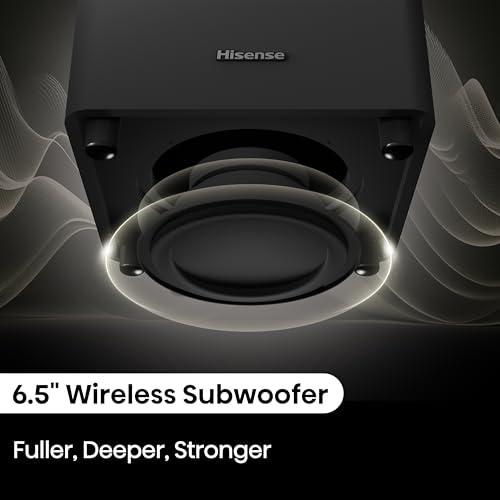
This category highlights the most significant performance gap between these systems. The Hisense HT Saturn includes a dedicated 6.5-inch wireless subwoofer that can extend down to 40Hz—low enough to reproduce the deepest movie sound effects and the fundamental frequencies of most musical instruments.
Bass isn't just about volume or "boom"—it's about impact, texture, and the physical sensation that makes action scenes exciting and music emotionally engaging. A dedicated subwoofer can move substantially more air than the small drivers packed into a soundbar, creating not just sound you hear but vibrations you feel.
The JBL Bar 300 MK2 achieves surprisingly good bass for an all-in-one unit, extending down to around 50Hz through clever port design and bass-optimized drivers. For casual listening and most TV content, this proves adequate and even impressive. However, during deep movie soundtracks or bass-heavy music, the limitations become apparent. The system simply can't move enough air to create the visceral impact that a dedicated subwoofer provides.
Our research into user experiences reveals a clear pattern: people notice the difference between virtual and true surround sound most during specific types of content. Action movies with effects panning from front to back, horror films with subtle ambient sounds, and video games with directional audio cues all benefit dramatically from the Hisense HT Saturn's discrete channel approach.
The four satellite speakers create what audio engineers call "proper stereo imaging"—sounds appear to originate from specific locations in space rather than seeming to come from "somewhere over there." When a car drives across the screen, you hear it move from the front left speaker to the rear left speaker to the rear right speaker, creating a convincing sense of motion that virtual processing can only approximate.
The JBL Bar 300 MK2's virtual surround proves most effective in rooms with good acoustics—spaces with appropriate wall spacing and ceiling height that provide surfaces for sound reflection. In challenging rooms (very large, very small, or irregularly shaped), virtual processing struggles to create convincing effects.
Both systems excel at dialogue clarity but through different methods. The JBL Bar 300 MK2's PureVoice 2.0 provides consistent, reliable vocal enhancement that works well across all content types. It's particularly effective for users who struggle with dialogue in modern movies, which are often mixed with wide dynamic range that makes quiet conversations hard to hear.
The Hisense HT Saturn achieves excellent dialogue clarity through its phantom center channel—a technique where left and right speakers work together to create the illusion of a center speaker for anchoring dialogue. Combined with Devialet's tuning, this approach provides natural-sounding voices without the artificial processing artifacts that can make some systems sound overly emphasized.
The Hisense HT Saturn distributes 720 watts across five separate amplified components, allowing each speaker to operate in its optimal range without strain. This distributed approach means the system can fill large rooms evenly and handle demanding content without compression or distortion.
The JBL Bar 300 MK2 concentrates 450 watts in a single unit, which works well for small to medium-sized rooms but may struggle to provide even coverage in larger spaces. The single-point source design inherently limits how broadly sound can be distributed, regardless of processing sophistication.
At the time of writing, these systems occupy different price tiers that reflect their fundamentally different approaches. The JBL Bar 300 MK2 sits in the premium single-unit category, offering significant performance improvements over basic soundbars while remaining accessible to mainstream buyers.
The Hisense HT Saturn commands prices typically associated with complete home theater receiver and speaker packages, but eliminates the complexity and installation challenges of traditional multi-component systems. For buyers seeking true surround sound without running speaker wires or configuring complex equipment, the value proposition becomes compelling despite the higher initial investment.
Consider the total cost of achieving similar performance through traditional means: a quality AV receiver, four bookshelf speakers, a subwoofer, speaker stands, and professional installation would likely exceed the Hisense HT Saturn's price while requiring significantly more setup complexity and room modification.
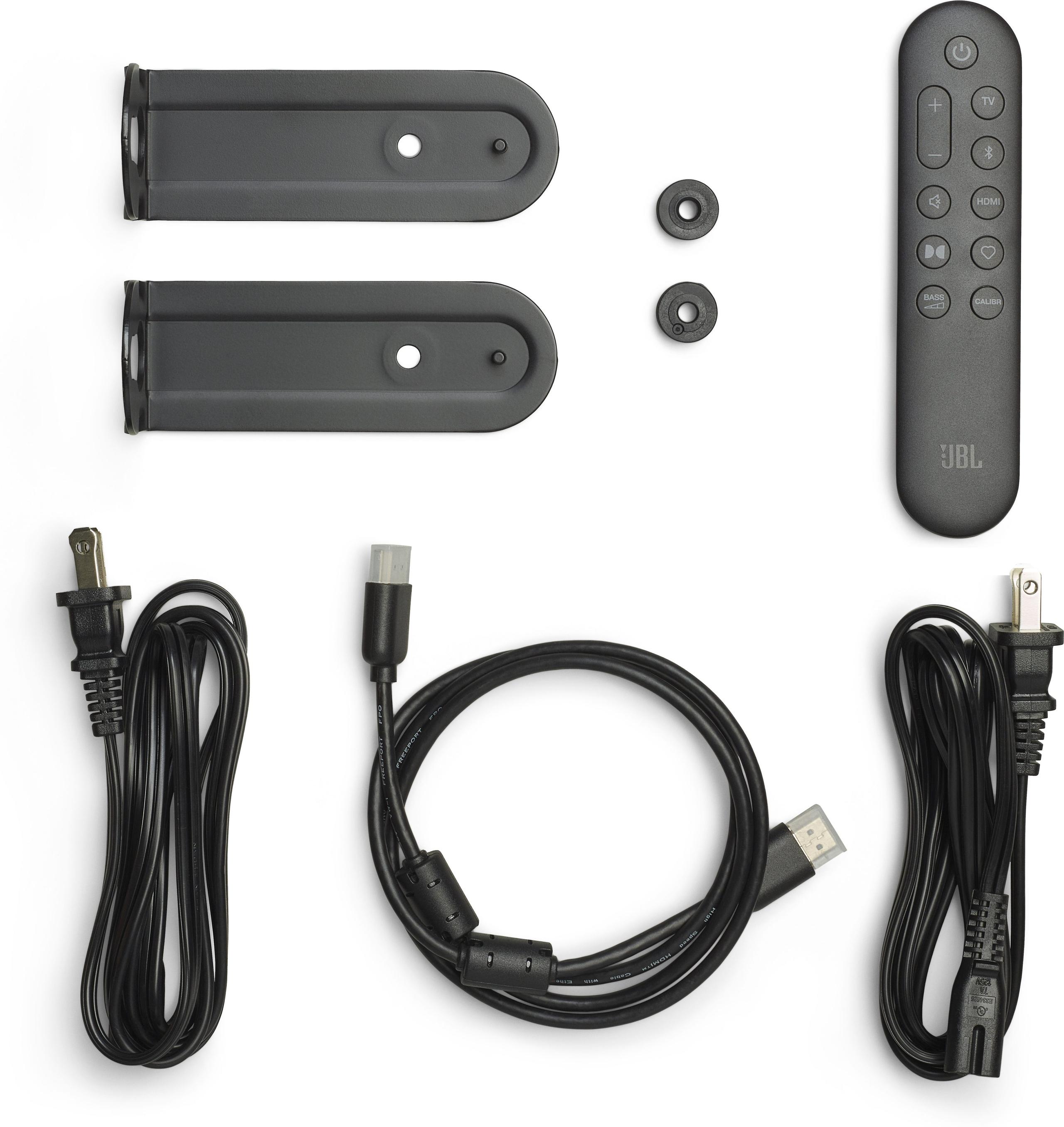
The JBL Bar 300 MK2 delivers on the promise of simple setup. Connect two cables (HDMI and power), place it below your TV, and you're operational within minutes. The system's compact footprint integrates invisibly into most entertainment centers, and the built-in LED display provides helpful status information without being distracting.
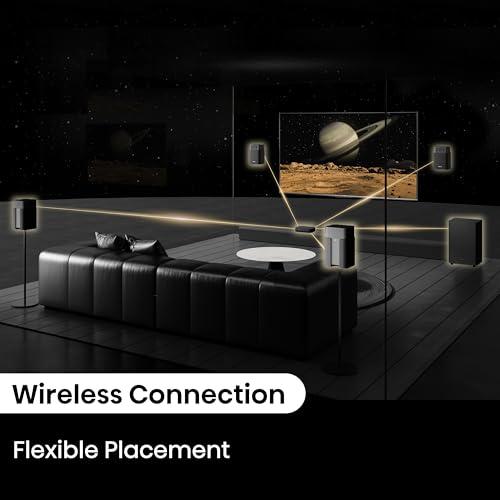
The Hisense HT Saturn requires more planning but rewards the effort. Each satellite speaker needs a nearby power outlet, and optimal placement requires some experimentation. However, the wireless connections eliminate the cable management nightmares associated with traditional surround systems. The automated pairing and room calibration features minimize technical complexity once the speakers are positioned.
For renters or those who frequently rearrange furniture, the all-in-one approach offers obvious advantages. For homeowners willing to optimize their setup, the distributed speaker approach provides superior flexibility and performance.
The JBL Bar 300 MK2 makes sense for buyers who prioritize simplicity, have space constraints, or primarily consume casual entertainment content. It's particularly well-suited for smaller apartments, bedrooms, or situations where visual aesthetics matter more than ultimate audio performance. The system provides substantial improvement over TV speakers and delivers respectable virtual surround effects for most content.
The Hisense HT Saturn targets buyers who prioritize audio performance and want a taste of true home theater experience. It's ideal for larger living rooms, dedicated media spaces, or situations where movie and gaming audio quality significantly impacts enjoyment. The system particularly benefits users who watch action films, play immersive video games, or listen to music with complex spatial elements.
Both systems support current audio formats including Dolby Atmos, but their upgrade paths differ significantly. The JBL Bar 300 MK2 represents a complete solution that can't be expanded—what you buy is what you get. Future improvements would require replacing the entire system.
The Hisense HT Saturn offers more flexibility for evolving needs. While you can't add additional speakers, the distributed design and advanced processing capabilities provide headroom for firmware updates and enhanced features over time.
Your decision ultimately hinges on how you prioritize convenience versus performance and how much your audio experience matters to your overall entertainment enjoyment. The JBL Bar 300 MK2 offers excellent value for buyers seeking meaningful improvement with minimal complexity, while the Hisense HT Saturn provides genuine home theater performance for those willing to invest in both price and setup effort.
Consider your primary use cases, room characteristics, and long-term satisfaction priorities. Both systems represent well-executed approaches to their respective philosophies, making either a solid choice when properly matched to user needs and expectations.
| Hisense HT Saturn HTSATURN | JBL Bar 300 MK2 |
|---|---|
| System Configuration - Determines setup complexity and audio immersion | |
| 4.1.2 channel system with 5 separate wireless components (control hub + 4 satellites + subwoofer) | 5.0 channel all-in-one soundbar with 9 integrated drivers |
| Total Power Output - Affects volume capability and dynamic range | |
| 720W distributed across multiple amplified components | 450W concentrated in single unit |
| Surround Sound Technology - Key difference in audio experience | |
| True physical surround with discrete satellite speakers placed around room | Virtual surround using MultiBeam 3.0 processing from single bar |
| Dolby Atmos Implementation - Height effects quality varies significantly | |
| Physical up-firing drivers in satellites create genuine overhead effects | Virtual Dolby Atmos processing simulates height through single unit |
| Bass Performance - Major impact on movie and music enjoyment | |
| Dedicated wireless 6.5" subwoofer extends to 40Hz with flexible placement | Built-in bass port design reaches 50Hz, limited by single-unit constraints |
| Total Speaker Count - More drivers enable better frequency distribution | |
| 13 speakers total (8 full-range, 4 tweeters, 1 subwoofer driver) | 9 drivers (5 racetrack mid/bass, 4 tweeters) |
| Professional Audio Tuning - Affects overall sound quality and balance | |
| Tuned by Devialet (French high-end audio specialist) | JBL's in-house acoustic engineering with PureVoice 2.0 |
| Setup Requirements - Consider your space and patience level | |
| Requires positioning 4 satellite speakers around room with power outlets | Single unit placement below TV with 2-cable connection |
| TV Integration Features - Enhanced functionality with matching brands | |
| Hi-Concerto tech uses Hisense TV speakers as additional channels, Room Fitting Tuning via TV | Universal TV compatibility, LED status display, works with any brand |
| Connectivity Options - Modern features for streaming and control | |
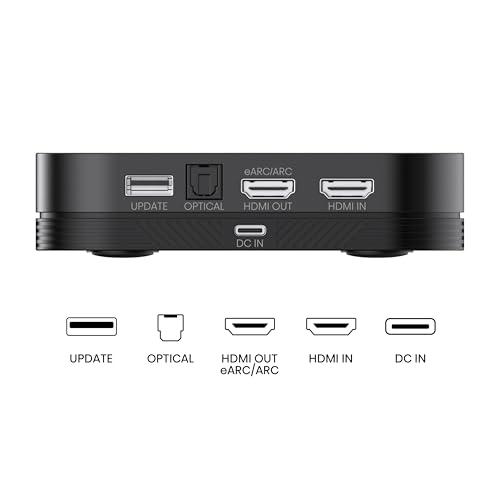
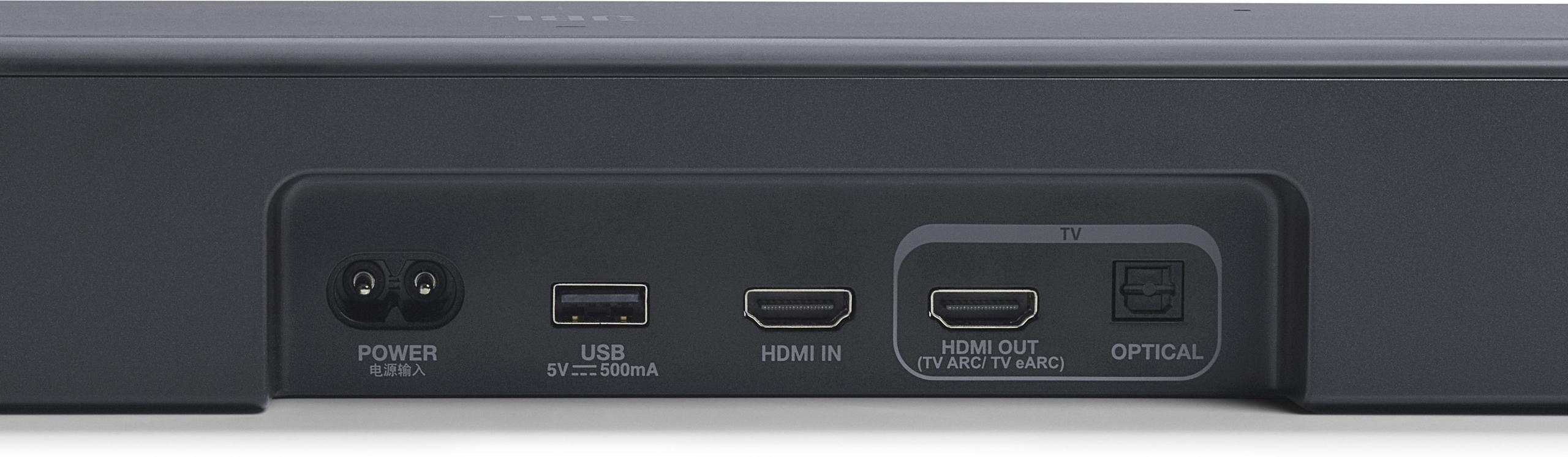
| HDMI eARC, Bluetooth 5.3, Optical input, ConnectLife app control | HDMI eARC, Bluetooth 5.3, Optical input, built-in Wi-Fi, JBL One app |
| Wireless Technology - Stability crucial for multi-speaker systems | |
| Triple-band wireless (2.4/5.2/5.8 GHz) for interference-resistant operation | Bluetooth and Wi-Fi for streaming, no multi-speaker wireless needed |
| Physical Footprint - Consider your room size and aesthetic preferences | |
| Satellites: 4.8" x 7.8" x 4.8" each, Subwoofer: 9.5" x 15.4" x 9.5" | Single bar: 37" x 2.2" x 4.1", weighs 6.5 lbs |
| Expandability - Future upgrade potential | |
| Complete system, no expansion options but room calibration updates possible | Cannot add subwoofer or additional speakers, fixed configuration |
The Hisense HT Saturn HTSATURN is a complete wireless home theater system with five separate components (four satellite speakers plus a subwoofer), while the JBL Bar 300 MK2 is a traditional all-in-one soundbar. The Saturn delivers true surround sound with physical speakers around your room, whereas the Bar 300 MK2 creates virtual surround effects from a single unit.
The Hisense HT Saturn provides a superior home theater experience with genuine 4.1.2 channel surround sound, physical height channels for Dolby Atmos, and a dedicated subwoofer for deep bass. The JBL Bar 300 MK2 offers good virtual surround for casual movie watching but can't match the immersion of discrete speakers placed around your room.
The Hisense HT Saturn includes a wireless 6.5-inch subwoofer as part of the system, providing deep bass down to 40Hz. The JBL Bar 300 MK2 has built-in bass enhancement but no separate subwoofer, limiting its low-frequency performance compared to dedicated bass units.
The JBL Bar 300 MK2 is much easier to install—simply connect HDMI and power cables to the single unit. The Hisense HT Saturn requires positioning four satellite speakers around your room and connecting each to power, though all wireless connections pair automatically.
Yes, both systems work with any TV through HDMI eARC or optical connections. However, the Hisense HT Saturn offers special Hi-Concerto integration features when paired with Hisense TVs, while the JBL Bar 300 MK2 provides universal compatibility without brand-specific enhancements.
The Hisense HT Saturn delivers significantly better bass with its dedicated wireless subwoofer that extends to 40Hz and can be positioned optimally in your room. The JBL Bar 300 MK2 provides adequate bass for its size but cannot match the depth and impact of a separate subwoofer.
The Hisense HT Saturn outputs 720 watts distributed across its multiple components, while the JBL Bar 300 MK2 delivers 450 watts from its single unit. The distributed power of the Saturn system typically provides better dynamics and room-filling capability.
The JBL Bar 300 MK2 is ideal for small spaces due to its compact single-unit design that doesn't require multiple speaker placement. The Hisense HT Saturn needs room for four satellite speakers, making it better suited for larger living spaces where you can properly position the components.
Both systems support Dolby Atmos, but differently. The Hisense HT Saturn uses physical up-firing speakers in its satellites for true Atmos height effects, while the JBL Bar 300 MK2 creates virtual Atmos effects through processing. The Saturn provides more convincing overhead sound placement.
The JBL Bar 300 MK2 offers excellent value for users wanting significant audio improvement with minimal setup complexity. The Hisense HT Saturn provides better performance per dollar in the premium category, delivering true surround sound at a price comparable to traditional multi-component systems.
Neither system allows adding additional speakers. The Hisense HT Saturn comes as a complete 5-component system that cannot be expanded, while the JBL Bar 300 MK2 is a fixed all-in-one configuration. Both represent complete solutions for their respective approaches.
The Hisense HT Saturn excels for gaming with its true surround sound that accurately positions directional audio cues around your room. The JBL Bar 300 MK2 works well for casual gaming but cannot match the spatial precision and immersion that the Saturn's discrete speakers provide for competitive or immersive gaming experiences.
We've done our best to create useful and informative comparisons to help you decide what product to buy. Our research uses advanced automated methods to create this comparison and perfection is not possible - please contact us for corrections or questions. These are the sites we've researched in the creation of this article: bestbuy.com - youtube.com - blog.son-video.com - youtube.com - youtube.com - techradar.com - ecoustics.com - jbhifi.com.au - shop.hisense-usa.com - bhphotovideo.com - bestbuy.com - digitalreviews.net - hisense-usa.com - projectorscreenstore.com - valueelectronics.com - dolby.com - giftpack.ai - homecinemachoice.com - retailspecs.com - hometechnologyreview.com - whathifi.com - news.jbl.com - engadget.com - crutchfield.com - harmanaudio.com - techradar.com - bestbuy.com - jbl.com - sweech.co.ke - jbl.com - jbl.com.sg - mm.jbl.com - abcwarehouse.com - harmanaudio.com - sweetwater.com - ro.harmanaudio.com - dell.com - jbl.co.nz

Privacy Policy
Terms and Conditions - Affiliate Policy
Home Security
© Copyright 2008-2026.
11816 Inwood Rd #1211, Dallas, TX 75244