




The home theater soundbar market hit an interesting crossroads in 2025. While most manufacturers continued refining their all-in-one virtual surround solutions, some bold companies decided to completely rethink the approach. This created two distinct philosophies for delivering cinematic audio: sophisticated single-bar systems that use clever processing to fake surround sound, and multi-component wireless systems that actually place speakers around your room.
At the center of this debate sit two fascinating products that represent these competing visions. The Hisense HT Saturn, released in early 2025, breaks apart the traditional soundbar into five separate wireless components. Meanwhile, the KEF XIO, launched mid-2025, pushes the boundaries of what's possible within a single elegant chassis. Both promise Dolby Atmos immersion and premium audio quality, but they achieve these goals through fundamentally different approaches.
Understanding which philosophy suits your space, preferences, and expectations requires digging into how these systems actually work and where each approach excels or falls short.
Before diving into specifics, it's worth understanding how we got here. Early soundbars were essentially wide speakers designed to make TV dialogue clearer. As streaming services embraced Dolby Atmos—a technology that places sounds in three-dimensional space around and above you—soundbars needed to evolve quickly.
Most manufacturers doubled down on virtualization technology, using digital signal processing (DSP) to trick your brain into hearing sounds coming from places where no speakers actually exist. This psychoacoustic processing works by carefully timing and filtering audio signals to create phantom sound sources. It's impressive when done well, but it's still fundamentally limited by physics and your room's acoustics.
The Hisense HT Saturn represents a different approach entirely. Instead of trying to simulate surround sound, it actually provides it by spreading real speakers around your room. This isn't entirely new—companies like Sonos pioneered wireless multi-room audio—but applying this concept specifically to home theater with proper Dolby Atmos support represents a significant shift in thinking.
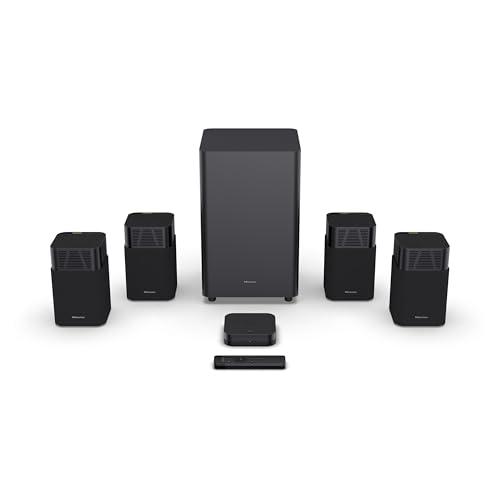
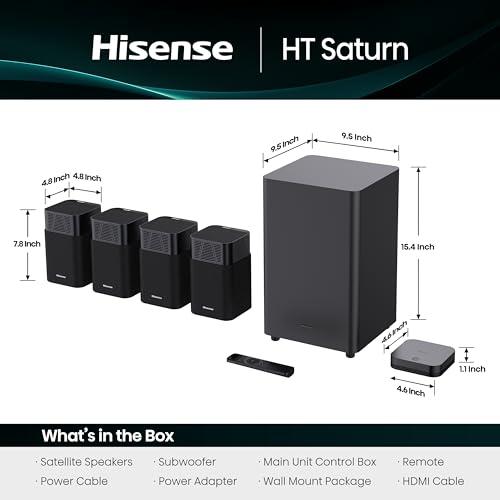
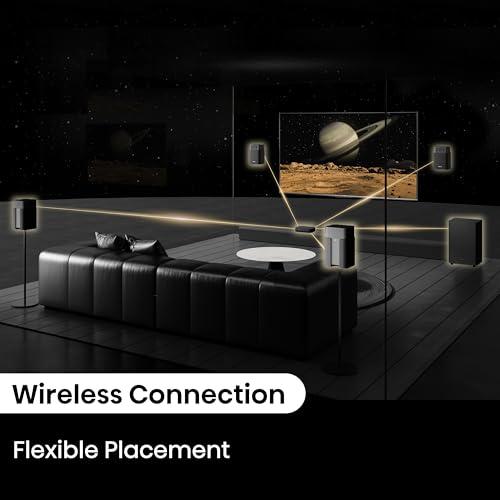
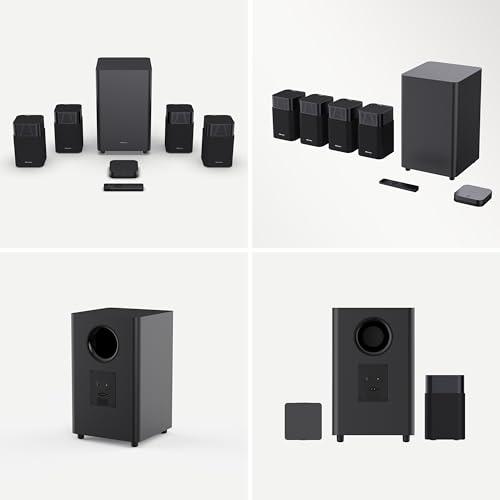
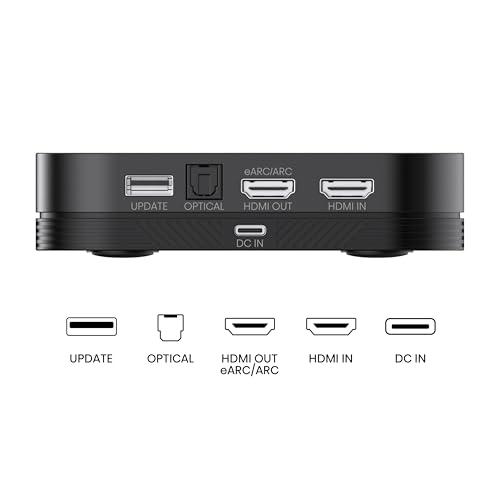
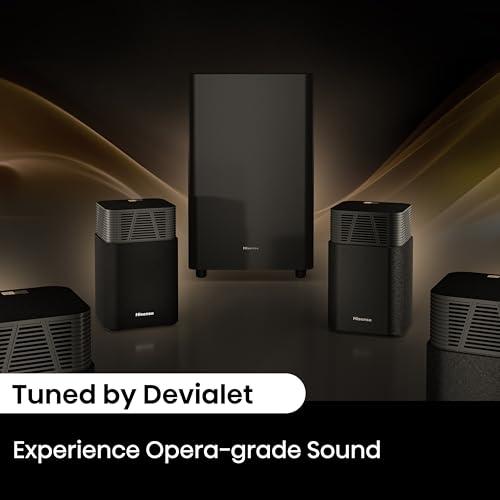
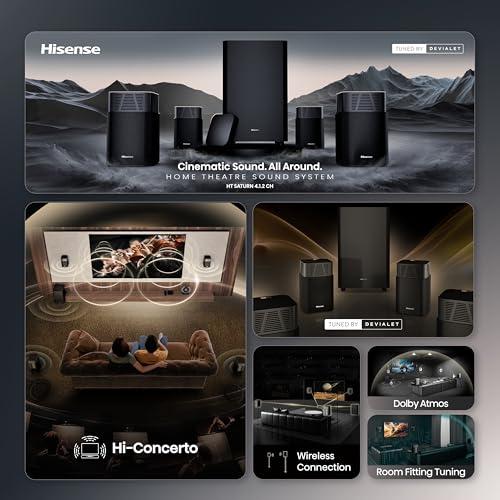
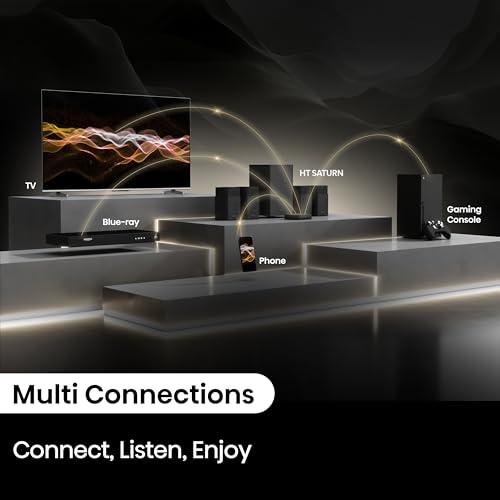
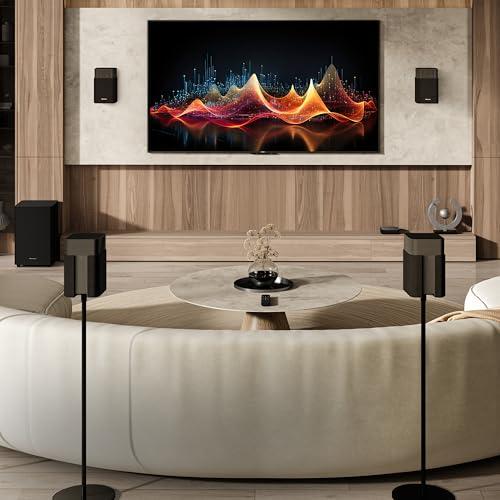
The Hisense HT Saturn splits what would traditionally be a single soundbar into five distinct components. You get a compact control hub that connects to your TV, four wireless satellite speakers that you place around your room, and a wireless subwoofer for bass. Each component communicates wirelessly using three different frequency bands (2.4GHz, 5.2GHz, and 5.8GHz) to avoid interference from your Wi-Fi network and other devices.
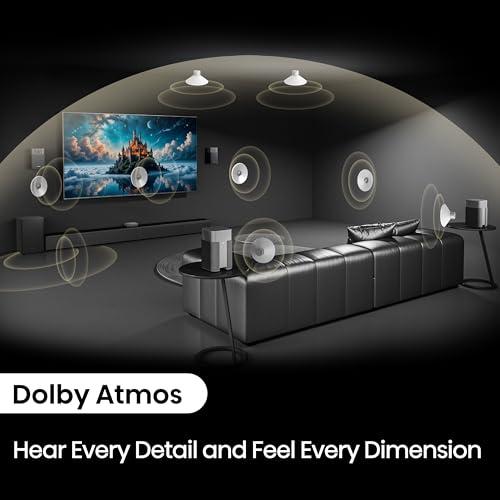
This setup creates what's called a true 4.1.2 system. The numbers tell the story: four main speakers (front left, front right, rear left, rear right), one subwoofer, and two height channels created by upward-firing drivers in the front satellites. When a helicopter flies overhead in a movie, the sound actually comes from speakers positioned around you, not from clever processing trying to fool your ears.
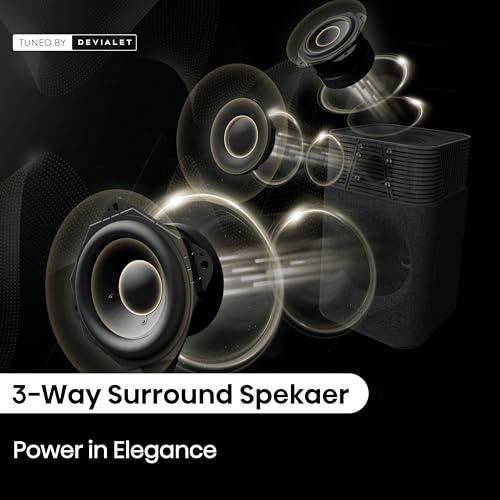
Each satellite speaker is surprisingly sophisticated for its compact size. They're three-way designs, meaning they have separate drivers for bass, midrange, and treble frequencies. This allows each speaker to reproduce a full range of sound without the compromises you typically see in small speakers. The satellites also include upward-firing drivers that bounce sound off your ceiling to create height effects.
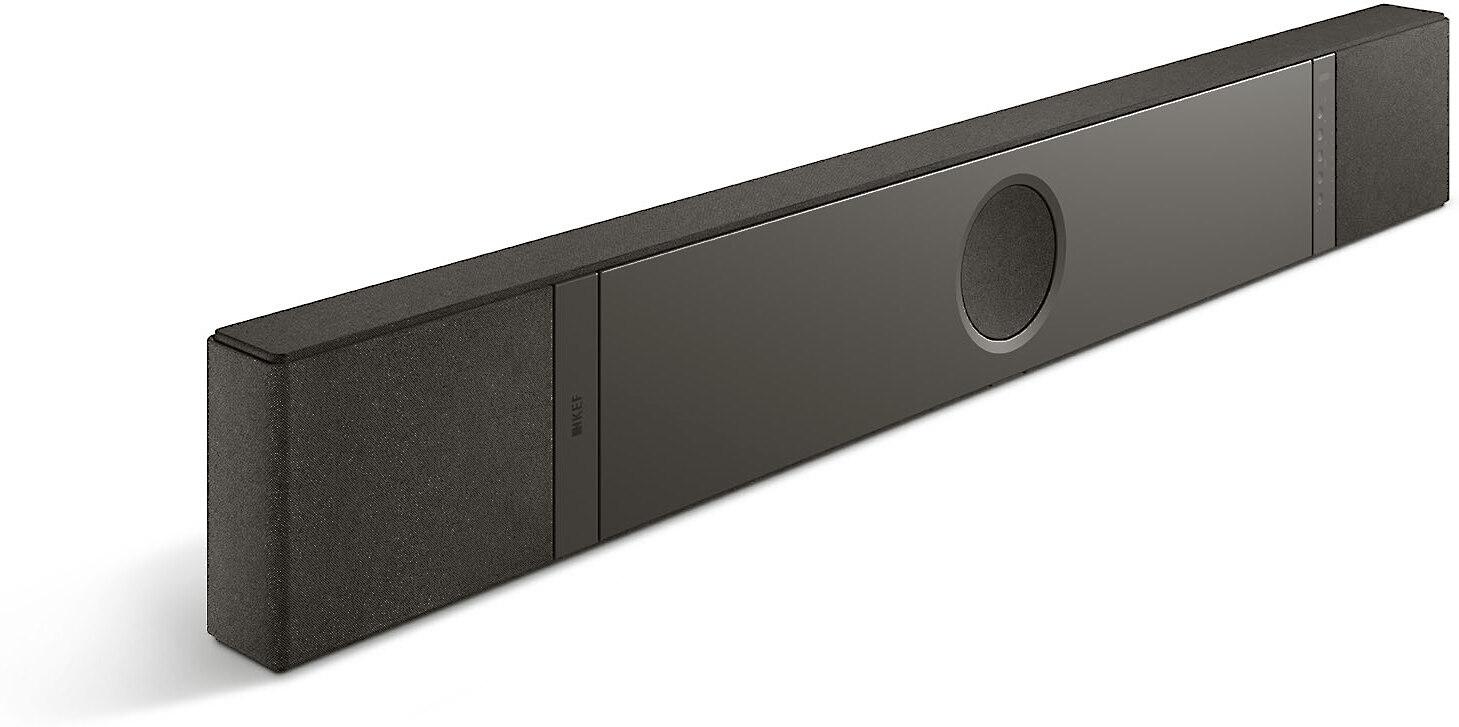
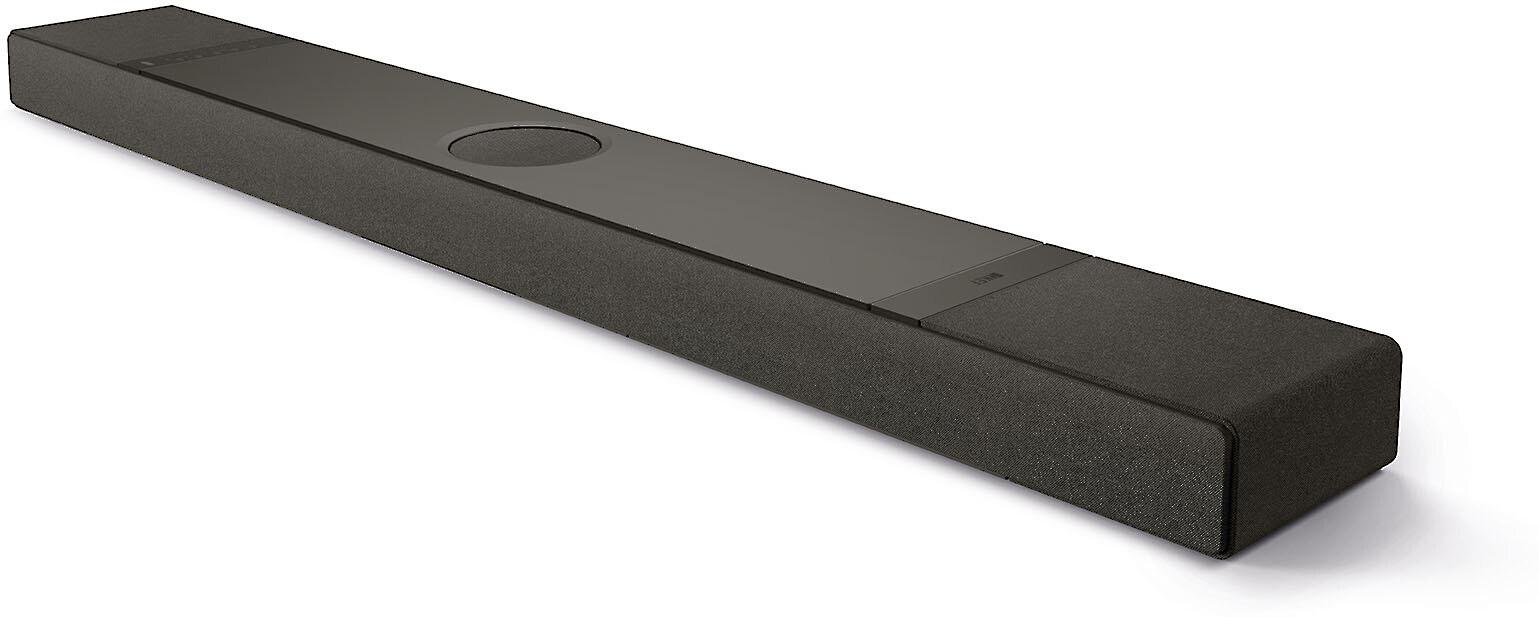
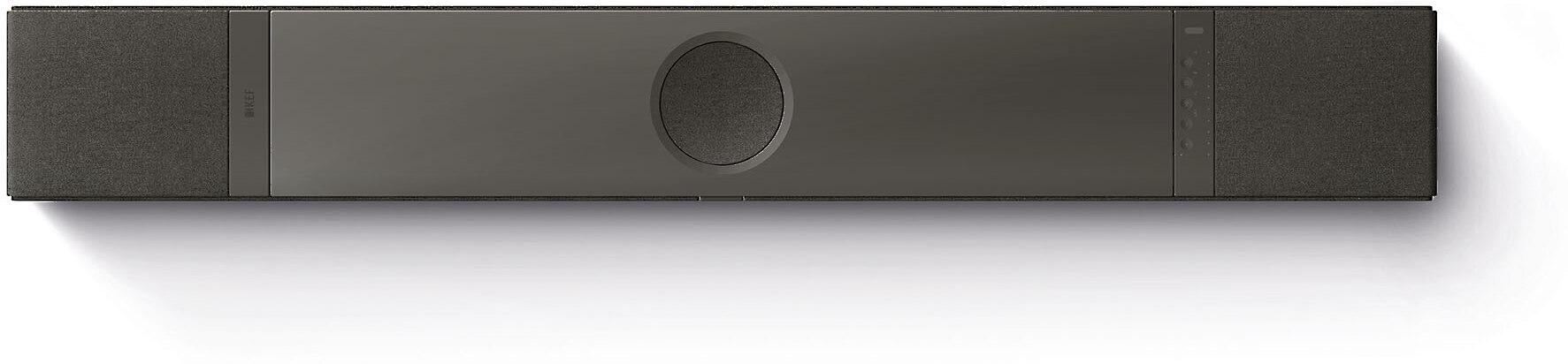
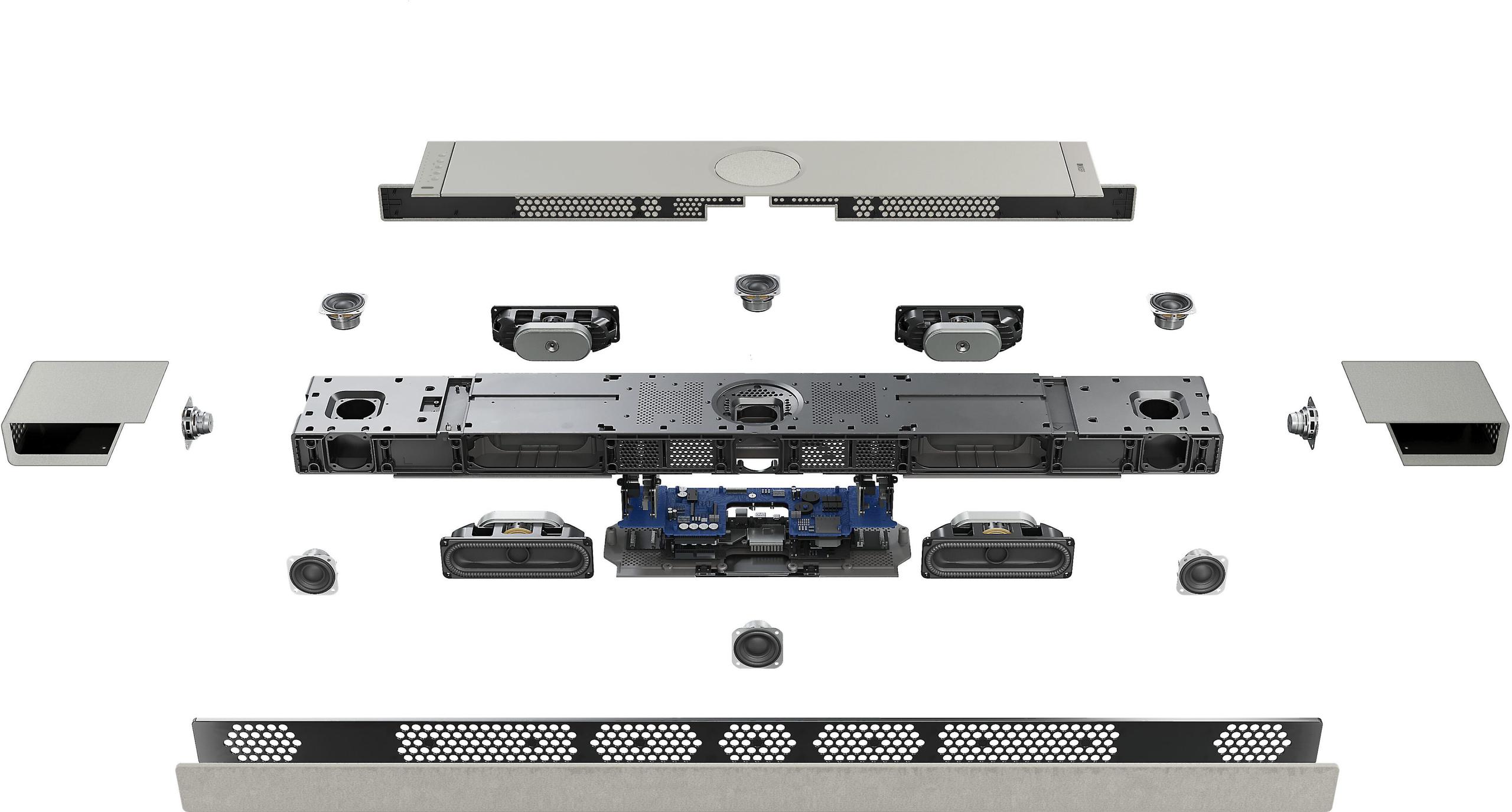
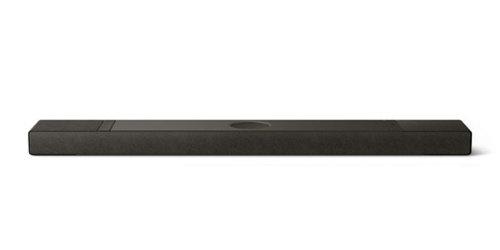
The KEF XIO takes the opposite approach, cramming twelve individual speakers and twelve separate amplifiers into a single sleek enclosure. This isn't just a traditional soundbar with more drivers—it's a complete re-engineering of how soundbars work.
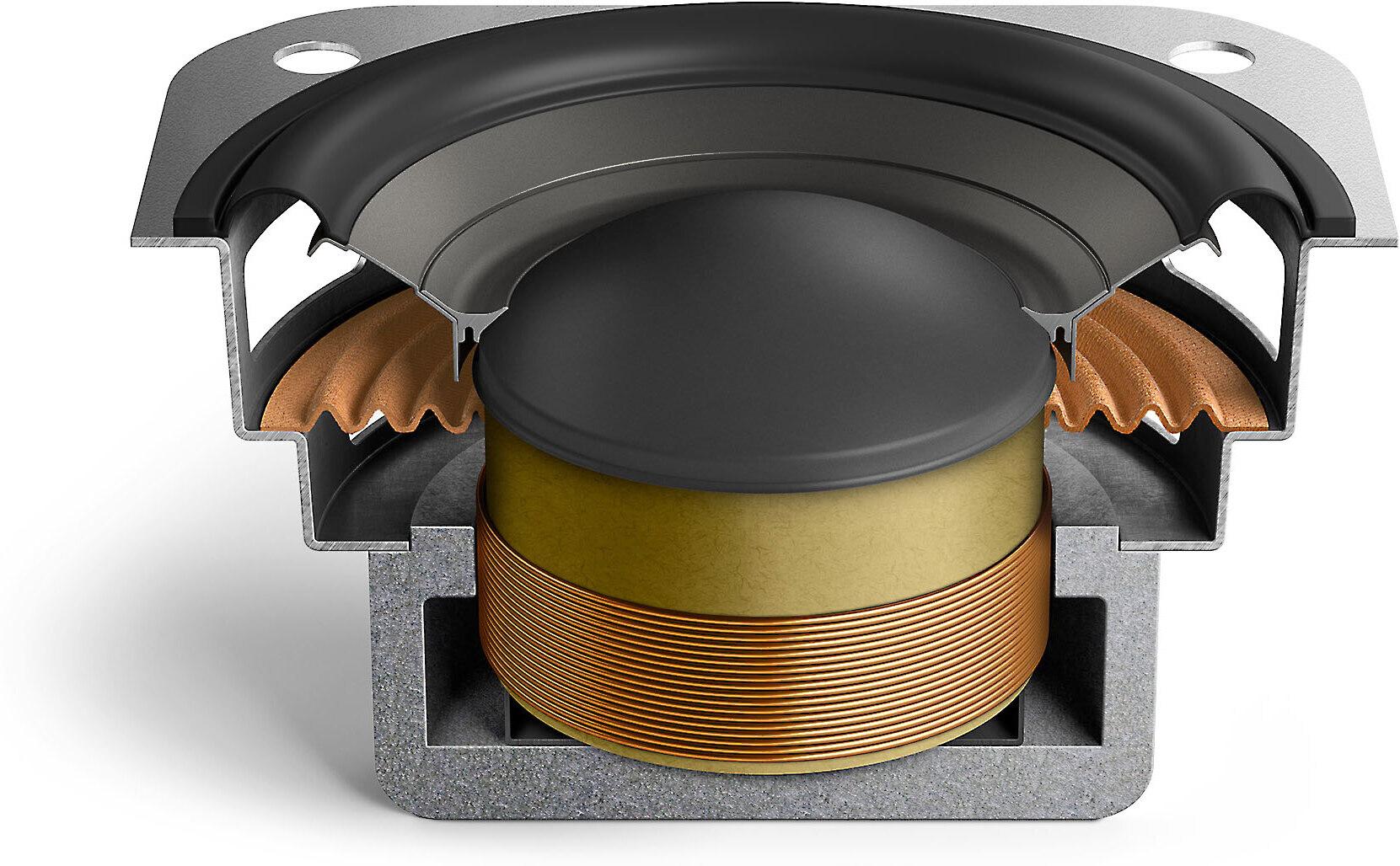
At its heart are six Uni-Q MX drivers, which represent KEF's signature technology in miniaturized form. A Uni-Q driver places the tweeter (which handles high frequencies) at the exact center of the midrange driver (which handles middle frequencies). This concentric arrangement means high and mid frequencies appear to come from the same point in space, creating incredibly precise stereo imaging. It's the same basic technology KEF uses in their high-end speakers, just shrunk down for soundbar use.
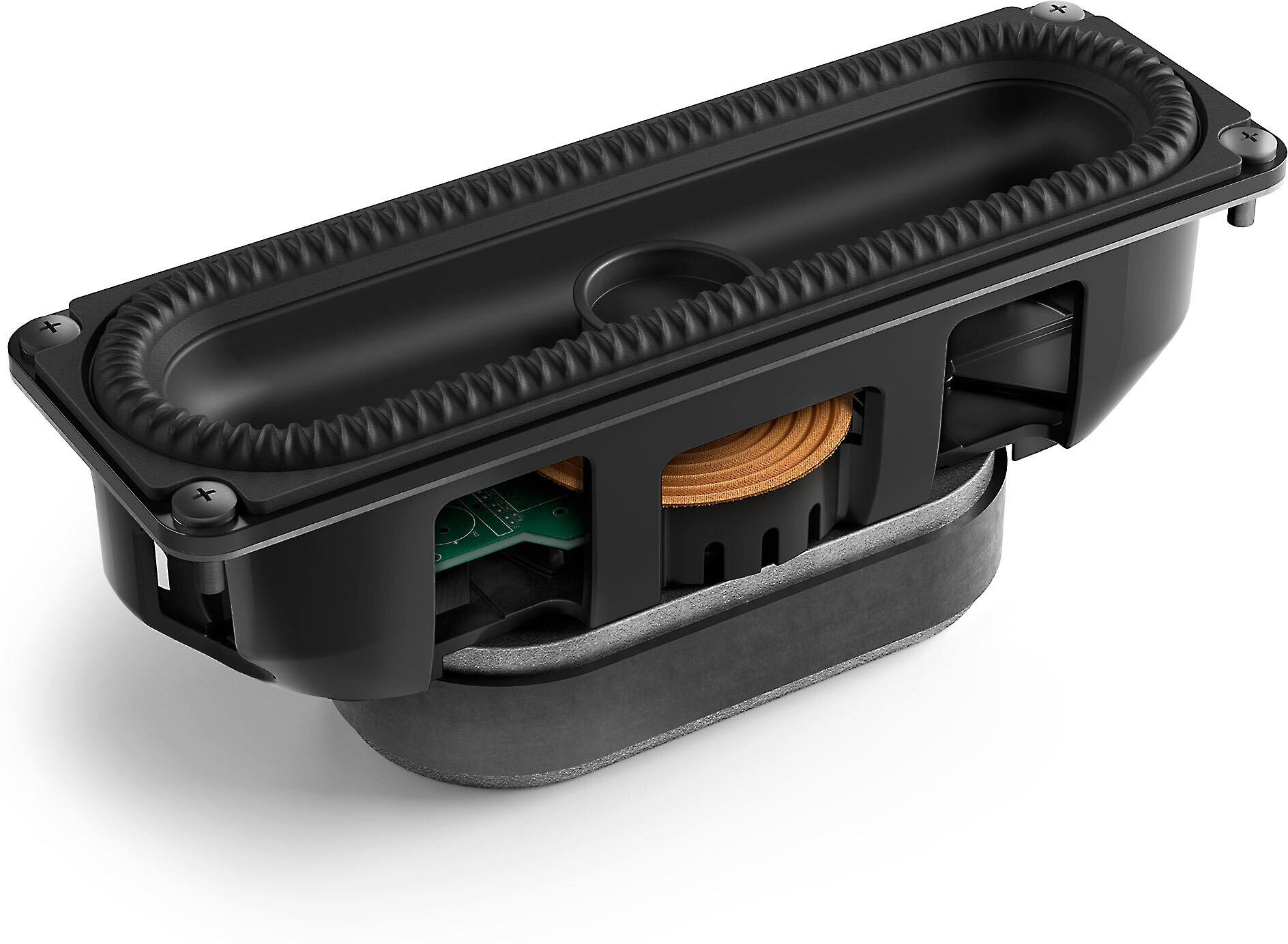
For bass, the KEF XIO uses four racetrack-shaped woofers arranged in a force-canceling configuration. These aren't circular like traditional speakers—they're oval-shaped, which allows more driver surface area in the same space. The force-canceling arrangement means pairs of drivers push and pull in opposite directions, which cancels out cabinet vibrations that would otherwise muddy the sound.
Most impressively, these bass drivers incorporate technology called P-Flex and Velocity Control Technology (VECO). P-Flex uses a special surround design that resists the internal air pressure changes inside the speaker cabinet. VECO uses real-time motion sensing to monitor exactly how the driver cone is moving and applies corrections to reduce distortion. The result is bass that extends down to 34Hz—deeper than many dedicated subwoofers—with remarkably low distortion.
This is where the fundamental difference between these systems becomes most apparent. The Hisense HT Saturn creates surround sound the traditional way: by actually having speakers in different locations. When you hear a car racing from left to right across the screen, the sound literally moves from your left satellite to your right satellite. There's no processing trickery involved—it's just physics.
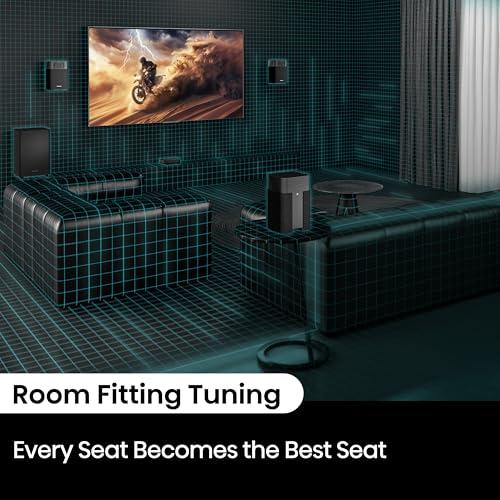
This approach has major advantages. First, it works regardless of where you sit. Virtual surround systems typically have a "sweet spot" where the effect works best, usually centered between the speakers. With physical separation, everyone in the room hears proper surround sound. Second, the effect doesn't break down with room acoustics the way virtual surround can. If your room has unusual shapes, lots of furniture, or sound-absorbing materials, physical speakers will still work correctly.
The KEF XIO relies on sophisticated psychoacoustic processing to create phantom sound sources. It uses precise timing delays, phase manipulation, and frequency filtering to trick your brain into hearing sounds coming from places where no speakers exist. When it works well—and with KEF's engineering, it often does—the effect can be quite convincing.
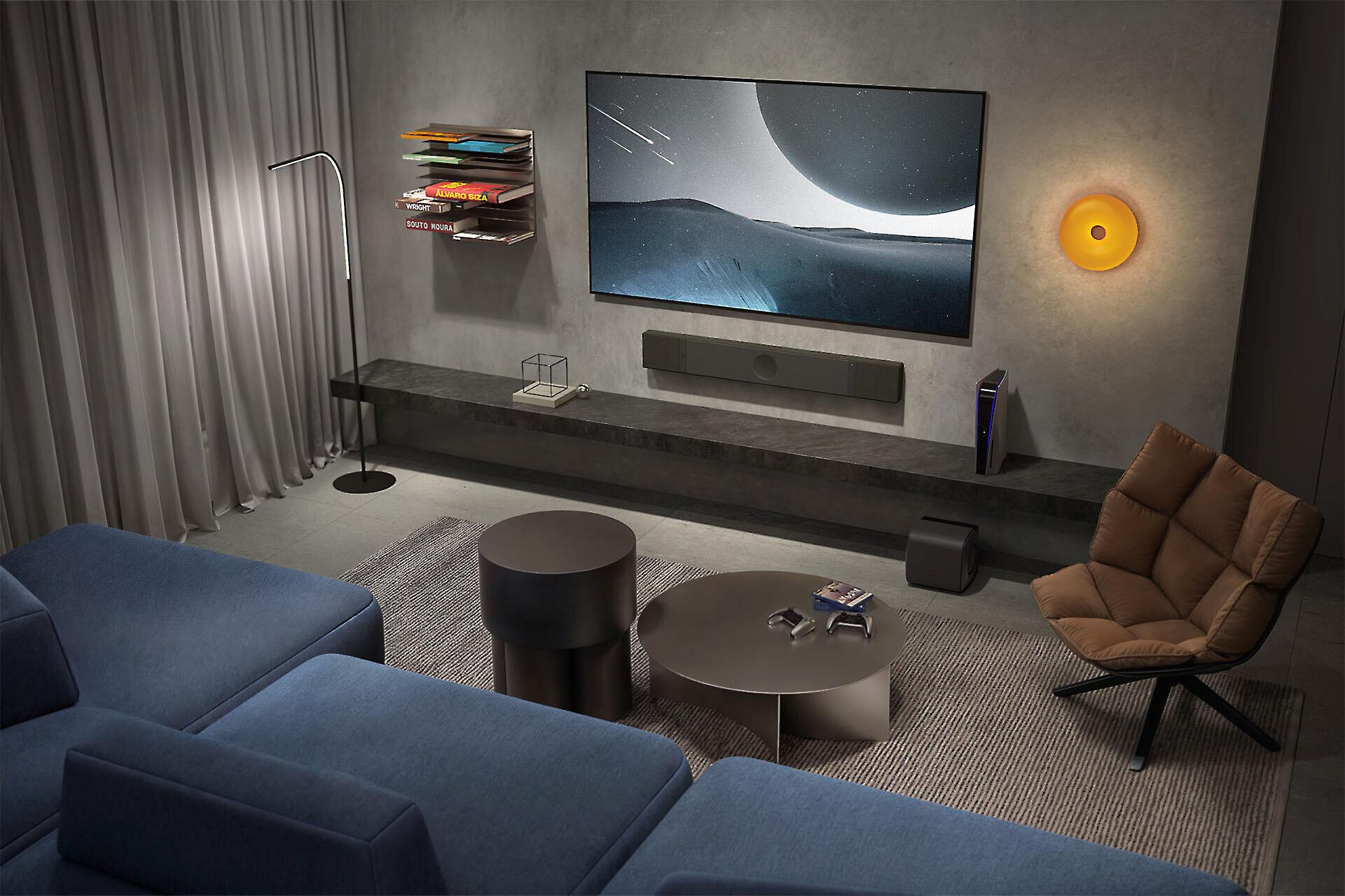
The KEF's advantage is convenience and consistency. There's no speaker positioning to worry about, no wireless connectivity issues between components, and no visual impact from multiple speakers around your room. The entire system is contained in one elegant enclosure that looks more like a piece of modern furniture than audio equipment.
Based on expert reviews and user feedback, the consensus is clear: the Hisense HT Saturn provides more convincing surround sound effects, particularly for listeners who move around the room or have challenging acoustics. The KEF XIO offers impressive virtual surround that's more than adequate for most users, with the major benefit of zero setup complexity.
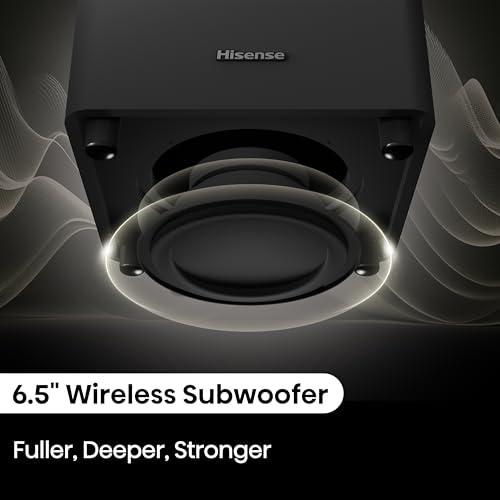
The bass comparison reveals another philosophical divide. The Hisense HT Saturn includes a dedicated 6.5-inch wireless subwoofer that you can position anywhere in your room. This flexibility is huge—subwoofer placement dramatically affects bass response, and being able to put it in a corner, along a wall, or wherever it sounds best in your specific room is a major advantage.
The subwoofer itself is well-engineered, with down-firing design that works well in most rooms. It extends down to 40Hz, which covers the fundamental frequencies of most movie explosions and music bass lines. More importantly, it integrates seamlessly with the satellite speakers, creating a cohesive sound where you can't tell where the subwoofer takes over from the main speakers.
The KEF XIO takes a more challenging approach: delivering deep bass without a separate subwoofer. Using those advanced racetrack woofers and sophisticated processing, it actually extends deeper than the Hisense system, reaching down to 34Hz. This is genuinely impressive engineering—most soundbars struggle to produce meaningful output below 50Hz.
The advantage here is obvious: no separate subwoofer means no extra component to place, power, or integrate. The bass comes from the same enclosure as everything else, which can actually improve integration and reduce the "boom" that poorly-integrated subwoofers sometimes add to dialogue and music.
However, there's a trade-off. While the KEF's bass is clean and extended, it can't move as much air as a dedicated subwoofer. In larger rooms or for listeners who want visceral impact from action movies, the physical limitations of the integrated approach become apparent.
Both systems face an interesting challenge: how to create convincing dialogue when neither has a traditional center channel speaker. Most home theater systems place dialogue in a dedicated center speaker positioned below or above the TV screen. Both of these systems create a "phantom center" using processing and speaker positioning.
The Hisense HT Saturn creates its phantom center through precise positioning and level matching between the front left and front right satellites. When calibrated correctly, this creates a stable image where dialogue appears to come from the screen rather than from the speakers to either side. The Devialet tuning (more on this later) plays a crucial role in making this phantom center convincing.
Expert reviews consistently praise the Saturn's dialogue clarity, noting that voices remain centered and intelligible even during complex action sequences. The physical separation of the front speakers actually helps here—having real left and right channels makes the phantom center effect more convincing than when it's created by closely-spaced drivers in a single enclosure.
The KEF XIO uses dedicated center channel processing within its driver array, essentially designating specific drivers to handle center channel information. This is combined with KEF's Music Integrity Engine, which handles phase alignment and timing to ensure dialogue appears to come from the correct location.
The results are generally excellent, though some reviews note that the KEF's bass boost can occasionally make male voices sound slightly boomy. Both systems offer dialogue enhancement modes that boost speech frequencies and reduce background noise, which helps with movies that have poorly-mixed dialogue tracks.
This is where personal preferences and intended use become crucial. The Hisense HT Saturn benefits from Devialet's acoustic tuning. Devialet is a French company known for extremely high-end audio equipment, and their involvement in tuning the Saturn shows in its musical performance. The system delivers balanced frequency response and good stereo imaging, though it's clearly optimized for home theater use first.
The physical separation of the front speakers creates a wider soundstage for stereo music, which can make albums feel more spacious and immersive. However, the system's processing is primarily designed for multi-channel home theater content, so stereo music sometimes doesn't feel as refined as it could.
The KEF XIO has a significant advantage here. KEF has been making high-end speakers for decades, and their expertise in stereo reproduction shows. The Uni-Q drivers provide exceptional stereo imaging, creating that coveted "disappearing speaker" effect where instruments seem to float in space between and beyond the physical speakers.
More importantly, the KEF XIO supports high-resolution audio up to 24-bit/384kHz and integrates directly with streaming services like TIDAL, Qobuz, and Spotify Connect. This means you can stream high-quality music directly to the soundbar without any intermediary devices, and the system will handle the full resolution of the source material.
For listeners who want their home theater system to double as a serious music system, the KEF is clearly superior. For those focused primarily on movies and TV with occasional music listening, the Hisense is more than adequate.
Both systems recognize that rooms vary dramatically, and what sounds great in one space might sound terrible in another. Their approaches to room calibration reveal their different philosophies.
The Hisense HT Saturn offers Room Fitting Tuning, which analyzes your room's acoustic response and adjusts each speaker individually. The system sends test tones from each speaker and measures how they interact with your room's surfaces, furniture, and layout. It then applies individual EQ curves, level adjustments, and timing corrections to optimize performance.
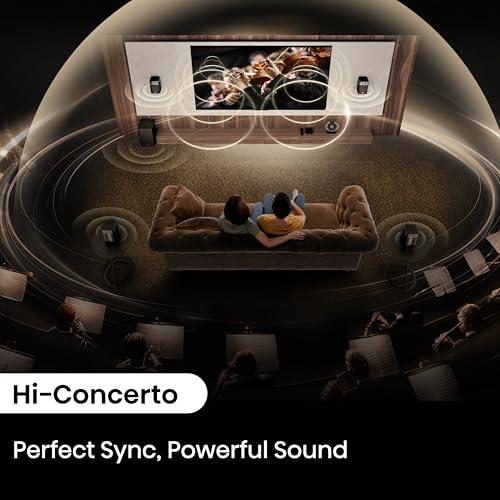
When paired with compatible Hisense TVs, the system can also use Hi-Concerto technology, which incorporates the TV's built-in speakers into the overall sound field. This creates an even wider front soundstage and can improve dialogue anchoring. It's a clever feature that effectively gives you additional speakers without buying additional hardware.
The KEF XIO uses Intelligent Placement Technology with built-in microphones that automatically detect whether the soundbar is wall-mounted or shelf-mounted and measure the room's acoustics. The calibration process completes in under a minute and applies automatic corrections for optimal performance.
The KEF also offers advanced manual tuning options for users who want to fine-tune the system themselves. This includes separate bass, treble, and dialogue level controls, as well as advanced options like crossover frequency adjustment and room size compensation.
Both systems' calibration makes a noticeable difference in sound quality, but they work differently. The Hisense system's calibration is more focused on optimizing the physical speaker placement and dealing with room reflections. The KEF's calibration is more about optimizing the virtual surround processing and ensuring the integrated bass system works well with your room's acoustics.
This is where the fundamental trade-off between these systems becomes most apparent. The Hisense HT Saturn requires more initial work but offers more flexibility. You need to find appropriate locations for five separate components, run power cables to each (though no audio cables, since everything is wireless), and go through the calibration process.
The satellite speakers are compact enough to fit on most shelves or wall-mount brackets, but you do need to think about placement. The rear speakers need to be behind or to the sides of your seating area, the front speakers should be roughly at ear level when seated, and the subwoofer needs to be positioned for optimal bass response in your room.
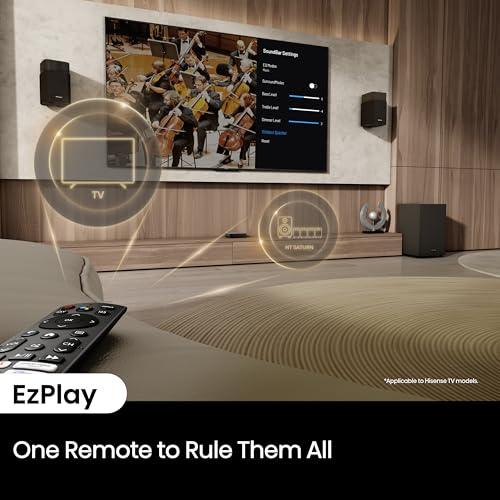
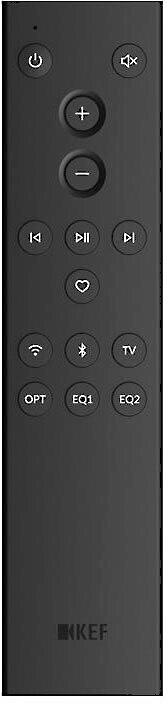
Once set up, the system is quite user-friendly. Everything powers on automatically when it detects a signal, and the wireless connectivity between components is generally reliable. The included remote is well-designed, and the system integrates smoothly with most TVs through HDMI eARC.
The KEF XIO is dramatically simpler to set up. Connect power, connect the HDMI eARC cable to your TV, run the automatic calibration, and you're done. The entire process takes maybe 10 minutes. Wall mounting is straightforward if you prefer that option, and the sleek design looks appropriate in most modern living rooms.
Daily operation is excellent on both systems, but they offer different control philosophies. The Hisense integrates particularly well with Hisense TVs, offering unified control and on-screen menus. The KEF offers more sophisticated app control with detailed EQ options and direct streaming capabilities.
At the time of writing, the Hisense HT Saturn costs roughly half what the KEF XIO does. This price difference reflects their different target markets and engineering approaches, but it also means the value proposition is quite different.
The Hisense offers exceptional value for performance-focused buyers. You're getting true multi-speaker surround sound, Devialet tuning, and comprehensive Dolby Atmos support at a price point that historically would have bought you a basic soundbar with mediocre virtual surround. The inclusion of a dedicated wireless subwoofer and four satellite speakers represents substantial hardware value.
The KEF XIO commands a significant premium, but it reflects KEF's decades of speaker engineering expertise and the considerable development cost of fitting this much sophisticated technology into a single enclosure. The premium materials, advanced driver technology, and comprehensive feature set help justify the higher price, though it's clearly targeted at buyers who prioritize convenience and engineering excellence over pure value.
Long-term considerations favor different aspects of each system. The Hisense HT Saturn's modular design allows for speaker repositioning if you rearrange your room, and the separate subwoofer can be optimally placed regardless of where the other components end up. However, expansion options are limited to the existing ecosystem.
The KEF XIO's integrated design offers no physical expansion options, but it includes comprehensive streaming capabilities and professional-grade calibration tools that should keep it current longer. The system can also integrate with external subwoofers if needed, providing some upgrade flexibility.
After researching extensively and evaluating expert reviews, user feedback, and technical specifications, the choice between these systems comes down to your priorities and situation.
Choose the Hisense HT Saturn if you want the most convincing surround sound experience possible at this price point. The physical speaker separation provides authentically immersive audio that works for everyone in the room, regardless of seating position. It's also the better value if you're primarily focused on home theater performance and don't mind the more complex setup.
The Saturn is particularly compelling if you own or plan to purchase a large Hisense TV, where the Hi-Concerto integration can create an even more impressive soundstage. It's also the right choice if you have a larger room where the additional speakers and dedicated subwoofer will have more impact.
Choose the KEF XIO if you value convenience, premium materials, and sophisticated engineering over pure surround sound authenticity. The single-bar design fits into more living situations without compromise, and the superior music performance makes it genuinely dual-purpose for both movies and serious music listening.
The KEF makes more sense for smaller to medium-sized rooms where virtual surround can be more effective, and for users who want the latest streaming features and high-resolution audio support. It's also the better choice if aesthetics and minimal visual impact are important priorities.
Both systems represent thoughtful approaches to the challenge of delivering cinematic audio in real homes. The Hisense HT Saturn prioritizes authentic surround sound through physical separation, while the KEF XIO pushes the boundaries of what's possible within a single elegant enclosure. Your choice should depend on whether you value ultimate surround authenticity or premium convenience and versatility.
The home theater soundbar market continues evolving rapidly, but these two systems represent the current state of the art for their respective approaches. Whichever you choose, you'll get a dramatically better audio experience than traditional TV speakers or basic soundbars can provide.
| Hisense HT Saturn HTSATURN | KEF XIO Soundbar |
|---|---|
| System Configuration - Determines authenticity of surround sound experience | |
| Multi-component: 4 wireless satellites + subwoofer + control hub | Single soundbar with 12 integrated drivers and amplifiers |
| Channel Layout - More channels generally mean better spatial audio | |
| True 4.1.2 with physical speaker separation | Virtual 5.1.2 with advanced DSP processing |
| Total Power Output - Affects maximum volume and dynamic range | |
| 500W across distributed components | 820W from 12 individual Class D amplifiers |
| Bass Extension - Lower frequencies provide more impactful movie effects | |
| 40Hz from dedicated 6.5" wireless subwoofer | 34Hz from integrated racetrack woofers with P-Flex technology |
| Driver Technology - Affects sound quality and imaging precision | |
| 13 total speakers: 8 full-range, 4 tweeters, 1 subwoofer | 12 drivers including 6 Uni-Q MX concentric arrays |
| Wireless Connectivity - Critical for multi-room and streaming flexibility | |
| Bluetooth 5.3 only (no Wi-Fi streaming) | Wi-Fi 6, Bluetooth 5.3, AirPlay 2, Chromecast, streaming services |
| Room Calibration - Essential for optimizing performance in your space | |
| Room Fitting Tuning via compatible Hisense TVs | Intelligent Placement Technology with built-in microphones |
| Setup Complexity - Affects how quickly you'll be enjoying the system | |
| 5 separate components requiring optimal placement | Single bar with automatic calibration in under 1 minute |
| HDMI Features - Important for modern TV and gaming compatibility | |
| HDMI eARC with 4K 60Hz pass-through | HDMI 2.1 eARC (no pass-through inputs) |
| High-Resolution Audio Support - Matters for serious music listening | |
| Standard audio codecs via Bluetooth/HDMI | Up to 24-bit/384kHz with direct streaming integration |
| Special Integration Features - Unique capabilities that set each system apart | |
| Hi-Concerto technology with Hisense HT Saturn TVs, Devialet tuning | KEF's Music Integrity Engine, Velocity Control Technology |
| Physical Footprint - Consider your room layout and aesthetic preferences | |
| Multiple components around room, larger visual impact | Single 47.6" bar, minimal visual presence |
The Hisense HT Saturn provides more authentic surround sound because it uses four separate wireless speakers placed around your room, creating true physical separation of audio channels. The KEF XIO uses advanced virtual surround processing within a single bar, which is very good but can't match the convincing directional effects of actual speakers positioned behind and beside you.
The fundamental difference is that the Hisense HT Saturn is a multi-component wireless system with separate satellites and a subwoofer, while the KEF XIO is an all-in-one soundbar that houses everything in a single chassis. This means the Hisense offers true surround sound but requires more setup, while the KEF provides convenience with sophisticated virtual surround.
The KEF XIO actually extends deeper to 34Hz using advanced integrated woofers with P-Flex technology, compared to the Hisense HT Saturn's 40Hz from its wireless subwoofer. However, the Hisense's separate subwoofer can be positioned optimally in your room for better bass response and can move more air for greater impact in larger spaces.
The KEF XIO is significantly easier to set up - just connect power and HDMI eARC, then run automatic calibration that completes in under a minute. The Hisense HT Saturn requires positioning five separate wireless components around your room and running more complex calibration, though the wireless connectivity eliminates audio cable runs.
The KEF XIO is superior for music with its Uni-Q driver technology, high-resolution audio support up to 24-bit/384kHz, and direct streaming service integration. The Hisense HT Saturn sounds good for music thanks to Devialet tuning, but it's primarily optimized for home theater use rather than stereo music reproduction.
Yes, both the Hisense HT Saturn and KEF XIO support Dolby Atmos and DTS:X. The Hisense uses upward-firing drivers in its front satellites for height effects, while the KEF creates overhead audio through sophisticated processing and dedicated up-firing drivers within the single bar.
The Hisense HT Saturn offers exceptional value, providing true multi-speaker surround sound with a dedicated subwoofer and Devialet tuning at roughly half the cost of the KEF XIO. The KEF commands a premium for its advanced engineering, premium materials, and convenience, but costs significantly more.
The Hisense HT Saturn offers limited expansion within its ecosystem, and its separate subwoofer can be repositioned for optimal performance. The KEF XIO has no physical expansion options due to its integrated design, though it can connect to external subwoofers via RCA output if needed for larger rooms.
The KEF XIO is better suited for smaller rooms where its virtual surround processing can be more effective and where you don't have space for multiple components. The Hisense HT Saturn's physical speakers work well in any room size, but the setup complexity may not be worth it in very small spaces where virtual surround performs adequately.
Both systems excel at dialogue clarity but use different approaches. The Hisense HT Saturn creates a phantom center channel through precise left/right satellite positioning, while the KEF XIO uses dedicated center channel processing within its driver array. Both offer dialogue enhancement modes, with the Hisense generally providing slightly more natural vocal presentation.
The KEF XIO offers superior connectivity with Wi-Fi 6, direct streaming service integration, AirPlay 2, Chromecast, and Bluetooth 5.3. The Hisense HT Saturn is more limited with HDMI eARC, optical input, and Bluetooth 5.3, but lacks Wi-Fi streaming capabilities and direct service integration.
For larger living rooms, the Hisense HT Saturn is generally the better choice because its physical speakers can fill the space more effectively and the dedicated subwoofer provides more impactful bass. The KEF XIO's virtual surround and integrated bass may struggle to create convincing effects in very large spaces, though its excellent engineering still delivers impressive performance.
We've done our best to create useful and informative comparisons to help you decide what product to buy. Our research uses advanced automated methods to create this comparison and perfection is not possible - please contact us for corrections or questions. These are the sites we've researched in the creation of this article: bestbuy.com - youtube.com - blog.son-video.com - youtube.com - youtube.com - techradar.com - ecoustics.com - jbhifi.com.au - shop.hisense-usa.com - bhphotovideo.com - bestbuy.com - digitalreviews.net - hisense-usa.com - projectorscreenstore.com - valueelectronics.com - dolby.com - giftpack.ai - blog.son-video.com - residentialsystems.com - whathifi.com - audioadvice.com - crutchfield.com - homecrux.com - techradar.com - youtube.com - us.kef.com - gramophone.com - cepro.com - audioxpress.com - musicdirect.com - gramophone.com - us.kef.com - crutchfield.com - hifipig.com - bestbuy.com - listenup.com - bestbuy.com - bestbuy.com - listenup.com

Privacy Policy
Terms and Conditions - Affiliate Policy
Home Security
© Copyright 2008-2026.
11816 Inwood Rd #1211, Dallas, TX 75244