

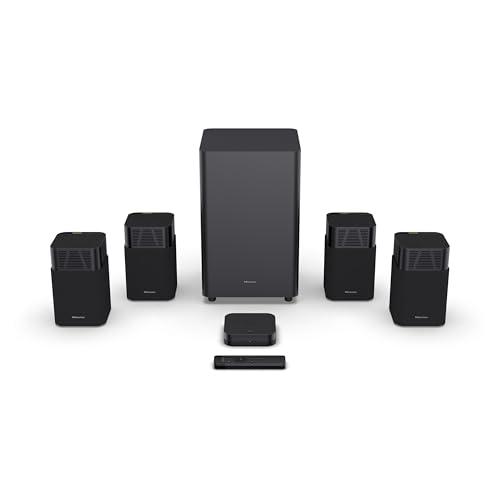
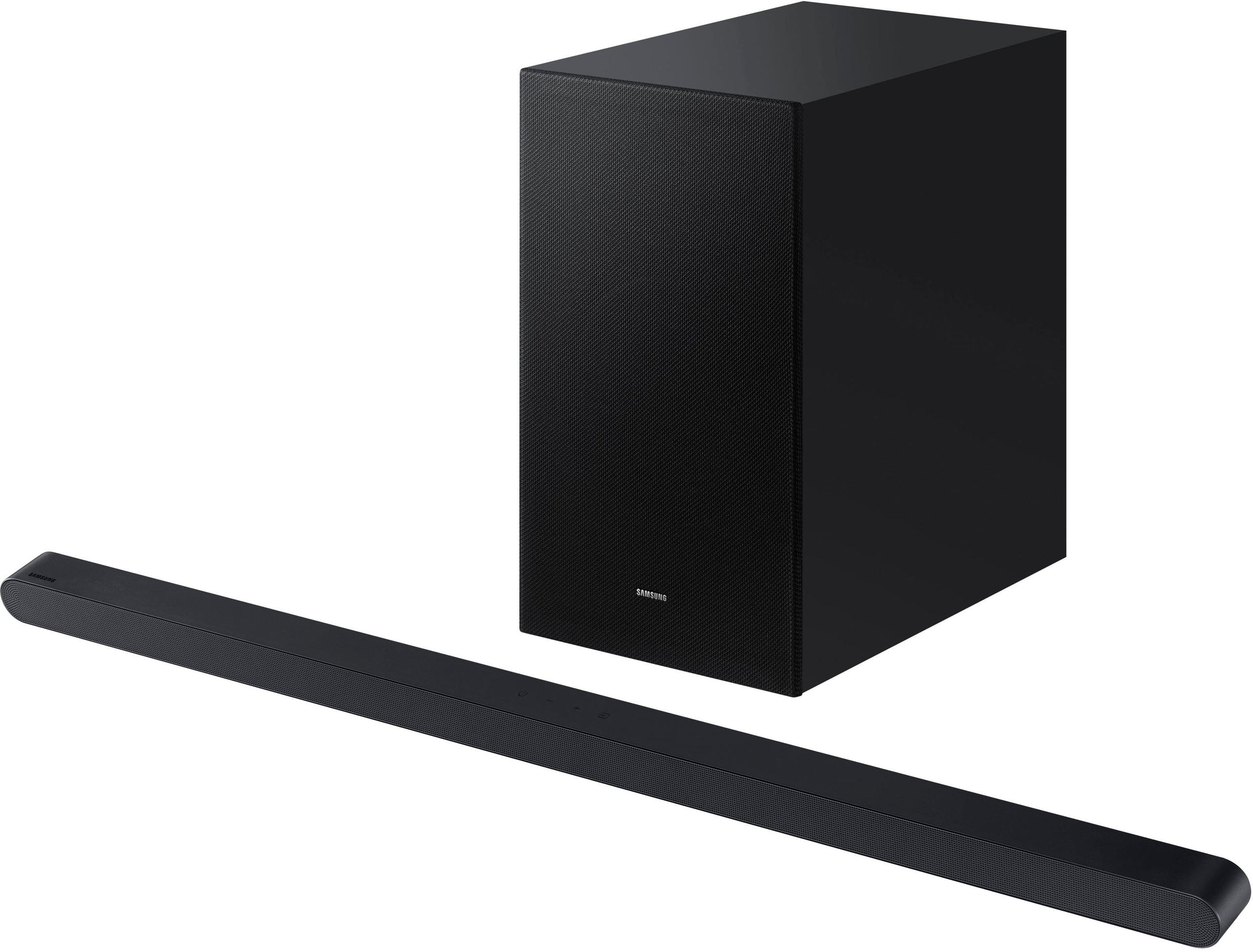
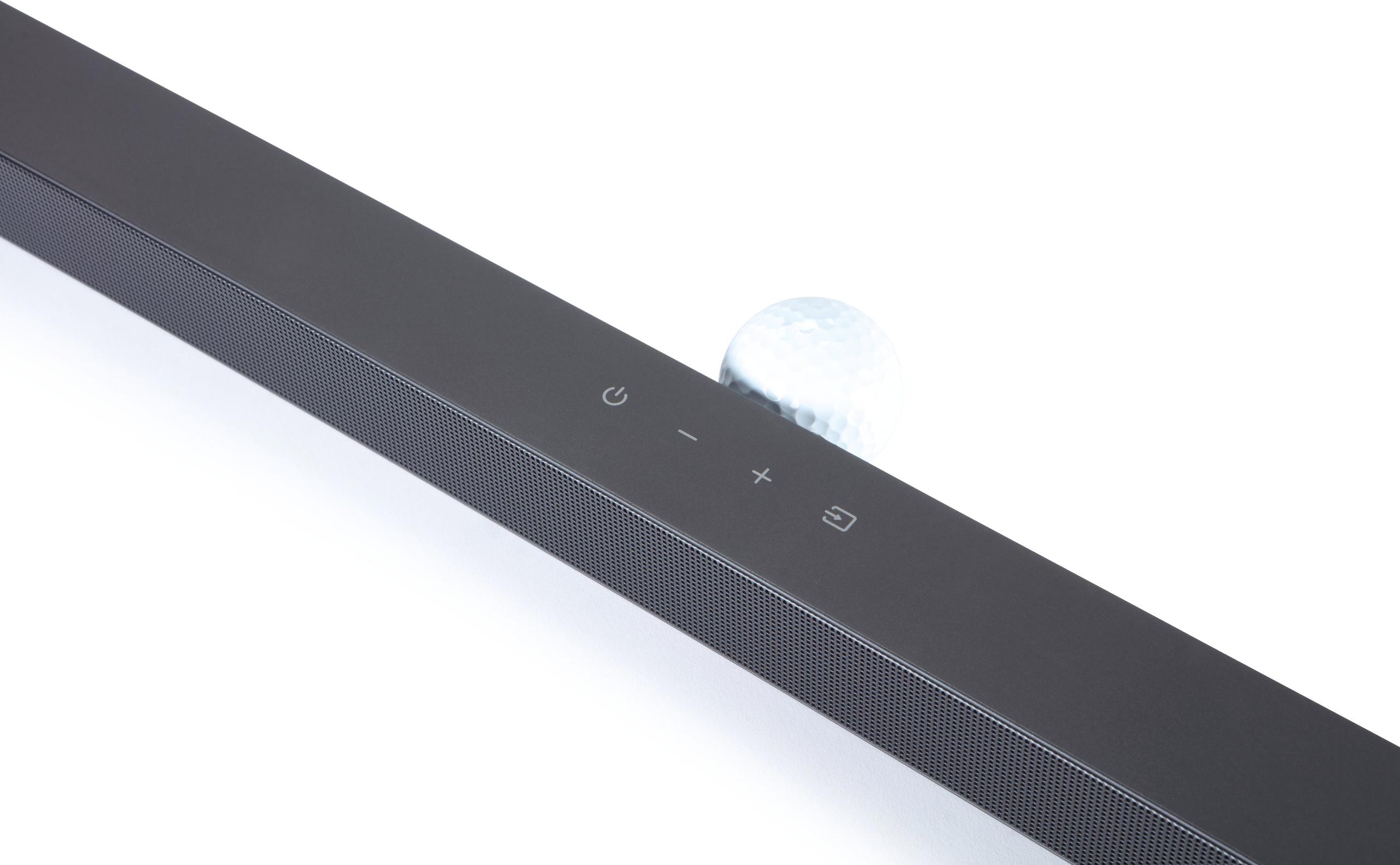

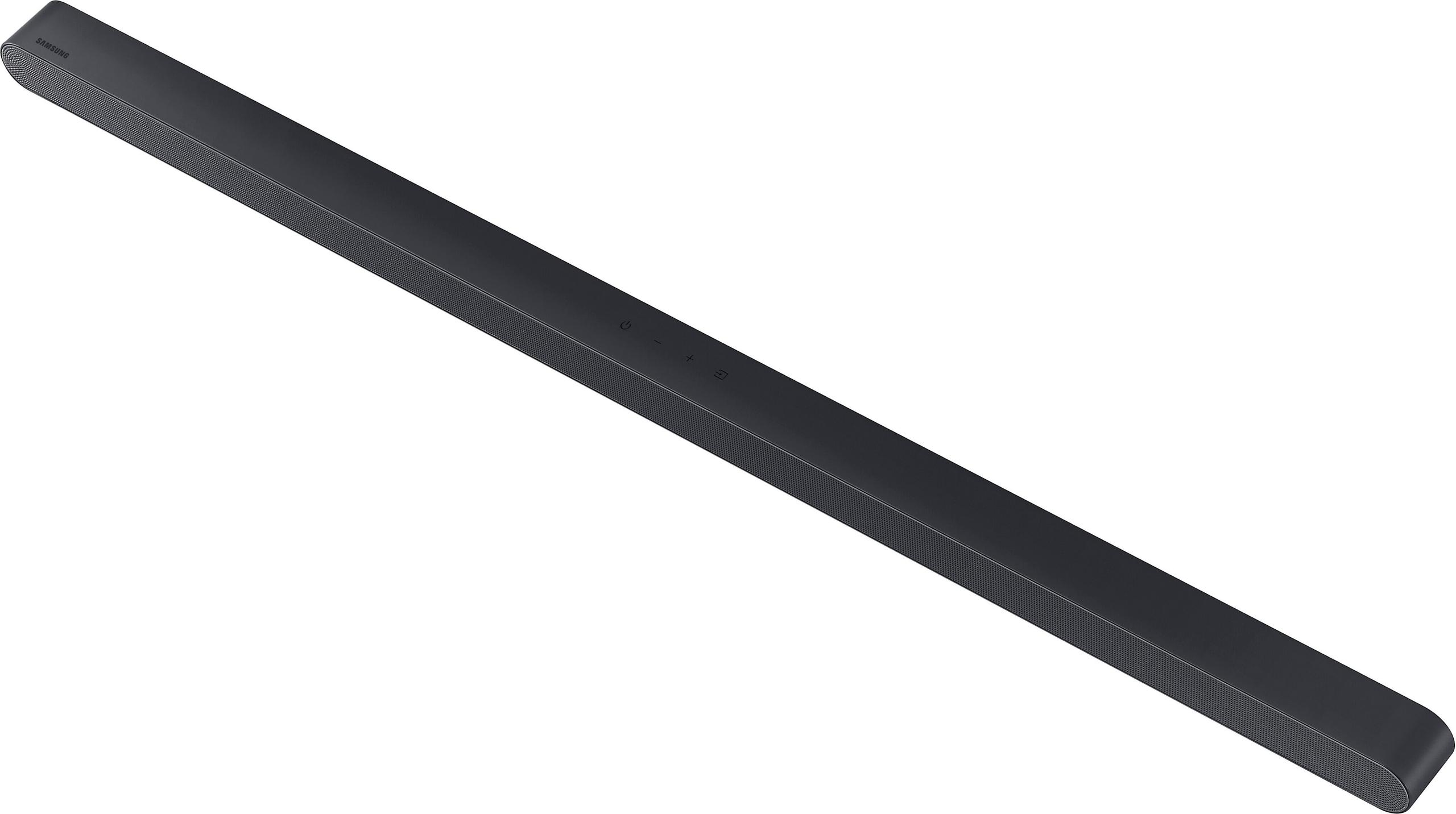
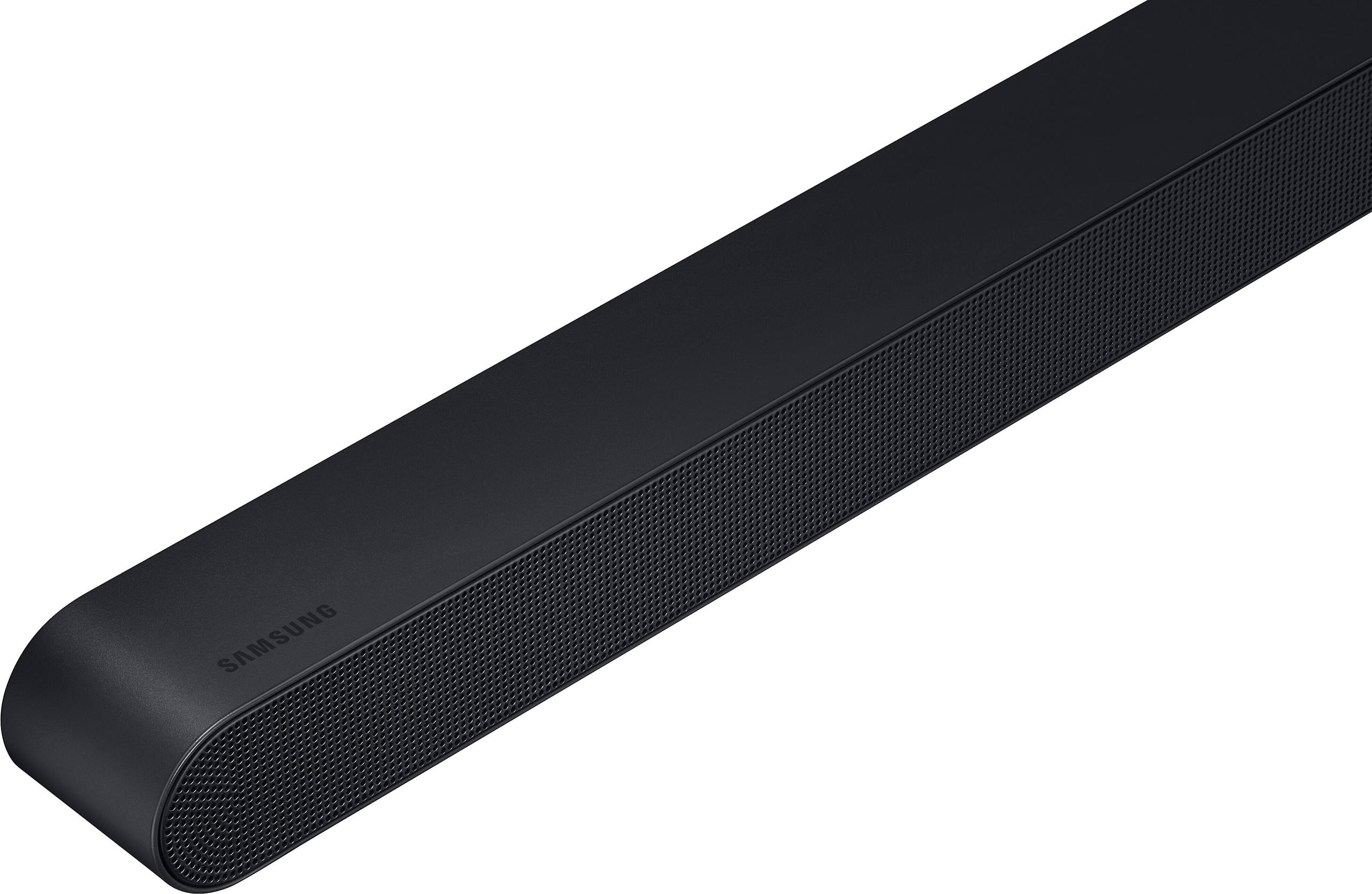

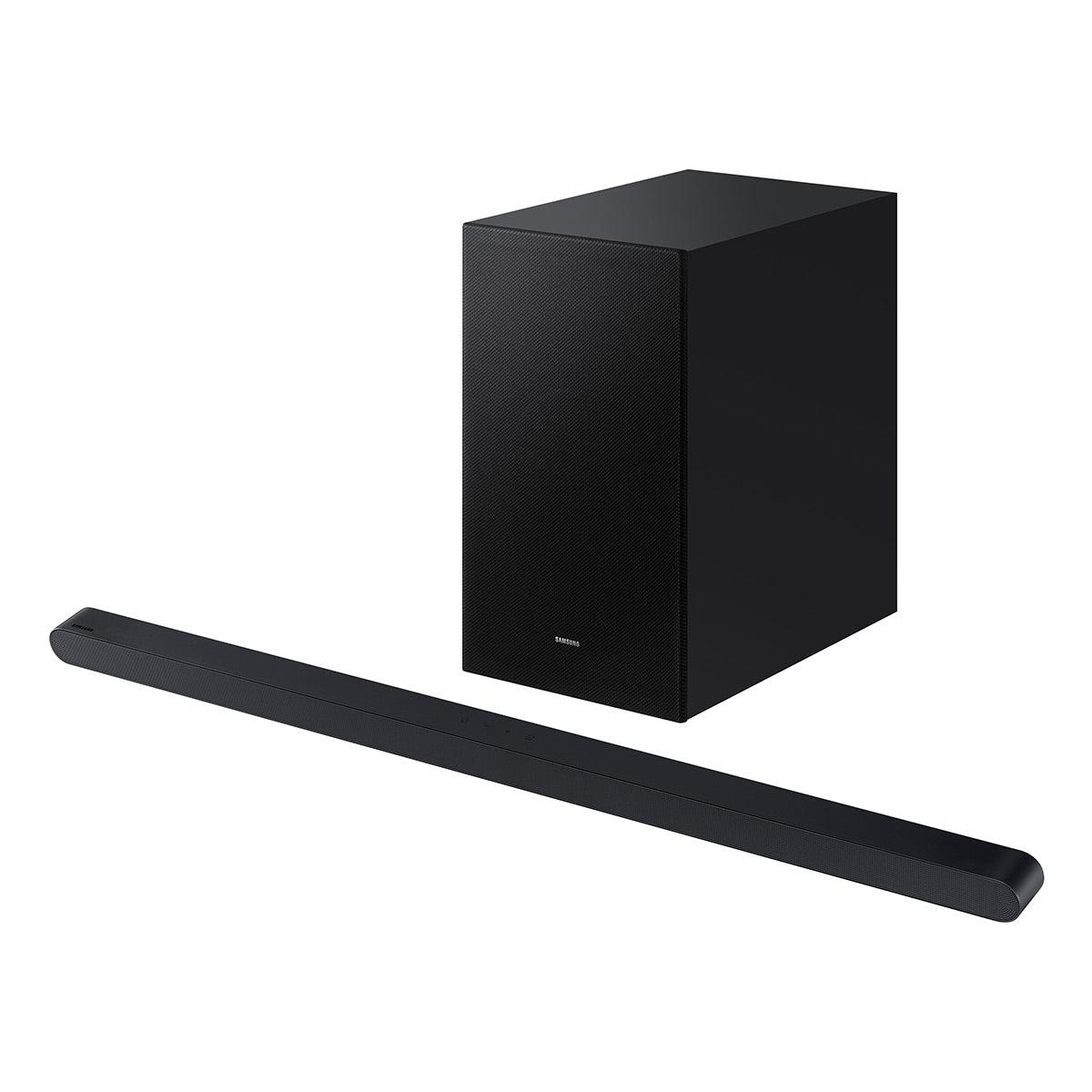
When most people think "soundbar," they picture a slim speaker that sits under their TV and makes dialogue clearer. But the Hisense HT Saturn breaks that mold entirely—it's actually a full wireless home theater system disguised as a soundbar product. Meanwhile, the Samsung HW-S700D represents the traditional soundbar approach: simple, slim, and focused on basic TV audio improvement.
Released in 2025, the Hisense HT Saturn showcases how soundbar technology has evolved beyond single-unit solutions. At the time of writing, it costs roughly three times more than the 2023 Samsung HW-S700D, but they're solving fundamentally different problems. Understanding which approach fits your needs requires looking past the "soundbar" label to see what each system actually delivers.
The soundbar market has split into distinct categories over the past few years. Traditional soundbars like the Samsung HW-S700D stick to the original concept: one speaker bar plus maybe a separate subwoofer (a specialized speaker that handles low-frequency sounds like explosions and bass lines). These focus on making TV dialogue clearer and adding some bass without taking up much space.
But newer systems like the Hisense HT Saturn use the soundbar name while delivering something completely different. This is essentially a wireless home theater system that eliminates the need for a traditional AV receiver (the hub that processes audio signals and sends them to multiple speakers). Instead of one bar trying to fake surround sound effects, you get actual speakers placed around your room.
The key decision factors come down to your priorities: Do you want simple TV audio improvement, or are you building a home theater experience? Can you accommodate multiple speakers in your room, or do you need everything contained in one slim unit? And critically, what's your budget and how much does audio quality matter to you?
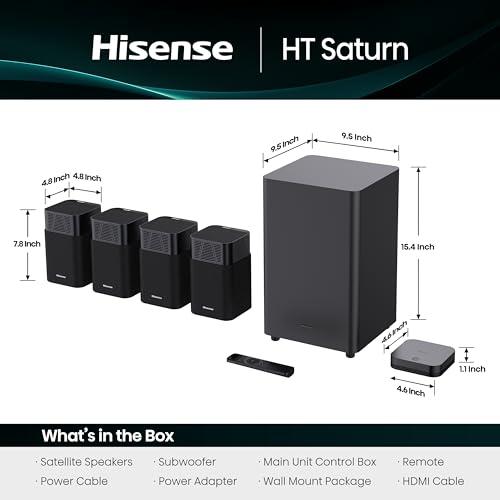
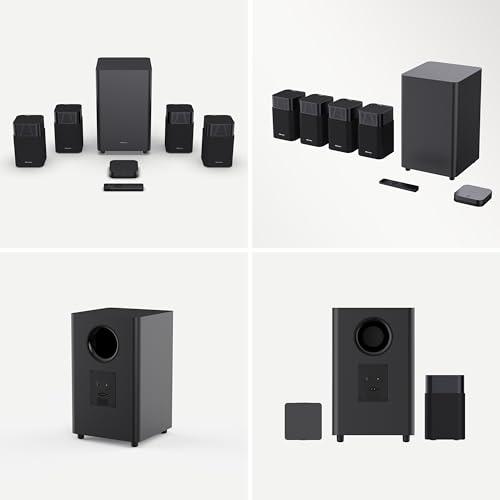
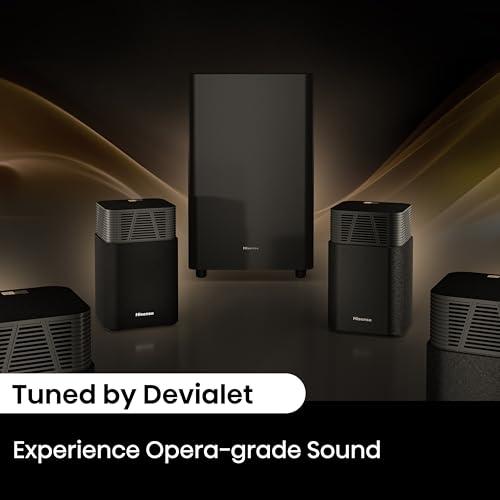
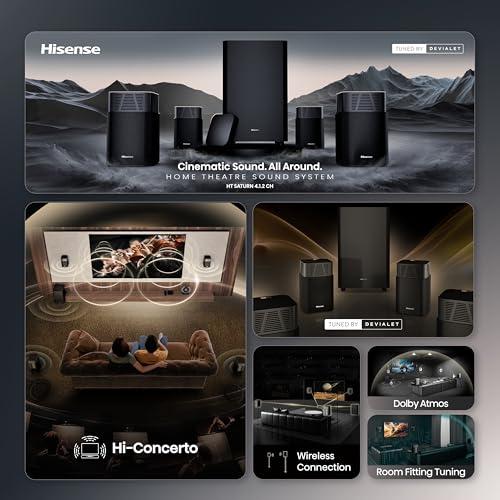
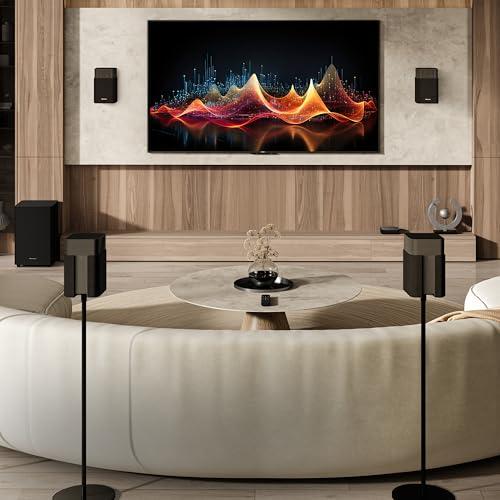
The Hisense HT Saturn abandons the traditional soundbar concept entirely. Instead of trying to create surround sound illusions from one speaker bar, it gives you four separate wireless satellite speakers that you place around your room, plus a wireless subwoofer. This 4.1.2 configuration means four main speakers, one subwoofer, and two height channels (audio that reflects off your ceiling to create overhead effects).
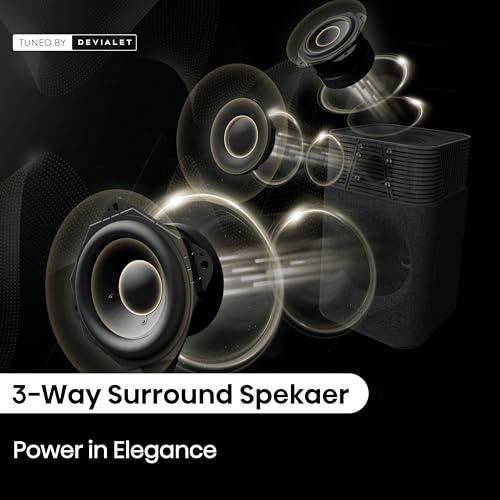
Each satellite speaker contains three separate drivers: two full-range drivers that handle most frequencies, plus a dedicated tweeter for crisp high-frequency sounds like cymbals and consonants. This three-way design allows each speaker to reproduce a full range of sound without the compromises you'd find in smaller, simpler speakers. The total system includes 13 individual drivers working together—that's more speakers than many people have in their entire home audio setup.
What makes this particularly interesting is the phantom center channel approach. Most home theater systems have a dedicated center speaker positioned below or above the TV specifically for dialogue. The Hisense HT Saturn creates this center effect by precisely balancing the left and right front speakers, using signal processing to make voices appear to come from the TV screen even though there's no speaker there. Based on user feedback, this works surprisingly well, though a physical center channel typically provides more consistent dialogue placement.
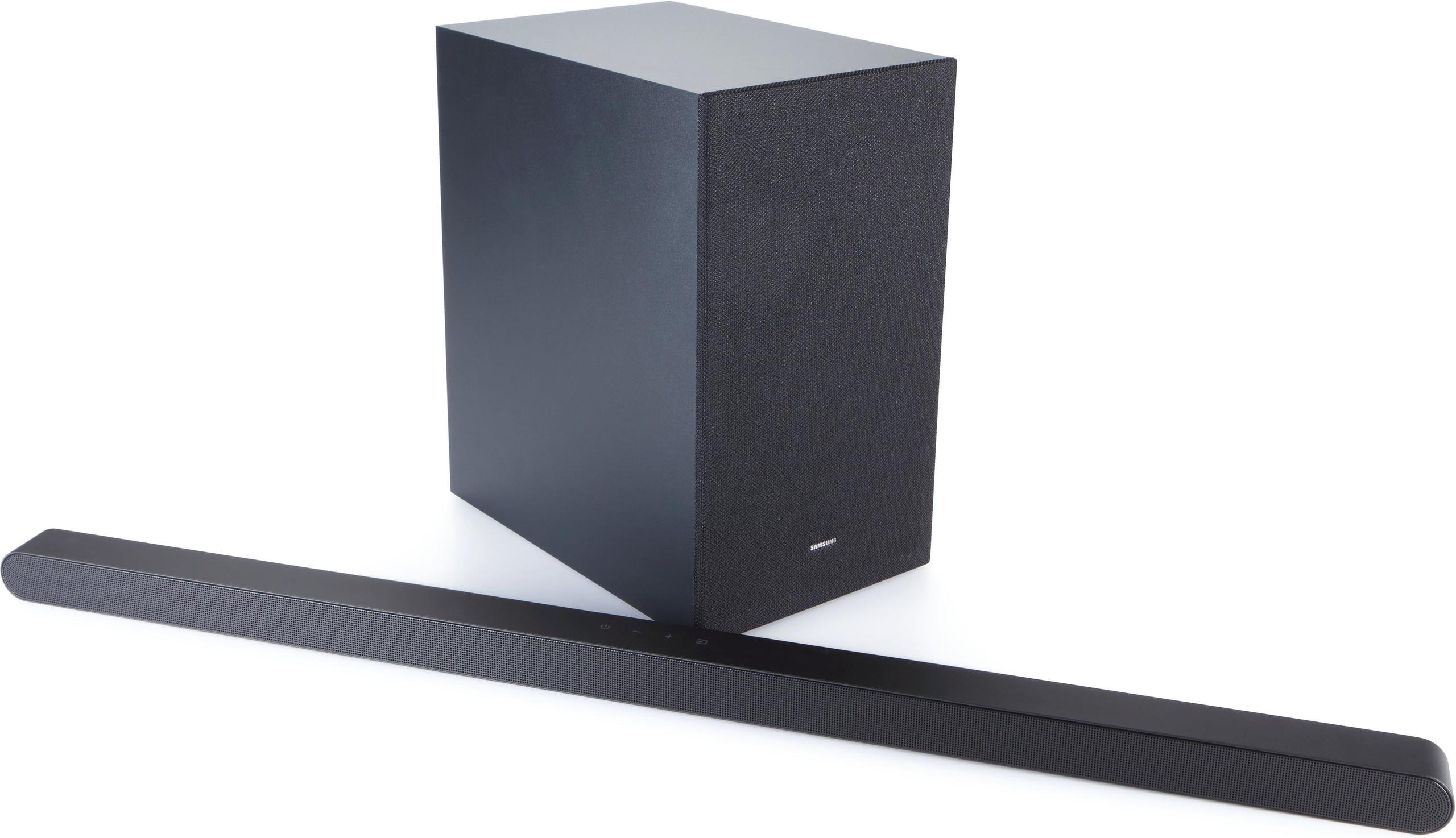
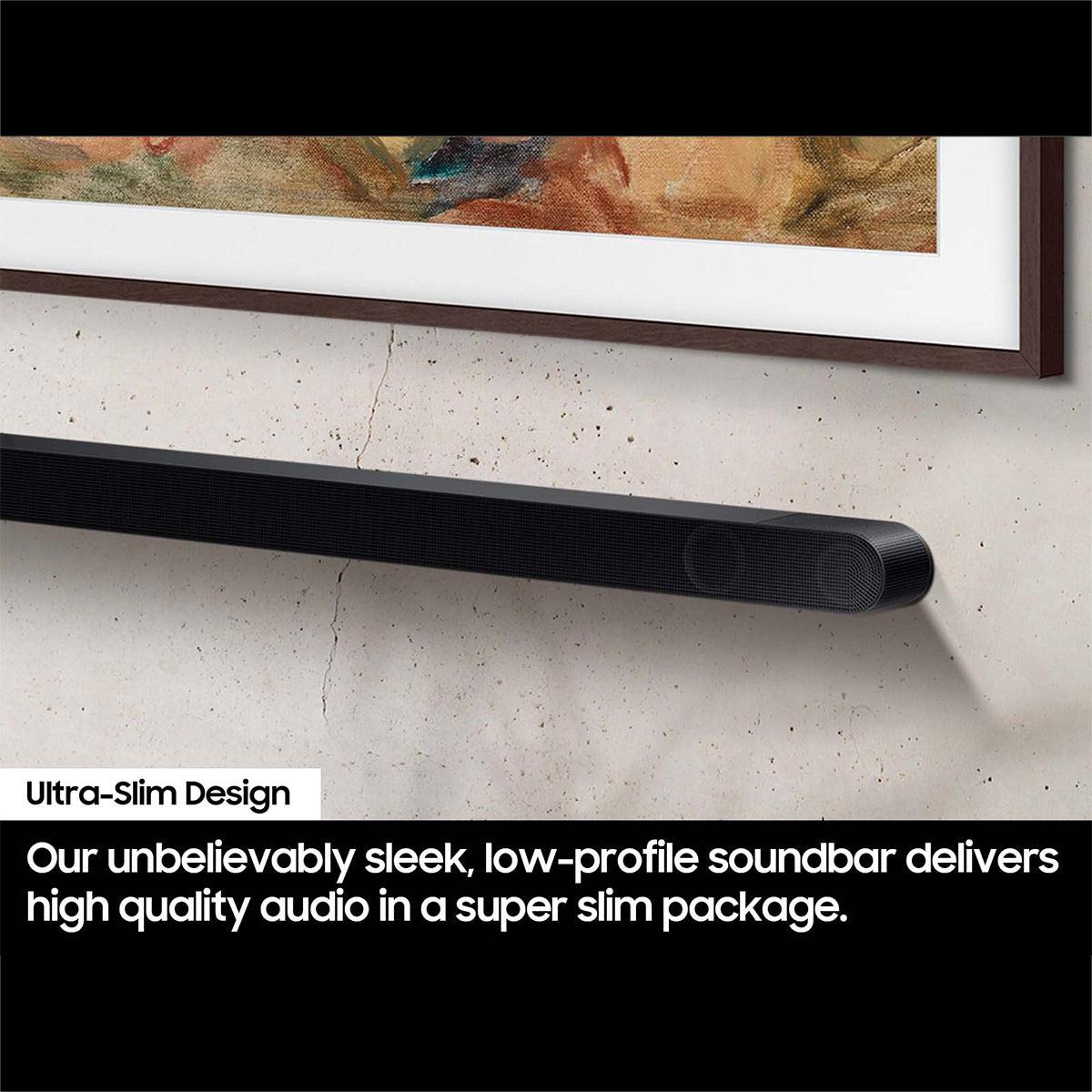
The Samsung HW-S700D represents the refined traditional approach. It's a single soundbar unit with three distinct channels built into one cabinet: left, center, and right speakers all housed together. The center channel is physically dedicated to dialogue reproduction, which typically provides more reliable voice clarity than phantom center approaches.
This system relies on psychoacoustic processing—essentially audio tricks that exploit how your brain interprets sound reflections and delays to create the illusion of surround effects. While this can't match the spatial accuracy of physical rear speakers, modern processing has improved significantly. The soundbar uses advanced algorithms to create virtual surround effects by precisely controlling how sound bounces off your room's walls.
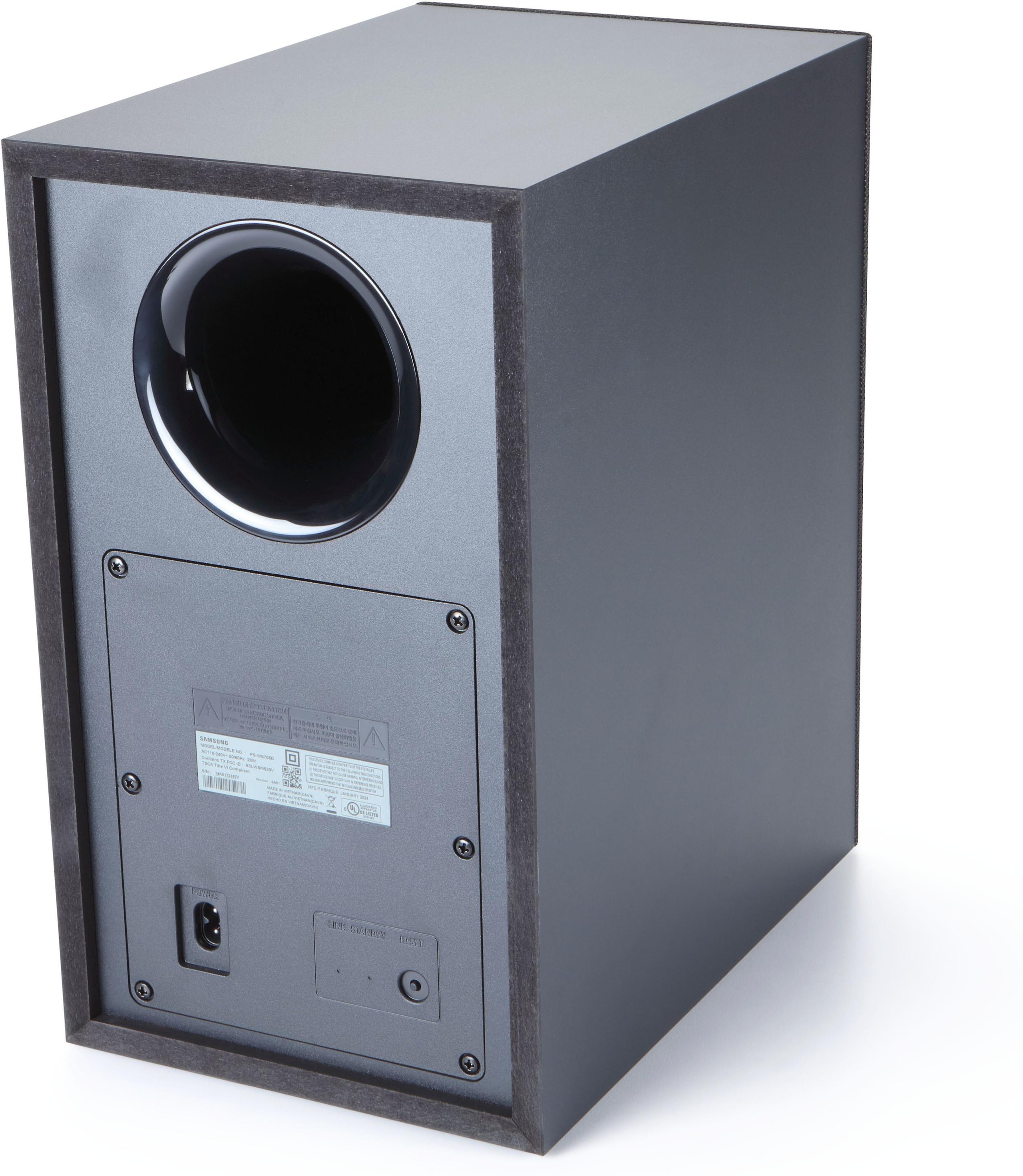
The Samsung HW-S700D includes a separate wireless subwoofer with a 6-inch driver. While smaller than the Hisense's 6.5-inch subwoofer, it's designed to integrate seamlessly with the main unit without requiring manual calibration.
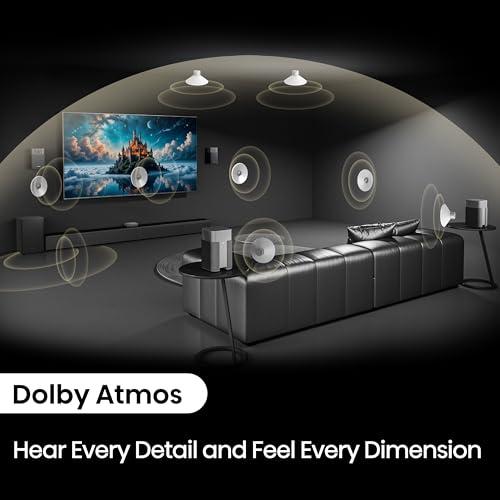
This is where the architectural differences create the most dramatic performance gap. The Hisense HT Saturn provides genuine 360-degree surround sound because it has actual speakers behind and beside you. When a helicopter flies overhead in a movie, you hear it travel from the front speakers, across the room through the rear speakers, with height effects reflecting off the ceiling. This creates what audio engineers call a true sound field—audio that genuinely surrounds you from all directions.
The system supports Dolby Atmos and DTS:X, which are object-based audio formats (meaning sounds are treated as individual objects that can be placed anywhere in 3D space rather than just assigned to specific channels). With physical height channels and rear speakers, the Hisense HT Saturn can reproduce these formats as intended, delivering overhead effects like rain or aircraft with convincing realism.
The Samsung HW-S700D relies entirely on virtual processing for surround effects. It analyzes audio signals and creates delays, phase shifts, and frequency adjustments to trick your brain into perceiving sounds coming from directions where no speakers exist. While this technology has improved dramatically over the past decade, it's still limited by physics. The soundstage (the perceived width and depth of sound) rarely extends much beyond the TV's width, and rear effects remain subtle at best.
For home theater use, this difference is substantial. Action movies, gaming, and immersive content benefit enormously from true surround sound. But for general TV watching, especially news and dialogue-heavy shows, the virtual processing of the Samsung HW-S700D provides adequate spatial enhancement.
Interestingly, this is where the less expensive Samsung HW-S700D has a technical advantage. Its dedicated center channel speaker is specifically tuned for human voice frequencies and positioned to create optimal dialogue clarity. You can independently adjust the center channel volume, which is incredibly useful when dialogue gets buried under background music or effects.
The system includes Active Voice Amplifier technology, which automatically analyzes each scene and boosts vocal frequencies when needed. Combined with Adaptive Sound processing that optimizes audio based on content type, the Samsung HW-S700D consistently delivers clear, intelligible dialogue without manual adjustments.
The Hisense HT Saturn uses phantom center processing, where precise left/right speaker coordination creates the illusion of a center channel. User reports suggest this works better than expected—voices appear anchored to the TV screen with good stability. However, this approach is more sensitive to room acoustics and listener position than a physical center channel.
The Devialet tuning in the Hisense HT Saturn deserves attention here. Devialet is a French company known for extremely high-end audio equipment, and their involvement in tuning this system shows in the overall tonal balance. The vocal presentation is natural and refined, without the artificial brightness or hollowness that affects some competing systems.
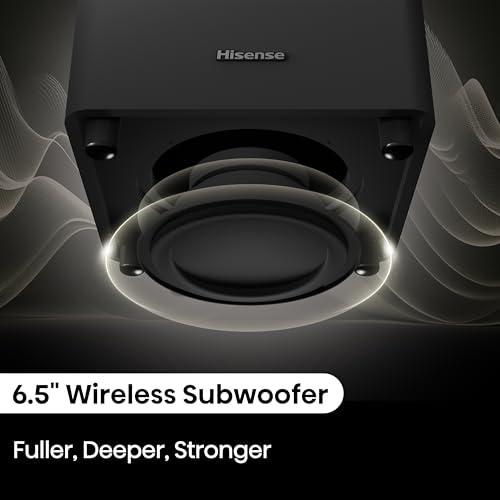
Both systems include wireless subwoofers, but with different approaches. The Hisense HT Saturn features a larger 6.5-inch down-firing driver with dedicated 40W amplification, extending frequency response down to 40Hz. The down-firing design uses the floor as a coupling surface, which can provide more even bass distribution in many rooms.
The system's room calibration technology automatically adjusts subwoofer levels and timing based on your space's acoustic characteristics. This helps eliminate common problems like boomy bass or uneven frequency response that plague many subwoofer installations.
The Samsung HW-S700D uses a 6-inch subwoofer in a bass reflex cabinet (a design that uses a carefully tuned port to extend low-frequency response). While smaller than the Hisense option, it's designed to integrate seamlessly with the main soundbar without requiring calibration.
For home theater use, the Hisense HT Saturn provides noticeably more impactful low-frequency effects. Explosions, rumbles, and music bass lines have more weight and extension. The Samsung HW-S700D delivers adequate bass for TV content and music, but lacks the authority needed for reference-level movie watching.
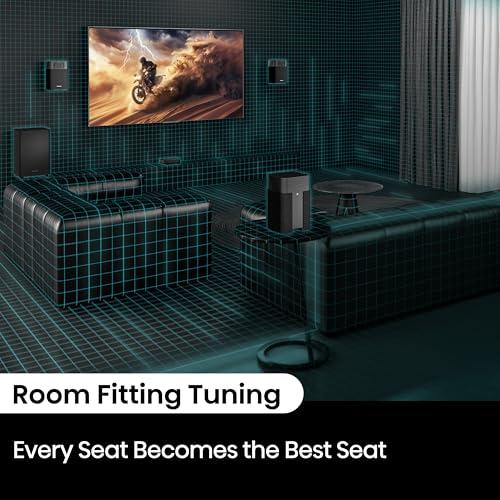
The Hisense HT Saturn includes sophisticated room fitting technology that automatically analyzes your space's acoustic properties and adjusts speaker levels, timing, and frequency response accordingly. This uses the TV's built-in microphone to measure how sound reflects and absorbs in your room, then optimizes each speaker's output for your specific environment.
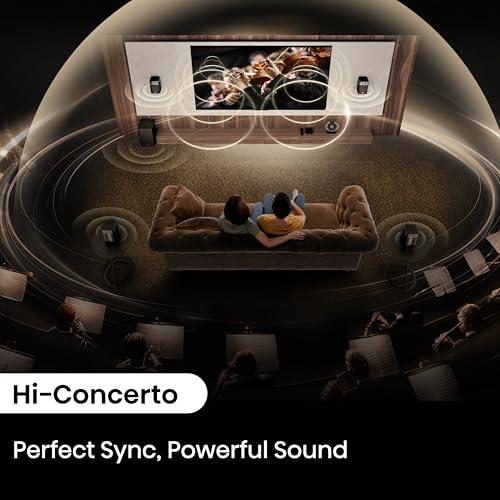
This calibration extends to the Hi-Concerto feature, which coordinates the soundbar system with your TV's built-in speakers when using compatible Hisense TVs. Instead of replacing your TV's audio, the system adds the TV speakers as additional channels, creating an even wider soundstage. This kind of integration represents where soundbar technology is heading—treating the TV and audio system as a unified whole rather than separate components.
The Samsung HW-S700D includes SpaceFit Sound Pro, which uses the soundbar's built-in microphone to analyze your listening space and provide automatic optimization. While not as comprehensive as the Hisense system's room calibration, it provides meaningful improvement over manual setup.
The Q-Symphony feature works similarly to Hi-Concerto, coordinating the soundbar with Samsung TV speakers for expanded sound. Both approaches recognize that modern TVs actually have decent speakers that can contribute to the overall audio experience rather than simply being replaced.
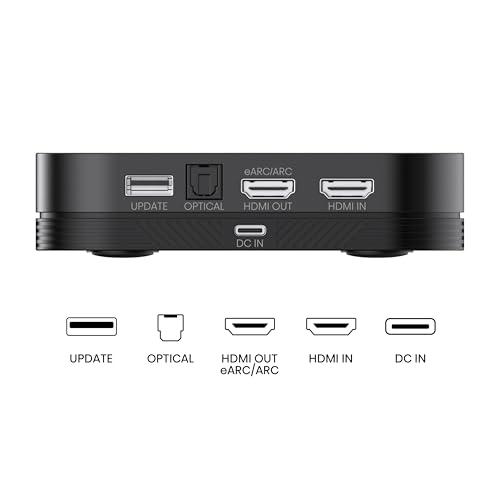
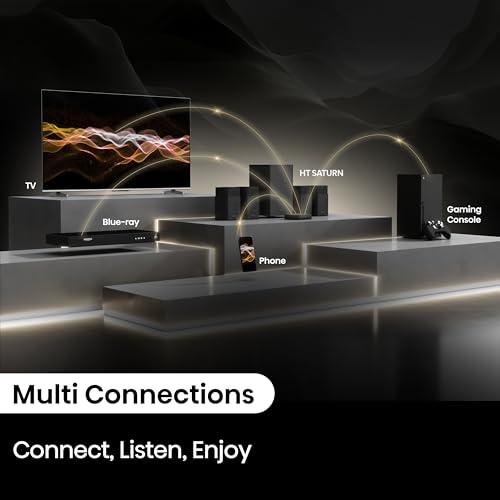
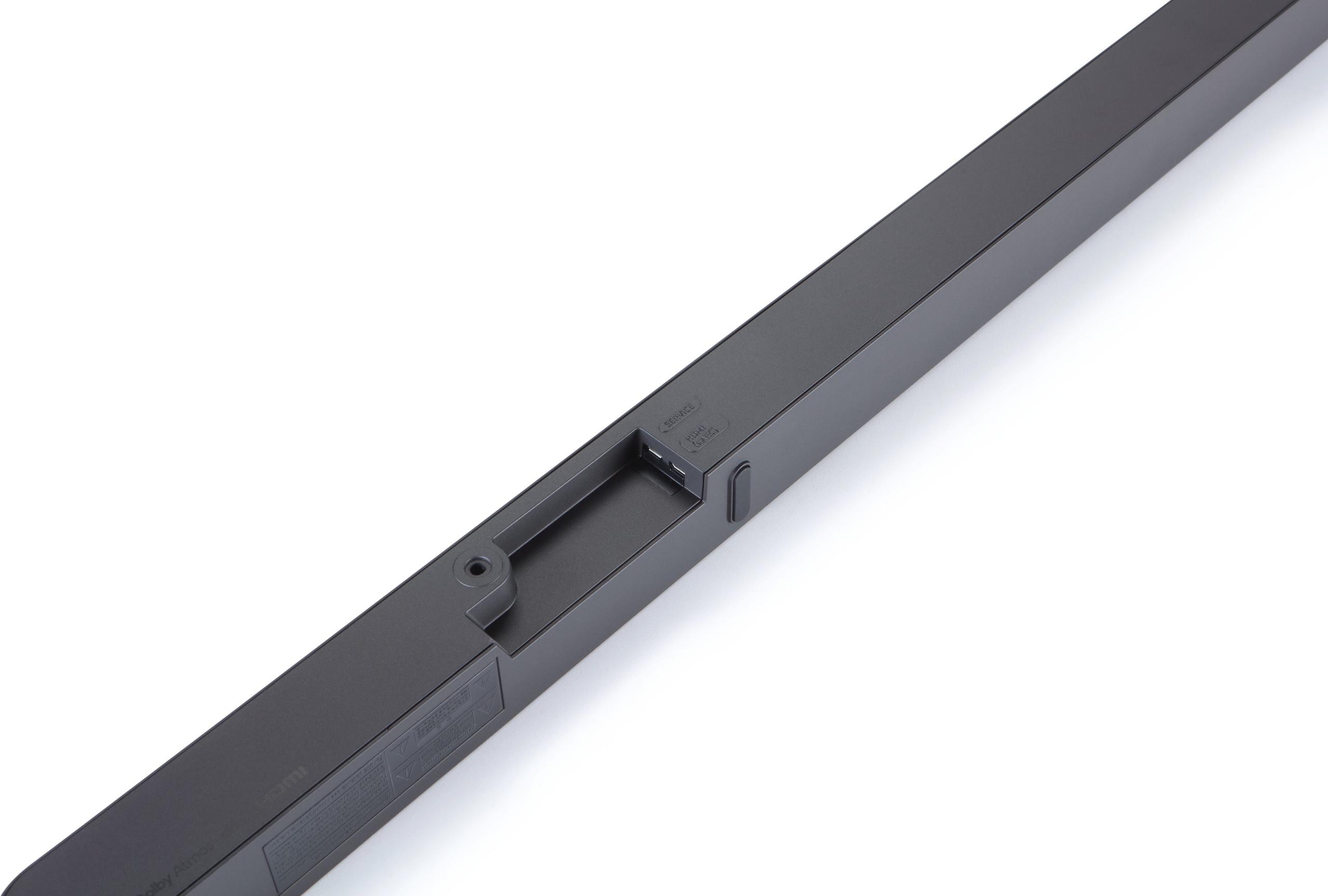
Both systems provide HDMI eARC (enhanced Audio Return Channel) connectivity, which allows high-quality audio formats to pass from your TV to the soundbar while simultaneously allowing video pass-through from connected devices. The Hisense HT Saturn supports 4K/60Hz pass-through, ensuring compatibility with modern gaming consoles and streaming devices.
The wireless technology in the Hisense HT Saturn deserves specific mention. It uses three separate frequency bands (2.4GHz, 5.2GHz, and 5.8GHz) to maintain stable connections between the control unit and all speakers. This tri-band approach helps avoid interference from Wi-Fi networks, Bluetooth devices, and other wireless equipment that crowds the 2.4GHz band.
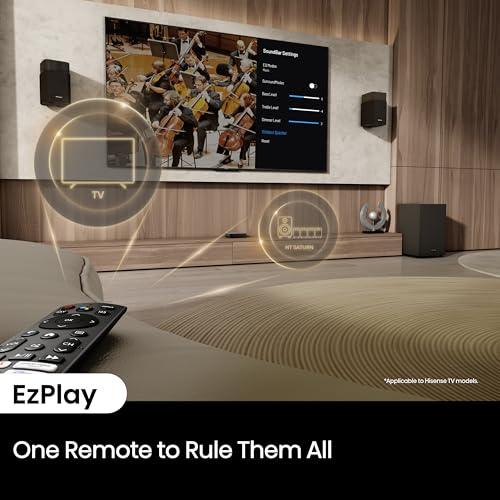
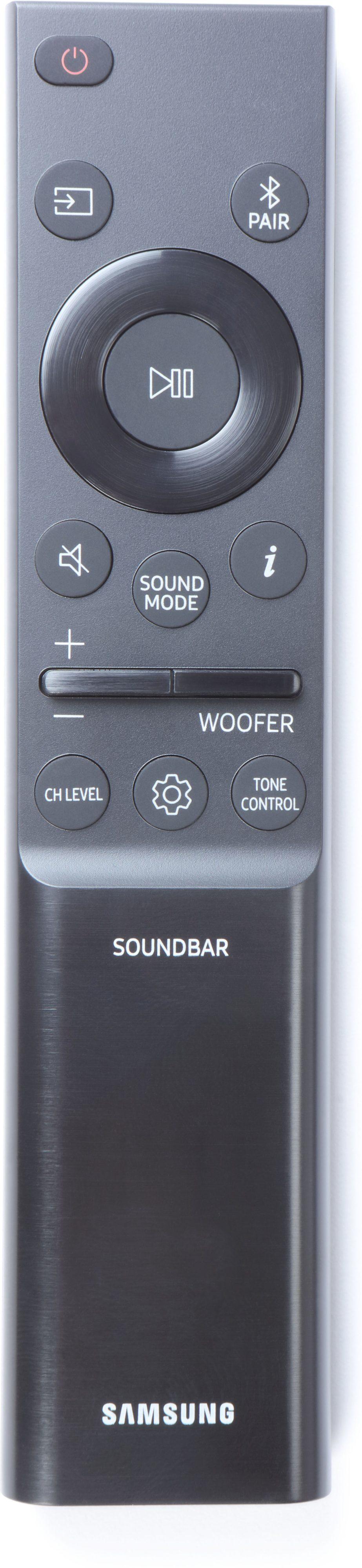
Both systems integrate with their respective TV ecosystems for simplified control. The Samsung HW-S700D works with SmartThings app control and supports voice assistants, while the Hisense HT Saturn features EzPlay integration that allows control through compatible Hisense TV remotes.
This represents the biggest practical difference between these systems. The Samsung HW-S700D embodies the soundbar promise: connect one HDMI cable, plug in the subwoofer, and you're done. Its ultra-slim 8.1-inch width fits virtually any TV setup without blocking screens or IR sensors. The included wall mount allows clean installation that barely adds visual bulk to your TV area.
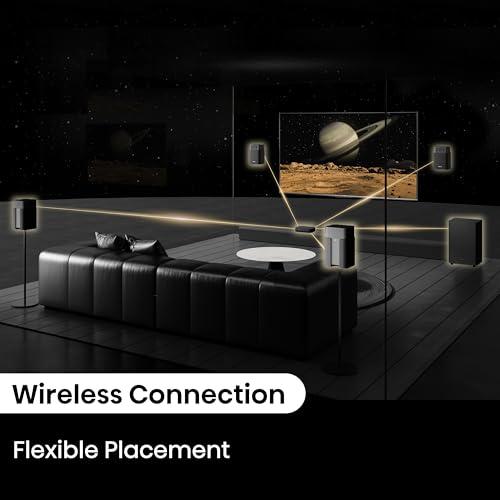
The Hisense HT Saturn requires more planning and commitment. You need to position four satellite speakers around your room, each requiring power connections. While the wireless connections eliminate speaker wire runs, you still need accessible outlets near each speaker location. The included wall mounts help with placement, but you're essentially designing a room layout around the audio system.
However, this complexity pays dividends in flexibility. You can optimize speaker placement for your room's layout and furniture arrangement. The wireless design means you're not locked into permanent installations—speakers can be moved for different seating arrangements or room configurations.
The Samsung HW-S700D excels at disappearing into daily use. Once installed, most users interact only with volume controls and occasional sound mode adjustments. The integration with Samsung TVs makes control seamless through the TV's remote and on-screen menus.
The Hisense HT Saturn offers more customization options, which can be either advantageous or overwhelming depending on your preferences. The system includes extensive EQ controls, individual channel level adjustments, and multiple sound modes optimized for different content types. The room calibration reduces the need for manual tweaking, but power users will appreciate the available adjustments.
Gaming performance deserves special attention as consoles increasingly support advanced audio formats. The Hisense HT Saturn truly shines here, with native Dolby Atmos and DTS:X support providing the 3D audio positioning that modern games are designed around. First-person shooters benefit enormously from accurate directional audio cues, while adventure games gain atmospheric immersion from environmental effects that genuinely surround you.
The Samsung HW-S700D includes a Game Mode Pro that optimizes processing for gaming, reducing latency and emphasizing directional cues within its virtual surround limitations. While adequate for casual gaming, it can't match the spatial accuracy provided by physical surround speakers.
Streaming service content increasingly includes Atmos soundtracks, and this trend will continue expanding. The Hisense HT Saturn future-proofs your setup for this content evolution, while the Samsung HW-S700D provides basic enhancement that won't scale with improving content quality.
At the time of writing, the price difference between these systems reflects their fundamental differences in capability and market positioning. The Samsung HW-S700D represents excellent value for basic TV audio improvement, delivering clear dialogue and adequate bass enhancement at an accessible price point.
The Hisense HT Saturn costs significantly more but provides genuine home theater performance typically requiring much more expensive traditional component systems. When compared to the cost of a quality AV receiver, four bookshelf speakers, a subwoofer, and all necessary cables and setup, the integrated wireless approach offers compelling value for its performance level.
Choose the Samsung HW-S700D if:
Choose the Hisense HT Saturn if:
These products serve fundamentally different needs despite both being marketed as soundbars. The Samsung HW-S700D excels as a refined, space-efficient TV audio upgrade that delivers meaningful improvement without complexity or high cost. The Hisense HT Saturn represents a new category of wireless home theater systems that provide genuine surround sound without traditional installation complexity.
Your choice should align with your expectations and room constraints rather than budget alone. If you want simple TV audio improvement, the Samsung delivers excellent value and performance. If you're building a home theater experience and can accommodate the speaker placement requirements, the Hisense offers performance that would typically cost much more in traditional component systems.
The soundbar market continues evolving rapidly, with systems like the Hisense HT Saturn pointing toward a future where wireless technology enables true home theater experiences without the complexity that has traditionally limited surround sound to dedicated enthusiasts. Whether that complexity reduction is worth the premium cost depends entirely on your priorities, room constraints, and how much better audio matters to your daily entertainment experience.
| Hisense HT Saturn | Samsung HW-S700D |
|---|---|
| Audio Architecture - Determines surround sound capability and spatial accuracy | |
| True 4.1.2 system with 4 wireless satellite speakers + subwoofer (13 total drivers) | Traditional 3.1 soundbar with integrated L/C/R channels + separate subwoofer |
| Surround Sound Technology - Critical for immersive movie and gaming experience | |
| Physical rear speakers with native Dolby Atmos/DTS:X and height channels | Virtual surround processing only, no height channels or true rear effects |
| Dialogue Clarity - Most important for TV shows and movies | |
| Phantom center channel using L/R coordination | Dedicated physical center channel with Active Voice Amplifier |
| Setup Complexity - Affects installation time and room requirements | |
| Multi-component system requiring speaker placement around room | Single soundbar unit with minimal setup, ultra-slim design |
| Room Integration Technology - Optimizes performance for your specific space | |
| Room Fitting Tuning with Hi-Concerto TV speaker coordination (Hisense TVs) | SpaceFit Sound Pro with Q-Symphony TV integration (Samsung TVs) |
| Subwoofer Performance - Provides low-frequency impact for movies and music | |
| 6.5" down-firing wireless subwoofer, 40Hz extension, room calibration | 6" wireless subwoofer with bass reflex design, basic EQ adjustment |
| Connectivity Options - Determines compatibility with modern devices | |
| HDMI eARC, HDMI input, Optical, Bluetooth 5.3, 4K/60Hz pass-through | HDMI eARC, Optical, Bluetooth 5.2, voice assistant support |
| Wireless Technology - Affects connection stability and range | |
| Tri-band wireless (2.4G/5.2G/5.8G) for interference-free multi-speaker sync | Standard Bluetooth and Wi-Fi connectivity |
| Audio Tuning - Impacts overall sound quality and tonal balance | |
| Devialet-tuned with 3-way satellite speakers, professional acoustic engineering | Samsung Audio Lab tuning with adaptive sound processing |
| Total Power Output - Determines maximum volume and dynamic range | |
| 500W total system power across all components | Standard soundbar power output for this class |
| Price Positioning - Value consideration for performance level | |
| Premium pricing (~3x more expensive) for true home theater experience | Budget-friendly pricing for basic TV audio enhancement |
The Hisense HT Saturn is actually a wireless home theater system with four separate satellite speakers placed around your room, while the Samsung HW-S700D is a traditional single soundbar that sits under your TV. The Hisense creates true surround sound with physical speakers behind you, whereas the Samsung uses virtual processing to simulate surround effects from one location.
The Hisense HT Saturn is significantly better for home theater use because it provides genuine Dolby Atmos with height channels and true rear surround sound. Movies with action sequences, flying objects, and atmospheric effects will sound much more immersive with speakers actually positioned around your room compared to the Samsung HW-S700D's virtual surround processing.
The Samsung HW-S700D has a slight advantage for dialogue clarity because it includes a dedicated center channel speaker specifically designed for voices, plus Active Voice Amplifier technology. The Hisense HT Saturn uses a "phantom center" approach that can sound excellent but may be less consistent depending on your seating position.
The Samsung HW-S700D is much simpler to set up - just connect one HDMI cable and plug in the wireless subwoofer. The Hisense HT Saturn requires placing four satellite speakers around your room, each needing a power outlet, though the wireless connections eliminate the need for speaker wire runs.
The Samsung HW-S700D is ideal for small spaces because of its ultra-slim design and single-unit approach. The Hisense HT Saturn needs room to place speakers around the listening area and may be overkill for very small rooms where you can't achieve proper speaker separation.
Yes, both the Samsung HW-S700D and Hisense HT Saturn work with any TV that has HDMI ARC/eARC or optical audio output. However, you'll get additional integration features like Q-Symphony with Samsung TVs or Hi-Concerto with Hisense TVs when using matching brands.
The Hisense HT Saturn delivers more powerful bass with its larger 6.5-inch subwoofer, room calibration, and 40Hz frequency extension. The Samsung HW-S700D has adequate bass for most content but won't match the low-frequency impact needed for reference-level movie watching or bass-heavy music.
The Samsung HW-S700D supports optional wireless rear speakers for true surround sound expansion. The Hisense HT Saturn is a complete system that doesn't support additional speakers, but it already includes rear speakers and height channels as part of the base package.
This depends on your needs. The Samsung HW-S700D offers excellent value for basic TV audio improvement at a budget-friendly price. The Hisense HT Saturn costs significantly more but provides true home theater performance that would typically require much more expensive separate components.
The Hisense HT Saturn is superior for gaming because it supports native Dolby Atmos and DTS:X with true directional audio from physical speakers around you. This provides better positional accuracy for competitive gaming and more immersive atmospheric effects. The Samsung HW-S700D includes Game Mode Pro but relies on virtual processing.
Both offer similar core connectivity with HDMI eARC, Bluetooth, and voice assistant support. The Samsung HW-S700D includes SmartThings app integration, AirPlay, and Chromecast. The Hisense HT Saturn features tri-band wireless technology for stable multi-speaker connections and EzPlay integration with compatible TVs.
Choose the Samsung HW-S700D if you want simple TV audio improvement, have space constraints, or prioritize dialogue clarity and ease of use. Choose the Hisense HT Saturn if you want genuine home theater surround sound, can accommodate multiple speakers in your room, and audio quality justifies the higher investment for movies and gaming.
We've done our best to create useful and informative comparisons to help you decide what product to buy. Our research uses advanced automated methods to create this comparison and perfection is not possible - please contact us for corrections or questions. These are the sites we've researched in the creation of this article: bestbuy.com - youtube.com - blog.son-video.com - youtube.com - youtube.com - techradar.com - ecoustics.com - jbhifi.com.au - shop.hisense-usa.com - bhphotovideo.com - bestbuy.com - digitalreviews.net - hisense-usa.com - projectorscreenstore.com - valueelectronics.com - dolby.com - giftpack.ai - crutchfield.com - samsung.com - bestbuy.com - avsforum.com - walts.com - samsung.com - samsung.com - videoandaudiocenter.com - samsung.com - samsung.com - samsung.com - pcrichard.com

Privacy Policy
Terms and Conditions - Affiliate Policy
Home Security
© Copyright 2008-2026.
11816 Inwood Rd #1211, Dallas, TX 75244