

Home theater audio has reached an exciting crossroads. Gone are the days when you had to choose between tinny TV speakers or a complex web of wired surround sound components scattered around your room. Today's premium audio systems promise cinema-quality sound with much simpler setup, but they take dramatically different approaches to get there.
The Hisense HT Saturn and Sonos Arc Ultra represent two fascinating philosophies for delivering immersive audio. One breaks apart the traditional soundbar concept entirely, while the other refines it to near-perfection. Both launched in 2024, bringing cutting-edge audio technologies that weren't available just a few years ago. Understanding their fundamental differences will help you pick the right system for your space and listening preferences.
Before diving into specifics, it's worth understanding what these systems are trying to accomplish. Modern premium audio systems aim to create what audio engineers call "spatial audio" – sound that appears to come from all around you, including overhead. This creates the immersive experience you get in movie theaters, where helicopters seem to fly over your head and ambient sounds surround you from every direction.
Traditional surround sound systems achieved this by placing physical speakers throughout the room. Today's advanced systems use two main approaches: physical speaker separation (like the Hisense HT Saturn) or virtual processing (like the Sonos Arc Ultra) that uses psychoacoustic principles to trick your brain into perceiving sounds coming from locations where no speakers actually exist.
The key performance metrics that matter most are dialogue clarity (how well you can understand speech), spatial accuracy (how convincingly effects are positioned around you), bass extension (how deep and impactful low-frequency effects feel), and volume handling (how clean the system sounds when you turn it up loud). These factors determine whether a system truly delivers a cinematic experience or just sounds like a louder TV.
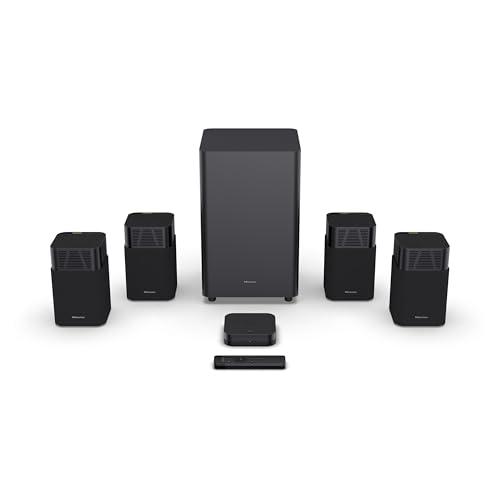
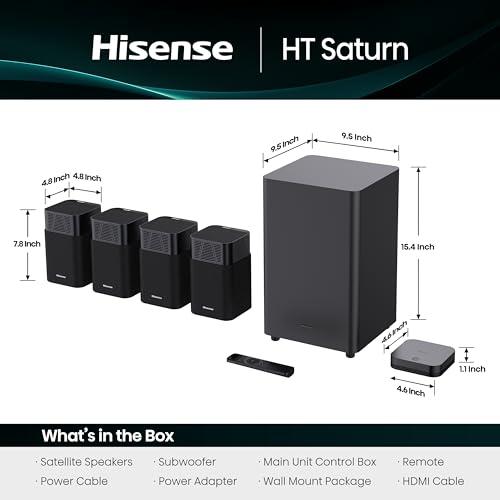
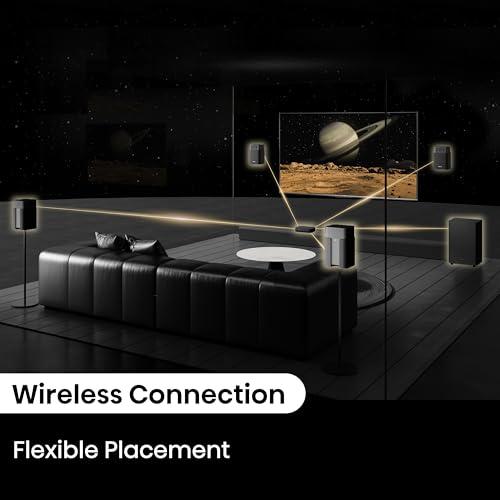
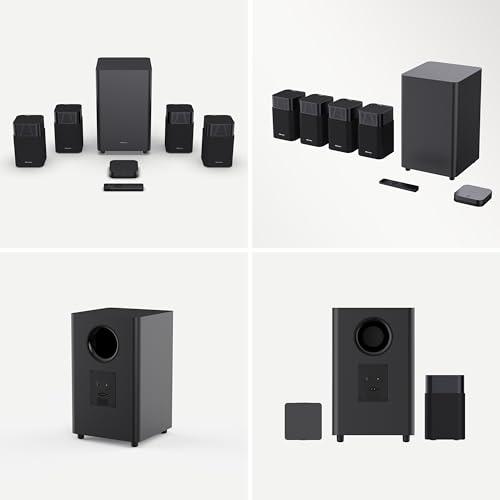
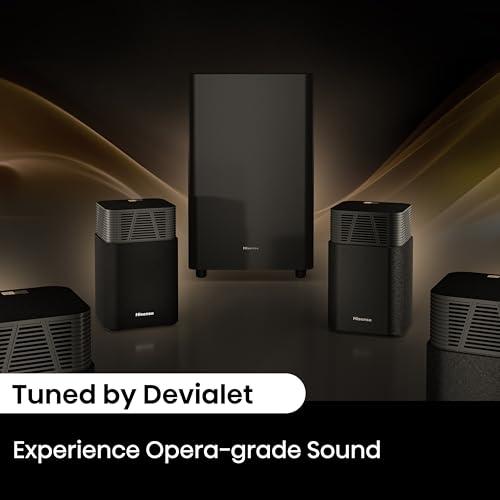
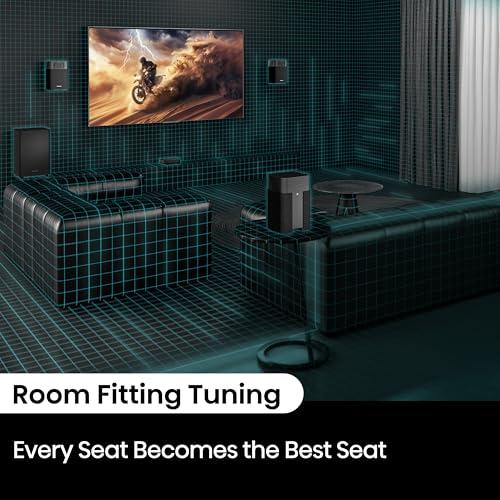
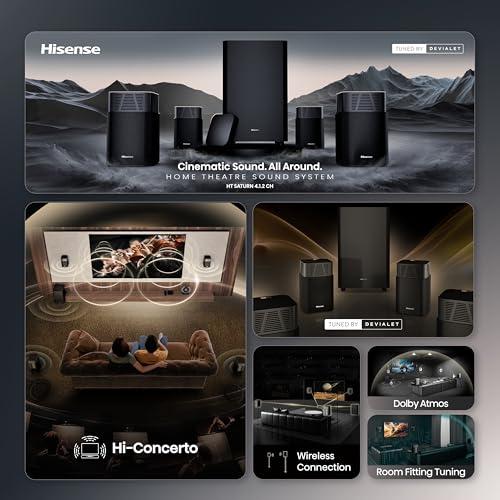
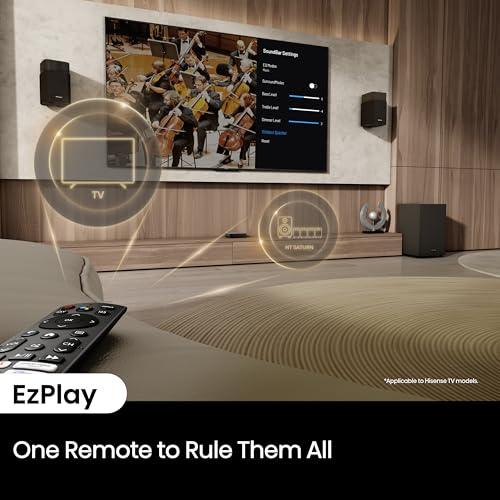
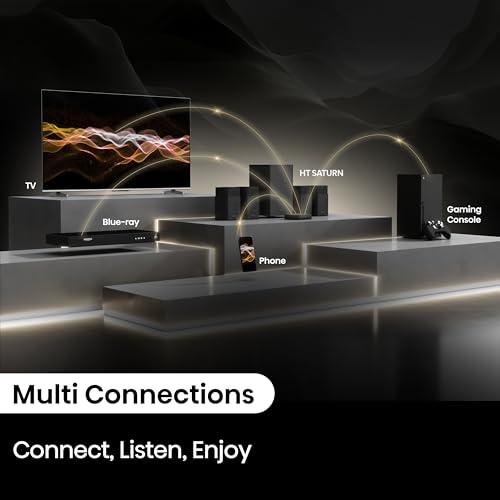
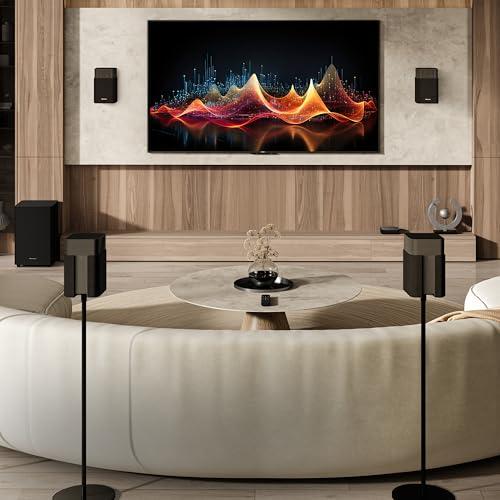
The HT Saturn takes a bold approach by abandoning the soundbar concept entirely. Instead of cramming everything into one long bar, Hisense created what's essentially a wireless version of a traditional surround sound system. You get four compact satellite speakers, a central control hub, and a wireless subwoofer – all connecting without any speaker wires.
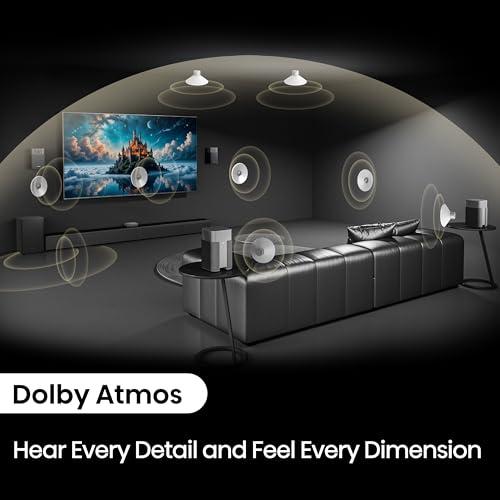
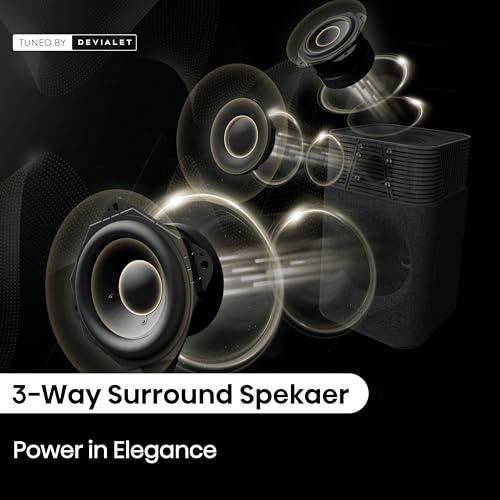
This modular design reflects input from Devialet, the French audio company known for extremely high-end speakers. Each satellite speaker uses a sophisticated "3-way" design, meaning it has separate drivers optimized for different frequency ranges: a woofer for bass, a midrange driver for vocals, and a tweeter for crisp high frequencies. Additionally, each satellite includes upward-firing elements that bounce sound off your ceiling to create the height effects essential for Dolby Atmos content.
The wireless connectivity deserves special mention. The HT Saturn uses three different frequency bands (2.4GHz, 5.2GHz, and 5.8GHz) to maintain stable connections between all components. This tri-band approach helps prevent the audio dropouts that can plague simpler wireless systems, especially in homes crowded with WiFi devices and Bluetooth gadgets.
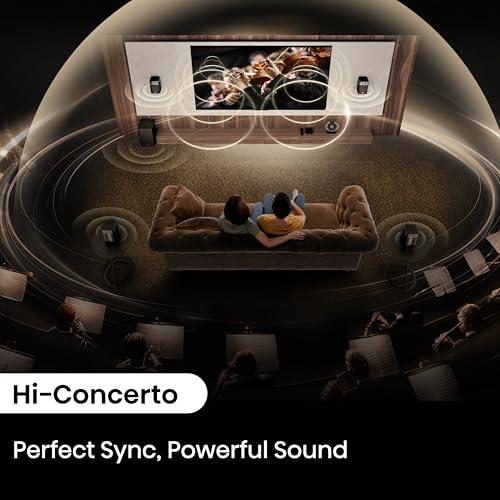
Perhaps most intriguingly, the HT Saturn features something called Hi-Concerto technology when paired with compatible 2024-2025 Hisense TVs. This essentially turns your TV's built-in speakers into additional channels, working alongside the satellite speakers to create an even wider soundstage. It's a clever way to extract more performance from hardware you already own.
However, the system isn't without compromises. Our research into user and expert reviews reveals some concerning performance limitations. The HT Saturn apparently struggles with distortion at higher volumes, requiring users to keep volume below about 65% of maximum to maintain clean sound. For a system at this price point (at the time of writing, positioned as a premium option), this volume limitation is disappointing and potentially limiting for larger rooms or when you want true cinematic impact.
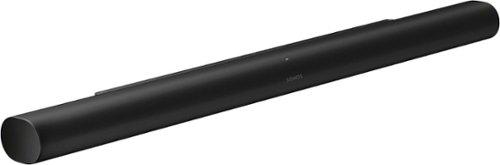
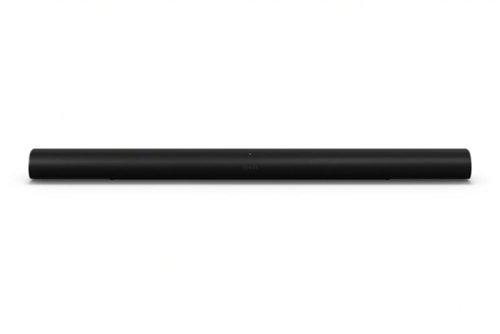
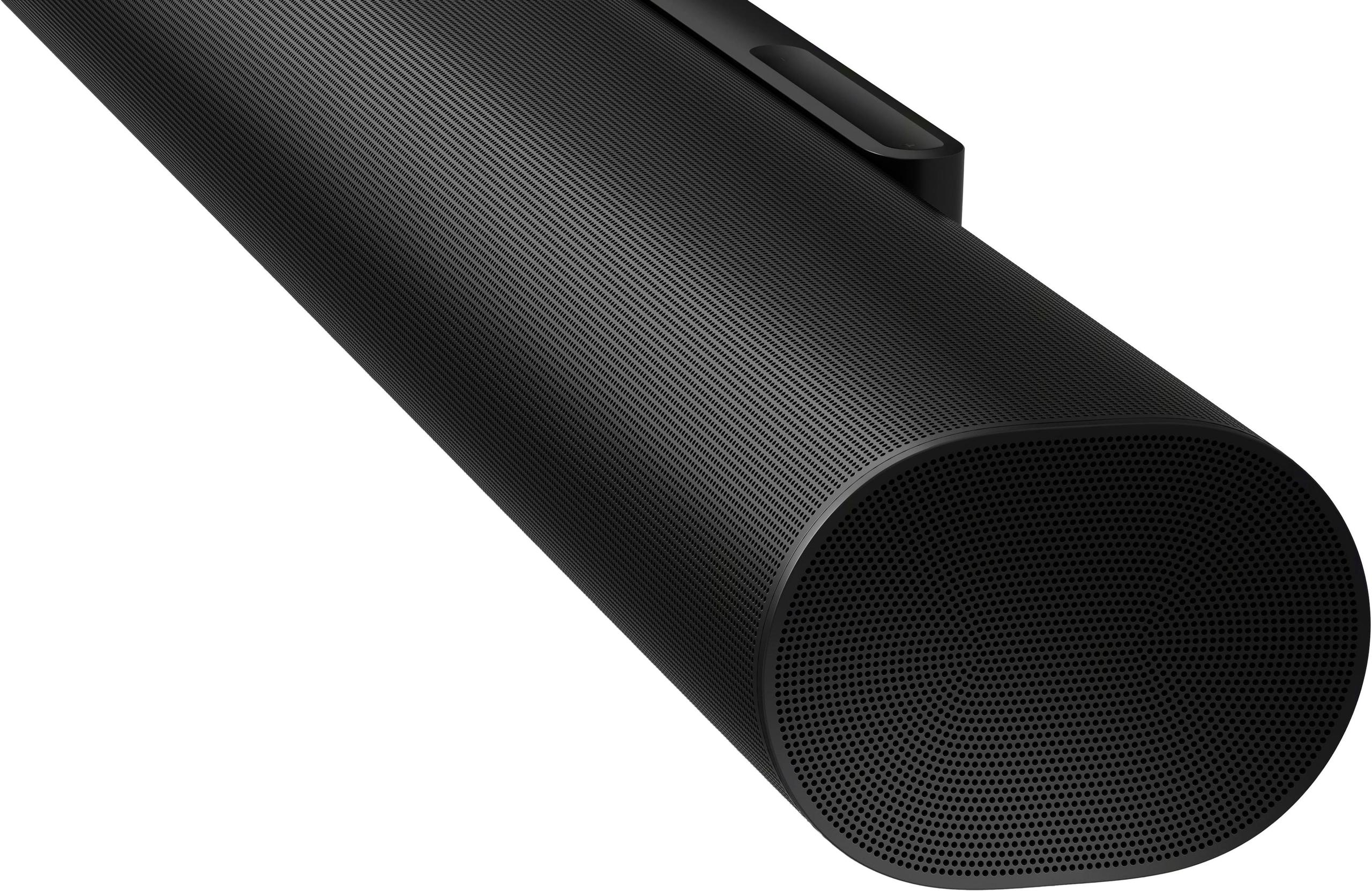
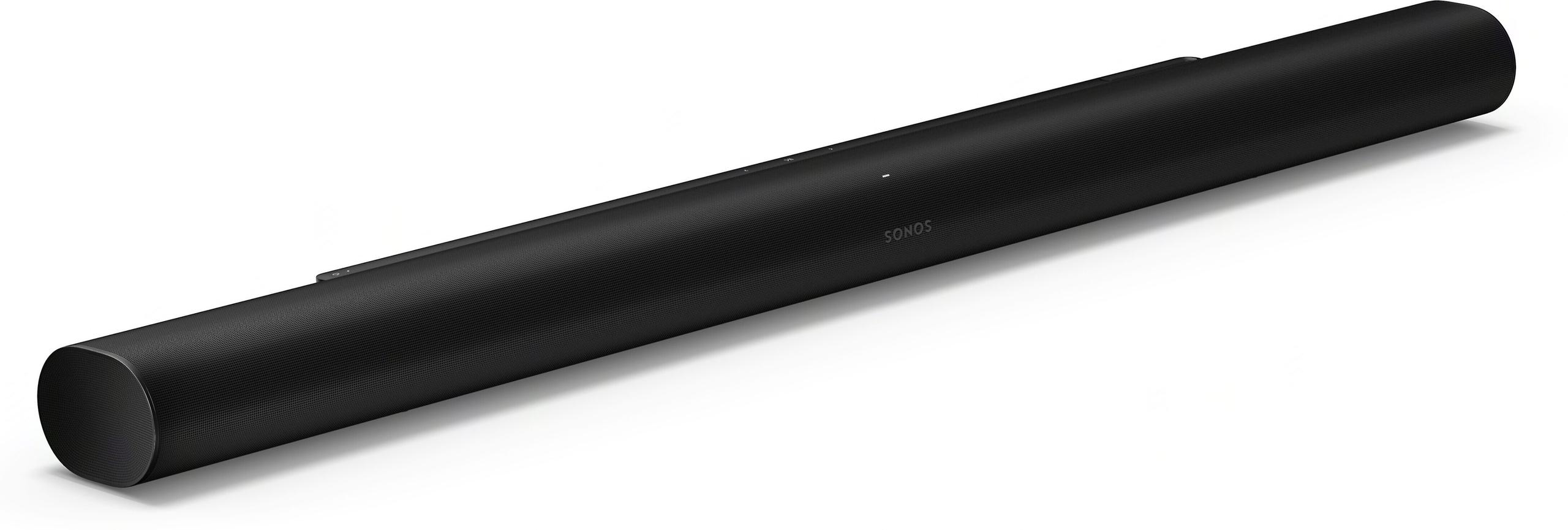
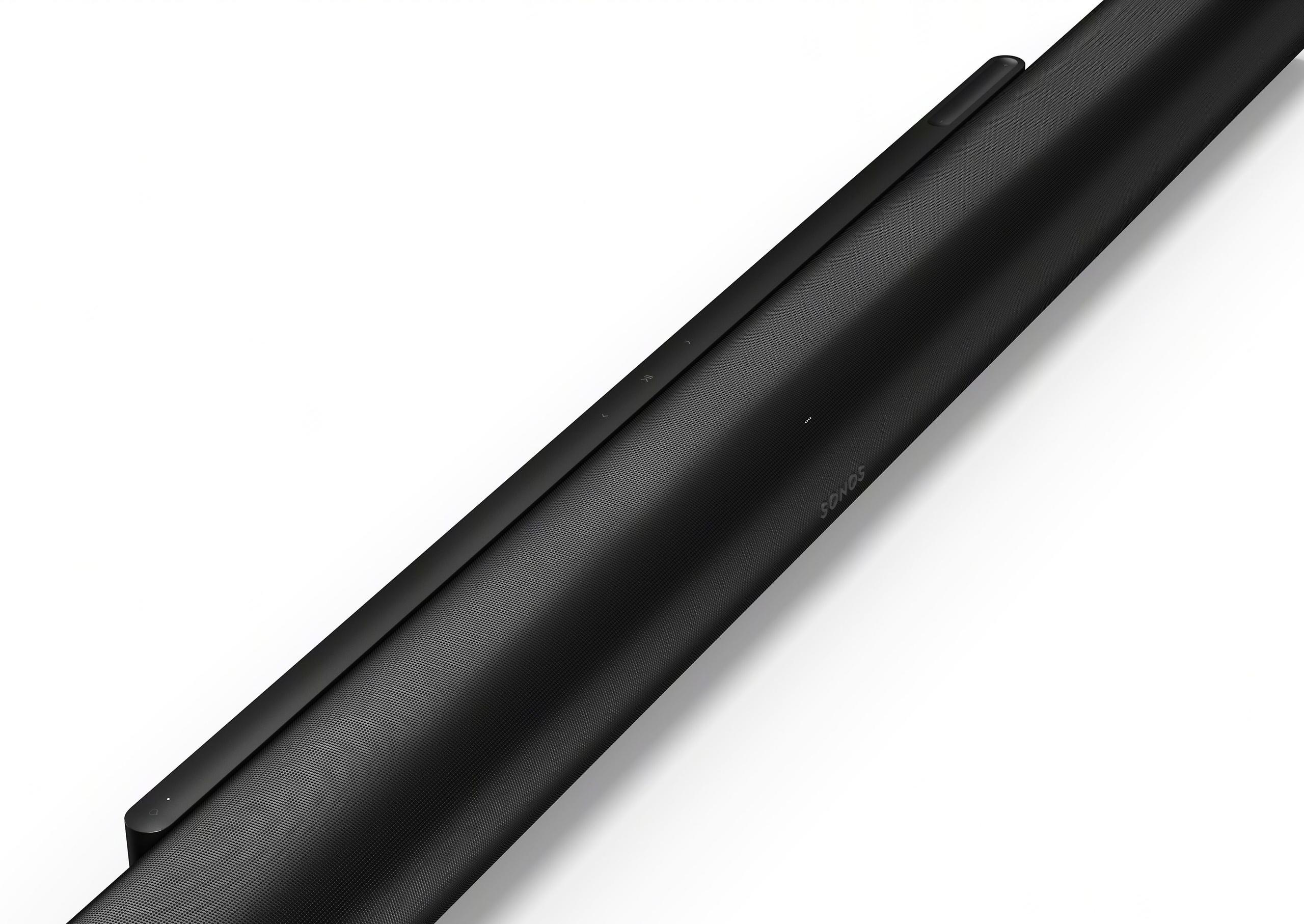
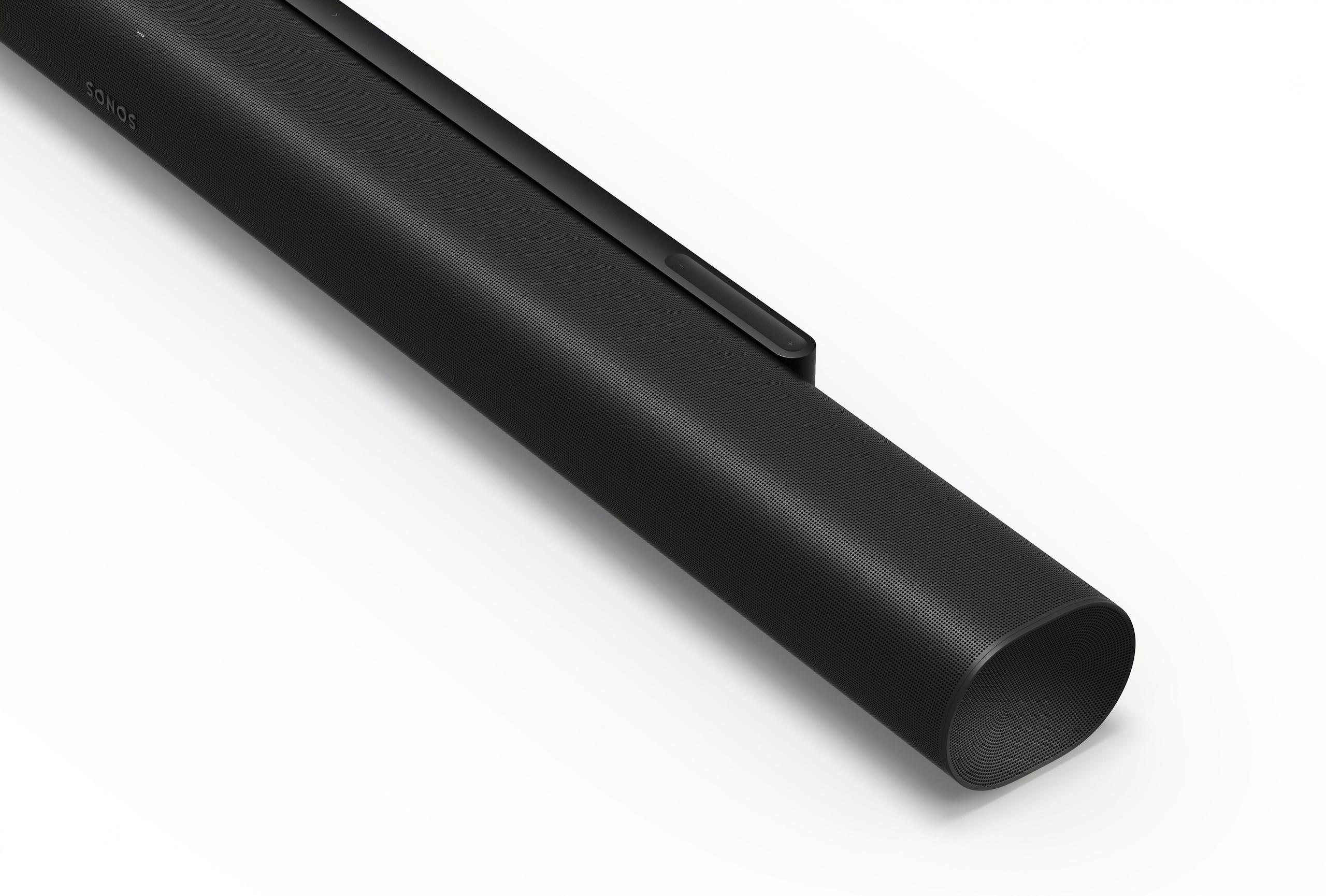
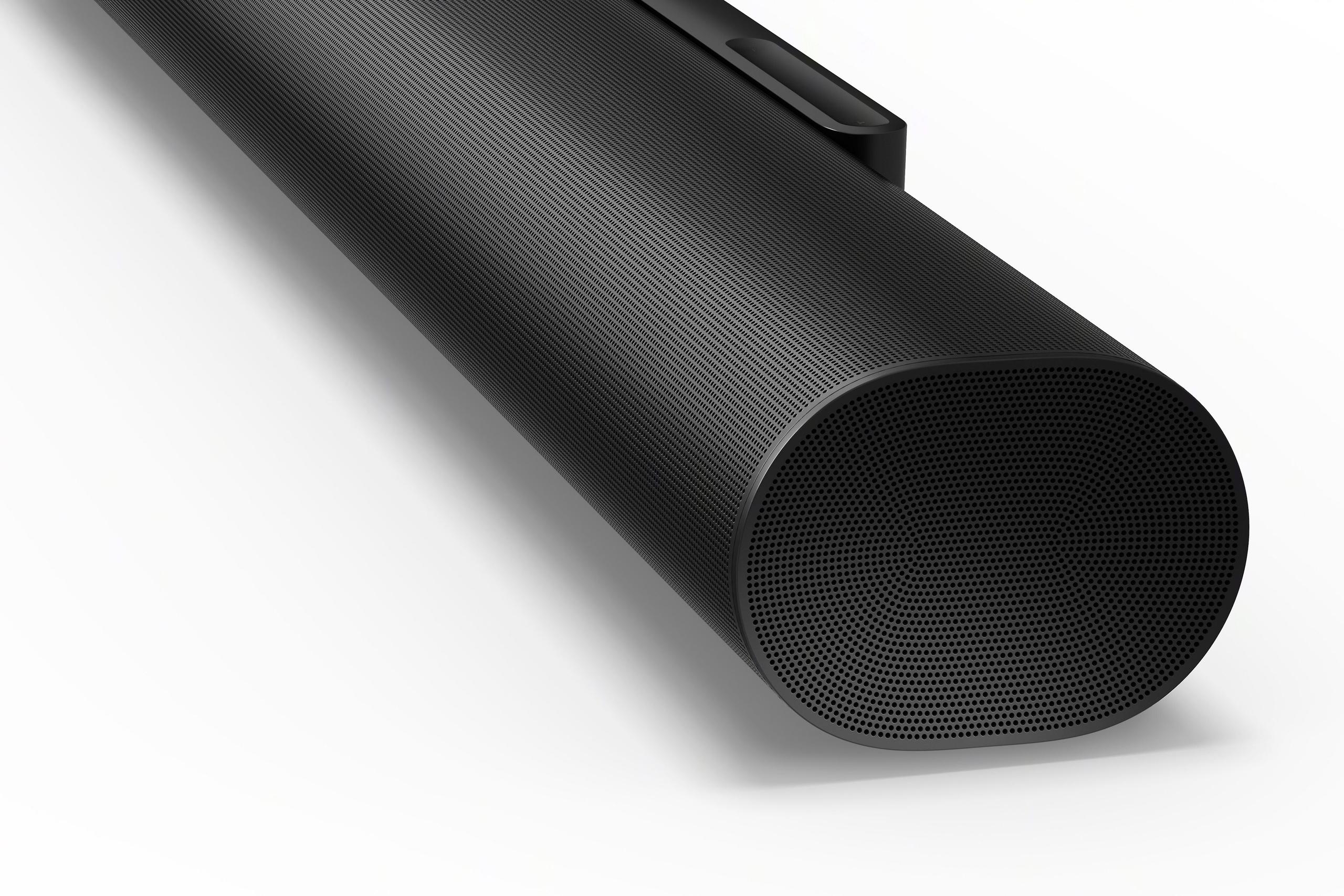
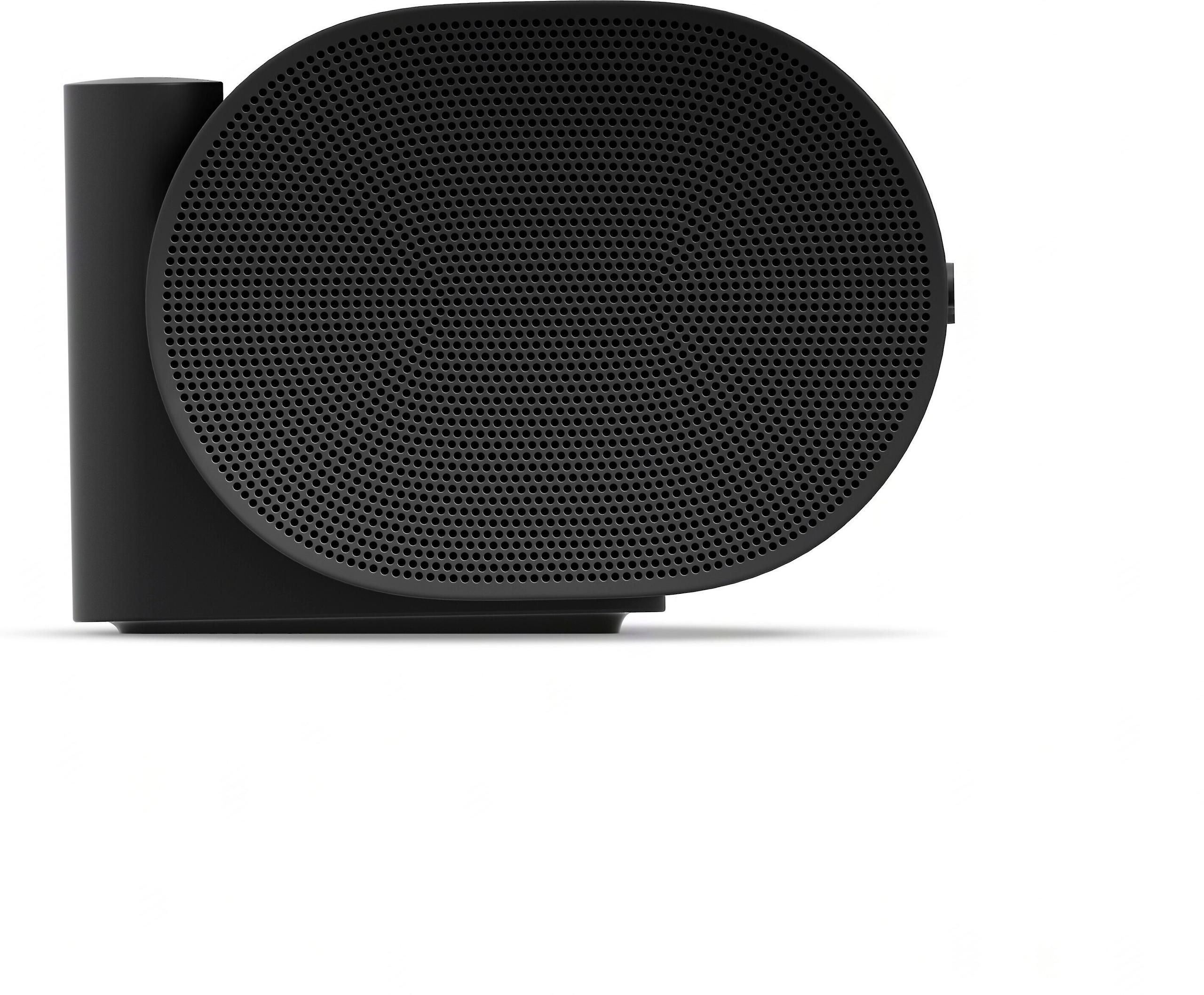
The Arc Ultra represents Sonos's answer to the question: how much performance can you pack into a single elegant soundbar? Released in late 2024, it incorporates several breakthrough technologies that weren't available in earlier Sonos products.
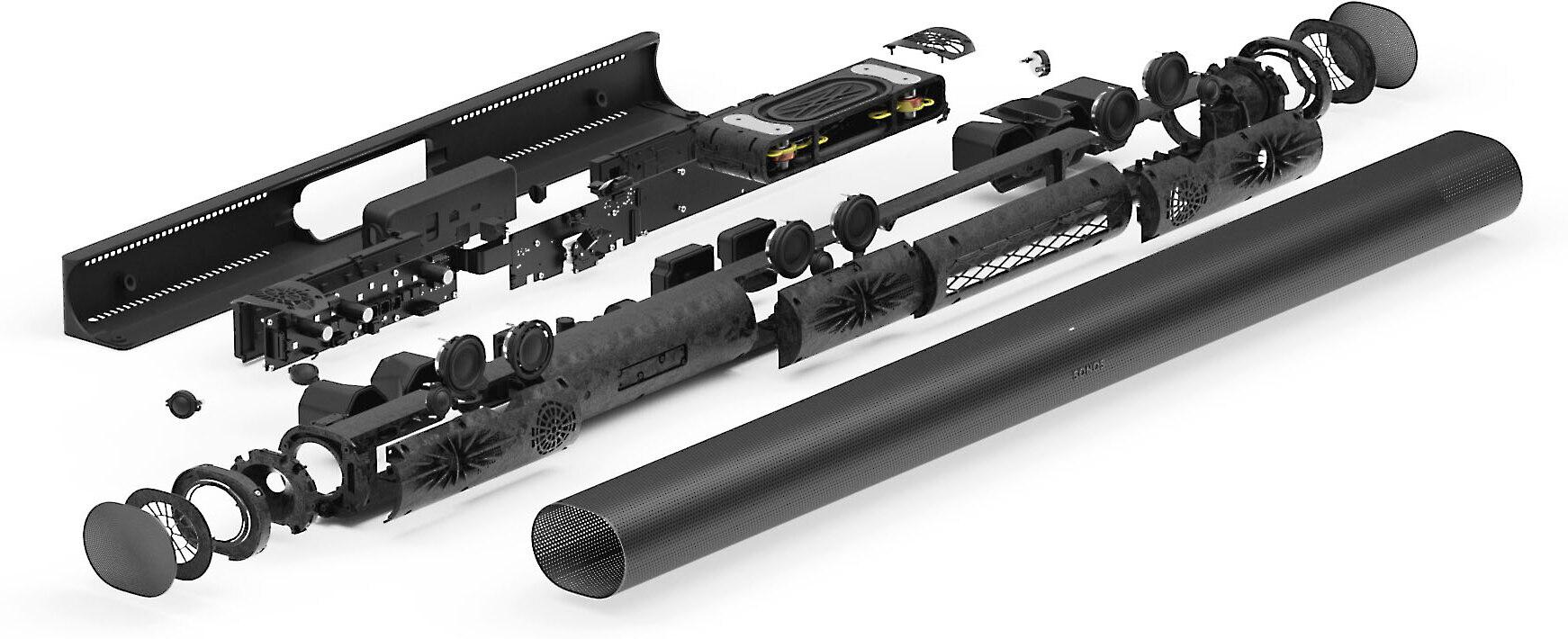
The most significant innovation is called Sound Motion technology. Traditional subwoofers use large, heavy drivers that move back and forth to create bass. Sound Motion uses four small motors working together with dual membranes to generate surprisingly deep bass from a compact design. Think of it like having four small engines working in perfect coordination instead of one large engine – it's more efficient and takes up less space while delivering more controlled output.
This technological advancement allows the Arc Ultra to include 14 total drivers within its sleek form factor: seven silk-dome tweeters (including two that fire upward for height effects), six midwoofers for vocal clarity, and the Sound Motion woofer system for bass. Fifteen separate amplifiers power these drivers, with each amp specifically tuned for its particular driver's needs.
The Arc Ultra also features sophisticated AI-powered speech enhancement. Instead of just boosting all midrange frequencies (which can make dialogue sound unnatural), the system analyzes incoming audio in real-time and selectively enhances voice frequencies while maintaining natural tonal balance. You get four adjustment levels, allowing fine-tuning based on your hearing preferences and room acoustics.
Sonos's Trueplay room calibration technology has also evolved significantly since earlier versions. The system now uses your phone's microphone to measure how sound reflects off surfaces in your room, then automatically adjusts timing, frequency response, and channel levels to optimize performance for your specific space. It's remarkably effective – the difference between calibrated and uncalibrated performance can be dramatic.
The fundamental difference between these systems becomes most apparent when evaluating spatial audio performance. The HT Saturn's distributed speaker approach provides authentic channel separation that virtual processing simply cannot replicate. When a helicopter flies from left to right across the screen, you hear it moving between actual speakers positioned around your room. This creates genuinely convincing surround effects, especially for rear and side positioning.
However, the HT Saturn uses what's called a "phantom center channel" instead of a dedicated center speaker. This means dialogue and center-channel effects are created by carefully balancing output from the left and right front speakers. While this can work well, it's sensitive to listening position – move too far left or right of the ideal spot, and dialogue can sound off-center or less focused.
The Arc Ultra achieves spatial effects through advanced virtual processing that has genuinely impressed in testing. The system creates what feels like a 360-degree bubble of sound, with effects appearing to come from locations well beyond the physical soundbar. The height effects are particularly convincing, with overhead sounds like rain or aircraft seeming to originate from above rather than reflecting obviously off the ceiling.
Based on expert evaluations, the Arc Ultra shows superior directional accuracy for height effects specifically, while the HT Saturn delivers more authentic left/right and rear positioning. Your room setup and primary content types will influence which approach works better for your situation.
Dialogue clarity often determines whether a sound system enhances or detracts from your viewing experience. Modern streaming content varies wildly in audio mixing quality, and many movies prioritize ambient effects over speech intelligibility. A good sound system needs to handle poorly mixed content gracefully while preserving the director's intent on well-mixed material.
The Arc Ultra excels here through its AI-powered speech enhancement and dedicated center channel drivers. The system analyzes incoming audio continuously, identifying speech patterns and selectively boosting voice frequencies without making dialogue sound artificial or over-processed. The four adjustment levels let you fine-tune based on content type and personal preferences.
User feedback consistently highlights the Arc Ultra's dialogue clarity as a standout feature. Even in complex action scenes with lots of background effects, voices remain intelligible and properly positioned. The dedicated center channel drivers ensure consistent performance regardless of listening position.
The HT Saturn handles dialogue reasonably well through its phantom center implementation, but performance varies more with listening position and room acoustics. The basic dialogue enhancement modes provide some improvement, but they lack the sophistication of the Arc Ultra's real-time processing.
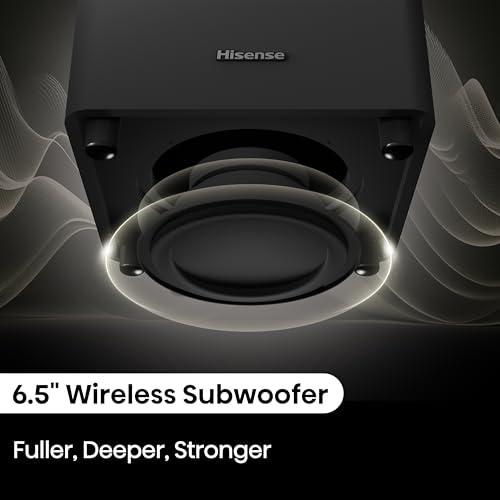
Bass response reveals interesting trade-offs between these approaches. The HT Saturn includes a dedicated 6.5-inch wireless subwoofer that can be positioned optimally within your room for maximum impact. Subwoofer placement significantly affects bass response, and having positioning flexibility is valuable for fine-tuning performance.
However, measurements and user reports suggest the HT Saturn's subwoofer has limited deep bass extension, with minimal output below 40Hz. This means the rumbling, room-shaking effects in action movies may lack the visceral impact you'd expect from a dedicated subwoofer system.
The Arc Ultra's Sound Motion technology achieves more controlled and extended bass response despite being integrated into the soundbar. The system maintains clean, articulate bass down to approximately 65Hz while integrating seamlessly with midrange and high frequencies. Users consistently report that bass effects feel more natural and less boomy compared to many soundbar-plus-subwoofer combinations.
For most living room setups, the Arc Ultra's integrated approach provides more practical bass performance. The HT Saturn's separate subwoofer might appeal to those who want the option of strategic bass positioning, but its performance limitations somewhat negate this theoretical advantage.
This represents perhaps the most significant performance difference between these systems. High-quality audio systems should maintain clean, distortion-free output even at elevated listening levels. Reference-level cinema volume (around 85dB with peaks to 105dB) demands substantial dynamic range and power reserves.
User reviews and expert evaluations reveal concerning limitations with the HT Saturn at higher volumes. Multiple sources report audible distortion, particularly in treble frequencies and midrange, when pushing the system above moderate levels. Users consistently mention keeping volume below 65% of maximum to maintain acceptable sound quality.
This volume limitation significantly impacts the HT Saturn's suitability for larger rooms or when you want true cinematic impact. It's particularly disappointing given the system's premium positioning and price point at the time of writing.
The Arc Ultra maintains composure across its full dynamic range. The fifteen dedicated amplifiers provide ample headroom for demanding content, and users report clean performance even at elevated listening levels suitable for movie theater-like experiences. This clean high-volume capability makes the Arc Ultra more versatile for different room sizes and listening preferences.
The HT Saturn's modular design requires more planning and potentially more visible speaker placement. You'll need to position four satellite speakers around your room, find appropriate placement for the subwoofer, and ensure all components have access to power outlets. While this complexity enables optimal acoustic positioning, it may not work well in living spaces where aesthetics and minimal clutter are priorities.
The tri-band wireless connectivity generally works reliably, but initial setup involves pairing multiple components and ensuring proper positioning for both acoustic and wireless performance. The system works best in dedicated home theater rooms where speaker placement can be optimized without compromising room aesthetics.
The Arc Ultra offers genuine plug-and-play simplicity. Position the soundbar under your TV, connect the HDMI cable, and run Trueplay calibration using the Sonos app. The entire process takes about ten minutes, and the automatic room calibration typically delivers excellent results without manual adjustment.
Modern audio systems increasingly serve as smart home hubs and multi-room audio controllers. The Arc Ultra integrates deeply with the broader Sonos ecosystem, enabling seamless multi-room audio, voice control through Alexa or Sonos Voice, and regular feature updates that add new capabilities over time.
The Sonos platform supports virtually every major streaming service with high-quality audio codecs, and the system can serve as the foundation for a whole-home audio setup. Adding rear speakers (Sonos Era 300) or a subwoofer (Sonos Sub) expands capabilities while maintaining seamless integration.
The HT Saturn offers more limited smart features, focusing primarily on audio performance rather than ecosystem integration. Hi-Concerto integration with compatible Hisense TVs provides unique functionality, but this limits flexibility compared to more universal approaches.
At the time of writing, the Arc Ultra typically retails for significantly less than the HT Saturn, despite offering superior performance in most key metrics. This price-to-performance advantage makes the Arc Ultra particularly compelling for most buyers.
The HT Saturn's higher price reflects its modular design philosophy and Devialet tuning, but performance limitations and setup complexity challenge its value proposition. Expert reviews consistently rate its value unfavorably compared to alternatives in the premium soundbar category.
Long-term software support also favors the Arc Ultra. Sonos has a strong track record of providing meaningful feature updates that enhance performance and add capabilities over time. The HT Saturn's more limited smart features suggest less potential for evolution through software updates.
The Arc Ultra emerges as the stronger choice for most users, delivering superior dialogue clarity, cleaner high-volume performance, better bass integration, and more practical setup requirements. Its advanced AI processing and room calibration capabilities provide consistently excellent results across different room types and content sources.
Choose the Sonos Arc Ultra if you want the best overall performance with minimal setup complexity, prioritize dialogue clarity and clean sound at all volume levels, plan to integrate with a broader smart home ecosystem, or value superior price-to-performance ratio.
The HT Saturn appeals to specific use cases despite its limitations. Its authentic surround separation and modular flexibility work particularly well in dedicated home theater rooms where speaker placement can be optimized and volume limitations won't be problematic.
Choose the Hisense HT Saturn if you have a dedicated theater room where aesthetics matter less than acoustic optimization, own a compatible Hisense TV and want Hi-Concerto integration, prioritize authentic physical surround separation over processing sophistication, or primarily listen at moderate volume levels.
For most living room setups and general home theater use, the Arc Ultra provides a more compelling combination of performance, convenience, and value. Its refined single-unit approach proves that sometimes the simpler solution really is better.
| Hisense HT Saturn | Sonos Arc Ultra |
|---|---|
| System Architecture - Determines setup complexity and sound authenticity | |
| Modular wireless system with 4 discrete satellite speakers + wireless subwoofer | Single soundbar unit with all 14 drivers integrated |
| Channel Configuration - Affects surround sound accuracy | |
| True 4.1.2 channels with physical speaker separation | Virtual 9.1.4 channels through advanced processing |
| Total Drivers - More drivers can mean better frequency separation | |
| 13 speakers across all components (8 full-range, 4 tweeters, 1 subwoofer) | 14 drivers in soundbar (7 tweeters, 6 midwoofers, 1 Sound Motion woofer) |
| Bass Solution - Impacts low-frequency performance and flexibility | |
| Dedicated wireless 6.5" subwoofer (positionable but limited extension) | Integrated Sound Motion woofer technology (more controlled output) |
| Volume Performance - Critical for larger rooms and cinematic impact | |
| Clean output limited to ~65% max volume due to distortion issues | Clean performance across full dynamic range without distortion |
| Dialogue Enhancement - Essential for modern streaming content | |
| Basic dialogue modes with phantom center channel | AI-powered Speech Enhancement with 4 adjustable levels |
| Room Calibration - Optimizes sound for your specific space | |
| Manual positioning optimization only | Automatic Trueplay calibration using smartphone microphone |
| Smart Features - Affects long-term usability and updates | |
| Hi-Concerto integration with compatible Hisense TVs only | Full Sonos ecosystem, voice control, multi-room audio, regular updates |
| Setup Complexity - Time and effort required for installation | |
| Requires positioning 4 satellites + subwoofer with power to each | Single HDMI connection with 10-minute app-guided setup |
| Connectivity Options - Determines compatibility with devices | |
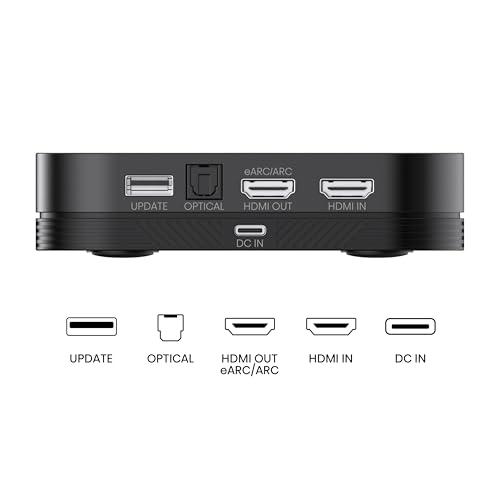
| HDMI eARC, optical, Bluetooth 5.3, 4K 60Hz passthrough | HDMI eARC only, Bluetooth 5.3, WiFi streaming, no passthrough |
| Expandability - Options for future system growth | |
| Fixed 4.1.2 configuration, cannot add components | Can add Sonos Sub, Era 300 rears, or other Sonos speakers |
| Value Proposition - Performance per dollar at time of writing | |
| Premium pricing with performance limitations that affect usability | Superior performance metrics at lower price point with better features |
For most home theater setups, the Sonos Arc Ultra delivers better overall performance with superior dialogue clarity, cleaner sound at high volumes, and more convincing spatial effects. The Hisense HT Saturn offers authentic surround separation through its modular design, but performance limitations at higher volumes make the Arc Ultra the stronger choice for cinematic experiences.
The Hisense HT Saturn uses a modular approach with four separate wireless satellite speakers plus a subwoofer, creating true physical surround sound. The Sonos Arc Ultra packs everything into a single soundbar unit and uses advanced virtual processing to create surround effects. This fundamental difference affects setup complexity, sound authenticity, and room requirements.
The Sonos Arc Ultra delivers more controlled and extended bass through its innovative Sound Motion woofer technology, maintaining clean output down to 65Hz. While the Hisense HT Saturn includes a dedicated 6.5-inch wireless subwoofer, it has limited deep bass extension and positioning flexibility doesn't fully compensate for its performance limitations.
The Hisense HT Saturn typically costs significantly more than the Sonos Arc Ultra but delivers inferior performance in key areas like volume handling and dialogue clarity. The Arc Ultra offers better value with superior features, cleaner sound quality, and easier setup, making the price premium for the HT Saturn difficult to justify for most buyers.
The Sonos Arc Ultra is much easier to set up, requiring only a single HDMI connection and 10-minute app-guided calibration. The Hisense HT Saturn requires positioning four satellite speakers around your room plus the subwoofer, each needing power connections, making setup more complex and time-consuming.
Yes, both the Hisense HT Saturn and Sonos Arc Ultra support Dolby Atmos. The HT Saturn creates height effects through upward-firing drivers in each satellite speaker, while the Arc Ultra uses upward-firing tweeters and advanced processing to render overhead audio effects from its single unit.
The Sonos Arc Ultra works better in small rooms due to its compact single-unit design and automatic room calibration that optimizes performance for your specific space. The Hisense HT Saturn's modular design requires more room for optimal satellite speaker placement and may overwhelm smaller spaces.
The Sonos Arc Ultra can be expanded with additional Sonos speakers like the Sub for more bass or Era 300 speakers for true rear surround. The Hisense HT Saturn is a fixed 4.1.2 configuration that cannot be expanded with additional components, limiting future upgrade options.
The Sonos Arc Ultra offers superior dialogue clarity through its AI-powered Speech Enhancement with four adjustable levels and dedicated center channel drivers. The Hisense HT Saturn uses phantom center channel processing that can work well but is more sensitive to listening position and lacks advanced speech processing.
The Sonos Arc Ultra supports Amazon Alexa and Sonos Voice Control with built-in microphones. The Hisense HT Saturn does not include voice assistant support or built-in microphones, focusing purely on audio performance rather than smart home integration.
The Sonos Arc Ultra maintains clean, distortion-free performance across its full volume range, making it suitable for reference-level listening. The Hisense HT Saturn shows distortion issues at higher volumes, requiring users to keep volume below about 65% of maximum for acceptable sound quality.
For most living rooms, the Sonos Arc Ultra is the better choice due to its sleek single-unit design, superior dialogue clarity, clean high-volume performance, and automatic room optimization. Choose the Hisense HT Saturn only if you have a dedicated theater room where you can optimize satellite speaker placement and don't mind its volume limitations.
We've done our best to create useful and informative comparisons to help you decide what product to buy. Our research uses advanced automated methods to create this comparison and perfection is not possible - please contact us for corrections or questions. These are the sites we've researched in the creation of this article: bestbuy.com - youtube.com - blog.son-video.com - youtube.com - youtube.com - techradar.com - ecoustics.com - jbhifi.com.au - shop.hisense-usa.com - bhphotovideo.com - bestbuy.com - digitalreviews.net - hisense-usa.com - projectorscreenstore.com - valueelectronics.com - dolby.com - giftpack.ai - bestbuy.com - shopjetson.com - youtube.com - ign.com - crutchfield.com - dowtechnologies.com - sonos.com - appleinsider.com - pcrichard.com - clefdesol.com - sonos.com - businessinsider.com - audioadvice.com - en.community.sonos.com

Privacy Policy
Terms and Conditions - Affiliate Policy
Home Security
© Copyright 2008-2026.
11816 Inwood Rd #1211, Dallas, TX 75244