

The world of premium soundbars has become surprisingly sophisticated in recent years. What started as simple TV speaker replacements have evolved into complex audio systems that can genuinely compete with traditional multi-speaker home theater setups. But here's the thing: not all premium soundbars take the same approach to solving the "great sound from fewer boxes" problem.
Today we're comparing two fundamentally different philosophies in premium wireless audio: the Hisense HT Saturn, which launched in 2025 as a true wireless multi-speaker system, and the Devialet Dione, which debuted in 2022 as a luxury all-in-one solution. At the time of writing, these products sit at different price points—the HT Saturn positioned as accessible premium while the Dione commands luxury pricing—but both aim to deliver immersive Dolby Atmos experiences without the complexity of traditional home theater receivers and wired speakers.
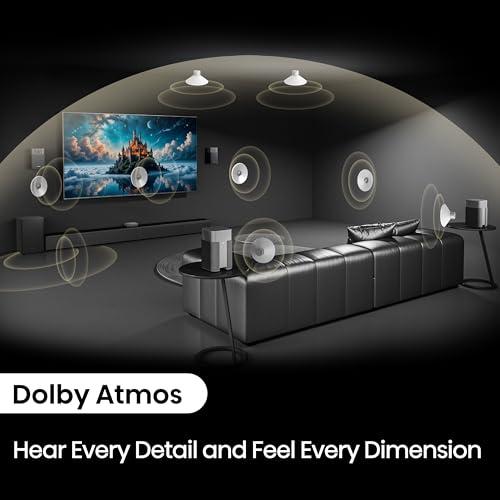
Before diving into specifics, it's worth understanding what separates today's premium soundbars from the basic models you might find at big box stores. The key advancement is Dolby Atmos, an audio format that adds height information to traditional surround sound. Instead of just having sounds come from left, right, and behind you, Atmos can make helicopters fly overhead, rain fall from above, or create the sense that you're truly inside a movie scene.
The challenge is physics. Traditional Atmos systems use ceiling speakers or special upward-firing drivers that bounce sound off your ceiling. Creating this effect from a single soundbar requires some serious engineering tricks, which is where these two products take completely different paths.
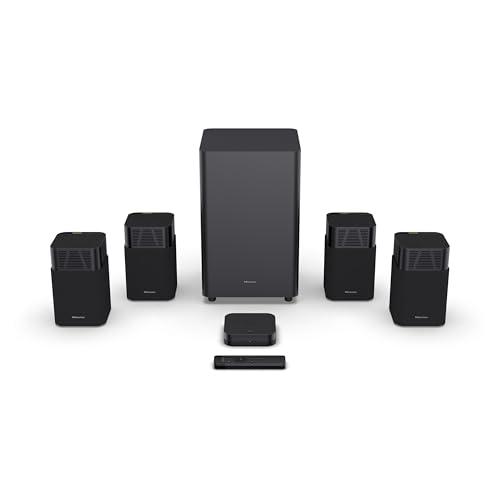
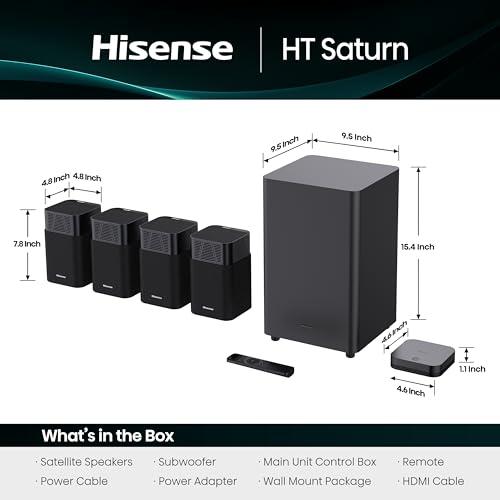
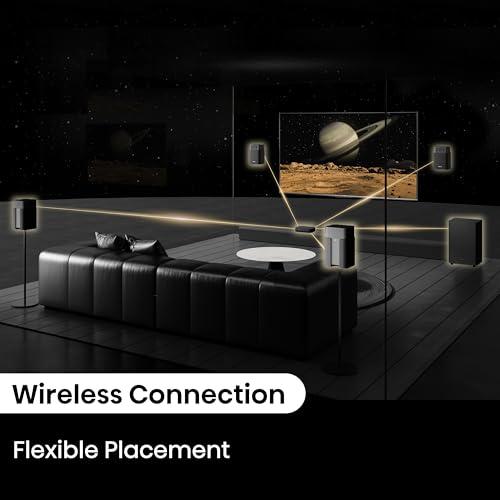
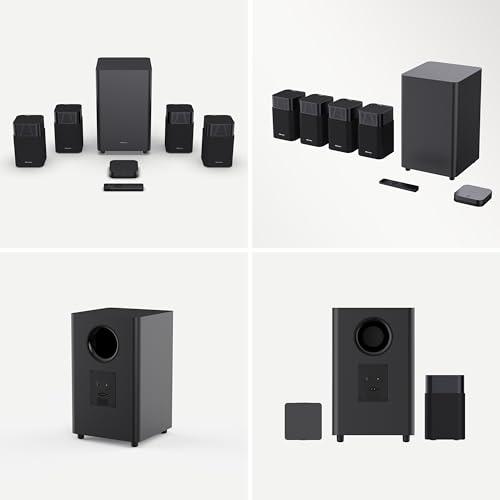
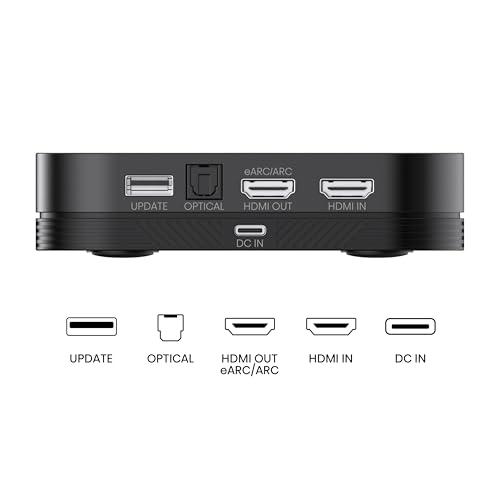
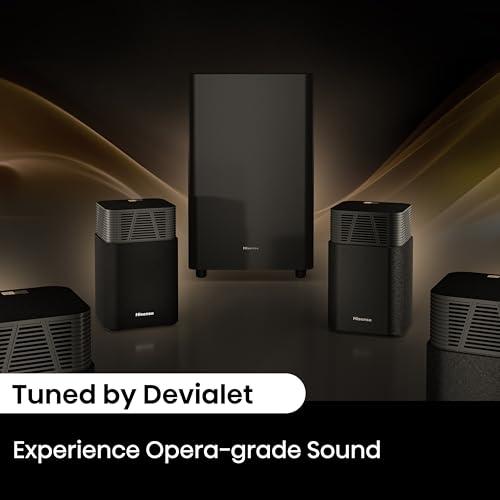
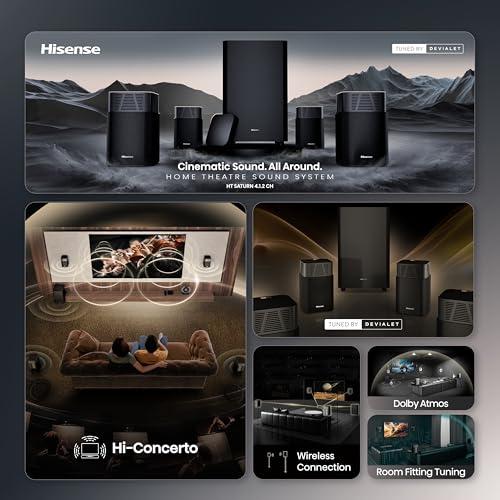
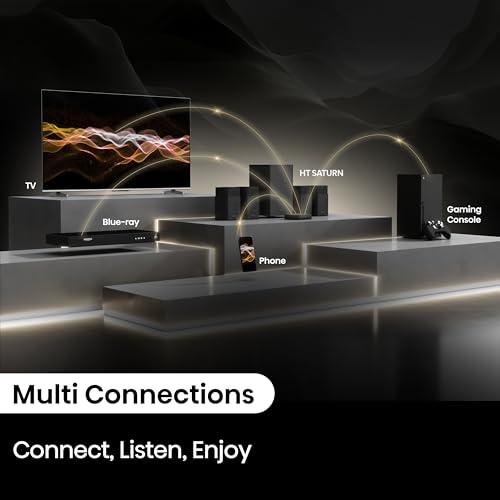
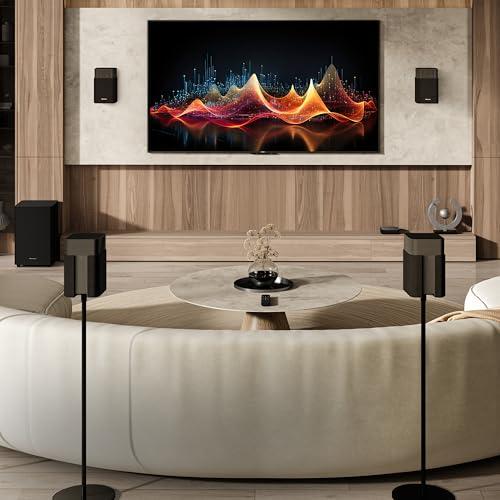
The Hisense HT Saturn throws out the traditional soundbar concept entirely. Instead of one long bar under your TV, you get a compact control hub that wirelessly connects to four separate satellite speakers and a dedicated subwoofer. Think of it as a traditional 5.1 surround sound system that happens to be wireless.
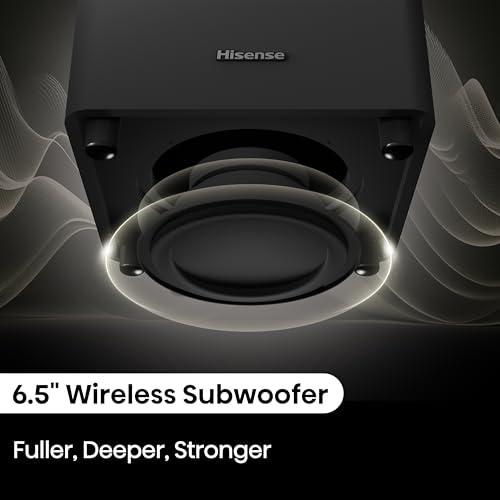
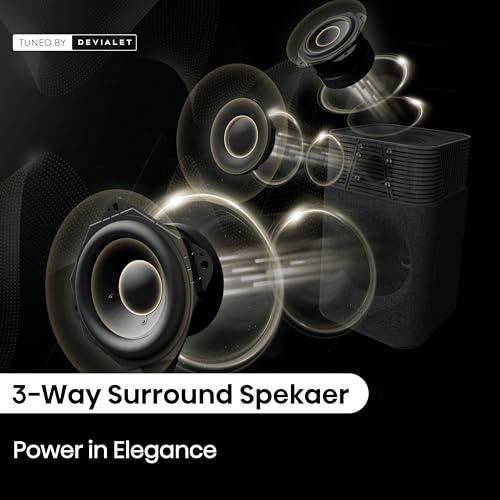
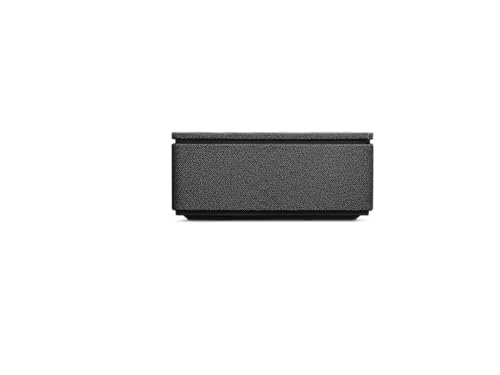
Each satellite speaker is roughly the size of a small bookshelf speaker—about 5 inches wide and 8 inches tall—and contains multiple drivers including upward-firing elements for Atmos height effects. The wireless subwoofer handles the deep bass that makes explosions feel real and music sound full. The whole system uses what Hisense calls a "4.1.2" configuration: four main speakers, one subwoofer, and two height channels.
This distributed approach means you're placing speakers around your room much like a traditional home theater, but without running speaker wires everywhere. The tradeoff is that you need power outlets near each speaker location, and you're definitely giving up the clean, minimalist look of a single soundbar.
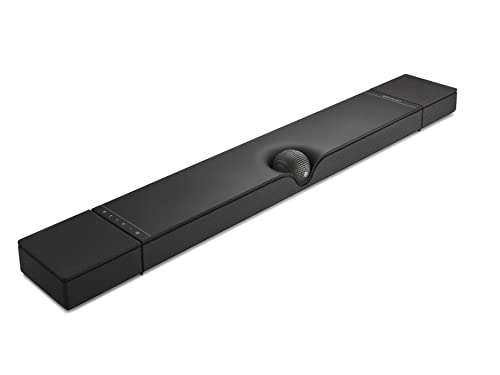
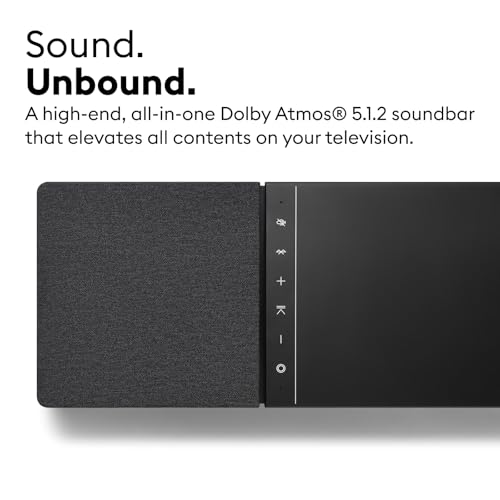
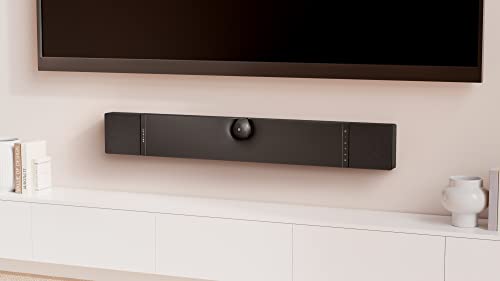
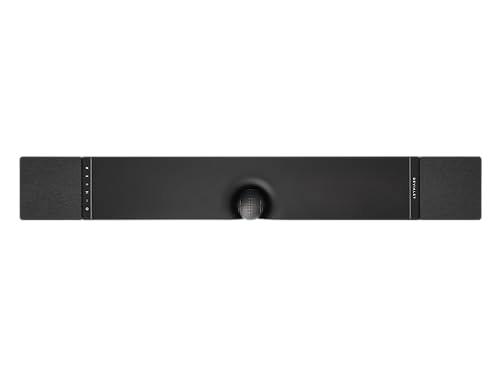
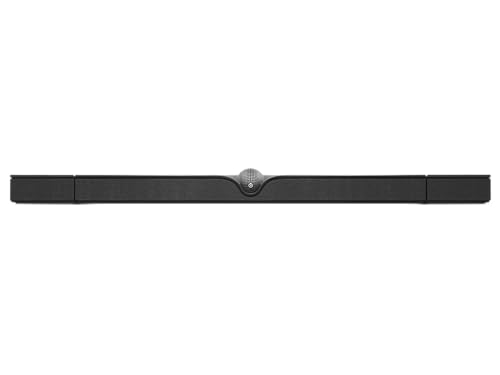
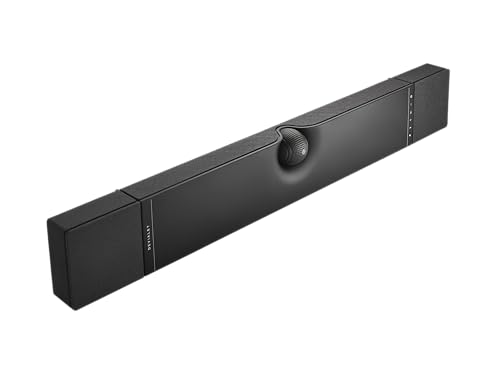
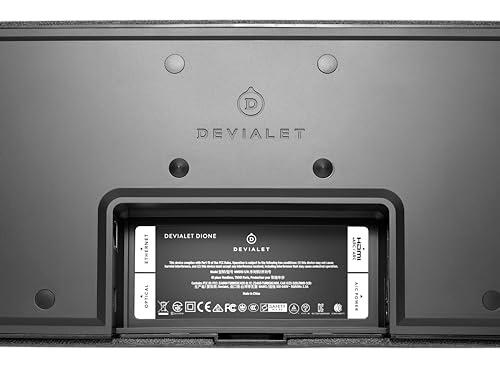
The Devialet Dione takes the opposite approach. This is a true soundbar—one sleek aluminum unit that sits under your TV—but it's packed with 17 individual speakers and nearly 1,000 watts of amplification. Eight of those speakers are dedicated woofers that eliminate the need for a separate subwoofer entirely.
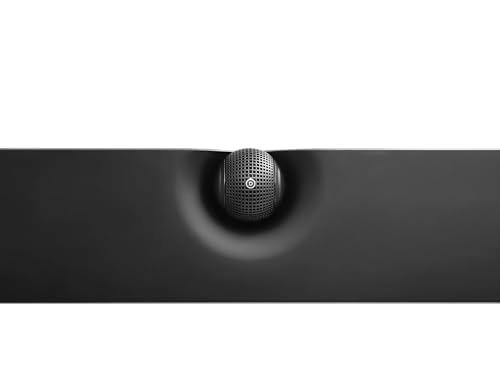
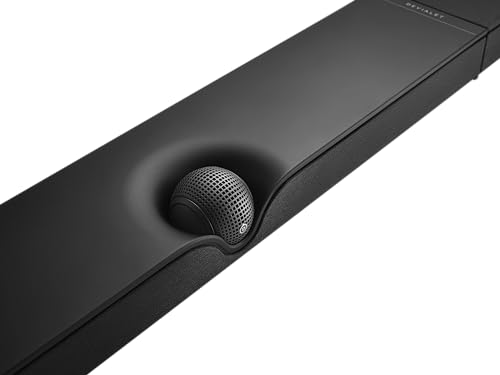
What makes the Dione unique is its ORB center channel—a spherical speaker that can physically rotate depending on whether you mount the soundbar on the wall or place it on furniture. This ensures the center channel (which handles most dialogue) always points toward your listening position, maintaining clear voices regardless of setup.
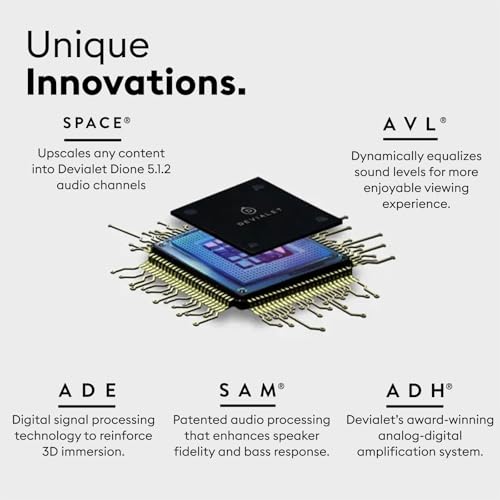
Devialet's engineering team developed several proprietary technologies for the Dione, including SAM (Speaker Active Matching), which continuously monitors each speaker and corrects for distortion in real-time, and SPACE upmixing, which can take regular stereo content and spread it across all 17 speakers for a more immersive experience.
Here's where these systems diverge most dramatically. The HT Saturn's physical satellite speakers create genuine surround sound—when a car races from left to right in a movie, you hear it move between actual speakers positioned around your room. The Dione uses sophisticated audio processing and carefully angled drivers to create the illusion of surround sound from a single position.
Based on extensive professional reviews and user feedback, the HT Saturn delivers more convincing directional effects. When watching action movies, you can pinpoint exactly where sounds are coming from because they're actually coming from speakers in those locations. The phantom center channel—created by the left and right front speakers working together—is surprisingly stable and focused for dialogue.
The Dione's virtual surround is impressive for a single unit, but it's still bound by the laws of physics. However, its Advanced Dimensional Experience (ADE) processing does create a wider soundstage than most soundbars, and the effect is particularly convincing when wall-mounted, where it can better utilize room reflections.
Both systems handle bass differently, and each approach has distinct advantages. The HT Saturn's dedicated 6.5-inch wireless subwoofer can be positioned anywhere in your room for optimal bass response. This flexibility is crucial because bass frequencies interact heavily with room acoustics—the same subwoofer can sound boomy in one corner and perfectly balanced in another.
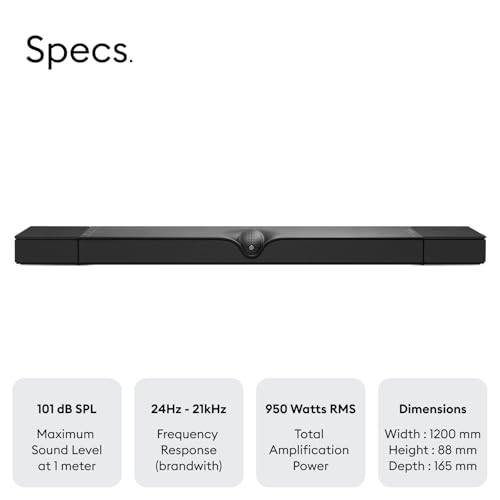
The Devialet Dione's eight internal woofers use a "push-push" configuration where pairs of drivers work in opposition, canceling out vibrations that would otherwise cause cabinet rattling. This engineering allows the Dione to reach deeper into bass frequencies (down to 24 Hz versus the Saturn's 40 Hz) while maintaining the clean aesthetics of a single unit.
In practical terms, the Dione produces surprisingly deep, powerful bass for a soundbar. Professional measurements show it can genuinely compete with many dedicated subwoofers. However, the HT Saturn offers more flexibility to optimize bass performance for your specific room.
This is where the price difference becomes most apparent. The HT Saturn is tuned by Devialet (the same company that makes the Dione) but uses more conventional audio processing. It supports both Dolby Atmos and DTS:X—two competing surround sound formats—which means broader compatibility with different streaming services and disc formats.
The Dione showcases Devialet's full arsenal of proprietary technologies. ADH (Analog Digital Hybrid) amplification combines the musical qualities of traditional analog amplifiers with the efficiency and power of digital designs. AVL (Adaptive Volume Level) continuously adjusts the balance between dialogue, music, and effects so you don't constantly reach for the volume control during movies.
However, the Dione only supports Dolby Atmos, not DTS:X, which limits format compatibility. It also lacks basic tone controls—you can't adjust bass and treble levels, which seems odd for a product at this price point.
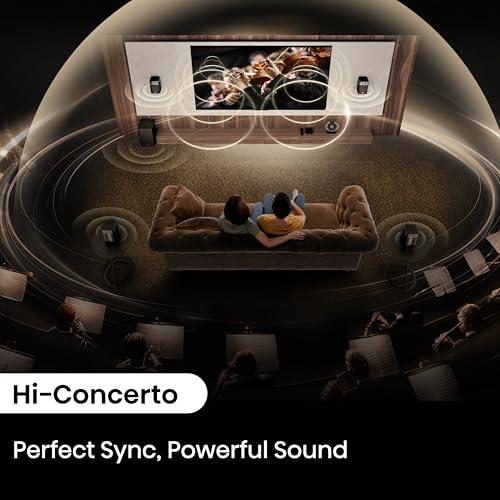
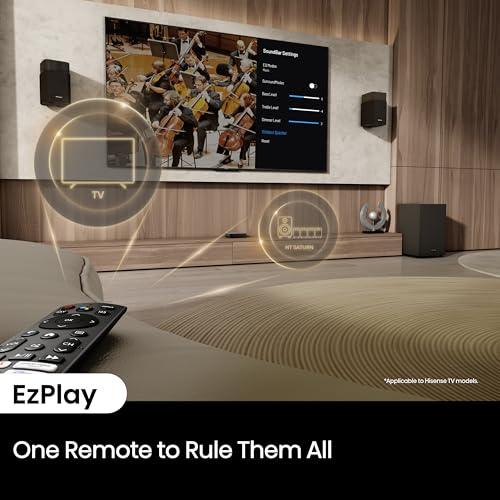
Both systems handle modern connectivity well, but with different emphases. The HT Saturn focuses on comprehensive format support and TV integration. Its EzPlay feature allows control through compatible Hisense TV menus, and Hi-Concerto technology can actually use your TV's built-in speakers alongside the soundbar for an even wider soundstage.
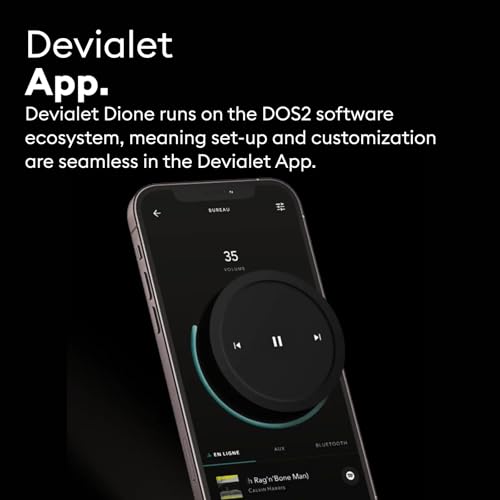
The Dione emphasizes high-quality wireless streaming. It supports AirPlay 2 for seamless iPhone and Mac integration, Spotify Connect for direct streaming, and has both Wi-Fi and Ethernet connections for network stability. The Devialet app handles setup and room calibration, though it's not as feature-rich as some competitors.
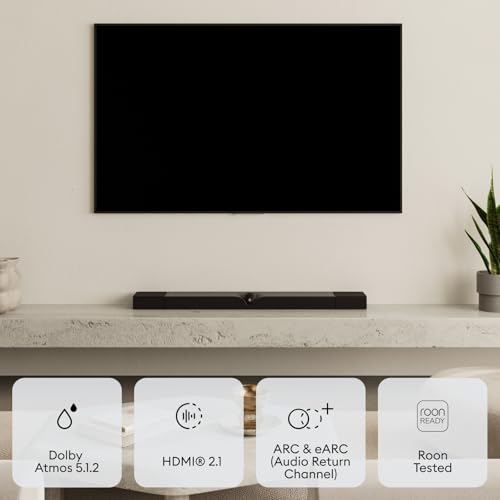
Both systems support HDMI eARC, which is crucial for getting full-quality Dolby Atmos from your TV. This connection type allows uncompressed audio transmission and simplified control, so you can adjust soundbar volume with your TV remote.
In a typical living room setup, these systems shine in different scenarios. The HT Saturn excels during movie nights when you want maximum immersion. The physical speaker placement creates a genuine "you're in the movie" experience, particularly effective for action films and gaming. The separate subwoofer means you can really feel explosions and soundtrack crescendos without overwhelming dialogue.
The Dione is better suited for mixed-use environments where aesthetics matter as much as performance. It's sophisticated enough for critical music listening—something many soundbars struggle with—while still delivering impressive movie experiences. The integrated design means no subwoofer placement decisions or multiple power connections to manage.
Based on professional reviews, both systems handle dialogue clarity well, though through different methods. The Saturn's phantom center works better than expected, while the Dione's rotating ORB ensures consistent vocal positioning regardless of mounting orientation.
At the time of writing, these products occupy different value propositions. The HT Saturn delivers authentic multi-speaker surround at a price point that's accessible to serious enthusiasts without requiring luxury pricing. The Dione commands premium pricing that reflects its sophisticated engineering and luxury positioning.
Choose the HT Saturn if:
Choose the Devialet Dione if:
Neither system is perfect. The HT Saturn requires multiple power outlets and careful speaker placement for optimal performance. Some users report occasional wireless connectivity hiccups, though the tri-band wireless design (using 2.4, 5.2, and 5.8 GHz frequencies simultaneously) minimizes interference issues.
The Dione suffers from relatively high audio latency, which can cause lip-sync issues with some content. Its lack of expandability means you can't add rear speakers or upgrade the subwoofer later, unlike some modular soundbar systems. The absence of basic EQ controls is particularly frustrating given the premium pricing.
Both products represent important trends in premium audio. The HT Saturn shows that wireless multi-speaker systems can deliver authentic surround sound without the complexity of traditional receivers. The Dione demonstrates how sophisticated engineering can pack remarkable performance into a single, elegant unit.
Since the Dione's 2022 launch, we've seen more manufacturers attempting similar all-in-one approaches, though few match Devialet's technical sophistication. The HT Saturn's 2025 release reflects growing consumer demand for true wireless surround without sacrificing audio quality.
These systems succeed at different things, and your choice should reflect your priorities. If you want the most immersive possible experience and don't mind multiple speakers, the HT Saturn delivers authentic surround sound at a more accessible price point. If you prioritize aesthetics, build quality, and sophisticated audio engineering in a single unit, the Dione offers luxury performance to match its premium positioning.
Both represent the current state of the art in their respective approaches to premium wireless audio. The question isn't which is better overall, but which better matches your room, budget, and listening priorities.
| Hisense HT Saturn | Devialet Dione |
|---|---|
| System Architecture - Determines placement flexibility and aesthetic impact | |
| Multi-component wireless system with 4 satellite speakers + subwoofer | Single all-in-one soundbar with 17 integrated drivers |
| Channel Configuration - Affects surround sound authenticity | |
| True 4.1.2 with physically separated speakers | Virtual 5.1.2 from single unit with beamforming |
| Total Speaker Count - More drivers can mean better sound separation | |
| 13 speakers (8 full-range, 4 tweeters, 1 subwoofer) | 17 speakers (9 full-range, 8 woofers) |
| Audio Format Support - Critical for content compatibility | |
| Dolby Atmos + DTS:X (broader format support) | Dolby Atmos only (DTS converted to PCM) |
| Bass Solution - Impacts both performance and room flexibility | |
| Dedicated 6.5" wireless subwoofer (flexible placement) | 8 integrated woofers (no external sub needed) |
| Frequency Response - Shows how deep bass extends and high treble reaches | |
| 40Hz – 20kHz (good extension for the price) | 24Hz – 21kHz (exceptional low-end for a soundbar) |
| Total Power Output - Affects maximum volume and dynamic range | |
| 500W (efficient for multi-speaker setup) | 950W (premium power for single unit) |
| Dimensions & Weight - Real-world impact on placement and aesthetics | |
| Multiple small speakers (4.8" × 7.8" × 4.8" each) | Single bar: 47" × 3.6" × 6.6", 26.4 lbs |
| Setup Requirements - Affects installation complexity | |
| Requires power outlets near each satellite location | Single power connection, optional wall mount |
| Advanced Audio Technologies - Proprietary features that enhance sound quality | |
| Hi-Concerto TV integration, Room Fitting Tuning | SAM®, SPACE®, ADH amplification, rotating ORB center |
| Connectivity Options - Determines source compatibility and streaming capabilities | |
| HDMI eARC, Optical, Bluetooth 5.3, EzPlay integration | HDMI 2.1 eARC, Bluetooth 5.0, AirPlay 2, Spotify Connect |
| Expandability - Future upgrade potential | |
| Fixed system (cannot add speakers or upgrade subwoofer) | Fixed system (cannot add speakers or external subwoofer) |
| Best Use Case - Who should prioritize each system | |
| Movie enthusiasts wanting authentic surround on a budget | Audiophiles prioritizing single-unit convenience and bass depth |
The Hisense HT Saturn delivers more authentic surround sound for home theater use because it uses physically separate satellite speakers placed around your room. This creates genuine directional audio effects that make movies more immersive. The Devialet Dione offers impressive virtual surround from a single unit but can't match the spatial accuracy of discrete speakers for cinematic experiences.
The Hisense HT Saturn includes a dedicated wireless 6.5-inch subwoofer that you can position anywhere in your room for optimal bass. The Devialet Dione has eight built-in woofers that eliminate the need for a separate subwoofer entirely, reaching deeper bass frequencies (24Hz) than most soundbars while maintaining a clean single-unit design.
The Hisense HT Saturn supports both Dolby Atmos and DTS:X, giving you broader compatibility with streaming services, Blu-rays, and gaming content. The Devialet Dione only supports Dolby Atmos natively, though it converts DTS signals to PCM for playback through its proprietary processing.
Both soundbars offer reliable wireless performance. The HT Saturn uses tri-band wireless (2.4GHz, 5.2GHz, 5.8GHz) to connect its satellite speakers and includes Bluetooth 5.3 for device streaming. The Devialet Dione features Bluetooth 5.0, AirPlay 2, Spotify Connect, and both Wi-Fi and Ethernet for network streaming.
The Devialet Dione is much simpler to install—just connect power and HDMI, then optionally wall-mount the single unit. The Hisense HT Saturn requires positioning four satellite speakers around your room, each needing a power outlet, though the wireless connections make setup easier than traditional wired systems.
The Devialet Dione offers superior technical audio quality with its ADH amplification, SAM speaker matching, and 950W of power, delivering exceptional clarity and bass depth. The HT Saturn provides more immersive spatial audio through its physical speaker placement, though with less sophisticated audio processing technology.
Yes, both soundbars support HDMI CEC for basic TV remote control. The Hisense HT Saturn offers additional integration through EzPlay technology with compatible Hisense TVs, allowing access to soundbar settings through the TV menu. The Devialet Dione works with most TV remotes for volume and power control via HDMI eARC.
The Devialet Dione excels at music playback with its audiophile-grade components, wide frequency response, and sophisticated processing that preserves stereo imaging. The HT Saturn can also handle music well but is more optimized for movie surround sound experiences with its multi-speaker configuration.
The Devialet Dione requires minimal space—just room for a single 47-inch soundbar under your TV or on the wall. The Hisense HT Saturn needs space for four compact satellite speakers (each about 5×8 inches) positioned around your room, plus the wireless subwoofer, making it better suited for larger rooms.
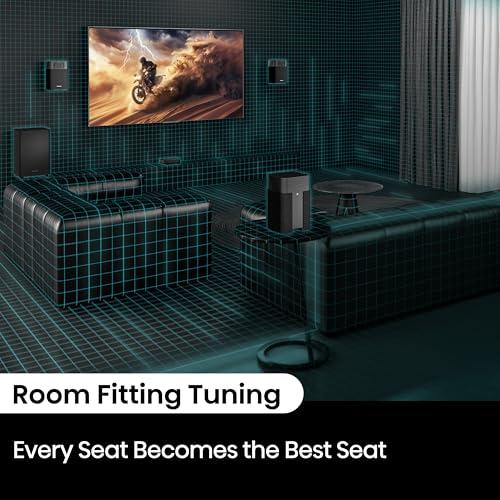
Both systems offer room optimization. The HT Saturn includes Room Fitting Tuning that works with compatible Hisense TVs to adapt sound to your space. The Devialet Dione features automatic room correction through its built-in microphone and Devialet app, adjusting audio parameters based on your room's acoustics.
The Hisense HT Saturn provides excellent value by delivering true wireless surround sound at a more accessible price point than most premium alternatives. The Devialet Dione commands premium pricing that reflects its luxury build quality and sophisticated audio engineering, making it better value for those prioritizing maximum sound quality over cost.
Neither the HT Saturn nor the Devialet Dione can be expanded with additional speakers or upgraded subwoofers. Both are complete, fixed systems. If expandability is important, consider modular soundbar systems that allow adding rear speakers or upgrading components over time.
We've done our best to create useful and informative comparisons to help you decide what product to buy. Our research uses advanced automated methods to create this comparison and perfection is not possible - please contact us for corrections or questions. These are the sites we've researched in the creation of this article: bestbuy.com - youtube.com - blog.son-video.com - youtube.com - youtube.com - techradar.com - ecoustics.com - jbhifi.com.au - shop.hisense-usa.com - bhphotovideo.com - bestbuy.com - digitalreviews.net - hisense-usa.com - projectorscreenstore.com - valueelectronics.com - dolby.com - giftpack.ai - rtings.com - crutchfield.com - devialet.com - ooberpad.com - bhphotovideo.com - kjwestone.co.uk - whathifi.com - devialet.com - devialet.com - sound-advice.online - kjwestone.co.uk - device.report - tmraudio.com - devialet.com - devialetchat.com - projectorscreen.com - soundandvision.com - bestbuy.com - youtube.com - av.com - audiofi.ca - devialet.com - blog.son-video.com - audioconnection.com.au - baybloorradio.com - cdn.abicart.com - smarthomesounds.co.uk - e-piphany.co.za - cloneyaudio.com - devialet.com - catalog.asbis.ee - av.com - soundandvision.com - youtube.com - comparisontabl.es

Privacy Policy
Terms and Conditions - Affiliate Policy
Home Security
© Copyright 2008-2026.
11816 Inwood Rd #1211, Dallas, TX 75244