





The home theater world has transformed dramatically over the past few years. Gone are the days when you needed a massive AV receiver, multiple speaker wires snaking around your living room, and an engineering degree to set up decent surround sound. Today's wireless home theater systems deliver cinema-quality audio with the simplicity of plugging in a few power cords.
Two systems exemplify this evolution perfectly: the Hisense HT Saturn and the JBL Bar 1000. Both launched in recent years as premium wireless solutions, but they take completely different approaches to solving the same problem—how to get true surround sound without the complexity of traditional setups.
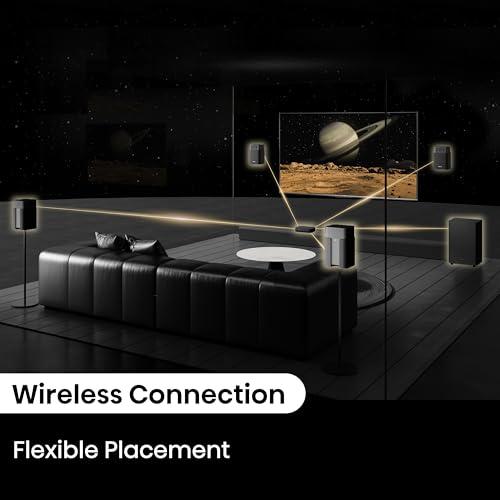
Before diving into specifics, it's worth understanding what makes these systems special. Traditional soundbars create "virtual" surround sound by bouncing audio off your walls—it works, but it's not the same as having actual speakers positioned around you. These new wireless systems use real speakers placed in different locations, connected wirelessly to eliminate cable runs.
The key considerations when evaluating these systems include channel configuration (how many discrete audio channels they can reproduce), wireless reliability, audio processing quality, and how well they integrate with your existing setup. The "channel configuration" numbers you'll see—like 4.1.2 or 7.1.4—tell you exactly what you're getting. The first number represents main channels (front and surround), the second is subwoofers, and the third indicates height channels for overhead effects in Dolby Atmos content.
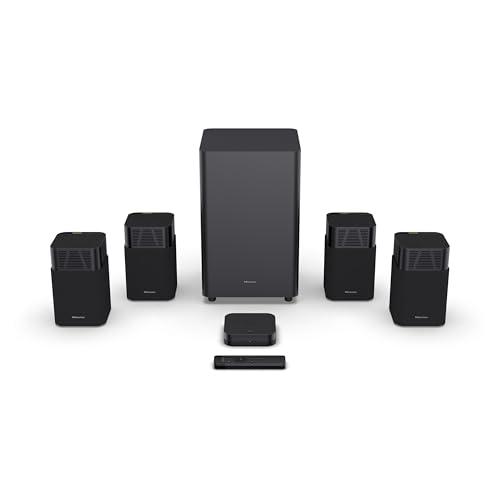
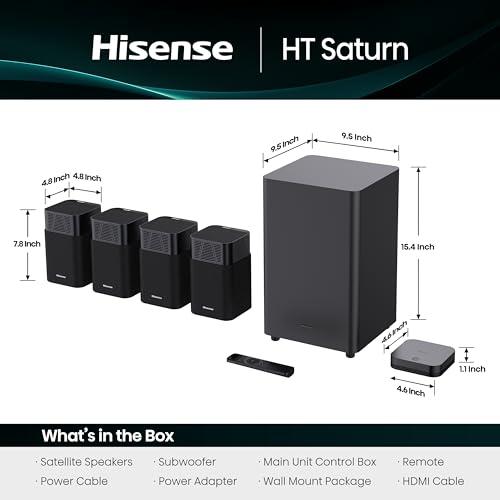
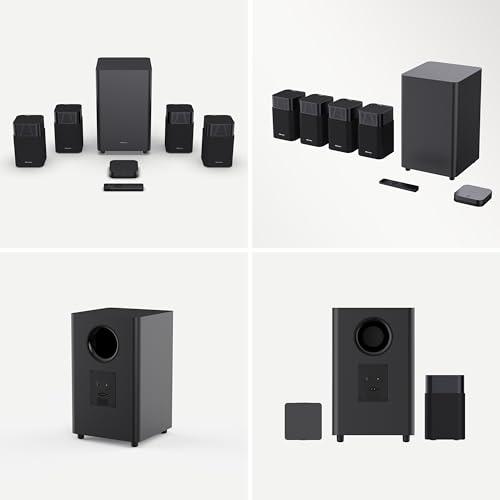
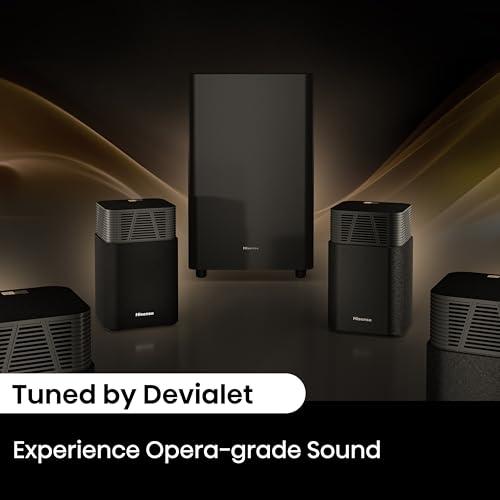
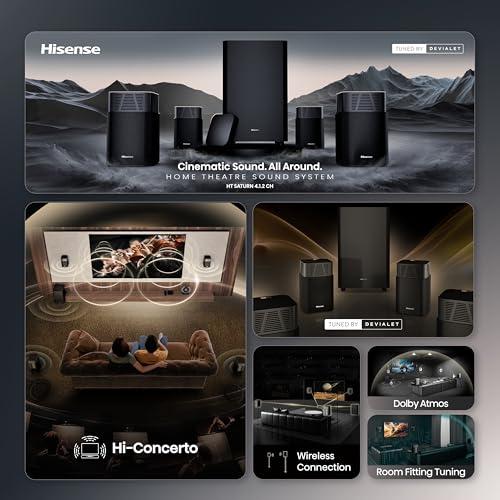
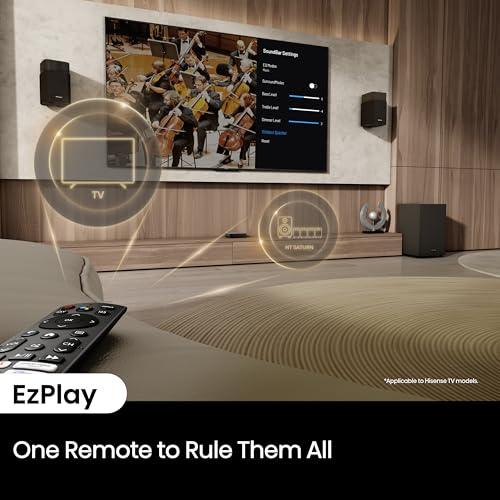
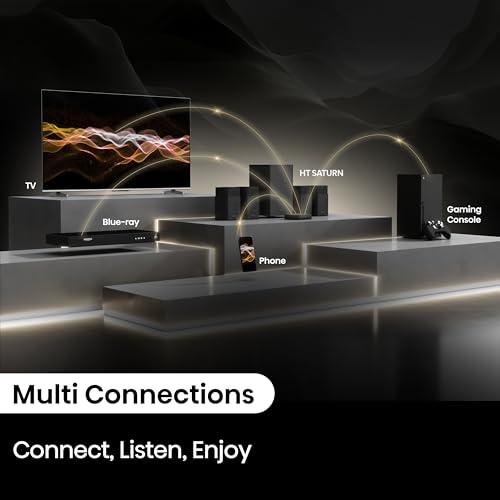
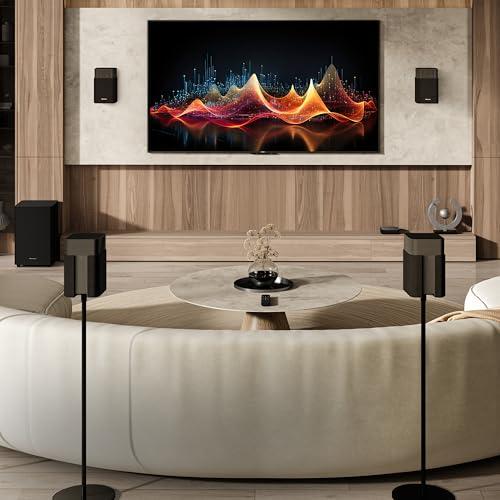
The Hisense HT Saturn, released in 2025, represents a radical departure from traditional soundbar design. Instead of one long bar sitting under your TV, you get four identical compact speakers that you position around your room, plus a wireless subwoofer. Think of it as a deconstructed surround system where each piece can go exactly where it needs to be for optimal sound.
This 4.1.2 configuration means four main speakers, one subwoofer, and two height channels built into the front speakers. What makes this system unique is its collaboration with Devialet, the French company known for ultra-premium audio equipment that typically costs several thousand dollars. The "Tuned by Devialet" designation isn't just marketing—it represents genuine acoustic engineering that focuses on tonal accuracy, low distortion, and precise soundstaging.
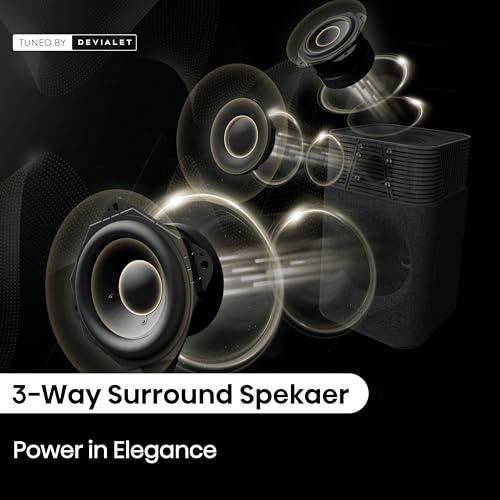
Each satellite speaker is a 3-way design, meaning it has separate drivers optimized for different frequency ranges: dedicated tweeters for crisp highs, full-range drivers for midrange clarity, and additional drivers for smooth bass integration. This level of driver specialization is unusual in wireless home theater systems and contributes significantly to the overall sound quality.
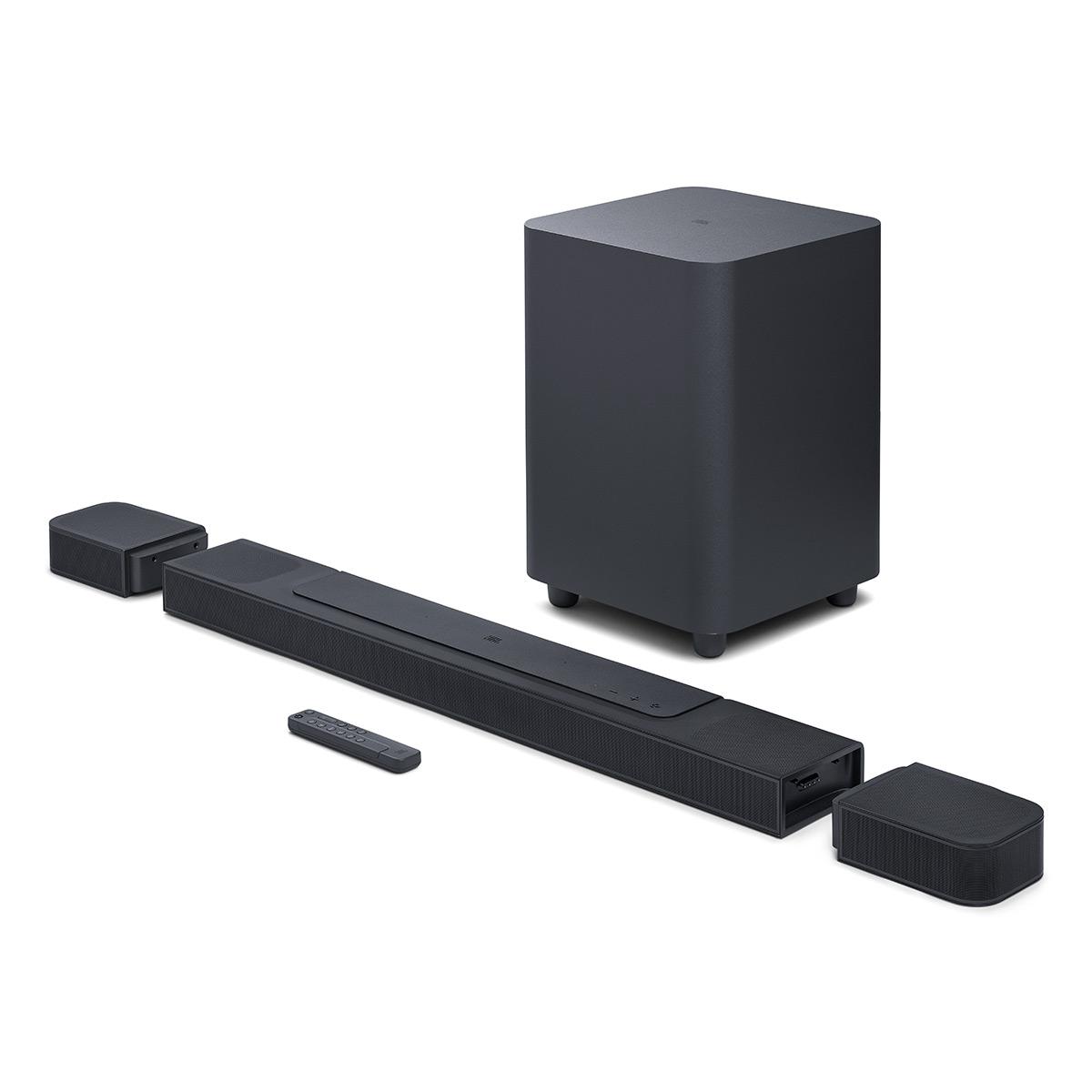
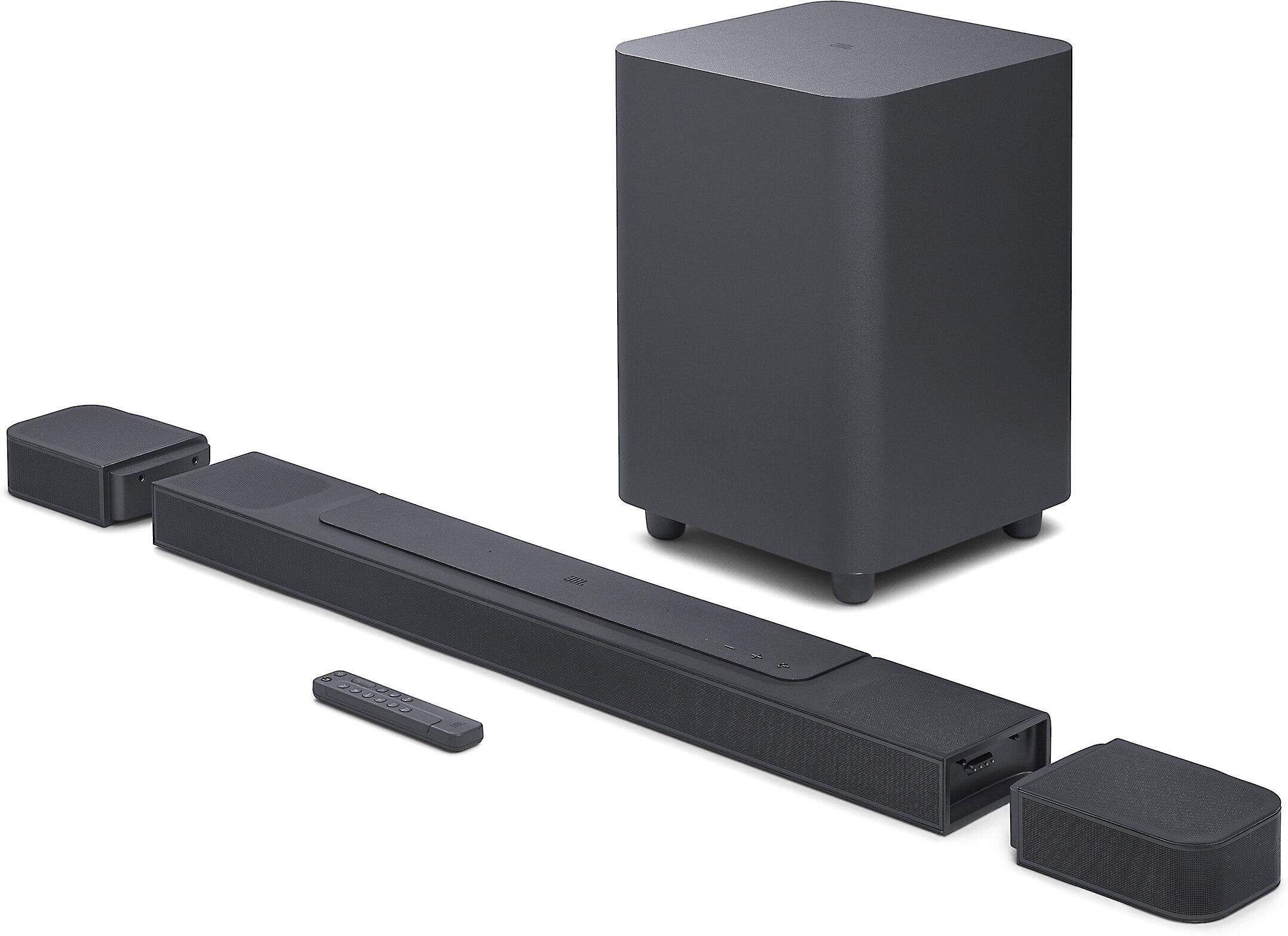
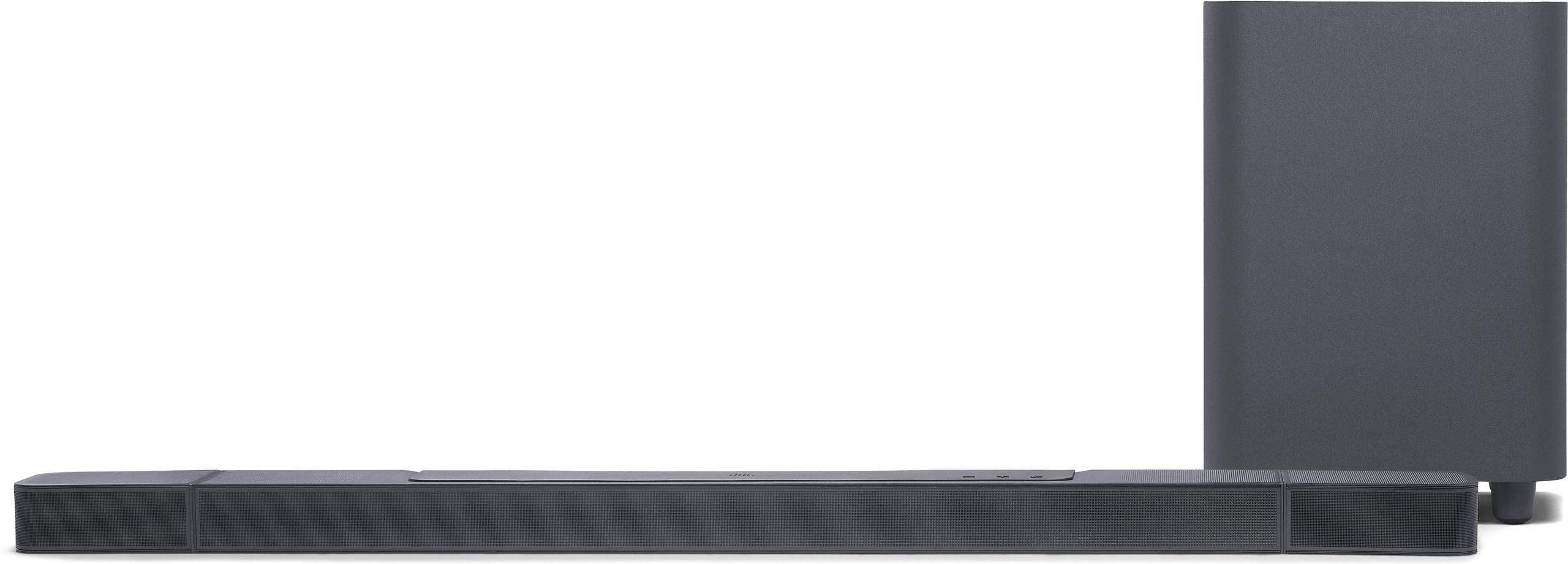
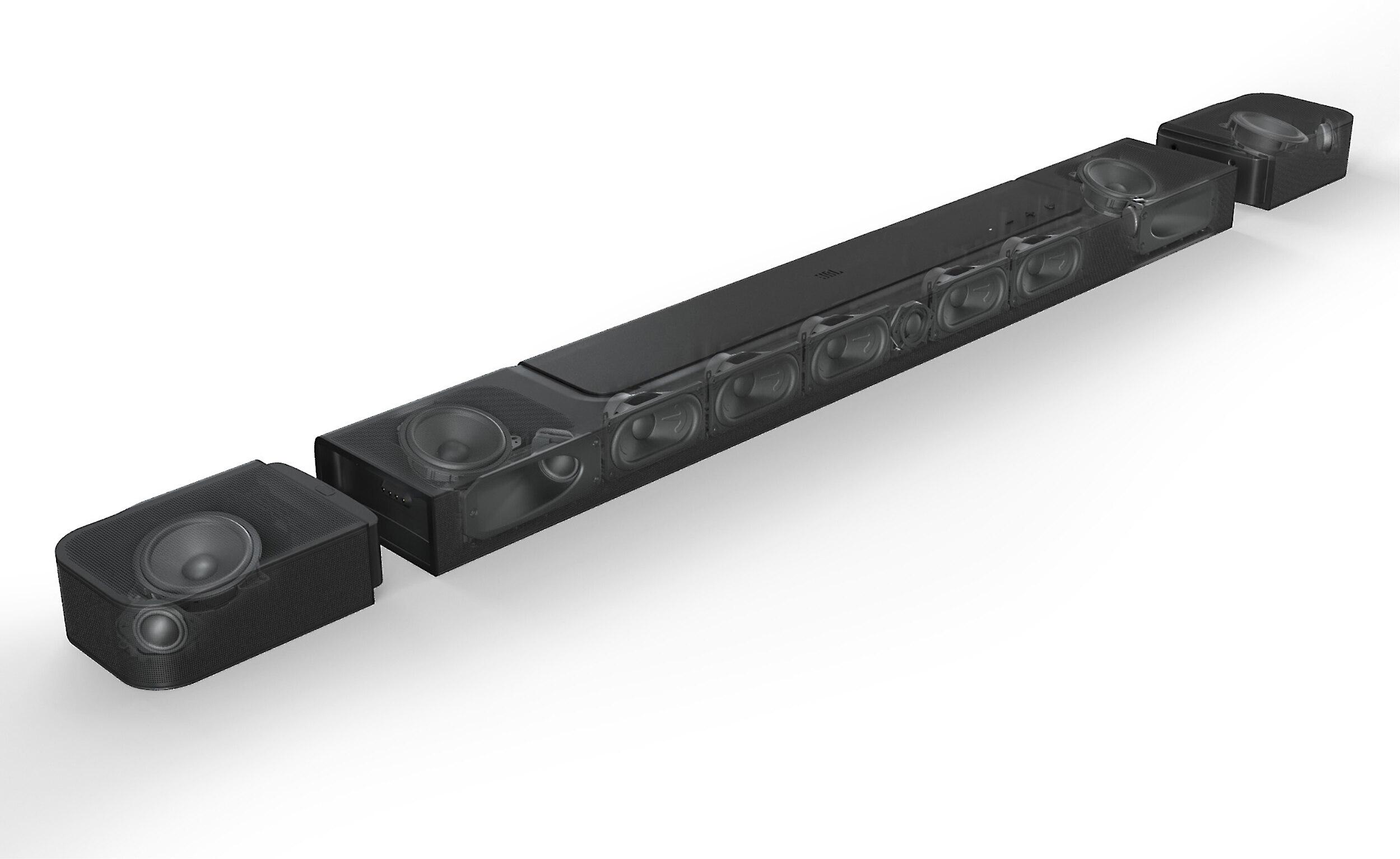
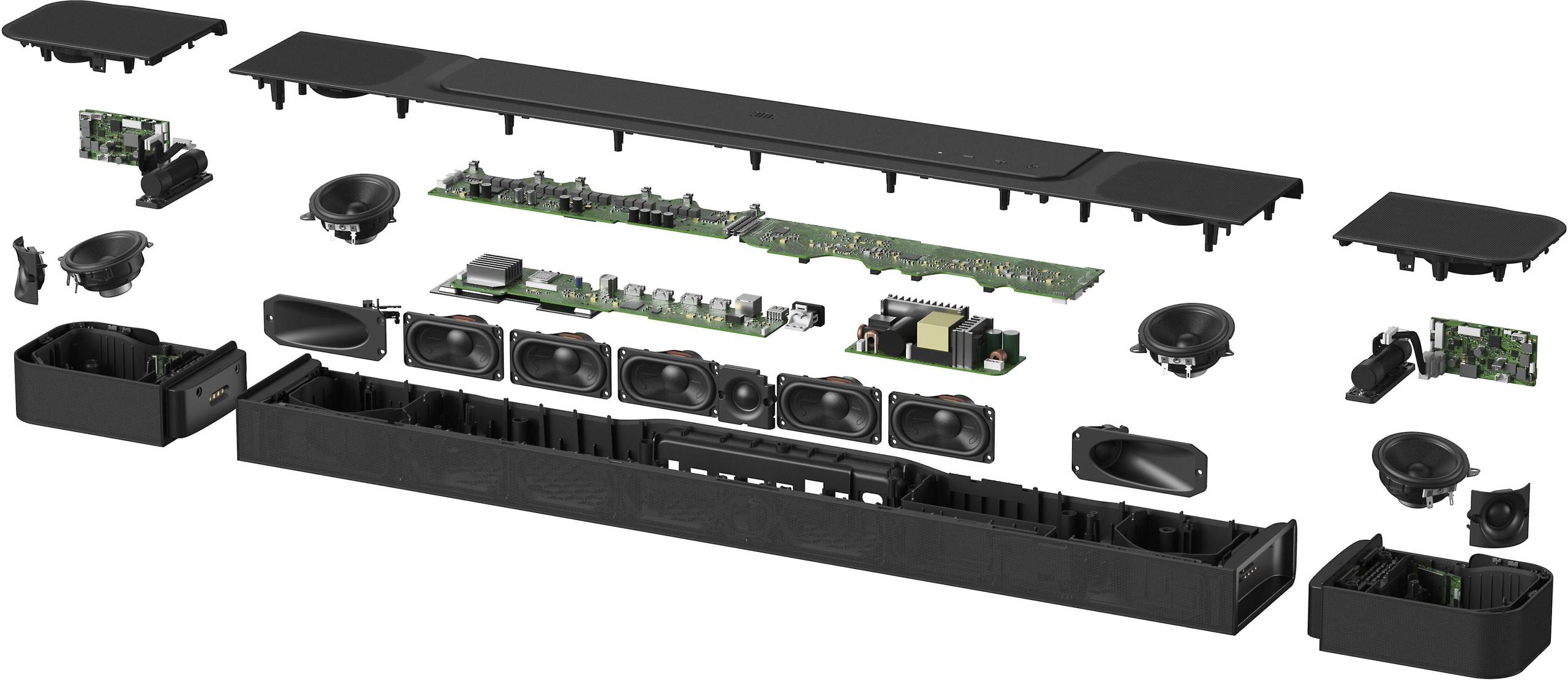
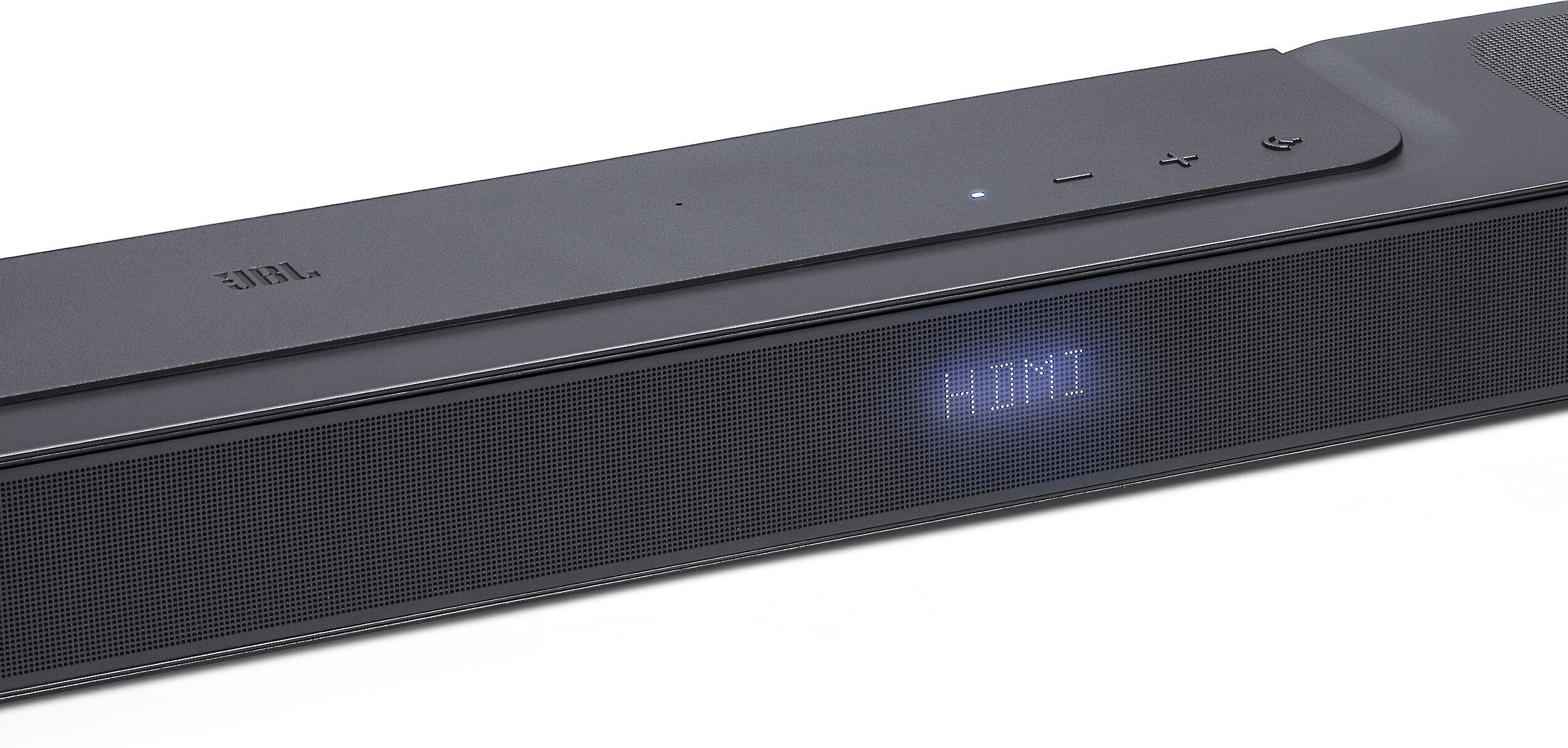
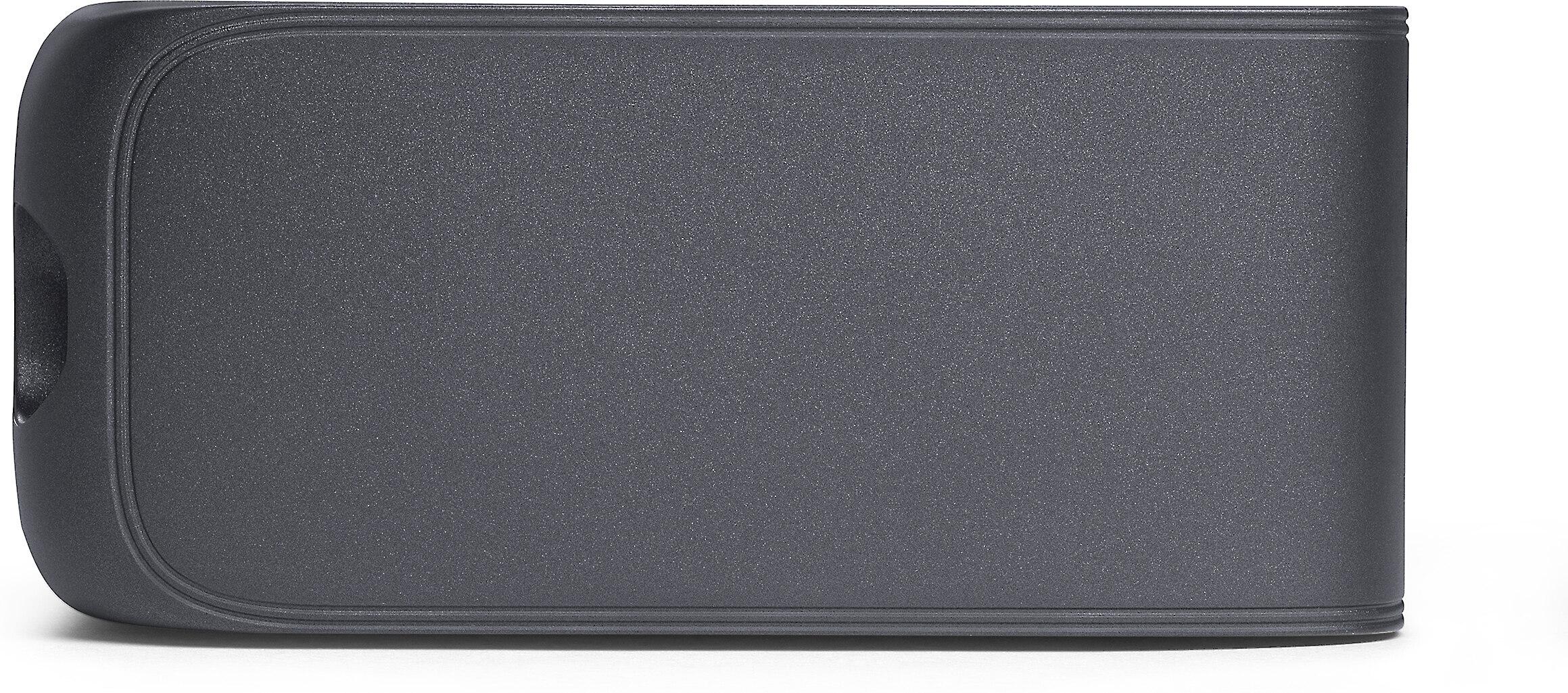
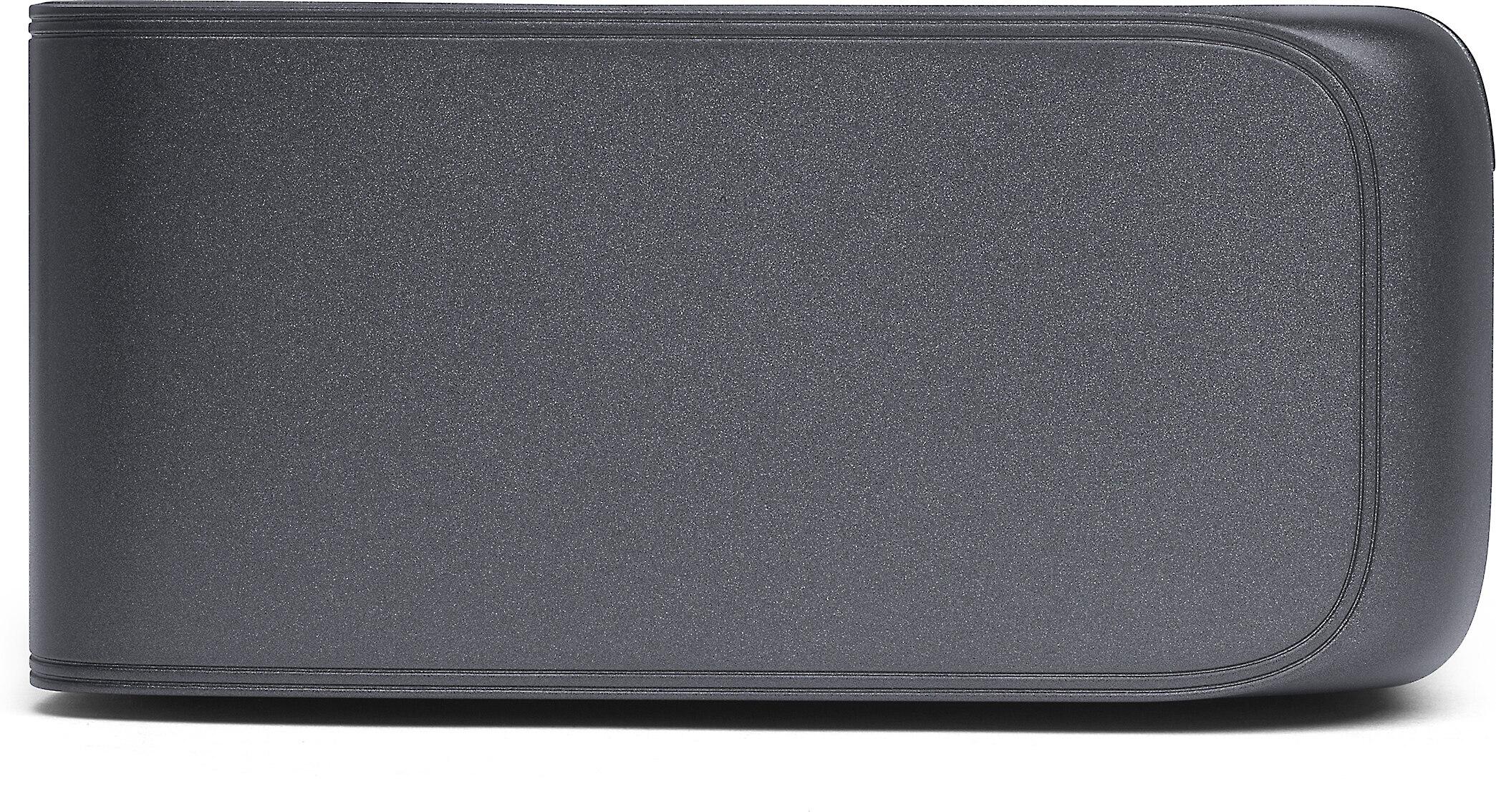
The JBL Bar 1000, also launched recently, takes a more conventional but highly effective approach. You get a traditional soundbar that stays under your TV, but with a clever twist—the rear surround speakers are detachable. When you want the full surround experience, you pop them off the main bar, place them behind your seating area, and they connect wirelessly. When you're done, they dock back onto the main unit to charge.
This 7.1.4 configuration delivers seven main channels, one subwoofer, and four height channels—significantly more audio channels than the Hisense system. The extra channels mean more precise placement of sound effects and a more enveloping surround experience. With 880 watts of total system power and a large 10-inch wireless subwoofer, the JBL Bar 1000 is designed to fill large rooms with authority.
Based on extensive research into user and expert reviews, the Hisense HT Saturn demonstrates a clear advantage in pure audio quality. The Devialet tuning manifests as exceptional tonal balance—voices sound natural, instruments have proper weight and texture, and there's minimal distortion at reasonable listening levels. This matters enormously for both movies and music, as poor tonal balance can make dialogue sound thin or harsh, and cause music to feel lifeless.
However, reviews consistently note that the HT Saturn has limitations at high volumes. Above about 65% of maximum volume, distortion becomes noticeable, particularly in the 7-8 kHz frequency range where many important vocal and instrumental details live. For most living room use, this isn't a problem, but it does limit the system's ability to deliver reference-level playback for large rooms or serious movie nights.
The JBL Bar 1000, by contrast, handles high volumes much better thanks to its higher power output and larger drivers. While it may not match the Hisense system's tonal refinement at moderate levels, it maintains composure when pushed hard, making it better suited for larger spaces or users who simply like their movies loud.
This is where the fundamental architectural differences become crucial. The JBL Bar 1000's 7.1.4 configuration provides dedicated channels for rear surround, side surround, front channels, center channel, and four height channels. This means when a helicopter flies around you in a movie, the system can place that sound precisely in space using discrete speakers positioned throughout the room.
The Hisense HT Saturn uses a 4.1.2 setup, which means it lacks dedicated side channels and center channel. Instead, it creates a phantom center channel by carefully balancing audio between the front speakers—and surprisingly, reviews suggest this works remarkably well. Dialogue appears to come from the center of your TV screen even without a physical center speaker, which is impressive engineering.
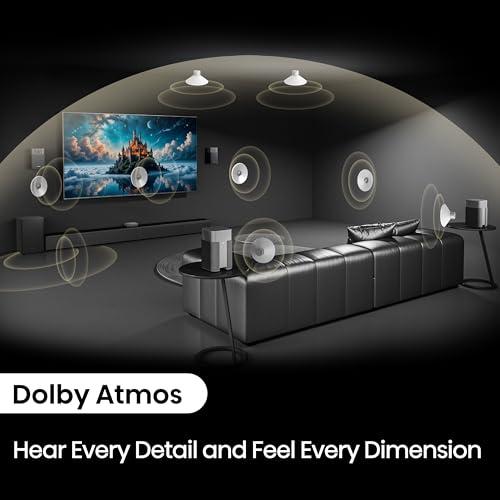
However, the HT Saturn is more limited in its surround effects. The height channels only operate front-to-back, not side-to-side, which means overhead effects don't move laterally across the ceiling. For Dolby Atmos content like rain scenes or aircraft flyovers, the JBL system provides more convincing 3D positioning.
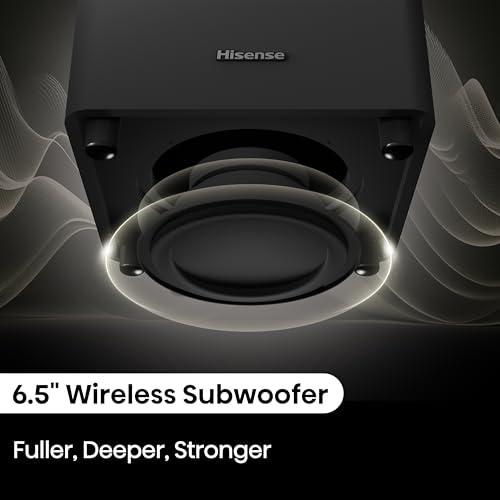
The subwoofer comparison reveals another significant difference. The JBL Bar 1000's 10-inch driver extends down to 33Hz, reaching into true deep bass territory that you feel as much as hear. The Hisense system's 6.5-inch subwoofer stops at 40Hz—still respectable, but missing some of the lowest frequencies that make action movies truly impactful.
This difference is particularly noticeable in larger rooms. The JBL system has both the power and bass extension to pressurize bigger spaces, while the Hisense HT Saturn is optimized for medium-sized rooms where its more refined approach can shine.
Modern home theater systems need to integrate seamlessly with your existing setup, and both systems excel here in different ways. The JBL Bar 1000 includes built-in Wi-Fi with support for AirPlay, Chromecast, and Alexa Multi-Room Music. This means you can stream directly to the system from your phone, use it as part of a multi-room audio setup, or integrate it with voice assistants.
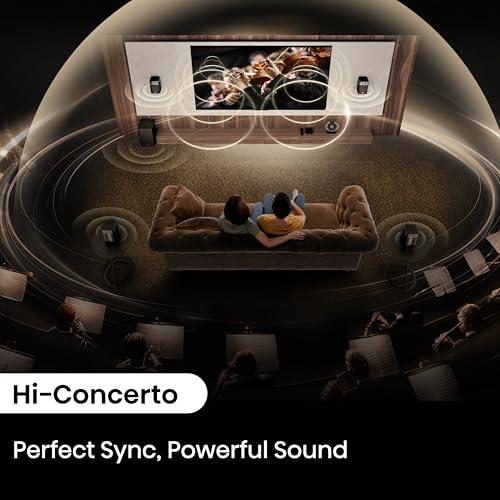
The Hisense HT Saturn takes a different approach, focusing heavily on TV integration rather than standalone streaming. Its Hi-Concerto technology can actually use your Hisense TV's speakers as additional channels, effectively expanding the soundstage by incorporating the TV's drivers into the overall system. This is genuinely innovative—instead of replacing your TV speakers, it enhances them.
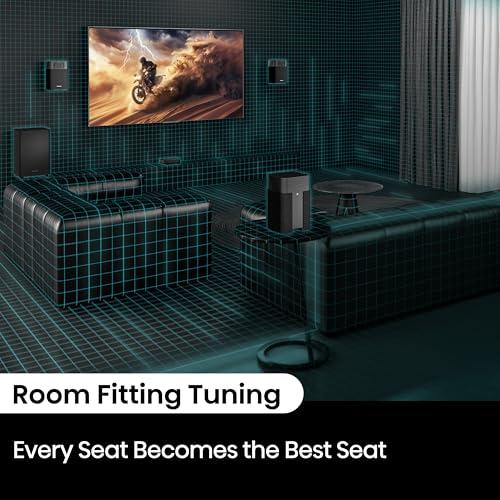
Both systems offer room calibration, but they work differently. The JBL uses automatic calibration through its app, while the Hisense leverages compatible Hisense TVs for Room Fitting Tuning. If you own a Hisense TV, this integration is seamless and comprehensive. If you don't, you lose a significant portion of the system's optimization capabilities.
For movie enthusiasts, the choice between these systems depends largely on your priorities and room size. The JBL Bar 1000 delivers more convincing surround effects and can handle large, complex soundtracks with authority. Action movies benefit enormously from the dedicated center channel, which keeps dialogue clear even during explosive scenes, and the 10-inch subwoofer adds genuine impact to special effects.
The Hisense HT Saturn offers a more refined, audiophile-oriented experience. Dialogue is exceptionally clear thanks to Devialet's tuning, and the overall tonal balance makes movies sound more natural and less artificially enhanced. However, you're trading some surround precision for this refinement.
While both systems are designed primarily for home theater, their music performance differs significantly. The Hisense HT Saturn excels here, with the Devialet tuning providing the kind of tonal accuracy that makes music sound authentic. Jazz recordings sound intimate and detailed, rock music has proper punch without becoming harsh, and classical music maintains its dynamic range and spatial information.
The JBL Bar 1000 is competent for music but clearly optimized for movie soundtracks. Its built-in streaming capabilities make it more convenient for casual music listening, but serious music enthusiasts will likely prefer the Hisense system's more refined approach.
Modern games rely heavily on positional audio to create immersion and provide tactical advantages. The JBL Bar 1000's fuller channel configuration provides more precise positioning of in-game sounds, which can be crucial for competitive gaming. Footsteps, gunfire, and environmental effects are easier to locate in 3D space with dedicated surround channels.
The Hisense HT Saturn still provides good gaming audio, particularly for its exceptional clarity, but the 4.1.2 configuration is inherently more limited for games that rely on precise surround positioning.
At the time of writing, these systems occupy different value propositions in the premium wireless home theater market. The JBL Bar 1000 represents exceptional value for users seeking maximum features and channels at a relatively accessible price point. You're getting true 7.1.4 surround with high-quality components and comprehensive streaming integration.
The Hisense HT Saturn commands a premium for its innovative design and Devialet acoustic engineering. You're essentially paying for boutique-level sound quality in a consumer-friendly wireless package. The question becomes whether that sonic refinement is worth the additional cost over the JBL's more comprehensive channel layout.
Both systems represent the current state-of-the-art in wireless home theater technology as of 2024-2025. The move toward wireless satellite speakers has been enabled by improvements in wireless audio transmission technology, battery life for portable speakers, and more sophisticated audio processing chips that can handle complex surround decoding in compact packages.
The Hisense system's use of dedicated wireless frequencies (rather than Wi-Fi or Bluetooth) for speaker connections represents a significant advancement in reducing latency and maintaining synchronization across multiple channels. Similarly, the JBL system's integration of charging docks for detachable speakers solves the practical problem of keeping wireless rear speakers powered without permanent wall connections.
The choice between these systems ultimately comes down to your priorities, room size, and existing equipment.
Choose the Hisense HT Saturn if:
Choose the JBL Bar 1000 if:
From a pure performance standpoint, neither system is definitively "better"—they excel in different areas. The JBL Bar 1000 delivers more comprehensive surround sound and room-filling power, while the Hisense HT Saturn offers superior tonal quality and innovative integration features.
For most users setting up a serious home theater, the JBL Bar 1000's combination of true 7.1.4 processing, powerful subwoofer, and competitive pricing makes it the more practical choice. However, if you're an audio enthusiast who values refinement over raw capability, and particularly if you're already in the Hisense ecosystem, the HT Saturn offers a uniquely sophisticated approach to wireless home theater that's genuinely different from everything else on the market.
Both systems represent significant advances over traditional soundbars and first-generation wireless systems, proving that you no longer need to choose between convenience and performance in home audio. The future of home theater is clearly wireless, and both of these systems point the way forward—just down slightly different paths.
| Hisense HT Saturn | JBL Bar 1000 |
|---|---|
| Channel Configuration - Determines surround sound immersion and positioning accuracy | |
| 4.1.2 channels (4 satellites + subwoofer + 2 height) | 7.1.4 channels (full surround + dedicated center + 4 height) |
| Speaker Architecture - Affects sound quality and placement flexibility | |
| Four identical wireless satellite speakers with 3-way design | Traditional soundbar with detachable battery-powered rear speakers |
| Total Speaker Count - More drivers typically means better frequency separation | |
| 13 speakers (8 full-range + 4 tweeters + 1 subwoofer) | Multiple drivers across bar and detachable speakers |
| Audio Tuning - Critical for tonal accuracy and overall sound quality | |
| Tuned by Devialet for "opera-grade" acoustic performance | JBL's MultiBeam technology with PureVoice dialogue enhancement |
| Subwoofer Size - Directly impacts bass depth and room-filling capability | |
| 6.5" wireless subwoofer (40Hz low frequency) | 10" wireless subwoofer (33Hz low frequency) |
| Total System Power - Affects maximum volume and dynamic range | |
| Estimated 180W RMS (best at moderate volumes) | 880W total system power (handles high volumes well) |
| Wireless Technology - Determines connection reliability and range | |
| Dedicated 5GHz frequencies for satellite connections | Tri-band wireless (2.4G/5.2G/5.8G) plus Bluetooth 5.3 |
| Smart Features - Impacts ease of use and streaming capabilities | |
| Hi-Concerto TV integration, Room Fitting Tuning via Hisense TV | Built-in Wi-Fi, AirPlay, Chromecast, Alexa Multi-Room Music |
| HDMI Connectivity - Essential for modern TV and gaming device compatibility | |
| HDMI eARC with 4K@60Hz pass-through, 1 input | HDMI eARC with 4K Dolby Vision pass-through, 3 inputs |
| Room Optimization - Helps adapt sound to your specific space | |
| Room Fitting Tuning (requires compatible Hisense TV) | Automatic room calibration via JBL One app |
| Physical Design - Affects living room aesthetics and placement options | |
| Compact distributed satellites (4.8" x 7.8" x 4.8" each) | Traditional soundbar with docking rear speakers |
| Best Use Case - Who should choose each system | |
| Audio enthusiasts with Hisense TVs wanting refined sound quality | Large rooms needing maximum surround channels and streaming features |
The JBL Bar 1000 offers superior surround sound with its 7.1.4 channel configuration, providing dedicated rear, side, and height channels for more precise audio positioning. The Hisense HT Saturn uses a 4.1.2 setup that creates good surround effects but lacks the comprehensive channel separation of the JBL system.
The Hisense HT Saturn uses four identical wireless satellite speakers that you position around your room, creating a distributed audio system. The JBL Bar 1000 features a traditional soundbar design with detachable rear speakers that can be removed and placed behind your seating area when needed.
The JBL Bar 1000 is better suited for large rooms due to its 880W total power output and 10-inch subwoofer that can fill bigger spaces with authority. The Hisense HT Saturn is optimized for medium-sized rooms with its 6.5-inch subwoofer and more refined acoustic approach.
Yes, both the Hisense HT Saturn and JBL Bar 1000 support Dolby Atmos and DTS:X for immersive 3D audio. However, the JBL system offers more comprehensive height channel coverage with four up-firing drivers compared to the Hisense system's two height channels.
The JBL Bar 1000 delivers deeper, more powerful bass with its 10-inch wireless subwoofer that reaches down to 33Hz. The Hisense HT Saturn has a 6.5-inch subwoofer with a 40Hz low-frequency response, which is adequate for most rooms but less impactful than the JBL's bass output.
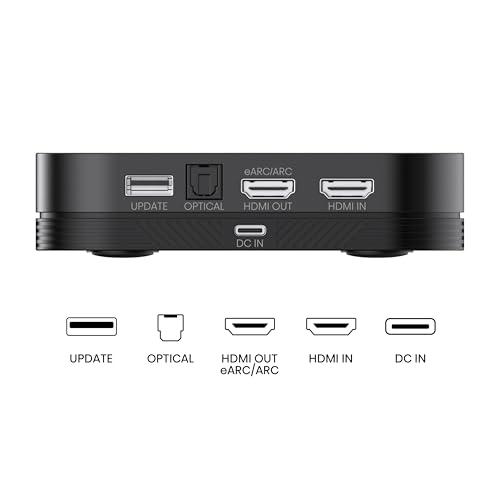
The JBL Bar 1000 works with any TV brand and offers universal compatibility through HDMI eARC and optical connections. The Hisense HT Saturn also works with any TV but provides enhanced integration features like Hi-Concerto and Room Fitting Tuning when paired with compatible Hisense TVs.
Both systems offer relatively easy wireless setup, but the JBL Bar 1000 may be simpler since it maintains a traditional soundbar form factor. The Hisense HT Saturn requires positioning four separate satellite speakers around your room, which takes more planning but offers greater placement flexibility.
The JBL Bar 1000 excels in streaming with built-in Wi-Fi, AirPlay, Chromecast, and Alexa Multi-Room Music support. The Hisense HT Saturn offers Bluetooth 5.3 connectivity but focuses more on TV integration rather than standalone streaming capabilities.
The Hisense HT Saturn provides superior audio quality for music thanks to its Devialet tuning, which delivers exceptional tonal balance and accuracy. While the JBL Bar 1000 handles music well, it's primarily optimized for movie soundtracks and home theater use.
The JBL Bar 1000 offers three HDMI inputs plus eARC output, making it a better hub for multiple devices like game consoles and Blu-ray players. The Hisense HT Saturn provides one HDMI input and one eARC output, focusing on direct TV connection rather than serving as a switching hub.
The JBL Bar 1000 typically offers better value with its 7.1.4 channel configuration, comprehensive features, and competitive pricing. The Hisense HT Saturn commands a premium for its Devialet acoustic engineering and innovative wireless design, appealing to audio enthusiasts willing to pay more for refined sound quality.
Yes, both systems feature wireless rear speakers, but they work differently. The JBL Bar 1000's rear speakers are battery-powered and detach from the main unit for flexible placement. The Hisense HT Saturn's satellite speakers are permanently wireless and require individual power connections at each location.
We've done our best to create useful and informative comparisons to help you decide what product to buy. Our research uses advanced automated methods to create this comparison and perfection is not possible - please contact us for corrections or questions. These are the sites we've researched in the creation of this article: bestbuy.com - youtube.com - blog.son-video.com - youtube.com - youtube.com - techradar.com - ecoustics.com - jbhifi.com.au - shop.hisense-usa.com - bhphotovideo.com - bestbuy.com - digitalreviews.net - hisense-usa.com - projectorscreenstore.com - valueelectronics.com - dolby.com - giftpack.ai - zdnet.com - jbl.com - jbl.com - pcrichard.com - rtings.com - d21buns5ku92am.cloudfront.net - ro.harmanaudio.com - target.com - harmanaudio.com - dell.com - mm.jbl.com - dolby.com - jbl.com.my - videoandaudiocenter.com

Privacy Policy
Terms and Conditions - Affiliate Policy
Home Security
© Copyright 2008-2026.
11816 Inwood Rd #1211, Dallas, TX 75244