



The home theater audio landscape changed dramatically around 2020 when manufacturers realized that people wanted cinema-quality sound without the complexity of traditional AV receivers and wired speakers everywhere. Hisense entered this space with two very different approaches: the traditional channel-heavy AX5140Q and the innovative distributed HT Saturn. Both aim to deliver that coveted "theater at home" experience, but they take completely different paths to get there.
Before diving into these specific models, it's worth understanding what we're dealing with. These aren't your basic soundbars that just make TV dialogue a bit clearer. Both the AX5140Q and HT Saturn are wireless home theater systems—think of them as complete surround sound setups that happen to connect wirelessly instead of requiring you to run speaker cables around your room.
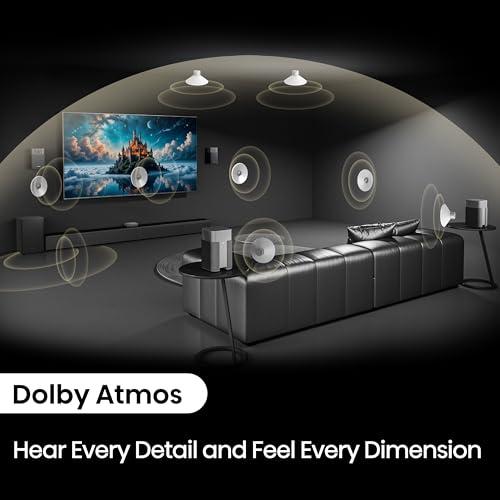
The key innovation here is spatial audio processing—technology that can place sounds not just to your left and right, but also behind you and above you. When a helicopter flies overhead in a movie, these systems can make it sound like it's actually moving across your ceiling. This is achieved through formats like Dolby Atmos and DTS:X, which are essentially instruction sets that tell each speaker exactly what to play and when.
At the time of writing, the AX5140Q represents excellent value in the mid-range segment, while the HT Saturn commands a premium price that reflects its more sophisticated engineering approach. The price difference is significant—roughly three times as much for the Saturn—which makes the decision more complex than just "which sounds better."
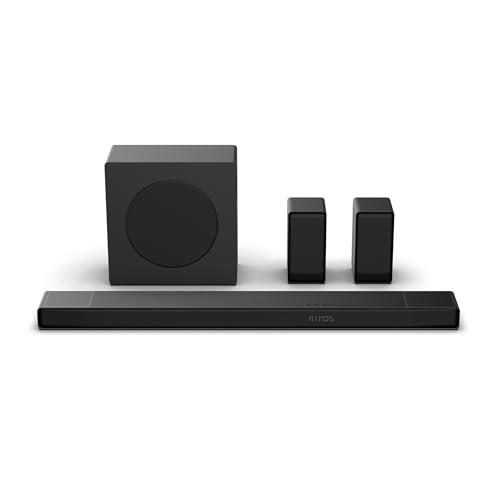
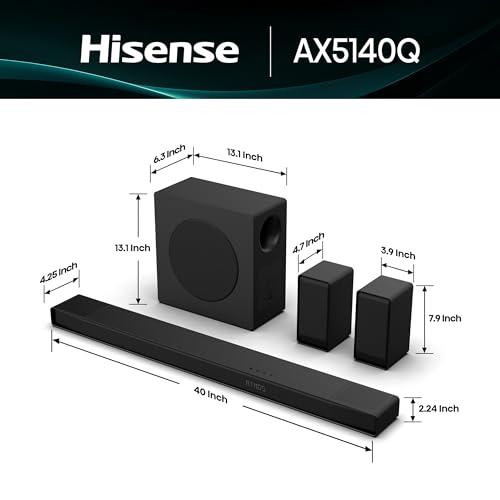
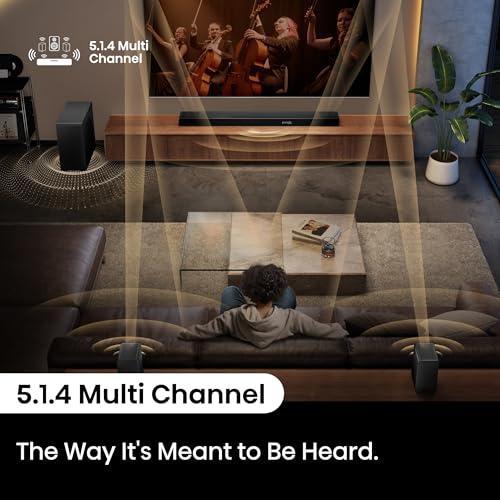
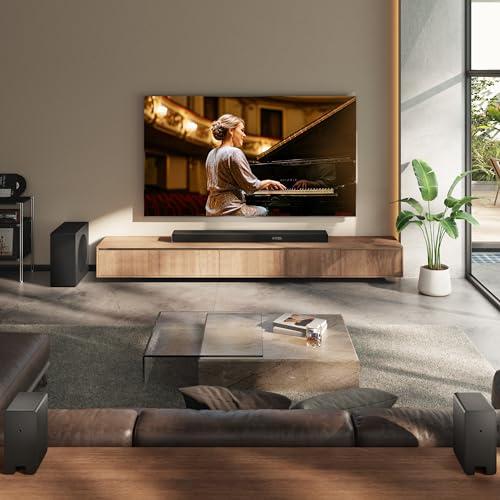
The AX5140Q, released in 2024, takes what I'd call the "brute force" approach to immersion. It's a 5.1.4 channel system, which breaks down as: five main speakers (left, center, right, and two surrounds), one subwoofer for bass, and four height speakers that bounce sound off your ceiling to create overhead effects.
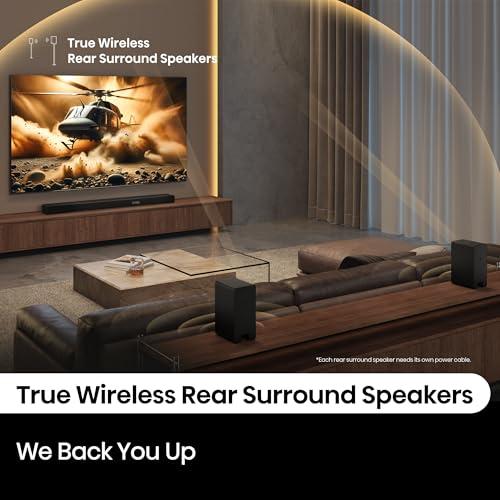
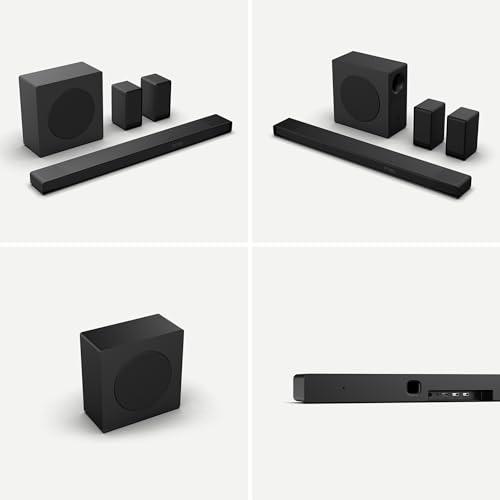
This system consists of a traditional soundbar that sits under your TV, two wireless rear speakers that you place behind your seating area, and a wireless subwoofer that handles all the low-frequency rumble. What makes it special is that both the main soundbar and the rear speakers have up-firing drivers—speakers that point toward the ceiling to create height effects.
The engineering here is relatively straightforward but effective. Each component has a specific job: the soundbar handles front-stage audio and dialogue, the rear speakers create surround effects and contribute to the height bubble, and the subwoofer adds the bass impact that makes explosions feel real. With 600 watts of total power spread across all these drivers, the AX5140Q can fill larger rooms with convincing surround sound.
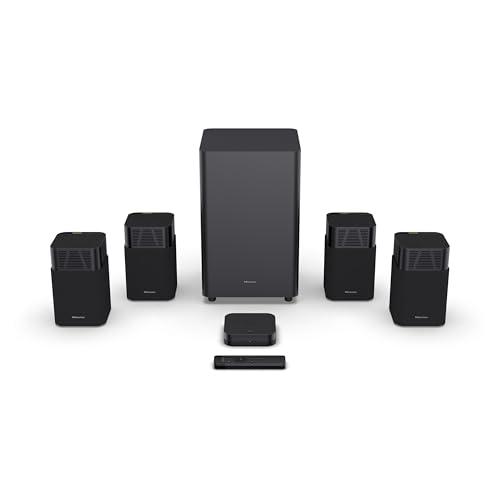
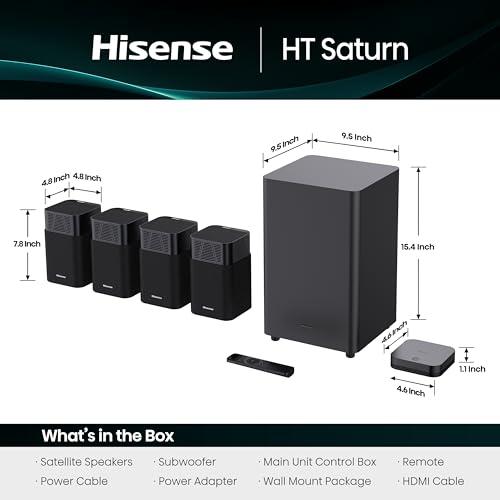
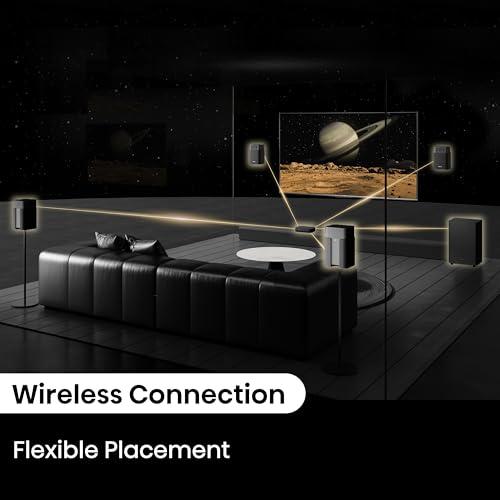
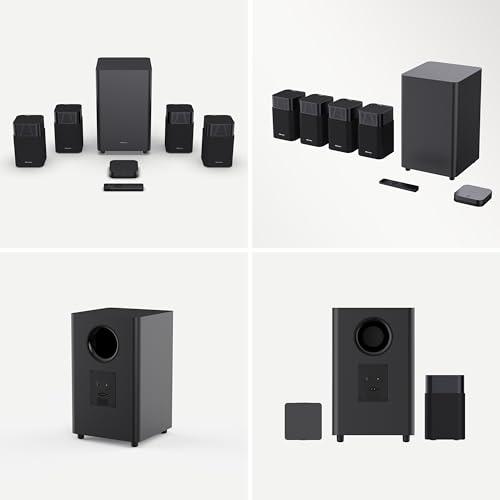
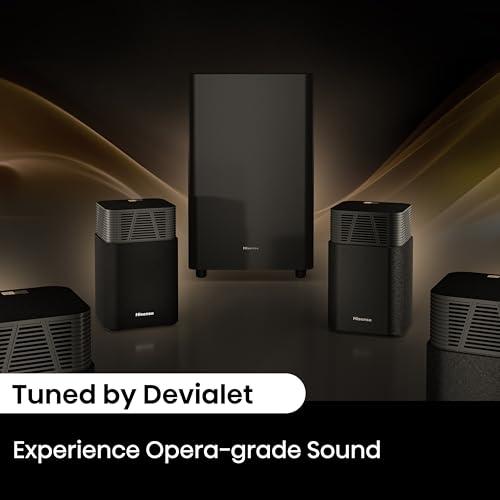
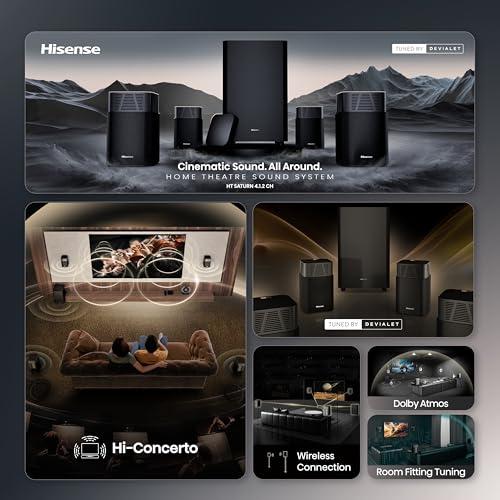
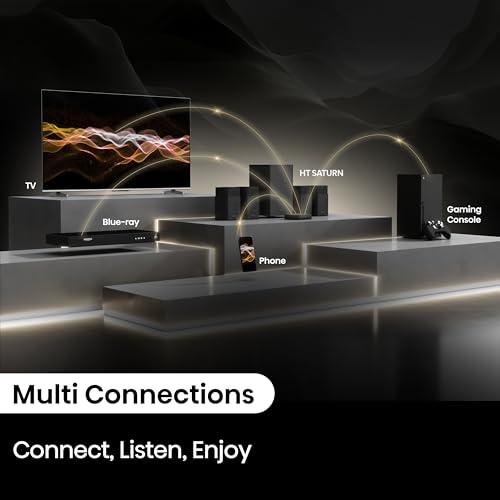
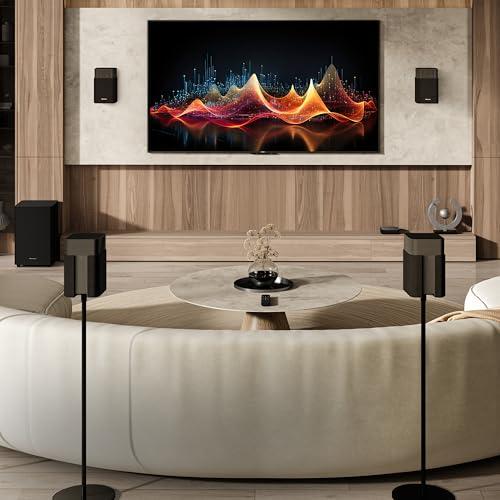
The HT Saturn, launched in 2025, represents a fundamentally different approach. Instead of a soundbar, it uses four compact satellite speakers placed around your room, plus a wireless subwoofer and a small control hub. This 4.1.2 channel configuration might seem like fewer channels than the AX5140Q, but the magic is in the execution.
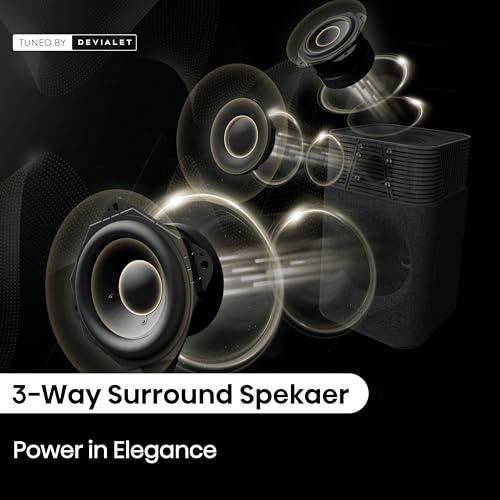
Each satellite speaker is a 3-way design, meaning it has separate drivers optimized for different frequency ranges—a woofer for bass, a midrange driver for voices, and a tweeter for crisp high frequencies. This is the same approach used in high-end bookshelf speakers, and it allows each satellite to reproduce a fuller, more natural sound than the simpler drivers typically found in soundbar systems.
The real differentiator is the Devialet tuning. Devialet is a French audio company known for extremely high-end speakers that cost as much as a car. Their engineers spent considerable time optimizing the HT Saturn's crossover points (where one driver hands off to another), timing alignment, and frequency response. The result is what Devialet calls "opera-grade" sound quality—a level of refinement typically found only in much more expensive systems.
This is where the fundamental differences become clear. The AX5140Q creates immersion through sheer channel count. With four height speakers creating overhead effects, sounds like rain, aircraft, or ambient crowd noise genuinely appear to come from above and around you. During action sequences, the effect can be genuinely startling—bullets whizzing past your head, explosions that seem to happen in your room.
The HT Saturn takes a more sophisticated approach. Even though it has fewer dedicated height channels, the distributed placement of its 13 total drivers creates what audio engineers call a more coherent soundstage. Instead of obvious point sources of sound, you get a more natural bubble of audio where individual speakers disappear and you're just immersed in the scene.
From our research into user experiences, the AX5140Q tends to wow people initially with its obvious surround effects, while the HT Saturn impresses with its naturalness and refinement. If you're watching Top Gun: Maverick, the AX5140Q will make those jets scream overhead with dramatic impact. The Saturn will make the entire cockpit feel more real and present.
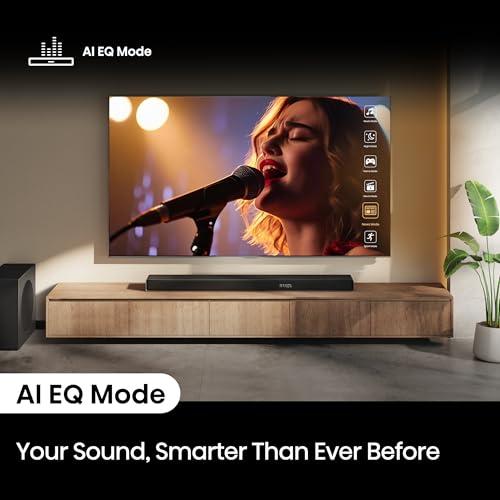
Here's something that trips up many home theater systems: making voices sound natural and clear. The AX5140Q uses a traditional approach with a dedicated center channel in its soundbar. This works well—voices stay locked to the screen, and the system's AI EQ mode can automatically boost dialogue frequencies when it detects speech-heavy content.
The HT Saturn does something much more challenging: it creates a phantom center channel. Instead of one speaker handling dialogue, the left and right front satellites work together, using precise timing and level matching to make voices appear to come from between them. When done right (and Devialet's tuning gets it right), this can actually sound more natural than a physical center speaker because it eliminates the subtle tonal differences that occur when voices move between different drivers.
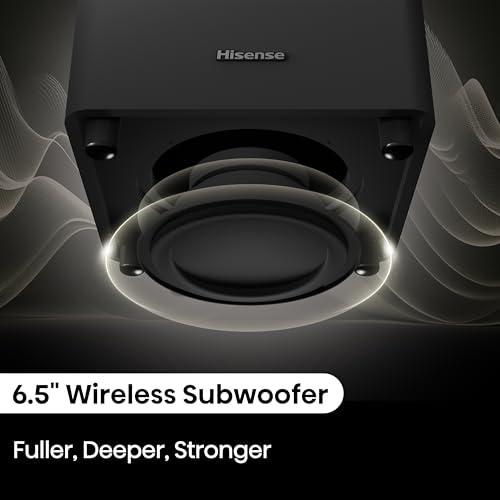
Both systems use 6.5-inch wireless subwoofers, but their integration approaches differ significantly. The AX5140Q uses more conventional bass management—the subwoofer handles everything below a certain frequency (typically around 80Hz), while the main speakers handle everything above that point.
The HT Saturn's Devialet tuning includes more sophisticated crossover optimization. The transition between the subwoofer and satellite speakers is seamless, with no obvious point where you can tell one stops and the other begins. This creates a more cohesive sound where bass effects feel integrated into the overall mix rather than coming from a separate box.
In practical terms, both systems deliver satisfying bass for movie effects and music. The difference is in refinement—the AX5140Q gives you plenty of impact, while the HT Saturn gives you that impact with better integration and control.
Creating convincing overhead sound without ceiling speakers is one of the hardest things to get right in home audio. Both systems use up-firing drivers that bounce sound off your ceiling, but they implement this differently.
The AX5140Q places up-firing speakers in both the soundbar and rear speakers, creating four discrete height channels. This gives it more control over where overhead sounds appear to come from. In Dolby Atmos demos with helicopters or rain effects, you get clear localization of sounds moving across the ceiling.
The HT Saturn uses just two height channels but positions them as part of its distributed satellite array. The advantage here is that the height effects integrate better with the overall soundscape—instead of obvious "ceiling speakers," you get a more natural dome of sound.
The effectiveness of height channels depends heavily on your room. Flat ceilings around 8-9 feet work best. Vaulted or textured ceilings can scatter the reflections, reducing the effect. From user feedback we've analyzed, the AX5140Q tends to work in a wider variety of rooms due to its four-channel approach, while the HT Saturn can sound more impressive in acoustically favorable spaces.
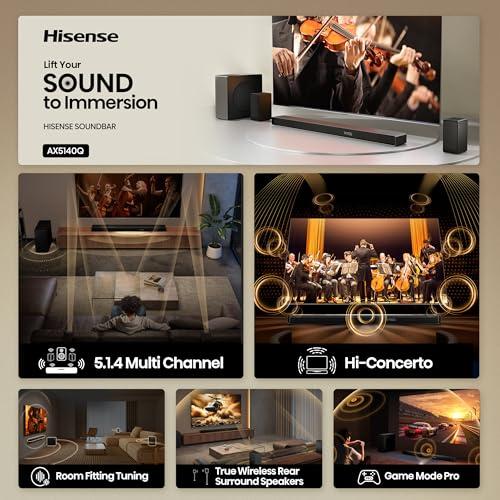
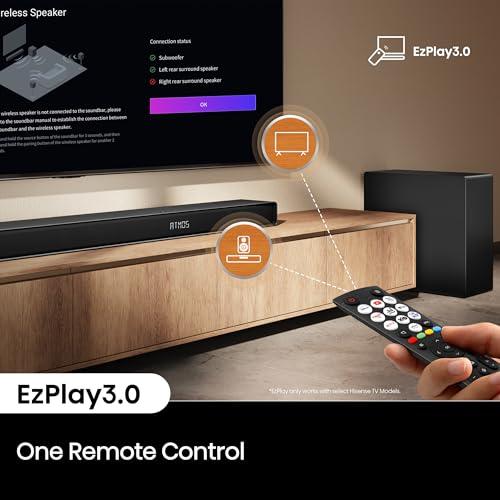
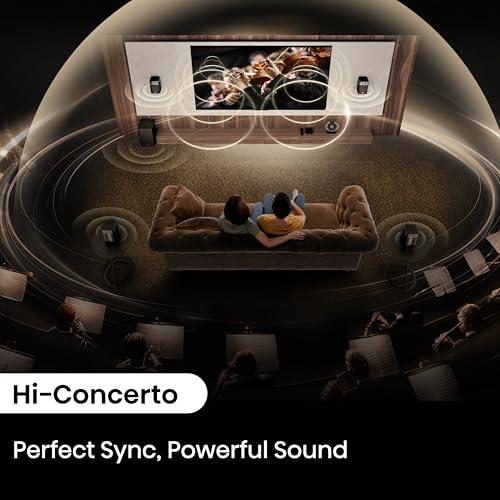
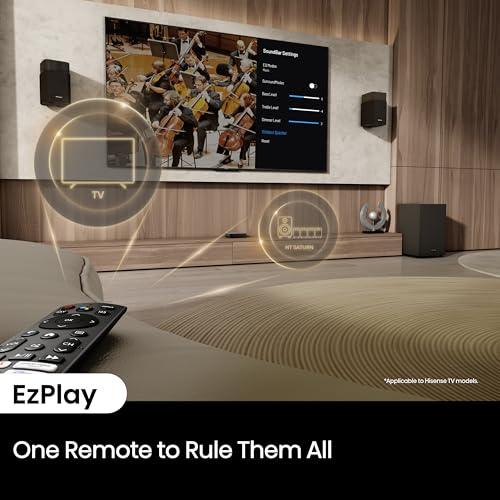
Both systems include Hisense's smart integration technologies, but with different strengths. Hi-Concerto lets compatible Hisense TVs work with either soundbar system to create an expanded audio array—essentially using the TV's built-in speakers as additional channels. EzPlay allows control through the TV's remote and on-screen menus.
The AX5140Q supports these features but has some documented compatibility issues with certain TV models, where audio sync problems can create echo effects. The HT Saturn, being newer, seems to have fewer of these issues, though its compatibility list is still expanding.
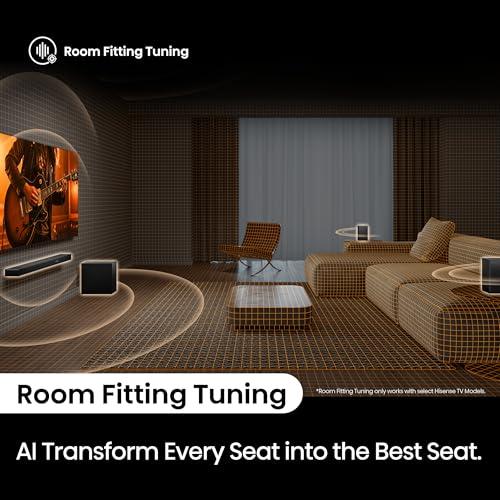
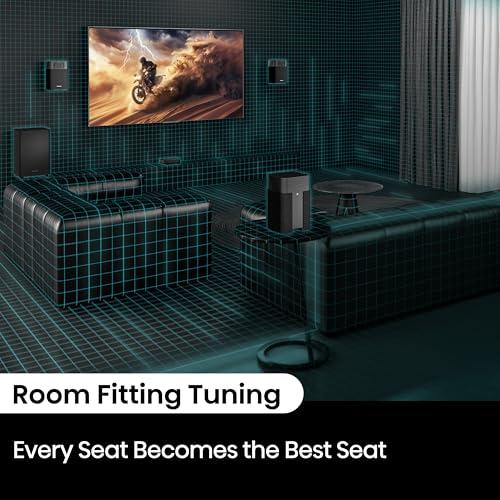
Both systems include room calibration features when paired with compatible TVs. This automatically adjusts speaker levels, timing, and EQ to optimize performance for your specific room. It's not as sophisticated as the room correction found in high-end AV receivers, but it's much easier to use and provides meaningful improvements in most rooms.
With gaming becoming increasingly cinematic, both systems include gaming-optimized modes. The AX5140Q has a dedicated Game Pro mode that emphasizes positional cues and reduces input lag. For competitive gaming, this can make footsteps more obvious and help you track enemy movements.
The HT Saturn's distributed speaker layout provides naturally better positional accuracy. Even without specific gaming modes, the spatial separation between its satellites makes directional audio more precise. This is particularly noticeable in open-world games where environmental audio creates atmosphere.
Both systems support 4K 60Hz passthrough, which covers most current gaming scenarios. Neither supports the 120Hz gaming that newer consoles can deliver, but you can work around this by connecting consoles directly to your TV and using eARC for audio.
The AX5140Q follows a familiar setup pattern: soundbar under the TV, subwoofer somewhere in the room, and rear speakers behind your seating. The wireless connectivity works reliably, and most users report having the system running within 30 minutes of unboxing.
The HT Saturn requires more thought during setup. You need to position four satellites around your room, which means finding appropriate surfaces or using the included wall mounts. The payoff is flexibility—you can optimize speaker placement for your specific room layout. Setup takes longer (typically 45 minutes to an hour), but the results can be more tailored to your space.
Both systems use advanced wireless protocols to maintain synchronization between all speakers. The HT Saturn uses tri-band wireless (2.4, 5.2, and 5.8 GHz) for better interference resistance in crowded wireless environments.
At the time of writing, the AX5140Q represents exceptional value in the wireless home theater category. You get true 5.1.4 channel processing, comprehensive connectivity, and convincing immersion at a price point that undercuts many 3.1.2 channel competitors. It's the system I'd recommend for most people who want to upgrade from basic TV audio to something genuinely cinematic.
The HT Saturn commands a significant premium—roughly three times the cost—for its Devialet tuning and distributed design. This pricing puts it in direct competition with high-end soundbars from Samsung and Sonos, where it needs to justify its cost through superior sound quality rather than features or channel count.
The AX5140Q makes sense for most home theater enthusiasts. If you want maximum immersion for your investment, have a medium to large room, and appreciate the dramatic impact of overhead effects, it's hard to beat. It's particularly good for action movies, gaming, and situations where you want audio that grabs your attention and doesn't let go.
The HT Saturn appeals to a more specific audience. If you prioritize sound quality refinement over raw impact, have a smaller to medium room where distributed speakers work well, and can appreciate subtle improvements in tonal balance and soundstage coherence, the premium pricing becomes justifiable. It's the system for people who notice when violins sound more natural or when dialogue has that extra bit of presence and clarity.
For dedicated home theaters with controlled lighting and acoustics, I lean toward the HT Saturn for its superior engineering and more natural sound reproduction. For living room installations where the system needs to handle everything from quiet dialogue to explosive action scenes, the AX5140Q offers more versatility and dramatic impact.
Both systems succeed at their intended goals, but they're aiming at different targets. The AX5140Q maximizes immersion and impact through channel count and power, delivering genuine theater-like experiences at an accessible price point. The HT Saturn prioritizes acoustic refinement and natural sound reproduction, justified by professional tuning and premium engineering.
For most people upgrading from TV speakers or basic soundbars, the AX5140Q provides more noticeable improvement and better value. For audio enthusiasts willing to invest in subtler but meaningful improvements in sound quality, the HT Saturn offers something genuinely special in the wireless home theater category.
The choice ultimately comes down to your priorities: maximum impact and value, or premium refinement and engineering excellence. Both represent the current state of the art in wireless home theater, just from very different philosophical approaches.
| Hisense AX5140Q 5.1.4Ch Dolby Atmos Sound Bar | Hisense HT Saturn HTSATURN 4.1.2Ch System |
|---|---|
| Channel Configuration - Determines immersion level and spatial accuracy | |
| 5.1.4 channels (more overhead effects) | 4.1.2 channels (fewer channels, better speaker quality) |
| Speaker Architecture - Affects sound quality and placement flexibility | |
| Traditional soundbar + wireless rears + subwoofer | Four distributed satellites + wireless subwoofer + control hub |
| Total Speaker Count - More drivers can mean better sound separation | |
| 12 drivers across 3 main components | 13 drivers across 6 components |
| Power Output - Determines maximum volume and dynamic range | |
| 600W total system power | Premium tier (power not specified, focus on quality over quantity) |
| Audio Tuning - Professional tuning can significantly improve sound quality | |
| Hisense AI EQ and room calibration | Devialet professional acoustic tuning |
| Height Channel Implementation - Critical for Dolby Atmos effectiveness | |
| 4 up-firing drivers (soundbar + both rear speakers) | 2 up-firing drivers (integrated in satellite array) |
| Subwoofer Specifications - Determines bass depth and impact | |
| 6.5" wireless subwoofer, 40Hz-20kHz response | 6.5" wireless subwoofer with Devialet crossover tuning |
| Connectivity Options - More inputs provide greater flexibility | |
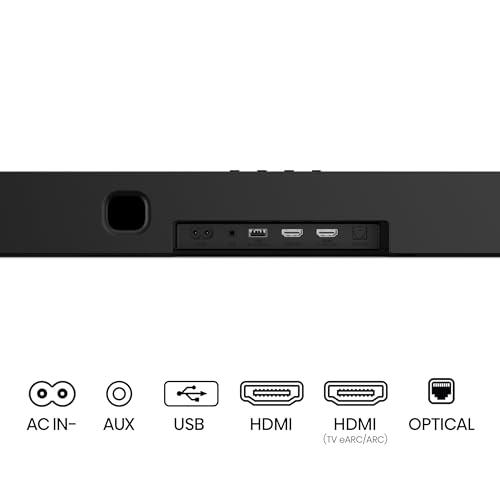
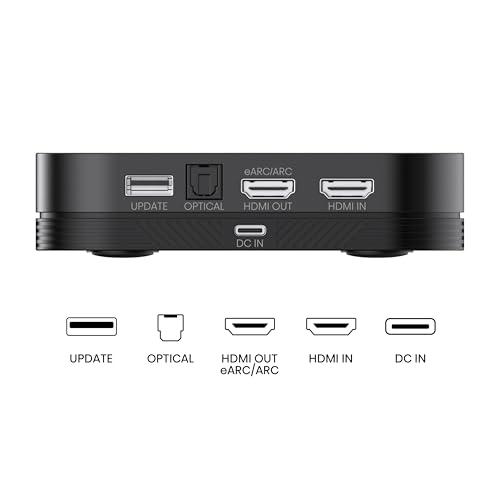
| HDMI eARC, HDMI input, Optical, AUX, USB music, Bluetooth 5.3 | HDMI eARC, HDMI input, Optical, Bluetooth 5.3 (no AUX or USB music) |
| Smart TV Integration - Simplifies control and setup with compatible TVs | |
| Hi-Concerto, EzPlay 3.0, Room Fitting (some sync issues reported) | Hi-Concerto, EzPlay, Room Fitting (newer implementation, fewer issues) |
| Gaming Features - Important for console and PC gaming | |
| Dedicated Game Pro mode, 4K 60Hz passthrough | Multiple game modes, superior positional accuracy from distributed speakers |
| Setup Complexity - Affects ease of installation and placement options | |
| Moderate (soundbar placement + rear speaker positioning) | Higher (requires positioning 4 satellites around room) |
| Room Size Suitability - Larger rooms benefit from more powerful systems | |
| Medium to large rooms (benefits from higher channel count) | Small to medium rooms (distributed design works better in compact spaces) |
| Value Proposition - Performance per dollar spent | |
| Exceptional value with maximum channels at accessible price | Premium pricing justified by professional tuning and engineering |
The Hisense AX5140Q delivers superior surround sound immersion with its 5.1.4 channel configuration, featuring four height speakers for more convincing overhead Dolby Atmos effects. While the Hisense HT Saturn has fewer channels at 4.1.2, it compensates with Devialet professional tuning and a distributed 13-speaker array that creates a more natural, refined soundstage.
The key difference is design philosophy: the AX5140Q uses a traditional soundbar with wireless rear speakers to maximize channel count, while the HT Saturn replaces the soundbar entirely with four satellite speakers positioned around your room. The AX5140Q prioritizes raw immersion through more channels, while the HT Saturn focuses on sound quality refinement through professional Devialet tuning.
The Hisense AX5140Q is easier to install, requiring only soundbar placement under your TV plus positioning two wireless rear speakers. Most users complete setup in 30 minutes. The HT Saturn requires more planning as you need to position four satellite speakers around your room, typically taking 45-60 minutes but offering more placement flexibility.
For movies, the AX5140Q excels with dramatic overhead effects and surround immersion thanks to its 5.1.4 channels and 600W power output. The HT Saturn provides a more refined, natural movie experience with superior dialogue clarity and seamless sound integration, though with less obvious surround effects. Choose the AX5140Q for blockbuster impact, the HT Saturn for cinematic refinement.
The Hisense AX5140Q offers exceptional value, delivering true 5.1.4 channel surround sound at a fraction of the cost of premium alternatives. The HT Saturn commands a significant premium for its Devialet tuning and distributed design, making it better suited for audio enthusiasts willing to pay more for professional-grade sound quality.
Both systems excel for gaming but in different ways. The AX5140Q features a dedicated Game Pro mode that enhances positional audio cues, making it excellent for competitive gaming. The HT Saturn provides naturally superior directional accuracy through its distributed speaker layout, creating more immersive environmental audio in open-world games.
Both systems support Hisense's Hi-Concerto and EzPlay technologies for seamless TV integration and room calibration. The AX5140Q offers more connectivity options including AUX input and USB music playback, while the HT Saturn has newer implementations with fewer reported compatibility issues when pairing with Hisense TVs.
The Hisense HT Saturn works better in small to medium rooms due to its distributed satellite design that can be positioned precisely for your space. The AX5140Q is designed for medium to large rooms where its higher channel count and power output can create more convincing surround effects.
The HT Saturn excels in dialogue clarity thanks to Devialet's professional tuning that creates a convincing phantom center channel, making voices sound natural and precisely positioned. The AX5140Q uses a traditional center channel in its soundbar with AI EQ modes to enhance speech, providing clear but less refined dialogue reproduction.
Choose the Hisense AX5140Q if you want maximum immersion at an excellent value, have a larger room, and prefer dramatic surround effects. Select the HT Saturn if you prioritize sound quality refinement over channel count, have a smaller space where distributed speakers work well, and can justify the premium pricing for professional Devialet tuning.
We've done our best to create useful and informative comparisons to help you decide what product to buy. Our research uses advanced automated methods to create this comparison and perfection is not possible - please contact us for corrections or questions. These are the sites we've researched in the creation of this article: shop.hisense-usa.com - manuals.plus - dolby.com - youtube.com - gzhls.at - rtings.com - youtube.com - bestbuy.com - manuals.plus - bestbuy.com - hisense-usa.com - youtube.com - device.report - manuals.plus - youtube.com - device.report - manuals.plus - youtube.com - bestbuy.com - youtube.com - blog.son-video.com - youtube.com - youtube.com - techradar.com - ecoustics.com - jbhifi.com.au - shop.hisense-usa.com - bhphotovideo.com - bestbuy.com - digitalreviews.net - hisense-usa.com - projectorscreenstore.com - valueelectronics.com - dolby.com - giftpack.ai

Privacy Policy
Terms and Conditions - Affiliate Policy
Home Security
© Copyright 2008-2026.
11816 Inwood Rd #1211, Dallas, TX 75244