


The world of home theater audio has undergone a dramatic transformation in recent years. Gone are the days when your only options were terrible TV speakers or complex receiver-based systems with wires running everywhere. Today's premium soundbars promise cinema-quality audio in sleek, living room-friendly packages. But as we've discovered through extensive research into user experiences and professional reviews, not all premium soundbars take the same approach to achieving that goal.
Two systems perfectly illustrate this evolution: the Hisense HT Saturn, released in 2025, and the Sony HT-A5000, which hit the market in 2021. While both aim to deliver immersive surround sound, they represent fundamentally different philosophies about how to achieve it. One breaks convention with a completely wireless multi-speaker design, while the other perfects the traditional single-unit approach with advanced virtual processing.
Before diving into specifics, it's worth understanding what makes a soundbar "premium" and why these technologies matter for your listening experience. Premium soundbars distinguish themselves through several key capabilities that budget models simply can't match.
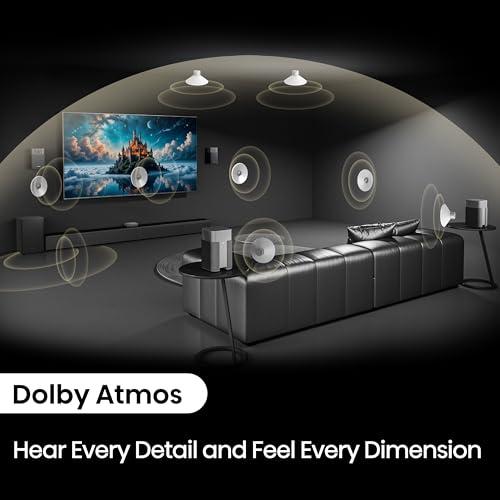
Dolby Atmos and Height Effects: This technology adds a vertical dimension to surround sound by bouncing audio off your ceiling or using upward-firing speakers. Instead of sound just coming from left, right, and behind you, Atmos creates the sensation of helicopters flying overhead or rain falling from above. Both systems support this, but they achieve it very differently.
Channel Configuration: When you see numbers like "4.1.2" or "5.1.2," these describe how many speakers handle different audio tasks. The first number represents main speakers around you, the second is for subwoofers (the ".1"), and the third indicates height channels for Atmos effects. More channels generally mean more precise sound placement, but the quality of implementation matters more than raw numbers.
Virtual vs. Physical Surround: This represents the fundamental divide in modern soundbar design. Virtual surround uses sophisticated digital processing to trick your brain into hearing sounds from directions where no speakers exist. Physical surround places actual speakers around your room. Each approach has distinct advantages and limitations that significantly impact your listening experience.
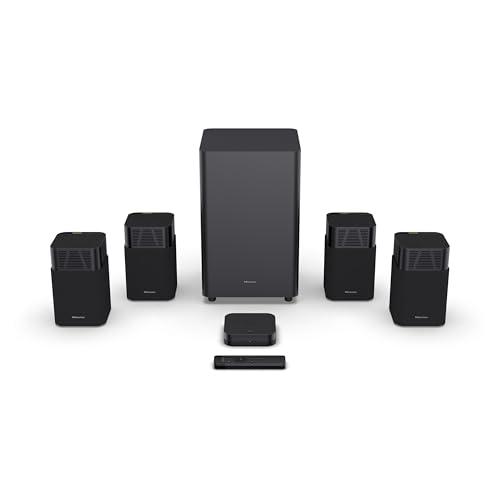
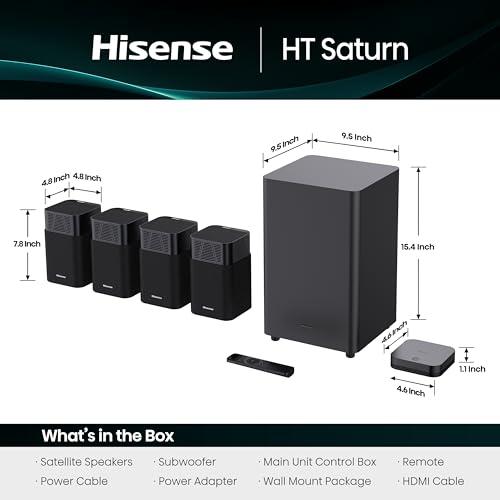
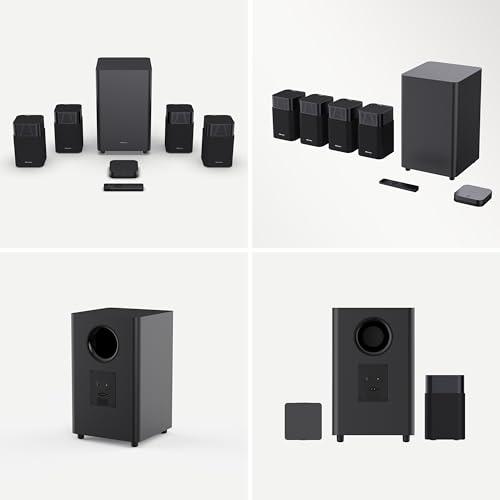
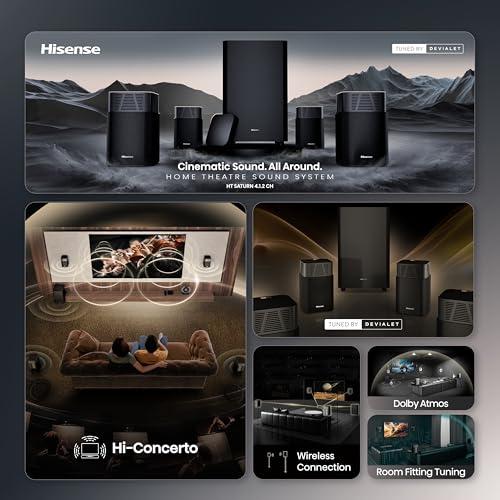
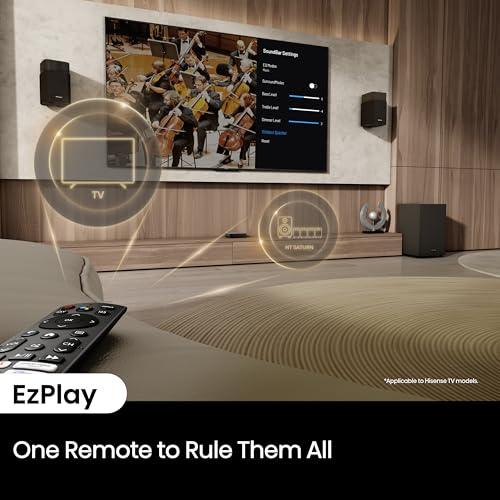
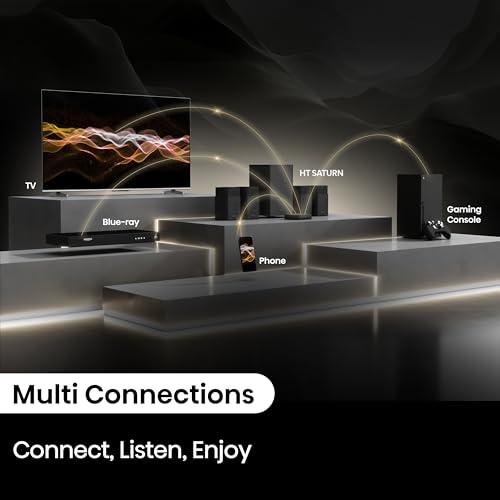
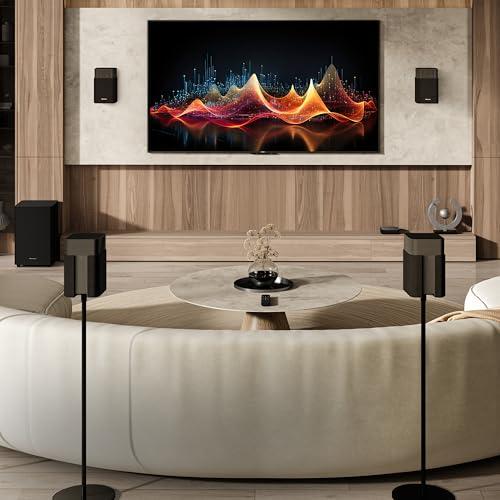
The Hisense HT Saturn represents what many consider the future of home audio: a complete departure from the traditional soundbar concept. Instead of a single bar sitting beneath your TV, this system distributes four compact satellite speakers throughout your room, plus a wireless subwoofer. Think of it as a home theater system that happens to be wireless rather than a soundbar that tries to simulate surround sound.
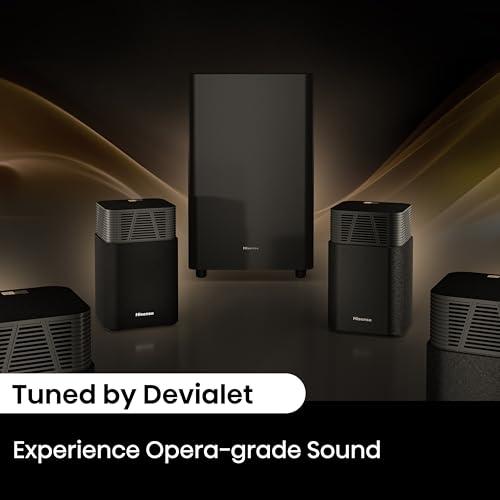
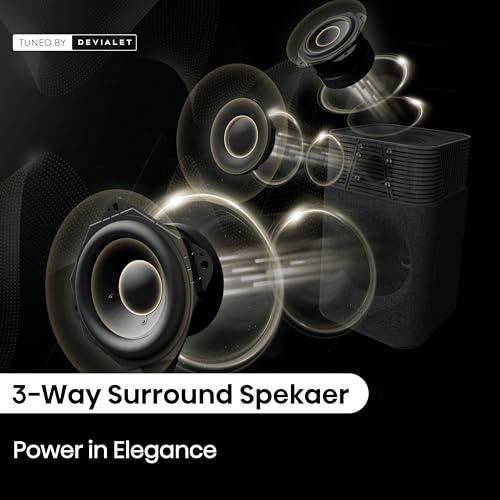
The Devialet Connection: Perhaps the most intriguing aspect of the HT Saturn is its collaboration with Devialet, the French audio company known for creating some of the world's most expensive and technically advanced speakers. Devialet's involvement isn't just marketing - their acoustic engineering expertise shaped how these speakers reproduce sound across the frequency spectrum. This "opera-grade" tuning focuses on accuracy and clarity, meaning you hear recordings closer to how the artists and sound engineers intended.
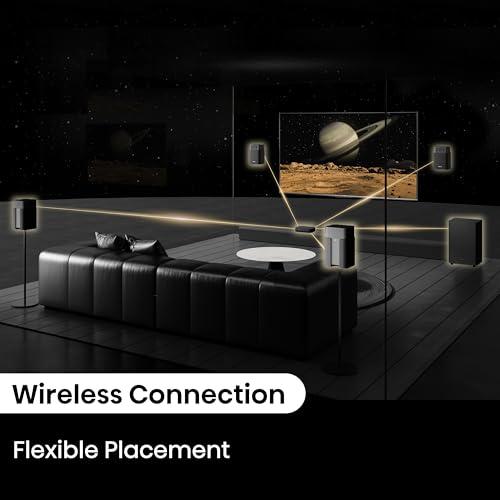
Wireless Technology That Actually Works: The system uses three separate wireless frequency bands (2.4GHz, 5.2GHz, and 5.8GHz) to maintain rock-solid connections between the control unit and all speakers. This tri-band approach is crucial because it prevents the audio dropouts and synchronization issues that plague cheaper wireless systems. During our research into user experiences, we found remarkably few complaints about wireless connectivity problems - a significant achievement for a system coordinating five separate wireless components.
True 360-Degree Surround: When professional reviewers describe the HT Saturn as creating an authentic "surround bubble," they're highlighting something most soundbars simply cannot achieve. Because the satellites physically exist around your listening position, sounds genuinely come from those locations rather than being processed to seem like they do. This creates what audio enthusiasts call "convincing spatialization" - you don't have to work to hear where sounds are coming from because they're actually there.
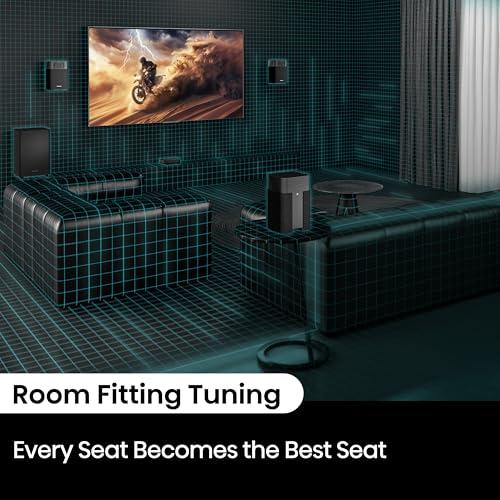
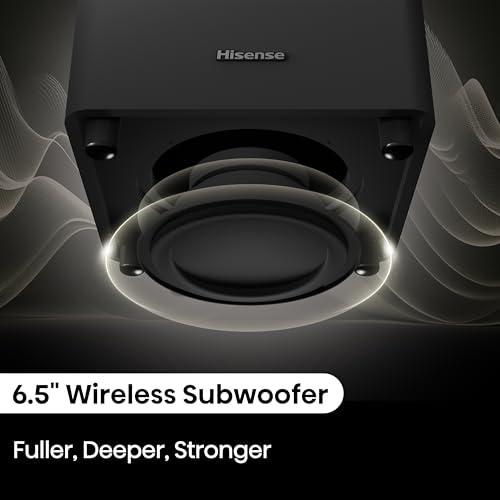
The system's 4.1.2 configuration places speakers to your front left and right, rear left and right, with height effects reflected off your ceiling. The ".1" represents a substantial 6.5-inch wireless subwoofer that can be positioned anywhere in the room for optimal bass response. This flexibility allows you to tune the system's performance to your specific space in ways a traditional soundbar never could.
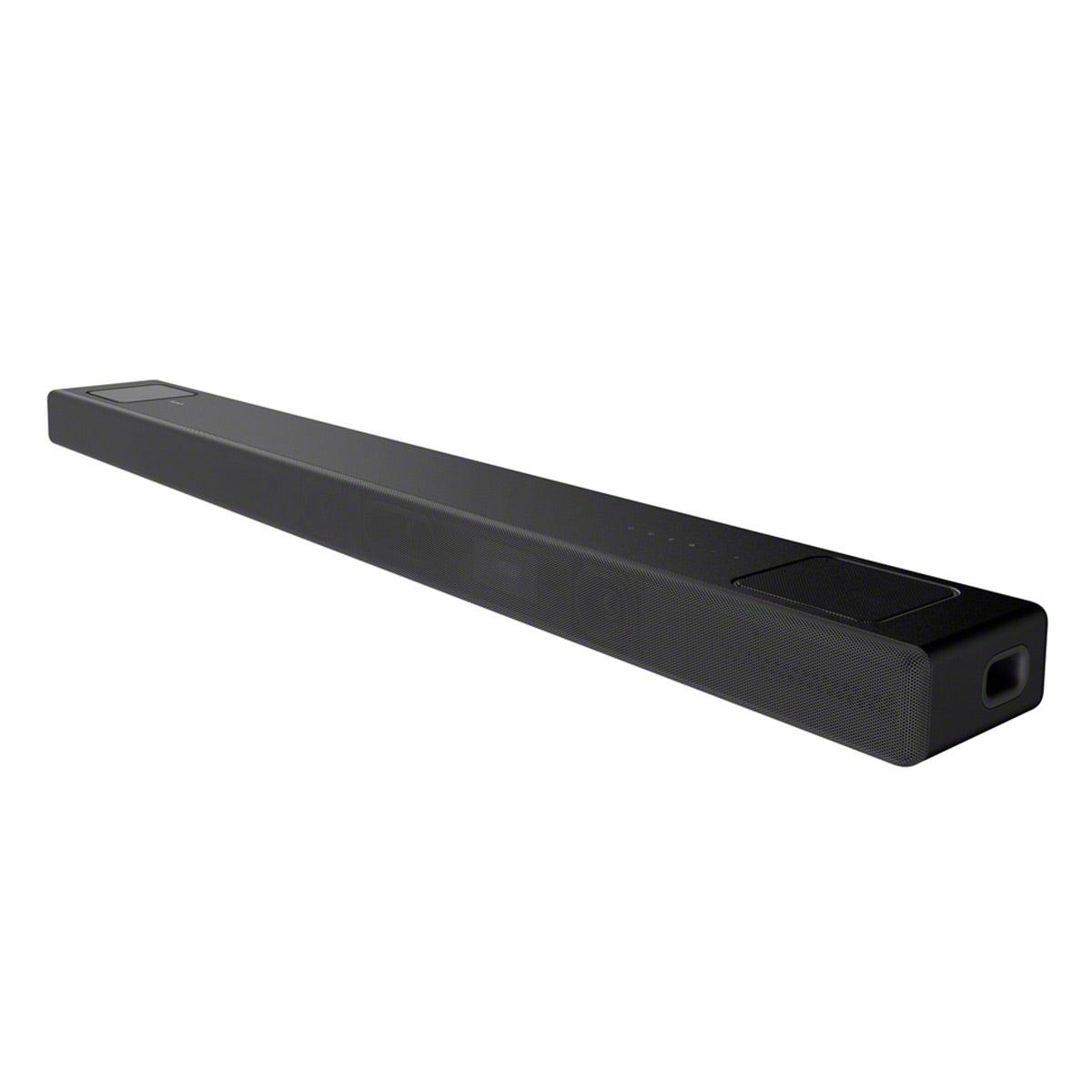
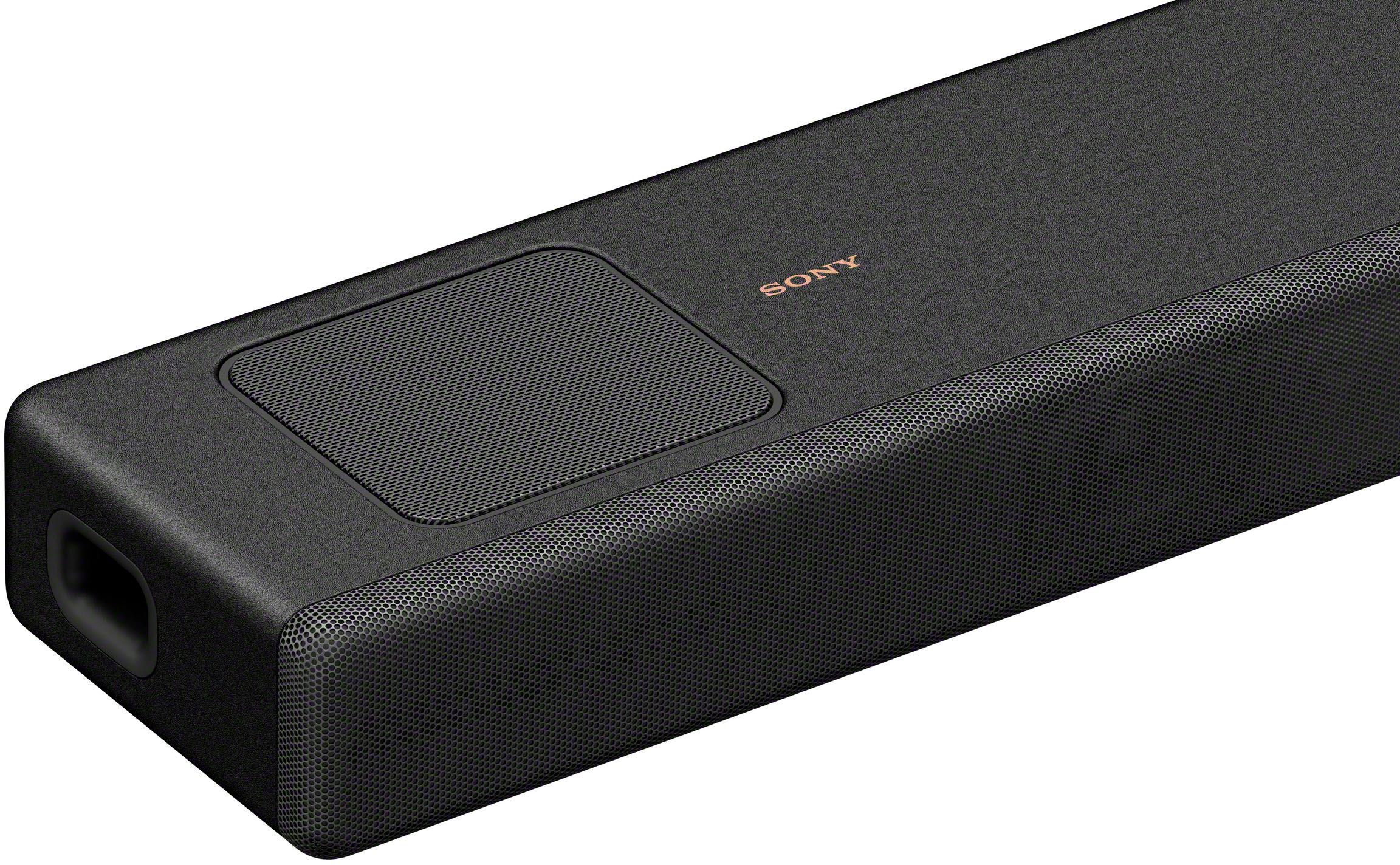
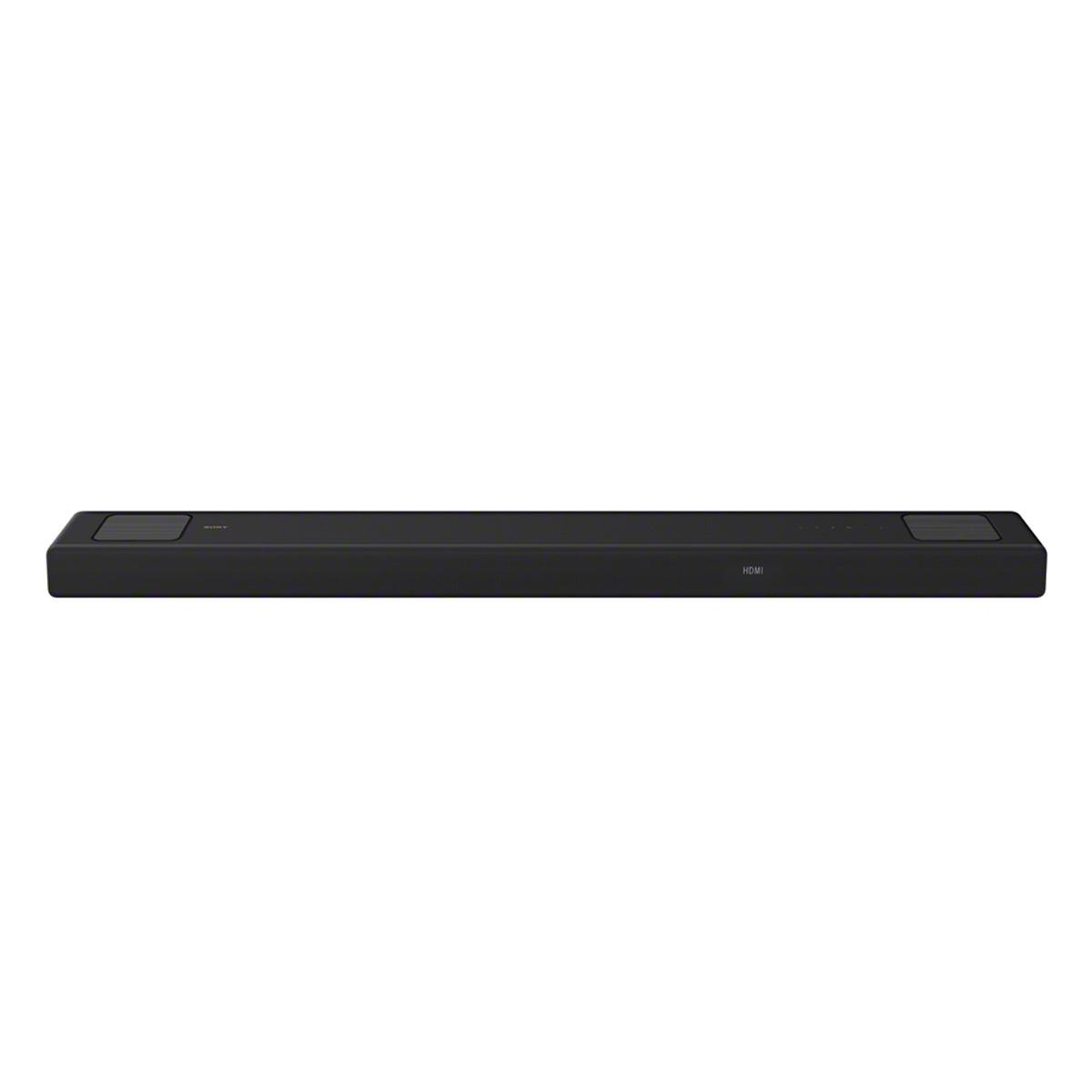
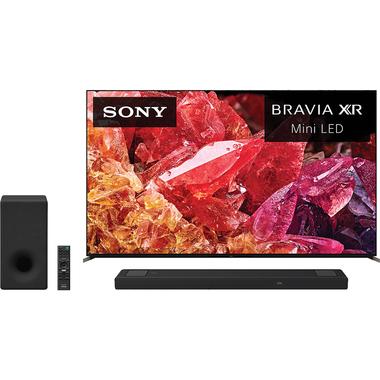
The Sony HT-A5000, introduced in 2021, represents the evolution of conventional soundbar design. Rather than abandoning the single-unit concept, Sony doubled down on making virtual surround processing so sophisticated that it rivals physical speaker placement. For many listeners, this approach succeeds remarkably well while maintaining the simplicity that makes soundbars appealing.
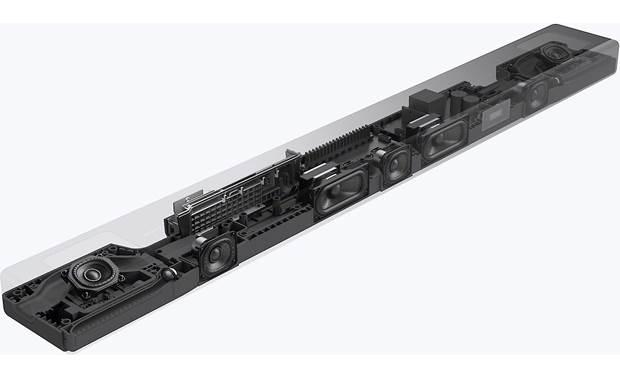
Advanced Virtual Processing: Sony's implementation combines multiple technologies - S-Force PRO Front Surround, Vertical Surround Engine, and DTS Virtual:X - to create phantom speakers your brain perceives as existing around the room. The HT-A5000 uses precisely timed reflections, phase manipulation, and psychoacoustic tricks to fool your hearing into believing sounds originate from locations where no speakers exist.
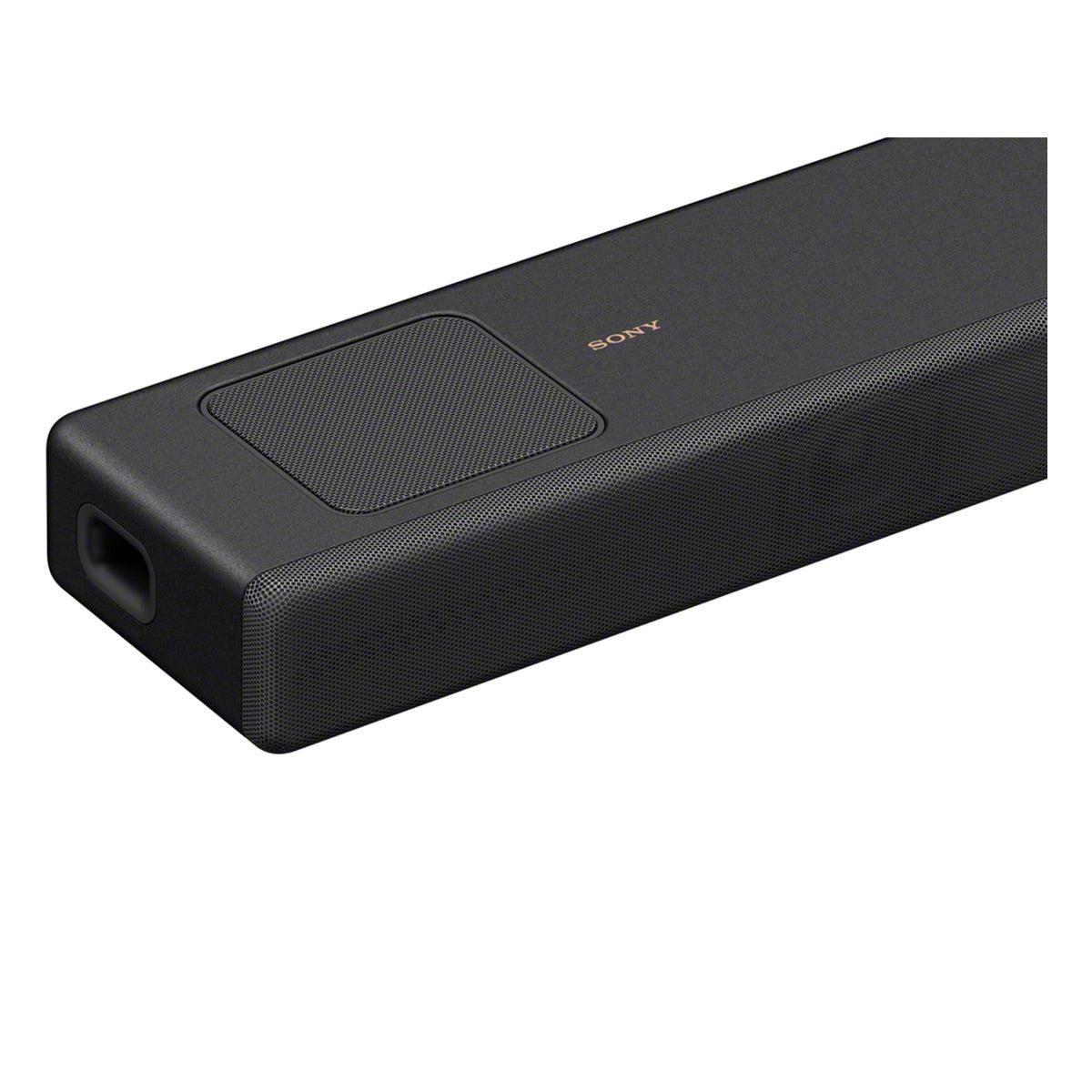
X-Balanced Driver Innovation: Sony's proprietary speaker design abandons traditional circular drivers for an elongated oval shape. This seemingly minor change dramatically increases the surface area that moves air without making the soundbar taller. More surface area means cleaner bass, clearer vocals, and less distortion at high volumes. It's an elegant engineering solution to the physical constraints of soundbar design.
Built-in Intelligence: The HT-A5000 includes microphones that automatically measure your room and adjust its audio output accordingly. This Sound Field Optimization feature means the system adapts to whether you're in a small apartment or large living room, tweaking timing and frequency response for optimal performance without any manual setup required.
Bass Response and Low-Frequency Impact: This is where the fundamental design differences become most apparent. The HT Saturn's dedicated 6.5-inch wireless subwoofer can be placed anywhere in your room - tucked in a corner where room boundaries amplify bass response, or positioned for the smoothest frequency response across multiple seating positions. Its 280W dedicated amplification provides substantial impact for movie explosions and music with deep bass extension down to 40Hz.
The Sony HT-A5000 takes a different approach with its built-in subwoofer design. While this saves space and eliminates another component, it also limits placement flexibility. The bass performance is robust for a single-unit system, but our research into user experiences reveals that larger rooms sometimes expose its limitations compared to dedicated subwoofer systems.
Dialogue Clarity and Center Channel Performance: Here we encounter one of the most significant philosophical differences between these systems. The Sony HT-A5000 includes a dedicated center channel speaker within the soundbar, ensuring voices are anchored precisely to your TV screen. Professional reviews consistently praise this implementation for maintaining clear, natural dialogue even during complex action sequences.
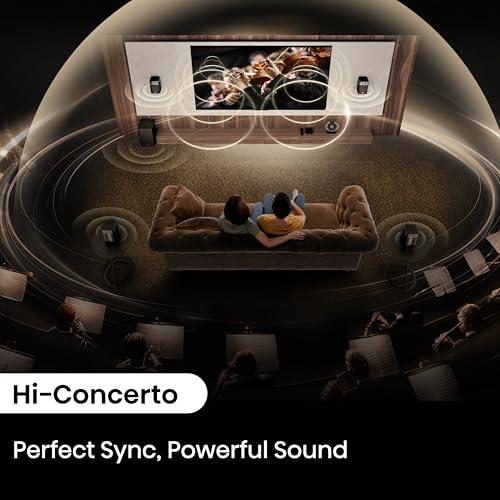
The HT Saturn takes a more controversial approach by eliminating the center channel entirely, instead using its left and right front speakers to create a "phantom center." While this works well for many listeners, some users report that voices can seem less precisely located, especially when seated off to one side. However, the system's Hi-Concerto technology addresses this by allowing compatible Hisense TVs to contribute their built-in speakers as a center channel - a clever integration that expands the soundstage when available.
Atmos Height Effects and 3D Immersion: Both systems support Dolby Atmos, but their implementations differ significantly. The HT Saturn's approach places upward-firing drivers in each satellite speaker, creating multiple reflection points off your ceiling. This distributed approach to height effects generally produces more convincing overhead localization than single-point sources.
The Sony HT-A5000's height effects, while technically competent, have been described by reviewers as "underwhelming" compared to systems with physical rear speakers. The vertical surround processing works best in rooms with appropriate ceiling heights and surfaces for sound reflection, but cannot match the authentic height cues provided by multiple physical speakers.
Installation Philosophy: The HT Saturn requires a different mindset about setup. You're essentially installing a wireless home theater system rather than plugging in a soundbar. Each satellite needs a power outlet, and optimal performance requires thoughtful placement around your room. The payoff is substantial, but it's not the "plug and play" experience some buyers expect from soundbar products.
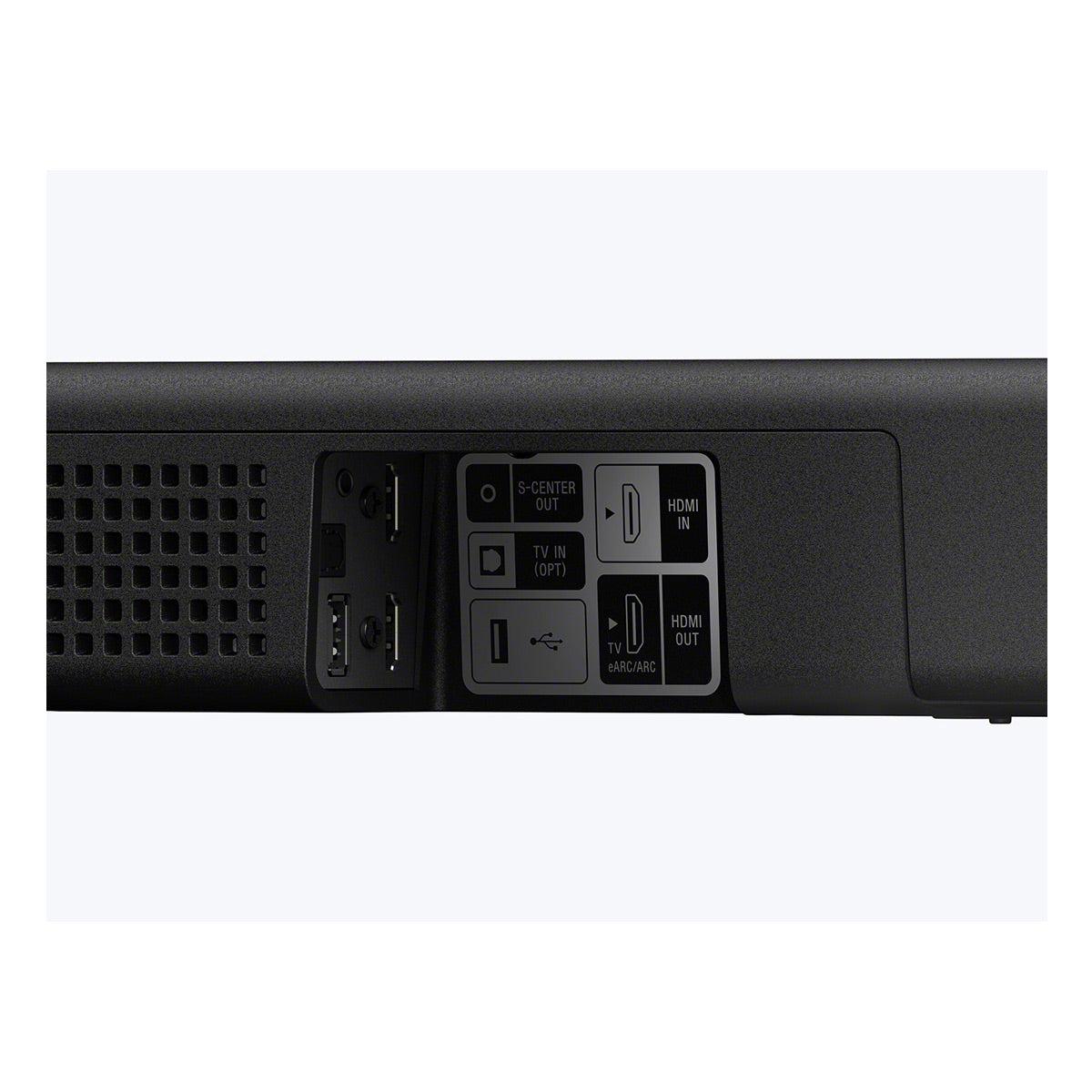
The Sony HT-A5000 embodies traditional soundbar simplicity. One HDMI cable to your TV, one power cable to the wall, and you're essentially done. The automatic room optimization handles acoustic tuning without intervention. For many buyers, this convenience factor outweighs potential performance advantages of more complex systems.
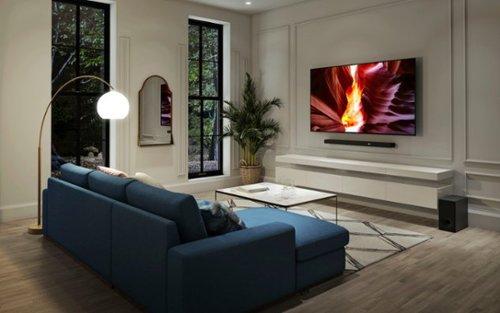
Aesthetic Impact: The HT Saturn's satellites are compact and well-designed, but you're adding four additional components to your living space. While they can be wall-mounted or placed on shelves, they represent a more visible installation than a single soundbar. The wireless subwoofer also requires strategic placement for both performance and visual acceptance.
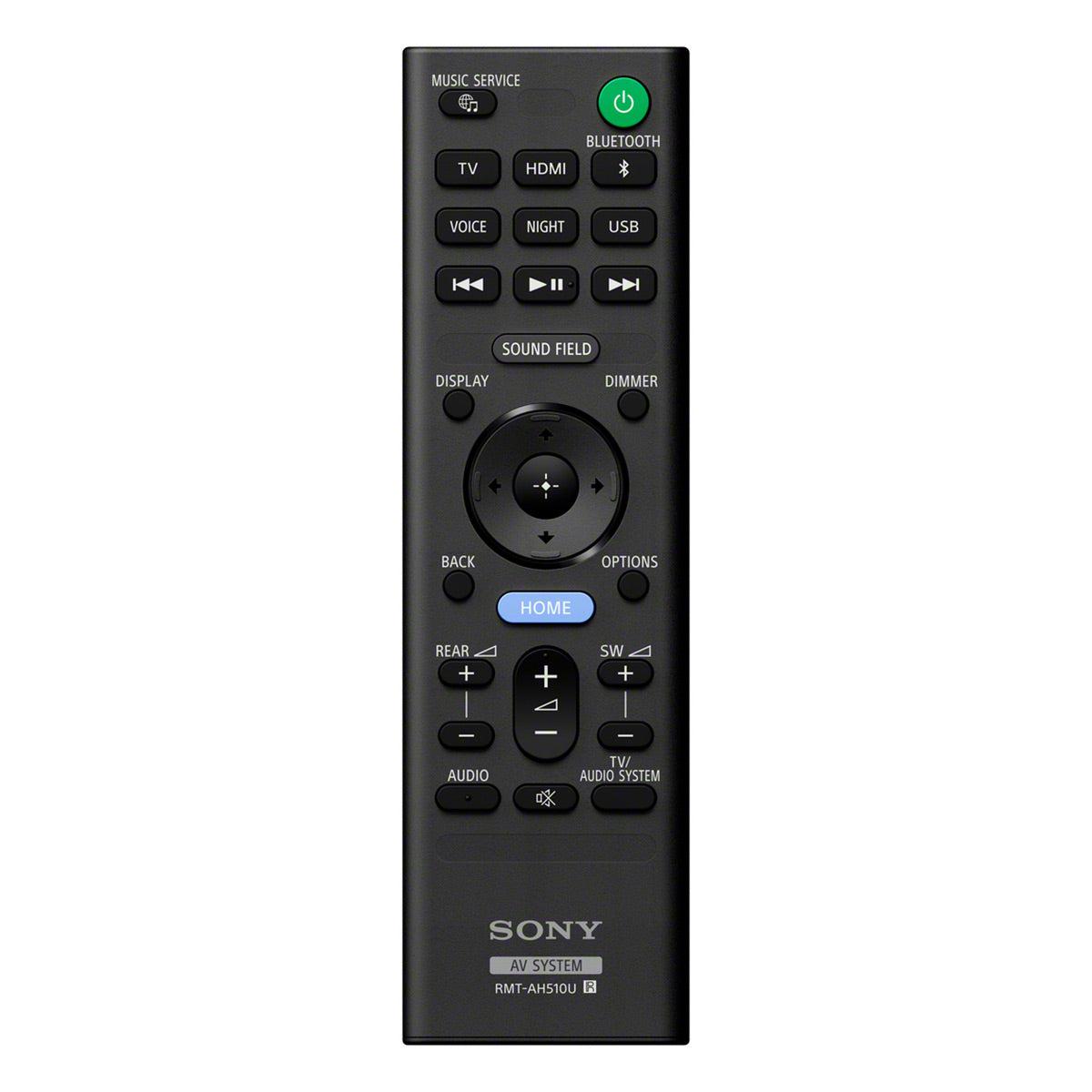
Smart Home Integration: This is where the Sony HT-A5000 demonstrates its more mature development timeline. Released in 2021, it includes comprehensive streaming capabilities - Chromecast built-in, AirPlay 2, Spotify Connect, and voice assistant compatibility. The HT Saturn, being newer, focuses primarily on Bluetooth connectivity for wireless audio, requiring your TV or other devices to handle streaming services.
At the time of writing, these systems occupy different value territories that reflect their design philosophies. The Sony HT-A5000, having been on the market since 2021, typically sells for significantly less than the newer HT Saturn, making it accessible to a broader range of buyers seeking premium soundbar performance.
The HT Saturn commands a premium price that reflects its innovative wireless architecture and Devialet tuning. However, when compared to Sony's own flagship Bravia Theater Quad system, which costs substantially more, the HT Saturn represents relatively strong value for true wireless surround capabilities.
Expansion and Future-Proofing: The Sony HT-A5000 offers clear upgrade paths through Sony's ecosystem of wireless rear speakers and additional subwoofers. This modular approach allows buyers to start with the soundbar and expand their system over time as budget and space allow.
The HT Saturn's wireless architecture suggests future expansion possibilities, but currently offers no additional components beyond its included speakers. Its Hi-Concerto integration with Hisense TVs does provide a form of system expansion, but only for owners of compatible television models.
The four years between these products' releases illustrate rapid evolution in home audio technology. The Sony HT-A5000 represented state-of-the-art virtual processing in 2021, with sophisticated algorithms that create convincing surround effects from a single unit. Since its introduction, advancements in HDMI standards, wireless protocols, and room correction have continued advancing the category.
The HT Saturn's 2025 release incorporates these technological improvements, including Bluetooth 5.3, advanced multi-band wireless communication, and AI-powered sound processing. More importantly, it represents a fundamental rethinking of soundbar architecture that may influence future product development across the industry.
HDMI and Gaming Considerations: Both systems support modern HDMI standards crucial for gaming and streaming. The Sony HT-A5000 includes HDMI 2.1 features like ALLM (Auto Low Latency Mode) and VRR (Variable Refresh Rate) support, making it gaming-friendly with modern consoles. The HT Saturn provides 4K 60Hz pass-through, which handles most current content but may be less future-proof for emerging gaming standards.
Choose the Sony HT-A5000 if: You want premium soundbar performance with minimal complexity. The system excels in smaller to medium-sized rooms where its virtual processing can create convincing surround effects. Its comprehensive streaming capabilities and established ecosystem make it ideal for users who prioritize convenience and proven technology. The dedicated center channel ensures excellent dialogue clarity, making it perfect for movie enthusiasts who value clear vocal reproduction.
The HT-A5000 also makes sense for renters or those who frequently rearrange their living spaces, as its single-unit design adapts easily to room changes. Its lower price point provides an accessible entry into premium home theater audio without requiring the space or commitment of a multi-speaker system.
Choose the Hisense HT Saturn if: You're willing to embrace a more complex installation for superior immersive performance. The system truly shines in medium to larger rooms where the physical speaker placement can create an authentic surround experience that virtual processing cannot match. Its Devialet tuning appeals to listeners who prioritize audio accuracy and want their system to reproduce recordings as faithfully as possible.
The HT Saturn is ideal for home theater enthusiasts who view their audio system as a long-term investment and want performance that approaches dedicated home theater installations. If you own a compatible Hisense TV, the Hi-Concerto integration adds significant value by expanding the effective soundstage beyond what either system could achieve alone.
Room Considerations: Your space significantly influences which system will perform better. The HT Saturn requires room to breathe - both for speaker placement and ceiling reflection of height effects. Apartments with low ceilings or rooms with limited speaker placement options may not realize its full potential.
The Sony HT-A5000 works well in challenging spaces where speaker placement is restricted, though it still benefits from appropriate room acoustics for optimal virtual surround performance.
These systems represent two successful but fundamentally different approaches to premium home theater audio. The Sony HT-A5000 perfects the traditional soundbar concept with sophisticated virtual processing, comprehensive connectivity, and proven reliability at an accessible price point. The Hisense HT Saturn breaks new ground with its wireless multi-speaker architecture, delivering authentic surround performance that challenges conventional thinking about what a "soundbar" can be.
Neither system is universally superior - your choice depends on your priorities, space, and tolerance for setup complexity. Both deliver substantial improvements over TV speakers and budget soundbars, but they achieve this through very different means. The Sony HT-A5000 represents the refinement of existing technology, while the HT Saturn points toward the future of wireless home theater design.
Consider your long-term audio goals, room characteristics, and technical comfort level when making this decision. Both systems will serve you well, but in distinctly different ways that reflect their underlying design philosophies.
| Hisense HT Saturn HTSATURN | Sony HT-A5000 |
|---|---|
| Speaker Configuration - Determines authentic vs virtual surround sound | |
| 4.1.2 channels with 4 wireless satellite speakers + subwoofer (13 total speakers) | 5.1.2 channels in single soundbar unit with built-in subwoofer (9 amplified channels) |
| Power Output - Affects maximum volume and dynamic range | |
| 720W total (500W main + 280W subwoofer) | 450W total across 9 amplified channels |
| Subwoofer Design - Impacts bass performance and room placement flexibility | |
| Dedicated wireless 6.5" subwoofer (can be placed anywhere in room) | Built-in subwoofer within soundbar (fixed position, space-saving) |
| Setup Complexity - Determines installation time and cable management | |
| Complex: 4 satellite speakers + subwoofer require power outlets around room | Simple: Single soundbar unit with minimal cable connections |
| Audio Tuning - Affects overall sound signature and quality | |
| Tuned by Devialet for "opera-grade" neutral sound signature | Sony S-Master HX with X-Balanced drivers for enhanced clarity |
| Center Channel - Critical for dialogue clarity and vocal positioning | |
| Phantom center using left/right speakers (or Hi-Concerto with compatible Hisense TVs) | Dedicated center channel within soundbar for precise dialogue anchoring |
| Wireless Connectivity - Determines streaming options and device compatibility | |
| Bluetooth 5.3 only (limited streaming options) | Comprehensive: Bluetooth 5.0, Chromecast, AirPlay 2, Wi-Fi streaming |
| Smart Features - Affects ease of use and TV integration | |
| Room Fitting Tuning, Hi-Concerto (Hisense TVs only), EzPlay control | Sound Field Optimization, Voice Assistant support, universal TV compatibility |
| HDMI Support - Important for gaming and 4K content | |
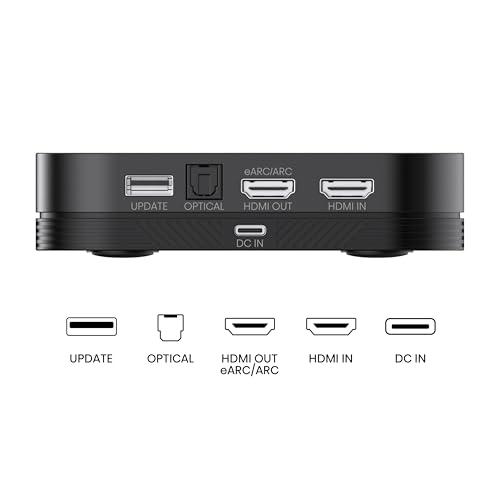
| HDMI eARC with 4K 60Hz pass-through | HDMI 2.1 with eARC, ALLM, and VRR support (better for gaming) |
| Frequency Response - Determines bass extension and overall audio range | |
| 40Hz - 20kHz (deeper bass extension with dedicated subwoofer) | Not specified, but built-in subwoofer limits low-frequency extension |
| Room Size Suitability - Affects performance in different spaces | |
| Best for medium to large rooms with flexible speaker placement | Optimized for small to medium rooms with limited setup space |
| Expandability - Future upgrade options | |
| No current expansion options beyond Hi-Concerto TV integration | Compatible with Sony wireless rear speakers (SA-RS3S/RS5) and additional subwoofers |
The Hisense HT Saturn delivers superior home theater immersion with its four wireless satellite speakers that create authentic 360-degree surround sound. The Sony HT-A5000 offers excellent performance in a simpler single-unit design with virtual surround processing. For dedicated home theater setups, the HT Saturn provides more convincing spatial effects, while the HT-A5000 excels in convenience and dialogue clarity.
The Hisense HT Saturn uses a 4.1.2 setup with four satellite speakers, one subwoofer, and two height channels for Dolby Atmos. The Sony HT-A5000 features 5.1.2 channels with five speakers in the soundbar (including a dedicated center), one built-in subwoofer, and two height channels. The key difference is that the HT-A5000 has a dedicated center channel for clearer dialogue, while the HT Saturn relies on phantom center imaging.
The Hisense HT Saturn provides superior bass with its dedicated wireless 6.5-inch subwoofer that can be positioned anywhere in the room for optimal performance. The Sony HT-A5000 has a built-in subwoofer that saves space but limits placement flexibility. For deep, powerful bass in larger rooms, the HT Saturn has the advantage.
The Sony HT-A5000 offers much simpler setup with just one soundbar unit requiring minimal connections. The Hisense HT Saturn requires more complex installation with four satellite speakers and a subwoofer that each need power outlets around your room. If you prioritize easy installation, the HT-A5000 is the clear winner.
The Sony HT-A5000 is better suited for small rooms due to its single-unit design and advanced virtual surround processing that doesn't require physical space for multiple speakers. The Hisense HT Saturn needs room for proper satellite speaker placement to achieve its full potential, making it less ideal for cramped spaces.
Yes, both the Hisense HT Saturn and Sony HT-A5000 support Dolby Atmos and DTS:X for immersive 3D audio. The HT Saturn achieves height effects through upward-firing drivers in each satellite speaker, while the HT-A5000 uses upward-firing drivers in the soundbar with virtual processing to simulate overhead sound.
The Sony HT-A5000 provides comprehensive streaming with Chromecast built-in, AirPlay 2, Spotify Connect, and voice assistant support. The Hisense HT Saturn is more limited with only Bluetooth 5.3 connectivity for wireless streaming. For users who frequently stream music and podcasts, the HT-A5000 offers superior convenience.
The Sony HT-A5000 can be expanded with Sony's wireless rear speakers and additional subwoofers for a complete surround system. The Hisense HT Saturn currently has no expansion options beyond its included components, though it can integrate with compatible Hisense TVs using Hi-Concerto technology.
The Sony HT-A5000 typically provides clearer dialogue with its dedicated center channel that anchors voices to the TV screen. The Hisense HT Saturn uses phantom center imaging, which can be less precise for dialogue placement, though this improves significantly when paired with compatible Hisense TVs using Hi-Concerto.
The Sony HT-A5000 is better optimized for gaming with HDMI 2.1 features including ALLM (Auto Low Latency Mode) and VRR (Variable Refresh Rate) support. The Hisense HT Saturn offers 4K 60Hz pass-through but lacks some advanced gaming features. Both provide immersive surround sound that enhances gaming experiences.
Value depends on your priorities: the Sony HT-A5000 typically costs significantly less and offers excellent performance with convenient setup and comprehensive connectivity. The Hisense HT Saturn costs more but provides authentic surround sound that rivals much more expensive home theater systems. The HT-A5000 wins for budget-conscious buyers, while the HT Saturn offers superior performance per dollar for serious home theater enthusiasts.
The Hisense HT Saturn's main limitations include complex setup, limited streaming options, and lack of a dedicated center channel. The Sony HT-A5000's drawbacks include virtual surround that can't match physical speakers, limited bass compared to dedicated subwoofers, and height effects that some reviewers find underwhelming. Choose the HT Saturn for authentic surround or the HT-A5000 for simplicity and proven performance.
We've done our best to create useful and informative comparisons to help you decide what product to buy. Our research uses advanced automated methods to create this comparison and perfection is not possible - please contact us for corrections or questions. These are the sites we've researched in the creation of this article: bestbuy.com - youtube.com - blog.son-video.com - youtube.com - youtube.com - techradar.com - ecoustics.com - jbhifi.com.au - shop.hisense-usa.com - bhphotovideo.com - bestbuy.com - digitalreviews.net - hisense-usa.com - projectorscreenstore.com - valueelectronics.com - dolby.com - giftpack.ai - whathifi.com - electronics.sony.com - costco.com - sony.com - expertreviews.co.uk - crutchfield.com - audioadvice.com - sony.com - sony.com - bestbuy.com - videoandaudiocenter.com - community.sony.co.uk

Privacy Policy
Terms and Conditions - Affiliate Policy
Home Security
© Copyright 2008-2026.
11816 Inwood Rd #1211, Dallas, TX 75244