




The world of home audio has changed dramatically over the past few years. While basic soundbars used to be simple stereo upgrades that just made dialogue clearer, today's systems range from straightforward TV audio boosters to full-blown wireless home theaters that rival traditional speaker setups. This creates an interesting dilemma: do you go with a proven, simple solution or embrace the complexity of newer multi-speaker systems?
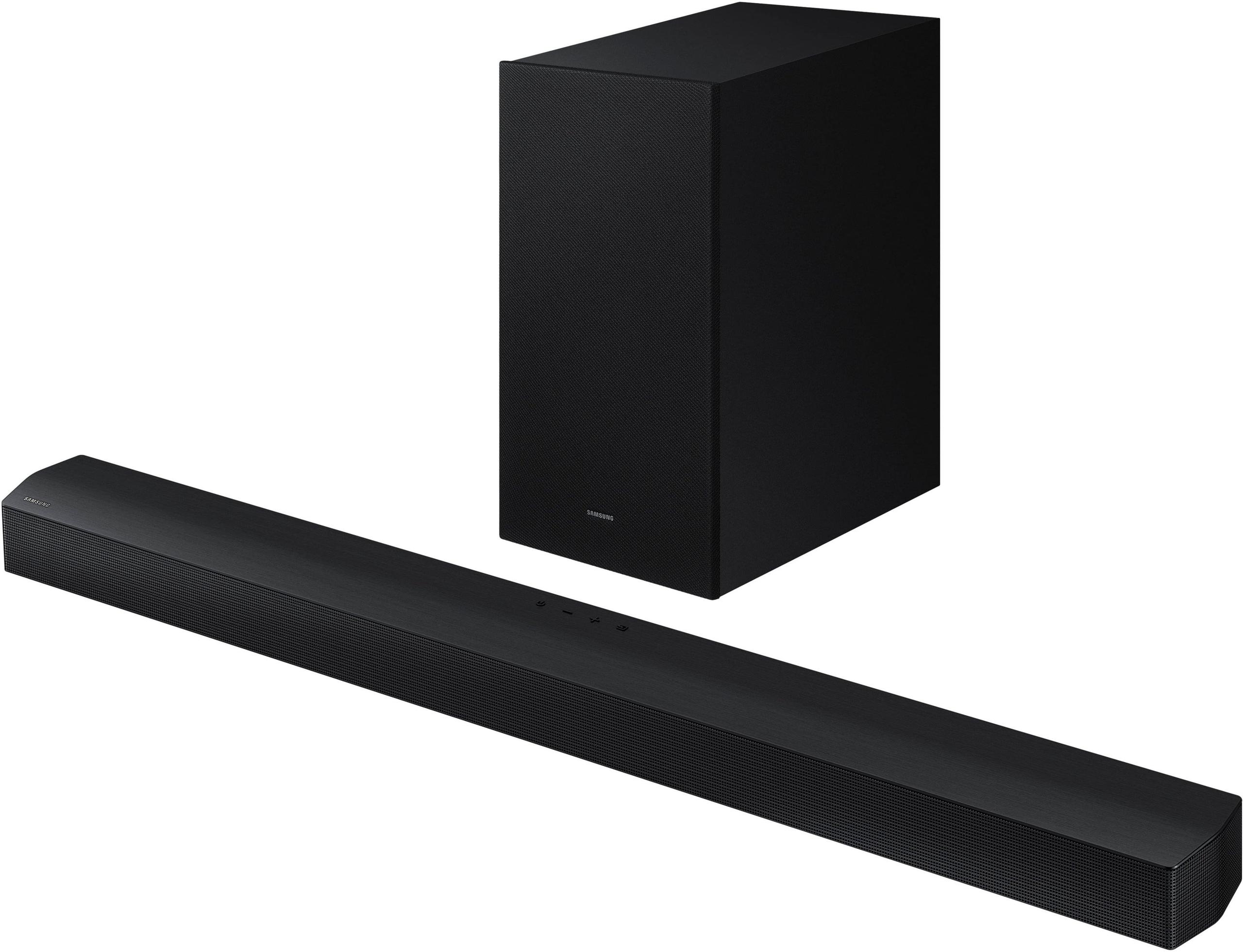
That's exactly the choice you'll face when comparing the Hisense HT Saturn and the Samsung HW-B550D. Released in 2025 and 2022 respectively, these two products represent fundamentally different philosophies about how to improve your TV's audio. The Samsung takes the traditional soundbar approach – one main unit plus a wireless subwoofer – while the Hisense completely reimagines what a "soundbar" can be by spreading speakers throughout your room.
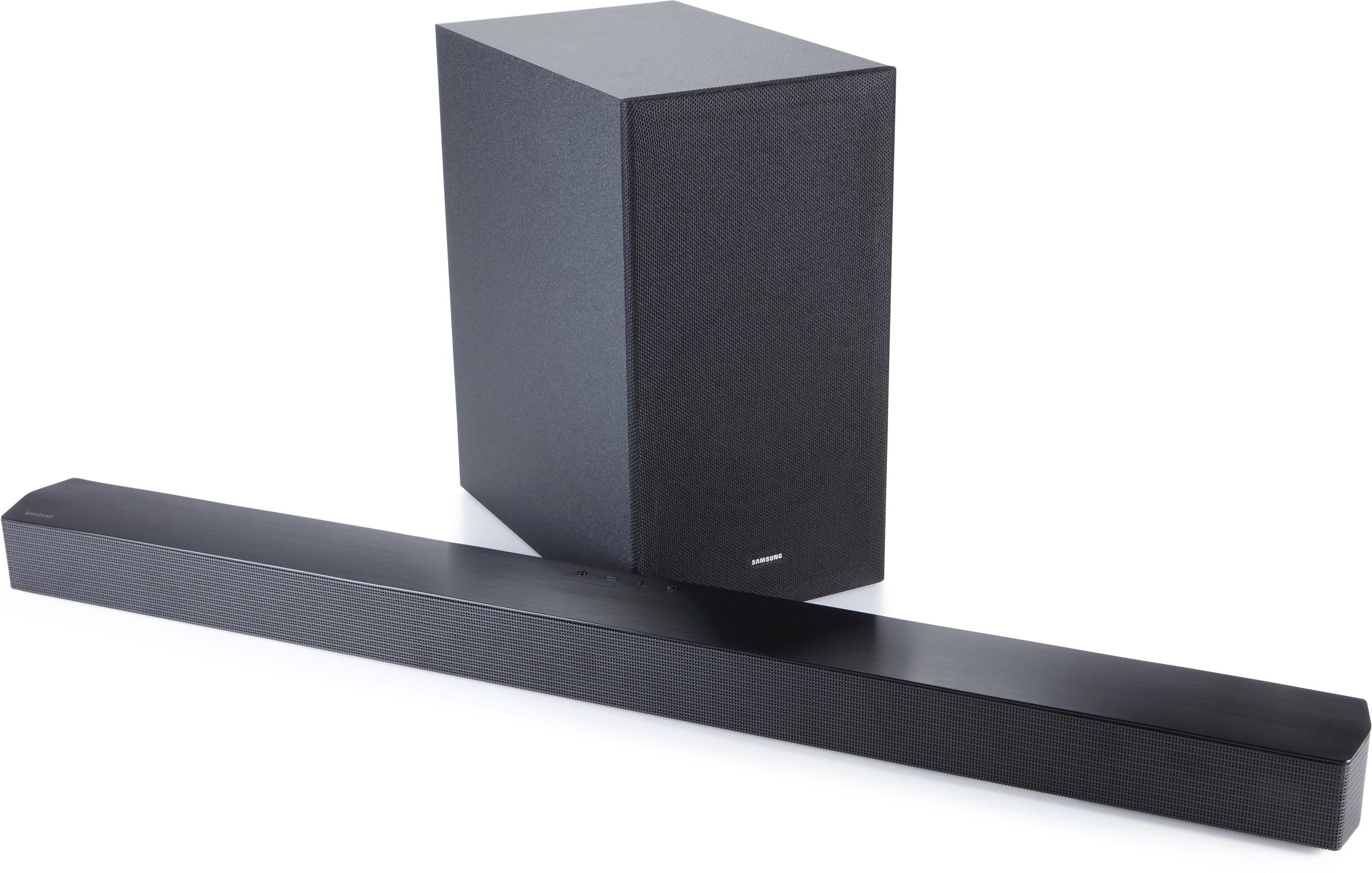
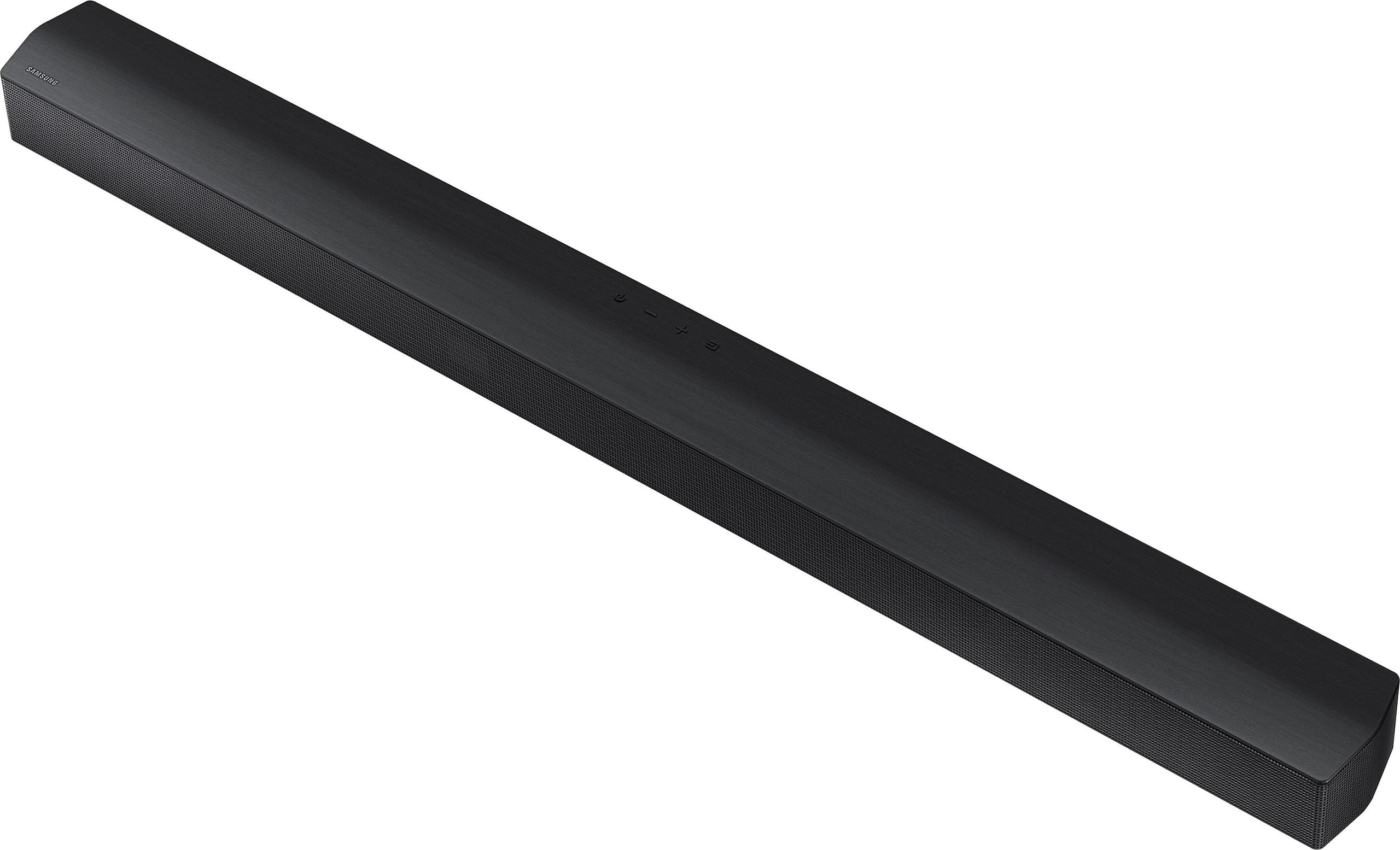
Before diving into specifics, it's important to understand what these channel configurations actually mean for your listening experience. When you see "3.1" on the Samsung HW-B550D, that translates to three main channels (left, center, right) plus one subwoofer channel for bass. The center channel is crucial here – it's specifically designed to handle dialogue and voices, which is why many people notice immediately clearer speech when upgrading from TV speakers.
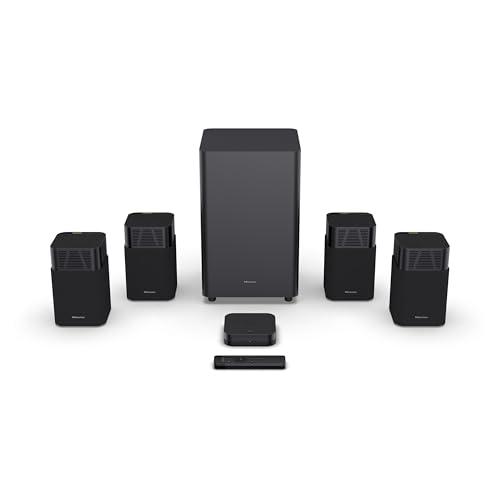
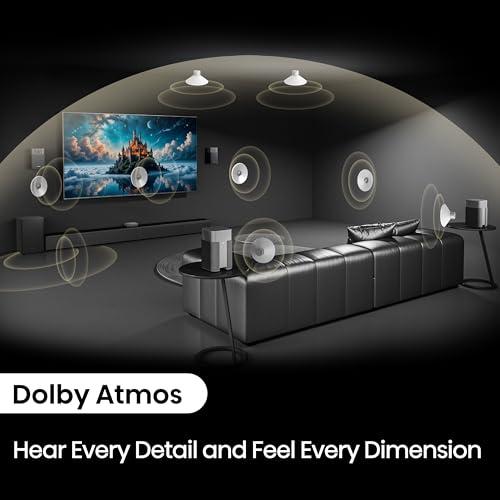
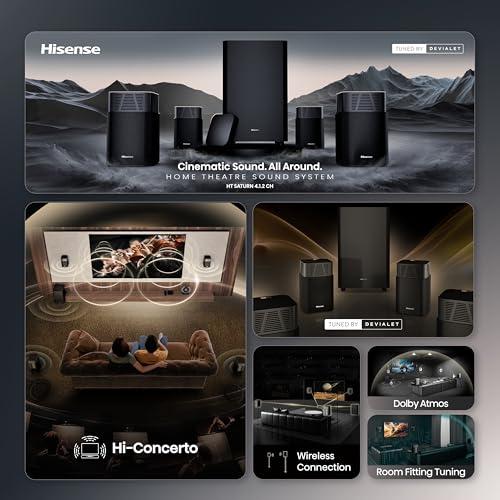
The Hisense HT Saturn's "4.1.2" setup is more complex. You get four main speakers (front left/right, rear left/right), one subwoofer, and two height channels. Those height channels are the key differentiator – they fire sound upward to bounce off your ceiling, creating the illusion that sounds are coming from above you. This is how modern Dolby Atmos content creates those "helicopter flying overhead" moments that make movies feel more immersive.
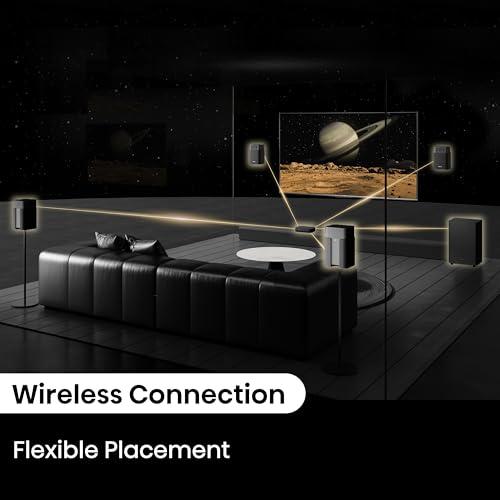
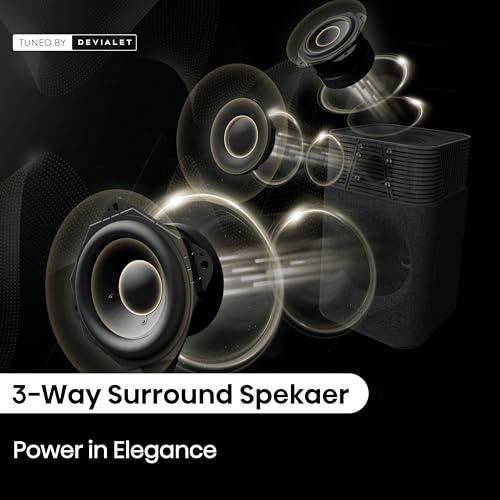
But here's where it gets interesting: the Hisense doesn't just simulate this effect through software tricks. It actually includes four separate wireless satellite speakers that you place around your room, plus upward-firing drivers for genuine overhead effects. The Samsung, meanwhile, uses a technology called DTS Virtual:X to mathematically calculate how sounds should seem to come from different directions, even though all the speakers are in the front soundbar.
This fundamental difference in approach affects everything about how these systems perform. When our research into user reviews consistently shows that the Hisense HT Saturn creates a more convincing "bubble" of sound around listeners, it's because physics is on its side. Having actual speakers positioned to your left, right, and behind you means sounds genuinely originate from those locations.
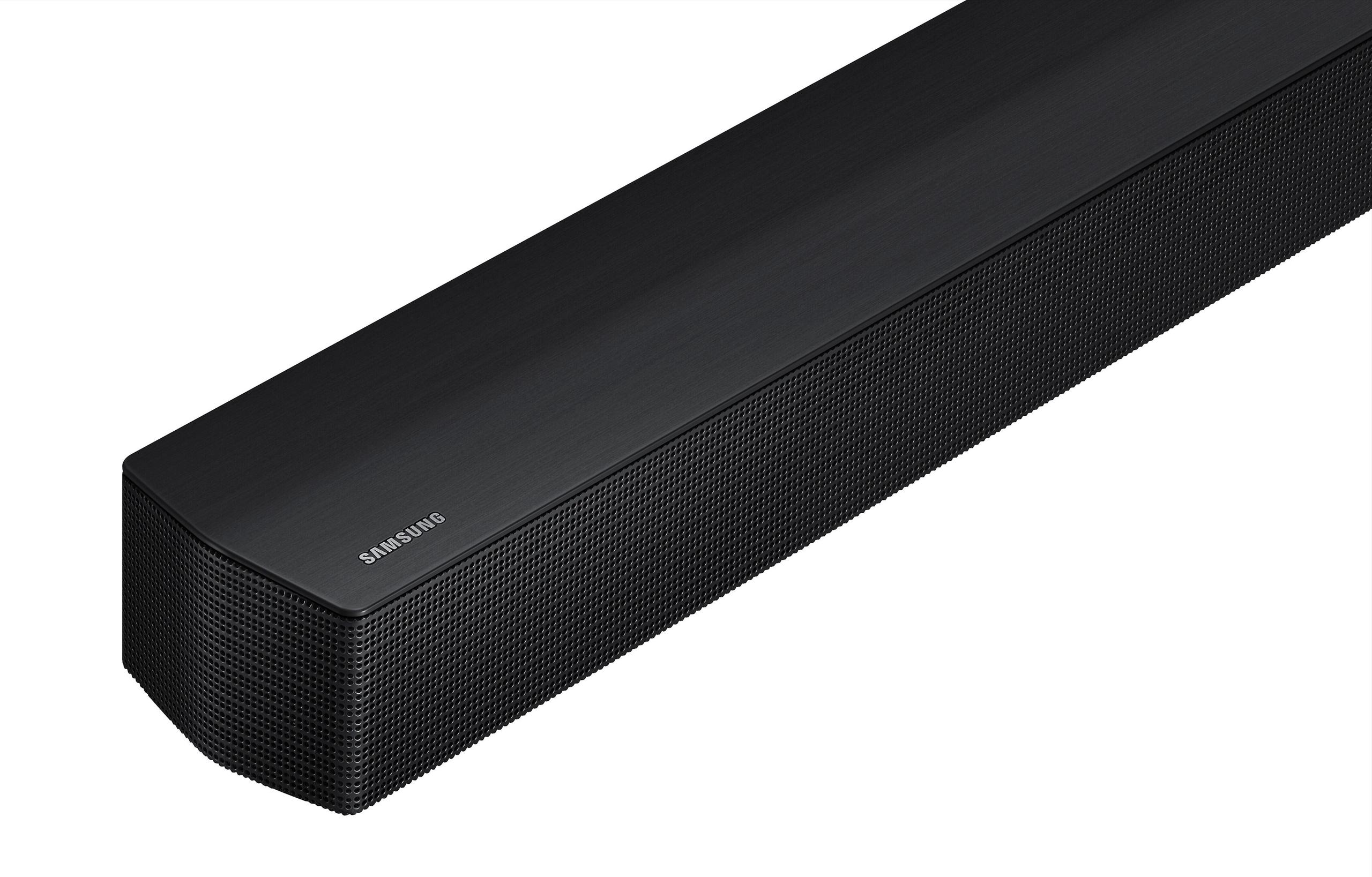
The Samsung HW-B550D faces the challenge that many traditional soundbars encounter: all the drivers are lined up in front of you. No matter how sophisticated the digital signal processing gets, it can't completely overcome the fact that every sound is physically coming from the same general direction. DTS Virtual:X does create a wider soundstage than basic stereo, and in smaller rooms, the effect can be quite convincing. But it's fundamentally limited by the laws of physics.
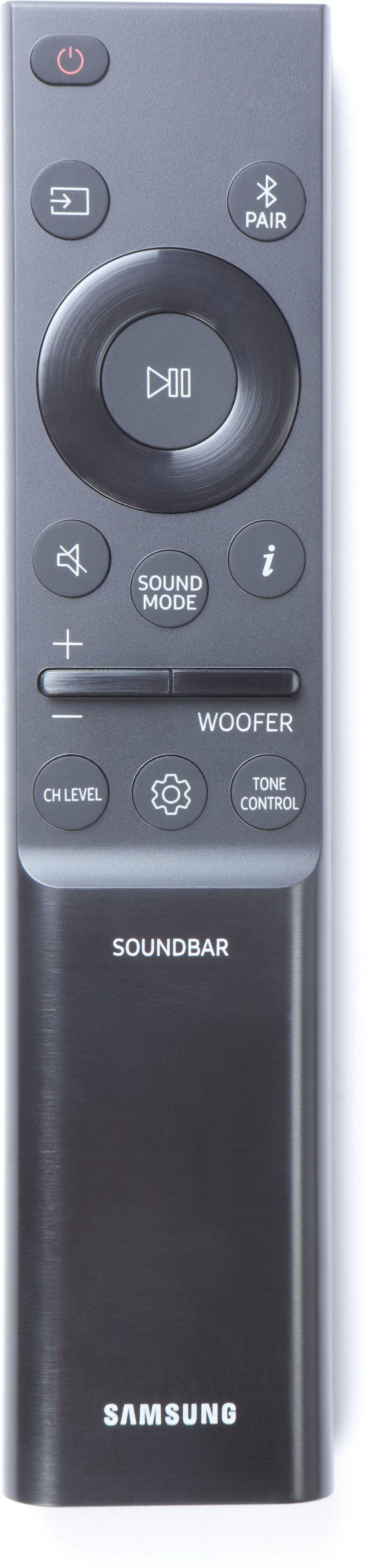
That said, the Samsung has an ace up its sleeve that shouldn't be underestimated. Its dedicated center channel speaker is physically optimized for dialogue reproduction. The drivers, enclosure design, and crossover (the circuitry that splits frequencies between different speakers) are all tuned specifically for the frequency range of human voices. This is why many users report that dialogue clarity is immediately and dramatically better with the Samsung compared to TV speakers.
The Hisense creates its center channel through a technique called "phantom imaging." By precisely controlling the timing and volume of sounds from the left and right front speakers, it tricks your brain into perceiving voices as coming from a center point between them. This works well, but requires more precise speaker positioning and room acoustics to be convincing.
One area where the technical specifications tell a clear story is power output. The Hisense HT Saturn delivers 720 watts across its 13 total speakers, while the Samsung HW-B550D provides around 410 watts across its more modest driver array. But raw wattage numbers only tell part of the story.
What's more important is power distribution and efficiency. The Hisense spreads its amplification across multiple dedicated channels, meaning each speaker can be driven more optimally without competing for power. When a helicopter pans from front to back in a movie, the system can put full power into just the speakers handling that effect, while the others remain available for other sounds.
The Samsung has to share its amplification more carefully. During complex soundtracks with lots of simultaneous effects, the system has to make compromises about which sounds get priority. This isn't necessarily a problem for most content, but it does mean the system reaches its limits sooner when you're pushing volume levels or dealing with very dynamic content.
In practical terms, this translates to the Hisense being able to fill larger rooms more effectively while maintaining clarity. Users consistently report that the system remains composed even at higher volumes, while the Samsung is better suited to small and medium-sized spaces where its power limitations are less likely to be reached.
Here's where things get technical, but it's important to understand because it affects what content will actually sound better on each system. The Hisense HT Saturn supports true Dolby Atmos and DTS:X decoding, which means it can process the actual three-dimensional audio information that content creators embed in movies and games.
When you watch a Marvel movie on Disney+ that was mixed in Dolby Atmos, the Hisense receives discrete audio information for each of its speakers and height channels. The mixer who created that soundtrack specifically placed sounds in 3D space, and the system can reproduce those decisions accurately.
The Samsung HW-B550D supports Dolby Digital and DTS, but not the newer object-based formats like Atmos or DTS:X. Instead, it relies on DTS Virtual:X to analyze traditional surround sound mixes and create virtual height and width effects. This works, but it's essentially an educated guess about where sounds should be positioned, rather than following the content creator's specific intentions.
However, there's an important caveat here: the majority of TV shows and streaming content still uses traditional 5.1 or stereo audio. For this content, the Samsung's virtual processing can actually be quite effective, and the dedicated center channel provides a clear advantage for dialogue-heavy content like dramas or news.
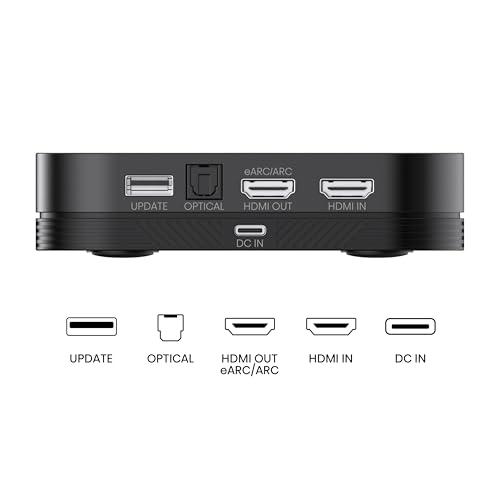
The connectivity differences between these systems reveal their different target audiences and release timeframes. The Hisense HT Saturn, being the newer product, includes HDMI 2.1 with eARC support and can pass through 4K video at 60Hz with HDR. This means it works seamlessly with PlayStation 5, Xbox Series X, and modern streaming devices without any video quality compromises.
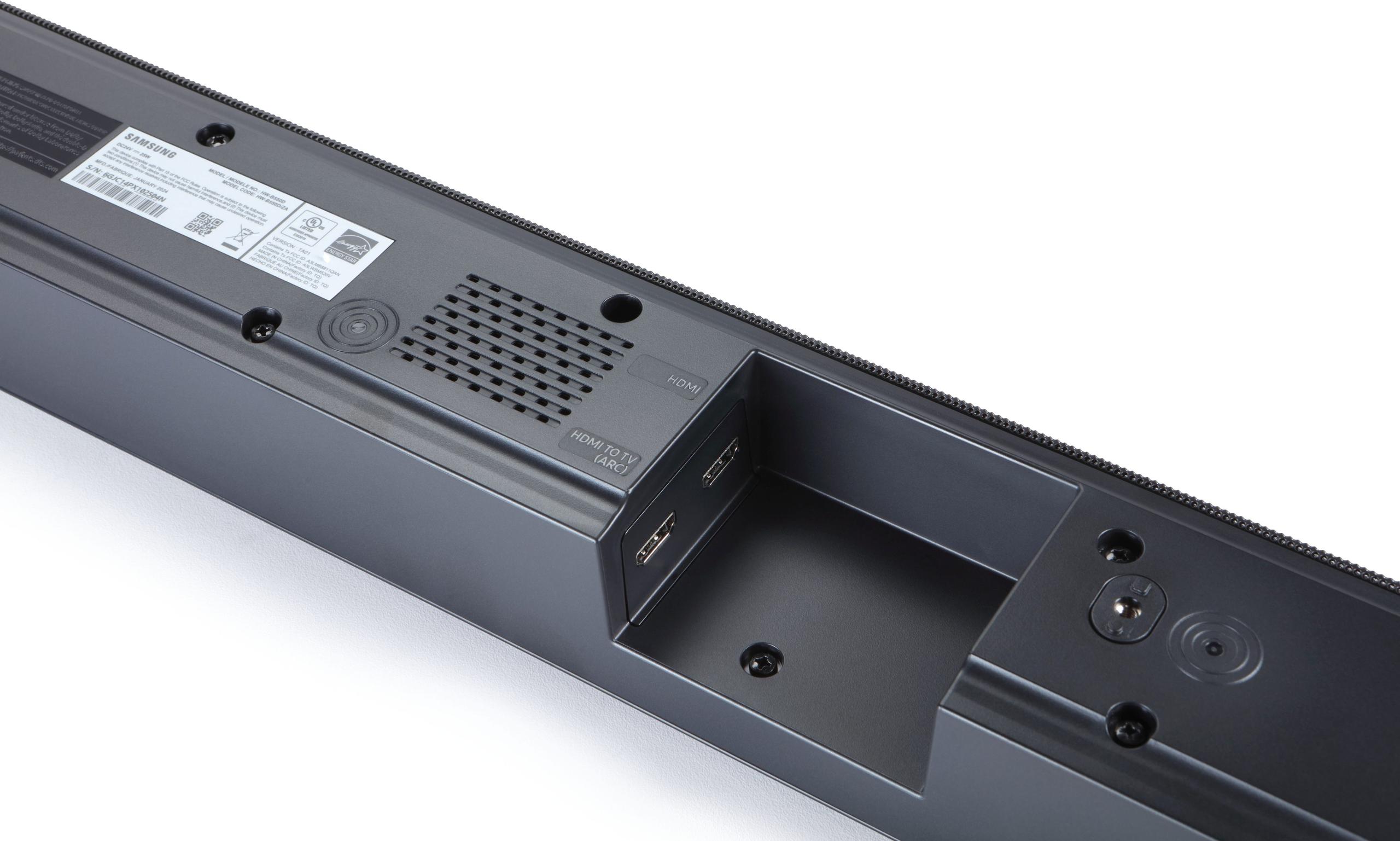
The Samsung HW-B550D, reflecting its 2022 origins, uses HDMI 1.4 with basic ARC support and can only pass through 1080p video. If you connect a 4K source through the soundbar to your TV, the video will be downscaled. This isn't necessarily a deal-breaker – you can connect 4K sources directly to your TV and use the TV's ARC connection to send audio to the soundbar – but it's less convenient and limits your setup flexibility.
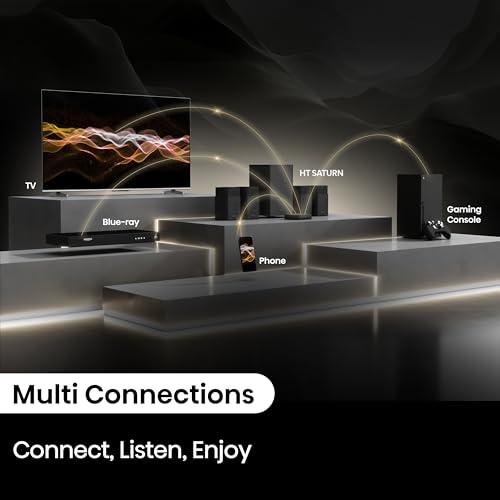
The wireless technology differences are equally telling. The Hisense uses Bluetooth 5.3, which offers better range, stability, and battery efficiency compared to the Samsung's Bluetooth 4.2. More importantly, the Hisense uses three separate wireless frequency bands to maintain connections between its central hub and all the satellite speakers, reducing the chance of dropouts or interference from Wi-Fi networks and other devices.
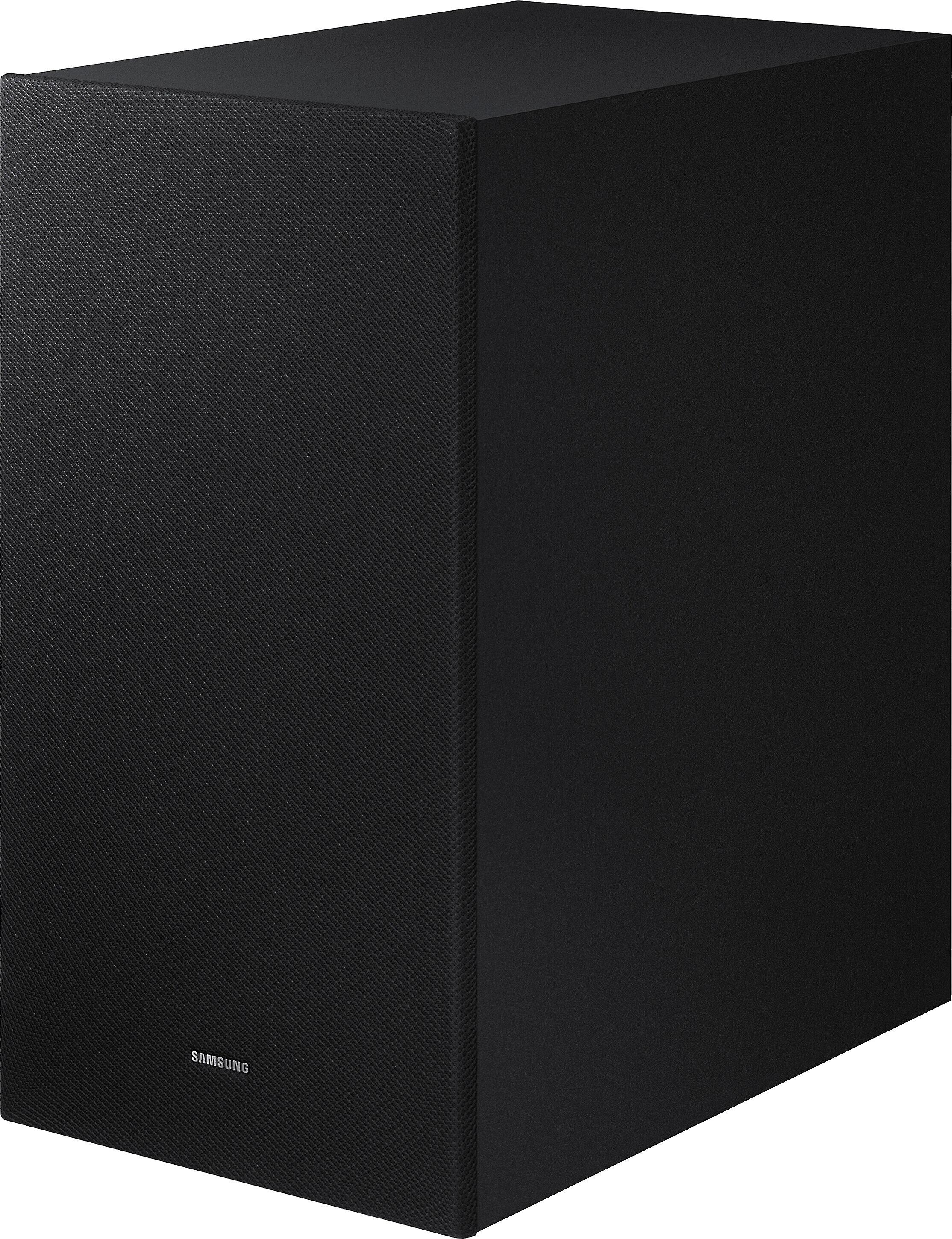
Here's where personal preference and lifestyle factors become crucial. The Samsung HW-B550D offers what many users actually want: plug it in, connect one cable to your TV, and you're done. The wireless subwoofer pairs automatically, and within minutes you have significantly better audio than your TV speakers provided.
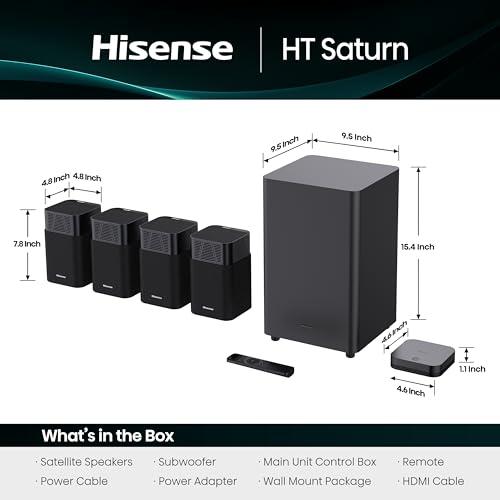
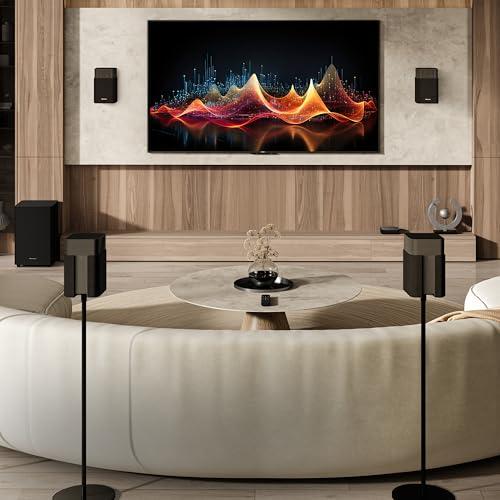
The Hisense HT Saturn requires more commitment. You need to find locations for four satellite speakers around your room, each requiring power outlets. While the speakers connect wirelessly to the main hub, they still need to be plugged into the wall. The system includes wall-mounting hardware, but the installation process is inherently more involved.
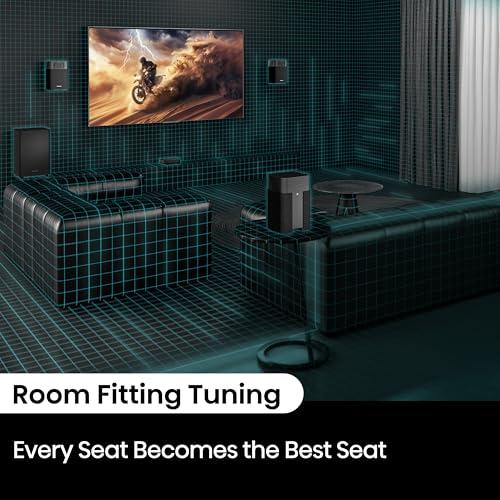
That said, users who take the time for proper Hisense setup consistently report that the results justify the effort. The ability to position speakers optimally for your specific room layout, combined with the system's Room Fitting Tuning feature (when paired with compatible Hisense TVs), can create a truly customized audio experience.
Both systems include thoughtful features that adapt to different content types, but they take different approaches. The Samsung HW-B550D focuses on practical, everyday usability with features like Adaptive Sound Lite, which automatically analyzes whatever you're watching and adjusts the audio profile accordingly. Game Mode reduces audio processing delays for gaming, while Night Mode compresses dynamic range so you can watch action movies without waking the neighbors.
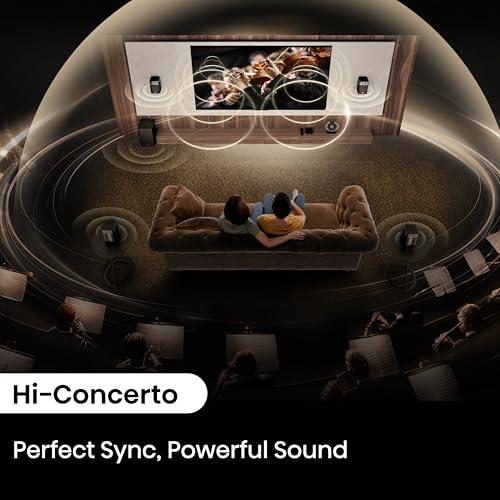
The Hisense HT Saturn takes a more sophisticated approach with AI-powered sound optimization and multiple specialized modes for different content types. But its most interesting feature is Hi-Concerto technology, which allows the system to work in conjunction with Hisense TV speakers to create an even wider soundstage. This integration shows where audio technology is heading – treating all the speakers in your room as a coordinated system rather than separate components.
At the time of writing, these products occupy very different price tiers, with the Samsung HW-B550D positioned as a premium budget option while the Hisense HT Saturn commands a significant premium for its advanced feature set. This price difference isn't arbitrary – it reflects fundamental differences in manufacturing complexity, component count, and target market.
The Samsung delivers exceptional value for users who primarily want better dialogue clarity and some surround sound enhancement without complexity. It's particularly compelling for apartment dwellers, renters who can't install multiple speakers, or anyone who values simplicity over ultimate performance.
The Hisense is harder to recommend universally because its benefits are more situational. In larger rooms where its power and multi-speaker design can shine, and for users who regularly watch Atmos-enabled content, the premium can be justified. But in smaller spaces or for casual TV watching, many of its advanced features won't be fully utilized.
If you're building a dedicated home theater space, the choice becomes clearer. The Hisense HT Saturn offers a much more scalable foundation for serious movie watching. The ability to place speakers optimally around a seating area, combined with genuine Atmos height effects, creates an experience that approaches traditional home theater receiver systems without the complexity of running speaker wire.
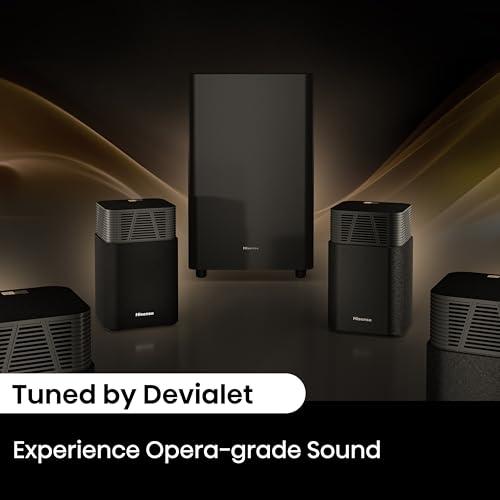
For home theater enthusiasts, the Hisense's Devialet tuning is particularly significant. Devialet is a French audio company known for extremely high-end speakers and amplifiers, and their involvement in tuning the HT Saturn shows in the system's ability to handle both delicate musical passages and explosive action sequences with equal competence.
The Samsung, while not designed for dedicated theater use, shouldn't be dismissed for casual movie watching. Its strength in dialogue reproduction makes it excellent for dialogue-heavy content, and in smaller rooms, the virtual surround effects can be surprisingly convincing.
Choose the Samsung HW-B550D if you want immediate improvement in TV audio without complications. It's perfect for apartments, small to medium rooms, or anyone who prioritizes dialogue clarity above all else. The simple setup and reliable performance make it an excellent choice for users who want better sound but don't want to become audio enthusiasts.
Go with the Hisense HT Saturn if you're committed to creating a genuine surround sound experience and have the room size and setup flexibility to take advantage of its capabilities. It's the better choice for movie enthusiasts, gamers who want immersive audio, or anyone building a dedicated entertainment space.
The technology gap between 2022 and 2025 audio products is significant, with newer systems offering better wireless connectivity, more sophisticated processing, and improved integration with modern video standards. But sometimes the simpler, proven approach is exactly what you need. The key is honestly assessing your space, usage patterns, and how much complexity you're willing to embrace for better sound quality.
| Hisense HT Saturn HTSATURN 4.1.2Ch Sound Bar System | Samsung HW-B550D 3.1 Channel Sound Bar |
|---|---|
| Channel Configuration - Determines surround sound capability and immersion level | |
| 4.1.2 channels with physical height speakers for true 3D audio | 3.1 channels with virtual surround processing only |
| Speaker Count & Design - More speakers generally mean better sound separation | |
| 13 speakers total: 4 wireless satellites + subwoofer + central hub | 4 speakers total: soundbar drivers + wireless subwoofer |
| Dolby Atmos Support - Essential for modern movie and gaming audio | |
| True Dolby Atmos and DTS:X decoding with physical height channels | No true Atmos - uses DTS Virtual:X simulation instead |
| Total Power Output - Affects maximum volume and bass impact | |
| 720W across all speakers (significant headroom for large rooms) | ~410W total (adequate for small-medium rooms) |
| Audio Tuning - Professional calibration can dramatically improve sound quality | |
| Devialet tuned for premium audio performance | Samsung's standard tuning with adaptive sound modes |
| HDMI Connectivity - Critical for 4K gaming and streaming compatibility | |
| HDMI 2.1 with eARC, 4K/60Hz pass-through (future-proof) | HDMI 1.4 with basic ARC, 1080p pass-through only |
| Bluetooth Version - Newer versions offer better range and stability | |
| Bluetooth 5.3 (latest standard, improved performance) | Bluetooth 4.2 (older standard, more interference prone) |
| Setup Complexity - Balance between performance and convenience | |
| Complex: 4 satellites + subwoofer placement, multiple power outlets needed | Simple: soundbar + wireless subwoofer, minimal setup required |
| Room Size Suitability - Power and design affect optimal room dimensions | |
| Medium to large rooms (distributed speakers fill space effectively) | Small to medium rooms (front-firing design has range limits) |
| TV Integration Features - Enhanced control and optimization capabilities | |
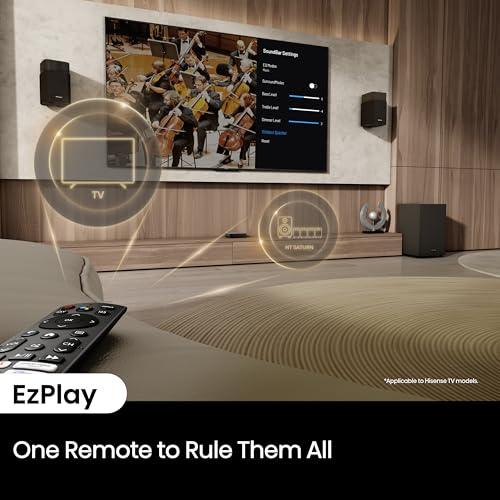
| Hi-Concerto and EZPlay with Hisense TVs, Room Fitting Tuning | Basic HDMI CEC control, Game Mode optimization |
| Dialogue Clarity Approach - How each system handles voice reproduction | |
| Phantom center imaging through left/right coordination | Dedicated physical center channel optimized for speech |
| Subwoofer Specifications - Low-frequency extension affects movie impact | |
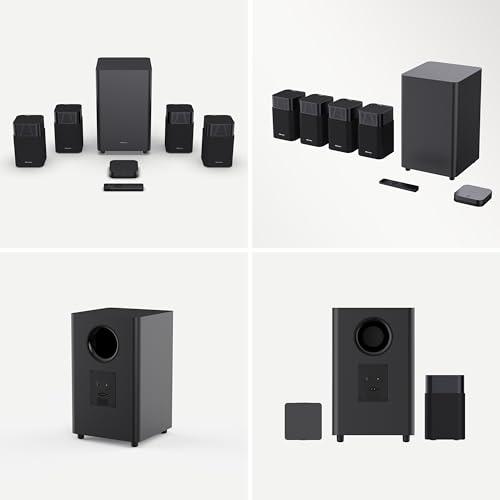
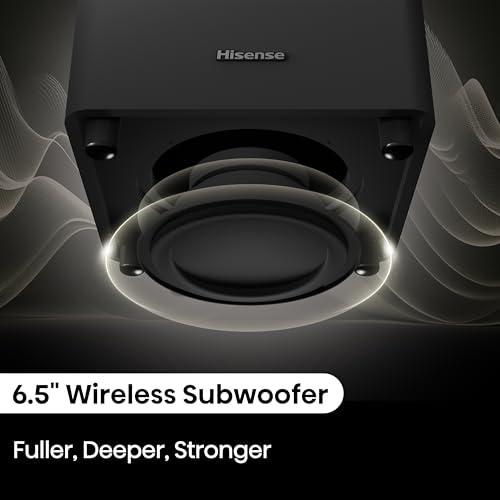
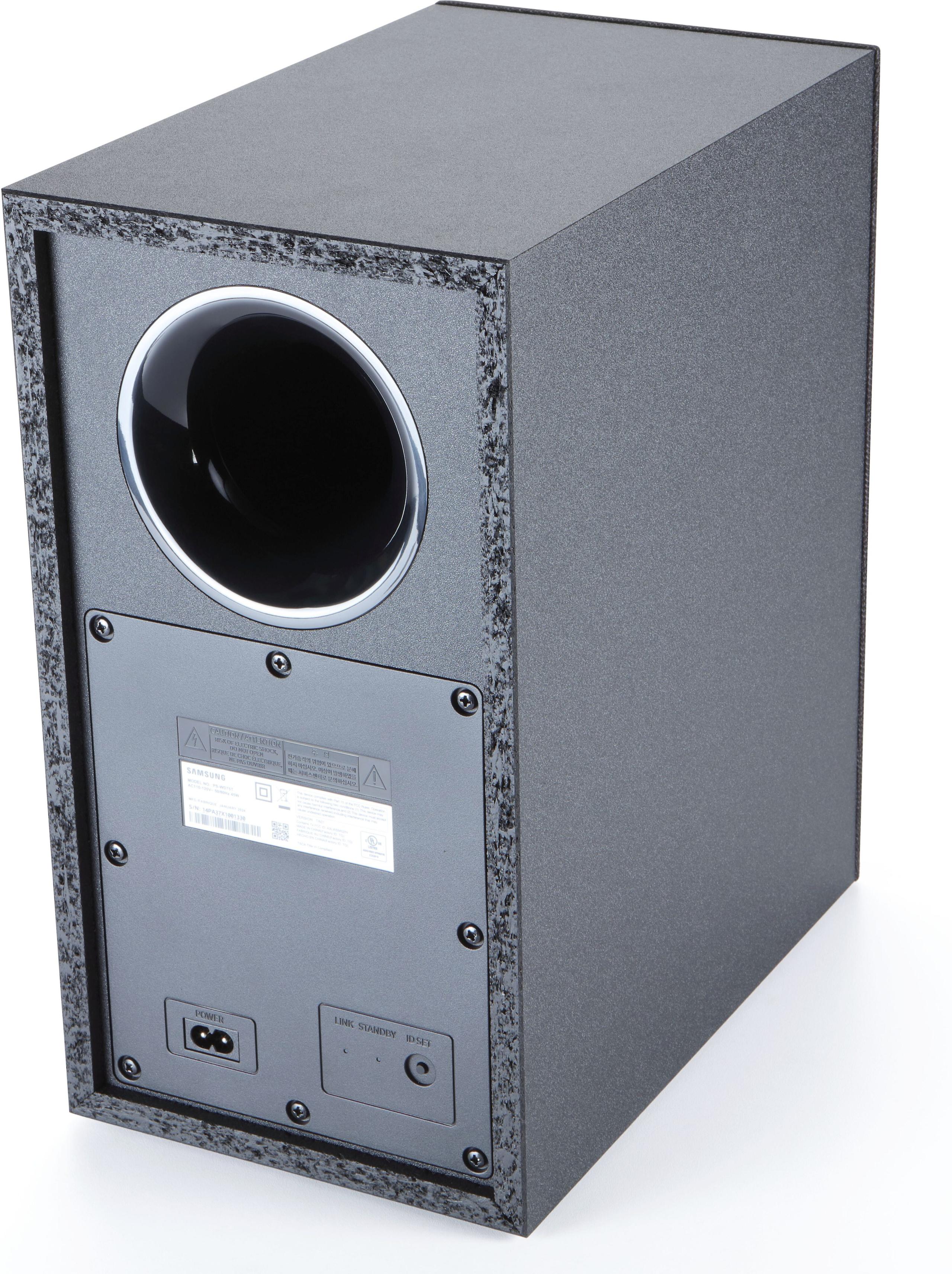
| 6.5" wireless subwoofer, 40Hz extension, down-firing design | 5" wireless subwoofer with ported enclosure, Bass Boost mode |
The Hisense HT Saturn is significantly better for large rooms due to its 720W power output and four wireless satellite speakers that physically surround the listening area. The distributed speaker design fills larger spaces more effectively than the Samsung HW-B550D's front-firing configuration, which works best in small to medium rooms.
Only the Hisense HT Saturn supports true Dolby Atmos with physical height channels and dedicated up-firing drivers. The Samsung HW-B550D does not support true Atmos but uses DTS Virtual:X to simulate height effects through software processing, which is less immersive than genuine Atmos audio.
The Samsung HW-B550D is much easier to set up, requiring only the main soundbar connection to your TV and automatic wireless pairing with the subwoofer. The Hisense HT Saturn requires positioning four satellite speakers around your room, each needing power outlets, making installation more complex but ultimately more rewarding.
The Hisense HT Saturn creates true surround sound with speakers physically positioned around your room, while the Samsung HW-B550D uses virtual processing to simulate surround effects from a single front-facing soundbar. The Hisense offers more immersive audio, while the Samsung excels at dialogue clarity with its dedicated center channel.
The Hisense HT Saturn fully supports 4K with HDMI 2.1 and eARC, allowing 4K/60Hz pass-through without quality loss. The Samsung HW-B550D uses older HDMI 1.4 technology that only supports 1080p pass-through, potentially downscaling 4K sources connected through the soundbar.
The Hisense HT Saturn has superior bass with its larger 6.5" wireless subwoofer and more powerful 40W amplification. The Samsung HW-B550D includes a smaller 5" subwoofer with Bass Boost mode that's adequate for most content but less impactful than the Hisense system.
Both work well for gaming, but the Hisense HT Saturn provides more immersive gaming audio with true 3D positioning effects and HDMI 2.1 compatibility with modern consoles. The Samsung HW-B550D offers a dedicated Game Mode that reduces audio delay and works well for competitive gaming where dialogue clarity matters most.
The Hisense HT Saturn is significantly better for movies due to its true Dolby Atmos support, surround sound speakers, and ability to create genuine overhead effects that enhance cinematic experiences. The Samsung HW-B550D is adequate for casual movie watching but lacks the immersive capabilities of the Hisense system.
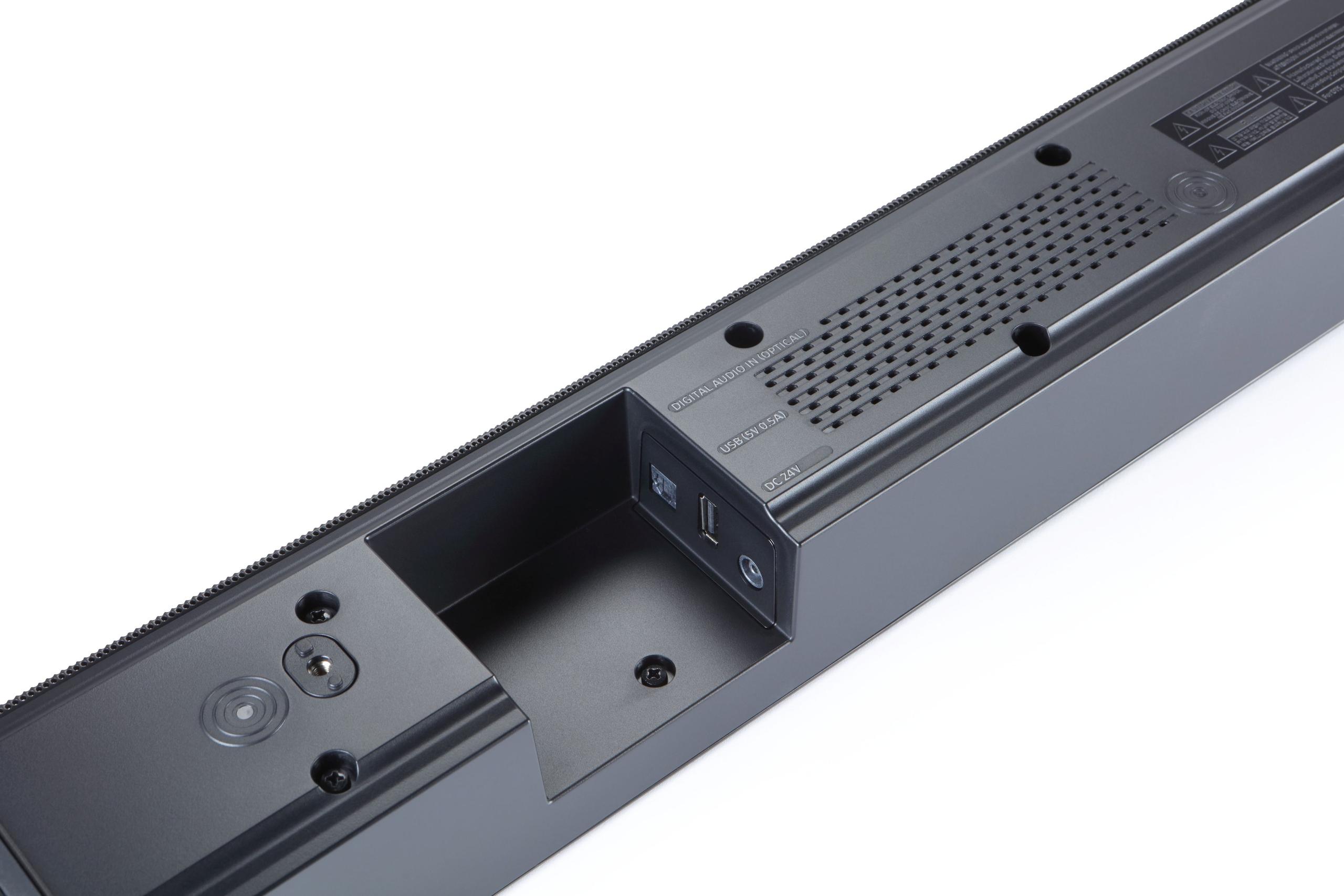
Both soundbars work with any TV brand through HDMI or optical connections. However, the Hisense HT Saturn offers enhanced features like Hi-Concerto and Room Fitting Tuning when paired with Hisense TVs, while the Samsung HW-B550D provides standard compatibility across all TV brands.
The Samsung HW-B550D is better for apartments due to its simpler setup, smaller footprint, and Night Mode that compresses audio dynamics for neighbor-friendly listening. The Hisense HT Saturn requires more space and multiple speaker placements that may not be practical in rental situations.
The Hisense HT Saturn includes 13 total speakers across four wireless satellites, a subwoofer, and the central hub, creating true multi-channel audio. The Samsung HW-B550D has 4 speakers total - multiple drivers in the main soundbar plus one wireless subwoofer.
Value depends on your needs: the Samsung HW-B550D offers excellent value for users wanting simple setup and clear dialogue improvement over TV speakers. The Hisense HT Saturn provides better value for serious audio enthusiasts who want true home theater surround sound and are willing to invest in a more complex but significantly more capable system.
We've done our best to create useful and informative comparisons to help you decide what product to buy. Our research uses advanced automated methods to create this comparison and perfection is not possible - please contact us for corrections or questions. These are the sites we've researched in the creation of this article: bestbuy.com - youtube.com - blog.son-video.com - youtube.com - youtube.com - techradar.com - ecoustics.com - jbhifi.com.au - shop.hisense-usa.com - bhphotovideo.com - bestbuy.com - digitalreviews.net - hisense-usa.com - projectorscreenstore.com - valueelectronics.com - dolby.com - giftpack.ai - bestbuy.com - crutchfield.com - avsforum.com - consumerreports.org - abt.com - pcrichard.com - samsung.com - samsung.com - rtings.com - samsung.com - jeffsappliance.com

Privacy Policy
Terms and Conditions - Affiliate Policy
Home Security
© Copyright 2008-2026.
11816 Inwood Rd #1211, Dallas, TX 75244