





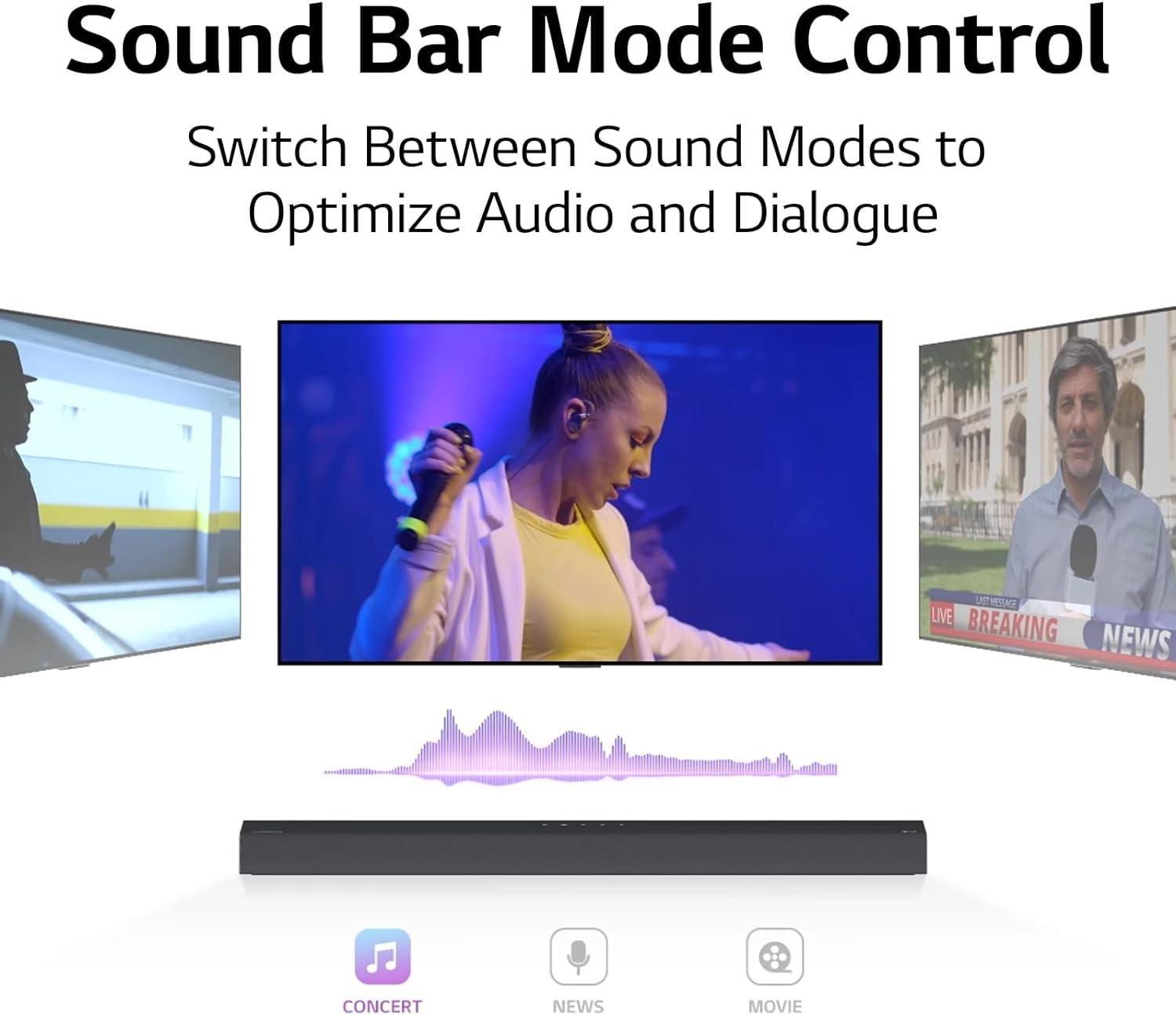

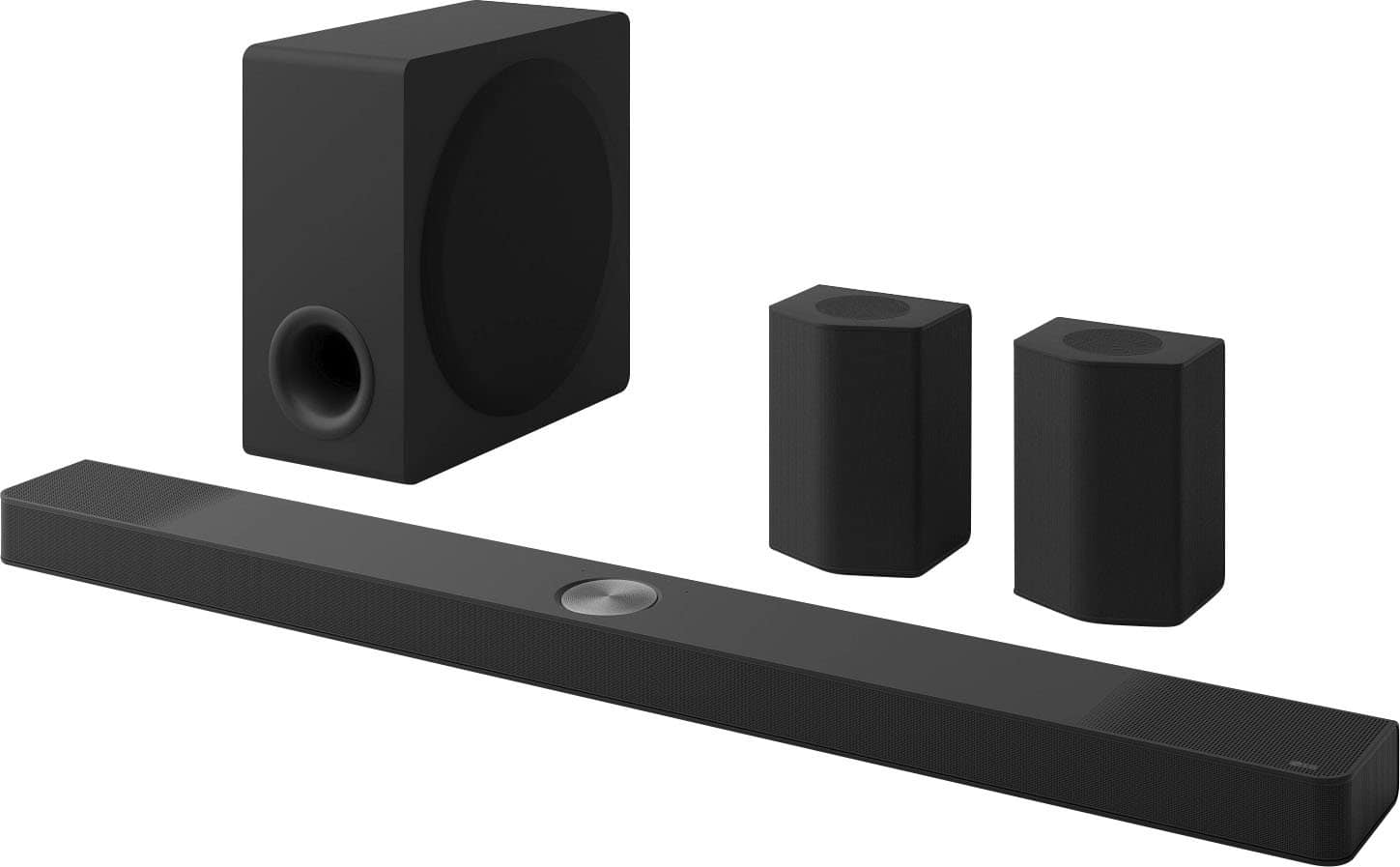
Shopping for a premium soundbar system can feel overwhelming, especially when you're looking at two completely different approaches to surround sound. The Hisense HT Saturn and LG S95TR both promise to transform your living room into a home theater, but they go about it in dramatically different ways. Released in 2024, these systems represent the latest thinking in home audio design—and at the time of writing, they're priced quite differently despite both targeting the premium market.
Before diving into the comparison, it's worth understanding what makes a soundbar system "premium." Unlike basic soundbars that simply boost your TV's audio, premium systems create true surround sound using multiple channels—think of channels as separate audio streams that can place sounds in specific locations around your room. When a helicopter flies overhead in a movie, a good surround system makes it sound like it's actually moving above you.
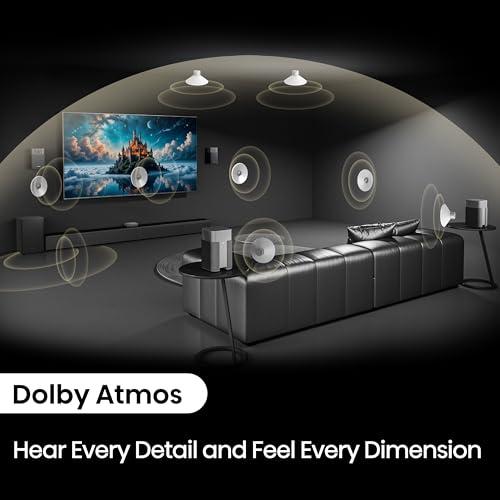
The magic happens through formats like Dolby Atmos and DTS:X, which are audio technologies that encode three-dimensional sound information. Instead of just left and right audio (stereo), these formats can place sounds anywhere in a sphere around you—above, behind, to the sides, and even moving between locations.
Modern premium soundbars achieve this through various combinations of traditional forward-firing speakers, up-firing drivers that bounce sound off your ceiling to create height effects, and wireless satellite speakers that can be placed around your room. The number before the periods in configurations like "4.1.2" tells you how this breaks down: main channels, subwoofer channels, and height channels respectively.
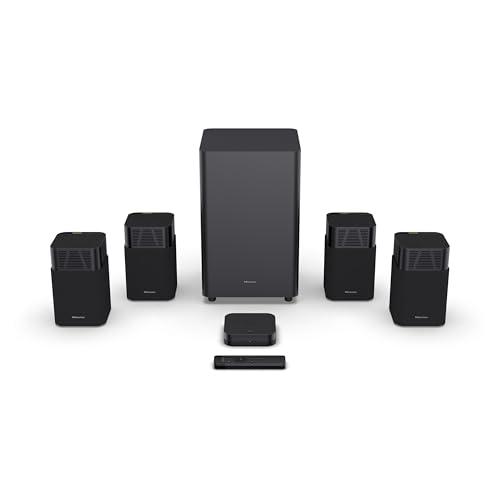
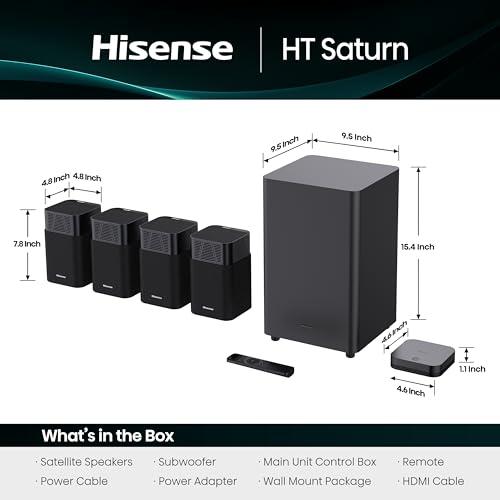
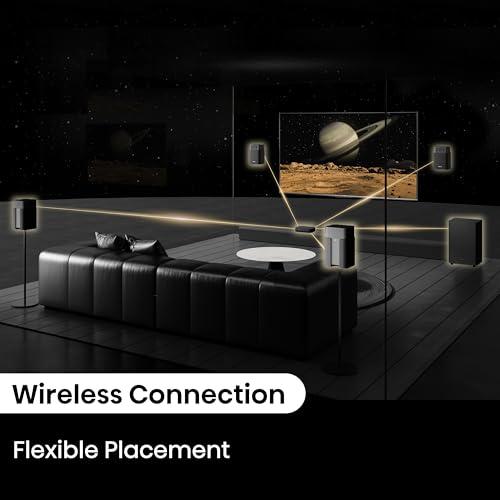
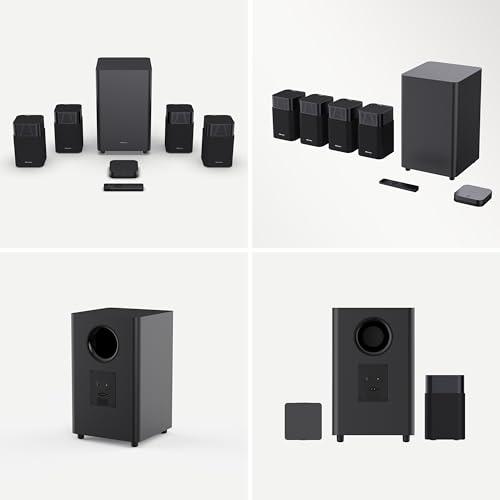
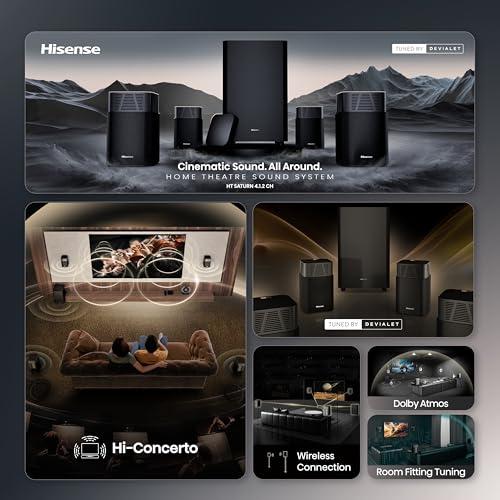
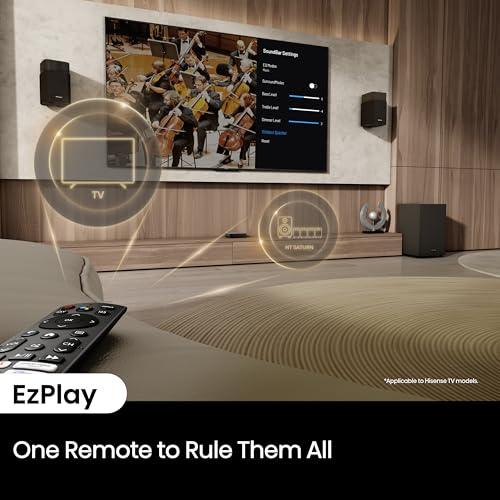
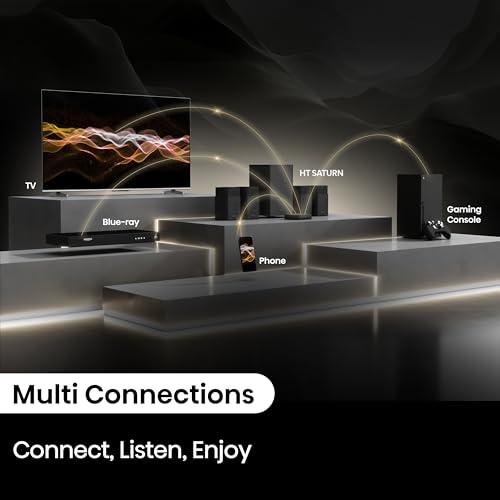
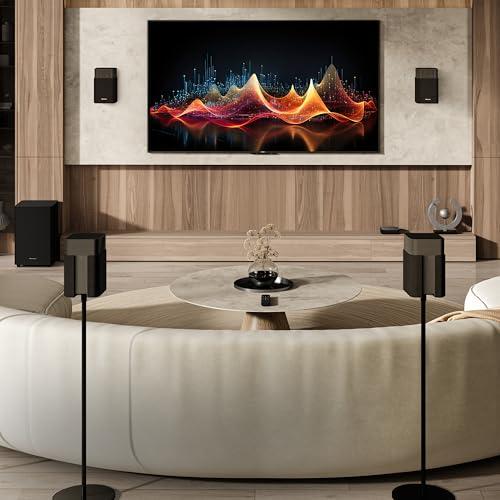
The Hisense HT Saturn throws out the traditional soundbar playbook entirely. Instead of one long bar under your TV, you get a compact central control unit plus four separate wireless satellite speakers that you place around your room, along with a wireless subwoofer. It's essentially a 4.1.2 channel system spread across multiple small speakers rather than crammed into a single bar.
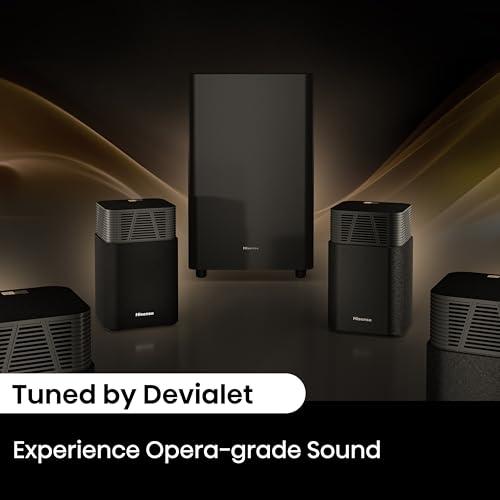
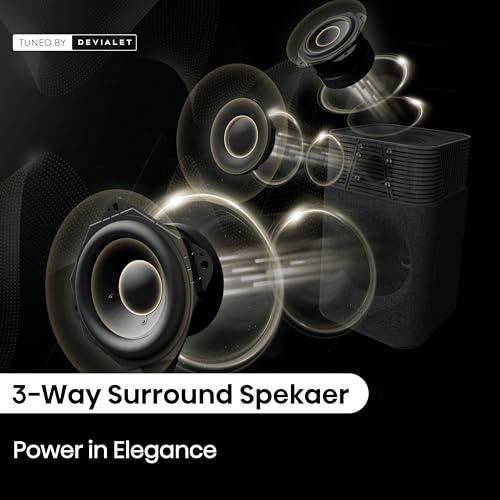
This unusual design comes from a partnership with Devialet, the French audio company known for extremely expensive high-end speakers. Devialet's engineers tuned the HT Saturn to deliver what they call "opera-grade" sound quality, focusing on tonal balance and clarity across all frequencies. Each satellite speaker uses a three-way design—meaning it has separate drivers for bass, midrange, and treble—which typically results in cleaner, more detailed sound than speakers trying to handle all frequencies with one or two drivers.
The system's 13 total speakers include eight full-range drivers, four precision tweeters for high frequencies, and one 6.5-inch subwoofer. The satellites connect wirelessly using three different frequency bands (2.4GHz, 5.2GHz, and 5.8GHz) to avoid interference from your Wi-Fi network and other devices.
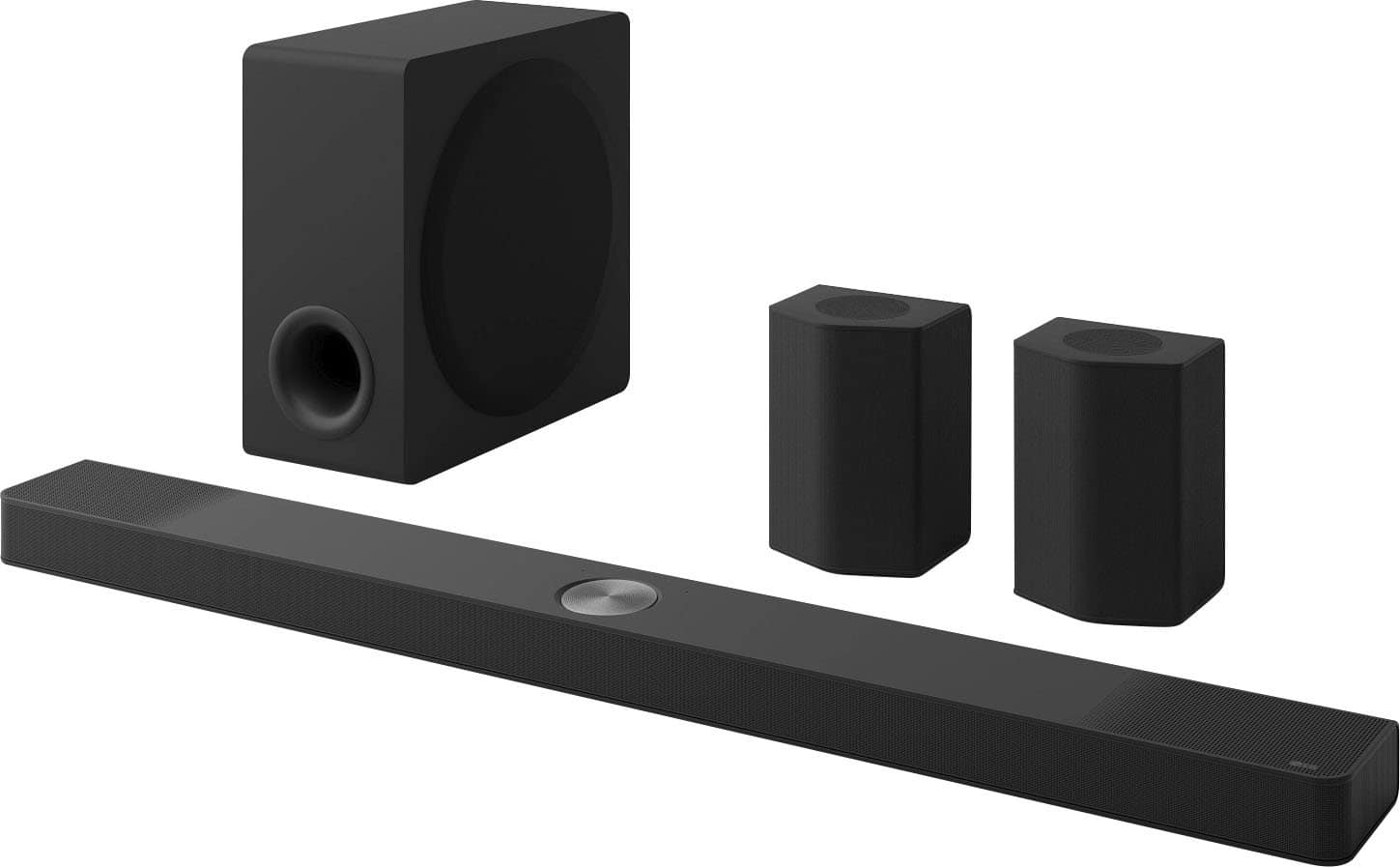
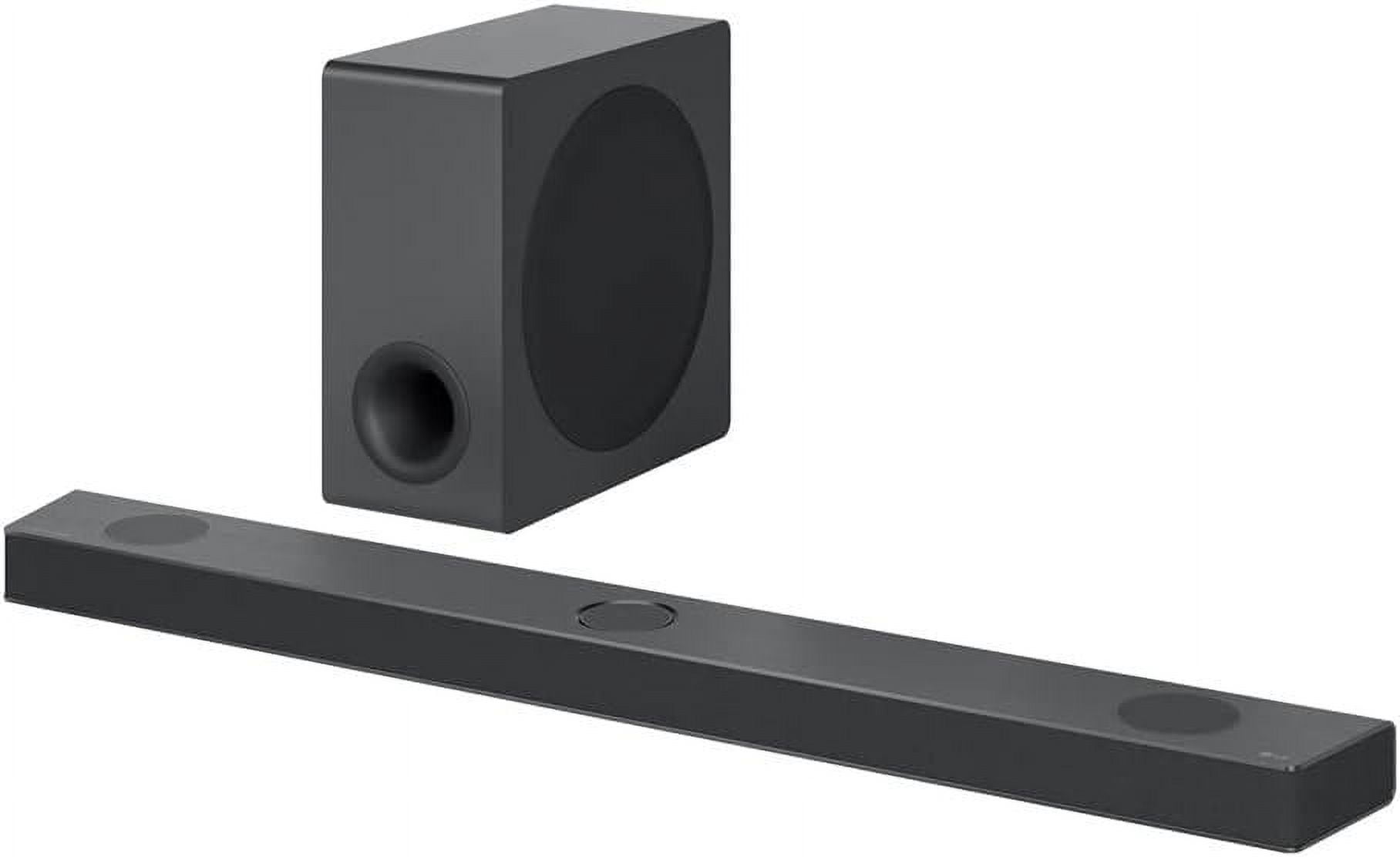
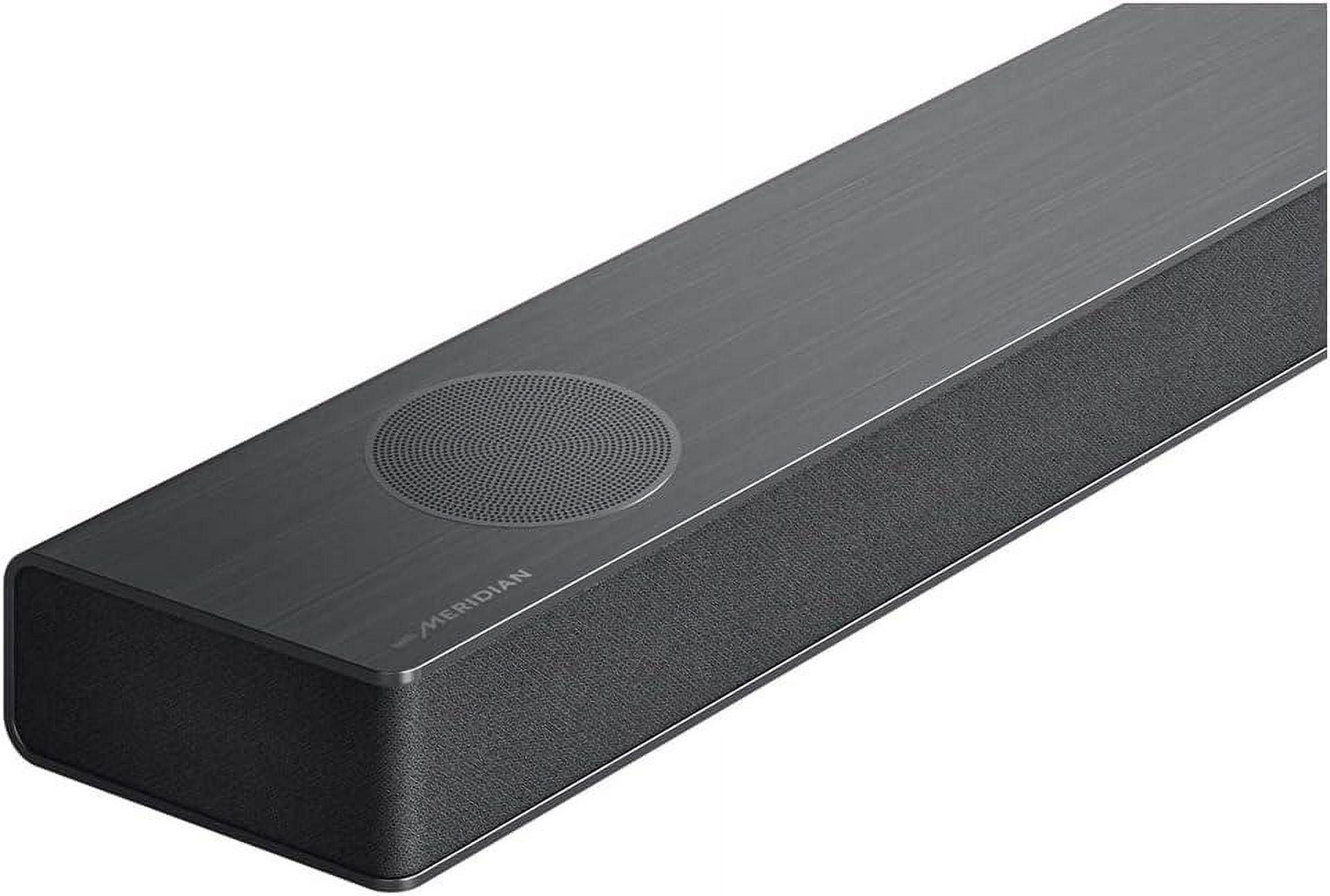
The LG S95TR takes the opposite approach: more is more. This 9.1.5 channel system crams serious firepower into a traditional soundbar design, with dedicated wireless rear speakers that include their own up-firing drivers for height effects. With 15 total speaker drivers and five separate up-firing channels, the S95TR creates what LG calls an "audio dome" around your listening position.
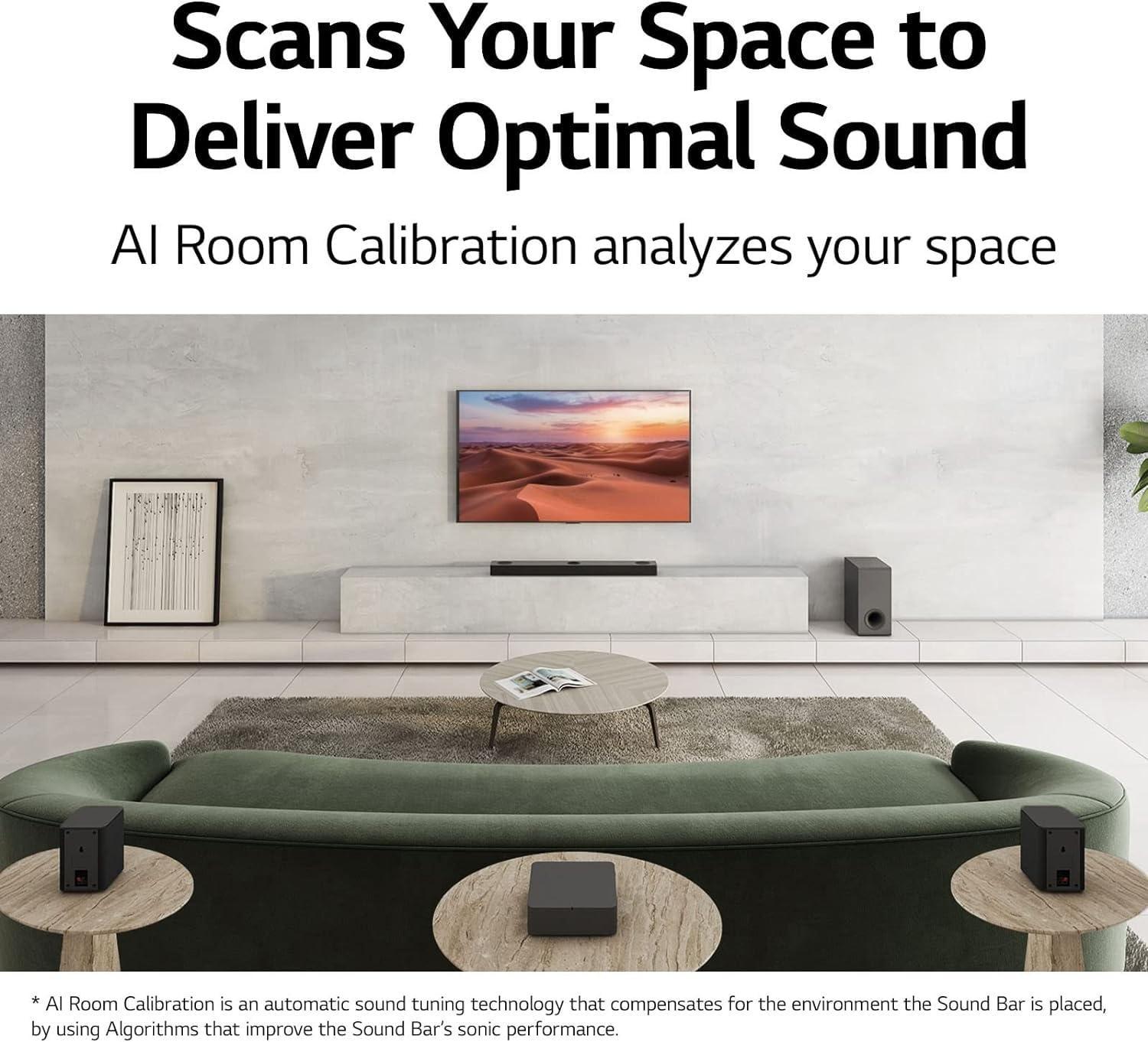
The system includes LG's latest AI Room Calibration Pro, which uses built-in microphones to analyze your room's acoustics and automatically adjust the sound. Unlike basic room correction that just tweaks volume levels, this system creates a detailed acoustic map of your space and makes nuanced adjustments for things like hard surfaces, furniture placement, and room dimensions.
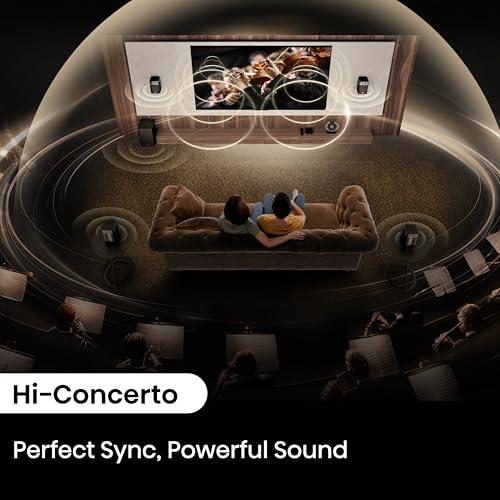
For LG TV owners, the S95TR offers WOW Orchestra technology, which synchronizes your TV's built-in speakers with the soundbar to create an even wider soundstage. It's like having extra channels that extend beyond the physical boundaries of the soundbar itself.
This is where the fundamental difference in approach becomes most apparent. The LG S95TR simply delivers more convincing spatial audio, and the reason comes down to pure mathematics. With 9.1.5 channels versus the Hisense HT Saturn's 4.1.2, the LG system has more than twice as many discrete audio channels to work with.
In practice, this means when you're watching something like Top Gun: Maverick or Dune, the S95TR can place jet engines, explosions, and ambient sounds with startling precision. The five up-firing speakers—three in the main bar and two in the rear satellites—create genuine overhead effects that make you instinctively look up. Expert reviews consistently note that the LG creates an "incredibly immersive bubble of sound" where you can clearly distinguish between explosions happening at different distances and directions.
The Hisense HT Saturn, while impressive for its configuration, faces a mathematical limitation. The 4.1.2 setup represents the absolute minimum for Dolby Atmos compatibility. Most audio engineers agree that effective Atmos requires at least 5.1.4 channels, which the Hisense doesn't quite reach. The four satellite speakers do create room-filling sound that's more enveloping than most traditional soundbars, but they can't match the directional precision of a true 9.1.5 system.
However, the HT Saturn has one interesting advantage: the separate satellites can be positioned optimally for your specific room layout, whereas the S95TR's soundbar is fixed in one location under your TV.
Nothing ruins a movie night faster than constantly adjusting volume because you can't hear what characters are saying during quiet scenes, then getting blasted by action sequences. This is where center channel performance becomes crucial, and it highlights a key technical difference between these systems.
The LG S95TR includes a dedicated center channel speaker—a physical driver specifically responsible for dialogue and vocals. Combined with LG's Clear Voice Pro technology, which uses AI processing to enhance speech frequencies, this creates consistently clear dialogue even at lower volumes or during complex soundtracks.
The Hisense HT Saturn takes a different approach, creating what's called a "phantom center" channel. This uses precise timing and level adjustments between the left and right front speakers to trick your brain into perceiving dialogue as coming from the center, even though there's no physical speaker there. Devialet's tuning optimizes this effect, and many users report surprisingly solid vocal positioning. However, physics dictates that a phantom center can never quite match the stability and precision of a dedicated center speaker, especially if you're not sitting in the exact center of your couch.
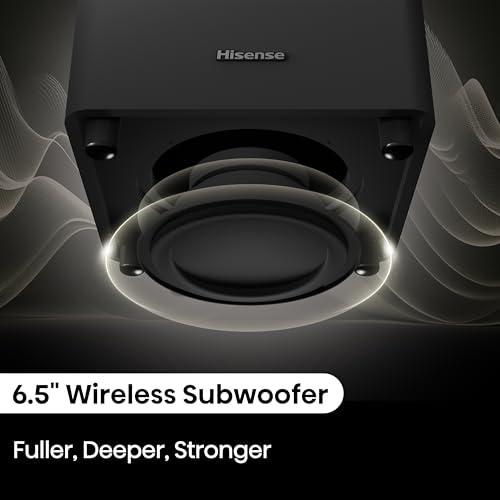
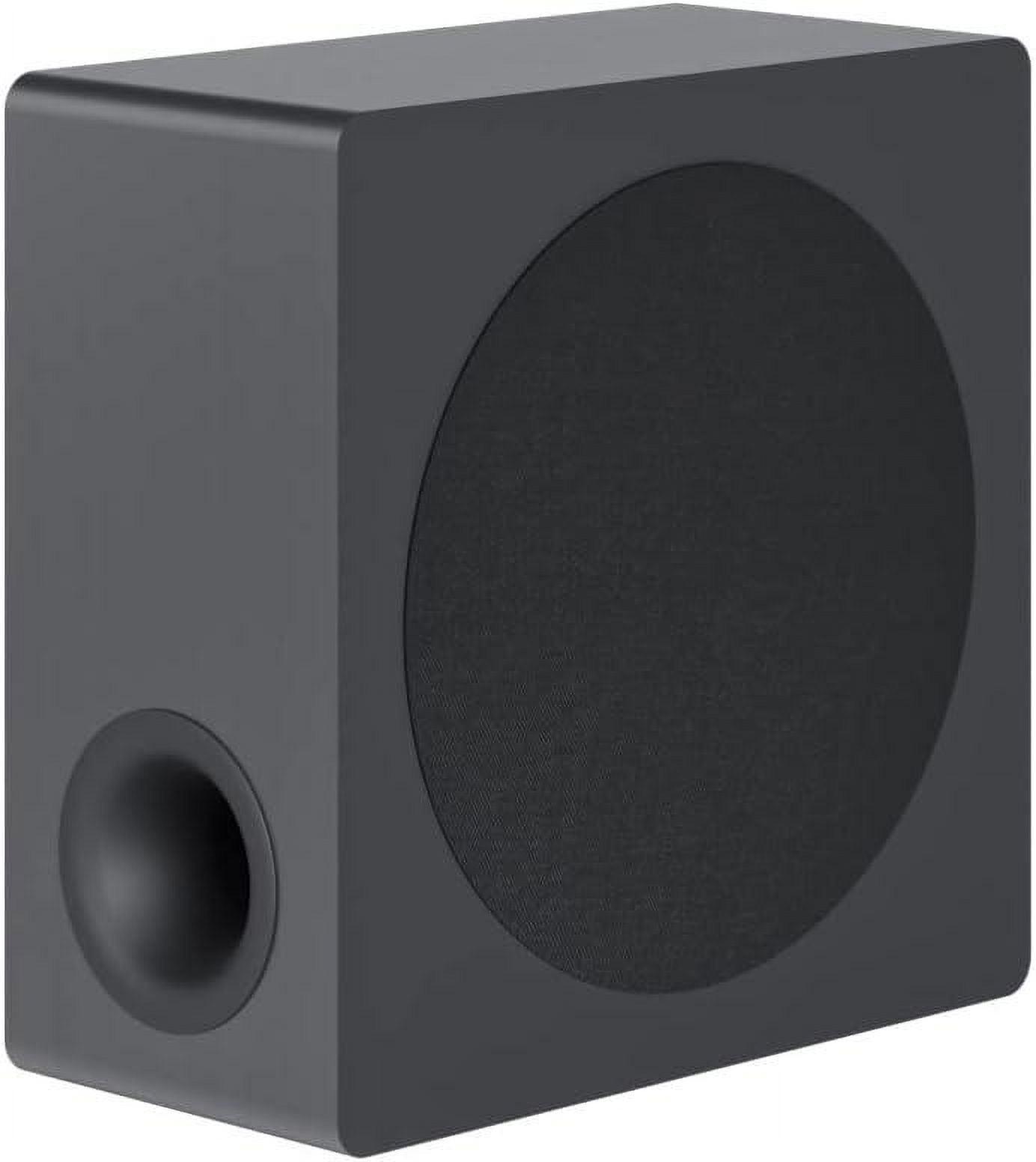
Both systems include wireless subwoofers, but they're designed with different priorities. The Hisense HT Saturn features a 6.5-inch subwoofer that extends down to 40Hz—low enough to reproduce most movie sound effects and music with convincing impact. The wireless connection means you can place it wherever it sounds best in your room, which is crucial since bass response varies dramatically based on subwoofer placement.
The LG S95TR includes a larger subwoofer with a front-port design that delivers deeper, more integrated bass. Expert reviews consistently note that the LG's sub "feels more integrated with the main soundbar" and "can fill larger rooms with deep, impactful low-end that doesn't get muddy." The front port design also makes placement less critical than traditional rear-ported subs.
For home theater use, the LG's bass advantage becomes more apparent in larger rooms or during extended listening sessions. The Hisense provides satisfying impact for most content, but may reach its limits in rooms over 15 feet wide or during particularly demanding movie soundtracks.
This is where 2024's audio technology really shines compared to systems from just a few years ago. Both manufacturers have invested heavily in automated room correction, but their approaches differ significantly.
The LG S95TR's AI Room Calibration Pro represents the more sophisticated approach. The system uses multiple microphones to analyze your room's acoustics, measuring everything from ceiling height to wall materials to furniture placement. It then creates a detailed acoustic map and makes hundreds of micro-adjustments to timing, frequency response, and channel levels. This works regardless of what TV brand you own, making it truly universal.
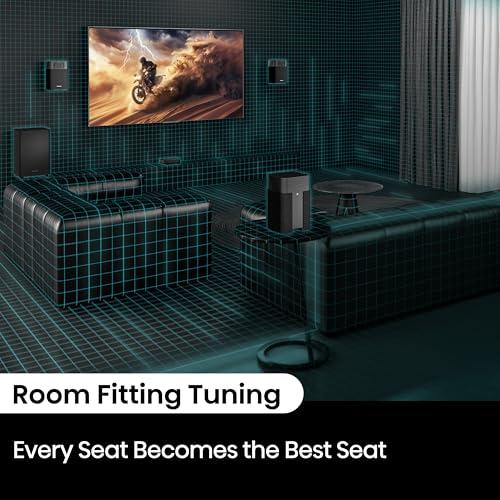
The Hisense HT Saturn includes Room Fitting Tuning, but it requires connection to a compatible Hisense TV to unlock its full potential. When properly configured, it optimizes the phantom center effect and adjusts for the unique challenges of four separate satellite speakers. However, the calibration is less sophisticated than LG's AI system and may require more manual tweaking to get optimal results.
For most users, the LG's more advanced calibration system means better performance out of the box with less fiddling required. This becomes especially important if you're not comfortable with audio terminology or prefer plug-and-play simplicity.
Here's where the LG S95TR pulls significantly ahead in terms of modern convenience and compatibility. The system includes Wi-Fi connectivity with support for AirPlay 2, Chromecast, and multiple streaming platforms. You can stream music directly from your phone, use voice commands through Alexa or Google Assistant, and integrate the soundbar into multi-room audio systems.
Gaming enthusiasts will appreciate the S95TR's VRR (Variable Refresh Rate) and ALLM (Auto Low Latency Mode) support, which ensures perfectly synchronized audio and video during fast-paced games. The spatial audio capabilities also enhance gaming immersion—you can actually hear enemies approaching from specific directions in competitive games.
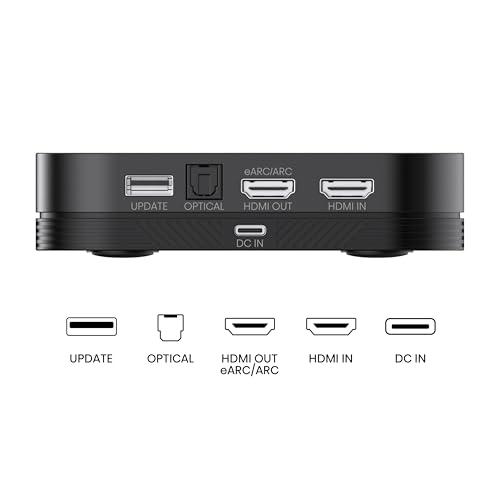
The Hisense HT Saturn takes a more basic approach to connectivity, offering HDMI eARC, optical input, and Bluetooth 5.3, but no Wi-Fi or native streaming capabilities. This isn't necessarily a dealbreaker if you primarily use your TV's smart features or external streaming devices, but it does limit the system's versatility compared to more connected alternatives.
Both systems support modern HDMI features like 4K passthrough and Dolby Vision, ensuring compatibility with the latest gaming consoles and streaming devices.
At the time of writing, the LG S95TR costs significantly less than the Hisense HT Saturn—roughly $400 less for what many would consider superior performance. This creates an unusual situation where the more expensive option actually delivers fewer features and channels.
The HT Saturn's premium pricing reflects its Devialet tuning and unique satellite speaker design, plus it recently won EISA's Best Product Award. For audiophiles who prioritize tonal accuracy and musical reproduction above spatial effects, the Devialet partnership may justify the cost difference. The build quality is excellent, and the satellite speakers offer placement flexibility that traditional soundbars can't match.
However, for most home theater applications, the LG S95TR delivers dramatically better value. You're getting more than double the channel count, superior spatial audio capabilities, advanced AI room correction, and extensive modern connectivity features—all for less money. It's a rare case where the more affordable option is also objectively more capable.
After extensive research into expert reviews, user feedback, and technical specifications, the LG S95TR emerges as the better choice for most people building a home theater system. The 9.1.5 channel configuration creates genuinely immersive spatial audio that the Hisense HT Saturn's 4.1.2 setup simply cannot match, while costing less and offering superior modern features.
Choose the LG S95TR if you:
Choose the Hisense HT Saturn if you:
The LG S95TR represents the sweet spot of modern soundbar technology—delivering flagship-level performance at a price that doesn't require a second mortgage. While the Hisense HT Saturn offers excellent audio quality thanks to its Devialet tuning, its limited channel count and higher price make it difficult to recommend for most home theater setups.
For the majority of users looking to upgrade from TV speakers or a basic soundbar, the S95TR provides a more complete, immersive, and future-proof solution that will satisfy for years to come. The technology has reached a point where premium spatial audio is accessible without breaking the bank—and that's something worth celebrating.
| Hisense HT Saturn HTSATURN | LG S95TR |
|---|---|
| Channel Configuration - Determines spatial audio precision and immersion quality | |
| 4.1.2 channels (minimum for Dolby Atmos) | 9.1.5 channels (premium spatial audio experience) |
| Physical Design - Affects placement flexibility and room integration | |
| Four wireless satellite speakers + control hub + subwoofer | Traditional soundbar + wireless rear speakers + subwoofer |
| Total Speaker Count - More drivers enable better sound separation and clarity | |
| 13 speakers (8 full-range, 4 tweeters, 1 subwoofer) | 15 speakers across all components |
| Height Channels - Critical for convincing Dolby Atmos overhead effects | |
| 2 up-firing speakers (basic Atmos implementation) | 5 up-firing speakers (creates true "audio dome") |
| Audio Tuning - Impacts overall sound quality and tonal balance | |
| Devialet-tuned for "opera-grade" clarity | LG's AI Sound Pro with multiple EQ presets |
| Center Channel - Essential for clear dialogue in movies and TV | |
| Phantom center (created through stereo processing) | Dedicated physical center channel with Clear Voice Pro |
| Room Calibration - Optimizes sound for your specific listening environment | |
| Room Fitting Tuning (requires Hisense TV for full features) | AI Room Calibration Pro (works with any TV brand) |
| Subwoofer - Provides low-frequency impact for movies and music | |
| 6.5" wireless subwoofer, 40Hz extension | Larger wireless subwoofer with front-port design |
| Connectivity - Determines compatibility with modern devices and streaming | |
| HDMI eARC, Optical, Bluetooth 5.3 (no Wi-Fi) | HDMI eARC, Wi-Fi, AirPlay 2, Chromecast, Bluetooth |
| Gaming Features - Important for console and PC gaming | |
| Basic HDMI passthrough | VRR, ALLM, and enhanced spatial audio for gaming |
| TV Integration - Expands soundstage using your TV's speakers | |
| Hi-Concerto (Hisense TVs only) | WOW Orchestra (LG TVs) + universal compatibility |
| Price Positioning - Value proposition at time of writing | |
| Premium pricing for fewer channels | Lower cost with significantly more features |
| Best For - Target user and room scenarios | |
| Audiophiles prioritizing music quality, smaller rooms | Home theater enthusiasts, larger rooms, maximum immersion |
The LG S95TR delivers superior surround sound with its 9.1.5 channel configuration compared to the Hisense HT Saturn's 4.1.2 setup. The LG S95TR features five up-firing speakers that create a more convincing "audio dome" effect, while the Hisense HT Saturn uses the minimum channel count for Dolby Atmos. For home theater use, the LG provides significantly more immersive spatial audio.
The numbers represent main channels, subwoofer channels, and height channels respectively. The Hisense HT Saturn's 4.1.2 configuration offers basic surround sound with limited height effects, while the LG S95TR's 9.1.5 setup provides premium spatial audio with dedicated rear speakers and five height channels. This means the LG S95TR can place sounds more precisely around your room.
The LG S95TR excels in dialogue clarity thanks to its dedicated center channel and Clear Voice Pro technology. The Hisense HT Saturn creates a "phantom center" through stereo processing, which can sound good but cannot match the stability of a physical center speaker. For TV shows and movies, the LG S95TR ensures voices remain clear and centered.
Both soundbars work with any TV through HDMI or optical connections. However, the LG S95TR offers more universal features like AI Room Calibration that works with any brand. The Hisense HT Saturn requires a Hisense TV to access its full Room Fitting Tuning capabilities and Hi-Concerto technology.
The LG S95TR provides exceptional value with more than double the channels, superior spatial audio, advanced room calibration, and modern connectivity features at a lower price point. The Hisense HT Saturn costs more while offering fewer channels and features, though it does include premium Devialet tuning for audiophile-quality sound.
The LG S95TR offers easier setup with automatic AI room calibration that works out of the box. The Hisense HT Saturn requires careful positioning of four separate satellite speakers for optimal phantom center performance. Both systems use wireless connections to minimize cable clutter, but the LG S95TR is more plug-and-play friendly.
The LG S95TR is superior for gaming with dedicated features like VRR (Variable Refresh Rate) and ALLM (Auto Low Latency Mode) support. Its 9.1.5 channel configuration also provides better positional audio for competitive gaming. The Hisense HT Saturn offers basic gaming support but lacks the advanced features and spatial precision of the LG S95TR.
The LG S95TR includes comprehensive streaming with Wi-Fi, AirPlay 2, Chromecast, and voice assistant support. The Hisense HT Saturn is limited to Bluetooth 5.3 connectivity with no Wi-Fi or native streaming capabilities. For modern smart home integration, the LG S95TR is far more versatile.
The LG S95TR performs better in larger rooms thanks to its more powerful subwoofer, additional channels, and dedicated rear speakers. The system can fill rooms over 15 feet wide with immersive surround sound. The Hisense HT Saturn works well in smaller to medium rooms but may struggle to create convincing surround effects in very large spaces.
While both support Dolby Atmos, the LG S95TR provides a more complete implementation with five up-firing speakers creating genuine overhead effects. The Hisense HT Saturn uses the minimum 4.1.2 configuration for Atmos compatibility, which limits its ability to create precise height effects. For the full Dolby Atmos experience, the LG S95TR is significantly better.
The LG S95TR delivers superior bass with its larger wireless subwoofer and front-port design that provides deeper, more integrated low-end response. The Hisense HT Saturn features a capable 6.5-inch subwoofer extending to 40Hz, but cannot match the power and room-filling capability of the LG S95TR's bass system.
The Hisense HT Saturn offers premium Devialet tuning for exceptional music quality and flexible satellite speaker placement. The LG S95TR provides superior home theater immersion with 9.1.5 channels, advanced AI calibration, modern connectivity, and better value for money. Choose the Hisense HT Saturn for audiophile music listening or the LG S95TR for comprehensive home theater performance.
We've done our best to create useful and informative comparisons to help you decide what product to buy. Our research uses advanced automated methods to create this comparison and perfection is not possible - please contact us for corrections or questions. These are the sites we've researched in the creation of this article: bestbuy.com - youtube.com - blog.son-video.com - youtube.com - youtube.com - techradar.com - ecoustics.com - jbhifi.com.au - shop.hisense-usa.com - bhphotovideo.com - bestbuy.com - digitalreviews.net - hisense-usa.com - projectorscreenstore.com - valueelectronics.com - dolby.com - giftpack.ai - techradar.com - bestbuy.com - youtube.com - trustedreviews.com - zdnet.com - rtings.com - lg.com - lambcotvandappliance.com - valueelectronics.com - romomattressfurniture.com - dolby.com - youtube.com

Privacy Policy
Terms and Conditions - Affiliate Policy
Home Security
© Copyright 2008-2026.
11816 Inwood Rd #1211, Dallas, TX 75244