




When you're tired of turning up the volume just to hear what characters are saying, or when explosions sound more like gentle thumps, it's time to upgrade your TV's audio. But the world of home theater sound has evolved dramatically in recent years, moving far beyond the simple "soundbar under your TV" approach that dominated the market just a few years ago.
Two products perfectly illustrate this evolution: the Hisense HT Saturn, which throws out the traditional soundbar playbook entirely, and the Klipsch Flexus Core 200, which represents the peak of what a single-unit soundbar can achieve. Both launched in 2024, but they take fundamentally different approaches to solving the same problem – how to get great surround sound without the complexity of a full home theater receiver and wired speakers everywhere.
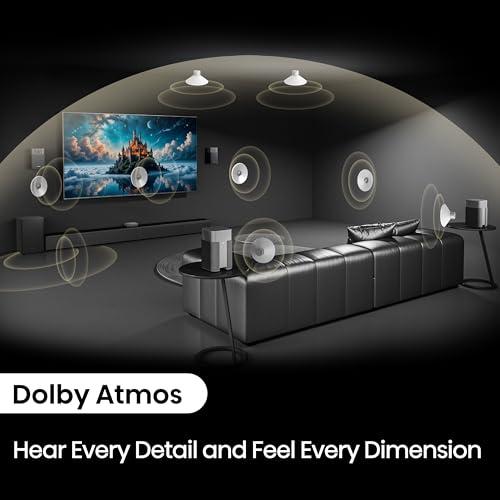
Before diving into these specific products, it's worth understanding what we're dealing with in modern home audio. The biggest game-changer has been Dolby Atmos – a technology that adds height information to surround sound. Instead of just having sounds come from your left, right, front, and back, Atmos can place sounds above you too. Think of helicopters flying overhead or rain falling from the ceiling in a movie scene.
The challenge is reproducing these height effects without installing speakers in your ceiling. Most soundbars use upfiring drivers – speakers that point toward the ceiling and bounce sound off it to create the illusion of overhead audio. It's clever, but it requires the right room conditions to work well.
Another crucial factor is channel configuration, expressed in numbers like 3.1.2 or 4.1.2. The first number represents front channels (left, center, right), the second is subwoofers for bass, and the third indicates height channels for Atmos effects. More channels generally mean better sound positioning, but the implementation matters more than the raw numbers.
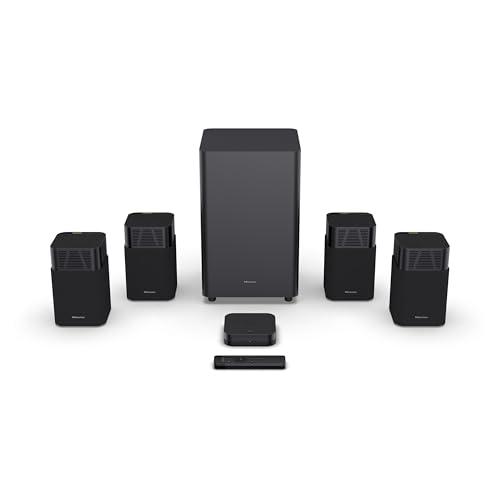
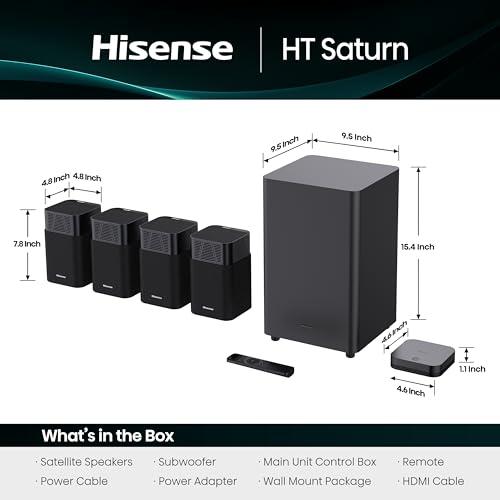
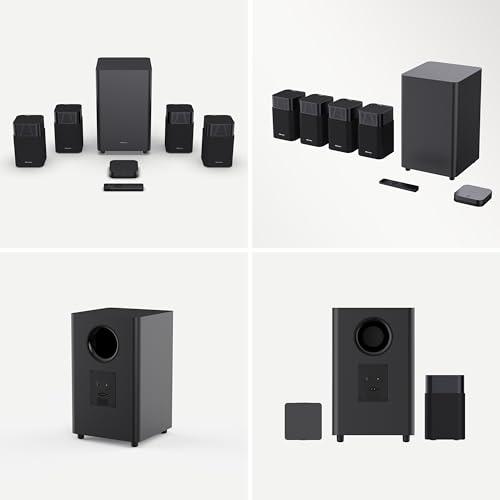
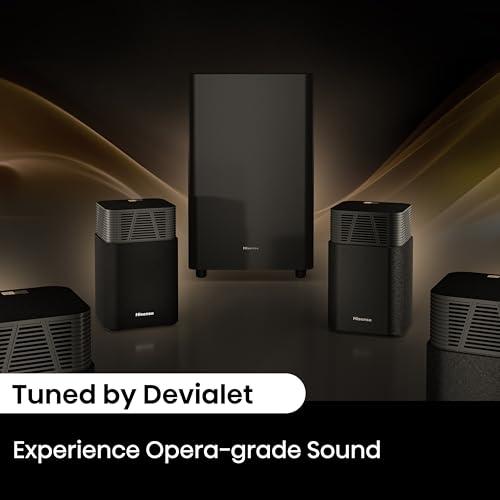
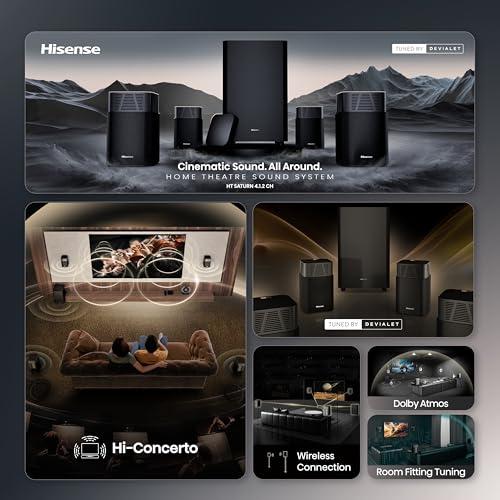
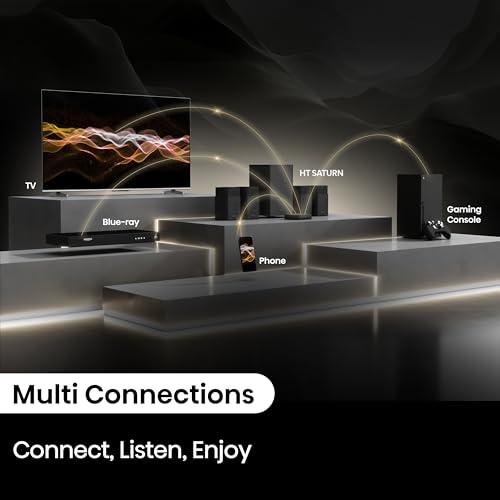
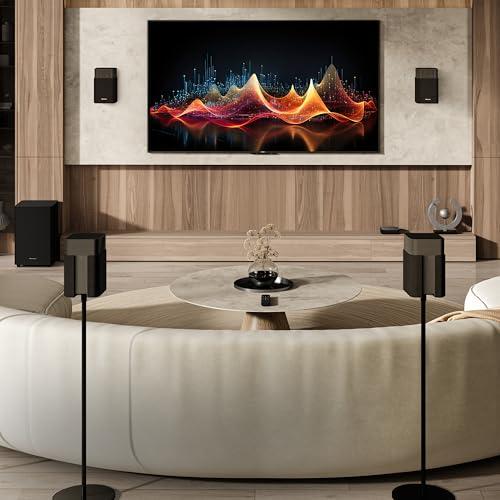
The Hisense HT Saturn takes what might be called the "nuclear option" approach to soundbar design. Rather than cramming everything into one long bar, it splits into five separate pieces: a small control hub, four wireless satellite speakers, and a standalone subwoofer. This creates a true 4.1.2 channel system with 13 individual speakers total – more like a traditional surround sound setup than what we typically think of as a soundbar.
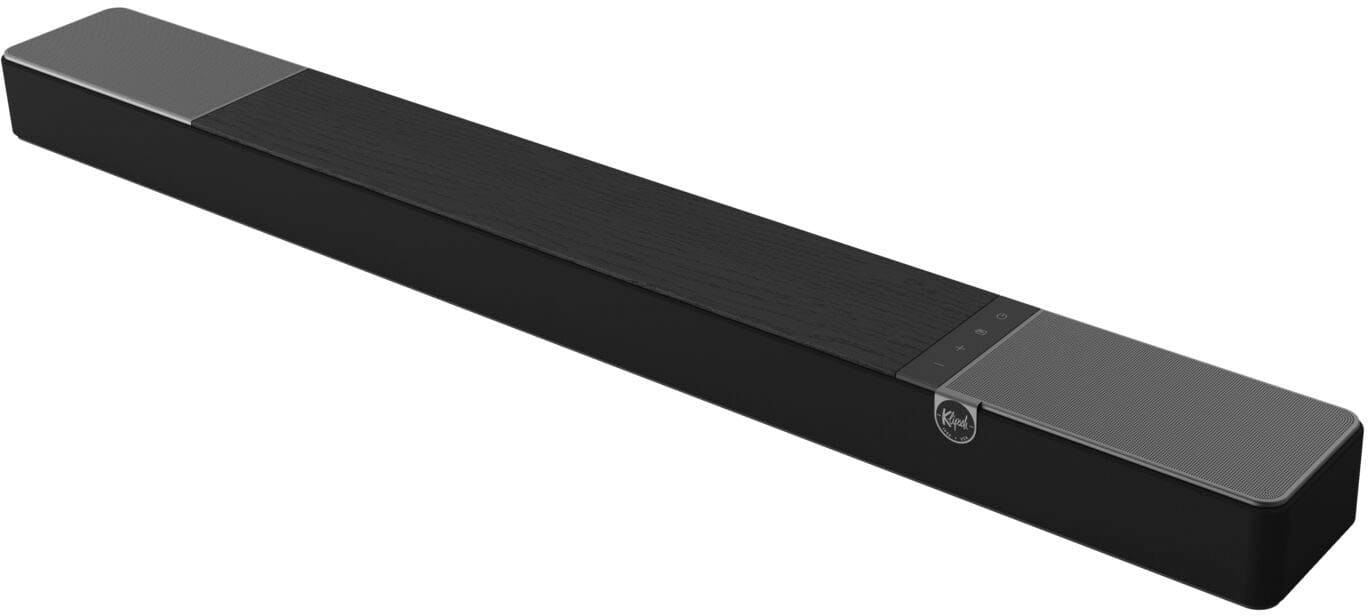
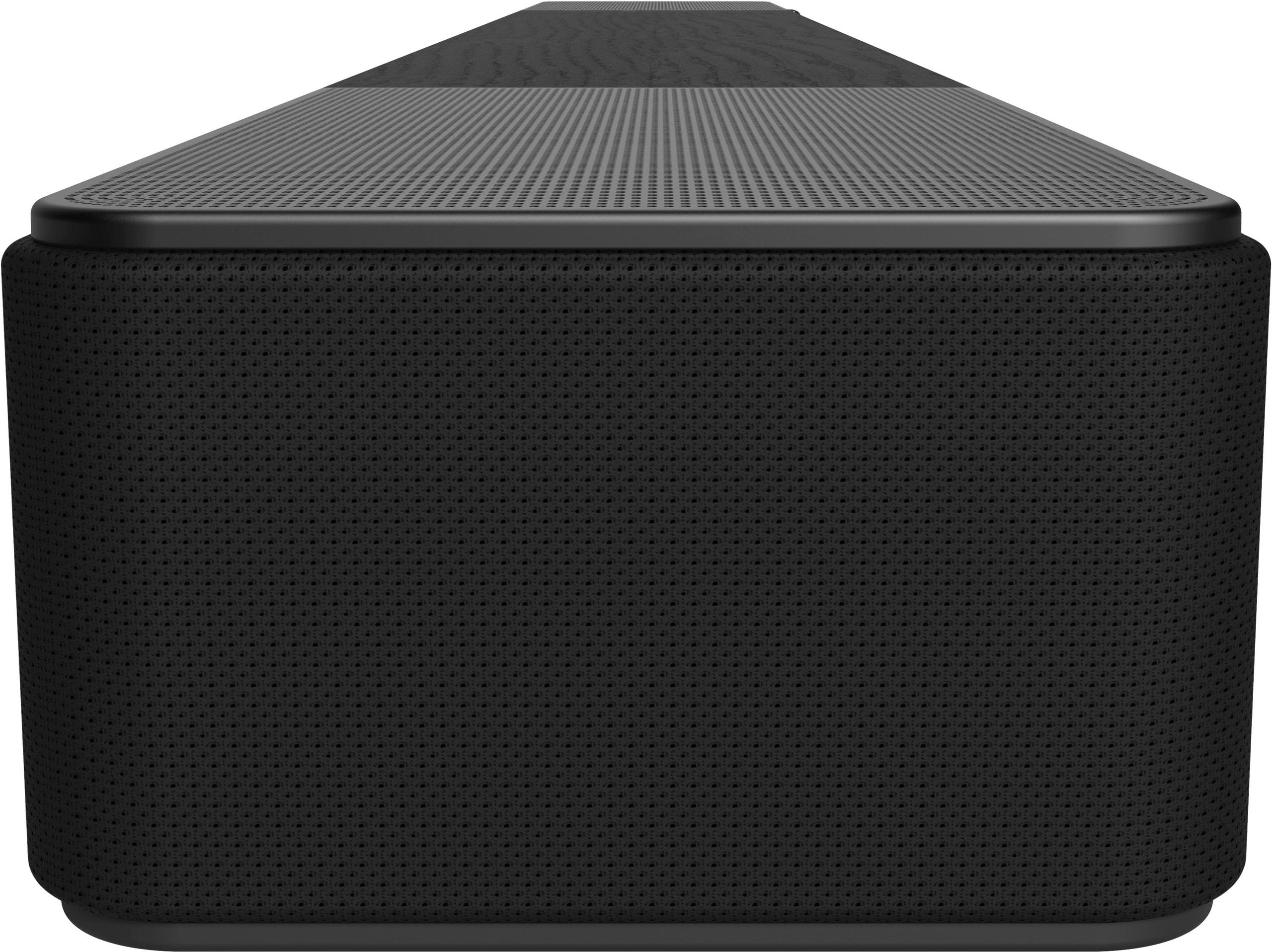
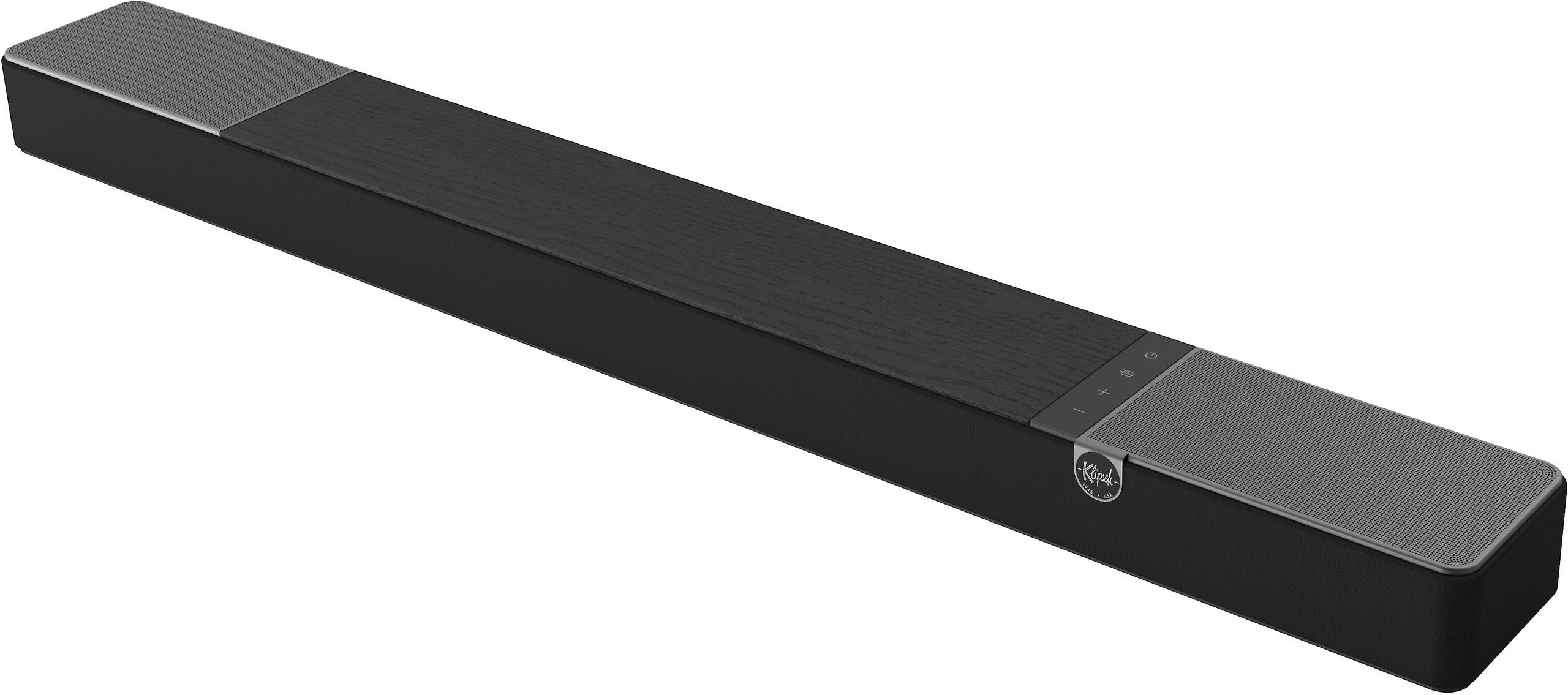
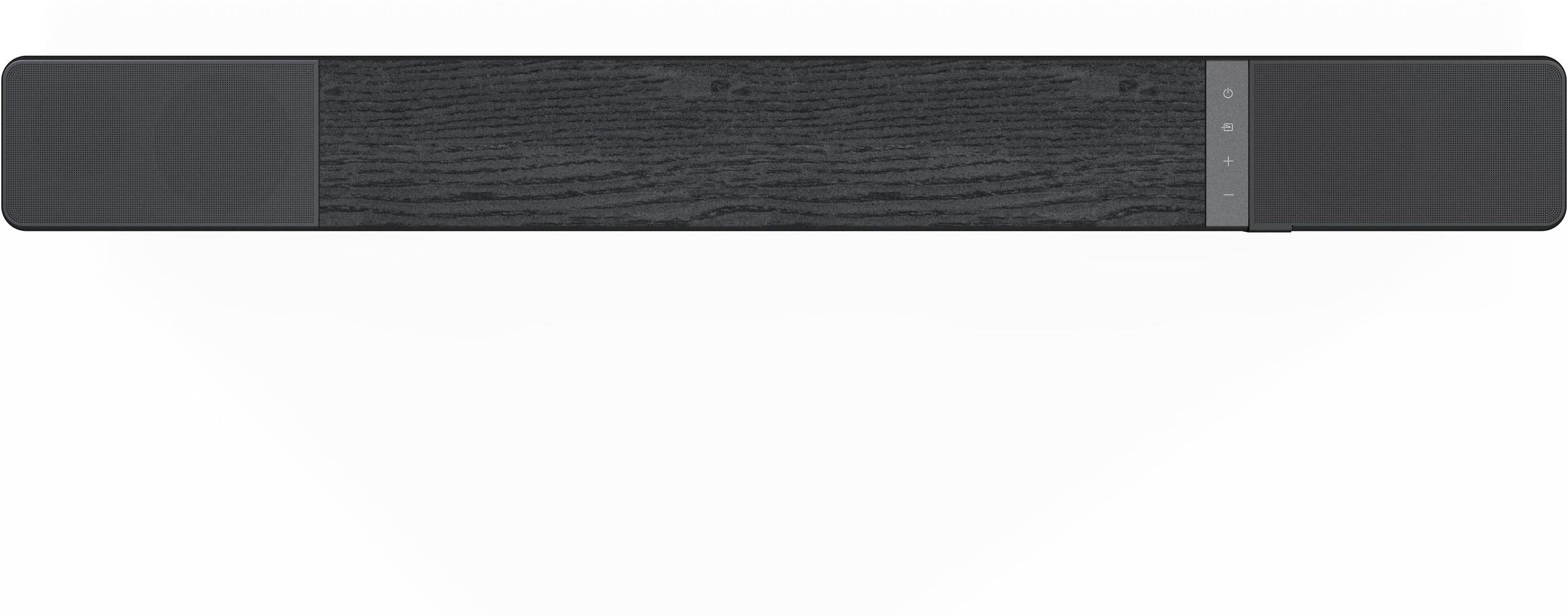
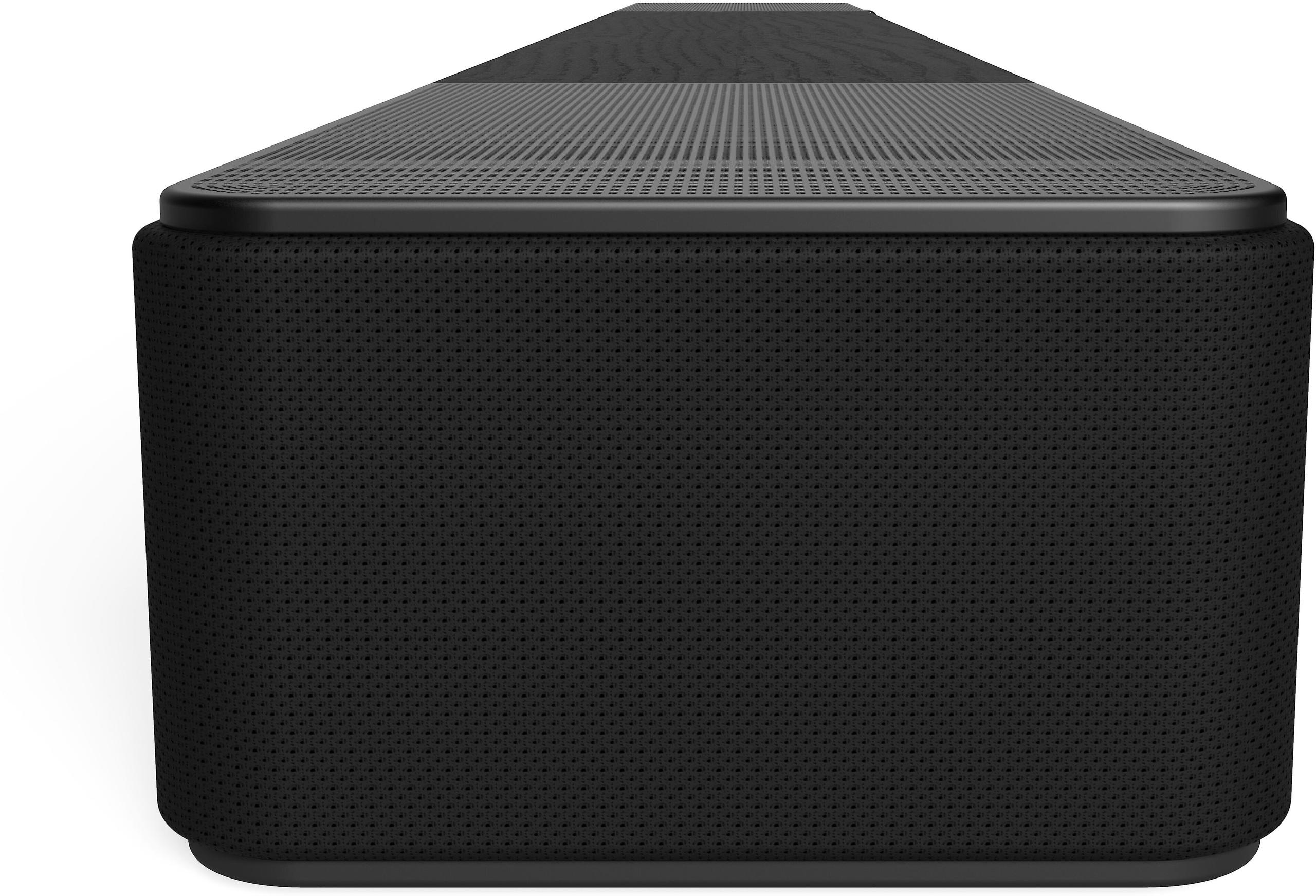
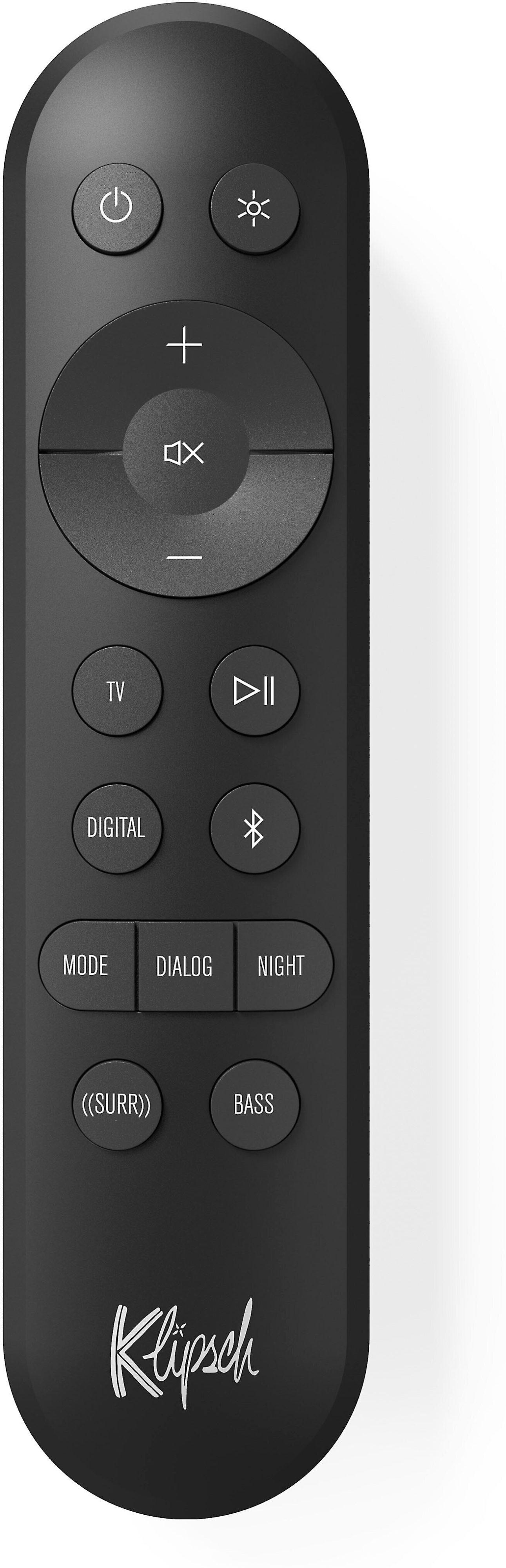
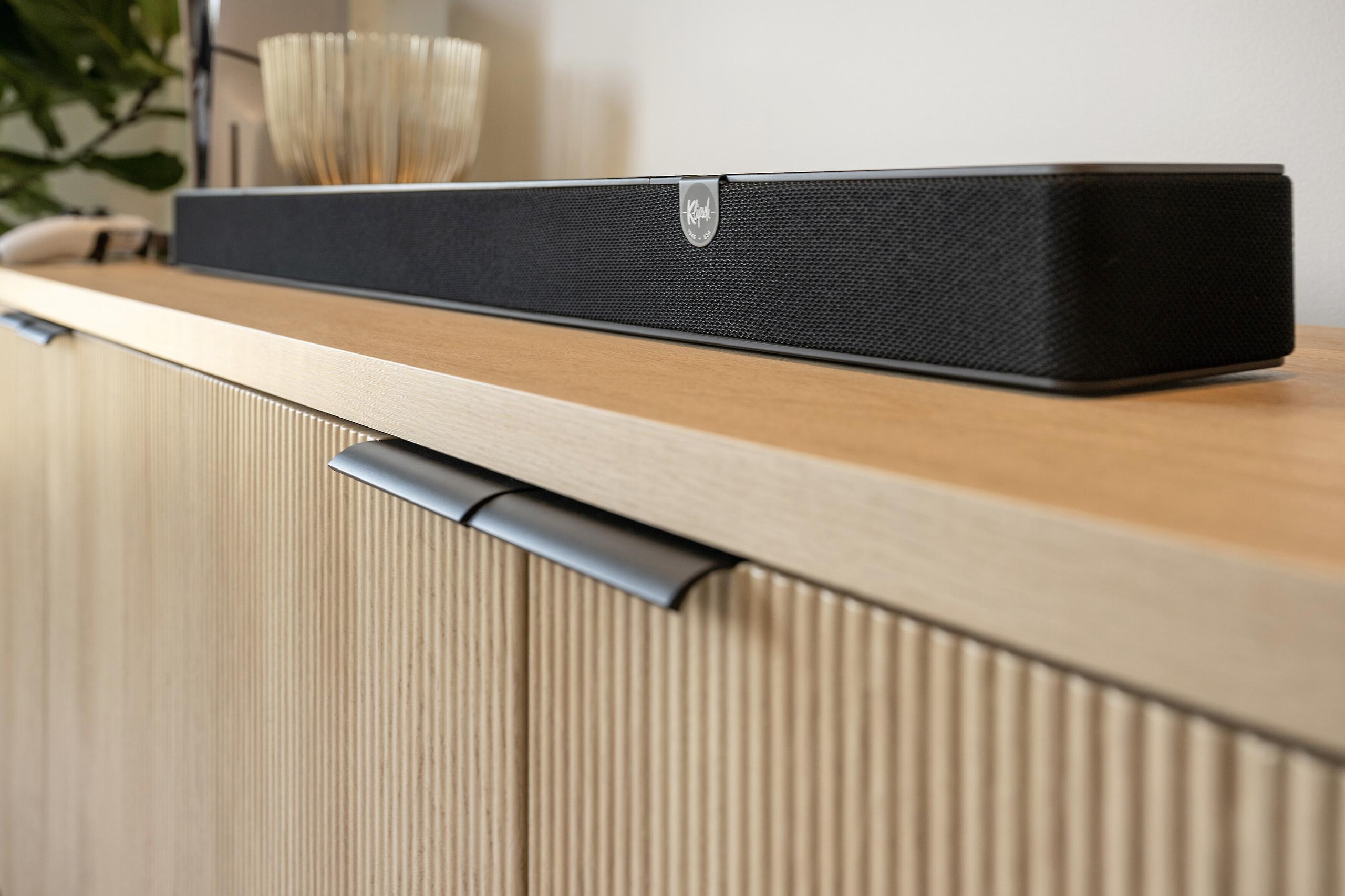
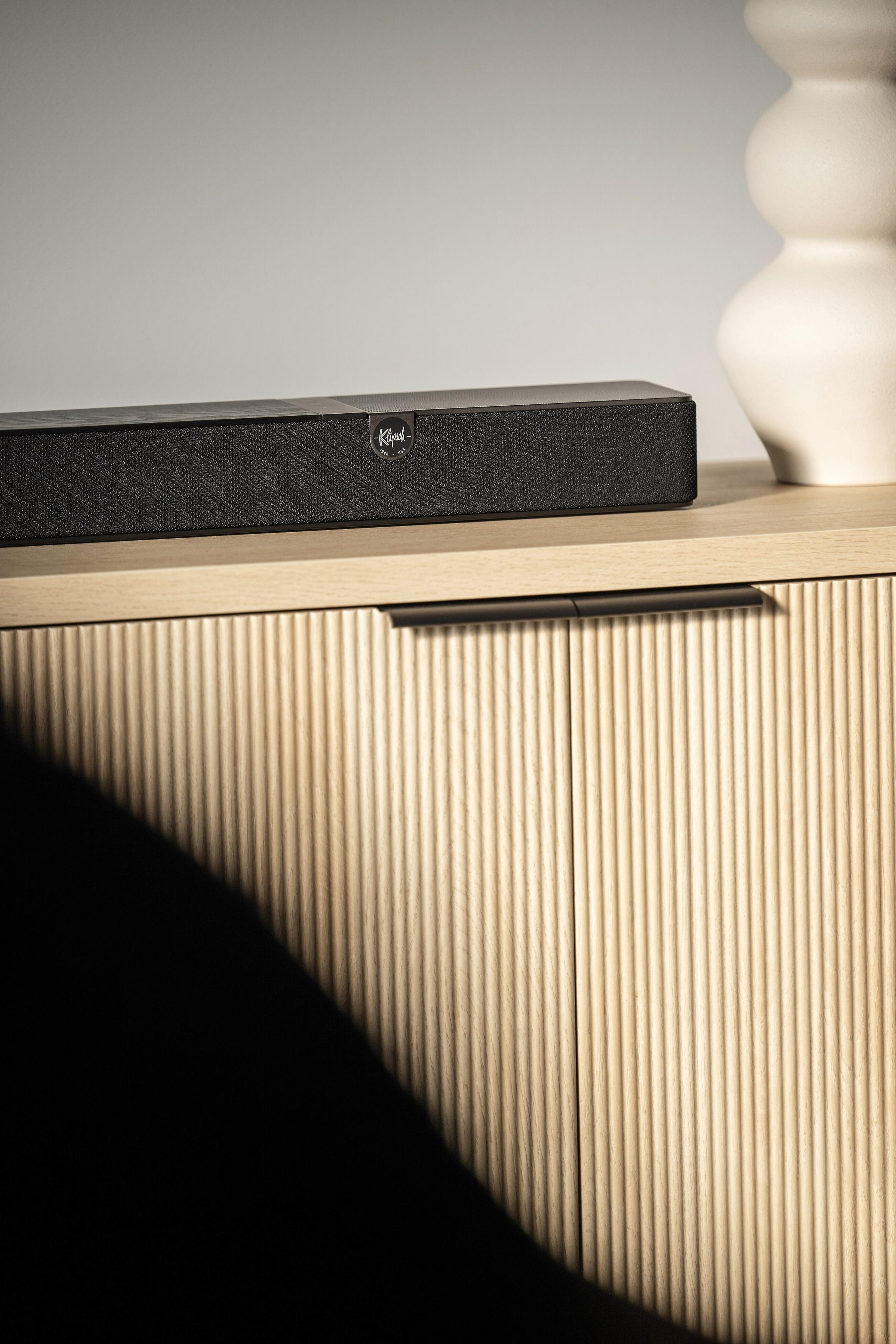
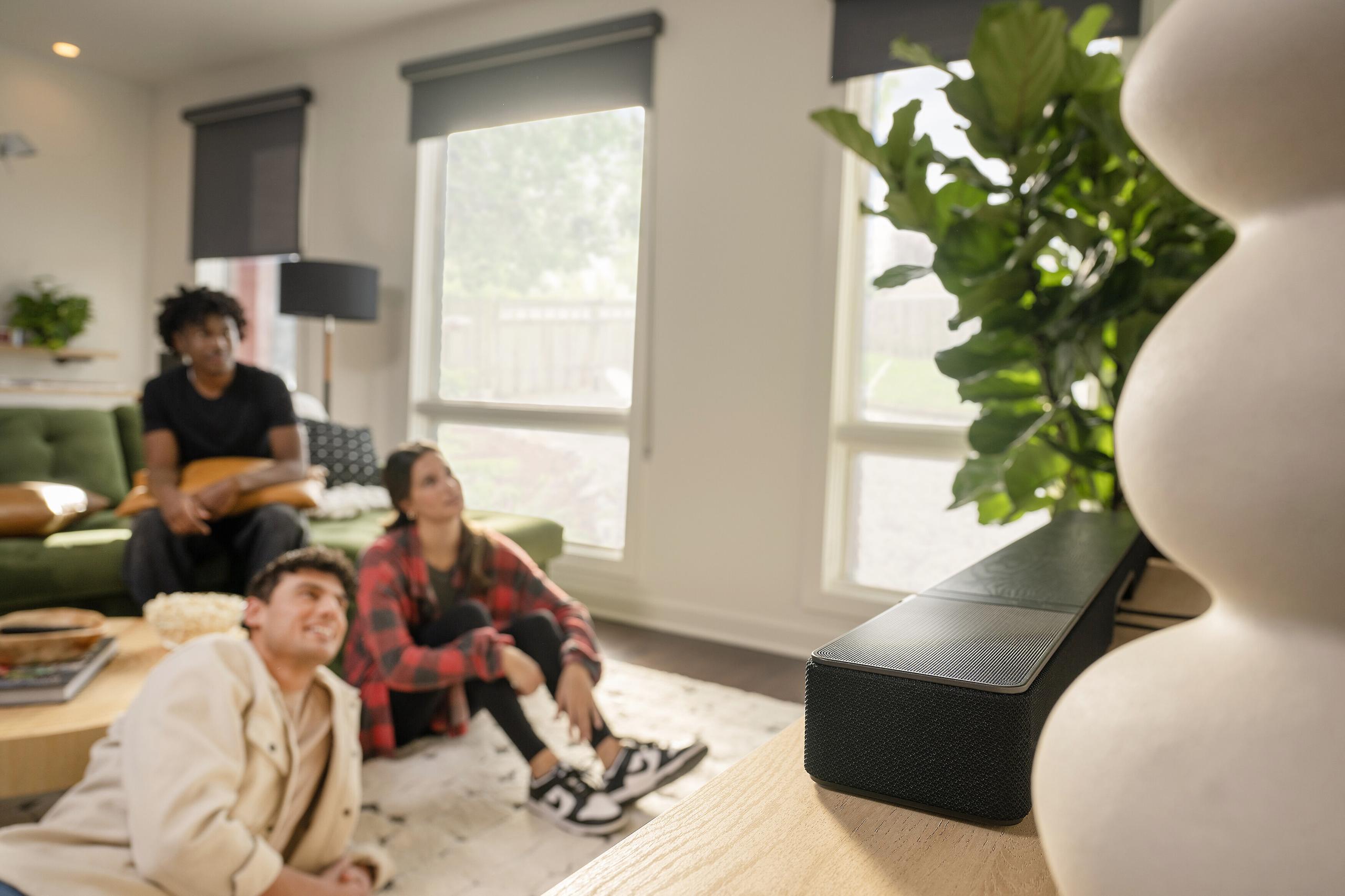
The Klipsch Flexus Core 200, meanwhile, represents the evolution of the classic soundbar approach. It packs everything into one 44-inch unit: front-firing drivers, upfiring Atmos speakers, and even dual built-in subwoofers. It's a 3.1.2 system that prioritizes convenience and performance-per-square-foot over ultimate immersion.
These different approaches immediately suggest different ideal users and room situations, which we'll explore throughout this comparison.
This is where the philosophical difference between these systems becomes most apparent. The HT Saturn's approach of using four physically separate satellite speakers creates what reviewers consistently describe as genuine 360-degree surround sound. When a car drives from the front left of the screen to behind your right shoulder, you hear it actually moving through that space because there are real speakers positioned around you.
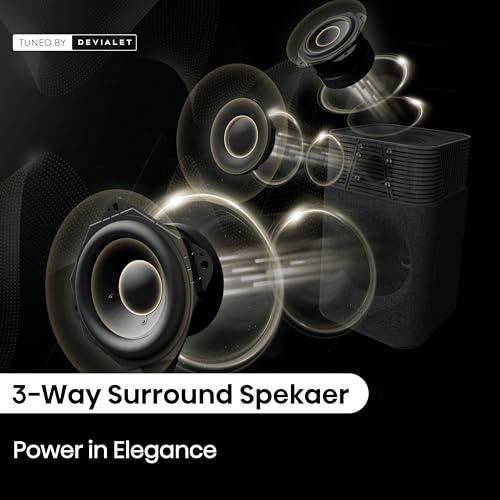
The 3-way satellite design in the HT Saturn is particularly impressive – each satellite contains multiple drivers plus a precision tweeter, allowing for clean separation between bass, midrange vocals, and crisp high frequencies. This prevents the muddiness that often plagues compact speakers trying to do everything at once.
The Klipsch Flexus Core 200 relies on sophisticated audio processing to create surround effects from its forward-facing position. While Klipsch has done impressive work here – reviewers note surprisingly convincing surround positioning – it's still working within the laws of physics. Sound coming from in front of you, even when processed cleverly, cannot truly replicate sound coming from behind you.
However, the Klipsch has an advantage in its horn-loaded tweeter design. Klipsch has been perfecting horn-loaded speakers for decades, and this design focuses sound energy more efficiently than traditional tweeters. For dialogue clarity – arguably the most important aspect of TV and movie audio – this gives the Flexus Core 200 a slight edge.
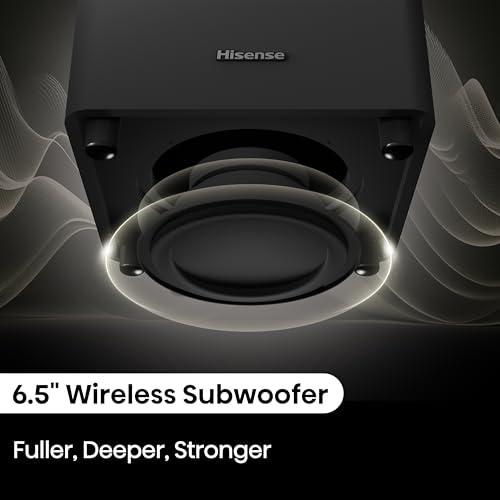
Bass handling reveals another fundamental difference in approach. The HT Saturn includes a dedicated 6.5-inch wireless subwoofer that extends down to 40Hz – deep enough to feel explosions and rumbling effects in your chest. Because it's a separate unit, you can position it optimally in your room, typically in a corner where room acoustics amplify the bass response.
The Klipsch Flexus Core 200's dual 4-inch built-in subwoofers represent a different compromise. They can't match the raw power and extension of a larger dedicated sub, reaching 43Hz rather than 40Hz, but they're perfectly integrated with the rest of the system. There's no separate subwoofer to find space for, and the crossover (where bass frequencies hand off between speakers) is handled internally for seamless blending.
In practical terms, the HT Saturn will deliver more impactful bass in larger rooms, while the Klipsch provides very respectable bass performance without any setup complexity. For most people in average-sized living rooms, the Klipsch approach works surprisingly well.
Here we encounter what might be the most significant technical difference between these systems. The HT Saturn supports virtually every modern audio format: Dolby Atmos, Dolby TrueHD, DTS:X, DTS-HD Master Audio, and more. This comprehensive support means it can properly decode the audio from any Blu-ray, streaming service, or gaming console you throw at it.
The Klipsch Flexus Core 200 has a notable limitation: it supports Dolby formats but completely lacks DTS support. DTS (Digital Theater Systems) is an alternative to Dolby's audio formats, and many Blu-ray movies use DTS-HD Master Audio or DTS:X for their soundtracks. Without DTS support, the Klipsch will fall back to basic stereo or compressed audio from these sources.
This might not matter if you primarily watch streaming content (most streaming services use Dolby formats), but it's a significant limitation for physical media collectors or users with older content libraries.
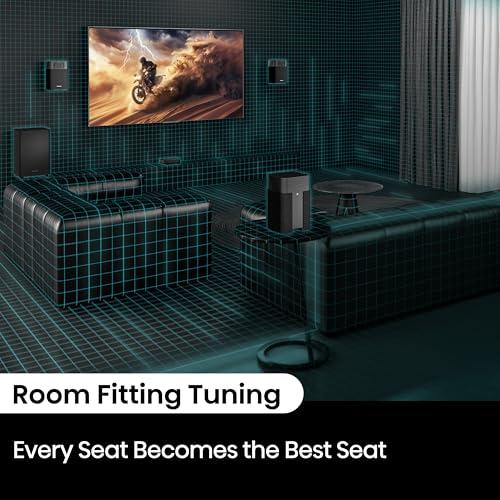
The HT Saturn includes Room Fitting Tuning, an automated calibration system that works with compatible Hisense TVs to analyze your room's acoustics and adjust the system accordingly. This addresses one of the biggest challenges in home audio – every room sounds different due to size, furniture, and wall materials.
The system measures how sound reflects in your space and adjusts timing, levels, and equalization to compensate. For the upfiring Atmos speakers to work properly, they need to bounce sound off your ceiling at the right angle and intensity. Room calibration helps ensure this happens regardless of your specific room conditions.
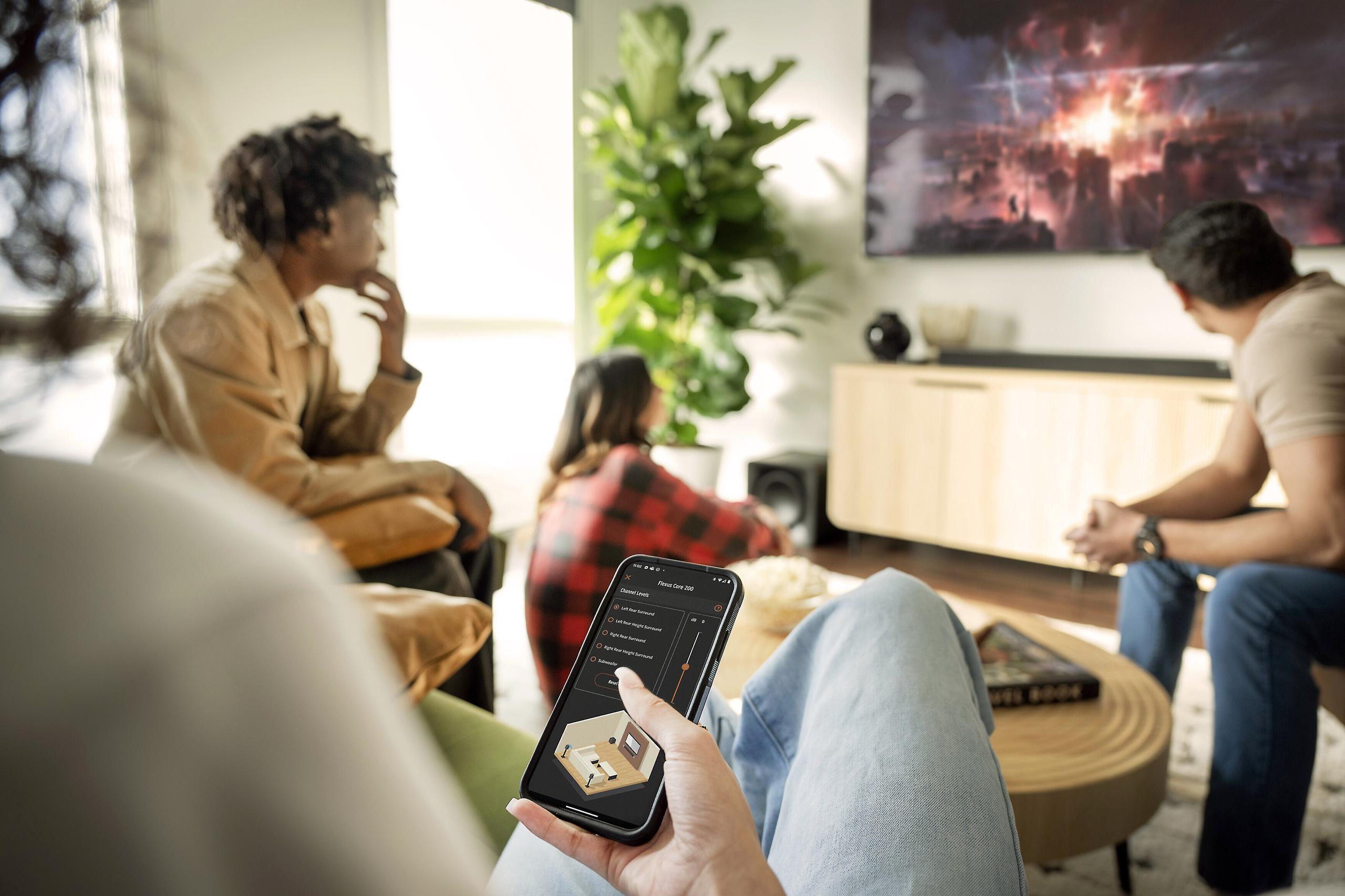
The Klipsch Flexus Core 200 lacks any automated room correction, relying instead on manual EQ adjustments through its mobile app. While the app provides extensive control over bass, treble, and various sound modes, it requires you to make these adjustments by ear rather than through measurement.
At the time of writing, these systems occupy different price tiers that reflect their different approaches. The Klipsch Flexus Core 200 typically costs roughly one-third as much as the HT Saturn, making it one of the better values in premium soundbar territory.
For that price difference, you're getting a significant upgrade in build quality, dialogue clarity, and integrated bass performance compared to budget soundbars. The lack of DTS support is a notable limitation, but if your content is primarily from streaming services or broadcast TV, it may not affect you.
The HT Saturn commands a premium price that reflects its complete system nature and advanced features. When you consider that it includes four satellite speakers, a wireless subwoofer, room calibration, and comprehensive format support, the pricing becomes more understandable – but it's still a significant investment.
The value equation also depends on your expansion plans. The Klipsch Flexus Core 200 can be expanded with additional components from Klipsch's Flexus line, including a more powerful subwoofer and rear surround speakers. This modular approach lets you spread the cost over time, but a fully expanded system may end up costing similar to the complete HT Saturn package.
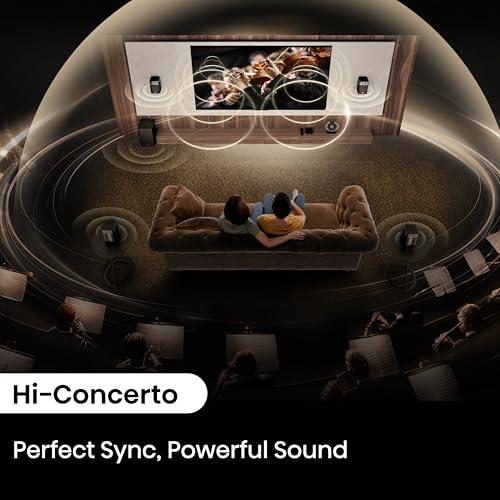
TV integration represents another area where these systems diverge significantly. The HT Saturn includes Hi-Concerto technology, which works with Hisense TVs to use the TV's built-in speakers as additional channels in the sound system. This creates an even wider soundstage and better dialogue anchoring by having sound come directly from the screen.
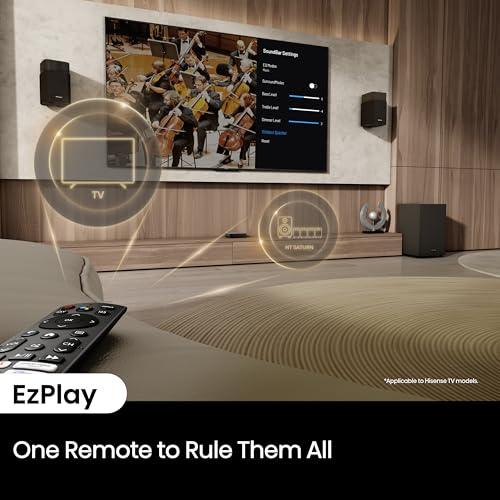
The system also features EzPlay, allowing you to control soundbar settings directly through your Hisense TV's menu system using the TV remote. This level of integration creates a more seamless user experience, though it obviously works best if you own a Hisense TV.
The Klipsch Flexus Core 200 uses standard HDMI-CEC for basic integration with any compatible TV, plus a well-designed mobile app for advanced settings. The app provides extensive control over EQ, sound modes, and system settings, but it's a separate interface from your TV's controls.
The convenience factor heavily favors the Klipsch Flexus Core 200. It's essentially plug-and-play: connect one HDMI cable to your TV, plug in power, and you're running. The entire system fits under your TV without any additional components to position around the room.
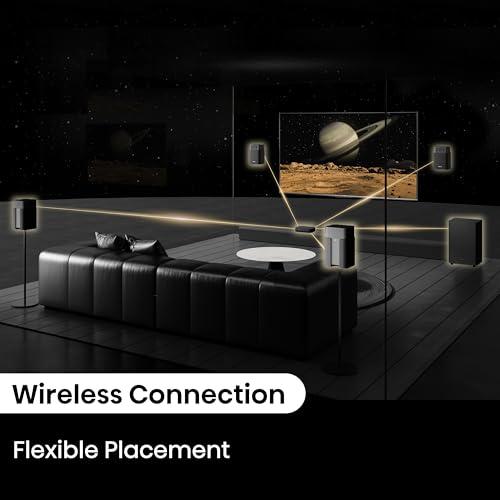
The HT Saturn requires significantly more setup planning. You need to position four satellite speakers around your listening area, plus find a good spot for the subwoofer. While all connections between components are wireless (you only need power outlets), you're still placing six separate components around your room.
For renters or people who rearrange their living spaces frequently, this is a significant consideration. The HT Saturn delivers better performance, but it also commits you to a specific room layout in a way that the Klipsch Flexus Core 200 does not.
Modern gaming consoles output sophisticated surround sound, and both systems handle gaming well, though with different strengths. The HT Saturn's true surround positioning excels at competitive gaming where audio cues matter – hearing footsteps behind you in the right location can provide a tactical advantage.
The Flexus Core 200's lower latency and direct connection make it potentially better for rhythm games or situations where audio-visual sync is critical. Its music performance is also noteworthy, with reviewers comparing it favorably to bookshelf speakers for stereo listening.
The Hisense HT Saturn makes sense for dedicated home theater enthusiasts who have the space and budget for a complete system. It's particularly compelling for Hisense TV owners who can take advantage of the deep integration features. If you have a large room, collect physical media with DTS soundtracks, or simply want the most immersive surround sound experience possible from a wireless system, the HT Saturn justifies its premium pricing.
The Klipsch Flexus Core 200 serves a broader audience looking for a significant upgrade from TV speakers without the complexity of multiple components. It's ideal for smaller spaces, renters, or anyone who prioritizes convenience while still wanting excellent sound quality. The modular upgrade path also appeals to people who prefer to build their systems gradually.
These products represent two valid but very different approaches to home theater audio. The HT Saturn is essentially a complete surround sound system that happens to connect wirelessly, while the Flexus Core 200 is a highly refined soundbar that maximizes single-unit performance.
Your choice should align with your space, budget, and priorities. If you want the most immersive experience and have the room layout and budget to support it, the HT Saturn delivers genuine surround sound that traditional soundbars simply cannot match. If you need excellent performance in a simple package with room to grow, the Klipsch Flexus Core 200 offers exceptional value and proven audio engineering.
Neither choice is wrong – they're just optimized for different users and situations. The important thing is understanding which approach better fits your specific needs and room constraints.
| Hisense HT Saturn | Klipsch Flexus Core 200 |
|---|---|
| Channel Configuration - Determines surround sound capability | |
| 4.1.2 channels with 4 separate wireless satellites | 3.1.2 channels in single soundbar unit |
| Total Speaker Count - More drivers allow better frequency separation | |
| 13 speakers (8 full-range, 4 tweeters, 1 subwoofer) | 7 speakers (4 front, 2 upfiring, dual 4" subs) |
| System Architecture - Impacts installation and performance | |
| Multi-component wireless system with separate satellites and subwoofer | All-in-one soundbar with built-in subwoofers |
| Power Output - Affects volume and dynamic range | |
| 500W total system power | 185W RMS |
| Audio Format Support - Critical for media compatibility | |
| Full Dolby + DTS suite (Atmos, TrueHD, DTS:X, DTS-HD Master) | Dolby formats only (no DTS support) |
| Frequency Response - Determines bass extension and treble clarity | |
| 40Hz - 20kHz (deeper bass from dedicated 6.5" subwoofer) | 43Hz - 20kHz (impressive for built-in subs) |
| Room Calibration - Optimizes sound for your specific space | |
| Room Fitting Tuning with compatible Hisense TVs | Manual EQ adjustment only |
| TV Integration Features - Simplifies control and enhances performance | |
| Hi-Concerto (uses TV speakers), EzPlay (TV menu control) | Standard HDMI-CEC, mobile app control |
| Connectivity Options - Determines device compatibility | |
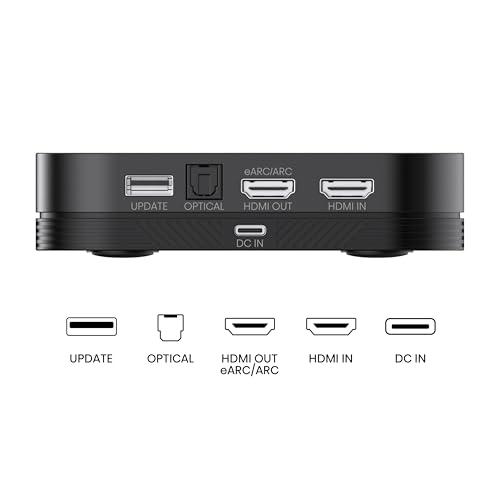
| HDMI in/out (eARC), Optical, Bluetooth 5.3, USB-C service | HDMI out (eARC only), Optical, Bluetooth, USB-C |
| Expandability - Future upgrade potential | |
| Complete system, no expansion options | Modular system, add Flexus Sub 100 and surround speakers |
| Setup Complexity - Installation time and space requirements | |
| Requires positioning 4 satellites + subwoofer around room | Single unit placement under TV |
| Ideal Room Size - Performance scales with space | |
| Large rooms (85"+ TV recommended by manufacturer) | Small to medium rooms, apartment-friendly |
The Hisense HT Saturn is better for dedicated home theater use due to its 4.1.2 channel configuration with four separate wireless satellite speakers that create true surround sound. The Klipsch Flexus Core 200 is excellent for casual viewing but relies on virtualized surround effects from a single unit.
The primary difference is system architecture: the HT Saturn uses four separate wireless satellite speakers plus a subwoofer for genuine surround sound, while the Flexus Core 200 packs everything into one 44-inch soundbar with built-in subwoofers. This makes the HT Saturn more immersive but the Klipsch more convenient.
The Hisense HT Saturn has more powerful bass with its dedicated 6.5-inch wireless subwoofer reaching 40Hz. The Klipsch Flexus Core 200 has impressive built-in dual 4-inch subwoofers that extend to 43Hz, which is excellent for an all-in-one unit but can't match dedicated subwoofer power.
Yes, both the HT Saturn and Flexus Core 200 support Dolby Atmos for overhead sound effects. However, the HT Saturn also supports DTS:X and DTS-HD formats, while the Klipsch Flexus Core 200 only supports Dolby formats, which limits compatibility with some Blu-ray movies.
The Klipsch Flexus Core 200 is much easier to set up - just connect one HDMI cable and plug in power. The HT Saturn requires positioning four satellite speakers and a subwoofer around your room, though all connections are wireless except for power cables.
The Klipsch Flexus Core 200 can be expanded with additional Flexus components like the Sub 100 subwoofer and Surr 100 rear speakers. The Hisense HT Saturn is a complete system with no expansion options - what you buy is the full setup.
The Klipsch Flexus Core 200 is better suited for small to medium rooms since it doesn't require space for multiple satellite speakers. The HT Saturn is designed for larger rooms and works best with 85-inch or larger TVs according to the manufacturer.
The Hisense HT Saturn includes Room Fitting Tuning that automatically calibrates sound when paired with compatible Hisense TVs. The Flexus Core 200 doesn't have automated room correction but offers manual EQ adjustment through its mobile app.
Both excel at dialogue, but they achieve it differently. The Klipsch Flexus Core 200 uses a dedicated horn-loaded tweeter for vocal clarity, while the HT Saturn creates a phantom center channel using its front satellites. Both approaches deliver clear, intelligible speech.
Both soundbars connect to TVs via HDMI eARC/ARC cables, not wirelessly to the TV itself. However, the HT Saturn's satellites and subwoofer connect wirelessly to the main control unit, while the Flexus Core 200 is a single wired unit with optional wireless expansion speakers.
The Klipsch Flexus Core 200 offers better value for most users, delivering excellent performance at a significantly lower cost than the HT Saturn. The HT Saturn provides premium features like true surround sound and comprehensive format support but at a much higher investment.
Both soundbars perform well for music. The Flexus Core 200 is praised for its balanced sound signature and crisp detail, comparable to bookshelf speakers. The HT Saturn creates a wider soundstage with its separate satellites, making it excellent for immersive music listening in larger spaces.
We've done our best to create useful and informative comparisons to help you decide what product to buy. Our research uses advanced automated methods to create this comparison and perfection is not possible - please contact us for corrections or questions. These are the sites we've researched in the creation of this article: bestbuy.com - youtube.com - blog.son-video.com - youtube.com - youtube.com - techradar.com - ecoustics.com - jbhifi.com.au - shop.hisense-usa.com - bhphotovideo.com - bestbuy.com - digitalreviews.net - hisense-usa.com - projectorscreenstore.com - valueelectronics.com - dolby.com - giftpack.ai - soundandvision.com - avnirvana.com - avsforum.com - cnet.com - klipsch.com - klipsch.com - youtube.com - assets.klipsch.com - klipsch.com - worldwidestereo.com - klipsch.com - crutchfield.com - digitaltrends.com

Privacy Policy
Terms and Conditions - Affiliate Policy
Home Security
© Copyright 2008-2026.
11816 Inwood Rd #1211, Dallas, TX 75244