

When you're tired of constantly adjusting your TV volume to catch dialogue or missing the rumbling bass that makes action movies exciting, it's time to consider a soundbar. But with options ranging from basic audio upgrades to full home theater replacements, the choice can feel overwhelming. Today we're comparing two very different approaches: the budget-friendly Samsung HW-C450 and the premium Hisense HT Saturn.
These products represent opposite ends of the soundbar spectrum. The Samsung HW-C450, released in 2015, takes the traditional approach—a simple soundbar with wireless subwoofer designed to improve TV audio without complexity. The Hisense HT Saturn, a recent release, reimagines what a "soundbar" can be by distributing multiple wireless speakers around your room for true surround sound.
Before diving into specifics, it's worth understanding what we're dealing with. Traditional soundbars like the Samsung HW-C450 use a technique called "virtual surround sound." This means they take regular stereo or surround audio and use digital processing to create the illusion that sound is coming from multiple directions. It's clever, but it's still just two speakers trying to fill your entire room.
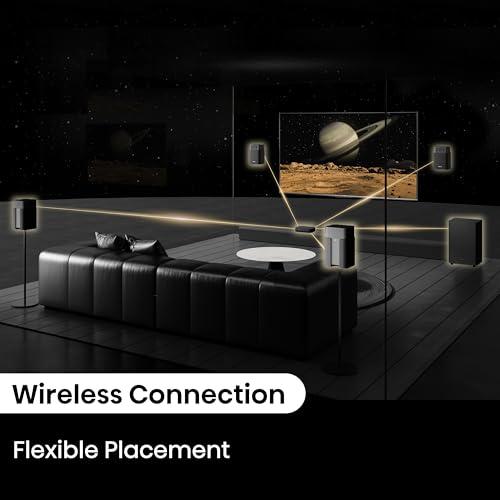
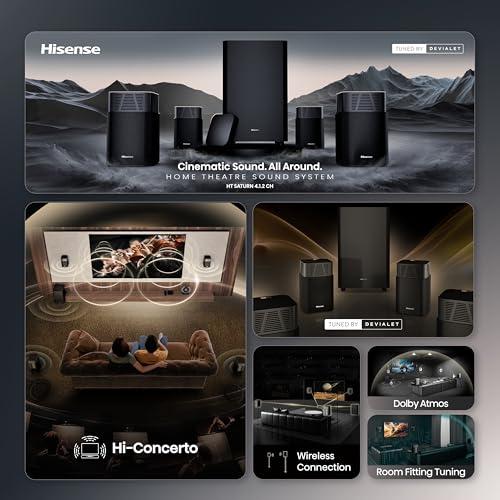
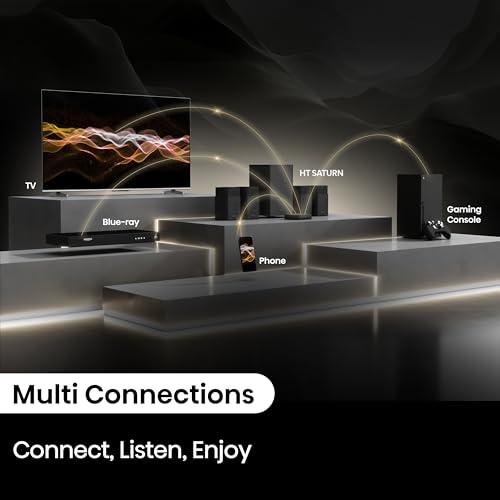
The Hisense HT Saturn represents a newer category that's becoming increasingly popular—distributed wireless systems. Instead of relying on audio tricks, it places actual speakers around your room, connected wirelessly to avoid the cable mess that traditional surround systems require. This approach delivers genuine surround sound where effects actually move around you, rather than just sounding like they do.
At the time of writing, these products sit in completely different price brackets. The Samsung HW-C450 occupies the budget tier where you're looking for maximum improvement per dollar spent, while the Hisense HT Saturn competes in the premium segment where audio quality and immersive features justify higher costs.
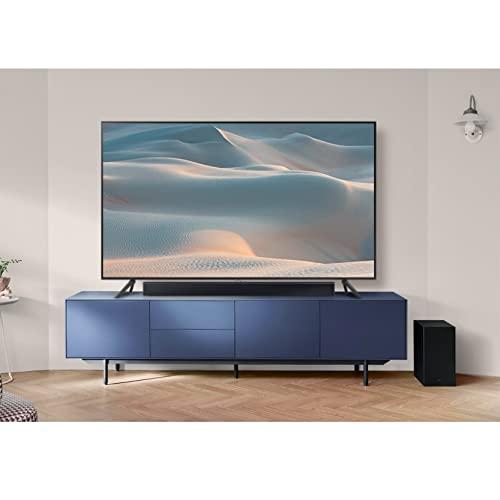
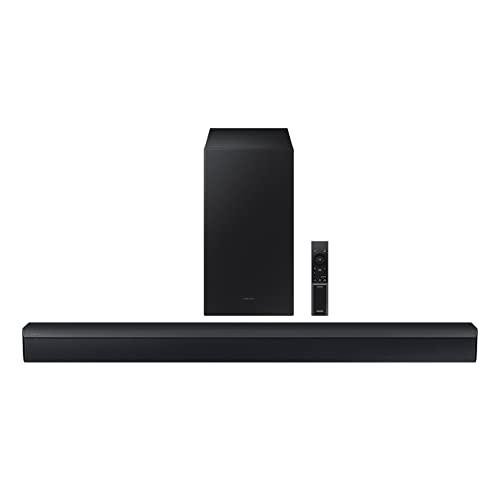
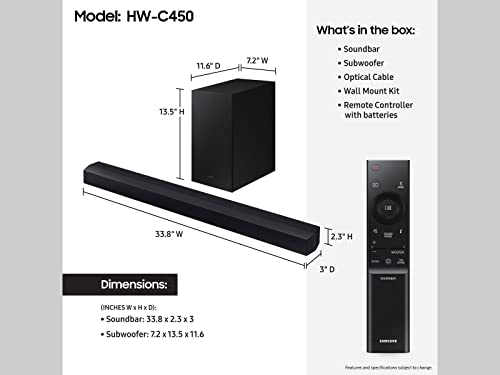
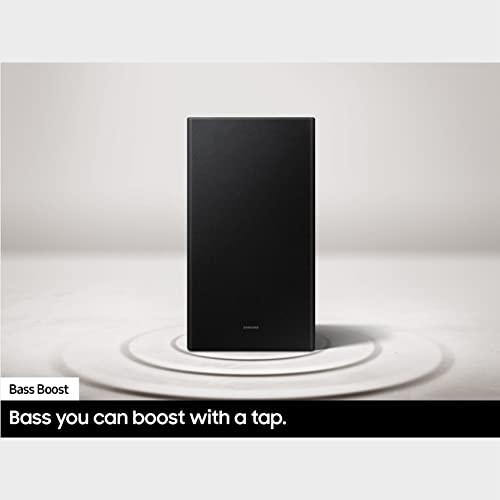
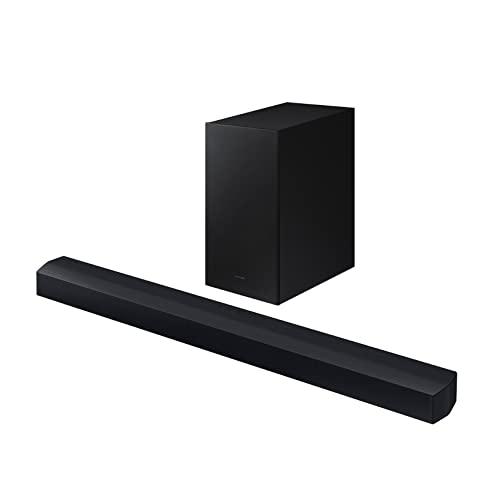
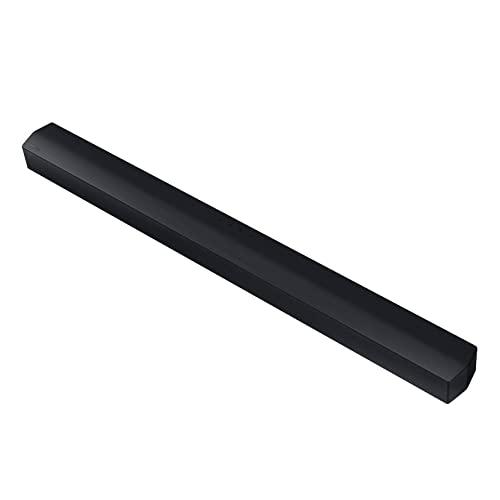
The Samsung HW-C450 embodies the "keep it simple" philosophy that dominated soundbar design a decade ago. You get a slim 34-inch bar that sits under your TV, plus a wireless subwoofer that handles the low-frequency effects. The entire system weighs just 13 pounds combined, making it incredibly easy to position and reposition. The design is understated—black fabric grille, minimal branding, and basic LED indicators that won't distract from your viewing experience.
What I appreciate about this approach is its practicality. The bar is thin enough (just 2.3 inches tall) to fit under most TVs without blocking the screen or infrared sensors. The wireless subwoofer pairs automatically when you power everything up, eliminating the setup headaches that plagued earlier wireless systems. For apartments, dorm rooms, or bedrooms where space is premium, this minimalist approach makes perfect sense.
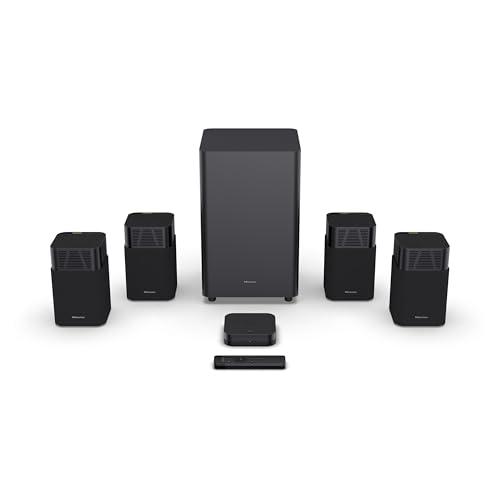
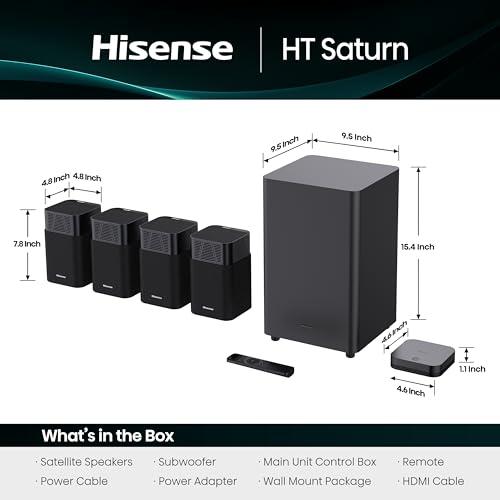
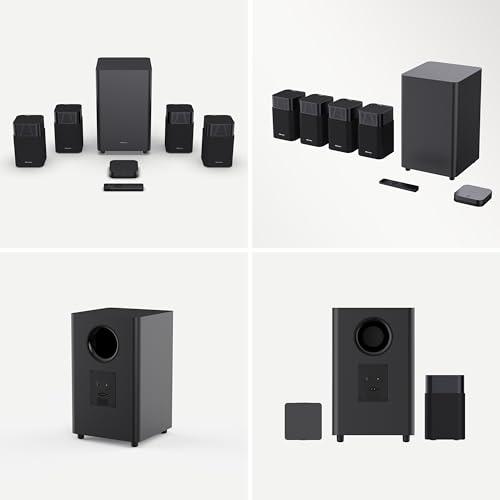
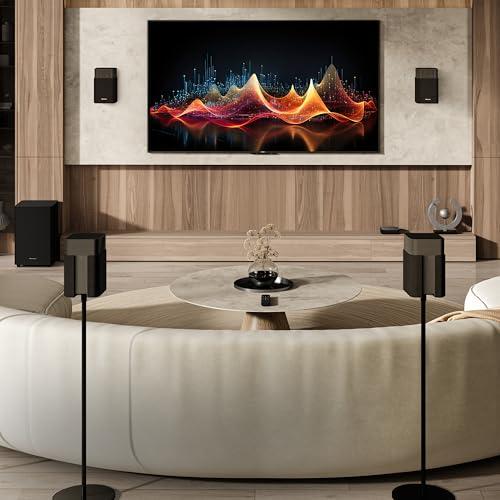
The Hisense HT Saturn takes a radically different approach. Instead of cramming everything into a single bar, it splits the audio across multiple components: four compact satellite speakers, each containing multiple drivers, plus a wireless subwoofer. Each satellite measures roughly 8 inches tall and weighs about 3.4 pounds—small enough to place on shelves or mount on walls, but substantial enough to house proper drivers.
This distributed design requires more planning. You'll need power outlets near each speaker location, and while the wireless connection eliminates speaker cables, you're still dealing with five separate components instead of two. However, this complexity pays dividends in audio quality and room-filling sound that no single soundbar can match.
Here's where the fundamental differences become clear. The Samsung HW-C450 uses a 2.1 channel configuration—two main channels plus a subwoofer. Its 280 watts of total power splits between 80 watts for the main bar and 120 watts for the subwoofer. The bar contains just two speaker drivers, relying on DTS Virtual:X processing to create the impression of surround sound.
DTS Virtual:X is essentially an algorithm that analyzes incoming audio and adjusts timing, phase, and frequency response to trick your brain into perceiving sounds from different directions. It works reasonably well for certain content, particularly dialogue-heavy material where voices seem to come from the center of the screen even though there's no center speaker. However, it's still fundamentally limited by physics—two speakers can only do so much to create a convincing surround experience.
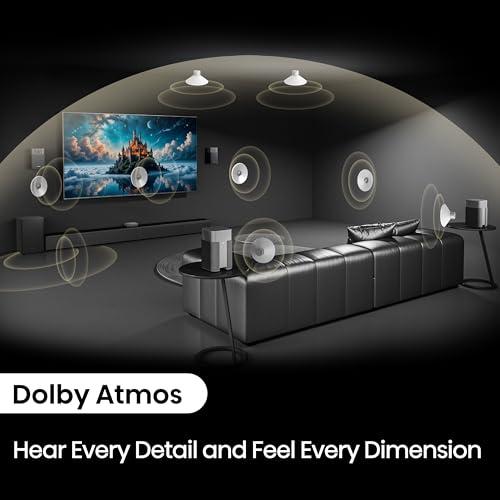
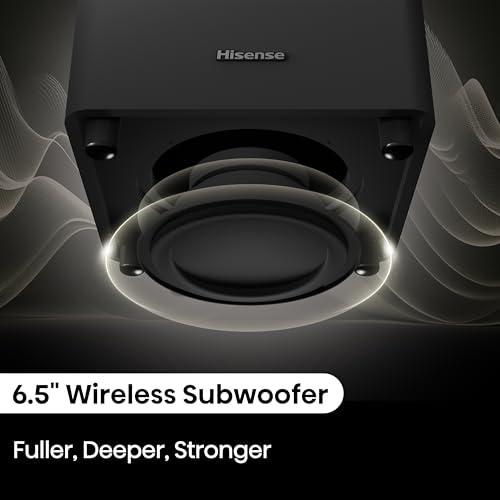
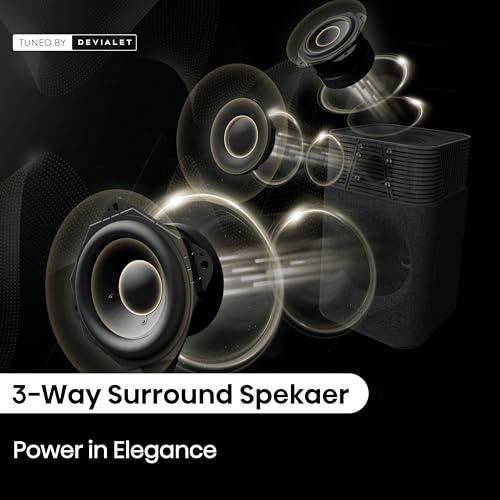
The Hisense HT Saturn operates in an entirely different realm with its 4.1.2 channel configuration. This means four main channels (front left, front right, rear left, rear right), one subwoofer, and two height channels. The system incorporates 13 separate speakers total: eight full-range drivers, four tweeters, and one 6.5-inch subwoofer. With 720 watts of total power distributed across all these drivers, it can deliver much more precise audio placement.
The "height" channels deserve special explanation because they're crucial for modern audio formats. These upward-firing speakers bounce sound off your ceiling to create the sensation of overhead effects—helicopters flying above, rain falling from the sky, or debris scattered in all directions during action scenes. This isn't processing trickery; it's actual sound waves reflecting off surfaces to reach your ears from above.
One of the most significant distinctions between these systems is their audio tuning philosophy. The Samsung HW-C450 uses Samsung's standard consumer tuning, which emphasizes dialogue clarity and avoids overly aggressive bass that might upset neighbors. This conservative approach works well for its target audience—people who primarily watch TV and want clearer voices without complexity.
The tuning prioritizes the midrange frequencies where human speech lives, making news broadcasts, sitcoms, and drama series much more intelligible than TV speakers. The bass is present but controlled, providing enough low-end impact for typical content without overwhelming smaller rooms. However, this safe tuning means dynamic content like action movies or music can sound somewhat restrained compared to more aggressive systems.
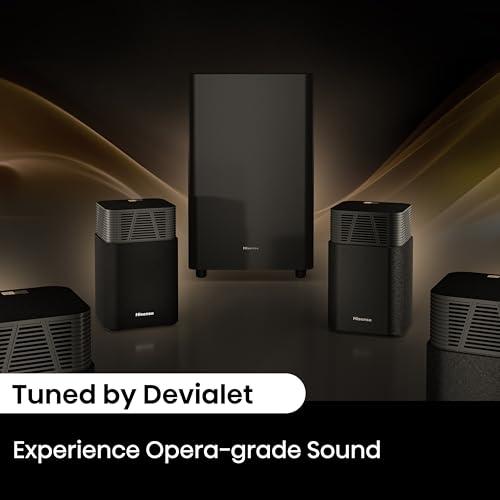
The Hisense HT Saturn benefits from something quite special: tuning by Devialet, a French audio company renowned for high-end speakers and audio engineering expertise. Devialet's involvement isn't just marketing—they've applied their knowledge of driver integration, crossover design, and room acoustics to optimize how all 13 speakers work together.
This professional tuning delivers more sophisticated frequency response across the entire audio spectrum. Bass extends deeper with better control, midrange frequencies remain clear but natural rather than artificially boosted, and treble frequencies provide detail without harshness. The result is audio that sounds more like live music or cinema mixing rooms rather than consumer electronics.
The technology gap between these systems becomes most apparent when examining supported audio formats. The Samsung HW-C450, being a 2015 design, supports the formats that were standard at the time: Dolby Digital, DTS, and basic stereo audio. These formats served the industry well for decades and still handle most cable TV, broadcast television, and older streaming content adequately.
However, the entertainment industry has moved toward more sophisticated audio formats since 2015. Dolby Atmos and DTS:X are object-based audio systems where individual sounds (a car engine, a bird chirp, dialogue) are treated as separate audio "objects" that can be precisely placed anywhere in three-dimensional space around the listener. This technology requires systems capable of reproducing height effects and surround positioning accurately.
The Samsung HW-C450 can't reproduce these modern formats properly. Its DTS Virtual:X processing can simulate some spatial effects from Atmos content, but it's essentially downmixing advanced soundtracks to work within its 2.1 limitations. It's like watching a 4K movie on a 1080p TV—you'll get something, but not what the creators intended.
The Hisense HT Saturn was designed specifically for these modern formats. Its 4.1.2 channel configuration with dedicated height speakers can reproduce Dolby Atmos and DTS:X content as intended. When you're watching a recent Marvel movie or playing a modern video game, sounds move precisely through three-dimensional space rather than being approximated through processing tricks.
Connectivity reveals another generational gap between these systems. The Samsung HW-C450 offers optical digital audio input, Bluetooth for wireless music streaming, and a USB port for playing music files directly. This was comprehensive connectivity for 2015, but it lacks several features that have become standard since then.
Most notably, there's no HDMI connectivity whatsoever. HDMI Audio Return Channel (ARC) and its enhanced version (eARC) have become the preferred method for connecting soundbars to modern TVs because they can carry higher-quality audio signals and enable better device integration. Without HDMI, you're limited to whatever quality the optical connection can provide, and you miss out on advanced control features.
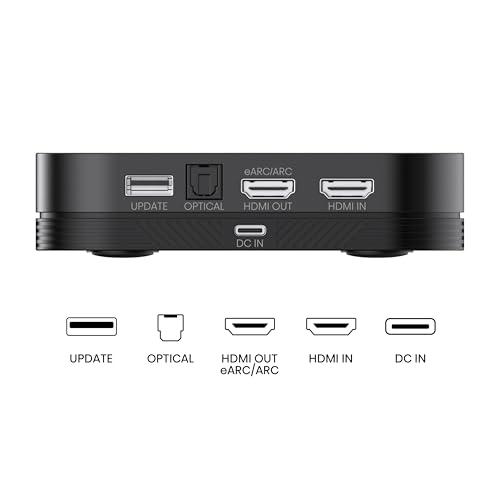
The Hisense HT Saturn includes HDMI eARC, which can carry the full quality of Dolby Atmos and DTS:X signals without compression. It also supports 4K video pass-through at 60Hz, meaning you can connect devices like gaming consoles or streaming players directly to the soundbar, then send video to your TV while keeping audio processing in the sound system. This creates cleaner cable management and often results in better audio quality.
The system also includes Bluetooth 5.3, a significant improvement over older Bluetooth standards. This newer version provides better range, more stable connections, and improved audio quality when streaming music from phones or tablets. For a system at this price level, these connectivity improvements aren't luxury features—they're necessary for compatibility with modern devices and content sources.
Setting up the Samsung HW-C450 is refreshingly straightforward. Plug in both components, connect an optical cable to your TV, and you're essentially done. The wireless subwoofer pairs automatically, and the system includes Samsung's One Remote Control compatibility, letting you control volume and basic functions with your Samsung TV remote.
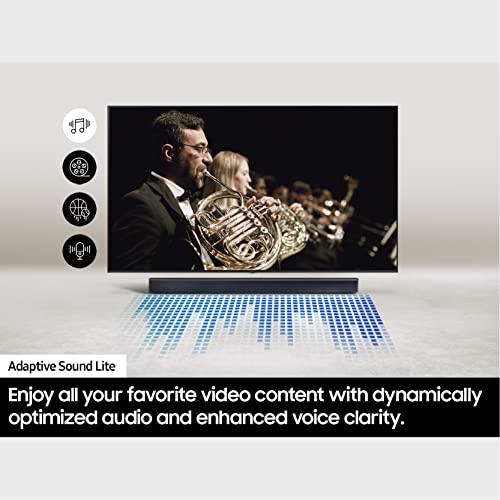
This simplicity is genuinely valuable if you want better audio without becoming an audio enthusiast. The system includes several preset sound modes (Standard, Surround, Game, Adaptive Sound Lite) that automatically adjust settings based on content type. Night Mode compresses dynamic range so you can hear dialogue clearly at lower volumes without explosive sound effects waking the neighbors.
The Hisense HT Saturn offers significantly more customization but requires more initial setup effort. Each satellite speaker needs to be positioned thoughtfully—too close to walls and you'll get boomy bass reflections; too far from the listening position and surround effects become diffuse. The upward-firing height speakers need adequate ceiling clearance to work properly.
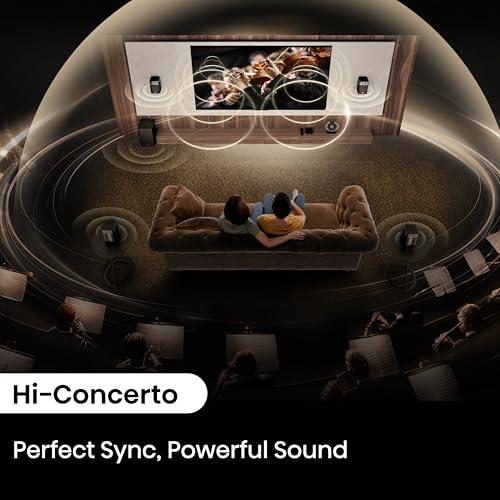
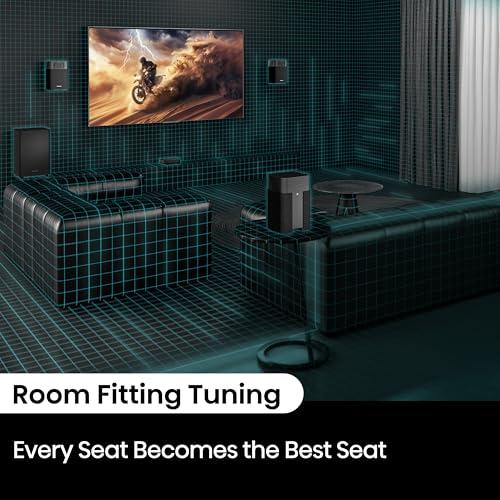
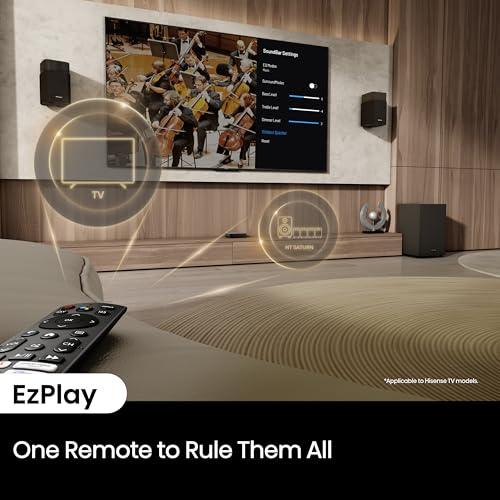
However, this complexity pays off through features like Room Fitting Tuning, which automatically measures your room's acoustic characteristics and adjusts speaker output accordingly. This calibration process accounts for room size, furniture placement, and surface materials to optimize sound balance. When paired with compatible Hisense TVs, the system can even incorporate the TV's built-in speakers as additional channels through Hi-Concerto technology.
Based on extensive research into user experiences and professional reviews, the performance differences between these systems are substantial across different use cases.
For everyday TV watching—news, sitcoms, talk shows—the Samsung HW-C450 delivers exactly what most people need. Dialogue becomes significantly clearer than TV speakers, background music and sound effects gain presence without overwhelming voices, and the wireless subwoofer adds enough bass impact to make content more engaging. The Adaptive Sound Lite feature automatically adjusts audio balance as you switch between channels or streaming apps, reducing those annoying volume jumps that plague TV viewing.
However, limitations become apparent with more demanding content. Action movies reveal the system's narrow soundstage—effects that should surround you instead feel confined to the front of the room. The virtual surround processing can create an slightly wider sound image, but it never approaches the enveloping experience of true multi-channel audio. Music playback is adequate for casual listening, but lacks the stereo separation and dynamic range that serious music listening demands.
The Hisense HT Saturn transforms the listening experience in ways that single soundbars simply cannot match. Movie soundtracks gain genuine spatial dimension—helicopters actually seem to fly overhead, ambient forest sounds surround you naturally, and action sequences deliver the sense of being in the middle of the action rather than watching it from afar.
The system's strength extends beyond just surround effects. Dialogue remains precisely centered and clear even during complex action sequences because the front speakers can focus on vocal frequencies while rear channels handle environmental sounds. The distributed power across multiple speakers means each driver operates within its optimal range, resulting in cleaner sound at all volume levels.
Gaming performance particularly benefits from the accurate positional audio. In competitive shooters, you can precisely locate enemy footsteps or gunfire direction. In racing games, engine sounds move realistically around the room as you navigate turns. These aren't subtle improvements—they're fundamental changes in how the content feels.
At the time of writing, these products represent entirely different value propositions. The Samsung HW-C450 offers exceptional bang-for-the-buck in the entry-level segment. You're getting wireless subwoofer convenience, multiple sound modes, and meaningful audio improvement over TV speakers at a price point that's accessible to most budgets.
The cost-per-watt calculation favors the Samsung significantly, but this metric doesn't tell the complete story. The Hisense HT Saturn uses its power more efficiently across 13 specialized drivers rather than just three, resulting in better overall sound quality despite the higher cost per watt.
More importantly, consider the technology timeline. The Samsung HW-C450, being a 2015 design, represents audio technology that's now nearly a decade old. It lacks support for modern audio formats that are increasingly standard in streaming content, gaming, and Ultra HD Blu-ray discs. While it serves current needs adequately, it won't be able to take advantage of future audio improvements.
The Hisense HT Saturn represents current technology with room for growth. Its comprehensive format support, modern connectivity, and wireless architecture position it to remain relevant as content and devices continue evolving. The higher upfront investment potentially extends the system's useful life significantly.
The Samsung HW-C450 makes perfect sense for several specific situations. If you're living in a small apartment where a compact solution is essential, its minimal footprint and simple setup are genuine advantages. College students, elderly users who prefer straightforward operation, or anyone setting up a bedroom or kitchen TV will appreciate its uncomplicated approach.
It's also ideal if your primary content consumption involves news, sitcoms, documentaries, or other dialogue-heavy material where surround effects aren't crucial. The system's strengths align perfectly with this use case—clear voices, controlled bass that won't disturb neighbors, and reliable operation without fuss.
Budget constraints also make the choice clear. If spending significantly more on audio isn't feasible or justifiable based on your entertainment priorities, the Samsung HW-C450 delivers meaningful improvement over TV speakers at an accessible price point.
The Hisense HT Saturn targets a different audience entirely. If you've invested in a good TV and regularly watch movies, stream premium content, or play modern games, the audio quality difference justifies the higher cost. The system truly shines in dedicated media rooms or living rooms where you can position the satellites properly and have adequate space for the sound to develop.
Home theater enthusiasts who appreciate the technical aspects of audio reproduction will find the Devialet tuning and comprehensive format support compelling. The system offers the kind of performance that makes you notice details in familiar content that you've never heard before.
Ultimately, choosing between these systems comes down to matching expectations with reality. The Samsung HW-C450 is an excellent budget solution that dramatically improves upon TV speakers without complexity or excessive cost. It handles basic audio enhancement extremely well but won't deliver the immersive experience that modern entertainment content can provide.
The Hisense HT Saturn represents a fundamental upgrade in how you experience audio content. It's not just louder or clearer—it's a different category of audio reproduction that matches what content creators intended when mixing movies and games for modern sound systems.
Consider your room size, content preferences, and long-term entertainment plans. If you're happy with modest improvement and value simplicity, the Samsung HW-C450 won't disappoint. If you want to experience what modern audio technology can deliver and have the budget and space for a proper setup, the Hisense HT Saturn offers performance that justifies its premium positioning.
The gap between these systems reflects nearly a decade of audio technology advancement. Your choice depends on whether that advancement matters for how you actually use your entertainment system.
| Samsung HW-C450 | Hisense HT Saturn |
|---|---|
| Channel Configuration - Determines surround sound capability and immersion level | |
| 2.1 channels (stereo + subwoofer, virtual surround only) | 4.1.2 channels (true surround + height channels for Dolby Atmos) |
| Total Power Output - Affects maximum volume and dynamic range | |
| 280 watts (80W soundbar + 120W subwoofer) | 720 watts distributed across 13 speakers for cleaner sound at all levels |
| Number of Physical Speakers - More speakers enable better sound separation | |
| 3 speakers total (2 in bar + 1 subwoofer) | 13 speakers total (8 full-range + 4 tweeters + 1 subwoofer) |
| Height Channel Support - Essential for modern Dolby Atmos content | |
| None (simulated height effects through processing) | 2 dedicated upfiring speakers for genuine overhead audio |
| Audio Format Support - Compatibility with modern streaming and gaming content | |
| Dolby Digital, DTS (basic formats from 2015) | Dolby Atmos, DTS:X, DTS-HD Master (current premium formats) |
| HDMI Connectivity - Required for highest quality audio and device integration | |
| None (optical and Bluetooth only) | HDMI eARC with 4K 60Hz passthrough for lossless audio |
| Audio Tuning - Affects overall sound quality and balance | |
| Standard Samsung consumer tuning | Professional tuning by Devialet (high-end audio specialists) |
| Room Calibration - Optimizes sound for your specific space | |
| Manual sound modes only | Automatic Room Fitting Tuning adapts to room acoustics |
| Physical Setup Complexity - Time and effort required for installation | |
| Single soundbar + wireless subwoofer (minimal setup) | 4 satellite speakers + subwoofer requiring positioning around room |
| Bluetooth Version - Affects wireless streaming quality and reliability | |
| Basic Bluetooth with SBC codec | Bluetooth 5.3 with improved range and audio quality |
| Release Year - Indicates technology generation and future support | |
| 2015 (discontinued, no firmware updates) | Current generation (ongoing software support) |
| Size and Weight - Important for placement flexibility | |
| Compact: 34" bar weighs 3 lbs, small subwoofer | Distributed: Each satellite 8" tall, larger overall footprint |
The Samsung HW-C450 is a traditional 2.1-channel soundbar with virtual surround sound, while the Hisense HT Saturn is a 4.1.2-channel wireless home theater system with actual surround speakers placed around your room. The Samsung HW-C450 offers simple setup and basic audio improvement, whereas the Hisense HT Saturn delivers true immersive surround sound with Dolby Atmos support.
The Samsung HW-C450 is better suited for small rooms due to its compact design - just a single soundbar and wireless subwoofer. The Hisense HT Saturn requires space for four satellite speakers around the room, making it more appropriate for medium to large living spaces where you have room to position the speakers properly.
No, only the Hisense HT Saturn supports true Dolby Atmos with dedicated upfiring speakers for overhead sound effects. The Samsung HW-C450 uses DTS Virtual:X processing to simulate height effects, but it cannot reproduce actual Dolby Atmos content as intended by filmmakers.
The Samsung HW-C450 is much easier to set up - simply place the soundbar under your TV and plug in the wireless subwoofer. The Hisense HT Saturn requires positioning four separate satellite speakers around your room and ensuring proper placement for optimal surround sound performance.
The Samsung HW-C450 has 3 speakers total: 2 drivers in the main soundbar plus 1 subwoofer. The Hisense HT Saturn contains 13 speakers: 8 full-range drivers, 4 tweeters, and 1 subwoofer distributed across multiple components for superior sound separation and clarity.
The Hisense HT Saturn is significantly better for gaming due to its true surround sound capability and precise audio positioning. Gamers can accurately locate enemy footsteps and environmental sounds in 3D space. The Samsung HW-C450 offers basic game mode enhancement but cannot provide the spatial audio advantages of the distributed speaker system.
The Samsung HW-C450 has no HDMI connections - only optical and Bluetooth inputs. The Hisense HT Saturn includes HDMI eARC support with 4K 60Hz passthrough, allowing for higher quality audio transmission and better integration with modern TVs and gaming consoles.
Both systems include wireless subwoofers, but the Hisense HT Saturn provides more controlled and integrated bass performance due to its advanced room calibration and professional Devialet tuning. The Samsung HW-C450 offers adequate bass for its price range but may sound boomy in smaller rooms.
The Hisense HT Saturn is excellent for music with its wide frequency response, multiple drivers, and Devialet tuning providing audiophile-quality sound. The Samsung HW-C450 is adequate for casual music listening but lacks the stereo separation and dynamic range that serious music listeners prefer.
For basic TV viewing, the Samsung HW-C450 provides clear dialogue and noticeable improvement over TV speakers. However, the Hisense HT Saturn transforms movie watching with genuine surround effects, overhead audio, and cinema-quality sound that matches what directors intended for modern films.
The Samsung HW-C450 uses basic Bluetooth for music streaming, while the Hisense HT Saturn features Bluetooth 5.3 with improved range and stability. The Hisense HT Saturn also uses multiple wireless frequency bands to maintain stable connections between all satellite speakers without interference.
The Samsung HW-C450 offers excellent immediate value for budget-conscious buyers seeking basic audio improvement. However, the Hisense HT Saturn provides better long-term value with support for current audio formats, ongoing firmware updates, and performance that will remain relevant as entertainment technology continues advancing.
We've done our best to create useful and informative comparisons to help you decide what product to buy. Our research uses advanced automated methods to create this comparison and perfection is not possible - please contact us for corrections or questions. These are the sites we've researched in the creation of this article: e-catalog.com - alibaba.com - smart.dhgate.com - greentoe.com - requiremints.com - versus.com - bhphotovideo.com - rtings.com - soundmachine.com.mt - samsung.com - samsung.com - youtube.com - bhphotovideo.com - newegg.com - images.samsung.com - bestbuy.com - samsung.com - youtube.com - jsappliance.com - gadgetsleo.com - youtube.com - saraappliance.com - walmart.com - bestbuy.com - youtube.com - blog.son-video.com - youtube.com - youtube.com - techradar.com - ecoustics.com - jbhifi.com.au - shop.hisense-usa.com - bhphotovideo.com - bestbuy.com - digitalreviews.net - hisense-usa.com - projectorscreenstore.com - valueelectronics.com - dolby.com - giftpack.ai

Privacy Policy
Terms and Conditions - Affiliate Policy
Home Security
© Copyright 2008-2026.
11816 Inwood Rd #1211, Dallas, TX 75244