

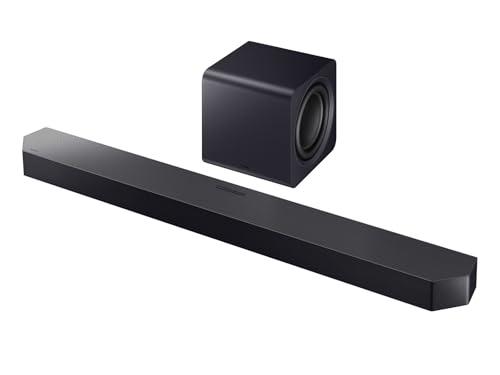
When you're shopping for a premium soundbar system, you're essentially choosing between two different philosophies of how to deliver immersive audio in your living room. The Hisense HT Saturn and Samsung HW-Q990F both launched in 2025 as flagship offerings, but they take dramatically different approaches to creating that coveted "theater at home" experience.
Let me break down what makes each system unique and help you figure out which one deserves a spot under your TV.
Before diving into specifics, it's worth understanding what separates premium soundbars from their cheaper counterparts. These aren't just louder versions of basic soundbars – they're sophisticated audio systems designed to create three-dimensional soundscapes that can rival traditional home theater setups.
The key difference lies in channel configuration – essentially how many separate audio streams the system can handle. When you see numbers like "4.1.2" or "11.1.4," they represent front channels, subwoofer channels, and height channels respectively. More channels typically mean more precise sound placement, though implementation matters as much as raw numbers.
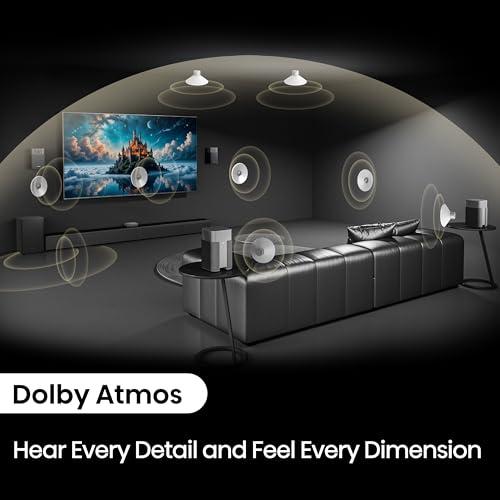
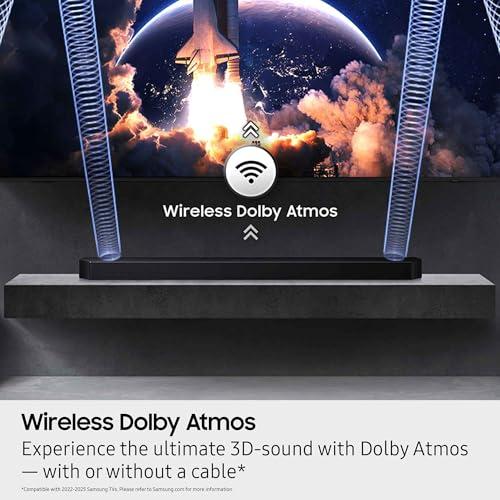
Dolby Atmos support has become table stakes in this category. This technology treats sounds as objects that can be placed anywhere in 3D space, rather than just sending audio to specific channels. When a helicopter flies overhead in a movie, Dolby Atmos can make it sound like it's actually moving above you, not just coming from speakers around you.
The other major consideration is room integration. Premium systems need to adapt to your specific space, compensate for your furniture and room shape, and work seamlessly with your existing TV and devices.
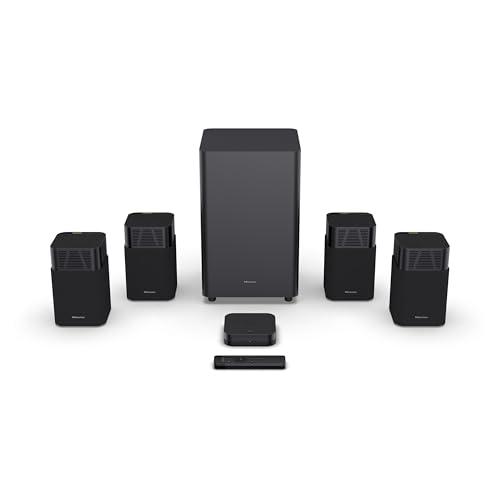
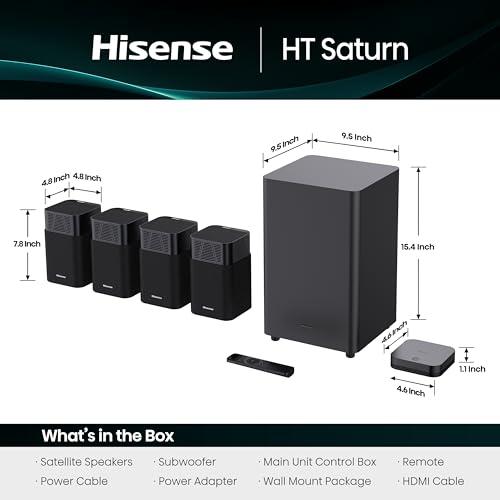
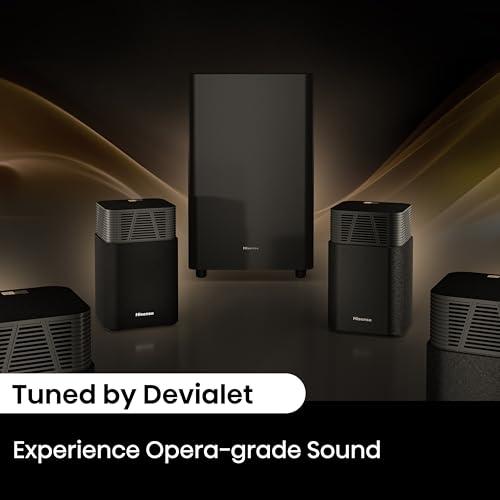
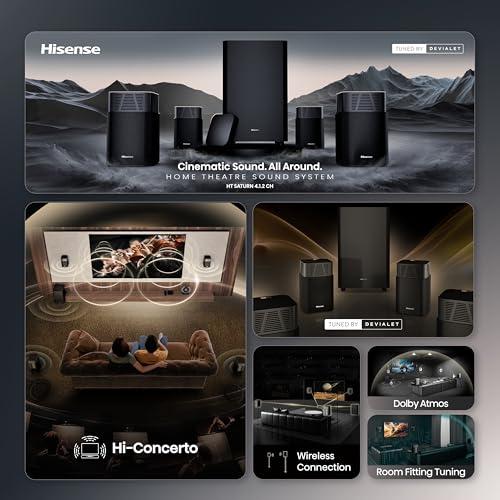
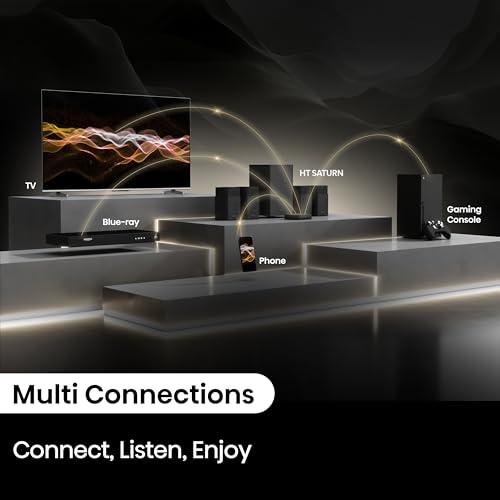
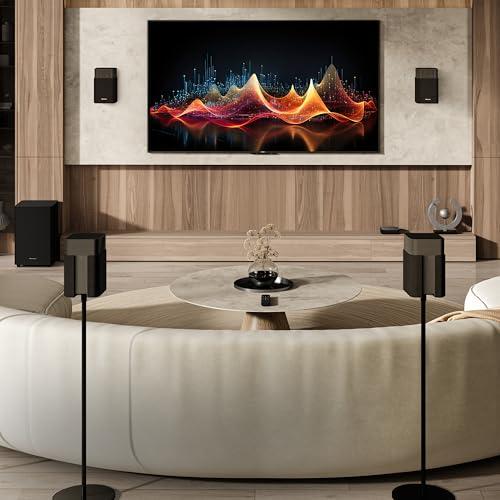
The Hisense HT Saturn represents something genuinely different in the soundbar world. Instead of building one long speaker bar, Hisense created a system built around four separate wireless satellite speakers, each containing multiple drivers (individual speaker elements), plus a wireless subwoofer.
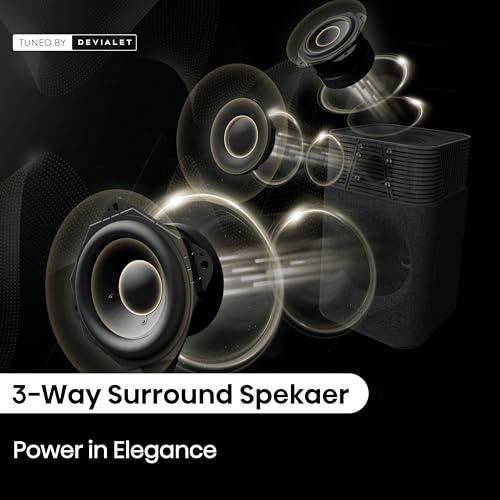
This 4.1.2 system was developed in partnership with Devialet, the French audio company known for making $10,000+ speakers. That collaboration shows in the acoustic tuning – each satellite speaker uses a 3-way design with dedicated drivers for bass, midrange, and treble frequencies. This separation typically produces cleaner, more detailed sound than cramming everything into single drivers.
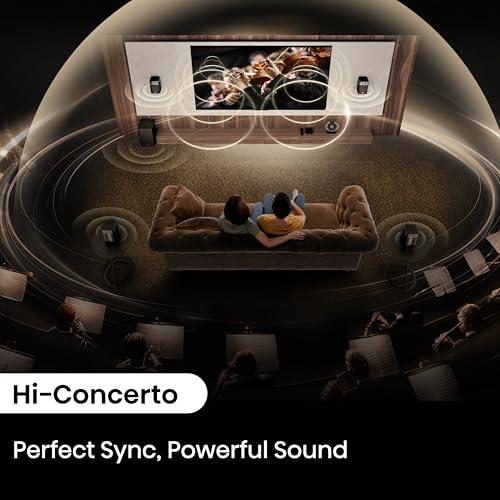
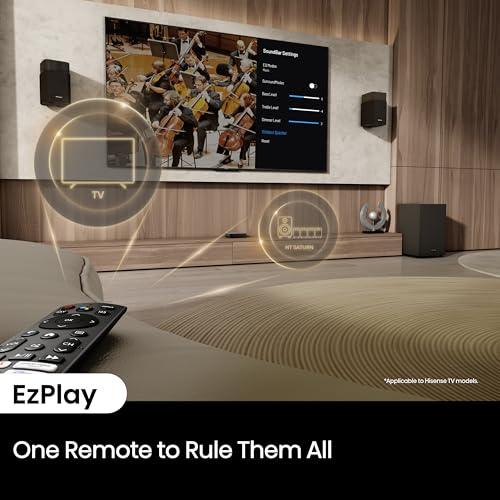
The Saturn's party trick is Hi-Concerto Technology, which can synchronize with compatible Hisense TVs to use both the soundbar system and the TV's built-in speakers simultaneously. It's like having an even bigger speaker array spread across your entertainment center.
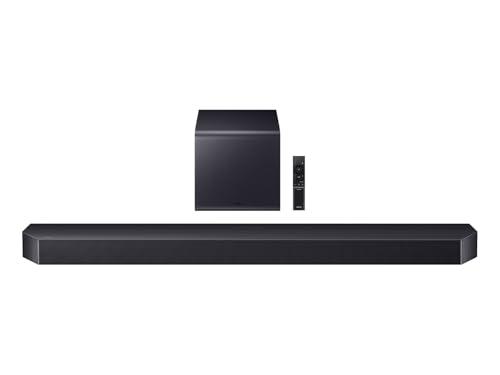
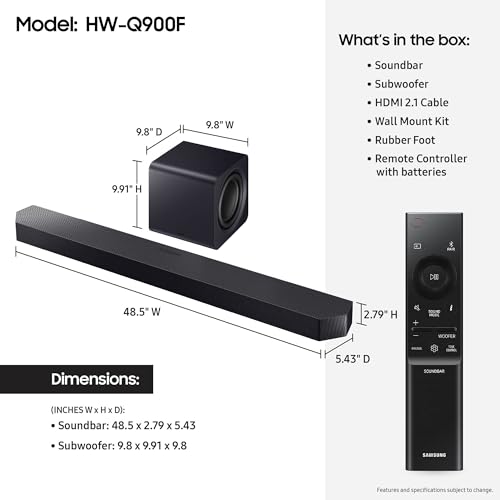
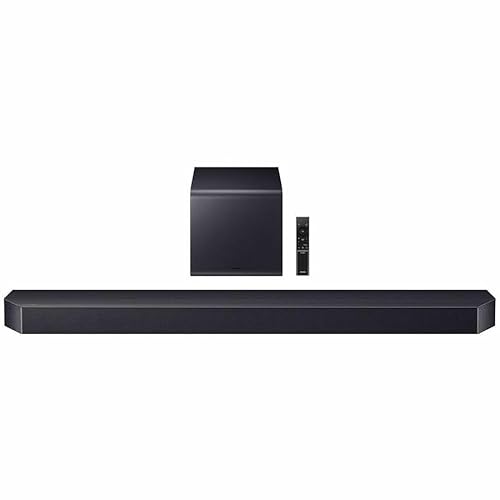
The Samsung HW-Q990F takes the more traditional but thoroughly maxed-out approach. This 11.1.4 system packs 23 total speakers across a main soundbar, wireless subwoofer, and wireless rear speakers. Those numbers aren't just marketing fluff – the additional channels create genuine performance advantages.
What sets the Samsung apart is its dedicated center channel. This single speaker, built into the main soundbar, handles dialogue and vocal content. It might sound mundane, but having a physical center channel dramatically improves dialogue clarity and positioning compared to systems that create a "phantom center" using left and right speakers.
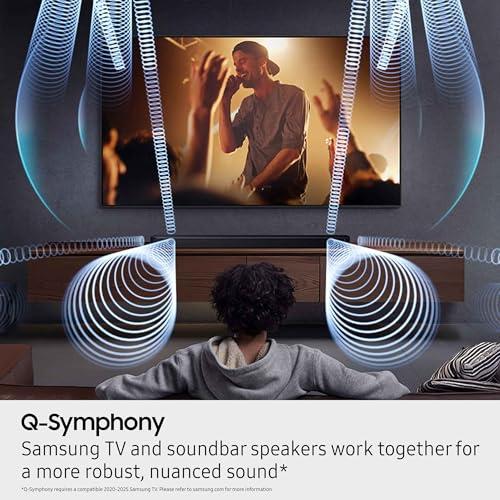
The Samsung also features Q-Symphony, Samsung's version of Hi-Concerto that works with Samsung TVs. The difference is scale – when Q-Symphony kicks in, you're combining 23 soundbar speakers with whatever drivers are in your Samsung TV.
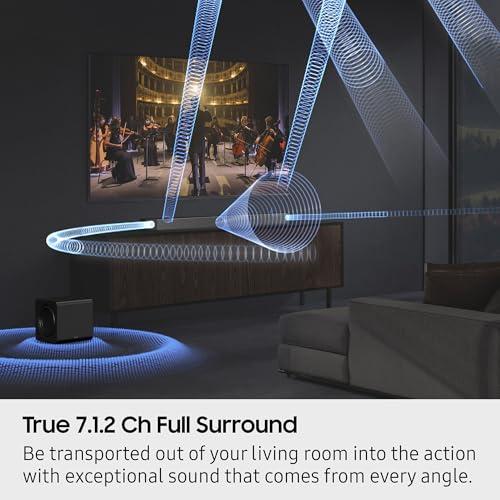
This is where the fundamental architectural differences between these systems really show up. The Samsung HW-Q990F delivers what I'd call "textbook perfect" surround sound implementation. With 11.1.4 channels, it meets and exceeds what audio engineers consider the minimum for effective Dolby Atmos – most experts suggest 5.1.4 as the baseline.
Those four height channels (two in the main bar firing upward, two more in the rear satellites) create genuinely convincing overhead effects. When rain falls in a movie scene, it doesn't just sound like rain – it sounds like rain coming from above and slightly behind you. The Samsung excels at these subtle positioning cues that make scenes feel three-dimensional rather than just loud.
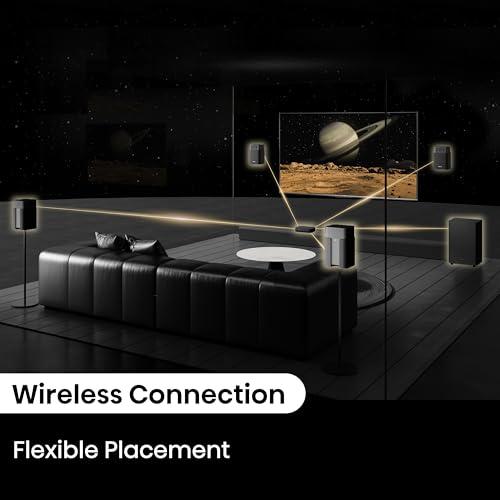
The Hisense HT Saturn, with its 4.1.2 configuration, takes a different approach. Those four satellite speakers can be positioned around your room more flexibly than traditional setups, potentially creating a wider soundstage. However, with only two height channels and no dedicated center speaker, it's working harder to create the same immersive effects.
Based on our research into expert and user reviews, the consensus is clear: the Samsung provides more convincing and consistent surround sound, especially for Dolby Atmos content. The Hisense can sound impressively wide and spacious, but it lacks the precise object placement that makes premium Atmos systems special.
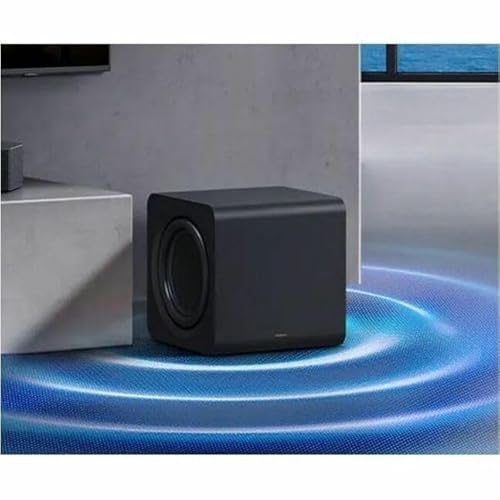
Both systems approach bass differently, and these differences matter more than you might expect. The Samsung HW-Q990F uses dual 8-inch force-canceling woofers in its subwoofer. This design places two woofers facing each other, so their vibrations cancel out while their sound output combines. The result is cleaner bass with less cabinet rattling and room-shaking vibration.
Samsung's Dynamic Bass Control uses AI algorithms to analyze the incoming audio and adjust bass response in real-time. This prevents the muddy, boomy sound that can happen when bass-heavy content overwhelms smaller drivers.
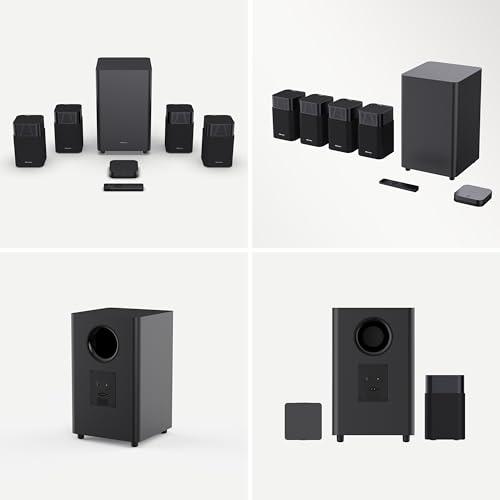
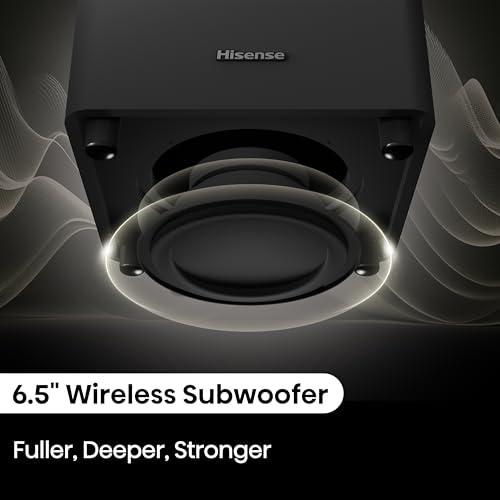
The Hisense HT Saturn uses a single 6.5-inch wireless subwoofer. While this is smaller on paper, the Devialet tuning aims for accuracy over raw impact. However, multiple reviews noted that the Hisense shows some white noise (background static-like sound) in the lowest frequencies and has limited deep bass extension below 40Hz.
For home theater use, this difference is significant. Action movies, explosions, and music with deep bass fundamentally sound more impactful and cleaner through the Samsung. The Hisense provides adequate bass for most content, but it can't match the authority and cleanliness of Samsung's dual-woofer design.
Here's where the Samsung HW-Q990F demonstrates why dedicated center channels matter. Dialogue clarity separates good soundbars from great ones, and physical center channels almost always outperform virtual alternatives.
When you watch movies or TV shows, roughly 60-70% of important audio information comes through the center channel. Having a dedicated speaker handling this content means voices stay anchored to the screen, even when you're not sitting directly in the sweet spot.
The Samsung pairs this center channel with Active Voice Amplifier Pro, a two-tier system that analyzes background noise and dynamically boosts dialogue frequencies. In practice, this means you can hear whispered conversations even during loud action sequences without constantly adjusting volume.
The Hisense HT Saturn creates a phantom center by carefully balancing audio between its front left and right satellites. Devialet's tuning makes this surprisingly effective – better than most phantom center implementations – but it still can't match the consistency and precision of a dedicated center speaker.
User reviews consistently praise the Samsung for dialogue clarity in complex mixes, while the Hisense gets mixed feedback depending on room acoustics and seating position.
Both systems excel at music playback, but in different ways. The Hisense HT Saturn benefits from Devialet's acoustic expertise, delivering what the company calls "opera-grade" sound. Each satellite's 3-way design allows for excellent frequency separation, creating detailed, balanced music reproduction.
The Samsung HW-Q990F approaches music differently, using its wider speaker array to create an expansive soundstage. Reviews consistently highlight its natural musicality and instrument separation. The dedicated center channel even helps with vocal-focused genres, keeping singers precisely positioned in the mix.
In my assessment, both systems handle music well enough that your choice should be based on other factors rather than music performance alone.
This category reveals one of the biggest practical differences between these systems. The Samsung HW-Q990F includes HDMI 2.1 connectivity with support for 4K at 120Hz. For anyone with a PlayStation 5, Xbox Series X, or high-end gaming PC, this is crucial for taking advantage of next-generation gaming features.
The Samsung also supports Variable Refresh Rate (VRR) technologies like FreeSync and G-SYNC, which eliminate screen tearing in games. Its Game Pro mode optimizes audio processing for competitive gaming, emphasizing directional cues that help you locate enemies or environmental sounds.
The Hisense HT Saturn lacks HDMI 2.1 entirely, limiting it to 4K at 60Hz. For current-generation console gaming, this represents a significant limitation that will only become more apparent as more games support 120Hz modes.
The connectivity differences between these systems are dramatic and practically important. The Samsung HW-Q990F includes comprehensive wireless streaming capabilities: Wi-Fi, Google Cast, Apple AirPlay 2, Spotify Connect, and TIDAL Connect. It's also Roon Ready, which matters for audiophiles with high-resolution music libraries.
Built-in voice control comes via Samsung's Bixby and Amazon Alexa compatibility, with Google Assistant support through external devices. The Samsung SmartThings app provides detailed control over EQ settings, room correction, and advanced features.
The Hisense HT Saturn offers only Bluetooth 5.3 for wireless audio, with no Wi-Fi streaming capabilities. This limits your options for streaming music services and eliminates convenient casting from phones and tablets. For a premium system launching in 2025, this feels surprisingly restrictive.
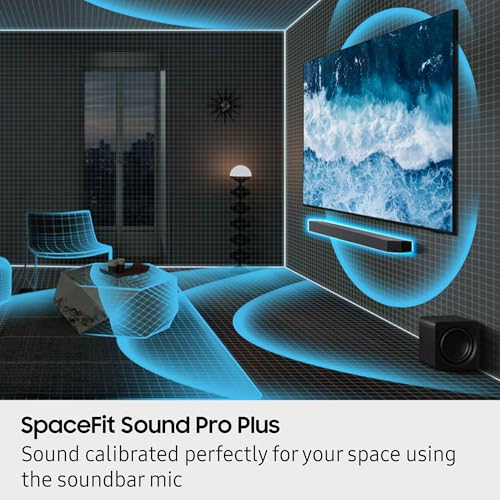
Both systems offer room calibration, but with different approaches. The Samsung HW-Q990F includes SpaceFit Sound Pro Plus, which uses built-in microphones to analyze your room's acoustics and automatically adjusts speaker output accordingly.
The Samsung also provides manual fine-tuning via a 7-band graphic equalizer and individual channel level adjustments. You can independently adjust center channel volume, rear speaker levels, height channel intensity, and subwoofer output.
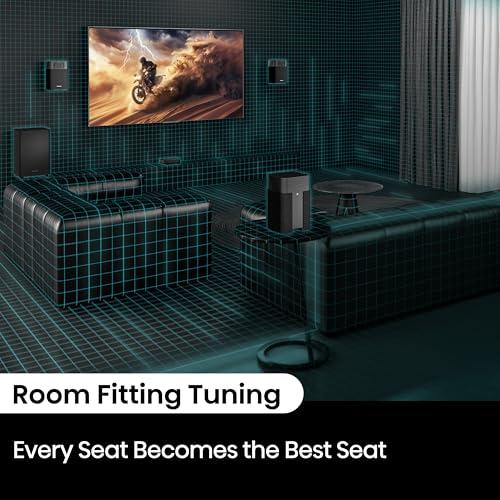
The Hisense HT Saturn offers Room Fitting Tuning through compatible Hisense TVs. While this works well within the Hisense ecosystem, it limits the system's flexibility with other TV brands and doesn't provide the granular control options of the Samsung.
At the time of writing, the Samsung HW-Q990F typically costs several hundred dollars less than the Hisense HT Saturn, despite offering more channels, better connectivity, and superior gaming features. This represents one of the clearest value propositions I've seen in the premium soundbar category.
The Hisense commands a premium price primarily for its unique wireless satellite architecture and Devialet tuning. While these features have merit, they don't justify the significant price difference for most users.
The Hisense HT Saturn offers genuine advantages in setup flexibility. Those four wireless satellites can be positioned more creatively than traditional rear speakers, potentially working better in rooms with unusual layouts or limited placement options.
However, this flexibility comes with complexity. You need power outlets for four satellites plus the subwoofer, and optimal placement requires more experimentation than traditional systems.
The Samsung HW-Q990F follows conventional setup patterns that most users will find more straightforward. The wireless rear speakers need power but can be positioned more conventionally, and the overall system integrates more seamlessly with existing AV setups.
Choose the Hisense HT Saturn if you:
Choose the Samsung HW-Q990F if you:
After evaluating these systems based on performance metrics, features, and value, the Samsung HW-Q990F emerges as the stronger choice for most users. It delivers superior surround sound implementation, better dialogue clarity, more comprehensive connectivity, and essential gaming features – all while typically costing significantly less than the Hisense HT Saturn.
The Hisense isn't a bad system, but it represents a premium-priced experiment in soundbar design that doesn't quite justify its cost. Its unique wireless satellite architecture offers flexibility advantages for specific room situations, but these benefits don't outweigh the performance and value advantages of the Samsung.
For most home theater enthusiasts, the Samsung HW-Q990F provides the more complete, future-proof, and ultimately satisfying premium soundbar experience. It's the system I'd recommend unless you have specific needs that only the Hisense's unique architecture can address.
The premium soundbar market continues evolving rapidly, with both companies pushing boundaries in different directions. But right now, Samsung's comprehensive approach delivers better results for more people at a better price point.
| Hisense HT Saturn HTSATURN | Samsung Q-Series HW-Q990F |
|---|---|
| Channel Configuration - More channels typically mean better surround sound positioning | |
| 4.1.2 channels (13 total speakers) | 11.1.4 channels (23 total speakers) |
| Center Channel - Critical for dialogue clarity and vocal positioning | |
| Virtual center (phantom imaging between satellites) | Dedicated physical center channel |
| Height Channels - Essential for convincing Dolby Atmos overhead effects | |
| 2 height channels (up-firing) | 4 height channels (2 in soundbar, 2 in rear speakers) |
| Subwoofer Configuration - Determines bass depth and impact | |
| Single 6.5" wireless subwoofer (40Hz-20kHz) | Dual 8" force-canceling wireless subwoofer |
| Speaker Layout - Affects setup flexibility and soundstage width | |
| 4 wireless satellite speakers + subwoofer | Main soundbar + 2 rear speakers + subwoofer |
| Total Power Output - Higher wattage enables louder, cleaner sound | |
| 500W-720W (varies by source) | 756W RMS |
| HDMI Connectivity - Essential for gaming and future-proofing | |
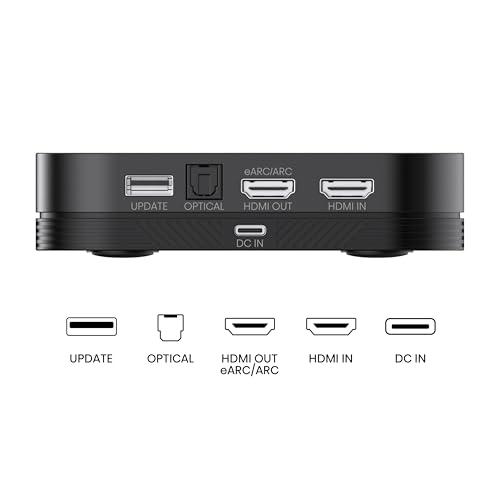
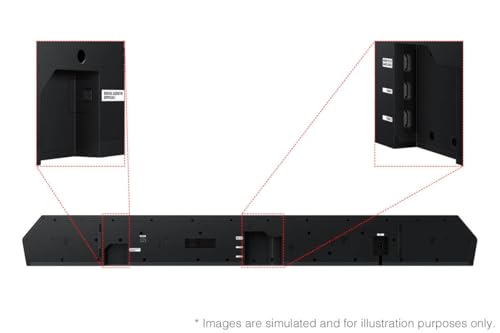
| 1 input, 1 eARC output (4K 60Hz passthrough) | 2 HDMI 2.1 inputs, 1 eARC output (4K 120Hz, 8K 60Hz) |
| Wireless Streaming - Convenience for music and multi-room audio | |
| Bluetooth 5.3 only | Wi-Fi, Bluetooth 5.3, Google Cast, AirPlay 2, Spotify Connect |
| Room Calibration - Optimizes sound for your specific space | |
| Room Fitting Tuning (via Hisense TV) | SpaceFit Sound Pro Plus with 7-band EQ |
| TV Integration - Enhanced performance when paired with same-brand TVs | |
| Hi-Concerto (Hisense TVs only) | Q-Symphony (Samsung TVs) |
| Voice Control - Hands-free operation and smart home integration | |
| Limited voice control options | Built-in Bixby, Alexa compatible, Google Assistant support |
| Gaming Features - Important for console and PC gaming | |
| Basic gaming support, higher latency | Game Pro mode, VRR support, low latency |
| Release Year - Indicates feature currency and technology generation | |
| 2025 (debuted CES 2025) | 2025 (flagship update to 2024 model) |
| Acoustic Tuning - Professional audio engineering partnership | |
| Devialet-tuned "opera-grade" sound | Samsung's advanced AI sound processing |
| Setup Complexity - Time and effort required for installation | |
| More complex (4 satellites need power + placement) | Standard soundbar setup (main unit + 2 rear speakers) |
The Samsung HW-Q990F delivers superior surround sound with its 11.1.4 channel configuration and 23 total speakers, compared to the Hisense HT Saturn's 4.1.2 setup with 13 speakers. The Samsung includes four height channels for more convincing Dolby Atmos effects and a dedicated center channel for better dialogue positioning, while the Hisense HT Saturn relies on virtual center channel processing.
Yes, both the Hisense HT Saturn and Samsung HW-Q990F support Dolby Atmos and DTS:X. However, the Samsung HW-Q990F provides better Atmos implementation with its 11.1.4 configuration that meets industry standards for effective height channel performance, while the Hisense HT Saturn's 4.1.2 setup offers more basic Atmos processing.
The Samsung HW-Q990F is significantly better for gaming, featuring HDMI 2.1 connectivity with 4K 120Hz passthrough, VRR support, and dedicated Game Pro mode for low latency. The Hisense HT Saturn lacks HDMI 2.1 features and is limited to 4K 60Hz, making it less suitable for next-generation console gaming.
The Samsung HW-Q990F includes 23 total speakers across its main soundbar, subwoofer, and rear speakers. The Hisense HT Saturn contains 13 speakers total, including 8 full-range drivers and 4 tweeters distributed across four wireless satellite speakers, plus a 6.5-inch subwoofer.
The Samsung HW-Q990F provides comprehensive connectivity with Wi-Fi, Bluetooth 5.3, Google Cast, Apple AirPlay 2, Spotify Connect, and multiple HDMI 2.1 inputs. The Hisense HT Saturn offers more limited connectivity with only Bluetooth 5.3 and single HDMI input/output, lacking Wi-Fi streaming capabilities.
Both soundbars work with any TV brand through standard connections, but offer enhanced features with their respective manufacturers. The Samsung HW-Q990F includes Q-Symphony technology for Samsung TVs, while the Hisense HT Saturn features Hi-Concerto integration specifically designed for Hisense TVs.
The Samsung HW-Q990F delivers superior bass with dual 8-inch force-canceling woofers and AI-powered Dynamic Bass Control for cleaner, deeper low-frequency response. The Hisense HT Saturn uses a single 6.5-inch subwoofer that provides adequate bass but shows limitations in deep bass extension and some noise in the lowest frequencies.
Both systems feature wireless subwoofers and rear/satellite speakers that only require power connections. The Hisense HT Saturn uses four wireless satellite speakers for maximum placement flexibility, while the Samsung HW-Q990F includes two wireless rear speakers in a more traditional configuration.
The Samsung HW-Q990F excels in dialogue clarity with its dedicated center channel speaker and Active Voice Amplifier Pro technology. The Hisense HT Saturn creates a virtual center channel using phantom imaging, which is surprisingly effective due to Devialet tuning but cannot match the consistency of a physical center speaker.
The Samsung HW-Q990F includes SpaceFit Sound Pro Plus with automatic room analysis and a 7-band equalizer for detailed customization. The Hisense HT Saturn offers Room Fitting Tuning that works through compatible Hisense TVs but provides less granular control over audio settings.
The Samsung HW-Q990F typically provides better value with more channels, superior connectivity, gaming features, and comprehensive streaming capabilities at a lower price point. The Hisense HT Saturn commands a premium for its unique wireless satellite architecture and Devialet tuning, but doesn't justify the higher cost for most users.
The Samsung HW-Q990F includes built-in Bixby voice control and Amazon Alexa compatibility, with Google Assistant support through external devices. The Hisense HT Saturn offers limited voice control options and relies primarily on remote control and compatible TV integration for operation.
We've done our best to create useful and informative comparisons to help you decide what product to buy. Our research uses advanced automated methods to create this comparison and perfection is not possible - please contact us for corrections or questions. These are the sites we've researched in the creation of this article: bestbuy.com - youtube.com - blog.son-video.com - youtube.com - youtube.com - techradar.com - ecoustics.com - jbhifi.com.au - shop.hisense-usa.com - bhphotovideo.com - bestbuy.com - digitalreviews.net - hisense-usa.com - projectorscreenstore.com - valueelectronics.com - dolby.com - giftpack.ai - rtings.com - crutchfield.com - sound-advice.online - samsung.com - soundandvision.com - samsung.com - whathifi.com - youtube.com - youtube.com - bestbuy.com - avsforum.com - content.syndigo.com - samsung.com - businessinsider.com - dolby.com - youtube.com - abcwarehouse.com

Privacy Policy
Terms and Conditions - Affiliate Policy
Home Security
© Copyright 2008-2026.
11816 Inwood Rd #1211, Dallas, TX 75244